
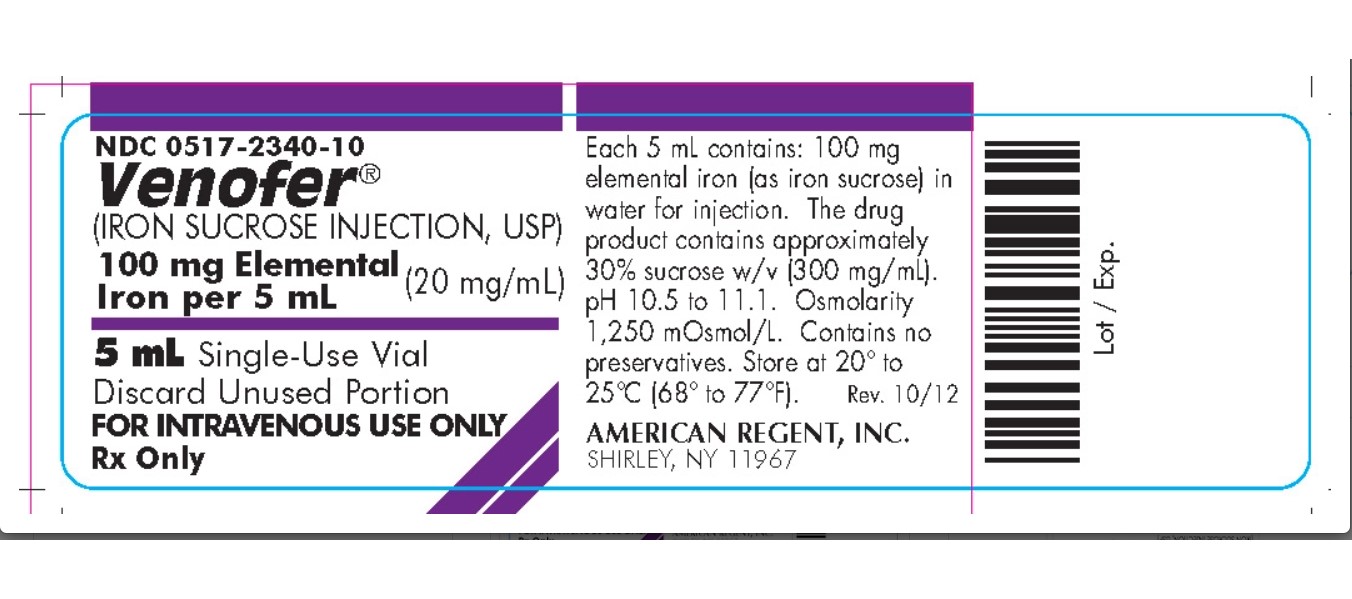
VENOFER (IRON SUCROSE) 20 mg/mL Injection, Solution, 5 mL — NDC 51662-1568-1 (Billing 51662-1568-01)
This is a package of 5 mL of VENOFER (IRON SUCROSE) 20 mg/mL Injection, Solution from HF Acquisition Co LLC, DBA HealthFirst, marketed since Jun 2021 and currently FDA-listed. It is the main listing for this product, which comes in 2 package sizes.
NDC database record
One package, one record: these facts belong to NDC 51662-1568-1 alone.
- Record
- FDA NDC Directory package listing · Human prescription drug
- Code segments
- 51662 labeler · 1568 product · 1 package
- Listing certified through
- Dec 31, 2026
- Barcode (UPC-A, from the NDC)
- 3 5166215681 0
- FDA record last changed
- Jul 24, 2026
Identity & classification
Regulatory identifiers FDA, NLM and CMS codes for this package
- RxCUI (RxNorm): 1741267
Where does this data come from?
- FDA openFDA NDC Directory · synced Oct 1, 2026
- FDA label on DailyMed · label index refreshed Oct 3, 2026
- RxNorm (NLM RxNav) · catalog refreshed Oct 1, 2026
- Medi-Span GPI (licensed)
- First Databank (licensed) · refreshed Oct 1, 2026
RxNorm drug class
This medicine belongs to the Parenteral Iron Replacement class.
Where does this data come from?
- RxClass (NLM) · catalog refreshed Oct 1, 2026
Clinical
- It treats iron deficiency anemia in people with chronic kidney disease. It gives your body iron through a vein so you can make more healthy red blood cells.
- Only through a vein, by a healthcare professional. It is a slow injection or a drip. If you are on hemodialysis, it is often given during your session. Your care team sets the sche...
- Nausea, vomiting, diarrhea, headache, dizziness, muscle cramps and low blood pressure are common. Swelling in the arms or legs and itching can also happen. Mention anything that bo...
- Serious allergic reactions can happen, mostly within 30 minutes, so you will be watched after each dose. Tell staff right away if you have trouble breathing, swelling, dizziness or...
Patient education
Supplement & herbal interactions
Where does this data come from?
- MedlinePlus (NLM) · refreshed Oct 1, 2026
- FDA label on DailyMed · label index refreshed Oct 3, 2026
Ask a licensed pharmacist directly — free, answered by our team.
Pricing
A drug doesn't have one price. Each row is a different public payment system, and none is what you'd pay at the counter — that depends on your insurance. The ⓘ on each row explains what it measures.
| Price system | Per mL | Per package |
|---|---|---|
| Retail pharmacies payNADAC · weekly | Not in the retail survey — common for institutional, discontinued, or low-volume packs. | |
| Medicaid paysCMS SDUD · 12 mo | No recent Medicaid claims on file for this NDC — rare and low-volume NDCs are suppressed in the public data. | |
| Medicare drug plans payPart D · quarterly | No Part D plan price is available for this NDC in our data. | |
| Medicare Part B allowsASP · J1756 | $0.227 / J1756 unit | — |
Where does this data come from?
- CMS NADAC weekly file
- CMS ASP pricing files · refreshed Sep 20, 2026
- CMS Medicaid State Drug Utilization Data · refreshed Oct 4, 2026
- CMS Part D plan pricing files · refreshed Sep 24, 2026
- VA National Acquisition Center price file
Billing & reimbursement
Where does this data come from?
- CMS ASP NDC-HCPCS crosswalk · refreshed Sep 22, 2026
- DMEPDAC NDC-HCPCS crosswalk
- openFDA NSDE billing units · refreshed Sep 7, 2026
Packaging — all sizes for this product
| Package NDC | Description | Marketing start | Marketing end | Status |
|---|---|---|---|---|
| 51662-1568-01 You're viewing this Main listing | 5 mL in 1 VIAL, SINGLE-DOSE | 2021-06-25 | — | Active |
| 51662-1568-03 51662-1568-3 | 10 POUCH in 1 CASE / 1 VIAL, SINGLE-DOSE in 1 POUCH / 5 mL in 1 VIAL, SINGLE-DOSE | 2021-06-25 | — | Active |
Pack size FAQ
What quantity is in this package?
What NDC number is used to bill for this package of VENOFER (IRON SUCROSE) 20 mg/mL Injection, Solution?
Therapeutic equivalents
| Product | Labeler | Pack | NADAC/unit | TE | Status | Price vs. this |
|---|---|---|---|---|---|---|
| Venofer 20 mg/mL 49230-0534-10 | Fresenius | 10 vials | $12.207 | AB | Availability likely | — |
| Venofer 20 mg/mL 00517-2340-01 | American | 1 vial | — | AB | FDA listed | — |
| Iron Sucrose 100 mg/5mL 00781-3486-95 | Sandoz | 10 vials | — | AB | FDA listed | — |
| Venofer (Iron Sucrose) 20 mg/mLthis 51662-1568-01 | HF | 5 ml | — | AB | FDA listed | — |
| Iron Sucrose 100 mg/5mL 67457-0638-10 | Mylan | 10 vials | — | AB | FDA listed | — |
| Iron Sucrose 20 mg/mL 76329-9201-01 | International | 10 vials | — | AB | FDA listed | — |
Where does this data come from?
- FDA openFDA NDC Directory · synced Oct 1, 2026
- FDA Orange Book · refreshed Oct 3, 2026
- CMS NADAC weekly file
Availability & generic status
The FDA lists approved generic versions of this medicine, but that does not always mean a pharmacy can get one today. Patent rules, launch agreements, supply and pricing can affect when generics actually arrive.
Where does this data come from?
- FDA Orange Book · refreshed Oct 3, 2026
Inactive Ingredients / Excipients
Inactive ingredients, also called excipients, are components of the drug product other than the active ingredient. They may include fillers, dyes, coatings, preservatives, flavors, or other formulation ingredients.
💡 Tap an ingredient (hover on desktop) to see what it is and why it’s used.
-
UNII 059QF0KO0R
Water is a liquid solvent that dissolves and mixes ingredients together in liquid medicines, syrups, and injections. It helps distribute the active drug evenly throughout the product.
1 inactive ingredient listed in the exact product block matched to this NDC.
Where does this data come from?
ingredient classCode="IACT" elements from the exact product block matched by this NDC. Label-section narrative from DailyMed / the openFDA label index is shown separately when available.- FDA label on DailyMed · label index refreshed Oct 3, 2026
- FDA openFDA NDC Directory · synced Oct 1, 2026
Inactive ingredient FAQ
Are inactive ingredients the same for every manufacturer?
Why might an inactive ingredient be missing?
Can inactive ingredients matter?
Manufacturer & labeler
More NDCs from HF Acquisition Co LLC, DBA HealthFirst labeler code 51662
- SODIUM TETRADECYL SULFATE 10 mg/mL Injection, Solution NDC 51662-1562-1
- (SOTRADECOL) SODIUM TETRADECYL SULFATE 30 mg/mL Injection, Solution NDC 51662-1563-1
- ZIPRASIDONE MESYLATE 20 mg/mL Injection, Powder, Lyophilized, For Solution NDC 51662-1564-3
- LIDOCAINE HCI AND DEXTROSE 5 g/100mL; .8 g/100mL Injection, Solution NDC 51662-1565-1
- DOBUTAMINE HYDROCHLORIDE 100 mg/100mL Injection NDC 51662-1566-1
- COSYNTROPIN .25 mg/mL Injection, Powder, Lyophilized, For Solution NDC 51662-1567-1
- FUROSEMIDE 10 mg/mL Injection, Solution NDC 51662-1572-1
- SODIUM BICARBONATE 84 mg/mL Injection, Solution NDC 51662-1573-1
- FUROSEMIDE 10 mg/mL Injection, Solution NDC 51662-1574-1
- FUROSEMIDE 10 mg/mL Injection, Solution NDC 51662-1575-1
- PHENYLEPHRINE HYDROCHLORIDE 10 mg/mL Injection NDC 51662-1576-1
- 0.9% SODIUM CHLORIDE 9 mg/mL Injection, Solution NDC 51662-1577-1
Where does this data come from?
- FDA openFDA NDC Directory · synced Oct 1, 2026
- Drugs@FDA
Full prescribing information FDA SPL
🎯 Indications and Usage ▾
1 INDICATIONS & USAGE Venofer is indicated for the treatment of iron deficiency anemia (IDA) in patients with chronic kidney disease (CKD).
⏱️ Dosage and Administration ▾
2 DOSAGE & ADMINISTRATION Venofer must only be administered intravenously either by slow injection or by infusion. The dosage of Venofer is expressed in mg of elemental iron. Each mL contains 20 mg of elemental iron.
2.1Mode of Administration Administer Venofer only intravenously by slow injection or by infusion. The dosage of Venofer is expressed in mg of elemental iron. Each mL contains 20 mg of elemental iron.
2.2Adult Patients with Hemodialysis Dependent-Chronic Kidney Disease (HDD-CKD) Administer Venofer 100 mg undiluted as a slow intravenous injection over 2 to 5 minutes, or as an infusion of 100 mg diluted in a maximum of 100 mL of 0.9% NaCl over a period of at least 15 minutes, per consecutive hemodialysis session [see How Supplied/Storage and Handling ( 16.2 ).] Administer Venofer early during the dialysis session (generally within the first hour). The usual total treatment course of Venofer is 1000 mg. Venofer treatment may be repeated if iron deficiency reoccurs.
2.3Adult Patients with Non-Dialysis Dependent-Chronic Kidney Disease (NDD-CKD) Administer Venofer 200 mg undiluted as a slow intravenous injection over 2 to 5 minutes or as an infusion of 200 mg in a maximum of 100 mL of 0.9% NaCl over a period of 15 minutes. Administer on 5 different occasions over a 14 day period. There is limited experience with administration of an infusion of 500 mg of Venofer, diluted in a maximum of 250 mL of 0.9% NaCl, over a period of 3.5 to 4 hours on Day 1 and Day 14 [see How Supplied/Storage and Handling ( 16.2 ).]Venofer treatment may be repeated if iron deficiency reoccurs.
2.4Adult Patients with Peritoneal Dialysis Dependent-Chronic Kidney Disease (PDD-CKD) Administer Venofer in 3 divided doses, given by slow intravenous infusion, within a 28 day period: 2 infusions each of 300 mg over 1.5 hours 14 days apart followed by one 400 mg infusion over 2.5 hours 14 days later. Dilute Venofer in a maximum of 250 mL of 0.9% NaCl [see How Supplied/Storage and Handling ( 16.2 ).] Venofer treatment may be repeated if iron deficiency reoccurs.
2.5Pediatric Patients (2 Years of Age and Older) with HDD-CKD for Iron Maintenance Treatment For iron maintenance treatment: Administer Venofer at a dose of 0.5 mg/kg, not to exceed 100 mg per dose, every two weeks for 12 weeks given undiluted by slow intravenous injection over 5 minutes or diluted in 0.9% NaCl at a concentration of 1 to 2 mg/mL and administered over 5 to 60 minutes. Do not dilute to concentrations below 1 mg/mL [see How Supplied/Storage and Handling [ 16.2 ].) Venofer treatment may be repeated if necessary.
The dosing for iron replacement treatment in pediatric patients with HDD-CKD has not been established.
2.6Pediatric Patients (2 Years of Age and Older) with NDD-CKD or PDD-CKD who are on Erythropoietin Therapy for Iron Maintenance Treatment For iron maintenance treatment: Administer Venofer at a dose of 0.5 mg/kg, not to exceed 100 mg per dose, every four weeks for 12 weeks given undiluted by slow intravenous injection over 5 minutes or diluted in 0.9% NaCl at a concentration of 1 to 2 mg/mL and administered over 5 to 60 minutes. Do not dilute to concentrations below 1 mg/mL [see How Supplied/Storage and Handling (16.2) .] Venofer treatment may be repeated if necessary.
The dosing for iron replacement treatment in pediatric patients with NDD-CKD or PDD-CKD has not been established.
💊 Dosage Forms and Strengths ▾
3 DOSAGE FORMS & STRENGTHS Injection: 50 mg/2.5 mL, 100 mg/5 mL, or 200 mg/10 mL (20 mg/mL) in single-dose vials. (3)
⛔ Contraindications ▾
4 CONTRAINDICATIONS Known hypersensitivity to Venofer.
⚠️ Warnings and Cautions ▾
5 WARNINGS AND PRECAUTIONS
5.1Hypersensitivity Reactions Serious hypersensitivity reactions, including anaphylactic-type reactions, some of which have been life-threatening and fatal, have been reported in patients receiving Venofer. Patients may present with shock, clinically significant hypotension, loss of consciousness, and/or collapse. If hypersensitivity reactions or signs of intolerance occur during administration, stop Venofer immediately.
Monitor patients for signs and symptoms of hypersensitivity during and after Venofer administration for at least 30 minutes and until clinically stable following completion of the infusion. Only administer Venofer when personnel and therapies are immediately available for the treatment of serious hypersensitivity reactions. Most reactions associated with intravenous iron preparations occur within 30 minutes of the completion of the infusion [see Adverse Reactions ( 6.1 and 6.2 )].
5.2Hypotension Venofer may cause clinically significant hypotension. Monitor for signs and symptoms of hypotension following each administration of Venofer. Hypotension following administration of Venofer may be related to the rate of administration and/or total dose administered [see Dosage and Administration ( 2 ), Warnings and Precautions ( 5.1 ), and Adverse Reactions ( 6.2 )].
5.3Iron Overload Excessive therapy with parenteral iron can lead to excess storage of iron with the possibility of iatrogenic hemosiderosis. All adult and pediatric patients receiving Venofer require periodic monitoring of hematologic and iron parameters (hemoglobin, hematocrit, serum ferritin and transferrin saturation). Do not administer Venofer to patients with evidence of iron overload.
Transferrin saturation (TSAT) values increase rapidly after intravenous administration of iron sucrose; do not perform serum iron measurements for at least 48 hours after intravenous dosing [see Dosage and Administration ( 2 ) and Overdosage ( 10 )].
🤒 Adverse Reactions ▾
6 ADVERSE REACTIONS The following clinically significant adverse reactions are described elsewhere in the labeling: Hypersensitivity Reactions [see Warnings and Precautions ( 5.1 )] Hypotension [see Warnings and Precautions ( 5.2 )] Iron Overload [see Warnings and Precautions ( 5.3 )]
6.1Adverse Reactions in Clinical Trials Because clinical trials are conducted under widely varying conditions, adverse reaction rates observed in the clinical trials of a drug may not reflect the rates observed in practice. Adverse Reactions in Adults Patients with CKD The frequency of adverse reactions associated with the use of Venofer has been documented in six clinical trials involving 231 patients with HDD-CKD, 139 patients with NDD-CKD and 75 patients with PDD-CKD. Adverse reactions reported by ≥ 2% of treated patients in the six clinical trials for which the rate for Venofer exceeds the rate for comparator are listed by indication in Table 1.
Patients with HDD-CKD received 100 mg doses at 10 consecutive dialysis sessions until a cumulative dose of 1000 mg was administered. Patients with NDD-CKD received either 5 doses of 200 mg over 2 weeks or 2 doses of 500 mg separated by fourteen days, and patients with PDD-CKD received 2 doses of 300 mg followed by a dose of 400 mg over a period of 4 weeks. One hundred thirty (11%) of the 1,151 patients evaluated in the 4 U.S. trials in HDD-CKD patients (studies A, B and the two post marketing studies) had prior other intravenous iron therapy and were reported to be intolerant (defined as precluding further use of that iron product).
When these patients were treated with Venofer there were no occurrences of adverse reactions that precluded further use of Venofer [see Warning and Precautions (5)]. Adverse Reactions in Pediatric Patients with CKD (ages 2 years and older) In a randomized, open-label, dose-ranging trial for iron maintenance treatment with Venofer in pediatric patients with CKD on stable erythropoietin therapy [see Clinical Studies ( 14.7 )], at least one adverse reaction was experienced by 57% (27/47) of the patients receiving Venofer 0.5 mg/kg, 53% (25/47) of the patients receiving Venofer 1 mg/kg, and 55% (26/47) of the patients receiving Venofer 2 mg/kg.
A total of 5 (11%) subjects in the Venofer 0.5 mg/kg group, 10 (21%) patients in the Venofer 1 mg/kg group, and 10 (21%) patients in the Venofer 2 mg/kg group experienced at least 1 serious adverse reaction during the study. The most common adverse reactions (>2% of patients) in all patients were headache (6%), respiratory tract viral infection (4%), peritonitis (4%), vomiting (4%), pyrexia (4%), dizziness (4%), cough (4%), nausea (3%), arteriovenous fistula thrombosis (2%), hypotension (2%), and hypertension (2.1%).
6.2Adverse Reactions from Post-Marketing Experience The following adverse reactions have been identified during post-approval use of Venofer. Because these reactions are reported voluntarily from a population of uncertain size, it is not always possible to reliably estimate their frequency or establish a causal relationship to drug exposure. In the post-marketing safety studies in 1,051 treated patients with HDD-CKD, the adverse reactions reported by >1% were cardiac failure congestive, sepsis and dysgeusia.
Immune system disorders: anaphylactic-type reactions, angioedema Psychiatric disorders: confusion Nervous system disorders: convulsions, collapse, light-headedness, loss-of-consciousness Cardiac disorders: bradycardia Vascular disorders: shock Respiratory, thoracic and mediastinal disorders: bronchospasm, dyspnea Musculoskeletal and connective tissue disorders: back pain, swelling of the joints Renal and urinary disorders: chromaturia General disorders and administration site conditions: hyperhidrosis Symptoms associated with Venofer total dosage or infusing too rapidly included hypotension, dyspnea, headache, vomiting, nausea, dizziness, joint aches, paresthesia, abdominal and muscle pain, edema, and cardiovascular c… [Excerpted — this section continues on DailyMed.]
🔄 Drug Interactions ▾
7 DRUG INTERACTIONS Venofer may reduce the absorption of concomitantly administered oral iron preparations.
👥 Use in Specific Populations ▾
8 USE IN SPECIFIC POPULATIONS
8.1Pregnancy Risk Summary Published studies on intravenous iron sucrose treatment after the first trimester of pregnancy have not shown adverse maternal or fetal outcomes (see Data). Available reports of intravenous iron sucrose use in pregnant women during the first trimester are insufficient to assess the risk of major birth defects and miscarriage. There are risks to the mother and fetus associated with untreated IDA in pregnancy as well as risks to the fetus associated with maternal severe hypersensitivity reactions (see Clinical Considerations).
Animal reproduction studies of iron sucrose administered to rats and rabbits during the period of organogenesis at elemental iron doses equivalent to the maximum recommended human dose based on body surface area revealed no evidence of harm to the fetus (see Data). The estimated background risk of major birth defects and miscarriage for the indicated populations is unknown. Adverse outcomes in pregnancy occur regardless of the health of the mother or the use of medications.
In the U.S. general population, the estimated background risk of major birth defects and miscarriage in clinically-recognized pregnancies is 2-4% and 15-20%, respectively. Clinical Considerations Disease-associated maternal and/or embryo/fetal risk Iron deficiency anemia during pregnancy should be treated. Untreated IDA in pregnancy is associated with adverse maternal outcomes such as post-partum anemia.
Adverse pregnancy outcomes associated with IDA include increased risk for preterm delivery and low birth weight. Fetal/Neonatal adverse reactions Severe adverse reactions including circulatory failure (severe hypotension, shock including in the context of anaphylactic reaction) may occur in pregnant women with parenteral iron products (such as Venofer) which may cause fetal bradycardia, especially during the second and third trimester. Data Human Data Published data from randomized controlled studies and prospective observational studies on the use of Venofer in pregnant women have not reported an association of Venofer and adverse developmental outcomes.
However, these studies did not include women exposed during the first trimester of pregnancy and were not designed to assess the risk of major birth defects. Maternal adverse events reported in these studies are similar to those reported during clinical trials in adult males and non-pregnant females [seeAdverse Reactions ( 6.1 )]. Animal Data Iron sucrose was administered intravenously to rats and rabbits during the period of organogenesis at elemental iron doses up to 13 mg/kg/day (0.25 times or equivalent to the maximum recommended human dose based on body surface area, respectively) and revealed no evidence of harm to the fetus.
8.2Lactation Risk Summary Iron sucrose is present in human milk, and available published reports following exposure to 100-300 mg intravenous iron sucrose have not reported adverse reactions in breastfed infants (see Data). There are no data on the effects on milk production. The developmental and health benefits of breastfeeding should be considered, along with the mother’s clinical need for Venofer and any potential adverse effects on the breastfed child from Venofer or from the underlying maternal condition.
Data A published study showed no difference in iron concentration in the colostrum of 10 iron deficient breastfeeding women who were 2 to 3 days postpartum and received a single dose of 100 mg of intravenous iron sucrose compared to 5 breastfeeding women who received no iron. These results may underestimate the amount of iron in breastmilk following the standard dose of Venofer. A published report of 78 breastfeeding women who received 300 mg of intravenous iron sucrose over 3 days (infant age not reported) did not report on the safety of iron sucrose in breastfed infants; however adverse reactions in breastfed infants were not reported.
Clinical Considerations Monitor breastfed infants for gas… [Excerpted — this section continues on DailyMed.]
🆘 Overdosage ▾
10 OVERDOSAGE No data are available regarding overdosage of Venofer in humans. Excessive dosages of Venofer may lead to accumulation of iron in storage sites potentially leading to hemosiderosis. Do not administer Venofer to patients with iron overload [see Warnings and Precautions (5.3)].
Venofer is not dialyzable through CA210 (Baxter) High Efficiency or Fresenius F80A High Flux dialysis membranes. Toxicities in single-dose studies in mice and rats, at intravenous iron sucrose doses up to 8 times the maximum recommended human dose based on body surface area, included sedation, hypoactivity, pale eyes, bleeding in the gastrointestinal tract and lungs, and mortality.
🧬 Clinical Pharmacology ▾
12 CLINICAL PHARMACOLOGY
12.1Mechanism of Action Venofer is an aqueous complex of poly-nuclear iron (III)-hydroxide in sucrose. Following intravenous administration, Venofer is dissociated into iron and sucrose and the iron is transported as a complex with transferrin to target cells including erythroid precursor cells. The iron in the precursor cells is incorporated into hemoglobin as the cells mature into red blood cells.
12.2Pharmacodynamics Following intravenous administration, Venofer is dissociated into iron and sucrose. In 22 patients undergoing hemodialysis and receiving erythropoietin (recombinant human erythropoietin) therapy treated with iron sucrose containing 100 mg of iron, three times weekly for three weeks, significant increases in serum iron and serum ferritin and significant decreases in total iron binding capacity occurred four weeks from the initiation of iron sucrose treatment.
12.3Pharmacokinetics In healthy adults administered intravenous doses of Venofer, its iron component exhibited first order kinetics with an elimination half-life of 6 h, total clearance of
1.2 L/h, and steady state apparent volume of distribution of
7.9L. The iron component appeared to distribute mainly in blood and to some extent in extravascular fluid. A study evaluating Venofer containing 100 mg of iron labeled with 52Fe/59Fe in patients with iron deficiency showed that a significant amount of the administered iron is distributed to the liver, spleen and bone marrow and that the bone marrow is an irreversible iron trapping compartment.
Following intravenous administration of Venofer, iron sucrose is dissociated into iron and sucrose. The sucrose component is eliminated mainly by urinary excretion. In a study evaluating a single intravenous dose of Venofer containing 1,510 mg of sucrose and 100 mg of iron in 12 healthy adults (9 female, 3 male: age range 32 to 52), 68.3% of the sucrose was eliminated in urine in 4 h and 75.4% in 24 h.
Some iron was also eliminated in the urine. Neither transferrin nor transferrin receptor levels changed immediately after the dose administration. In this study and another study evaluating a single intravenous dose of iron sucrose containing 500 to 700 mg of iron in 26 patients with anemia on erythropoietin therapy (23 female, 3 male; age range 16 to 60), approximately 5% of the iron was eliminated in urine in 24 h at each dose level.
The effects of age and gender on the pharmacokinetics of Venofer have not been studied. Pharmacokinetics in Pediatric Patients In a single-dose PK study of Venofer, patients with NDD-CKD ages 12 to 16 (N=11) received intravenous bolus doses of Venofer at 7 mg/kg (maximum 200 mg) administered over 5 minutes. Following a single dose of Venofer, the half-life of total serum iron was 8 hours.
The mean Cmax and AUC values were 8545 μg/dl and 31305 hr•μg/dL, respectively, which were 1.42- and 1.67-fold higher than dose adjusted adult Cmax and AUC values. Venofer is not dialyzable through CA210 (Baxter) High Efficiency or Fresenius F80A High Flux dialysis membranes. In in vitro studies, the amount of iron sucrose in the dialysate fluid was below the levels of detection of the assay (less than 2 parts per million).
📦 How Supplied / Storage and Handling ▾
16 HOW SUPPLIED/STORAGE AND HANDLING
16.1How Supplied Venofer is supplied sterile in 10 mL, 5 mL, and 2.5 mL single-dose vials. Each 10 mL vial contains 200 mg elemental iron, each 5 mL vial contains 100 mg elemental iron, and each 2.5 mL vial contains 50 mg elemental iron (20 mg/mL).
16.2Stability and Storage Contains no preservatives. Store in original carton at 20°C to 25°C (68° F to 77° F); excursions permitted to 15° to 30°C (59° to 86°F) [see USP Controlled Room Temperature]. Do not freeze.
Syringe Stability: Venofer, when diluted with 0.9% NaCl at concentrations ranging from 2 mg to 10 mg of elemental iron per mL, or undiluted (20 mg elemental iron per mL) and stored in a plastic syringe, was found to be physically and chemically stable for 7 days at controlled room temperature (25°C ± 2°C) and under refrigeration (4°C ± 2°C). Intravenous Admixture Stability: Venofer, when added to intravenous infusion bags (PVC or non-PVC) containing 0.9% NaCl at concentrations ranging from 1 mg to 2 mg of elemental iron per mL, has been found to be physically and chemically stable for 7 days at controlled room temperature (25°C ± 2°C).
Do not dilute to concentrations below 1 mg/mL. Do not mix Venofer with other medications or add to parenteral nutrition solutions for intravenous infusion. Parenteral drug products should be inspected visually for particulate matter and discoloration prior to infusion. hs
📋 Description ▾
11 DESCRIPTION Venofer (iron sucrose injection, USP), an iron replacement product, is a brown, sterile, aqueous, complex of polynuclear iron (III)-hydroxide in sucrose for intravenous use. Iron sucrose injection has a molecular weight of approximately 34,000 to 60,000 daltons and a proposed structural formula: [Na2Fe5O8(OH) ·3(H2O)]n ·m(C12H22O11) where: n is the degree of iron polymerization and m is the number of sucrose molecules associated with the iron (III)-hydroxide. Each mL contains 20 mg elemental iron as iron sucrose in water for injection.
Venofer is available in 10 mL single-dose vials (200 mg elemental iron per 10 mL), 5 mL single-dose vials (100 mg elemental iron per 5 mL), and 2.5 mL single-dose vials (50 mg elemental iron per 2.5 mL). The drug product contains approximately 30% sucrose w/v (300 mg/mL). Sodium hydroxide may be added to adjust pH to 10.5 to 11.1.
The product contains no preservatives. The osmolarity of the injection is 1,250 mOsmol/L.
🔬 Clinical Studies ▾
14 CLINICAL STUDIES Five clinical trials involving 647 adult patients and one clinical trial involving 131 pediatric patients were conducted to assess the safety and efficacy of Venofer.
14.1Clinical Studies Overview Five clinical trials involving 647 adult patients and one clinical trial involving 131 pediatric patients were conducted to assess the safety and efficacy of Venofer.
14.2Study A: Hemodialysis Dependent-Chronic Kidney Disease (HDD–CKD) Study A was a multicenter, open-label, historically-controlled study in 101 patients with HDD-CKD (77 patients with Venofer treatment and 24 in the historical control group) with IDA. Eligibility criteria for Venofer treatment included patients undergoing chronic hemodialysis, receiving erythropoietin, hemoglobin level between 8.0 and 11.0 g/dL, transferrin saturation <20%, and serum ferritin <300 ng/mL. The mean age of the patients was 65 years with the age range of 31 to 85 years.
Of the 77 patients, 44 (57%) were male and 33 (43%) were female. Venofer 100 mg was administered at 10 consecutive dialysis sessions either as slow injection or a slow infusion. The historical control population consisted of 24 patients with similar ferritin levels as patients treated with Venofer, who were off intravenous iron for at least 2 weeks and who had received erythropoietin therapy with hematocrit averaging 31 to 36 for at least two months prior to study entry.
The mean age of patients in the historical control group was 56 years, with an age range of 29 to 80 years. Patient age and serum ferritin level were similar between treatment and historical control patients. Patients in the Venofer treated population showed a greater increase in hemoglobin and hematocrit than did patients in the historical control population.
See Table 2. **p < 0.01 and *p < 0.05 compared to historical control from ANCOVA analysis with baseline hemoglobin, serum ferritin and erythropoietin dose as covariates. Serum ferritin increased at endpoint of study from baseline in the Venofer-treated population (165.3 ± 24.2 ng/mL) compared to the historical control population (-27.6 ± 9.5 ng/mL). Transferrin saturation also increased at endpoint of study from baseline in the Venofer-treated population (8.8 ± 1.6%) compared to this historical control population (-5.1 ± 4.3%).
14.3Study B: Hemodialysis Dependent-Chronic Kidney Disease (HDD-CKD) Study B was a multicenter, open label study of Venofer in 23 patients with iron deficiency and HDD-CKD who had been discontinued from iron dextran due to intolerance. Eligibility criteria were otherwise identical to Study A. The mean age of the patients in this study was 53 years, with ages ranging from 21 to 79 years.
Of the 23 patients enrolled in the study, 10 (44%) were male and 13 (56%) were female. All 23 enrolled patients were evaluated for efficacy. Increases in mean hemoglobin (1.1 ± 0.2 g/dL), hematocrit (3.6 ± 0.6%), serum ferritin (266.3 ± 30.3 ng/mL) and transferrin saturation (8.7 ± 2.0%) were observed from baseline to end of treatment.
14.4Study C: Hemodialysis Dependent-Chronic Kidney Disease (HDD-CKD) Study C was a multicenter, open-label study in patients with HDD-CKD. This study enrolled patients with a hemoglobin ≤ 10 g/dL, a serum transferrin saturation ≤ 20%, and a serum ferritin ≤ 200 ng/mL, who were undergoing maintenance hemodialysis 2 to 3 times weekly. The mean age of the patients enrolled in this study was 41 years, with ages ranging from 16 to 70 years.
Of 130 patients evaluated for efficacy in this study, 68 (52%) were male and 62 (48%) were female. Forty-eight percent of the patients had previously been treated with oral iron. Exclusion criteria were similar to those in studies A and B.
Venofer was administered in doses of 100 mg during sequential dialysis sessions until a pre-determined (calculated) total dose of iron was administered. A 50 mg dose (2.5 mL) was given to patients within two weeks of study entry as a test dose. Twenty-seven patients (20%) w… [Excerpted — this section continues on DailyMed.]
🧪 Nonclinical Toxicology ▾
13 NONCLINICAL TOXICOLOGY
13.1Carcinogenesis, Mutagenesis, Impairment of Fertility Carcinogenicity studies have not been performed with iron sucrose. Iron sucrose was not mutagenic in vitro in the bacterial reverse mutation assay (Ames test) or the mouse lymphoma assay. Iron sucrose was not clastogenic in the in vitro chromosome aberration assay using human lymphocytes or in the in vivo mouse micronucleus assay.
Iron sucrose at intravenous doses up to 15 mg/kg/day of elemental iron (1.2 times the maximum recommended human dose based on body surface area) had no effect on fertility and reproductive function of male and female rats.
📄 Package Label / Principal Display Panel ▾
PRINCIPAL DISPLAY PANEL - 51662-1568-1 - SERIALIZED LABELING AND VIAL LABELING Serialized Label VIAL LABEL
NDC 51662-1568-2 Pouch label
NDC 51662-1568-3 Case Label RFID Label
About this NDC listing & data coverage
What data is (and isn’t) available for this NDC — tap to expand
| NDC identity (package / product / labeler codes) | ✓ Available |
| Labeler | ✓ Available |
| Product & package description | ✓ Available |
| Marketing category & status | ✓ Available |
| Active ingredient / dosage form / route | ✓ Available |
| FDA label (SPL via DailyMed) | ✓ Available |
| Package photos | ✓ Available |
| Inactive ingredients (structured) | ✓ Available |
| NADAC pharmacy acquisition price (CMS) | — Not published for this NDC CMS publishes NADAC only for NDCs reported in its retail-pharmacy survey. |
| Orange Book / therapeutic-equivalence data | ✓ Available |
| HCPCS J-code billing crosswalk | ✓ Available |
| Medicaid utilization (CMS SDUD) | — Not published for this NDC CMS reports utilization only for NDCs with Medicaid claims above its privacy threshold. |