
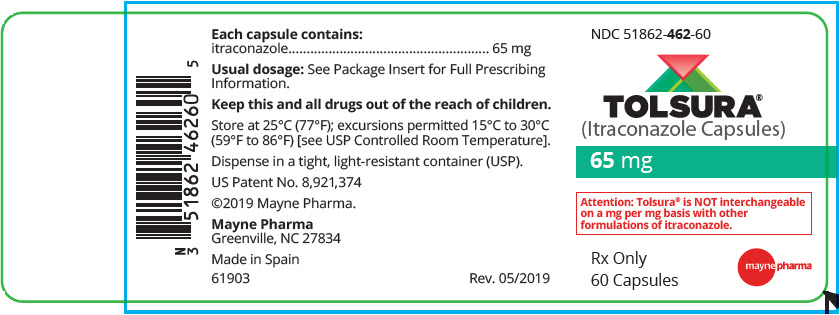
Tolsura Itraconazole 65 mg Capsule, Gelatin Coated, 60-count
🆔 Identity & classification
Where does this data come from?
🏷️ RxNorm drug class
This medicine belongs to the Azole Antifungal class.
Where does this data come from?
🏭 Manufacturer & labeler
Where does this data come from?
🩺 Clinical
Itraconazole is used to treat fungal infections. Itraconazole is in a class of antifungals called triazoles. It works by slowing the growth of fungi that cause infection.
Read the full MedlinePlus article ↗- These are genuinely different products, not just different forms of the same thing. The oral solution is absorbed differently — your body actually gets more drug from it at the sam...
- Why can't I just swap my Sporanox capsules for the oral solution if I run out?
- It matters a lot — and the answer is different depending on which form you have. If you're taking capsules (Sporanox, Tolsura, or generic itraconazole capsules), always take them w...
- Does it matter if I take itraconazole with food or not?
Patient education
Supplement & herbal interactions
Some supplements/herbs that may interact with Itraconazole — tap one for details:
Where does this data come from?
Ask a licensed pharmacist directly — free, answered by our team.
💊 What it looks like
Where does this data come from?
🧪 Inactive Ingredients / Excipients
Inactive ingredients, also called excipients, are components of the drug product other than the active ingredient. They may include fillers, dyes, coatings, preservatives, flavors, or other formulation ingredients.
💡 Tap an ingredient (hover on desktop) to see what it is and why it’s used.
-
UNII H3R47K3TBD
FD&C Blue No. 1 is a synthetic blue dye approved for use in foods and medicines. It serves as a colorant to give the medication its distinctive appearance and help with product identification.
-
UNII 2G86QN327L
Gelatin is a protein derived from animal collagen, commonly used in medicines as a gelling agent and capsule material. It helps create soft or hard capsule shells that hold and release medication, and can also thicken liquid formulations.
-
UNII 87Y6436BKR
Hypromellose phthalate is a plant-derived polymer that forms a protective coating around pills and capsules. It dissolves in the intestines rather than the stomach, helping deliver the medicine to the right place for absorption.
-
UNII 70097M6I30
Magnesium stearate is a salt made from magnesium and stearic acid, a fatty substance. It's used in tablets and capsules as a lubricant and glidant to help ingredients flow smoothly during manufacturing and prevent sticking.
-
UNII 588X2YUY0A
Methylene chloride is a volatile organic solvent used in pharmaceutical manufacturing to dissolve and process active ingredients and other substances. It evaporates during production, helping create tablets, capsules, or coatings with uniform quality.
-
UNII ETJ7Z6XBU4
Silicon dioxide is a naturally occurring mineral used as a glidant and anti-caking agent. It helps powder ingredients flow smoothly and prevents clumping during manufacturing and storage.
-
UNII 5856J3G2A2
A starch-based powder made from potatoes and processed with sodium. It acts as a disintegrant, helping the tablet or capsule break apart quickly in the stomach so the medicine can be absorbed.
-
UNII 15FIX9V2JP
Titanium dioxide is a bright white mineral powder commonly used as a colorant and opacifying agent. It makes pills and tablets white or lighter in color and helps make coatings non-transparent.
8 inactive ingredients listed in the exact product block matched to this NDC.
Where does this data come from?
ingredient classCode="IACT" elements from the exact product block matched by this NDC. Label-section narrative from DailyMed / the openFDA label index is shown separately when available.Inactive ingredient FAQ
Are inactive ingredients the same for every manufacturer?
Why might an inactive ingredient be missing?
Can inactive ingredients matter?
💲 Pricing
A drug doesn't have one price. Each row is a different public payment system, and none is what you'd pay at the counter — that depends on your insurance. The ⓘ on each row explains what it measures.
| Price system | Per each | Per package |
|---|---|---|
| Retail pharmacies payNADAC · weekly | Not in the retail survey — common for institutional, discontinued, or low-volume packs. | |
| Medicaid paysCMS SDUD · 12 mo | $39.52 | $2,371.33 / 60 capsules |
| Medicare drug plans payPart D · quarterly | No Part D plan price is available for this NDC in our data. | |
Where does this data come from?
🔁 Therapeutic equivalents
| Product | Labeler | Pack | NADAC/unit | TE | Status | Price vs. this |
|---|---|---|---|---|---|---|
| Tolsura 65 mgthis 51862-0462-60 | Mayne | 60 capsules | — | — | FDA listed | — |
Where does this data come from?
⏳ Availability & generic status
FDA-approved generic versions are listed, and recent pricing/market data suggests they may be available — see Therapeutic equivalents.
Why the date isn’t exact: Generic timing can change because patents may be challenged, settled, licensed, added, removed, or worked around with a narrower label — and FDA approval does not always mean a pharmacy can get the generic today.
🛈 What do these terms mean?
- Patent
- Legal protection listed in the Orange Book that may delay generic approval or launch. Issued by the U.S. Patent & Trademark Office.
- Substance patent
- Covers the active drug molecule itself — the hardest to design around. A generic generally can’t launch until it expires.
- Formulation (product) patent
- Covers a specific formulation or dosage form. A generic can sometimes work around it with a different formulation.
- Method-of-use patent
- A patent covering one specific approved use of the drug — not necessarily the whole molecule. A generic can sometimes launch with a “skinny label” that carves out the protected use and keeps the others.
- Skinny label
- A generic label that omits a still-patented use when the FDA allows it — letting a generic reach the market for the unprotected uses.
- Exclusivity
- FDA-granted marketing protection, separate from patents — e.g. 5-yr new chemical entity, 7-yr orphan drug, or a +6-month pediatric extension.
- Paragraph IV
- A generic applicant’s formal challenge to a listed patent. It can potentially lead to earlier generic entry, but often involves litigation or a settlement.
- RLD / RS
- Reference Listed Drug — the brand product the FDA uses as the reference for generic applications. Reference Standard — the product the FDA expects generics to compare against in bioequivalence testing.
- TE / AB rating
- FDA therapeutic-equivalence rating. An AB rating generally means the FDA considers a generic therapeutically equivalent to — and substitutable for — the brand.
- LOE (loss of exclusivity)
- The latest patent or exclusivity currently listed — the loss-of-exclusivity / latest-listed-protection date shown on this page. Paragraph-IV challenges and settlements can move the real date earlier; FDA approval and a manufacturer’s decision to market can move it later.
Built from the FDA Orange Book. The bars above are scaled to each protection’s expiry; the red LOE marker is the last one to lapse.
| Patent | Type | Use code | Expires |
|---|---|---|---|
| US 10463740 ↗ | Method of use | U-2453 | Jun 21, 2033 |
| US 9713642 ↗ | Method of use | U-2453 | Jun 21, 2033 |
| US 10806792 ↗ | Drug product | — | Jun 21, 2033 |
| US 8921374 ↗ | Drug product | — | Jun 21, 2033 |
| US 9272046 ↗ | Drug product | — | Jun 21, 2033 |
Is there a generic version of TOLSURA 65 MG CAPSULE?
The FDA approved a generic — why can’t I get it at my pharmacy yet?
Why do different websites show different generic release dates?
What does “FDA listed” mean?
What does a patent or protection date mean here?
What does “current Orange Book estimate” mean?
Can a generic come out before the last patent expires?
Can a generic come out after the listed dates?
What is the difference between patents and exclusivity?
Why are there multiple patent dates?
Where does this data come from?
🗺️ Medicaid utilization & spend
💊 Medicaid utilization by pack size
📊 Medicare Part D spend CMS · PART D · 2026 (Q1)
🔬 Reported adverse events (FAERS)
Top reported reactions
Reporter sex
Serious outcomes
Where does this data come from?
📦 Packaging — all sizes for this product
| Package NDC | Description | Marketing start | Status |
|---|---|---|---|
| 51862-0462-08 | 8 CAPSULE, GELATIN COATED in 1 BOTTLE, PLASTIC (51862-462-08) | 2018-12-11 | Discontinued by firm |
| 51862-0462-60 You're viewing this | 60 CAPSULE, GELATIN COATED in 1 BOTTLE, PLASTIC (51862-462-60) | 2018-12-11 | Active |
| 51862-0462-88 | 8 CAPSULE, GELATIN COATED in 1 BOTTLE, PLASTIC (51862-462-88) | 2020-09-01 | Discontinued by firm |
Pack size FAQ
What quantity is in NDC 51862-0462-60?
What is the difference between NDC 51862-0462-60 and NDC 51862-0462-08?
What NDC number is used to bill for this package of Tolsura Itraconazole 65 mg Capsule, Gelatin Coated?
🧭 About this NDC listing & data coverage
What data is (and isn’t) available for this NDC — tap to expand
| NDC identity (package / product / labeler codes) | ✓ Available |
| Labeler | ✓ Available |
| Product & package description | ✓ Available |
| Marketing category & status | ✓ Available |
| Active ingredient / dosage form / route | ✓ Available |
| FDA label (SPL via DailyMed) | ✓ Available |
| Package photos | ✓ Available |
| Inactive ingredients (structured) | ✓ Available |
| NADAC pharmacy acquisition price (CMS) | — Not published for this NDC CMS publishes NADAC only for NDCs reported in its retail-pharmacy survey. |
| Orange Book / therapeutic-equivalence data | ✓ Available |
| HCPCS J-code billing crosswalk | — Not published for this NDC Most self-administered / retail products have no J-code — that is normal. |
| Medicaid utilization (CMS SDUD) | ✓ Available |
Questions about this listing
Why is there no price listed?
Is the NDC printed on the package the same as the 11-digit billing NDC?
What do the three segments of this NDC mean?
Is this package still being marketed?
Does this product come in other package sizes?
Who lists this product with the FDA?
Do I need a prescription for this product?
Where does this data come from?
📄 Full prescribing information FDA SPL
🚨 Boxed Warning ▾
WARNING: CONGESTIVE HEART FAILURE and DRUG INTERACTIONS WARNING: CONGESTIVE HEART FAILURE and DRUG INTERACTIONS See full prescribing information for complete boxed warning. Congestive Heart Failure TOLSURA can cause or exacerbate congestive heart failure (CHF). When itraconazole was administered intravenously to healthy human volunteers and dogs, negative inotropic effects were seen.
If signs or symptoms of congestive heart failure occur or worsen during administration of TOLSURA, reassess the benefit-risk of continuing treatment. ( 5.1 , 6 ). Drug Interactions Co-administration of certain drugs that are metabolized by human CYP3A4 enzymes are contraindicated with TOLSURA because plasma concentrations of such drugs are increased.
( 4.1 , 5.5 , 7.1 ) Co-administration with colchicine, fesoterodine and solifenacin is contraindicated in subjects with varying degrees of renal or hepatic impairment. ( 4.1 , 7.1 ) Co-administration with eliglustat is contraindicated in poor or intermediate metabolizers of CYP2D6 and in subjects taking strong or moderate CYP2D6 inhibitors. ( 4.1 , 7.1 ) Increased plasma concentrations of some of these drugs can lead to QT prolongation and ventricular tachyarrhythmias including occurrences of torsades de pointes, a potentially fatal arrhythmia.
( 4.1 , 5.5 , 7.1 ) Congestive Heart Failure TOLSURA can cause or exacerbate congestive heart failure (CHF). When itraconazole was administered intravenously to healthy human volunteers and dogs, negative inotropic effects were seen. If signs or symptoms of congestive heart failure occur or worsen during administration of TOLSURA, reassess the benefit and risk of continuing treatment [ see Warnings and Precautions (5.1) and Adverse Reactions (6.1) ] .
Drug Interactions Co-administration of certain drugs that are metabolized by human CYP3A4 enzymes are contraindicated with TOLSURA because plasma concentrations of such drugs are increased, which may also increase or prolong both the pharmacologic effects and/or adverse reactions to these drugs [see Contraindications (4.1) and Drug Interactions (7.1) ] Co-administration with colchicine, fesoterodine and solifenacin is contraindicated in subjects with varying degrees of renal or hepatic impairment, and Co-administration with eliglustat is contraindicated in subjects that are poor or intermediate metabolizers of CYP2D6 and in subjects taking strong or moderate CYP2D6 inhibitors.
Increased plasma concentrations of some of these drugs caused by co-administration with TOLSURA can lead to QT prolongation and/or ventricular tachyarrhythmias, including occurrences of torsades de pointes , a potentially fatal arrhythmia [see Contraindications (4.1) , Warnings and Precautions (5.5) and Drug Interactions (7.1) ] .
🎯 Indications and Usage ▾
1 INDICATIONS AND USAGE TOLSURA is indicated for the treatment of the following fungal infections in immunocompromised and non-immunocompromised adult patients: Blastomycosis, pulmonary and extrapulmonary Histoplasmosis, including chronic cavitary pulmonary disease and disseminated, non-meningeal histoplasmosis, and Aspergillosis, pulmonary and extrapulmonary, in patients who are intolerant of or who are refractory to amphotericin B therapy. Specimens for fungal cultures and other relevant laboratory studies (wet mount, histopathology, serology) should be obtained before therapy to isolate and identify causative organisms.
Therapy may be instituted before the results of the cultures and other laboratory studies are known; however, once these results become available, anti-fungal therapy should be adjusted accordingly TOLSURA is an azole antifungal indicated for the treatment of the following fungal infections in immunocompromised and non-immunocompromised adult patients ( 1 ): Blastomycosis, pulmonary and extrapulmonary Histoplasmosis, including chronic cavitary pulmonary disease and disseminated, non-meningeal histoplasmosis, and Aspergillosis, pulmonary and extrapulmonary, in patients who are intolerant of or who are refractory to amphotericin B therapy.
Limitations of Use: TOLSURA is not indicated for the treatment of onychomycosis ( 1 ) TOLSURA is NOT interchangeable or substitutable with other itraconazole products ( 1 ) Limitations of Use: TOLSURA is not indicated for the treatment of onychomycosis. TOLSURA is NOT interchangeable or substitutable with other itraconazole products due to the differences in the dosing between TOLSURA and other itraconazole products. Therefore, follow the specific dosage recommendations for TOLSURA [see Dosage and Administration (2) ].
⏱️ Dosage and Administration ▾
2 DOSAGE AND ADMINISTRATION TOLSURA must be administered with food. TOLSURA capsules must be swallowed whole. Do not chew, crush or break TOLSURA capsules.
Table 1 below describes the recommended dosage for TOLSURA. Table 1: Dosage and Administration of TOLSURA Indications Daily Dosing Treatment of Blastomycosis and Histoplasmosis Recommended dose 130 mg (2 × 65 mg capsules) once daily If no obvious improvement, or there is evidence of progressive fungal disease, the dose should be increased in 65 mg increments to a maximum of 260 mg/day (130 mg (2 × 65 mg capsules) twice daily). Doses above 130 mg/day should be given in two divided doses.
Treatment of Aspergillosis Recommended dose 130 mg (2 × 65 mg capsules) once daily 260 mg/day (130 mg (2 × 65 mg capsules) twice daily) Treatment in Life-Threatening Situations Although clinical studies did not provide for a loading dose, it is recommended, based on pharmacokinetic data, that a loading dose should be used. A loading dose of 130 mg (2 × 65 mg capsules) three times daily (390 mg/day) is recommended to be given for the first 3 days, followed by the appropriate recommended dosing based on indication. Treatment should be continued for a minimum of three months and until clinical parameters and laboratory tests indicate that the active fungal infection has subsided.
An inadequate period of treatment may lead to recurrence of active infection. Blastomycosis and Histoplasmosis - 130 mg to 260 mg daily ( 2 ) Aspergillosis - 130 mg to 260 mg daily ( 2 ) See full prescribing information for additional dosing for life-threatening situations. ( 2 ) TOLSURA must be administered with food.
( 2 ) Swallow whole. Do not chew crush or break. ( 2 )
💊 Dosage Forms and Strengths ▾
3 DOSAGE FORMS AND STRENGTHS TOLSURA (itraconazole capsules) is available in a size 1, hard gelatin capsules with light blue cap and white body, imprinted with "i-65" in black on the cap and containing 65 mg of itraconazole. Capsules: 65 mg ( 3 )
⛔ Contraindications ▾
4 CONTRAINDICATIONS Co-administration with certain drugs that either affect metabolism of itraconazole or whose metabolism is affected by itraconazole. ( 4.1 ) Hypersensitivity to itraconazole ( 4.2 )
4.1Drug Interactions Co-administration of certain drugs that are metabolized by human CYP3A4 substrates are contraindicated with TOLSURA because plasma concentrations of such drugs are increased, which may also increase or prolong both the pharmacologic effects and/or adverse reactions to these drugs [see Warnings and Precaution (5.5) and Drug Interactions (7.1) ] . Co-administration with colchicine, fesoterodine and solifenacin is contraindicated in subjects with varying degrees of renal or hepatic impairment. Co-administration with eliglustat is contraindicated in subjects that are poor or intermediate metabolizers of CYP2D6 and in subjects taking strong or moderate CYP2D6 inhibitors [see Drug Interactions (7.1) ] .
Increased plasma concentrations of some of these drugs due to co-administration of TOLSURA can lead to QT prolongation and ventricular tachyarrhythmias including occurrences of torsade de pointes , a potentially fatal arrhythmia [ see Drug Interactions (7.1) ] .
4.2Hypersensitivity TOLSURA is contraindicated in patients with known hypersensitivity to itraconazole. There is limited information regarding cross-hypersensitivity between itraconazole and other azole antifungal agents [see Warnings and Precautions (5.8) ] .
⚠️ Warnings and Cautions ▾
5 WARNINGS AND PRECAUTIONS Hepatotoxicity : Serious hepatotoxicity, including liver failure and death were reported with the use of itraconazole. Discontinue treatment if signs of liver dysfunction occur ( 5.2 ) Cardiac Dysrhythmias : Life-threatening cardiac dysrhythmias and/or sudden death have occurred in patients using certain drugs that are metabolized by human CYP450 enzymes concomitantly with oral itraconazole and/or other CYP3A4 inhibitors. ( 4 , 5.3 , 5.5 ) Pseudoaldosteronism : Manifested by the onset or worsening of hypertension, and abnormal laboratory findings.
Monitor blood pressure and potassium levels and manage as necessary ( 5.4 ). Peripheral Neuropathy : This has been reported in patients on long-term therapy with itraconazole. Monitor and promptly evaluate neurologic symptoms.
( 5.6 ) Hearing Loss : Reversible or permanent has been reported in patients. Discontinue treatment if hearing loss occurs ( 5.7 )
5.1Congestive Heart Failure TOLSURA can cause or exacerbate congestive heart failure (CHF) [see Boxed Warning and Adverse Reactions (6.1) ]. For patients with evidence of ventricular dysfunction such as CHF, history or risk factors for CHF, physicians should carefully review the risks and benefits of TOLSURA therapy. These risk factors include cardiac disease such as ischemic and valvular disease; significant pulmonary disease such as chronic obstructive pulmonary disease; and renal failure and other edematous disorders.
Inform such patients of the signs and symptoms of CHF and monitor carefully for signs and symptoms of CHF during treatment. If signs or symptoms of CHF appear or worsen during administration of TOLSURA, reassess the benefit-risk of continuing treatment. When itraconazole was administered intravenously to anesthetized dogs, a dose-related negative inotropic effect was demonstrated.
In a healthy volunteer study of itraconazole intravenous infusion, transient, asymptomatic decreases in left ventricular ejection fraction were observed using gated SPECT imaging; these resolved before the next infusion, 12 hours later. Itraconazole has been associated with reports of CHF, peripheral edema, and pulmonary edema. In post-marketing experience, heart failure was more frequently reported in patients receiving higher total daily doses of itraconazole of 400 mg although there were also cases reported among those receiving lower total daily doses [see Adverse Reactions (6.2) ] .
Calcium channel blockers can have negative inotropic effects which may be additive to those of itraconazole. In addition, itraconazole can inhibit the metabolism of calcium channel blockers. Therefore, when co-administering itraconazole and calcium channel blockers, monitor carefully for signs and symptoms of CHF during treatment due to an increased risk of CHF.
Concomitant administration of TOLSURA and felodipine or nisoldipine is contraindicated [see Contraindications (4.1) , Drug Interactions (7.1) and Adverse Reactions (6.2) ]
5.2Hepatotoxicity Itraconazole has been associated with cases of serious hepatotoxicity, including liver failure and death. Some of these cases had neither pre-existing liver disease nor a serious underlying medical condition, and some of these cases developed within the first week of treatment. If clinical signs or symptoms develop that are consistent with liver disease, discontinue treatment and perform testing for liver disease.
Continued TOLSURA use or reinstitution of treatment with TOLSURA is strongly discouraged unless there is a serious or life-threatening situation where the expected benefit exceeds the risk [ see Adverse Reactions (6.1) ].
5.3Cardiac Dysrhythmias Life-threatening cardiac dysrhythmias and/or sudden death have occurred in patients using drugs such as, pimozide, methadone, or quinidine concomitantly with oral itraconazole and/or other CYP3A4 inhibitors. Concomitant administration of these drugs with TOLSURA is contraindicated [see Boxed Warning , Contraindications (4) and Drug…
🤒 Adverse Reactions ▾
6 ADVERSE REACTIONS The following clinically significant adverse reactions are described elsewhere in the labeling: Congestive Heart Failure [see Warnings and Precautions (5.1) ] Hepatotoxicity [see Warnings and Precautions (5.2) ] Cardiac Dysrhythmias [see Warnings and Precautions (5.3) ] Pseudoaldosteronism [see Warnings and Precautions (5.4) ] Peripheral Neuropathy [see Warnings and Precautions (5.6) ] Hearing Loss [see Warnings and Precautions (5.7) ] Hypersensitivity Reactions [see Warnings and Precautions (5.8) ] Most common adverse reactions (incidence ≥ 1%) are nausea, rash, vomiting, edema, headache, diarrhea, fatigue, fever, pruritus, hypertension, abnormal hepatic function, abdominal pain, dizziness, hypokalemia, anorexia, malaise, decreased libido, somnolence, albuminuria, impotence ( 6.1 ) To report SUSPECTED ADVERSE REACTIONS, contact Mayne Pharma at 1-844-825-8500 or FDA at 1-800-FDA-1088 or www.fda.gov/medwatch .
6.1Clinical Trials Experience Because clinical trials are conducted under widely varying conditions, adverse reaction rates observed in the clinical trials of a drug cannot be directly compared to rates in the clinical trials of another drug and may not reflect the rates observed in clinical practice. Adverse Reactions in the Treatment of Systemic Fungal Infections Safety data with itraconazole capsules were derived from 602 patients treated for systemic fungal disease in U.S. clinical trials who were immunocompromised or receiving multiple concomitant medications.
Treatment was discontinued in 10.5% of patients due to adverse events. The median duration before discontinuation of therapy was 81 days (range: 2 to 776 days). Table 2 lists adverse reactions reported by at least 1% of patients.
Table 2: Clinical Trials of Systemic Fungal Infections: Adverse Reactions Occurring with an Incidence of ≥1% Body System/Adverse Reaction Incidence (%) (N=602) Gastrointestinal Nausea 11 Vomiting 5 Diarrhea 3 Abdominal Pain 2 Anorexia 1 Body as a Whole Edema 4 Fatigue 3 Fever 3 Malaise 1 Skin and Appendages Rash Rash tends to occur more frequently in immunocompromised patients receiving immunosuppressive medications. 9 Pruritus 3 Central/Peripheral Nervous System Headache 4 Dizziness 2 Psychiatric Libido Decreased 1 Somnolence 1 Cardiovascular Hypertension 3 Metabolic/Nutritional Hypokalemia 2 Urinary System Albuminuria 1 Liver and Biliary System Hepatic Function Abnormal 3 Reproductive System, Male Impotence 1 Adverse reactions reported at a rate of <1% included: constipation, gastritis, depression, insomnia, tinnitus, menstrual disorder, adrenal insufficiency, gynecomastia, and male breast pain.
Adverse Reactions Reported from Other Clinical Trials In addition, the following adverse reactions were reported in itraconazole-treated patients who participated in clinical trials: Hepatobiliary Disorders: hyperbilirubinemia; Cardiac Disorders: cardiac failure, left ventricular failure, tachycardia; General Disorders and Administration Site Conditions: face edema, chest pain, chills; Hepatobiliary Disorders: hepatic failure, jaundice; Investigations: alanine aminotransferase increased, aspartate aminotransferase increased, blood alkaline phosphatase increased, blood lactate dehydrogenase increased, blood urea increased, gammaglutamyltransferase increased, urine analysis abnormal; Metabolism and Nutrition Disorders: hyperglycemia, hyperkalemia, hypomagnesemia; Psychiatric Disorders: confusional state; Renal and Urinary Disorders: renal impairment; Respiratory, Thoracic and Mediastinal Disorders: dysphonia, cough; Skin and Subcutaneous Tissue Disorders: hyperhidrosis; Vascular Disorders: hypotension
6.2Postmarketing Experience Adverse reactions that have been identified during post-marketing experience with itraconazole are listed in Table 3. Because these reactions are reported voluntarily from a population of uncertain size, reliably estimating their frequency or establishing a causal relationship to drug exposure is n…
🔄 Drug Interactions ▾
7 DRUG INTERACTIONS Itraconazole is mainly metabolized through CYP3A4. Other drugs that either share this metabolic pathway or modify CYP3A4 activity may influence the pharmacokinetics of itraconazole. ( 4 , 5 , 7.1 , 7.2 )
7.1Effect of TOLSURA on Other Drugs Itraconazole and its major metabolite, hydroxy-itraconazole, are potent CYP3A4 inhibitors. Itraconazole is an inhibitor of the drug transporters P-glycoprotein and breast cancer resistance protein (BCRP). Consequently, itraconazole has the potential to interact with many concomitant drugs resulting in either increased or sometimes decreased concentrations of the concomitant drugs.
Increased concentrations may increase the risk of adverse reactions associated with the concomitant drug which can be severe or life-threatening in some cases (e.g., QT prolongation, Torsade de Pointes , respiratory depression, hepatic adverse reactions, hypersensitivity reactions, myelosuppression, hypotension, seizures, angioedema, atrial fibrillation, bradycardia, priapism). Reduced concentrations of concomitant drugs may reduce their efficacy. Table 4 lists examples of drugs that may have their concentrations affected by itraconazole, but is not a comprehensive list.
Refer to the approved product labeling to become familiar with the interaction pathways, risk potential, and specific actions to be taken with regards to each concomitant drug prior to initiating therapy with itraconazole. Although many of the clinical drug interactions in Table 4 are based on information with a similar azole antifungal, ketoconazole, these interactions are expected to occur with itraconazole. Table 4: Drug Interactions with TOLSURA that Affect Concomitant Drug Concentrations Concomitant Drug Within Class Prevention or Management Drug Interactions with TOLSURA that Increase Concomitant Drug Concentrations and May Increase Risk of Adverse Reactions Associated with the Concomitant Drug Alpha Blockers Alfuzosin Silodosin Tamsulosin Not recommended during and 2 weeks after TOLSURA treatment.
Analgesics Methadone Contraindicated during and 2 weeks after TOLSURA treatment. Fentanyl Not recommended during and 2 weeks after TOLSURA treatment. Alfentanil Buprenorphine (IV and sublingual) Oxycodone Based on clinical drug interaction information with itraconazole.
Sufentanil Monitor for adverse reactions. Concomitant drug dose reduction may be necessary. Antiarrhythmics Disopyramide Dofetilide Dronedarone Quinidine Contraindicated during and 2 weeks after TOLSURA treatment.
Digoxin Monitor for adverse reactions. Concomitant drug dose reduction may be necessary. Antibacterials Bedaquiline Based on 400 mg Bedaquiline once daily for 2 weeks.
Concomitant TOLSURA not recommended for more than 2 weeks at any time during bedaquiline treatment. Rifabutin Not recommended 2 weeks before, during, and 2 weeks after TOLSURA treatment. See also Table 5 .
Clarithromycin Monitor for adverse reactions. Concomitant drug dose reduction may be necessary. See also Table 5 .
Trimetrexate Monitor for adverse reactions. Concomitant drug dose reduction may be necessary. Anticoagulants and Antiplatelets Ticagrelor Contraindicated during and 2 weeks after TOLSURA treatment.
Apixaban Rivaroxaban Vorapaxar Not recommended during and 2 weeks after TOLSURA treatment. Cilostazol Dabigatran Warfarin Monitor for adverse reactions. Concomitant drug dose reduction may be necessary.
Anticonvulsants Carbamazepine Not recommended 2 weeks before, during, and 2 weeks after TOLSURA treatment. See also Table 5 . Antidiabetic Drugs Repaglinide Saxagliptin Monitor for adverse reactions.
Concomitant drug dose reduction may be necessary. Antihelminthics, Antifungals and Antiprotozoals Isavuconazonium Contraindicated during and 2 weeks after TOLSURA treatment. Praziquantel Monitor for adverse reactions.
Concomitant drug dose reduction may be necessary. Artemether-lumefantrine Quinine Monitor for adverse reactions. Antimigraine Drugs Ergot alkaloids (e.g., dihydroergota…
👥 Use in Specific Populations ▾
8 USE IN SPECIFIC POPULATIONS
8.1Pregnancy Risk Summary There are no data on exposure to itraconazole during pregnancy for the approved indications. Published epidemiologic studies of women exposed to short courses of treatment with itraconazole in the first trimester of pregnancy have reported no risk of major birth defects overall and inconclusive findings on the risk of miscarriage (see Data ) . In animal reproduction studies, itraconazole was found to cause a dose-related increase in maternal toxicity, embryotoxicity, and teratogenicity in rats at dosage levels of approximately (6-25 times the maximum recommended human dose [MRHD] of 390 mg/day based on mg/kg comparisons), and in mice at dosage levels of approximately 80 mg/kg/day (12 times the MRHD).
All pregnancies have a background risk of birth defect, loss, or other adverse outcomes. The estimated background risk of major birth defects and miscarriage for the indicated populations is unknown. In the U.S. general population, the estimated background risk of major birth defects and miscarriage in clinically recognized pregnancies is 2 to 4% and 15 to 20%, respectively.
Data Human Data Published prospective and retrospective cohort studies of women exposed to short courses of treatment with itraconazole in the first trimester of pregnancy (sample size 198-687) have reported no increase in the rate of major birth defects. The most important methodological limitation of these studies is the short duration of exposure in pregnancy (mean duration 6.9 to 8.5 days), or the lack of information on treatment duration. The risk of prolonged exposure in pregnancy is not known.
Published prospective and retrospective cohort studies of pregnant women exposed to itraconazole (sample size 131-198) have reported inconsistent findings on the risk of miscarriage. Available data are inconclusive and limited by possible bias due to earlier enrollment and possible residual confounding in the exposed group compared to the unexposed group. Animal Data Itraconazole has been shown to cross the placenta in a rat model.
In animal reproduction studies, itraconazole administration to rats and mice during organogenesis resulted in maternal toxicity, embryotoxicity and teratogenicity at and above 40 and 80 mg/kg respectively (doses equivalent to 6- and 12-times the MRHD of 390 mg/day, based on mg/kg comparisons). In rats, the teratogenicity consisted of major skeletal defects; in mice, it consisted of encephaloceles and/or macroglossia.
8.2Lactation Risk Summary Itraconazole is excreted in human milk; however, there are no data on the amount of itraconazole in human milk, the effects on the breastfed child, or the effects on milk production. The developmental and health benefits of breastfeeding should be considered along with the mother's clinical need for TOLSURA and any potential adverse effects on the breastfed child from TOLSURA or from the underlying maternal condition.
8.4Pediatric Use Safety and effectiveness in pediatric patients have not been established. The long-term effects of itraconazole on bone growth in children are unknown. Bone lesions were observed in the young adult rats dosed with oral itraconazole for 3 to 12 months [see Nonclinical Toxicology (13.2) ] .
8.5Geriatric Use Clinical studies of itraconazole did not include sufficient numbers of subjects aged 65 years and over to determine whether they respond differently from younger subjects. It is advised to use TOLSURA Capsules in these patients only if it is determined that the potential benefit outweighs the potential risks. In general, it is recommended that the dose selection for an elderly patient should be taken into consideration, reflecting the greater frequency of decreased hepatic, renal, or cardiac function, and of concomitant disease or other drug therapy.
Reversible or permanent hearing loss has been reported in elderly patients receiving treatment with itraconazole. Several of these reports included concurrent a…
🤰 Pregnancy ▾
8.1Pregnancy Risk Summary There are no data on exposure to itraconazole during pregnancy for the approved indications. Published epidemiologic studies of women exposed to short courses of treatment with itraconazole in the first trimester of pregnancy have reported no risk of major birth defects overall and inconclusive findings on the risk of miscarriage (see Data ) . In animal reproduction studies, itraconazole was found to cause a dose-related increase in maternal toxicity, embryotoxicity, and teratogenicity in rats at dosage levels of approximately (6-25 times the maximum recommended human dose [MRHD] of 390 mg/day based on mg/kg comparisons), and in mice at dosage levels of approximately 80 mg/kg/day (12 times the MRHD).
All pregnancies have a background risk of birth defect, loss, or other adverse outcomes. The estimated background risk of major birth defects and miscarriage for the indicated populations is unknown. In the U.S. general population, the estimated background risk of major birth defects and miscarriage in clinically recognized pregnancies is 2 to 4% and 15 to 20%, respectively.
Data Human Data Published prospective and retrospective cohort studies of women exposed to short courses of treatment with itraconazole in the first trimester of pregnancy (sample size 198-687) have reported no increase in the rate of major birth defects. The most important methodological limitation of these studies is the short duration of exposure in pregnancy (mean duration 6.9 to 8.5 days), or the lack of information on treatment duration. The risk of prolonged exposure in pregnancy is not known.
Published prospective and retrospective cohort studies of pregnant women exposed to itraconazole (sample size 131-198) have reported inconsistent findings on the risk of miscarriage. Available data are inconclusive and limited by possible bias due to earlier enrollment and possible residual confounding in the exposed group compared to the unexposed group. Animal Data Itraconazole has been shown to cross the placenta in a rat model.
In animal reproduction studies, itraconazole administration to rats and mice during organogenesis resulted in maternal toxicity, embryotoxicity and teratogenicity at and above 40 and 80 mg/kg respectively (doses equivalent to 6- and 12-times the MRHD of 390 mg/day, based on mg/kg comparisons). In rats, the teratogenicity consisted of major skeletal defects; in mice, it consisted of encephaloceles and/or macroglossia.
🧒 Pediatric Use ▾
8.4Pediatric Use Safety and effectiveness in pediatric patients have not been established. The long-term effects of itraconazole on bone growth in children are unknown. Bone lesions were observed in the young adult rats dosed with oral itraconazole for 3 to 12 months [see Nonclinical Toxicology (13.2) ] .
🧓 Geriatric Use ▾
8.5Geriatric Use Clinical studies of itraconazole did not include sufficient numbers of subjects aged 65 years and over to determine whether they respond differently from younger subjects. It is advised to use TOLSURA Capsules in these patients only if it is determined that the potential benefit outweighs the potential risks. In general, it is recommended that the dose selection for an elderly patient should be taken into consideration, reflecting the greater frequency of decreased hepatic, renal, or cardiac function, and of concomitant disease or other drug therapy.
Reversible or permanent hearing loss has been reported in elderly patients receiving treatment with itraconazole. Several of these reports included concurrent administration of quinidine which is contraindicated [see Boxed Warning , Contraindications (4.1) and Drug Interactions (7.1) ] .
🆘 Overdosage ▾
10 OVERDOSAGE Itraconazole is not removed by dialysis. In the event of accidental overdosage, supportive measures should be employed. Activated charcoal may be given if considered appropriate.
🧬 Clinical Pharmacology ▾
12 CLINICAL PHARMACOLOGY
12.1Mechanism of Action Itraconazole is an azole antifungal drug [see Microbiology (12.4) ] .
12.3Pharmacokinetics General Pharmacokinetic Characteristics The steady-state pharmacokinetics of itraconazole following administration of a 130 mg twice daily dose regimen of TOLSURA (2 × 65 mg) was compared with a 200 mg twice daily dose regimen of itraconazole capsules (2 × 100 mg) immediately after a meal for 14.5 days in 16 healthy volunteers; the results from this study are presented in Table 6 below Table 6: Pharmacokinetics of Itraconazole Following Administration of TOLSURA and Itraconazole Capsules Given Twice Daily for
14.5Days Under Fed Conditions Standardized high-fat, high-calorie breakfast was given 30 minutes prior to dosing on the morning of Day 15; standardized meals given prior to all other doses. in 16 Healthy Subjects Parameter Geometric means ± standard deviation , T max presented as median (range) TOLSURA 130 mg twice daily (2 × 65 mg Capsules) Itraconazole 200 mg twice daily (2 × 100 mg Capsules) AUC 0-tau (hr*mcg/ml) 15.6 ± 3.7 14.9 ±3.8 C trough (mcg/ml) 1.2 ±0.4 1.0±0.3 C max,ss (mcg/ml) 1.6 ±0.4 1.5 ±0.4 T max,ss (h) 7.0 (1-10) 5.0 (1-8) Peak plasma concentrations of itraconazole after administration of a single dose of TOLSURA are reached within 2 to 6 hours following oral administration in either the fasted or fed states.
As a consequence of non-linear pharmacokinetics, itraconazole accumulates in plasma during multiple dosing of TOLSURA. Steady-state concentrations are generally reached within about 15 days, with mean C max values of 0.6 mcg/ml and 1.7 mcg/ml after oral administration of 130 mg once daily and 130 mg twice daily, respectively Absorption Effect of Food The effect of food on the steady-state pharmacokinetics of itraconazole following administration of a 130 mg twice daily dose regimen of TOLSURA (2 × 65 mg) for 14.5 days under fed and fasted conditions was evaluated in 20 healthy volunteers.
A high-fat meal with total caloric content of 919 calories (526 fat calories, 260 carbohydrate calories and 133 protein calories) was used in the study. The results are shown in Table 7 below. Table 7: Pharmacokinetic Parameters of Itraconazole Following Administration of TOLSURA 130 mg (2 × 65 mg capsules) Given Twice Daily for
14.5Days Under Fed and Fasted Conditions in 20 Healthy Subjects Parameter Treatment Geometric Mean Fed/Fasted Ratio (%) 90% Confidence Interval C max_ss (mcg/mL) Fed 1.4 ± 0.6 73.7 69.0,
77.3Fasted 1.9 ±
0.9C trough,ss (mcg/mL) Fed 1.0 ± 0.3 90.0 86.4,
97.0Fasted 1.1 ±
0.6AUC tau (hr*mcg/mL) Fed 13.4 ± 5.0 78.4 74.5,
81.9Fasted 17.1 ±
8.0Median Range T max (hr) Fed 4.00 0.5 to 10 Fasted 3.50 0.5 to 5 Distribution Most of the itraconazole in plasma is bound to protein (99.8%), with albumin being the main binding component (99.6% for the hydroxy-metabolite). It has also a marked affinity for lipids. Only 0.2% of the itraconazole in plasma is present as free drug.
Itraconazole is distributed in a large apparent volume in the body (>700 L), suggesting extensive distribution into tissues. Concentrations in lung, kidney, liver, bone, stomach, spleen and muscle were found to be two to three times higher than corresponding concentrations in plasma, and the uptake into keratinous tissues, skin in particular, up to four times higher. Concentrations in the cerebrospinal fluid are much lower than in plasma.
Elimination The terminal half-life of itraconazole following repeated dose administration of TOLSURA ranges between 34 to 42 hours under fed conditions. Metabolism Itraconazole is extensively metabolized by the liver into a large number of metabolites. In vitro studies have shown that CYP3A4 is the major enzyme involved in the metabolism of itraconazole.
The main metabolite is hydroxy-itraconazole, which has in vitro antifungal activity comparable to itraconazole; trough plasma concentrations of this metabolite are about twice those of itraconazole. Exc…
🧬 Mechanism of Action ▾
12.1Mechanism of Action Itraconazole is an azole antifungal drug [see Microbiology (12.4) ] .
📦 How Supplied / Storage and Handling ▾
16 HOW SUPPLIED/STORAGE AND HANDLING TOLSURA (itraconazole capsules) is supplied in a size 1, hard gelatin capsules with light blue cap and white body, imprinted with "i-65" in black on the cap and containing 65 mg of itraconazole. TOLSURA capsules are supplied as follows: Bottles of 8 capsules Bottles of 60 capsules NDC 51862-462-88 NDC 51862-462-60 Store at 25°C (77°F); excursions permitted 15°C to 30°C (59°F to 86°F) [see USP Controlled Room Temperature]. Dispense in a tight, light resistant container.
📦 Storage and Handling ▾
Store at 25°C (77°F); excursions permitted 15°C to 30°C (59°F to 86°F) [see USP Controlled Room Temperature]. Dispense in a tight, light resistant container.
📋 Description ▾
11 DESCRIPTION TOLSURA (itraconazole capsules) is an azole antifungal drug for oral use. Itraconazole is an equal mixture of four diastereomers (two enantiomeric pairs), each possessing three chiral centers. It may be represented by the following structural formula and nomenclature: (±)-1-[( R *)- sec -butyl]-4-[ p -[4-[ p -[[(2 R *,4 S *)-2-(2,4-dichlorophenyl)-2-(1 H -1,2,4-triazol-1-ylmethyl)-1,3-dioxolan-4-yl]methoxy]phenyl]-1-piperazinyl]phenyl]-Δ 2 -1,2,4-triazolin-5-one mixture with (±)-1-[( R *)- sec -butyl]-4-[ p -[4-[ p -[[(2 S *,4 R *)-2-(2,4-dichlorophenyl)-2-(1 H -1,2,4-triazol-1-ylmethyl)-1,3-dioxolan-4-yl]methoxy]phenyl]-1-piperazinyl]phenyl]-Δ 2 -1,2,4-triazolin-5-one or (±)-1-[( RS )- sec -butyl]-4-[ p -[4-[ p -[[(2 R ,4 S )-2-(2,4-dichlorophenyl)-2-(1 H -1,2,4-triazol-1-ylmethyl)-1,3-dioxolan-4-yl]methoxy]phenyl]-1-piperazinyl]phenyl]-Δ 2 -1,2,4-triazolin-5-one.
Itraconazole has a molecular formula of C 35 H 38 Cl 2 N 8 O 4 and a molecular weight of 705.64. It is a white to slightly yellowish powder. It is insoluble in water, very slightly soluble in alcohols, and freely soluble in dichloromethane.
It has a pKa of 3.70 (based on extrapolation of values obtained from methanolic solutions) and a log (n-octanol/water) partition coefficient of 5.66 at pH 8.1. Each TOLSURA capsule contains 65 mg of itraconazole dispersed in a polymer matrix and encapsulated in a hard gelatin capsule. The inactive ingredients are colloidal silicon dioxide, hypromellose phthalate, magnesium stearate and sodium starch glycolate.
Chemical Structure
💬 Information for Patients ▾
17 PATIENT COUNSELING INFORMATION Advise the patient to read the FDA-approved patient labeling (Patient Information). Important Administration Instructions Instruct the patients that TOLSURA: Cannot be interchanged or substituted with other itraconazole products. Must be swallowed whole and administered with food.
Congestive Heart Failure Inform patients about the signs and symptoms of congestive heart failure. Instruct them to discontinue TOLSURA and contact their healthcare provider immediately, if these signs or symptoms occur during TOLSURA administration [see Warnings and Precautions (5.1) ] . Hepatoxicity Instruct patients to stop TOLSURA treatment immediately and contact their healthcare provider if any signs and symptoms suggestive of liver dysfunction develop.
Such signs and symptoms may include unusual fatigue, anorexia, nausea and/or vomiting, jaundice, dark urine, or pale stools [see Warnings and Precautions (5.2) ] . Use with Proton Pump Inhibitors and Potential Drug Interactions Advise patients to discuss with their physician the use of TOLSURA with proton pump inhibitors, such as omeprazole. Instruct patients to contact their physician before taking any other concomitant medications with TOLSURA to ensure there are no potential drug interactions [see Contraindications (4.1 , 4.2) , Warnings and Precautions (5.5) and Drug interactions (7.2) ] .
Hearing Loss Instruct patients that hearing loss can occur with the use of TOLSURA. The hearing loss usually resolves when treatment is stopped but can persist in some patients. Advise patients to inform their healthcare provider if any hearing loss symptoms occur [see Warnings and Precautions (5.7) ] .
Vision Problem Instruct patients that dizziness or blurred/double vision can sometimes occur with TOLSURA. Advise patients that if they experience these dizziness or blurred/double vision, they should contact their healthcare provider, and instruct the patient not to drive or use machines [see Adverse Reactions (6.1) ] . Pregnancy Advise patients to notify their physician if they become pregnant or intend to become pregnant during therapy [see Use in Specific Populations (8.1) ] .