
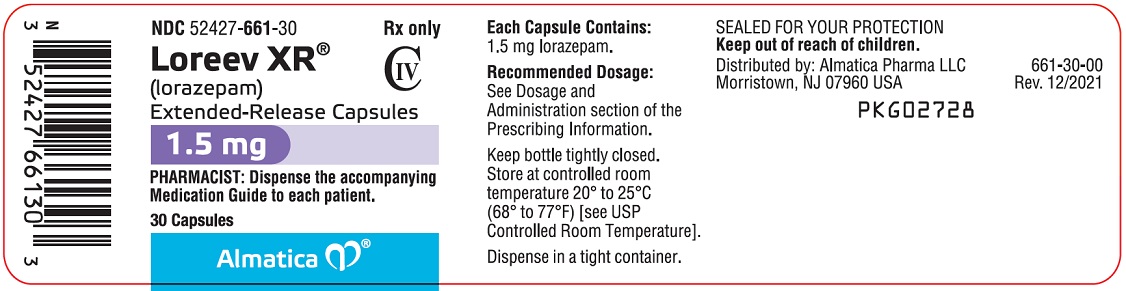
LOREEV XR lorazepam 1.5 mg Capsule, Extended Release, 30-count
Other active recalls for Lorazepam (different manufacturers) — 1 · tap to view
🆔 Identity & classification
Where does this data come from?
🏷️ RxNorm drug class
This medicine belongs to the Benzodiazepine class.
Where does this data come from?
🏭 Manufacturer & labeler
Where does this data come from?
🩺 Clinical
Lorazepam is used to relieve anxiety and treat insomnia. Lorazepam is in a class of medications called benzodiazepines. It works by slowing activity in the brain to allow for relaxation.
Read the full MedlinePlus article ↗- Lorazepam is mainly prescribed for anxiety disorders — it can calm anxious feelings and physical tension, especially for short periods. In tablet or liquid form, it's used for ongo...
- Yes, drowsiness is one of the most common effects — and for many people that's actually part of how it helps with anxiety. You may also notice some unsteadiness, dizziness, or mild...
- Will lorazepam make me feel really drowsy?
- No — please avoid alcohol completely while you're on lorazepam. Both alcohol and lorazepam slow down your central nervous system, and together they can make that effect dangerously...
Patient education
Supplement & herbal interactions
Some supplements/herbs that may interact with Lorazepam — tap one for details:
Lorazepam may be associated with lower levels of 1 nutrient — worth a chat with your pharmacist, not a cause for alarm.
Where does this data come from?
Ask a licensed pharmacist directly — free, answered by our team.
💊 What it looks like
Where does this data come from?
🧪 Inactive Ingredients / Excipients
Inactive ingredients, also called excipients, are components of the drug product other than the active ingredient. They may include fillers, dyes, coatings, preservatives, flavors, or other formulation ingredients.
💡 Tap an ingredient (hover on desktop) to see what it is and why it’s used.
-
UNII H3R47K3TBD
FD&C Blue No. 1 is a synthetic blue dye approved for use in foods and medicines. It serves as a colorant to give the medication its distinctive appearance and help with product identification.
-
UNII PN2ZH5LOQY
A synthetic red dye approved by the FDA for use in foods, medicines, and cosmetics. It serves as a colorant to make tablets, capsules, and liquids visually distinctive for product identification.
-
UNII 2G86QN327L
Gelatin is a protein derived from animal collagen, commonly used in medicines as a gelling agent and capsule material. It helps create soft or hard capsule shells that hold and release medication, and can also thicken liquid formulations.
-
UNII 230OU9XXE4
A waxy substance made from glycerin and stearic acid that acts as an emulsifier to blend oily and watery ingredients together. It also helps thicken and stabilize the medicine's texture.
-
UNII 3NXW29V3WO
Hypromellose is a plant-based thickener made from cellulose. It's used in medicines as a binder to hold ingredients together, a coating for tablets, and a thickener for liquids.
-
UNII EWQ57Q8I5X
Lactose monohydrate is a natural sugar derived from milk. It serves as a filler and binder in tablets and capsules, helping create the proper size, texture, and consistency of the medicine.
-
UNII OP1R32D61U
Microcrystalline cellulose is a purified form of cellulose, a natural fiber from plant sources. It acts as a binder and filler in tablets and capsules, helping hold ingredients together and give the medicine its shape and size.
-
UNII 99Q3C7L77T
A synthetic polymer made from acrylic compounds. It acts as a film-former and pH-dependent release agent in tablets and capsules, helping control how and where the active drug dissolves in the digestive system.
-
UNII 6OZP39ZG8H
Polysorbate 80 is a synthetic emulsifier derived from sorbitol and oleic acid. It helps mix oil and water-based ingredients together in medications and improves how the product disperses in the body.
-
UNII ETJ7Z6XBU4
Silicon dioxide is a naturally occurring mineral used as a glidant and anti-caking agent. It helps powder ingredients flow smoothly and prevents clumping during manufacturing and storage.
-
UNII O8232NY3SJ
A plant-based carbohydrate derived from corn kernels. It acts as a filler to add bulk, a binder to hold ingredients together, and a disintegrant to help the tablet break apart in your stomach for absorption.
-
UNII 7SEV7J4R1U
A powder made from a naturally occurring mineral. In medicines, talc works as a glidant and anti-caking agent, helping tablets and capsules flow smoothly during manufacturing and preventing clumping.
-
UNII 15FIX9V2JP
Titanium dioxide is a bright white mineral powder commonly used as a colorant and opacifying agent. It makes pills and tablets white or lighter in color and helps make coatings non-transparent.
-
UNII 8Z96QXD6UM
Triethyl citrate is a clear liquid derived from citric acid. It acts as a plasticizer and solvent in tablet coatings and film formulations, helping the coating remain flexible and adhere properly to the medicine.
14 inactive ingredients listed in the exact product block matched to this NDC.
Where does this data come from?
ingredient classCode="IACT" elements from the exact product block matched by this NDC. Label-section narrative from DailyMed / the openFDA label index is shown separately when available.Inactive ingredient FAQ
Are inactive ingredients the same for every manufacturer?
Why might an inactive ingredient be missing?
Can inactive ingredients matter?
💲 Pricing
A drug doesn't have one price. Each row is a different public payment system, and none is what you'd pay at the counter — that depends on your insurance. The ⓘ on each row explains what it measures.
| Price system | Per ea | Per package |
|---|---|---|
| Retail pharmacies payNADAC · weekly | $14.253 | $427.58 / 30 capsules |
| Medicaid paysCMS SDUD · 12 mo | $14.48 | $434.35 / 30 capsules |
| Medicare drug plans payPart D · quarterly | No Part D plan price is available for this NDC in our data. | |
Where does this data come from?
🔁 Therapeutic equivalents
| Product | Labeler | Pack | NADAC/unit | TE | Status | Price vs. this |
|---|---|---|---|---|---|---|
| Loreev Xr 1.5 mgthis 52427-0661-30 | Almatica | 30 capsules | $14.253 | — | Availability likely | — |
| Loreev Xr 1.5 mg 50090-7592-00 | A-S | 30 capsules | — | — | FDA listed | — |
Where does this data come from?
⏳ Availability & generic status
We did not find an FDA-approved generic match for this exact strength, form and route. Patent/protection dates below may affect future generic timing.
Why the date isn’t exact: Generic timing can change because patents may be challenged, settled, licensed, added, removed, or worked around with a narrower label — and FDA approval does not always mean a pharmacy can get the generic today.
🛈 What do these terms mean?
- Patent
- Legal protection listed in the Orange Book that may delay generic approval or launch. Issued by the U.S. Patent & Trademark Office.
- Substance patent
- Covers the active drug molecule itself — the hardest to design around. A generic generally can’t launch until it expires.
- Formulation (product) patent
- Covers a specific formulation or dosage form. A generic can sometimes work around it with a different formulation.
- Method-of-use patent
- A patent covering one specific approved use of the drug — not necessarily the whole molecule. A generic can sometimes launch with a “skinny label” that carves out the protected use and keeps the others.
- Skinny label
- A generic label that omits a still-patented use when the FDA allows it — letting a generic reach the market for the unprotected uses.
- Exclusivity
- FDA-granted marketing protection, separate from patents — e.g. 5-yr new chemical entity, 7-yr orphan drug, or a +6-month pediatric extension.
- Paragraph IV
- A generic applicant’s formal challenge to a listed patent. It can potentially lead to earlier generic entry, but often involves litigation or a settlement.
- RLD / RS
- Reference Listed Drug — the brand product the FDA uses as the reference for generic applications. Reference Standard — the product the FDA expects generics to compare against in bioequivalence testing.
- TE / AB rating
- FDA therapeutic-equivalence rating. An AB rating generally means the FDA considers a generic therapeutically equivalent to — and substitutable for — the brand.
- LOE (loss of exclusivity)
- The latest patent or exclusivity currently listed — the loss-of-exclusivity / latest-listed-protection date shown on this page. Paragraph-IV challenges and settlements can move the real date earlier; FDA approval and a manufacturer’s decision to market can move it later.
Built from the FDA Orange Book. The bars above are scaled to each protection’s expiry; the red LOE marker is the last one to lapse.
| Patent | Type | Use code | Expires |
|---|---|---|---|
| US 8999393 ↗ | Method of use | U-3210 | Jan 8, 2034 |
| US 8999393 ↗ | Method of use | U-3210 | Jan 8, 2034 |
| US 8999393 ↗ | Method of use | U-3210 | Jan 8, 2034 |
| US 8999393 ↗ | Method of use | U-3210 | Jan 8, 2034 |
Is there a generic version of LOREEV XR 1.5 MG CAPSULE?
The FDA approved a generic — why can’t I get it at my pharmacy yet?
Why do different websites show different generic release dates?
What does “FDA listed” mean?
What does a patent or protection date mean here?
What does “current Orange Book estimate” mean?
Can a generic come out before the last patent expires?
Can a generic come out after the listed dates?
What is the difference between patents and exclusivity?
Why are there multiple patent dates?
Where does this data come from?
🗺️ Medicaid utilization & spend
📊 Medicare Part D spend CMS · PART D · 2026 (Q1)
🔬 Reported adverse events (FAERS)
Top reported reactions
Reporter sex
Serious outcomes
Where does this data come from?
📦 Packaging — all sizes for this product
| Package NDC | Description | Marketing start | Status |
|---|---|---|---|
| 52427-0661-30 You're viewing this | 30 CAPSULE, EXTENDED RELEASE in 1 BOTTLE (52427-661-30) | 2022-03-01 | Active |
📄 Full prescribing information FDA SPL
🚨 Boxed Warning ▾
WARNING: RISKS FROM CONCOMITANT USE WITH OPIOIDS; ABUSE, MISUSE, AND ADDICTION; and DEPENDENCE AND WITHDRAWAL REACTIONS Concomitant use of benzodiazepines and opioids may result in profound sedation, respiratory depression, coma, and death. Reserve concomitant prescribing of these drugs for patients for whom alternative treatment options are inadequate. Limit dosages and durations to the minimum required.
Follow patients for signs and symptoms of respiratory depression and sedation [see Warnings and Precautions ( 5.1 ), Drug Interactions ( 7 )]. The use of benzodiazepines, including LOREEV XR, exposes users to risks of abuse, misuse, and addiction, which can lead to overdose or death. Abuse and misuse of benzodiazepines commonly involve concomitant use of other medications, alcohol, and/or illicit substances, which is associated with an increased frequency of serious adverse outcomes.
Before prescribing LOREEV XR and throughout treatment, assess each patient’s risk for abuse, misuse, and addiction [see Warnings and Precautions ( 5.2 )]. The continued use of benzodiazepines, including LOREEV XR, may lead to clinically significant physical dependence. The risks of dependence and withdrawal increase with longer treatment duration and higher daily dose.
Abrupt discontinuation or rapid dosage reduction of LOREEV XR after continued use may precipitate acute withdrawal reactions, which can be life-threatening. To reduce the risk of withdrawal reactions, use a gradual taper to discontinue LOREEV XR or reduce the dosage [see Dosage and Administration ( 2.4 ), Warnings and Precautions ( 5.3 )]. WARNING: RISKS FROM CONCOMITANT USE WITH OPIOIDS; ABUSE, MISUSE, AND ADDICTION; and DEPENDENCE AND WITHDRAWAL REACTIONS See full prescribing information for complete boxed warning.
Concomitant use of benzodiazepines and opioids may result in profound sedation, respiratory depression, coma, and death. Reserve concomitant prescribing of these drugs for use in patients for whom alternative treatment options are inadequate. Limit dosages and durations to the minimum required.
Follow patients for signs and symptoms of respiratory depression and sedation ( 5.1 , 7 ) The use of benzodiazepines, including LOREEV XR, exposes users to risks of abuse, misuse, and addiction, which can lead to overdose or death. Before prescribing LOREEV XR and throughout treatment, assess each patient’s risk for abuse, misuse, and addiction ( 5.2 ) Abrupt discontinuation or rapid dosage reduction of LOREEV XR after continued use may precipitate acute withdrawal reactions, which can be life-threatening. To reduce the risk of withdrawal reactions, use a gradual taper to discontinue LOREEV XR or reduce the dosage ( 2.4 , 5.3 )
🎯 Indications and Usage ▾
1 INDICATIONS AND USAGE LOREEV XR is indicated for the treatment of anxiety disorders in adults who are receiving stable, evenly divided, three times daily dosing with lorazepam tablets. LOREEV XR is a benzodiazepine indicated for the treatment of anxiety disorders in adults who are receiving stable, evenly divided, three times daily dosing with lorazepam tablets ( 1 )
⏱️ Dosage and Administration ▾
2 DOSAGE AND ADMINISTRATION Recommended dosage of LOREEV XR is equal to the total daily dose of lorazepam tablets (at the previous three times daily dosage) ( 2.1 ) Administer LOREEV XR orally once daily in the morning ( 2.2 ) Capsules may be swallowed whole or opened and the entire contents sprinkled onto applesauce. Do not crush or chew ( 2.2 ) For dosage adjustments, discontinue LOREEV XR and switch to lorazepam tablets to adjust dosage ( 2.3 )
2.1Recommended Dosage Initiate LOREEV XR in patients who are being treated with lorazepam tablets, administered three times daily in evenly divided doses (refer to the Prescribing Information of lorazepam tablets for the recommended dosage of lorazepam tablets). Discontinue lorazepam tablets and administer the first dose of LOREEV XR in the morning the day after the final dose of lorazepam tablets. The recommended once daily dosage of LOREEV XR is equal to the total daily dose of lorazepam tablets.
For example, the recommended dosage for patients who have been receiving lorazepam tablets at a dosage of 1 mg three times daily is LOREEV XR 3 mg once daily in the morning. The effectiveness of LOREEV XR use for more than 4 months has not been assessed in clinical studies. Healthcare providers should periodically re-evaluate longer term use of LOREEV XR.
2.2Administration Information Administer LOREEV XR orally once daily, in the morning, with or without food. Do not crush or chew LOREEV XR. Swallow LOREEV XR capsules whole or open the capsule and sprinkle the entire contents over a tablespoon of applesauce, followed by drinking water. Consume all the sprinkled LOREEV XR in its entirety, (without chewing) within 2 hours; do not store for future use.
2.3Dosage Increase for Inadequate Clinical Response If the clinical response to LOREEV XR is inadequate and a dosage increase in needed, discontinue LOREEV XR and switch to lorazepam tablets to increase the dosage. If an adequate clinical response is achieved with a stable, evenly divided three times daily dosage of lorazepam tablets, resume LOREEV XR once daily dosing with the total daily dose of lorazepam tablets [see Dosage and Administration ( 2.1 )] .
2.4Discontinuation or Dosage Reduction of LOREEV XR To reduce the risk of withdrawal reactions, use a gradual taper to discontinue LOREEV XR or reduce the dosage. If a patient develops withdrawal reactions, consider pausing the taper or increasing the dosage to the previous tapered dosage level. Subsequently decrease the dosage more slowly [see Warnings and Precautions ( 5.3 ), Drug Abuse and Dependence ( 9.3 )] .
2.5Concomitant Use with UDP-glucuronosyltransferase (UGT) Inhibitors If an UGT inhibitor is initiated during treatment with LOREEV XR, discontinue LOREEV XR and switch to lorazepam tablets to reduce the dosage [see Dosage and Administration ( 2.4 ), Drug Interactions ( 7 )] .
💊 Dosage Forms and Strengths ▾
3 DOSAGE FORMS AND STRENGTHS LOREEV XR (lorazepam) extended-release capsules are available as: 1 mg: Hard gelatin capsules with an opaque white body, yellow cap and grey printing ink; "ALM" is printed axially on the yellow cap and "658" is printed axially on the opaque white body 1.5 mg: Hard gelatin capsules with an opaque white body, purple cap and black printing ink; "ALM" is printed axially on the purple cap and "661" is printed axially on the opaque white body 2 mg: Hard gelatin capsules with an opaque white body, orange cap and grey printing ink; "ALM" is printed axially on the orange cap and "663" is printed axially on the opaque white body 3 mg: Hard gelatin capsules with an opaque white body, yellowish-green cap and grey printing ink; "ALM" is printed axially on the yellowish-green cap and "667" is printed axially on the opaque white body Extended-release capsules: 1 mg, 1.5 mg, 2 mg, and 3 mg ( 3 )
⛔ Contraindications ▾
4 CONTRAINDICATIONS LOREEV XR is contraindicated in patients with: hypersensitivity to benzodiazepines or to any of the ingredients in LOREEV XR [see Warnings and Precautions ( 5.7 )] . acute narrow-angle glaucoma Hypersensitivity to benzodiazepines or any ingredients in LOREEV XR ( 4 ) Acute narrow-angle glaucoma ( 4 )
⚠️ Warnings and Cautions ▾
5 WARNINGS AND PRECAUTIONS CNS Depression: May cause CNS depression. Caution patients receiving LOREEV XR against operating machinery or driving a motor vehicle as well to avoid the concomitant use of alcohol and other CNS depressant drugs during treatment ( 5.4 , 7 ) Patients with Depression or Psychosis: Use with caution in patients with signs or symptoms of depression. Prescribe the least number of capsules feasible to avoid intentional overdosage ( 5.5 ) Allergic Reactions to FD&C Yellow No.
5 (Tartrazine): Contains FD&C Yellow No. 5 (tartrazine) which may cause allergic type reactions (including bronchial asthma) in certain susceptible persons ( 5.7 ) Neonatal Sedation and Withdrawal Syndrome: LOREEV XR use during pregnancy can result in neonatal sedation and/or withdrawal ( 5.8 , 8.1 )
5.1Risks from Concomitant Use with Opioids Concomitant use of benzodiazepines, including LOREEV XR, and opioids may result in profound sedation, respiratory depression, coma, and death. Because of these risks, reserve concomitant prescribing of these drugs in patients for whom alternative treatment options are inadequate. Observational studies have demonstrated that concomitant use of opioid analgesics and benzodiazepines increases the risk of drug-related mortality compared to use of opioids alone.
If a decision is made to prescribe LOREEV XR concomitantly with opioids, prescribe the lowest effective dosages and minimum durations of concomitant use, and follow patients closely for signs and symptoms of respiratory depression and sedation. In patients already receiving an opioid analgesic, prescribe a lower initial dose of LOREEV XR than indicated in the absence of an opioid and titrate based on clinical response. If an opioid is initiated in a patient already taking LOREEV XR, prescribe a lower initial dose of the opioid and titrate based upon clinical response.
Advise both patients and caregivers about the risks of respiratory depression and sedation when LOREEV XR is used with opioids. Advise patients not to drive or operate heavy machinery until the effects of concomitant use with the opioid have been determined [see Drug Interactions ( 7 )] .
5.2Abuse, Misuse, and Addiction The use of benzodiazepines, including LOREEV XR, exposes users to the risks of abuse, misuse, and addiction, which can lead to overdose or death. Abuse and misuse of benzodiazepines often (but not always) involve the use of doses greater than the maximum recommended dosage and commonly involve concomitant use of other medications, alcohol, and/or illicit substances, which is associated with an increased frequency of serious adverse outcomes, including respiratory depression, overdose, or death [see Drug Abuse and Dependence ( 9.2 )] .
Before prescribing LOREEV XR and throughout treatment, assess each patient’s risk for abuse, misuse, and addiction (e.g., using a standardized screening tool). Use of LOREEV XR, particularly in patients at elevated risk, necessitates counseling about the risks and proper use of LOREEV XR along with monitoring for signs and symptoms of abuse, misuse, and addiction. Prescribe the lowest effective dosage; avoid or minimize concomitant use of CNS depressants and other substances associated with abuse, misuse, and addiction (e.g., opioid analgesics, stimulants); and advise patients on the proper disposal of unused drug.
If a substance use disorder is suspected, evaluate the patient and institute (or refer them for) early treatment, as appropriate.
5.3Dependence and Withdrawal Reactions To reduce the risk of withdrawal reactions, use a gradual taper to discontinue LOREEV XR or reduce the dosage (a patient-specific plan should be used to taper the dose) [see Dosage and Administration ( 2.4 )] . Patients at an increased risk of withdrawal adverse reactions after benzodiazepine discontinuation or rapid dosage reduction include those who take higher dosages, and those who have had longer durations of use. Acute Withdrawal Reactions The conti…
🤒 Adverse Reactions ▾
6 ADVERSE REACTIONS The following serious adverse reactions are described elsewhere in the labeling: Risks from Concomitant Use with Opioids [see Warnings and Precautions ( 5.1 )] Abuse, Misuse, and Addiction [see Warnings and Precautions ( 5.2 )] Dependence and Withdrawal Reactions [see Warnings and Precautions ( 5.3 )] Central Nervous System (CNS) Depression [see Warnings and Precautions ( 5.4 )] Patients with Depression or Psychosis [see Warnings and Precautions ( 5.5 )] Allergic Reactions to FD&C Yellow No. 5 (Tartrazine) [see Warnings and Precautions ( 5.7 )] Neonatal Sedation and Withdrawal Syndrome [see Warnings and Precautions ( 5.8 )] Risk in Patients with Impaired Respiratory Function [see Warnings and Precautions ( 5.9 )] The safety of LOREEV XR in adults is based on studies with lorazepam tablets.
The following adverse reactions associated with the use of lorazepam tablets were identified in clinical studies or postmarketing reports. Because some of these reactions were reported voluntarily from a population of uncertain size, it is not always possible to reliably estimate their frequency or establish a causal relationship to drug exposure. In a sample of approximately 3,500 patients treated for anxiety, the most frequent adverse reactions to lorazepam tablets were sedation (15.9%), dizziness (6.9%), weakness (4.2%), and unsteadiness (3.4%).
The incidence of sedation and unsteadiness increased with age. The following reported adverse reactions are categorized by System Organ Class (SOC): Blood and Lymphatic System Disorders: agranulocytosis, leukopenia, pancytopenia, thrombocytopenia Endocrine Disorders: syndrome of inappropriate antidiuretic hormone (SIADH) Eye Disorder: eye function/visual disturbance (including diplopia and blurred vision) Gastrointestinal Disorder: constipation, gastrointestinal symptoms including nausea General Disorders and Administration Site Conditions: asthenia, fatigue, hypothermia Hepatobiliary Disorders: jaundice Immune System Disorders: anaphylactoid reactions, hypersensitivity reactions Investigations: increase in bilirubin, increase in liver transaminases (including elevated LDH), increase in alkaline phosphatase Metabolism and Nutrition Disorders: change in appetite, hyponatremia Nervous System Disorders: ataxia, autonomic manifestations, coma, convulsions/seizures, drowsiness, dysarthria/slurred speech, extrapyramidal symptoms, headache, tremor, vertigo, memory impairment Psychiatric Disorders: amnesia, change in libido, confusion, decreased orgasm, depression, disinhibition, disorientation, euphoria, suicidal ideation/attempt, unmasking of depression Reproductive System and Breast Disorders: impotence Respiratory Thoracic and Mediastinal Disorders: apnea, respiratory depression, worsening of obstructive pulmonary disease, worsening of sleep apnea Skin and Subcutaneous Tissue Disorder: allergic skin reactions, alopecia, dermatological symptoms Paradoxical reactions, including anxiety, excitation, agitation, hostility, aggression, rage, sleep disturbances/insomnia, sexual arousal, and hallucinations may occur.
Small decreases in blood pressure and hypotension have been reported with immediate-release lorazepam. Many adverse reactions to benzodiazepines, including CNS effects and respiratory depression, are dose dependent, with more severe effects occurring with high doses. Most frequent adverse reactions: sedation, dizziness, weakness, unsteadiness ( 6 ) To report SUSPECTED ADVERSE REACTIONS, contact Almatica Pharma LLC at 1-877-447-7979 or FDA at 1-800-FDA-1088 or www.fda.gov/medwatch.
🔄 Drug Interactions ▾
7 DRUG INTERACTIONS Table 1 presents clinically significant interactions with LOREEV XR. Use with Opioids: Increase the risk of respiratory depression ( 7 ) CNS depressants: Additive CNS depressant effects (7) Alcohol: Avoid use. Increases the release rate of LOREEV XR (7) UGT Inhibitors: Avoid initiation of UGT inhibitors.
Dose reduction requires switching to lorazepam tablets for dose adjustment (7) Table 1: Clinically Significant Drug Interactions with LOREEV XR. Opioids Clinical Impact The concomitant use of benzodiazepines and opioids increases the risk of respiratory depression because of actions at different receptor sites in the CNS that control respiration. Benzodiazepines interact at gamma-aminobutyric acid (GABA A ) sites and opioids interact primarily at mu receptors.
When benzodiazepines and opioids are combined, the potential for benzodiazepines to significantly worsen opioid-related respiratory depression exists [see Warnings and Precautions ( 5.1 )] . Intervention Limit dosage and duration of concomitant use of LOREEV XR and opioids, and monitor patients closely for respiratory depression and sedation. Alcohol Clinical Impact Based on an in vitro study, alcohol increases the release rate of LOREEV XR [see Clinical Pharmacology ( 12.3 )] .
Intervention Avoid concomitant use of alcohol during treatment with LOREEV XR [see Warnings and Precautions ( 5.4 )] . CNS-Depressants Clinical Impact Benzodiazepines, including LOREEV XR, increase CNS-depressant effects when administered with other CNS depressants. Concomitant use of clozapine and LOREEV XR may produce marked sedation, excessive salivation, hypotension, ataxia, delirium, and respiratory arrest.
Intervention Avoid co-administration of alcohol with LOREEV XR. Use caution if LOREEV XR is co-administered with other CNS-depressants [see Warnings and Precautions (5.4)] . Inhibitors of UGT Clinical Impact Concomitant use of LOREEV XR with UGT inhibitors may increase lorazepam exposure [see Clinical Pharmacology (12.3)] , which may increase the risk of adverse reactions.
Intervention Avoid initiating an UGT inhibitor during treatment with LOREEV XR. If an UGT inhibitor is initiated, discontinue LOREEV XR and switch to lorazepam tablets [see Dosage and Administration ( 2.5 )] .
👥 Use in Specific Populations ▾
8 USE IN SPECIFIC POPULATIONS Lactation: Breastfeeding not recommended ( 8.2 )
8.1Pregnancy Pregnancy Exposure Registry There is a pregnancy exposure registry that monitors pregnancy outcomes in women exposed to LOREEV XR during pregnancy. Health care providers are encouraged to register patients by calling the National Pregnancy Registry for Psychiatric Medications at 1-866-961-2388 or by visiting online at https://womensmentalhealth.org/pregnancyregistry. Risk Summary Neonates born to mothers using benzodiazepines late in pregnancy have been reported to experience symptoms of sedation and/or neonatal withdrawal [see Warnings and Precautions ( 5.8 ), Clinical Considerations] .
Available data from published observational studies of pregnant women exposed to benzodiazepines do not report a clear association with benzodiazepines and major birth defects (see Data) . In animal studies, administration of lorazepam during the organogenesis period of pregnancy resulted in increased incidences of fetal malformations at doses greater than those used clinically. Data for benzodiazepines suggest the possibility of increased neuronal cell death and long-term effects on neurobehavioral function based on findings in animals following prenatal or early postnatal exposure at clinically relevant doses (see Data) .
The background risk of major birth defects and miscarriage for the indicated population is unknown. All pregnancies have a background risk of birth defect, loss, or other adverse outcomes. In the U.S. general population, the estimated background risk of major birth defects and miscarriage in clinically recognized pregnancies is 2% to 4% and 15% to 20%, respectively.
Clinical Considerations Fetal/Neonatal Adverse Reactions Benzodiazepines cross the placenta and may produce respiratory depression, hypotonia and sedation in neonates. Monitor neonates exposed to LOREEV XR during pregnancy or labor for signs of sedation, respiratory depression, hypotonia, and feeding problems. Monitor neonates exposed to LOREEV XR during pregnancy for signs of withdrawal.
Manage these neonates accordingly [see Warnings and Precautions ( 5.8 )] . Data Human Data Published data from observational studies on the use of benzodiazepines during pregnancy do not report a clear association with benzodiazepines and major birth defects. Although early studies reported an increased risk of congenital malformations with diazepam and chlordiazepoxide, there was no consistent pattern noted.
In addition, the majority of more recent case-control and cohort studies of benzodiazepine use during pregnancy, which were adjusted for confounding exposures to alcohol, tobacco and other medications, have not confirmed these findings. Animal Data Reproductive studies in animals were performed in mice, rats, and two strains of rabbits. A low incidence of malformations (reduction of tarsals, tibia, metatarsals, mal-rotated limbs, gastroschisis, malformed skull, and microphthalmia) were seen in drug-treated rabbits without relationship to dosage.
Although all of these anomalies were not present in the concurrent control group, they have been reported to occur randomly in historical controls. At doses of 40 mg/kg and higher there was evidence of fetal resorption and increased fetal loss in rabbits which was not seen at lower doses. In published animal studies, administration of benzodiazepines or other drugs that enhance GABAergic inhibition to neonatal rats has been reported to result in widespread apoptotic neurodegeneration in the developing brain.
The window of vulnerability to these changes in rats (postnatal days 0-14) includes a period of brain development that takes place during the third trimester of pregnancy in humans.
8.2Lactation Risk Summary Lorazepam is present in breastmilk. There are reports of sedation, poor feeding and poor weight gain in infants exposed to benzodiazepines through breast milk. The effects of lorazepam on milk production are unknown. Because of the…
🤰 Pregnancy ▾
8.1Pregnancy Pregnancy Exposure Registry There is a pregnancy exposure registry that monitors pregnancy outcomes in women exposed to LOREEV XR during pregnancy. Health care providers are encouraged to register patients by calling the National Pregnancy Registry for Psychiatric Medications at 1-866-961-2388 or by visiting online at https://womensmentalhealth.org/pregnancyregistry. Risk Summary Neonates born to mothers using benzodiazepines late in pregnancy have been reported to experience symptoms of sedation and/or neonatal withdrawal [see Warnings and Precautions ( 5.8 ), Clinical Considerations] .
Available data from published observational studies of pregnant women exposed to benzodiazepines do not report a clear association with benzodiazepines and major birth defects (see Data) . In animal studies, administration of lorazepam during the organogenesis period of pregnancy resulted in increased incidences of fetal malformations at doses greater than those used clinically. Data for benzodiazepines suggest the possibility of increased neuronal cell death and long-term effects on neurobehavioral function based on findings in animals following prenatal or early postnatal exposure at clinically relevant doses (see Data) .
The background risk of major birth defects and miscarriage for the indicated population is unknown. All pregnancies have a background risk of birth defect, loss, or other adverse outcomes. In the U.S. general population, the estimated background risk of major birth defects and miscarriage in clinically recognized pregnancies is 2% to 4% and 15% to 20%, respectively.
Clinical Considerations Fetal/Neonatal Adverse Reactions Benzodiazepines cross the placenta and may produce respiratory depression, hypotonia and sedation in neonates. Monitor neonates exposed to LOREEV XR during pregnancy or labor for signs of sedation, respiratory depression, hypotonia, and feeding problems. Monitor neonates exposed to LOREEV XR during pregnancy for signs of withdrawal.
Manage these neonates accordingly [see Warnings and Precautions ( 5.8 )] . Data Human Data Published data from observational studies on the use of benzodiazepines during pregnancy do not report a clear association with benzodiazepines and major birth defects. Although early studies reported an increased risk of congenital malformations with diazepam and chlordiazepoxide, there was no consistent pattern noted.
In addition, the majority of more recent case-control and cohort studies of benzodiazepine use during pregnancy, which were adjusted for confounding exposures to alcohol, tobacco and other medications, have not confirmed these findings. Animal Data Reproductive studies in animals were performed in mice, rats, and two strains of rabbits. A low incidence of malformations (reduction of tarsals, tibia, metatarsals, mal-rotated limbs, gastroschisis, malformed skull, and microphthalmia) were seen in drug-treated rabbits without relationship to dosage.
Although all of these anomalies were not present in the concurrent control group, they have been reported to occur randomly in historical controls. At doses of 40 mg/kg and higher there was evidence of fetal resorption and increased fetal loss in rabbits which was not seen at lower doses. In published animal studies, administration of benzodiazepines or other drugs that enhance GABAergic inhibition to neonatal rats has been reported to result in widespread apoptotic neurodegeneration in the developing brain.
The window of vulnerability to these changes in rats (postnatal days 0-14) includes a period of brain development that takes place during the third trimester of pregnancy in humans.
🧒 Pediatric Use ▾
8.4Pediatric Use The safety and effectiveness of LOREEV XR has not been established in pediatric patients.
🧓 Geriatric Use ▾
8.5Geriatric Use Clinical studies of lorazepam tablets were not adequate to determine whether patients age 65 years and older responded differently than younger patients; however, the incidence of sedation and unsteadiness was observed to increase with age [see Adverse Reactions ( 6 )] . Age does not appear to have a significant effect on lorazepam pharmacokinetics [see Clinical Pharmacology ( 12.3 )] . In general, dose selection for an elderly patient should start at the low end of the dosing range, reflecting the greater frequency of decreased hepatic, renal, or cardiac function, and of concomitant disease or other drug therapy.
Greater sensitivity (e.g., sedation) of some older individuals cannot be ruled out [see Warnings and Precautions ( 5.6 )] .
🆘 Overdosage ▾
10 OVERDOSAGE Overdosage of benzodiazepines is characterized by central nervous system depression ranging from drowsiness to coma. In mild to moderate cases, symptoms can include drowsiness, confusion, dysarthria, lethargy, hypnotic state, diminished reflexes, ataxia, and hypotonia. Rarely, paradoxical or disinhibitory reactions (including agitation, irritability, impulsivity, violent behavior, confusion, restlessness, excitement, and talkativeness) may occur.
In severe overdosage cases, patients may develop respiratory depression and coma. Overdosage of benzodiazepines in combination with other CNS depressants (including alcohol and opioids) may be fatal [see Warnings and Precautions ( 5.2 )] . Markedly abnormal (lowered or elevated) blood pressure, heart rate, or respiratory rate raise the concern that additional drugs and/or alcohol are involved in the overdosage.
In managing benzodiazepine overdosage, employ general supportive measures, including intravenous fluids and airway management. Flumazenil, a specific benzodiazepine receptor antagonist indicated for the complete or partial reversal of the sedative effects of benzodiazepines in the management of benzodiazepine overdosage, can lead to withdrawal and adverse reactions, including seizures, particularly in the context of mixed overdosage with drugs that increase seizure risk (e.g., tricyclic and tetracyclic antidepressants) and in patients with long-term benzodiazepine use and physical dependency.
The risk of withdrawal seizures with flumazenil use may be increased in patients with epilepsy. Flumazenil is contraindicated in patients who have received a benzodiazepine for control of a potentially lifethreatening condition (e.g., status epilepticus). If the decision is made to use flumazenil, it should be used as an adjunct to, not as a substitute for, supportive management of benzodiazepine overdosage.
See the flumazenil injection Prescribing Information. Consider contacting the Poison Help line (1-800-222-1222) or medical toxicologist for additional overdosage management recommendations.
🧬 Clinical Pharmacology ▾
12 CLINICAL PHARMACOLOGY
12.1Mechanism of Action Lorazepam exerts its effect for the treatment of anxiety disorders through binding to the benzodiazepine site of the gamma-aminobutyric acid-A (GABA A ) receptors in the brain and enhances GABA-mediated synaptic inhibition.
12.3Pharmacokinetics LOREEV XR pharmacokinetics are dose proportional over the dose range of 1 mg to 3 mg. Steady-state plasma concentrations are typically achieved after 5 days of once-daily administration. At steady-state, the mean area under concentration curve (AUC Tau ), the mean peak plasma concentration (C max ), and the mean minimum plasma concentration (C min ) of lorazepam following LOREEV XR 3 mg once-daily administration was 694 ng*h/mL, 35 ng/mL and 25 ng/mL, respectively.
AUC Tau , C max , and C min of lorazepam from lorazepam tablets following 1 mg, three-times daily administration were 765 ng*h/mL, 41 ng/mL and 29 ng/mL, respectively. Absorption Following a single 3 mg dose of LOREEV XR under fasted conditions, the median time to attain C max (T max ) is 14 hours, with a range of 7 to 24 hours. Effect of Food Administration of LOREEV XR with a high-fat and high calorie meal did not have a significant effect on exposure of LOREEV XR.
However, median T max of lorazepam delayed by approximately 2 hours. LOREEV XR administered under fasted conditions after sprinkling the entire contents onto one-tablespoon (15 mL) of applesauce did not significantly affect exposure and T max of lorazepam. Distribution Following a single 3 mg dose of LOREEV XR under fasted conditions, the mean apparent volume of distribution is approximately 117 L.
At clinically relevant concentrations, lorazepam is approximately 85% bound to plasma proteins. Elimination Oral mean plasma clearance (CL/F) is about 72 mL/min in adults following a single 3 mg dose of LOREEV XR and the mean elimination half-life of lorazepam is approximately 20.2 ± 7.2 hours. Metabolism Lorazepam is conjugated at its 3-hydroxy group in the liver into lorazepam glucuronide, which has no demonstratable CNS activity in animals.
Excretion Lorazepam glucuronide is excreted in the urine. Specific Populations Geriatric Patients Studies comparing young and elderly subjects have shown that advancing age does not have a significant effect on the pharmacokinetics of lorazepam tablets. However, a study involving single intravenous doses of 1.5 to 3 mg of lorazepam injection, mean total body clearance of lorazepam decreased by 20% in 15 elderly subjects of 60 to 84 years of age compared to that in 15 younger subjects of 19 to 38 years of age.
The clinical significance of the decrease in mean total body clearance of lorazepam injection in geriatric patients is unknown. Patients with Hepatic Impairment No pharmacokinetic studies were conducted with LOREEV XR in patients with hepatic impairment. Patients with Renal Impairment No pharmacokinetic studies were conducted with LOREEV XR in patients with renal impairment.
Lorazepam is poorly dialyzable. Lorazepam glucuronide, the inactive metabolite, may be highly dialyzable. Drug Interaction Studies Concurrent administration of lorazepam with valproate, an inhibitor of UGT, results in increased plasma concentrations and reduced clearance of lorazepam [see Dosage and Administration ( 2.5 ), Drug Interactions ( 7 )] .
Concurrent administration of lorazepam with probenecid, an inhibitor of UGT, may result in a more rapid onset or prolonged effect of lorazepam due to increased half-life and decreased total clearance [see Dosage and Administration ( 2.5 ), Drug Interactions ( 7 )] . Alcohol: An in vitro study showed significant increases of lorazepam release from LOREEV XR capsules at 2 hours with approximately 91-95% and 37-42% of the drug release in the presence of 40% and 20% alcohol, respectively [see Drug Interactions ( 7 )] . Effects of 5% and 10% alcohol on drug release were not significant at 2 hours.
There is no in vivo study conducted for the effect of alcohol on dr…
🧬 Mechanism of Action ▾
12.1Mechanism of Action Lorazepam exerts its effect for the treatment of anxiety disorders through binding to the benzodiazepine site of the gamma-aminobutyric acid-A (GABA A ) receptors in the brain and enhances GABA-mediated synaptic inhibition.
📦 How Supplied / Storage and Handling ▾
16 HOW SUPPLIED/STORAGE AND HANDLING LOREEV XR (lorazepam) extended-release capsules are available as: 1 mg: Hard gelatin capsules with an opaque white body, yellow cap and grey printing ink; "ALM" is printed axially on the yellow cap and "658" is printed axially on the opaque white body. NDC 52427-658-30, bottle of 30 capsules with child-resistant closure NDC 52427-658-01, bottle of 100 capsules with child-resistant closure 1.5 mg: Hard gelatin capsules with an opaque white body, purple cap and black printing ink; "ALM" is printed axially on the purple cap and "661" is printed axially on the opaque white body.
NDC 52427-661-30, bottle of 30 capsules with child-resistant closure NDC 52427-661-01, bottle of 100 capsules with child-resistant closure 2 mg: Hard gelatin capsules with an opaque white body, orange cap and grey printing ink; "ALM" is printed axially on the orange cap and "663" is printed axially on the opaque white body. NDC 52427-663-30, bottle of 30 capsules with child-resistant closure NDC 52427-663-01, bottle of 100 capsules with child-resistant closure 3 mg: Hard gelatin capsules with an opaque white body, yellowish-green cap and grey printing ink; "ALM" is printed axially on the yellowish-green cap and "667" is printed axially on the opaque white body.
NDC 52427-667-30, bottle of 30 capsules with child-resistant closure NDC 52427-667-01, bottle of 100 capsules with child-resistant closure Storage Store at 20°C to 25°C (68°F to 77°F); excursions permitted to 15°C to 30°C (59°F to 86°F) [see USP Controlled Room Temperature]. Keep bottles tightly closed. Dispense in a tight container.
📋 Description ▾
11 DESCRIPTION LOREEV XR contains lorazepam, a benzodiazepine. Lorazepam is a nearly white crystalline powder and is practically insoluble in water and slightly soluble in alcohol. It is a 1:1 mixture of (R) and (S) isomers.
The chemical name is ±-7-chloro-5-( o -chlorophenyl)-1,3-dihydro-3-hydroxy-2 H -1,4-benzodiazepin-2-one and its structural formula is: Molecular formula: C 15 H 10 Cl 2 N 2 O 2 ; Molecular weight: 321.16 LOREEV XR is intended for oral administration. Each capsule contains 1 mg, 1.5 mg, 2 mg, or 3 mg of lorazepam. The inactive ingredients are colloidal silicon dioxide, corn starch, gelatin, glyceryl monostearate, hypromellose, lactose monohydrate, methyl acrylate methyl methacrylate and methacrylic acid (7:3:1) copolymer 280000 dispersion, microcrystalline cellulose, polysorbate 80, talc, titanium dioxide, and triethyl citrate.
Additionally, the capsule shells contain the following colorants: 1 mg capsules: FD&C Yellow No. 5 1.5 mg capsules: FD&C Blue No. 1 and FD&C Red No.
3 2 mg capsules: D&C Yellow No. 10 and FD&C Red No. 3 3 mg capsules: D&C Yellow No.
10, FD&C Blue No. 1, FD&C Yellow No. 6
💬 Information for Patients ▾
17 PATIENT COUNSELING INFORMATION Advise the patient to read the FDA‐approved patient labeling ( Medication Guide ). Risks from Concomitant Use with Opioids Advise patients and caregivers about the risks of potentially fatal respiratory depression and sedation when LOREEV XR is used with opioids and not to use such drugs concomitantly unless supervised by a health care provider. Advise patients not to drive or operate heavy machinery until the effects of concomitant use with the opioid have been determined [see Warnings and Precautions ( 5.1 ), Drug Interactions ( 7 )] .
Abuse, Misuse, and Addiction Inform patients that the use of LOREEV XR, even at recommended dosages, exposes users to risks of abuse, misuse, and addiction, which can lead to overdose and death, especially when used in combination with other medications (e.g., opioid analgesics), alcohol, and/or illicit substances. Inform patients about the signs and symptoms of benzodiazepine abuse, misuse, and addiction; to seek medical help if they develop these signs and/or symptoms; and on the proper disposal of unused drug [see Warnings and Precautions ( 5.2 ), Drug Abuse and Dependence ( 9.2 )] .
Withdrawal Reactions Inform patients that the continued use of LOREEV XR may lead to clinically significant physical dependence and that abrupt discontinuation or rapid dosage reduction of LOREEV XR may precipitate acute withdrawal reactions, which can be life-threatening. Inform patients that in some cases, patients taking benzodiazepines have developed a protracted withdrawal syndrome with withdrawal symptoms lasting weeks to more than 12 months. Instruct patients that discontinuation or dosage reduction of LOREEV XR may require a slow taper [see Warnings and Precautions ( 5.3 ), Drug Abuse and Dependence ( 9.3 )] .
CNS Depression Advise patients about the risks of CNS depression. Instruct patients to avoid the consumption of alcohol during treatment with LOREEV XR. Advise patients to not drive a car or operate heavy machinery until they know how LOREEV XR affects them [see Warnings and Precautions ( 5.4 ), Drug Interactions ( 7 )] .
Patients with Depression or Psychosis Advise patients, their families, and caregivers to look for signs of suicidal ideation or worsening depression, and to inform the patient’s healthcare provider immediately [see Warnings and Precautions ( 5.5 )] . Concomitant Medications Advise patients to inform their healthcare provider of all medicines they take, including prescription and nonprescription medicines, vitamins and herbal supplements [see Drug Interactions ( 7 )] . Administration Information Advise patients to take LOREEV XR capsules whole or open the capsule and sprinkle the entire contents over a tablespoon of applesauce, followed by drinking water.
Advise patients to consume the mixture immediately, without chewing, within 2 hours; do not store for future use [see Dosage and Administration ( 2.2 )] . Pregnancy Advise pregnant females that use of LOREEV XR late in pregnancy can result in sedation (respiratory depression, lethargy, hypotonia) and/or withdrawal symptoms (hyperreflexia, irritability, restlessness, tremors, inconsolable crying, and feeding difficulties) in newborns [see Warnings and Precautions ( 5.8 ), Use in Specific Populations ( 8.1 )] . Instruct patients to inform their healthcare provider if they are pregnant.
Advise pregnant women that there is a pregnancy registry that monitors pregnancy outcomes in women exposed to LOREEV XR [see Use in Specific Populations ( 8.1 )] . Lactation Advise patients that breastfeeding is not recommended during treatment with LOREEV XR [see Use in Specific Populations ( 8.2 )] .
💬 Medication Guide ▾
This Medication Guide has been approved by the U.S. Food and Drug Administration. MEDICATION GUIDE LOREEV XR (lor-EEV ECKS-AR) (lorazepam) extended-release capsules, CIV What is the most important information I should know about LOREEV XR?
LOREEV XR may cause serious side effects, including: LOREEV XR is a benzodiazepine medicine. Taking benzodiazepines with opioid medicines, alcohol, or other central nervous system (CNS) depressants (including street drugs) can cause severe drowsiness, breathing problems (respiratory depression), coma and death. Get emergency help right away if any of the following happens: shallow or slowed breathing breathing stops (which may lead to the heart stopping) excessive sleepiness (sedation) Do not drive or operate heavy machinery until you know how taking LOREEV XR with opioids affects you.
Risk of abuse, misuse, and addiction. There is a risk for abuse, misuse, and addiction with benzodiazepines including LOREEV XR which can lead to overdose and serious side effects including coma and death. Serious side effects including coma and death have happened in people who have abused or misused benzodiazepines, including LOREEV XR.
These serious side effects may also include delirium, paranoia, suicidal thoughts or actions, seizures, and difficulty breathing. Call your healthcare provider or go to the nearest hospital emergency room right away if you develop any of these serious side effects. You can develop an addiction even if you take LOREEV XR as prescribed by your healthcare provider.
Take LOREEV XR exactly as your healthcare provider prescribed. Do not share your LOREEV XR with other people. Keep LOREEV XR in a safe place and away from children.
Physical dependence and withdrawal reactions . LOREEV XR can cause physical dependence and withdrawal reactions, especially if you continue to take LOREEV XR for several days to several weeks. Do not suddenly stop taking LOREEV XR .
Stopping LOREEV XR suddenly can cause serious and life-threatening side effects, including, unusual movements, responses, or expressions, seizures, sudden and severe mental or nervous system changes, depression, seeing or hearing things that others do not see or hear, an extreme increase in activity or talking, losing touch with reality, and suicidal thoughts or actions. Call your healthcare provider or go to the nearest hospital emergency room right away if you develop any of these serious side effects. Some people who stop taking benzodiazepines have symptoms that can last for several weeks to more than 12 months , including, anxiety, trouble remembering, learning, or concentrating, depression, problems sleeping, feeling like insects are crawling under your skin, weakness, shaking, muscle twitching, burning or prickling feeling in your hands, arms, legs or feet, and ringing in your ears.
Physical dependence is not the same as drug addiction. Your healthcare provider can tell you more about the differences between physical dependence and drug addiction. Do not take more LOREEV XR than prescribed or take LOREEV XR for longer than prescribed.
What is LOREEV XR? LOREEV XR is a prescription medicine used to treat anxiety disorders in adults who are receiving stable, evenly divided, 3 times a day dosing with lorazepam tablets. LOREEV XR is a federally controlled substance (CIV) because it contains lorazepam that can be abused or lead to dependence.
Keep LOREEV XR in a safe place to prevent misuse and abuse. Selling or giving away LOREEV XR may harm others, and is against the law. Tell your healthcare provider if you have abused or been dependent on alcohol, prescription medicines or street drugs.
It is not known if LOREEV XR is safe or effective in children. It is not known if LOREEV XR is safe and effective for use for longer than 4 months. Do not take LOREEV XR if you: are allergic to lorazepam, other benzodiazepines, or any of the ingredients in LOREEV XR.
See the end of this Medication Guide for a complete list of ingredients i…