
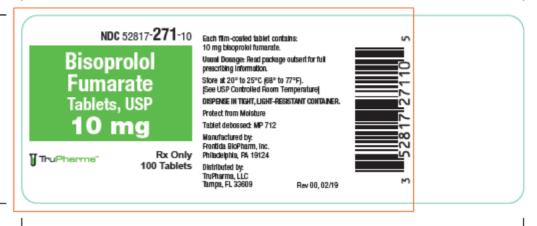
Bisoprolol 10 mg Tablet, Film Coated, 100-count — NDC 52817-271-10 (Billing 52817-0271-10)
This is a package of 100 tablets of Bisoprolol 10 mg Tablet, Film Coated from TruPharma, LLC, marketed since Jun 2019 and currently FDA-listed; retail pharmacies pay about $0.1603 per tablet (NADAC). It is the main listing for this product, which comes in 2 package sizes.
NDC database record
One package, one record: these facts belong to NDC 52817-271-10 alone.
- Record
- FDA NDC Directory package listing · Human prescription drug
- Code segments
- 52817 labeler · 271 product · 10 package
- Package marketed since
- Jun 20, 2019
- Sample package
- No — commercial package
- Listing certified through
- Dec 31, 2026
- Billing quantity
- 100 EA per package
- Barcode (UPC-A, from the NDC)
- 3 5281727110 5
- Medicaid fills, this package
- 1,183 prescriptions in the last four reported quarters
- FDA record last changed
- Jul 24, 2026
Identity & classification
Regulatory identifiers FDA, NLM and CMS codes for this package
Drug-database identifiers Medi-Span GPI and First Databank GCN / HICL / AHFS classification
- GSN (GCN sequence number): 017955
- GCN: 63820
- GPI-14 (Medi-Span): 33200022100320
- HICL (First Databank): 007396
- AHFS class code: 12:16.08.08
- RxCUI (RxNorm): 854901
Where does this data come from?
- FDA openFDA NDC Directory · synced Oct 8, 2026
- FDA label on DailyMed · label index refreshed Oct 6, 2026
- RxNorm (NLM RxNav) · catalog refreshed Oct 1, 2026
- Medi-Span GPI (licensed)
- First Databank (licensed) · refreshed Oct 8, 2026
RxNorm drug class
This medicine belongs to the beta-Adrenergic Blocker class.
Where does this data come from?
- RxClass (NLM) · catalog refreshed Oct 1, 2026
Clinical
Bisoprolol is used to treat high blood pressure. Bisoprolol is in a class of medications called beta blockers. It works by relaxing blood vessels and slowing heart rate to improve and decrease blood pressure.
Read the full MedlinePlus article ↗- Bisoprolol is used to lower high blood pressure (hypertension). It works by slowing your heart rate and reducing the force of each heartbeat, which takes pressure off your arteries...
- Please don't stop it suddenly without talking to your doctor first. Even if you feel great, stopping bisoprolol abruptly — especially if you have any underlying heart disease — can...
- Can I stop taking bisoprolol if I feel fine?
- Beta-blockers like bisoprolol generally aren't recommended if you have asthma or COPD because they can cause airway tightening (bronchospasm). That said, bisoprolol is more heart-s...
Patient education
Supplement & herbal interactions
Bisoprolol may be associated with lower levels of 1 nutrient — worth a chat with your pharmacist, not a cause for alarm.
Where does this data come from?
- MedlinePlus (NLM) · refreshed Oct 1, 2026
- FDA label on DailyMed · label index refreshed Oct 6, 2026
Ask a licensed pharmacist directly — free, answered by our team.
Pricing
A drug doesn't have one price. Each row is a different public payment system, and none is what you'd pay at the counter — that depends on your insurance. The ⓘ on each row explains what it measures.
| Price system | Per ea | Per package |
|---|---|---|
| Retail pharmacies payNADAC · weekly | $0.160 | $16.03 / 100 tablets |
| Medicaid paysCMS SDUD · 12 mo | $0.3810 | $38.10 / 100 tablets |
| Medicare drug plans payPart D · Q2 2026 | $0.3944 | $39.44 / 100 tablets |
Where does this data come from?
- CMS NADAC weekly file · file of Sep 30, 2026
- CMS ASP pricing files · refreshed Sep 20, 2026
- CMS Medicaid State Drug Utilization Data · through Q1 2026
- CMS Part D plan pricing files · refreshed Sep 24, 2026
- VA National Acquisition Center price file
Packaging — all sizes for this product
| Package NDC | Description | Per unit | Per pack | Marketing start | Marketing end | Status |
|---|---|---|---|---|---|---|
| 52817-0271-10 You're viewing this Main listing | 100 TABLET, FILM COATED in 1 BOTTLE | $0.1603 / ea | $16.03 | 2019-06-20 | — | Active |
| 52817-0271-30 52817-271-30 | 30 TABLET, FILM COATED in 1 BOTTLE | $0.1603 / ea | $4.81 | 2019-06-20 | — | Active |
You're viewing the largest of 2 pack sizes for this product.
This pack has the lowest per-ea cost of the 2 priced pack sizes ($0.1603 NADAC).
In Medicaid, this is the most-dispensed pack of this product — about 88% of fills over the last four reported quarters. See all packs ↓
Pack size FAQ
What quantity is in this package?
How does this package differ from NDC 52817-0271-30?
What NDC number is used to bill for this package of Bisoprolol 10 mg Tablet, Film Coated?
Prices are the latest CMS NADAC pharmacy acquisition cost per NDC; per-pack figures are per-unit × pack quantity, shown only when the pack is denominated in the same measure NADAC prices.
Therapeutic equivalents
| Product | Labeler | Pack | NADAC/unit | TE | Status | Price vs. this |
|---|---|---|---|---|---|---|
| Bisoprolol Fumarate 10 mg 16714-0530-01 | NorthStar | 30 tablets | $0.160 | AB | Availability likely | — |
| Bisoprolol Fumarate 10 mg 29300-0127-01 | Unichem | 100 tablets | $0.160 | AB | Availability likely | — |
| Bisoprolol fumarate 10 mg 43547-0617-03 | Solco | 30 tablets | $0.160 | AB | Availability likely | — |
| Bisoprolol 10 mgthis 52817-0271-10 | TruPharma, | 100 tablets | $0.160 | AB | Availability likely | — |
| Bisoprolol Fumarate 10 mg 62332-0604-30 | Alembic | 30 tablets | $0.160 | AB | Availability likely | — |
| Bisoprolol Fumarate 10 mg 64980-0710-01 | Rising | 100 tablets | $0.160 | AB | Availability likely | — |
| Bisoprolol Fumarate 10 mg 65862-0087-01 | Aurobindo | 100 tablets | $0.160 | AB | Availability likely | — |
| Bisoprolol Fumarate 10 mg 70095-0019-01 | Sun | 30 tablets | $0.160 | AB | Availability likely | — |
| Bisoprolol Fumarate 10 mg 70954-0456-10 | Novitium | 30 tablets | $0.160 | AB | Availability likely | — |
| Bisoprolol Fumarate 10 mg 72578-0112-01 | Viona | 100 tablets | $0.160 | AB | Availability likely | — |
| Bisoprolol 10 mg 42571-0471-01 | Micro | 100 tablets | — | AB | FDA listed | — |
| Bisoprolol Fumarate 10 mg 46708-0604-30 | Alembic | 30 tablets | — | AB | FDA listed | — |
| Bisoprolol Fumarate 10 mg 51407-0646-01 | Golden | 100 tablets | — | AB | FDA listed | — |
| Bisoprolol 10 mg 63629-6907-01 | Bryant | 30 tablets | — | AB | FDA listed | — |
| Bisoprolol fumarate 10 mg 69339-0237-01 | Natco | 100 tablets | — | — | FDA listed | — |
| Bisoprolol Fumarate 10 mg 70771-1727-01 | Zydus | 100 tablets | — | AB | FDA listed | — |
| Bisoprolol Fumarate 10 mg 71335-2244-01 | Bryant | 30 tablets | — | AB | FDA listed | — |
| Bisoprolol Fumarate 10 mg 71335-9755-01 | Bryant | 30 tablets | — | AB | FDA listed | — |
| Bisoprolol Fumarate 10 mg 72789-0395-82 | PD-Rx | 500 tablets | — | AB | FDA listed | — |
| Bisoprolol Fumarate 10 mg 72888-0093-00 | Advagen | 1000 tablets | — | AB | FDA listed | — |
| Bisoprolol Fumarate 10 mg 82638-0108-01 | Harman | 30 tablets | — | AB | FDA listed | — |
Where does this data come from?
- FDA openFDA NDC Directory · synced Oct 8, 2026
- FDA Orange Book · refreshed Oct 3, 2026
- CMS NADAC weekly file · file of Sep 30, 2026
Availability & generic status
This product is an FDA-approved generic. Other versions of the same drug are listed under Therapeutic equivalents, least expensive first.
Where does this data come from?
- FDA Orange Book · refreshed Oct 3, 2026
What it looks like
Where does this data come from?
- FDA label on DailyMed · label index refreshed Oct 6, 2026
Inactive Ingredients / Excipients
Inactive ingredients, also called excipients, are components of the drug product other than the active ingredient. They may include fillers, dyes, coatings, preservatives, flavors, or other formulation ingredients.
🧪 Avoiding an ingredient? See Bisoprolol inactive ingredients by manufacturer: every current product's list side by side, so you can ask your pharmacy for the version that does not list it.
💡 Tap an ingredient (hover on desktop) to see what it is and why it’s used.
-
UNII R12CBM0EIZ
A natural wax derived from a Brazilian palm tree, used as a coating and polish on tablets and capsules. It creates a smooth, shiny finish that protects the medicine and improves appearance.
-
UNII OP1R32D61U
Microcrystalline cellulose is a purified form of cellulose, a natural fiber from plant sources. It acts as a binder and filler in tablets and capsules, helping hold ingredients together and give the medicine its shape and size.
-
UNII 2S7830E561
Crospovidone is a synthetic polymer derived from povidone. It acts as a disintegrant, helping the tablet or capsule break apart quickly in the stomach so the active ingredient can be absorbed.
-
UNII O7TSZ97GEP
A mineral compound that serves as a filler and binding agent in tablets and capsules. It adds bulk to the medicine and helps hold ingredients together during manufacturing.
-
UNII 3NXW29V3WO
Hypromellose is a plant-based thickener made from cellulose. It's used in medicines as a binder to hold ingredients together, a coating for tablets, and a thickener for liquids.
-
UNII 70097M6I30
Magnesium stearate is a salt made from magnesium and stearic acid, a fatty substance. It's used in tablets and capsules as a lubricant and glidant to help ingredients flow smoothly during manufacturing and prevent sticking.
-
UNII VH2XOU12IE
Polydextrose is a synthetic polymer made from dextrose (sugar) that acts as a bulking agent and filler in medicines. It helps give tablets and capsules proper volume and texture while often adding slight sweetness.
-
UNII 3WJQ0SDW1A
Polyethylene glycol is a synthetic liquid or solid polymer used in medicines as a solvent, lubricant, and humectant. It helps dissolve active ingredients, reduces friction during manufacturing, and retains moisture in the final product.
-
UNII ETJ7Z6XBU4
Silicon dioxide is a naturally occurring mineral used as a glidant and anti-caking agent. It helps powder ingredients flow smoothly and prevents clumping during manufacturing and storage.
-
UNII O8232NY3SJ
A plant-based carbohydrate derived from corn kernels. It acts as a filler to add bulk, a binder to hold ingredients together, and a disintegrant to help the tablet break apart in your stomach for absorption.
-
UNII 15FIX9V2JP
Titanium dioxide is a bright white mineral powder commonly used as a colorant and opacifying agent. It makes pills and tablets white or lighter in color and helps make coatings non-transparent.
-
UNII XHX3C3X673
Triacetin is a clear, oily liquid made from glycerin and acetic acid. It works as a plasticizer and solvent in medicines, helping soften coatings and improve how liquids mix together in formulations.
12 inactive ingredients listed in the exact product block matched to this NDC.
Where does this data come from?
ingredient classCode="IACT" elements from the exact product block matched by this NDC. Label-section narrative from DailyMed / the openFDA label index is shown separately when available.- FDA label on DailyMed · label index refreshed Oct 6, 2026
- FDA openFDA NDC Directory · synced Oct 8, 2026
Inactive ingredient FAQ
Are inactive ingredients the same for every manufacturer?
Why might an inactive ingredient be missing?
Can inactive ingredients matter?
Manufacturer & labeler
More NDCs from TruPharma, LLC labeler code 52817
- Metoprolol Tartrate 75 mg Tablet NDC 52817-253-10
- Metoprolol Tartrate 100 mg Tablet NDC 52817-254-00
- Oxybutynin Chloride 5 mg Tablet NDC 52817-260-10
- Oxybutynin Chloride 2.5 mg Tablet NDC 52817-261-10
- Bisoprolol Fumarate 2.5 mg Tablet, Film Coated NDC 52817-268-30
- Bisoprolol 5 mg Tablet, Film Coated NDC 52817-270-10
- Oxazepam 10 mg Capsule NDC 52817-290-10
- Oxazepam 15 mg Capsule NDC 52817-291-10
- Oxazepam 30 mg Capsule NDC 52817-292-10
- Sildenafil Citrate 20 mg Tablet, Film Coated NDC 52817-295-00
- Clonazepam .25 mg Tablet NDC 52817-305-90
- Baclofen 15 mg Tablet NDC 52817-318-10
Where does this data come from?
- FDA openFDA NDC Directory · synced Oct 8, 2026
- Drugs@FDA
Full prescribing information FDA SPL
🎯 Indications and Usage ▾
INDICATIONS AND USAGE Bisoprolol fumarate tablets are indicated in the management of hypertension. It may be used alone or in combination with other antihypertensive agents.
⏱️ Dosage and Administration ▾
DOSAGE AND ADMINISTRATION The dose of bisoprolol fumarate must be individualized to the needs of the patient. The usual starting dose is 5 mg once daily. In some patients, 2.5 mg may be an appropriate starting dose (see WARNINGS : Bronchospastic Disease ).
If the antihypertensive effect of 5 mg is inadequate, the dose may be increased to 10 mg and then, if necessary, to 20 mg once daily. Patients with Renal or Hepatic Impairment In patients with hepatic impairment (hepatitis or cirrhosis) or renal dysfunction (creatinine clearance less than 40 mL/min), the initial daily dose should be 2.5 mg and caution should be used in dose titration. Since limited data suggest that bisoprolol fumarate is not dialyzable, drug replacement is not necessary in patients undergoing dialysis.
Geriatric Patients It is not necessary to adjust the dose in the elderly, unless there is also significant renal or hepatic dysfunction (see above and Geriatric Use in PRECAUTIONS ). Pediatric Patients There is no pediatric experience with bisoprolol fumarate.
⛔ Contraindications ▾
CONTRAINDICATIONS Bisoprolol fumarate tablets are contraindicated in patients with cardiogenic shock, overt cardiac failure, second or third degree AV block and marked sinus bradycardia.
⚠️ Warnings ▾
WARNINGS Cardiac Failure Sympathetic stimulation is a vital component supporting circulatory function in the setting of congestive heart failure, and beta-blockade may result in further depression of myocardial contractility and precipitate more severe failure. In general, beta-blocking agents should be avoided in patients with overt congestive failure. However, in some patients with compensated cardiac failure it may be necessary to utilize them.
In such a situation, they must be used cautiously. In Patients Without a History of Cardiac Failure Continued depression of the myocardium with beta-blockers can, in some patients, precipitate cardiac failure. At the first signs or symptoms of heart failure, discontinuation of bisoprolol fumarate tablets should be considered.
In some cases, beta-blocker therapy can be continued while heart failure is treated with other drugs. Abrupt Cessation of Therapy Exacerbation of angina pectoris, and, in some instances, myocardial infarction or ventricular arrhythmia, have been observed in patients with coronary artery disease following abrupt cessation of therapy with beta-blockers. Such patients should, therefore, be cautioned against interruption or discontinuation of therapy without the physician’s advice.
Even in patients without overt coronary artery disease, it may be advisable to taper therapy with bisoprolol fumarate tablets over approximately one week with the patient under careful observation. If withdrawal symptoms occur, bisoprolol fumarate tablets therapy should be reinstituted, at least temporarily. Peripheral Vascular Disease Beta-blockers can precipitate or aggravate symptoms of arterial insufficiency in patients with peripheral vascular disease.
Caution should be exercised in such individuals. Bronchospastic Disease PATIENTS WITH BRONCHOSPASTIC DISEASE SHOULD, IN GENERAL, NOT RECEIVE BETA-BLOCKERS. Because of its relative beta 1 -selectivity, however, bisoprolol may be used with caution in patients with bronchospastic disease who do not respond to, or who cannot tolerate other antihypertensive treatment.
Since beta 1 -selectivity is not absolute, the lowest possible dose of bisoprolol fumarate tablets should be used, with therapy starting at 2.5 mg. A beta 2 agonist (bronchodilator) should be made available. Major Surgery Chronically administered beta-blocking therapy should not be routinely withdrawn prior to major surgery; however, the impaired ability of the heart to respond to reflex adrenergic stimuli may augment the risks of general anesthesia and surgical procedures.
Diabetes and Hypoglycemia Beta-blockers may mask some of the manifestations of hypoglycemia, particularly tachycardia. Nonselective beta-blockers may potentiate insulin-induced hypoglycemia and delay recovery of serum glucose levels. Because of its beta1-selectivity, this is less likely with bisoprolol fumarate tablets.
However, patients subject to spontaneous hypoglycemia, or diabetic patients receiving insulin or oral hypoglycemic agents, should be cautioned about these possibilities and bisoprolol fumarate should be used with caution. Thyrotoxicosis Beta-adrenergic blockade may mask clinical signs of hyperthyroidism, such as tachycardia. Abrupt withdrawal of beta-blockade may be followed by an exacerbation of the symptoms of hyperthyroidism or may precipitate thyroid storm.
🤒 Adverse Reactions ▾
ADVERSE REACTIONS Safety data are available in more than 30,000 patients or volunteers. Frequency estimates and rates of withdrawal of therapy for adverse events were derived from two U.S. placebo-controlled studies. In Study A, doses of 5 mg, 10 mg and 20 mg bisoprolol fumarate were administered for 4 weeks.
In Study B, doses of 2.5 mg, 10 mg and 40 mg of bisoprolol fumarate were administered for 12 weeks. A total of 273 patients were treated with 5 mg to 20 mg of bisoprolol fumarate; 132 received placebo. Withdrawal of therapy for adverse events was 3.3% for patients receiving bisoprolol fumarate and 6.8% for patients on placebo.
Withdrawals were less than 1% for either bradycardia or fatigue/lack of energy. The following table presents adverse experiences, whether or not considered drug related, reported in at least 1% of patients in these studies, for all patients studied in placebo-controlled clinical trials (2.5 mg to 40 mg), as well as for a subgroup that was treated with doses within the recommended dosage range (5 mg to 20 mg). Of the adverse events listed in the table, bradycardia, diarrhea, asthenia, fatigue and sinusitis appear to be dose related.
Body System/Adverse Experience All Adverse Experiences (% a ) Bisoprolol Fumarate Placebo (n = 132) % 5 mg to 20 mg (n = 273) % 2.5 mg to 40 mg (n = 404) % Skin increased sweating 1.5 0.7
1.0Musculoskeletal arthralgia 2.3 2.2
2.7Central Nervous System dizziness 3.8 2.9 3.5 headache 11.4 8.8 10.9 hypoaesthesia 0.8 1.1
1.5Autonomic Nervous System dry mouth 1.5 0.7
1.3Heart Rate/Rhythm bradycardia 0 0.4
0.5Psychiatric vivid dreams 0 0 0 insomnia 2.3 1.5 2.5 depression 0.8 0
0.2Gastrointestinal diarrhea 1.5 2.6 3.5 nausea 1.5 1.5 2.2 vomiting 0 1.1
1.5Respiratory bronchospasm 0 0 0 cough 4.5 2.6 2.5 dyspnea 0.8 1.1 1.5 pharyngitis 2.3 2.2 2.2 rhinitis 3.0 2.9 4.0 sinusitis 1.5 2.2
2.2URI 3.8 4.8
5.0Body as a Whole asthenia 0 0.4 1.5 chest pain 0.8 1.1 1.5 fatigue 1.5 6.6 8.2 edema (peripheral) 3.8 3.7 3.0 a percentage of patients with event. The following is a comprehensive list of adverse experiences reported with bisoprolol fumarate in worldwide studies, or in post-marketing experience (in italics): Central Nervous System: Dizziness, unsteadiness , vertigo , syncope, headache, paresthesia, hypoaesthesia, hyperesthesia, somnolence, sleep disturbances , anxiety/restlessness, decreased concentration/memory.
Autonomic Nervous System: Dry mouth. Cardiovascular: Bradycardia, palpitations and other rhythm disturbances, cold extremities, claudication, hypotension, orthostatic hypotension, chest pain, congestive heart failure, dyspnea on exertion. Psychiatric: Vivid dreams, insomnia, depression.
Gastrointestinal: Gastric/epigastric/abdominal pain, gastritis, dyspepsia, nausea, vomiting, diarrhea, constipation, peptic ulcer. Musculoskeletal: Muscle/joint pain, arthralgia , back/neck pain, muscle cramps, twitching/tremor. Skin: Rash, acne, eczema, psoriasis , skin irritation, pruritus, flushing, sweating, alopecia, dermatitis , angioedema , exfoliative dermatitis , cutaneous vasculitis.
Special Senses: Visual disturbances, ocular pain/pressure, abnormal lacrimation, tinnitus, decreased hearing , earache, taste abnormalities. Metabolic: Gout. Respiratory: Asthma/bronchospasm, bronchitis, coughing, dyspnea, pharyngitis, rhinitis, sinusitis, URI.
Genitourinary: Decreased libido/impotence, Peyronie's disease , cystitis, renal colic, polyuria. Hematologic: Purpura. General: Fatigue, asthenia, chest pain, malaise, edema, weight gain, angioedema.
In addition, a variety of adverse effects have been reported with other beta-adrenergic blocking agents and should be considered potential adverse effects of bisoprolol fumarate tablets: Central Nervous System: Reversible mental depression progressing to catatonia, hallucinations, an acute reversible syndrome characterized by disorientation to time and place, emotional lability, slightly clouded sensorium. Allergic: Fever, combined with ach… [Excerpted — this section continues on DailyMed.]
🔄 Drug Interactions ▾
Drug Interactions Bisoprolol fumarate should not be combined with other beta-blocking agents. Patients receiving catecholamine-depleting drugs, such as reserpine or guanethidine, should be closely monitored, because the added beta-adrenergic blocking action of bisoprolol fumarate tablets may produce excessive reduction of sympathetic activity. In patients receiving concurrent therapy with clonidine, if therapy is to be discontinued, it is suggested that bisoprolol fumarate tablets be discontinued for several days before the withdrawal of clonidine.
Bisoprolol fumarate should be used with care when myocardial depressants or inhibitors of AV conduction, such as certain calcium antagonists [particularly of the phenylalkylamine (verapamil) and benzothiazepine (diltiazem) classes], or antiarrhythmic agents, such as disopyramide, are used concurrently. Both digitalis glycosides and beta-blockers slow atrioventricular conduction and decrease heart rate. Concomitant use can increase the risk of bradycardia.
Concurrent use of rifampin increases the metabolic clearance of bisoprolol fumarate, resulting in a shortened elimination half-life of bisoprolol fumarate. However, initial dose modification is generally not necessary. Pharmacokinetic studies document no clinically relevant interactions with other agents given concomitantly, including thiazide diuretics and cimetidine.
There was no effect of bisoprolol fumarate on prothrombin time in patients on stable doses of warfarin. Risk of Anaphylactic Reaction While taking beta-blockers, patients with a history of severe anaphylactic reaction to a variety of allergens may be more reactive to repeated challenge, either accidental, diagnostic or therapeutic. Such patients may be unresponsive to the usual doses of epinephrine used to treat allergic reactions.
🧒 Pediatric Use ▾
Pediatric Use Safety and effectiveness in pediatric patients have not been established.
🧓 Geriatric Use ▾
Geriatric Use Bisoprolol fumarate has been used in elderly patients with hypertension. Response rates and mean decreases in systolic and diastolic blood pressure were similar to the decreases in younger patients in the U.S. clinical studies. Although no dose-response study was conducted in elderly patients, there was a tendency for older patients to be maintained on higher doses of bisoprolol fumarate.
Observed reductions in heart rate were slightly greater in the elderly than in the young and tended to increase with increasing dose. In general, no disparity in adverse experience reports or dropouts for safety reasons was observed between older and younger patients. Dose adjustment based on age is not necessary.
🆘 Overdosage ▾
OVERDOSAGE The most common signs expected with overdosage of a beta-blocker are bradycardia, hypotension, congestive heart failure, bronchospasm and hypoglycemia. To date, a few cases of overdose (maximum: 2000 mg) with bisoprolol fumarate have been reported. Bradycardia and/or hypotension were noted.
Sympathomimetic agents were given in some cases, and all patients recovered. In general, if overdose occurs, bisoprolol fumarate therapy should be stopped and supportive and symptomatic treatment should be provided. Limited data suggest that bisoprolol fumarate is not dialyzable.
Based on the expected pharmacologic actions and recommendations for other beta-blockers, the following general measures should be considered when clinically warranted: Bradycardia Administer IV atropine. If the response is inadequate, isoproterenol or another agent with positive chronotropic properties may be given cautiously. Under some circumstances, transvenous pacemaker insertion may be necessary.
Hypotension IV fluids and vasopressors should be administered. Intravenous glucagon may be useful. Heart Block (Second or Third Degree) Patients should be carefully monitored and treated with isoproterenol infusion or transvenous cardiac pacemaker insertion, as appropriate.
Congestive Heart Failure Initiate conventional therapy (i.e., digitalis, diuretics, inotropic agents, vasodilating agents). Bronchospasm Administer bronchodilator therapy such as isoproterenol and/or aminophylline. Hypoglycemia Administer IV glucose.
🧬 Clinical Pharmacology ▾
CLINICAL PHARMACOLOGY Bisoprolol fumarate is a beta 1 -selective (cardioselective) adrenoceptor blocking agent without significant membrane stabilizing activity or intrinsic sympathomimetic activity in its therapeutic dosage range. Cardioselectivity is not absolute, however, and at higher doses (≥ 20 mg) bisoprolol fumarate also inhibits beta 2 -adrenoceptors, chiefly located in the bronchial and vascular musculature; to retain selectivity it is therefore important to use the lowest effective dose. Pharmacokinetics and Metabolism The absolute bioavailability after a 10 mg oral dose of bisoprolol fumarate is about 80%.
Absorption is not affected by the presence of food. The first pass metabolism of bisoprolol fumarate is about 20%. Binding to serum proteins is approximately 30%.
Peak plasma concentrations occur within 2 to 4 hours of dosing with 5 mg to 20 mg, and mean peak values range from 16 ng/mL at 5 mg to 70 ng/mL at 20 mg. Once daily dosing with bisoprolol fumarate results in less than 2-fold intersubject variation in peak plasma levels. The plasma elimination half-life is 9 to 12 hours and is slightly longer in elderly patients, in part because of decreased renal function in that population.
Steady-state is attained within 5 days of once daily dosing. In both young and elderly populations, plasma accumulation is low; the accumulation factor ranges from 1.1 to 1.3, and is what would be expected from the first order kinetics and once daily dosing. Plasma concentrations are proportional to the administered dose in the range of 5 mg to 20 mg.
Pharmacokinetic characteristics of the two enantiomers are similar. Bisoprolol fumarate is eliminated equally by renal and non-renal pathways with about 50% of the dose appearing unchanged in the urine and the remainder appearing in the form of inactive metabolites. In humans, the known metabolites are labile or have no known pharmacologic activity.
Less than 2% of the dose is excreted in the feces. Bisoprolol fumarate is not metabolized by cytochrome P450 II D6 (debrisoquin hydroxylase). In subjects with creatinine clearance less than 40 mL/min, the plasma half-life is increased approximately 3-fold compared to healthy subjects.
In patients with cirrhosis of the liver, the elimination of bisoprolol fumarate is more variable in rate and significantly slower than that in healthy subjects, with plasma half-life ranging from 8.3 to 21.7 hours. Pharmacodynamics The most prominent effect of bisoprolol fumarate tablets is the negative chronotropic effect, resulting in a reduction in resting and exercise heart rate. There is a fall in resting and exercise cardiac output with little observed change in stroke volume, and only a small increase in right atrial pressure, or pulmonary capillary wedge pressure at rest or during exercise.
Findings in short-term clinical hemodynamics studies with bisoprolol fumarate tablets are similar to those observed with other beta-blocking agents. The mechanism of action of its antihypertensive effects has not been completely established. Factors which may be involved include: 1) Decreased cardiac output, 2) Inhibition of renin release by the kidneys, 3) Diminution of tonic sympathetic outflow from the vasomotor centers in the brain.
In normal volunteers, bisoprolol fumarate tablets therapy resulted in a reduction of exercise- and isoproterenol-induced tachycardia. The maximal effect occurred within 1 to 4 hours post-dosing. Effects persisted for 24 hours at doses equal to or greater than 5 mg.
Electrophysiology studies in man have demonstrated that bisoprolol fumarate tablets significantly decreases heart rate, increases sinus node recovery time, prolongs AV node refractory periods, and, with rapid atrial stimulation, prolongs AV nodal conduction. Beta 1 -selectivity of bisoprolol fumarate tablets has been demonstrated in both animal and human studies. No effects at therapeutic doses on beta 2 -adrenoceptor density have been observed.
Pulmonary function studies… [Excerpted — this section continues on DailyMed.]
📦 How Supplied / Storage and Handling ▾
HOW SUPPLIED Bisoprolol Fumarate Tablets USP are supplied as follows: Bisoprolol Fumarate Tablets, 5 mg, red, film-coated, scored, debossed MP711 Bottles of 30 NDC 52817 270 30 Bottles of 100 NDC 52817 270 10 Bisoprolol Fumarate Tablets, 10 mg, white, film-coated, unscored, debossed MP712 Bottles of 30 NDC 52817 271 30 Bottles of 100 NDC 52817 271 10 Store at 20° to 25°C (68° to 77°F). [ See USP Controlled Room Temperature ] Protect from moisture. DISPENSE IN TIGHT, LIGHT-RESISTANT CONTAINER as defined in the USP. Manufactured by FRONTIDA BIOPHARM, INC.
Philadelphia, PA 19124 USA Distributed by TruPharma LLC, Tampa Florida 33609 Rev 01, December 2019
📋 Description ▾
DESCRIPTION Bisoprolol fumarate, USP is a synthetic, beta1-selective (cardio-selective) adrenoceptor blocking agent. The chemical name for bisoprolol fumarate is (±)-1-[4-[[2-(1-Methylethoxy)ethoxy]methyl]phenoxy]-3-[(1-methylethyl)amino]-2-propanol( E )-2-butenedioate (2:1) (salt). It possesses an asymmetric carbon atom in its structure and is provided as a racemic mixture.
The S(-) enantiomer is responsible for most of the beta-blocking activity. Its molecular formula is (C 18 H 31 NO 4 ) 2 •C 4 H 4 O 4 and its structure is: Bisoprolol fumarate has a molecular weight of 766.97. It is a white crystalline powder which is approximately equally hydrophilic and lipophilic, and is readily soluble in water, methanol, ethanol and chloroform.
Bisoprolol fumarate is available as 5 mg or 10 mg for oral administration. Inactive ingredients include carnauba wax, colloidal silicon dioxide, corn starch, crospovidone, dibasic calcium phosphate, hydroxypropyl methylcellulose, magnesium stearate, microcrystalline cellulose, polydextrose, polyethylene glycol, titanium dioxide, triacetin. The 5 mg tablets also contain FD&C Yellow No.
6 Aluminum Lake, FD&C Red No. 40 Aluminum Lake, FD&C Blue No. 2 Aluminum Lake.
Meets USP Dissolution Test 2. The structure formula for Bisoprolol fumarate, USP is a synthetic, beta1-selective (cardio-selective) adrenoceptor blocking agent. The chemical name for bisoprolol fumarate is (±)-1-[4-[[2-(1-Methyle
💬 Information for Patients ▾
Information for Patients Patients, especially those with coronary artery disease, should be warned about discontinuing use of bisoprolol fumarate without a physician’s supervision. Patients should also be advised to consult a physician if any difficulty in breathing occurs, or if they develop signs or symptoms of congestive heart failure or excessive bradycardia. Patients subject to spontaneous hypoglycemia, or diabetic patients receiving insulin or oral hypoglycemic agents, should be cautioned that beta-blockers may mask some of the manifestations of hypoglycemia, particularly tachycardia, and bisoprolol fumarate should be used with caution.
Patients should know how they react to this medicine before they operate automobiles and machinery or engage in other tasks requiring alertness.
⚠️ Precautions ▾
PRECAUTIONS Impaired Renal or Hepatic Function Use caution in adjusting the dose of bisoprolol fumarate in patients with renal or hepatic impairment (see CLINICAL PHARMACOLOGY and DOSAGE AND ADMINISTRATION ). Drug Interactions Bisoprolol fumarate should not be combined with other beta-blocking agents. Patients receiving catecholamine-depleting drugs, such as reserpine or guanethidine, should be closely monitored, because the added beta-adrenergic blocking action of bisoprolol fumarate tablets may produce excessive reduction of sympathetic activity.
In patients receiving concurrent therapy with clonidine, if therapy is to be discontinued, it is suggested that bisoprolol fumarate tablets be discontinued for several days before the withdrawal of clonidine. Bisoprolol fumarate should be used with care when myocardial depressants or inhibitors of AV conduction, such as certain calcium antagonists [particularly of the phenylalkylamine (verapamil) and benzothiazepine (diltiazem) classes], or antiarrhythmic agents, such as disopyramide, are used concurrently. Both digitalis glycosides and beta-blockers slow atrioventricular conduction and decrease heart rate.
Concomitant use can increase the risk of bradycardia. Concurrent use of rifampin increases the metabolic clearance of bisoprolol fumarate, resulting in a shortened elimination half-life of bisoprolol fumarate. However, initial dose modification is generally not necessary.
Pharmacokinetic studies document no clinically relevant interactions with other agents given concomitantly, including thiazide diuretics and cimetidine. There was no effect of bisoprolol fumarate on prothrombin time in patients on stable doses of warfarin. Risk of Anaphylactic Reaction While taking beta-blockers, patients with a history of severe anaphylactic reaction to a variety of allergens may be more reactive to repeated challenge, either accidental, diagnostic or therapeutic.
Such patients may be unresponsive to the usual doses of epinephrine used to treat allergic reactions. Information for Patients Patients, especially those with coronary artery disease, should be warned about discontinuing use of bisoprolol fumarate without a physician’s supervision. Patients should also be advised to consult a physician if any difficulty in breathing occurs, or if they develop signs or symptoms of congestive heart failure or excessive bradycardia.
Patients subject to spontaneous hypoglycemia, or diabetic patients receiving insulin or oral hypoglycemic agents, should be cautioned that beta-blockers may mask some of the manifestations of hypoglycemia, particularly tachycardia, and bisoprolol fumarate should be used with caution. Patients should know how they react to this medicine before they operate automobiles and machinery or engage in other tasks requiring alertness. Carcinogenesis, Mutagenesis, Impairment of Fertility Long-term studies were conducted with oral bisoprolol fumarate administered in the feed of mice (20 and 24 months) and rats (26 months).
No evidence of carcinogenic potential was seen in mice dosed up to 250 mg/kg/day or rats dosed up to 125 mg/kg/day. On a body weight basis, these doses are 625 and 312 times, respectively, the maximum recommended human dose (MRHD) of 20 mg, (or 0.4 mg/kg/day based on a 50 kg individual); on a body surface area basis, these doses are 59 times (mice) and 64 times (rats) the MRHD. The mutagenic potential of bisoprolol fumarate was evaluated in the microbial mutagenicity (Ames) test, the point mutation and chromosome aberration assays in Chinese hamster V79 cells, the unscheduled DNA synthesis test, the micronucleus test in mice and the cytogenetics assay in rats.
There was no evidence of mutagenic potential in these in vitro and in vivo assays. Reproduction studies in rats did not show any impairment of fertility at doses up to 150 mg/kg/day of bisoprolol fumarate, or 375 and 77 times the MRHD on the basis of body weight and body surface area, respectively. Teratogenic E… [Excerpted — this section continues on DailyMed.]
🍼 Nursing Mothers ▾
Nursing Mothers Small amounts of bisoprolol fumarate (< 2% of the dose) have been detected in the milk of lactating rats. It is not known whether this drug is excreted in human milk. Because many drugs are excreted in human milk caution should be exercised when bisoprolol fumarate is administered to nursing women.
🧬 Pharmacodynamics ▾
Pharmacodynamics The most prominent effect of bisoprolol fumarate tablets is the negative chronotropic effect, resulting in a reduction in resting and exercise heart rate. There is a fall in resting and exercise cardiac output with little observed change in stroke volume, and only a small increase in right atrial pressure, or pulmonary capillary wedge pressure at rest or during exercise. Findings in short-term clinical hemodynamics studies with bisoprolol fumarate tablets are similar to those observed with other beta-blocking agents.
The mechanism of action of its antihypertensive effects has not been completely established. Factors which may be involved include: 1) Decreased cardiac output, 2) Inhibition of renin release by the kidneys, 3) Diminution of tonic sympathetic outflow from the vasomotor centers in the brain. In normal volunteers, bisoprolol fumarate tablets therapy resulted in a reduction of exercise- and isoproterenol-induced tachycardia.
The maximal effect occurred within 1 to 4 hours post-dosing. Effects persisted for 24 hours at doses equal to or greater than 5 mg. Electrophysiology studies in man have demonstrated that bisoprolol fumarate tablets significantly decreases heart rate, increases sinus node recovery time, prolongs AV node refractory periods, and, with rapid atrial stimulation, prolongs AV nodal conduction.
Beta 1 -selectivity of bisoprolol fumarate tablets has been demonstrated in both animal and human studies. No effects at therapeutic doses on beta 2 -adrenoceptor density have been observed. Pulmonary function studies have been conducted in healthy volunteers, asthmatics and patients with chronic obstructive pulmonary disease (COPD).
Doses of bisoprolol fumarate tablets ranged from 5 mg to 60 mg, atenolol from 50 mg to 200 mg, metoprolol from 100 mg to 200 mg, and propranolol from 40 mg to 80 mg. In some studies, slight, asymptomatic increases in airways resistance (AWR) and decreases in forced expiratory volume (FEV 1 ) were observed with doses of bisoprolol fumarate 20 mg and higher, similar to the small increases in AWR also noted with the other cardioselective beta-blockers. The changes induced by beta-blockade with all agents were reversed by bronchodilator therapy.
Bisoprolol fumarate tablets had minimal effect on serum lipids during antihypertensive studies. In U.S. placebo-controlled trials, changes in total cholesterol averaged + 0.8% for bisoprolol fumarate-treated patients, and + 0.7% for placebo. Changes in triglycerides averaged + 19% for bisoprolol fumarate-treated patients, and + 17% for placebo.
Bisoprolol fumarate has also been given concomitantly with thiazide diuretics. Even very low doses of hydrochlorothiazide (6.25 mg) were found to be additive with bisoprolol fumarate in lowering blood pressure in patients with mild to moderate hypertension.
🔬 Clinical Studies ▾
CLINICAL STUDIES In two randomized double-blind placebo-controlled trials conducted in the U.S., reductions in systolic and diastolic blood pressure and heart rate 24 hours after dosing in patients with mild to moderate hypertension are shown below. In both studies, mean systolic/diastolic blood pressures at baseline were approximately 150/100 mm Hg, and mean heart rate was 76 bpm. Drug effect is calculated by subtracting the placebo effect from the overall change in blood pressure and heart rate.
Sitting Systolic/Diastolic Pressure (BP) and Heart Rate (HR) Mean Decrease (Δ) After 3 to 4 Weeks Study A Bisoprolol Fumarate Placebo 5 mg 10 mg 20 mg n= 61 61 61 61 Total ΔBP (mm Hg) 5.4/3.2 10.4/8.0 11.2/10.9 12.8/11.9 Drug Effect a - 5.0/4.8 5.8/7.7 7.4/8.7 Total ΔHR (bpm) 0.5 7.2 8.7
11.3Drug Effect a - 6.7 8.2
10.8Study B Bisoprolol Fumarate Placebo 2.5 mg 10 mg n= 56 59 62 Total ΔBP (mm Hg) 3.0/3.7 7.6/8.1 13.5/11.2 Drug Effect* - 4.6/4.4 10.5/7.5 Total ΔHR (bpm) 1.6 3.8
10.7Drug Effect* - 2.2 9.1 a Observed total change from baseline minus placebo. Blood pressure responses were seen within one week of treatment and changed little thereafter. They were sustained for 12 weeks and for over a year in studies of longer duration.
Blood pressure returned to baseline when bisoprolol fumarate was tapered over 2 weeks in a long-term study. Overall, significantly greater blood pressure reductions were observed on bisoprolol fumarate than on placebo regardless of race, age or gender. There were no significant differences in response between black and nonblack patients.
📄 Carcinogenesis, Mutagenesis, Impairment of Fertility ▾
Carcinogenesis, Mutagenesis, Impairment of Fertility Long-term studies were conducted with oral bisoprolol fumarate administered in the feed of mice (20 and 24 months) and rats (26 months). No evidence of carcinogenic potential was seen in mice dosed up to 250 mg/kg/day or rats dosed up to 125 mg/kg/day. On a body weight basis, these doses are 625 and 312 times, respectively, the maximum recommended human dose (MRHD) of 20 mg, (or 0.4 mg/kg/day based on a 50 kg individual); on a body surface area basis, these doses are 59 times (mice) and 64 times (rats) the MRHD.
The mutagenic potential of bisoprolol fumarate was evaluated in the microbial mutagenicity (Ames) test, the point mutation and chromosome aberration assays in Chinese hamster V79 cells, the unscheduled DNA synthesis test, the micronucleus test in mice and the cytogenetics assay in rats. There was no evidence of mutagenic potential in these in vitro and in vivo assays. Reproduction studies in rats did not show any impairment of fertility at doses up to 150 mg/kg/day of bisoprolol fumarate, or 375 and 77 times the MRHD on the basis of body weight and body surface area, respectively.
📄 Package Label / Principal Display Panel ▾
Principal Display Panel NDC 52817-270-30 Bisoprolol Fumarate Tablets, USP 5mg Rx Only 30 Tablets TruPharma Principal Display Panel NDC 52817-270-30 Bisoprolol Fumarate Tablets, USP 5mg Rx Only 30 Tablets TruPharma
Principal Display Panel NDC 52817-270-10 Bisoprolol Fumarate Tablets, USP 5mg Rx Only 100 Tablets TruPharma Principal Display Panel NDC 52817-270-10 Bisoprolol Fumarate Tablets, USP 5mg Rx Only 100 Tablets TruPharma
Principal Display Panel NDC 52817-271-30 Bisoprolol Fumarate Tablets, USP 10mg Rx Only 30 Tablets TruPharma Principal Display Panel NDC 52817-271-30 Bisoprolol Fumarate Tablets, USP 10mg Rx Only 30 Tablets TruPharma
Principal Display Panel NDC 52817-271-10 Bisoprolol Fumarate Tablets, USP 10mg Rx Only 100 Tablets TruPharma Principal Display Panel NDC 52817-271-10 Bisoprolol Fumarate Tablets, USP 10mg Rx Only 100 Tablets TruPharma