
Home › NDC Lookup › Ingredients › Gentamicin Sulfate › 53002-9293-01
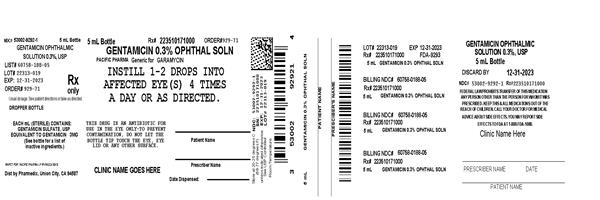
Gentamicin Sulfate 3 mg/mL Solution/ Drops — NDC 53002-9293-01 package photo

Gentamicin Sulfate 3 mg/mL Solution/ Drops

by RPK Pharmaceuticals, Inc. · 1 BOTTLE, DROPPER in 1 CARTON (53002-9293-1) / 5 mL in 1 BOTTLE, DROPPER
NDC 53002-9293-01
🏷️ FDA NDC (as labeled) 53002-9293-1 billing pads the package segment with a zero
Rx only Generic Discontinued Non-controlled ⚠ Inactivated by FDA
🗂️ Data synced Jul 14, 2026 · sources: openFDA · FDA label (DailyMed) · FDA Orange & Purple Book · First Databank · CMS NADAC, ASP, Medicare & Medicaid · RxNorm
📋 All sources & update times →
⚠️
Excluded from the active FDA NDC Directory. FDA inactivated this product’s listing record, so it is excluded from the active NDC Directory. The listing was last certified through Dec 2024. A label may still appear on DailyMed, but the NDC is no longer in the current FDA NDC Directory. Search the FDA NDC Directory ↗

🆔 Identity & classification

FDA NDC (as labeled) 53002-9293-1
Product NDC 53002-9293
11-digit billing NDC 53002929301
Application # ANDA064048
SPL Set ID 6c8b45b0-f45a-4137-8228-b38e125dede5
Chemical class Aminoglycoside Antibacterial [EPC], Aminoglycosides
DEA schedule Non-controlled
Marketing category ANDA
Marketing status Discontinued
FDA listing status Inactivated by FDA (certified through Dec 2024)
Route OPHTHALMIC
Dosage form SOLUTION/ DROPS
Substance GENTAMICIN SULFATE
TE code (Orange Book) AT · RLD · RS
Why two NDCs? The FDA registers this code as 53002-9293-1 — a 5-4-1 layout, and that's what's printed on the package and shown on DailyMed. For insurance claims, every NDC is standardized to a uniform 11-digit 5-4-2 format by adding a zero to the package segment → 53002-9293-01. Same drug, same package — only the format differs.
Where does this data come from?
Identifiers from the FDA openFDA NDC Directory and Structured Product Labeling; RxCUI from RxNorm (NLM); GPI from Medi-Span; GCN / HIC / AHFS / legend from First Databank.

🏭 Manufacturer & labeler

LabelerRPK Pharmaceuticals, Inc.
Application holderBAUSCH AND LOMB INC
FDA applicationANDA064048 (ANDA)
Labeler code53002
Product typeHuman Prescription Drug
The labeler markets the product; the application holder owns the FDA approval. They’re often the same company but can differ (e.g. a repackager or an authorized generic). A mailing address / phone appears here when the manufacturer includes it in the product’s FDA label (not all do).
Where does this data come from?
Labeler, application holder and registered establishment from the FDA openFDA NDC Directory and Drugs@FDA; address/contact from the product’s FDA label.

🩺 Clinical

8
Nutrient depletion considerations

Gentamicin (IV) may be associated with lower levels of 8 nutrients — worth a chat with your pharmacist, not a cause for alarm.

An association is not a deficiency. Educational only — don't start or stop anything without professional guidance.
Where does this data come from?
Plain-language summary from MedlinePlus (U.S. National Library of Medicine); supplement & herbal interactions and nutrient depletion data from the Natural Medicines database; our full guide is HelloPharmacist editorial content.

🧪 Inactive Ingredients / Excipients

Inactive ingredients, also called excipients, are components of the drug product other than the active ingredient. They may include fillers, dyes, coatings, preservatives, flavors, or other formulation ingredients.

💡 Tap an ingredient (hover on desktop) to see what it is and why it’s used.

  • UNII F5UM2KM3W7
    Benzalkonium chloride is a chemical compound that works as a preservative and antimicrobial agent in medications. It prevents bacterial and fungal growth in liquid formulations to keep the product safe during storage and use.
  • UNII QTT17582CB
    A strong acid used to adjust and maintain the proper pH level in liquid medicines, ensuring stability and preventing breakdown of active ingredients.
  • UNII 451W47IQ8X
    Sodium chloride is common table salt. It's used in medicines as a buffer to maintain proper pH, as a filler to add bulk, or to adjust the osmotic balance in liquid formulations.
  • UNII 55X04QC32I
    A strong alkaline chemical used to adjust and maintain the pH balance of liquid medicines. It helps keep the medicine stable and ensures it stays effective during storage.
  • UNII GR686LBA74
    Sodium phosphate, dibasic is a salt derived from phosphoric acid. It acts as a buffer to help maintain the medicine's pH balance and may serve as a binder or filler in tablets and capsules.
  • UNII 3980JIH2SW
    A salt form of phosphoric acid that acts as a buffer and pH adjuster in medicines. It helps keep the product at the correct acidity level for stability and effectiveness.
  • UNII 059QF0KO0R
    Water is a liquid solvent that dissolves and mixes ingredients together in liquid medicines, syrups, and injections. It helps distribute the active drug evenly throughout the product.

7 inactive ingredients listed in the exact product block matched to this NDC.

Where does this data come from?
Data sourced from official FDA Structured Product Labeling (SPL) via DailyMed — ingredient classCode="IACT" elements from the exact product block matched by this NDC. Label-section narrative from DailyMed / the openFDA label index is shown separately when available.

Inactive ingredient FAQ

Are inactive ingredients the same for every manufacturer?
No. Inactive ingredients can differ by manufacturer, dosage form, strength, and package / product version.
Why might an inactive ingredient be missing?
Some SPLs do not provide a complete structured inactive-ingredient list, and older or unusual labels may only include the information in narrative text.
Can inactive ingredients matter?
Yes. They can matter for allergies, intolerances, dyes, gluten / lactose concerns, preservatives, and formulation differences — but confirm with a pharmacist or the manufacturer when it’s clinically important.

💲 Pricing

A drug doesn't have one price. Each row is a different public payment system, and none is what you'd pay at the counter — that depends on your insurance. The ⓘ on each row explains what it measures.

Price systemPer mLPer package
Retail pharmacies payNADAC · weekly Not in the retail survey — common for institutional, discontinued, or low-volume packs.
Medicaid paysCMS SDUD · 12 mo No recent Medicaid claims on file for this NDC — rare and low-volume NDCs are suppressed in the public data.
Medicare drug plans payPart D · quarterly No Part D plan price is available for this NDC in our data.
ℹ️
No price is published for this exact package yet. CMS surveys NADAC per package size, so a different pack of the same drug often has one.
Where does this data come from?
NADAC (National Average Drug Acquisition Cost) is the CMS weekly pharmacy-acquisition-cost survey — what pharmacies pay. ASP (Average Sales Price) is the CMS Medicare Part B drug-payment file, published quarterly. Medicaid pays is computed by us from CMS State Drug Utilization Data (total reimbursed ÷ units, trailing 12 months) — gross of rebates and inclusive of dispensing fees, so it reflects what Medicaid paid, not an acquisition cost. Medicare drug plans pay is the median negotiated point-of-sale unit cost across plans listing this NDC in the CMS quarterly Prescription Drug Plan pricing files, before rebates. The VA pays is the federal contract price (FSS, and the statutory Big 4 ceiling where listed) from the VA National Acquisition Center pharmaceutical price file. All are free public government data; each measures a different payer, so the figures are not directly comparable.

🔁 Therapeutic equivalents

ProductLabelerPackNADAC/unitTEStatusPrice vs. this
Gentamicin Sulfate 3 mg/mLthis 53002-9293-01 RPK 1 bottle — AT Discontinued —
About this product: this is a generic version of the medicine. FDA equivalence ratings are shown when available, and other versions are listed above, least expensive first.
Where does this data come from?
Equivalents are other NDCs of the same ingredient, form and route from the openFDA NDC Directory, ranked least-expensive-first by NADAC. Therapeutic-equivalence (AB) ratings come from the FDA Orange Book; biologics use the FDA Purple Book for biosimilar & interchangeable status.

⏳ Availability & generic status

📍
2026
Currently FDA-listed
listed with the FDA
🔓
·
Generic on the market
this product is a generic
✅This is a generic drug

This product is an FDA-approved generic. Other versions of the same drug are listed under Therapeutic equivalents, least expensive first.

Where does this data come from?
Patents and exclusivity from the FDA Orange Book (small-molecule drugs), refreshed from public FDA data. Generic launch timing is an estimate, not a guarantee.

📊 Medicare Part D spend CMS · PART D · 2026 (Q1)

Medicare Part D (outpatient prescription) spending for Gentamicin Sulfate — the program that covers self-administered drugs. 10 manufacturers.
⚠️ Drug-level data: CMS publishes Part D spending by drug, not by NDC — these figures combine every manufacturer, strength and package size sold under the name Gentamicin Sulfate. That’s a different level of aggregation than the Medicaid card above, which is specific to this exact 11-digit NDC (pack size included), so the two aren’t directly comparable.
Period
Total Part D spend
$3.25M
Claims incl. refills
100.3K
Beneficiaries
78.4K
Spend / beneficiary
$41.48
Spend / claim
$32.41
Trend by period
💵 About the dollar figures: spending is what Part D plans paid before confidential manufacturer rebates, so the program’s real net cost is lower. A blank patient count means fewer than 11 people — CMS hides counts that small to protect privacy. Source: CMS Medicare Quarterly Part D Spending by Drug (data.cms.gov), updated quarterly.

🔬 Reported adverse events (FAERS)

Read carefully: FAERS reports are voluntary and unverified. Counts are not incidence, do not establish causation, are subject to reporting bias, and cannot be used to compare one drug to another. Shown for signal context only. Reports for GENTAMICIN SULFATE — the ingredient across all brands.

Top reported reactions

Acute Kidney Injury1,204
Pyrexia896
Renal Failure705
Diarrhoea562
Sepsis508
Condition Aggravated504
Hypotension493

Reporter sex

15,711 reports

Serious outcomes

Death2,828
Life-threatening1,944
Disabling628
Reports over time (by year) — tap or hover for the count & year
2019 2021 2023 2026 1,140 0
Most recent year is provisional (FAERS lags ~3 months).
Where does this data come from?
Adverse-event reports from the FDA Adverse Event Reporting System (FAERS) via openFDA. FAERS reports are voluntary and unverified — counts are not incidence and don’t establish causation.

📦 Packaging — all sizes for this product

Package NDCDescription Marketing startStatus
53002-9293-01 You're viewing this 1 BOTTLE, DROPPER in 1 CARTON (53002-9293-1) / 5 mL in 1 BOTTLE, DROPPER 2022-07-01 Inactivated by FDA

🧭 About this NDC listing & data coverage

Finished prescription product No longer marketed (per FDA listing data)
What data is (and isn’t) available for this NDC — tap to expand
NDC identity (package / product / labeler codes) ✓ Available
Labeler ✓ Available
Product & package description ✓ Available
Marketing category & status ✓ Available
Active ingredient / dosage form / route ✓ Available
FDA label (SPL via DailyMed) ✓ Available
Package photos ✓ Available
Inactive ingredients (structured) ✓ Available
NADAC pharmacy acquisition price (CMS) — Not published for this NDC CMS publishes NADAC only for NDCs reported in its retail-pharmacy survey.
Orange Book / therapeutic-equivalence data ✓ Available
HCPCS J-code billing crosswalk — Not published for this NDC Most self-administered / retail products have no J-code — that is normal.
Medicaid utilization (CMS SDUD) — Not published for this NDC CMS reports utilization only for NDCs with Medicaid claims above its privacy threshold.
“Not published” reflects what the public FDA / CMS / NLM sources provide for this exact package code — it is a property of the data feeds, not a judgment about the product.

Questions about this listing

Why is there no price listed?
The pricing shown on our NDC pages comes from CMS NADAC, a voluntary survey of retail community pharmacy invoices. CMS does not publish a NADAC for every NDC — packages outside the retail survey (institutional and hospital products, bulk packages, discontinued items, and many OTC items) may never receive one. A missing price reflects the survey's scope, not this product's actual cost, and does not mean the product is free or unavailable.
What does the discontinued status mean for this NDC?
The labeler reported a marketing end date (or the listing was delisted), so this specific package is no longer actively marketed. Remaining stock may still be dispensed for a time, and the NDC stays valid for historical records and claims — but data feeds (pricing, labeling) typically stop updating for it. Other package sizes or other manufacturers' versions of the same medication may still be marketed — see the equivalents section where available.
Is the NDC printed on the package the same as the 11-digit billing NDC?
Yes, they identify this exact package in different formats. The FDA registers it as 53002-9293-1, which is what is printed on the packaging and shown on DailyMed. Insurance claims use a fixed 11-digit 5-4-2 format, so the short segment is padded with a leading zero: 53002-9293-01, written without dashes as 53002929301. The Identity section at the top of this page lists every form of this code.
What do the three segments of this NDC mean?
In 53002-9293-01, the first segment (53002) is the labeler code FDA assigned to RPK Pharmaceuticals, Inc.; the middle segment (9293) identifies this specific product — its ingredient, strength, and dosage form; and the last segment (01) identifies this exact package size and type. Together they name one specific package of one specific product.
Who lists this product with the FDA?
RPK Pharmaceuticals, Inc. is the labeler of record for this NDC — the company under whose FDA-assigned code the package is listed. The labeler may be the manufacturer itself or a distributor marketing the product under its own code.
Do I need a prescription for this product?
This NDC is listed with FDA as a prescription product, so it is dispensed under a prescriber's order. Your pharmacist can tell you whether any over-the-counter forms of the same medication exist.
This page identifies an FDA-listed package (the NDC) and reports public regulatory and pricing data about the listing. It is reference information, not a medical recommendation — talk to your pharmacist or prescriber about your own medication.
Where does this data come from?
Listing facts (marketing category, packager status, marketing dates) from the FDA openFDA NDC Directory; label availability from DailyMed; pricing coverage from CMS NADAC; equivalence scope from the FDA Orange Book.

📄 Full prescribing information FDA SPL

The complete FDA label for this product — the official prescribing information, verbatim, section by section. Jump with a chip, search within the label, or expand everything.
🎯 Indications and Usage 60 words ▾

INDICATIONS AND USAGE Gentamicin sulfate ophthalmic solution is indicated in the topical treatment of ocular bacterial infections including conjunctivitis, keratitis, keratoconjunctivitis, corneal ulcers, blepharitis, blepharoconjunctivitis, acute meibomianitis, and dacryocystitis, caused by susceptible strains of the following microorganisms: Staphylococcus aureus, Staphylococcus epidermidis, Streptococcus pyogenes, Streptococcus pneumoniae, Enterobacter aerogenes, Escherichia coli, Haemophilus influenzae, Klebsiella pneumoniae, Neisseria gonorrhoeae, Pseudomonas aeruginosa, and Serratia marcescens.

⏱️ Dosage and Administration 30 words ▾

DOSAGE AND ADMINISTRATION Instill one or two drops into the affected eye(s) every four hours. In severe infections dosage may be increased to as much as two drops every hour.

⛔ Contraindications 17 words ▾

CONTRAINDICATIONS Gentamicin sulfate ophthalmic solution is contraindicated in patients with known hypersensitivity to any of its components.

⚠️ Warnings 34 words ▾

WARNINGS NOT FOR INJECTION INTO THE EYE Gentamicin sulfate ophthalmic solution is not for injection. It should never be injected subconjunctivally, nor should it be directly introduced into the anterior chamber of the eye.

🤒 Adverse Reactions 69 words ▾

ADVERSE REACTIONS Bacterial and fungal corneal ulcers have developed during treatment with gentamicin ophthalmic preparations. The most frequently reported adverse reactions are ocular burning and irritation upon drug instillation, non-specific conjunctivitis, conjunctival epithelial defects and conjunctival hyperemia. Other adverse reactions which have occurred rarely are allergic reactions, thrombocytopenic purpura and hallucinations.

To report SUSPECTED ADVERSE REACTIONS, contact Bausch & Lomb Incorporated at 1-800-553-5340 or FDA at 1-800-FDA-1088 or www.fda.gov/medwatch.

🤰 Pregnancy 64 words ▾

Pregnancy Gentamicin has been shown to depress body weights, kidney weights and median glomerular counts in newborn rats when administered systemically to pregnant rats in daily doses approximately 500 times the maximum recommended ophthalmic human dose. There are no adequate and well-controlled studies in pregnant women. Gentamicin should be used during pregnancy only if the potential benefit justifies the potential risk to the fetus.

🧬 Clinical Pharmacology 39 words ▾

CLINICAL PHARMACOLOGY Microbiology Gentamicin sulfate is active in vitro against many strains of the following microorganisms: Staphylococcus aureus, Staphylococcus epidermidis, Streptococcus pyogenes, Streptococcus pneumoniae, Enterobacter aerogenes, Escherichia coli, Haemophilus influenzae, Klebsiella pneumoniae, Neisseria gonorrhoeae, Pseudomonas aeruginosa, and Serratia marcescens.

📦 How Supplied / Storage and Handling 17 words ▾

HOW SUPPLIED Product: 53002-9293 NDC: 53002-9293-1 5 mL in a BOTTLE, DROPPER / 1 in a CARTON

📋 Description 126 words ▾

DESCRIPTION Gentamicin sulfate ophthalmic solution, USP is a sterile, aqueous solution buffered to approximately pH 7.0 and formulated for ophthalmic use. Each mL contains: Active: gentamicin sulfate, USP (equivalent to 3 mg gentamicin). Inactives: dibasic sodium phosphate, sodium chloride, monobasic sodium phosphate, purified water.

Hydrochloric acid and/or sodium hydroxide may be added to adjust pH (6.5 - 7.5). Preservative: benzalkonium chloride 0.01%. Gentamicin is an aminoglycoside antibiotic obtained from cultures of Micromonospora purpurea .

It is a mixture of the sulfate salts of gentamicin C1, C2, C1a and C2a. All three components appear to have similar antimicrobial activity. Gentamicin sulfate occurs as a white to buff powder and is soluble in water and insoluble in alcohol.

The structural formula is as follows: Gentamicin Sulfate (structural formula)

💬 Information for Patients 19 words ▾

Information for Patients To avoid contamination, do not touch tip of container to the eye, eyelid or any surface.

Source: FDA Structured Product Labeling, mirrored from DailyMed / openFDA. Prefer the government’s original formatting? View this label on DailyMed ↗
For educational and professional reference only — not medical advice. Pricing reflects published NADAC and CMS ASP (free public data) and may differ from your acquisition cost; always verify before billing or dispensing.