
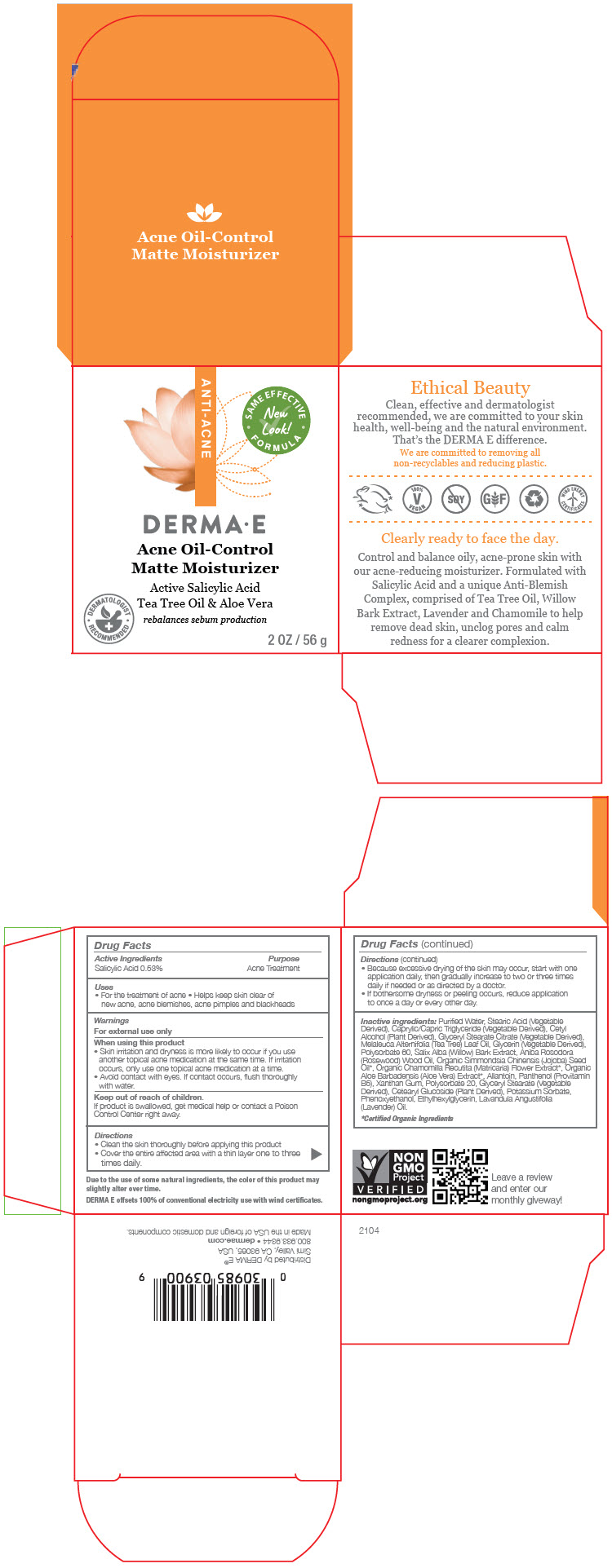
Derma E Acne Matte Moisturizer SALICYLIC ACID 5.3 mg/g Lotion — NDC 54108-3900-1 (Billing 54108-3900-01)
This is a package of Derma E Acne Matte Moisturizer SALICYLIC ACID 5.3 mg/g Lotion from derma e, marketed since May 2021 and currently FDA-listed. It is this product's only package size.
NDC database record
One package, one record: these facts belong to NDC 54108-3900-1 alone.
- Record
- FDA NDC Directory package listing · Human OTC drug
- Code segments
- 54108 labeler · 3900 product · 1 package
- Package marketed since
- May 21, 2021
- Sample package
- No — commercial package
- Listing certified through
- Dec 31, 2026
- Barcode (UPC-A, from the NDC)
- 3 5410839001 4
- FDA record last changed
- Jul 24, 2026
Identity & classification
Regulatory identifiers FDA, NLM and CMS codes for this package
Where does this data come from?
- FDA openFDA NDC Directory · synced Oct 8, 2026
- FDA label on DailyMed · label index refreshed Oct 8, 2026
- RxNorm (NLM RxNav) · catalog refreshed Oct 8, 2026
- Medi-Span GPI (licensed)
- First Databank (licensed) · refreshed Oct 8, 2026
Clinical
Derma E Acne Matte Moisturizer is a topical lotion containing salicylic acid, an ingredient commonly used in acne-prone skin care. Salicylic acid is typically used to help reduce oiliness and unclog pores by dissolving the type of material that builds up in acne lesions. This product is marketed as an over-the-counter drug under FDA's monograph rules for acne-treatment lotions. The lotion formulation allows the active ingredient to be spread across affected skin areas.
Patient education
Supplement & herbal interactions
Where does this data come from?
- MedlinePlus (NLM) · refreshed Oct 8, 2026
- FDA label on DailyMed · label index refreshed Oct 8, 2026
Ask a licensed pharmacist directly — free, answered by our team.
Pricing
A drug doesn't have one price. Each row is a different public payment system, and none is what you'd pay at the counter — that depends on your insurance. The ⓘ on each row explains what it measures.
| Price system | Per g | Per package |
|---|---|---|
| Retail pharmacies payNADAC · weekly | Not in the retail survey — common for institutional, discontinued, or low-volume packs. | |
| Medicaid paysCMS SDUD · 12 mo | No recent Medicaid claims on file for this NDC — rare and low-volume NDCs are suppressed in the public data. | |
| Medicare drug plans payPart D · quarterly | No Part D plan price is available for this NDC in our data. | |
Where does this data come from?
- CMS NADAC weekly file
- CMS ASP pricing files · refreshed Sep 20, 2026
- CMS Medicaid State Drug Utilization Data · refreshed Oct 9, 2026
- CMS Part D plan pricing files · refreshed Sep 24, 2026
- VA National Acquisition Center price file
Packaging — all sizes for this product
| Package NDC | Description | Marketing start | Marketing end | Status |
|---|---|---|---|---|
| 54108-3900-01 You're viewing this Main listing | 1 TUBE in 1 BOX / 56 g in 1 TUBE | 2021-05-21 | — | Active |
Therapeutic equivalents
| Product | Labeler | Pack | NADAC/unit | TE | Status | Price vs. this |
|---|---|---|---|---|---|---|
| Derma E Acne Matte Moisturizer 5.3 mg/gthis 54108-3900-01 | derma | 1 tube | — | — | FDA listed | — |
Where does this data come from?
- FDA openFDA NDC Directory · synced Oct 8, 2026
- FDA Orange Book · refreshed Oct 3, 2026
- CMS NADAC weekly file
Availability & generic status
We did not find an FDA-approved generic match for this exact strength, form and route.
Where does this data come from?
- FDA Orange Book · refreshed Oct 3, 2026
Inactive Ingredients / Excipients
Inactive ingredients, also called excipients, are components of the drug product other than the active ingredient. They may include fillers, dyes, coatings, preservatives, flavors, or other formulation ingredients.
💡 Tap an ingredient (hover on desktop) to see what it is and why it’s used.
-
UNII 344S277G0Z
Allantoin is a naturally derived compound that helps soften and soothe skin. In medicines, it works as a skin-conditioning agent and may help support wound healing and reduce irritation in topical formulations.
-
UNII 575DY8C1ER
Aloe vera flower is a natural plant extract used in medicines as a skin-soothing agent and emollient. It helps soften and moisturize formulations, particularly in topical products like creams and lotions.
-
UNII 09FUA47KNA
Cetearyl glucoside is a plant-derived surfactant made from vegetable oils and glucose. It helps oils and water mix together in creams and lotions, and can also soften and smooth the skin feel of the product.
-
UNII 936JST6JCN
Cetyl alcohol is a waxy, fatty substance derived from plant or animal sources. It acts as an emulsifier and thickener in medicines, helping blend oil and water components and giving products a smooth, creamy texture.
-
UNII FGL3685T2X
Chamomile is a plant extract used in medications as a flavoring agent and for its mild soothing properties in formulations. It helps improve taste and aroma of the medicine.
-
UNII 147D247K3P
Ethylhexylglycerin is a synthetic preservative used to prevent bacteria and mold from growing in medicines and personal care products. It helps keep the product safe and stable throughout its shelf life.
-
UNII PDC6A3C0OX
Glycerin is a clear, thick liquid derived from plant oils or fats. It acts as a humectant to retain moisture, a sweetener, and a solvent in medications.
-
UNII WH8T92A065
A fatty acid derivative made by combining stearic acid with glycerin and citric acid. It acts as an emulsifier to help mix oil and water-based ingredients, and also serves as a thickener in the medicine formulation.
-
UNII FCZ5MH785I
A waxy substance made from glycerin and stearic acid. It works as an emulsifier to help mix oil and water ingredients together, and as a thickener to give the medicine its proper texture and consistency.
-
UNII 724GKU717M
Jojoba oil is a natural liquid wax extracted from jojoba plant seeds. It's used in medicines as an emollient and lubricant to soften and smooth the product, and sometimes as a carrier or penetration enhancer.
-
UNII ZBP1YXW0H8
A fragrant oil extracted from lavender plants, used as a flavoring and scent agent in medicines to improve taste and aroma.
-
UNII C9H2L21V7U
A fat derived from coconut or palm oil containing shorter fatty acid chains. It serves as a solvent and carrier to help dissolve or suspend active ingredients, improving absorption and stability in liquid formulations.
-
UNII WV9CM0O67Z
Panthenol is a humectant and skin-conditioning agent derived from pantothenic acid. It's added to medicines to help retain moisture and soothe skin irritation.
-
UNII HIE492ZZ3T
Phenoxyethanol is a synthetic preservative and antimicrobial agent used to prevent bacterial and fungal growth in medicines and cosmetic products, extending shelf life and maintaining product safety.
-
UNII 7T1F30V5YH
A synthetic emulsifier derived from sorbitol and oleic acid. It helps mix oil and water-based ingredients together and keeps them from separating in liquid formulations.
-
UNII CAL22UVI4M
A synthetic emulsifier derived from sorbitol and fatty acids. It helps mix oil and water-based ingredients together and improves the texture and stability of the medicine.
-
UNII 1VPU26JZZ4
Potassium sorbate is a salt derived from sorbic acid, a naturally occurring preservative. It prevents growth of mold, yeast, and some bacteria, extending the medicine's shelf life.
-
UNII F2522O5L7B
Rosewood oil is a fragrant plant extract used as a flavoring agent and fragrance component in medicines. It helps mask unpleasant tastes or odors in the medication.
-
UNII 205MXS71H7
A plant extract from white willow bark. It's used as a natural flavoring agent and may help preserve the medicine by providing mild antioxidant properties in the formulation.
-
UNII 4ELV7Z65AP
Stearic acid is a fatty acid derived from plant or animal sources. It acts as a binder and lubricant in tablets and capsules, helping them hold together and flow smoothly during manufacturing.
-
UNII VIF565UC2G
Tea tree oil is an essential oil extracted from the leaves of the Australian tea tree plant. In medicines, it typically serves as a flavoring agent, fragrance, or antimicrobial component in topical formulations.
-
UNII 059QF0KO0R
Water is a liquid solvent that dissolves and mixes ingredients together in liquid medicines, syrups, and injections. It helps distribute the active drug evenly throughout the product.
-
UNII TTV12P4NEE
Xanthan gum is a thickening and stabilizing ingredient made from fermented corn or other sugars. It's added to medicines to improve texture, prevent separation of liquids and solids, and help the product stay consistent.
23 inactive ingredients listed in the exact product block matched to this NDC.
Label-section wording can be broader than the structured product block and may mention additional formulation ingredients.
Where does this data come from?
ingredient classCode="IACT" elements from the exact product block matched by this NDC. Label-section narrative from DailyMed / the openFDA label index is shown separately when available.- FDA label on DailyMed · label index refreshed Oct 8, 2026
- FDA openFDA NDC Directory · synced Oct 8, 2026
Inactive ingredient FAQ
Are inactive ingredients the same for every manufacturer?
Why might an inactive ingredient be missing?
Can inactive ingredients matter?
Manufacturer & labeler
More NDCs from derma e labeler code 54108
- Sun Protection Mineral SPF 30 Zinc Oxide 245 mg/g Powder NDC 54108-1487-1
- Derma E Sun Drops SPF 30 Zinc Oxide 22 mg/mL Lotion NDC 54108-1488-1
- Acne Deep Pore Cleansing Wash SALICYLIC ACID 20 mg/mL Gel NDC 54108-3700-1
- Derma E Acne Clarifying Mask Sulfur 100 mg/g Cream NDC 54108-3710-5
- Derma E Acne Cleansing Pads Salicylic Acid 190 mg/mL Cloth NDC 54108-3725-1
- Derma E Acne Blemish Control Treatment Serum Salicylic Acid 190 mg/mL Liquid NDC 54108-3851-1
- Scar Gel SPF 35 Zinc Oxide 117 mg/g Cream NDC 54108-8111-1
- Derma E Eczema Relief Oatmeal 10 mg/mL Lotion NDC 54108-8712-1
Where does this data come from?
- FDA openFDA NDC Directory · synced Oct 8, 2026
- Drugs@FDA
FDA label — Drug Facts FDA SPL
🎯 Indications and Usage ▾
Uses For the treatment of acne Helps keep skin clear of new acne, acne blemishes, acne pimples and blackheads
⏱️ Dosage and Administration ▾
Directions Clean the skin thoroughly before applying this product Cover the entire affected area with a thin layer one to three times daily. Because excessive drying of the skin may occur, start with one application daily, then gradually increase to two or three times daily if needed or as directed by a doctor. If bothersome dryness or peeling occurs, reduce application to once a day or every other day.
⚠️ Warnings ▾
Warnings For external use only When using this product Skin irritation and dryness is more likely to occur if you use another topical acne medication at the same time. If irritation occurs, only use one topical acne medication at a time. Avoid contact with eyes. If contact occurs, flush thoroughly with water. Keep out of reach of children . If product is swallowed, get medical help or contact a Poison Control Center right away.
🧪 Active Ingredient ▾
Active Ingredients Salicylic Acid 0.53%
🧪 Inactive Ingredients ▾
Inactive ingredients Purified Water, Stearic Acid (Vegetable Derived), Caprylic/Capric Triglyceride (Vegetable Derived), Cetyl Alcohol (Plant Derived), Glyceryl Stearate Citrate (Vegetable Derived), Melaleuca Alternifolia (Tea Tree) Leaf Oil, Glycerin (Vegetable Derived), Polysorbate 60, Salix Alba (Willow) Bark Extract, Aniba Rosodora (Rosewood) Wood Oil, Organic Simmondsia Chinensis (Jojoba) Seed Oil*, Organic Chamomilla Recutita (Matricaria) Flower Extract Certified Organic Ingredients , Organic Aloe Barbadensis (Aloe Vera) Extract*, Allantoin, Panthenol (Provitamin B5), Xanthan Gum, Polysorbate 20, Glyceryl Stearate (Vegetable Derived), Cetearyl Glucoside (Plant Derived), Potassium Sorbate, Phenoxyethanol, Ethylhexylglycerin, Lavandula Angustifolia (Lavender) Oil.
🎯 Purpose ▾
Purpose Acne Treatment
📄 When Using This Product ▾
When using this product Skin irritation and dryness is more likely to occur if you use another topical acne medication at the same time. If irritation occurs, only use one topical acne medication at a time. Avoid contact with eyes. If contact occurs, flush thoroughly with water.
📄 Keep Out of Reach of Children ▾
Keep out of reach of children . If product is swallowed, get medical help or contact a Poison Control Center right away.
📄 Package Label / Principal Display Panel ▾
PRINCIPAL DISPLAY PANEL - 56 g Tube Box ANTI-ACNE • SAME EFFECTIVE FORMULA • New Look! DERMA•E Acne Oil-Control Matte Moisturizer Active Salicylic Acid Tea Tree Oil & Aloe Vera rebalances sebum production • DERMATOLOGIST RECOMMENDED • 2 OZ / 56 g PRINCIPAL DISPLAY PANEL - 56 g Tube Box
Medicare Part D spend CMS · PART D · 2026 (Q1)
About this NDC listing & data coverage
What data is (and isn’t) available for this NDC — tap to expand
| NDC identity (package / product / labeler codes) | ✓ Available |
| Labeler | ✓ Available |
| Product & package description | ✓ Available |
| Marketing category & status | ✓ Available |
| Active ingredient / dosage form / route | ✓ Available |
| FDA label (SPL via DailyMed) | ✓ Available |
| Package photos | ✓ Available |
| Inactive ingredients (structured) | ✓ Available |
| NADAC pharmacy acquisition price (CMS) | — Not published for this NDC CMS publishes NADAC only for NDCs reported in its retail-pharmacy survey. |
| Orange Book / therapeutic-equivalence data | — Not published for this NDC Applies only to products approved under an NDA/ANDA; many listings are out of scope. |
| HCPCS J-code billing crosswalk | — Not published for this NDC Most self-administered / retail products have no J-code — that is normal. |
| Medicaid utilization (CMS SDUD) | — Not published for this NDC CMS reports utilization only for NDCs with Medicaid claims above its privacy threshold. |