
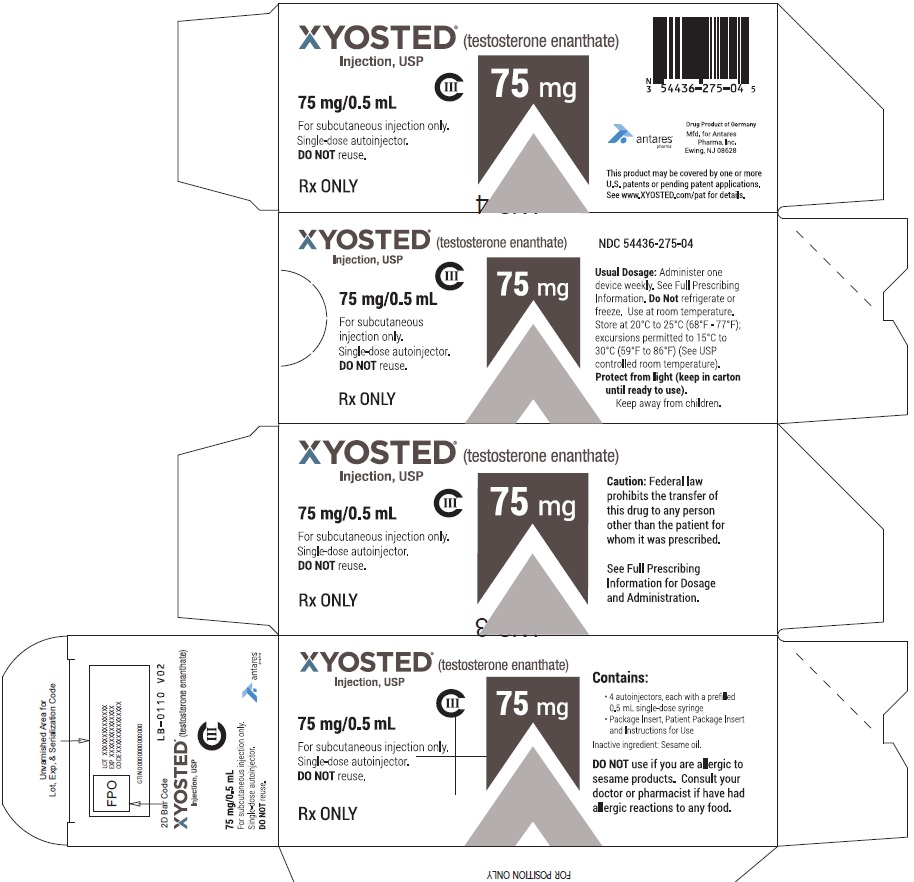
XYOSTED testosterone enanthate 75 mg/.5mL Injection, 4 syringes
🆔 Identity & classification
Where does this data come from?
🏷️ RxNorm drug class
This medicine belongs to the Androgen class.
Where does this data come from?
🏭 Manufacturer & labeler
Where does this data come from?
🩺 Clinical
- This gel is specifically approved for men who have a diagnosed medical condition causing low testosterone — like Klinefelter's syndrome, damage from chemotherapy, or a problem with...
- What exactly is this medication for — do I really need it just because my testosterone is a little low?
- Yes — where you apply it matters a lot. Use it only on the upper arms and shoulders, once every morning on clean, dry skin. Don't apply it to your abdomen, genitals, chest, armpits...
- How do I apply it correctly, and does it matter where I put it on my body?
Patient education
Supplement & herbal interactions
Some supplements/herbs that may interact with Testosterone Enanthate — tap one for details:
Where does this data come from?
Ask a licensed pharmacist directly — free, answered by our team.
🧪 Inactive Ingredients / Excipients
Inactive ingredients, also called excipients, are components of the drug product other than the active ingredient. They may include fillers, dyes, coatings, preservatives, flavors, or other formulation ingredients.
Where does this data come from?
IACT rows and label-wide narrative are kept separate; availability and product-level specificity depend on the submitted label.Inactive ingredient FAQ
Are inactive ingredients the same for every manufacturer?
Why might an inactive ingredient be missing?
Can inactive ingredients matter?
💲 Pricing
A drug doesn't have one price. Each row is a different public payment system, and none is what you'd pay at the counter — that depends on your insurance. The ⓘ on each row explains what it measures.
| Price system | Per mL | Per package |
|---|---|---|
| Retail pharmacies payNADAC · weekly | $316.449 | $632.90 / 2 ml |
| Medicaid paysCMS SDUD · 12 mo | $309.69 | $619.38 / 2 ml |
| Medicare drug plans payPart D · Q2 2026 | $319.76 | $639.51 / 2 ml |
Where does this data come from?
🔁 Therapeutic equivalents
| Product | Labeler | Pack | NADAC/unit | TE | Status | Price vs. this |
|---|---|---|---|---|---|---|
| Xyosted 75 mg/.5mLthis 54436-0275-04 | Antares | 4 syringes | $316.449 | — | Availability likely | — |
Where does this data come from?
⏳ Availability & generic status
We did not find an FDA-approved generic match for this exact strength, form and route. Patent/protection dates below may affect future generic timing.
Why the date isn’t exact: Generic timing can change because patents may be challenged, settled, licensed, added, removed, or worked around with a narrower label — and FDA approval does not always mean a pharmacy can get the generic today.
🛈 What do these terms mean?
- Patent
- Legal protection listed in the Orange Book that may delay generic approval or launch. Issued by the U.S. Patent & Trademark Office.
- Substance patent
- Covers the active drug molecule itself — the hardest to design around. A generic generally can’t launch until it expires.
- Formulation (product) patent
- Covers a specific formulation or dosage form. A generic can sometimes work around it with a different formulation.
- Method-of-use patent
- A patent covering one specific approved use of the drug — not necessarily the whole molecule. A generic can sometimes launch with a “skinny label” that carves out the protected use and keeps the others.
- Skinny label
- A generic label that omits a still-patented use when the FDA allows it — letting a generic reach the market for the unprotected uses.
- Exclusivity
- FDA-granted marketing protection, separate from patents — e.g. 5-yr new chemical entity, 7-yr orphan drug, or a +6-month pediatric extension.
- Paragraph IV
- A generic applicant’s formal challenge to a listed patent. It can potentially lead to earlier generic entry, but often involves litigation or a settlement.
- RLD / RS
- Reference Listed Drug — the brand product the FDA uses as the reference for generic applications. Reference Standard — the product the FDA expects generics to compare against in bioequivalence testing.
- TE / AB rating
- FDA therapeutic-equivalence rating. An AB rating generally means the FDA considers a generic therapeutically equivalent to — and substitutable for — the brand.
- LOE (loss of exclusivity)
- The latest patent or exclusivity currently listed — the loss-of-exclusivity / latest-listed-protection date shown on this page. Paragraph-IV challenges and settlements can move the real date earlier; FDA approval and a manufacturer’s decision to market can move it later.
Built from the FDA Orange Book. The bars above are scaled to each protection’s expiry; the red LOE marker is the last one to lapse.
| Patent | Type | Use code | Expires |
|---|---|---|---|
| US 9950125 ↗ | Method of use | U-2418 | Sep 4, 2036 |
| US 9950125 ↗ | Method of use | U-2418 | Sep 4, 2036 |
| US 10912782 ↗ | Method of use | U-2418 | Feb 19, 2035 |
| US 10912782 ↗ | Method of use | U-2418 | Feb 19, 2035 |
| US 10912782 ↗ | Method of use | U-2418 | Feb 19, 2035 |
| US 11844804 ↗ | Method of use | U-2418 | Jun 4, 2033 |
| US 11844804 ↗ | Method of use | U-2418 | Jun 4, 2033 |
| US 11844804 ↗ | Method of use | U-2418 | Jun 4, 2033 |
| US 9950125 ↗ | Method of use | U-2418 | Sep 4, 2036 |
| US 10821072 ↗ | Method of use | U-2418 | Jun 4, 2033 |
| US 10821072 ↗ | Method of use | U-2418 | Jun 4, 2033 |
| US 10821072 ↗ | Method of use | U-2418 | Jun 4, 2033 |
| US 10238662 ↗ | Method of use | U-2418 | Feb 19, 2035 |
| US 10238662 ↗ | Method of use | U-2418 | Feb 19, 2035 |
| US 10238662 ↗ | Method of use | U-2418 | Feb 19, 2035 |
| US 11160751 ↗ | Method of use | U-2418 | Oct 7, 2034 |
| US 11160751 ↗ | Method of use | U-2418 | Oct 7, 2034 |
| US 11160751 ↗ | Method of use | U-2418 | Oct 7, 2034 |
| US 11191908 ↗ | Drug product | — | Oct 18, 2035 |
| US 11446440 ↗ | Drug product | — | Aug 21, 2031 |
| US 10478560 ↗ | Drug product | — | Jan 24, 2026 |
| US 11813435 ↗ | Drug product | — | Feb 25, 2035 |
| US 11446440 ↗ | Drug product | — | Aug 21, 2031 |
| US 10357609 ↗ | Drug product | — | Aug 21, 2031 |
| US 10881798 ↗ | Drug product | — | Feb 11, 2034 |
| US 8021335 ↗ | Drug product | — | Oct 4, 2026 |
| US 9533102 ↗ | Drug product | — | Jan 24, 2026 |
| US 9744302 ↗ | Drug product | — | Nov 19, 2035 |
| US 8021335 ↗ | Drug product | — | Oct 4, 2026 |
| US 12629483 ↗ | Drug product | — | Aug 7, 2035 |
| US 12629483 ↗ | Drug product | — | Aug 7, 2035 |
| US 9629959 ↗ | Drug product | — | Jan 24, 2026 |
| US 10357609 ↗ | Drug product | — | Aug 21, 2031 |
| US 8562564 ↗ | Drug product | — | Jan 24, 2026 |
| US 10905827 ↗ | Drug product | — | Aug 21, 2031 |
| US 11446441 ↗ | Drug product | — | Jan 24, 2026 |
| US 10905827 ↗ | Drug product | — | Aug 21, 2031 |
| US 11191908 ↗ | Drug product | — | Oct 18, 2035 |
| US 10279131 ↗ | Drug product | — | Jul 31, 2031 |
| US 11497753 ↗ | Drug product | — | Mar 19, 2030 |
| US 11813435 ↗ | Drug product | — | Feb 25, 2035 |
| US 10905827 ↗ | Drug product | — | Aug 21, 2031 |
| US 11446441 ↗ | Drug product | — | Jan 24, 2026 |
| US 11497753 ↗ | Drug product | — | Mar 19, 2030 |
| US 9744302 ↗ | Drug product | — | Nov 19, 2035 |
| US 11497753 ↗ | Drug product | — | Mar 19, 2030 |
| US 9533102 ↗ | Drug product | — | Jan 24, 2026 |
| US 10881798 ↗ | Drug product | — | Feb 11, 2034 |
| US 9180259 ↗ | Drug product | — | Jan 24, 2026 |
| US 9180259 ↗ | Drug product | — | Jan 24, 2026 |
| US 9180259 ↗ | Drug product | — | Jan 24, 2026 |
| US 10881798 ↗ | Drug product | — | Feb 11, 2034 |
| US 9629959 ↗ | Drug product | — | Jan 24, 2026 |
| US 10279131 ↗ | Drug product | — | Jul 31, 2031 |
| US 11813435 ↗ | Drug product | — | Feb 25, 2035 |
| US 9629959 ↗ | Drug product | — | Jan 24, 2026 |
| US 8562564 ↗ | Drug product | — | Jan 24, 2026 |
| US 10478560 ↗ | Drug product | — | Jan 24, 2026 |
| US 10279131 ↗ | Drug product | — | Jul 31, 2031 |
| US 11191908 ↗ | Drug product | — | Oct 18, 2035 |
| US 11446440 ↗ | Drug product | — | Aug 21, 2031 |
| US 9533102 ↗ | Drug product | — | Jan 24, 2026 |
| US 10478560 ↗ | Drug product | — | Jan 24, 2026 |
| US 10357609 ↗ | Drug product | — | Aug 21, 2031 |
| US 12629483 ↗ | Drug product | — | Aug 7, 2035 |
| US 11446441 ↗ | Drug product | — | Jan 24, 2026 |
| US 8021335 ↗ | Drug product | — | Oct 4, 2026 |
| US 9744302 ↗ | Drug product | — | Nov 19, 2035 |
| US 8562564 ↗ | Drug product | — | Jan 24, 2026 |
Is there a generic version of XYOSTED 75 MG/0.5 ML AUTO-INJ?
The FDA approved a generic — why can’t I get it at my pharmacy yet?
Why do different websites show different generic release dates?
What does “FDA listed” mean?
What does a patent or protection date mean here?
What does “current Orange Book estimate” mean?
Can a generic come out before the last patent expires?
Can a generic come out after the listed dates?
What is the difference between patents and exclusivity?
Why are there multiple patent dates?
Where does this data come from?
🗺️ Medicaid utilization & spend
💊 Medicaid utilization by pack size
📊 Medicare Part D spend CMS · PART D · 2026 (Q1)
📦 Packaging — all sizes for this product
| Package NDC | Description | Per unit | Per pack | Marketing start | Status |
|---|---|---|---|---|---|
| 54436-0275-01 | 1 SYRINGE in 1 CARTON (54436-275-01) / .5 mL in 1 SYRINGE (54436-275-03) | — | — | 2018-11-15 | Active |
| 54436-0275-04 You're viewing this | 4 SYRINGE in 1 CARTON (54436-275-04) / .5 mL in 1 SYRINGE (54436-275-02) | $316.45 / mL | $632.90 | 2018-11-15 | Active |
| 54436-0275-05 | 1 SYRINGE in 1 CARTON (54436-275-05) / .5 mL in 1 SYRINGE (54436-275-02) | — | — | 2024-01-08 | Active |
In Medicaid, this is the most-dispensed pack of this product — about 100% of fills over the last four reported quarters. See all packs ↓
Pack size FAQ
What quantity is in NDC 54436-0275-04?
What is the difference between NDC 54436-0275-04 and NDC 54436-0275-01?
What NDC number is used to bill for this package of XYOSTED testosterone enanthate 75 mg/.5mL Injection?
Prices are the latest CMS NADAC pharmacy acquisition cost per NDC; per-pack figures are per-unit × pack quantity, shown only when the pack is denominated in the same measure NADAC prices.
📄 Full prescribing information FDA SPL
🎯 Indications and Usage ▾
1 INDICATIONS AND USAGE XYOSTED (testosterone enanthate) injection is an androgen indicated for testosterone replacement therapy in adult males for conditions associated with a deficiency or absence of endogenous testosterone. Primary hypogonadism (congenital or acquired): testicular failure due to cryptorchidism, bilateral torsion, orchitis, vanishing testis syndrome, orchiectomy, Klinefelter's syndrome, chemotherapy, or toxic damage from alcohol or heavy metals. These men usually have low serum testosterone concentrations and gonadotropins (follicle-stimulating hormone [FSH], luteinizing hormone [LH]) above the normal range.
Hypogonadotropic hypogonadism (congenital or acquired): gonadotropin or luteinizing hormone-releasing hormone (LHRH) deficiency or pituitary-hypothalamic injury from tumors, trauma, or radiation. These men have low testosterone serum concentrations but have gonadotropins in the normal or low range. Limitations of Use: Safety and efficacy of XYOSTED in men with “age-related hypogonadism” has not been established.
Safety and efficacy of XYOSTED in males less than 18 years old have not been established [see Use in Specific Populations ( 8.4 )] . XYOSTED (testosterone enanthate) injection is an androgen indicated for testosterone replacement therapy in adult males for conditions associated with a deficiency or absence of endogenous testosterone ( 1 ). Limitations of Use: Safety and efficacy of XYOSTED in men with “age-related hypogonadism” has not been established ( 1 ).
Safety and efficacy of XYOSTED in males less than 18 years old have not been established ( 1 , 8.4 ).
⏱️ Dosage and Administration ▾
2 DOSAGE AND ADMINISTRATION Prior to initiating XYOSTED : confirm the diagnosis of hypogonadism by ensuring that serum testosterone has been measured in the morning on at least two separate days and that these concentrations are below the normal range ( 2.1 ). Starting dose: 75 mg subcutaneously in the abdominal region once weekly. Avoid intramuscular and intravascular administration ( 2.2 , 2.3 ).
Dose Adjustment: Based upon total testosterone trough concentrations (measured 7 days after most recent dose) obtained following 6 weeks of dosing and periodically thereafter ( 2.2 ). Discard unused portion ( 2.3 )
2.1Confirmation of Hypogonadism Before Initiation of XYOSTED Prior to initiating XYOSTED, confirm the diagnosis of hypogonadism by ensuring that serum testosterone concentrations have been measured in the morning on at least two separate days and that these serum testosterone concentrations are below the normal range.
2.2Starting Dose and Dose Adjustment The starting dose of XYOSTED is 75 mg, administered subcutaneously in the abdominal region once a week. Dose adjustment Measure total testosterone trough concentrations (measured 7 days after the most recent dose) following 6 weeks of dosing, following 6 weeks after dose adjustment, and periodically while on treatment with XYOSTED. A trough concentration between 350 ng/dL and 650 ng/dL generally provides testosterone exposures in the normal range during the entire dosing interval.
Decrease the dose by 25 mg if the total testosterone trough concentration (C trough ) is ≥650 ng/dL. Increase the dose by 25 mg if the total testosterone C trough is <350 ng/dL. Maintain the same dose if the total testosterone C trough is ≥350 ng/dL and <650 ng/dL.
2.3Important Administration Instructions XYOSTED is for subcutaneous injection in the abdominal region only. Avoid intramuscular or intravascular injection. Instruct patients on the proper use of XYOSTED and direct them to use the proper injection site.
Refer to the Instructions for Use for proper use of XYOSTED. Visually inspect XYOSTED for particulate matter and discoloration prior to administration. Do not use if the liquid is cloudy or if visible particles are present.
Do not use XYOSTED if the seal is broken. Discard unused portion.
💊 Dosage Forms and Strengths ▾
3 DOSAGE FORMS AND STRENGTHS XYOSTED injection is available as 0.5 mL of a sterile, preservative-free and nonpyrogenic, clear, colorless to yellow solution containing testosterone enanthate. It is supplied in a single-dose syringe assembled in an autoinjector for subcutaneous administration. XYOSTED is available in three dosage strengths: 50 mg/0.5 mL 75 mg/0.5 mL 100 mg/0.5 mL XYOSTED (testosterone enanthate) Injection is supplied as 0.5 mL of sterile solution in a single-dose autoinjector for subcutaneous administration in three strengths ( 3 ): 50 mg/0.5 mL 75 mg/0.5 mL 100 mg/0.5 mL
⛔ Contraindications ▾
4 CONTRAINDICATIONS XYOSTED is contraindicated in: Men with carcinoma of the breast or known or suspected carcinoma of the prostate [see Warnings and Precautions ( 5.4 )] . Women who are pregnant. Testosterone can cause virilization of the female fetus when administered to a pregnant woman [see Use in Specific Populations ( 8.1 )] .
Men with known hypersensitivity to XYOSTED or any of its ingredients (testosterone enanthate and sesame oil). Men with carcinoma of the breast or known or suspected carcinoma of the prostate ( 4 , 5.4 ). Women who are pregnant ( 4 , 8.1 ).
Testosterone may cause fetal harm ( 4 , 5.7 , 8.1 , and 8.2 ). Known hypersensitivity to XYOSTED or its ingredients ( 4 ).
⚠️ Warnings and Cautions ▾
5 WARNINGS AND PRECAUTIONS Polycythemia: Monitor hematocrit approximately every 3 months to detect increased red blood cell mass and polycythemia ( 5.1 ). Venous thromboembolism (VTE): VTE including deep vein thrombosis (DVT) and pulmonary embolism (PE), have been reported in patients using testosterone products. Evaluate patients with signs or symptoms consistent with DVT or PE ( 5.2 ).
Worsening of Benign Prostatic Hyperplasia (BPH) and Potential Risk of Prostate Cancer: Monitor patients with BPH for worsening signs and symptoms of BPH ( 5.3 ). Blood Pressure Increases: Testosterone can increase blood pressure, which can increase cardiovascular risk over time. Measure blood pressure periodically.
Not recommended for use in men with uncontrolled hypertension ( 5.4 ). Abuse of Testosterone: Testosterone has been subject to abuse, typically at doses higher than recommended for the approved indication and in combination with other anabolic androgenic steroids ( 5.5 ). Potential for Adverse Effects on Spermatogenesis: Exogenous administration of androgens may lead to azoospermia ( 5.7 ).
Edema: Edema with or without congestive heart failure may be a complication in patients with preexisting cardiac, renal, or hepatic disease ( 5.9 ). Sleep apnea: Sleep apnea may occur in those with risk factors ( 5.11 ). Monitor prostatic specific antigen (PSA) and lipid concentrations periodically ( 5.3 , 5.12 ).
Depression and suicidal ideation and behavior, including completed suicide, have occurred during clinical trials in patients treated with XYOSTED ( 5.15 ).
5.1Polycythemia Increases in hematocrit reflective of increases in red blood cell mass may require discontinuation of XYOSTED. Check that hematocrit is not elevated prior to initiating XYOSTED. Evaluate hematocrit approximately every 3 months while the patient is on XYOSTED.
If hematocrit becomes elevated, stop XYOSTED until the hematocrit decreases to an acceptable level. If XYOSTED is restarted and again causes hematocrit to become elevated, stop XYOSTED permanently. An increase in red blood cell mass may increase the risk of thromboembolic events.
5.2Venous Thromboembolism There have been postmarketing reports of venous thromboembolic events, including deep vein thrombosis (DVT) and pulmonary embolism (PE), in patients using testosterone products, such as XYOSTED. In the Testosterone Replacement therapy for Assessment of long-term Vascular Events and efficacy Response in hypogonadal men (TRAVERSE) Study, a randomized, double-blind, placebo-controlled, cardiovascular (CV) outcomes study, compared to placebo, topical testosterone gel was associated with a numerically higher incidence of VTE (1.7% vs 1.2%) which included DVT (0.6% vs 0.5%) and PE events (0.9% vs 0.5%) [see Adverse Reactions ( 6.1 )] .
Evaluate patients who report symptoms of pain, edema, warmth and erythema in the lower extremity for DVT and those who present with acute shortness of breath for PE. If a venous thromboembolic event is suspected, discontinue treatment with XYOSTED and initiate appropriate workup and management.
5.3Worsening of Benign Prostatic Hyperplasia (BPH) and Potential Risk of Prostate Cancer Patients with BPH treated with androgens are at an increased risk of worsening of signs and symptoms of BPH. Monitor patients with BPH for worsening signs and symptoms. Patients treated with androgens may be at an increased risk for prostate cancer.
Evaluate patients for prostate cancer prior to initiating and during treatment with androgens [see Contraindications ( 4 )] .
5.4Blood Pressure Increases XYOSTED can increase blood pressure. Ambulatory blood pressure monitoring (ABPM) demonstrated XYOSTED increased systolic/diastolic BP by an average of 3.9/1.5 mm Hg from baseline after 12 weeks of treatment in clinical trials [see Adverse Reactions ( 6.1 )]. In patients with hypertension on antihypertensive therapy, XYOSTED increased the mean systolic/diastolic BP by 3.9/1.3 mm Hg from baseline. The CV risk a…
🤒 Adverse Reactions ▾
6 ADVERSE REACTIONS The most commonly reported adverse reactions (>5%) were: hematocrit increased, hypertension, PSA increased, injection site bruising, and headache. ( 6.1 ) To report SUSPECTED ADVERSE REACTIONS, contact Antares at 1-844-XYOSTED (1-844-996-7833) or FDA at 1-800-FDA-1088 or www.fda.gov/medwatch .
6.1Clinical Trials Experience Because clinical trials are conducted under widely varying conditions, adverse reaction rates observed in the clinical trials of a drug cannot be directly compared with rates in the clinical trials of another drug and may not reflect the rates observed in practice. The safety of XYOSTED was evaluated in 2 clinical studies in a total of 283 men who received weekly subcutaneous doses for up to one year. All patients were started on 75 mg weekly, then the dose was titrated to 50 mg or 100 mg weekly, as needed, to achieve pre-dose total testosterone concentrations of ≥350 ng/dL and <650 ng/dL.
Table 1 summarizes adverse reactions (≥2%) reported in a one-year study with XYOSTED. Table 1. Number (%) of Patients with Adverse Reactions ≥2% in a 1 Year study with XYOSTED Preferred Term Overall (N=150) n (%) Hematocrit increased 21 (14.0) Hypertension 19 (12.7) Prostatic specific antigen (PSA) increased 18 (12.0) Injection site bruising 10 (6.7) Headache 8 (5.3) Back pain 5 (3.3) Blood creatine phosphokinase increased 5 (3.3) Injection site hemorrhage 5 (3.3) Acne 4 (2.7) Blood testosterone increased 4 (2.7) Cough 4 (2.7) Edema peripheral 4 (2.7) Injection site erythema 4 (2.7) Prostatitis 4 (2.7) Urinary tract infection 4 (2.7) Abdominal pain 3 (2.0) Arthralgia 3 (2.0) Fatigue 3 (2.0) Hematuria 3 (2.0) Polycythemia 3 (2.0) Sleep apnea syndrome 3 (2.0) Note: Includes events that started on or after the first dosing, or existed prior to the first dose and worsened in severity or relatedness after dosing.
Percentage was calculated using the number of patients in the column heading as the denominator. Table 2 summarizes the adverse reactions (≥2%) reported in a 6-month study with XYOSTED. Table 2.
Number (%) of Patients with Adverse Reactions ≥2% in a 6-Month Study with XYOSTED Preferred Term Overall (N = 133) n (%) Hematocrit increased 11 (8.3) Injection site hemorrhage 8 (6.0) Blood creatine phosphokinase increased 5 (3.8) Injection site bruising 5 (3.8) Prostatitis 4 (3.0) Prostatic specific antigen (PSA) increased 4 (3.0) Urinary tract infection 4 (3.0) Fatigue 3 (2.3) Hypertension 3 (2.3) Insomnia 3 (2.3) Nausea 3 (2.3) Note: Includes events that started on or after the first dosing, or existed prior to the first dose and worsened in severity or relatedness after dosing.
Percentage was calculated using the number of patients in the column heading as the denominator. BP Increases in the 6-Month Clinical Study In the 6-month clinical study, 24-hour ambulatory blood pressure monitoring (ABPM) was conducted in 133 patients, 113 of whom completed the study. ABPM was conducted at 3 distinct 24-hour time periods: at Baseline and following 6 and 12 weeks of XYOSTED therapy.
A total of 62 patients had acceptable ABPM recordings at baseline and Week 12. In that group, the mean change in systolic and diastolic BP from baseline to Week 12 was + 3.9 mm Hg (95% CI 1.4-6.4) and + 1.5 mm Hg (95% CI 0.4-2.6), respectively. In patients with a history of hypertension who were receiving antihypertensive therapy, the mean ABPM systolic and diastolic BP increased by +3.9 mm Hg [95% CI 0.19-7.7] and +1.3 mm Hg [95% CI -0.37-3.0], respectively [n=33]).
In patients with no history of hypertension, the mean ABPM systolic and diastolic blood pressure increased by +4.1 mm Hg [95% CI 0.43-7.8] and +1.9 mm Hg [95% CI 0.055-3.7], respectively [n=28]). 10% of XYOSTED-treated patients were either started on antihypertensive medications or required changes to their antihypertensive medication regimen during the 1-year study. A total of 3 patients were reported to have an adverse reaction of hypertension (2 patients with hyperten…
🔄 Drug Interactions ▾
7 DRUG INTERACTIONS Androgens may decrease blood glucose, and therefore may decrease insulin requirements in diabetic patients ( 7.1 ). Changes in anticoagulant activity may be seen with androgens. More frequent monitoring of international normalized ratio (INR) and prothrombin time is recommended in patients taking warfarin ( 7.2 ).
Use of testosterone with corticosteroids may result in increased fluid retention. Use with caution, particularly in patients with cardiac, renal, or hepatic disease ( 7.3 ). Concomitant administration of medications that are known to increase BP with XYOSTED may lead to additional increases in BP ( 7.4 ).
7.1Insulin Changes in insulin sensitivity or glycemic control may occur in patients treated with androgens. In diabetic patients, the metabolic effects of androgens may decrease blood glucose and, therefore, may necessitate a decrease in the dose of anti-diabetic medication.
7.2Oral Anticoagulants Changes in anticoagulant activity may be seen with androgens, therefore more frequent monitoring of international normalized ratio (INR) and prothrombin time are recommended in patients taking warfarin, especially at the initiation and termination of androgen therapy.
7.3Corticosteroids The concurrent use of testosterone with corticosteroids may result in increased fluid retention and requires careful monitoring, particularly in patients with cardiac, renal or hepatic disease.
7.4Medications that May Also Increase Blood Pressure Some prescription medications and nonprescription analgesic and cold medications contain drugs known to increase blood pressure. Concomitant administration of these medications with XYOSTED may lead to additional increases in blood pressure.
👥 Use in Specific Populations ▾
8 USE IN SPECIFIC POPULATIONS Geriatric Patients: There are insufficient long-term safety data to assess the potential risks of cardiovascular disease and prostate cancer ( 8.5 ).
8.1Pregnancy Risk Summary XYOSTED is contraindicated in pregnant women. Testosterone is teratogenic and may cause fetal harm when administered to a pregnant woman based on data from animal studies and its mechanism of action [see Contraindications ( 4 ) and Clinical Pharmacology ( 12.1 )] . Exposure of a female fetus to androgens may result in varying degrees of virilization.
In animal developmental studies, exposure to testosterone in utero resulted in hormonal and behavioral changes in offspring and structural impairments of reproductive tissues in female and male offspring. These studies did not meet current standards for nonclinical development toxicity studies. Data Animal Data In developmental studies conducted in rats, rabbits, pigs, sheep and rhesus monkeys, pregnant animals received intramuscular injection of testosterone during the period of organogenesis.
Testosterone treatment at doses that were comparable to those used for testosterone replacement therapy resulted in structural impairments in both female and male offspring. Structural impairments observed in females included increased ano-genital distance, phallus development, empty scrotum, no external vagina, intrauterine growth retardation, reduced ovarian reserve, and increased ovarian follicular recruitment. Structural impairments seen in male offspring included increased testicular weight, larger seminal tubular lumen diameter, and higher frequency of occluded tubule lumen.
Increased pituitary weight was seen in both sexes. Testosterone exposure in utero also resulted in hormonal and behavioral changes in offspring. Hypertension was observed in pregnant females and offspring in rats exposed to doses approximately twice those used for testosterone replacement therapy.
8.2Lactation Risk Summary XYOSTED is not indicated for use in females.
8.3Females and Males of Reproductive Potential Infertility During treatment with large doses of exogenous androgens, including XYOSTED, spermatogenesis may be suppressed through feedback inhibition of the hypothalamic-pituitary-testicular axis [ see Warnings and Precautions ( 5.8 ) ] . Reduced fertility is observed in some men taking testosterone replacement therapy. The impact on fertility may be irreversible.
8.4Pediatric Use Safety and effectiveness of XYOSTED in pediatric patients less than 18 years old have not been established. Improper use may result in acceleration of bone age and premature closure of epiphyses.
8.5Geriatric Use There have not been sufficient numbers of geriatric patients in controlled clinical studies with XYOSTED to determine whether efficacy or safety in those over 65 years of age differs from younger subjects. Of the 283 patients enrolled in the 6-month and one-year efficacy and safety clinical study utilizing XYOSTED, 49 (17%) were over 65 years of age. Additionally, there are insufficient long-term safety data in geriatric patients to assess the potentially increased risk of cardiovascular disease and prostate cancer.
Geriatric patients treated with androgens may also be at risk for worsening of signs and symptoms of BPH [see Warnings and Precautions ( 5.4 )].
🤰 Pregnancy ▾
8.1Pregnancy Risk Summary XYOSTED is contraindicated in pregnant women. Testosterone is teratogenic and may cause fetal harm when administered to a pregnant woman based on data from animal studies and its mechanism of action [see Contraindications ( 4 ) and Clinical Pharmacology ( 12.1 )] . Exposure of a female fetus to androgens may result in varying degrees of virilization.
In animal developmental studies, exposure to testosterone in utero resulted in hormonal and behavioral changes in offspring and structural impairments of reproductive tissues in female and male offspring. These studies did not meet current standards for nonclinical development toxicity studies. Data Animal Data In developmental studies conducted in rats, rabbits, pigs, sheep and rhesus monkeys, pregnant animals received intramuscular injection of testosterone during the period of organogenesis.
Testosterone treatment at doses that were comparable to those used for testosterone replacement therapy resulted in structural impairments in both female and male offspring. Structural impairments observed in females included increased ano-genital distance, phallus development, empty scrotum, no external vagina, intrauterine growth retardation, reduced ovarian reserve, and increased ovarian follicular recruitment. Structural impairments seen in male offspring included increased testicular weight, larger seminal tubular lumen diameter, and higher frequency of occluded tubule lumen.
Increased pituitary weight was seen in both sexes. Testosterone exposure in utero also resulted in hormonal and behavioral changes in offspring. Hypertension was observed in pregnant females and offspring in rats exposed to doses approximately twice those used for testosterone replacement therapy.
🧒 Pediatric Use ▾
8.4Pediatric Use Safety and effectiveness of XYOSTED in pediatric patients less than 18 years old have not been established. Improper use may result in acceleration of bone age and premature closure of epiphyses.
🧓 Geriatric Use ▾
8.5Geriatric Use There have not been sufficient numbers of geriatric patients in controlled clinical studies with XYOSTED to determine whether efficacy or safety in those over 65 years of age differs from younger subjects. Of the 283 patients enrolled in the 6-month and one-year efficacy and safety clinical study utilizing XYOSTED, 49 (17%) were over 65 years of age. Additionally, there are insufficient long-term safety data in geriatric patients to assess the potentially increased risk of cardiovascular disease and prostate cancer.
Geriatric patients treated with androgens may also be at risk for worsening of signs and symptoms of BPH [see Warnings and Precautions ( 5.4 )].
🆘 Overdosage ▾
10 OVERDOSAGE There have been no reports of overdosage in the XYOSTED clinical trials. There is a single report of acute overdosage with use of an approved injectable testosterone product. This subject had serum testosterone concentrations of up to 11,400 ng/dL, which were implicated in a cerebrovascular accident. Treatment of overdosage consists of discontinuation of XYOSTED together with appropriate symptomatic and supportive care.
🧬 Clinical Pharmacology ▾
12 CLINICAL PHARMACOLOGY
12.1Mechanism of Action Endogenous androgens, including testosterone and dihydrotestosterone (DHT) are responsible for the normal growth and development of the male sex organs and for maintenance of secondary sex characteristics. These effects include the growth and maturation of the prostate, seminal vesicles, penis, and scrotum; the development of male hair distribution, such as facial, pubic, chest, and axillary hair; laryngeal enlargement, vocal cord thickening, and alterations in body musculature and fat distribution.
Male hypogonadism, a clinical syndrome resulting from insufficient secretion of testosterone, has two main etiologies. Primary hypogonadism is caused by defects of the gonads, such as Klinefelter’s syndrome or Leydig cell aplasia, whereas secondary hypogonadism is the failure of the hypothalamus (or pituitary) to produce sufficient gonadotropins (FSH, LH).
12.2Pharmacodynamics No specific pharmacodynamic studies were conducted using XYOSTED.
12.3Pharmacokinetics Absorption and Bioavailability XYOSTED delivers physiologic amounts of testosterone, producing circulating testosterone concentrations that approximate normal concentrations (300-1100 ng/dL) seen in healthy men. Following weekly subcutaneous injection of XYOSTED for 12 weeks, serum testosterone concentrations reached a maximum after a median of 11.9 hours post-dose (range: 5.8-168.7 hours) then slowly declined (Figure 1). In this study, the starting dose of XYOSTED was 75 mg weekly then the XYOSTED dose was adjusted based upon total testosterone trough concentrations obtained following 6 weeks of dosing [see Dosage and Administration ( 2.2 )] .
Steady state serum testosterone concentration was achieved by Week 6. Figure 1. Mean (±SD) of Total Testosterone (TT) Concentration (ng/dL) Following Weekly Administration of XYOSTED for 12 Weeks (N=137) At Week 12, total testosterone concentrations were measured before and at specified times up to 168 hours after XYOSTED administration then analyzed for pharmacokinetic (PK) parameters (Table 3).
Table 3. Arithmetic Mean (SD) and Range for Total Testosterone Pharmacokinetic Parameters at Week 12 Following Weekly Administration of 50 mg, 75 mg, or 100 mg XYOSTED (N=137) C avg (0-168 hr) (ng/dL) C max (ng/dL) T max (hr) a C min (ng/dL) AUC (0-168 hr) (ng·hr/dL) Mean (SD) 553 (127) 790 (215) 11.9 436 (109) 92,955 (21,385) Min - Max 276 - 1036 389 - 1410 6 - 168 166 - 788 46432 - 173,987 a Reported as median Distribution Circulating testosterone is primarily bound in serum to sex hormone-binding globulin (SHBG) and albumin.
Approximately 40% of testosterone in plasma is bound to SHBG, 2% remains unbound (free), and the rest is loosely bound to albumin and other proteins. Elimination Metabolism Testosterone enanthate is metabolized to testosterone via ester cleavage of the enanthate group. The mean (SD) maximum concentration of testosterone enanthate was 169 (68) ng/dL at Week 12 following weekly administration of XYOSTED.
Testosterone is metabolized to various 17-keto steroids through two different pathways. The major active metabolites of testosterone are estradiol and dihydrotestosterone (DHT). At pre-dose of Week 12 treatment, the mean DHT/testosterone ratio was 0.07 which was within the normal range.
Excretion About 90% of a testosterone dose given intramuscularly is excreted in the urine as glucuronic and sulfuric acid-conjugates of testosterone or as metabolites. About 6% of a dose is excreted in the feces, mostly in the unconjugated form. Inactivation of testosterone occurs primarily in the liver.
Figure 1
🧬 Mechanism of Action ▾
12.1Mechanism of Action Endogenous androgens, including testosterone and dihydrotestosterone (DHT) are responsible for the normal growth and development of the male sex organs and for maintenance of secondary sex characteristics. These effects include the growth and maturation of the prostate, seminal vesicles, penis, and scrotum; the development of male hair distribution, such as facial, pubic, chest, and axillary hair; laryngeal enlargement, vocal cord thickening, and alterations in body musculature and fat distribution.
Male hypogonadism, a clinical syndrome resulting from insufficient secretion of testosterone, has two main etiologies. Primary hypogonadism is caused by defects of the gonads, such as Klinefelter’s syndrome or Leydig cell aplasia, whereas secondary hypogonadism is the failure of the hypothalamus (or pituitary) to produce sufficient gonadotropins (FSH, LH).
📦 How Supplied / Storage and Handling ▾
16 HOW SUPPLIED/STORAGE AND HANDLING
16.1How Supplied XYOSTED (testosterone enanthate) injection is provided as 0.5 mL of a sterile, preservative-free, and nonpyrogenic colorless to pale yellow solution in a single-dose syringe pre-assembled in an autoinjector for a single subcutaneous administration. XYOSTED is packaged in cartons containing four (4) or one (1) autoinjectors. XYOSTED is available in the following strengths and configurations.
XYOSTED (testosterone enanthate) injection, USP, 50 mg/0.5 mL Carton of 4 autoinjectors NDC 54436-250-04 Autoinjector NDC 54436-250-02 XYOSTED (testosterone enanthate) injection, USP, 75 mg/0.5 mL Carton of 4 autoinjectors NDC 54436-275-04 Carton of 1 autoinjector NDC 54436-275-05 Autoinjector NDC 54436-275-02 XYOSTED (testosterone enanthate) injection, USP, 100 mg/0.5 mL Carton of 4 autoinjectors NDC 54436-200-04 Carton of 1 autoinjector NDC 54436-200-05 Autoinjector NDC 54436-200-02 Before use, each autoinjector should be visually inspected.
XYOSTED should be clear to light yellow in color and free of visible particles. Do not use if the liquid is cloudy or if visible particles are present. You may notice an air bubble, this is normal.
16.2Storage and Handling Do Not refrigerate or freeze. Use at room temperature. Store at controlled room temperature, 20°C to 25°C (68°F - 77°F); excursions permitted to 15°C to 30°C (59°F to 86°F). Protect from light (keep in carton until time of use).
16.1How Supplied XYOSTED (testosterone enanthate) injection is provided as 0.5 mL of a sterile, preservative-free, and nonpyrogenic colorless to pale yellow solution in a single-dose syringe pre-assembled in an autoinjector for a single subcutaneous administration. XYOSTED is packaged in cartons containing four (4) or one (1) autoinjectors. XYOSTED is available in the following strengths and configurations.
XYOSTED (testosterone enanthate) injection, USP, 50 mg/0.5 mL Carton of 4 autoinjectors NDC 54436-250-04 Autoinjector NDC 54436-250-02 XYOSTED (testosterone enanthate) injection, USP, 75 mg/0.5 mL Carton of 4 autoinjectors NDC 54436-275-04 Carton of 1 autoinjector NDC 54436-275-05 Autoinjector NDC 54436-275-02 XYOSTED (testosterone enanthate) injection, USP, 100 mg/0.5 mL Carton of 4 autoinjectors NDC 54436-200-04 Carton of 1 autoinjector NDC 54436-200-05 Autoinjector NDC 54436-200-02 Before use, each autoinjector should be visually inspected.
XYOSTED should be clear to light yellow in color and free of visible particles. Do not use if the liquid is cloudy or if visible particles are present. You may notice an air bubble, this is normal.
📦 Storage and Handling ▾
16.2Storage and Handling Do Not refrigerate or freeze. Use at room temperature. Store at controlled room temperature, 20°C to 25°C (68°F - 77°F); excursions permitted to 15°C to 30°C (59°F to 86°F). Protect from light (keep in carton until time of use).
📋 Description ▾
11 DESCRIPTION XYOSTED (testosterone enanthate) injection contains testosterone enanthate, an ester derivative of an endogenous androgen, testosterone. Testosterone enanthate is a white to creamy white crystalline powder described by the chemical name (17β)-17-[(1-Oxoheptyl) oxy]-androst-4-en-3-one. Testosterone enanthate has the molecular formula C 26 H 40 O 3 , the molecular weight 400.59, and the molecular structure with the chemical formula: XYOSTED (testosterone enanthate) injection is a sterile, preservative-free, and nonpyrogenic colorless to pale yellow solution supplied in a single-dose syringe assembled in a pressure-assisted autoinjector for subcutaneous administration.
Each XYOSTED autoinjector contains 50 mg, 75 mg, or 100 mg of testosterone in sesame oil to form 0.5 mL solution providing three product strengths of 50 mg/0.5 mL, 75 mg/0.5 mL, and 100 mg/0.5 mL. Testosterone enanthate structure
💬 Information for Patients ▾
17 PATIENT COUNSELING INFORMATION Advise the patient to read the FDA-approved patient labeling ( Medication Guide and Instructions for Use ). Venous Thromboembolism Inform patients that XYOSTED can cause venous thromboembolism. Advise patients of the signs and symptoms of venous thromboembolism, which may include the following: lower limb pain, edema, or erythema; and dyspnea or chest pain.
Advise patients to promptly report the signs and symptoms of venous thromboembolism, discontinue use of XYOSTED, and seek urgent medical care. Increased Blood Pressure and Risk for Major Adverse Cardiovascular Events (MACE) Inform patients that XYOSTED can increase BP which can increase cardiovascular risk over time. Instruct patients about the importance of monitoring BP periodically while on XYOSTED.
If BP increases while on XYOSTED, antihypertensive medications may need to be started, added, or adjusted to control BP, or XYOSTED may need to be discontinued. Other Adverse Reactions Inform patients that treatment with androgens may lead to adverse reactions which include: Changes in urinary habits related to effects on prostate size, such as increased urination at night, hesitancy, urinary frequency, urinary urgency, having a urine accident, or being unable to pass urine or weak urine flow. Breathing disturbances that may reflect obstructive sleep apnea, including those associated with sleep or excessive daytime sleepiness.
Too frequent or persistent erections of the penis. Ankle swelling that may reflect peripheral edema. Red blood cell count increase, PSA increase, injection site bruising, injection site bleeding.
Instruct patients to report any changes in their state of health, such as changes in urinary habits, breathing, sleep, and mood, including new onset or worsening of depression, or suicidal ideation. Keep XYOSTED out of the reach of children For more information call: 1-844-XYOSTED (1-844-996-7833) or visit www.XYOSTED.com Manufactured For: Antares Pharma, Inc. Ewing, NJ 08628 XYOSTED and the XYOSTED logo are trademarks of Antares Pharma, Inc.
All rights reserved. ©2025 Antares Pharma, Inc. All rights reserved
💬 Medication Guide ▾
This Medication Guide has been approved by the U.S. Food and Drug Administration. For controlled substances, Antares Pharma, Inc. will provide a one-time replacement medication to the patient if the original product is damaged or is unusable due to unforeseen circumstances.
Issued: 07/2025 MEDICATION GUIDE XYOSTED ® (ZYE-oh-sted) (testosterone enanthate) injection, for subcutaneous use CIII What is XYOSTED? XYOSTED is a prescription medicine that contains testosterone. XYOSTED is used to treat adult men who have low or no testosterone due to certain medical conditions.
It is not known if XYOSTED is safe and effective in children younger than 18 years old. Improper use of XYOSTED may affect bone growth in children. It is not known if XYOSTED is safe or effective to treat men who have low testosterone due to aging.
XYOSTED is a controlled substance (CIII) because it contains testosterone that can be a target for people who abuse prescription medicines. Keep your XYOSTED in a safe place to protect it. Never give your XYOSTED to anyone else, even if they have the same symptoms you have.
Selling or giving away this medicine may harm others and it is against the law. XYOSTED is not meant for use by women. Do not take XYOSTED if you: are a man who has breast cancer. have or might have prostate cancer. are a woman who is pregnant.
XYOSTED may harm your unborn baby. are allergic to XYOSTED or to any ingredients in XYOSTED including testosterone or sesame oil. Before you use XYOSTED, tell your healthcare provider about all your medical conditions, including, if you: have high blood pressure or are being treated for high blood pressure. have heart problems. have high red blood cell count (hematocrit) or high hemoglobin laboratory value. have urinary problems due to an enlarged prostate. have kidney or liver problems. have a history of mental health illness including suicidal thoughts or actions, depression, anxiety or mood disorder. have problems breathing while you sleep (sleep apnea).
Tell your healthcare provider about all the medicines you take, including prescription and nonprescription medicines, vitamins, and herbal supplements. Using XYOSTED with other medicines can affect each other. Especially, tell your healthcare provider if you take: insulin medicines that decrease blood clotting (blood thinners) corticosteroids medicines for pain and cold.
Know the medicines you take. Ask your healthcare provider or pharmacist for a list of all your medicines if you are not sure. Keep a list of them and show it to your healthcare provider and pharmacist when you get a new medicine.
How should I use XYOSTED? See the detailed Instructions for Use for information about how to use XYOSTED. Use XYOSTED exactly as your healthcare provider tells you to take it.
Your healthcare provider will show you or your caregiver how to inject XYOSTED. You should not inject XYOSTED until you have been trained on the proper way to use it. What are the possible side effects of XYOSTED?
XYOSTED can cause serious side effects including: Increase in red blood cell count (hematocrit) or hemoglobin. XYOSTED increases red blood cell counts in some patients. High red blood cell counts increase the risk of clots, strokes, and heart attacks.
You may need to stop XYOSTED if your red blood cell count increases. Your healthcare provider should check your red blood cell count and hemoglobin while you use XYOSTED. If you already have an enlarged prostate, your signs and symptoms may get worse while using XYOSTED.
This can include: increased urination at night trouble starting your urine stream having to pass urine many times during the day having an urge that you have to go to the bathroom right away having a urine accident being unable to pass urine or weak urine flow Increased risk of prostate cancer . Your healthcare provider should check you for prostate cancer or any other prostate problems before you start and while you use XYOSTED. Blood clots in the legs or lungs.
Si…