
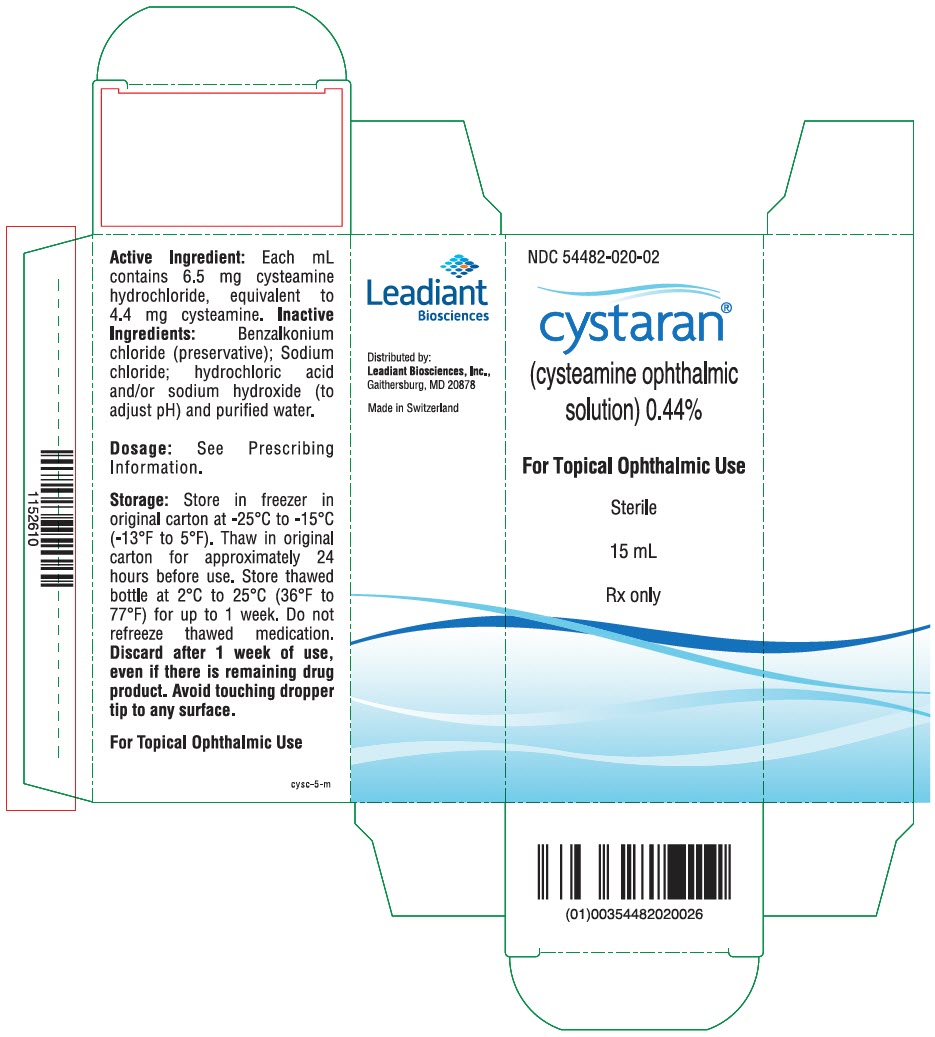
CYSTARAN cysteamine hydrochloride 6.5 mg/mL Solution, 15 mL
🆔 Identity & classification
Where does this data come from?
🏷️ RxNorm drug class
This medicine belongs to the Cystine Depleting Agent class.
Where does this data come from?
🏭 Manufacturer & labeler
Where does this data come from?
🩺 Clinical
- Cystinosis is a rare inherited condition where your body can't properly move a substance called cystine out of the recycling compartments inside your cells. Over time, cystine buil...
- What exactly is cystinosis, and why do I need this medication for life?
- Your doctor will measure cystine levels in your white blood cells regularly — usually about 5 to 6 hours after a dose. These levels tell your doctor whether the dose is in the righ...
- How do I know if the medication is working?
Patient education
Supplement & herbal interactions
Some supplements/herbs that may interact with Cysteamine Hydrochloride — tap one for details:
Where does this data come from?
Ask a licensed pharmacist directly — free, answered by our team.
🧪 Inactive Ingredients / Excipients
Inactive ingredients, also called excipients, are components of the drug product other than the active ingredient. They may include fillers, dyes, coatings, preservatives, flavors, or other formulation ingredients.
💡 Tap an ingredient (hover on desktop) to see what it is and why it’s used.
-
UNII F5UM2KM3W7
Benzalkonium chloride is a chemical compound that works as a preservative and antimicrobial agent in medications. It prevents bacterial and fungal growth in liquid formulations to keep the product safe during storage and use.
-
UNII QTT17582CB
A strong acid used to adjust and maintain the proper pH level in liquid medicines, ensuring stability and preventing breakdown of active ingredients.
-
UNII 451W47IQ8X
Sodium chloride is common table salt. It's used in medicines as a buffer to maintain proper pH, as a filler to add bulk, or to adjust the osmotic balance in liquid formulations.
-
UNII 55X04QC32I
A strong alkaline chemical used to adjust and maintain the pH balance of liquid medicines. It helps keep the medicine stable and ensures it stays effective during storage.
-
UNII 059QF0KO0R
Water is a liquid solvent that dissolves and mixes ingredients together in liquid medicines, syrups, and injections. It helps distribute the active drug evenly throughout the product.
5 inactive ingredients listed in the exact product block matched to this NDC.
Where does this data come from?
ingredient classCode="IACT" elements from the exact product block matched by this NDC. Label-section narrative from DailyMed / the openFDA label index is shown separately when available.Inactive ingredient FAQ
Are inactive ingredients the same for every manufacturer?
Why might an inactive ingredient be missing?
Can inactive ingredients matter?
💲 Pricing
A drug doesn't have one price. Each row is a different public payment system, and none is what you'd pay at the counter — that depends on your insurance. The ⓘ on each row explains what it measures.
| Price system | Per mL | Per package |
|---|---|---|
| Retail pharmacies payNADAC · weekly | Not in the retail survey — common for institutional, discontinued, or low-volume packs. | |
| Medicaid paysCMS SDUD · 12 mo | $166.39 | $2,495.78 / 15 ml |
| Medicare drug plans payPart D · Q2 2026 | $176.47 | $2,647.05 / 15 ml |
Where does this data come from?
🔁 Therapeutic equivalents
| Product | Labeler | Pack | NADAC/unit | TE | Status | Price vs. this |
|---|---|---|---|---|---|---|
| Cystaran 6.5 mg/mLthis 54482-0020-02 | Leadiant | 15 ml | — | — | FDA listed | — |
| Cystaran 6.5 mg/mL 54482-0035-02 | Leadiant | 15 ml | — | — | FDA listed | — |
Where does this data come from?
⏳ Availability & generic status
We did not find an FDA-approved generic match for this exact strength, form and route.
Where does this data come from?
🗺️ Medicaid utilization & spend
📊 Medicare Part D spend CMS · PART D · 2026 (Q1)
🔬 Reported adverse events (FAERS)
Top reported reactions
Age at onset
Reporter sex
Serious outcomes
Where does this data come from?
📦 Packaging — all sizes for this product
| Package NDC | Description | Marketing start | Status |
|---|---|---|---|
| 54482-0020-02 You're viewing this | 15 mL in 1 BOTTLE (54482-020-02) | 2022-02-25 | Active |
🧭 About this NDC listing & data coverage
What data is (and isn’t) available for this NDC — tap to expand
| NDC identity (package / product / labeler codes) | ✓ Available |
| Labeler | ✓ Available |
| Product & package description | ✓ Available |
| Marketing category & status | ✓ Available |
| Active ingredient / dosage form / route | ✓ Available |
| FDA label (SPL via DailyMed) | ✓ Available |
| Package photos | ✓ Available |
| Inactive ingredients (structured) | ✓ Available |
| NADAC pharmacy acquisition price (CMS) | — Not published for this NDC CMS publishes NADAC only for NDCs reported in its retail-pharmacy survey. |
| Orange Book / therapeutic-equivalence data | — Not published for this NDC Applies only to products approved under an NDA/ANDA; many listings are out of scope. |
| HCPCS J-code billing crosswalk | — Not published for this NDC Most self-administered / retail products have no J-code — that is normal. |
| Medicaid utilization (CMS SDUD) | ✓ Available |
Questions about this listing
Why is there no price listed?
Is the NDC printed on the package the same as the 11-digit billing NDC?
What do the three segments of this NDC mean?
Is this package still being marketed?
Who lists this product with the FDA?
Do I need a prescription for this product?
Where does this data come from?
📄 Full prescribing information FDA SPL
🎯 Indications and Usage ▾
1 INDICATIONS AND USAGE CYSTARAN ® is a cystine-depleting agent indicated for the treatment of corneal cystine crystal accumulation in patients with cystinosis. CYSTARAN is a cystine-depleting agent indicated for the treatment of corneal cystine crystal accumulation in patients with cystinosis. ( 1 )
⏱️ Dosage and Administration ▾
2 DOSAGE AND ADMINISTRATION Instill one drop of CYSTARAN in each eye, every waking hour. Do not touch dropper tip to any surface, as this may contaminate the solution. Discard after 1 week of use. Instill one drop of CYSTARAN in each eye, every waking hour. ( 2 )
💊 Dosage Forms and Strengths ▾
3 DOSAGE FORMS AND STRENGTHS Ophthalmic solution containing 6.5 mg/mL of cysteamine hydrochloride equivalent to 4.4 mg/mL of cysteamine (0.44%). Ophthalmic solution containing 6.5 mg/mL of cysteamine hydrochloride equivalent to 4.4 mg/mL of cysteamine (0.44%). ( 3 )
⛔ Contraindications ▾
4 CONTRAINDICATIONS None. None. ( 4 )
⚠️ Warnings and Cautions ▾
5 WARNINGS AND PRECAUTIONS To minimize the risk of contamination, do not touch the dropper tip to any surface. Keep bottle tightly closed when not in use. ( 5.1 )
5.1Contamination of Tip and Solution To minimize contaminating the dropper tip and solution, care should be taken not to touch the eyelids or surrounding areas with the dropper tip of the bottle. Keep bottle tightly closed when not in use.
5.2Benign Intracranial Hypertension There have been reports of benign intracranial hypertension (or pseudotumor cerebri) associated with oral cysteamine treatment that has resolved with the addition of diuretic therapy. There have also been reports associated with ophthalmic use of cysteamine; however, all of these patients were on concurrent oral cysteamine.
5.3Contact Lens Use CYSTARAN contains benzalkonium chloride, which may be absorbed by soft contact lenses. Contact lenses should be removed prior to application of solution and may be reinserted 15 minutes following its administration [see Patient Counseling Information (17) ] .
5.4Topical Ophthalmic Use CYSTARAN is for topical ophthalmic use.
🤒 Adverse Reactions ▾
6 ADVERSE REACTIONS The most common adverse reactions (incidence approximately 10% or greater) are sensitivity to light, redness, eye pain/irritation, headache and visual field defects. ( 6 ) To report SUSPECTED ADVERSE REACTIONS, contact Leadiant Biosciences, Inc. at 1-888-393-4584 or FDA at 1-800-FDA-1088 or www.fda.gov/medwatch.
6.1Clinical Trials Experience Because clinical trials are conducted under widely varying conditions, adverse reaction rates observed in the clinical trials of a drug cannot be directly compared to rates in the clinical trials of another drug and may not reflect the rates observed in practice. The safety data described below reflect exposure in controlled clinical trials of six months to 19 years duration in approximately 300 patients. The most frequently reported ocular adverse reactions occurring in ≥10% of patients were sensitivity to light, redness, and eye pain/irritation, headache and visual field defects.
👥 Use in Specific Populations ▾
8 USE IN SPECIFIC POPULATIONS
8.1Pregnancy Risk Summary There are no adequate and well controlled studies of ophthalmic cysteamine in pregnant women to inform any drug associated risks. Oral administration of cysteamine to pregnant rats throughout the period of organogenesis was teratogenic at doses 86 to 345 times the recommended human ophthalmic dose (based on body surface area) [see Data ] . CYSTARAN should be used during pregnancy only if the potential benefit justifies the potential risk to the fetus.
Data Animal Data Teratology studies have been performed in rats at oral doses in the range of 37.5 mg/kg/day to 150 mg/kg/day (86 to 345 times the recommended human ophthalmic dose based on a body surface area) and have revealed cysteamine bitartrate to be teratogenic. Observed teratogenic findings were intrauterine death, cleft palate, kyphosis, heart ventricular septal defects, microcephaly, exencephaly, and growth deficits.
8.2Lactation Risk Summary There is no information regarding the presence of cysteamine in human milk, the effects on the breastfed infants, or the effects on milk production. Cysteamine administered orally is present in milk of lactating rats. It is not known whether measurable levels of cysteamine would be present in maternal milk following topical ocular administration of CYSTARAN.
8.4Pediatric Use The safety and effectiveness of CYSTARAN (cysteamine ophthalmic solution) 0.44% have been established in pediatric patients.
8.5Geriatric Use When the clinical studies with CYSTARAN were conducted, the reduced life expectancy from cystinosis did not make it possible to include patients in the geriatric age range.
8.6Renal Impairment The effect of renal impairment on the pharmacokinetics of cysteamine following ophthalmic administration of cysteamine ophthalmic solution has not been evaluated because ophthalmic exposure compared to systemic exposure is negligible. The majority of the patients in the ophthalmic clinical studies are assumed to have had some degree of renal impairment due to their underlying systemic disease. The total daily ophthalmic dose is less than 2% of the recommended oral daily dose of cysteamine; thus, the systemic exposure following ophthalmic administration is expected to be negligible compared to oral administration.
🤰 Pregnancy ▾
8.1Pregnancy Risk Summary There are no adequate and well controlled studies of ophthalmic cysteamine in pregnant women to inform any drug associated risks. Oral administration of cysteamine to pregnant rats throughout the period of organogenesis was teratogenic at doses 86 to 345 times the recommended human ophthalmic dose (based on body surface area) [see Data ] . CYSTARAN should be used during pregnancy only if the potential benefit justifies the potential risk to the fetus.
Data Animal Data Teratology studies have been performed in rats at oral doses in the range of 37.5 mg/kg/day to 150 mg/kg/day (86 to 345 times the recommended human ophthalmic dose based on a body surface area) and have revealed cysteamine bitartrate to be teratogenic. Observed teratogenic findings were intrauterine death, cleft palate, kyphosis, heart ventricular septal defects, microcephaly, exencephaly, and growth deficits.
🧒 Pediatric Use ▾
8.4Pediatric Use The safety and effectiveness of CYSTARAN (cysteamine ophthalmic solution) 0.44% have been established in pediatric patients.
🧓 Geriatric Use ▾
8.5Geriatric Use When the clinical studies with CYSTARAN were conducted, the reduced life expectancy from cystinosis did not make it possible to include patients in the geriatric age range.
🧬 Clinical Pharmacology ▾
12 CLINICAL PHARMACOLOGY
12.1Mechanism of Action Cysteamine acts as a cystine-depleting agent by converting cystine to cysteine and cysteine-cysteamine mixed disulfides and reduces corneal cystine crystal accumulation.
12.3Pharmacokinetics The peak plasma concentration of cysteamine following ocular administration of cysteamine ophthalmic solution in humans is unknown, but it is expected to be substantially less than the peak plasma concentration following oral administration of cysteamine bitartrate.
🧬 Mechanism of Action ▾
12.1Mechanism of Action Cysteamine acts as a cystine-depleting agent by converting cystine to cysteine and cysteine-cysteamine mixed disulfides and reduces corneal cystine crystal accumulation.
📦 How Supplied / Storage and Handling ▾
16 HOW SUPPLIED/STORAGE AND HANDLING Fifteen (15) mL of CYSTARAN (cysteamine ophthalmic solution) 0.44% is supplied in an opaque, white, low-density polyethylene (LDPE) 88 mm tall bottle with a 1.6 mm blue, silicone rubber flow-controlled dropper tip and closed with a white, high-density polyethylene (HDPE) screw cap. The bottle is foil-wrapped and stored in a carton. CYSTARAN bottles must be stored in the following conditions: NDC 54482- 020 -02 Before Opening: Store unopened bottle in freezer at -25°C to -15°C (-13°F to 5°F) in the original packaging including unopened foil.
Thaw for approximately 24 hours before use. Open the carton and the foil only when starting a new bottle. After Opening: Record discard date on the bottle, which is 1 week from the day the foil and bottle were opened.
Store thawed bottle at 2°C to 25°C (36°F to 77°F) for up to 1 week. The thawed bottle does not require refrigeration between use. Do not refreeze the thawed medication.
Discard 1 week after the foil and bottle were opened even if there is medication left in the bottle. NDC 54482- 035 -02 Before Opening: Store unopened bottle in refrigerator at 2°C to 8°C (36°F to 46°F) in the original packaging including unopened foil. Open the carton and the foil only when starting a new bottle.
After Opening: Record discard date on the bottle, which is 1 week from the day the foil and bottle were opened. During the week of use, store bottle at room temperature, 20°C to 25°C (68°F to 77°F). Discard 1 week after the foil and bottle were opened even if there is medication left in the bottle.
📦 Storage and Handling ▾
CYSTARAN bottles must be stored in the following conditions: NDC 54482- 020 -02 Before Opening: Store unopened bottle in freezer at -25°C to -15°C (-13°F to 5°F) in the original packaging including unopened foil. Thaw for approximately 24 hours before use. Open the carton and the foil only when starting a new bottle.
After Opening: Record discard date on the bottle, which is 1 week from the day the foil and bottle were opened. Store thawed bottle at 2°C to 25°C (36°F to 77°F) for up to 1 week. The thawed bottle does not require refrigeration between use.
Do not refreeze the thawed medication. Discard 1 week after the foil and bottle were opened even if there is medication left in the bottle.
📋 Description ▾
11 DESCRIPTION CYSTARAN is a sterile ophthalmic solution containing 6.5 mg/mL of cysteamine hydrochloride, equivalent to 4.4 mg/mL of cysteamine (0.44%) as the active ingredient. Cysteamine is a cystine-depleting agent which lowers the cystine content of cells in patients with cystinosis. Molecular Formula: C 2 H 7 NS HCl Molecular Weight: 113.61 Each milliliter of CYSTARAN contains: Active: cysteamine 4.4 mg (equivalent to cysteamine hydrochloride 6.5 mg); Preservative: benzalkonium chloride 0.1 mg; Inactive Ingredients: sodium chloride, hydrochloric acid and/or sodium hydroxide (to adjust pH to 4.1-4.5), and purified water.
Chemical Structure
💬 Information for Patients ▾
17 PATIENT COUNSELING INFORMATION Storage of Cystaran Bottles NDC 54482- 020 -02 Patients should be advised to store unopened bottles in the freezer in the intact foil pouch and original carton. Each week, one new bottle should be removed from the freezer. Patients should be advised to allow the bottle to thaw completely (approximately 24 hours) prior to use.
After the bottle is completely thawed, the patient should be advised to open the packaging (carton and foil) and record the discard date on the bottle label. The discard date is seven (7) days from the day the foil and bottle were opened. During the week of use, patients should be advised to store thawed bottle at 2°C to 25°C (36°F to 77°F) for up to 1 week.
The thawed bottle does not require refrigeration between use and should not be refrozen. At the end of 1 week (7 days), patients should discard the bottle. There may be medication left in the bottle; however, the bottle must be discarded by the patient because the medication is only stable for 1 week after the foil and bottle were opened.
Storage of Cystaran Bottles NDC 54482- 035 -02 Patients should be advised to store unopened bottles in the refrigerator in the intact foil pouch and original carton. When starting a new bottle, patients should be advised to open the packaging (carton and foil) and record the discard date on the bottle label. The discard date is seven (7) days from the day the foil and bottle were opened.
During the week of use, patients should be advised to store the bottle at room temperature 20°C to 25°C (68°F to 77°F) for up to 1 week. At the end of 1 week (7 days), patients should discard the bottle. There may be medication left in the bottle; however, the bottle must be discarded by the patient because the medication is only stable for 1 week after the foil and bottle were opened.
Risk of Contamination Patients should be advised not to touch the eyelid or surrounding areas with the dropper tip of the bottle. The cap should remain on the bottle when not in use. Use with Contact Lenses Patients should be advised that contact lenses should be removed prior to application of CYSTARAN.
Contact lenses may be reinserted 15 minutes following CYSTARAN administration. Topical Ophthalmic Use Patients should be advised that CYSTARAN is for topical ophthalmic use.