
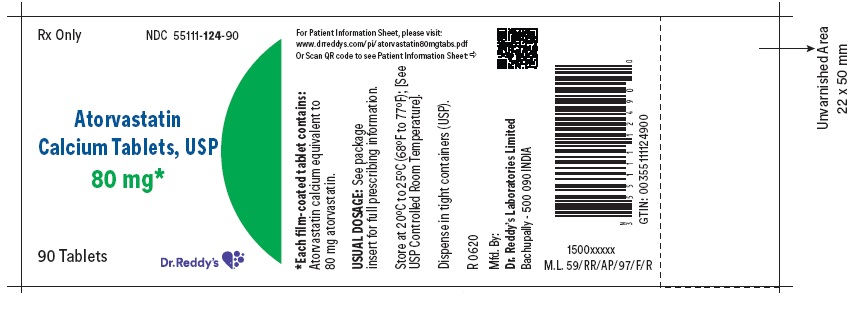
Atorvastatin Calcium 80 mg Tablet, 500-count — NDC 55111-124-05 (Billing 55111-0124-05)
This is a package of 500 tablets of Atorvastatin Calcium 80 mg Tablet from Dr. Reddy's Laboratories Limited, marketed since Jul 2012 and currently FDA-listed; retail pharmacies pay about $0.0693 per tablet (NADAC). It is the main listing for this product, which comes in 4 package sizes.
Other active recalls for Atorvastatin Calcium (different manufacturers) — 6 · tap to view
Past resolved recalls for this product (1)
Identity & classification
Regulatory identifiers FDA, NLM and CMS codes for this package
Drug-database identifiers Medi-Span GPI and First Databank GCN / HICL / AHFS classification
- GSN (GCN sequence number): 045772
- GCN: 43723
- GPI-14 (Medi-Span): 39400010100350
- HICL (First Databank): 012404
- AHFS class code: 24:06.08.00
- RxCUI (RxNorm): 259255
Where does this data come from?
- FDA openFDA NDC Directory · synced Oct 1, 2026
- FDA label on DailyMed · label index refreshed Oct 1, 2026
- RxNorm (NLM RxNav) · catalog refreshed Oct 1, 2026
- Medi-Span GPI (licensed)
- First Databank (licensed) · refreshed Oct 1, 2026
RxNorm drug class
This medicine belongs to the HMG-CoA Reductase Inhibitor class.
Where does this data come from?
- RxClass (NLM) · catalog refreshed Oct 1, 2026
Clinical
Atorvastatin is used to reduce the risk of heart attack and stroke decrease the amount of cholesterol (a fat-like substance that can build up and clog blood vessels causing heart attacks or strokes or other health problems) Atorvastatin is in a class of medications called HMG-CoA reductase inhibitors (statins). It works by slowing how much cholesterol your body makes. This lowers the amount of cholesterol that can build up on the walls of the arteries and block blood flow to the heart, brain, and other parts of the body.
Read the full MedlinePlus article ↗- It lowers LDL cholesterol and triglycerides when used with diet. It also lowers the risk of heart attack and stroke in adults who have CHD or are at higher risk, including people w...
- Take it by mouth once a day. Any time of day works, and you can take it with or without food. Pick a time you will remember. If you miss a dose, one label says to skip it and take...
- Common ones include stuffy nose, joint or muscle aches, diarrhea, upset stomach, and trouble sleeping. Many people have few problems. If muscle pain is unexplained or comes with we...
- Call for unexplained muscle pain, tenderness or weakness, especially with fever. Also call for yellow skin or eyes, or signs of a serious allergy like facial swelling or a blisteri...
Patient education
Supplement & herbal interactions
Some supplements/herbs that may interact with Atorvastatin Calcium — tap one for details:
Atorvastatin Calcium may be associated with lower levels of 2 nutrients — worth a chat with your pharmacist, not a cause for alarm.
Where does this data come from?
- MedlinePlus (NLM) · refreshed Oct 1, 2026
- FDA label on DailyMed · label index refreshed Oct 1, 2026
Ask a licensed pharmacist directly — free, answered by our team.
Pricing
A drug doesn't have one price. Each row is a different public payment system, and none is what you'd pay at the counter — that depends on your insurance. The ⓘ on each row explains what it measures.
| Price system | Per ea | Per package |
|---|---|---|
| Retail pharmacies payNADAC · weekly | $0.069 | $34.65 / 500 tablets |
| Medicaid paysCMS SDUD · 12 mo | $0.2394 | $119.70 / 500 tablets |
| Medicare drug plans payPart D · Q2 2026 | $0.0927 | $46.35 / 500 tablets |
Where does this data come from?
- CMS NADAC weekly file · file of Sep 30, 2026
- CMS ASP pricing files · refreshed Sep 20, 2026
- CMS Medicaid State Drug Utilization Data · through Q1 2026
- CMS Part D plan pricing files · refreshed Sep 24, 2026
- VA National Acquisition Center price file
Packaging — all sizes for this product
| Package NDC | Description | Per unit | Per pack | Marketing start | Marketing end | Status |
|---|---|---|---|---|---|---|
| 55111-0124-05 You're viewing this Main listing | 500 TABLET in 1 BOTTLE | $0.0693 / ea | $34.63 | 2012-07-17 | — | Active |
| 55111-0124-30 55111-124-30 | 30 TABLET in 1 BOTTLE | — | — | 2012-07-17 | — | Active |
| 55111-0124-60 55111-124-60 | 60 TABLET in 1 BOTTLE | — | — | 2012-07-17 | — | Active |
| 55111-0124-90 55111-124-90 | 90 TABLET in 1 BOTTLE | $0.0693 / ea | $6.23 | 2012-07-17 | — | Active |
You're viewing the largest of 4 pack sizes for this product.
This pack has the lowest per-ea cost of the 2 priced pack sizes ($0.0693 NADAC).
In Medicaid, this is the most-dispensed pack of this product — about 62% of fills over the last four reported quarters. See all packs ↓
Pack size FAQ
What quantity is in this package?
How does this package differ from NDC 55111-0124-30?
What NDC number is used to bill for this package of Atorvastatin Calcium 80 mg Tablet?
Prices are the latest CMS NADAC pharmacy acquisition cost per NDC; per-pack figures are per-unit × pack quantity, shown only when the pack is denominated in the same measure NADAC prices.
Therapeutic equivalents
| Product | Labeler | Pack | NADAC/unit | TE | Status | Price vs. this |
|---|---|---|---|---|---|---|
| Atorvastatin Calcium 80 mg 00093-5057-05 | Teva | 500 tablets | $0.069 | AB | Availability likely | — |
| Atorvastatin Calcium 80 mg 00378-3953-05 | Mylan | 500 tablets | $0.069 | AB | Availability likely | — |
| Atorvastatin Calcium 80 mg 00480-3588-10 | Teva | 1000 tablets | $0.069 | AB | Availability likely | — |
| Atorvastatin Calcium 80 mg 00904-6293-04 | Major | 1 tablet | $0.069 | AB | Availability likely | — |
| Atorvastatin Calcium 80 mg 16571-0139-09 | Rising | 90 tablets | $0.069 | AB | Availability likely | — |
| Atorvastatin Calcium 80 mg 16714-0176-01 | NORTHSTAR | 90 tablets | $0.069 | AB | Availability likely | — |
| Atorvastatin Calcium 80 mg 31722-0427-05 | Camber | 500 tablets | $0.069 | AB | Availability likely | — |
| Atorvastatin calcium 80 mg 33342-0318-10 | Macleods | 90 tablets | $0.069 | AB | Availability likely | — |
| Atorvastatin Calcium 80 mg 42385-0943-01 | Laurus | 100 tablets | $0.069 | AB | Availability likely | — |
| Atorvastatin Calcium 80 mg 42571-0175-10 | Micro | 1000 tablets | $0.069 | AB | Discontinued | — |
| Atorvastatin Calcium 80 mg 43598-0103-05 | Dr. | 500 tablets | $0.069 | AB | Availability likely | — |
| Atorvastatin Calcium 80 mg 43598-0833-05 | Dr. | 500 tablets | $0.069 | AB | Availability likely | — |
| Atorvastatin Calcium 80 mg 50228-0454-05 | ScieGen | 500 tablets | $0.069 | AB | Availability likely | — |
| Atorvastatin Calcium 80 mg 50268-0096-12 | AvPAK | 1 tablet | $0.069 | AB | Availability likely | — |
| Atorvastatin Calcium 80 mg 51079-0211-03 | Mylan | 1 tablet | $0.069 | AB | Availability likely | — |
| Atorvastatin Calcium 80 mgthis 55111-0124-05 | Dr. | 500 tablets | $0.069 | AB | Availability likely | — |
| Atorvastatin Calcium 80 mg 67877-0514-05 | Ascend | 500 tablets | $0.069 | AB | Availability likely | — |
| Atorvastatin Calcium 80 mg 68084-0590-25 | American | 1 tablet | $0.069 | AB | Availability likely | — |
| Atorvastatin Calcium 80 mg 70377-0080-11 | Biocon | 90 tablets | $0.069 | AB | Availability likely | — |
| atorvastatin calcium 80 mg 70710-1770-00 | Zydus | 1000 tablets | $0.069 | AB | Availability likely | — |
| Atorvastatin calcium 80 mg 72205-0025-05 | Novadoz | 500 tablets | $0.069 | AB | Availability likely | — |
| Atorvastatin Calcium 80 mg 72603-0285-01 | NorthStar | 90 tablets | $0.069 | AB | Availability likely | — |
| Atorvastatin calcium 80 mg 72603-0406-02 | NorthStar | 100 tablets | $0.069 | AB | Availability likely | — |
| Atorvastatin calcium 80 mg 75834-0258-01 | NIVAGEN | 1000 tablets | $0.069 | AB | Availability likely | — |
| Atorvastatin Calcium 80 mg 82009-0004-10 | Quallent | 1000 tablets | $0.069 | AB | Availability likely | — |
| Atorvastatin Calcium 80 mg 82009-0179-10 | Quallent | 1000 tablets | $0.069 | AB | Availability likely | — |
| Atorvastatin Calcium 80 mg 63304-0830-05 | Sun | 500 tablets | $0.072 | — | FDA listed | +4% |
| Atorvastatin Calcium 80 mg 16729-0047-15 | Accord | 90 tablets | $0.079 | AB | FDA listed | +14% |
| Atorvastatin Calcium 80 mg 69097-0947-05 | Cipla | 90 tablets | $0.079 | AB | FDA listed | +14% |
| Atorvastatin Calcium 80 mg 68180-0638-02 | Lupin | 500 tablets | $0.079 | — | Discontinued | +14% |
| Lipitor 80 mg 58151-0158-77 | Viatris | 90 tablets | $19.004 | AB | Availability likely | +27338% |
| Atorvastatin Calcium 80 mg 00615-8009-05 | NCS | 15 tablets | — | AB | FDA listed | — |
| Atorvastatin Calcium 80 mg 48433-0010-03 | Safecor | 1 tablet | — | AB | FDA listed | — |
| Atorvastatin calcium 80 mg 50090-6054-00 | A-S | 30 tablets | — | AB | FDA listed | — |
| Atorvastatin Calcium 80 mg 50090-6061-00 | A-S | 30 tablets | — | AB | FDA listed | — |
| Atorvastatin Calcium 80 mg 50090-6505-00 | A-S | 30 tablets | — | AB | FDA listed | — |
| Atorvastatin Calcium 80 mg 50090-6506-00 | A-S | 90 tablets | — | AB | FDA listed | — |
| Atorvastatin calcium 80 mg 50090-6970-00 | A-S | 90 tablets | — | AB | FDA listed | — |
| Atorvastatin Calcium 80 mg 50090-7358-00 | A-S | 30 tablets | — | AB | FDA listed | — |
| Atorvastatin Calcium 80 mg 50090-7359-00 | A-S | 90 tablets | — | AB | FDA listed | — |
| Atorvastatin Calcium 80 mg 50090-7532-00 | A-S | 30 tablets | — | AB | FDA listed | — |
| Atorvastatin Calcium 80 mg 50090-7533-00 | A-S | 90 tablets | — | AB | FDA listed | — |
| atorvastatin calcium 80 mg 50090-7724-00 | A-S | 30 tablets | — | AB | FDA listed | — |
| atorvastatin calcium 80 mg 50090-7725-00 | A-S | 90 tablets | — | AB | FDA listed | — |
| Atorvastatin Calcium 80 mg 51655-0747-52 | Northwind | 30 tablets | — | AB | FDA listed | — |
| Atorvastatin Calcium 80 mg 51655-0881-30 | Northwind | 30 tablets | — | AB | FDA listed | — |
| Atorvastatin Calcium 80 mg 55154-4384-06 | Cardinal | 1 tablet | — | AB | FDA listed | — |
| Atorvastatin Calcium 80 mg 55154-7289-00 | Cardinal | 1 tablet | — | AB | FDA listed | — |
| Atorvastatin Calcium 80 mg 59651-0609-55 | Aurobindo | 15000 tablets | — | AB | FDA listed | — |
| Atorvastatin calcium 80 mg 60290-0042-01 | Umedica | 90 tablets | — | AB | FDA listed | — |
| Atorvastatin Calcium 80 mg 60505-2671-00 | Apotex | 10 tablets | — | AB | FDA listed | — |
| Atorvastatin Calcium 80 mg 63187-0656-30 | Proficient | 30 tablets | — | AB | FDA listed | — |
| Atorvastatin Calcium 80 mg 63187-0907-30 | Proficient | 30 tablets | — | AB | FDA listed | — |
| Atorvastatin Calcium 80 mg 63629-8472-01 | Bryant | 90 tablets | — | AB | FDA listed | — |
| Atorvastatin calcium 80 mg 67046-1593-03 | Coupler | 30 tablets | — | AB | FDA listed | — |
| Atorvastatin Calcium 80 mg 67046-1666-03 | Coupler | 30 tablets | — | AB | FDA listed | — |
| Atorvastatin Calcium 80 mg 68071-2018-03 | NuCare | 30 tablets | — | AB | FDA listed | — |
| Atorvastatin Calcium 80 mg 68071-2276-09 | NuCare | 90 tablets | — | — | FDA listed | — |
| Atorvastatin Calcium 80 mg 68071-2765-09 | NuCare | 90 tablets | — | AB | FDA listed | — |
| Atorvastatin Calcium 80 mg 68071-3874-09 | NuCare | 90 tablets | — | AB | FDA listed | — |
| Atorvastatin Calcium 80 mg 68071-3961-09 | NuCare | 90 tablets | — | AB | FDA listed | — |
| Atorvastatin calcium 80 mg 68071-4962-09 | NuCare | 90 tablets | — | AB | FDA listed | — |
| Atorvastatin Calcium 80 mg 69097-0911-05 | Cipla | 90 tablets | — | AB | FDA listed | — |
| Atorvastatin calcium 80 mg 70518-3304-00 | REMEDYREPACK | 30 tablets | — | AB | Discontinued | — |
| Atorvastatin calcium 80 mg 70518-3848-00 | REMEDYREPACK | 90 tablets | — | AB | FDA listed | — |
| Atorvastatin calcium 80 mg 70518-4473-00 | REMEDYREPACK | 90 tablets | — | AB | FDA listed | — |
| Atorvastatin calcium 80 mg 70756-0250-30 | Lifestar | 30 tablets | — | AB | FDA listed | — |
| atorvastatin calcium 80 mg 70771-1878-00 | Zydus | 1000 tablets | — | AB | FDA listed | — |
| Atorvastatin Calcium 80 mg 71205-0098-30 | Proficient | 30 tablets | — | AB | FDA listed | — |
| Atorvastatin calcium 80 mg 71205-0335-20 | Proficient | 20 tablets | — | AB | FDA listed | — |
| Atorvastatin Calcium 80 mg 71209-0093-04 | Cadila | 90 tablets | — | — | FDA listed | — |
| Atorvastatin calcium 80 mg 71335-1336-01 | Bryant | 30 tablets | — | AB | FDA listed | — |
| Atorvastatin Calcium 80 mg 71335-2225-01 | Bryant | 30 tablets | — | AB | FDA listed | — |
| Atorvastatin Calcium 80 mg 71335-2407-01 | Bryant | 30 tablets | — | AB | FDA listed | — |
| Atorvastatin Calcium 80 mg 71335-2582-01 | Bryant | 30 tablets | — | AB | FDA listed | — |
| Atorvastatin calcium 80 mg 71335-9646-01 | Bryant | 30 tablets | — | AB | FDA listed | — |
| Atorvastatin Calcium 80 mg 71610-0036-15 | Aphena | 15 tablets | — | AB | FDA listed | — |
| Atorvastatin Calcium 80 mg 71610-0633-15 | Aphena | 15 tablets | — | AB | FDA listed | — |
| Atorvastatin Calcium 80 mg 71610-0746-15 | Aphena | 15 tablets | — | AB | FDA listed | — |
| Atorvastatin Calcium 80 mg 72162-1556-09 | Bryant | 90 tablets | — | AB | FDA listed | — |
| Atorvastatin Calcium 80 mg 72189-0537-30 | Direct_Rx | 30 tablets | — | AB | FDA listed | — |
| Atorvastatin Calcium 80 mg 76420-0948-00 | Asclemed | 1000 tablets | — | AB | FDA listed | — |
| Atorvastatin Calcium 80 mg 77771-0454-05 | Radha | 500 tablets | — | AB | FDA listed | — |
| atorvastatin calcium 80 mg 82137-0019-01 | Lepu | 90 tablets | — | — | FDA listed | — |
| Atorvastatin Calcium 80 mg 55154-0284-06 | Cardinal | 1 tablet | — | AB | FDA listed | — |
| Atorvastatin Calcium 80 mg 71335-3179-01 | Bryant | 30 tablets | — | AB | FDA listed | — |
Where does this data come from?
- FDA openFDA NDC Directory · synced Oct 1, 2026
- FDA Orange Book · refreshed Sep 3, 2026
- CMS NADAC weekly file · file of Sep 30, 2026
Availability & generic status
This product is an FDA-approved generic. Other versions of the same drug are listed under Therapeutic equivalents, least expensive first.
Where does this data come from?
- FDA Orange Book · refreshed Sep 3, 2026
What it looks like
Where does this data come from?
- FDA label on DailyMed · label index refreshed Oct 1, 2026
Inactive Ingredients / Excipients
Inactive ingredients, also called excipients, are components of the drug product other than the active ingredient. They may include fillers, dyes, coatings, preservatives, flavors, or other formulation ingredients.
Where does this data come from?
IACT rows and label-wide narrative are kept separate; availability and product-level specificity depend on the submitted label.- FDA label on DailyMed · label index refreshed Oct 1, 2026
- FDA openFDA NDC Directory · synced Oct 1, 2026
Inactive ingredient FAQ
Are inactive ingredients the same for every manufacturer?
Why might an inactive ingredient be missing?
Can inactive ingredients matter?
Manufacturer & labeler
Where does this data come from?
- FDA openFDA NDC Directory · synced Oct 1, 2026
- Drugs@FDA
Full prescribing information FDA SPL
🎯 Indications and Usage ▾
1 INDICATIONS AND USAGE Therapy with lipid-altering agents should be only one component of multiple risk factor intervention in individuals at significantly increased risk for atherosclerotic vascular disease due to hypercholesterolemia. Drug therapy is recommended as an adjunct to diet when the response to a diet restricted in saturated fat and cholesterol and other nonpharmacologic measures alone has been inadequate. In patients with CHD or multiple risk factors for CHD, atorvastatin calcium tablets can be started simultaneously with diet.
Atorvastatin calcium tablet is an HMG-CoA reductase inhibitor indicated as an adjunct therapy to diet to: Reduce the risk of MI, stroke, revascularization procedures, and angina in adult patients without CHD, but with multiple risk factors (1.1) . Reduce the risk of MI and stroke in adult patients with type 2 diabetes without CHD, but with multiple risk factors (1.1). Reduce the risk of non-fatal MI, fatal and non-fatal stroke, revascularization procedures, hospitalization for CHF, and angina in adult patients with CHD (1.1).
Reduce elevated total-C, LDL-C, apo B, and TG levels and increase HDL-C in adult patients with primary hyperlipidemia (heterozygous familial and nonfamilial) and mixed dyslipidemia (1.2) . Reduce elevated TG in adult patients with hypertriglyceridemia and primary dysbetalipoproteinemia (1.2) . Reduce total-C and LDL-C in patients with homozygous familial hypercholesterolemia (HoFH) (1.2) .
Reduce elevated total-C, LDL-C, and apo B levelsin pediatric patients, 10 years to 17 years of age, with heterozygous familial hypercholesterolemia(HeFH) after failing an adequate trial of diet therapy (1.2) . Limitations of Use : Atorvastatin calcium tablets have not been studied in Fredrickson Types I and V dyslipidemias ( 1.3 ).
1.1Prevention of Cardiovascular Disease in Adults In adult patients without clinically evident coronary heart disease, but with multiple risk factors for coronary heart disease such as age, smoking, hypertension, low HDL-C, or a family history of early coronary heart disease, atorvastatin calcium tablets are indicated to: Reduce the risk of myocardial infarction Reduce the risk of stroke Reduce the risk for revascularization procedures and angina In adult patients with type 2 diabetes, and without clinically evident coronary heart disease, but with multiple risk factors for coronary heart disease such as retinopathy, albuminuria, smoking, or hypertension, atorvastatin calcium tablets are indicated to: Reduce the risk of myocardial infarction Reduce the risk of stroke In adult patients with clinically evident coronary heart disease, atorvastatin calcium tablets are indicated to: Reduce the risk of non-fatal myocardial infarction Reduce the risk of fatal and non-fatal stroke Reduce the risk for revascularization procedures Reduce the risk of hospitalization for CHF Reduce the risk of angina
1.2Hyperlipidemia Atorvastatin calcium tablets are indicated: As an adjunct to diet to reduce elevated total-C, LDL-C, apo B, and TG levels and to increase HDL-C in adult patients with primary hypercholesterolemia (heterozygous familial and nonfamilial) and mixed dyslipidemia ( Fredrickson Types IIa and IIb); As an adjunct to diet for the treatment of adult patients with elevated serum TG levels ( Fredrickson Type IV); For the treatment of adult patients with primary dysbetalipoproteinemia ( Fredrickson Type III) who do not respond adequately to diet; To reduce total-C and LDL-C in patients with homozygous familial hypercholesterolemia (HoFH) as an adjunct to other lipid-lowering treatments (e.g., LDL apheresis) or if such treatments are unavailable; As an adjunct to diet to reduce total-C, LDL-C, and apo B levels in pediatric patients, 10 years to 17 years of age, with heterozygous familial hypercholesterolemia(HeFH) if after an adequate trial of diet therapy the following findings are present: a.
LDL-C remains ≥ 190 mg/dL or b. LDL-C remains ≥ 160 mg/dL and: there is… [Excerpted — this section continues on DailyMed.]
⏱️ Dosage and Administration ▾
2 DOSAGE AND ADMINISTRATION Dose range: 10 to 80 mg once daily ( 2.1 ). Recommended start dose: 10 or 20 mg once daily ( 2.1 ). Patients requiring large LDL-C reduction (>45%) may start at 40 mg once daily ( 2.1 ). Pediatric patients with HeFH: starting dose: 10 mg once daily; dose range: 10 to 20 mg/day for patients 10 years to 17 years of age ( 2.2 ).
2.1Hyperlipidemia and Mixed Dyslipidemia The recommended starting dose of atorvastatin calcium tablets is 10 or 20 mg once daily. Patients who require a large reduction in LDL-C (more than 45%) may be started at 40 mg once daily. The dosage range of atorvastatin calcium tablets is 10 to 80 mg once daily.
Atorvastatin calcium tablets can be administered as a single dose at any time of the day, with or without food. The starting dose and maintenance doses of atorvastatin calcium tablets should be individualized according to patient characteristics such as goal of therapy and response. After initiation and/or upon titration of atorvastatin calcium tablets, lipid levels should be analyzed within 2 to 4 weeks and dosage adjusted accordingly.
2.2Heterozygous Familial Hypercholesterolemia in Pediatric Patients (10 Years to 17 Years of Age) The recommended starting dose of atorvastatin calcium tablets is 10 mg/day; the usual dose range is 10 to 20 mg orally once daily [see Clinical Studies ( 14.6 ) ]. Doses should be individualized according to the recommended goal of therapy [see Indications and Usage ( 1.2 ) and Clinical Pharmacology ( 12 ) ]. Adjustments should be made at intervals of 4 weeks or more.
2.3Homozygous Familial Hypercholesterolemia The dosage of atorvastatin calcium tablets in patients with HoFH is 10 to 80 mg daily. Atorvastatin calcium tablets should be used as an adjunct to other lipid-lowering treatments (e.g., LDL apheresis) in these patients or if such treatments are unavailable.
2.4Concomitant Lipid-Lowering Therapy Atorvastatin calcium tablets may be used with bile acid resins. The combination of HMG-CoA reductase inhibitors (statins) and fibrates should generally be used with caution [see Warnings and Precautions (5.1) and Drug Interactions (7) ].
2.5Dosage in Patients with Renal Impairment Renal disease does not affect the plasma concentrations nor LDL-C reduction of atorvastatin calcium tablets; thus, dosage adjustment in patients with renal dysfunction is not necessary [see Warnings and Precautions (5.1) and Clinical Pharmacology (12.3) ].
2.6Dosage in Patients Taking Cyclosporine, Clarithromycin, Itraconazole, Letermovir or Certain Protease Inhibitors In patients taking cyclosporine or the HIV protease inhibitor tipranavir plus ritonavir or the hepatitis C virus (HCV) protease inhibitor glecaprevir plus pibrentasvir,or letermovir when co-administered with cyclosporine therapy with atorvastatin calcium tablets should be avoided. In patients with HIV taking lopinavir plus ritonavir, use the lowest dose necessary of atorvastatin calcium tablets. In patients taking clarithromycin, itraconazole, elbasvir plus grazoprevir, or in patients with HIV taking a combination of saquinavir plus ritonavir, darunavir plus ritonavir, fosamprenavir, fosamprenavir plus ritonavir or letermovir therapy with atorvastatin calcium tablets should be limited to 20 mg, and appropriate clinical assessment is recommended to ensure that the lowest dose necessary of atorvastatin calcium is used.
In patients taking the HIV protease inhibitor nelfinavir therapy with atorvastatin calcium tablets should be limited to 40 mg. [see Warnings and Precautions (5.1) and Drug Interactions (7.1) ].
💊 Dosage Forms and Strengths ▾
3 DOSAGE FORMS AND STRENGTHS Atorvastatin calcium tablets USP, 80 mg are white to off-white, oval shaped, biconvex, film coated tablets debossed ‘RDY’on one side and ‘124’ on other side. Tablets: 80 mg of atorvastatin (3) .
⛔ Contraindications ▾
4 CONTRAINDICATIONS Active Liver Disease, Which May Include Unexplained Persistent Elevations in Hepatic Transaminase Levels Hypersensitivity to Any Component of This Medication Pregnancy [see Use in Specific Populations ( 8.1, 8.3 ) ]. Lactation [see Use in Specific Populations ( 8.2 ) ]. Active liver disease, which may include unexplained persistent elevations in hepatic transaminase levels ( 4 ).
Hypersensitivity to any component of this medication ( 4 ). Pregnancy ( 4 , 8.1 , 8.3 ). Lactation ( 4 , 8.2 ).
⚠️ Warnings and Cautions ▾
5 WARNINGS AND PRECAUTIONS Myopathy and Rhabdomyolysis: Risks increase when higher doses are used concomitantly with cyclosporine, and strong CYP3A4 inhibitors (e.g., clarithromycin, itraconazole, human immunodeficiency virus (HIV) or hepatitis C virus (HCV) protease inhibitors). Predisposing factors include advanced age (> 65), uncontrolled hypothyroidism, and renal impairment. Rare cases of rhabdomyolysis with acute renal failure secondary to myoglobinuria have been reported.
Advise patients to promptly report to their physician unexplained and/or persistent muscle pain, tenderness, or weakness. Atorvastatin calcium therapy should be discontinued if myopathy is diagnosed or suspected ( 2.6 , 5.1 , 8.5 ). Immune-Mediated Necrotizing Myopathy (IMNM): There have been rare reports of IMNM, an autoimmune myopathy, associated with statin use.
IMNM is characterized by: proximal muscle weakness and elevated serum creatine kinase, which persist despite discontinuation of statin treatment; positive anti-HMG CoA reductase antibody; muscle biopsy showing necrotizing myopathy; and improvement with immunosuppressive agents ( 5.2 ). Liver enzyme abnormalities: Persistent elevations in hepatic transaminases can occur. Check liver enzyme tests before initiating therapy and as clinically indicated thereafter (5.3) .
A higher incidence of hemorrhagic stroke was seen in patients without CHD but with stroke or TIA within the previous 6 months in the atorvastatin calcium 80 mg group vs. placebo (5.6) .
5.1Myopathy and Rhabdomyolysis Atorvastatin calcium may cause myopathy (muscle pain, tenderness, or weakness with creatine kinase (CK) above ten times the upper limit of normal) and rhabdomyolysis (with or without acute renal failure secondary to myoglobinuria). Rare fatalities have occurred as a result of rhabdomyolysis with statin use, including atorvastatin calcium. Risk Factors for Myopathy Risk factors for myopathy include age 65 years or greater, uncontrolled hypothyroidism, renal impairment, concomitant use with certain other drugs, and higher atorvastatin calcium dosage [ see Drug Interactions ( 7.1 )].
Steps to Prevent or Reduce the Risk of Myopathy and Rhabdomyolysis Atorvastatin calcium exposure may be increased by drug interactions due to inhibition of cytochrome P450 enzyme 3A4 (CYP3A4) and/or transporters (e.g., breast cancer resistant protein [BCRP], organic anion-transporting polypeptide [OATP1B1/OATP1B3] and P-glycoprotein [P-gp]), resulting in an increased risk of myopathy and rhabdomyolysis. Concomitant use of cyclosporine, gemfibrozil, tipranavir plus ritonavir, or glecaprevir plus pibrentasvir with atorvastatin calcium is not recommended.
Atorvastatin calcium dosage modifications are recommended for patients taking certain anti-viral, azole antifungals, or macrolide antibiotic medications [ see Dosage and Administration ( 2.6 )]. Cases of myopathy/rhabdomyolysis have been reported with atorvastatin coadministered with lipid modifying doses (>1 gram/day) of niacin, fibrates, colchicine, and ledipasvir plus sofosbuvir. Consider if the benefit of use of these products outweighs the increased risk of myopathy and rhabdomyolysis [ see Drug Interaction s ( 7.1 )].
Concomitant intake of large quantities, more than 1.2 liters daily, of grapefruit juice is not recommended in patients taking atorvastatin calcium [ see Drug Interactions ( 7.1 )]. Discontinue atorvastatin calcium tablets if markedly elevated CK levels occur or myopathy is diagnosed or suspected. Muscle symptoms and CK increases may resolve if atorvastatin calcium tablets are discontinued.
Temporarily discontinue atorvastatin calcium tablets in patients experiencing an acute or serious condition at high risk of developing renal failure secondary to rhabdomyolysis (e.g., sepsis; shock; severe hypovolemia; major surgery; trauma; severe metabolic, endocrine, or electrolyte disorders; or uncontrolled epilepsy). Inform patients of the risk of myopathy and rhabdomyolysis when st… [Excerpted — this section continues on DailyMed.]
🤒 Adverse Reactions ▾
6 ADVERSE REACTIONS The following serious adverse reactions are discussed in greater detail in other sections of the label: Myopathy and Rhabdomyolysis [see Warnings and Precautions (5.1) ] Liver enzyme abnormalities [see Warnings and Precautions (5.3) ] Most common adverse reactions (incidence ≥ 2%) in patients treated with atorvastatin calcium in placebo-controlled trials regardless of causality were: nasopharyngitis, arthralgia, diarrhea, pain in extremity, and urinary tract infection (6.1). To report SUSPECTED ADVERSE REACTIONS, contact Dr.
Reddy’s Laboratories Inc., at 1-888-375-3784 or FDA at 1-800-FDA-1088 or www.fda.gov/medwatch.
6.1Clinical Trials Experience Because clinical trials are conducted under widely varying conditions, the adverse reaction rates observed in the clinical trials of a drug cannot be directly compared to rates in the clinical trials of another drug and may not reflect the rates observed in clinical practice. In the atorvastatin calcium placebo-controlled clinical trial database of 16,066 patients (8755 atorvastatin calcium vs. 7311 placebo; age range 10 to 93 years, 39% women, 91% Caucasians, 3% Blacks, 2% Asians, 4% other) with a median treatment duration of 53 weeks, 9.7% of patients on atorvastatin calcium and 9.5% of the patients on placebo discontinued due to adverse reactions regardless of causality.
The five most common adverse reactions in patients treated with atorvastatin calcium that led to treatment discontinuation and occurred at a rate greater than placebo were: myalgia (0.7%), diarrhea (0.5%), nausea (0.4%), alanine aminotransferase increase (0.4%), and hepatic enzyme increase (0.4%). The most commonly reported adverse reactions (incidence ≥ 2% and greater than placebo) regardless of causality, in patients treated with atorvastatin calcium in placebo controlled trials (n=8755) were: nasopharyngitis (8.3%), arthralgia (6.9%), diarrhea (6.8%), pain in extremity (6%), and urinary tract infection (5.7%).
Table 2 summarizes the frequency of clinical adverse reactions, regardless of causality, reported in ≥ 2% and at a rate greater than placebo in patients treated with atorvastatin calcium (n=8755), from seventeen placebo-controlled trials . Table 2. Clinical Adverse Reactions Occurring in ≥ 2% in Patients Treated with any Dose of Atorvastatin Calcium and at an Incidence Greater than Placebo Regardless of Causality (% of Patients).
Adverse Reaction* Any dose N=8755 10 mg N=3908 20 mg N=188 40 mg N=604 80 mg N=4055 Placebo N=7311 Nasopharyngitis 8.3 12.9 5.3 7 4.2
8.2Arthralgia 6.9 8.9 11.7 10.6 4.3
6.5Diarrhea 6.8 7.3 6.4 14.1 5.2
6.3Pain in extremity 6 8.5 3.7 9.3 3.1
5.9Urinary tractinfection 5.7 6.9 6.4 8 4.1
5.6Dyspepsia 4.7 5.9 3.2 6 3.3
4.3Nausea 4 3.7 3.7 7.1 3.8
3.5Musculoskeletal pain 3.8 5.2 3.2 5.1 2.3
3.6Muscle Spasms 3.6 4.6 4.8 5.1 2.4 3 Myalgia 3.5 3.6 5.9 8.4 2.7
3.1Insomnia 3 2.8 1.1 5.3 2.8
2.9Pharyngolaryngeal pain 2.3 3.9 1.6 2.8 0.7 2.1 * Adverse Reaction ≥ 2% in any dose greater than placebo Other adverse reactions reported in placebo-controlled studies include: Body as a whole: malaise, pyrexia; Digestive system: abdominal discomfort, eructation, flatulence, hepatitis, cholestasis; Musculoskeletal system: musculoskeletal pain, muscle fatigue, neck pain, joint swelling; Metabolic and nutritional system: transaminases increase, liver function test abnormal, blood alkaline phosphatase increase, creatine phosphokinase increase, hyperglycemia; Nervous system: nightmare; Respiratory system: epistaxis; Skin and appendages: urticaria; Special senses: vision blurred, tinnitus; Urogenital system: white blood cells urine positive.
Anglo-Scandinavian Cardiac Outcomes Trial (ASCOT) In ASCOT [see Clinical Studies (14.1) ] involving 10,305 participants (age range 40 to 80 years, 19% women; 94.6% Caucasians, 2.6% Africans, 1.5% South Asians, 1.3% mixed/other) treated with atorvastatin calcium 10 mg daily (n=5,168) or placebo (n=5,137), the safety and tolerability profil… [Excerpted — this section continues on DailyMed.]
🔄 Drug Interactions ▾
7 DRUG INTERACTIONS Drug Interactions that may Increase the Risk of Myopathy and Rhabdomyolysis with atorvastatin calicum ( 2.6 , 5.1 , 7.1 , 12.3 ) Interacting Agents Prescribing Recommendations Cyclosporine, tipranavir plus ritonavir, glecaprevir plus pibrentasvir Avoid atorvastatin Clarithromycin, itraconazole, saquinavir plus ritonavir, darunavir plus ritonavir, fosamprenavir, fosamprenavir plus ritonavir, elbasvir plus grazoprevir, letermovir Do not exceed 20 mg atorvastatin daily Nelfinavir Do not exceed 40 mg atorvastatin daily Lopinavir plus ritonavir, simeprevir, fibric acid derivatives, erythromycin, azole antifungals, lipid-modifying doses of niacin, colchicine Consider the risk/benefit of concomitant use with atorvastatin Other Lipid-Lowering Medications: Use with fibrate products or lipid-modifying doses (≥1 g/day) of niacin increases the risk of adverse skeletal muscle effects.
Caution should be used when prescribing with atorvastatin calcium (7) . Rifampin should be simultaneously co-administered with atorvastatin calcium (7.2) . Oral Contraceptives: Values for norethindrone and ethinyl estradiol may be increased (7.3) .
Digoxin: Patients should be monitored appropriately (7.3) .
7.1Drug Interactions that may Increase the Risk of Myopathy and Rhabdomyolysis with Atorvastatin Calcium Atorvastatin calcium is a substrate of CYP3A4 and transporters (e.g., OATP1B1/1B3, P-gp, or BCRP). Atorvastatin plasma levels can be significantly increased with concomitant administration of inhibitors of CYP3A4 and transporters. Table 3 includes a list of drugs that may increase exposure to atorvastatin and may increase the risk of myopathy and rhabdomyolysis when used concomitantly and instructions for preventing or managing them [see Warnings and Precautions ( 5.1 ) and Clinical Pharmacology ( 12.3 )].
Table 3: Drug Interactions that may Increase the Risk of Myopathy and Rhabdomyolysis with Atorvastatin Calcium Cyclosporine or Gemfibrozil Clinical Impact: Atorvastatin plasma levels were significantly increased with concomitant administration of atorvastatin calcium and cyclosporine, an inhibitor of CYP3A4 and OATP1B1 [ see Clinical Pharmacology ( 12.3 )]. Gemfibrozil may cause myopathy when given alone. The risk of myopathy and rhabdomyolysis is increased with concomitant use of cyclosporine or gemfibrozil with atorvastatin calcium.
Intervention : Concomitant use of cyclosporine or gemfibrozil with atorvastatin calcium is not recommended Anti-Viral Medications Clinical Impact: Atorvastatin plasma levels were significantly increased with concomitant administration of atorvastatin calcium tablets with many anti-viral medications, which are inhibitors of CYP3A4 and/or transporters (e.g., BCRP, OATP1B1/1B3, P-gp, MRP2, and/or OAT2) [ see Clinical Pharmacology ( 12.3 )]. Cases of myopathy and rhabdomyolysis have been reported with concomitant use of ledipasvir plus sofosbuvir with atorvastatin calcium.
Intervention : • Concomitant use of tipranavir plus ritonavir or glecaprevir plus pibrentasvir with atorvastatin calcium tablets are not recommended. • In patients taking lopinavir plus ritonavir, or simeprevir, consider the risk/benefit of concomitant use with atorvastatin. • In patients taking saquinavir plus ritonavir, darunavir plus ritonavir, fosamprenavir,fosamprenavir plus ritonavir, elbasvir plus grazoprevir or letermovir, do not exceed atorvastatin calcium tablets 20 mg. • In patients taking nelfinavir, do not exceed atorvastatin calcium tablets 40 mg [see Dosage and Administration ( 2.6 )]. • Consider the risk/benefit of concomitant use of ledipasvir plus sofosbuvir with atorvastatin calcium. • Monitor all patients for signs and symptoms of myopathy particularly during initiation of therapy and during upward dose titration of either drug.
Examples : Tipranavir plus ritonavir, glecaprevir plus pibrentasvir, lopinavir plus ritonavir, simeprevir, saquinavir plus ritonavir, darunavir plus ritonavir, fosamprenavir, fosamprenavir p… [Excerpted — this section continues on DailyMed.]
👥 Use in Specific Populations ▾
8 USE IN SPECIFIC POPULATIONS Hepatic impairment: Plasma concentrations markedly increased in patients with chronic alcoholic liver disease (8.6,12.3) . Females of reproductive potential: Advise females of reproductive potential to use effective contraception during treatment with atorvastatin calcium ( 8.3 )
8.1Pregnancy Risk Summary Atorvastatin calcium is contraindicated for use in pregnant women since safety in pregnant women has not been established and there is no apparent benefit of lipid lowering drugs during pregnancy. Because HMG-CoA reductase inhibitors decrease cholesterol synthesis and possibly the synthesis of other biologically active substances derived from cholesterol, atorvastatin calcium may cause fetal harm when administered to a pregnant woman. Atorvastatin calcium should be discontinued as soon as pregnancy is recognized [see Contraindications ( 4 ) ].
Limited published data on the use of atorvastatin are insufficient to determine a drug-associated risk of major congenital malformations or miscarriage. In animal reproduction studies in rats and rabbits there was no evidence of embryo-fetal toxicity or congenital malformations at doses up to 30 and 20 times, respectively, the human exposure at the maximum recommended human dose (MRHD) of 80 mg, based on body surface area (mg/m 2 ). In rats administered atorvastatin during gestation and lactation, decreased postnatal growth and development was observed at doses ≥ 6 times the MRHD (see Data).
The estimated background risk of major birth defects and miscarriage for the indicated population is unknown. In the U.S. general population, the estimated background risk of major birth defects and miscarriage in clinically recognized pregnancies is 2 to 4% and 15 to 20%, respectively. Data Human Data Limited published data on atorvastatin calcium from observational studies, meta-analyses and case reports have not shown an increased risk of major congenital malformations or miscarriage.
Rare reports of congenital anomalies have been received following intrauterine exposure to other HMG-CoA reductase inhibitors. In a review of approximately 100 prospectively followed pregnancies in women exposed to simvastatin or lovastatin, the incidences of congenital anomalies, spontaneous abortions, and fetal deaths/stillbirths did not exceed what would be expected in the general population. The number of cases is adequate to exclude a ≥3 to 4-fold increase in congenital anomalies over the background incidence.
In 89% of the prospectively followed pregnancies, drug treatment was initiated prior to pregnancy and was discontinued at some point in the first trimester when pregnancy was identified. Animal Data Atorvastatin crosses the rat placenta and reaches a level in fetal liver equivalent to that of maternal plasma. Atorvastatin was administered to pregnant rats and rabbits during organogenesis at oral doses up to 300 mg/kg/day and 100 mg/kg/day, respectively.
Atorvastatin was not teratogenic in rats at doses up to 300 mg/kg/day or in rabbits at doses up to 100 mg/kg/day. These doses resulted in multiples of about 30 times (rat) or 20 times (rabbit) the human exposure at the MRHD based on surface area (mg/m 2 ). In rats, the maternally toxic dose of 300 mg/kg resulted in increased post-implantation loss and decreased fetal body weight.
At the maternally toxic doses of 50 and 100 mg/kg/day in rabbits, there was increased post-implantation loss, and at 100 mg/kg/day fetal body weights were decreased. In a study in pregnant rats administered 20, 100, or 225 mg/kg/day from gestation day 7 through to lactation day 20 (weaning), there was decreased survival at birth, postnatal day 4, weaning, and post-weaning in pups of mothers dosed with 225 mg/kg/day, a dose at which maternal toxicity was observed. Pup body weight was decreased through postnatal day 21 at 100 mg/kg/day, and through postnatal day 91 at 225 mg/kg/day.
Pup development was delayed (rotarod performance at 100 mg/kg/day and… [Excerpted — this section continues on DailyMed.]
🤰 Pregnancy ▾
8.1Pregnancy Risk Summary Atorvastatin calcium is contraindicated for use in pregnant women since safety in pregnant women has not been established and there is no apparent benefit of lipid lowering drugs during pregnancy. Because HMG-CoA reductase inhibitors decrease cholesterol synthesis and possibly the synthesis of other biologically active substances derived from cholesterol, atorvastatin calcium may cause fetal harm when administered to a pregnant woman. Atorvastatin calcium should be discontinued as soon as pregnancy is recognized [see Contraindications ( 4 ) ].
Limited published data on the use of atorvastatin are insufficient to determine a drug-associated risk of major congenital malformations or miscarriage. In animal reproduction studies in rats and rabbits there was no evidence of embryo-fetal toxicity or congenital malformations at doses up to 30 and 20 times, respectively, the human exposure at the maximum recommended human dose (MRHD) of 80 mg, based on body surface area (mg/m 2 ). In rats administered atorvastatin during gestation and lactation, decreased postnatal growth and development was observed at doses ≥ 6 times the MRHD (see Data).
The estimated background risk of major birth defects and miscarriage for the indicated population is unknown. In the U.S. general population, the estimated background risk of major birth defects and miscarriage in clinically recognized pregnancies is 2 to 4% and 15 to 20%, respectively. Data Human Data Limited published data on atorvastatin calcium from observational studies, meta-analyses and case reports have not shown an increased risk of major congenital malformations or miscarriage.
Rare reports of congenital anomalies have been received following intrauterine exposure to other HMG-CoA reductase inhibitors. In a review of approximately 100 prospectively followed pregnancies in women exposed to simvastatin or lovastatin, the incidences of congenital anomalies, spontaneous abortions, and fetal deaths/stillbirths did not exceed what would be expected in the general population. The number of cases is adequate to exclude a ≥3 to 4-fold increase in congenital anomalies over the background incidence.
In 89% of the prospectively followed pregnancies, drug treatment was initiated prior to pregnancy and was discontinued at some point in the first trimester when pregnancy was identified. Animal Data Atorvastatin crosses the rat placenta and reaches a level in fetal liver equivalent to that of maternal plasma. Atorvastatin was administered to pregnant rats and rabbits during organogenesis at oral doses up to 300 mg/kg/day and 100 mg/kg/day, respectively.
Atorvastatin was not teratogenic in rats at doses up to 300 mg/kg/day or in rabbits at doses up to 100 mg/kg/day. These doses resulted in multiples of about 30 times (rat) or 20 times (rabbit) the human exposure at the MRHD based on surface area (mg/m 2 ). In rats, the maternally toxic dose of 300 mg/kg resulted in increased post-implantation loss and decreased fetal body weight.
At the maternally toxic doses of 50 and 100 mg/kg/day in rabbits, there was increased post-implantation loss, and at 100 mg/kg/day fetal body weights were decreased. In a study in pregnant rats administered 20, 100, or 225 mg/kg/day from gestation day 7 through to lactation day 20 (weaning), there was decreased survival at birth, postnatal day 4, weaning, and post-weaning in pups of mothers dosed with 225 mg/kg/day, a dose at which maternal toxicity was observed. Pup body weight was decreased through postnatal day 21 at 100 mg/kg/day, and through postnatal day 91 at 225 mg/kg/day.
Pup development was delayed (rotarod performance at 100 mg/kg/day and acoustic startle at 225 mg/kg/day; pinnae detachment and eye-opening at 225 mg/kg/day). These doses correspond to 6 times (100 mg/kg) and 22 times (225 mg/kg) the human exposure at the MRHD, based on AUC.
🧓 Geriatric Use ▾
8.5Geriatric Use Of the 39,828 patients who received atorvastatin calcium in clinical studies, 15,813 (40%) were ≥65 years old and 2,800 (7%) were ≥75 years old. No overall differences in safety or effectiveness were observed between these subjects and younger subjects, and other reported clinical experience has not identified differences in responses between the elderly and younger patients, but greater sensitivity of some older adults cannot be ruled out. Since advanced age (≥65 years) is a predisposing factor for myopathy, atorvastatin calcium should be prescribed with caution in the elderly.
🆘 Overdosage ▾
10 OVERDOSAGE There is no specific treatment for atorvastatin calcium overdosage. In the event of an overdose, the patient should be treated symptomatically, and supportive measures instituted as required. Due to extensive drug binding to plasma proteins, hemodialysis is not expected to significantly enhance atorvastatin calcium clearance.
🧬 Clinical Pharmacology ▾
12 CLINICAL PHARMACOLOGY
12.1Mechanism of Action Atorvastatin calcium is a selective, competitive inhibitor of HMG-CoA reductase, the rate-limiting enzyme that converts 3-hydroxy-3methylglutaryl-coenzyme A to mevalonate, a precursor of sterols, including cholesterol. In animal models, atorvastatin calcium lowers plasma cholesterol and lipoprotein levels by inhibiting HMG-CoA reductase and cholesterol synthesis in the liver and by increasing the number of hepatic LDL receptors on the cell surface to enhance uptake and catabolism of LDL; atorvastatin calcium also reduces LDL production and the number of LDL particles.
12.2Pharmacodynamics Atorvastatin calcium, as well as some of its metabolites, are pharmacologically active in humans. The liver is the primary site of action and the principal site of cholesterol synthesis and LDL clearance. Drug dosage, rather than systemic drug concentration, correlates better with LDL-C reduction. Individualization of drug dosage should be based on therapeutic response [see Dosage and Administration (2) ].
12.3Pharmacokinetics Absorption: Atorvastatin calcium is rapidly absorbed after oral administration; maximum plasma concentrations occur within 1 to 2 hours. Extent of absorption increases in proportion to atorvastatin calcium dose. The absolute bioavailability of atorvastatin (parent drug) is approximately 14% and the systemic availability of HMG-CoA reductase inhibitory activity is approximately 30%.
The low systemic availability is attributed to presystemic clearance in gastrointestinal mucosa and/or hepatic first-pass metabolism. Although food decreases the rate and extent of drug absorption by approximately 25% and 9%, respectively, as assessed by Cmax and AUC, LDL-C reduction is similar whether atorvastatin calcium is given with or without food. Plasma atorvastatin calcium concentrations are lower (approximately 30% for Cmax and AUC) following evening drug administration compared with morning.
However, LDL-C reduction is the same regardless of the time of day of drug administration [see Dosage and Administration (2) ]. Distribution: Mean volume of distribution of atorvastatin calcium is approximately 381 liters. Atorvastatin calcium is ≥98% bound to plasma proteins.
A blood/plasma ratio of approximately 0.25 indicates poor drug penetration into red blood cells. Based on observations in rats, atorvastatin calcium is likely to be secreted in human milk [see Contraindications (4 ) and Use in Specific Populations (8.2 ) ]. Metabolism: Atorvastatin calcium is extensively metabolized to ortho- and parahydroxylated derivatives and various beta-oxidation products.
In vitro inhibition of HMG-CoA reductase by ortho- and parahydroxylated metabolites is equivalent to that of atorvastatin calcium. Approximately 70% of circulating inhibitory activity for HMG-CoA reductase is attributed to active metabolites. In vitro studies suggest the importance of atorvastatin calcium metabolism by cytochrome P450 3A4, consistent with increased plasma concentrations of atorvastatin calcium in humans following co-administration with erythromycin, a known inhibitor of this isozyme [see Drug Interactions (7.1) ].
In animals, the ortho-hydroxy metabolite undergoes further glucuronidation. Excretion: Atorvastatin calcium and its metabolites are eliminated primarily in bile following hepatic and/or extra-hepatic metabolism; however, the drug does not appear to undergo enterohepatic recirculation. Mean plasma elimination half-life of atorvastatin calcium in humans is approximately 14 hours, but the half-life of inhibitory activity for HMG-CoA reductase is 20 to 30 hours due to the contribution of active metabolites.
Less than 2% of a dose of atorvastatin calcium is recovered in urine following oral administration. Specific Populations Geriatric: Plasma concentrations of atorvastatin calcium are higher (approximately 40% for Cmax and 30% for AUC) in healthy elderly subjects (age ≥65 years) than in young adults. Clinica… [Excerpted — this section continues on DailyMed.]
🧬 Mechanism of Action ▾
12.1Mechanism of Action Atorvastatin calcium is a selective, competitive inhibitor of HMG-CoA reductase, the rate-limiting enzyme that converts 3-hydroxy-3methylglutaryl-coenzyme A to mevalonate, a precursor of sterols, including cholesterol. In animal models, atorvastatin calcium lowers plasma cholesterol and lipoprotein levels by inhibiting HMG-CoA reductase and cholesterol synthesis in the liver and by increasing the number of hepatic LDL receptors on the cell surface to enhance uptake and catabolism of LDL; atorvastatin calcium also reduces LDL production and the number of LDL particles.
📦 How Supplied / Storage and Handling ▾
16 HOW SUPPLIED/STORAGE AND HANDLING Atorvastatin calcium tablets USP, 80 mg are white to off-white, oval shaped, biconvex, film coated tablets debossed ‘RDY’ on one side and ‘124’ on other side and are supplied in bottles of 30’s, 60’s, 90’s and 500’s. Bottles of 30 NDC 55111-124-30 Bottles of 60 NDC 55111-124-60 Bottles of 90 NDC 55111-124-90 Bottles of 500 NDC 55111-124-05 Storage Store atorvastatin calcium tablets at 20°C to 25°C (68°F to 77°F) [see USP Controlled Room Temperature].
📋 Description ▾
11 DESCRIPTION Atorvastatin calcium is a synthetic lipid-lowering agent. Atorvastatin is an inhibitor of 3-hydroxy-3-methylglutaryl-coenzyme A (HMG-CoA) reductase. This enzyme catalyzes the conversion of HMG-CoA to mevalonate, an early and rate-limiting step in cholesterol biosynthesis.
Atorvastatin calcium is [R-(R*, R*)]-2-(4-fluorophenyl)-ß, δ-dihydroxy-5-(1-methylethyl)-3-phenyl-4-[(phenylamino) carbonyl]-1H-pyrrole-1-heptanoic acid, calcium salt (2:1). The molecular formula of atorvastatin calcium is C 66 H 68 CaF 2 N 4 O 10 and its molecular weight is 1155.36. Its structural formula is: Atorvastatin calcium is a white to off-white colored powder free from visible extraneous matter.
Atorvastatin calcium is soluble in dimethyl sulphoxide, slightly soluble in alcohol, very slightly soluble in water, in pH 7.4 phosphate buffer and in acetonitrile and practically insoluble in aqueous solutions of pH 4 and below. Atorvastatin calcium tablets USP, for oral administration contain 80 mg atorvastatin and the following inactive ingredients: Basic butylated methacrylate copolymer, crospovidone, hydroxy propyl cellulose, lactose monohydrate, magnesium stearate, methanol, microcrystalline cellulose, sodium bicarbonate and sodium lauryl sulphate.
The tablet coating contains lecithin, polyvinyl alcohol, talc, titanium dioxide, and xanthan gum. Atorvastatin calcium tablets meets USP Dissolution Test 2.
💬 Information for Patients ▾
17 PATIENT COUNSELING INFORMATION Advise the patient to read the FDA-approved patient labeling (Patient Information). Patients taking atorvastatin calcium should be advised that cholesterol is a chronic condition and they should adhere to their medication along with their National Cholesterol Education Program (NCEP)-recommended diet, a regular exercise program as appropriate, and periodic testing of a fasting lipid panel to determine goal attainment. Patients should be advised about substances they should not take concomitantly with atorvastatin [see Warnings and Precautions (5.1) ].
Patients should also be advised to inform other healthcare professionals prescribing a new medication that they are taking atorvastatin calcium.
17.1Muscle Pain All patients starting therapy with atorvastatin calcium should be advised of the risk of myopathy and told to report promptly any unexplained muscle pain, tenderness, or weakness particularly if accompanied by malaise or fever or if these muscle signs or symptoms persist after discontinuing atorvastatin. The risk of this occurring is increased when taking certain types of medication or consuming larger quantities (>1 liter) of grapefruit juice. They should discuss all medication, both prescription and over the counter, with their healthcare professional.
17.2Liver Enzymes It is recommended that liver enzyme tests be performed before the initiation of atorvastatin calcium and if signs or symptoms of liver injury occur. All patients treated with atorvastatin calcium should be advised to report promptly any symptoms that may indicate liver injury, including fatigue, anorexia, right upper abdominal discomfort, dark urine, or jaundice.
17.3Embryofetal Toxicity Advise females of reproductive potential of the risk to a fetus, to use effective contraception during treatment and to inform their healthcare provider of a known or suspected pregnancy [see Contraindications (4) and Use in Specific Populations ( 8.1 , 8.3 ) ].
17.4Lactation Advise women not to breastfeed during treatment with atorvastatin calcium [see Contraindications ( 4 ) and Use in Specific Populations ( 8.2 )].
🍼 Nursing Mothers ▾
8.3Females and Males of Reproductive Potential Contraception Atorvastatin calcium may cause fetal harm when administered to a pregnant woman. Advise females of reproductive potential to use effective contraception during treatment with atorvastatin calcium [see Use in Specific Populations ( 8.1 ) ].
🧬 Pharmacokinetics ▾
12.3Pharmacokinetics Absorption: Atorvastatin calcium is rapidly absorbed after oral administration; maximum plasma concentrations occur within 1 to 2 hours. Extent of absorption increases in proportion to atorvastatin calcium dose. The absolute bioavailability of atorvastatin (parent drug) is approximately 14% and the systemic availability of HMG-CoA reductase inhibitory activity is approximately 30%.
The low systemic availability is attributed to presystemic clearance in gastrointestinal mucosa and/or hepatic first-pass metabolism. Although food decreases the rate and extent of drug absorption by approximately 25% and 9%, respectively, as assessed by Cmax and AUC, LDL-C reduction is similar whether atorvastatin calcium is given with or without food. Plasma atorvastatin calcium concentrations are lower (approximately 30% for Cmax and AUC) following evening drug administration compared with morning.
However, LDL-C reduction is the same regardless of the time of day of drug administration [see Dosage and Administration (2) ]. Distribution: Mean volume of distribution of atorvastatin calcium is approximately 381 liters. Atorvastatin calcium is ≥98% bound to plasma proteins.
A blood/plasma ratio of approximately 0.25 indicates poor drug penetration into red blood cells. Based on observations in rats, atorvastatin calcium is likely to be secreted in human milk [see Contraindications (4 ) and Use in Specific Populations (8.2 ) ]. Metabolism: Atorvastatin calcium is extensively metabolized to ortho- and parahydroxylated derivatives and various beta-oxidation products.
In vitro inhibition of HMG-CoA reductase by ortho- and parahydroxylated metabolites is equivalent to that of atorvastatin calcium. Approximately 70% of circulating inhibitory activity for HMG-CoA reductase is attributed to active metabolites. In vitro studies suggest the importance of atorvastatin calcium metabolism by cytochrome P450 3A4, consistent with increased plasma concentrations of atorvastatin calcium in humans following co-administration with erythromycin, a known inhibitor of this isozyme [see Drug Interactions (7.1) ].
In animals, the ortho-hydroxy metabolite undergoes further glucuronidation. Excretion: Atorvastatin calcium and its metabolites are eliminated primarily in bile following hepatic and/or extra-hepatic metabolism; however, the drug does not appear to undergo enterohepatic recirculation. Mean plasma elimination half-life of atorvastatin calcium in humans is approximately 14 hours, but the half-life of inhibitory activity for HMG-CoA reductase is 20 to 30 hours due to the contribution of active metabolites.
Less than 2% of a dose of atorvastatin calcium is recovered in urine following oral administration. Specific Populations Geriatric: Plasma concentrations of atorvastatin calcium are higher (approximately 40% for Cmax and 30% for AUC) in healthy elderly subjects (age ≥65 years) than in young adults. Clinical data suggest a greater degree of LDL-lowering at any dose of drug in the elderly patient population compared to younger adults [see Use in Specific Populations (8.5) ].
Pediatric: Apparent oral clearance of atorvastatin in pediatric subjects appeared similar to that of adults when scaled allometrically by body weight as the body weight was the only significant covariate in atorvastatin population PK model with data including pediatric HeFH patients (ages 10 years to 17 years of age, n=29) in an open-label, 8-week study. Gender : Plasma concentrations of atorvastatin calcium in women differ from those in men (approximately 20% higher for Cmax and 10% lower for AUC); however, there is no clinically significant difference in LDL-C reduction with atorvastatin calcium between men and women.
Renal Impairment: Renal disease has no influence on the plasma concentrations or LDL-C reduction of atorvastatin calcium; thus, dose adjustment in patients with renal dysfunction is not necessary [see Dosage and Administration (2.5) , Warnings and Precaution… [Excerpted — this section continues on DailyMed.]
🧬 Pharmacodynamics ▾
12.2Pharmacodynamics Atorvastatin calcium, as well as some of its metabolites, are pharmacologically active in humans. The liver is the primary site of action and the principal site of cholesterol synthesis and LDL clearance. Drug dosage, rather than systemic drug concentration, correlates better with LDL-C reduction. Individualization of drug dosage should be based on therapeutic response [see Dosage and Administration (2) ].
🔬 Clinical Studies ▾
14 CLINICAL STUDIES
14.1Prevention of Cardiovascular Disease In the Anglo-Scandinavian Cardiac Outcomes Trial (ASCOT), the effect of atorvastatin calcium on fatal and non-fatal coronary heart disease was assessed in 10,305 hypertensive patients 40 to 80 years of age (mean of 63 years), without a previous myocardial infarction and with TC levels ≤251 mg/dL (6.5 mmol/L). Additionally, all patients had at least 3 of the following cardiovascular risk factors: male gender (81.1%), age >55 years (84.5%), smoking (33.2%), diabetes (24.3%), history of CHD in a first-degree relative (26%), TC:HDL >6 (14.3%), peripheral vascular disease (5.1%), left ventricular hypertrophy (14.4%), prior cerebrovascular event (9.8%), specific ECG abnormality (14.3%), proteinuria/albuminuria (62.4%).
In this double-blind, placebo-controlled study, patients were treated with anti-hypertensive therapy (Goal BP <140/90 mm Hg for non-diabetic patients; <130/80 mm Hg for diabetic patients) and allocated to either atorvastatin calcium 10 mg daily (n=5168) or placebo (n=5137), using a covariate adaptive method which took into account the distribution of nine baseline characteristics of patients already enrolled and minimized the imbalance of those characteristics across the groups. Patients were followed for a median duration of 3.3 years.
The effect of 10 mg/day of atorvastatin calcium on lipid levels was similar to that seen in previous clinical trials. Atorvastatin calcium significantly reduced the rate of coronary events [either fatal coronary heart disease (46 events in the placebo group vs. 40 events in the atorvastatin calcium group) or non-fatal MI (108 events in the placebo group vs.
60 events in the atorvastatin calcium group)] with a relative risk reduction of 36% [(based on incidences of 1.9% for atorvastatin calcium vs. 3% for placebo), p=0.0005 (see Figure 1)]. The risk reduction was consistent regardless of age, smoking status, obesity, or presence of renal dysfunction.
The effect of atorvastatin calcium was seen regardless of baseline LDL levels. Due to the small number of events, results for women were inconclusive. Figure 1: Effect of Atorvastatin Calcium 10 mg/day on Cumulative Incidence of Non-Fatal Myocardial Infarction or Coronary Heart Disease Death (in ASCOT-LLA) Atorvastatin calcium also significantly decreased the relative risk for revascularization procedures by 42% (incidences of 1.4% for atorvastatin and 2.5% for placebo).
Although the reduction of fatal and non-fatal strokes did not reach a pre-defined significance level (p=0.01), a favorable trend was observed with a 26% relative risk reduction (incidences of 1.7% for atorvastatin calcium and 2.3% for placebo). There was no significant difference between the treatment groups for death due to cardiovascular causes (p=0.51) or noncardiovascular causes (p=0.17). In the Collaborative Atorvastatin Diabetes Study (CARDS), the effect of atorvastatin calcium on cardiovascular disease (CVD) endpoints was assessed in 2838 subjects (94% white, 68% male), ages 40 to 75 with type 2 diabetes based on WHO criteria, without prior history of cardiovascular disease and with LDL ≤ 160 mg/dL and TG ≤ 600 mg/dL.
In addition to diabetes, subjects had 1 or more of the following risk factors: current smoking (23%), hypertension (80%), retinopathy (30%), or microalbuminuria (9%) or macroalbuminuria (3%). No subjects on hemodialysis were enrolled in the study. In this multicenter, placebo-controlled, double-blind clinical trial, subjects were randomly allocated to either atorvastatin calcium 10 mg daily (1429) or placebo (1411) in a 1:1 ratio and were followed for a median duration of 3.9 years.
The primary endpoint was the occurrence of any of the major cardiovascular events: myocardial infarction, acute CHD death, unstable angina, coronary revascularization, or stroke. The primary analysis was the time to first occurrence of the primary endpoint. Baseline characteristics of subjects were: mean age of 62… [Excerpted — this section continues on DailyMed.]
🧪 Nonclinical Toxicology ▾
13 NONCLINICAL TOXICOLOGY
13.1Carcinogenesis, Mutagenesis, Impairment Of Fertility In a 2-year carcinogenicity study in rats at dose levels of 10, 30, and 100 mg/kg/day, 2 rare tumors were found in muscle in high-dose females: in one, there was a rhabdomyosarcoma and, in another, there was a fibrosarcoma. This dose represents a plasma AUC (0 to 24) value of approximately 16 times the mean human plasma drug exposure after an 80 mg oral dose. A 2-year carcinogenicity study in mice given 100, 200, or 400 mg/kg/day resulted in a significant increase in liver adenomas in high-dose males and liver carcinomas in high-dose females.
These findings occurred at plasma AUC (0 to 24) values of approximately 6 times the mean human plasma drug exposure after an 80 mg oral dose. In vitro, atorvastatin was not mutagenic or clastogenic in the following tests with and without metabolic activation: the Ames test with Salmonella typhimurium and Escherichia coli , the HGPRT forward mutation assay in Chinese hamster lung cells, and the chromosomal aberration assay in Chinese hamster lung cells. Atorvastatin was negative in the in vivo mouse micronucleus test.
In female rats, atorvastatin at doses up to 225 mg/kg (56 times the human exposure) did not cause adverse effects on fertility. Studies in male rats performed at doses up to 175 mg/kg (15 times the human exposure) produced no changes in fertility. There was aplasia and aspermia in the epididymis of 2 of 10 rats treated with 100 mg/kg/day of atorvastatin for 3 months (16 times the human AUC at the 80 mg dose); testis weights were significantly lower at 30 and 100 mg/kg and epididymal weight was lower at 100 mg/kg.
Male rats given 100 mg/kg/day for 11 weeks prior to mating had decreased spermmotility, spermatid head concentration, and increased abnormal sperm. Atorvastatin caused no adverse effects on semen parameters, or reproductive organ histopathology in dogs given doses of 10, 40, or 120 mg/kg for two years.
📄 Carcinogenesis, Mutagenesis, Impairment of Fertility ▾
13.1Carcinogenesis, Mutagenesis, Impairment Of Fertility In a 2-year carcinogenicity study in rats at dose levels of 10, 30, and 100 mg/kg/day, 2 rare tumors were found in muscle in high-dose females: in one, there was a rhabdomyosarcoma and, in another, there was a fibrosarcoma. This dose represents a plasma AUC (0 to 24) value of approximately 16 times the mean human plasma drug exposure after an 80 mg oral dose. A 2-year carcinogenicity study in mice given 100, 200, or 400 mg/kg/day resulted in a significant increase in liver adenomas in high-dose males and liver carcinomas in high-dose females.
These findings occurred at plasma AUC (0 to 24) values of approximately 6 times the mean human plasma drug exposure after an 80 mg oral dose. In vitro, atorvastatin was not mutagenic or clastogenic in the following tests with and without metabolic activation: the Ames test with Salmonella typhimurium and Escherichia coli , the HGPRT forward mutation assay in Chinese hamster lung cells, and the chromosomal aberration assay in Chinese hamster lung cells. Atorvastatin was negative in the in vivo mouse micronucleus test.
In female rats, atorvastatin at doses up to 225 mg/kg (56 times the human exposure) did not cause adverse effects on fertility. Studies in male rats performed at doses up to 175 mg/kg (15 times the human exposure) produced no changes in fertility. There was aplasia and aspermia in the epididymis of 2 of 10 rats treated with 100 mg/kg/day of atorvastatin for 3 months (16 times the human AUC at the 80 mg dose); testis weights were significantly lower at 30 and 100 mg/kg and epididymal weight was lower at 100 mg/kg.
Male rats given 100 mg/kg/day for 11 weeks prior to mating had decreased spermmotility, spermatid head concentration, and increased abnormal sperm. Atorvastatin caused no adverse effects on semen parameters, or reproductive organ histopathology in dogs given doses of 10, 40, or 120 mg/kg for two years.
📄 Patient Package Insert ▾
PATIENT INFORMATION Atorvastatin Calcium Tablets , USP (a tor'' va stat' in kal' see um) Read the Patient Information that comes with atorvastatin calcium tablets before you start taking it and each time you get a refill. There may be new information. This leaflet does not take the place of talking with your doctor about your condition or treatment.
If you have any questions about atorvastatin calcium tablets, ask your doctor or pharmacist. What is atorvastatin calcium tablet? Atorvastatin calcium tablet is a prescription medicine that lowers cholesterol in your blood.
It lowers the LDL-C ("bad" cholesterol) and triglycerides in your blood. It can raise your HDL-C ("good" cholesterol) as well. Atorvastatin calcium tablets are for adults and children over 10 whose cholesterol does not come down enough with exercise and a low-fat diet alone.
Atorvastatin calcium tablets can lower the risk for heart attack, stroke, certain types of heart surgery, and chest pain in patients who have heart disease or risk factors for heart disease such as: age, smoking, high blood pressure, low HDL-C, heart disease in the family. Atorvastatin calcium tablets can lower the risk for heart attack or stroke in patients with diabetes and risk factors such as: eye problems, kidney problems, smoking, or high blood pressure. Atorvastatin calcium tablets starts to work in about 2 weeks.
What is Cholesterol? Cholesterol and triglycerides are fats that are made in your body. They are also found in foods.
You need some cholesterol for good health, but too much is not good for you. Cholesterol and triglycerides can clog your blood vessels. It is especially important to lower your cholesterol if you have heart disease, smoke, have diabetes or high blood pressure, are older, or if heart disease starts early in your family.
Who should not take atorvastatin calcium tablets? Do not take atorvastatin calcium tablets if you: are pregnant or think you may be pregnant, or are planning to become pregnant. Atorvastatin calcium tablets may harm your unborn baby.
If you get pregnant, stop taking atorvastatin calcium tablets and call your doctor right away. are breast feeding . Atorvastatin calcium can pass into your breast milk and may harm your baby. have liver problems. are allergic to atorvastatin calcium tablets or any of its ingredients. The active ingredient is atorvastatin.
See the end of this leaflet for a complete list of ingredients in atorvastatin calcium tablets. Atorvastatin calcium tablets dosing has not been established in children under 10 years of age. Before you start atorvastatin calcium tablets Tell your doctor if you: have muscle aches or weakness drink more than 2 glasses of alcohol daily have diabetes have a thyroid problem have kidney problems Some medicines should not be taken with atorvastatin calcium tablets.
Tell your doctor about all the medicines you take, including prescription and non-prescription medicines, vitamins, and herbal supplements. Atorvastatin calcium tablets and certain other medicines can interact causing serious side effects. Especially tell your doctor if you take medicines for: your immune system cholesterol infections birth control heart failure HIV or AIDS hepatitis C virus anti-virals Know all the medicines you take.Keep a list of them with you to show your doctor and pharmacist.
How should I take atorvastatin calcium tablets? Take atorvastatin calcium tablets exactly as prescribed by your doctor. Do not change your dose or stop atorvastatin calcium tablets without talking to your doctor.
Your doctor may do blood tests to check your cholesterol levels during your treatment with atorvastatin calcium tablets. Your dose of atorvastatin calcium tablets may be changed based on these blood test results. Take atorvastatin calcium tablets each day at any time of day at about the same time each day.
Atorvastatin calcium tablets can be taken with or without food. Don't break atorvastatin calcium tablets before taking. Your doctor sho… [Excerpted — this section continues on DailyMed.]
📄 Recent Major Changes ▾
RECENT MAJOR CHANGES Dosage and Administration, Dosage in Patients Taking Cyclosporine, Clarithromycin, Itraconazole, Letermovir, or Certain Protease Inhibitors ( 2.6 ) 11/2019 Warnings and Precautions, Myopathy and Rhabdomyolysis ( 5.1 ) 11/2020 Warnings and Precautions, Immune-Mediated Necrotizing Myopathy ( 5.2 ) 9/2020
📄 Package Label / Principal Display Panel ▾
PACKAGE LABEL.PRINCIPAL DISPLAY PANEL SECTION Atorvastatin Calcium Tablets, 80 mg - Container Label Unvarnished Area consists of: 2D Barcode, Lot Number, Expiry Date and Serial Number.