
Olanzapine 15 mg Tablet, Orally Disintegrating, 10-count — NDC 55111-264-79 (Billing 55111-0264-79)
This is a package of 10 tablets of Olanzapine 15 mg Tablet, Orally Disintegrating from Dr.Reddy's Laboratories Limited, marketed since Oct 2011 and currently FDA-listed; retail pharmacies pay about $0.6388 per tablet (NADAC).
NDC database record
One package, one record: these facts belong to NDC 55111-264-79 alone.
- Record
- FDA NDC Directory package listing · Human prescription drug
- Code segments
- 55111 labeler · 264 product · 79 package
- Package marketed since
- Oct 24, 2011
- Sample package
- No — commercial package
- Listing certified through
- Dec 31, 2027
- Billing quantity
- 10 EA per package
- Barcode (UPC-A, from the NDC)
- 3 5511126479 8
- FDA record last changed
- Jul 24, 2026
Other active recalls for Olanzapine (different manufacturers) — 1 · tap to view
Identity & classification
Regulatory identifiers FDA, NLM and CMS codes for this package
Drug-database identifiers Medi-Span GPI and First Databank GCN / HICL / AHFS classification
- GSN (GCN sequence number): 047285
- GCN: 34022
- GPI-14 (Medi-Span): 59157060007230
- HICL (First Databank): 011814
- AHFS class code: 28:16.08.04
- RxCUI (RxNorm): 312076
Where does this data come from?
- FDA openFDA NDC Directory · synced Oct 1, 2026
- FDA label on DailyMed · label index refreshed Oct 6, 2026
- RxNorm (NLM RxNav) · catalog refreshed Oct 1, 2026
- Medi-Span GPI (licensed)
- First Databank (licensed) · refreshed Oct 1, 2026
RxNorm drug class
This medicine belongs to the Atypical Antipsychotic class.
Where does this data come from?
- RxClass (NLM) · catalog refreshed Oct 1, 2026
Clinical
Olanzapine is used to treat schizophrenia (a mental illness that affects how a person thinks, feels and behaves) and bipolar I disorder (a disease that causes depression, mania, and other abnormal moods). Olanzapine is in a class of medications called atypical antipsychotics. It works by changing the activity of certain natural substances in the brain.
Read the full MedlinePlus article ↗- It treats schizophrenia and manic or mixed episodes of bipolar I disorder, and can be added to lithium or valproate. An injection form is used for sudden agitation with those condi...
- Oral olanzapine is usually taken once a day, with or without food. Take it as your prescriber directs and don’t stop on your own. Injections are given by a healthcare professional.
- Sleepiness, dizziness, dry mouth, constipation, increased appetite and weight gain are common. Stand up slowly, especially at first. Your prescriber will check blood sugar, cholest...
- Call right away for fever with stiff muscles or confusion, a severe rash, fainting, seizures, uncontrolled movements, extreme thirst or urination, or thoughts of self-harm.
Patient education
Supplement & herbal interactions
Some supplements/herbs that may interact with Olanzapine — tap one for details:
Where does this data come from?
- MedlinePlus (NLM) · refreshed Oct 1, 2026
- FDA label on DailyMed · label index refreshed Oct 6, 2026
Ask a licensed pharmacist directly — free, answered by our team.
Pricing
A drug doesn't have one price. Each row is a different public payment system, and none is what you'd pay at the counter — that depends on your insurance. The ⓘ on each row explains what it measures.
| Price system | Per ea | Per package |
|---|---|---|
| Retail pharmacies payNADAC · weekly | $0.639 | $6.39 / 10 tablets |
| Medicaid paysCMS SDUD · 12 mo | No recent Medicaid claims on file for this NDC — rare and low-volume NDCs are suppressed in the public data. | |
| Medicare drug plans payPart D · Q2 2026 | $0.6461 | $6.46 / 10 tablets |
Where does this data come from?
- CMS NADAC weekly file · file of Sep 30, 2026
- CMS ASP pricing files · refreshed Sep 20, 2026
- CMS Medicaid State Drug Utilization Data · refreshed Oct 7, 2026
- CMS Part D plan pricing files · refreshed Sep 24, 2026
- VA National Acquisition Center price file
Packaging — all sizes for this product
| Package NDC | Description | Per unit | Per pack | Marketing start | Marketing end | Status |
|---|---|---|---|---|---|---|
| 55111-0264-79 You're viewing this | 10 TABLET, ORALLY DISINTEGRATING in 1 BLISTER PACK | $0.6388 / ea | $6.39 | 2011-10-24 | — | Active |
| 55111-0264-81 55111-264-81 Main listing | 3 BLISTER PACK in 1 CARTON / 10 TABLET, ORALLY DISINTEGRATING in 1 BLISTER PACK | $0.6388 / ea | $19.16 | 2011-10-24 | — | Active |
This pack has the lowest per-ea cost of the 2 priced pack sizes ($0.6388 NADAC).
This pack shows little to no recent Medicaid volume — a different pack size carries most fills. See all packs ↓
Pack size FAQ
What quantity is in this package?
What NDC number is used to bill for this package of Olanzapine 15 mg Tablet, Orally Disintegrating?
Prices are the latest CMS NADAC pharmacy acquisition cost per NDC; per-pack figures are per-unit × pack quantity, shown only when the pack is denominated in the same measure NADAC prices.
Therapeutic equivalents
| Product | Labeler | Pack | NADAC/unit | TE | Status | Price vs. this |
|---|---|---|---|---|---|---|
| Olanzapine 15 mg 00093-5247-65 | Teva | 1 tablet | $0.639 | AB | Availability likely | — |
| Olanzapine 15 mg 33342-0085-07 | Macleods | 30 tablets | $0.639 | AB | Availability likely | — |
| Olanzapine 15 mgthis 55111-0264-79 | Dr.Reddy's | 10 tablets | $0.639 | AB | Availability likely | — |
| Olanzapine 15 mg 60505-3277-00 | Apotex | 10 tablets | $0.639 | AB | Availability likely | — |
| Olanzapine 15 mg 64380-0174-02 | Strides | 10 tablets | $0.639 | AB | Availability likely | — |
| Olanzapine 15 mg 72303-0843-01 | HEC | 30 tablets | $0.639 | AB | Availability likely | — |
| Olanzapine 15 mg 59746-0308-32 | Jubilant | 10 tablets | $0.676 | AB | FDA listed | +6% |
| Olanzapine 15 mg 65862-0658-03 | Aurobindo | 10 tablets | $0.676 | AB | FDA listed | +6% |
| Olanzapine 15 mg 00527-3163-32 | Lannett | 30 tablets | — | AB | FDA listed | — |
| Olanzapine 15 mg 13668-0089-05 | Torrent | 500 tablets | — | AB | FDA listed | — |
| Olanzapine 15 mg 51407-0263-30 | Golden | 30 tablets | — | AB | FDA listed | — |
| ZYPREXA Zydis 15 mg 61269-0652-35 | H2-Pharma | 1 tablet | — | AB | FDA listed | — |
| Olanzapine 15 mg 63629-8714-01 | Bryant | 30 tablets | — | AB | FDA listed | — |
| olanzapine 15 mg 69452-0563-13 | Bionpharma | 30 tablets | — | AB | FDA listed | — |
Where does this data come from?
- FDA openFDA NDC Directory · synced Oct 1, 2026
- FDA Orange Book · refreshed Oct 3, 2026
- CMS NADAC weekly file · file of Sep 30, 2026
Availability & generic status
This product is an FDA-approved generic. Other versions of the same drug are listed under Therapeutic equivalents, least expensive first.
Where does this data come from?
- FDA Orange Book · refreshed Oct 3, 2026
What it looks like
Where does this data come from?
- FDA label on DailyMed · label index refreshed Oct 6, 2026
Inactive Ingredients / Excipients
Inactive ingredients, also called excipients, are components of the drug product other than the active ingredient. They may include fillers, dyes, coatings, preservatives, flavors, or other formulation ingredients.
🧪 Avoiding an ingredient? See Olanzapine inactive ingredients by manufacturer: every current product's list side by side, so you can ask your pharmacy for the version that does not list it.
💡 Tap an ingredient (hover on desktop) to see what it is and why it’s used.
-
UNII Z0H242BBR1
Aspartame is an artificial sweetener made from amino acids. It's added to medicines to improve taste, making bitter or unpleasant-tasting drugs easier to take.
-
UNII OP1R32D61U
Microcrystalline cellulose is a purified form of cellulose, a natural fiber from plant sources. It acts as a binder and filler in tablets and capsules, helping hold ingredients together and give the medicine its shape and size.
-
UNII 68401960MK
Crospovidone is a synthetic polymer made from polyvinylpyrrolidone. It acts as a disintegrant, helping tablets break apart quickly in the stomach so the medicine dissolves and absorbs into the body.
-
UNII 70097M6I30
Magnesium stearate is a salt made from magnesium and stearic acid, a fatty substance. It's used in tablets and capsules as a lubricant and glidant to help ingredients flow smoothly during manufacturing and prevent sticking.
-
UNII 3OWL53L36A
A natural sugar alcohol derived from seaweed or synthesized in the lab. It's used as a filler to add bulk, a sweetener in sugar-free formulas, and a disintegrant to help tablets break apart in the stomach.
-
UNII ETJ7Z6XBU4
Silicon dioxide is a naturally occurring mineral used as a glidant and anti-caking agent. It helps powder ingredients flow smoothly and prevents clumping during manufacturing and storage.
-
UNII 368GB5141J
A detergent and foaming agent derived from coconut or palm oil. In medications, it helps break down and mix oil and water-based ingredients, aids in tablet disintegration, and improves how the drug dissolves and spreads in the mouth or digestive system.
-
UNII O8232NY3SJ
A plant-based carbohydrate derived from corn kernels. It acts as a filler to add bulk, a binder to hold ingredients together, and a disintegrant to help the tablet break apart in your stomach for absorption.
8 inactive ingredients listed in the exact product block matched to this NDC.
Where does this data come from?
ingredient classCode="IACT" elements from the exact product block matched by this NDC. Label-section narrative from DailyMed / the openFDA label index is shown separately when available.- FDA label on DailyMed · label index refreshed Oct 6, 2026
- FDA openFDA NDC Directory · synced Oct 1, 2026
Inactive ingredient FAQ
Are inactive ingredients the same for every manufacturer?
Why might an inactive ingredient be missing?
Can inactive ingredients matter?
Manufacturer & labeler
More NDCs from Dr.Reddy's Laboratories Limited labeler code 55111
- ziprasidone 20 mg Capsule NDC 55111-256-01
- ziprasidone 40 mg Capsule NDC 55111-257-01
- ziprasidone 60 mg Capsule NDC 55111-258-01
- ziprasidone 80 mg Capsule NDC 55111-259-01
- Olanzapine 5 mg Tablet, Orally Disintegrating NDC 55111-262-79
- Olanzapine 10 mg Tablet, Orally Disintegrating NDC 55111-263-79
- Olanzapine 20 mg Tablet, Orally Disintegrating NDC 55111-265-79
- Naproxen Sodium 220 mg Tablet, Coated NDC 55111-272-01
- Naproxen Sodium 220 mg Tablet, Coated NDC 55111-273-01
- Pravastatin sodium 80 mg Tablet NDC 55111-274-01
- Levofloxacin 250 mg Tablet, Film Coated NDC 55111-279-01
- Levofloxacin 500 mg Tablet, Film Coated NDC 55111-280-01
Where does this data come from?
- FDA openFDA NDC Directory · synced Oct 1, 2026
- Drugs@FDA
Full prescribing information FDA SPL
🚨 Boxed Warning ▾
WARNING: INCREASED MORTALITY IN ELDERLY PATIENTS WITH DEMENTIA-RELATED PSYCHOSIS Elderly patients with dementia-related psychosis treated with antipsychotic drugs are at an increased risk of death. Analyses of seventeen placebo-controlled trials (modal duration of 10 weeks), largely in patients taking atypical antipsychotic drugs, revealed a risk of death in drug-treated patients of between 1.6 to 1.7 times the risk of death in placebo-treated patients. Over the course of a typical 10-week controlled trial, the rate of death in drug-treated patients was about 4.5%, compared to a rate of about 2.6% in the placebo group.
Although the causes of death were varied, most of the deaths appeared to be either cardiovascular (e.g., heart failure, sudden death) or infectious (e.g., pneumonia) in nature. Observational studies suggest that, similar to atypical antipsychotic drugs, treatment with conventional antipsychotic drugs may increase mortality. The extent to which the findings of increased mortality in observational studies may be attributed to the antipsychotic drug as opposed to some characteristic(s) of the patients is not clear.
Olanzapine is not approved for the treatment of patients with dementia-related psychosis. [see Warnings and Precautions (5.1), Use in Specific Populations (8.5) and Patient Counseling Information (17)]. When using olanzapine and fluoxetine in combination, also refer to the Boxed Warning section of the package insert for Symbyax. See full prescribing information for complete boxed warning. • Elderly patients with dementia-related psychosis treated with antipsychotic drugs are at an increased risk of death. olanzapine is not approved for the treatment of patients with dementia-related psychosis (5.1, 8.5, 17) When using olanzapine and fluoxetine in combination, also refer to the Boxed Warning section of the package insert for Symbyax.
🎯 Indications and Usage ▾
1 INDICATIONS AND USAGE Olanzapine is an atypical antipsychotic indicated: As oral formulation for the: • Treatment of schizophrenia. ( 1.1 ) Adults: Efficacy was established in three clinical trials in patients with schizophrenia: two 6-week trials and one maintenance trial. ( 14.1 ) Adolescents (ages 13 to 17): Efficacy was established in one 6week trial in patients with schizophrenia (14.1) .
The increased potential (in adolescents compared with adults) for weight gain and dyslipidemia may lead clinicians to consider prescribing other drugs first in adolescents. (1.1) • Acute treatment of manic or mixed episodes associated with bipolar I disorder and maintenance treatment of bipolar I disorder. ( 1.2 ) Adults: Efficacy was established in three clinical trials in patients with manic or mixed episodes of bipolar I disorder: two 3- to 4-week trials and one maintenance trial.
( 14.2 ) Adolescents (ages 13 to 17): Efficacy was established in one 3-week trial in patients with manic or mixed episodes associated with bipolar I disorder (14.2) . The increased potential (in adolescents compared with adults) for weight gain and dyslipidemia may lead clinicians to consider prescribing other drugs first in adolescents. (1.2) Medication therapy for pediatric patients with schizophrenia or bipolar I disorder should be undertaken only after a thorough diagnostic evaluation and with careful consideration of the potential risks.
(1.3) Adjunct to valproate or lithium in the treatment of manic or mixed episodes associated with bipolar I disorder. ( 1.2 ) Efficacy was established in two 6-week clinical trials in adults. ( 14.2 ).
Maintenance efficacy has not been systematically evaluated. As Olanzapine and Fluoxetine in Combination for the: Treatment of depressive episodes associated with bipolar I disorder. (1.5) Efficacy was established with Symbyax (olanzapine and fluoxetine in combination); refer to the product label for Symbyax.
Treatment of treatment resistant depression. (1.6) Efficacy was established with Symbyax (olanzapine and fluoxetine combination) in adults; refer to the product label for Symbyax.
1.1Schizophrenia Oral olanzapine is indicated for the treatment of schizophrenia. Efficacy was established in three clinical trials in adult patients with schizophrenia: two 6-week trials and one maintenance trial. In adolescent patients with schizophrenia (ages 13 to 17), efficacy was established in one 6-week trial [ see Clinical Studies ( 14.1 )].
When deciding among the alternative treatments available for adolescents, clinicians should consider the increased potential (in adolescents as compared with adults) for weight gain and dyslipidemia. Clinicians should consider the potential long-term risks when prescribing to adolescents, and in many cases this may lead them to consider prescribing other drugs first in adolescents [see Warnings and Precautions ( 5.5 )].
1.2Bipolar I Disorder (Manic or Mixed Episodes) Monotherapy Oral olanzapine is indicated for the acute treatment of manic or mixed episodes associated with bipolar I disorder and maintenance treatment of bipolar I disorder. Efficacy was established in three clinical trials in adult patients with manic or mixed episodes of bipolar I disorder: two 3- to 4-week trials and one monotherapy maintenance trial. In adolescent patients with manic or mixed episodes associated with bipolar I disorder (ages 13 to 17), efficacy was established in one 3-week trial [see Clinical Studies ( 14.2 ) ].
When deciding among the alternative treatments available for adolescents, clinicians should consider the increased potential (in adolescents as compared with adults) for weight gain and dyslipidemia. Clinicians should consider the potential long-term risks when prescribing to adolescents, and in many cases this may lead them to consider prescribing other drugs first in adolescents [see Warnings and Precautions (5.5) ]. Adjunctive Therapy to Lithium or Valproate Oral olanzapine is indicated for th… [Excerpted — this section continues on DailyMed.]
⏱️ Dosage and Administration ▾
2 DOSAGE AND ADMINISTRATION Schizophrenia in adults (2.1) Oral: Start at 5 to 10 mg once daily;Target: 10 mg/day within several days Schizophrenia in adolescents (2.1) Oral: Start at 2.5 to 5 mg once daily;Target: 10 mg/day Bipolar I Disorder (manic or mixed episodes) in adults (2.2) Oral: Start at 10 or 15 mg once daily Bipolar I Disorder (manic or mixed episodes) in adolescents (2.2) Oral: Start at 2.5 to 5 mg once daily;Target: 10 mg/day Bipolar I Disorder (manic or mixed episodes) with lithium or valproate in adults (2.2) Oral: Start at 10 mg once daily Depressive Episodes associated with Bipolar I Disorder in adults (2.5) Oral in combination with fluoxetine: Start at 5 mg of oral olanzapine and 20 mg of fluoxetine once daily Depressive Episodes associated with Bipolar I Disorder in children and adolescents (2.5) Oral in combination with fluoxetine: Start at 2.5 mg of oral olanzapine and 20 mg of fluoxetine once daily Treatment Resistant Depression in adults (2.6) Oral in combination with fluoxetine: Start at 5 mg of oral olanzapine and 20 mg of fluoxetine once daily Lower starting dose recommended in debilitated or pharmacodynamically sensitive patients or patients with predisposition to hypotensive reactions, or with potential for slowed metabolism.( 2.1 ).
Olanzapine may be given without regard to meals. ( 2.1 ). Olanzapine and Fluoxetine in Combination: Dosage adjustments, if indicated, should be made with the individual components according to efficacy and tolerability.
( 2.5 , 2.6 ) Olanzapine monotherapy is not indicated for the treatment of depressive episodes associated with bipolar I disorder or treatment resistant depression. ( 2.5 , 2.6 ) Safety of co-administration of doses above 18 mg olanzapine with 75 mg fluoxetine has not been evaluated in adults. ( 2.5 , 2.6 ) Safety of co-administration of doses above 12 mg olanzapine with 50 mg fluoxetine has not been evaluated in children and adolescents ages 10 to 17.
( 2.5 )
2.1Schizophrenia Adults Dose Selection — Oral olanzapine should be administered on a once-a-day schedule without regard to meals, generally beginning with 5 to 10 mg initially, with a target dose of 10 mg/day within several days. Further dosage adjustments, if indicated, should 4 generally occur at intervals of not less than 1 week, since steady state for olanzapine would not be achieved for approximately 1 week in the typical patient. When dosage adjustments are necessary, dose increments/decrements of 5 mg QD are recommended.
Efficacy in schizophrenia was demonstrated in a dose range of 10 to 15 mg/day in clinical trials. However, doses above 10 mg/day were not demonstrated to be more efficacious than the 10 mg/day dose. An increase to a dose greater than the target dose of 10 mg/day (i.e., to a dose of 15 mg/day or greater) is recommended only after clinical assessment.
Olanzapine is not indicated for use in doses above 20 mg/day. Dosing in Special Populations — The recommended starting dose is 5 mg in patients who are debilitated, who have a predisposition to hypotensive reactions, who otherwise exhibit a combination of factors that may result in slower metabolism of olanzapine (e.g., nonsmoking female patients ≥65 years of age), or who may be more pharmacodynamically sensitive to olanzapine [see Warnings and Precautions (5.14 ) , Drug Interactions ( 7 ), and Clinical Pharmacology ( 12.3 ) ].
When indicated, dose escalation should be performed with caution in these patients. Maintenance Treatment —The effectiveness of oral olanzapine, 10 mg/day to 20 mg/day, in maintaining treatment response in schizophrenic patients who had been stable on olanzapine for approximately 8 weeks and were then followed for relapse has been demonstrated in a placebo-controlled trial [see Clinical Studies (14.1) ]. The healthcare provider who elects to use olanzapine for extended periods should periodically reevaluate the long-term usefulness of the drug for the individual patient.
Adolescents Dose Selection — Ora… [Excerpted — this section continues on DailyMed.]
💊 Dosage Forms and Strengths ▾
3 DOSAGE FORMS AND STRENGTHS Olanzapine orally disintegrating tablets USP, 5 mg are yellow-colored, capsule-shaped tablets, flat on one side and concave on the other side, debossed with R-262 on the flat side and plain on the concave side. Olanzapine orally disintegrating tablets USP, 10 mg are yellow-colored, capsule-shaped tablets, flat on one side and concave on the other side, debossed with R-263 on the flat side and plain on the concave side. Olanzapine orally disintegrating tablets USP, 15 mg are yellow-colored, capsule-shaped tablets, flat on one side and concave on the other side, debossed with R-264 on the flat side and plain on the concave side.
Olanzapine orally disintegrating tablets USP, 20 mg are yellow-colored, capsule-shaped tablets, flat on one side and concave on the other side, debossed with R-265 on the flat side and plain on the concave side. Orally Disintegrating Tablets (not scored): 5, 10, 15, 20 mg (3)
⛔ Contraindications ▾
4 CONTRAINDICATIONS None with olanzapine monotherapy. When using olanzapine and fluoxetine in combination, also refer to the Contraindications section of the package insert for Symbyax. For specific information about the contraindications of lithium or valproate, refer to the Contraindications section of the package inserts for these other products.
None with olanzapine monotherapy When using olanzapine in combination with lithium or valproate, refer to the Contraindications section of the package inserts for those products. ( 4 )
⚠️ Warnings and Cautions ▾
5 WARNINGS AND PRECAUTIONS When using olanzapine and fluoxetine in combination, also refer to the Warnings and Precautions section of the package insert for Symbyax. Elderly Patients with Dementia-Related Psychosis: Increased risk of death and increased incidence of cerebrovascular adverse events (e.g., stroke, transient ischemic attack). ( 5.1 ) Suicide: The possibility of a suicide attempt is inherent in schizophrenia and in bipolar I disorder, and close supervision of high-risk patients should accompany drug therapy; when using in combination with fluoxetine, also refer to the Boxed Warning and Warnings and Precautions sections of the package insert for Symbyax.
( 5.2 ) Neuroleptic Malignant Syndrome: Manage with immediate discontinuation and close monitoring. ( 5.3 ) Drug Reaction with Eosinophilia and Systemic Symptoms (DRESS): Discontinue if DRESS is suspected. ( 5.4 ) Metabolic Changes : Atypical antipsychotic drugs have been associated with metabolic changes including hyperglycemia, dyslipidemia, and weight gain.
(5.5) Hyperglycemia and Diabetes Mellitus: In some cases extreme and associated with ketoacidosis or hyperosmolar coma or death, has been reported in patients taking olanzapine. Patients taking olanzapine should be monitored for symptoms of hyperglycemia and undergo fasting blood glucose testing at the beginning of, and periodically during, treatment. (5.5) Dyslipidemia: Undesirable alterations in lipids have been observed.
Appropriate clinical monitoring is recommended, including fasting blood lipid testing at the beginning of, and periodically during, treatment. (5.5) Weight Gain: Potential consequences of weight gain should be considered. Patients should receive regular monitoring of weight.
(5.5) Tardive Dyskinesia: Discontinue if clinically appropriate. (5.6) Orthostatic Hypotension: Orthostatic hypotension associated with dizziness, tachycardia, bradycardia and, in some patients, syncope, may occur especially during initial dose titration. Use caution in patients with cardiovascular disease, cerebrovascular disease, and those conditions that could affect hemodynamic responses.
(5.7) Leukopenia, Neutropenia, and Agranulocytosis: Has been reported with antipsychotics, including olanzapine. Patients with a history of a clinically significant low white blood cell count (WBC) or drug induced leukopenia/neutropenia should have their complete blood count (CBC) monitored frequently during the first few months of therapy and discontinuation of olanzapine should be considered at the first sign of a clinically significant decline in WBC in the absence of other causative factors. (5.9) Seizures: Use cautiously in patients with a history of seizures or with conditions that potentially lower the seizure threshold.
(5.11) Potential for Cognitive and Motor Impairment: Has potential to impair judgment, thinking, and motor skills. Use caution when operating machinery. (5.12) Anticholinergic (antimuscarinic) Effects: Use with caution with other anticholinergic drugs and in patients with urinary retention, prostatic hypertrophy, constipation, paralytic ileus or related conditions.
( 5.14 ) Hyperprolactinemia: May elevate prolactin levels. (5.15) Use in Combination with Fluoxetine, Lithium or Valproate: Also refer to the package inserts for Symbyax, lithium, or valproate. (5.16) Laboratory Tests: Monitor fasting blood glucose and lipid profiles at the beginning of, and periodically during, treatment.
(5.17)
5.1Elderly Patients with Dementia-Related Psychosis Increased Mortality Elderly patients with dementia-related psychosis treated with antipsychotic drugs are at an increased risk of death. Olanzapine is not approved for the treatment of patients with dementia-related psychosis. [see Boxed Warning, Use in Specific Populations (8.5), and Patient Counseling Information (17)]. In placebo-controlled clinical trials of elderly patients with dementia-related psychosis, the incidence of death in olanzapine-treated patients was s… [Excerpted — this section continues on DailyMed.]
🤒 Adverse Reactions ▾
6 ADVERSE REACTIONS When using olanzapine and fluoxetine in combination, also refer to the Adverse Reactions section of the package insert for Symbyax. Most common adverse reactions (≥5% and at least twice that for placebo) associated with: Oral Olanzapine Monotherapy: Schizophrenia (Adults) – postural hypotension, constipation, weight gain, dizziness, personality disorder, akathisia. ( 6.1 ) Schizophrenia (Adolescents) – sedation, weight increased, headache,increased appetite, dizziness, abdominal pain, pain in extremity, fatigue, dry mouth.
( 6.1 ) Manic or Mixed Episodes, Bipolar I Disorder (Adults) – asthenia, dry mouth, constipation, increased appetite, somnolence, dizziness, tremor. ( 6.1 ) Manic or Mixed Episodes, Bipolar I Disorder (Adolescents) – sedation, weight increased, increased appetite, headache, fatigue, dizziness, dry mouth, abdominal pain, pain in extremity. (6.1) Combination of Olanzapine and Lithium or Valproate: Manic or Mixed Episodes, Bipolar I Disorder (Adults) – dry mouth, weight gain, increased appetite, dizziness, back pain, constipation, speech disorder, increased salivation, amnesia, paresthesia.
(6.1 ) Olanzapine and Fluoxetine in Combination: Also refer to the AdverseReactions section of the package insert for Symbyax. (6) To report SUSPECTED ADVERSE REACTIONS, contact Dr. Reddy’s Laboratories Inc. at 1-888-375-3784 or FDA at 1-800-FDA-1088 or www.fda.gov/medwatch
6.1Clinical Trials Experience Because clinical trials are conducted under widely varying conditions, adverse reaction rates observed in the clinical trials of a drug cannot be directly compared to rates in the clinical trials of another drug and may not reflect or predict the rates observed in practice. Clinical Trials in Adults The information below for olanzapine is derived from a clinical trial database for olanzapine consisting of 10,504 adult patients with approximately 4765 patient-years of exposure to oral olanzapine.
This database includes: (1) 2500 patients who participated in multiple-dose oral olanzapine premarketing trials in schizophrenia and Alzheimer’s disease representing approximately 1122 patient-years of exposure as of February 14, 1995; (2) 182 patients who participated in oral olanzapine premarketing bipolar I disorder (manic or mixed episodes) trials representing approximately 66 patient-years of exposure; (3) 191 patients who participated in an oral olanzapine trial of patients having various psychiatric symptoms in association with Alzheimer’s disease representing approximately 29 patient-years of exposure; (4) 5788 additional patients from 88 oral olanzapine clinical trials as of December 31, 2001; (5) 1843 additional patients from 41 olanzapine clinical trials as of October 31, 2011.
Also included below is information from the premarketing 6-week clinical study database for olanzapine in combination with lithium or valproate, consisting of 224 patients who participated in bipolar I disorder (manic or mixed episodes) trials with approximately 22 patient-years of exposure. The conditions and duration of treatment with olanzapine varied greatly and included (in overlapping categories) open-label and double-blind phases of studies, inpatients and outpatients, fixed-dose and dose-titration studies, and short-term or longer-term exposure.
Adverse reactions were assessed by collecting adverse reactions, results of physical examinations, vital signs, weights, laboratory analytes, ECGs, chest x-rays, and results of ophthalmologic examinations. Certain portions of the discussion below relating to objective or numeric safety parameters, namely, dose-dependent adverse reactions, vital sign changes, weight gain, laboratory changes, and ECG changes are derived from studies in patients with schizophrenia and have not been duplicated for bipolar I disorder (manic or mixed episodes) or agitation.
However, this information is also generally applicable to bipolar I disorder (manic or mixed episodes) and agitation. Adverse react… [Excerpted — this section continues on DailyMed.]
🔄 Drug Interactions ▾
7 DRUG INTERACTIONS The risks of using olanzapine in combination with other drugs have not been extensively evaluated in systematic studies. Diazepam: May potentiate orthostatic hypotension. ( 7.1, 7.2 ) Alcohol: May potentiate orthostatic hypotension.
( 7.1 ) Carbamazepine: Increased clearance of olanzapine. ( 7.1) Fluvoxamine: May increase olanzapine levels. ( 7.1 ) Olanzapine and Fluoxetine in Combination: Also refer to the DrugInteractions section of the package insert for Symbyax.
(7.1) CNS Acting Drugs: Caution should be used when taken in combination with other centrally acting drugs and alcohol. ( 7.2 ) Antihypertensive Agents: Enhanced antihypertensive effect. ( 7.2 ) Levodopa and Dopamine Agonists: May antagonize levodopa/dopamine agonists.
(7.2 ) Other Concomitant Drug Therapy: When using olanzapine in combination with lithium or valproate, refer to the Drug Interactions sections of the package insert for those products. ( 7.2 )
7.1Potential for Other Drugs to Affect Olanzapine Diazepam — The co-administration of diazepam with olanzapine potentiated the orthostatic hypotension observed with olanzapine [see Drug Interactions (7.2) ]. Cimetidine and Antacids — Single doses of cimetidine (800 mg) or aluminum- and magnesium-containing antacids did not affect the oral bioavailability of olanzapine. Inducers of CYP1A2 — Carbamazepine therapy (200 mg bid) causes an approximately 50% increase in the clearance of olanzapine.
This increase is likely due to the fact that carbamazepine is a potent inducer of CYP1A2 activity. Higher daily doses of carbamazepine may cause an even greater increase in olanzapine clearance. Alcohol — Ethanol (45 mg/70 kg single dose) did not have an effect on olanzapine pharmacokinetics.
The co-administration of alcohol (i.e., ethanol) with olanzapine potentiated the orthostatic hypotension observed with olanzapine [see Drug Interactions (7.2) ]. Inhibitors of CYP1A2 Fluvoxamine : Fluvoxamine, a CYP1A2 inhibitor, decreases the clearance of olanzapine. This results in a mean increase in olanzapine Cmax following fluvoxamine of 54% in female nonsmokers and 77% in male smokers.
The mean increase in olanzapine AUC is 52% and 108%, respectively. Lower doses of olanzapine should be considered in patients receiving concomitant treatment with fluvoxamine. Inhibitors of CYP2D6 Fluoxetine : Fluoxetine (60 mg single dose or 60 mg daily dose for 8 days) causes a small (mean 16%) increase in the maximum concentration of olanzapine and a small (mean 16%) decrease in olanzapine clearance.
The magnitude of the impact of this factor is small in comparison to the overall variability between individuals, and therefore dose modification is not routinely recommended. When using olanzapine and fluoxetine in combination, also refer to the Drug Interactions section of the package insert for Symbyax. Warfarin — Warfarin (20 mg single dose) did not affect olanzapine pharmacokinetics [see Drug Interactions (7.2 ) ].
Inducers of CYP1A2 or Glucuronyl Transferase — Omeprazole and rifampin, may cause an increase in olanzapine clearance. Charcoal — The administration of activated charcoal (1 g) reduced the Cmax and AUC of oral olanzapine by about 60%. As peak olanzapine levels are not typically obtained until about 6 hours after dosing, charcoal may be a useful treatment for olanzapine overdose.
Anticholinergic Drugs — Concomitant treatment with olanzapine and other drugs with anticholinergic activity can increase the risk for severe gastrointestinal adverse reactions related to hypomotility. Olanzapine should be used with caution in patients receiving medications having anticholinergic (antimuscarinic) effects [see Warnings and Precautions ( 5.14 )].
7.2Potential for Olanzapine to Affect Other Drugs CNS Acting Drugs — Given the primary CNS effects of olanzapine, caution should be used when olanzapine is taken in combination with other centrally acting drugs and alcohol. Antihypertensive Agents — Olanzapine, because of its poten… [Excerpted — this section continues on DailyMed.]
👥 Use in Specific Populations ▾
8 USE IN SPECIFIC POPULATIONS When using olanzapine and fluoxetine in combination, also refer to the Use in Specific Populations section of the package insert for Symbyax. Pregnancy: May cause extrapyramidal and/or withdrawal symptoms in neonates with third trimester exposure. ( 8.1 ) Pediatric Use: Safety and effectiveness of olanzapine in children <13 years of age have not been established.
Safety and effectiveness of olanzapine and fluoxetine in combination in children < 10 years of age have not been established. (8.4).
8.1Pregnancy Pregnancy Exposure Registry There is a pregnancy exposure registry that monitors pregnancy outcomes in women exposed to atypical antipsychotics, including olanzapine, during pregnancy. Healthcare providers are encouraged to register patients by contacting the National Pregnancy Registry for Atypical Antipsychotics at 1-866-961-2388 or visit http://womensmentalhealth.org/clinical-and-research-programs/pregnancyregistry/. Risk Summary Neonates exposed to antipsychotic drugs, including olanzapine, during the third trimester are at risk for extrapyramidal and/or withdrawal symptoms following delivery ( see Clinical Considerations ).
Overall available data from published epidemiologic studies of pregnant women exposed to olanzapine have not established a drug-associated risk of major birth defects, miscarriage, or adverse maternal or fetal outcomes ( see Data ). There are risks to the mother associated with untreated schizophrenia or bipolar I disorder and with exposure to antipsychotics, including olanzapine, during pregnancy ( see Clinical Considerations ). Olanzapine was not teratogenic when administered orally to pregnant rats and rabbits at doses that are 9- and 30-times the daily oral maximum recommended human dose (MRHD), based on mg/m 2 body surface area; some fetal toxicities were observed at these doses ( see Data ).
The estimated background risk of major birth defects and miscarriage for the indicated populations is unknown. All pregnancies have a background risk of birth defects, loss, or other adverse outcomes. In the U.S. general population, the estimated background risk of major birth defects and miscarriage in clinically recognized pregnancies is 2% to 4% and 15% to 20%, respectively.
Clinical Considerations Disease-associated maternal and embryo/fetal risk There is a risk to the mother from untreated schizophrenia or bipolar I disorder, including increased risk of relapse, hospitalization, and suicide. Schizophrenia and bipolar I disorder are associated with increased adverse perinatal outcomes, including preterm birth. It is not known if this is a direct result of the illness or other comorbid factors.
Fetal/Neonatal adverse reactions Extrapyramidal and/or withdrawal symptoms, including agitation, hypertonia, hypotonia, tremor, somnolence, respiratory distress, and feeding disorder have been reported in neonates who were exposed to antipsychotic drugs, including olanzapine, during the third trimester of pregnancy. These symptoms have varied in severity. Monitor neonates for extrapyramidal and/or withdrawal symptoms and manage symptoms appropriately.
Some neonates recovered within hours or days without specific treatment; others required prolonged hospitalization. Data Human Data Placental passage has been reported in published study reports; however, the placental passage ratio was highly variable ranging between 7% to 167% at birth following exposure during pregnancy. The clinical relevance of this finding is unknown.
Published data from observational studies, birth registries, and case reports that have evaluated the use of atypical antipsychotics during pregnancy do not establish an increased risk of major birth defects. A retrospective cohort study from a Medicaid database of 9258 women exposed to antipsychotics during pregnancy did not indicate an overall increased risk for major birth defects. Animal Data In oral reproduction studies in rats at doses up to 18 mg/kg/day and in… [Excerpted — this section continues on DailyMed.]
🤰 Pregnancy ▾
8.1Pregnancy Pregnancy Exposure Registry There is a pregnancy exposure registry that monitors pregnancy outcomes in women exposed to atypical antipsychotics, including olanzapine, during pregnancy. Healthcare providers are encouraged to register patients by contacting the National Pregnancy Registry for Atypical Antipsychotics at 1-866-961-2388 or visit http://womensmentalhealth.org/clinical-and-research-programs/pregnancyregistry/. Risk Summary Neonates exposed to antipsychotic drugs, including olanzapine, during the third trimester are at risk for extrapyramidal and/or withdrawal symptoms following delivery ( see Clinical Considerations ).
Overall available data from published epidemiologic studies of pregnant women exposed to olanzapine have not established a drug-associated risk of major birth defects, miscarriage, or adverse maternal or fetal outcomes ( see Data ). There are risks to the mother associated with untreated schizophrenia or bipolar I disorder and with exposure to antipsychotics, including olanzapine, during pregnancy ( see Clinical Considerations ). Olanzapine was not teratogenic when administered orally to pregnant rats and rabbits at doses that are 9- and 30-times the daily oral maximum recommended human dose (MRHD), based on mg/m 2 body surface area; some fetal toxicities were observed at these doses ( see Data ).
The estimated background risk of major birth defects and miscarriage for the indicated populations is unknown. All pregnancies have a background risk of birth defects, loss, or other adverse outcomes. In the U.S. general population, the estimated background risk of major birth defects and miscarriage in clinically recognized pregnancies is 2% to 4% and 15% to 20%, respectively.
Clinical Considerations Disease-associated maternal and embryo/fetal risk There is a risk to the mother from untreated schizophrenia or bipolar I disorder, including increased risk of relapse, hospitalization, and suicide. Schizophrenia and bipolar I disorder are associated with increased adverse perinatal outcomes, including preterm birth. It is not known if this is a direct result of the illness or other comorbid factors.
Fetal/Neonatal adverse reactions Extrapyramidal and/or withdrawal symptoms, including agitation, hypertonia, hypotonia, tremor, somnolence, respiratory distress, and feeding disorder have been reported in neonates who were exposed to antipsychotic drugs, including olanzapine, during the third trimester of pregnancy. These symptoms have varied in severity. Monitor neonates for extrapyramidal and/or withdrawal symptoms and manage symptoms appropriately.
Some neonates recovered within hours or days without specific treatment; others required prolonged hospitalization. Data Human Data Placental passage has been reported in published study reports; however, the placental passage ratio was highly variable ranging between 7% to 167% at birth following exposure during pregnancy. The clinical relevance of this finding is unknown.
Published data from observational studies, birth registries, and case reports that have evaluated the use of atypical antipsychotics during pregnancy do not establish an increased risk of major birth defects. A retrospective cohort study from a Medicaid database of 9258 women exposed to antipsychotics during pregnancy did not indicate an overall increased risk for major birth defects. Animal Data In oral reproduction studies in rats at doses up to 18 mg/kg/day and in rabbits at doses up to 30 mg/kg/day (9 and 30 times the daily oral MRHD based on mg/m 2 body surface area, respectively), no evidence of teratogenicity was observed.
In an oral rat teratology study, early resorptions and increased numbers of nonviable fetuses were observed at a dose of 18 mg/kg/day (9 times the daily oral MRHD based on mg/m 2 body surface area), and gestation was prolonged at 10 mg/kg/day (5 times the daily oral MRHD based on mg/m 2 body surface area). In an oral rabbit teratology study, fetal toxicity man… [Excerpted — this section continues on DailyMed.]
🧒 Pediatric Use ▾
8.4Pediatric Use The safety and effectiveness of oral olanzapine in the treatment of schizophrenia and manic or mixed episodes associated with bipolar I disorder were established in short-term studies in adolescents (ages 13 to 17 years). Use of olanzapine in adolescents is supported by evidence from adequate and well-controlled studies of olanzapine in which 268 adolescents received olanzapine in a range of 2.5 to 20 mg/day [see Clinical Studies ( 14.1 , 14.2 ) ]. Recommended starting dose for adolescents is lower than that for adults [see Dosage and Administration ( 2.1 , 2.2 ) ].
Compared to patients from adult clinical trials, adolescents were likely to gain more weight, experience increased sedation, and have greater increases in total cholesterol, triglycerides, LDL cholesterol, prolactin and hepatic aminotransferase levels [see Warnings and Precautions ( 5 .5 , 5.15 , 5.17 ) and Adverse Reactions (6.1) ]. When deciding among the alternative treatments available for adolescents, clinicians should consider the increased potential (in adolescents as compared with adults) for weight gain and dyslipidemia.
Clinicians should consider the potential long-term risks when prescribing to adolescents, and in many cases this may lead them to consider prescribing other drugs first in adolescents [see Indications and Usage ( 1.1 , 1.2 ) ]. Safety and effectiveness of olanzapine in children <13 years of age have not been established [see Patient Counseling Information ( 17 ) ]. Safety and efficacy of olanzapine and fluoxetine in combination in children and adolescents (10 to 17 years of age) have been established for the acute treatment of depressive episodes associated with bipolar I disorder.
Safety and effectiveness of olanzapine and fluoxetine in combination in children <10 years of age have not been established.
🧓 Geriatric Use ▾
8.5Geriatric Use Of the 2500 patients in premarketing clinical studies with oral olanzapine, 11% (263) were 65 years of age or over. In patients with schizophrenia, there was no indication of any different tolerability of olanzapine in the elderly compared to younger patients. Studies in elderly patients with dementia-related psychosis have suggested that there may be a different tolerability profile in this population compared to younger patients with schizophrenia.
Elderly patients with dementia-related psychosis treated with olanzapine are at an increased risk of death compared to placebo. In placebo-controlled studies of olanzapine in elderly patients with dementia-related psychosis, there was a higher incidence of cerebrovascular adverse events (e.g., stroke, transient ischemic attack) in patients treated with olanzapine compared to patients treated with placebo. In 5 placebo-controlled studies of olanzapine in elderly patients with dementia-related psychosis (n=1184), the following adverse reactions were reported in olanzapine-treated patients at an incidence of at least 2% and significantly greater than placebo-treated patients: falls, somnolence, peripheral edema, abnormal gait, urinary incontinence, lethargy, increased weight, asthenia, pyrexia, pneumonia, dry mouth and visual hallucinations.
The rate of discontinuation due to adverse reactions was greater with olanzapine than placebo (13% vs 7%). Elderly patients with dementia-related psychosis treated with olanzapine are at an increased risk of death compared to placebo. Olanzapine is not approved for the treatment of patients with dementia-related psychosis [see Boxed Warning , Warnings and Precautions ( 5.1 ), and Patient Counseling Information ( 17 )].
Olanzapine is not approved for the treatment of patients with dementia-related psychosis. Also, the presence of factors that might decrease pharmacokinetic clearance or increase the pharmacodynamic response to olanzapine should lead to consideration of a lower starting dose for any geriatric patient [see Boxed Warning, Dosage and Administration ( 2.1 ), and Warnings and Precautions ( 5.1 )]. Clinical studies of olanzapine and fluoxetine in combination did not include sufficient numbers of patients ≥65 years of age to determine whether they respond differently from younger patients.
🆘 Overdosage ▾
10 OVERDOSAGE
10.1Human Experience In premarketing trials involving more than 3100 patients and/or normal subjects, accidental or intentional acute overdosage of olanzapine was identified in 67 patients. In the patient taking the largest identified amount, 300 mg, the only symptoms reported were drowsiness and slurred speech. In the limited number of patients who were evaluated in hospitals, including the patient taking 300 mg, there were no observations indicating an adverse change in laboratory analytes or ECG.
Vital signs were usually within normal limits following overdoses. In postmarketing reports of overdose with olanzapine alone, symptoms have been reported in the majority of cases. In symptomatic patients, symptoms with ≥10 % incidence included agitation/aggressiveness dysarthria, tachycardia, various extrapyramidal symptoms, and reduced level of consciousness ranging from sedation to coma.
Among less commonly reported symptoms were the following potentially medically serious reactions: aspiration, cardiopulmonary arrest, cardiac arrhythmias (such as supraventricular tachycardia and 1 patient experiencing sinus pause with spontaneous resumption of normal rhythm), delirium, possible neuroleptic malignant syndrome, respiratory depression/arrest, convulsion, hypertension, and hypotension. Reports of fatality in association with overdose of olanzapine alone have been received . In 1 case of death, the amount of acutely ingested olanzapine was reported to be possibly as low as 450 mg of oral olanzapine; however, in another case, a patient was reported to survive an acute olanzapine ingestion of approximately 2 g of oral olanzapine.
10.2Management of Overdose There is no specific antidote to an overdose of olanzapine. The possibility of multiple drug involvement should be considered. Establish and maintain an airway and ensure adequate oxygenation and ventilation.
Cardiovascular monitoring should commence immediately and should include continuous electrocardiographic monitoring to detect possible arrhythmias. Contact a Certified Poison Control Center for the most up to date information on the management of overdosage (1-800-222- 1222). For specific information about overdosage with lithium or valproate, refer to the Overdosage section of the prescribing information for those products.
For specific information about overdosage with olanzapine and fluoxetine in combination, refer to the Overdosage section of the Symbyax prescribing information.
🧬 Clinical Pharmacology ▾
12 CLINICAL PHARMACOLOGY
12.1Mechanism of Action The mechanism of action of olanzapine, in the listed indications is unclear. However, the efficacy of olanzapine in schizophrenia could be mediated through a combination of dopamine and serotonin type 2 (5HT 2 ) antagonism.
12.2Pharmacodynamics Olanzapine binds with high affinity to the following receptors: serotonin 5HT 2A/2C , 5HT 6 (K i =4, 11, and 5 nM, respectively), dopamine D 1-4 (K i =11-31 nM), histamine H 1 (K i =7 nM), and adrenergic α 1 receptors (K i =19 nM). Olanzapine is an antagonist with moderate affinity binding for serotonin 5HT 3 (K i =57 nM) and muscarinic M 1-5 (K i =73, 96, 132, 32, and 48 nM, respectively). Olanzapine binds with low affinity to GABA A , BZD, and β adrenergic receptors (K i >10 μM).
12.3Pharmacokinetics Oral Administration, Monotherapy — Olanzapine is well absorbed and reaches peak concentrations in approximately 6 hours following an oral dose. It is eliminated extensively by first pass metabolism, with approximately 40% of the dose metabolized before reaching the systemic circulation. Food does not affect the rate or extent of olanzapine absorption.
Pharmacokinetic studies showed that olanzapine tablets and olanzapine orally disintegrating tablets dosage forms of olanzapine are bioequivalent. Olanzapine displays linear kinetics over the clinical dosing range. Its half-life ranges from 21 to 54 hours (5th to 95th percentile; mean of 30 hr), and apparent plasma clearance ranges from 12 to 47 L/hr (5th to 95th percentile; mean of 25 L/hr).
Administration of olanzapine once daily leads to steady-state concentrations in about 1 week that are approximately twice the concentrations after single doses. Plasma concentrations, half-life, and clearance of olanzapine may vary between individuals on the basis of smoking status, gender, and age. Olanzapine is extensively distributed throughout the body, with a volume of distribution of approximately 1000 L.
It is 93% bound to plasma proteins over the concentration range of 7 to 1100 ng/mL, binding primarily to albumin and α 1 -acid glycoprotein. Metabolism and Elimination — Following a single oral dose of 14 C labeled olanzapine, 7% of the dose of olanzapine was recovered in the urine as unchanged drug, indicating that olanzapine is highly metabolized. Approximately 57% and 30% of the dose was recovered in the urine and feces, respectively.
In the plasma, olanzapine accounted for only 12% of the AUC for total radioactivity, indicating significant exposure to metabolites. After multiple dosing, the major circulating metabolites were the 10-N-glucuronide, present at steady state at 44% of the concentration of olanzapine, and 4´-N-desmethyl olanzapine, present at steady state at 31% of the concentration of olanzapine. Both metabolites lack pharmacological activity at the concentrations observed.
Direct glucuronidation and cytochrome P450 (CYP) mediated oxidation are the primary metabolic pathways for olanzapine. In vitro studies suggest that CYPs 1A2 and 2D6, and the flavin-containing monooxygenase system are involved in olanzapine oxidation. CYP2D6 mediated oxidation appears to be a minor metabolic pathway in vivo , because the clearance of olanzapine is not reduced in subjects who are deficient in this enzyme.
Specific Populations Renal Impairment — Because olanzapine is highly metabolized before excretion and only 7% of the drug is excreted unchanged, renal dysfunction alone is unlikely to have a major impact on the pharmacokinetics of olanzapine. The pharmacokinetic characteristics of olanzapine were similar in patients with severe renal impairment and normal subjects, indicating that dosage adjustment based upon the degree of renal impairment is not required. In addition, olanzapine is not removed by dialysis.
The effect of renal impairment on metabolite elimination has not been studied. Hepatic Impairment — Although the presence of hepatic impairment may be expected to reduce the clearance of ola… [Excerpted — this section continues on DailyMed.]
🧬 Mechanism of Action ▾
12.1Mechanism of Action The mechanism of action of olanzapine, in the listed indications is unclear. However, the efficacy of olanzapine in schizophrenia could be mediated through a combination of dopamine and serotonin type 2 (5HT 2 ) antagonism.
📦 How Supplied / Storage and Handling ▾
16 HOW SUPPLIED/STORAGE AND HANDLING
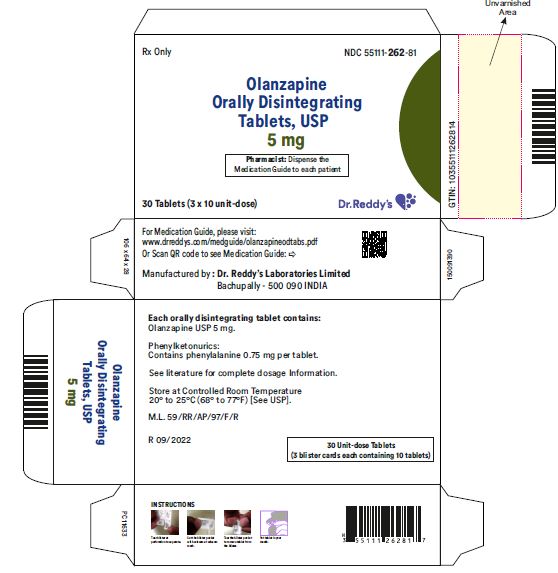
16.1How Supplied Olanzapine orally disintegrating tablets USP, 5 mg are yellow-colored, capsule-shaped tablets, flat on one side and concave on the other side, debossed with R-262 on the flat side and plain on the concave side and are supplied in bottles of 30, carton of 10 packs containing 10 tablets each, carton of 30 packs containing 1 tablet each and carton of 3 packs containing 10 tablets each. Bottles of 30 NDC 55111-262-30 Carton of 10 packs (NDC 55111-262-78), each pack containing 10 tablets (NDC 55111-262-79) Carton of 30 packs (NDC 55111-262-31), each pack containing 1 tablet (NDC 55111-262-11) Carton of 3 packs (NDC 55111-262-81), each pack containing 10 tablets (NDC 55111-262-79) Olanzapine orally disintegrating tablets 10 mg USP, are yellow-colored, capsule-shaped tablets, flat on one side and concave on the other side, debossed with R-263 on the flat side and plain on the concave side and are supplied in bottles of 30, carton of 10 packs containing 10 tablets each, carton of 30 packs containing 1 tablet each and carton of 3 packs containing 10 tablets each.
Bottles of 30 NDC 55111-263-30 Carton of 10 packs (NDC 55111-263-78), each pack containing 10 tablets (NDC 55111-263-79) Carton of 30 packs (NDC 55111-263-31), each pack containing 1 tablet (NDC 55111-263-11) Carton of 3 packs (NDC 55111-263-81), each pack containing 10 tablets (NDC 55111-263-79) Olanzapine orally disintegrating tablets USP, 15 mg are yellow-colored, capsule-shaped tablets, flat on one side and concave on the other side, debossed with R-264 on the flat side and plain on the concave side and are supplied in bottles of 30, carton of 10 packs containing 10 tablets each, carton of 30 packs containing 1 tablet each and carton of 3 packs containing 10 tablets each.
Bottles of 30 NDC 55111-264-30 Carton of 10 packs (NDC 55111-264-78), each pack containing 10 tablets (NDC 55111-264-79) Carton of 30 packs (NDC 55111-264-31), each pack containing 1 tablet (NDC 55111-264-11) Carton of 3 packs (NDC 55111-264-81), each pack containing 10 tablets (NDC 55111-264-79) Olanzapine orally disintegrating tablets USP, 20 mg are yellow-colored, capsule-shaped tablets, flat on one side and concave on the other side, debossed with R-265 on the flat side and plain on the concave side and are supplied in bottles of 30, carton of 10 packs containing 10 tablets each, carton of 30 packs containing 1 tablet each and carton of 3 packs containing 10 tablets each.
Bottles of 30 NDC 55111-265-30 Carton of 10 packs (NDC 55111-265-78), each pack containing 10 tablets (NDC 55111-265-79) Carton of 30 packs (NDC 55111-265-31), each pack containing 1 tablet (NDC 55111-265-11) Carton of 3 packs (NDC 55111-265-81), each pack containing 10 tablets (NDC 55111-265-79)
16.2Storage and Handling Store olanzapine orally disintegrating tablets, USP at controlled room temperature, 20° to 25°C (68° to 77°F) [see USP]. The USP defines controlled room temperature as a temperature maintained thermostatically that encompasses the usual and customary working environment of 20° to 25°C (68° to 77°F); that results in a mean kinetic temperature calculated to be not more than 25°C; and that allows for excursions between 15° and 30°C (59° and 86°F) that are experienced in pharmacies, hospitals, and warehouses.
Protect olanzapine orally disintegrating tablets, USP from light and moisture.
📋 Description ▾
11 DESCRIPTION Olanzapine USP is an atypical antipsychotic that belongs to the thienobenzodiazepine class. The chemical designation is 2-methyl-4-(4-methyl-1-piperazinyl)-10H-thieno[2,3-b] [1,5]benzodiazepine. The molecular formula is C 17 H 20 N 4 S, which corresponds to a molecular weight of 312.44.
The chemical structure is: Olanzapine USP is a yellow crystalline solid, which is practically insoluble in water. Olanzapine orally disintegrating tablets USP are intended for oral administration only. Each orally disintegrating tablet contains olanzapine USP equivalent to 5 mg (16 µmol), 10 mg (32 µmol), 15 mg (48 µmol) or 20 mg (64 µmol).
It begins disintegrating in the mouth within seconds, allowing its contents to be subsequently swallowed with or without liquid. Olanzapine orally disintegrating tablets USP also contains the following inactive ingredients: aspartame, colloidal silicon dioxide, crospovidone, magnesium stearate, mannitol, microcrystalline cellulose and guar gum (Avicel CE-15), microcrystalline cellulose (Avicel PH 101), microcrystalline cellulose (Avicel PH 112), pregelatinized starch and sodium lauryl sulphate.
💬 Information for Patients ▾
17 PATIENT COUNSELING INFORMATION Advise the patient to read the FDA-approved patient labeling (Medication Guide) for the oral formulations. Patients should be advised of the following issues and asked to alert their prescriber if these occur while taking olanzapine as monotherapy or in combination with fluoxetine. If you do not think you are getting better or have any concerns about your condition while taking olanzapine, call your doctor.
When using olanzapine and fluoxetine in combination, also refer to the Patient Counseling Information section of the package insert for Symbyax. Elderly Patients with Dementia-Related Psychosis: Increased Mortality and Cerebrovascular Adverse Events (CVAE), Including Stroke Patients and caregivers should be advised that elderly patients with dementia-related psychosis treated with antipsychotic drugs are at an increased risk of death. Patients and caregivers should be advised that elderly patients with dementia-related psychosis treated with olanzapine had a significantly higher incidence of cerebrovascular adverse events (e.g., stroke, transient ischemic attack) compared with placebo.
Olanzapine is not approved for elderly patients with dementia-related psychosis [see Boxed Warning and Warnings and Precautions ( 5.1 ) ]. Neuroleptic Malignant Syndrome (NMS) Patients and caregivers should be counseled that a potentially fatal symptom complex sometimes referred to as NMS has been reported in association with administration of antipsychotic drugs, including olanzapine. Signs and symptoms of NMS include hyperpyrexia, muscle rigidity, altered mental status, and evidence of autonomic instability (irregular pulse or blood pressure, tachycardia, diaphoresis, and cardiac dysrhythmia) [see Warnings and Precautions ( 5.3 ) ].
Drug Reaction with Eosinophilia and Systemic Symptoms (DRESS) Patients should be advised to report to their health care provider at the earliest onset of any signs and symptoms that may be associated with drug reaction with eosinophilia and systemic symptoms (DRESS) [see Warnings and Precautions ( 5.4 ) ]. Hyperglycemia and Diabetes Mellitus Patients should be advised of the potential risk of hyperglycemia-related adverse reactions. Patients should be monitored regularly for worsening of glucose control.
Patients who have diabetes should follow their doctor’s instructions about how often to check their blood sugar while taking olanzapine [see Warnings and Precautions ( 5.5 ) ]. Dyslipidemia Patients should be counseled that dyslipidemia has occurred during treatment with olanzapine. Patients should have their lipid profile monitored regularly [see Warnings and Precautions ( 5.5 ) ].
Weight Gain Patients should be counseled that weight gain has occurred during treatment with olanzapine. Patients should have their weight monitored regularly [see Warnings and Precautions ( 5.5 ) ]. Orthostatic Hypotension Patients should be advised of the risk of orthostatic hypotension, especially during the period of initial dose titration and in association with the use of concomitant drugs that may potentiate the orthostatic effect of olanzapine, e.g., diazepam or alcohol [see Warnings and Precautions (5.7) and Drug Interactions ( 7 ) ].
Patients should be advised to change positions carefully to help prevent orthostatic hypotension, and to lie down if they feel dizzy or faint, until they feel better. Patients should be advised to call their doctor if they experience any of the following signs and symptoms associated with orthostatic hypotension: dizziness, fast or slow heart beat, or fainting. Potential for Cognitive and Motor Impairment Because olanzapine has the potential to impair judgment, thinking, or motor skills, patients should be cautioned about operating hazardous machinery, including automobiles, until they are reasonably certain that olanzapine therapy does not affect them adversely [see Warnings and Precautions ( 5.12 ) ].
Body Temperature Regulation Patients should be advised reg… [Excerpted — this section continues on DailyMed.]
💬 Medication Guide ▾
Dispense with Medication Guide available at:www.drreddys.com/medguide/olanzapineodtabs.pdf Medication Guide Olanzapine Orally Disintegrating Tablets USP (oh lan' za peen) Read the Medication Guide that comes with olanzapine orally disintegrating tablets before you start taking it and each time you get a refill. There may be new information. This Medication Guide does not take the place of talking to your doctor about your medical condition or treatment.
Talk with your doctor or pharmacist if there is something you do not understand or you want to learn more about olanzapine orally disintegrating tablets. What is the most important information I should know about olanzapine orally disintegrating tablets? Olanzapine orally disintegrating tablets may cause serious side effects, including: 1.
Increased risk of death in elderly people who are confused, have memory loss and have lost touch with reality (dementia-related psychosis). 2. High blood sugar (hyperglycemia).
3. High fat levels in your blood (increased cholesterol and triglycerides), especially in teenagers age 13 to 17, or when used in combination with fluoxetine in children age 10 to 17. 4.
Weight gain, especially in teenagers age 13 to 17, or when used in combination with fluoxetine in children age 10 to 17. These serious side effects are described below. 1.
Increased risk of death in elderly people who are confused, have memory loss and have lost touch with reality (dementia-related psychosis). Olanzapine orally disintegrating tablets are not approved for treating psychosis in elderly people with dementia. 2.
High blood sugar (hyperglycemia). High blood sugar can happen if you have diabetes already or if you have never had diabetes. High blood sugar could lead to: a build up of acid in your blood due to ketones (ketoacidosis) coma death Your doctor should do tests to check your blood sugar before you start taking olanzapine orally disintegrating tablets and during treatment.
In people who do not have diabetes, sometimes high blood sugar goes away when olanzapine orally disintegrating tablets are stopped. People with diabetes and some people who did not have diabetes before taking olanzapine orally disintegrating tablets need to take medicine for high blood sugar even after they stop taking olanzapine orally disintegrating tablets. If you have diabetes, follow your doctor’s instructions about how often to check your blood sugar while taking olanzapine orally disintegrating tablets.
Call your doctor if you have any of these symptoms of high blood sugar (hyperglycemia) while taking olanzapine orally disintegrating tablets: feel very thirsty need to urinate more than usual feel very hungry feel weak or tired feel sick to your stomach feel confused or your breath smells fruity 3. High fat levels in your blood (cholesterol and triglycerides). High fat levels may happen in people treated with olanzapine orally disintegrating tablets, especially in teenagers (13 to 17 years old), or when used in combination with fluoxetine in children (10 to 17 years old).
You may not have any symptoms, so your doctor should do blood tests to check your cholesterol and triglyceride levels before you start taking olanzapine orally disintegrating tablets and during treatment. 4. Weight gain.
Weight gain is very common in people who take olanzapine orally disintegrating tablets. Teenagers (13 to 17 years old) are more likely to gain weight and to gain more weight than adults. Children (10 to 17 years old) are also more likely to gain weight and to gain more weight than adults when olanzapine is used in combination with fluoxetine.
Some people may gain a lot of weight while taking olanzapine orally disintegrating tablets, so you and your doctor should check your weight regularly. Talk to your doctor about ways to control weight gain, such as eating a healthy, balanced diet, and exercising. What are olanzapine orally disintegrating tablets?
Olanzapine orally disintegrating tabletsare prescription me… [Excerpted — this section continues on DailyMed.]
🧬 Pharmacokinetics ▾
12.3Pharmacokinetics Oral Administration, Monotherapy — Olanzapine is well absorbed and reaches peak concentrations in approximately 6 hours following an oral dose. It is eliminated extensively by first pass metabolism, with approximately 40% of the dose metabolized before reaching the systemic circulation. Food does not affect the rate or extent of olanzapine absorption.
Pharmacokinetic studies showed that olanzapine tablets and olanzapine orally disintegrating tablets dosage forms of olanzapine are bioequivalent. Olanzapine displays linear kinetics over the clinical dosing range. Its half-life ranges from 21 to 54 hours (5th to 95th percentile; mean of 30 hr), and apparent plasma clearance ranges from 12 to 47 L/hr (5th to 95th percentile; mean of 25 L/hr).
Administration of olanzapine once daily leads to steady-state concentrations in about 1 week that are approximately twice the concentrations after single doses. Plasma concentrations, half-life, and clearance of olanzapine may vary between individuals on the basis of smoking status, gender, and age. Olanzapine is extensively distributed throughout the body, with a volume of distribution of approximately 1000 L.
It is 93% bound to plasma proteins over the concentration range of 7 to 1100 ng/mL, binding primarily to albumin and α 1 -acid glycoprotein. Metabolism and Elimination — Following a single oral dose of 14 C labeled olanzapine, 7% of the dose of olanzapine was recovered in the urine as unchanged drug, indicating that olanzapine is highly metabolized. Approximately 57% and 30% of the dose was recovered in the urine and feces, respectively.
In the plasma, olanzapine accounted for only 12% of the AUC for total radioactivity, indicating significant exposure to metabolites. After multiple dosing, the major circulating metabolites were the 10-N-glucuronide, present at steady state at 44% of the concentration of olanzapine, and 4´-N-desmethyl olanzapine, present at steady state at 31% of the concentration of olanzapine. Both metabolites lack pharmacological activity at the concentrations observed.
Direct glucuronidation and cytochrome P450 (CYP) mediated oxidation are the primary metabolic pathways for olanzapine. In vitro studies suggest that CYPs 1A2 and 2D6, and the flavin-containing monooxygenase system are involved in olanzapine oxidation. CYP2D6 mediated oxidation appears to be a minor metabolic pathway in vivo , because the clearance of olanzapine is not reduced in subjects who are deficient in this enzyme.
Specific Populations Renal Impairment — Because olanzapine is highly metabolized before excretion and only 7% of the drug is excreted unchanged, renal dysfunction alone is unlikely to have a major impact on the pharmacokinetics of olanzapine. The pharmacokinetic characteristics of olanzapine were similar in patients with severe renal impairment and normal subjects, indicating that dosage adjustment based upon the degree of renal impairment is not required. In addition, olanzapine is not removed by dialysis.
The effect of renal impairment on metabolite elimination has not been studied. Hepatic Impairment — Although the presence of hepatic impairment may be expected to reduce the clearance of olanzapine, a study of the effect of impaired liver function in subjects (n=6) with clinically significant (Childs Pugh Classification A and B) cirrhosis revealed little effect on the pharmacokinetics of olanzapine. Geriatric — In a study involving 24 healthy subjects, the mean elimination half-life of olanzapine was about 1.5 times greater in elderly (≥65 years) than in non-elderly subjects (<65 years).
Caution should be used in dosing the elderly, especially if there are other factors that might additively influence drug metabolism and/or pharmacodynamic sensitivity [see Dosage and Administration (2) ]. Gender — Clearance of olanzapine is approximately 30% lower in women than in men. There were, however, no apparent differences between men and women in effectiveness or adve… [Excerpted — this section continues on DailyMed.]
🧬 Pharmacodynamics ▾
12.2Pharmacodynamics Olanzapine binds with high affinity to the following receptors: serotonin 5HT 2A/2C , 5HT 6 (K i =4, 11, and 5 nM, respectively), dopamine D 1-4 (K i =11-31 nM), histamine H 1 (K i =7 nM), and adrenergic α 1 receptors (K i =19 nM). Olanzapine is an antagonist with moderate affinity binding for serotonin 5HT 3 (K i =57 nM) and muscarinic M 1-5 (K i =73, 96, 132, 32, and 48 nM, respectively). Olanzapine binds with low affinity to GABA A , BZD, and β adrenergic receptors (K i >10 μM).
🔬 Clinical Studies ▾
14 CLINICAL STUDIES When using olanzapine and fluoxetine in combination, also refer to the Clinical Studies section of the package insert for Symbyax.
14.1Schizophrenia Adults The efficacy of oral olanzapine in the treatment of schizophrenia was established in 2 short-term (6-week) controlled trials of adult inpatients who met DSM III-R criteria for schizophrenia. A single haloperidol arm was included as a comparative treatment in 1 of the 2 trials, but this trial did not compare these 2 drugs on the full range of clinically relevant doses for both. Several instruments were used for assessing psychiatric signs and symptoms in these studies, among them the Brief Psychiatric Rating Scale (BPRS), a multi-item inventory of general psychopathology traditionally used to evaluate the effects of drug treatment in schizophrenia.
The BPRS psychosis cluster (conceptual disorganization, hallucinatory behavior, suspiciousness, and unusual thought content) is considered a particularly useful subset for assessing actively psychotic schizophrenic patients. A second traditional assessment, the Clinical Global Impression (CGI), reflects the impression of a skilled observer, fully familiar with the manifestations of schizophrenia, about the overall clinical state of the patient. In addition, 2 more recently developed scales were employed; these included the 30-item Positive and Negative Symptoms Scale (PANSS), in which are embedded the 18 items of the BPRS, and the Scale for Assessing Negative Symptoms (SANS).
The trial summaries below focus on the following outcomes: PANSS total and/or BPRS total; BPRS psychosis cluster; PANSS negative subscale or SANS; and CGI Severity. The results of the trials follow: 1) In a 6-week, placebo-controlled trial (n=149) involving 2 fixed olanzapine doses of 1 and 10 mg/day (once daily schedule), olanzapine, at 10 mg/day (but not at 1 mg/day), was superior toplacebo on the PANSS total score (also on the extracted BPRS total), on the BPRS psychosis cluster, on the PANSS Negative subscale, and on CGI Severity.
2) In a 6-week, placebo-controlled trial (n=253) involving 3 fixed dose ranges of olanzapine (5 ± 2.5 mg/day, 10 ± 2.5 mg/day, and 15 ± 2.5 mg/day) on a once daily schedule, the 2 highest olanzapine dose groups (actual mean doses of 12 and 16 mg/day, respectively) were superior to placebo on BPRS total score, BPRS psychosis cluster, and CGI severity score; the highest olanzapine dose group was superior to placebo on the SANS. There was no clear advantage for the high-dose group over the medium-dose group. 3) In a longer-term trial, adult outpatients (n=326) who predominantly met DSM-IV criteria for schizophrenia and who remained stable on olanzapine during open-label treatment for at least 8 weeks were randomized to continuation on their current olanzapine doses (ranging from 10 to 20 mg/day) or to placebo.
The follow-up period to observe patients for relapse, defined in terms of increases in BPRS positive symptoms or hospitalization, was planned for 12 months, however, criteria were met for stopping the trial early due to an excess of placebo relapses compared to olanzapine relapses, and olanzapine was superior to placebo on time to relapse, the primary outcome for this study. Thus, olanzapine was more effective than placebo at maintaining efficacy in patients stabilized for approximately 8 weeks and followed for an observation period of up to 8 months.
Examination of population subsets (race and gender) did not reveal any differential responsiveness on the basis of these subgroupings. Adolescents The efficacy of oral olanzapine in the acute treatment of schizophrenia in adolescents (ages 13 to 17 years) was established in a 6-week double-blind, placebo-controlled, randomized trial of inpatients and outpatients with schizophrenia (n=107) who met diagnostic criteria according to DSM-IV-TR and confirmed by the Kiddie Schedule for Affective Disorders and schizophrenia for School Aged Children-Present and Lifet… [Excerpted — this section continues on DailyMed.]
🔒 Drug Abuse and Dependence ▾
9 DRUG ABUSE AND DEPENDENCE
9.3Dependence In studies prospectively designed to assess abuse and dependence potential, olanzapine was shown to have acute depressive CNS effects but little or no potential of abuse or physical dependence in rats administered oral doses up to 15 times the daily oral MRHD (20 mg) and rhesus monkeys administered oral doses up to 8 times the daily oral MRHD based on mg/m 2 body surface area. Olanzapine has not been systematically studied in humans for its potential for abuse, tolerance, or physical dependence. While the clinical trials did not reveal any tendency for any drug-seeking behavior, these observations were not systematic, and it is not possible to predict on the basis of this limited experience the extent to which a CNS-active drug will be misused, diverted, and/or abused once marketed.
Consequently, patients should be evaluated carefully for a history of drug abuse, and such patients should be observed closely for signs of misuse or abuse of olanzapine (e.g., development of tolerance, increases in dose, drug-seeking behavior).
🧪 Nonclinical Toxicology ▾
13 NONCLINICAL TOXICOLOGY
13.1Carcinogenesis, Mutagenesis, Impairment Of Fertility Carcinogenesis — Oral carcinogenicity studies were conducted in mice and rats. Olanzapine was administered to mice in two 78-week studies at doses of 3, 10, 30/20 mg/kg/day (equivalent to 0.8 to 5 times the daily oral MRHD based on mg/m 2 body surface area) and 0.25, 2, 8 mg/kg/day (equivalent to 0.06 to 2 times the daily oral MRHD based on mg/m 2 body surface area). Rats were dosed for 2 years at doses of 0.25, 1, 2.5, 4 mg/kg/day (males) and 0.25, 1, 4, 8 mg/kg/day (females) (equivalent to 0.13-2 and 0.13-4 times the daily oral MRHD based on mg/m2 body surface area, respectively).
The incidence of liver hemangiomas and hemangiosarcomas was significantly increased in 1 mouse study in female mice at 2 times the daily oral MRHD based on mg/m 2 body surface area. These tumors were not increased in another mouse study in females dosed up to 2-5 times the daily oral MRHD based on mg/m 2 body surface area; in this study, there was a high incidence of early mortalities in males of the 30/20 mg/kg/day group. The incidence of mammary gland adenomas and adenocarcinomas was significantly increased in female mice dosed at ≥2 mg/kg/day and in female rats dosed at ≥4 mg/kg/day (0.5 and 2 times the daily oral MRHD based on mg/m 2 body surface area, respectively).
Antipsychotic drugs have been shown to chronically elevate prolactin levels in rodents. Serum prolactin levels were not measured during the olanzapine carcinogenicity studies; however, measurements during subchronic toxicity studies showed that olanzapine elevated serum prolactin levels up to 4-fold in rats at the same doses used in the carcinogenicity study. An increase in mammary gland neoplasms has been found in rodents after chronic administration of other antipsychotic drugs and is considered to be prolactin mediated.
The relevance for human risk of the finding of prolactin mediated endocrine tumors in rodents is unknown [see Warnings and Precautions ( 5.15 )]. Mutagenesis — No evidence of genotoxic potential for olanzapine was found in the Ames reverse mutation test, in vivo micronucleus test in mice, the chromosomal aberration test in Chinese hamster ovary cells, unscheduled DNA synthesis test in rat hepatocytes, induction of forward mutation test in mouse lymphoma cells, or in vivo sister chromatid exchange test in bone marrow of Chinese hamsters.
Impairment of Fertility — In an oral fertility and reproductive performance study in rats, male mating performance, but not fertility, was impaired at a dose of 22.4 mg/kg/day and female fertility was decreased at a dose of 3 mg/kg/day (11 and 1.5 times the daily oral MRHD based on mg/m 2 body surface area, respectively). Discontinuance of olanzapine treatment reversed the effects on male mating performance. In female rats, the precoital period was increased and the mating index reduced at 5 mg/kg/day (2.5 times the daily oral MRHD based on mg/m 2 body surface area.
Diestrous was prolonged and estrous delayed at 1.1 mg/kg/day (0.6 times the daily oral MRHD based on mg/m 2 body surface area); therefore olanzapine may produce a delay in ovulation.
13.2Animal Toxicology and/or Pharmacology In animal studies with olanzapine, the principal hematologic findings were reversible peripheral cytopenias in individual dogs dosed at 10 mg/kg (17 times the daily oral MRHD based on mg/m 2 body surface area), dose-related decreases in lymphocytes and neutrophils in mice, and lymphopenia in rats. A few dogs treated with 10 mg/kg developed reversible neutropenia and/or reversible hemolytic anemia between 1 and 10 months of treatment. Dose-related decreases in lymphocytes and neutrophils were seen in mice given doses of 10 mg/kg (equal to 2 times the daily oral MRHD based on mg/m 2 body surface area) in studies of 3 months’ duration.
Nonspecific lymphopenia, consistent with decreased body weight gain, occurred in rats receiving 22.5 mg/kg (11 times the daily oral MR… [Excerpted — this section continues on DailyMed.]
📄 Carcinogenesis, Mutagenesis, Impairment of Fertility ▾
13.1Carcinogenesis, Mutagenesis, Impairment Of Fertility Carcinogenesis — Oral carcinogenicity studies were conducted in mice and rats. Olanzapine was administered to mice in two 78-week studies at doses of 3, 10, 30/20 mg/kg/day (equivalent to 0.8 to 5 times the daily oral MRHD based on mg/m 2 body surface area) and 0.25, 2, 8 mg/kg/day (equivalent to 0.06 to 2 times the daily oral MRHD based on mg/m 2 body surface area). Rats were dosed for 2 years at doses of 0.25, 1, 2.5, 4 mg/kg/day (males) and 0.25, 1, 4, 8 mg/kg/day (females) (equivalent to 0.13-2 and 0.13-4 times the daily oral MRHD based on mg/m2 body surface area, respectively).
The incidence of liver hemangiomas and hemangiosarcomas was significantly increased in 1 mouse study in female mice at 2 times the daily oral MRHD based on mg/m 2 body surface area. These tumors were not increased in another mouse study in females dosed up to 2-5 times the daily oral MRHD based on mg/m 2 body surface area; in this study, there was a high incidence of early mortalities in males of the 30/20 mg/kg/day group. The incidence of mammary gland adenomas and adenocarcinomas was significantly increased in female mice dosed at ≥2 mg/kg/day and in female rats dosed at ≥4 mg/kg/day (0.5 and 2 times the daily oral MRHD based on mg/m 2 body surface area, respectively).
Antipsychotic drugs have been shown to chronically elevate prolactin levels in rodents. Serum prolactin levels were not measured during the olanzapine carcinogenicity studies; however, measurements during subchronic toxicity studies showed that olanzapine elevated serum prolactin levels up to 4-fold in rats at the same doses used in the carcinogenicity study. An increase in mammary gland neoplasms has been found in rodents after chronic administration of other antipsychotic drugs and is considered to be prolactin mediated.
The relevance for human risk of the finding of prolactin mediated endocrine tumors in rodents is unknown [see Warnings and Precautions ( 5.15 )]. Mutagenesis — No evidence of genotoxic potential for olanzapine was found in the Ames reverse mutation test, in vivo micronucleus test in mice, the chromosomal aberration test in Chinese hamster ovary cells, unscheduled DNA synthesis test in rat hepatocytes, induction of forward mutation test in mouse lymphoma cells, or in vivo sister chromatid exchange test in bone marrow of Chinese hamsters.
Impairment of Fertility — In an oral fertility and reproductive performance study in rats, male mating performance, but not fertility, was impaired at a dose of 22.4 mg/kg/day and female fertility was decreased at a dose of 3 mg/kg/day (11 and 1.5 times the daily oral MRHD based on mg/m 2 body surface area, respectively). Discontinuance of olanzapine treatment reversed the effects on male mating performance. In female rats, the precoital period was increased and the mating index reduced at 5 mg/kg/day (2.5 times the daily oral MRHD based on mg/m 2 body surface area.
Diestrous was prolonged and estrous delayed at 1.1 mg/kg/day (0.6 times the daily oral MRHD based on mg/m 2 body surface area); therefore olanzapine may produce a delay in ovulation.
📄 Recent Major Changes ▾
Warnings and Precautions ( 5.15 ) 1/2025
📄 Package Label / Principal Display Panel ▾
Package Label. Principal Display Panel Unvarnished Area consists of: 2D Barcode, Lot Number, Expiry Date and Serial Number 5 mg - Carton label
10 mg - Carton
15 mg - Carton
20 mg - Carton