
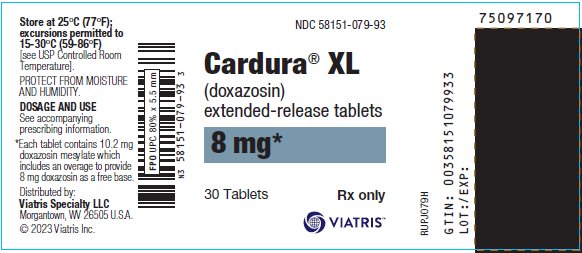
Cardura XL doxazosin mesylate 8 mg Tablet, Film Coated, Extended Release, 30-count
Other active recalls for Doxazosin Mesylate (different manufacturers) — 1 · tap to view
Past resolved recalls for this product (2)
🆔 Identity & classification
Where does this data come from?
🏷️ RxNorm drug class
This medicine belongs to the alpha-Adrenergic Blocker class.
Where does this data come from?
🏭 Manufacturer & labeler
Where does this data come from?
🩺 Clinical
Doxazosin is used to: treat benign prostatic hyperplasia (BPH; enlarged prostate that can cause difficulty urinating, painful urination or increased urinary frequency or urgency). treat high blood pressure. Doxazosin is in a class of medications called alpha-blockers. It relieves the symptoms of BPH by relaxing the muscles of the bladder and prostate to allow urine to flow more easily. It lowers blood pressure by relaxing the blood vessels so that blood can flow more easily through the body.
Read the full MedlinePlus article ↗- Doxazosin tablets are used for two main things: relieving the urinary symptoms of an enlarged prostate (BPH) — things like a weak stream, frequent urges to urinate, or waking up at...
- Yes, that's actually one of the most common things people notice, especially with the first dose or after a dose increase. Doxazosin can cause your blood pressure to drop when you...
- I felt really dizzy after my first dose — is that normal?
- For regular doxazosin tablets, you can take them either in the morning or the evening — just pick a consistent time and stick with it. If you're taking Cardura XL (the extended-rel...
Patient education
Supplement & herbal interactions
Some supplements/herbs that may interact with Doxazosin Mesylate — tap one for details:
Doxazosin Mesylate may be associated with lower levels of 1 nutrient — worth a chat with your pharmacist, not a cause for alarm.
Where does this data come from?
Ask a licensed pharmacist directly — free, answered by our team.
💊 What it looks like
Where does this data come from?
🧪 Inactive Ingredients / Excipients
Inactive ingredients, also called excipients, are components of the drug product other than the active ingredient. They may include fillers, dyes, coatings, preservatives, flavors, or other formulation ingredients.
💡 Tap an ingredient (hover on desktop) to see what it is and why it’s used.
-
UNII 3J2P07GVB6
Cellulose acetate is a plant-derived polymer made by chemically modifying cellulose fibers. In medications, it serves as a film-coating material for tablets and capsules to protect the drug, control release, and improve appearance.
-
UNII 1K09F3G675
Ferric oxide red is an inorganic iron compound used as a colorant in medicines. It gives tablets, capsules, or other dosage forms a red or reddish tint for identification and appearance.
-
UNII XM0M87F357
A dark iron oxide compound that gives medicines their black or dark color. It's used as a colorant in tablets and capsules to help identify the product and make it visually distinctive.
-
UNII 3NXW29V3WO
Hypromellose is a plant-based thickener made from cellulose. It's used in medicines as a binder to hold ingredients together, a coating for tablets, and a thickener for liquids.
-
UNII 70097M6I30
Magnesium stearate is a salt made from magnesium and stearic acid, a fatty substance. It's used in tablets and capsules as a lubricant and glidant to help ingredients flow smoothly during manufacturing and prevent sticking.
-
UNII 3WJQ0SDW1A
Polyethylene glycol is a synthetic liquid or solid polymer used in medicines as a solvent, lubricant, and humectant. It helps dissolve active ingredients, reduces friction during manufacturing, and retains moisture in the final product.
-
UNII 46N107B71O
Shellac is a natural resin secreted by the lac beetle. It's used as a coating on tablets and capsules to control how quickly the medicine dissolves and to improve appearance and stability.
-
UNII 451W47IQ8X
Sodium chloride is common table salt. It's used in medicines as a buffer to maintain proper pH, as a filler to add bulk, or to adjust the osmotic balance in liquid formulations.
-
UNII 15FIX9V2JP
Titanium dioxide is a bright white mineral powder commonly used as a colorant and opacifying agent. It makes pills and tablets white or lighter in color and helps make coatings non-transparent.
9 inactive ingredients listed in the exact product block matched to this NDC.
Where does this data come from?
ingredient classCode="IACT" elements from the exact product block matched by this NDC. Label-section narrative from DailyMed / the openFDA label index is shown separately when available.Inactive ingredient FAQ
Are inactive ingredients the same for every manufacturer?
Why might an inactive ingredient be missing?
Can inactive ingredients matter?
💲 Pricing
A drug doesn't have one price. Each row is a different public payment system, and none is what you'd pay at the counter — that depends on your insurance. The ⓘ on each row explains what it measures.
| Price system | Per each | Per package |
|---|---|---|
| Retail pharmacies payNADAC · weekly | Not in the retail survey — common for institutional, discontinued, or low-volume packs. | |
| Medicaid paysCMS SDUD · 12 mo | No recent Medicaid claims on file for this NDC — rare and low-volume NDCs are suppressed in the public data. | |
| Medicare drug plans payPart D · Q2 2026 | $7.29 | $218.80 / 30 tablets |
Where does this data come from?
🔁 Therapeutic equivalents
| Product | Labeler | Pack | NADAC/unit | TE | Status | Price vs. this |
|---|---|---|---|---|---|---|
| Cardura XL 8 mgthis 58151-0079-93 | Viatris | 30 tablets | — | — | FDA listed | — |
Where does this data come from?
⏳ Availability & generic status
We did not find an FDA-approved generic match for this exact strength, form and route.
Where does this data come from?
📊 Medicare Part D spend CMS · PART D · 2026 (Q1)
🔬 Reported adverse events (FAERS)
Top reported reactions
Age at onset
Reporter sex
Serious outcomes
Where does this data come from?
📦 Packaging — all sizes for this product
| Package NDC | Description | Marketing start | Status |
|---|---|---|---|
| 58151-0079-93 You're viewing this | 30 TABLET, FILM COATED, EXTENDED RELEASE in 1 BOTTLE (58151-079-93) | 2024-01-04 | Active |
🧭 About this NDC listing & data coverage
What data is (and isn’t) available for this NDC — tap to expand
| NDC identity (package / product / labeler codes) | ✓ Available |
| Labeler | ✓ Available |
| Product & package description | ✓ Available |
| Marketing category & status | ✓ Available |
| Active ingredient / dosage form / route | ✓ Available |
| FDA label (SPL via DailyMed) | ✓ Available |
| Package photos | ✓ Available |
| Inactive ingredients (structured) | ✓ Available |
| NADAC pharmacy acquisition price (CMS) | — Not published for this NDC CMS publishes NADAC only for NDCs reported in its retail-pharmacy survey. |
| Orange Book / therapeutic-equivalence data | — Not published for this NDC Applies only to products approved under an NDA/ANDA; many listings are out of scope. |
| HCPCS J-code billing crosswalk | — Not published for this NDC Most self-administered / retail products have no J-code — that is normal. |
| Medicaid utilization (CMS SDUD) | — Not published for this NDC CMS reports utilization only for NDCs with Medicaid claims above its privacy threshold. |
Questions about this listing
Why is there no price listed?
Is the NDC printed on the package the same as the 11-digit billing NDC?
What do the three segments of this NDC mean?
Is this package still being marketed?
Who lists this product with the FDA?
Do I need a prescription for this product?
Where does this data come from?
📄 Full prescribing information FDA SPL
🎯 Indications and Usage ▾
1 INDICATIONS AND USAGE CARDURA ® XL is indicated for the treatment of the signs and symptoms of benign prostatic hyperplasia (BPH). CARDURA XL is not indicated for the treatment of hypertension. CARDURA XL is an alpha 1 adrenergic antagonist indicated for the treatment of the signs and symptoms of benign prostatic hyperplasia. ( 1 ) CARDURA XL is not indicated for the treatment of hypertension. ( 1 )
⏱️ Dosage and Administration ▾
2 DOSAGE AND ADMINISTRATION Recommended starting dose (initial therapy or switching from immediate-release): 4 mg once daily with breakfast ( 2.1 , 2.2 ) Dose range: 4 to 8 mg once daily ( 2.1 )
2.1General Dosing Information The initial dose of CARDURA XL, 4 mg given once daily, should be administered with breakfast. Depending on the patient’s symptomatic response and tolerability, the dose may be increased to 8 mg, the maximum recommended dose. The recommended titration interval is 3-4 weeks.
If CARDURA XL administration is discontinued for several days, therapy should be restarted using the 4 mg once daily dose. Tablets should be swallowed whole, and must not be chewed, divided, cut, or crushed.
2.2Patients Switching from CARDURA to CARDURA XL If switching from CARDURA immediate-release (IR) to CARDURA XL, therapy should be initiated with the lowest dose (4 mg once daily). Prior to starting therapy with CARDURA XL, the final evening dose of CARDURA should not be taken.
2.3Concomitant Administration with PDE-5 Inhibitors Concomitant administration of CARDURA XL with a PDE-5 inhibitor can result in additive blood pressure lowering effects and symptomatic hypotension; therefore, PDE-5 inhibitor therapy should be initiated at the lowest dose in patients taking CARDURA XL.
💊 Dosage Forms and Strengths ▾
3 DOSAGE FORMS AND STRENGTHS White, round, film-coated tablets containing doxazosin mesylate equivalent to 4 mg and 8 mg doxazosin (free base). 4 mg and 8 mg tablets ( 3 )
⛔ Contraindications ▾
4 CONTRAINDICATIONS CARDURA XL is contraindicated in patients with a known hypersensitivity to doxazosin, other quinazolines (e.g., prazosin, terazosin), or any of the inert ingredients. Allergic reactions to doxazosin and other quinazolines have included skin rash, urticaria, pruritus, angioedema, and respiratory symptoms [see Adverse Reactions (6.2) ] . Patients with known sensitivity to doxazosin, other quinazolines, or any of the inert ingredients ( 4 )
⚠️ Warnings and Cautions ▾
5 WARNINGS AND PRECAUTIONS Postural hypotension with or without syncope may occur in the first few hours after administration. ( 5.1 ) Intraoperative Floppy Iris Syndrome has been observed during cataract surgery in some patients. Advise patients considering cataract surgery to tell their ophthalmologist that they have taken CARDURA XL tablets.
( 5.2 ) Caution should be used when administering to patients with preexisting severe gastrointestinal narrowing or coronary insufficiency. ( 5.3 , 5.7 ) Advise patients to be screened for the presence of prostate cancer prior to treatment and at regular intervals afterwards. ( 5.4 )
5.1Postural Hypotension Postural hypotension with or without symptoms (e.g., dizziness) may develop within a few hours following administration of CARDURA XL. However, infrequently, symptomatic postural hypotension has also been reported later than a few hours after dosing. As with other alpha-blockers, there is a potential for syncope, especially after the initial dose or after an increase in dosage strength.
Patients should be warned of the possible occurrence of such events and should avoid situations where injury could result should syncope occur. Care should be taken when CARDURA XL is administered to patients with symptomatic hypotension or patients who have had a hypotensive response to other medications.
5.2Cataract Surgery Intraoperative Floppy Iris Syndrome (IFIS) has been observed during cataract surgery in some patients on or previously treated with alpha 1 blockers. This variant of small pupil syndrome is characterized by the combination of a flaccid iris that billows in response to intraoperative irrigation currents, progressive intraoperative miosis despite preoperative dilation with standard mydriatic drugs, and potential prolapse of the iris toward the phacoemulsification incisions. The patient’s surgeon should be prepared for possible modifications to their surgical technique, such as the utilization of iris hooks, iris dilator rings, or viscoelastic substances.
There does not appear to be a benefit from stopping alpha 1 blocker therapy prior to cataract surgery.
5.3Gastrointestinal Disorders As with any other non-deformable material, caution should be used when administering CARDURA XL to patients with preexisting severe gastrointestinal narrowing (pathologic or iatrogenic). There have been rare reports of obstructive symptoms in patients with known strictures in association with the ingestion of another drug in this non-deformable extended-release formulation. Markedly increased GI retention times, as may occur in patients with chronic constipation, can increase systemic exposure to doxazosin and thereby potentially increase adverse reactions.
5.4Prostate Cancer Carcinoma of the prostate causes many of the same symptoms associated with BPH and the two disorders frequently co-exist. Carcinoma of the prostate should therefore be ruled out prior to commencing therapy with CARDURA XL.
5.5PDE-5 Inhibitors Concomitant administration of CARDURA XL with a PDE-5 inhibitor can result in additive blood pressure lowering effects and symptomatic hypotension. Pharmacodynamic interactions between CARDURA XL and antihypertensive medications or other vasodilating agents have not been determined.
5.6Patients with Hepatic Impairment CARDURA XL is not recommended for patients with severe hepatic impairment and should be administered with caution to patients with mild or moderate hepatic impairment [see Use in Specific Populations (8.6) , Clinical Pharmacology (12.3) ] .
5.7Patients with Coronary Insufficiency Patients with congestive heart failure, angina pectoris, or acute myocardial infarction within the last 6 months were excluded from the Phase 3 studies. If symptoms of angina pectoris should newly appear or worsen, CARDURA XL should be discontinued.
5.8CYP 3A4 Inhibitors Caution should be exercised when concomitantly administering CARDURA XL with a strong CYP 3A4 inhibitor, such as atazanavir,…
🤒 Adverse Reactions ▾
6 ADVERSE REACTIONS The most commonly reported adverse reactions from clinical trials are asthenia, headache, hypotension, and dizziness. ( 6.1 ) To report SUSPECTED ADVERSE REACTIONS, contact Viatris at 1-877-446-3679 (1-877-4-INFO-RX) or FDA at 1-800-FDA-1088 or www.fda.gov/medwatch.
6.1Clinical Trials Experience Because clinical trials are conducted under widely varying conditions, adverse reaction rates observed in the clinical trials of a drug cannot be directly compared to rates in the clinical trials of another drug and may not reflect the rates observed in clinical practice. The incidence of adverse reactions was derived from two controlled efficacy and safety trials involving 1473 BPH patients. In Study 1, CARDURA XL (n = 317) was compared to doxazosin IR tablets (n = 322) and to placebo (n = 156).
In Study 2, CARDURA XL (n = 350) was compared just to doxazosin IR tablets (n = 330). In both of these studies, CARDURA XL was initiated at a dose of 4 mg, which could be increased by the investigator to 8 mg after seven weeks if an adequate response was not seen [see Clinical Studies (14.1) ] . Similarly, doxazosin IR was begun at a dose of 1 mg, which was increased in all patients to 2 mg after 1 week, followed by the option to increase to 4 mg after 4 weeks, and 8 mg after 7 weeks.
The most commonly reported adverse reactions leading to discontinuation in the CARDURA XL group were dizziness, dyspnea, asthenia, headache, hypotension, postural hypotension, and somnolence. The rates of discontinuation for adverse reactions were 6%, 7% and 3% in the CARDURA XL, doxazosin IR, and placebo groups, respectively. Table 1 lists the incidence rates of adverse reactions derived from all reported adverse events in the two controlled studies (Studies 1 and 2) combined, at a rate greater than placebo and in 1% or more of patients treated with CARDURA XL.
TABLE 1 Adverse Reactions, Derived from All Adverse Events Exceeding Placebo Rate and Occurring in ≥ 1% of BPH Patients Treated with CARDURA XL Body System CARDURA XL (N = 666) Doxazosin IR (N = 651) Placebo (N = 156) BODY AS A WHOLE Abdominal Pain 1.8% 2.3% 0.6% Asthenia 3.9% 6.9% 1.3% Headache 6.0% 5.1% 4.5% CARDIOVASCULAR Hypotension 1.7% 1.8% 0.0% Postural Hypotension 1.2% 2.2% 0.6% DIGESTIVE Dyspepsia 1.4% 1.2% 0.0% Nausea 1.2% 2.3% 0.6% MUSCULOSKELETAL Myalgia 1.4% 0.5% 0.0% NERVOUS Dizziness 5.3% 9.1% 1.9% Somnolence 1.5% 1.2% 0.0% Vertigo 1.5% 4.1% 0.6% RESPIRATORY Dyspnea 1.2% 1.2% 0.0% Respiratory Tract Infection 4.8% 4.5% 1.9% UROGENITAL Urinary Tract Infection 1.4% 0.8% 0.6% Additional adverse events reported with CARDURA XL, reported by less than 1% of patients, and those of clinical interest include: Cardiovascular System: angina pectoris, syncope, tachycardia, chest pain, palpitations; Digestive System: diarrhea; Musculoskeletal System: arthralgia; Nervous System: libido decreased; Urogenital System: impotence, dysuria.
In general, the adverse events reported in the open-label safety extension, in approximately 295 BPH patients treated for up to 37 weeks, were similar in type and frequency to the events described above in the controlled trials.
6.2Postmarketing Experience The following adverse events have been identified during post-approval use of doxazosin. Because these reactions are reported voluntarily from a population of uncertain size, it is not always possible to reliably estimate their frequency or establish a causal relationship to drug exposure. Autonomic Nervous System: priapism; Cardiovascular System: cerebrovascular accidents, dizziness postural, myocardial infarction; Central and Peripheral Nervous System: hypoesthesia, paresthesia; Endocrine System: gynecomastia; Gastrointestinal System: gastrointestinal obstruction, vomiting; General Body System: fatigue, hot flushes, malaise; Heart Rate/Rhythm: bradycardia, cardiac arrhythmias; Hematopoietic: leukopenia, purpura, thrombocytopenia; Liver/Biliary System: abnormal liver function tests, hepatitis, hepati…
🔄 Drug Interactions ▾
7 DRUG INTERACTIONS Caution should be exercised when concomitantly administering CARDURA XL with a strong cytochrome P450 (CYP) 3A4 inhibitor. ( 7.1 ) Concomitant administration of CARDURA XL with a phosphodiesterase-5 (PDE-5) inhibitor can result in additive blood pressure lowering effects and symptomatic hypotension. ( 7.3 )
7.1CYP 3A4 Inhibitors No in vivo drug interaction studies were conducted with CARDURA XL. In vitro studies suggest that doxazosin is a substrate of CYP 3A4. Caution should be exercised when concomitantly administering CARDURA XL with a strong CYP 3A4 inhibitor, such as atazanavir, clarithromycin, indinavir, itraconazole, ketoconazole, nefazodone, nelfinavir, ritonavir, saquinavir, telithromycin, or voriconazole [see Clinical Pharmacology (12.3) ] .
7.2Antihypertensive Medications Pharmacodynamic interactions between CARDURA XL and antihypertensive medications or other vasodilating agents have not been determined.
7.3PDE-5 Inhibitors Concomitant administration of CARDURA XL with a PDE-5 inhibitor can result in additive blood pressure lowering effects and symptomatic hypotension [see Dosage and Administration (2.3) ] .
👥 Use in Specific Populations ▾
8 USE IN SPECIFIC POPULATIONS Geriatric: Hypotension with CARDURA XL is more prevalent in patients 70 years or older. ( 8.5 ) Hepatic Impairment: CARDURA XL is not recommended for patients with severe hepatic impairment and should be administered with caution to patients with mild or moderate hepatic impairment. ( 8.6 , 12.3 )
8.1Pregnancy Risk Summary CARDURA XL is not indicated for use in females and is not indicated for the treatment of hypertension. The limited available data with CARDURA XL in pregnant women are not sufficient to inform a drug-associated risk for major birth defects and miscarriage. No adverse developmental outcomes were observed in animal reproduction studies with oral administration of doxazosin to pregnant rats and rabbits at doses of up to 10 and 4 times, respectively, the 12 mg/day recommended dose.
Postnatal development was delayed in rats at a dose of 8 times the 12 mg/day recommended dose [see Data ] . Data Animal Data Radioactivity was found to cross the placenta following oral administration of labeled doxazosin to pregnant rats. Studies in pregnant rabbits and rats at daily oral doses of up to 41 and 20 mg/kg, respectively (plasma drug concentrations of 10 and 4 times, respectively, the human AUC exposures with a 12 mg/day therapeutic dose), during organogenesis have revealed no evidence of adverse developmental effects.
A dosage regimen of 82 mg/kg/day in the rabbit was associated with reduced fetal survival. In peri- and postnatal studies in rats, postnatal development at maternal doses of 40 or 50 mg/kg/day of doxazosin (about 8 times human AUC exposure with a 12 mg/day therapeutic dose) was delayed, as evidenced by slower body weight gain and slightly later appearance of anatomical features and reflexes.
8.2Lactation Risk Summary CARDURA XL is not indicated for use in females and is not indicated for the treatment of hypertension. Doxazosin is present in human milk. There is no information on the effects of CARDURA XL on the breastfeed infant or the effects on milk production.
8.4Pediatric Use The safety and effectiveness of CARDURA XL in pediatric patients have not been established.
8.5Geriatric Use The incidence of hypotension with CARDURA XL use appears to be age related and more prevalent in patients 70 years or older. At steady state, increases of 27% in maximum plasma concentrations (C max ) and 34% in the area under the concentration-time curve (AUC) were seen in the elderly (> 65 years old) compared to the young [see Clinical Pharmacology (12.3) ] . Of the 666 patients with BPH who received CARDURA XL in the two controlled clinical efficacy and safety studies, 325 patients (49%) were 65 years of age or older.
One hundred thirty-six patients treated with CARDURA XL (20%) were > 70 years of age. In these two studies, the cumulative incidence of hypotension appeared to be age related. The reason for an increased incidence of hypotension in patients older than 70 years of age may be related to a modest increase in systemic exposure to doxazosin [see Clinical Pharmacology (12.3) ] , to an increased propensity to orthostasis in the elderly, or to an enhanced sensitivity to vasodilatory agents in the elderly.
The incidence of hypotension reported as an adverse reaction was higher in patients 70 years of age and older (4/136; 2.9%) as compared to patients < 70 years of age (7/530; 1.3%).
8.6Hepatic Impairment Since there is no clinical experience in patients with severe hepatic impairment, use in these patients is not recommended. CARDURA XL should be administered with caution to patients with mild or moderate hepatic impairment [see Warnings and Precautions (5.6) , Clinical Pharmacology (12.3) ] .
Use in Specific Populations Geriatric In a study to assess the effect of age on the pharmacokinetics of CARDURA XL, increases of 27% in plasma C max and 34% in the plasma AUC were seen at steady state in the elderly (> 65 years old) compared to the young [see Use in Specific Populations (8.…
🤰 Pregnancy ▾
8.1Pregnancy Risk Summary CARDURA XL is not indicated for use in females and is not indicated for the treatment of hypertension. The limited available data with CARDURA XL in pregnant women are not sufficient to inform a drug-associated risk for major birth defects and miscarriage. No adverse developmental outcomes were observed in animal reproduction studies with oral administration of doxazosin to pregnant rats and rabbits at doses of up to 10 and 4 times, respectively, the 12 mg/day recommended dose.
Postnatal development was delayed in rats at a dose of 8 times the 12 mg/day recommended dose [see Data ] . Data Animal Data Radioactivity was found to cross the placenta following oral administration of labeled doxazosin to pregnant rats. Studies in pregnant rabbits and rats at daily oral doses of up to 41 and 20 mg/kg, respectively (plasma drug concentrations of 10 and 4 times, respectively, the human AUC exposures with a 12 mg/day therapeutic dose), during organogenesis have revealed no evidence of adverse developmental effects.
A dosage regimen of 82 mg/kg/day in the rabbit was associated with reduced fetal survival. In peri- and postnatal studies in rats, postnatal development at maternal doses of 40 or 50 mg/kg/day of doxazosin (about 8 times human AUC exposure with a 12 mg/day therapeutic dose) was delayed, as evidenced by slower body weight gain and slightly later appearance of anatomical features and reflexes.
🧒 Pediatric Use ▾
8.4Pediatric Use The safety and effectiveness of CARDURA XL in pediatric patients have not been established.
🧓 Geriatric Use ▾
8.5Geriatric Use The incidence of hypotension with CARDURA XL use appears to be age related and more prevalent in patients 70 years or older. At steady state, increases of 27% in maximum plasma concentrations (C max ) and 34% in the area under the concentration-time curve (AUC) were seen in the elderly (> 65 years old) compared to the young [see Clinical Pharmacology (12.3) ] . Of the 666 patients with BPH who received CARDURA XL in the two controlled clinical efficacy and safety studies, 325 patients (49%) were 65 years of age or older.
One hundred thirty-six patients treated with CARDURA XL (20%) were > 70 years of age. In these two studies, the cumulative incidence of hypotension appeared to be age related. The reason for an increased incidence of hypotension in patients older than 70 years of age may be related to a modest increase in systemic exposure to doxazosin [see Clinical Pharmacology (12.3) ] , to an increased propensity to orthostasis in the elderly, or to an enhanced sensitivity to vasodilatory agents in the elderly.
The incidence of hypotension reported as an adverse reaction was higher in patients 70 years of age and older (4/136; 2.9%) as compared to patients < 70 years of age (7/530; 1.3%).
🆘 Overdosage ▾
10 OVERDOSAGE There is no experience with CARDURA XL overdosage. Overdosage experience with the doxazosin IR is limited. Two adolescents who each intentionally ingested 40 mg doxazosin IR with diclofenac or paracetamol were treated with gastric lavage with activated charcoal and made full recoveries.
A two-year-old child who accidentally ingested 4 mg doxazosin IR was treated with gastric lavage and remained normotensive during the five-hour emergency room observation period. A six-month-old child accidentally received a crushed 1 mg tablet of doxazosin IR and was reported to have been drowsy. A 32-year-old female with chronic renal failure, epilepsy, and depression intentionally ingested 60 mg doxazosin IR (blood level 0.9 µg/mL; normal values in hypertensives = 0.02 µg/mL); death was attributed to a grand mal seizure resulting from hypotension.
A 39-year-old female who ingested 70 mg doxazosin IR, alcohol, and Dalmane ® (flurazepam) developed hypotension which responded to fluid therapy. The most likely manifestation of overdosage would be hypotension, for which the usual treatment would be intravenous infusion of fluid, keeping the patient in the supine position, and in certain circumstances, the administration of vasopressors. As doxazosin is highly protein bound, dialysis would not be indicated.
🧬 Clinical Pharmacology ▾
12 CLINICAL PHARMACOLOGY
12.1Mechanism of Action The symptoms associated with benign prostatic hyperplasia (BPH), such as urinary frequency, nocturia, weak stream, hesitancy, and incomplete emptying are related to two components, anatomical (static) and functional (dynamic). The static component is related to an increase in prostate size caused, in part, by a proliferation of smooth muscle cells in the prostatic stroma. However, the severity of BPH symptoms and the degree of urethral obstruction do not correlate well with the size of the prostate.
The dynamic component of BPH is associated with an increase in smooth muscle tone in the prostate and bladder neck. The degree of tone in this area is mediated by the alpha 1 adrenoceptor, which is present in high density in the prostatic stroma, prostatic capsule, and bladder neck. Blockade of the alpha 1 receptor decreases urethral resistance and may relieve the BPH symptoms and improve urine flow.
Doxazosin mesylate is a selective inhibitor of the alpha 1 -subtype of alpha adrenergic receptors. In the human prostate, doxazosin mesylate antagonizes phenylephrine (alpha 1 agonist)-induced contractions, in vitro , and binds with high affinity to the alpha 1A adrenoceptor.
12.2Pharmacodynamics Administration of CARDURA XL to patients with symptomatic BPH resulted in a statistically significant improvement in maximum urinary flow rate [see Clinical Studies (14.1) ] .
12.3Pharmacokinetics The pharmacokinetics of CARDURA XL is different from that of doxazosin IR. CARDURA XL provides a controlled release of doxazosin over a 24-hour period. Absorption Pharmacokinetic parameters describing absorption following 4 and 8 mg CARDURA XL daily doses are reported in Table 2 below.
The relative bioavailability of CARDURA XL compared with doxazosin IR was 54% at the 4 mg dose and 59% for the 8 mg dose. TABLE 2 Mean (±SD) Plasma Concentration of Doxazosin at Steady State in Healthy Volunteers: Pharmacokinetic Parameters Parameter CARDURA XL (4 mg) CARDURA XL (8 mg) C max (ng/mL) 10.1 ± 5.6 25.8 ±
12.1AUC (0 - ∞) 183 ± 85.5 472 ± 170.8 T max (h) 8 ± 3.7 9 ±
4.7Food Effect As illustrated in Figure 1, the plasma C max and AUC were approximately 32% and 18% higher, respectively, after CARDURA XL was administered in the fed state compared with the fasted state. In order to provide the most consistent exposure, CARDURA XL should be administered with breakfast [see Dosage and Administration (2.1) ] . Figure 1: Mean (+SD) Plasma Concentration of Doxazosin Following Single Oral Doses of 8 mg CARDURA XL (Fed and Fasted) Figure 1: Mean (+SD) Plasma Concentration of Doxazosin Following Single Oral Doses of 8 mg CARDURA XL (Fed and Fasted) GI Retention Time Effect Markedly reduced GI retention times (e.g., short bowel syndrome) may influence the pharmacokinetics of CARDURA XL and possibly result in lower plasma concentrations.
Conversely, markedly prolonged GI retention times (e.g., chronic constipation) can increase systemic exposure to doxazosin and potentially result in increased adverse reactions [see Warnings and Precautions (5.3) ] . Distribution At the plasma concentrations achieved by therapeutic doses, approximately 98% of the circulating drug is bound to plasma proteins. Metabolism Doxazosin is extensively metabolized in the liver.
In vitro studies suggest that the primary pathway for elimination is via CYP 3A4; however, CYP 2D6 and CYP 2C9 metabolic pathways also exist to a lesser extent. No in vivo drug interaction studies have been performed with CARDURA XL. Although several active metabolites of doxazosin have been identified, the pharmacokinetics of these metabolites has not been characterized [see Drug Interactions (7) ] .
Excretion In a study of two subjects administered radiolabeled doxazosin IR 2 mg orally and 1 mg intravenously on two separate occasions, approximately 63% of the dose was eliminated in the feces and 9% of the dose was found in the urine. On average, only 4.8% of the dose w…
🧬 Mechanism of Action ▾
12.1Mechanism of Action The symptoms associated with benign prostatic hyperplasia (BPH), such as urinary frequency, nocturia, weak stream, hesitancy, and incomplete emptying are related to two components, anatomical (static) and functional (dynamic). The static component is related to an increase in prostate size caused, in part, by a proliferation of smooth muscle cells in the prostatic stroma. However, the severity of BPH symptoms and the degree of urethral obstruction do not correlate well with the size of the prostate.
The dynamic component of BPH is associated with an increase in smooth muscle tone in the prostate and bladder neck. The degree of tone in this area is mediated by the alpha 1 adrenoceptor, which is present in high density in the prostatic stroma, prostatic capsule, and bladder neck. Blockade of the alpha 1 receptor decreases urethral resistance and may relieve the BPH symptoms and improve urine flow.
Doxazosin mesylate is a selective inhibitor of the alpha 1 -subtype of alpha adrenergic receptors. In the human prostate, doxazosin mesylate antagonizes phenylephrine (alpha 1 agonist)-induced contractions, in vitro , and binds with high affinity to the alpha 1A adrenoceptor.
📦 How Supplied / Storage and Handling ▾
16 HOW SUPPLIED/STORAGE AND HANDLING CARDURA XL (doxazosin) extended-release tablets is available as 4 mg (white, imprinted with CXL 4) and 8 mg (white, imprinted with CXL 8) tablets. Bottle of 30: 4 mg (NDC 58151-078-93) Bottle of 30: 8 mg (NDC 58151-079-93) Storage Recommended Storage: Store at 25°C (77°F); excursions permitted to 15-30°C (59-86°F) [see USP Controlled Room Temperature].
📋 Description ▾
11 DESCRIPTION CARDURA XL contains doxazosin which is a quinazoline compound with the chemical name 1-(4-amino-6,7-dimethoxy-2-quinazolinyl)-4-(1,4-benzodioxan-2-ylcarbonyl) piperazine methanesulfonate. The empirical formula for doxazosin mesylate is C 23 H 25 N 5 O 5 • CH 4 O 3 S and the molecular weight is 547.6. It has the following structure: CARDURA XL is an extended-release tablet for oral use and is designed to deliver 4 or 8 mg of doxazosin as the free base.
Each 4 and 8 mg tablet contains 5.1 and 10.2 mg doxazosin mesylate (includes a 5% overage) to ensure the labeled dose of 4 and 8 mg doxazosin as the free base (equivalent to 4.9 and 9.8 mg of doxazosin mesylate), is delivered. The inactive ingredients for CARDURA XL are black iron oxide, cellulose acetate, hypromellose, Macrogol ® , magnesium stearate, pharmaceutical glaze, polyethylene oxide, red ferric oxide, sodium chloride and titanium dioxide. CARDURA XL System Components and Performance CARDURA XL is similar in appearance to a conventional tablet.
It consists, however, of an osmotically active drug core surrounded by a semipermeable membrane. The core itself is divided into two layers: an “active” layer containing the drug, and a “push” layer containing pharmacologically inert (but osmotically active) components. The membrane surrounding the tablet is permeable to water, but not to drug or osmotic excipients.
As water from the gastrointestinal tract enters the tablet, pressure increases in the osmotic layer and “pushes” against the drug layer, resulting in the release of drug through a small, laser-drilled orifice in the membrane on the drug side of the tablet. CARDURA XL utilizes GITS (Gastrointestinal Therapeutic System) which is designed to provide a controlled rate of delivery of doxazosin into the gastrointestinal lumen which is independent of pH or gastrointestinal (GI) motility. The function of CARDURA XL depends upon the existence of an osmotic gradient between the contents of the bi-layer core and fluid in the GI tract.
Drug delivery is essentially constant as long as the osmotic gradient remains constant, and then gradually falls to zero. The biologically inert components of the tablet remain intact during GI transit and are eliminated in the feces as an insoluble shell. Doxazosin Mesylate Structural Formula
💬 Information for Patients ▾
17 PATIENT COUNSELING INFORMATION See FDA-approved patient labeling ( Patient Information )
17.1Postural Hypotension Patients should be told about the possible occurrence of symptoms related to postural hypotension, such as dizziness or syncope, when beginning therapy or when increasing dosage strength of CARDURA XL. Patients should be cautioned about driving, operating machinery, or performing hazardous tasks during this period, until the drug’s effect has been determined.
17.2Priapism Inform the patient about the possibility of priapism as a result of treatment with CARDURA XL extended-release tablets and other similar medications. Patients should be informed that this reaction is extremely rare, but if not brought to immediate medical attention, can lead to permanent erectile dysfunction.
17.3Tablet Administration Patients should be informed that CARDURA XL extended-release tablets should be swallowed whole. Patients should not chew, divide, cut, or crush tablets.
17.4Dosing Interval CARDURA XL should be taken each day with breakfast.
17.5Tablet Elimination Patients should not be concerned if they occasionally notice in their stool something that looks like a tablet. In the CARDURA XL extended-release tablet, the medication is contained within a nonabsorbable shell designed to release the drug at a controlled rate. When this process is completed, the empty tablet is eliminated from the body.
Distributed by: Viatris Specialty LLC Morgantown, WV 26505 U.S.A. © 2023 Viatris Inc. CARDURA is a registered trademark of Viatris Specialty LLC, a Viatris Company The brands listed are trademarks of their respective owners. UPJ:CRDAXL:R1