
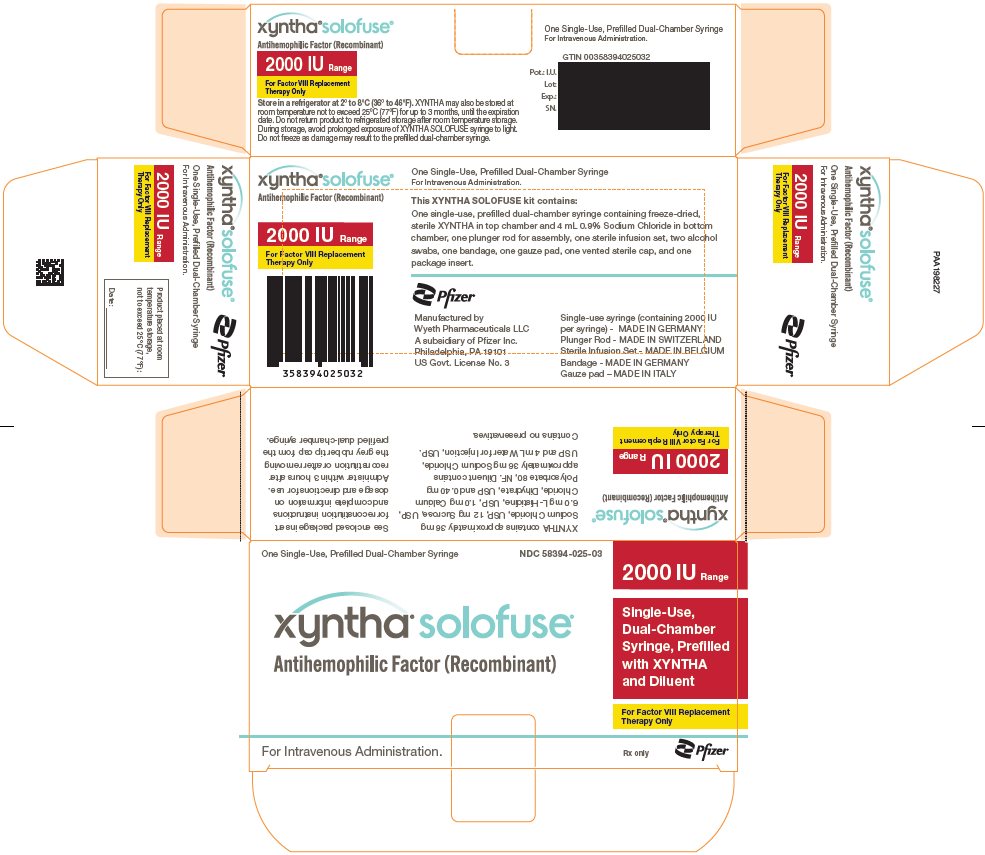
Xyntha antihemophilic factor (recombinant) Kit — NDC 58394-025-03 (Billing 58394-0025-03)
This is a package of Xyntha antihemophilic factor (recombinant) Kit from Wyeth BioPharma Division of Wyeth Pharmaceuticals LLC, marketed since Aug 2011 and currently FDA-listed. It is this product's only package size.
NDC database record
One package, one record: these facts belong to NDC 58394-025-03 alone.
- Record
- FDA NDC Directory package listing · Plasma derivative
- Code segments
- 58394 labeler · 025 product · 03 package
- Package marketed since
- Aug 1, 2011
- Sample package
- No — commercial package
- Listing certified through
- Dec 31, 2027
- Barcode (UPC-A, from the NDC)
- 3 5839402503 2
- Medicaid fills, this package
- 106 prescriptions in the last four reported quarters
- FDA record last changed
- Oct 8, 2026
Identity & classification
Regulatory identifiers FDA, NLM and CMS codes for this package
Drug-database identifiers Medi-Span GPI and First Databank GCN / HICL / AHFS classification
- GSN (GCN sequence number): 067809
- GCN: 30441
- GPI-14 (Medi-Span): 85100010266460
- HICL (First Databank): 041646
- AHFS class code: 20:28.16.00
Where does this data come from?
- FDA openFDA NDC Directory · synced Oct 8, 2026
- FDA label on DailyMed · label index refreshed Oct 8, 2026
- RxNorm (NLM RxNav) · catalog refreshed Oct 1, 2026
- Medi-Span GPI (licensed)
- First Databank (licensed) · refreshed Oct 8, 2026
Clinical
Patient education
Supplement & herbal interactions
Where does this data come from?
- MedlinePlus (NLM) · refreshed Oct 8, 2026
- FDA label on DailyMed · label index refreshed Oct 8, 2026
Ask a licensed pharmacist directly — free, answered by our team.
Pricing
A drug doesn't have one price. Each row is a different public payment system, and none is what you'd pay at the counter — that depends on your insurance. The ⓘ on each row explains what it measures.
| Price system | Per each | Per package |
|---|---|---|
| Retail pharmacies payNADAC · weekly | Not in the retail survey — common for institutional, discontinued, or low-volume packs. | |
| Medicaid paysCMS SDUD · 12 mo | $0.8969 | — |
| Medicare drug plans payPart D · quarterly | No Part D plan price is available for this NDC in our data. | |
| Medicare Part B allowsASP · J7185 | $1.371 / J7185 unit | — |
Where does this data come from?
- CMS NADAC weekly file
- CMS ASP pricing files · refreshed Sep 20, 2026
- CMS Medicaid State Drug Utilization Data · through Q1 2026
- CMS Part D plan pricing files · refreshed Sep 24, 2026
- VA National Acquisition Center price file
Billing & reimbursement
Where does this data come from?
- CMS ASP NDC-HCPCS crosswalk · refreshed Sep 22, 2026
- DMEPDAC NDC-HCPCS crosswalk
- openFDA NSDE billing units · refreshed Oct 7, 2026
Packaging — all sizes for this product
| Package NDC | Description | Marketing start | Marketing end | Status |
|---|---|---|---|---|
| 58394-0025-03 You're viewing this Main listing | 1 KIT in 1 CARTON * 4 mL in 1 SYRINGE * 1 mL in 1 PACKET | 2011-08-01 | — | Active |
Therapeutic equivalents
| Product | Labeler | Pack | NADAC/unit | TE | Status | Price vs. this |
|---|---|---|---|---|---|---|
| Advate 00944-3052-02 | Takeda | 1 kit | — | — | FDA listed | — |
| Xyntha 58394-0013-01 | Wyeth | 1 kit | — | — | FDA listed | — |
| Kovaltry 00026-3828-50 | Bayer | 1 kit | — | — | FDA listed | — |
| Kovaltry 00026-3821-25 | Bayer | 1 kit | — | — | FDA listed | — |
| Advate 00944-3045-10 | Takeda | 1 kit | — | — | FDA listed | — |
| Advate 00944-3046-10 | Takeda | 1 kit | — | — | FDA listed | — |
| Advate 00944-3047-10 | Takeda | 1 kit | — | — | FDA listed | — |
| Xyntha 58394-0014-01 | Wyeth | 1 kit | — | — | FDA listed | — |
| Kovaltry 00026-3824-25 | Bayer | 1 kit | — | — | FDA listed | — |
| Kovaltry 00026-3826-50 | Bayer | 1 kit | — | — | FDA listed | — |
| Xyntha 58394-0023-03 | Wyeth | 1 kit | — | — | FDA listed | — |
| Xynthathis 58394-0025-03 | Wyeth | 1 kit | — | — | FDA listed | — |
| Advate 00944-3053-02 | Takeda | 1 kit | — | — | FDA listed | — |
| Xyntha 58394-0022-03 | Wyeth | 1 kit | — | — | FDA listed | — |
| Advate 00944-3051-02 | Takeda | 1 kit | — | — | FDA listed | — |
| Xyntha 58394-0015-01 | Wyeth | 1 kit | — | — | FDA listed | — |
| Xyntha 58394-0016-03 | Wyeth | 1 kit | — | — | FDA listed | — |
| Xyntha 58394-0024-03 | Wyeth | 1 kit | — | — | FDA listed | — |
| Advate 00944-3054-02 | Takeda | 1 kit | — | — | FDA listed | — |
| Xyntha 58394-0012-01 | Wyeth | 1 kit | — | — | FDA listed | — |
| Kovaltry 00026-3822-25 | Bayer | 1 kit | — | — | FDA listed | — |
Where does this data come from?
- FDA openFDA NDC Directory · synced Oct 8, 2026
- FDA Purple Book · refreshed Oct 5, 2026
- CMS NADAC weekly file
Availability & biosimilar status
Biologics have no small-molecule generics; biosimilar competition is tracked in the FDA Purple Book.
Where does this data come from?
- FDA Purple Book · refreshed Oct 5, 2026
Inactive Ingredients / Excipients
Inactive ingredients, also called excipients, are components of the drug product other than the active ingredient. They may include fillers, dyes, coatings, preservatives, flavors, or other formulation ingredients.
Where does this data come from?
IACT rows and label-wide narrative are kept separate; availability and product-level specificity depend on the submitted label.- FDA label on DailyMed · label index refreshed Oct 8, 2026
- FDA openFDA NDC Directory · synced Oct 8, 2026
Inactive ingredient FAQ
Are inactive ingredients the same for every manufacturer?
Why might an inactive ingredient be missing?
Can inactive ingredients matter?
Manufacturer & labeler
More NDCs from Wyeth BioPharma Division of Wyeth Pharmaceutical... labeler code 58394
- Xyntha antihemophilic factor (recombinant) Kit NDC 58394-014-01
- Xyntha antihemophilic factor (recombinant) Kit NDC 58394-015-01
- Xyntha antihemophilic factor (recombinant) Kit NDC 58394-016-03
- Xyntha antihemophilic factor (recombinant) Kit NDC 58394-022-03
- Xyntha antihemophilic factor (recombinant) Kit NDC 58394-023-03
- Xyntha antihemophilic factor (recombinant) Kit NDC 58394-024-03
- Adalimumab 95.5 kg/95.5L Liquid NDC 58394-051-05
- bevacizumab 95.5 mg/95.5mL Liquid NDC 58394-095-05
- BeneFIX coagulation factor ix (recombinant) Kit NDC 58394-633-03
- BeneFIX coagulation factor ix (recombinant) Kit NDC 58394-634-03
- BeneFIX coagulation factor ix (recombinant) Kit NDC 58394-635-03
- BeneFIX coagulation factor ix (recombinant) Kit NDC 58394-636-03
Where does this data come from?
- FDA openFDA NDC Directory · synced Oct 8, 2026
- Drugs@FDA
Full FDA label FDA SPL
🎯 Indications and Usage ▾
1 INDICATIONS AND USAGE XYNTHA is an Antihemophilic (Recombinant) Factor indicated for: Control and prevention of bleeding episodes in patients with hemophilia A ( 1.1 ) Surgical prophylaxis in patients with hemophilia A ( 1.2 )
1.1Control and Prevention of Bleeding Episodes in Hemophilia A XYNTHA Antihemophilic Factor (Recombinant), Plasma/Albumin-Free is indicated for the control and prevention of bleeding episodes in patients with hemophilia A (congenital factor VIII deficiency or classic hemophilia). XYNTHA does not contain von Willebrand factor, and therefore is not indicated in patients with von Willebrand’s disease.
1.2Surgical Prophylaxis in Patients with Hemophilia A XYNTHA Antihemophilic Factor (Recombinant), Plasma/Albumin-Free is indicated for surgical prophylaxis in patients with hemophilia A.
⏱️ Dosage and Administration ▾
2 DOSAGE AND ADMINISTRATION For Intravenous Use After Reconstitution Treatment with XYNTHA Antihemophilic Factor (Recombinant), Plasma/Albumin-Free should be initiated under the supervision of a physician experienced in the treatment of hemophilia A. Dosage and duration of treatment depend on the severity of the factor VIII deficiency, the location and extent of bleeding, and the patient's clinical condition. Doses administered should be titrated to the patient's clinical response.
In the presence of an inhibitor, higher doses may be required. 1 One International Unit (IU) of factor VIII activity corresponds approximately to the quantity of factor VIII in one milliliter of normal human plasma. The calculation of the required dosage of factor VIII is based upon the empirical finding that, on average, 1 IU of factor VIII per kg body weight raises the plasma factor VIII activity by approximately 2 IU/dL.
2 The required dosage is determined using the following formula: Required units = body weight (kg) x desired factor VIII rise (IU/dL or % of normal) x 0.5 (IU/kg per IU/dL) The labeled potency of XYNTHA is based on the European Pharmacopoeia chromogenic substrate assay, in which the Wyeth manufacturing standard has been calibrated using a one-stage clotting assay. This method of potency assignment is intended to harmonize XYNTHA with clinical monitoring using a one-stage clotting assay [ see Clinical Pharmacology ( 12.3 ) ].
For intravenous use after reconstitution only ( 2 ) The required dosage is determined using the following formula: Required units = body weight (kg) x desired factor VIII rise (IU/dL or % of normal) x 0.5 (IU/kg per IU/dL) Frequency of intravenous injection of the reconstituted product is determined by the type of bleeding episode and the recommendation of the treating physician. ( 2.1 , 2.2 )
2.1Control and Prevention of Bleeding Episodes In the case of the following bleeding events, consideration should be given to maintaining the factor VIII activity at or above the plasma levels (in % of normal or in IU/dL) outlined below for the indicated period. The following chart can be used to guide dosing in bleeding episodes: Type of Bleeding Episode Factor VIII Level Required (IU/dL or % of normal) Frequency of Doses / Duration of Therapy Minor Early hemarthrosis, minor muscle or oral bleeds. 20–40 Repeat every 12-24 hours as necessary until resolved.
At least 1 day, depending upon the severity of the bleeding episode. Moderate Bleeding into muscles. Mild head trauma.
Bleeding into the oral cavity. 30–60 Repeat infusion every 12-24 hours for 3-4 days or until adequate local hemostasis is achieved. Major Gastrointestinal bleeding.
Intracranial, intra-abdominal or intrathoracic bleeding. Fractures. 60–100 Repeat infusion every 8-24 hours until bleeding is resolved.
2.2Surgical Prophylaxis in Patients with Hemophilia A In the case of the following bleeding events, consideration should be given to maintaining the factor VIII activity at or above the plasma levels (in % of normal or in IU/dL) outlined below for the indicated period. Monitoring of replacement therapy by means of plasma factor VIII activity is recommended, particularly for surgical intervention. The following chart can be used to guide dosing in surgery: Type of Surgery Factor VIII Level Required (IU/dL or % of normal) Frequency of Doses / Duration of Therapy Minor Minor operations, including tooth extraction.
30–60 Repeat infusion every 12-24 hours for 3-4 days or until adequate local hemostasis is achieved. For tooth extraction, a single infusion plus oral antifibrinolytic therapy within 1 hour may be sufficient. Major Major operations.
60–100 Repeat infusion every 8-24 hours until threat is resolved, or in the case of surgery, until adequate local hemostasis and wound healing are achieved.
2.3Instructions for Use XYNTHA is administered by intravenous (IV) infusion after reconstitution of the freeze-dried powder with the diluent (0.9% Sodium Chlorid… [Excerpted — this section continues on DailyMed.]
💊 Dosage Forms and Strengths ▾
3 DOSAGE FORMS AND STRENGTHS XYNTHA is supplied as a white to off-white freeze-dried powder in the following dosage: 3000 IU XYNTHA freeze-dried powder is available as: 3000 IU in a single-use prefilled dual-chamber syringe. ( 3 )
⛔ Contraindications ▾
4 CONTRAINDICATIONS None. None.
⚠️ Warnings and Cautions ▾
5 WARNINGS AND PRECAUTIONS Anaphylaxis and severe hypersensitivity reactions are possible. Should such reactions occur, treatment with the product should be discontinued, and appropriate treatment should be administered. ( 5.1 ) Development of activity-neutralizing antibodies has been detected in patients receiving factor VIII-containing products.
If expected plasma factor VIII activity levels are not attained, or if bleeding is not controlled with an appropriate dose, an assay that measures factor VIII inhibitor concentration should be performed. ( 5.2 , 5.4 ) Patients may develop hypersensitivity to hamster protein, which is present in trace amounts in the product. ( 5.3 )
5.1Anaphylaxis and Severe Hypersensitivity Reactions Allergic type hypersensitivity reactions are possible. Patients should be informed of the early signs or symptoms of hypersensitivity reactions [including hives (rash with itching), generalized urticaria, tightness of the chest, wheezing, and hypotension] and anaphylaxis [ see Patient Counseling Information ( 17 ) ]. Patients should be advised to discontinue use of the product and contact their physicians if these symptoms occur.
5.2Neutralizing Antibodies The occurrence of neutralizing antibodies (inhibitors) is well known in the treatment of patients with hemophilia A. Inhibitors have been detected in patients receiving factor VIII-containing products. Inhibitors are common in previously untreated patients 4,5,6 and have been observed in previously treated patients on factor VIII products.
7,8,9,10,11,12 Patients using coagulation factor VIII products, including XYNTHA, should be monitored for the development of factor VIII inhibitors. If expected factor VIII activity plasma levels are not attained, or if bleeding is not controlled with an appropriate dose, an assay should be performed to determine if a factor VIII inhibitor is present [ see Warnings and Precautions ( 5.4 ) ]. If detected, inhibitors should be titered in Bethesda Units (BU).
5.3Formation of Antibodies to Hamster Protein XYNTHA contains trace amounts of hamster proteins. Patients treated with this product could develop hypersensitivity to these non-human mammalian proteins.
5.4Monitoring: Laboratory Tests Monitor plasma factor VIII activity levels by the one-stage clotting assay to confirm that adequate factor VIII levels have been achieved and are maintained, when clinically indicated [ see Dosage and Administration ( 2 ) ]. It is recommended that individual factor VIII values for recovery and, if clinically indicated, other pharmacokinetic characteristics be used to guide dosing and administration. Monitor for development of factor VIII inhibitors.
Perform assay to determine if factor VIII inhibitor is present when expected factor VIII activity plasma levels are not attained, or when bleeding is not controlled with the expected dose of XYNTHA. Use Bethesda Units (BU) to titer inhibitors.
🤒 Adverse Reactions ▾
6 ADVERSE REACTIONS The most common adverse reaction in study 1 is headache (24% of subjects) and in study 2 is pyrexia (41% of subjects). The most common adverse reaction in Study 1 is headache (24% of subjects) and in Study 2 is pyrexia (41% of subjects). ( 6.1 ) Two out of 89 subjects (who completed ≥ 50 exposure days) developed an inhibitor during the course of the study.
The observation of 2 inhibitors in 89 subjects who completed ≥ 50 exposure days was consistent with a 95% probability that the inhibitor formation rate with XYNTHA is less than 4.17% using a Bayesian analysis. ( 6.1 ) To report SUSPECTED ADVERSE REACTIONS, contact Wyeth Pharmaceuticals, Inc. at 1-800-934-5556 or FDA at 1-800-FDA-1088 or www.fda.gov/medwatch
6.1Clinical Trials Experience Because clinical trials are conducted under widely varying conditions, adverse reaction rates observed in the clinical trials of a drug cannot be directly compared to rates in the clinical trials of another drug and may not reflect the rates observed in clinical practice. Study 1 is a pivotal phase 3 (safety and efficacy) study in which previously treated patients (PTPs) with hemophilia A received XYNTHA for routine prophylaxis and on-demand treatment, 94 subjects received at least one dose of XYNTHA, resulting in a total of 6,775 infusions [ see Clinical Studies ( 14 ) ].
In Study 1, the most frequently reported treatment-emergent adverse reaction was headache (24% of subjects). Other adverse reactions reported in ≥ 5% of subjects were: nausea (6%), diarrhea (5%), asthenia (5%) and pyrexia (5%). No subject developed anti-CHO or anti-TN8.2 antibodies.
Study 2 (surgery) is an on-going, open-label, single-arm study of at least 25 evaluable PTPs with severe or moderately severe hemophilia A (factor VIII activity in plasma [FVIII:C] ≤ 2%) who required elective major surgery and were planned to receive XYNTHA replacement therapy for at least 6 days post-surgery. Twenty-two subjects received at least one dose of XYNTHA, resulting in 766 infusions [ see Clinical Studies ( 14 ) ]. In Study 2, the most frequently reported treatment-emergent adverse reaction was pyrexia (41% of subjects).
Other adverse reactions reported in ≥ 5% of subjects were: headache (9%), nausea (9%), diarrhea (5%), vomiting (5%) and asthenia (5%). The adverse reactions reported in either study were considered mild or moderate in severity. Immunogenicity In Study 1, the incidence of FVIII inhibitors to XYNTHA was the primary safety endpoint.
Two subjects with inhibitors were observed in 89 subjects (2.2%) who completed ≥ 50 exposure days. These results were consistent with the pre-specified endpoint that no more than 2 inhibitors may be observed in at least 81 subjects. In a Bayesian statistical analysis, results from this study were used to update PTP results from a prior supporting study using XYNTHA manufactured at the initial facility, where one de novo and two recurrent inhibitors were observed in 110 subjects, and the experience with predecessor product (1 inhibitor in 113 subjects).
This Bayesian analysis indicates that the population (true) inhibitor rate for XYNTHA, the estimate of the 95% upper limit of the true inhibitor rate, was 4.17% (see Table 1 ). Table 1: Bayesian Posterior Distribution of Inhibitor Rate ---Posterior Beta Distribution Characteristics--- a Prior alpha of 2.5 plus the number of observed inhibitors. b Prior beta of 110 plus the number of subjects analyzed minus the number of observed inhibitors. c Posterior probability is the probability that the true inhibitor rate is less than the upper acceptable limit of 4.4%.
A posterior probability greater than 0.95 is deemed acceptable. d The 95% upper limit of the true inhibitor rate (the maximum rate calculated with at least 95% probability) based on the posterior distribution. An inhibitor rate less than 4.4% is deemed acceptable. FVIII Inhibitor Nijmegen Result (BU/mL) Number of Inhibitors Number of Subjects Analyzed Observed Inhibito… [Excerpted — this section continues on DailyMed.]
🔄 Drug Interactions ▾
7 DRUG INTERACTIONS None known. None.
👥 Use in Specific Populations ▾
8 USE IN SPECIFIC POPULATIONS Pregnancy: No human or animal data. Use only if clearly needed. (8.1)
8.1Pregnancy Pregnancy Category C Animal reproduction studies have not been conducted with XYNTHA Antihemophilic Factor (Recombinant), Plasma/Albumin-Free. It is also not known whether XYNTHA can cause fetal harm when administered to a pregnant woman or can affect reproduction capacity. XYNTHA should be given to a pregnant woman only if clinically indicated.
8.2Labor and Delivery There is no information available on the effect of factor VIII replacement therapy on labor and delivery. XYNTHA should be used only if clinically indicated.
8.3Nursing Mothers It is not known whether this drug is excreted into human milk. Because many drugs are excreted into human milk, caution should be exercised if XYNTHA is administered to nursing mothers. XYNTHA should be given to nursing mothers only if clinically indicated.
8.4Pediatric Use A study of XYNTHA in previously treated patients less than 6 years of age is currently ongoing. Pharmacokinetics of XYNTHA was studied in 7 previously treated patients 12-16 years of age. Pharmacokinetic parameters in these patients were similar to those obtained for adults after a dose of 50 IU/kg. For these 7 patients, the mean (± SD) C max and AUC ∞ were 1.09 ±
0.21IU/mL and 11.5 ±
5.2IU∙h/mL, respectively. The mean clearance and plasma half‑life values were 5.23 ± 2.36 mL/h/kg and 8.03 ± 2.44 hours (range 3.52 – 10.6 hours), respectively. The mean K‑value and in vivo recoveries were 2.18 ±
0.41IU/dL per IU/kg and 112 ± 23%, respectively.
8.5Geriatric Use Clinical studies of XYNTHA did not include subjects aged 65 and over. In general, dose selection for an elderly patient should be individualized.
🤰 Pregnancy ▾
8.1Pregnancy Pregnancy Category C Animal reproduction studies have not been conducted with XYNTHA Antihemophilic Factor (Recombinant), Plasma/Albumin-Free. It is also not known whether XYNTHA can cause fetal harm when administered to a pregnant woman or can affect reproduction capacity. XYNTHA should be given to a pregnant woman only if clinically indicated.
🧒 Pediatric Use ▾
8.4Pediatric Use A study of XYNTHA in previously treated patients less than 6 years of age is currently ongoing. Pharmacokinetics of XYNTHA was studied in 7 previously treated patients 12-16 years of age. Pharmacokinetic parameters in these patients were similar to those obtained for adults after a dose of 50 IU/kg. For these 7 patients, the mean (± SD) C max and AUC ∞ were 1.09 ±
0.21IU/mL and 11.5 ±
5.2IU∙h/mL, respectively. The mean clearance and plasma half‑life values were 5.23 ± 2.36 mL/h/kg and 8.03 ± 2.44 hours (range 3.52 – 10.6 hours), respectively. The mean K‑value and in vivo recoveries were 2.18 ±
0.41IU/dL per IU/kg and 112 ± 23%, respectively.
🧓 Geriatric Use ▾
8.5Geriatric Use Clinical studies of XYNTHA did not include subjects aged 65 and over. In general, dose selection for an elderly patient should be individualized.
🧬 Clinical Pharmacology ▾
12 CLINICAL PHARMACOLOGY
12.1Mechanism of Action Factor VIII is the specific clotting factor deficient in patients with hemophilia A (classical hemophilia). 15 Activated factor VIII acts as a cofactor for activated factor IX, accelerating the conversion of factor X to activated factor X. 15 Activated factor X converts prothrombin into thrombin.
15 Thrombin then converts fibrinogen into fibrin, and a clot is formed. 15 Factor VIII activity is greatly reduced in patients with hemophilia A, and, therefore, replacement therapy is necessary. The administration of XYNTHA increases plasma levels of factor VIII activity and can temporarily correct the coagulation defect in these patients.
12.2Pharmacodynamics The administration of XYNTHA increases plasma levels of factor VIII activity and can temporarily correct the coagulation defect in hemophilia A patients.
12.3Pharmacokinetics In a pivotal crossover clinical study, 30 evaluable previously treated patients [PTP] (≥ 12 years) received a single infusion of 50 IU/kg of XYNTHA followed by a full-length recombinant FVIII (FLrFVIII, Advate ® ) or a single infusion of FLrFVIII followed by XYNTHA in a randomized crossover design. The one-stage clotting assay method was used to determine the concentrations of these two products in blood. XYNTHA was shown to be pharmacokinetically equivalent to FLrFVIII as the 90% confidence intervals for XYNTHA-to-FLrFVIII ratios of the mean values of C max and AUC ∞ were within pre-established limits of 80% to 125%.
The pharmacokinetic parameters of XYNTHA in the above group of patients are summarized in Table 2 . In addition, 25 PTPs received a single infusion of 50 IU/kg of XYNTHA for a 6-month follow-up PK study. The pharmacokinetic parameters were comparable between baseline and month 6, indicating no time-dependent changes in the pharmacokinetic properties of XYNTHA; the 90% confidence intervals for XYNTHA 6 month-to-baseline ratios of the mean values of C max and AUC ∞ were within pre‑established limits of 80% to 125%.
Table 2: Pharmacokinetic Parameter Estimates for XYNTHA at Baseline (Cross-over phase) and Month 6 (Follow-up phase) in Previously Treated Patients with Hemophilia A Parameter Parameters at Initial Visit (Crossover phase, n = 30) Mean ± SD Parameters at Month 6 (Follow-up phase, n = 25) Mean ± SD Abbreviations: AUC ∞ = area under the plasma concentration-time curve from zero to infinity; C max = peak concentration; K‑value = incremental recovery; t 1/2 = plasma elimination half-life; CL = clearance; n = number of subjects; SD = standard deviation. *One subject was excluded from the calculation due to lack of a well-defined terminal phase.
C max (IU/mL) 1.08 ± 0.22 1.24 ±
0.42AUC ∞ (IU∙hr/mL) 13.5 ± 5.6 15.0 ± 7.5 t 1/2 (hr) 11.2 ± 5.0 11.8 ± 6.2* CL (mL/hr/kg) 4.51 ± 2.23 4.04 ±
1.87K-value (IU/dL per IU/kg) 2.15 ± 0.44 2.47 ±
0.84 In vivo Recovery (%) 103 ± 21 116 ± 40
🧬 Mechanism of Action ▾
12.1Mechanism of Action Factor VIII is the specific clotting factor deficient in patients with hemophilia A (classical hemophilia). 15 Activated factor VIII acts as a cofactor for activated factor IX, accelerating the conversion of factor X to activated factor X. 15 Activated factor X converts prothrombin into thrombin.
15 Thrombin then converts fibrinogen into fibrin, and a clot is formed. 15 Factor VIII activity is greatly reduced in patients with hemophilia A, and, therefore, replacement therapy is necessary. The administration of XYNTHA increases plasma levels of factor VIII activity and can temporarily correct the coagulation defect in these patients.
📦 How Supplied / Storage and Handling ▾
16 HOW SUPPLIED/STORAGE AND HANDLING
16.1How Supplied XYNTHA ® Antihemophilic Factor (Recombinant), Plasma/Albumin-Free is supplied in a kit that includes the XYNTHA freeze-dried powder that contain nominally 3000 IU and 4 mL 0.9 % Sodium Chloride solution for reconstitution in a prefilled dual-chamber syringe: 3000 IU Kit: NDC 58394-016-03 In addition, each XYNTHA Antihemophilic Factor (Recombinant), Plasma/Albumin-Free Kit contains: one plunger rod for assembly, one sterile infusion set, two alcohol swabs, one bandage, one gauze pad, one vented sterile cap, and one package insert.
XYNTHA ® Antihemophilic Factor (Recombinant), Plasma/Albumin-Free is also supplied in kits that include single-use vials that contain nominally 250, 500, 1000, or 2000 IU of freeze‑dried powder per vial: 250 IU Kit: NDC 58394-012-01 500 IU Kit: NDC 58394-013-01 1000 IU Kit: NDC 58394-014-01 2000 IU Kit: NDC 58394-015-01 Actual factor VIII activity in IU is stated on the label of each XYNTHA Antihemophilic Factor (Recombinant), Plasma/Albumin-Free prefilled dual-chamber syringe or vial.
16.2Storage and Handling Product as Packaged for Sale: Store XYNTHA under refrigeration at a temperature of 2° to 8°C (36° to 46°F) for up to 36 months from the date of manufacture until the expiration date stated on the label. XYNTHA may also be stored at room temperature not to exceed 25°C (77°F) for up to 3 months. The starting date at room temperature storage should be clearly recorded in the space provided on the outer carton.
At the end of the 3-month period, the product must not be put back into the refrigerator, but must be used immediately or discarded. Do not use XYNTHA after the expiration date stated on the label or after 3 months when stored at room temperature, whichever is earlier. Do not freeze, to prevent damage to the XYNTHA Prefilled Dual-Chamber Syringe.
During storage, avoid prolonged exposure of XYNTHA to light. Product After Reconstitution: Administer XYNTHA within 3 hours after reconstitution or after removal of the grey rubber tip cap from the XYNTHA Prefilled Dual-Chamber Syringe. The reconstituted solution may be stored at room temperature prior to administration.
16.1How Supplied XYNTHA ® Antihemophilic Factor (Recombinant), Plasma/Albumin-Free is supplied in a kit that includes the XYNTHA freeze-dried powder that contain nominally 3000 IU and 4 mL 0.9 % Sodium Chloride solution for reconstitution in a prefilled dual-chamber syringe: 3000 IU Kit: NDC 58394-016-03 In addition, each XYNTHA Antihemophilic Factor (Recombinant), Plasma/Albumin-Free Kit contains: one plunger rod for assembly, one sterile infusion set, two alcohol swabs, one bandage, one gauze pad, one vented sterile cap, and one package insert.
XYNTHA ® Antihemophilic Factor (Recombinant), Plasma/Albumin-Free is also supplied in kits that include single-use vials that contain nominally 250, 500, 1000, or 2000 IU of freeze‑dried powder per vial: 250 IU Kit: NDC 58394-012-01 500 IU Kit: NDC 58394-013-01 1000 IU Kit: NDC 58394-014-01 2000 IU Kit: NDC 58394-015-01 Actual factor VIII activity in IU is stated on the label of each XYNTHA Antihemophilic Factor (Recombinant), Plasma/Albumin-Free prefilled dual-chamber syringe or vial.
📋 Description ▾
11 DESCRIPTION Antihemophilic Factor (Recombinant), Plasma/Albumin-Free, the active ingredient in XYNTHA, is a recombinant coagulation factor VIII produced by recombinant DNA technology for use in therapy of factor VIII deficiency. The Antihemophilic Factor (Recombinant), Plasma/Albumin‑Free in XYNTHA is a purified glycoprotein, with an approximate molecular mass of 170 kDa consisting of 1,438 amino acids, which does not contain the B-domain. 13 The amino acid sequence of Antihemophilic Factor (Recombinant), Plasma/Albumin‑Free in XYNTHA is comparable to the 90 + 80 kDa form of human factor VIII.
The Antihemophilic Factor (Recombinant), Plasma/Albumin‑Free in XYNTHA is secreted by a genetically engineered Chinese hamster ovary (CHO) cell line. The cell line is grown in a chemically defined cell culture medium that contains recombinant insulin, but does not contain any materials derived from human or animal sources. The Antihemophilic Factor (Recombinant), Plasma/Albumin‑Free in XYNTHA is purified by a process that uses a series of chromatography steps, one of which is based on affinity chromatography using a patented synthetic peptide affinity ligand.
14 The process also includes a solvent-detergent viral inactivation step and a virus‑retaining nanofiltration step. The potency expressed in International Units (IU) is determined using the chromogenic assay of the European Pharmacopoeia. The Wyeth manufacturing reference standard for potency has been calibrated against the World Health Organization (WHO) International Standard for factor VIII activity using the one-stage clotting assay.
The specific activity of XYNTHA is 5,500 to 9,900 IU per milligram of protein. XYNTHA is formulated as a sterile, nonpyrogenic, preservative-free, freeze-dried powder preparation for intravenous (IV) injection. Each single-use prefilled dual-chamber syringe contains nominally 3000 IU of XYNTHA.
Upon reconstitution, the product is a clear to slightly opalescent, colorless solution that contains sodium chloride, sucrose, L-histidine, calcium chloride and polysorbate 80.
💬 Information for Patients ▾
17 PATIENT COUNSELING INFORMATION See Patient Product Information and Instructions for Using XYNTHA. Advise patients to report any adverse reactions or problems following XYNTHA administration to their physician or healthcare provider. Advise patients that allergic-type hypersensitivity reactions are possible and inform them of the early signs of hypersensitivity reactions [including hives (rash with itching), generalized urticaria, tightness of the chest, wheezing, hypotension] and anaphylaxis.
Advise patients to discontinue use of the product and contact their physicians if these symptoms occur. Advise patients to contact their physician or treatment facility for further treatment and/or assessment, if they experience a lack of a clinical response to factor VIII replacement therapy, as this may be a manifestation of an inhibitor. Advise female patients to notify their physician if they become pregnant or intend to become pregnant during therapy.
Advise nursing mothers to notify their physician if they are breastfeeding. Advise patients that local irritation may occur when infusing XYNTHA after the reconstitution in the prefilled dual-chamber syringe. Advise patients to consult with their healthcare professional prior to travel and to bring an adequate supply of XYNTHA, based on their current regimen, for anticipated treatment when traveling.
🍼 Nursing Mothers ▾
8.3Nursing Mothers It is not known whether this drug is excreted into human milk. Because many drugs are excreted into human milk, caution should be exercised if XYNTHA is administered to nursing mothers. XYNTHA should be given to nursing mothers only if clinically indicated.
🧬 Pharmacokinetics ▾
12.3Pharmacokinetics In a pivotal crossover clinical study, 30 evaluable previously treated patients [PTP] (≥ 12 years) received a single infusion of 50 IU/kg of XYNTHA followed by a full-length recombinant FVIII (FLrFVIII, Advate ® ) or a single infusion of FLrFVIII followed by XYNTHA in a randomized crossover design. The one-stage clotting assay method was used to determine the concentrations of these two products in blood. XYNTHA was shown to be pharmacokinetically equivalent to FLrFVIII as the 90% confidence intervals for XYNTHA-to-FLrFVIII ratios of the mean values of C max and AUC ∞ were within pre-established limits of 80% to 125%.
The pharmacokinetic parameters of XYNTHA in the above group of patients are summarized in Table 2 . In addition, 25 PTPs received a single infusion of 50 IU/kg of XYNTHA for a 6-month follow-up PK study. The pharmacokinetic parameters were comparable between baseline and month 6, indicating no time-dependent changes in the pharmacokinetic properties of XYNTHA; the 90% confidence intervals for XYNTHA 6 month-to-baseline ratios of the mean values of C max and AUC ∞ were within pre‑established limits of 80% to 125%.
Table 2: Pharmacokinetic Parameter Estimates for XYNTHA at Baseline (Cross-over phase) and Month 6 (Follow-up phase) in Previously Treated Patients with Hemophilia A Parameter Parameters at Initial Visit (Crossover phase, n = 30) Mean ± SD Parameters at Month 6 (Follow-up phase, n = 25) Mean ± SD Abbreviations: AUC ∞ = area under the plasma concentration-time curve from zero to infinity; C max = peak concentration; K‑value = incremental recovery; t 1/2 = plasma elimination half-life; CL = clearance; n = number of subjects; SD = standard deviation. *One subject was excluded from the calculation due to lack of a well-defined terminal phase.
C max (IU/mL) 1.08 ± 0.22 1.24 ±
0.42AUC ∞ (IU∙hr/mL) 13.5 ± 5.6 15.0 ± 7.5 t 1/2 (hr) 11.2 ± 5.0 11.8 ± 6.2* CL (mL/hr/kg) 4.51 ± 2.23 4.04 ±
1.87K-value (IU/dL per IU/kg) 2.15 ± 0.44 2.47 ±
0.84 In vivo Recovery (%) 103 ± 21 116 ± 40
🧬 Pharmacodynamics ▾
12.2Pharmacodynamics The administration of XYNTHA increases plasma levels of factor VIII activity and can temporarily correct the coagulation defect in hemophilia A patients.
🔬 Clinical Studies ▾
14 CLINICAL STUDIES The efficacy of XYNTHA was evaluated in Study 1, in which subjects received XYNTHA on a prophylaxis treatment regimen, with on-demand treatment administered as clinically indicated. Ninety-four (94) subjects were enrolled and treated with at least one dose, and all are included in the intent-to-treat (ITT) population. Eighty-nine (89) subjects accrued ≥ 50 exposure days.
From the 94 subjects enrolled, thirty (30) evaluable subjects participated in the PK study and received at least 1 PK dose. Twenty-five (25) evaluable subjects with FVIII:C ≤ 1% completed both the first (PK1) and the second (PK2) assessments [ see Clinical Pharmacology ( 12.3 ) ]. Median age for the 94 treated subjects was 24 years (mean 27.7 and range 12-60 years).
All subjects had ≥ 150 previous exposure days with baseline FVIII activity level of ≤ 2%. In the open-label safety and efficacy period, all 94 subjects received XYNTHA for routine prophylaxis at the dose of 30 ± 5 IU/kg 3 times a week with provisions for dose escalation based on pre-specified criteria. Seven (7) dose escalations were prescribed for 6 subjects during the course of the study.
Forty-three (43) of ninety-four (94), i.e. 45.7%, subjects reported no bleeding while on routine prophylaxis. The median annualized bleeding rate (ABR) for all bleeding episodes was 1.9 (mean 3.9, range 0 to 42.1).
Fifty-three (53) of 94 subjects received XYNTHA for on-demand treatment for a total of 187 bleeding episodes ( Table 3 ). Seven of these bleeding episodes occurred in subjects prior to switching to a prophylaxis treatment regimen. One hundred ten of one hundred eighty (110/180) bleeds (61.1%) occurred ≤ 48 hours after the last dose and 38.9% (70 of 180 bleeds) occurred > 48 hours after the last dose.
The majority of bleeds reported to occur ≤ 48 hours after the last prophylaxis dose were traumatic (64 of 110 bleeds; 58.2%). Forty-two (42) of 70 bleeds (60%) reported to occur > 48 hours after the last prophylaxis dose were spontaneous. The on-demand treatment dosing regimen was determined by the investigator.
The median dose for on-demand treatment was
30.6IU/kg (range, 6.4 to
74.4IU/kg). Table 3: Time Interval Between Last Prophylaxis Dose of XYNTHA and Start of Bleed a Bleeds with unknown start time or bleeds in which previous prophylaxis dose was before the start of the safety and efficacy period of the study. Abbreviations: Spon = spontaneous new bleed; Traum = new bleed due to trauma; hrs = hours. ≤ 24 hrs > 24 ≤ 48 hrs > 48 ≤ 72 hrs > 72 hrs Unknown a Total Bleeding Episodes Spon Traum Spon Traum Spon Traum Spon Traum Spon Traum 13 20 33 44 24 12 18 16 3 4 187 The majority of bleeding episodes (173/187; 92.5%) resolved with 1 or 2 infusions.
Subjects rated the outcomes of infusions on a pre-specified four (4) point hemostatic efficacy scale. One hundred thirty-two (132) of 187 bleeding episodes (70.6%) treated with XYNTHA were rated excellent or good in their response to initial treatment, 45 (24.1%) were rated moderate. Five [5] (2.7%) were rated no response, and 5 (2.7%) were not rated.
Table 4: Summary of Response to Infusions to Treat New Bleeding Episode by Number of Infusions Needed for Resolution a Includes 1 infusion with commercial FVIII that occurred before routine prophylaxis began. ----Number of Infusions (%)---- Response to 1st Infusion 1 2 3 4 > 4 Total Number of Bleeds Excellent 42 (95.5) 2 (4.5) 0 (0.0) 0 (0.0) 0 (0.0) 44 Good 69 (78.4) 16 (18.2) 3 (3.4) 0 (0.0) 0 (0.0) 88 Moderate 24 (53.3) 16 (35.6) 2 (4.4) 0 (0.0) 3 (6.7) 45 No Response 0 (0.0) 0 (0.0) 2 (40.0) 2 (40.0) 1 (20.0) 5 Not Assessed 4 (80.0) 0 (0.0) 0 (0.0) 1 (20.0) 0 (0.0) 5 a Total 139 (74.3) 34 (18.2) 7 (3.7) 3 (1.6) 4 (2.1) 187 In an on-going, open-label study of XYNTHA in surgical prophylaxis, 21 of at least 25 evaluable PTPs with severe or moderately severe (FVIII:C ≤ 2%) hemophilia A undergoing major surgical procedures received XYNTHA.
One (1) subject received XYNTHA for a pre-surgery ph… [Excerpted — this section continues on DailyMed.]
🧪 Nonclinical Toxicology ▾
13 NONCLINICAL TOXICOLOGY
13.1Carcinogenesis, Mutagenesis, Impairment of Fertility No studies have been conducted with XYNTHA to assess its mutagenic or carcinogenic potential. XYNTHA has been shown to be comparable to the predecessor product with respect to its biochemical and physicochemical properties, as well as its non-clinical in vivo pharmacology and toxicology. By inference, predecessor product and XYNTHA would be expected to have equivalent mutagenic and carcinogenic potential.
The predecessor product has been shown to be nongenotoxic in the mouse micronucleus assay. No studies have been conducted in animals to assess impairment of fertility or fetal development.
13.2Animal Toxicology and/or Pharmacology Preclinical studies evaluating XYNTHA in hemophilia A dogs without inhibitors demonstrated safe and effective restoration of hemostasis. XYNTHA demonstrated a toxicological profile that was similar to the toxicological profile observed with the predecessor product. Toxicity associated with XYNTHA was primarily associated with anti-FVIII neutralizing antibody generation first detectable at 15 days of repeat dosing in high (approximately 735 IU/kg/day) level-dosed, non-human primates.
📄 Carcinogenesis, Mutagenesis, Impairment of Fertility ▾
13.1Carcinogenesis, Mutagenesis, Impairment of Fertility No studies have been conducted with XYNTHA to assess its mutagenic or carcinogenic potential. XYNTHA has been shown to be comparable to the predecessor product with respect to its biochemical and physicochemical properties, as well as its non-clinical in vivo pharmacology and toxicology. By inference, predecessor product and XYNTHA would be expected to have equivalent mutagenic and carcinogenic potential.
The predecessor product has been shown to be nongenotoxic in the mouse micronucleus assay. No studies have been conducted in animals to assess impairment of fertility or fetal development.
📚 References ▾
15 REFERENCES Nilsson IM, Berntorp EE and Freiburghaus C. Treatment of patients with factor VIII and IX inhibitors. Thromb Haemost .
1993;70(1):56-59. Hoyer LW. Hemophilia A.
N Engl J Med . 1994;330:38-47. Juhlin F.
Stability and Compatibility of Reconstituted Recombinant Factor VIII SQ, 250 IU/ml, in a System for Continuous Infusion. Pharmacia Document 9610224, 1996. Ehrenforth S, Kreuz W, Scharrer I, et al.
Incidence of development of factor VIII and factor IX inhibitors in hemophiliacs. Lancet . 1992;339:594-598.
Lusher J, Arkin S, Abildgaard CF, Schwartz RS, the Kogenate PUP Study Group. Recombinant factor VIII for the treatment of previously untreated patients with hemophilia A. N Engl J Med .
1993;328:453-459. Bray GL, Gomperts ED, Courter S, et al. A multicenter study of recombinant factor VIII (Recombinate): safety, efficacy, and inhibitor risk in previously untreated patients with hemophilia A.
Blood . 1994;83(9):2428-2435. Kessler C, Sachse K.
Factor VIII:C inhibitor associated with monoclonal-antibody purified FVIII concentrate. Lancet . 1990;335:1403.
Schwartz RS, Abildgaard CF, Aledort LM, et al. Human recombinant DNA-derived antihemophilic factor (factor VIII) in the treatment of hemophilia A. N Engl J Med .
1990;323:1800-1805. White GC II, Courter S, Bray GL, et al. A multicenter study of recombinant factor VIII (Recombinate™) in previously treated patients with hemophilia A.
Thromb Haemost . 1997;77(4):660-667. Gruppo R, Chen H, Schroth P, et al.
Safety and immunogenicity of recombinant factor VIII (Recombinate™) in previously untreated patients: A 7.3 year update. Haemophilia . 1998;4:228 (Abstract No.
291, XXIII Congress of the WFH, The Hague). Scharrer I, Bray GL, Neutzling O. Incidence of inhibitors in haemophilia A patients - a review of recent studies of recombinant and plasma-derived factor VIII concentrates.
Haemophilia . 1999;5:145-154. Abshire TC, Brackmann HH, Scharrer I, et al.
Sucrose formulated recombinant human antihemophilic Factor VIII is safe and efficacious for treatment of hemophilia A in home therapy: Results of a multicenter, international, clinical investigation. Thromb Haemost . 2000;83(6):811-816.
Sandberg H, Almstedt A, Brandt J, Castro VM, Gray E, Holmquist L, et al. Structural and Functional Characterization of B-Domain Deleted Recombinant Factor VIII. Sem Hematol.
2001;38 (Suppl. 4):4-12. Kelley BD, Tannatt M, Magnusson R, Hagelberg S.
Development and Validation of an Affinity Chromatography Step Using a Peptide Ligand for cGMP Production of Factor VIII. Biotechnol Bioeng . 2004;87(3):400-412.
Mann KG and Ziedens KB. Overview of Hemostasis. In: Lee CA, Berntorp EE and Hoots WK, eds.
Textbook of Hemophilia . USA, Blackwell Publishing; 2005:1-4.
📄 Patient Package Insert ▾
FDA-Approved Patient Labeling Patient Product Information (PPI) XYNTHA ( ZIN -tha) [ANTIHEMOPHILIC FACTOR (RECOMBINANT), PLASMA/ALBUMIN-FREE] Please read this Patient Information carefully before using XYNTHA and each time you get a refill. There may be new information. This leaflet does not take the place of talking with your doctor about your medical problems or your treatment.
What is XYNTHA? XYNTHA is an injectable medicine that is used to help control and prevent bleeding in people with hemophilia A. Hemophilia A is also called classic hemophilia.
XYNTHA is not used to treat von Willebrand's disease. What should I tell my doctor before using XYNTHA? Tell your doctor about all of your medical conditions, including if you: are pregnant or planning to become pregnant.
It is not known if XYNTHA may harm your unborn baby. are breastfeeding. It is not known if XYNTHA passes into your milk and if it can harm your baby. Tell your doctor and pharmacist about all of the medicines you take, including all prescription and non-prescription medicines, such as over-the-counter medicines, supplements, or herbal remedies.
How should I infuse XYNTHA? See the step-by-step instructions for infusing XYNTHA at the end of this leaflet. You should always follow the specific instructions given by your doctor.
The steps listed below are general guidelines for using XYNTHA. If you are unsure of the procedures, please call your doctor or pharmacist before using. Call your doctor right away if bleeding is not controlled after using XYNTHA.
Your doctor will prescribe the dose that you should take. Your doctor may need to take blood tests from time to time. Talk to your doctor before traveling.
You should plan to bring enough XYNTHA for your treatment during this time. What if I take too much XYNTHA? Call your doctor if you take too much XYNTHA.
What are the possible side effects of XYNTHA? Allergic reactions may occur with XYNTHA. Call your doctor or get emergency treatment right away if you have any of the following symptoms: wheezing difficulty breathing chest tightness turning blue (look at lips and gums) fast heartbeat swelling of the face faintness rash hives Your body can also make antibodies, called “inhibitors,” against XYNTHA, which may stop XYNTHA from working properly.
Consult with your healthcare provider to make sure you are carefully monitored with blood tests for the development of inhibitors to factor VIII. Some common side effects of XYNTHA are headache, fever, nausea, vomiting, diarrhea, or weakness. These are not all the possible side effects of XYNTHA.
Tell your doctor about any side effect that bothers you or that does not go away. How should I store XYNTHA? Do not freeze XYNTHA and protect from light.
Store the XYNTHA Prefilled Dual-Chamber Syringe in the refrigerator at 36° to 46°F (2° to 8°C). XYNTHA can last at room temperature (below 77°F) for up to 3 months. If you store XYNTHA at room temperature, be careful to write down the date you put XYNTHA at room temperature, so you will know when to throw it away.
There is a space on the carton for you to write the date. Throw away any unused XYNTHA after the expiration date. Infuse XYNTHA within 3 hours after reconstitution or after removal of the grey rubber tip cap from the prefilled dual-chamber syringe.
You may store the reconstituted solution at room temperature prior to infusion. If you have not used it in 3 hours, throw it away. Do not use reconstituted XYNTHA if it is not clear to slightly opalescent and colorless.
Disposal of all XYNTHA materials, whether reconstituted or not, must be done using an appropriate medical waste container. Contact your healthcare professional if you need additional instructions. What else should I know about XYNTHA?
Medicines are sometimes prescribed for purposes other than those listed here. Do not use XYNTHA for a condition for which it is not prescribed. Do not share XYNTHA with other people, even if they have the same symptoms that you have… [Excerpted — this section continues on DailyMed.]
📄 Package Label / Principal Display Panel ▾
PACKAGE LABEL – PRINCIPAL DISPLAY PANEL – 3000 IU RANGE - LABEL NDC 58394-016-03 Xyntha ® Antihemophilic Factor (Recombinant), Plasma/Albumin-Free For Intravenous Administration. For Factor VIII Replacement Therapy Only Manufactured and Distributed by: Wyeth Pharmaceuticals Inc. Philadelphia, PA 19101, USA US Govt. License No. 3 Made in Sweden Rx only Wyeth ® Principal Display Panel - 3000 IU Range - Label
PACKAGE LABEL – PRINCIPAL DISPLAY PANEL – 3000 IU RANGE – DUAL – CHAMBER SYRINGE NDC 58394-116-03 Xyntha ® Antihemophilic Factor (Recombinant), Plasma/Albumin-Free For IV Administration Dual-Chamber Syringe No Preservatives. Single Use. Refrigerate. Protect from light. Wyeth Pharmaceuticals Inc. Philadelphia, PA 19101 US Govt. License No. 3 For Factor VIII Replacement Rx only Wyeth ® Principal Display Panel - 3000 IU Dual-Chamber Syringe
PACKAGE LABEL – PRINCIPAL DISPLAY PANEL – 3000 IU RANGE - CARTON NDC 58394-016-03 Xyntha ® Antihemophilic Factor (Recombinant), Plasma/Albumin-Free One Single-Use, Prefilled Dual-Chamber Syringe For Intravenous Administration. Plasma-Free Albumin-Free Cell Culture Process For Factor VIII Replacement Therapy Only Rx only Wyeth ® Principal Display Panel - 3000 IU Range Carton
Medicaid utilization & spend
Reported adverse events (FAERS)
Top reported reactions
Reporter sex
Serious outcomes
Where does this data come from?
About this NDC listing & data coverage
Kit / multi-component package
This NDC identifies a kit — a package containing more than one component. Structured data (pricing, ingredients, equivalents) is often reported per component rather than for the kit NDC itself, which can make this page look thinner than the components' own pages.
What data is (and isn’t) available for this NDC — tap to expand
| NDC identity (package / product / labeler codes) | ✓ Available |
| Labeler | ✓ Available |
| Product & package description | ✓ Available |
| Marketing category & status | ✓ Available |
| Active ingredient / dosage form / route | ✓ Available |
| FDA label (SPL via DailyMed) | ✓ Available |
| Package photos | ✓ Available |
| Inactive ingredients (structured) | — Not published for this NDC The labeler did not submit a structured excipient list, or no SPL is available. |
| NADAC pharmacy acquisition price (CMS) | — Not published for this NDC CMS publishes NADAC only for NDCs reported in its retail-pharmacy survey. |
| Orange Book / therapeutic-equivalence data | — Not published for this NDC Applies only to products approved under an NDA/ANDA; many listings are out of scope. |
| HCPCS J-code billing crosswalk | ✓ Available |
| Medicaid utilization (CMS SDUD) | ✓ Available |