
Skin Repair Complex Dimethicone 50 mg/mL Cream, 118 mL — NDC 59088-333-08 (Billing 59088-0333-08)
This is a package of 118 mL of Skin Repair Complex Dimethicone 50 mg/mL Cream from PureTek Corporation, marketed since May 2015 and currently FDA-listed. It is this product's only package size.
NDC database record
One package, one record: these facts belong to NDC 59088-333-08 alone.
- Record
- FDA NDC Directory package listing · Human OTC drug
- Code segments
- 59088 labeler · 333 product · 08 package
- Package marketed since
- May 1, 2015
- Sample package
- No — commercial package
- Listing certified through
- Dec 31, 2026
- Billing quantity
- 118 mL per package
- Barcode (UPC)
- 0731477381933
- FDA record last changed
- Oct 1, 2026
Other active recalls for Dimethicone (different manufacturers) — 1 · tap to view
Identity & classification
Regulatory identifiers FDA, NLM and CMS codes for this package
Drug-database identifiers Medi-Span GPI and First Databank GCN / HICL / AHFS classification
- GSN (GCN sequence number): 062976
- GCN: 98736
- GPI-14 (Medi-Span): 90972030003720
- HICL (First Databank): 004794
- AHFS class code: 84:24.12.00
- RxCUI (RxNorm): 259090
Where does this data come from?
- FDA openFDA NDC Directory · synced Oct 1, 2026
- FDA label on DailyMed · label index refreshed Oct 3, 2026
- RxNorm (NLM RxNav) · catalog refreshed Oct 1, 2026
- Medi-Span GPI (licensed)
- First Databank (licensed) · refreshed Oct 1, 2026
RxNorm drug class
This medicine belongs to the Other ectoparasiticides, incl. scabicides class.
Where does this data come from?
- RxClass (NLM) · catalog refreshed Oct 1, 2026
Clinical
Skin Repair Complex is a topical cream containing dimethicone, a silicone-based ingredient commonly used in skin care products. Dimethicone functions as a skin protectant and moisturizer, forming a protective barrier on the skin surface. This product is marketed as an over-the-counter monograph drug, meaning it is sold under FDA's established guidelines for skin protectant creams rather than as an individually reviewed drug application.
Patient education
Supplement & herbal interactions
Some supplements/herbs that may interact with Dimethicone — tap one for details:
Where does this data come from?
- MedlinePlus (NLM) · refreshed Oct 1, 2026
- FDA label on DailyMed · label index refreshed Oct 3, 2026
Ask a licensed pharmacist directly — free, answered by our team.
Pricing
A drug doesn't have one price. Each row is a different public payment system, and none is what you'd pay at the counter — that depends on your insurance. The ⓘ on each row explains what it measures.
| Price system | Per g | Per package |
|---|---|---|
| Retail pharmacies payNADAC · weekly | Not in the retail survey — common for institutional, discontinued, or low-volume packs. | |
| Medicaid paysCMS SDUD · 12 mo | No recent Medicaid claims on file for this NDC — rare and low-volume NDCs are suppressed in the public data. | |
| Medicare drug plans payPart D · quarterly | No Part D plan price is available for this NDC in our data. | |
Where does this data come from?
- CMS NADAC weekly file
- CMS ASP pricing files · refreshed Sep 20, 2026
- CMS Medicaid State Drug Utilization Data · refreshed Oct 4, 2026
- CMS Part D plan pricing files · refreshed Sep 24, 2026
- VA National Acquisition Center price file
Packaging — all sizes for this product
| Package NDC | Description | Marketing start | Marketing end | Status |
|---|---|---|---|---|
| 59088-0333-08 You're viewing this Main listing | 118 mL in 1 TUBE | 2015-05-01 | — | Active |
Therapeutic equivalents
| Product | Labeler | Pack | NADAC/unit | TE | Status | Price vs. this |
|---|---|---|---|---|---|---|
| Procure Dimethicone 5% 5 g/100g 55681-0024-04 | Twin | 113 g | — | — | FDA listed | — |
| Skin Repair Complex 50 mg/mLthis 59088-0333-08 | PureTek | 118 ml | — | — | FDA listed | — |
| Dimopair 50 mg/mL 59088-0623-08 | PureTek | 118 ml | — | — | FDA listed | — |
| Secura Dimethicone Protectant 50 mg/g 69740-0322-00 | Smith | 114 g | — | — | FDA listed | — |
Where does this data come from?
- FDA openFDA NDC Directory · synced Oct 1, 2026
- FDA Orange Book · refreshed Oct 3, 2026
- CMS NADAC weekly file
Availability & generic status
We did not find an FDA-approved generic match for this exact strength, form and route.
Where does this data come from?
- FDA Orange Book · refreshed Oct 3, 2026
Inactive Ingredients / Excipients
Inactive ingredients, also called excipients, are components of the drug product other than the active ingredient. They may include fillers, dyes, coatings, preservatives, flavors, or other formulation ingredients.
This is label-wide narrative text, not a normalized exact-product ingredient list. A label can cover multiple strengths or packages.
Where does this data come from?
IACT rows and label-wide narrative are kept separate; availability and product-level specificity depend on the submitted label.- FDA label on DailyMed · label index refreshed Oct 3, 2026
- FDA openFDA NDC Directory · synced Oct 1, 2026
Inactive ingredient FAQ
Are inactive ingredients the same for every manufacturer?
Why might an inactive ingredient be missing?
Can inactive ingredients matter?
Manufacturer & labeler
More NDCs from PureTek Corporation labeler code 59088
- Lidotral 3.88 Percent Plus Hydrocortisone 1 Percent Cream Lidocaine HCl, Hydrocortisone Acetate 38.8 mg/g; 10 mg/g Cream NDC 59088-317-07
- Lidotral 5 Percent and Hydrocortisone 1 Percent with Peptides and Arnica Lidocaine HCl 5 % , Hydrocortisone Acetate 1% 50 mg/g; 10 mg/g Cream NDC 59088-319-07
- Neurozyl Lidocaine HCl 4.12 % 41.2 mg/g Cream NDC 59088-321-07
- Lidotral 5 Percent Roll On Gel Lidocaine Hydrochloride 50 mg/g Gel NDC 59088-327-07
- Hydroxate Gel HYDROCORTISONE 2% 20 mg/g Gel NDC 59088-328-03
- Penetral Roll-on Capsaicin 0.025% .25 mg/g Gel NDC 59088-329-07
- DermacinRx Surgical ComboPak Chlorhexidine Gluconate Surgical Combo Kit Kit NDC 59088-334-00
- Lidotral Five Percent Lidocaine Hydrochloride 50 mg/mL Spray NDC 59088-350-03
- DermacinRx Lidotral Lidocaine Hydrochloride 38.8 mg/g Cream NDC 59088-371-07
- DermacinRx Clorhexacin Mupirocin Ointment Kit NDC 59088-391-00
- Lidocaine 50 mg/g Patch NDC 59088-396-54
- Hand Sanitizing with Lavender Oil Alcohol 62 mL/100mL Gel NDC 59088-413-06
Where does this data come from?
- FDA openFDA NDC Directory · synced Oct 1, 2026
- Drugs@FDA
FDA label — Drug Facts FDA SPL
🎯 Indications and Usage ▾
INDICATION AND USAGE Lidocaine patch 5% is indicated for relief of pain associated with post-herpetic neuralgia. It should be applied only to intact skin.
Uses ■ for the treatment and/or prevention of diaper rash ■ temporarily protects and helps relieve chapped or cracked skin
⏱️ Dosage and Administration ▾
DOSAGE AND ADMINISTRATION Apply lidocaine patch 5% to intact skin to cover the most painful area. Apply the prescribed number of patches (maximum of 3), only once for up to 12 hours within a 24-hour period. Patches may be cut into smaller sizes with scissors prior to removal of the release liner.
(See HANDLING AND DISPOSAL ) Clothing may be worn over the area of application. Smaller areas of treatment are recommended in a debilitated patient, or a patient with impaired elimination. If irritation or a burning sensation occurs during application, remove the patch(es) and do not reapply until the irritation subsides.
When lidocaine patch 5% is used concomitantly with other products containing local anesthetic agents, the amount absorbed from all formulations must be considered. Lidocaine patch 5% may not stick if it gets wet. Avoid contact with water, such as bathing, swimming or showering.
Directions ■ apply cream liberally as needed
⛔ Contraindications ▾
CONTRAINDICATIONS Lidocaine patch 5% is contraindicated in patients with a known history of sensitivity to local anesthetics of the amide type, or to any other component of the product.
⚠️ Warnings ▾
WARNINGS Accidental Exposure in Children Even a used lidocaine patch contains a large amount of lidocaine (at least 665 mg). The potential exists for a small child or a pet to suffer serious adverse effects from chewing or ingesting a new or used lidocaine patch, although the risk with this formulation has not been evaluated. It is important for patients to store and dispose of lidocaine patch 5% out of the reach of children, pets and others.
(See HANDLING AND DISPOSAL ) Excessive Dosing Excessive dosing by applying lidocaine patch 5% to larger areas or for longer than the recommended wearing time could result in increased absorption of lidocaine and high blood concentrations, leading to serious adverse effects (see ADVERSE REACTIONS , Systemic Reactions ). Lidocaine toxicity could be expected at lidocaine blood concentrations above 5 mcg/mL. The blood concentration of lidocaine is determined by the rate of systemic absorption and elimination.
Longer duration of application, application of more than the recommended number of patches, smaller patients, or impaired elimination may all contribute to increasing the blood concentration of lidocaine. With recommended dosing of lidocaine patch 5%, the average peak blood concentration is about 0.13 mcg/mL, but concentrations higher than 0.25 mcg/mL have been observed in some individuals.
Warnings For external use only Do not use on ■ deep or puncture wounds ■ animal bites ■ serious burns When using this product ■ do not get into eyes Stop use and ask a doctor if ■ condition worsens ■ symptoms last more than 7 days or clear up and occur again within a few days Keep out of reach of children. If swallowed, get medical help or contact a Poison Control Center right away.
🤒 Adverse Reactions ▾
ADVERSE REACTIONS Application Site Reactions During or immediately after treatment with lidocaine patch 5%, the skin at the site of application may develop blisters, bruising, burning sensation, depigmentation, dermatitis, discoloration, edema, erythema, exfoliation, irritation, papules, petechia, pruritus, vesicles, or may be the locus of abnormal sensation. These reactions are generally mild and transient, resolving spontaneously within a few minutes to hours. Allergic Reactions Allergic and anaphylactoid reactions associated with lidocaine, although rare, can occur.
They are characterized by angioedema, bronchospasm, dermatitis, dyspnea, hypersensitivity, laryngospasm, pruritus, shock, and urticaria. If they occur, they should be managed by conventional means. The detection of sensitivity by skin testing is of doubtful value.
Other Adverse Events Due to the nature and limitation of spontaneous reports in postmarketing surveillance, causality has not been established for additional reported adverse events including: Asthenia, confusion, disorientation, dizziness, headache, hyperesthesia, hypoesthesia, lightheadedness, metallic taste, nausea, nervousness, pain exacerbated, paresthesia, somnolence, taste alteration, vomiting, visual disturbances such as blurred vision, flushing, tinnitus, and tremor. Systemic (Dose-Related) Reactions Systemic adverse reactions following appropriate use of lidocaine patch 5% are unlikely, due to the small dose absorbed (see CLINICAL PHARMACOLOGY , Pharmacokinetics ).
Systemic adverse effects of lidocaine are similar in nature to those observed with other amide local anesthetic agents, including CNS excitation and/or depression (light-headedness, nervousness, apprehension, euphoria, confusion, dizziness, drowsiness, tinnitus, blurred or double vision, vomiting, sensations of heat, cold or numbness, twitching, tremors, convulsions, unconsciousness, respiratory depression and arrest). Excitatory CNS reactions may be brief or not occur at all, in which case the first manifestation may be drowsiness merging into unconsciousness.
Cardiovascular manifestations may include bradycardia, hypotension and cardiovascular collapse leading to arrest. To report SUSPECTED ADVERSE REACTIONS, contact Actavis at 1-800-272-5525 or FDA at 1-800-FDA-1088 or www.fda.gov/medwatch for voluntary reporting of adverse reactions.
🔄 Drug Interactions ▾
Drug Interactions Antiarrhythmic Drugs: Lidocaine patch 5% should be used with caution in patients receiving Class I antiarrhythmic drugs (such as tocainide and mexiletine) since the toxic effects are additive and potentially synergistic. Local Anesthetics: When lidocaine patch 5% is used concomitantly with other products containing local anesthetic agents, the amount absorbed from all formulations must be considered.
🤰 Pregnancy ▾
Pregnancy Teratogenic Effects: Pregnancy Category B. Lidocaine patch 5% has not been studied in pregnancy. Reproduction studies with lidocaine have been performed in rats at doses up to 30 mg/kg subcutaneously and have revealed no evidence of harm to the fetus due to lidocaine.
There are, however, no adequate and well-controlled studies in pregnant women. Because animal reproduction studies are not always predictive of human response, lidocaine patch 5% should be used during pregnancy only if clearly needed.
🧒 Pediatric Use ▾
Pediatric Use Safety and effectiveness in pediatric patients have not been established.
🆘 Overdosage ▾
OVERDOSAGE Lidocaine overdose from cutaneous absorption is rare, but could occur. If there is any suspicion of lidocaine overdose (see ADVERSE REACTIONS , Systemic Reactions ), drug blood concentration should be checked. The management of overdose includes close monitoring, supportive care, and symptomatic treatment.
Dialysis is of negligible value in the treatment of acute overdose with lidocaine. In the absence of massive topical overdose or oral ingestion, evaluation of symptoms of toxicity should include consideration of other etiologies for the clinical effects, or overdosage from other sources of lidocaine or other local anesthetics. The oral LD 50 of lidocaine HCl is 459 (346 to 773) mg/kg (as the salt) in non-fasted female rats and 214 (159 to 324) mg/kg (as the salt) in fasted female rats, which are equivalent to roughly 4000 mg and 2000 mg, respectively, in a 60 to 70 kg man based on the equivalent surface area dosage conversion factors between species.
🧬 Clinical Pharmacology ▾
CLINICAL PHARMACOLOGY Pharmacodynamics Lidocaine is an amide-type local anesthetic agent and is suggested to stabilize neuronal membranes by inhibiting the ionic fluxes required for the initiation and conduction of impulses. The penetration of lidocaine into intact skin after application of lidocaine patch is sufficient to produce an analgesic effect, but less than the amount necessary to produce a complete sensory block. Pharmacokinetics Absorption: The amount of lidocaine systemically absorbed from lidocaine patch is directly related to both the duration of application and the surface area over which it is applied.
In a pharmacokinetic study, three lidocaine patches were applied over an area of 420 cm 2 of intact skin on the back of normal volunteers for 12 hours. Blood samples were withdrawn for determination of lidocaine concentration during the application and for 12 hours after removal of patches. The results are summarized in Table 1.
Table 1: Absorption of lidocaine from Lidocaine Patch Normal volunteers (n = 15, 12-hour wearing time) Lidocaine Patch Application Site Area (cm 2 ) Dose Absorbed (mg) C max (mcg/mL) T max (hr) 3 patches (2100 mg) Back 420 64 ± 32 0.13 ± 0.06 11 hr When lidocaine patch is used according to the recommended dosing instructions, only 3 ± 2% of the dose applied is expected to be absorbed. At least 95% (665 mg) of lidocaine will remain in a used patch. Mean peak blood concentration of lidocaine is about 0.13 mcg/mL (about 1/10 of the therapeutic concentration required to treat cardiac arrhythmias).
Repeated application of three patches simultaneously for 12 hours (recommended maximum daily dose), once per day for three days, indicated that the lidocaine concentration does not increase with daily use. The mean plasma pharmacokinetic profile for the 15 healthy volunteers is shown in Figure 1. Figure 1: Mean lidocaine blood concentrations after three consecutive daily applications of three lidocaine patches simultaneously for 12 hours per day in healthy volunteers (n = 15). image description Distribution: When lidocaine is administered intravenously to healthy volunteers, the volume of distribution is 0.7 to
2.7L/kg (mean 1.5 ±
0.6SD, n = 15). At concentrations produced by application of lidocaine patch, lidocaine is approximately 70% bound to plasma proteins, primarily alpha-1-acid glycoprotein. At much higher plasma concentrations (1 to 4 mcg/mL of free base), the plasma protein binding of lidocaine is concentration dependent.
Lidocaine crosses the placental and blood brain barriers, presumably by passive diffusion. Metabolism: It is not known if lidocaine is metabolized in the skin. Lidocaine is metabolized rapidly by the liver to a number of metabolites, including monoethylglycinexylidide (MEGX) and glycinexylidide (GX), both of which have pharmacologic activity similar to, but less potent than that of lidocaine.
A minor metabolite, 2, 6-xylidine, has unknown pharmacologic activity but is carcinogenic in rats. The blood concentration of this metabolite is negligible following application of lidocaine patch 5%. Following intravenous administration, MEGX and GX concentrations in serum range from 11 to 36% and from 5 to 11% of lidocaine concentrations, respectively.
Excretion: Lidocaine and its metabolites are excreted by the kidneys. Less than 10% of lidocaine is excreted unchanged. The half-life of lidocaine elimination from the plasma following IV administration is 81 to 149 minutes (mean 107 ± 22 SD, n = 15).
The systemic clearance is 0.33 to
0.90L/min (mean 0.64 ±
0.18SD, n = 15).
📦 How Supplied / Storage and Handling ▾
HOW SUPPLIED Lidocaine patch 5% is available as the following: Carton of 15 patches, NDC 59088-396-82 Carton of 30 patches, NDC 59088-396-54 Each patch is packaged into an individual child-resistant envelope (NDC 59088-396-84). Store at 20 o to 25 o C (68 o to 77 o F) [See USP Controlled Room Temperature]. For more information, call Actavis at 1-800-272-5525.
Manufactured by: Actavis Laboratories UT, Inc. Salt Lake City, UT 84108 USA Distributed by: PureTek Corporation San Fernando, CA 91340 USA Rev. 37780 02/16
📦 Storage and Handling ▾
Other information ■ protect from freezing ■ avoid excessive heat
🧪 Active Ingredient ▾
Active ingredient Dimethicone 5.0%
🧪 Inactive Ingredients ▾
Inactive ingredients Aleurites moluccana seed oil, Aloe barbadensis (Aloe vera) leaf juice, butylene glycol, caprylyl glycol, Carthamus tinctorius (safflower) seed oil, cetyl alcohol, chlorphenesin, dimethicone crosspolymer, disodium EDTA, fragrance, glycerin, glyceryl stearate, DermacinRx Complex ® [consisting of: bisabolol, calcium pantothenate (vitamin B 5 ), Carthamus tinctorius (safflower) oleosomes, maltodextrin, niacinamide (vitamin B 3 ), pyridoxine HCl (vitamin B 6 ), silica, sodium ascorbyl phosphate (vitamin C), sodium starch octenylsuccinate, tocopheryl acetate (vitamin E), Zingiber officinale (ginger) root extract], PEG100 stearate, pentaerythrityl tetraditbutyl hydroxyhydrocinnamate, phenoxyethanol, purified water, sodium hyaluronate, stearic acid, triethanolamine.
🎯 Purpose ▾
Purpose Skin Protectant
📋 Description ▾
DESCRIPTION Lidocaine patch 5% is comprised of an adhesive material containing 5% lidocaine, which is applied to a white non-woven polyethylene terephthalate (PET) material backing and covered with a transparent PET release liner. The release liner is removed prior to application to the skin. The size of the patch is 10 cm x 14 cm.
Lidocaine is chemically designated as acetamide, 2-(diethylamino)-N-(2,6-dimethylphenyl), has an octanol:water partition ratio of 43 at pH 7.4, and has the following structure: Each adhesive patch contains 700 mg of lidocaine (50 mg per gram adhesive) in an aqueous base. It also contains the following inactive ingredients: glycerin, D-sorbitol, propylene glycol, polyvinyl alcohol, urea, sodium polyacrylate, carboxymethylcellulose sodium, gelatin, polyacrylic acid, kaolin, tartaric acid, dihydroxyaluminum aminoacetate, methylparaben, propylparaben, and edetate disodium. image description
⚠️ Precautions ▾
PRECAUTIONS General Hepatic Disease: Patients with severe hepatic disease are at greater risk of developing toxic blood concentrations of lidocaine, because of their inability to metabolize lidocaine normally. Allergic Reactions: Patients allergic to para-aminobenzoic acid derivatives (procaine, tetracaine, benzocaine, etc.) have not shown cross sensitivity to lidocaine. However, lidocaine patch 5% should be used with caution in patients with a history of drug sensitivities, especially if the etiologic agent is uncertain.
Non-intact Skin: Application to broken or inflamed skin, although not tested, may result in higher blood concentrations of lidocaine from increased absorption. Lidocaine patch 5% is only recommended for use on intact skin. External Heat Sources: Placement of external heat sources, such as heating pads or electric blankets, over lidocaine patch 5% is not recommended as this has not been evaluated and may increase plasma lidocaine levels.
Eye Exposure: The contact of lidocaine patch 5% with eyes, although not studied, should be avoided based on the findings of severe eye irritation with the use of similar products in animals. If eye contact occurs, immediately wash out the eye with water or saline and protect the eye until sensation returns. Drug Interactions Antiarrhythmic Drugs: Lidocaine patch 5% should be used with caution in patients receiving Class I antiarrhythmic drugs (such as tocainide and mexiletine) since the toxic effects are additive and potentially synergistic.
Local Anesthetics: When lidocaine patch 5% is used concomitantly with other products containing local anesthetic agents, the amount absorbed from all formulations must be considered. Carcinogenesis, Mutagenesis, Impairment of Fertility Carcinogenesis: A minor metabolite, 2,6-xylidine, has been found to be carcinogenic in rats. The blood concentration of this metabolite is negligible following application of lidocaine patch 5%.
Mutagenesis: Lidocaine HCl is not mutagenic in Salmonella /mammalian microsome test nor clastogenic in chromosome aberration assay with human lymphocytes and mouse micronucleus test. Impairment of Fertility: The effect of lidocaine patch 5% on fertility has not been studied. Pregnancy Teratogenic Effects: Pregnancy Category B.
Lidocaine patch 5% has not been studied in pregnancy. Reproduction studies with lidocaine have been performed in rats at doses up to 30 mg/kg subcutaneously and have revealed no evidence of harm to the fetus due to lidocaine. There are, however, no adequate and well-controlled studies in pregnant women.
Because animal reproduction studies are not always predictive of human response, lidocaine patch 5% should be used during pregnancy only if clearly needed. Labor and Delivery Lidocaine patch 5% has not been studied in labor and delivery. Lidocaine is not contraindicated in labor and delivery.
Should lidocaine patch 5% be used concomitantly with other products containing lidocaine, total doses contributed by all formulations must be considered. Nursing Mothers Lidocaine patch 5% has not been studied in nursing mothers. Lidocaine is excreted in human milk, and the milk:plasma ratio of lidocaine is 0.4.
Caution should be exercised when lidocaine patch 5% is administered to a nursing woman. Pediatric Use Safety and effectiveness in pediatric patients have not been established.
🍼 Nursing Mothers ▾
Nursing Mothers Lidocaine patch 5% has not been studied in nursing mothers. Lidocaine is excreted in human milk, and the milk:plasma ratio of lidocaine is 0.4. Caution should be exercised when lidocaine patch 5% is administered to a nursing woman.
🧬 Pharmacokinetics ▾
Pharmacokinetics Absorption: The amount of lidocaine systemically absorbed from lidocaine patch is directly related to both the duration of application and the surface area over which it is applied. In a pharmacokinetic study, three lidocaine patches were applied over an area of 420 cm 2 of intact skin on the back of normal volunteers for 12 hours. Blood samples were withdrawn for determination of lidocaine concentration during the application and for 12 hours after removal of patches.
The results are summarized in Table 1. Table 1: Absorption of lidocaine from Lidocaine Patch Normal volunteers (n = 15, 12-hour wearing time) Lidocaine Patch Application Site Area (cm 2 ) Dose Absorbed (mg) C max (mcg/mL) T max (hr) 3 patches (2100 mg) Back 420 64 ± 32 0.13 ± 0.06 11 hr When lidocaine patch is used according to the recommended dosing instructions, only 3 ± 2% of the dose applied is expected to be absorbed. At least 95% (665 mg) of lidocaine will remain in a used patch.
Mean peak blood concentration of lidocaine is about 0.13 mcg/mL (about 1/10 of the therapeutic concentration required to treat cardiac arrhythmias). Repeated application of three patches simultaneously for 12 hours (recommended maximum daily dose), once per day for three days, indicated that the lidocaine concentration does not increase with daily use. The mean plasma pharmacokinetic profile for the 15 healthy volunteers is shown in Figure 1.
Figure 1: Mean lidocaine blood concentrations after three consecutive daily applications of three lidocaine patches simultaneously for 12 hours per day in healthy volunteers (n = 15). image description Distribution: When lidocaine is administered intravenously to healthy volunteers, the volume of distribution is 0.7 to
2.7L/kg (mean 1.5 ±
0.6SD, n = 15). At concentrations produced by application of lidocaine patch, lidocaine is approximately 70% bound to plasma proteins, primarily alpha-1-acid glycoprotein. At much higher plasma concentrations (1 to 4 mcg/mL of free base), the plasma protein binding of lidocaine is concentration dependent.
Lidocaine crosses the placental and blood brain barriers, presumably by passive diffusion. Metabolism: It is not known if lidocaine is metabolized in the skin. Lidocaine is metabolized rapidly by the liver to a number of metabolites, including monoethylglycinexylidide (MEGX) and glycinexylidide (GX), both of which have pharmacologic activity similar to, but less potent than that of lidocaine.
A minor metabolite, 2, 6-xylidine, has unknown pharmacologic activity but is carcinogenic in rats. The blood concentration of this metabolite is negligible following application of lidocaine patch 5%. Following intravenous administration, MEGX and GX concentrations in serum range from 11 to 36% and from 5 to 11% of lidocaine concentrations, respectively.
Excretion: Lidocaine and its metabolites are excreted by the kidneys. Less than 10% of lidocaine is excreted unchanged. The half-life of lidocaine elimination from the plasma following IV administration is 81 to 149 minutes (mean 107 ± 22 SD, n = 15).
The systemic clearance is 0.33 to
0.90L/min (mean 0.64 ±
0.18SD, n = 15).
🧬 Pharmacodynamics ▾
Pharmacodynamics Lidocaine is an amide-type local anesthetic agent and is suggested to stabilize neuronal membranes by inhibiting the ionic fluxes required for the initiation and conduction of impulses. The penetration of lidocaine into intact skin after application of lidocaine patch is sufficient to produce an analgesic effect, but less than the amount necessary to produce a complete sensory block.
🔬 Clinical Studies ▾
CLINICAL STUDIES Single-dose treatment with lidocaine patch was compared to treatment with vehicle patch (without lidocaine), and to no treatment (observation only) in a double-blind, crossover clinical trial with 35 post-herpetic neuralgia patients. Pain intensity and pain relief scores were evaluated periodically for 12 hours. Lidocaine patch performed statistically better than vehicle patch in terms of pain intensity from 4 to 12 hours.
Multiple-dose, two-week treatment with lidocaine patch was compared to vehicle patch (without lidocaine) in a double-blind, crossover clinical trial of withdrawal-type design conducted in 32 patients, who were considered as responders to the open-label use of lidocaine patch prior to the study. The constant type of pain was evaluated but not the pain induced by sensory stimuli (dysesthesia). Statistically significant differences favoring lidocaine patch were observed in terms of time to exit from the trial (14 versus 3.8 days at p-value <0.001), daily average pain relief, and patient’s preference of treatment.
About half of the patients also took oral medication commonly used in the treatment of post-herpetic neuralgia. The extent of use of concomitant medication was similar in the two treatment groups.
📄 Carcinogenesis, Mutagenesis, Impairment of Fertility ▾
Carcinogenesis, Mutagenesis, Impairment of Fertility Carcinogenesis: A minor metabolite, 2,6-xylidine, has been found to be carcinogenic in rats. The blood concentration of this metabolite is negligible following application of lidocaine patch 5%. Mutagenesis: Lidocaine HCl is not mutagenic in Salmonella /mammalian microsome test nor clastogenic in chromosome aberration assay with human lymphocytes and mouse micronucleus test.
Impairment of Fertility: The effect of lidocaine patch 5% on fertility has not been studied.
📄 Package Label / Principal Display Panel ▾
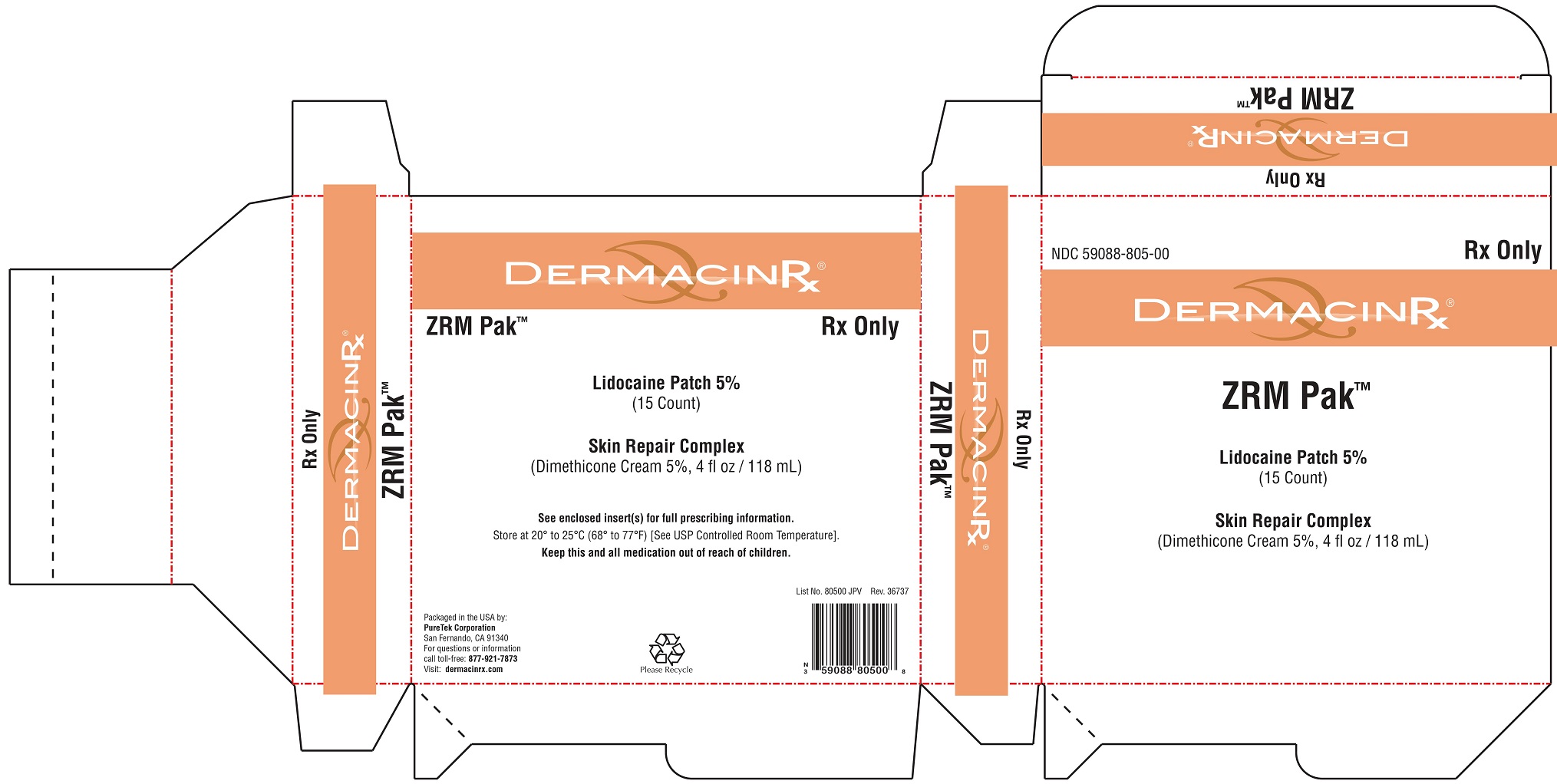
PRINCIPAL DISPLAY PANEL NDC 59088-805-00 DermacinRx ® ZRM Pak™ [Lidocaine Patch 5% and Skin Repair Complex (Dimethicone Cream 5%)] Rx only Packaged in the USA by: PureTek Corporation, San Fernando, CA 91340 USA For question or information, call toll-free: 877-921-7873 Vist: dermacinrx.com image description
Reported adverse events (FAERS)
Top reported reactions
Age at onset
Reporter sex
Serious outcomes
Where does this data come from?
About this NDC listing & data coverage
What data is (and isn’t) available for this NDC — tap to expand
| NDC identity (package / product / labeler codes) | ✓ Available |
| Labeler | ✓ Available |
| Product & package description | ✓ Available |
| Marketing category & status | ✓ Available |
| Active ingredient / dosage form / route | ✓ Available |
| FDA label (SPL via DailyMed) | ✓ Available |
| Package photos | ✓ Available |
| Inactive ingredients (structured) | ✓ Available |
| NADAC pharmacy acquisition price (CMS) | — Not published for this NDC CMS publishes NADAC only for NDCs reported in its retail-pharmacy survey. |
| Orange Book / therapeutic-equivalence data | — Not published for this NDC Applies only to products approved under an NDA/ANDA; many listings are out of scope. |
| HCPCS J-code billing crosswalk | — Not published for this NDC Most self-administered / retail products have no J-code — that is normal. |
| Medicaid utilization (CMS SDUD) | — Not published for this NDC CMS reports utilization only for NDCs with Medicaid claims above its privacy threshold. |