
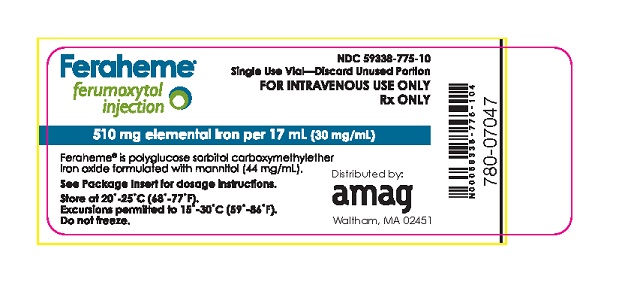
Feraheme ferumoxytol 510 mg/17mL Injection — NDC 59338-775-01 (Billing 59338-0775-01)
This is a package of Feraheme ferumoxytol 510 mg/17mL Injection from AMAG Pharmaceuticals, Inc, marketed since Jul 2009 and currently FDA-listed. It is the main listing for this product, which comes in 2 package sizes.
NDC database record
One package, one record: these facts belong to NDC 59338-775-01 alone.
- Record
- FDA NDC Directory package listing · Human prescription drug
- Code segments
- 59338 labeler · 775 product · 01 package
- Package marketed since
- Jul 13, 2009
- Sample package
- No — commercial package
- Listing certified through
- Dec 31, 2027
- Barcode (UPC-A, from the NDC)
- 3 5933877501 3
- Medicaid fills, this package
- 25,484 prescriptions in the last four reported quarters
- FDA record last changed
- Jul 24, 2026
Identity & classification
Regulatory identifiers FDA, NLM and CMS codes for this package
Drug-database identifiers Medi-Span GPI and First Databank GCN / HICL / AHFS classification
- GSN (GCN sequence number): 065348
- GCN: 26275
- GPI-14 (Medi-Span): 82300068002020
- HICL (First Databank): 036439
- AHFS class code: 20:04.04.00
- RxCUI (RxNorm): 860605
Where does this data come from?
- FDA openFDA NDC Directory · synced Oct 8, 2026
- FDA label on DailyMed · label index refreshed Oct 6, 2026
- RxNorm (NLM RxNav) · catalog refreshed Oct 1, 2026
- Medi-Span GPI (licensed)
- First Databank (licensed) · refreshed Oct 8, 2026
RxNorm drug class
This medicine belongs to the Parenteral Iron Replacement class.
Where does this data come from?
- RxClass (NLM) · catalog refreshed Oct 1, 2026
Clinical
Ferumoxytol injection is used to treat iron-deficiency anemia (a lower than normal number of red blood cells due to too little iron) in adults with chronic kidney disease (damage to the kidneys which may worsen over time and may cause the kidneys to stop working). Ferumoxytol injection is used to treat iron-deficiency anemia in people who did not respond or are unable to tolerate taking iron preparations by mouth. Ferumoxytol injection is in a class of medications called iron replacement products. It works by replenishing iron stores so that the body can make more red blood cells.
Read the full MedlinePlus article ↗- Ferumoxytol treats iron deficiency anemia in adults who cannot tolerate oral iron or did not respond to it, and in adults with chronic kidney disease. The FeraBright product is dif...
- It is given through a vein as an infusion that lasts at least 15 minutes. You will be watched for at least 30 minutes afterward. Staff will check your blood pressure and pulse.
- Some people get diarrhea, headache, nausea, dizziness, constipation, or swelling in the legs or hands. Low blood pressure can also happen. Most of these are manageable.
- Severe allergic reactions are the main concern. Tell staff right away if you have trouble breathing, wheezing, hives, swelling, chest pain, or feel faint. These reactions usually h...
Patient education
Supplement & herbal interactions
Where does this data come from?
- MedlinePlus (NLM) · refreshed Oct 1, 2026
- FDA label on DailyMed · label index refreshed Oct 6, 2026
Ask a licensed pharmacist directly — free, answered by our team.
Pricing
A drug doesn't have one price. Each row is a different public payment system, and none is what you'd pay at the counter — that depends on your insurance. The ⓘ on each row explains what it measures.
| Price system | Per each | Per package |
|---|---|---|
| Retail pharmacies payNADAC · weekly | Not in the retail survey — common for institutional, discontinued, or low-volume packs. | |
| Medicaid paysCMS SDUD · 12 mo | $16.58 | $16.58 / 1 vial |
| Medicare drug plans payPart D · quarterly | No Part D plan price is available for this NDC in our data. | |
| Medicare Part B allowsASP · Q0138 | $0.370 / Q0138 unit | — |
Where does this data come from?
- CMS NADAC weekly file
- CMS ASP pricing files · refreshed Sep 20, 2026
- CMS Medicaid State Drug Utilization Data · through Q1 2026
- CMS Part D plan pricing files · refreshed Sep 24, 2026
- VA National Acquisition Center price file
Billing & reimbursement
Where does this data come from?
- CMS ASP NDC-HCPCS crosswalk · refreshed Sep 22, 2026
- DMEPDAC NDC-HCPCS crosswalk
- openFDA NSDE billing units · refreshed Oct 7, 2026
Packaging — all sizes for this product
| Package NDC | Description | Marketing start | Marketing end | Status |
|---|---|---|---|---|
| 59338-0775-01 You're viewing this Main listing | 1 VIAL, SINGLE-USE in 1 CARTON / 17 mL in 1 VIAL, SINGLE-USE | 2009-07-13 | — | Active |
| 59338-0775-10 59338-775-10 | 10 VIAL, SINGLE-USE in 1 CARTON / 17 mL in 1 VIAL, SINGLE-USE | 2009-07-13 | — | Active |
In Medicaid, this is the most-dispensed pack of this product — about 100% of fills over the last four reported quarters. See all packs ↓
Pack size FAQ
What quantity is in this package?
What NDC number is used to bill for this package of Feraheme ferumoxytol 510 mg/17mL Injection?
Therapeutic equivalents
| Product | Labeler | Pack | NADAC/unit | TE | Status | Price vs. this |
|---|---|---|---|---|---|---|
| Ferumoxytol 510 mg/17mL 00781-3154-01 | Sandoz | 1 vial | — | AB | FDA listed | — |
| Feraheme 510 mg/17mLthis 59338-0775-01 | AMAG | 1 vial | — | AB | FDA listed | — |
Where does this data come from?
- FDA openFDA NDC Directory · synced Oct 8, 2026
- FDA Orange Book · refreshed Oct 3, 2026
- CMS NADAC weekly file
Availability & generic status
The FDA lists approved generic versions of this medicine, but that does not always mean a pharmacy can get one today. Patent rules, launch agreements, supply and pricing can affect when generics actually arrive.
Where does this data come from?
- FDA Orange Book · refreshed Oct 3, 2026
Inactive Ingredients / Excipients
Inactive ingredients, also called excipients, are components of the drug product other than the active ingredient. They may include fillers, dyes, coatings, preservatives, flavors, or other formulation ingredients.
🧪 Avoiding an ingredient? See Ferumoxytol Injection inactive ingredients by manufacturer: every current product's list side by side, so you can ask your pharmacy for the version that does not list it.
💡 Tap an ingredient (hover on desktop) to see what it is and why it’s used.
-
748 mg / 17 mL
UNII 3OWL53L36A
A natural sugar alcohol derived from seaweed or synthesized in the lab. It's used as a filler to add bulk, a sweetener in sugar-free formulas, and a disintegrant to help tablets break apart in the stomach.
1 inactive ingredient listed in the exact product block matched to this NDC.
Where does this data come from?
ingredient classCode="IACT" elements from the exact product block matched by this NDC. Label-section narrative from DailyMed / the openFDA label index is shown separately when available.- FDA label on DailyMed · label index refreshed Oct 6, 2026
- FDA openFDA NDC Directory · synced Oct 8, 2026
Inactive ingredient FAQ
Are inactive ingredients the same for every manufacturer?
Why might an inactive ingredient be missing?
Can inactive ingredients matter?
Manufacturer & labeler
Where does this data come from?
- FDA openFDA NDC Directory · synced Oct 8, 2026
- Drugs@FDA
Full prescribing information FDA SPL
🚨 Boxed Warning ▾
WARNING: RISK FOR SERIOUS HYPERSENSITIVITY/ANAPHYLAXIS REACTIONS Fatal and serious hypersensitivity reactions including anaphylaxis have occurred in patients receiving Feraheme. Initial symptoms may include hypotension, syncope, unresponsiveness, cardiac/cardiorespiratory arrest. • Only administer Feraheme as an intravenous infusion over at least 15 minutes and only when personnel and therapies are immediately available for the treatment of anaphylaxis and other hypersensitivity reactions [see Warnings and Precautions ( 5.1 )] . • Observe for signs or symptoms of hypersensitivity reactions during and for at least 30 minutes following Feraheme infusion including monitoring of blood pressure and pulse during and after Feraheme administration [see Warnings and Precautions ( 5.1 )]. • Hypersensitivity reactions have occurred in patients in whom a previous Feraheme dose was tolerated [see Warnings and Precautions ( 5.1 )].
WARNING: RISK FOR SERIOUS HYPERSENSITIVITY/ANAPHYLAXIS REACTIONS See full prescribing information for complete boxed warning. Fatal and serious hypersensitivity reactions including anaphylaxis have occurred in patients receiving Feraheme. Initial symptoms may include hypotension, syncope, unresponsiveness, cardiac/cardiorespiratory arrest. • Only administer Feraheme as an intravenous infusion over at least 15 minutes and only when personnel and therapies are immediately available for the treatment of anaphylaxis and other hypersensitivity reactions.
( 5.1 ) • Observe for signs or symptoms of hypersensitivity reactions during and for at least 30 minutes following Feraheme infusion including monitoring of blood pressure and pulse during and after Feraheme administration. ( 5.1 ) • Hypersensitivity reactions have occurred in patients in whom a previous Feraheme dose was tolerated. ( 5.1 )
🎯 Indications and Usage ▾
1 INDICATIONS AND USAGE Feraheme is indicated for the treatment of iron deficiency anemia (IDA) in adult patients: • who have intolerance to oral iron or have had unsatisfactory response to oral iron or • who have chronic kidney disease (CKD). Feraheme is an iron replacement product indicated for the treatment of iron deficiency anemia (IDA) in adult patients: • who have intolerance to oral iron or have had unsatisfactory response to oral iron ( 1 ) or • who have chronic kidney disease (CKD). ( 1 )
⏱️ Dosage and Administration ▾
2 DOSAGE AND ADMINISTRATION The recommended dose of Feraheme is an initial 510 mg dose followed by a second 510 mg dose 3 to 8 days later. Administer Feraheme as an intravenous infusion in 50-200 mL 0.9% Sodium Chloride Injection, USP or 5% Dextrose Injection, USP over at least 15 minutes. Take measures to avoid extravasation, as this can lead to skin discoloration or staining, which may be long lasting.
If extravasation occurs, discontinue Feraheme administration at that site. Administer while the patient is in a reclined or semi-reclined position. Feraheme does not contain antimicrobial preservatives.
Discard unused portion. Feraheme, when added to intravenous infusion bags containing either 0.9% Sodium Chloride Injection, USP (normal saline), or 5% Dextrose Injection, USP, at concentrations of 2-8 mg elemental iron per mL, should be used immediately but may be stored at controlled room temperature (25°C ± 2°C) for up to 4 hours or refrigerated (2-8° C) for up to 48 hours. The dosage is expressed in terms of mg of elemental iron, with each mL of Feraheme containing 30 mg of elemental iron.
Evaluate the hematologic response (hemoglobin, ferritin, iron and transferrin saturation) at least one month following the second Feraheme infusion. The recommended Feraheme dose may be readministered to patients with persistent or recurrent iron deficiency anemia. For patients receiving hemodialysis, administer Feraheme once the blood pressure is stable and the patient has completed at least one hour of hemodialysis.
Monitor for signs and symptoms of hypotension following each Feraheme infusion. Allow at least 30 minutes between administration of Feraheme and administration of other medications that could potentially cause serious hypersensitivity reactions and/or hypotension, such as chemotherapeutic agents or monoclonal antibodies. Inspect parenteral drug products visually for the absence of particulate matter and discoloration prior to administration. • The recommended dose of Feraheme is an initial 510 mg dose followed by a second 510 mg dose 3 to 8 days later.
( 2 ) • Administer Feraheme as an intravenous infusion in 50-200 mL 0.9% Sodium Chloride Injection, USP or 5% Dextrose Injection, USP over at least 15 minutes. ( 2 )
💊 Dosage Forms and Strengths ▾
3 DOSAGE FORMS AND STRENGTHS Feraheme Injection is available in single-dose vials. Each vial contains 510 mg of elemental iron in 17 mL (30 mg per mL). Injection: 510 mg iron per 17 mL (30 mg per mL) in single-dose vials. ( 3 )
⛔ Contraindications ▾
4 CONTRAINDICATIONS Feraheme is contraindicated in patients with: • Known hypersensitivity to Feraheme or any of its components [see Warnings and Precautions ( 5.1 )] • History of allergic reaction to any intravenous iron product [see Warnings and Precautions ( 5.1 )] • Known hypersensitivity to Feraheme or any of its components. ( 4 ) • History of allergic reaction to any intravenous iron product. ( 4 )
⚠️ Warnings and Cautions ▾
5 WARNINGS AND PRECAUTIONS • Greater risk of anaphylaxis in patients with multiple drug allergies. ( 5.1 ) • Hypotension: Feraheme may cause hypotension. Monitor for signs and symptoms of hypotension following each administration of Feraheme.
( 5.2 ) • Iron Overload: Regularly monitor hematologic responses during Feraheme therapy. Do not administer Feraheme to patients with iron overload. ( 5.3 ) • Magnetic Resonance Imaging Test Interference: Feraheme can alter magnetic resonance imaging (MRI) studies.
( 5.4 )
5.1Serious Hypersensitivity Reactions Fatal and serious hypersensitivity reactions including anaphylaxis, presenting with cardiac/ cardiorespiratory arrest, clinically significant hypotension, syncope, or unresponsiveness have occurred in patients receiving Feraheme. Other adverse reactions potentially associated with hypersensitivity have occurred (pruritus, rash, urticaria, and wheezing). These reactions have occurred following the first dose or subsequent doses in patients in whom a previous Feraheme dose was tolerated.
Patients with a history of multiple drug allergies may have a greater risk of anaphylaxis with parenteral iron products. Carefully consider the potential risks and benefits before administering Feraheme to these patients. Only administer Feraheme as an intravenous infusion over at least 15 minutes and only when personnel and therapies are immediately available for the treatment of anaphylaxis and other hypersensitivity reactions.
Closely observe patients for signs and symptoms of hypersensitivity including monitoring of blood pressure and pulse during and after Feraheme administration for at least 30 minutes and until clinically stable following completion of each infusion [see Adverse Reactions ( 6.2 )]. In a clinical study in patients with IDA, regardless of etiology, hypersensitivity reactions were reported in 0.4% (4/997) of subjects receiving Feraheme administered as intravenous infusion over at least 15 minutes. These included one patient with severe hypersensitivity reaction and three patients with moderate hypersensitivity reactions.
In clinical studies predominantly in patients with IDA and CKD, serious hypersensitivity reactions were reported in 0.2% (4/1,806) of subjects receiving Feraheme (administered as a rapid intravenous injection – prior method of administration no longer approved). Other adverse reactions potentially associated with hypersensitivity (e.g., pruritus, rash, urticaria or wheezing) were reported in 3.5% (63/1,806) of these subjects. In the post-marketing experience, fatal and serious anaphylactic type reactions presenting with cardiac/ cardiorespiratory arrest, clinically significant hypotension, syncope, and unresponsiveness have been reported.
Elderly patients with multiple or serious co-morbidities who experience hypersensitivity reactions and/or hypotension following administration of Feraheme may have more severe outcomes [see Boxed Warning , Adverse Reactions ( 6.2 ) and Use in Specific Populations ( 8.5 )].
5.2Hypotension Feraheme may cause clinically significant hypotension. In a clinical study with Feraheme in patients with IDA, regardless of etiology, moderate hypotension was reported in 0.2% (2/997) of subjects receiving Feraheme administered as intravenous infusion over at least 15 minutes. In clinical studies in patients with IDA and CKD, hypotension was reported in 1.9% (35/1,806) of subjects, including three patients with serious hypotensive reactions, who had received Feraheme as a rapid intravenous injection (prior method of administration no longer approved).
Hypotension has also been reported in the post-marketing experience [see Adverse Reactions ( 6.2 )] . Monitor patients for signs and symptoms of hypotension following each Feraheme administration [see Dosage and Administration ( 2 ) and Warnings and Precautions ( 5.1 )] .
5.3Iron Overload Excessive therapy with parenteral iron can lead to excess storage of iron with the possibility of iatrogenic… [Excerpted — this section continues on DailyMed.]
🤒 Adverse Reactions ▾
6 ADVERSE REACTIONS The following clinically significant adverse reactions are described elsewhere in the labeling: • Serious Hypersensitivity Reactions [see Warnings and Precautions ( 5.1 )] • Hypotension [see Warnings and Precautions ( 5.2 )] • Iron Overload [see Warnings and Precautions ( 5.3 )] • Magnetic Resonance (MR) Imaging Test Interference [see Warnings and Precautions ( 5.4 )] The most common adverse reactions (≥ 2%) are diarrhea, headache, nausea, dizziness, hypotension, constipation, and peripheral edema.
( 6.1 ) To report SUSPECTED ADVERSE REACTIONS with Feraheme, contact AMAG Pharmaceuticals, Inc. at 1-877-411-2510, or FDA at 1-800-FDA-1088 or www.fda.gov/medwatch.
6.1Clinical Trials Experience Because clinical trials are conducted under widely varying conditions, adverse reaction rates observed in the clinical trials of a drug cannot be directly compared to rates in the clinical trials of another drug and may not reflect the rates observed in practice. In clinical studies, 3,968 subjects were exposed to Feraheme. Of these subjects 31% were male and the median age was 54 years (range of 18 to 96 years).
The data described below reflect exposure to Feraheme in 997 patients exposed to a 1.02 g course of ferumoxytol administered as two 510 mg intravenous (IV) doses: 992 subjects (99.5%) received at least 1 complete dose of ferumoxytol and 946 subjects (94.9%) received 2 complete doses. The mean cumulative IV Iron exposure was 993.80 ±119.085 mg. The safety of Feraheme was studied in a randomized, multicenter, double-blind clinical trial in patients with IDA (IDA Trial 3), [see Clinical Studies ( 14.1 )] .
In this trial, patients were randomized to two intravenous infusions of 510 mg (1.02 g) of Feraheme (n=997), or two intravenous infusions of 750 mg (1.500 g) of ferric carboxymaltose (FCM) (n=1000). Both intravenous irons were infused over a period of at least 15 minutes. Most patients received their second infusion of Feraheme and FCM 7(+1) days after Dose 1.
The mean (SD) age of the study population (N=1997) was 55.2 (17.16) years. The majority of patients were female (76.1%), white (71.4%) and non-Hispanic (81.8%). The mean (SD) hemoglobin at baseline for all patients was 10.4 (1.5) g/dl.
Serious adverse events were reported in 3.6% (71/1997) of ferumoxytol- and FCM- treated patients. The most common (≥2 subjects) serious AEs reported in Feraheme-treated patients were syncope, gastroenteritis, seizure, pneumonia, hemorrhagic anemia, and acute kidney injury. In FCM-treated patients the most common (≥2 subjects) serious AEs were syncope, cardiac failure congestive, angina pectoris, and atrial fibrillation.
Adverse reactions related to Feraheme and reported by ≥ 1% of Feraheme-treated patients in IDA Trial 3 are listed in Table 1. Table 1: Adverse Reactions to Feraheme Reported in ≥1% of IDA Patients in IDA Trial 3 Adverse Reactions Feraheme 2 x 510 mg (N = 997) % Ferric Carboxymaltose 2 x 750 mg (N = 1000) % Headache 3.4
3.1Nausea 1.8
3.4Dizziness 1.5
1.6Fatigue 1.5
1.2 Diarrhea 1
0.8 Back Pain 1
0.4In IDA Trial 3, adverse reactions leading to treatment discontinuation and occurring in ≥ 2 Feraheme-treated patients included arthralgia (0.3%), dyspnea (0.3%), flushing (0.2%), chest discomfort (0.2%), chest pain (0.2%), nausea (0.2%), back pain (0.2%), dizziness (0.2%) and headache (0.2%). Across two clinical trials in patients with IDA (IDA Trial 1 and 2), [see Clinical Studies ( 14.1 )] , patients were randomized to: two injections (rapid intravenous injection - prior method of administration no longer approved) of 510 mg of Feraheme (n=1,014), placebo (n=200), or five injections/infusions of 200 mg of iron sucrose (n=199).
Most patients received their second Feraheme injection 3 to 8 days after the first injection. Adverse reactions related to Feraheme and reported by ≥ 1% of Feraheme-treated patients in these trials were similar to those seen in Trial 3. In Trials 1 and 2, adverse reactions leading to trea… [Excerpted — this section continues on DailyMed.]
🔄 Drug Interactions ▾
7 DRUG INTERACTIONS Drug-drug interaction studies with Feraheme were not conducted. Feraheme may reduce the absorption of concomitantly administered oral iron preparations.
👥 Use in Specific Populations ▾
8 USE IN SPECIFIC POPULATIONS
8.1Pregnancy Risk Summary Limited available data with ferumoxytol use in pregnant women are insufficient to inform a drug associated risk of adverse developmental outcomes. There are risks to the mother and fetus associated with untreated iron deficiency anemia (IDA) in pregnancy as well as risks to the fetus associated with maternal severe hypersensitivity reactions ( see Clinical Considerations ). In animal studies, administration of ferumoxytol to pregnant rabbits during organogenesis caused adverse developmental outcomes including fetal malformations and decreased fetal weights at maternally toxic doses of 6 times the estimated human daily dose.
The estimated background risk of major birth defects and miscarriage for the indicated populations is unknown. All pregnancies have a background risk of birth defect, loss, or other adverse outcomes. In the U.S. general population, the estimated background risk of major birth defect and miscarriage in clinically recognized pregnancies is 2-4% and 15-20%, respectively.
Clinical Considerations Disease-associated maternal and/or embryo/fetal risk Untreated iron deficiency anemia (IDA) in pregnancy is associated with adverse maternal outcomes such as post-partum anemia. Adverse pregnancy outcomes associated with IDA include increased risk for preterm delivery and low birth weight. Fetal/Neonatal adverse reactions Severe adverse reactions including circulatory failure (severe hypotension, shock including in the context of anaphylactic reaction) may occur in pregnant women with parenteral iron products (such as Feraheme) which may cause fetal bradycardia, especially during the second and third trimester.
Data Animal Data Administration of ferumoxytol during organogenesis, at doses of 31.6 mg Fe/kg/day in rats and 16.5 mg Fe/kg/day in rabbits, did not result in maternal or fetal effects. These doses are approximately 2 times the estimated human daily dose based on body surface area. In rats, administration of ferumoxytol during organogenesis at a maternally toxic dose of 100 mg Fe/kg/day, approximately 6 times the estimated human daily dose based on body surface area, caused a decrease in fetal weights.
In rabbits, administration of ferumoxytol during organogenesis at a maternally toxic dose of 45 mg Fe/kg/day, approximately 6 times the estimated human daily dose based on body surface area, was associated with external and soft tissue fetal malformations and decreased fetal weights.
8.2Lactation Risk Summary There are no data on the presence of ferumoxytol in human milk, the effects on the breastfed child, or the effects on milk production. Ferumoxytol has been detected in the milk of lactating rats. However, due to species-specific differences in lactation physiology, the clinical relevance of these data are not clear.
The developmental and health benefits of breastfeeding should be considered along with the mother’s clinical need for Feraheme and any potential adverse effects on the breastfed child from Feraheme or from the underlying maternal condition.
8.4Pediatric Use The safety and effectiveness of Feraheme in pediatric patients (less than 18 years old) have not been established.
8.5Geriatric Use In controlled clinical trials, 833 patients ≥ 65 years of age were treated with Feraheme. No overall differences in safety and efficacy were observed between older and younger patients in these trials, but greater sensitivity of older individuals cannot be ruled out. In general, dose administration to an elderly patient should be cautious, reflecting the greater frequency of decreased hepatic, renal, or cardiac function, and of concomitant disease or other drug therapy.
Elderly patients with multiple or serious co-morbidities who experience hypersensitivity reactions and/or hypotension following administration of Feraheme may have more severe outcomes. The potential risks and benefits of Feraheme administration should be carefully considered in these patien… [Excerpted — this section continues on DailyMed.]
🤰 Pregnancy ▾
8.1Pregnancy Risk Summary Limited available data with ferumoxytol use in pregnant women are insufficient to inform a drug associated risk of adverse developmental outcomes. There are risks to the mother and fetus associated with untreated iron deficiency anemia (IDA) in pregnancy as well as risks to the fetus associated with maternal severe hypersensitivity reactions ( see Clinical Considerations ). In animal studies, administration of ferumoxytol to pregnant rabbits during organogenesis caused adverse developmental outcomes including fetal malformations and decreased fetal weights at maternally toxic doses of 6 times the estimated human daily dose.
The estimated background risk of major birth defects and miscarriage for the indicated populations is unknown. All pregnancies have a background risk of birth defect, loss, or other adverse outcomes. In the U.S. general population, the estimated background risk of major birth defect and miscarriage in clinically recognized pregnancies is 2-4% and 15-20%, respectively.
Clinical Considerations Disease-associated maternal and/or embryo/fetal risk Untreated iron deficiency anemia (IDA) in pregnancy is associated with adverse maternal outcomes such as post-partum anemia. Adverse pregnancy outcomes associated with IDA include increased risk for preterm delivery and low birth weight. Fetal/Neonatal adverse reactions Severe adverse reactions including circulatory failure (severe hypotension, shock including in the context of anaphylactic reaction) may occur in pregnant women with parenteral iron products (such as Feraheme) which may cause fetal bradycardia, especially during the second and third trimester.
Data Animal Data Administration of ferumoxytol during organogenesis, at doses of 31.6 mg Fe/kg/day in rats and 16.5 mg Fe/kg/day in rabbits, did not result in maternal or fetal effects. These doses are approximately 2 times the estimated human daily dose based on body surface area. In rats, administration of ferumoxytol during organogenesis at a maternally toxic dose of 100 mg Fe/kg/day, approximately 6 times the estimated human daily dose based on body surface area, caused a decrease in fetal weights.
In rabbits, administration of ferumoxytol during organogenesis at a maternally toxic dose of 45 mg Fe/kg/day, approximately 6 times the estimated human daily dose based on body surface area, was associated with external and soft tissue fetal malformations and decreased fetal weights.
🧒 Pediatric Use ▾
8.4Pediatric Use The safety and effectiveness of Feraheme in pediatric patients (less than 18 years old) have not been established.
🧓 Geriatric Use ▾
8.5Geriatric Use In controlled clinical trials, 833 patients ≥ 65 years of age were treated with Feraheme. No overall differences in safety and efficacy were observed between older and younger patients in these trials, but greater sensitivity of older individuals cannot be ruled out. In general, dose administration to an elderly patient should be cautious, reflecting the greater frequency of decreased hepatic, renal, or cardiac function, and of concomitant disease or other drug therapy.
Elderly patients with multiple or serious co-morbidities who experience hypersensitivity reactions and/or hypotension following administration of Feraheme may have more severe outcomes. The potential risks and benefits of Feraheme administration should be carefully considered in these patients [see Dosage and Administration ( 2 ), Warnings and Precautions ( 5.1 ), and Clinical Studies ( 14 )] .
🆘 Overdosage ▾
10 OVERDOSAGE Limited data are available regarding overdosage of Feraheme in humans. Excessive dosages of Feraheme may lead to accumulation of iron in storage sites potentially leading to hemosiderosis. Do not administer Feraheme to patients with iron overload [Warnings and Precautions ( 5.3 )].
Feraheme is not removed by hemodialysis. Consider contacting the Poison Help line (1-800-222-1222) or a medical toxicologist for additional overdose management recommendations.
🧬 Clinical Pharmacology ▾
12 CLINICAL PHARMACOLOGY
12.1Mechanism of Action Feraheme consists of a superparamagnetic iron oxide that is coated with a carbohydrate shell, which helps to isolate the bioactive iron from plasma components until the iron-carbohydrate complex enters the reticuloendothelial system macrophages of the liver, spleen and bone marrow. The iron is released from the iron-carbohydrate complex within vesicles in the macrophages. Iron then either enters the intracellular storage iron pool (e.g., ferritin) or is transferred to plasma transferrin for transport to erythroid precursor cells for incorporation into hemoglobin.
12.2Pharmacodynamics Cardiac Electrophysiology In a randomized, positive- and placebo-controlled, parallel-group study, healthy subjects received a supratherapeutic regimen of Feraheme (1.02 g given as two 510 mg doses within 24 hours), placebo or a single dose of 400 mg moxifloxacin (positive control). Results demonstrated no effect of Feraheme on QT interval durations. No clinically meaningful effect of Feraheme on heart rate was observed.
12.3Pharmacokinetics The pharmacokinetic (PK) behavior of Feraheme has been examined in healthy subjects and in patients with CKD stage 5D on hemodialysis. Feraheme exhibited dose-dependent, capacity-limited elimination from plasma with a half-life of approximately 15 hours in humans. The clearance (CL) was decreased by increasing the dose of Feraheme.
Volume of distribution (Vd) was consistent with plasma volume, and the mean maximum observed plasma concentration (C max ) and terminal half-life (t 1/2 ) values increased with dose. The estimated values of CL and Vd following two 510 mg doses of Feraheme administered intravenously within 24 hours were 69.1 mL/hr and
3.16L, respectively. The C max and time of maximum concentration (t max ) were 206 mcg/mL and 0.32 hr, respectively. Rate of infusion had no influence on Feraheme PK parameters. No gender differences in Feraheme PK parameters were observed. Feraheme is not removed by hemodialysis.
🧬 Mechanism of Action ▾
12.1Mechanism of Action Feraheme consists of a superparamagnetic iron oxide that is coated with a carbohydrate shell, which helps to isolate the bioactive iron from plasma components until the iron-carbohydrate complex enters the reticuloendothelial system macrophages of the liver, spleen and bone marrow. The iron is released from the iron-carbohydrate complex within vesicles in the macrophages. Iron then either enters the intracellular storage iron pool (e.g., ferritin) or is transferred to plasma transferrin for transport to erythroid precursor cells for incorporation into hemoglobin.
📦 How Supplied / Storage and Handling ▾
16.1How Supplied Feraheme is available in single-dose vials in the following package sizes (Table 6). Table 6: Feraheme Packaging Description NDC Code Dose / Total volume per vial Vials / Carton NDC 59338-775-01 510 mg/ 17 mL 1 NDC 59338-775-10 510 mg/ 17 mL 10
📦 Storage and Handling ▾
16 HOW SUPPLIED/STORAGE AND HANDLING
16.1How Supplied Feraheme is available in single-dose vials in the following package sizes (Table 6). Table 6: Feraheme Packaging Description NDC Code Dose / Total volume per vial Vials / Carton NDC 59338-775-01 510 mg/ 17 mL 1 NDC 59338-775-10 510 mg/ 17 mL 10
16.2Stability and Storage Store at 20° to 25°C (68° to 77°F). Excursions permitted to 15° to 30°C (59° to 86°F) [see USP controlled room temperature].
📋 Description ▾
11 DESCRIPTION Feraheme is an iron replacement product containing ferumoxytol for intravenous infusion. Ferumoxytol is a non-stoichiometric magnetite (superparamagnetic iron oxide) coated with polyglucose sorbitol carboxymethylether. The overall colloidal particle size is 17-31 nm in diameter.
The chemical formula of Feraheme is Fe 5874 O 8752 -C 11719 H 18682 O 9933 Na 414 with an apparent molecular weight of 750 kDa. Feraheme Injection is a sterile aqueous colloidal product that is formulated with mannitol. It is a black to reddish brown liquid, and is provided in single-dose vials containing 510 mg of elemental iron.
Each mL of the sterile colloidal solution of Feraheme Injection contains 30 mg of elemental iron, 30 mg polyglucose sorbitol carboxymethylether, and 44 mg of mannitol. The formulation is isotonic with an osmolality of 270-330 mOsm/kg. The product contains no preservatives, and has a pH of 6 to 8.
💬 Information for Patients ▾
17 PATIENT COUNSELING INFORMATION Advise the patient to read the FDA-approved patient labeling ( Patient Information ) Prior History of Allergies to Parenteral Iron Products Question patients regarding any prior history of allergies to parenteral iron products [see Warnings and Precautions ( 5.1 )]. Hypersensitivity Reactions Advise patients to immediately report any symptoms of hypersensitivity that may develop during and following Feraheme administration, such as rash, itching, dizziness, light-headedness, swelling, and breathing problems [see Warnings and Precautions ( 5.1 )].
U.S Patents: 6,599,498 B1; 7,553,479 B2; 7,871,597 B2; 8,501,158 B2; 8,591,864 B2; 8,926,947 B2 Distributed by: AMAG Pharmaceuticals, Inc. Waltham, MA 02451
🧬 Pharmacokinetics ▾
12.3Pharmacokinetics The pharmacokinetic (PK) behavior of Feraheme has been examined in healthy subjects and in patients with CKD stage 5D on hemodialysis. Feraheme exhibited dose-dependent, capacity-limited elimination from plasma with a half-life of approximately 15 hours in humans. The clearance (CL) was decreased by increasing the dose of Feraheme.
Volume of distribution (Vd) was consistent with plasma volume, and the mean maximum observed plasma concentration (C max ) and terminal half-life (t 1/2 ) values increased with dose. The estimated values of CL and Vd following two 510 mg doses of Feraheme administered intravenously within 24 hours were 69.1 mL/hr and
3.16L, respectively. The C max and time of maximum concentration (t max ) were 206 mcg/mL and 0.32 hr, respectively. Rate of infusion had no influence on Feraheme PK parameters. No gender differences in Feraheme PK parameters were observed. Feraheme is not removed by hemodialysis.
🧬 Pharmacodynamics ▾
12.2Pharmacodynamics Cardiac Electrophysiology In a randomized, positive- and placebo-controlled, parallel-group study, healthy subjects received a supratherapeutic regimen of Feraheme (1.02 g given as two 510 mg doses within 24 hours), placebo or a single dose of 400 mg moxifloxacin (positive control). Results demonstrated no effect of Feraheme on QT interval durations. No clinically meaningful effect of Feraheme on heart rate was observed.
🔬 Clinical Studies ▾
14 CLINICAL STUDIES
14.1Iron Deficiency Anemia in Patients Who Are Intolerant to Oral Iron or Have Had Unsatisfactory Response to Oral Iron IDA-301 Trial (referred to as IDA Trial 1) (NCT 01114139), IDA-302 Trial (referred to as IDA Trial 2) (NCT 01114204) and IDA-304 Trial (referred to as IDA Trial 3) (NCT 02694978). The safety and efficacy of Feraheme in patients with iron deficiency anemia, regardless of etiology and a history of unsatisfactory oral iron therapy or in whom oral iron could not be used, were assessed in two randomized, controlled clinical trials (IDA Trial 1 and 2) with Feraheme administered as a rapid intravenous injection (prior method of administration no longer approved).
In IDA Trial 1, patients were randomized to treatment with Feraheme or placebo. In IDA Trial 2, patients were randomized to treatment with Feraheme or iron sucrose. Feraheme (510 mg) and placebo were administered as two intravenous single dose injections over 3-8 days, and iron sucrose (200 mg) was administered as 5 intravenous injections or infusions over a period of 14 days.
In IDA Trial 1, the mean age of patients was 45 years (range, 18 to 91); 89% were female; 56% were Caucasian, 25% were Black, 16% were Asian, and 3% were other races. In IDA Trial 2, the mean age of patients was 48 years (range, 18 to 89); 83% were female; 84% were Caucasian, 11% were Asian, 1% were Black, and 4% were other races. Table 3 shows changes from baseline to Week 5 in hemoglobin and transferrin saturation in IDA Trial 1 and 2.
Table 3: Changes from Baseline to Week 5 in Hemoglobin (Hgb) and Transferrin Saturation in IDA Trial 1 and 2 (Intent to Treat Population) ENDPOINT IDA Trial 1 IDA Trial 2 Feraheme N = 608 Placebo N = 200 Feraheme N = 406 Iron Sucrose N = 199 Baseline Hgb mean (SD), g/dL 8.9 (0.9) 8.8 (0.9) 8.9 (0.9) 8.8 (1.0) Proportion of patients with Hgb Increase of ≥2.0 g/dL at any time from Baseline to Week 5, % 81.1 5.5 84.0
81.4Treatment Difference (%, 95% CI) 75.6 * (71.2, 80.0) 2.6 (-3.9, 9.1) Mean change in Hgb from Baseline to Week 5 mean (SD), g/dL 2.6 (1.5) 0.1 (0.9) 2.9 (1.6) 2.7 (1.3) Proportion of patients with Hgb ≥12 g/dL at any time from Baseline to Week 5, % 50.5 3.0 66.7
48.2Baseline TSAT mean (SD) , % 7.0 (12.9) 5.4 (4.9) 6.1 (9.9) 5.5 (10.3) Mean change in TSAT from Baseline to Week 5 mean (SD), % 11.4 (15.1) 0.4 (5.8) 15.7 (16.8) 11.9 (14.4) * p≤0.001 for main efficacy endpoint In IDA Trial 1, fatigue-related symptoms and impacts were assessed using a patient reported outcome instrument, FACIT-Fatigue (score range from 0 to 52 with higher scores indicating less fatigue). After 5 weeks, Feraheme-treated patients reported greater improvement from baseline in the fatigue score (+11.7 ± 11.73 points) than did patients in the placebo arm (+6.8 ± 9.51 points) with a treatment difference of 4.9 (95% CI: 3.08-6.71) points.
The safety of Feraheme in IDA patients with a history of unsatisfactory oral iron therapy or in whom oral iron could not be used was also assessed in another randomized, multicenter, double-blind safety clinical trial (IDA Trial 3). Patients were randomized in a 1:1 ratio to either two infusions of 510 mg (1.020 g) of Feraheme (n=997) or two infusions of 750 mg (1.500 g) of ferric carboxymaltose (FCM) (n=1000). Both IV irons were infused over a period of at least 15 minutes.
Most patients received their second infusion of Feraheme or FCM 7(+1) days after the first infusion. This study included patients with any etiology of IDA including CKD excluding dialysis-dependent CKD. In IDA Trial 3, the mean age of patients was 55 years (range, 18 to 96); 76% were female; 71% were Caucasian, 24% were Black, 3% were Asian, and 2% were other races.
The study met the primary endpoint to demonstrate non-inferiority to FCM with respect to the percentage of patients who experienced moderate-to-severe hypersensitivity reactions (including anaphylaxis) or moderate-to-severe hypotension (Feraheme: 0.6%; FCM: 0.7%; treatment diffe… [Excerpted — this section continues on DailyMed.]
🧪 Nonclinical Toxicology ▾
13 NONCLINICAL TOXICOLOGY
13.1Carcinogenesis, Mutagenesis, Impairment of Fertility Ferumoxytol was not tested for carcinogenic effects. In standard genotoxicity tests, ferumoxytol showed no evidence of mutagenic activity in an in vitro Ames test or clastogenic activity in either an in vitro chromosomal aberration assay or an in vivo micronucleus assay. No adverse effects on fertility or general reproductive performance were noted in animal studies.
Ferumoxytol had no effect on male or female fertility or general reproductive function in rats. In a pre and postnatal development study in rats, intravenous administration of ferumoxytol from gestation day 6 until lactation day 20 at doses up to 60 mg/kg/day (approximately 3 times the daily human dose based on body surface area comparisons assuming a 60-kg person) had no effect on maternal delivery or numbers of liveborn offspring. Male offspring (F1) of pregnant rats (F0) administered ferumoxytol at a dose of 60 mg/kg/day had delayed sexual maturation and decreased reproductive competence.
Female offspring (F1) of pregnant rats (F0) administered ferumoxytol at doses of 30 mg/kg/day or 60 mg/kg/day had delayed sexual maturation and decreased reproductive competence. Doses of 30 mg/kg/day and 60 mg/kg/day are approximately 2 and 3 times the daily human dose based on body surface area comparisons assuming a 60-kg person, respectively.
📄 Carcinogenesis, Mutagenesis, Impairment of Fertility ▾
13.1Carcinogenesis, Mutagenesis, Impairment of Fertility Ferumoxytol was not tested for carcinogenic effects. In standard genotoxicity tests, ferumoxytol showed no evidence of mutagenic activity in an in vitro Ames test or clastogenic activity in either an in vitro chromosomal aberration assay or an in vivo micronucleus assay. No adverse effects on fertility or general reproductive performance were noted in animal studies.
Ferumoxytol had no effect on male or female fertility or general reproductive function in rats. In a pre and postnatal development study in rats, intravenous administration of ferumoxytol from gestation day 6 until lactation day 20 at doses up to 60 mg/kg/day (approximately 3 times the daily human dose based on body surface area comparisons assuming a 60-kg person) had no effect on maternal delivery or numbers of liveborn offspring. Male offspring (F1) of pregnant rats (F0) administered ferumoxytol at a dose of 60 mg/kg/day had delayed sexual maturation and decreased reproductive competence.
Female offspring (F1) of pregnant rats (F0) administered ferumoxytol at doses of 30 mg/kg/day or 60 mg/kg/day had delayed sexual maturation and decreased reproductive competence. Doses of 30 mg/kg/day and 60 mg/kg/day are approximately 2 and 3 times the daily human dose based on body surface area comparisons assuming a 60-kg person, respectively.
📄 Patient Package Insert ▾
PATIENT INFORMATION FERAHEME (FER-uh-heem) (ferumoxytol injection) for intravenous use What is the most important information I should know about Feraheme? Feraheme may cause serious side effects, including: • Serious allergic reactions that may lead to death. Serious allergic reactions have happened in people after receiving the first dose of Feraheme or after receiving additional doses in people who did not previously have an allergic reaction.
If you have a history of allergies to many different medicines, you may have an increased risk of serious allergic reactions to Feraheme. Tell your healthcare provider or get medical help right away if you get any of these signs or symptoms: • rash • swelling of the tongue or throat • itching • wheezing or trouble breathing • dizziness or lightheadedness See “What are the possible side effects of Feraheme?” for more information about side effects. What is Feraheme?
Feraheme is a prescription medicine used to treat iron deficiency anemia in adults who have: • intolerance to oral iron or who have not responded well to treatment with oral iron or • chronic kidney disease (CKD) It is not known if Feraheme is safe and effective in children less than 18 years of age. Who should not receive Feraheme? Do not receive Feraheme if you: • are allergic to Feraheme or any of the ingredients in Feraheme.
See the end of this leaflet for a complete list of ingredients in Feraheme. • have had an allergic reaction to any iron medicine given into your vein by intravenous (IV) infusion. Before receiving Feraheme, tell your healthcare provider about all of your medical conditions, including if you: • have allergies to many different medicines. • have low blood pressure (hypotension). • have iron overload. • are pregnant or plan to become pregnant. It is not known if Feraheme will harm your unborn baby. • are breastfeeding or plan to breastfeed.
It is not known if Feraheme passes into your breast milk. You and your healthcare provider should decide if you will receive Feraheme or breastfeed. Tell your healthcare provider about all the medicines you take , including prescription and over-the-counter medicines, vitamins, and herbal supplements.
How will I receive Feraheme? • Feraheme will be given to you into your vein by intravenous (IV) infusion over at least 15 minutes by your healthcare provider. You will receive Feraheme in 2 doses 3 to 8 days apart. • Your healthcare provider will watch you during and for at least 30 minutes after you receive Feraheme. • Feraheme can cause discoloration or staining of your skin if leaking happens at your infusion site. Tell your healthcare provider if you notice any leaking from the infusion site during your infusion.
What are the possible side effects of Feraheme? Feraheme may cause serious side effects, including: • See “What is the most important information I should know about Feraheme?” • Low blood pressure (hypotension). Your healthcare provider will check you for signs and symptoms of hypotension after each Feraheme infusion. • Iron overload .
Your healthcare provider will do blood tests to check your iron levels during treatment with Feraheme. • Magnetic resonance imaging (MRI) test interference. Feraheme may alter the test results of MRIs. You should have any planned MRI test before starting treatment with Feraheme.
Feraheme may alter MRI test results during and for up to 3 months after your last dose of Feraheme. The most common side effects of Feraheme include: diarrhea • low blood pressure headache • constipation nausea • swelling of your legs, feet, arms, or hands dizziness These are not all of the possible side effects of Feraheme. Call your doctor for medical advice about side effects.
You may report side effects to FDA at 1-800-FDA-1088. General information about the safe and effective use of Feraheme. Medicines are sometimes prescribed for purposes other than those listed in a Patient Information leaflet.
If you would like more information, talk to your… [Excerpted — this section continues on DailyMed.]
📄 Package Label / Principal Display Panel ▾
Package Label - Principal Display Panel – 17 mL Vial, Feraheme Injection 17ml-vial
Package Label - Principal Display Panel – Carton for Single Use Vial, Feraheme Injection carton
Medicaid utilization & spend
Medicaid utilization by pack size
Reported adverse events (FAERS)
Top reported reactions
Reporter sex
Serious outcomes
Where does this data come from?
About this NDC listing & data coverage
What data is (and isn’t) available for this NDC — tap to expand
| NDC identity (package / product / labeler codes) | ✓ Available |
| Labeler | ✓ Available |
| Product & package description | ✓ Available |
| Marketing category & status | ✓ Available |
| Active ingredient / dosage form / route | ✓ Available |
| FDA label (SPL via DailyMed) | ✓ Available |
| Package photos | ✓ Available |
| Inactive ingredients (structured) | ✓ Available |
| NADAC pharmacy acquisition price (CMS) | — Not published for this NDC CMS publishes NADAC only for NDCs reported in its retail-pharmacy survey. |
| Orange Book / therapeutic-equivalence data | ✓ Available |
| HCPCS J-code billing crosswalk | ✓ Available |
| Medicaid utilization (CMS SDUD) | ✓ Available |