
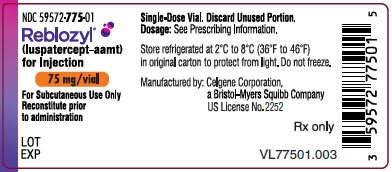
Reblozyl Luspatercept 75 mg Injection, Powder, Lyophilized, For Solution, 1 vial — NDC 59572-775-01 (Billing 59572-0775-01)
This is a package of 1 vial of Reblozyl Luspatercept 75 mg Injection, Powder, Lyophilized, For Solution from Celgene Corporation, marketed since Nov 2019 and currently FDA-listed. It is this product's only package size.
NDC database record
One package, one record: these facts belong to NDC 59572-775-01 alone.
- Record
- FDA NDC Directory package listing · Human prescription drug
- Code segments
- 59572 labeler · 775 product · 01 package
- Package marketed since
- Nov 8, 2019
- Sample package
- No — commercial package
- Listing certified through
- Dec 31, 2027
- Billing quantity
- 1 EA per package
- Barcode (UPC-A, from the NDC)
- 3 5957277501 5
- Medicaid fills, this package
- 1,726 prescriptions in the last four reported quarters
- FDA record last changed
- Jul 24, 2026
Identity & classification
Regulatory identifiers FDA, NLM and CMS codes for this package
Drug-database identifiers Medi-Span GPI and First Databank GCN / HICL / AHFS classification
- GSN (GCN sequence number): 080447
- GCN: 47292
- GPI-14 (Medi-Span): 82400540102140
- HICL (First Databank): 046196
- AHFS class code: 20:04.00.00
- RxCUI (RxNorm): 2262906
Where does this data come from?
- FDA openFDA NDC Directory · synced Oct 8, 2026
- FDA label on DailyMed · label index refreshed Oct 6, 2026
- RxNorm (NLM RxNav) · catalog refreshed Oct 1, 2026
- Medi-Span GPI (licensed)
- First Databank (licensed) · refreshed Oct 8, 2026
RxNorm drug class
This medicine belongs to the Erythroid Maturation Agent class.
Where does this data come from?
- RxClass (NLM) · catalog refreshed Oct 1, 2026
Clinical
Luspatercept-aamt injection is used to treat anemia (a lower than normal number of red blood cells) in adults who are receiving blood transfusions to treat thalassemia (an inherited condition that causes a low number of red blood cells). Luspatercept-aamt injection is also used to treat anemia in adults with certain types of myelodysplastic syndrome (MDS; a group of conditions in which the bone marrow produces blood cells that are misshapen and does not produce enough healthy blood cells) and who are receiving or may need to start receiving blood transfusions, but have not responded to or cann...
Read the full MedlinePlus article ↗Patient education
Supplement & herbal interactions
Where does this data come from?
- MedlinePlus (NLM) · refreshed Oct 1, 2026
- FDA label on DailyMed · label index refreshed Oct 6, 2026
Ask a licensed pharmacist directly — free, answered by our team.
Pricing
A drug doesn't have one price. Each row is a different public payment system, and none is what you'd pay at the counter — that depends on your insurance. The ⓘ on each row explains what it measures.
| Price system | Per mL | Per package |
|---|---|---|
| Retail pharmacies payNADAC · weekly | Not in the retail survey — common for institutional, discontinued, or low-volume packs. | |
| Medicaid paysCMS SDUD · 12 mo | $8,784.13 | — |
| Medicare drug plans payPart D · quarterly | No Part D plan price is available for this NDC in our data. | |
| Medicare Part B allowsASP · J0896 | $43.514 / J0896 unit | — |
Where does this data come from?
- CMS NADAC weekly file
- CMS ASP pricing files · refreshed Sep 20, 2026
- CMS Medicaid State Drug Utilization Data · through Q1 2026
- CMS Part D plan pricing files · refreshed Sep 24, 2026
- VA National Acquisition Center price file
Billing & reimbursement
Where does this data come from?
- CMS ASP NDC-HCPCS crosswalk · refreshed Sep 22, 2026
- DMEPDAC NDC-HCPCS crosswalk
- openFDA NSDE billing units · refreshed Oct 7, 2026
Packaging — all sizes for this product
| Package NDC | Description | Marketing start | Marketing end | Status |
|---|---|---|---|---|
| 59572-0775-01 You're viewing this Main listing | 1 VIAL, GLASS in 1 CARTON / 1 INJECTION, POWDER, LYOPHILIZED, FOR SOLUTION in 1 VIAL, GLASS | 2019-11-08 | — | Active |
Therapeutic equivalents
| Product | Labeler | Pack | NADAC/unit | TE | Status | Price vs. this |
|---|---|---|---|---|---|---|
| Reblozyl 75 mgthis 59572-0775-01 | Celgene | 1 vial | — | — | FDA listed | — |
Where does this data come from?
- FDA openFDA NDC Directory · synced Oct 8, 2026
- FDA Purple Book · refreshed Oct 5, 2026
- CMS NADAC weekly file
Availability & biosimilar status
Biologics have no small-molecule generics; biosimilar competition is tracked in the FDA Purple Book.
Why the date isn’t exact: Biosimilar timing can change because patents may be challenged, settled, licensed, added or removed, and litigation can move the real date earlier or later.
🛈 What do these terms mean?
- Biologic patent
- A patent the reference product’s maker has publicly listed. A biosimilar generally can’t launch until these expire — unless they’re invalidated or resolved in a settlement.
- Reference-product exclusivity
- A flat 12 years of FDA market protection from the biologic’s first licensure (the BPCIA). No biosimilar can be licensed before it ends, regardless of patents.
- Interchangeable exclusivity
- The first interchangeable biosimilar can earn a period as the only interchangeable version (pharmacists can substitute it without the prescriber).
- Earliest biosimilar (LOE)
- The latest of all the dates above — the soonest a biosimilar can realistically reach the market. Litigation and settlements can move it earlier.
Biologics have no small-molecule “generics” — competition comes from FDA-licensed biosimilars, tracked in the FDA Purple Book.
| Code | What it grants | Expires |
|---|---|---|
| RefProduct | Reference-product exclusivity (12-year, BPCIA) — no biosimilar can be licensed before this date | Nov 8, 2031 |
Is there a biosimilar for REBLOZYL 75 MG VIAL?
Why do different websites show different biosimilar dates?
Can a biosimilar launch before the last patent expires?
What does “current Purple Book estimate” mean?
What does “FDA listed” mean?
What does a patent or protection date mean here?
Where does this data come from?
- FDA Purple Book · refreshed Oct 5, 2026
What it looks like
Where does this data come from?
- FDA label on DailyMed · label index refreshed Oct 6, 2026
Inactive Ingredients / Excipients
Inactive ingredients, also called excipients, are components of the drug product other than the active ingredient. They may include fillers, dyes, coatings, preservatives, flavors, or other formulation ingredients.
💡 Tap an ingredient (hover on desktop) to see what it is and why it’s used.
-
UNII 2968PHW8QP
A weak organic acid derived from citrus fruits or made through fermentation. It works as a buffer to control pH, a preservative to extend shelf life, and a flavoring agent in medications.
-
UNII QTT17582CB
A strong acid used to adjust and maintain the proper pH level in liquid medicines, ensuring stability and preventing breakdown of active ingredients.
-
UNII 6OZP39ZG8H
Polysorbate 80 is a synthetic emulsifier derived from sorbitol and oleic acid. It helps mix oil and water-based ingredients together in medications and improves how the product disperses in the body.
-
UNII 55X04QC32I
A strong alkaline chemical used to adjust and maintain the pH balance of liquid medicines. It helps keep the medicine stable and ensures it stays effective during storage.
-
UNII C151H8M554
A natural sugar derived from sugar cane or sugar beets. It's used as a sweetener, filler, and binder to improve taste, add bulk, and help hold tablet or capsule ingredients together.
-
UNII B22547B95K
A salt derived from citric acid that helps maintain the proper acid-base balance in the medicine. It's used as a buffer to keep the product stable and at the right pH level.
-
UNII 059QF0KO0R
Water is a liquid solvent that dissolves and mixes ingredients together in liquid medicines, syrups, and injections. It helps distribute the active drug evenly throughout the product.
7 inactive ingredients listed in the exact product block matched to this NDC.
Where does this data come from?
ingredient classCode="IACT" elements from the exact product block matched by this NDC. Label-section narrative from DailyMed / the openFDA label index is shown separately when available.- FDA label on DailyMed · label index refreshed Oct 6, 2026
- FDA openFDA NDC Directory · synced Oct 8, 2026
Inactive ingredient FAQ
Are inactive ingredients the same for every manufacturer?
Why might an inactive ingredient be missing?
Can inactive ingredients matter?
Manufacturer & labeler
More NDCs from Celgene Corporation labeler code 59572
- Idhifa enasidenib mesylate 50 mg Tablet, Film Coated NDC 59572-705-30
- Idhifa enasidenib mesylate 100 mg Tablet, Film Coated NDC 59572-710-30
- Reblozyl Luspatercept 25 mg Injection, Powder, Lyophilized, For Solution NDC 59572-711-01
- Inrebic Fedratinib Hydrochloride 100 mg Capsule NDC 59572-720-12
- Onureg azacitidine 200 mg Tablet, Film Coated NDC 59572-730-07
- Onureg azacitidine 300 mg Tablet, Film Coated NDC 59572-740-07
- ZEPOSIA 7-Day Starter Pack ozanimod hydrochloride Kit NDC 59572-810-07
- ozanimod hydrochloride .23 mg Capsule NDC 59572-812-00
- ozanimod hydrochloride .46 mg Capsule NDC 59572-814-00
- ozanimod hydrochloride .92 mg Capsule NDC 59572-816-00
- Zeposia ozanimod hydrochloride .92 mg Capsule NDC 59572-820-30
- ZEPOSIA Starter Kit ozanimod hydrochloride Kit NDC 59572-890-28
Where does this data come from?
- FDA openFDA NDC Directory · synced Oct 8, 2026
- Drugs@FDA
Full prescribing information FDA SPL
🎯 Indications and Usage ▾
1 INDICATIONS AND USAGE REBLOZYL is an erythroid maturation agent indicated for the treatment of: • Anemia in adult patients with beta thalassemia who require regular red blood cell (RBC) transfusions ( 1.1 ). • Anemia without previous erythropoiesis stimulating agent use (ESA-naïve) in adult patients with very low- to intermediate-risk myelodysplastic syndromes (MDS) who may require regular red blood cell (RBC) transfusions ( 1.2 ). • Anemia failing an erythropoiesis stimulating agent and requiring 2 or more RBC units over 8 weeks in adult patients with very low- to intermediate-risk myelodysplastic syndromes with ring sideroblasts (MDS-RS) or with myelodysplastic/myeloproliferative neoplasm with ring sideroblasts and thrombocytosis (MDS/MPN-RS-T) ( 1.3 ). • Limitations of Use: REBLOZYL is not indicated for use as a substitute for RBC transfusions in patients who require immediate correction of anemia ( 1.4 ).
1.1Beta Thalassemia REBLOZYL is indicated for the treatment of anemia in adult patients with beta thalassemia who require regular red blood cell (RBC) transfusions.
1.2Myelodysplastic Syndromes Associated Anemia REBLOZYL is indicated for the treatment of anemia without previous erythropoiesis stimulating agent use (ESA-naïve) in adult patients with very low- to intermediate-risk myelodysplastic syndromes (MDS) who may require regular red blood cell (RBC) transfusions.
1.3Myelodysplastic Syndromes with Ring Sideroblasts or Myelodysplastic/ Myeloproliferative Neoplasm with Ring Sideroblasts and Thrombocytosis Associated Anemia REBLOZYL is indicated for the treatment of anemia failing an erythropoiesis stimulating agent and requiring 2 or more red blood cell units over 8 weeks in adult patients with very low- to intermediate-risk myelodysplastic syndromes with ring sideroblasts (MDS-RS) or with myelodysplastic/myeloproliferative neoplasm with ring sideroblasts and thrombocytosis (MDS/MPN-RS-T).
1.4Limitations of Use REBLOZYL is not indicated for use as a substitute for RBC transfusions in patients who require immediate correction of anemia.
⏱️ Dosage and Administration ▾
2 DOSAGE AND ADMINISTRATION • Beta thalassemia: The recommended starting dose is 1 mg/kg once every 3 weeks by subcutaneous injection. Increase dose if patient has no reduction in RBC transfusion burden to a maximum of 1.25 mg/kg ( 2.1 ). • Myelodysplastic Syndromes: The recommended starting dose is 1 mg/kg once every 3 weeks by subcutaneous injection. o For ESA-naïve MDS, increase dose to maintain patient’s hemoglobin concentrations within the target range of 10 g/dL to 12 g/dL to a maximum of 1.75 mg/kg ( 2.2 ). o For ESA-refractory or intolerant MDS, increase dose if patient is not RBC transfusion-free to a maximum of 1.75 mg/kg ( 2.2 ). • Review hemoglobin (Hgb) results prior to each administration ( 2.1 , 2.2 ). • See full prescribing information for preparation and administration instructions ( 2.3 ).
2.1Recommended Dosage for Beta Thalassemia The recommended starting dose of REBLOZYL is 1 mg/kg once every 3 weeks by subcutaneous injection for patients with beta thalassemia. Prior to each REBLOZYL dose, review the patient’s hemoglobin and transfusion record. Titrate the dose based on responses according to Table 1.
Interrupt treatment for adverse reactions as described in Table 2. Discontinue REBLOZYL if no response as described in Table 1 , or if unacceptable toxicity occurs at any time as described in Table 2 . If a planned administration of REBLOZYL is delayed or missed, administer REBLOZYL as soon as possible and continue dosing as prescribed, with at least 3 weeks between doses.
Dose Modifications for Response Assess and review hemoglobin results prior to each administration of REBLOZYL. If an RBC transfusion occurred prior to dosing, use the pretransfusion hemoglobin for dose evaluation. Dose modifications for response are provided in Table 1.
Do not increase the dose beyond the maximum dose of 1.25 mg/kg. In absence of transfusion, if hemoglobin increase is greater than 2 g/dL within 3 weeks or the predose hemoglobin is greater than or equal to 11.5 g/dL, reduce the dose or interrupt treatment with REBLOZYL as described in Table 1. Table 1: Beta Thalassemia - REBLOZYL Dose Titration for Response * Do not increase the dose if the patient is experiencing an adverse reaction as described in Table 2.
REBLOZYL Dosing Recommendation* Starting Dose • 1 mg/kg every 3 weeks Dose Increases for Insufficient Response If after at least 2 consecutive doses (6 weeks) at 1 mg/kg, a patient: • Has no reduction in RBC transfusion burden • Increase the dose to 1.25 mg/kg every 3 weeks If after 3 consecutive doses (9 weeks) at 1.25 mg/kg, a patient: • Has no reduction in RBC transfusion burden • Discontinue treatment Dose Modifications for Predose Hemoglobin Levels or Rapid Hemoglobin Rise Predose hemoglobin is greater than or equal to 11.5 g/dL in absence of transfusion • Interrupt treatment • Restart at same dose when the hemoglobin is no more than 11 g/dL Increase in hemoglobin greater than 2 g/dL within 3 weeks in absence of transfusion and • current dose is 1.25 mg/kg • current dose is 1 mg/kg • current dose is 0.8 mg/kg • current dose is 0.6 mg/kg • Reduce dose to 1 mg/kg • Reduce dose to 0.8 mg/kg • Reduce dose to 0.6 mg/kg • Discontinue treatment Dose Modifications for Toxicity For patients experiencing Grade 3 or higher adverse reactions, modify treatment as described in Table 2.
Table 2: Beta Thalassemia - REBLOZYL Dosing Modifications for Adverse Reactions * Grade 1 is mild, Grade 2 is moderate, Grade 3 is severe, and Grade 4 is life-threatening. **Per Table 1 dose reductions above. REBLOZYL Dosing Recommendation* Grade 3 or 4 hypersensitivity reactions • Discontinue treatment Other Grade 3 or 4 adverse reactions • Interrupt treatment • When the adverse reaction resolves to no more than Grade 1, restart treatment at the next lower dose level** • If the dose delay is greater than 15 consecutive weeks, discontinue treatment Extramedullary hematopoietic (EMH) masses causing serious complications • Discontinue treatment
2.2R… [Excerpted — this section continues on DailyMed.]
💊 Dosage Forms and Strengths ▾
3 DOSAGE FORMS AND STRENGTHS • For injection: 25 mg white to off-white lyophilized powder in a single-dose vial for reconstitution. • For injection: 75 mg white to off-white lyophilized powder in a single-dose vial for reconstitution. • For injection: 25 mg lyophilized powder in a single-dose vial for reconstitution ( 3 ). • For injection: 75 mg lyophilized powder in a single-dose vial for reconstitution ( 3 ).
⛔ Contraindications ▾
4 CONTRAINDICATIONS None. None ( 4 ).
⚠️ Warnings and Cautions ▾
5 WARNINGS AND PRECAUTIONS • Thrombosis/Thromboembolism: Increased risk in patients with beta thalassemia. Monitor patients for signs and symptoms of thromboembolic events and institute treatment promptly ( 5.1 ). • Hypertension: Monitor blood pressure (BP) during treatment. Initiate anti-hypertensive treatment if necessary ( 5.2 ). • Extramedullary Hematopoietic (EMH) Masses: Increased risk in patients with beta thalassemia.
Monitor patients for symptoms and signs or complications resulting from the EMH masses. Treat according to clinical guidelines and discontinue treatment in case of serious complications due to EMH masses ( 5.3 ). • Embryo-Fetal Toxicity: May cause fetal harm. Advise females of reproductive potential of the potential risk to a fetus and use of effective contraception ( 5.4 , 8.1 , 8.3 ).
5.1Thrombosis/Thromboembolism In adult patients with beta thalassemia, thromboembolic events (TEE) were reported in 8/223 (3.6%) REBLOZYL-treated patients. Reported TEEs included deep vein thromboses, pulmonary embolus, portal vein thrombosis, and ischemic strokes. Patients with known risk factors for thromboembolism, e.g. splenectomy or concomitant use of hormone replacement therapy, may be at further increased risk of thromboembolic conditions.
Consider thromboprophylaxis in patients with beta thalassemia at increased risk of TEE. Monitor patients receiving REBLOZYL for signs and symptoms of thromboembolic events and institute treatment promptly.
5.2Hypertension Hypertension was reported in 63/554 (11.4%) of REBLOZYL-treated patients. Across clinical studies, the incidence of Grade 3-4 hypertension ranged from 2% to 9.6%. In adult patients with beta thalassemia with normal baseline blood pressure, 13 (6.2%) patients developed systolic blood pressure (SBP) ≥130 mm Hg and 33 (16.6%) patients developed diastolic blood pressure (DBP) ≥80 mm Hg.
In ESA-refractory or -intolerant adult patients with MDS with normal baseline blood pressure, 26 (30%) patients developed SBP ≥130 mm Hg and 23 (16%) patients developed DBP ≥80 mm Hg. In ESA-naïve adult patients with MDS with normal baseline blood pressure, 23 (36%) patients developed SBP ≥140 mm Hg and 11 (6%) patients developed DBP ≥80 mm Hg. Monitor blood pressure prior to each administration.
Manage new-onset hypertension or exacerbations of preexisting hypertension using anti-hypertensive agents.
5.3Extramedullary Hematopoietic Masses In adult patients with transfusion dependent beta thalassemia, EMH masses were observed in 3.2% of REBLOZYL-treated patients, with spinal cord compression symptoms due to EMH masses occurring in 1.9% of patients (BELIEVE and REBLOZYL long-term follow-up study). In a study of adult patients with non-transfusion dependent beta thalassemia, a higher incidence of EMH masses was observed in 6.3% of REBLOZYL-treated patients vs. 2% of placebo-treated patients in the double-blind phase of the study, with spinal cord compression due to EMH masses occurring in 1 patient with a prior history of EMH.
REBLOZYL is not indicated for use in patients with non-transfusion dependent beta-thalassemia. Possible risk factors for the development of EMH masses in patients with beta thalassemia include history of EMH masses, splenectomy, splenomegaly, hepatomegaly, or low baseline hemoglobin (<8.5 g/dL). Signs and symptoms may vary depending on the anatomical location.
Monitor patients with beta thalassemia at initiation and during treatment for symptoms and signs or complications resulting from the EMH masses and treat according to clinical guidelines. Discontinue treatment with REBLOZYL in case of serious complications due to EMH masses. Avoid use of REBLOZYL in patients requiring treatment to control the growth of EMH masses.
5.4Embryo-Fetal Toxicity Based on findings from animal reproductive studies, REBLOZYL may cause fetal harm when administered to a pregnant woman. In animal reproduction studies, administration of luspatercept-aamt to pregnant rats and rabbits d… [Excerpted — this section continues on DailyMed.]
🤒 Adverse Reactions ▾
6 ADVERSE REACTIONS The following clinically significant adverse reactions are described elsewhere in the labeling: • Thrombosis/Thromboembolism [see Warnings and Precautions ( 5.1 )] • Hypertension [see Warnings and Precautions ( 5.2 )] • Extramedullary Hematopoietic Masses [see Warnings and Precautions ( 5.3 )] The most common (>10%) adverse reactions were fatigue, headache, musculoskeletal pain, arthralgia, dizziness/vertigo, nausea, diarrhea, cough, abdominal pain, dyspnea, COVID-19, edema peripheral, hypertension, and hypersensitivity ( 6.1 ).
To report SUSPECTED ADVERSE REACTIONS, contact Bristol-Myers Squibb at 1-888-423-5436 or FDA at 1-800-FDA-1088 or www.fda.gov/medwatch.
6.1Clinical Trials Experience Because clinical trials are conducted under widely varying conditions, adverse reaction rates observed in the clinical trials of a drug cannot be directly compared to rates in the clinical trials of another drug and may not reflect the rates observed in practice. The data in the WARNINGS AND PRECAUTIONS reflect exposure to REBLOZYL as a single agent administered across a range of doses (0.125 mg/kg to 1.75 mg/kg) in 571 patients in 4 trials. Beta Thalassemia The safety of REBLOZYL in patients with beta thalassemia was evaluated in the BELIEVE trial [see Clinical Studies ( 14.1 )] .
Key eligibility criteria included adult patients with beta thalassemia (with the exception of patients with hemoglobin S or alpha-thalassemia disease) without major organ damage or recent DVT stroke and platelet counts less than or equal to 1000 x 10 9 /L. Patients received a starting dose of REBLOZYL 1 mg/kg subcutaneous injection every 3 weeks. Overall, 53% of patients had their dose increased to 1.25 mg/kg (46% REBLOZYL, n = 223) or placebo (66%, n = 109).
The median duration of treatment was similar between the REBLOZYL and placebo arms (63.3 weeks vs. 62.1 weeks, respectively). Per protocol, patients in the REBLOZYL and placebo arms were to remain on therapy for at least 48 weeks in the double-blind phase of the trial.
Among patients receiving REBLOZYL, 94% were exposed for 6 months or longer and 72% were exposed for greater than one year. The median age of patients who received REBLOZYL was 30 years (range: 18, 66); 59% female; 54% White and 36% Asian. Serious adverse reactions occurred in 3.6% of patients on REBLOZYL.
Serious adverse reactions reported in 1% of patients were cerebrovascular accident and deep vein thrombosis. A fatal adverse reaction occurred in one patient treated with REBLOZYL who died due to an unconfirmed case of AML (M6). Permanent discontinuation due to an adverse reaction (Grades 1-4) occurred in 5.4% of patients who received REBLOZYL.
Most frequent adverse reactions requiring permanent discontinuation in patients who received REBLOZYL included arthralgia (1%), back pain (1%), bone pain (<1%), and headache (<1%). Dosage reductions due to an adverse reaction occurred in 2.7% of patients who received REBLOZYL. Most frequent adverse reactions requiring dosage reduction in >0.5% of patients who received REBLOZYL included hypertension and headache.
Dosage interruptions due to an adverse reaction occurred in 15.2% of patients who received REBLOZYL. Most frequent adverse reactions requiring dosage interruption in >1% of patients who received REBLOZYL included upper respiratory tract infection, ALT increase, and cough. The most common adverse reactions (at least 10% for REBLOZYL and 1% more than placebo) were headache (26%), bone pain (20%), arthralgia (19%), fatigue (14%), cough (14%), abdominal pain (14%), diarrhea (12%), and dizziness (11%).
Table 7 summarizes the adverse reactions in BELIEVE. Table 7: Adverse Drug Reactions (>5%) in Patients with Beta Thalassemia Receiving REBLOZYL with a Difference Between Arms of 1% in BELIEVE Trial Body System REBLOZYL (N=223) Placebo (N=109) Adverse Reaction All Grades n (%) Grades ≥3 a n (%) All Grades n (%) Grades ≥3 n (%) a Limited to Grade 3 reactions with the exception of 4… [Excerpted — this section continues on DailyMed.]
👥 Use in Specific Populations ▾
8 USE IN SPECIFIC POPULATIONS Lactation: Advise not to breastfeed ( 8.2 ).
8.1Pregnancy Risk Summary Based on findings in animal reproduction studies, REBLOZYL may cause fetal harm when administered to a pregnant woman . There are no available data on REBLOZYL use in pregnant women to inform a drug-associated risk of major birth defects, miscarriage, or adverse maternal or fetal outcomes. In animal reproduction studies, administration of luspatercept-aamt to pregnant rats and rabbits during the period of organogenesis resulted in adverse developmental outcomes including embryo-fetal mortality, alterations to growth, and structural abnormalities at exposures (based on area under the curve [AUC]) above those occurring at the maximum recommended human dose (MRHD) ( see Data ).
Advise pregnant women of the potential risk to a fetus. The estimated background risk of major birth defects and miscarriage for the indicated population is unknown. All pregnancies have a background risk of birth defect, loss, or other adverse outcomes.
In the U.S. general population, the estimated background risk of major birth defects and miscarriage in clinically recognized pregnancies is 2% to 4% and 15% to 20%, respectively. Data Animal Data In embryo-fetal development studies, luspatercept-aamt was administered subcutaneously at 5, 15, or 30 mg/kg on gestation days 3 and 10 (rats) or 5, 20, or 40 mg/kg on gestation days 4 and 11 (rabbits). Effects in both species included reductions in numbers of live fetuses and fetal body weights, and increases in resorptions, post-implantation losses, and skeletal variations (such as asymmetric sternal centra in rats and angulated hyoid in rabbits).
Effects were observed at exposures (based on AUC) approximately 7-times (rats) and 16-times (rabbits) the MRHD of 1.75 mg/kg. In a pre- and postnatal development study, pregnant rats were administered luspatercept-aamt subcutaneously at 3, 10, or 30 mg/kg once every 2 weeks during organogenesis and through weaning, gestation day 6 through postnatal day 20. At all dose levels lower F 1 pup body weights and adverse kidney findings (such as membranoproliferative glomerulonephritis, tubular atrophy/hypoplasia, and vessel ectasia occasionally associated with hemorrhage) were observed.
These effects were observed at exposures (based on AUC) approximately 1.6-times the MRHD of 1.75 mg/kg.
8.2Lactation Risk Summary Luspatercept-aamt was detected in milk of lactating rats. When a drug is present in animal milk, it is likely that the drug will be present in human milk. There are no data on the presence of REBLOZYL in human milk, the effects on the breastfed child, or the effects on milk production.
Because of the potential for serious adverse reactions in the breastfed child, advise patients that breastfeeding is not recommended during treatment with REBLOZYL, and for 3 months after the last dose .
8.3Females and Males of Reproductive Potential Pregnancy Testing Pregnancy testing is recommended for females of reproductive potential before starting REBLOZYL treatment. Contraception Females REBLOZYL may cause embryo-fetal harm when administered to pregnant women [see Use in Specific Populations ( 8.1 )] . Advise female patients of reproductive potential to use effective contraception during treatment with REBLOZYL and for at least 3 months after the last dose.
Infertility Females Based on findings in animals, REBLOZYL may impair female fertility [see Nonclinical Toxicology ( 13.1 )] . Adverse effects on fertility in female rats were reversible after a 14-week recovery period.
8.4Pediatric Use Safety and effectiveness in pediatric patients have not been established. Based on findings in juvenile animals, REBLOZYL is not recommended for use in pediatric patients [see Nonclinical Toxicology ( 13.1 )] .
8.5Geriatric Use Clinical studies of REBLOZYL in beta thalassemia did not include sufficient numbers of patients age 65 years and older to determine whether they respond different… [Excerpted — this section continues on DailyMed.]
🤰 Pregnancy ▾
8.1Pregnancy Risk Summary Based on findings in animal reproduction studies, REBLOZYL may cause fetal harm when administered to a pregnant woman . There are no available data on REBLOZYL use in pregnant women to inform a drug-associated risk of major birth defects, miscarriage, or adverse maternal or fetal outcomes. In animal reproduction studies, administration of luspatercept-aamt to pregnant rats and rabbits during the period of organogenesis resulted in adverse developmental outcomes including embryo-fetal mortality, alterations to growth, and structural abnormalities at exposures (based on area under the curve [AUC]) above those occurring at the maximum recommended human dose (MRHD) ( see Data ).
Advise pregnant women of the potential risk to a fetus. The estimated background risk of major birth defects and miscarriage for the indicated population is unknown. All pregnancies have a background risk of birth defect, loss, or other adverse outcomes.
In the U.S. general population, the estimated background risk of major birth defects and miscarriage in clinically recognized pregnancies is 2% to 4% and 15% to 20%, respectively. Data Animal Data In embryo-fetal development studies, luspatercept-aamt was administered subcutaneously at 5, 15, or 30 mg/kg on gestation days 3 and 10 (rats) or 5, 20, or 40 mg/kg on gestation days 4 and 11 (rabbits). Effects in both species included reductions in numbers of live fetuses and fetal body weights, and increases in resorptions, post-implantation losses, and skeletal variations (such as asymmetric sternal centra in rats and angulated hyoid in rabbits).
Effects were observed at exposures (based on AUC) approximately 7-times (rats) and 16-times (rabbits) the MRHD of 1.75 mg/kg. In a pre- and postnatal development study, pregnant rats were administered luspatercept-aamt subcutaneously at 3, 10, or 30 mg/kg once every 2 weeks during organogenesis and through weaning, gestation day 6 through postnatal day 20. At all dose levels lower F 1 pup body weights and adverse kidney findings (such as membranoproliferative glomerulonephritis, tubular atrophy/hypoplasia, and vessel ectasia occasionally associated with hemorrhage) were observed.
These effects were observed at exposures (based on AUC) approximately 1.6-times the MRHD of 1.75 mg/kg.
🧒 Pediatric Use ▾
8.4Pediatric Use Safety and effectiveness in pediatric patients have not been established. Based on findings in juvenile animals, REBLOZYL is not recommended for use in pediatric patients [see Nonclinical Toxicology ( 13.1 )] .
🧓 Geriatric Use ▾
8.5Geriatric Use Clinical studies of REBLOZYL in beta thalassemia did not include sufficient numbers of patients age 65 years and older to determine whether they respond differently from younger patients. Clinical studies of REBLOZYL for treatment of anemia in ESA-naïve and ESA-refractory or -intolerant MDS included 347 (82%) patients ≥ 65 years of age and 167 (39%) patients ≥ 75 years of age. No differences in safety or effectiveness were observed between older (≥ 65 years) and younger patients.
🧬 Clinical Pharmacology ▾
12 CLINICAL PHARMACOLOGY
12.1Mechanism of Action Luspatercept-aamt is a recombinant fusion protein that binds several endogenous TGF-β superfamily ligands, thereby diminishing Smad2/3 signaling. In models of β-thalassemia and MDS, luspatercept-aamt decreased abnormally elevated Smad2/3 signaling and improved hematology parameters associated with ineffective erythropoiesis in mice. Luspatercept-aamt promoted erythroid maturation through differentiation and increasing the percentage of late-stage erythroid precursors (normoblasts) in the bone marrow of mice and increased erythroid precursors in humans, thereby increasing erythropoiesis.
12.2Pharmacodynamics Increases in Hemoglobin in Patients with Low RBC Transfusion Burden In patients having received < 4 units of RBC transfusion within 8 weeks prior to study, hemoglobin increased within 7 days of initiating REBLOZYL and correlated with the time to luspatercept-aamt maximum serum concentration (C max ). The greatest hemoglobin (Hgb) increase occurred after the first dose; approximately 0.75 g/dL at a dose of 0.6 to 1.25 times the recommended starting dose for beta thalassemia, or approximately 1 g/dL at a dose of 0.75 to 1.75 times the recommended starting dose for MDS.
Additional smaller increases were observed after subsequent doses. Hemoglobin levels returned to baseline approximately 6 to 8 weeks from the last dose following administration of luspatercept-aamt (0.6 to 1.75 mg/kg). Increasing luspatercept-aamt serum exposure (AUC) was associated with greater Hgb increase in patients with beta thalassemia or MDS who had a baseline transfusion burden < 4 units/8 weeks.
Increasing luspatercept-aamt serum exposure (time-averaged AUC) was associated with greater probability of achieving transfusion independence for at least 8 consecutive weeks in ESA-refractory or -intolerant patients with MDS requiring transfusions (≥ 2 units of RBC transfusion within 8 weeks).
12.3Pharmacokinetics Luspatercept-aamt exhibited linear pharmacokinetics (PK) over the dose range of 0.2 to 1.25 mg/kg (0.2 to 1.25 times the recommended starting dosage) in patients with beta thalassemia, and from 0.125 mg/kg to 1.75 mg/kg (0.125 to 1.75 times the recommended starting dosage) in patients with MDS. The geometric mean (% coefficient of variation [%CV]) steady-state AUC at the starting dose of 1 mg/kg was 126 (35.9%) day•µg/mL for patients with beta thalassemia and 154 (37.4%) day•µg/mL for patients with MDS.
Luspatercept-aamt serum concentration reached steady state after 3 doses when administered every 3 weeks. The accumulation ratio of luspatercept-aamt was approximately 1.5. Absorption The median [range] time to maximum concentration (T max ) of luspatercept-aamt was observed at approximately 5 [3 to 8] days post-dose in adult patients with beta thalassemia or 6 [3 to 7] days post-dose in adult patients with MDS.
The absorption of luspatercept-aamt was not significantly affected by the subcutaneous injection sites (upper arm, thigh, or abdomen). Distribution The geometric mean (%CV) apparent volume of distribution (V d /F) of luspatercept-aamt was 7.1 (26.7%) L for patients with beta thalassemia and 9.6 (26.7%) L for patients with MDS. Elimination The geometric mean (%CV) half-lives (t 1/2 ) of luspatercept-aamt were approximately 11 (25.7%) days in patients with beta thalassemia and 14 (31.7%) days in patients with MDS.
The geometric mean (%CV) apparent total clearance (CL/F) of luspatercept-aamt was 0.44 (38.5%) L/day in patients with beta thalassemia and 0.47 (42.9%) L/day in patients with MDS. Metabolism Luspatercept-aamt is expected to be catabolized into small peptides and amino acids by general catabolic degradation processes in multiple tissues. Specific Populations No clinically significant differences in the luspatercept-aamt PK were observed based on age (18 to 95 years), sex, race/ethnicity (Asian, White), mild to severe hepatic impairment (total bilirubin ≤ ULN and AST or ALT > ULN, or to… [Excerpted — this section continues on DailyMed.]
🧬 Mechanism of Action ▾
12.1Mechanism of Action Luspatercept-aamt is a recombinant fusion protein that binds several endogenous TGF-β superfamily ligands, thereby diminishing Smad2/3 signaling. In models of β-thalassemia and MDS, luspatercept-aamt decreased abnormally elevated Smad2/3 signaling and improved hematology parameters associated with ineffective erythropoiesis in mice. Luspatercept-aamt promoted erythroid maturation through differentiation and increasing the percentage of late-stage erythroid precursors (normoblasts) in the bone marrow of mice and increased erythroid precursors in humans, thereby increasing erythropoiesis.
📦 How Supplied / Storage and Handling ▾
16 HOW SUPPLIED/STORAGE AND HANDLING
16.1How Supplied REBLOZYL (luspatercept-aamt) for injection is a white to off-white lyophilized powder supplied in a single-dose vial. Each carton contains one vial. REBLOZYL 25 mg/vial (NDC 59572-711-01) REBLOZYL 75 mg/vial (NDC 59572-775-01)
16.2Storage Store vials refrigerated at 2°C to 8°C (36°F to 46°F) in original carton to protect from light. Do not freeze.
📦 Storage and Handling ▾
16.2Storage Store vials refrigerated at 2°C to 8°C (36°F to 46°F) in original carton to protect from light. Do not freeze.
📋 Description ▾
11 DESCRIPTION Luspatercept-aamt is an erythroid maturation agent. Luspatercept-aamt is a receptor fusion protein consisting of a modified extracellular domain of the human activin receptor type IIB linked to a human IgG1 Fc domain with a calculated molecular mass of approximately 76 kD. Luspatercept is produced in Chinese hamster ovary cells by recombinant DNA technology.
REBLOZYL (luspatercept-aamt) for injection is a sterile, preservative-free, white to off-white, lyophilized powder in single-dose vials for subcutaneous use after reconstitution. Each 25 mg single-dose vial provides nominal 25 mg of luspatercept-aamt and citric acid monohydrate (0.085 mg), polysorbate 80 (0.10 mg), sucrose (45 mg), and tri-sodium citrate dihydrate (1.35 mg) at pH 6.5. After reconstitution with 0.68 mL Sterile Water for Injection USP, the resulting concentration is 25 mg/0.5 mL of luspatercept-aamt and the nominal deliverable volume is 0.5 mL.
Each 75 mg single-dose vial provides nominal 75 mg of luspatercept-aamt and citric acid monohydrate (0.254 mg), polysorbate 80 (0.30 mg), sucrose (135 mg), and tri-sodium citrate dihydrate (4.06 mg) at pH 6.5. After reconstitution with 1.6 mL Sterile Water for Injection USP, the resulting concentration is 75 mg/1.5 mL (50 mg/mL) of luspatercept-aamt and the nominal deliverable volume is 1.5 mL.
💬 Information for Patients ▾
17 PATIENT COUNSELING INFORMATION Discuss the following with patients prior to and during treatment with REBLOZYL. Thromboembolic Events Advise beta thalassemia patients of the potential risk of thromboembolic events. Review known risk factors for developing thromboembolic events and advise patients to reduce modifiable risk factors (e.g., smoking, use of oral contraceptives) [see Warnings and Precautions ( 5.1 )] .
Effects on Blood Pressure Caution patients that REBLOZYL may cause an increase in blood pressure [see Warnings and Precautions ( 5.2 )] . Extramedullary Hematopoietic Masses Advise patients with beta thalassemia of the potential risk of extramedullary hematopoietic masses. Review possible risk factors for developing extramedullary hematopoietic masses.
Instruct patients to report possible signs and symptoms of EMH masses [see Warnings and Precautions ( 5.3 )] . Embryo-Fetal Toxicity Advise females of reproductive potential of the potential risk to a fetus. Advise females of reproductive potential to use effective contraception while receiving REBLOZYL and for at least 3 months after the final dose.
Advise females to contact their healthcare provider if they become pregnant, or if pregnancy is suspected, during treatment with REBLOZYL [see Warnings and Precautions ( 5.4 ) and Use in Specific Populations ( 8.1 )]. Lactation Advise females not to breastfeed during treatment with REBLOZYL and for 3 months after the final dose [see Use in Specific Populations ( 8.2 )] . Manufactured by: Celgene Corporation, a Bristol-Myers Squibb Company 86 Morris Avenue Summit, NJ 07901 U.S.
License No. 2252 REBLOZYL ® is a registered trademark of Celgene Corporation, a Bristol-Myers Squibb Company. REBPI.008
🧬 Pharmacokinetics ▾
12.3Pharmacokinetics Luspatercept-aamt exhibited linear pharmacokinetics (PK) over the dose range of 0.2 to 1.25 mg/kg (0.2 to 1.25 times the recommended starting dosage) in patients with beta thalassemia, and from 0.125 mg/kg to 1.75 mg/kg (0.125 to 1.75 times the recommended starting dosage) in patients with MDS. The geometric mean (% coefficient of variation [%CV]) steady-state AUC at the starting dose of 1 mg/kg was 126 (35.9%) day•µg/mL for patients with beta thalassemia and 154 (37.4%) day•µg/mL for patients with MDS.
Luspatercept-aamt serum concentration reached steady state after 3 doses when administered every 3 weeks. The accumulation ratio of luspatercept-aamt was approximately 1.5. Absorption The median [range] time to maximum concentration (T max ) of luspatercept-aamt was observed at approximately 5 [3 to 8] days post-dose in adult patients with beta thalassemia or 6 [3 to 7] days post-dose in adult patients with MDS.
The absorption of luspatercept-aamt was not significantly affected by the subcutaneous injection sites (upper arm, thigh, or abdomen). Distribution The geometric mean (%CV) apparent volume of distribution (V d /F) of luspatercept-aamt was 7.1 (26.7%) L for patients with beta thalassemia and 9.6 (26.7%) L for patients with MDS. Elimination The geometric mean (%CV) half-lives (t 1/2 ) of luspatercept-aamt were approximately 11 (25.7%) days in patients with beta thalassemia and 14 (31.7%) days in patients with MDS.
The geometric mean (%CV) apparent total clearance (CL/F) of luspatercept-aamt was 0.44 (38.5%) L/day in patients with beta thalassemia and 0.47 (42.9%) L/day in patients with MDS. Metabolism Luspatercept-aamt is expected to be catabolized into small peptides and amino acids by general catabolic degradation processes in multiple tissues. Specific Populations No clinically significant differences in the luspatercept-aamt PK were observed based on age (18 to 95 years), sex, race/ethnicity (Asian, White), mild to severe hepatic impairment (total bilirubin ≤ ULN and AST or ALT > ULN, or total bilirubin > ULN and any AST or ALT), mild to moderate renal impairment (estimated glomerular filtration rate [eGFR] 30 to 89 mL/min), baseline albumin (30 to 56 g/L), baseline serum erythropoietin (2.4 to 2920 U/L), red blood cell (RBC) transfusion burden (0 to 43 units/24 weeks), beta thalassemia genotype (β0/β0 vs. non-β0/β0), splenectomy, and ring sideroblasts status in MDS (negative vs. positive).
The effect of AST or ALT >3 x ULN and the effect of severe renal impairment (eGFR <30 mL/min) on luspatercept-aamt PK is unknown. Body Weight The apparent CL/F and V d /F of luspatercept-aamt increased with increasing body weight in patients with beta thalassemia (34 to 97 kg) and in patients with MDS (33 to 124 kg). Drug Interaction Studies Effect of Iron-chelating Agents on Luspatercept-aamt No clinically significant differences in luspatercept-aamt PK were observed when used concomitantly with iron-chelating agents.
🧬 Pharmacodynamics ▾
12.2Pharmacodynamics Increases in Hemoglobin in Patients with Low RBC Transfusion Burden In patients having received < 4 units of RBC transfusion within 8 weeks prior to study, hemoglobin increased within 7 days of initiating REBLOZYL and correlated with the time to luspatercept-aamt maximum serum concentration (C max ). The greatest hemoglobin (Hgb) increase occurred after the first dose; approximately 0.75 g/dL at a dose of 0.6 to 1.25 times the recommended starting dose for beta thalassemia, or approximately 1 g/dL at a dose of 0.75 to 1.75 times the recommended starting dose for MDS.
Additional smaller increases were observed after subsequent doses. Hemoglobin levels returned to baseline approximately 6 to 8 weeks from the last dose following administration of luspatercept-aamt (0.6 to 1.75 mg/kg). Increasing luspatercept-aamt serum exposure (AUC) was associated with greater Hgb increase in patients with beta thalassemia or MDS who had a baseline transfusion burden < 4 units/8 weeks.
Increasing luspatercept-aamt serum exposure (time-averaged AUC) was associated with greater probability of achieving transfusion independence for at least 8 consecutive weeks in ESA-refractory or -intolerant patients with MDS requiring transfusions (≥ 2 units of RBC transfusion within 8 weeks).
🔬 Clinical Studies ▾
14 CLINICAL STUDIES
14.1Beta Thalassemia The efficacy of REBLOZYL was evaluated in adult patients with beta thalassemia in the BELIEVE trial (NCT02604433). BELIEVE was a multicenter, randomized, double-blind, placebo-controlled trial in which (n=336) patients with beta thalassemia requiring regular red blood cell transfusions (6-20 RBC units per 24 weeks) with no transfusion-free period greater than 35 days during that period were randomized 2:1 to REBLOZYL (n=224) or placebo (n=112). In BELIEVE, REBLOZYL was administered subcutaneously once every 3 weeks as long as a reduction in transfusion requirement was observed or until unacceptable toxicity.
All patients were eligible to receive best supportive care, which included RBC transfusions; iron-chelating agents; use of antibiotic, antiviral, and antifungal therapy; and/or nutritional support, as needed. The BELIEVE trial excluded patients with a diagnosis of Hemoglobin S/β-thalassemia or isolated alpha (α)-thalassemia (e.g., Hemoglobin H) or who had major organ damage (liver disease, heart disease, lung disease, renal insufficiency). Patients with recent deep vein thrombosis or stroke or recent use of ESA, immunosuppressant, or hydroxyurea therapy were also excluded.
The median age was 30 years (range: 18-66). The trial was comprised of patients who were 42% male, 54.2% White, 34.8% Asian, and 0.3% Black or African American. The percent of patients reporting their race as “other” was 7.7%, and race was not collected or reported for 3% of patients.
Table 13 summarizes the baseline disease-related characteristics in the BELIEVE study. Table 13: Baseline Disease Characteristics of Patients with Beta Thalassemia in BELIEVE HbE=hemoglobin E. a "Missing" category includes patients in the population who had no result for the parameter listed. Disease Characteristic REBLOZYL (N=224) Placebo (N=112) Beta thalassemia diagnosis, n (%) Beta-thalassemia 174 (77.7) 83 (74.1) HbE/beta thalassemia 31 (13.8) 21 (18.8) Beta thalassemia combined with alpha-thalassemia 18 (8) 8 (7.1) Missing a 1 (0.4) 0 Baseline transfusion burden 12 weeks prior to randomization Median (min, max) (Units/12 weeks) 6.12 (3, 14) 6.27 (3, 12) Beta thalassemia gene mutation grouping, n (%) β0/β0 68 (30.4) 35 (31.3) Non-β0/β0 155 (69.2) 77 (68.8) Missing a 1 (0.4) 0 Baseline serum ferritin level (μg/L) N 220 111 Median (min, max) 1441.25 (88, 6400) 1301.50 (136, 6400) Splenectomy, n (%) Yes 129 (57.6) 65 (58) No 95 (42.4) 47 (42) Age patient started regular transfusions (years) N 169 85 Median (min, max) 2 (0, 52) 2 (0, 51) The efficacy of REBLOZYL in adult patients with beta thalassemia was established based upon the proportion of patients achieving RBC transfusion burden reduction (≥33% reduction from baseline) with a reduction of at least 2 units from Week 13 to Week 24.
Efficacy results are shown in Table 14. Table 14: Efficacy Results in Beta Thalassemia - BELIEVE Endpoint REBLOZYL (N=224) Placebo (N=112) Risk Difference (95% CI) p-value ≥33% Reduction from baseline in RBC transfusion burden with a reduction of at least 2 units for 12 consecutive weeks Primary endpoint – Week 13 to Week 24 47 (21.0) 5 (4.5) 16.5 (9.9, 23.1) <0.0001 Week 37 to Week 48 44 (19.6) 4 (3.6) 16.1 (9.8, 22.4) <0.0001 ≥50% Reduction from baseline in RBC transfusion burden with a reduction of at least 2 units for 12 consecutive weeks Week 13 to Week 24 16 (7.1) 2 (1.8) 5.4 (1.2, 9.5) 0.0402 Week 37 to Week 48 23 (10.3) 1 (0.9) 9.4 (5, 13.7) 0.0017
14.2Treatment of Myelodysplastic Syndromes with Associated Anemia in ESA-naïve Patients The efficacy of REBLOZYL was evaluated in the COMMANDS trial (NCT03682536), a multi‑center, open‑label, randomized active‑controlled trial comparing REBLOZYL versus epoetin alfa in patients with anemia due to IPSS‑R very low, low, or intermediate‑risk myelodysplastic syndromes or with myelodysplastic/myeloproliferative neoplasm with ring sideroblasts and thrombocytosis (MDS/MPN RS‑T) in ESA‑naïve patients (wi… [Excerpted — this section continues on DailyMed.]
🧪 Nonclinical Toxicology ▾
13 NONCLINICAL TOXICOLOGY
13.1Carcinogenesis, Mutagenesis, Impairment of Fertility No carcinogenicity or mutagenicity studies have been conducted with luspatercept-aamt. In a repeat-dose toxicity study, juvenile rats were administered luspatercept-aamt subcutaneously at 1, 3, or 10 mg/kg once every 2 weeks from postnatal day 7 to 91. Hematologic malignancies (granulocytic leukemia, lymphocytic leukemia, malignant lymphoma) were observed at 10 mg/kg resulting in exposures (based on area under the curve [AUC]) approximately 4.4 times the maximum recommended human dose (MRHD) of 1.75 mg/kg.
In a combined male and female fertility and early embryonic development study in rats, luspatercept-aamt was administered subcutaneously to animals at doses of 1 to 15 mg/kg. There were significant reductions in the average numbers of corpora lutea, implantations, and viable embryos in luspatercept-aamt-treated females. Effects on female fertility were observed at the highest dose with exposures (based on AUC) approximately 7-times the MRHD of 1.75 mg/kg.
Adverse effects on fertility in female rats were reversible after a 14-week recovery period. No adverse effects were noted in male rats.
📄 Carcinogenesis, Mutagenesis, Impairment of Fertility ▾
13.1Carcinogenesis, Mutagenesis, Impairment of Fertility No carcinogenicity or mutagenicity studies have been conducted with luspatercept-aamt. In a repeat-dose toxicity study, juvenile rats were administered luspatercept-aamt subcutaneously at 1, 3, or 10 mg/kg once every 2 weeks from postnatal day 7 to 91. Hematologic malignancies (granulocytic leukemia, lymphocytic leukemia, malignant lymphoma) were observed at 10 mg/kg resulting in exposures (based on area under the curve [AUC]) approximately 4.4 times the maximum recommended human dose (MRHD) of 1.75 mg/kg.
In a combined male and female fertility and early embryonic development study in rats, luspatercept-aamt was administered subcutaneously to animals at doses of 1 to 15 mg/kg. There were significant reductions in the average numbers of corpora lutea, implantations, and viable embryos in luspatercept-aamt-treated females. Effects on female fertility were observed at the highest dose with exposures (based on AUC) approximately 7-times the MRHD of 1.75 mg/kg.
Adverse effects on fertility in female rats were reversible after a 14-week recovery period. No adverse effects were noted in male rats.
📄 Patient Package Insert ▾
PATIENT INFORMATION REBLOZYL ® (REB-low-zil) (luspatercept-aamt) for injection, for subcutaneous use What is REBLOZYL? REBLOZYL is a prescription medicine used to treat anemia (low red blood cells) in adults with: • beta thalassemia who need regular red blood cell (RBC) transfusions. • myelodysplastic syndromes who may need regular RBC transfusions and have never received an erythropoiesis stimulating agent (ESA). • myelodysplastic syndromes with ring sideroblasts (MDS-RS) or myelodysplastic/myeloproliferative neoplasms with ring sideroblasts and thrombocytosis (MDS/MPN-RS-T) who need 2 or more RBC units over 8 weeks and have not responded well to an ESA.
REBLOZYL is not for use as a substitute for RBC transfusions in people who need immediate treatment for anemia. It is not known if REBLOZYL is safe and effective in children. Before receiving REBLOZYL, tell your healthcare provider about all of your medical conditions, including if you: • have or have had blood clots • take hormone replacement therapy or birth control pills (oral contraceptives) • have had your spleen removed (splenectomy) • smoke • have or have had high blood pressure (hypertension) • have a history of extramedullary hematopoietic (EMH) masses • have or have had enlarged spleen or liver • are pregnant or plan to become pregnant.
REBLOZYL may harm your unborn baby. Tell your healthcare provider right away if you become pregnant or think you may be pregnant during treatment with REBLOZYL. Females who are able to become pregnant: o Your healthcare provider should do a pregnancy test before you start treatment with REBLOZYL. o You should use effective birth control (contraception) during treatment with REBLOZYL and for at least 3 months after the last dose. • are breastfeeding or plan to breastfeed.
It is not known if REBLOZYL passes into your breast milk. o Do not breastfeed during treatment with REBLOZYL and for 3 months after the last dose. Talk to your healthcare provider about the best way to feed your baby during this time. Tell your healthcare provider about all the medicines you take, including prescription and over-the-counter medicines, vitamins, and herbal supplements.
How will I receive REBLOZYL? • Your healthcare provider will prescribe REBLOZYL in a dose that is right for you. Depending on how you respond to REBLOZYL, your healthcare provider may adjust your dose or stop treatment. • REBLOZYL is given as an injection under your skin (subcutaneous) in the upper arm, thigh, or stomach (abdomen) by your healthcare provider. • Your healthcare provider will do regular blood tests to check your hemoglobin to monitor if your anemia is getting better before each injection and during your treatment with REBLOZYL.
If your scheduled REBLOZYL dose is delayed or missed, your healthcare provider will give your dose of REBLOZYL as soon as possible and continue your treatment as prescribed with at least 3 weeks between doses. What are the possible side effects of REBLOZYL? REBLOZYL may cause serious side effects, including: • Blood clots.
Blood clots in the arteries, veins, brain, and lungs have happened in people with beta thalassemia during treatment with REBLOZYL. The risk of blood clots may be higher in people who have had their spleen removed or who take hormone replacement therapy or birth control (oral contraceptives). Call your healthcare provider or get medical help right away if you get any of these symptoms: o chest pain o trouble breathing or shortness of breath o pain in your leg, with or without swelling o a cold or pale arm or leg o sudden numbness or weakness that are both short-term or continue to happen over a long period of time, especially on one side of the body o severe headache or confusion o sudden problems with vision, speech, or balance (such as trouble speaking, difficulty walking, or dizziness) • High blood pressure.
REBLOZYL may cause an increase in your blood pressure. Your healthcare provider will check your blood pressure before you… [Excerpted — this section continues on DailyMed.]
📄 Recent Major Changes ▾
Dosage and Administration, Recommended Dosage for Beta Thalassemia ( 2.1 ) 2/2026 Dosage and Administration, Recommended Dosage for Myelodysplastic Syndromes Associated Anemia ( 2.2 ) 2/2026
📄 Package Label / Principal Display Panel ▾
PRINCIPAL DISPLAY PANEL - 25 mg Vial Label NDC 59572-711-01 Reblozyl ® (luspatercept-aamt) for Injection 25 mg/vial For Subcutaneous Use Only Reconstitute prior to administration LOT EXP reblozyl-25mg-label
PRINCIPAL DISPLAY PANEL - 25 mg Vial Carton - USA NDC 59572-711-01 Rx only Reblozyl ® (luspatercept-aamt) for Injection 25 mg/vial For Subcutaneous Use Only Reconstitute with Sterile Water for Injection USP, prior to administration. One Single-Dose Vial Discard Unused Portion reblozyl-25mg-car-usa
PRINCIPAL DISPLAY PANEL - 25 mg Vial Carton - Singapore NDC 59572-711-01 Rx only Reblozyl ® (luspatercept-aamt) for Injection 25 mg/vial For Subcutaneous Use Only Reconstitute with Sterile Water for Injection USP, prior to administration. One Single-Dose Vial Discard Unused Portion reblozyl-25mg-car-sin
PRINCIPAL DISPLAY PANEL - 75 mg Vial Label NDC 59572-775-01 Reblozyl ® (luspatercept-aamt) for Injection 75 mg/vial For Subcutaneous Use Only Reconstitute prior to administration LOT EXP reblozyl-75mg-label
PRINCIPAL DISPLAY PANEL - 75 mg Vial Carton - USA NDC 59572-775-01 Rx only Reblozyl ® (luspatercept-aamt) for Injection 75 mg/vial For Subcutaneous Use Only Reconstitute with Sterile Water for Injection USP, prior to administration. One Single-Dose Vial Discard Unused Portion reblozyl-75mg-car-usa
PRINCIPAL DISPLAY PANEL - 75 mg Vial Carton - Singapore NDC 59572-775-01 Rx only Reblozyl ® (luspatercept-aamt) for Injection 75 mg/vial For Subcutaneous Use Only Reconstitute with Sterile Water for Injection USP, prior to administration. One Single-Dose Vial Discard Unused Portion reblozyl-75mg-car-sin
Medicaid utilization & spend
Medicare Part D spend CMS · PART D · 2026 (Q1)
About this NDC listing & data coverage
What data is (and isn’t) available for this NDC — tap to expand
| NDC identity (package / product / labeler codes) | ✓ Available |
| Labeler | ✓ Available |
| Product & package description | ✓ Available |
| Marketing category & status | ✓ Available |
| Active ingredient / dosage form / route | ✓ Available |
| FDA label (SPL via DailyMed) | ✓ Available |
| Package photos | ✓ Available |
| Inactive ingredients (structured) | ✓ Available |
| NADAC pharmacy acquisition price (CMS) | — Not published for this NDC CMS publishes NADAC only for NDCs reported in its retail-pharmacy survey. |
| Orange Book / therapeutic-equivalence data | ✓ Available |
| HCPCS J-code billing crosswalk | ✓ Available |
| Medicaid utilization (CMS SDUD) | ✓ Available |