
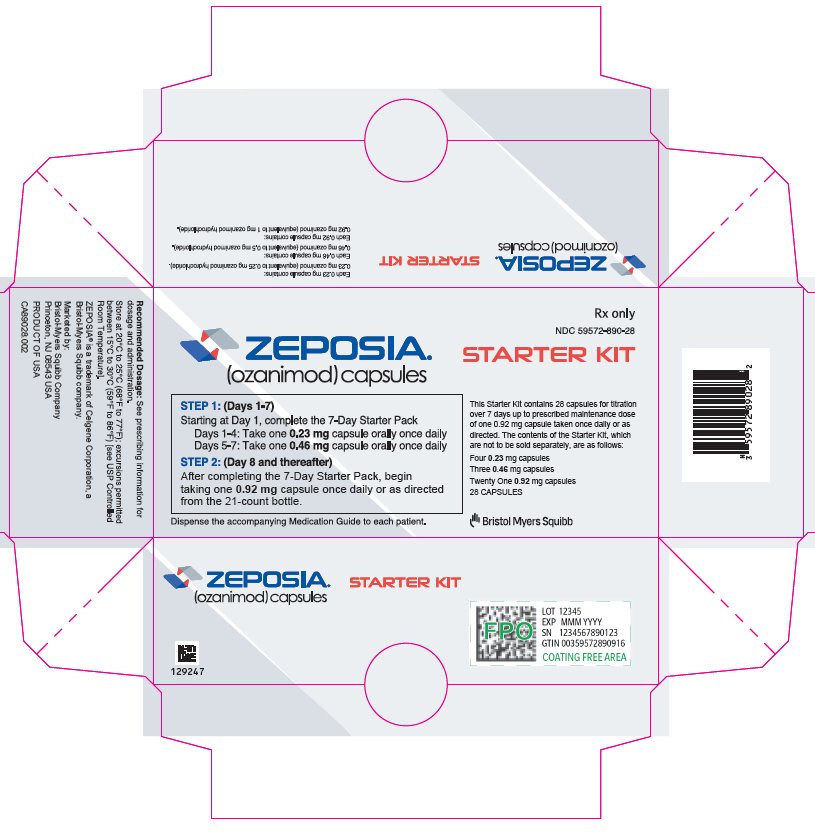
ZEPOSIA Starter Kit ozanimod hydrochloride Kit — NDC 59572-890-28 (Billing 59572-0890-28)
This is a package of ZEPOSIA Starter Kit ozanimod hydrochloride Kit from Celgene Corporation, marketed since Mar 2020 and currently FDA-listed. It is the main listing for this product, which comes in 4 package sizes.
NDC database record
One package, one record: these facts belong to NDC 59572-890-28 alone.
- Record
- FDA NDC Directory package listing · Human prescription drug
- Code segments
- 59572 labeler · 890 product · 28 package
- Package marketed since
- Jun 20, 2023
- Sample package
- No — commercial package
- Listing certified through
- Dec 31, 2027
- Barcode (UPC-A, from the NDC)
- 3 5957289028 2
- FDA record last changed
- Jul 24, 2026
Identity & classification
Regulatory identifiers FDA, NLM and CMS codes for this package
Drug-database identifiers Medi-Span GPI and First Databank GCN / HICL / AHFS classification
- GSN (GCN sequence number): 084883
- GCN: 54286
- GPI-14 (Medi-Span): 6240705020B215
- HICL (First Databank): 046431
- AHFS class code: 90:04.16.00
- RxCUI (RxNorm): 2288406
Where does this data come from?
- FDA openFDA NDC Directory · synced Oct 8, 2026
- FDA label on DailyMed · label index refreshed Oct 6, 2026
- RxNorm (NLM RxNav) · catalog refreshed Oct 1, 2026
- Medi-Span GPI (licensed)
- First Databank (licensed) · refreshed Oct 8, 2026
RxNorm drug class
This medicine belongs to the Sphingosine 1-phosphate Receptor Modulator class.
Where does this data come from?
- RxClass (NLM) · catalog refreshed Oct 1, 2026
Clinical
Ozanimod is used to treat adults with relapsing forms of multiple sclerosis (MS; a disease in which the nerves do not function properly and people may experience weakness, numbness, loss of muscle coordination, and problems with vision, speech, and bladder control) including clinically isolated syndrome (CIS; nerve symptom episodes that last at least 24 hours), relapsing-remitting disease (course of disease where symptoms flare up from time to time), or active secondary progressive disease (later stage of disease with continuous worsening of symptoms). It is also used to treat ulcerative colit...
Read the full MedlinePlus article ↗- It treats adults with relapsing forms of multiple sclerosis. It also treats adults with moderately to severely active ulcerative colitis. Your prescriber chooses it based on your c...
- Swallow the capsule whole once a day, with or without food. You start with a 7-day step-up schedule to ease the effect on your heart rate. If you miss a dose in the first 2 weeks,...
- Common ones include colds and other upper respiratory infections, headache, back pain, urinary tract infections, higher blood pressure, and raised liver tests. Dizziness when stand...
- Yes. Before you start, you need an ECG, blood count, liver tests, an eye exam, and a skin exam. Liver tests, blood pressure, eyes, and skin are checked periodically afterward.
Patient education
Supplement & herbal interactions
Some supplements/herbs that may interact with Ozanimod Hydrochloride — tap one for details:
Where does this data come from?
- MedlinePlus (NLM) · refreshed Oct 1, 2026
- FDA label on DailyMed · label index refreshed Oct 6, 2026
Ask a licensed pharmacist directly — free, answered by our team.
Pricing
A drug doesn't have one price. Each row is a different public payment system, and none is what you'd pay at the counter — that depends on your insurance. The ⓘ on each row explains what it measures.
| Price system | Per each | Per package |
|---|---|---|
| Retail pharmacies payNADAC · weekly | Not in the retail survey — common for institutional, discontinued, or low-volume packs. | |
| Medicaid paysCMS SDUD · 12 mo | No recent Medicaid claims on file for this NDC — rare and low-volume NDCs are suppressed in the public data. | |
| Medicare drug plans payPart D · Q2 2026 | $308.91 | — |
Where does this data come from?
- CMS NADAC weekly file
- CMS ASP pricing files · refreshed Sep 20, 2026
- CMS Medicaid State Drug Utilization Data · refreshed Oct 8, 2026
- CMS Part D plan pricing files · refreshed Sep 24, 2026
- VA National Acquisition Center price file
Packaging — all sizes for this product
| Package NDC | Description | Marketing start | Marketing end | Status |
|---|---|---|---|---|
| 59572-0890-91 59572-890-91 | 1 KIT in 1 CARTON * 1 CAPSULE in 1 BLISTER PACK * 1 CAPSULE in 1 BLISTER PACK * 30 CAPSULE in 1 BOTTLE, PLASTIC | 2020-03-27 | — | Discontinued by firm |
| 59572-0890-97 59572-890-97 | 1 KIT in 1 CARTON * 1 CAPSULE in 1 BLISTER PACK * 1 CAPSULE in 1 BLISTER PACK * 30 CAPSULE in 1 BOTTLE, PLASTIC | 2020-03-27 | — | Discontinued by firm |
| 59572-0890-28 You're viewing this Main listing | 1 KIT in 1 CARTON * 1 CAPSULE in 1 BLISTER PACK * 21 CAPSULE in 1 BOTTLE, PLASTIC * 1 CAPSULE in 1 BLISTER PACK | 2023-06-20 | — | Active |
| 59572-0890-98 59572-890-98 | 1 KIT in 1 CARTON * 1 CAPSULE in 1 BLISTER PACK * 21 CAPSULE in 1 BOTTLE, PLASTIC * 1 CAPSULE in 1 BLISTER PACK | 2023-06-20 | — | Active |
Pack size FAQ
What quantity is in this package?
What NDC number is used to bill for this package of ZEPOSIA Starter Kit ozanimod hydrochloride Kit?
Therapeutic equivalents
| Product | Labeler | Pack | NADAC/unit | TE | Status | Price vs. this |
|---|---|---|---|---|---|---|
| ZEPOSIA Starter Kitthis 59572-0890-28 | Celgene | 21 capsules | — | — | FDA listed | — |
| ZEPOSIA 7-Day Starter Pack 59572-0810-07 | Celgene | 1 capsule | — | — | FDA listed | — |
Where does this data come from?
- FDA openFDA NDC Directory · synced Oct 8, 2026
- FDA Orange Book · refreshed Oct 3, 2026
- CMS NADAC weekly file
Availability & generic status
We did not find an FDA-approved generic match for this exact strength, form and route. Patent/protection dates below may affect future generic timing.
Why the date isn’t exact: Generic timing can change because patents may be challenged, settled, licensed, added, removed, or worked around with a narrower label — and FDA approval does not always mean a pharmacy can get the generic today.
🛈 What do these terms mean?
- Patent
- Legal protection listed in the Orange Book that may delay generic approval or launch. Issued by the U.S. Patent & Trademark Office.
- Substance patent
- Covers the active drug molecule itself — the hardest to design around. A generic generally can’t launch until it expires.
- Formulation (product) patent
- Covers a specific formulation or dosage form. A generic can sometimes work around it with a different formulation.
- Method-of-use patent
- A patent covering one specific approved use of the drug — not necessarily the whole molecule. A generic can sometimes launch with a “skinny label” that carves out the protected use and keeps the others.
- Skinny label
- A generic label that omits a still-patented use when the FDA allows it — letting a generic reach the market for the unprotected uses.
- Exclusivity
- FDA-granted marketing protection, separate from patents — e.g. 5-yr new chemical entity, 7-yr orphan drug, or a +6-month pediatric extension.
- Paragraph IV
- A generic applicant’s formal challenge to a listed patent. It can potentially lead to earlier generic entry, but often involves litigation or a settlement.
- RLD / RS
- Reference Listed Drug — the brand product the FDA uses as the reference for generic applications. Reference Standard — the product the FDA expects generics to compare against in bioequivalence testing.
- TE / AB rating
- FDA therapeutic-equivalence rating. An AB rating generally means the FDA considers a generic therapeutically equivalent to — and substitutable for — the brand.
- LOE (loss of exclusivity)
- The latest patent or exclusivity currently listed — the loss-of-exclusivity / latest-listed-protection date shown on this page. Paragraph-IV challenges and settlements can move the real date earlier; FDA approval and a manufacturer’s decision to market can move it later.
Built from the FDA Orange Book. The bars above are scaled to each protection’s expiry; the red LOE marker is the last one to lapse.
| Patent | Type | Use code | Expires |
|---|---|---|---|
| US 10239846 ↗ | Method of use | U-3740 | Nov 15, 2030 |
| US 10239846 ↗ | Method of use | U-3740 | Nov 15, 2030 |
| US 10239846 ↗ | Method of use | U-3740 | Nov 15, 2030 |
| US 11680050 ↗ | Drug substance | U-2774 | Sep 30, 2038 |
| US 11680050 ↗ | Drug substance | U-2774 | Sep 30, 2038 |
| US 11680050 ↗ | Drug substance | U-2774 | Sep 30, 2038 |
| US 11680050 ↗ | Drug substance | U-3740 | Sep 30, 2038 |
| US 11680050 ↗ | Drug substance | U-3740 | Sep 30, 2038 |
| US 11680050 ↗ | Drug substance | U-3740 | Sep 30, 2038 |
| US 8481573 ↗ | Drug substance | U-2774 | Mar 24, 2033 |
| US 9382217 ↗ | Method of use | U-2774 | May 14, 2029 |
| US 9382217 ↗ | Method of use | U-2774 | May 14, 2029 |
| US 8481573 ↗ | Drug substance | U-2774 | Mar 24, 2033 |
| US 8481573 ↗ | Drug substance | U-2774 | Mar 24, 2033 |
| US 9382217 ↗ | Method of use | U-2774 | May 14, 2029 |
| US 8796318 ↗ | Drug substance | — | May 14, 2029 |
| US 8796318 ↗ | Drug substance | — | May 14, 2029 |
| US 8796318 ↗ | Drug substance | — | May 14, 2029 |
| Code | What it grants | Expires |
|---|---|---|
| M-309 | New indication / labeling change (3-year) | Aug 30, 2027 |
| M-309 | New indication / labeling change (3-year) | Aug 30, 2027 |
| M-309 | New indication / labeling change (3-year) | Aug 30, 2027 |
Is there a generic version of ZEPOSIA STARTER KIT (28-DAY)?
The FDA approved a generic — why can’t I get it at my pharmacy yet?
Why do different websites show different generic release dates?
What does “FDA listed” mean?
What does a patent or protection date mean here?
What does “current Orange Book estimate” mean?
Can a generic come out before the last patent expires?
Can a generic come out after the listed dates?
What is the difference between patents and exclusivity?
Why are there multiple patent dates?
Where does this data come from?
- FDA Orange Book · refreshed Oct 3, 2026
What it looks like
Where does this data come from?
- FDA label on DailyMed · label index refreshed Oct 6, 2026
Inactive Ingredients / Excipients
Inactive ingredients, also called excipients, are components of the drug product other than the active ingredient. They may include fillers, dyes, coatings, preservatives, flavors, or other formulation ingredients.
🧪 Avoiding an ingredient? See Ozanimod inactive ingredients by manufacturer: every current product's list side by side, so you can ask your pharmacy for the version that does not list it.
Where does this data come from?
IACT rows and label-wide narrative are kept separate; availability and product-level specificity depend on the submitted label.- FDA label on DailyMed · label index refreshed Oct 6, 2026
- FDA openFDA NDC Directory · synced Oct 8, 2026
Inactive ingredient FAQ
Are inactive ingredients the same for every manufacturer?
Why might an inactive ingredient be missing?
Can inactive ingredients matter?
Manufacturer & labeler
More NDCs from Celgene Corporation labeler code 59572
- Reblozyl Luspatercept 75 mg Injection, Powder, Lyophilized, For Solution NDC 59572-775-01
- ZEPOSIA 7-Day Starter Pack ozanimod hydrochloride Kit NDC 59572-810-07
- ozanimod hydrochloride .23 mg Capsule NDC 59572-812-00
- ozanimod hydrochloride .46 mg Capsule NDC 59572-814-00
- ozanimod hydrochloride .92 mg Capsule NDC 59572-816-00
- Zeposia ozanimod hydrochloride .92 mg Capsule NDC 59572-820-30
- ISTODAX romidepsin Kit NDC 59572-984-01
Where does this data come from?
- FDA openFDA NDC Directory · synced Oct 8, 2026
- Drugs@FDA
Full prescribing information FDA SPL
🎯 Indications and Usage ▾
1 INDICATIONS AND USAGE ZEPOSIA is indicated for the treatment of: relapsing forms of multiple sclerosis (MS), to include clinically isolated syndrome, relapsing-remitting disease, and active secondary progressive disease, in adults. moderately to severely active ulcerative colitis (UC) in adults. ZEPOSIA is a sphingosine 1-phosphate receptor modulator indicated for the treatment of: Relapsing forms of multiple sclerosis (MS), to include clinically isolated syndrome, relapsing-remitting disease, and active secondary progressive disease, in adults.
( 1 ) Moderately to severely active ulcerative colitis (UC) in adults. ( 1 )
⏱️ Dosage and Administration ▾
2 DOSAGE AND ADMINISTRATION Assessments are required prior to initiating ZEPOSIA. ( 2.1 ) Titration is required for treatment initiation. ( 2.2 ) The recommended maintenance dosage is 0.92 mg orally once daily.
( 2.2 ) The recommended maintenance dosage in patients with mild or moderate chronic hepatic impairment (Child-Pugh class A or B) is 0.92 mg once every other day. ( 2.3 ) If a dose is missed within the first 2 weeks of treatment, reinitiate with the titration regimen. If a dose is missed after the first 2 weeks of treatment, continue treatment as planned.
( 2.4 )
2.1Assessments Prior to First Dose of ZEPOSIA Before initiation of treatment with ZEPOSIA, assess the following: Cardiac Evaluation Obtain an electrocardiogram (ECG) to determine whether preexisting conduction abnormalities are present. In patients with certain preexisting conditions, advice from a cardiologist should be sought [see Warnings and Precautions (5.3) ]. Complete Blood Count Obtain a recent (i.e., within the last 6 months or after discontinuation of prior MS or UC therapy) complete blood count (CBC), including lymphocyte count [see Warnings and Precautions (5.1) ].
Liver Function Tests Obtain recent (i.e., within the last 6 months) transaminase and bilirubin levels [see Warnings and Precautions (5.4) ]. Ophthalmic Assessment Obtain a baseline evaluation of the fundus, including the macula, near the start of treatment with ZEPOSIA [see Warnings and Precautions (5.8) ]. Skin Examination Obtain a baseline skin examination prior to or shortly after initiation of ZEPOSIA.
If a suspicious skin lesion is observed, it should be promptly evaluated [see Warnings and Precautions (5.9) ]. Current or Prior Medications If patients are taking anti-neoplastic, non-corticosteroid immunosuppressive, or immune-modulating therapies, or if there is a history of prior use of these drugs, consider possible unintended additive immunosuppressive effects before initiating treatment with ZEPOSIA [see Warnings and Precautions (5.1) and Drug Interactions (7) ] . Determine if patients are taking drugs that could slow heart rate or atrioventricular conduction [see Warnings and Precautions (5.3) and Drug Interactions (7) ].
Vaccinations Patients without a healthcare professional-confirmed history of chickenpox or without documentation of a full course of vaccination against varicella zoster virus (VZV) should be tested for antibodies to VZV before initiating ZEPOSIA; VZV vaccination of antibody-negative patients is recommended prior to commencing treatment with ZEPOSIA [see Warnings and Precautions (5.1) and Drug Interactions (7) ]. If live attenuated vaccine immunizations are required, administer at least 1 month prior to initiation of ZEPOSIA.
2.2Recommended Dosage for Multiple Sclerosis and Ulcerative Colitis Initiate ZEPOSIA with a 7-day titration, as shown in Table 1 [see Warnings and Precautions (5.3) ]. After initial titration, the recommended dosage of ZEPOSIA is 0.92 mg taken orally once daily starting on Day 8. Swallow ZEPOSIA capsules whole, with or without food [see Clinical Pharmacology (12.3) ].
Table 1: Dose Titration Regimen Days 1-4 0.23 mg once daily Days 5-7 0.46 mg once daily Day 8 and thereafter 0.92 mg once daily* *Patients with mild to moderate hepatic impairment (Child-Pugh class A or B) should take 0.92 mg once every other day [see Recommended Dosage in Patients with Hepatic Impairment (2.3) . ]
2.3Recommended Dosage in Patients with Hepatic Impairment In patients with mild or moderate hepatic impairment (Child-Pugh class A or B), initiate ZEPOSIA with a 7-day titration, as shown in Table 1. After initial titration, the recommended dosage of ZEPOSIA in these patients is 0.92 mg taken orally once every other day, starting on Day 8 [see Use in Specific Populations (8.6) and Clinical Pharmacology (12.3) ] .
2.4Reinitiation of ZEPOSIA after Treatment Interruption If a dose of ZEPOSIA is missed during the first 2 weeks of treatment, reinitiate treatment usi… [Excerpted — this section continues on DailyMed.]
💊 Dosage Forms and Strengths ▾
3 DOSAGE FORMS AND STRENGTHS Capsules: 0.23 mg ozanimod: light grey opaque body/light grey opaque cap imprinted with black ink "OZA" on the cap and "0.23 mg" on the body 0.46 mg ozanimod: light grey opaque body/orange opaque cap imprinted with black ink "OZA" on the cap and "0.46 mg" on the body 0.92 mg ozanimod: orange opaque body/orange opaque cap imprinted with black ink "OZA" on the cap and "0.92 mg" on the body Capsules: 0.23 mg, 0.46 mg, 0.92 mg ozanimod ( 3 )
⛔ Contraindications ▾
4 CONTRAINDICATIONS ZEPOSIA is contraindicated in patients who: In the last 6 months, have experienced a myocardial infarction, unstable angina, stroke, transient ischemic attack (TIA), decompensated heart failure requiring hospitalization, or Class III or IV heart failure [see Warnings and Precautions (5.3) ] Have the presence of Mobitz type II second-degree or third degree atrioventricular (AV) block, sick sinus syndrome, or sino-atrial block, unless the patient has a functioning pacemaker [see Warnings and Precautions (5.3) ] Have severe untreated sleep apnea [see Warnings and Precautions (5.3) ] Are taking a monoamine oxidase (MAO) inhibitor [see Drug Interactions (7) ] In the last 6 months, experienced myocardial infarction, unstable angina, stroke, transient ischemic attack, decompensated heart failure requiring hospitalization, or Class III or IV heart failure.
( 4 ) Presence of Mobitz type II second-degree or third degree atrioventricular (AV) block, sick sinus syndrome, or sino-atrial block, unless the patient has a functioning pacemaker. ( 4 ) Severe untreated sleep apnea. ( 4 ) Concomitant use of a monoamine oxidase inhibitor.
( 4 , 7 )
⚠️ Warnings and Cautions ▾
5 WARNINGS AND PRECAUTIONS Infections : ZEPOSIA may increase the risk of infections. Obtain a complete blood count (CBC) before initiation of treatment. Monitor for infection during treatment and for 3 months after discontinuation.
Do not start ZEPOSIA in patients with active infections. ( 5.1 ) Progressive Multifocal Leukoencephalopathy (PML) : Withhold ZEPOSIA at the first sign or symptom suggestive of PML. ( 5.2 ) Bradyarrhythmia and Atrioventricular Conduction Delays : ZEPOSIA may result in transient decrease in heart rate; titration is required for treatment initiation.
Check an electrocardiogram (ECG) to assess for preexisting cardiac conduction abnormalities before starting ZEPOSIA. Consider cardiology consultation for conduction abnormalities or concomitant use with other drugs that decrease heart rate. ( 2.1 , 2.2 , 5.3 , 7 ) Liver Injury : Obtain liver enzyme results before initiation and periodically during treatment.
Discontinue if there is evidence of liver injury without other cause. ( 5.4 ) Fetal Risk : Women of childbearing potential should use effective contraception during treatment and for 3 months after stopping ZEPOSIA. ( 5.5 , 8.3 ) Increased Blood Pressure (BP) : Monitor BP during treatment.
( 5.6 ) Respiratory Effects : May cause a decline in pulmonary function. Assess pulmonary function (e.g., spirometry) if clinically indicated. ( 5.7 ) Macular Edema : Increases the risk of macular edema.
Obtain a baseline evaluation of the fundus, including the macula, near the start of treatment with ZEPOSIA. Conduct an evaluation of the fundus, including the macula, periodically while on therapy and any time there is a change in vision. Consider discontinuing ZEPOSIA if macular edema develops.
Diabetes mellitus and uveitis increase the risk. ( 5.8 ) Cutaneous Malignancies : Skin examination prior to or shortly after the start of treatment and periodically thereafter is recommended. Suspicious skin lesions should be evaluated.
( 5.9 )
5.1Infections Risk of Infections ZEPOSIA causes a mean reduction in peripheral blood lymphocyte count to approximately 45% of baseline values because of reversible sequestration of lymphocytes in lymphoid tissues [see Clinical Pharmacology (12.2) ]. ZEPOSIA may therefore increase the susceptibility to infections, some serious in nature . Life-threatening and rare fatal infections have occurred in patients receiving ZEPOSIA.
Obtain a recent (i.e., within 6 months or after discontinuation of prior MS or UC therapy) complete blood count (CBC) including lymphocyte count before initiation of ZEPOSIA . Delay initiation of ZEPOSIA in patients with an active infection until the infection is resolved. In MS Study 1 and Study 2, the overall rate of infections and rate of serious infections in patients treated with ZEPOSIA were similar to that in patients who received interferon (IFN) beta-1a (35% vs.
34% and 1% vs. 0.8%, respectively). In UC Study 1 and Study 3, the overall rate of infections and rate of serious infections in patients treated with ZEPOSIA were similar to that in patients who received placebo (9.9% vs.
10.7% and 0.8% vs. 0.4%, respectively). In UC Study 2, the overall rate of infections in patients treated with ZEPOSIA was higher than in patients treated with placebo (23% vs.
12%) and the rate of serious infections was similar (0.9% vs. 1.8%). ZEPOSIA increased the risk of viral upper respiratory tract infections, urinary tract infections, and herpes infections [see Adverse Reactions (6.1) ].
The proportion of patients treated with ZEPOSIA who experienced lymphocyte counts less than 0.2 × 10 9 /L was 3.3% in MS Study 1 and Study 2. The proportion of patients treated with ZEPOSIA with lymphocyte counts less than 0.2 × 10 9 /L was 2% in UC Study 1 and Study 3 and 2.3% in UC Study 2. These values generally returned to greater than 0.2 × 10 9 /L while patients remained on treatment with ZEPOSIA.
After discontinuing ZEPOSIA 0.92 mg, the median time for peripheral blood lymphocytes to… [Excerpted — this section continues on DailyMed.]
🤒 Adverse Reactions ▾
6 ADVERSE REACTIONS The following serious adverse reactions are described elsewhere in the labeling: Infections [see Warnings and Precautions (5.1) ] Progressive Multifocal Leukoencephalopathy [see Warnings and Precautions (5.2) ] Bradyarrhythmia and Atrioventricular Conduction Delays [see Warnings and Precautions (5.3) ] Liver Injury [see Warnings and Precautions (5.4) ] Fetal Risk [see Warnings and Precautions (5.5) ] Increased Blood Pressure [see Warnings and Precautions (5.6) ] Respiratory Effects [see Warnings and Precautions (5.7) ] Macular Edema [see Warnings and Precautions (5.8) ] Cutaneous Malignancies [see Warnings and Precautions (5.9) ] Posterior Reversible Encephalopathy Syndrome [see Warnings and Precautions (5.10) ] Unintended Additive Immunosuppressive Effects from Prior Treatment with Immunosuppressive or Immune-Modulating Drugs [see Warnings and Precautions (5.11) ] Severe Increase in Multiple Sclerosis Disability after Stopping ZEPOSIA [see Warnings and Precautions (5.12) ] Immune System Effects after Stopping ZEPOSIA [see Warnings and Precautions (5.13) ] Most common adverse reactions (incidence ≥4%) are: Multiple Sclerosis : upper respiratory infection, hepatic transaminase elevation, orthostatic hypotension, urinary tract infection, back pain, and hypertension.
( 6.1 ) Ulcerative Colitis : liver test increased, upper respiratory infection, and headache. ( 6.1 ) To report SUSPECTED ADVERSE REACTIONS, contact Bristol-Myers Squibb at 1-800-721-5072 or FDA at 1-800-FDA-1088 or www.fda.gov/medwatch .
6.1Clinical Trials Experience Because clinical trials are conducted under widely varying conditions, adverse reaction rates observed in the clinical trials of a drug cannot be directly compared to rates in the clinical trials of another drug and may not reflect the rates observed in clinical practice. Common Adverse Reactions Multiple Sclerosis The safety of ZEPOSIA was evaluated in two randomized, double-blind, active comparator-controlled clinical studies (MS Study 1 and MS Study 2) in which 882 patients received ZEPOSIA 0.92 mg [see Clinical Studies (14.1) ].
Table 2 lists adverse reactions that occurred in at least 2% of ZEPOSIA-treated patients and greater than comparator. The most common adverse reactions that occurred in at least 4% of ZEPOSIA-treated patients and greater than in patients who received IFN beta-1a were upper respiratory infection, hepatic transaminase elevation, orthostatic hypotension, urinary tract infection, back pain, and hypertension. Table 2: Adverse Reactions with an Incidence of at Least 2% in ZEPOSIA-Treated Patients and at Least 1% Greater than IFN beta-1a in Patients with Multiple Sclerosis (Pooled MS Study 1 and Study 2) a a Data are not an adequate basis for comparison of rates between ZEPOSIA and the active control. b Includes the following terms: nasopharyngitis, upper respiratory tract infection, pharyngitis, respiratory tract infection, bronchitis, rhinitis, viral respiratory tract infection, viral upper respiratory tract infection, rhinorrhea, tracheitis, and laryngitis. c Includes the following terms: alanine aminotransferase increased, gamma-glutamyl transferase increased, aspartate aminotransferase increased, hepatic enzyme increased, abnormal liver function test, and increased transaminases. d Includes hypertension, essential hypertension, and orthostatic hypertension. e ZEPOSIA was initiated with a 7-day titration [see Dosage and Administration (2.2) ].
Adverse Reactions MS Studies 1 and 2 ZEPOSIA 0.92 mg Once Daily e (n=882) % IFN beta-1a 30 mcg Intramuscularly Once Weekly (n=885) % Upper respiratory infection b 26 23 Hepatic transaminase elevation c 10 5 Orthostatic hypotension 4 3 Urinary tract infection 4 3 Back pain 4 3 Hypertension d 4 2 Upper abdominal pain 2 1 Ulcerative Colitis The safety of ZEPOSIA was evaluated in two randomized, double-blind, placebo-controlled clinical studies [UC Study 1 (induction), n=429; and UC Study 2 (maintenance), n=230] in adult… [Excerpted — this section continues on DailyMed.]
🔄 Drug Interactions ▾
7 DRUG INTERACTIONS Tables 5 and 6 include drugs with clinically important drug and vaccine interactions when administered concomitantly with ZEPOSIA and instructions for preventing or managing them. Table 5: Clinically Relevant Interactions Affecting Drugs and Vaccines Co-administered with ZEPOSIA Anti-Neoplastic, Immune-Modulating, or Non-Corticosteroid Immunosuppressive Therapies Clinical Impact: ZEPOSIA has not been studied in combination with anti-neoplastic, immune-modulating, or non-corticosteroid immunosuppressive therapies with the exception of cyclosporine, which had no pharmacokinetic interaction [see Clinical Pharmacology (12.3) ] .
Prevention or Management: Caution should be used during concomitant administration because of the risk of additive immune effects during such therapy and in the weeks following administration [see Warnings and Precautions (5.1) ] . When switching from drugs with prolonged immune effects, the half-life and mode of action of these drugs must be considered in order to avoid unintended additive immunosuppressive effects [see Warnings and Precautions (5.11) ] . Alemtuzumab : Initiating treatment with ZEPOSIA after alemtuzumab is not recommended because of the characteristics and duration of alemtuzumab immune suppressive effects.
Beta interferon or glatiramer acetate : ZEPOSIA can generally be started immediately after discontinuation of beta interferon or glatiramer acetate. Anti-Arrhythmic Drugs, QT Prolonging Drugs, Drugs That May Decrease Heart Rate Clinical Impact: ZEPOSIA has not been studied in patients taking QT prolonging drugs. Class Ia (e.g., quinidine, procainamide) and Class III (e.g., amiodarone, sotalol) anti-arrhythmic drugs have been associated with cases of Torsades de Pointes in patients with bradycardia.
Prevention or Management: If treatment with ZEPOSIA is considered in patients on Class Ia or Class III anti-arrhythmic drugs, advice from a cardiologist should be sought [see Warnings and Precautions (5.3) ] . Because of the potential additive effects on heart rate, treatment with ZEPOSIA should generally not be initiated in patients who are concurrently treated with QT prolonging drugs with known arrhythmogenic properties [see Warnings and Precautions (5.3) ]. If treatment initiation with ZEPOSIA is considered in patients on QT prolonging drugs, advice from a cardiologist should be sought.
Combination Beta Blocker and Calcium Channel Blocker Clinical Impact : The co-administration of ZEPOSIA with both a beta blocker and a calcium channel blocker has not been studied. However, there is a potential of additive effects on heart rate. Prevention or Management: Treatment with ZEPOSIA should generally not be initiated in patients who are concurrently treated with both a heart rate lowering calcium channel blocker (e.g., verapamil, diltiazem) and beta blocker [see Warnings and Precautions (5.3) ].
If treatment initiation with ZEPOSIA is considered in patients on both a heart rate lowering calcium channel blocker and beta blocker, advice from a cardiologist should be sought. Vaccination Clinical Impact: During, and for up to three months after, discontinuation of treatment with ZEPOSIA, vaccinations may be less effective. The use of live attenuated vaccines may carry the risk of infection.
Prevention or Management: Live attenuated vaccines should be avoided during ZEPOSIA treatment and for up to 3 months after discontinuation of treatment with ZEPOSIA [see Warnings and Precautions (5.1) ] . Table 6: Clinically Relevant Interactions Affecting ZEPOSIA When Co-administered with Other Drugs Monoamine Oxidase (MAO) Inhibitors Clinical Impact: The effect of MAO inhibition on ozanimod and/or its metabolites has not been studied clinically. Potential effects on efficacy or safety with co-administration of MAO inhibitors because of altered exposures of ozanimod and/or its metabolites cannot be ruled out.
Prevention or Management: Co-administration of ZEPOSIA with MAO inhibitors (e.g., se… [Excerpted — this section continues on DailyMed.]
👥 Use in Specific Populations ▾
8 USE IN SPECIFIC POPULATIONS Hepatic Impairment : Use in severe hepatic impairment (Child-Pugh class C) is not recommended. ( 2.3 , 8.6 )
8.1Pregnancy Pregnancy Exposure Registry There is a pregnancy exposure registry that monitors pregnancy outcomes in women exposed to ZEPOSIA during pregnancy. Healthcare providers are encouraged to register patients on-line, or pregnant women may register themselves at https://www.zeposiapregnancyregistry.com/ or by calling 1-877-301-9314. Currently this registry is enrolling women with MS.
Information regarding registration of pregnant women with UC will be made available in the future. Risk Summary There are no adequate data on the developmental risk associated with the use of ZEPOSIA in pregnant women . In animal studies, administration of ozanimod during pregnancy produced adverse effects on development, including embryolethality, an increase in fetal malformations, and neurobehavioral changes, in the absence of maternal toxicity.
In rabbits, fetal blood vessel malformations occurred at clinically relevant maternal ozanimod and metabolite exposures (see Data) . The receptor affected by ozanimod (sphingosine1-phosphate) has been demonstrated to have an important role in embryogenesis, including vascular and neural development. In the U.S. general population, the estimated background risk of major birth defects and miscarriage in clinically recognized pregnancies is 2% to 4% and 15% to 20%, respectively.
The background risk of major birth defects and miscarriage for the indicated population is unknown. Data Animal Data Oral administration of ozanimod (0, 0.2, 1, or 5 mg/kg/day) to female rats during organogenesis resulted in a marked increase in embryofetal mortality, increased fetal malformations and skeletal variations (abnormal/delayed ossification), and reduced fetal body weight at the highest dose tested. No maternal toxicity was observed.
At the no-effect dose (1 mg/kg/day) for adverse effects on embryofetal development, plasma ozanimod exposure (AUC) for ozanimod was approximately 60 times that in humans at the maximum recommended human dose (MRHD) of 0.92 mg/day. Plasma AUCs for major human metabolites, CC112273 and CC1084037, were similar to and less than, respectively, those in humans at the MRHD. Oral administration of ozanimod (0, 0.2, 0.6, or 2.0 mg/kg/day) to female rabbits during organogenesis resulted in a marked increase in embryofetal mortality at the highest dose tested and increased fetal malformations (malformed blood vessels) and skeletal variations at the mid and high doses.
Maternal toxicity was not observed. At the no-effect dose (0.2 mg/kg/day) for adverse effects on embryofetal development in rabbit, plasma ozanimod exposure (AUC) was approximately 2 times that in humans at the MRHD; plasma AUCs for major human metabolites, CC112273 and CC1084037, were less than those in humans at the MRHD. Oral administration of ozanimod (0, 0.2, 0.7, or 2 mg/kg/day) to female rats throughout gestation and lactation resulted in persistent body weight reductions and long-term effects on reproductive (prolonged estrus cycle) and neurobehavioral (increased motor activity) function in offspring at the highest dose tested, which was not associated with maternal toxicity.
At the no-effect dose (0.7 mg/kg/day) for adverse effects on pre- and postnatal development, plasma ozanimod exposure (AUC) was 30 times that in humans at the MRHD; plasma AUCs for major human metabolites, CC112273 and CC1084037, were less than those in humans at the MRHD.
8.2Lactation Risk Summary There are no data on the presence of ozanimod in human milk, the effects on the breastfed infant, or the effects of the drug on milk production. Following oral administration of ozanimod, ozanimod and/or metabolites were detected in the milk of lactating rat at levels higher than those in maternal plasma. The developmental and health benefits of breastfeeding should be considered along with the mother's clinical need fo… [Excerpted — this section continues on DailyMed.]
🤰 Pregnancy ▾
8.1Pregnancy Pregnancy Exposure Registry There is a pregnancy exposure registry that monitors pregnancy outcomes in women exposed to ZEPOSIA during pregnancy. Healthcare providers are encouraged to register patients on-line, or pregnant women may register themselves at https://www.zeposiapregnancyregistry.com/ or by calling 1-877-301-9314. Currently this registry is enrolling women with MS.
Information regarding registration of pregnant women with UC will be made available in the future. Risk Summary There are no adequate data on the developmental risk associated with the use of ZEPOSIA in pregnant women . In animal studies, administration of ozanimod during pregnancy produced adverse effects on development, including embryolethality, an increase in fetal malformations, and neurobehavioral changes, in the absence of maternal toxicity.
In rabbits, fetal blood vessel malformations occurred at clinically relevant maternal ozanimod and metabolite exposures (see Data) . The receptor affected by ozanimod (sphingosine1-phosphate) has been demonstrated to have an important role in embryogenesis, including vascular and neural development. In the U.S. general population, the estimated background risk of major birth defects and miscarriage in clinically recognized pregnancies is 2% to 4% and 15% to 20%, respectively.
The background risk of major birth defects and miscarriage for the indicated population is unknown. Data Animal Data Oral administration of ozanimod (0, 0.2, 1, or 5 mg/kg/day) to female rats during organogenesis resulted in a marked increase in embryofetal mortality, increased fetal malformations and skeletal variations (abnormal/delayed ossification), and reduced fetal body weight at the highest dose tested. No maternal toxicity was observed.
At the no-effect dose (1 mg/kg/day) for adverse effects on embryofetal development, plasma ozanimod exposure (AUC) for ozanimod was approximately 60 times that in humans at the maximum recommended human dose (MRHD) of 0.92 mg/day. Plasma AUCs for major human metabolites, CC112273 and CC1084037, were similar to and less than, respectively, those in humans at the MRHD. Oral administration of ozanimod (0, 0.2, 0.6, or 2.0 mg/kg/day) to female rabbits during organogenesis resulted in a marked increase in embryofetal mortality at the highest dose tested and increased fetal malformations (malformed blood vessels) and skeletal variations at the mid and high doses.
Maternal toxicity was not observed. At the no-effect dose (0.2 mg/kg/day) for adverse effects on embryofetal development in rabbit, plasma ozanimod exposure (AUC) was approximately 2 times that in humans at the MRHD; plasma AUCs for major human metabolites, CC112273 and CC1084037, were less than those in humans at the MRHD. Oral administration of ozanimod (0, 0.2, 0.7, or 2 mg/kg/day) to female rats throughout gestation and lactation resulted in persistent body weight reductions and long-term effects on reproductive (prolonged estrus cycle) and neurobehavioral (increased motor activity) function in offspring at the highest dose tested, which was not associated with maternal toxicity.
At the no-effect dose (0.7 mg/kg/day) for adverse effects on pre- and postnatal development, plasma ozanimod exposure (AUC) was 30 times that in humans at the MRHD; plasma AUCs for major human metabolites, CC112273 and CC1084037, were less than those in humans at the MRHD.
🧒 Pediatric Use ▾
8.4Pediatric Use Safety and effectiveness in pediatric patients have not been established.
🧓 Geriatric Use ▾
8.5Geriatric Use Clinical studies of ZEPOSIA did not include sufficient numbers of subjects aged 65 and over to determine whether they respond differently from younger subjects. No clinically significant differences in the pharmacokinetics of ozanimod and CC112273 were observed based on age [see Clinical Pharmacology (12.3) ]. Monitor elderly patients for cardiac and hepatic adverse reactions, because of the greater frequency of reduced cardiac and hepatic function in the elderly population.
🧬 Clinical Pharmacology ▾
12 CLINICAL PHARMACOLOGY
12.1Mechanism of Action Ozanimod is a sphingosine 1-phosphate (S1P) receptor modulator that binds with high affinity to S1P receptors 1 and 5. Ozanimod blocks the capacity of lymphocytes to egress from lymph nodes, reducing the number of lymphocytes in peripheral blood. Ozanimod has minimal or no activity on S1P 2 , S1P 3 , and S1P 4 .
The mechanism by which ozanimod exerts therapeutic effects in multiple sclerosis and ulcerative colitis is unknown but may involve the reduction of lymphocyte migration into the central nervous system and intestine.
12.2Pharmacodynamics Reduction in Blood Lymphocyte Counts In active-controlled MS and controlled UC clinical trials, mean lymphocyte counts decreased to approximately 45% of baseline at 3 months (approximate mean blood lymphocyte counts 0.8 × 10 9 /L), and low lymphocyte counts were maintained during treatment with ZEPOSIA [see Warnings and Precautions (5.1) ]. After discontinuing ZEPOSIA 0.92 mg, the median time for peripheral blood lymphocytes to return to the normal range was 30 days, with approximately 90% of patients in the normal range within 3 months.
Reduction in Heart Rate ZEPOSIA may cause a transient decrease in heart rate on initiation of dosing [see Warnings and Precautions (5.3) ]. An up-titration schedule of ZEPOSIA 0.23 mg followed by doses of 0.46 mg, and 0.92 mg attenuates the magnitude of heart rate reductions [see Dosage and Administration (2.2) ]. Tyramine Challenge Test No clinically significant effect in tyramine induced pressor response was observed when steady state ZEPOSIA 0.92 mg (recommended dose) or 1.84 mg was co-administered with increasing doses of oral tyramine (a monoamine oxidase substrate).
Drug Interaction Studies Sympathomimetic Agents No clinically significant differences in heart rate or blood pressure was observed when ZEPOSIA 1.84 mg daily (two times the recommended dosage) for 28 days was co-administered with a single dose of 60 mg pseudoephedrine (a sympathomimetic agent) compared to pseudoephedrine alone. Beta Blocker or Calcium Channel Blocker The effect of co-administration of the maintenance dosage of ZEPOSIA, propranolol, or diltiazem, or administration with both a beta blocker and a calcium channel blocker taken together has not been studied [see Drug Interactions (7) ] .
Pulmonary Function Dose-dependent reductions in FEV 1 and FVC were observed in patients treated with ZEPOSIA [see Warnings and Precautions (5.7) ]. Cardiac Electrophysiology Following a 14-day titration regimen of once daily doses of ozanimod 0.23 mg for 4 days, 0.46 mg for 3 days, 0.92 mg for 3 days, and 1.84 mg (2 times the maximum approved recommended dose) for 4 days in healthy subjects, ZEPOSIA did not prolong the QTc interval to any clinically relevant extent [see Warnings and Precautions (5.3) ].
12.3Pharmacokinetics The steady state exposure parameters of ozanimod and its major active metabolite, CC112273 are summarized in Table 7. Population pharmacokinetic analysis indicated no meaningful differences in these pharmacokinetic parameters in patients with relapsing MS or UC. Table 7: Exposure Parameters of Ozanimod and its Major Metabolite a a Mean [coefficient of variation (CV%)] following ozanimod 0.92 mg once daily dose in relapsing MS patients, unless otherwise specified. b In healthy subjects.
C max,ss = maximum observed plasma concentration at steady state, AUC tau,ss = area under the plasma concentration-time curve during a dosage interval at steady state. Parameters Ozanimod CC112273 C max,ss 0.244 ng/mL (31.8%) 6.98 ng/mL (42.7%) AUC tau,ss 4.46 ng*h/mL (31.8%) 143.77 ng*h/mL (39.2%) Dose Proportionality The C max and AUC increases proportionally over the ozanimod dose range from 0.46 mg to 0.92 mg. Time to Steady State 102 hours (28.2%) b 45 days (45%) Accumulation Ratio 2.40 (21.1%) b 16 (101%) Absorption The T max of ozanimod is approximately 6 to 8 hours.
Effect of Food No clinically significant differences in the C max… [Excerpted — this section continues on DailyMed.]
🧬 Mechanism of Action ▾
12.1Mechanism of Action Ozanimod is a sphingosine 1-phosphate (S1P) receptor modulator that binds with high affinity to S1P receptors 1 and 5. Ozanimod blocks the capacity of lymphocytes to egress from lymph nodes, reducing the number of lymphocytes in peripheral blood. Ozanimod has minimal or no activity on S1P 2 , S1P 3 , and S1P 4 .
The mechanism by which ozanimod exerts therapeutic effects in multiple sclerosis and ulcerative colitis is unknown but may involve the reduction of lymphocyte migration into the central nervous system and intestine.
📦 How Supplied / Storage and Handling ▾
16 HOW SUPPLIED/STORAGE AND HANDLING
16.1How Supplied ZEPOSIA is available as capsules in the following dosage strengths: 0.23 mg ozanimod: light grey opaque body/light grey opaque cap imprinted with black ink "OZA" on the cap and "0.23 mg" on the body 0.46 mg ozanimod: light grey opaque body/orange opaque cap imprinted with black ink "OZA" on the cap and "0.46 mg" on the body 0.92 mg ozanimod: orange opaque body/orange opaque cap imprinted with black ink "OZA" on the cap and "0.92 mg" on the body Capsules are supplied in the following strengths and package configurations: Package configuration Tablet strength NDC number Bottles of 30 0.92 mg ozanimod 59572-820-30 7-Day Starter Pack 7-capsule starter pack containing: (4) 0.23 mg ozanimod capsules and (3) 0.46 ozanimod mg capsules 59572-810-07 Starter Kit (7-Day Starter Pack and 0.92 mg 30-count Bottle) 37-capsule starter kit including: one 7-capsule starter pack containing: (4) 0.23 mg ozanimod capsules and (3) 0.46 mg ozanimod capsules and one bottle containing: (30) 0.92 mg ozanimod capsules 59572-890-91 59572-890-07 59572-890-30 Starter Kit (7-Day Starter Pack and 0.92 mg 21-count Bottle) 28-capsule starter kit including: one 7-capsule starter pack containing: (4) 0.23 mg ozanimod capsules and (3) 0.46 mg ozanimod capsules and one bottle containing: (21) 0.92 mg ozanimod capsules 59572-890-28 59572-890-07 59572-890-21
16.2Storage Store at 20°C to 25°C (68°F to 77°F); excursions permitted between 15°C to 30°C (59°F to 86°F) [see USP Controlled Room Temperature].
📦 Storage and Handling ▾
16.2Storage Store at 20°C to 25°C (68°F to 77°F); excursions permitted between 15°C to 30°C (59°F to 86°F) [see USP Controlled Room Temperature].
📋 Description ▾
11 DESCRIPTION ZEPOSIA contains ozanimod, a sphingosine 1-phosphate receptor modulator and is supplied as ozanimod hydrochloride (HCl). The chemical name of ozanimod HCl is 5-(3-{(1S)-1-[(2-hydroxyethyl)amino]-2,3-dihydro-1 H -inden-4-yl}-1,2,4-oxadiazol-5-yl)-2-[(propan-2-yl)oxy]benzonitrile, monohydrochloride. Ozanimod HCl is a white to off-white solid that is freely soluble in water and alcohol with a molecular weight of 440.92 g/mol.
The chemical structure is: ZEPOSIA capsules are provided as hard gelatin capsules for oral administration, containing 0.23, 0.46, or 0.92 mg of ozanimod (equivalent to 0.25, 0.5, and 1 mg ozanimod HCl, respectively). ZEPOSIA capsules consist of the following inactive ingredients: colloidal silicon dioxide, croscarmellose sodium, magnesium stearate, and microcrystalline cellulose. The capsule shell, imprinted with black ink, contains the following inactive ingredients: black iron oxide, gelatin, red iron oxide, titanium dioxide, and yellow iron oxide. zeposia-chem-structure
💬 Information for Patients ▾
17 PATIENT COUNSELING INFORMATION Advise the patient to read the FDA-approved patient labeling (Medication Guide). Risk of Infections Inform patients that they may be more likely to get infections, some of which could be life-threatening, when taking ZEPOSIA and for 3 months after stopping it, and that they should contact their healthcare provider if they develop symptoms of infection [see Warnings and Precautions (5.1) ]. Inform patients that prior or concomitant use of drugs that suppress the immune system may increase the risk of infection.
Advise patients that some vaccines containing live virus (live attenuated vaccines) should be avoided during treatment with ZEPOSIA. Advise patients that if immunizations are planned, they should be administered at least 1 month prior to initiation of ZEPOSIA. Inform patients that the use of live attenuated vaccines should be avoided during and for 3 months after treatment with ZEPOSIA.
Progressive Multifocal Leukoencephalopathy Inform patients that cases of progressive multifocal leukoencephalopathy (PML) have occurred in patients who received ZEPOSIA and other S1P receptor modulators. Inform the patient that PML is characterized by a progression of deficits and usually leads to death or severe disability over weeks or months. Instruct the patient of the importance of contacting their healthcare provider if they develop any symptoms suggestive of PML.
Inform the patient that typical symptoms associated with PML are diverse, progress over days to weeks, and include progressive weakness on one side of the body or clumsiness of limbs, disturbance of vision, and changes in thinking, memory, and orientation leading to confusion and personality changes [see Warnings and Precautions (5.2) ] . Cardiac Effects Advise patients that initiation of ZEPOSIA treatment may result in a transient decrease in heart rate . Inform patients that to reduce this effect, dose titration is required.
Advise patients that the dose titration is also required if a dose is missed for 1 day or more during the first 14 days of treatment [see Dosage and Administration (2.2 , 2.4) and Warnings and Precautions (5.3) ]. Liver Injury Inform patients that ZEPOSIA may cause liver injury. Advise patients that they should contact their healthcare provider if they have any unexplained nausea, vomiting, abdominal pain, fatigue, anorexia, or jaundice and/or dark urine [see Warnings and Precautions (5.4) ].
Pregnancy and Fetal Risk Inform patients that, based on animal studies, ZEPOSIA may cause fetal harm . Discuss with women of childbearing age whether they are pregnant, might be pregnant, or are trying to become pregnant. Advise women of childbearing potential of the need for effective contraception during treatment with ZEPOSIA and for 3 months after stopping ZEPOSIA.
Advise a female patient to immediately inform her healthcare provider if she is pregnant or planning to become pregnant [see Warnings and Precautions (5.5) and Use in Specific Populations (8.3) ]. Pregnancy Registry Encourage multiple sclerosis patients to enroll in the ZEPOSIA Pregnancy Registry if they become pregnant while taking ZEPOSIA [see Use in Specific Populations (8.1) ] . Respiratory Effects Advise patients that they should contact their healthcare provider if they experience new onset or worsening dyspnea [see Warnings and Precautions (5.7) ].
Macular Edema Advise patients that ZEPOSIA may cause macular edema, and that they should obtain an eye exam near the start of treatment with ZEPOSIA, have their eyes monitored periodically by an eye care professional while receiving therapy, and contact their healthcare provider if they experience any changes in their vision while taking ZEPOSIA. Inform patients with diabetes mellitus or a history of uveitis that their risk of macular edema may be increased [see Warnings and Precautions (5.8) ]. Cutaneous Malignancies Inform patients that the risk of basal cell carcinoma, squamous cell carcinoma, and melanoma is… [Excerpted — this section continues on DailyMed.]
💬 Medication Guide ▾
MEDICATION GUIDE ZEPOSIA ® (zeh-poe'-see-ah) (ozanimod) capsules, for oral use Read this Medication Guide before you start taking ZEPOSIA and each time you get a refill. There may be new information. This Medication Guide does not take the place of talking with your healthcare provider about your medical condition or treatment.
What is the most important information I should know about ZEPOSIA? ZEPOSIA may cause serious side effects, including: Infections. ZEPOSIA can increase your risk of serious infections that can be life-threatening and cause death.
ZEPOSIA lowers the number of white blood cells (lymphocytes) in your blood. This will usually go back to normal within 3 months of stopping treatment. Your healthcare provider may do a blood test of your white blood cells before you start taking ZEPOSIA.
Call your healthcare provider right away if you have any of the following symptoms of an infection during treatment with ZEPOSIA and for 3 months after your last dose of ZEPOSIA: fever feeling very tired flu-like symptoms cough painful and frequent urination (signs of a urinary tract infection) rash headache with fever, neck stiffness, sensitivity to light, nausea or confusion (these may be symptoms of meningitis, an infection of the lining around your brain and spine) Your healthcare provider may delay starting or may stop your ZEPOSIA treatment if you have an infection.
Progressive multifocal leukoencephalopathy (PML). ZEPOSIA can increase your risk for PML, which is a rare brain infection that usually leads to death or severe disability. If PML happens, it usually happens in people with weakened immune systems but has happened in people who do not have weakened immune systems.
Symptoms of PML get worse over days to weeks. Call your doctor right away if you have any new or worsening symptoms of PML that have lasted several days, including: weakness on 1 side of your body loss of coordination in your arms or legs decreased strength problems with balance changes in your vision changes in your thinking or memory confusion changes in your personality Slow heart rate (also known as bradyarrhythmia) when you start taking ZEPOSIA. ZEPOSIA may cause your heart rate to temporarily slow down, especially during the first 8 days that you take ZEPOSIA.
You will have a test to check the electrical activity of your heart called an electrocardiogram (ECG) before you take your first dose of ZEPOSIA. Call your healthcare provider if you experience the following symptoms of slow heart rate: dizziness lightheadedness feeling like your heart is beating slowly or skipping beats shortness of breath confusion chest pain tiredness Follow directions from your healthcare provider when starting ZEPOSIA and when you miss a dose. See "How should I take ZEPOSIA?".
See " What are possible side effects of ZEPOSIA? " for more information about side effects. What is ZEPOSIA? ZEPOSIA is a prescription medicine used to treat: adults with relapsing forms of multiple sclerosis (MS), to include clinically isolated syndrome, relapsing-remitting disease, and active secondary progressive disease. adults with moderately to severely active ulcerative colitis.
It is not known if ZEPOSIA is safe and effective in children. Do not take ZEPOSIA if you: have had a heart attack, chest pain (unstable angina), stroke or mini-stroke (transient ischemic attack or TIA), or certain types of heart failure in the last 6 months. have or have had a history of certain types of an irregular or abnormal heartbeat (arrhythmia) that is not corrected by a pacemaker. have untreated, severe breathing problems during your sleep (sleep apnea). take certain medicines called monoamine oxidase (MAO) inhibitors (such as selegiline, phenelzine, linezolid).
Talk to your healthcare provider before taking ZEPOSIA if you have any of these conditions or do not know if you have any of these conditions. Before taking ZEPOSIA, tell your healthcare provider about all of your medical conditions, including if yo… [Excerpted — this section continues on DailyMed.]
🧬 Pharmacokinetics ▾
12.3Pharmacokinetics The steady state exposure parameters of ozanimod and its major active metabolite, CC112273 are summarized in Table 7. Population pharmacokinetic analysis indicated no meaningful differences in these pharmacokinetic parameters in patients with relapsing MS or UC. Table 7: Exposure Parameters of Ozanimod and its Major Metabolite a a Mean [coefficient of variation (CV%)] following ozanimod 0.92 mg once daily dose in relapsing MS patients, unless otherwise specified. b In healthy subjects.
C max,ss = maximum observed plasma concentration at steady state, AUC tau,ss = area under the plasma concentration-time curve during a dosage interval at steady state. Parameters Ozanimod CC112273 C max,ss 0.244 ng/mL (31.8%) 6.98 ng/mL (42.7%) AUC tau,ss 4.46 ng*h/mL (31.8%) 143.77 ng*h/mL (39.2%) Dose Proportionality The C max and AUC increases proportionally over the ozanimod dose range from 0.46 mg to 0.92 mg. Time to Steady State 102 hours (28.2%) b 45 days (45%) Accumulation Ratio 2.40 (21.1%) b 16 (101%) Absorption The T max of ozanimod is approximately 6 to 8 hours.
Effect of Food No clinically significant differences in the C max and AUC of ozanimod were observed following administration of ZEPOSIA with either a high-fat, high-calorie meal (1000 calories, 50% fat) or a low-fat, low-calorie meal (300 calories, 10% fat) compared to fasted conditions [see Dosage and Administration (2.2) ] . Distribution The mean (CV%) apparent volume of distribution of ozanimod (Vz/F) is 5590 L (27%). Human plasma proteins binding of ozanimod, CC112273 and CC1084037 is approximately 98.2%, 99.8%, and 99.3%, respectively.
Elimination The mean (CV%) plasma half-life (t1/2) of ozanimod is approximately 21 hours (15%). The mean (CV%) effective half-life (t1/2) of CC112273 and its direct interconverting metabolite CC1084037 was approximately 11 days (104%) in relapsing MS patients. The mean (CV%) apparent oral clearance for ozanimod was approximately 192 L/h (37%).
Metabolism Ozanimod is metabolized by multiple enzymes to form circulating major active metabolites (e.g., CC112273 and CC1084037) and minor active metabolites (e.g., RP101988, RP101075, and RP112509) with similar activity and selectivity for S1P 1 and S1P 5 . Ozanimod is metabolized by ALDH/ADH to form carboxylate metabolite RP101988 and by CYP3A4 to form RP101075. RP101075 is then metabolized either by NAT-2 to form a minor active metabolite RP101442 or by MAO-B to form CC112273.
CC112273 is then metabolized by CYP2C8 to form RP112509 or reduced to form CC1084037. CC1084037 is metabolized by AKR 1C1/1C2 and/or 3β- and 11β-HSD to form CC112273. The interconversion between CC112273 and CC1084037 favors CC112273.
Approximately 94% of circulating total active drug exposure is represented by ozanimod (6%), CC112273 (73%), and CC1084037 (15%), in humans. Excretion Following a single oral dose of radiolabeled ozanimod 0.92 mg, approximately 26% of the radioactivity was recovered in urine and 37% in feces, primarily composed of inactive metabolites. Specific Populations Geriatric Patients Population pharmacokinetic analyses showed that steady state exposure (AUC) of CC112273 in UC patients over 65 years of age was approximately 3% to 4% greater than patients 45 to 65 years of age and 27% greater than adult patients under 45 years of age.
There is no meaningful difference in the pharmacokinetics in elderly patients with UC [see Use in Specific Populations (8.5) ] . Male and Female Patients No clinically significant differences in the pharmacokinetics of ozanimod and CC112273 were observed based on sex or weight. Racial or Ethnic Groups In a dedicated Japanese PK bridging study, following repeated dosing of 0.96 mg ZEPOSIA, ozanimod exposures (C max and AUC tau ) were unchanged and CC112273 exposures (C max and AUC tau ) were approximately 28% and 43% higher, respectively, in Japanese subjects (N=10) compared to Caucasian subjects (N=12).
These differences are not considered clinically… [Excerpted — this section continues on DailyMed.]
🧬 Pharmacodynamics ▾
12.2Pharmacodynamics Reduction in Blood Lymphocyte Counts In active-controlled MS and controlled UC clinical trials, mean lymphocyte counts decreased to approximately 45% of baseline at 3 months (approximate mean blood lymphocyte counts 0.8 × 10 9 /L), and low lymphocyte counts were maintained during treatment with ZEPOSIA [see Warnings and Precautions (5.1) ]. After discontinuing ZEPOSIA 0.92 mg, the median time for peripheral blood lymphocytes to return to the normal range was 30 days, with approximately 90% of patients in the normal range within 3 months.
Reduction in Heart Rate ZEPOSIA may cause a transient decrease in heart rate on initiation of dosing [see Warnings and Precautions (5.3) ]. An up-titration schedule of ZEPOSIA 0.23 mg followed by doses of 0.46 mg, and 0.92 mg attenuates the magnitude of heart rate reductions [see Dosage and Administration (2.2) ]. Tyramine Challenge Test No clinically significant effect in tyramine induced pressor response was observed when steady state ZEPOSIA 0.92 mg (recommended dose) or 1.84 mg was co-administered with increasing doses of oral tyramine (a monoamine oxidase substrate).
Drug Interaction Studies Sympathomimetic Agents No clinically significant differences in heart rate or blood pressure was observed when ZEPOSIA 1.84 mg daily (two times the recommended dosage) for 28 days was co-administered with a single dose of 60 mg pseudoephedrine (a sympathomimetic agent) compared to pseudoephedrine alone. Beta Blocker or Calcium Channel Blocker The effect of co-administration of the maintenance dosage of ZEPOSIA, propranolol, or diltiazem, or administration with both a beta blocker and a calcium channel blocker taken together has not been studied [see Drug Interactions (7) ] .
Pulmonary Function Dose-dependent reductions in FEV 1 and FVC were observed in patients treated with ZEPOSIA [see Warnings and Precautions (5.7) ]. Cardiac Electrophysiology Following a 14-day titration regimen of once daily doses of ozanimod 0.23 mg for 4 days, 0.46 mg for 3 days, 0.92 mg for 3 days, and 1.84 mg (2 times the maximum approved recommended dose) for 4 days in healthy subjects, ZEPOSIA did not prolong the QTc interval to any clinically relevant extent [see Warnings and Precautions (5.3) ].
🔬 Clinical Studies ▾
14 CLINICAL STUDIES
14.1Multiple Sclerosis The efficacy of ZEPOSIA was demonstrated in 2 randomized, double-blind, double-dummy, parallel-group, active comparator-controlled clinical trials of similar design, in patients with relapsing forms of MS [MS Study 1 (NCT02294058) and MS Study 2 (NCT02047734)]. Patients in Study 1 were treated until the last enrolled patient completed 1 year of treatment. Patients in Study 2 were treated for 24 months.
Both studies included patients who had experienced at least 1 relapse within the prior year, or 1 relapse within the prior 2 years with evidence of at least a gadolinium-enhancing (GdE) lesion in the prior year, and had an Expanded Disability Status Scale (EDSS) score from 0 to 5.0 at baseline. Patients with primary progressive MS were excluded. Patients were randomized to receive either ZEPOSIA 0.92 mg given orally once daily, beginning with a dosage titration [see Dosage and Administration (2.2) ] , or interferon (IFN) beta-1a, the active comparator, 30 mcg given intramuscularly once weekly.
Neurological evaluations were performed at baseline, every 3 months, and at the time of a suspected relapse. Brain MRI scans were performed at baseline, 6 months (Study 1), 1 year (Studies 1 and 2), and 2 years (Study 2). The primary endpoint of both Study 1 and Study 2 was the annualized relapse rate (ARR) over the treatment period (Study 1) and 24 months (Study 2).
Additional outcome measures included: 1) the number of new or enlarging MRI T2 hyperintense lesions over 12 and 24 months, 2) the number of MRI T1 Gadolinium-enhancing (Gd+) lesions at 12 and 24 months, and 3) the time to confirmed disability progression, defined as at least a 1-point increase from baseline EDSS confirmed after 3 months and after 6 months. Confirmed disability progression was evaluated in a pooled analysis of Studies 1 and 2. In Study 1, a total of 895 patients were randomized to receive ZEPOSIA (n=447) or IFN beta-1a (n=448); of these patients, 94% who received ZEPOSIA and 92% who received IFN beta-1a completed the study.
The mean age was 35.4 years, 99.8% were White, and 65% were female. The mean time since MS symptom-onset was 6.9 years, and the median EDSS score at baseline was 2.5; 31% had been treated with a non-steroid therapy for MS. At baseline, the mean number of relapses in the prior year was 1.3 and 48% of patients had one or more T1 Gd-enhancing lesions (mean 1.8) on their baseline MRI scan.
In Study 2, a total of 874 patients were randomized to receive ZEPOSIA (n=433) or IFN beta-1a (n=441); of these patients, 90% who received ZEPOSIA and 85% who received IFN beta-1a completed the study. The mean age was 35.6 years, 98% were White, and 68% were female. The mean time since MS symptom onset was 6.6 years, and the median EDSS score at baseline was 2.5; 29% of patients had been treated with a non-steroid therapy for MS.
At baseline, the mean number of relapses in the prior year was 1.3 and 43% of patients had one or more T1 Gd-enhancing lesions (mean 1.7). The ARR was statistically significantly lower in patients treated with ZEPOSIA 0.92 mg than in patients who received IFN beta-1a 30 mcg IM. The number of new or enlarging T2 lesions and the number of GdE lesions were statistically significantly lower in patients treated with ZEPOSIA 0.92 mg than in patients who received IFN beta-1a.
There was no statistically significant difference in the three-month and six-month confirmed disability progression between ZEPOSIA and IFN beta-1a-treated patients over 2 years. The results for Study 1 and Study 2 are shown in Table 8. Table 8: Clinical and MRI Endpoints from MS Study 1 and Study 2 a Through the treatment period (mean duration 13.6 months). b Over treatment period for Study 1 and over 24 months for Study 2. c Disability progression defined as 1-point increase in Expanded Disability Status Scale (EDSS) confirmed 3 months or 6 months later. d Prospective planned pooled analysis of Studies 1 and 2. e Not statist… [Excerpted — this section continues on DailyMed.]
🧪 Nonclinical Toxicology ▾
13 NONCLINICAL TOXICOLOGY
13.1Carcinogenesis, Mutagenesis, Impairment of Fertility Carcinogenesis Oral administration of ozanimod (0, 8, 25, or 80 mg/kg/day) to Tg.rasH2 mice for 26-weeks resulted in an increase in hemangioma and hemangiosarcoma (combined) in males and females at the mid and high doses tested. Oral administration of ozanimod (0, 0.2, 0.7, or 2 mg/kg/day) to rats for 2 years resulted in no increase in tumors. At the highest dose tested (2 mg/kg/day), plasma exposure (AUC) for ozanimod was approximately 100 times that in humans at the maximum recommended human dose (MRHD) of 0.92 mg/day.
Plasma AUCs for major human metabolites, CC112273 and CC1084037, were similar to and less than, respectively, those in humans at the MRHD. Mutagenesis Ozanimod was negative in a battery of in vitro (Ames, mouse lymphoma tk) and in vivo (rat micronucleus) assays. Metabolite CC112273 was negative in in vitro (Ames, chromosomal aberration in mammalian cell) assays.
Metabolite CC1084037 was negative in an Ames assay, and positive in an in vitro chromosomal aberration assay in human (TK6) cells but negative in an in vivo rat micronucleus/comet assay. Impairment of Fertility Oral administration of ozanimod (0, 0.2, 2, or 30 mg/kg/day) to male and female rats prior to and during mating and continuing through gestation day 7 resulted in no adverse effects on fertility. At the highest dose tested (30 mg/kg/day), plasma ozanimod exposure (AUC) was approximately 1600 times that in humans at the maximum recommended human dose (MRHD) (0.92 mg/day); plasma AUCs for metabolites, CC112273 and CC1084037, at 30 mg/kg/day were 13 and 3 times, respectively, those in humans at the MRHD.
📄 Carcinogenesis, Mutagenesis, Impairment of Fertility ▾
13.1Carcinogenesis, Mutagenesis, Impairment of Fertility Carcinogenesis Oral administration of ozanimod (0, 8, 25, or 80 mg/kg/day) to Tg.rasH2 mice for 26-weeks resulted in an increase in hemangioma and hemangiosarcoma (combined) in males and females at the mid and high doses tested. Oral administration of ozanimod (0, 0.2, 0.7, or 2 mg/kg/day) to rats for 2 years resulted in no increase in tumors. At the highest dose tested (2 mg/kg/day), plasma exposure (AUC) for ozanimod was approximately 100 times that in humans at the maximum recommended human dose (MRHD) of 0.92 mg/day.
Plasma AUCs for major human metabolites, CC112273 and CC1084037, were similar to and less than, respectively, those in humans at the MRHD. Mutagenesis Ozanimod was negative in a battery of in vitro (Ames, mouse lymphoma tk) and in vivo (rat micronucleus) assays. Metabolite CC112273 was negative in in vitro (Ames, chromosomal aberration in mammalian cell) assays.
Metabolite CC1084037 was negative in an Ames assay, and positive in an in vitro chromosomal aberration assay in human (TK6) cells but negative in an in vivo rat micronucleus/comet assay. Impairment of Fertility Oral administration of ozanimod (0, 0.2, 2, or 30 mg/kg/day) to male and female rats prior to and during mating and continuing through gestation day 7 resulted in no adverse effects on fertility. At the highest dose tested (30 mg/kg/day), plasma ozanimod exposure (AUC) was approximately 1600 times that in humans at the maximum recommended human dose (MRHD) (0.92 mg/day); plasma AUCs for metabolites, CC112273 and CC1084037, at 30 mg/kg/day were 13 and 3 times, respectively, those in humans at the MRHD.
📄 Recent Major Changes ▾
Dosage and Administration ( 2.1 ) 6/2024 Warnings and Precautions ( 5.2 , 5.8 , 5.9 ) 6/2024 Warnings and Precautions ( 5.4 , 5.6 ) 8/2024
📄 Package Label / Principal Display Panel ▾
PRINCIPAL DISPLAY PANEL - 0.92 mg Capsule Bottle Label NDC 59572-820-30 ZEPOSIA ® (ozanimod) capsules 0.92 mg Dispense the accompanying Medication Guide to each patient. Rx only 30 Capsules Bristol-Myers Squibb zeposia-bottle-label
PRINCIPAL DISPLAY PANEL - 7 Capsule Starter Pack Kit Carton NDC 59572-810-07 Rx only ZEPOSIA ® (ozanimod) capsules 7-DAY STARTER PACK This pack contains 7 capsules for dosing over 7 days. The contents of this pack are as follows: Four 0.23 mg capsules Three 0.46 mg capsules 7 CAPSULES Dispense the accompanying Medication Guide to each patient. Bristol-Myers Squibb zeposia-starter-carton
PRINCIPAL DISPLAY PANEL - Kit Carton Rx only NDC 59572-890-91 ZEPOSIA ® (ozanimod) capsules STARTER KIT STEP 1: (Days 1-7) Starting at Day 1, complete the 7-Day Starter Pack Days 1-4: Take one 0.23 mg capsule orally once daily Days 5-7: Take one 0.46 mg capsule orally once daily STEP 2: (Day 8 and thereafter) After completing the 7-Day Starter Pack, begin taking one 0.92 mg capsule once daily or as directed from the 30-count bottle. This Starter Kit contains 37 capsules for titration over 7 days up to prescribed maintenance dose of one 0.92 mg capsule taken once daily or as directed.
The contents of the Starter Kit, which are not to be sold separately, are as follows: Four 0.23 mg capsules Three 0.46 mg capsules Thirty 0.92 mg capsules 37 CAPSULES Dispense the accompanying Medication Guide to each patient. Bristol Myers Squibb zeposia-28-kit-carton
Package/Label Display Panel Rx only NDC 59572-890-28 ZEPOSIA ® (ozanimod) capsules STARTER KIT STEP 1: (Days 1-7) Starting at Day 1, complete the 7-Day Starter Pack Days 1-4: Take one 0.23 mg capsule orally once daily Days 5-7: Take one 0.46 mg capsule orally once daily STEP 2: (Day 8 and thereafter) After completing the 7-Day Starter Pack, begin taking one 0.92 mg capsule a day or as directed from the 21-count bottle. This Starter Kit contains 28 capsules for titration over 7 days up to prescribed maintenance dose of one 0.92 mg capsule taken once daily or as directed.
The contents of the Starter Kit, which are not to be sold separately, are as follows: Four 0.23 mg capsules Three 0.46 mg capsules Twenty One 0.92 mg capsules 28 CAPSULES Dispense the accompanying Medication Guide to each patient. Bristol Myers Squibb zeposia-28-kit-carton
Medicare Part D spend CMS · PART D · 2026 (Q1)
About this NDC listing & data coverage
Kit / multi-component package
This NDC identifies a kit — a package containing more than one component. Structured data (pricing, ingredients, equivalents) is often reported per component rather than for the kit NDC itself, which can make this page look thinner than the components' own pages.
What data is (and isn’t) available for this NDC — tap to expand
| NDC identity (package / product / labeler codes) | ✓ Available |
| Labeler | ✓ Available |
| Product & package description | ✓ Available |
| Marketing category & status | ✓ Available |
| Active ingredient / dosage form / route | ✓ Available |
| FDA label (SPL via DailyMed) | ✓ Available |
| Package photos | ✓ Available |
| Inactive ingredients (structured) | — Not published for this NDC The labeler did not submit a structured excipient list, or no SPL is available. |
| NADAC pharmacy acquisition price (CMS) | — Not published for this NDC CMS publishes NADAC only for NDCs reported in its retail-pharmacy survey. |
| Orange Book / therapeutic-equivalence data | ✓ Available |
| HCPCS J-code billing crosswalk | — Not published for this NDC Most self-administered / retail products have no J-code — that is normal. |
| Medicaid utilization (CMS SDUD) | — Not published for this NDC CMS reports utilization only for NDCs with Medicaid claims above its privacy threshold. |