
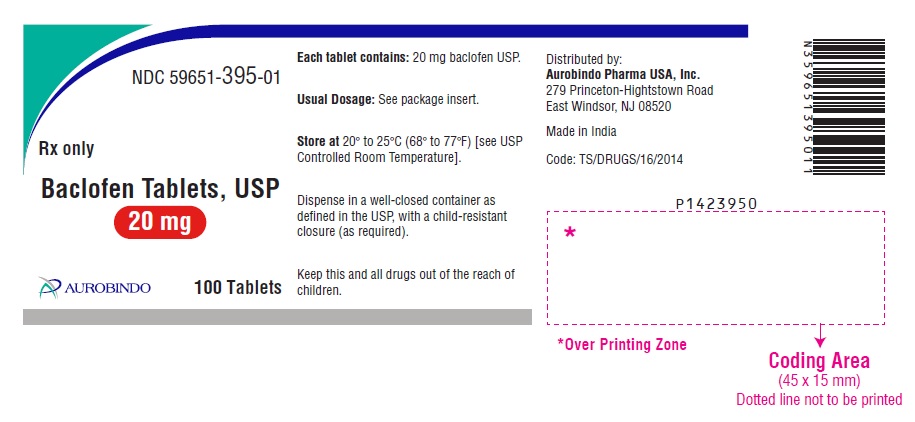
BACLOFEN 20 mg Tablet, 1,000-count
Other active recalls for Baclofen (different manufacturers) — 1 · tap to view
🆔 Identity & classification
Where does this data come from?
🏷️ RxNorm drug class
This medicine belongs to the gamma-Aminobutyric Acid-ergic Agonist class.
Where does this data come from?
🏭 Manufacturer & labeler
Where does this data come from?
🩺 Clinical
Baclofen is used to treat pain and certain types of spasticity (muscle stiffness and tightness) from multiple sclerosis, spinal cord injuries, or other spinal cord diseases. Baclofen is in a class of medications called skeletal muscle relaxants. Baclofen acts on the spinal cord nerves and decreases the number and severity of muscle spasms caused by multiple sclerosis or spinal cord conditions. It also relieves pain and improves muscle movement.
Read the full MedlinePlus article ↗- Baclofen is prescribed to reduce spasticity — the muscle stiffness, spasms, and rigidity that come with conditions like multiple sclerosis or spinal cord injury. Oral forms are als...
- What exactly is baclofen being used to treat — and will it help my pain too?
- Yes, and this is really important. Stopping baclofen suddenly — especially the pump form — can cause a dangerous withdrawal reaction: your spasticity can return much worse than bef...
- I heard you can't just stop taking baclofen — is that really true?
Patient education
Supplement & herbal interactions
Some supplements/herbs that may interact with Baclofen — tap one for details:
Where does this data come from?
Ask a licensed pharmacist directly — free, answered by our team.
💊 What it looks like
Where does this data come from?
🧪 Inactive Ingredients / Excipients
Inactive ingredients, also called excipients, are components of the drug product other than the active ingredient. They may include fillers, dyes, coatings, preservatives, flavors, or other formulation ingredients.
💡 Tap an ingredient (hover on desktop) to see what it is and why it’s used.
-
UNII 70097M6I30
Magnesium stearate is a salt made from magnesium and stearic acid, a fatty substance. It's used in tablets and capsules as a lubricant and glidant to help ingredients flow smoothly during manufacturing and prevent sticking.
-
UNII X7XJ6RM9Q2
A plant-derived cellulose processed into tiny crystals. It acts as a binder and filler to give the tablet or capsule structure and helps the medicine break apart properly in your stomach.
-
UNII ETJ7Z6XBU4
Silicon dioxide is a naturally occurring mineral used as a glidant and anti-caking agent. It helps powder ingredients flow smoothly and prevents clumping during manufacturing and storage.
-
UNII O8232NY3SJ
A plant-based carbohydrate derived from corn kernels. It acts as a filler to add bulk, a binder to hold ingredients together, and a disintegrant to help the tablet break apart in your stomach for absorption.
4 inactive ingredients listed in the exact product block matched to this NDC.
Where does this data come from?
ingredient classCode="IACT" elements from the exact product block matched by this NDC. Label-section narrative from DailyMed / the openFDA label index is shown separately when available.Inactive ingredient FAQ
Are inactive ingredients the same for every manufacturer?
Why might an inactive ingredient be missing?
Can inactive ingredients matter?
💲 Pricing
A drug doesn't have one price. Each row is a different public payment system, and none is what you'd pay at the counter — that depends on your insurance. The ⓘ on each row explains what it measures.
| Price system | Per ea | Per package |
|---|---|---|
| Retail pharmacies payNADAC · weekly | $0.051 | $50.90 / 1000 tablets |
| Medicaid paysCMS SDUD · 12 mo | $0.1855 | $185.50 / 1000 tablets |
| Medicare drug plans payPart D · Q2 2026 | $0.1147 | $114.70 / 1000 tablets |
Where does this data come from?
🔁 Therapeutic equivalents
| Product | Labeler | Pack | NADAC/unit | TE | Status | Price vs. this |
|---|---|---|---|---|---|---|
| Baclofen 20 mg 00172-4097-60 | Teva | 100 tablets | $0.051 | AB | Availability likely | — |
| Baclofen 20 mg 00527-1337-01 | Lannett | 100 tablets | $0.051 | AB | Availability likely | — |
| Baclofen 20 mg 00603-2407-21 | Par | 100 tablets | $0.051 | AB | Availability likely | — |
| Baclofen 20 mg 00904-6476-61 | Major | 100 tablets | $0.051 | AB | Availability likely | — |
| Baclofen 20 mg 00904-7553-61 | Major | 100 tablets | $0.051 | AB | Availability likely | — |
| Baclofen 20 mg 16571-0172-01 | Rising | 100 tablets | $0.051 | AB | Availability likely | — |
| Baclofen 20 mg 16714-0072-04 | Northstar | 100 tablets | $0.051 | AB | Availability likely | — |
| Baclofen 20 mg 29300-0344-01 | Unichem | 100 tablets | $0.051 | AB | Availability likely | — |
| Baclofen 20 mg 50268-0107-15 | AvPAK | 50 tablets | $0.051 | AB | Availability likely | — |
| Baclofen 20 mg 52817-0321-00 | TruPharma | 1000 tablets | $0.051 | AB | Availability likely | — |
| Baclofen 20 mg 58657-0732-01 | Method | 100 tablets | $0.051 | AB | Availability likely | — |
| Baclofen 20 mg 58657-0932-01 | Method | 100 tablets | $0.051 | AB | Availability likely | — |
| Baclofen 20 mgthis 59651-0395-99 | Aurobindo | 1000 tablets | $0.051 | AB | Availability likely | — |
| Baclofen 20 mg 60687-0826-01 | American | 100 tablets | $0.051 | AB | Availability likely | — |
| Baclofen 20 mg 62135-0474-05 | Chartwell | 500 tablets | $0.051 | AB | Availability likely | — |
| Baclofen 20 mg 70710-1286-00 | Zydus | 1000 tablets | $0.051 | AB | Availability likely | — |
| Baclofen 20 mg 70756-0289-11 | Lifestar | 100 tablets | $0.051 | AB | Availability likely | — |
| Baclofen 20 mg 71930-0007-12 | Eywa | 100 tablets | $0.051 | AB | Availability likely | — |
| Baclofen 20 mg 72888-0011-00 | Advagen | 1000 tablets | $0.051 | AB | Availability likely | — |
| Baclofen 20 mg 00832-1055-10 | Upsher-Smith | 1000 tablets | $0.093 | AB | FDA listed | +83% |
| Baclofen 20 mg 00615-8467-39 | NCS | 30 tablets | — | AB | FDA listed | — |
| Baclofen 20 mg 10135-0533-01 | Marlex | 100 tablets | — | AB | FDA listed | — |
| Baclofen 20 mg 42571-0429-01 | Micro | 100 tablets | — | AB | Discontinued | — |
| Baclofen 20 mg 43063-0865-30 | PD-Rx | 30 tablets | — | AB | FDA listed | — |
| Baclofen 20 mg 50090-4682-00 | A-S | 20 tablets | — | AB | FDA listed | — |
| Baclofen 20 mg 51407-0974-01 | Golden | 100 tablets | — | AB | FDA listed | — |
| Baclofen 20 mg 55154-7876-00 | Cardinal | 10 tablets | — | AB | FDA listed | — |
| Baclofen 20 mg 63187-0274-30 | Proficient | 30 tablets | — | AB | FDA listed | — |
| Baclofen 20 mg 63187-0280-30 | Proficient | 30 tablets | — | AB | FDA listed | — |
| Baclofen 20 mg 63629-1227-01 | Bryant | 1000 tablets | — | AB | FDA listed | — |
| Baclofen 20 mg 63629-1228-01 | Bryant | 100 tablets | — | AB | FDA listed | — |
| Baclofen 20 mg 63629-2083-01 | Bryant | 500 tablets | — | AB | FDA listed | — |
| Baclofen 20 mg 63629-2084-01 | Bryant | 100 tablets | — | AB | FDA listed | — |
| Baclofen 20 mg 63629-2130-01 | Bryant | 1000 tablets | — | AB | FDA listed | — |
| Baclofen 20 mg 63629-2131-01 | Bryant | 100 tablets | — | AB | FDA listed | — |
| Baclofen 20 mg 68788-8575-03 | Preferred | 30 tablets | — | AB | FDA listed | — |
| Baclofen 20 mg 68788-8737-01 | Preferred | 100 tablets | — | AB | FDA listed | — |
| Baclofen 20 mg 70518-3467-00 | REMEDYREPACK | 30 tablets | — | AB | FDA listed | — |
| Baclofen 20 mg 70518-4235-00 | REMEDYREPACK | 30 tablets | — | AB | FDA listed | — |
| Baclofen 20 mg 70518-4290-00 | REMEDYREPACK | 30 tablets | — | AB | FDA listed | — |
| Baclofen 20 mg 70518-4378-00 | REMEDYREPACK | 90 tablets | — | AB | FDA listed | — |
| Baclofen 20 mg 70518-4530-00 | REMEDYREPACK | 30 tablets | — | AB | FDA listed | — |
| Baclofen 20 mg 70771-1449-00 | Zydus | 1000 tablets | — | AB | FDA listed | — |
| Baclofen 20 mg 71335-0103-00 | Bryant | 120 tablets | — | AB | FDA listed | — |
| Baclofen 20 mg 71335-0949-00 | Bryant | 120 tablets | — | AB | FDA listed | — |
| Baclofen 20 mg 71335-1356-00 | Bryant | 120 tablets | — | AB | FDA listed | — |
| Baclofen 20 mg 71335-1796-00 | Bryant | 120 tablets | — | AB | FDA listed | — |
| Baclofen 20 mg 71335-2219-00 | Bryant | 120 tablets | — | AB | FDA listed | — |
| Baclofen 20 mg 71335-2482-01 | Bryant | 60 tablets | — | AB | FDA listed | — |
| Baclofen 20 mg 71335-2497-00 | Bryant | 120 tablets | — | AB | FDA listed | — |
| Baclofen 20 mg 71335-2668-00 | Bryant | 120 tablets | — | AB | FDA listed | — |
| Baclofen 20 mg 71335-2669-01 | Bryant | 100 tablets | — | AB | FDA listed | — |
| Baclofen 20 mg 71335-2756-00 | Bryant | 120 tablets | — | AB | FDA listed | — |
| Baclofen 20 mg 71335-9681-00 | Bryant | 120 tablets | — | AB | FDA listed | — |
| Baclofen 20 mg 71610-0444-45 | Aphena | 45 tablets | — | AB | FDA listed | — |
| Baclofen 20 mg 71610-0446-45 | Aphena | 45 tablets | — | AB | FDA listed | — |
| Baclofen 20 mg 71610-0921-60 | Aphena | 90 tablets | — | AB | FDA listed | — |
| Baclofen 20 mg 72162-1080-00 | Bryant | 120 tablets | — | AB | FDA listed | — |
| Baclofen 20 mg 72162-2374-00 | Bryant | 1000 tablets | — | AB | FDA listed | — |
| Baclofen 20 mg 72162-2450-00 | Bryant | 1000 tablets | — | AB | FDA listed | — |
| Baclofen 20 mg 72189-0504-60 | Direct_Rx | 60 tablets | — | AB | FDA listed | — |
| Baclofen 20 mg 72189-0565-60 | Direct_rx | 60 tablets | — | AB | FDA listed | — |
| Baclofen 20 mg 72789-0312-30 | PD-Rx | 30 tablets | — | AB | FDA listed | — |
| Baclofen 20 mg 72789-0480-01 | PD-Rx | 100 tablets | — | AB | FDA listed | — |
| Baclofen 20 mg 72865-0298-01 | XLCare | 100 tablets | — | AB | FDA listed | — |
| Baclofen 20 mg 76420-0242-30 | Asclemed | 30 tablets | — | AB | FDA listed | — |
| Baclofen 20 mg 76420-0359-00 | Asclemed | 1000 tablets | — | AB | FDA listed | — |
| Baclofen 20 mg 80425-0081-02 | Advanced | 60 tablets | — | AB | FDA listed | — |
| Baclofen 20 mg 80425-0112-01 | Advanced | 30 tablets | — | AB | FDA listed | — |
| Baclofen 20 mg 80425-0157-01 | Advanced | 30 tablets | — | AB | FDA listed | — |
| Baclofen 20 mg 80425-0205-01 | Advanced | 30 tablets | — | AB | FDA listed | — |
| Baclofen 20 mg 80425-0282-01 | Advanced | 30 tablets | — | AB | FDA listed | — |
| Baclofen 20 mg 80425-0459-01 | Advanced | 30 tablets | — | AB | FDA listed | — |
| Baclofen 20 mg 80425-0466-01 | Advanced | 30 tablets | — | AB | FDA listed | — |
| Baclofen 20 mg 80425-0467-01 | Advanced | 30 tablets | — | AB | FDA listed | — |
| Baclofen 20 mg 80425-0478-01 | Advanced | 30 tablets | — | AB | FDA listed | — |
| Baclofen 20 mg 82461-0718-10 | Medcore | 100 tablets | — | AB | FDA listed | — |
| Baclofen 20 mg 83008-0062-30 | Quality | 30 tablets | — | AB | FDA listed | — |
| Baclofen 20 mg 85509-1344-03 | PHOENIX | 30 tablets | — | AB | FDA listed | — |
| Baclofen 20 mg 85534-0004-00 | HAWAII | 100 tablets | — | AB | FDA listed | — |
| Baclofen 20 mg 70518-3115-00 | REMEDYREPACK | 90 tablets | — | AB | Discontinued | — |
| Baclofen 20 mg 68788-4162-01 | Preferred | 100 tablets | — | AB | FDA listed | — |
| Baclofen 20 mg 71335-1664-00 | Bryant | 120 tablets | — | AB | FDA listed | — |
Where does this data come from?
⏳ Availability & generic status
This product is an FDA-approved generic. Other versions of the same drug are listed under Therapeutic equivalents, least expensive first.
Where does this data come from?
🗺️ Medicaid utilization & spend
💊 Medicaid utilization by pack size
📊 Medicare Part D spend CMS · PART D · 2026 (Q1)
🔬 Reported adverse events (FAERS)
Top reported reactions
Reporter sex
Serious outcomes
Where does this data come from?
📦 Packaging — all sizes for this product
| Package NDC | Description | Per unit | Per pack | Marketing start | Status |
|---|---|---|---|---|---|
| 59651-0395-01 | 100 TABLET in 1 BOTTLE (59651-395-01) | $0.0509 / ea | $5.09 | 2021-07-13 | Active |
| 59651-0395-05 | 500 TABLET in 1 BOTTLE (59651-395-05) | $0.0509 / ea | $25.44 | 2021-07-13 | Active |
| 59651-0395-99 You're viewing this | 1000 TABLET in 1 BOTTLE (59651-395-99) | $0.0509 / ea | $50.88 | 2021-07-13 | Active |
| 59651-0395-39 | 3000 TABLET in 1 BAG (59651-395-39) | — | — | — | Active |
You're viewing one of 4 pack sizes for this product.
This pack effectively ties for the lowest per-ea cost of the 3 priced pack sizes ($0.0509 NADAC).
This pack accounts for about 14% of this product's recent Medicaid fills; most go to the 500 tablets pack. See all packs ↓
Pack size FAQ
What quantity is in NDC 59651-0395-99?
What is the difference between NDC 59651-0395-99 and NDC 59651-0395-01?
What NDC number is used to bill for this package of BACLOFEN 20 mg Tablet?
Prices are the latest CMS NADAC pharmacy acquisition cost per NDC; per-pack figures are per-unit × pack quantity, shown only when the pack is denominated in the same measure NADAC prices.
📄 Full prescribing information FDA SPL
🎯 Indications and Usage ▾
Indications and Usage Baclofen tablets are useful for the alleviation of signs and symptoms of spasticity resulting from multiple sclerosis, particularly for the relief of flexor spasms and concomitant pain, clonus, and muscular rigidity. Patients should have reversible spasticity so that baclofen tablets treatment will aid in restoring residual function. Baclofen tablets may also be of some value in patients with spinal cord injuries and other spinal cord diseases.
Baclofen tablets are not indicated in the treatment of skeletal muscle spasm resulting from rheumatic disorders. The efficacy of baclofen in stroke, cerebral palsy, and Parkinson’s disease has not been established and, therefore, it is not recommended for these conditions.
⏱️ Dosage and Administration ▾
DOSAGE AND ADMINISTRATION The determination of optimal dosage requires individual titration. Start therapy at a low dosage and increase gradually until optimum effect is achieved (usually between 40 to 80 mg daily). The following dosage titration schedule is suggested: 5 mg t.i.d. for 3 days 10 mg t.i.d. for 3 days 15 mg t.i.d. for 3 days 20 mg t.i.d. for 3 days Thereafter additional increases may be necessary but the total daily dose should not exceed a maximum of 80 mg daily (20 mg q.i.d.).
The lowest dose compatible with an optimal response is recommended. If benefits are not evident after a reasonable trial period, patients should be slowly withdrawn from the drug (see WARNINGS Abrupt Drug Withdrawal ).
⛔ Contraindications ▾
CONTRAINDICATIONS Hypersensitivity to baclofen.
⚠️ Warnings ▾
WARNINGS a. Neonatal Withdrawal Symptoms: Withdrawal symptoms have been reported starting hours to days after delivery in neonates whose mothers were treated with oral baclofen throughout pregnancy. The symptoms of withdrawal in these infants have included increased muscle tone, tremor, jitteriness, and seizure.
If the potential benefit justifies the potential risk to the fetus and oral baclofen is continued during pregnancy, gradually reduce the dose and discontinue baclofen before delivery. If slow withdrawal is not feasible, advise the parents or caregivers of the potential for neonatal withdrawal. b. Abrupt Drug Withdrawal: Hallucinations and seizures have occurred on abrupt withdrawal of baclofen.
Therefore, except for serious adverse reactions, the dose should be reduced slowly when the drug is discontinued. c. Impaired Renal Function: Because baclofen is primarily excreted unchanged through the kidneys, it should be given with caution, and it may be necessary to reduce the dosage. d. Stroke: Baclofen has not significantly benefited patients with stroke.
These patients have also shown poor tolerability to the drug. e. Pregnancy: Baclofen has been shown to increase the incidence of omphaloceles (ventral hernias) in fetuses of rats given approximately 13 times the maximum dose recommended for human use, at a dose which caused significant reductions in food intake and weight gain in dams. This abnormality was not seen in mice or rabbits.
There was also an increased incidence of incomplete sternebral ossification in fetuses of rats given approximately 13 times the maximum recommended human dose, and an increased incidence of unossified phalangeal nuclei of forelimbs and hindlimbs in fetuses of rabbits given approximately 7 times the maximum recommended human dose. In mice, no teratogenic effects were observed, although reductions in mean fetal weight with consequent delays in skeletal ossification were present when dams were given 17 and 34 times the human daily dose.
There are no studies in pregnant women. Baclofen should be used during pregnancy only if the benefit clearly justifies the potential risk to the fetus.
🤒 Adverse Reactions ▾
ADVERSE REACTIONS The most common is transient drowsiness (10% to 63%). In one controlled study of 175 patients, transient drowsiness was observed in 63% of those receiving baclofen compared to 36% of those in the placebo group. Other common adverse reactions are dizziness (5% to 15%), weakness (5% to 15%) and fatigue (2% to 4%).
Others reported: Neuropsychiatric: Confusion (1% to 11%), headache (4% to 8%), insomnia (2% to 7%); and, rarely, euphoria, excitement, depression, hallucinations, paresthesia, muscle pain, tinnitus, slurred speech, coordination disorder, tremor, rigidity, dystonia, ataxia, blurred vision, nystagmus, strabismus, miosis, mydriasis, diplopia, dysarthria, epileptic seizure. Cardiovascular: Hypotension (0% to 9%). Rare instances of dyspnea, palpitation, chest pain, syncope.
Gastrointestinal: Nausea (4% to 12%), constipation (2% to 6%); and, rarely, dry mouth, anorexia, taste disorder, abdominal pain, vomiting, diarrhea, and positive test for occult blood in stool. Genitourinary: Urinary frequency (2% to 6%); and, rarely, enuresis, urinary retention, dysuria, impotence, inability to ejaculate, nocturia, hematuria. Other: Instances of rash, pruritus, ankle edema, excessive perspiration, weight gain, nasal congestion.
Some of the CNS and genitourinary symptoms may be related to the underlying disease rather than to drug therapy. The following laboratory tests have been found to be abnormal in a few patients receiving baclofen: increased SGOT, elevated alkaline phosphatase, and elevation of blood sugar.
🧒 Pediatric Use ▾
Pediatric Use Safety and effectiveness in pediatric patients below the age of 12 years have not been established.
🆘 Overdosage ▾
OVERDOSAGE Signs and Symptoms: Vomiting, muscular hypotonia, drowsiness, accommodation disorders, coma, respiratory depression, and seizures. Treatment: In the alert patient, empty the stomach promptly by induced emesis followed by lavage. In the obtunded patient, secure the airway with a cuffed endotracheal tube before beginning lavage (do not induce emesis). Maintain adequate respiratory exchange, do not use respiratory stimulants.
🧬 Clinical Pharmacology ▾
Clinical Pharmacology The precise mechanism of action of baclofen is not fully known. Baclofen is capable of inhibiting both monosynaptic and polysynaptic reflexes at the spinal level, possibly by hyperpolarization of afferent terminals, although actions at supraspinal sites may also occur and contribute to its clinical effect. Although baclofen is an analog of the putative inhibitory neurotransmitter gamma-aminobutyric acid (GABA), there is no conclusive evidence that actions on GABA systems are involved in the production of its clinical effects.
In studies with animals, baclofen has been shown to have general CNS depressant properties as indicated by the production of sedation with tolerance, somnolence, ataxia, and respiratory and cardiovascular depression. Baclofen is rapidly and extensively absorbed and eliminated. Absorption may be dose-dependent, being reduced with increasing doses.
Baclofen is excreted primarily by the kidney in unchanged form and there is relatively large intersubject variation in absorption and/or elimination.
📦 How Supplied / Storage and Handling ▾
HOW SUPPLIED Baclofen Tablets USP, 10 mg are white to off-white, round, flat-faced, beveled-edge scored tablet debossed with “B” above score line and “10” below score line on one side and plain on other side. They are supplied as follows: Bottles of 100 NDC 59651-394-01 Bottles of 500 NDC 59651-394-05 Bottles of 1,000 NDC 59651-394-99 Baclofen Tablets USP, 20 mg are white to off-white, round, flat-faced, beveled-edge scored tablet debossed with “B” above score line and “20” below score line on one side and plain on other side.
They are supplied as follows: Bottles of 100 NDC 59651-395-01 Bottles of 500 NDC 59651-395-05 Bottles of 1,000 NDC 59651-395-99 Store at 20° to 25°C (68° to 77°F) [see USP Controlled Room Temperature]. Dispense in a well-closed container as defined in the USP, with a child-resistant closure (as required). Distributed by: Aurobindo Pharma USA, Inc.
279 Princeton-Hightstown Road East Windsor, NJ 08520 Manufactured by: Aurobindo Pharma Limited Hyderabad–500 032, India Revised: 10/2021
📋 Description ▾
DESCRIPTION Baclofen USP, is a muscle relaxant and antispastic, available as 10 mg and 20 mg tablets for oral administration. Its chemical name is 4-amino-3-(4-chlorophenyl)- butanoic acid, and its structural formula is Baclofen USP is a white to off-white crystalline powder, with a molecular weight of 213.66. It is slightly soluble in water, very slightly soluble in methanol and in 96% ethanol, practically insoluble in acetone, insoluble in chloroform, dissolves in dilute mineral acids and in dilute solutions of alkali hydroxides.
Inactive Ingredients. Colloidal silicon dioxide, magnesium stearate, microcrystalline cellulose and pregelatinized starch (maize). FDA approved dissolution test specifications differ from USP.
Chemical Structure