
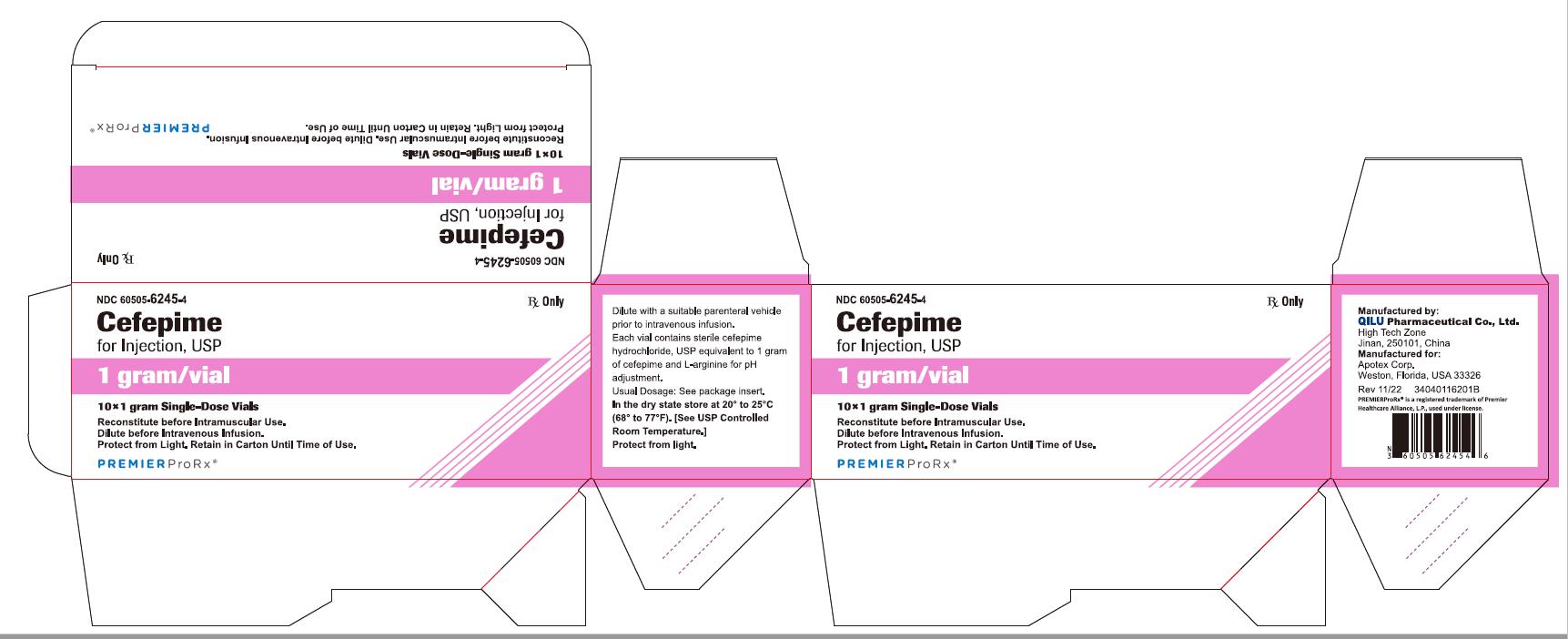
Cefepime 1 g Injection, Powder, For Solution, 10 vials — NDC 60505-6245-4 (Billing 60505-6245-04)
This is a package of 10 vials of Cefepime 1 g Injection, Powder, For Solution from Apotex Corp., marketed since Sep 2022 and currently FDA-listed; retail pharmacies pay about $3.73 per vial (NADAC). It is this product's only package size.
NDC database record
One package, one record: these facts belong to NDC 60505-6245-4 alone.
- Record
- FDA NDC Directory package listing · Human prescription drug
- Code segments
- 60505 labeler · 6245 product · 4 package
- Package marketed since
- Sep 1, 2022
- Sample package
- No — commercial package
- Listing certified through
- Dec 31, 2026
- Billing quantity
- 10 EA per package
- Barcode (UPC)
- 0360505624607, 0360505624508
- Medicaid fills, this package
- 133 prescriptions in the last four reported quarters
- FDA record last changed
- Jul 24, 2026
Identity & classification
Regulatory identifiers FDA, NLM and CMS codes for this package
Drug-database identifiers Medi-Span GPI and First Databank GCN / HICL / AHFS classification
- GSN (GCN sequence number): 024094
- GCN: 49122
- GPI-14 (Medi-Span): 02400040102110
- HICL (First Databank): 010132
- AHFS class code: 08:12.06.16
- RxCUI (RxNorm): 1665088
Where does this data come from?
- FDA openFDA NDC Directory · synced Oct 1, 2026
- FDA label on DailyMed · label index refreshed Oct 6, 2026
- RxNorm (NLM RxNav) · catalog refreshed Oct 1, 2026
- Medi-Span GPI (licensed)
- First Databank (licensed) · refreshed Oct 1, 2026
RxNorm drug class
This medicine belongs to the Cephalosporin Antibacterial class.
Where does this data come from?
- RxClass (NLM) · catalog refreshed Oct 1, 2026
Clinical
- Cefepime is only available as an injection — there's no pill form. It's designed for serious bacterial infections that need a strong antibiotic delivered directly into your bloodst...
- Why am I getting cefepime through an IV instead of just taking an antibiotic pill?
- The most common things people notice are redness, pain, or swelling near the injection or IV site, along with rash, nausea, diarrhea, or headache — these are usually manageable. Wh...
- What side effects should I actually expect, and which ones mean I should speak up right away?
Patient education
Supplement & herbal interactions
Some supplements/herbs that may interact with Cefepime — tap one for details:
Cefepime may be associated with lower levels of 7 nutrients — worth a chat with your pharmacist, not a cause for alarm.
Where does this data come from?
- MedlinePlus (NLM) · refreshed Oct 1, 2026
- FDA label on DailyMed · label index refreshed Oct 6, 2026
Ask a licensed pharmacist directly — free, answered by our team.
Pricing
A drug doesn't have one price. Each row is a different public payment system, and none is what you'd pay at the counter — that depends on your insurance. The ⓘ on each row explains what it measures.
| Price system | Per ea | Per package |
|---|---|---|
| Retail pharmacies payNADAC · weekly | $3.731 | $37.31 / 10 injection |
| Medicaid paysCMS SDUD · 12 mo | $6.76 | $67.57 / 10 injection |
| Medicare drug plans payPart D · Q2 2026 | $5.37 | $53.69 / 10 injection |
| Medicare Part B allowsASP · J0692 | $1.296 / J0692 unit | — |
Where does this data come from?
- CMS NADAC weekly file · file of Aug 12, 2026
- CMS ASP pricing files · refreshed Sep 20, 2026
- CMS Medicaid State Drug Utilization Data · through Q1 2026
- CMS Part D plan pricing files · refreshed Sep 24, 2026
- VA National Acquisition Center price file
Billing & reimbursement
Where does this data come from?
- CMS ASP NDC-HCPCS crosswalk · refreshed Sep 22, 2026
- DMEPDAC NDC-HCPCS crosswalk
- openFDA NSDE billing units · refreshed Oct 7, 2026
Packaging — all sizes for this product
| Package NDC | Description | Marketing start | Marketing end | Status |
|---|---|---|---|---|
| 60505-6245-04 You're viewing this Main listing | 10 VIAL, SINGLE-DOSE in 1 CARTON / 1 INJECTION, POWDER, FOR SOLUTION in 1 VIAL, SINGLE-DOSE | 2022-09-01 | — | Active |
Therapeutic equivalents
| Product | Labeler | Pack | NADAC/unit | TE | Status | Price vs. this |
|---|---|---|---|---|---|---|
| Cefepime 1 g 00409-9566-10 | Hospira, | 10 vials | $3.731 | AP | Availability likely | — |
| Cefepime 1 g 44567-0130-10 | WG | 10 vials | $3.731 | AP | Availability likely | — |
| Cefepime 1 g 44567-0240-10 | WG | 10 vials | $3.731 | AP | Availability likely | — |
| Cefepime 1 g 60505-6144-04 | Apotex | 10 vials | $3.731 | AP | Availability likely | — |
| Cefepime 1 gthis 60505-6245-04 | Apotex | 10 vials | $3.731 | AP | Availability likely | — |
| Cefepime 1 g 63323-0326-20 | Fresenius | 10 vials | $3.731 | AP | Availability likely | — |
| Cefepime Hydrochloride 1 g 00143-9382-10 | Hikma | 10 vials | — | AP | FDA listed | — |
| Cefepime Hydrochloride 1 g 00143-9477-10 | Hikma | 10 vials | — | AP | FDA listed | — |
| Cefepime Hydrochloride And Dextrose 1 g/50mL 00264-3193-11 | B. | 50 ml | — | — | FDA listed | — |
| Cefepime 1 g/50mL 00338-1301-41 | Baxter | 50 ml | — | — | FDA listed | — |
| cefepime 1 g/20mL 25021-0121-66 | Sagent | 10 vials | — | AP | Discontinued | — |
| Cefepime 1 g 60505-6146-00 | Apotex | 1 vial | — | AP | FDA listed | — |
| Cefepime 1 g 67184-1003-01 | Qilu | 10 vials | — | AP | FDA listed | — |
Where does this data come from?
- FDA openFDA NDC Directory · synced Oct 1, 2026
- FDA Orange Book · refreshed Oct 3, 2026
- CMS NADAC weekly file · file of Aug 12, 2026
Availability & generic status
This product is an FDA-approved generic. Other versions of the same drug are listed under Therapeutic equivalents, least expensive first.
Where does this data come from?
- FDA Orange Book · refreshed Oct 3, 2026
Inactive Ingredients / Excipients
Inactive ingredients, also called excipients, are components of the drug product other than the active ingredient. They may include fillers, dyes, coatings, preservatives, flavors, or other formulation ingredients.
🧪 Avoiding an ingredient? See Cefepime Injection inactive ingredients by manufacturer: every current product's list side by side, so you can ask your pharmacy for the version that does not list it.
💡 Tap an ingredient (hover on desktop) to see what it is and why it’s used.
-
UNII 94ZLA3W45F
Arginine is an amino acid used in medicines as a buffer and pH adjuster. It helps maintain the proper acidity level and stability of liquid formulations.
1 inactive ingredient listed in the exact product block matched to this NDC.
Where does this data come from?
ingredient classCode="IACT" elements from the exact product block matched by this NDC. Label-section narrative from DailyMed / the openFDA label index is shown separately when available.- FDA label on DailyMed · label index refreshed Oct 6, 2026
- FDA openFDA NDC Directory · synced Oct 1, 2026
Inactive ingredient FAQ
Are inactive ingredients the same for every manufacturer?
Why might an inactive ingredient be missing?
Can inactive ingredients matter?
Manufacturer & labeler
More NDCs from Apotex Corp. labeler code 60505
- Cefazolin 2 g Injection, Powder, For Solution NDC 60505-6231-5
- Lacosamide 10 mg/mL Injection NDC 60505-6235-4
- Deferoxamine mesylate 500 mg Injection, Powder, Lyophilized, For Solution NDC 60505-6236-6
- Deferoxamine mesylate 2 g Injection, Powder, Lyophilized, For Solution NDC 60505-6237-6
- Cefazolin 1 g Injection, Powder, For Solution NDC 60505-6243-4
- Cefazolin 10 g Injection, Powder, For Solution NDC 60505-6244-4
- Cefepime 2 g Injection, Powder, For Solution NDC 60505-6246-4
- Dexamethasone .5 mg Tablet NDC 60505-6249-1
- Dexamethasone .75 mg Tablet NDC 60505-6250-1
- Dexamethasone 1 mg Tablet NDC 60505-6251-1
- Dexamethasone 1.5 mg Tablet NDC 60505-6252-1
- Dexamethasone 2 mg Tablet NDC 60505-6253-1
Where does this data come from?
- FDA openFDA NDC Directory · synced Oct 1, 2026
- Drugs@FDA
Full prescribing information FDA SPL
🎯 Indications and Usage ▾
1 INDICATIONS AND USAGE Cefepime for Injection is a cephalosporin antibacterial indicated for the treatment of the following infections caused by susceptible strains of the designated microorganisms: • Pneumonia. ( 1.1 ) • Empiric therapy for febrile neutropenic patients. ( 1.2 ) • Uncomplicated and complicated urinary tract infections (including pyelonephritis).
( 1.3 ) • Uncomplicated skin and skin structure infections. ( 1.4 ) • Complicated intra-abdominal infections (used in combination with metronidazole) in adults. ( 1.5 ) To reduce the development of drug-resistant bacteria and maintain the effectiveness of Cefepime for Injection and other antibacterial drugs, Cefepime for Injection should be used only to treat or prevent infections that are proven or strongly suspected to be caused by bacteria.
( 1.6 )
1.1Pneumonia Cefepime for Injection is indicated in the treatment of pneumonia (moderate to severe) caused by susceptible strains of Streptococcus pneumoniae , including cases associated with concurrent bacteremia, Pseudomonas aeruginosa , Klebsiella pneumoniae , or Enterobacter species.
1.2Empiric Therapy for Febrile Neutropenic Patients Cefepime for Injection as monotherapy is indicated for empiric treatment of febrile neutropenic patients. In patients at high risk for severe infection (including patients with a history of recent bone marrow transplantation, with hypotension at presentation, with an underlying hematologic malignancy, or with severe or prolonged neutropenia), antimicrobial monotherapy may not be appropriate. Insufficient data exist to support the efficacy of cefepime monotherapy in such patients [ see Clinical Studies (14.1) ].
1.3Uncomplicated and Complicated Urinary Tract Infections (including pyelonephritis) Cefepime for Injection is indicated in the treatment of uncomplicated and complicated urinary tract infections (including pyelonephritis) caused by susceptible isolates of Escherichia coli or Klebsiella pneumoniae , when the infection is severe, or caused by Escherichia coli , Klebsiella pneumoniae , or Proteus mirabilis , when the infection is mild to moderate, including cases associated with concurrent bacteremia with these bacteria.
1.4Uncomplicated Skin and Skin Structure Infections Cefepime for Injection is indicated in the treatment of uncomplicated skin and skin structure infections caused by Staphylococcus aureus (methicillin-susceptible isolates only) or Streptococcus pyogenes .
1.5Complicated Intra-abdominal Infections (used in combination with metronidazole) Cefepime for Injection is indicated in the treatment of complicated intra-abdominal infections (used in combination with metronidazole) in adults caused by susceptible isolates of Escherichia coli , viridans group streptococci, Pseudomonas aeruginosa , Klebsiella pneumoniae , Enterobacter species, or Bacteroides fragilis [ see Clinical Studies (14.2) ].
1.6Usage To reduce the development of drug-resistant bacteria and maintain the effectiveness of Cefepime for Injection and other antibacterial drugs, Cefepime for Injection should be used only to treat or prevent infections that are proven or strongly suspected to be caused by susceptible bacteria. When culture and susceptibility information are available, they should be considered in selecting or modifying antibacterial therapy. In the absence of such data, local epidemiology and susceptibility patterns may contribute to the empiric selection of therapy.
⏱️ Dosage and Administration ▾
2 DOSAGE AND ADMINISTRATION § For Pseudomonas aeruginosa , use 2 g IV every 8 hours. ( 2.1 ) *Or until resolution of neutropenia. ( 2.1 ) **Intramuscular route of administration is indicated only for mild to moderate, uncomplicated or complicated UTIs due to E. coli .
( 2.1 ) Recommended Dosage in Adults with Creatinine Clearance (CrCL) Greater Than 60 mL/min ( 2.1 ) Site and Type of Infection Dose Frequency Duration (days) Moderate to Severe Pneumonia § 1-2 g IV Every 8-12 hours 10 Empiric Therapy for Febrile Neutropenic Patients 2 g IV Every 8 hours 7* Mild to Moderate Uncomplicated or Complicated Urinary Tract Infections 0.5-1 g IV/IM** Every 12 hours 7-10 Severe Uncomplicated or Complicated Urinary Tract Infections 2 g IV Every 12 hours 10 Moderate to Severe Uncomplicated Skin and Skin Structure Infections 2 g IV Every 12 hours 10 Complicated Intra-abdominal Infections § (used in combination with metronidazole) 2 g IV Every 12 hours 7-10 Pediatric Patients (2 months to 16 years) Recommended dosage in pediatric with CrCL greater than 60 mL/min.
( 2.2 ) • The usual recommended dosage in pediatric patients is 50 mg per kg per dose administered every 12 hours (every 8 hours for febrile neutropenia). ( 2.2 ) • Patients with Renal Impairment: Adjust dose in patients with CrCL less than or equal to 60 mL/min. ( 2.3 )
2.1Dosage for Adults The recommended adult dosages and routes of administration are outlined in Table 1 below for patients with creatinine clearance greater than 60 mL/min. Administer Cefepime for Injection intravenously over approximately 30 minutes. Table 1: Recommended Dosage Schedule for Cefepime for Injection in Adult Patients with Creatinine Clearance (CrCL) Greater Than 60 mL/min *or until resolution of neutropenia.
In patients whose fever resolves but who remain neutropenic for more than 7 days, the need for continued antimicrobial therapy should be re-evaluated frequently. **Intramuscular route of administration is indicated only for mild to moderate, uncomplicated or complicated UTIs due to E. coli . § For P. aeruginosa , use 2 g IV every 8 hours. Site and Type of Infection Dose Frequency Duration (days) Adults Intravenous (IV)/Intramuscular (IM) Moderate to Severe Pneumonia § 1 to 2 g IV Every 8 to 12 hours 10 Empiric therapy for febrile neutropenic patients 2 g IV Every 8 hours 7* Mild to Moderate Uncomplicated or Complicated Urinary Tract Infections, including pyelonephritis 0.5 to 1 g IV/IM** Every 12 hours 7 to 10 Severe Uncomplicated or Complicated Urinary Tract Infections, including pyelonephritis 2 g IV Every 12 hours 10 Moderate to Severe Uncomplicated Skin and Skin Structure Infections 2 g IV Every 12 hours 10 Complicated Intra-abdominal Infections § (used in combination with metronidazole) 2 g IV Every 8 to 12 hours 7 to 10
2.2Pediatric Patients (2 months up to 16 years) The maximum dose for pediatric patients should not exceed the recommended adult dose. The usual recommended dosage in pediatric patients up to 40 kg in weight for durations as given above for adults is: •50 mg per kg per dose, administered every 12 hours for uncomplicated and complicated urinary tract infections (including pyelonephritis), uncomplicated skin and skin structure infections, and pneumonia (see below).•For moderate to severe pneumonia due to P. aeruginosa give 50 mg per kg per dose, every 8 hours.•50 mg per kg per dose, every 8 hours for febrile neutropenic patients.
2.3Dosage Adjustments in Patients with Renal Impairment Adult Patients Adjust the dose of Cefepime for Injection in patients with creatinine clearance less than or equal to 60 mL/min to compensate for the slower rate of renal elimination. In these patients, the recommended initial dose of Cefepime for Injection should be the same as in patients with CrCL greater than 60 mL/min except in patients undergoing hemodialysis. The recommended doses of Cefepime for Injection in patients with renal impairment are presented in Table 2 .
When only serum creatini… [Excerpted — this section continues on DailyMed.]
💊 Dosage Forms and Strengths ▾
3 DOSAGE FORMS AND STRENGTHS Cefepime for Injection, USP is a sterile white to pale yellow powder of cefepime in single-dose vials for reconstitution and it is available in the following strengths: • 0.5 gram per vial • 1 gram per vial • 2 grams per vial Cefepime for Injection, USP is a sterile powder of cefepime in single-dose vials for reconstitution, available in the following strengths: •0.5 gram per vial, 1 gram per vial and 2 grams per vial. ( 3 )
⛔ Contraindications ▾
4 CONTRAINDICATIONS Cefepime for Injection is contraindicated in patients who have shown immediate hypersensitivity reactions to cefepime or the cephalosporin class of antibacterial drugs, penicillins or other beta-lactam antibacterial drugs. Patients with known immediate hypersensitivity reactions to cefepime or other cephalosporins, penicillins or other beta-lactam antibacterial drugs. ( 4 )
⚠️ Warnings and Cautions ▾
5 WARNINGS AND PRECAUTIONS • Hypersensitivity Reactions: Cross-hypersensitivity among beta-lactam antibacterial drugs may occur in up to 10% of patients with a history of penicillin allergy. If an allergic reaction to Cefepime for Injection occurs, discontinue the drug. ( 5.1 ) • Neurotoxicity: May occur especially in patients with renal impairment administered unadjusted doses.
If neurotoxicity associated with Cefepime for Injection therapy occurs, discontinue the drug. ( 5.2 ) • Clostridioides difficile -Associated Diarrhea (CDAD): Evaluate if diarrhea occurs. ( 5.3 )
5.1Hypersensitivity Reactions Before therapy with Cefepime for Injection is instituted, careful inquiry should be made to determine whether the patient has had previous immediate hypersensitivity reactions to cefepime, cephalosporins, penicillins, or other beta-lactams. Exercise caution if this product is to be given to penicillin-sensitive patients because cross-hypersensitivity among beta-lactam antibacterial drugs has been clearly documented and may occur in up to 10% of patients with a history of penicillin allergy.
If an allergic reaction to Cefepime for Injection occurs, discontinue the drug and institute appropriate supportive measures.
5.2Neurotoxicity Serious adverse reactions have been reported including life-threatening or fatal occurrences of the following: encephalopathy (disturbance of consciousness including confusion, hallucinations, stupor, and coma), aphasia, myoclonus, seizures, and nonconvulsive status epilepticus [ see Adverse Reactions (6.2) ]. Most cases occurred in patients with renal impairment who did not receive appropriate dosage adjustment. However, some cases of neurotoxicity occurred in patients receiving a dosage adjustment appropriate for their degree of renal impairment.
In the majority of cases, symptoms of neurotoxicity were reversible and resolved after discontinuation of cefepime and/or after hemodialysis. If neurotoxicity associated with cefepime therapy occurs, discontinue cefepime and institute appropriate supportive measures.
5.3Clostridioides difficile -Associated Diarrhea Clostridioides difficile -Associated Diarrhea (CDAD) has been reported with use of nearly all antibacterial agents, including Cefepime for Injection, and may range in severity from mild diarrhea to fatal colitis. Treatment with antibacterial agents alters the normal flora of the colon leading to overgrowth of C. difficile. C. difficile produces toxins A and B, which contribute to the development of CDAD.
Hypertoxin-producing strains of C. difficile cause increased morbidity and mortality, as these infections can be refractory to antimicrobial therapy and may require colectomy. CDAD must be considered in all patients who present with diarrhea following antibacterial drug use. Careful medical history is necessary since CDAD has been reported to occur over two months after the administration of antibacterial agents.
If CDAD is suspected or confirmed, ongoing antibacterial drug use not directed against C. difficile may need to be discontinued. Appropriate fluid and electrolyte management, protein supplementation, antibacterial drug treatment of C. difficile , and surgical evaluation should be instituted as clinically indicated.
5.4Development of Drug-Resistant Bacteria Prescribing Cefepime for Injection in the absence of a proven or strongly suspected bacterial infection or a prophylactic indication is unlikely to provide benefit to the patient and increases the risk of the development of drug-resistant bacteria. As with other antimicrobials, prolonged use of Cefepime for Injection may result in overgrowth of nonsusceptible microorganisms. Repeated evaluation of the patient’s condition is essential.
Should superinfection occur during therapy, appropriate measures should be taken.
5.5Drug/Laboratory Test Interactions Urinary Glucose The administration of cefepime may result in a false-positive reaction for glucose in the urine when using some methods… [Excerpted — this section continues on DailyMed.]
🤒 Adverse Reactions ▾
6 ADVERSE REACTIONS The following adverse reactions are discussed in the Warnings and Precautions section and below: • Hypersensitivity Reactions [ see Warnings and Precautions (5.1) ] • Neurotoxicity [ see Warnings and Precautions (5.2) ] • Clostridioides difficile -Associated Diarrhea [ see Warnings and Precautions (5.3) ] •The most common adverse reactions (incidence ≥ 1%) were local reactions, positive Coombs’ test, decreased phosphorous, increased ALT and AST, increased PT and PTT and rash. ( 6.1 ) •At the highest dose (2 g every 8 hours), incidence of adverse reactions was ≥1% for rash, diarrhea, nausea, vomiting, pruritis, fever, and headache.
( 6.1 ) To report SUSPECTED ADVERSE REACTIONS, contact Apotex Corp. at 1-800-706-5575, or FDA at 1-800-FDA-1088 or www.fda.gov/medwatch .
6.1Clinical Trials Experience Because clinical trials are conducted under widely varying conditions, adverse reaction rates observed in clinical trials of a drug cannot be directly compared to rates in the clinical trials of another drug and may not reflect the rates observed in practice. In clinical trials using multiple doses of cefepime, 4137 patients were treated with the recommended dosages of cefepime (500 mg to 2 g intravenous every 12 hours). There were no deaths or permanent disabilities thought related to drug toxicity.
Sixty-four (1.5%) patients discontinued medication due to adverse reactions. Thirty-three (51%) of these 64 patients who discontinued therapy did so because of rash. The percentage of cefepime-treated patients who discontinued study drug because of drug-related adverse reactions was similar at daily doses of 500 mg, 1 g, and 2 g every 12 hours (0.8%, 1.1%, and 2%, respectively).
However, the incidence of discontinuation due to rash increased with the higher recommended doses. The following adverse reactions ( Table 5 ) were identified in clinical trials conducted in North America (n=3125 cefepime-treated patients). Table 5: Adverse Reactions in Cefepime Multiple-Dose Dosing Regimens Clinical Trials in North America Incidence equal to or greater than 1% Local adverse reactions (3%), including phlebitis (1.3%), pain and/or inflammation (0.6%)*; rash (1.1%) Incidence less than 1% but greater than 0.1% Colitis (including pseudomembranous colitis), diarrhea, erythema, fever, headache, nausea, oral moniliasis, pruritus, urticaria, vaginitis, vomiting, anemia At the higher dose of 2 g every 8 hours, the incidence of adverse reactions was higher among the 795 patients who received this dose of cefepime.
They consisted of rash (4%), diarrhea (3%), nausea (2%), vomiting (1%), pruritus (1%), fever (1%), and headache (1%). The following ( Table 6 ) adverse laboratory changes, with cefepime, were seen during clinical trials conducted in North America. Table 6: Adverse Laboratory Changes in Cefepime Multiple-Dose Dosing Regimens Clinical Trials in North America Incidence equal to or greater than 1% Positive Coombs’ test (without hemolysis) (16.2%); decreased phosphorus (2.8%); increased Alanine Transaminase (ALT) (2.8%), Aspartate Transaminase (AST) (2.4%), eosinophils (1.7%); abnormal PTT (1.6%), Prothrombin Time (PT) (1.4%) Incidence less than 1% but greater than 0.1% Increased alkaline phosphatase, Blood Urea Nitrogen (BUN), calcium, creatinine, phosphorus, potassium, total bilirubin; decreased calcium Hypocalcemia was more common among elderly patients.
Clinical consequences from changes in either calcium or phosphorus were not reported. , hematocrit, neutrophils, platelets, White Blood Cells (WBC) A similar safety profile was seen in clinical trials of pediatric patients
6.2Postmarketing Experience The following adverse reactions have been identified during post-approval use of Cefepime for Injection. Because these reactions are reported voluntarily from a population of uncertain size, it is not always possible to reliably estimate their frequency or establish a causal relationship to drug exposure. In addition to the adverse… [Excerpted — this section continues on DailyMed.]
🔄 Drug Interactions ▾
7 DRUG INTERACTIONS • Aminoglycosides: increased potential of nephrotoxicity and ototoxicity. Monitor renal function. ( 7.2 ) • Diuretics: nephrotoxicity has been reported following concomitant administration of other cephalosporins with potent diuretics such as furosemide. Monitor renal function. ( 7.3 )
7.1Drug/Laboratory Test Interactions The administration of cefepime may result in a false-positive reaction for glucose in the urine with certain methods. It is recommended that glucose tests based on enzymatic glucose oxidase reactions be used.
7.2Aminoglycosides Monitor renal function if aminoglycosides are to be administered with Cefepime for Injection because of the increased potential of nephrotoxicity and ototoxicity of aminoglycoside antibacterial drugs.
7.3Diuretics Nephrotoxicity has been reported following concomitant administration of other cephalosporins with potent diuretics such as furosemide. Monitor renal function when cefepime is concomitantly administered with potent diuretics.
👥 Use in Specific Populations ▾
8 USE IN SPECIFIC POPULATIONS • Geriatric Use: Serious neurologic adverse reactions have occurred in geriatric patients with renal insufficiency given unadjusted doses of cefepime. ( 8.5 )
8.1Pregnancy Risk Summary There are no cases of Cefepime for Injection exposure during pregnancy reported from postmarketing experience or from clinical trials. Available data from published observational studies and case reports over several decades with cephalosporin use in pregnant women have not established drug-associated risks of major birth defects, miscarriage or adverse maternal or fetal outcomes ( see Data ). Cefepime was not associated with adverse developmental outcomes in rats, mice, or rabbits when administered parenterally during organogenesis.
The doses used in these studies were 1.6 (rats), approximately equal to (mice), and 0.3 times (rabbits) the recommended maximum human dose ( see Data ). The estimated background risk of major birth defects and miscarriage for the indicated population is unknown. All pregnancies have a background risk of birth defect, loss, or other adverse outcomes.
In the U.S. general population, the estimated background risk of major birth defects and miscarriage in clinically recognized pregnancies is 2% to 4% and 15% to 20%, respectively. Data Human Data While available studies cannot definitively establish the absence of risk, published data from case-control studies and case reports over several decades have not identified an association with cephalosporin use during pregnancy and major birth defects, miscarriage, or other adverse maternal or fetal outcomes. Available studies have methodologic limitations, including small sample size, retrospective data collection, and inconsistent comparator groups.
Animal Data Cefepime was not embryocidal and did not cause fetal malformations when administered parenterally during the period of organogenesis to rats at doses up to 1000 mg/kg/day, to mice at doses up to 1200 mg/kg/day, or to rabbits at doses up to 100 mg/kg/day. These doses are 1.6 times (rats), approximately equal to (mice), and 0.3 times (rabbits) the maximum recommended clinical dose based on body surface area.
8.2Lactation Risk Summary Cefepime is present in human breast milk at low concentrations (approximately 0.5 mcg/mL) following a single intravenous dose of 1000 mg. A nursing infant consuming approximately 1000 mL of human milk per day would receive approximately 0.5 mg of cefepime per day ( see Data ). There is no information regarding the effects of cefepime on the breastfed infant or on milk production.
The developmental and health benefits of breastfeeding should be considered along with the mother’s clinical need for Cefepime for Injection and any potential adverse effects on the breastfed child from Cefepime for Injection or from the underlying maternal condition. Data A pharmacokinetic study was conducted in 9 healthy lactating women to evaluate the concentrations of cefepime in plasma and breast milk following a single intravenous dose of 1000 mg. The mean breast milk concentrations of cefepime during the first 8 hours post-dose were approximately 0.5 mcg/mL and then declined and became undetectable between 12- and 24-hours post-dose.
The mean cumulative breast milk excretion of cefepime over 24 hours was 0.01% of the administered dose. The pharmacokinetics of cefepime are similar between lactating and non-lactating women.
8.4Pediatric Use The safety and effectiveness of cefepime in the treatment of uncomplicated and complicated urinary tract infections (including pyelonephritis), uncomplicated skin and skin structure infections, pneumonia, and as empiric therapy for febrile neutropenic patients have been established in the age groups 2 months up to 16 years. Use of Cefepime for Injection in these age groups is supported by evidence from adequate and well-controlled studies of cefepime in adults with additional pharmacokinetic and safety data from pediatric trials [ see Clinica… [Excerpted — this section continues on DailyMed.]
🤰 Pregnancy ▾
8.1Pregnancy Risk Summary There are no cases of Cefepime for Injection exposure during pregnancy reported from postmarketing experience or from clinical trials. Available data from published observational studies and case reports over several decades with cephalosporin use in pregnant women have not established drug-associated risks of major birth defects, miscarriage or adverse maternal or fetal outcomes ( see Data ). Cefepime was not associated with adverse developmental outcomes in rats, mice, or rabbits when administered parenterally during organogenesis.
The doses used in these studies were 1.6 (rats), approximately equal to (mice), and 0.3 times (rabbits) the recommended maximum human dose ( see Data ). The estimated background risk of major birth defects and miscarriage for the indicated population is unknown. All pregnancies have a background risk of birth defect, loss, or other adverse outcomes.
In the U.S. general population, the estimated background risk of major birth defects and miscarriage in clinically recognized pregnancies is 2% to 4% and 15% to 20%, respectively. Data Human Data While available studies cannot definitively establish the absence of risk, published data from case-control studies and case reports over several decades have not identified an association with cephalosporin use during pregnancy and major birth defects, miscarriage, or other adverse maternal or fetal outcomes. Available studies have methodologic limitations, including small sample size, retrospective data collection, and inconsistent comparator groups.
Animal Data Cefepime was not embryocidal and did not cause fetal malformations when administered parenterally during the period of organogenesis to rats at doses up to 1000 mg/kg/day, to mice at doses up to 1200 mg/kg/day, or to rabbits at doses up to 100 mg/kg/day. These doses are 1.6 times (rats), approximately equal to (mice), and 0.3 times (rabbits) the maximum recommended clinical dose based on body surface area.
🧒 Pediatric Use ▾
8.4Pediatric Use The safety and effectiveness of cefepime in the treatment of uncomplicated and complicated urinary tract infections (including pyelonephritis), uncomplicated skin and skin structure infections, pneumonia, and as empiric therapy for febrile neutropenic patients have been established in the age groups 2 months up to 16 years. Use of Cefepime for Injection in these age groups is supported by evidence from adequate and well-controlled studies of cefepime in adults with additional pharmacokinetic and safety data from pediatric trials [ see Clinical Pharmacology (12.3) ].
Safety and effectiveness in pediatric patients below the age of 2 months have not been established. There are insufficient clinical data to support the use of Cefepime for Injection in pediatric patients for the treatment of serious infections in the pediatric population where the suspected or proven pathogen is H. influenzae type b. In those patients in whom meningeal seeding from a distant infection site or in whom meningitis is suspected or documented, an alternate agent with demonstrated clinical efficacy in this setting should be used.
🧓 Geriatric Use ▾
8.5Geriatric Use Of the more than 6400 adults treated with Cefepime for Injection in clinical studies, 35% were 65 years or older while 16% were 75 years or older. When geriatric patients received the usual recommended adult dose, clinical efficacy and safety were comparable to clinical efficacy and safety in non-geriatric adult patients. Serious adverse events have occurred in geriatric patients with renal insufficiency given unadjusted doses of cefepime, including life-threatening or fatal occurrences of the following: encephalopathy, myoclonus, and seizures [ see Warnings and Precautions (5.2) , Adverse Reactions (6.2) ].
This drug is known to be substantially excreted by the kidney, and the risk of toxic reactions to this drug may be greater in patients with impaired renal function. Because elderly patients are more likely to have decreased renal function, care should be taken in dose selection, and renal function should be monitored [ see Clinical Pharmacology (12.3) , Warnings and Precautions (5.2) , Dosage and Administration (2.3) ].
🆘 Overdosage ▾
10 OVERDOSAGE Patients who receive an overdose should be carefully observed and given supportive treatment. In the presence of renal insufficiency, hemodialysis, not peritoneal dialysis, is recommended to aid in the removal of cefepime from the body. Symptoms of overdose include encephalopathy (disturbance of consciousness including confusion, hallucinations, stupor, and coma), myoclonus, seizures, neuromuscular excitability and nonconvulsive status epilepticus [ see Warnings and Precautions (5.2) , Adverse Reactions (6.2) , Dosage and Administration (2.3) ].
🧬 Clinical Pharmacology ▾
12 CLINICAL PHARMACOLOGY
12.1Mechanism of Action Cefepime is a cephalosporin antibacterial drug [ See Microbiology (12.4) ].
12.2Pharmacodynamics Similar to other beta-lactam antimicrobial agents, the time that the unbound plasma concentration of cefepime exceeds the MIC of the infecting organism has been shown to best correlate with efficacy in animal models of infection. However, the pharmacokinetic/pharmacodynamics relationship for cefepime has not been evaluated in patients.
12.3Pharmacokinetics Pharmacokinetic parameters for cefepime in healthy adult male volunteers (n=9) following single 30-minute infusions (IV) of cefepime 500 mg, 1 g, and 2 g are summarized in Table 7 . Elimination of cefepime is principally via renal excretion with an average (±SD) half-life of 2 (±0.3) hours and total body clearance of 120 (±8) mL/min in healthy volunteers. Cefepime pharmacokinetics are linear over the range 250 mg to 2 g.
There is no evidence of accumulation in healthy adult male volunteers (n=7) receiving clinically relevant doses for a period of 9 days. Table 7: Mean Pharmacokinetic Parameters for Cefepime (±SD), Intravenous Administration Cefepime for Injection Parameter 500 mg IV 1 g IV 2 g IV C max , mcg/mL 39.1 (3.5) 81.7 (5.1) 163.9 (25.3) AUC, h•mcg/mL 70.8 (6.7) 148.5 (15.1) 284.8 (30.6) Number of subjects 9 9 9 (male) Pharmacokinetic parameters for cefepime following a single intramuscular injection are summarized in Table 8 .
The pharmacokinetics of cefepime are linear over the range of 500 mg to 2 g intramuscularly and do not vary with respect to treatment duration. Table 8: Mean Pharmacokinetic Parameters for Cefepime (±SD), Intramuscular Administration Cefepime for Injection Parameter 500 mg IM 1 g IM 2 g IM C max , mcg/mL 13.9 (3.4) 29.6 (4.4) 57.5 (9.5) T max , h 1.4 (0.9) 1.6 (0.4) 1.5 (0.4) AUC, h•mcg/mL 60 (8) 137 (11) 262 (23) Number of subjects 6 6 12 (male) Absorption Following intramuscular (IM) administration, cefepime is completely absorbed.
Distribution The average steady-state volume of distribution of cefepime is 18 (±2) L. The serum protein binding of cefepime is approximately 20% and is independent of its concentration in serum. Concentrations of cefepime achieved in specific tissues and body fluids are listed in Table 9 .
Table 9: Mean Concentrations of Cefepime in Specific Body Fluids (mcg/mL) or Tissues (mcg/g) Tissue or Fluid Dose/Route # of Patients Mean Time of Sample Post-Dose (h) Mean Concentration Blister Fluid 2 g IV 6 1.5 81.4 mcg/mL Bronchial Mucosa 2 g IV 20 4.8 24.1 mcg/g Sputum 2 g IV 5 4 7.4 mcg/mL Urine 500 mg IV 8 0 to 4 292 mcg/mL 1 g IV 12 0 to 4 926 mcg/mL 2 g IV 12 0 to 4 3120 mcg/mL Bile 2 g IV 26 9.4 17.8 mcg/mL Peritoneal Fluid 2 g IV 19 4.4 18.3 mcg/mL Appendix 2 g IV 31 5.7 5.2 mcg/g Gallbladder 2 g IV 38 8.9 11.9 mcg/g Prostate 2 g IV 5 1 31.5 mcg/g Data suggest that cefepime does cross the inflamed blood-brain barrier.
The clinical relevance of these data is uncertain at this time. Metabolism and Excretion Cefepime is metabolized to N-methylpyrrolidine (NMP) which is rapidly converted to the N-oxide (NMP-N-oxide). Urinary recovery of unchanged cefepime accounts for approximately 85% of the administered dose.
Less than 1% of the administered dose is recovered from urine as NMP, 6.8% as NMP-N-oxide, and 2.5% as an epimer of cefepime. Because renal excretion is a significant pathway of elimination, patients with renal dysfunction and patients undergoing hemodialysis require dosage adjustment [ see Dosage and Administration (2.3) ]. Specific Populations Patients with Renal impairment Cefepime pharmacokinetics have been investigated in patients with various degrees of renal impairment (n=30).
The average half-life in patients requiring hemodialysis was 13.5 (±2.7) hours and in patients requiring continuous peritoneal dialysis was 19 (±2) hours. Cefepime total body clearance decreased proportionally with creatinine clearance in patients with abnormal renal function, which serve… [Excerpted — this section continues on DailyMed.]
🧬 Mechanism of Action ▾
12.1Mechanism of Action Cefepime is a cephalosporin antibacterial drug [ See Microbiology (12.4) ].
📦 How Supplied / Storage and Handling ▾
16 HOW SUPPLIED/STORAGE AND HANDLING How Supplied Cefepime for injection, USP is supplied as follows: Cefepime for Injection, USP in the dry state, is a white to pale yellow powder. Constituted solution of Cefepime for Injection, USP can range in color from pale yellow to amber. Unit of Sale Strength NDC 60505-6245-4 Carton containing 10 Single-dose Vials 1 gram Based on cefepime activity.
NDC 60505-6246-4 Carton containing 10 Single-dose Vials 2 grams Storage and Handling Cefepime for injection, USP in the dry state should be stored at 20 to 25°C (68 to 77°F) [see USP controlled room temperature.] and protected from light.
📋 Description ▾
11 DESCRIPTION Cefepime for Injection, USP (cefepime hydrochloride, USP) is a semi-synthetic, cephalosporin antibacterial for parenteral administration. The chemical name is 1-[[(6R,7R)-7-[2-(2-amino-4-thiazolyl)-glyoxylamido]-2-carboxy-8-oxo-5-thia-1-azabicyclo[4.2.0] oct-2-en-3-yl]methyl]-1-methylpyrrolidinium chloride,7 2 -(Z)-(O-methyloxime), monohydrochloride, monohydrate, which corresponds to the following structural formula: Cefepime hydrochloride is a white to pale yellow powder. Cefepime hydrochloride contains the equivalent of not less than 825 mcg and not more than 911 mcg of cefepime (C 19 H 24 N 6 O 5 S 2 ) per mg, calculated on an anhydrous basis.
It is highly soluble in water. Cefepime for Injection, USP is supplied for intramuscular or intravenous administration in strengths equivalent to 500 mg, 1 g, and 2 g of cefepime. Cefepime for Injection, USP is a sterile, dry mixture of cefepime hydrochloride and L-arginine.
The L-arginine, at an approximate concentration of 707 mg/g of cefepime, is added to control the pH of the constituted solution at 4 to 6. Freshly constituted solutions of Cefepime for Injection, USP will range in color from pale yellow to amber. cefepime-structure
💬 Information for Patients ▾
17 PATIENT COUNSELING INFORMATION •Counsel patients that antibacterial drugs including Cefepime for Injection should only be used to treat bacterial infections. They do not treat viral infections (e.g., the common cold). When Cefepime for Injection is prescribed to treat a bacterial infection, patients should be told that although it is common to feel better early in the course of therapy, the medication should be taken exactly as directed.
Skipping doses or not completing the full course of therapy may (1) decrease the effectiveness of the immediate treatment and (2) increase the likelihood that bacteria will develop resistance and will not be treatable by Cefepime for Injection or other antibacterial drugs in the future. •Diarrhea is a common problem caused by antibacterial drugs, which usually ends when the antibacterial drug is discontinued. Inform patient that they may develop watery and bloody stools (with or without stomach cramps and fever) during treatment and as late as two or more months after having taken the last dose of the antibacterial drug.
Inform patients that they should contact their physician as soon as possible if this occurs. •Advise patients of neurological adverse events that could occur with Cefepime for Injection use. Instruct patients or their caregivers to inform their healthcare provider at once of any neurological signs and symptoms, including encephalopathy (disturbance of consciousness including confusion, hallucinations, stupor, and coma), aphasia (disturbance of speaking and understanding spoken and written language), myoclonus, seizures and nonconvulsive status epilepticus, for immediate treatment, dosage adjustment, or discontinuation of Cefepime for Injection.
Manufactured by: Qilu Pharmaceutical Co., Ltd. High Tech Zone Jinan, 250101, China Qilu Antibiotics Pharmaceutical Co., Ltd. Jinan, 250105, China Manufactured for: Apotex Corp.
Weston, Florida, USA 33326 Code number: 34040116211A Code number: 34160028711A P R E M I E R P r o R x ® PREMIERProRx ® is a registered trademark of Premier Healthcare Alliance, L.P., used under license.
🧬 Pharmacokinetics ▾
12.3Pharmacokinetics Pharmacokinetic parameters for cefepime in healthy adult male volunteers (n=9) following single 30-minute infusions (IV) of cefepime 500 mg, 1 g, and 2 g are summarized in Table 7 . Elimination of cefepime is principally via renal excretion with an average (±SD) half-life of 2 (±0.3) hours and total body clearance of 120 (±8) mL/min in healthy volunteers. Cefepime pharmacokinetics are linear over the range 250 mg to 2 g.
There is no evidence of accumulation in healthy adult male volunteers (n=7) receiving clinically relevant doses for a period of 9 days. Table 7: Mean Pharmacokinetic Parameters for Cefepime (±SD), Intravenous Administration Cefepime for Injection Parameter 500 mg IV 1 g IV 2 g IV C max , mcg/mL 39.1 (3.5) 81.7 (5.1) 163.9 (25.3) AUC, h•mcg/mL 70.8 (6.7) 148.5 (15.1) 284.8 (30.6) Number of subjects 9 9 9 (male) Pharmacokinetic parameters for cefepime following a single intramuscular injection are summarized in Table 8 .
The pharmacokinetics of cefepime are linear over the range of 500 mg to 2 g intramuscularly and do not vary with respect to treatment duration. Table 8: Mean Pharmacokinetic Parameters for Cefepime (±SD), Intramuscular Administration Cefepime for Injection Parameter 500 mg IM 1 g IM 2 g IM C max , mcg/mL 13.9 (3.4) 29.6 (4.4) 57.5 (9.5) T max , h 1.4 (0.9) 1.6 (0.4) 1.5 (0.4) AUC, h•mcg/mL 60 (8) 137 (11) 262 (23) Number of subjects 6 6 12 (male) Absorption Following intramuscular (IM) administration, cefepime is completely absorbed.
Distribution The average steady-state volume of distribution of cefepime is 18 (±2) L. The serum protein binding of cefepime is approximately 20% and is independent of its concentration in serum. Concentrations of cefepime achieved in specific tissues and body fluids are listed in Table 9 .
Table 9: Mean Concentrations of Cefepime in Specific Body Fluids (mcg/mL) or Tissues (mcg/g) Tissue or Fluid Dose/Route # of Patients Mean Time of Sample Post-Dose (h) Mean Concentration Blister Fluid 2 g IV 6 1.5 81.4 mcg/mL Bronchial Mucosa 2 g IV 20 4.8 24.1 mcg/g Sputum 2 g IV 5 4 7.4 mcg/mL Urine 500 mg IV 8 0 to 4 292 mcg/mL 1 g IV 12 0 to 4 926 mcg/mL 2 g IV 12 0 to 4 3120 mcg/mL Bile 2 g IV 26 9.4 17.8 mcg/mL Peritoneal Fluid 2 g IV 19 4.4 18.3 mcg/mL Appendix 2 g IV 31 5.7 5.2 mcg/g Gallbladder 2 g IV 38 8.9 11.9 mcg/g Prostate 2 g IV 5 1 31.5 mcg/g Data suggest that cefepime does cross the inflamed blood-brain barrier.
The clinical relevance of these data is uncertain at this time. Metabolism and Excretion Cefepime is metabolized to N-methylpyrrolidine (NMP) which is rapidly converted to the N-oxide (NMP-N-oxide). Urinary recovery of unchanged cefepime accounts for approximately 85% of the administered dose.
Less than 1% of the administered dose is recovered from urine as NMP, 6.8% as NMP-N-oxide, and 2.5% as an epimer of cefepime. Because renal excretion is a significant pathway of elimination, patients with renal dysfunction and patients undergoing hemodialysis require dosage adjustment [ see Dosage and Administration (2.3) ]. Specific Populations Patients with Renal impairment Cefepime pharmacokinetics have been investigated in patients with various degrees of renal impairment (n=30).
The average half-life in patients requiring hemodialysis was 13.5 (±2.7) hours and in patients requiring continuous peritoneal dialysis was 19 (±2) hours. Cefepime total body clearance decreased proportionally with creatinine clearance in patients with abnormal renal function, which serves as the basis for dosage adjustment recommendations in this group of patients [ see Dosage and Administration (2.3) ] . Patients with Hepatic impairment The pharmacokinetics of cefepime were unaltered in patients with hepatic impairment who received a single 1 g dose (n=11).
Geriatric patients Cefepime pharmacokinetics have been investigated in elderly (65 years of age and older) men (n=12) and women (n=12) whose mean (SD) creatinine clearance was 74 (±15) mL/min. There appeared t… [Excerpted — this section continues on DailyMed.]
🧬 Pharmacodynamics ▾
12.2Pharmacodynamics Similar to other beta-lactam antimicrobial agents, the time that the unbound plasma concentration of cefepime exceeds the MIC of the infecting organism has been shown to best correlate with efficacy in animal models of infection. However, the pharmacokinetic/pharmacodynamics relationship for cefepime has not been evaluated in patients.
🔬 Clinical Studies ▾
14 CLINICAL STUDIES
14.1Febrile Neutropenic Patients The safety and efficacy of empiric cefepime monotherapy of febrile neutropenic patients have been assessed in two multicenter, randomized trials comparing cefepime monotherapy (at a dose of 2 g intravenously every 8 hours) to ceftazidime monotherapy (at a dose of 2 g intravenously every 8 hours). These studies comprised 317 evaluable patients. Table 10 describes the characteristics of the evaluable patient population.
Table 10: Demographics of Evaluable Patients (First Episodes Only) ANC = absolute neutrophil count; SBP = systolic blood pressure Cefepime Ceftazidime Total 164 153 Median age (yr) 56 (range, 18 to 82) 55 (range, 16 to 84) Male 86 (52%) 85 (56%) Female 78 (48%) 68 (44%) Leukemia 65 (40%) 52 (34%) Other hematologic malignancies 43 (26%) 36 (24%) Solid tumor 54 (33%) 56 (37%) Median ANC nadir (cells/microliter) 20 (range, 0 to 500) 20 (range, 0 to 500) Median duration of neutropenia (days) 6 (range, 0 to 39) 6 (range, 0 to 32) Indwelling venous catheter 97 (59%) 86 (56%) Prophylactic antibacterial drugs 62 (38%) 64 (42%) Bone marrow graft 9 (5%) 7 (5%) SBP less than 90 mm Hg at entry 7 (4%) 2 (1%) Table 11 describes the clinical response rates observed.
For all outcome measures, cefepime was therapeutically equivalent to ceftazidime. Table 11: Pooled Response Rates for Empiric Therapy of Febrile Neutropenic Patients % Response Cefepime Ceftazidime Outcome Measures (n=164) (n=153) Primary episode resolved with no treatment modification, no new febrile episodes or infection, and oral antibacterial drugs allowed for completion of treatment 51 55 Primary episode resolved with no treatment modification, no new febrile episodes or infection and no post-treatment oral antibacterial drugs 34 39 Survival, any treatment modification allowed 93 97 Primary episode resolved with no treatment modification and oral antibacterial drugs allowed for completion of treatment 62 67 Primary episode resolved with no treatment modification and no post-treatment oral antibacterial drugs 46 51 Insufficient data exist to support the efficacy of cefepime monotherapy in patients at high risk for severe infection (including patients with a history of recent bone marrow transplantation, with hypotension at presentation, with an underlying hematologic malignancy, or with severe or prolonged neutropenia).
No data are available in patients with septic shock.
14.2Complicated Intra-abdominal Infections Patients hospitalized with complicated intra-abdominal infections participated in a randomized, double-blind, multicenter trial comparing the combination of cefepime (2 g every 12 hours) plus intravenous metronidazole (500 mg every 6 hours) versus imipenem/cilastatin (500 mg every 6 hours) for a maximum duration of 14 days of therapy. The study was designed to demonstrate equivalence of the two therapies. The primary analyses were conducted on the population consisting of those with a surgically confirmed complicated infection, at least one pathogen isolated pretreatment, at least 5 days of treatment, and a 4 to 6-week follow-up assessment for cured patients.
Subjects in the imipenem/cilastatin arm had higher APACHE II scores at baseline. The treatment groups were otherwise generally comparable with regard to their pretreatment characteristics. The overall clinical cure rate among the primary analysis patients was 81% (51 cured/63 evaluable patients) in the cefepime plus metronidazole group and 66% (62/94) in the imipenem/cilastatin group.
The observed differences in efficacy may have been due to a greater proportion of patients with high APACHE II scores in the imipenem/cilastatin group.
🧪 Nonclinical Toxicology ▾
13 NONCLINICAL TOXICOLOGY
13.1Carcinogenesis, Mutagenesis, Impairment of Fertility No animal carcinogenicity studies have been conducted with cefepime. In chromosomal aberration studies, cefepime was positive for clastogenicity in primary human lymphocytes, but negative in Chinese hamster ovary cells. In other in vitro assays (bacterial and mammalian cell mutation, DNA repair in primary rat hepatocytes, and sister chromatid exchange in human lymphocytes), cefepime was negative for genotoxic effects.
Moreover, in vivo assessments of cefepime in mice (2 chromosomal aberration and 2 micronucleus studies) were negative for clastogenicity. No untoward effects on fertility were observed in rats when cefepime was administered subcutaneously at doses up to 1000 mg/kg/day (1.6 times the recommended maximum human dose based on body surface area).
📄 Carcinogenesis, Mutagenesis, Impairment of Fertility ▾
13.1Carcinogenesis, Mutagenesis, Impairment of Fertility No animal carcinogenicity studies have been conducted with cefepime. In chromosomal aberration studies, cefepime was positive for clastogenicity in primary human lymphocytes, but negative in Chinese hamster ovary cells. In other in vitro assays (bacterial and mammalian cell mutation, DNA repair in primary rat hepatocytes, and sister chromatid exchange in human lymphocytes), cefepime was negative for genotoxic effects.
Moreover, in vivo assessments of cefepime in mice (2 chromosomal aberration and 2 micronucleus studies) were negative for clastogenicity. No untoward effects on fertility were observed in rats when cefepime was administered subcutaneously at doses up to 1000 mg/kg/day (1.6 times the recommended maximum human dose based on body surface area).
📚 References ▾
15 REFERENCES 1. Cockcroft DW, Gault MH. Prediction of creatinine clearance from serum creatinine. Nephron. 1976; 16:31-41.
📄 Package Label / Principal Display Panel ▾
PRINCIPAL DISPLAY PANEL - 1 gram Vial NDC 60505-6245-0 Rx Only Cefepime for Injection, USP 1 gram/vial Single-Dose Vial Reconstitute before Intramuscular Use. Dilute before Intravenous Infusion. P R E M I E R P r o R x ® vial-1-gram vial-1-gram-anti
PRINCIPAL DISPLAY PANEL - 2 gram Vial NDC 60505-6246-0 Rx Only Cefepime for Injection, USP 2 grams per vial Single-Dose Vial Dilute before Intravenous Infusion. P R E M I E R P r o R x ® vial-2-gram vial-2-gram-anti
PRINCIPAL DISPLAY PANEL - 1 gram Carton NDC 60505-6245-4 Rx Only Cefepime for Injection, USP 1 gram per vial 10*1 gram Single-Dose Vials Reconstitute before Intramuscular Use. Dilute before Intravenous Infusion. Protect from Light. Retain in Carton Until Time of Use. P R E M I E R P r o R x ® carton-1-gram carton-1-gram-anti
PRINCIPAL DISPLAY PANEL - 2 gram Carton NDC 60505-6246-4 Rx Only Cefepime for Injection, USP 2 grams per vial 10*2 gram Single-Dose Vials Dilute before Intravenous Infusion. Protect from Light. Retain in Carton Until Time of Use. P R E M I E R P r o R x ® carton-2-gram carton-2-gram-anti