
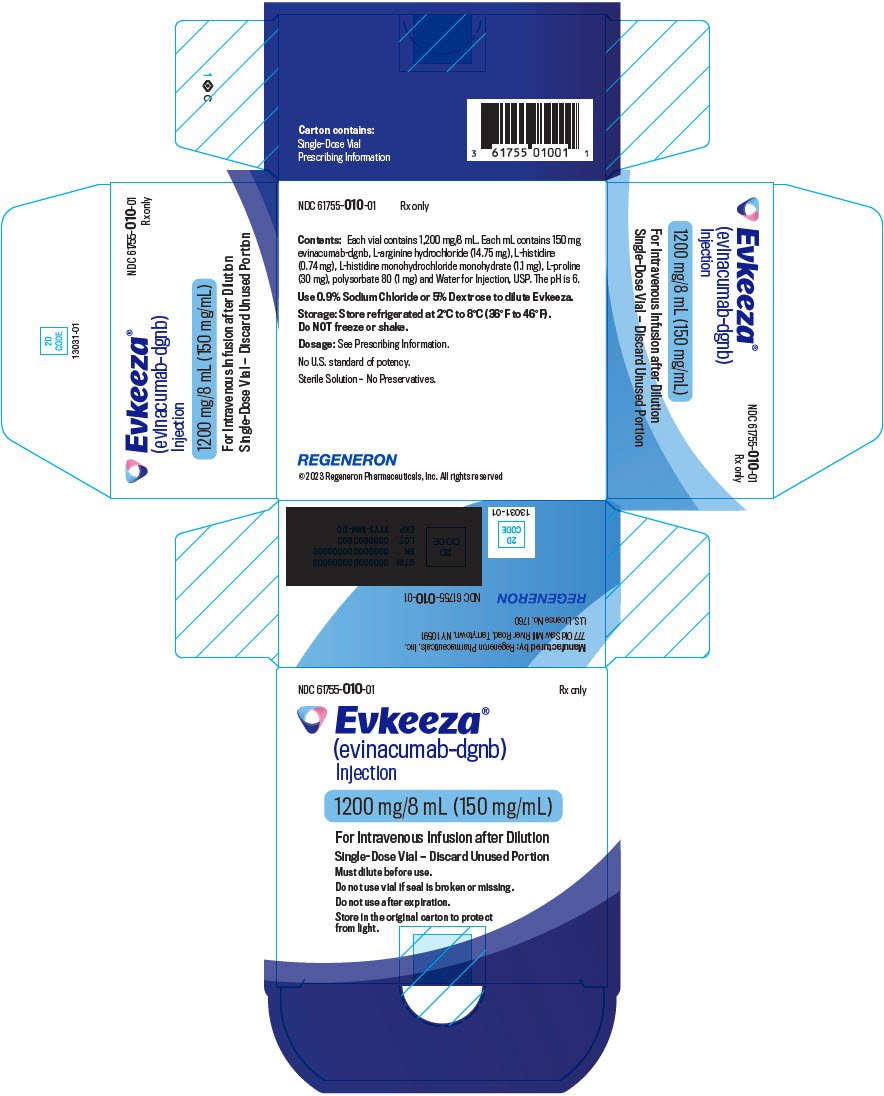
Evkeeza evinacumab 150 mg/mL Injection, Solution, Concentrate — NDC 61755-010-01 (Billing 61755-0010-01)
This is a package of Evkeeza evinacumab 150 mg/mL Injection, Solution, Concentrate from Regeneron Pharmaceuticals, Inc., no longer marketed (first marketed Feb 2021), no longer in the FDA NDC Directory. It is this product's only package size.
NDC database record
One package, one record: these facts belong to NDC 61755-010-01 alone.
- Record
- FDA NDC Directory package listing · Human prescription drug
- Code segments
- 61755 labeler · 010 product · 01 package
- Package marketed since
- Feb 11, 2021
- Sample package
- No — commercial package
- Listing certified through
- Dec 31, 2026
- Barcode (UPC-A, from the NDC)
- 3 6175501001 1
- Medicaid fills, this package
- 28 prescriptions in the last four reported quarters
- FDA record last changed
- Jul 24, 2026
Identity & classification
Regulatory identifiers FDA, NLM and CMS codes for this package
Drug-database identifiers Medi-Span GPI and First Databank GCN / HICL / AHFS classification
- GSN (GCN sequence number): 081928
- GCN: 49195
- GPI-14 (Medi-Span): 39392030202040
- HICL (First Databank): 047113
- AHFS class code: 24:06.20.00
- RxCUI (RxNorm): 2478648
Where does this data come from?
- FDA openFDA NDC Directory · synced Oct 8, 2026
- FDA label on DailyMed · label index refreshed Oct 8, 2026
- RxNorm (NLM RxNav) · catalog refreshed Oct 1, 2026
- Medi-Span GPI (licensed)
- First Databank (licensed) · refreshed Oct 8, 2026
RxNorm drug class
This medicine belongs to the Angiopoietin-like 3 Inhibitor class.
Where does this data come from?
- RxClass (NLM) · catalog refreshed Oct 1, 2026
Clinical
Evinacumab-dgnb injection is used to lower cholesterol in patients with homozygous familial hypercholesterolemia (HoFH; an inherited condition in which cholesterol cannot be removed from the body normally). Evinacumab-dgnb is in a class of medications called angiopoietin-like protein 3 (ANGPTL3) inhibitor monoclonal antibodies. It works by decreasing the production of cholesterol and increasing the breakdown of cholesterol and other fatty substances in the body. Accumulation of cholesterol and fats along the walls of your arteries (a process known as atherosclerosis) decreases blood flow and,...
Read the full MedlinePlus article ↗Patient education
Supplement & herbal interactions
Where does this data come from?
- MedlinePlus (NLM) · refreshed Oct 8, 2026
- FDA label on DailyMed · label index refreshed Oct 8, 2026
Ask a licensed pharmacist directly — free, answered by our team.
Pricing
A drug doesn't have one price. Each row is a different public payment system, and none is what you'd pay at the counter — that depends on your insurance. The ⓘ on each row explains what it measures.
| Price system | Per mL | Per package |
|---|---|---|
| Retail pharmacies payNADAC · weekly | Not in the retail survey — common for institutional, discontinued, or low-volume packs. | |
| Medicaid paysCMS SDUD · 12 mo | $5,555.93 | $44,447.40 / 8 ml |
| Medicare drug plans payPart D · quarterly | No Part D plan price is available for this NDC in our data. | |
| Medicare Part B allowsASP · J1305 | $197.633 / J1305 unit | — |
Where does this data come from?
- CMS NADAC weekly file
- CMS ASP pricing files · refreshed Sep 20, 2026
- CMS Medicaid State Drug Utilization Data · through Q1 2026
- CMS Part D plan pricing files · refreshed Sep 24, 2026
- VA National Acquisition Center price file
Billing & reimbursement
Where does this data come from?
- CMS ASP NDC-HCPCS crosswalk · refreshed Sep 22, 2026
- DMEPDAC NDC-HCPCS crosswalk
- openFDA NSDE billing units · refreshed Oct 7, 2026
Packaging — all sizes for this product
| Package NDC | Description | Marketing start | Marketing end | Status |
|---|---|---|---|---|
| 61755-0010-01 You're viewing this Main listing | 1 VIAL, SINGLE-USE in 1 CARTON / 8 mL in 1 VIAL, SINGLE-USE | 2021-02-11 | — | Inactivated by FDA |
Therapeutic equivalents
| Product | Labeler | Pack | NADAC/unit | TE | Status | Price vs. this |
|---|---|---|---|---|---|---|
| Evkeeza 150 mg/mLthis 61755-0010-01 | Regeneron | 1 vial | — | — | Discontinued | — |
| Evkeeza 150 mg/mL 61755-0013-01 | Regeneron | 1 vial | — | — | Discontinued | — |
Where does this data come from?
- FDA openFDA NDC Directory · synced Oct 8, 2026
- FDA Purple Book · refreshed Oct 5, 2026
- CMS NADAC weekly file
Availability & biosimilar status
Biologics have no small-molecule generics; biosimilar competition is tracked in the FDA Purple Book.
Why the date isn’t exact: Biosimilar timing can change because patents may be challenged, settled, licensed, added or removed, and litigation can move the real date earlier or later.
🛈 What do these terms mean?
- Biologic patent
- A patent the reference product’s maker has publicly listed. A biosimilar generally can’t launch until these expire — unless they’re invalidated or resolved in a settlement.
- Reference-product exclusivity
- A flat 12 years of FDA market protection from the biologic’s first licensure (the BPCIA). No biosimilar can be licensed before it ends, regardless of patents.
- Interchangeable exclusivity
- The first interchangeable biosimilar can earn a period as the only interchangeable version (pharmacists can substitute it without the prescriber).
- Earliest biosimilar (LOE)
- The latest of all the dates above — the soonest a biosimilar can realistically reach the market. Litigation and settlements can move it earlier.
Biologics have no small-molecule “generics” — competition comes from FDA-licensed biosimilars, tracked in the FDA Purple Book.
| Code | What it grants | Expires |
|---|---|---|
| RefProduct | Reference-product exclusivity (12-year, BPCIA) — no biosimilar can be licensed before this date | Feb 11, 2033 |
Is there a biosimilar for EVKEEZA 1,200 MG/8 ML VIAL?
Why do different websites show different biosimilar dates?
Can a biosimilar launch before the last patent expires?
What does “current Purple Book estimate” mean?
What does “FDA listed” mean?
What does a patent or protection date mean here?
Where does this data come from?
- FDA Purple Book · refreshed Oct 5, 2026
Inactive Ingredients / Excipients
Inactive ingredients, also called excipients, are components of the drug product other than the active ingredient. They may include fillers, dyes, coatings, preservatives, flavors, or other formulation ingredients.
💡 Tap an ingredient (hover on desktop) to see what it is and why it’s used.
-
14.75 mg / 1 mL
UNII F7LTH1E20Y
Arginine hydrochloride is an amino acid salt used as a buffer and pH adjuster in medicines. It helps maintain the correct acidity level to keep the drug stable and effective.
-
0.74 mg / 1 mL
UNII 4QD397987E
An amino acid used as a buffer and stabilizer in medications. It helps maintain the pH balance and protects the active drug from breaking down during storage and use.
-
1.1 mg / 1 mL
UNII X573657P6P
Histidine monohydrochloride monohydrate is an amino acid salt used as a buffer in medicines. It helps maintain the proper acidity level of liquid formulations to keep the drug stable and effective.
-
1 mg / 1 mL
UNII 6OZP39ZG8H
Polysorbate 80 is a synthetic emulsifier derived from sorbitol and oleic acid. It helps mix oil and water-based ingredients together in medications and improves how the product disperses in the body.
-
30 mg / 1 mL
UNII 9DLQ4CIU6V
Proline is an amino acid used in pharmaceutical formulations as a bulking agent and stabilizer. It helps maintain product stability and can improve the texture or consistency of medicines, particularly in powders and freeze-dried products.
-
UNII 059QF0KO0R
Water is a liquid solvent that dissolves and mixes ingredients together in liquid medicines, syrups, and injections. It helps distribute the active drug evenly throughout the product.
6 inactive ingredients listed in the exact product block matched to this NDC.
Where does this data come from?
ingredient classCode="IACT" elements from the exact product block matched by this NDC. Label-section narrative from DailyMed / the openFDA label index is shown separately when available.- FDA label on DailyMed · label index refreshed Oct 8, 2026
- FDA openFDA NDC Directory · synced Oct 8, 2026
Inactive ingredient FAQ
Are inactive ingredients the same for every manufacturer?
Why might an inactive ingredient be missing?
Can inactive ingredients matter?
Manufacturer & labeler
More NDCs from Regeneron Pharmaceuticals, Inc. labeler code 61755
- EYLEA aflibercept 40 mg/mL Injection, Solution NDC 61755-005-01
- LIBTAYO cemiplimab-rwlc 50 mg/mL Injection NDC 61755-008-01
- Pasatru garetosmab-grts 300 mg/5mL Injection, Solution, Concentrate NDC 61755-012-01
- Evkeeza evinacumab 150 mg/mL Injection, Solution, Concentrate NDC 61755-013-01
- VEOPOZ Pozelimab 200 mg/mL Injection, Solution NDC 61755-014-01
- Inmazeb atoltivimab, maftivimab, and odesivimab-ebgn 241.7 mg/14.5mL; 241.7 mg/14.5mL; 241.7 mg/14.5mL Injection, Solution NDC 61755-018-01
- Inmazeb atoltivimab, maftivimab, and odesivimab-ebgn 483.3 mg/14.5mL; 483.3 mg/14.5mL; 483.3 mg/14.5mL Injection, Solution NDC 61755-019-01
- Praluent alirocumab 75 mg/mL Injection, Solution NDC 61755-020-01
Where does this data come from?
- FDA openFDA NDC Directory · synced Oct 8, 2026
- Drugs@FDA
Full prescribing information FDA SPL
🎯 Indications and Usage ▾
1 INDICATIONS AND USAGE EVKEEZA is indicated as an adjunct to diet and exercise and other low-density lipoprotein-cholesterol (LDL-C) lowering therapies to reduce LDL-C in adults and pediatric patients, aged 1 year and older, with homozygous familial hypercholesterolemia (HoFH). EVKEEZA is an angiopoietin-like 3 (ANGPTL3) inhibitor indicated as an adjunct to diet and exercise and other low-density lipoprotein-cholesterol (LDL-C) lowering therapies to reduce LDL-C in adults and pediatric patients, aged 1 year and older, with homozygous familial hypercholesterolemia (HoFH).
( 1 )
⏱️ Dosage and Administration ▾
2 DOSAGE AND ADMINISTRATION The recommended dosage of EVKEEZA is 15 mg/kg administered by intravenous (IV) infusion once monthly (every 4 weeks). ( 2.1 ) See the Full Prescribing Information for preparation instructions for the intravenous infusion. ( 2.2 ) Administer the diluted solution via IV infusion over 60 minutes through an IV line containing a sterile, in-line or add-on, 0.2-micron to 5-micron filter.
( 2.3 ) Do not mix other medications with EVKEEZA or administer other medications concomitantly via the same infusion line. ( 2.3 ) The rate of infusion may be slowed, interrupted or discontinued if the patient develops any signs of adverse reactions, including infusion or hypersensitivity reactions. ( 2.3 )
2.1Recommended Dosage The recommended dosage of EVKEEZA is 15 mg/kg administered by intravenous (IV) infusion over 60 minutes once monthly (every 4 weeks). If a dosage of EVKEEZA is missed, administer as soon as possible. Thereafter, EVKEEZA should be scheduled monthly from the date of the last dosage. Assess LDL-C when clinically appropriate. The LDL-lowering effect of EVKEEZA may be measured as early as 2 weeks after initiation.
2.2Preparation Instructions for Intravenous Infusion Calculate the dosage (mg), total volume (mL) of EVKEEZA required, and the number of vials required based on the patient's current body weight. Visually inspect the solution for cloudiness, discoloration, and particulate matter prior to administration. EVKEEZA is a clear to slightly opalescent, colorless to pale-yellow solution.
Do not administer if the solution is cloudy, discolored, or contains particulate matter. EVKEEZA is supplied as single-dose vials and does not contain a preservative. Prepare the diluted infusion using aseptic technique.
Do not shake the vial. Withdraw the required volume from the vial(s) of EVKEEZA and transfer into an IV infusion bag of 0.9% Sodium Chloride Injection or 5% Dextrose Injection. Discard any unused portion left in the vials.
Mix the diluted solution by gentle inversion; do not shake. Maximum diluent volume by patient weight is summarized in Table 1. Table 1: Maximum Diluent Volume by Patient Weight Patient Weight Maximum Diluent Volume 3 kg to less than 26 kg 5 mL/kg 26 kg to less than 45 kg 150 mL 45 kg and greater 250 mL The final concentration of the diluted solution should be between 0.5 mg/mL and 20 mg/mL depending on the patient's current body weight.
Administer the diluted solution immediately after preparation and discard any unused portion left in the vial. If not administered immediately, store the diluted solution refrigerated at 2 °C to 8 °C (36 °F to 46 °F) for no more than 24 hours from the time of preparation OR at room temperature up to 25 °C (77 °F) for no more than 6 hours from the time of preparation to the end of the infusion. Do not freeze the diluted solution.
2.3Administration Instructions for Intravenous Infusion If refrigerated, allow the diluted solution to come to room temperature prior to administration. Administer EVKEEZA diluted solution via IV infusion through an IV line containing a sterile, in-line or add-on, 0.2-micron to 5-micron filter over 60 minutes. Do not mix other medications with EVKEEZA or administer other medications concomitantly via the same infusion line.
The rate of infusion may be slowed, interrupted or discontinued if the patient develops any signs of adverse reactions, including infusion or hypersensitivity reactions [see Warnings and Precautions (5.1) and Adverse Reactions (6.1) ]. EVKEEZA can be administered without regard to the timing of lipoprotein apheresis.
💊 Dosage Forms and Strengths ▾
3 DOSAGE FORMS AND STRENGTHS EVKEEZA is a clear to slightly opalescent, colorless to pale yellow solution available as follows: Injection: 345 mg/2.3 mL (150 mg/mL) and 1,200 mg/8 mL (150 mg/mL) in single-dose vials. Injection: 345 mg/2.3 mL (150 mg/mL) and 1,200 mg/8 mL (150 mg/mL) solution in single-dose vials. ( 3 )
⛔ Contraindications ▾
4 CONTRAINDICATIONS EVKEEZA is contraindicated in patients with a history of serious hypersensitivity reaction to evinacumab-dgnb or to any of the excipients in EVKEEZA. Serious hypersensitivity reactions, including anaphylaxis, have occurred [see Warnings and Precautions (5.1) ]. History of serious hypersensitivity reactions to evinacumab-dgnb or to any of the excipients in EVKEEZA. ( 4 )
⚠️ Warnings and Cautions ▾
5 WARNINGS AND PRECAUTIONS Serious Hypersensitivity Reactions : Have occurred with EVKEEZA in clinical trials. If a serious hypersensitivity reaction occurs, discontinue EVKEEZA, treat according to standard-of-care and monitor until signs and symptoms resolve. ( 5.1 ) Embryo-Fetal Toxicity : EVKEEZA may cause fetal harm based on animal studies.
Advise patients who may become pregnant of the risk to a fetus. Consider obtaining a pregnancy test prior to initiating treatment with EVKEEZA. Advise patients who may become pregnant to use contraception during treatment and for at least 5 months following the last dosage.
( 5.2 , 8.1 , 8.3 )
5.1Serious Hypersensitivity Reactions Serious hypersensitivity reactions, including anaphylaxis, have occurred with EVKEEZA [see Adverse Reactions (6.1) ] . If signs or symptoms of serious hypersensitivity reactions occur, discontinue EVKEEZA infusion, treat according to the standard-of-care, and monitor until signs and symptoms resolve. EVKEEZA is contraindicated in patients with a history of serious hypersensitivity reaction to evinacumab-dgnb.
5.2Embryo-Fetal Toxicity Based on the findings in animal reproduction studies, EVKEEZA may cause fetal harm when administered to pregnant patients. Administration of evinacumab-dgnb to rabbits during organogenesis caused increases in fetal malformations at doses below the human exposure. Advise patients who may become pregnant of the risk to a fetus.
Consider obtaining a pregnancy test prior to initiating treatment with EVKEEZA. Advise patients who may become pregnant to use effective contraception during treatment with EVKEEZA and for at least 5 months following the last dosage of EVKEEZA [see Use in Specific Populations (8.1 , 8.3) ] .
🤒 Adverse Reactions ▾
6 ADVERSE REACTIONS The following clinically significant adverse reactions are described elsewhere in the labeling: Serious Hypersensitivity Reactions [see Warnings and Precautions (5.1) ] Common adverse reactions (≥5%) were nasopharyngitis, influenza-like illness, dizziness, rhinorrhea, nausea, and fatigue. ( 6.1 ) To report SUSPECTED ADVERSE REACTIONS, contact Regeneron at 1-833-385-3392 or FDA at 1-800-FDA-1088 or www.fda.gov/medwatch .
6.1Clinical Trials Experience Because clinical trials are conducted under widely varying conditions, adverse reaction rates observed in the clinical trials of a drug cannot be directly compared to rates in the clinical trials of another drug and may not reflect the rates observed in practice. Adverse Reactions in Adult and Pediatric Patients (aged 12 to 17 years) with HoFH Safety data are based on pooled results from two randomized, double-blind, placebo-controlled trials that included 81 patients treated with EVKEEZA.
The mean age of EVKEEZA-treated patients was 48 years (range: 15 to 75 years); 52% were females; 5% were Hispanic; 82% were White, 7% Asian, 3% Black or African American, and 9% other races. Forty-four (54%) EVKEEZA-treated patients had HoFH. Patients received EVKEEZA as add-on therapy to other lipid-lowering therapies, including maximally tolerated statin, ezetimibe, proprotein convertase subtilisin kexin type 9 (PCSK9) inhibitors, lomitapide, and apheresis.
Adverse reactions led to discontinuation of treatment in 1 (2%) patient who received placebo, and 2 (2%) patients treated with EVKEEZA, including 1 case of anaphylaxis. The most common adverse reactions (reported in greater than 3% of EVKEEZA-treated patients and more frequently than in placebo) are shown in Table 2. Table 2: Adverse Reactions Occurring in >3% of Adult and Pediatric Patients Aged 12 to 17 Years Treated with EVKEEZA and Greater than Placebo in 24-Week, Pooled, Placebo-Controlled Trials Adverse Reactions Placebo (N = 54) % EVKEEZA (N = 81) % Nasopharyngitis 13 16 Influenza like illness 6 7 Dizziness 0 6 Rhinorrhea 0 5 Nausea 2 5 Pain in extremity 0 4 Asthenia 0 4 Other adverse reactions occurring in less than 3% of patients treated with EVKEEZA and greater than placebo included constipation, upper respiratory tract infection, nasal congestion, and abdominal pain.
Transient, mild to moderate decreases in diastolic blood pressure and increases in heart rate occurred in clinical trials of EVKEEZA infusion but did not require intervention and resolved post-infusion. Serious Hypersensitivity Reactions Anaphylaxis was reported in 0% patients who received placebo and 1 (1%) patient treated with EVKEEZA. Infusion Reactions Infusion reactions were reported in 2 (4%) patients who received placebo and 6 (7%) patients treated with EVKEEZA.
The following infusion reactions occurred in EVKEEZA-treated patients: infusion site pruritus, pyrexia, muscular weakness, nausea, and nasal congestion. Adverse Reactions in Pediatric Patients (aged 5 to 11 years) with HoFH Safety data are based on pooled results from a three-part, open-label trial in 20 pediatric patients with HoFH (aged 5 to 11 years) with a median treatment duration of 50 weeks. Part A was a trial of 6 patients who received a single intravenous dose of EVKEEZA 15 mg/kg to determine the dosage for the rest of the trial.
Part B was a single-arm, 24-week trial of EVKEEZA 15 mg/kg given intravenously every 4 weeks in 14 unique patients [see Clinical Studies (14) ]. Part C was a 48-week extension trial of EVKEEZA 15 mg/kg given intravenously every 4 weeks that consisted of 20 patients who entered directly from Parts A or B. The mean age was 9 years (range: 5 to 11 years); 60% females; 70% White, 10% Asian, 5% Black or African American, 5% American Indian or Alaska Native, and 10% other races.
The safety profile of EVKEEZA observed in these patients was consistent with the safety profile observed in adults and pediatric patients aged 12 years and older, with the additi… [Excerpted — this section continues on DailyMed.]
👥 Use in Specific Populations ▾
8 USE IN SPECIFIC POPULATIONS
8.1Pregnancy Risk Summary Based on data from animal reproduction studies, EVKEEZA may cause fetal harm when administered to pregnant patients. Available human data are insufficient to evaluate for a drug-associated risk of major birth defects, miscarriage or adverse maternal or fetal outcomes. Evinacumab-dgnb is a human IgG4 monoclonal antibody [see Description (11) ], and human IgG is known to cross the placental barrier; therefore, evinacumab-dgnb has the potential to be transmitted from the mother to the developing fetus.
Subcutaneous administration of evinacumab-dgnb to pregnant rabbits during the period of organogenesis resulted in fetal malformations (domed head, hydrocephalus, and flexed limbs) at doses below the maximum recommended human dose (MRHD). No adverse embryofetal effects were observed with subcutaneous administration of evinacumab-dgnb to pregnant rats during the period of organogenesis at doses below the MRHD. Measurable evinacumab-dgnb serum concentrations were observed in fetal rabbit and rat sera at birth, indicating that evinacumab-dgnb, like other IgG antibodies, crosses the placental barrier (see Data ).
Advise pregnant women of the potential risk to a fetus. The estimated background risk of major birth defects and miscarriage for the indicated population are unknown. In the U.S. general population, the estimated background risk of major birth defects and miscarriage in clinically recognized pregnancies is 2-4% and 15-20%, respectively.
If a patient becomes pregnant while receiving EVKEEZA, healthcare providers should report EVKEEZA exposure by calling 1-833-385-3392. Data Animal Data In an embryo-fetal development study in pregnant rabbits, evinacumab-dgnb was administered subcutaneously at doses of 1, 5, 10 and 30 mg/kg every 3 days (Q3D) during the period of organogenesis from gestation day 7 to day 19. Evinacumab-dgnb was teratogenic in rabbits, causing domed head, dilation of the lateral and third ventricles of the brain, and flexed fore/hind paws at maternal evinacumab-dgnb exposures below human exposure at the MRHD of 15 mg/kg every 4 weeks, based on AUC.
Other fetal malformations, consisting of irregular and abnormal ossification in the skull, palate, and metacarpal, and enlarged anterior and/or posterior fontanelles occurred and were consistent with significant maternal toxicity (including early deaths due to abortion and premature delivery at all doses, reduction in maternal body weight gains, and reduced maternal food consumption). Increased incidences of post-implantation losses, resorptions (total, early, and late), and decreased fetal body weight were also consistent with maternal toxicity.
Evinacumab-dgnb was present in the sera of fetuses born from mothers at 10 and 30 mg/kg/Q3D at levels higher than in maternal serum. In an embryo-fetal development study in pregnant rats, evinacumab-dgnb was administered subcutaneously at doses of 5, 10, 30 and 100 mg/kg/Q3D during the period of organogenesis from gestation day 6 to day 18. Maternal exposures to evinacumab-dgnb were below the human exposure measured at the MRHD.
Evinacumab-dgnb resulted in unexplained maternal deaths at 100 mg/kg/Q3D. Evinacumab-dgnb crossed the placenta and was present at ratios (C Fetal /C Maternal ) ranging from 0.42 to 0.65. No adverse effects on embryofetal development were observed at any dose.
In a combined fertility, embryofetal, and pre- and postnatal development study, female rats were administered evinacumab-dgnb via subcutaneous injection at doses of 30 and 100 mg/kg/Q3D beginning 2 weeks prior to mating and continuing to gestation day 21 or lactation day 21. Mean maternal systemic exposures were below the human exposure at the MRHD throughout the study. No maternal or developmental toxicity was observed.
8.2Lactation Risk Summary There are no data on the presence of evinacumab-dgnb in human milk or animal milk, the effects on the breastfed infant, or the effects on milk prod… [Excerpted — this section continues on DailyMed.]
🤰 Pregnancy ▾
8.1Pregnancy Risk Summary Based on data from animal reproduction studies, EVKEEZA may cause fetal harm when administered to pregnant patients. Available human data are insufficient to evaluate for a drug-associated risk of major birth defects, miscarriage or adverse maternal or fetal outcomes. Evinacumab-dgnb is a human IgG4 monoclonal antibody [see Description (11) ], and human IgG is known to cross the placental barrier; therefore, evinacumab-dgnb has the potential to be transmitted from the mother to the developing fetus.
Subcutaneous administration of evinacumab-dgnb to pregnant rabbits during the period of organogenesis resulted in fetal malformations (domed head, hydrocephalus, and flexed limbs) at doses below the maximum recommended human dose (MRHD). No adverse embryofetal effects were observed with subcutaneous administration of evinacumab-dgnb to pregnant rats during the period of organogenesis at doses below the MRHD. Measurable evinacumab-dgnb serum concentrations were observed in fetal rabbit and rat sera at birth, indicating that evinacumab-dgnb, like other IgG antibodies, crosses the placental barrier (see Data ).
Advise pregnant women of the potential risk to a fetus. The estimated background risk of major birth defects and miscarriage for the indicated population are unknown. In the U.S. general population, the estimated background risk of major birth defects and miscarriage in clinically recognized pregnancies is 2-4% and 15-20%, respectively.
If a patient becomes pregnant while receiving EVKEEZA, healthcare providers should report EVKEEZA exposure by calling 1-833-385-3392. Data Animal Data In an embryo-fetal development study in pregnant rabbits, evinacumab-dgnb was administered subcutaneously at doses of 1, 5, 10 and 30 mg/kg every 3 days (Q3D) during the period of organogenesis from gestation day 7 to day 19. Evinacumab-dgnb was teratogenic in rabbits, causing domed head, dilation of the lateral and third ventricles of the brain, and flexed fore/hind paws at maternal evinacumab-dgnb exposures below human exposure at the MRHD of 15 mg/kg every 4 weeks, based on AUC.
Other fetal malformations, consisting of irregular and abnormal ossification in the skull, palate, and metacarpal, and enlarged anterior and/or posterior fontanelles occurred and were consistent with significant maternal toxicity (including early deaths due to abortion and premature delivery at all doses, reduction in maternal body weight gains, and reduced maternal food consumption). Increased incidences of post-implantation losses, resorptions (total, early, and late), and decreased fetal body weight were also consistent with maternal toxicity.
Evinacumab-dgnb was present in the sera of fetuses born from mothers at 10 and 30 mg/kg/Q3D at levels higher than in maternal serum. In an embryo-fetal development study in pregnant rats, evinacumab-dgnb was administered subcutaneously at doses of 5, 10, 30 and 100 mg/kg/Q3D during the period of organogenesis from gestation day 6 to day 18. Maternal exposures to evinacumab-dgnb were below the human exposure measured at the MRHD.
Evinacumab-dgnb resulted in unexplained maternal deaths at 100 mg/kg/Q3D. Evinacumab-dgnb crossed the placenta and was present at ratios (C Fetal /C Maternal ) ranging from 0.42 to 0.65. No adverse effects on embryofetal development were observed at any dose.
In a combined fertility, embryofetal, and pre- and postnatal development study, female rats were administered evinacumab-dgnb via subcutaneous injection at doses of 30 and 100 mg/kg/Q3D beginning 2 weeks prior to mating and continuing to gestation day 21 or lactation day 21. Mean maternal systemic exposures were below the human exposure at the MRHD throughout the study. No maternal or developmental toxicity was observed.
🧒 Pediatric Use ▾
8.4Pediatric Use The safety and effectiveness of EVKEEZA as an adjunct to other LDL-C-lowering therapies for the treatment of HoFH have been established in pediatric patients aged 1 year and older. Use of EVKEEZA for this indication is supported by evidence from adequate and well-controlled trials in adults with additional pharmacokinetic, efficacy, and safety data in pediatric patients aged 1 year and older [see Adverse Reactions (6.1) , Clinical Pharmacology (12.3) and Clinical Studies (14) ] . The safety profile of EVKEEZA in pediatric patients aged 1 to 11 years was similar to the safety profile in adults and pediatric patients aged 12 years and older, with the additional adverse reaction of fatigue in patients aged 5 to 11 years [see Adverse Reactions (6.1) ].
The safety and effectiveness of EVKEEZA have not been established in pediatric patients younger than 1 year of age.
🧓 Geriatric Use ▾
8.5Geriatric Use Clinical studies of EVKEEZA did not include sufficient numbers of patients 65 years of age and older to determine whether they respond differently from younger adult patients.
🧬 Clinical Pharmacology ▾
12 CLINICAL PHARMACOLOGY
12.1Mechanism of Action Evinacumab-dgnb is a recombinant human monoclonal antibody that binds to and inhibits ANGPTL3. ANGPTL3 is a member of the angiopoietin-like protein family that is expressed primarily in the liver and plays a role in the regulation of lipid metabolism by inhibiting lipoprotein lipase (LPL) and endothelial lipase (EL). Evinacumab-dgnb inhibition of ANGPTL3 leads to reduction in LDL-C, high-density lipoprotein cholesterol (HDL-C), and triglycerides (TG).
Evinacumab-dgnb reduces LDL-C independent of the presence of LDL receptor (LDLR) by promoting very low-density lipoprotein (VLDL) processing and clearance upstream of LDL formation. Evinacumab-dgnb blockade of ANGPTL3 lowers TG and HDL-C by rescuing LPL and EL activities, respectively.
12.2Pharmacodynamics Administration of evinacumab-dgnb in patients with HoFH resulted in reductions in LDL-C, total cholesterol (TC), HDL-C, apolipoprotein B and TG [see Clinical Studies (14) ].
12.3Pharmacokinetics The pharmacokinetic parameters described in this section are presented following administration of evinacumab-dgnb 15 mg/kg intravenously every 4 weeks, unless otherwise specified. Steady-state is reached after 4 doses, and the accumulation ratio is 2. According to population pharmacokinetic modeling, the mean (standard deviation) steady-state trough concentration is 266 (120) mg/L in adult patients, whereas the mean (standard deviation) C max at the end of infusion is 718 (183) mg/L in adult patients.
Due to non-linear clearance, a 4.3-fold increase in area under the concentration-time curve at steady-state (AUC tau.ss ) for a 3-fold increase in evinacumab-dgnb dose up to 15 mg/kg IV every 4 weeks was predicted in patients with HoFH. Distribution The steady-state volume of distribution estimated via population pharmacokinetic analysis was approximately
4.7L in adult patients. Elimination Evinacumab-dgnb elimination is mediated via parallel linear and non-linear pathways. At higher concentrations, evinacumab-dgnb elimination is primarily through a non-saturable proteolytic pathway, whereas at lower concentrations, the non-linear, saturable ANGPTL3 target-mediated elimination predominates.
The elimination half-life is a function of serum evinacumab-dgnb concentrations and is not a constant. Based on a population pharmacokinetic analysis, the median time for serum evinacumab-dgnb concentrations to decrease below the lower limit of quantitation (78 ng/mL) is approximately 20 weeks after the last steady-state dose of 15 mg/kg IV every 4 weeks. Metabolism The exact pathway through which evinacumab-dgnb is metabolized has not been characterized.
As a human monoclonal IgG4 antibody, evinacumab-dgnb is expected to be degraded into small peptides and amino acids via catabolic pathways in the same manner as endogenous IgG. Excretion Evinacumab-dgnb, a monoclonal antibody, is not likely to undergo renal excretion. Specific Populations A population PK analysis conducted on data from 183 healthy subjects and 139 patients with HoFH suggests that the following factors have no clinically significant effect on the exposure of evinacumab-dgnb: age (5 to 75 years), gender, body weight (20 to 152 kg), and race (White, Asian, Black or African American, American Indian or Alaska Native, and other races).
Pediatric Patients Fourteen (14) patients aged 12 to less than 18 years with HoFH received evinacumab-dgnb at 15 mg/kg IV every 4 weeks. Steady-state trough and end-of-infusion concentrations were within the range observed in adult patients. Twenty (20) patients aged 5 to less than 12 years with HoFH received evinacumab-dgnb at 15 mg/kg IV every 4 weeks.
According to population pharmacokinetic modeling, the mean (standard deviation) steady-state trough concentration is 160 (57.6) mg/L in pediatric patients, whereas the mean (standard deviation) C max at the end of infusion is 419 (99.4) mg/L in pediatric patients. Steady-state trough and end-of-infusion co… [Excerpted — this section continues on DailyMed.]
🧬 Mechanism of Action ▾
12.1Mechanism of Action Evinacumab-dgnb is a recombinant human monoclonal antibody that binds to and inhibits ANGPTL3. ANGPTL3 is a member of the angiopoietin-like protein family that is expressed primarily in the liver and plays a role in the regulation of lipid metabolism by inhibiting lipoprotein lipase (LPL) and endothelial lipase (EL). Evinacumab-dgnb inhibition of ANGPTL3 leads to reduction in LDL-C, high-density lipoprotein cholesterol (HDL-C), and triglycerides (TG).
Evinacumab-dgnb reduces LDL-C independent of the presence of LDL receptor (LDLR) by promoting very low-density lipoprotein (VLDL) processing and clearance upstream of LDL formation. Evinacumab-dgnb blockade of ANGPTL3 lowers TG and HDL-C by rescuing LPL and EL activities, respectively.
📦 How Supplied / Storage and Handling ▾
16 HOW SUPPLIED/STORAGE AND HANDLING EVKEEZA (evinacumab-dgnb) injection is a clear to slightly opalescent, colorless to pale yellow solution. It is supplied as one single-dose vial per carton. 345 mg/2.3 mL (150 mg/mL) NDC 61755-013-01 1,200 mg/8 mL (150 mg/mL) NDC 61755-010-01 Storage Store in a refrigerator at 2 °C to 8 °C (36 °F to 46 °F).
Store the vial in the original carton to protect from light. Do not freeze. Do not shake.
EVKEEZA does not contain a preservative. If not used immediately, store the diluted solution refrigerated at 2 °C to 8 °C (36 °F to 46 °F) for no more than 24 hours from the time of preparation OR at room temperature up to 25 °C (77 °F) for no more than 6 hours from the time of infusion preparation to the end of the infusion [see Dosage and Administration (2.2) ].
📦 Storage and Handling ▾
Storage Store in a refrigerator at 2 °C to 8 °C (36 °F to 46 °F). Store the vial in the original carton to protect from light. Do not freeze.
Do not shake. EVKEEZA does not contain a preservative. If not used immediately, store the diluted solution refrigerated at 2 °C to 8 °C (36 °F to 46 °F) for no more than 24 hours from the time of preparation OR at room temperature up to 25 °C (77 °F) for no more than 6 hours from the time of infusion preparation to the end of the infusion [see Dosage and Administration (2.2) ].
📋 Description ▾
11 DESCRIPTION Evinacumab-dgnb is an angiopoietin-like protein 3 (ANGPTL3) inhibitor monoclonal antibody (IgG4 isotype) produced by recombinant DNA technology in Chinese hamster ovary (CHO) cell suspension culture. Evinacumab-dgnb has an approximate molecular weight of 146 kDa. EVKEEZA (evinacumab-dgnb) injection is a sterile, preservative-free solution for intravenous use.
The solution is clear to slightly opalescent, colorless to pale-yellow, and free from visible particles. Each vial contains 345 mg/2.3 mL or 1,200 mg/8 mL. Each mL contains 150 mg of evinacumab-dgnb, and L-arginine hydrochloride (14.8 mg), L-histidine (0.74 mg), L-histidine monohydrochloride monohydrate (1.1 mg), L-proline (30 mg), polysorbate 80 (1 mg) and Water for Injection, USP.
The pH is 6.
💬 Information for Patients ▾
17 PATIENT COUNSELING INFORMATION Advise the patient to read the FDA-approved patient labeling (Patient Information). Hypersensitivity Reactions Inform patients that hypersensitivity reactions have occurred with EVKEEZA. Advise patients to contact their healthcare provider immediately if they experience signs or symptoms of a hypersensitivity reaction [see Warnings and Precautions (5.1) ] .
Embryofetal Toxicity Advise pregnant patients and patients that may become pregnant of the potential risk to a fetus and to inform their healthcare provider of a known or suspected pregnancy. Advise patients who may become pregnant to use effective contraception during treatment with EVKEEZA and for 5 months after the final dosage. Encourage patients who become pregnant to report their pregnancy to 1-833-385-3392 [see Warnings and Precautions (5.2) and Use in Specific Populations (8.1 , 8.3) ].
🧬 Pharmacokinetics ▾
12.3Pharmacokinetics The pharmacokinetic parameters described in this section are presented following administration of evinacumab-dgnb 15 mg/kg intravenously every 4 weeks, unless otherwise specified. Steady-state is reached after 4 doses, and the accumulation ratio is 2. According to population pharmacokinetic modeling, the mean (standard deviation) steady-state trough concentration is 266 (120) mg/L in adult patients, whereas the mean (standard deviation) C max at the end of infusion is 718 (183) mg/L in adult patients.
Due to non-linear clearance, a 4.3-fold increase in area under the concentration-time curve at steady-state (AUC tau.ss ) for a 3-fold increase in evinacumab-dgnb dose up to 15 mg/kg IV every 4 weeks was predicted in patients with HoFH. Distribution The steady-state volume of distribution estimated via population pharmacokinetic analysis was approximately
4.7L in adult patients. Elimination Evinacumab-dgnb elimination is mediated via parallel linear and non-linear pathways. At higher concentrations, evinacumab-dgnb elimination is primarily through a non-saturable proteolytic pathway, whereas at lower concentrations, the non-linear, saturable ANGPTL3 target-mediated elimination predominates.
The elimination half-life is a function of serum evinacumab-dgnb concentrations and is not a constant. Based on a population pharmacokinetic analysis, the median time for serum evinacumab-dgnb concentrations to decrease below the lower limit of quantitation (78 ng/mL) is approximately 20 weeks after the last steady-state dose of 15 mg/kg IV every 4 weeks. Metabolism The exact pathway through which evinacumab-dgnb is metabolized has not been characterized.
As a human monoclonal IgG4 antibody, evinacumab-dgnb is expected to be degraded into small peptides and amino acids via catabolic pathways in the same manner as endogenous IgG. Excretion Evinacumab-dgnb, a monoclonal antibody, is not likely to undergo renal excretion. Specific Populations A population PK analysis conducted on data from 183 healthy subjects and 139 patients with HoFH suggests that the following factors have no clinically significant effect on the exposure of evinacumab-dgnb: age (5 to 75 years), gender, body weight (20 to 152 kg), and race (White, Asian, Black or African American, American Indian or Alaska Native, and other races).
Pediatric Patients Fourteen (14) patients aged 12 to less than 18 years with HoFH received evinacumab-dgnb at 15 mg/kg IV every 4 weeks. Steady-state trough and end-of-infusion concentrations were within the range observed in adult patients. Twenty (20) patients aged 5 to less than 12 years with HoFH received evinacumab-dgnb at 15 mg/kg IV every 4 weeks.
According to population pharmacokinetic modeling, the mean (standard deviation) steady-state trough concentration is 160 (57.6) mg/L in pediatric patients, whereas the mean (standard deviation) C max at the end of infusion is 419 (99.4) mg/L in pediatric patients. Steady-state trough and end-of-infusion concentrations were lower but within the range observed in adult patients. The predicted mean (standard deviation) steady-state trough and maximum concentrations were 135 (62) and 500(182) mg/L for patients aged 1 year to less than 2 years.
The predicted mean (standard deviation) steady-state trough and maximum concentrations were 141(61) and 513(179) mg/L for patients aged 2 to less than 5 years. Patients with Renal Impairment Observed trough serum evinacumab-dgnb concentrations at steady-state were comparable between patients with mild or moderate renal impairment and patients with normal renal function. No data are available in patients with severe renal impairment.
Patients with Hepatic Impairment No data are available in patients with hepatic impairment . Drug Interaction Studies Drug interaction studies have not been conducted with evinacumab-dgnb. In a clinical trial, the concentrations of statins (atorvastatin, rosuvastatin, simvastatin) were not meaningfully altered i… [Excerpted — this section continues on DailyMed.]
🧬 Pharmacodynamics ▾
12.2Pharmacodynamics Administration of evinacumab-dgnb in patients with HoFH resulted in reductions in LDL-C, total cholesterol (TC), HDL-C, apolipoprotein B and TG [see Clinical Studies (14) ].
🔬 Clinical Studies ▾
14 CLINICAL STUDIES Adult and Pediatric Patients Aged 12 Years and Older with HoFH Trial ELIPSE-HoFH (NCT03399786; Trial 1) was a multicenter, double-blind, randomized, placebo-controlled trial that evaluated the efficacy of EVKEEZA compared to placebo in 65 patients with HoFH (63 adult patients and 2 pediatric patients). During the 24-week, double-blind treatment period, patients were randomized to receive EVKEEZA 15 mg/kg given intravenously every 4 weeks (n=43) or placebo given intravenously every 4 weeks (n=22).
After the double-blind treatment period, 64 of 65 patients entered a 24-week open-label extension period in which all patients received EVKEEZA 15 mg/kg given intravenously every 4 weeks. Patients were on a background of other lipid-lowering therapies, including maximally tolerated statins, ezetimibe, PCSK9 inhibitor antibodies, lomitapide, and lipoprotein apheresis. Enrollment was stratified by apheresis status and geographical region.
The diagnosis of HoFH was determined by genetic testing or by the presence of the following clinical criteria: history of an untreated total cholesterol (TC) >500 mg/dL and either xanthoma before 10 years of age or evidence of TC >250 mg/dL in both parents. Baseline Disease and Demographic Characteristics In this trial, 40% (26 of 65) patients had limited LDL receptor (LDLR) function, defined by either <15% receptor function by in vitro assays or by genetic variants likely to result in minimal to no LDLR function by mutation analysis.
The mean LDL-C at baseline was 255 mg/dL (in patients with limited LDLR function, the mean LDL-C at baseline was 307 mg/dL). At baseline, 94% of patients were on statins, 75% on ezetimibe, 77% on a PCSK9 inhibitor antibody, 22% on lomitapide, and 34% were receiving lipoprotein apheresis. The mean age at baseline was 42 years (range 12 to 75) with 12% ≥65 years old; 54% females; 3% Hispanic; 74% White, 15% Asian, 3% Black or African American, and 8% other races or race was not reported.
Endpoint Results The primary efficacy endpoint was percent change in LDL-C from baseline to Week 24. At Week 24, the least squares (LS) mean treatment difference between the EVKEEZA and placebo groups in mean percent change in LDL-C from baseline was −49% (95% confidence interval: −65% to −33%; p <0.0001). After 24 weeks of open-label EVKEEZA treatment (Week 24 to Week 48), the observed LDL-C reduction from baseline was similar in patients who crossed over from placebo to EVKEEZA and was maintained in patients who remained on EVKEEZA for 48 weeks.
For efficacy results see Table 3 . At Week 24, the observed reduction in LDL-C with EVKEEZA was similar across predefined subgroups, including age, sex, limited LDLR activity, concomitant treatment with lipoprotein apheresis, and concomitant background lipid-lowering medications (statins, ezetimibe, PCSK9 inhibitor antibodies, and lomitapide). Table 3: Lipid Parameters in Patients (63 Adults and 2 Pediatric Patients) with HoFH on Other Lipid-Lowering Therapies in Trial ELIPSE-HoFH (Trial 1) LDL-C ApoB Non-HDL-C TC TG Neither TG nor HDL-C were pre-specified in the hypothesis testing HDL-C One subject in the placebo group discontinued the trial before Week 24.
The treatment difference and 95% confidence interval (CI) were estimated using a mixed model repeated measures analysis. Abbreviations: HoFH=homozygous familial hypercholesterolemia, ITT=intent-to-treat, LS mean=least squares mean, N=number of randomized patients, CI=confidence interval Baseline (mean), mg/dL (N=65) 255 171 278 322 124 44 LS Mean: EVKEEZA (N = 43) −47% −41% −50% −47% −55% −30% Mean percent change, based on safety population (EVKEEZA, n=44; placebo, n=21); HDL-C is presented for completeness but was not an efficacy endpoint that was statistically analyzed.
LS Mean: Placebo (N = 22) +2% −5% +2% +1% −5% +1% LS Mean Difference from Placebo (95% CI) −49% (−65 to −33) −37% (−49 to −25) −52% (−65 to −39) −48% (−59 to −38) −50% (−66 to −35) - The LS mean LDL-C perc… [Excerpted — this section continues on DailyMed.]
🧪 Nonclinical Toxicology ▾
13 NONCLINICAL TOXICOLOGY
13.1Carcinogenesis, Mutagenesis, Impairment of Fertility Carcinogenesis and Mutagenesis Carcinogenicity studies have not been conducted with evinacumab-dgnb. The mutagenic potential of evinacumab-dgnb has not been evaluated; however, monoclonal antibodies are not expected to alter DNA or chromosomes. Impairment of Fertility There were no adverse effects on surrogate markers of fertility (estrous cyclicity, testicular volume, ejaculate volume, sperm motility, total sperm count per ejaculate, and histology of reproductive organs) in a 6-month chronic toxicology study in sexually-mature male and female monkeys subcutaneously administered 10, 30, or 100 mg/kg/week (0.2, 1, and 3-fold MRHD based on AUC, respectively) and intravenously administered 100 mg/kg/week (4-fold MRHD, based on AUC).
In a combined fertility and early embryonic and pre-and postnatal development study in female rats administered evinacumab-dgnb via subcutaneous injection at dosages 30 and 100 mg/kg/Q3D beginning 2 weeks prior to mating, no adverse effect on female fertility were observed at any dosage. Exposures to evinacumab-dgnb represented less than the human exposure at the MRHD, based on AUC. No effects on male fertility were observed with evinacumab-dgnb administration to male rabbits for 40 days prior to mating with treatment-naïve females.
Evinacumab-dgnb was administered to male rabbits intravenously at 100 and 300 mg/kg/Q5D, representing exposures 2- and 5-times, respectively, the human exposure at the MRHD, based on AUC.
📄 Carcinogenesis, Mutagenesis, Impairment of Fertility ▾
13.1Carcinogenesis, Mutagenesis, Impairment of Fertility Carcinogenesis and Mutagenesis Carcinogenicity studies have not been conducted with evinacumab-dgnb. The mutagenic potential of evinacumab-dgnb has not been evaluated; however, monoclonal antibodies are not expected to alter DNA or chromosomes. Impairment of Fertility There were no adverse effects on surrogate markers of fertility (estrous cyclicity, testicular volume, ejaculate volume, sperm motility, total sperm count per ejaculate, and histology of reproductive organs) in a 6-month chronic toxicology study in sexually-mature male and female monkeys subcutaneously administered 10, 30, or 100 mg/kg/week (0.2, 1, and 3-fold MRHD based on AUC, respectively) and intravenously administered 100 mg/kg/week (4-fold MRHD, based on AUC).
In a combined fertility and early embryonic and pre-and postnatal development study in female rats administered evinacumab-dgnb via subcutaneous injection at dosages 30 and 100 mg/kg/Q3D beginning 2 weeks prior to mating, no adverse effect on female fertility were observed at any dosage. Exposures to evinacumab-dgnb represented less than the human exposure at the MRHD, based on AUC. No effects on male fertility were observed with evinacumab-dgnb administration to male rabbits for 40 days prior to mating with treatment-naïve females.
Evinacumab-dgnb was administered to male rabbits intravenously at 100 and 300 mg/kg/Q5D, representing exposures 2- and 5-times, respectively, the human exposure at the MRHD, based on AUC.
📄 Patient Package Insert ▾
Patient Information EVKEEZA ® (ev-kee'-zah) (evinacumab-dgnb) injection, for intravenous use This Patient Information has been approved by the U.S. Food and Drug Administration. Revised: September 2025 What is EVKEEZA?
EVKEEZA is an injectable prescription medicine used along with diet and exercise and other low-density lipoprotein cholesterol (LDL-C) lowering medicines to lower LDL-C in adults and children 1 year of age and older with a type of high cholesterol called homozygous familial hypercholesterolemia (HoFH). It is not known if EVKEEZA is safe and effective in children under 1 year of age. Who should not use EVKEEZA?
Do not use EVKEEZA if you are allergic to evinacumab-dgnb or to any of the ingredients in EVKEEZA. See the end of this leaflet for a complete list of ingredients in EVKEEZA. Before receiving EVKEEZA, tell your healthcare provider about all of your medical conditions, including if you: are pregnant or plan to become pregnant.
EVKEEZA may harm your unborn baby. Tell your healthcare provider if you become pregnant while using EVKEEZA. People who are able to become pregnant: Your healthcare provider may do a pregnancy test before you start treatment with EVKEEZA.
You should use an effective method of birth control during treatment and for at least 5 months after the last dose of EVKEEZA. Talk with your healthcare provider about birth control methods that you can use during this time. are breastfeeding or plan to breastfeed. It is not known if EVKEEZA passes into your breast milk.
You and your healthcare provider should decide if you will receive EVKEEZA or breastfeed. Tell your healthcare provider about all of the medicines you take, including prescription and over-the-counter medicines, vitamins, and herbal supplements. How will I receive EVKEEZA?
Your healthcare provider will give you EVKEEZA into your veins through an intravenous (IV) line over 60 minutes. EVKEEZA should be given every month (4 weeks). If you miss any infusion appointments, call your healthcare provider as soon as possible to reschedule.
Your healthcare provider may slow down your infusion rate, temporarily stop, or permanently stop treatment with EVKEEZA if you have certain side effects. See " What are the possible side effects of EVKEEZA? " Your healthcare provider may prescribe other cholesterol-lowering medicines, to use with EVKEEZA. Use the other prescribed medicines exactly as your healthcare provider tells you to.
What are the possible side effects of EVKEEZA? EVKEEZA can cause serious side effects, including: Allergic reactions (hypersensitivity), including a severe reaction known as anaphylaxis. Tell your healthcare provider right away if you get any of the following symptoms: swelling – mainly of the lips, tongue or throat which makes it difficult to swallow or breathe breathing problems or wheezing feeling dizzy or fainting rash, hives itching The most common side effects of EVKEEZA include: symptoms of the common cold flu like symptoms dizziness runny nose nausea feeling tired or weak Tell your healthcare provider if you have any side effect that bothers you or that does not go away.
These are not all of the possible side effects of EVKEEZA. Call your doctor for medical advice about side effects. You may report side effects to FDA at 1-800-FDA-1088.
General information about the safe and effective use of EVKEEZA. Medicines are sometimes prescribed for purposes other than those listed in a Patient Information leaflet. If you would like more information about EVKEEZA, talk with your healthcare provider.
You can ask your healthcare provider for information about EVKEEZA that is written for health professionals. What are the ingredients in EVKEEZA? Active ingredient: evinacumab-dgnb Inactive ingredients: L-arginine hydrochloride, L-histidine, L-histidine monohydrochloride monohydrate, L-proline, polysorbate 80, and Water for Injection, USP.
Manufactured by: Regeneron Pharmaceuticals, Inc. 777 Old Saw Mill River Road Tarrytown, NY 1… [Excerpted — this section continues on DailyMed.]
📄 Recent Major Changes ▾
Indications and Usage ( 1 ) 9/2025 Dosage and Administration, Preparation Instructions of Intravenous Infusion ( 2.2 ) 9/2025
📄 Package Label / Principal Display Panel ▾
PRINCIPAL DISPLAY PANEL - 345 mg/2.3 mL Vial Carton NDC 61755-013-01 Rx only Evkeeza ® (evinacumab-dgnb) Injection 345 mg/2.3 mL (150 mg/mL) For Intravenous Infusion after Dilution Single-Dose Vial – Discard Unused Portion Must dilute before use. Do not use vial if seal is broken or missing. Do not use after expiration. Store in the original carton to protect from light. PRINCIPAL DISPLAY PANEL - 345 mg/2.3 mL Vial Carton
PRINCIPAL DISPLAY PANEL - 1200 mg/8 mL Vial Carton NDC 61755-010-01 Rx only Evkeeza ® (evinacumab-dgnb) Injection 1200 mg/8 mL (150 mg/mL) For Intravenous Infusion after Dilution Single-Dose Vial – Discard Unused Portion Must dilute before use. Do not use vial if seal is broken or missing. Do not use after expiration. Store in the original carton to protect from light. PRINCIPAL DISPLAY PANEL - 1200 mg/8 mL Vial Carton
Medicaid utilization & spend
Medicare Part D spend CMS · PART D · 2026 (Q1)
About this NDC listing & data coverage
What data is (and isn’t) available for this NDC — tap to expand
| NDC identity (package / product / labeler codes) | ✓ Available |
| Labeler | ✓ Available |
| Product & package description | ✓ Available |
| Marketing category & status | ✓ Available |
| Active ingredient / dosage form / route | ✓ Available |
| FDA label (SPL via DailyMed) | ✓ Available |
| Package photos | ✓ Available |
| Inactive ingredients (structured) | ✓ Available |
| NADAC pharmacy acquisition price (CMS) | — Not published for this NDC CMS publishes NADAC only for NDCs reported in its retail-pharmacy survey. |
| Orange Book / therapeutic-equivalence data | ✓ Available |
| HCPCS J-code billing crosswalk | ✓ Available |
| Medicaid utilization (CMS SDUD) | ✓ Available |