
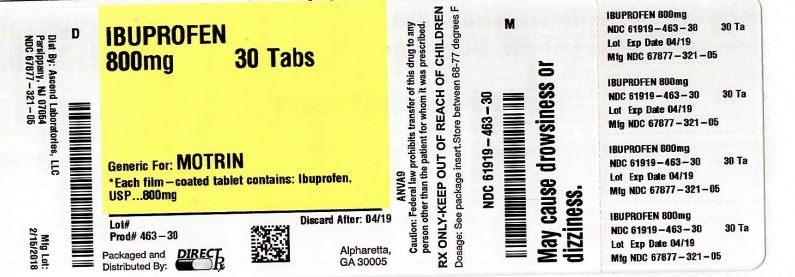
IBUPROFEN IBUOROFEN 800 mg Tablet, Film Coated, 60-count
🆔 Identity & classification
Where does this data come from?
🏷️ RxNorm drug class
This medicine belongs to the Nonsteroidal Anti-inflammatory Drug class.
Where does this data come from?
🏭 Manufacturer & labeler
Where does this data come from?
🩺 Clinical
Prescription ibuprofen is used to relieve pain, tenderness, swelling, and stiffness caused by osteoarthritis (arthritis caused by a breakdown of the lining of the joints) and rheumatoid arthritis (arthritis caused by swelling of the lining of the joints). It is also used to relieve mild to moderate pain, including menstrual pain (pain that happens before or during a menstrual period). Nonprescription ibuprofen is used to reduce fever and to relieve minor aches and pain from headaches, muscle aches, arthritis, menstrual periods, the common cold, toothaches, and backaches. Ibuprofen is in a clas...
Read the full MedlinePlus article ↗- It does a lot more than just kill pain. Ibuprofen is an anti-inflammatory drug, so it relieves pain, reduces swelling and inflammation, and brings down fever. Over-the-counter prod...
- What's ibuprofen actually used for — is it just a painkiller?
- Yes, it really does help. Ibuprofen can irritate the stomach lining, so taking it with food or a glass of milk significantly reduces the chance of nausea or stomach upset. You don'...
- Should I take ibuprofen with food? Does it really matter?
Patient education
Supplement & herbal interactions
Where does this data come from?
Ask a licensed pharmacist directly — free, answered by our team.
💊 What it looks like
Where does this data come from?
🧪 Inactive Ingredients / Excipients
Inactive ingredients, also called excipients, are components of the drug product other than the active ingredient. They may include fillers, dyes, coatings, preservatives, flavors, or other formulation ingredients.
💡 Tap an ingredient (hover on desktop) to see what it is and why it’s used.
-
UNII OP1R32D61U
Microcrystalline cellulose is a purified form of cellulose, a natural fiber from plant sources. It acts as a binder and filler in tablets and capsules, helping hold ingredients together and give the medicine its shape and size.
-
UNII M28OL1HH48
Croscarmellose sodium is a plant-based substance derived from cellulose. It acts as a disintegrant, helping tablets and capsules break down quickly in the digestive system so the medicine can be absorbed.
-
UNII 9XZ8H6N6OH
A plant-based cellulose derivative used as a binder to hold tablet ingredients together, a thickener in liquids, and a coating agent to control how fast the medicine dissolves.
-
UNII R75537T0T4
Hypromellose 2910 is a plant-derived thickening agent made from cellulose. It serves as a binder that holds tablet ingredients together, a film-coating for pills, and a viscosity controller in liquids.
-
UNII 70097M6I30
Magnesium stearate is a salt made from magnesium and stearic acid, a fatty substance. It's used in tablets and capsules as a lubricant and glidant to help ingredients flow smoothly during manufacturing and prevent sticking.
-
UNII B697894SGQ
Polyethylene glycol 400 is a clear, thick liquid made from petroleum-derived polymers. It acts as a solvent and humectant in medicines, helping dissolve active ingredients and retain moisture in the formulation.
-
UNII RDH86HJV5Z
Povidone K90 is a synthetic polymer made from a chemical called vinyl pyrrolidone. It acts as a binder to hold pill ingredients together and as a dispersant to help the medicine break down and dissolve properly in your body.
-
UNII ETJ7Z6XBU4
Silicon dioxide is a naturally occurring mineral used as a glidant and anti-caking agent. It helps powder ingredients flow smoothly and prevents clumping during manufacturing and storage.
-
UNII 368GB5141J
A detergent and foaming agent derived from coconut or palm oil. In medications, it helps break down and mix oil and water-based ingredients, aids in tablet disintegration, and improves how the drug dissolves and spreads in the mouth or digestive system.
-
UNII O8232NY3SJ
A plant-based carbohydrate derived from corn kernels. It acts as a filler to add bulk, a binder to hold ingredients together, and a disintegrant to help the tablet break apart in your stomach for absorption.
-
UNII 15FIX9V2JP
Titanium dioxide is a bright white mineral powder commonly used as a colorant and opacifying agent. It makes pills and tablets white or lighter in color and helps make coatings non-transparent.
11 inactive ingredients listed in the exact product block matched to this NDC.
Where does this data come from?
ingredient classCode="IACT" elements from the exact product block matched by this NDC. Label-section narrative from DailyMed / the openFDA label index is shown separately when available.Inactive ingredient FAQ
Are inactive ingredients the same for every manufacturer?
Why might an inactive ingredient be missing?
Can inactive ingredients matter?
💲 Pricing
A drug doesn't have one price. Each row is a different public payment system, and none is what you'd pay at the counter — that depends on your insurance. The ⓘ on each row explains what it measures.
| Price system | Per each | Per package |
|---|---|---|
| Retail pharmacies payNADAC · weekly | Not in the retail survey — common for institutional, discontinued, or low-volume packs. | |
| Medicaid paysCMS SDUD · 12 mo | No recent Medicaid claims on file for this NDC — rare and low-volume NDCs are suppressed in the public data. | |
| Medicare drug plans payPart D · quarterly | No Part D plan price is available for this NDC in our data. | |
Where does this data come from?
🔁 Therapeutic equivalents
| Product | Labeler | Pack | NADAC/unit | TE | Status | Price vs. this |
|---|---|---|---|---|---|---|
| Ibuprofen 800 mg 42543-0964-07 | Strides | 500 tablets | $0.057 | AB | Discontinued | — |
| Ibuprofen 800 mg 00904-5855-40 | Major | 500 tablets | $0.057 | AB | Availability likely | — |
| Ibuprofen 800 mg 49483-0604-01 | TIME | 100 tablets | $0.057 | AB | Availability likely | — |
| Ibuprofen 800 mg 55111-0684-01 | Dr. | 100 tablets | $0.057 | — | Availability likely | — |
| Ibuprofen 800 mg 59651-0362-01 | Aurobindo | 100 tablets | $0.057 | AB | Availability likely | — |
| Ibuprofen 800 mg 60687-0468-01 | American | 100 tablets | $0.057 | AB | Availability likely | — |
| Ibuprofen 800 mg 62135-0402-12 | Chartwell | 120 tablets | $0.057 | — | Availability likely | — |
| Ibuprofen 800 mg 64380-0807-06 | Strides | 100 tablets | $0.057 | AB | Availability likely | — |
| Ibuprofen 800 mg 67877-0321-01 | Ascend | 100 tablets | $0.057 | — | Availability likely | — |
| Ibuprofen 800 mg 68645-0563-54 | Legacy | 30 tablets | $0.057 | AB | Availability likely | — |
| Ibuprofen 800 mg 69367-0396-01 | Westminster | 100 tablets | $0.057 | — | Availability likely | — |
| Ibuprofen 800 mg 70512-0780-10 | SOLA | 100 tablets | $0.057 | AB | Availability likely | — |
| Ibuprofen 800 mg 76282-0714-10 | EXELAN | 100 tablets | $0.057 | AB | Availability likely | — |
| Ibuprofen 800 mg 71921-0182-01 | Florida | 100 tablets | $0.066 | AB | FDA listed | — |
| Ibuprofen 800 mg 69238-1103-05 | Amneal | 500 tablets | $0.074 | AB | FDA listed | — |
| Ibuprofen 800 mg 00615-8311-39 | NCS | 30 tablets | — | AB | Discontinued | — |
| Ibuprofen 800 mg 00904-7592-40 | Major | 500 tablets | — | AB | FDA listed | — |
| Ibuprofen 800 mg 11788-0010-00 | AiPing | 17000 tablets | — | — | Discontinued | — |
| Ibuprofen 800 mg 25000-0123-03 | MARKSANS | 30 tablets | — | AB | FDA listed | — |
| Ibuprofen 800 mg 43063-0914-30 | PD-Rx | 30 tablets | — | AB | FDA listed | — |
| Ibuprofen 800 mg 50090-2548-00 | A-S | 10 tablets | — | AB | Discontinued | — |
| Ibuprofen 800 mg 50090-2549-00 | A-S | 4 tablets | — | AB | FDA listed | — |
| Ibuprofen 800 mg 50090-2597-00 | A-S | 30 tablets | — | AB | FDA listed | — |
| Ibuprofen 800 mg 50090-5444-04 | A-S | 28 tablets | — | AB | FDA listed | — |
| Ibuprofen 800 mg 50090-5445-00 | A-S | 30 tablets | — | AB | FDA listed | — |
| Ibuprofen 800 mg 50090-5446-00 | A-S | 10 tablets | — | AB | FDA listed | — |
| Ibuprofen 800 mg 50090-6616-00 | A-S | 90 tablets | — | AB | FDA listed | — |
| Ibuprofen 800 mg 50090-6645-00 | A-S | 90 tablets | — | AB | FDA listed | — |
| Ibuprofen 800 mg 50090-6886-00 | A-S | 90 tablets | — | AB | FDA listed | — |
| Ibuprofen 800 mg 50090-7281-05 | A-S | 90 tablets | — | — | FDA listed | — |
| Ibuprofen 800 mg 50090-7282-00 | A-S | 90 tablets | — | — | FDA listed | — |
| Ibuprofen 800 mg 50090-7283-00 | A-S | 10 tablets | — | — | FDA listed | — |
| Ibuprofen 800 mg 50090-7320-00 | A-S | 30 tablets | — | — | FDA listed | — |
| Ibuprofen 800 mg 50090-7905-00 | A-S | 500 tablets | — | — | FDA listed | — |
| Ibuprofen 800 mg 51407-0841-01 | Golden | 100 tablets | — | AB | FDA listed | — |
| Ibuprofen 800 mg 51655-0275-20 | Northwind | 20 tablets | — | AB | FDA listed | — |
| Ibuprofen 800 mg 51655-0385-20 | Northwind | 20 tablets | — | AB | Discontinued | — |
| Ibuprofen 800 mg 53746-0137-01 | Amneal | 100 tablets | — | AB | FDA listed | — |
| Ibuprofen 800 mg 53746-0466-01 | Amneal | 100 tablets | — | AB | FDA listed | — |
| Ibuprofen 800 mg 54348-0825-00 | PharmPak, | 1 tablet | — | AB | FDA listed | — |
| Ibuprofen 800 mg 55154-1342-00 | Cardinal | 1 tablet | — | AB | FDA listed | — |
| Ibuprofen 800 mg 60760-0596-20 | St. | 20 tablets | — | AB | FDA listed | — |
| Ibuprofen 800 mg 60760-0604-00 | St. | 100 tablets | — | AB | Discontinued | — |
| Ibuprofen 800 mg 60760-0844-20 | ST. | 20 tablets | — | — | FDA listed | — |
| Ibuprofen 800 mg 60760-0929-20 | St. | 20 tablets | — | AB | FDA listed | — |
| Ibuprofen 800 mgthis 61919-0463-60 | Direct_Rx | 60 tablets | — | AB | FDA listed | — |
| Ibuprofen 800 mg 62207-0356-42 | Granules | 50 tablets | — | AB | FDA listed | — |
| Ibuprofen 800 mg 63187-0022-15 | Proficient | 15 tablets | — | AB | FDA listed | — |
| Ibuprofen 800 mg 63187-0962-20 | Proficient | 20 tablets | — | AB | FDA listed | — |
| Ibuprofen 800 mg 63187-0992-15 | Proficient | 15 tablets | — | AB | FDA listed | — |
| Ibuprofen 800 mg 63629-1470-00 | Bryant | 84 tablets | — | AB | FDA listed | — |
| Ibuprofen 800 mg 65162-0466-03 | Amneal | 30 tablets | — | AB | FDA listed | — |
| Ibu 800 mg 66267-0963-00 | NuCare | 100 tablets | — | AB | FDA listed | — |
| Ibuprofen 800 mg 67046-1214-03 | Coupler | 30 tablets | — | AB | FDA listed | — |
| Ibuprofen 800 mg 67046-1606-03 | Coupler | 30 tablets | — | — | FDA listed | — |
| Ibuprofen 800 mg 67296-2196-01 | Redpharm | 10 tablets | — | — | FDA listed | — |
| Ibu 800 mg 68071-3053-00 | NuCare | 12 tablets | — | AB | FDA listed | — |
| Ibuprofen 800 mg 68071-3362-00 | NuCare | 12 tablets | — | AB | Discontinued | — |
| Ibuprofen 800 mg 68071-3415-06 | NuCare | 6 tablets | — | AB | FDA listed | — |
| Ibuprofen 800 mg 68071-3552-03 | NuCare | 3 tablets | — | AB | FDA listed | — |
| Ibuprofen 800 mg 68071-3696-08 | NuCare | 180 tablets | — | AB | FDA listed | — |
| Ibuprofen 800 mg 68071-3793-01 | NuCare | 21 tablets | — | — | FDA listed | — |
| Ibuprofen 800 mg 68071-3966-06 | NuCare | 6 tablets | — | — | FDA listed | — |
| Ibuprofen 800 mg 68071-4845-01 | NuCare | 21 tablets | — | AB | FDA listed | — |
| Ibuprofen 800 mg 68071-4949-03 | NuCare | 3 tablets | — | AB | FDA listed | — |
| Ibuprofen 800 mg 68071-5135-00 | NuCare | 100 tablets | — | AB | FDA listed | — |
| Ibuprofen 800 mg 68071-5140-03 | NuCare | 3 tablets | — | AB | FDA listed | — |
| Ibuprofen 800 mg 68788-8319-01 | Preferred | 100 tablets | — | AB | FDA listed | — |
| Ibuprofen 800 mg 68788-8710-01 | Preferred | 100 tablets | — | AB | FDA listed | — |
| Ibuprofen 800 mg 68788-8757-01 | Preferred | 100 tablets | — | — | FDA listed | — |
| Ibuprofen 800 mg 68788-9112-01 | Preferred | 100 tablets | — | AB | FDA listed | — |
| Ibuprofen 800 mg 69367-0449-01 | Westminster | 100 tablets | — | AB | FDA listed | — |
| Ibuprofen 800 mg 70010-0068-89 | Granules | 11400 tablets | — | AB | FDA listed | — |
| Ibuprofen 800 mg 70518-0176-02 | REMEDYREPACK | 30 tablets | — | AB | FDA listed | — |
| Ibuprofen 800 mg 70518-1409-00 | REMEDYREPACK | 30 tablets | — | AB | FDA listed | — |
| Ibuprofen 800 mg 70518-3178-00 | REMEDYREPACK | 15 tablets | — | AB | FDA listed | — |
| Ibuprofen 800 mg 70518-4010-00 | REMEDYREPACK | 30 tablets | — | AB | FDA listed | — |
| Ibuprofen 800 mg 70518-4259-00 | REMEDYREPACK | 30 tablets | — | — | FDA listed | — |
| Ibuprofen 800 mg 71335-1073-00 | Bryant | 84 tablets | — | AB | FDA listed | — |
| Ibuprofen 800 mg 71335-1206-00 | Bryant | 84 tablets | — | AB | FDA listed | — |
| Ibuprofen 800 mg 71335-1396-00 | Bryant | 84 tablets | — | AB | FDA listed | — |
| Ibuprofen 800 mg 71335-2689-00 | Bryant | 84 tablets | — | AB | FDA listed | — |
| Ibuprofen 800 mg 71335-3108-01 | Bryant | 500 tablets | — | AB | FDA listed | — |
| Ibu 800 mg 71610-0550-60 | Aphena | 90 tablets | — | AB | FDA listed | — |
| Ibuprofen 800 mg 71610-0890-60 | Aphena | 90 tablets | — | AB | FDA listed | — |
| Ibuprofen 800 mg 71610-0892-53 | Aphena | 60 tablets | — | AB | FDA listed | — |
| Ibuprofen 800 mg 71610-0897-53 | Aphena | 60 tablets | — | AB | FDA listed | — |
| Ibuprofen 800 mg 71610-0898-60 | Aphena | 90 tablets | — | AB | FDA listed | — |
| Ibuprofen 800 mg 71610-0901-60 | Aphena | 90 tablets | — | — | FDA listed | — |
| Ibuprofen 800 mg 71610-0967-60 | Aphena | 90 tablets | — | AB | FDA listed | — |
| Ibuprofen 800 mg 72189-0266-15 | DIRECT | 15 tablets | — | AB | FDA listed | — |
| Ibuprofen 800 mg 72189-0556-20 | Direct_Rx | 20 tablets | — | AB | FDA listed | — |
| Ibuprofen 800 mg 72603-0910-01 | NorthStar | 100 tablets | — | AB | FDA listed | — |
| Ibuprofen 800 mg 72789-0186-30 | PD-Rx | 30 tablets | — | AB | FDA listed | — |
| Ibuprofen 800 mg 72789-0200-10 | PD-Rx | 10 tablets | — | AB | FDA listed | — |
| Ibuprofen 800 mg 72789-0218-30 | PD-Rx | 30 tablets | — | AB | FDA listed | — |
| Ibuprofen 800 mg 72789-0364-10 | PD-Rx | 10 tablets | — | AB | FDA listed | — |
| Ibuprofen 800 mg 72789-0382-30 | PD-Rx | 30 tablets | — | AB | FDA listed | — |
| Ibuprofen 800 mg 72789-0565-15 | PD-Rx | 15 tablets | — | — | FDA listed | — |
| ibuprofen 800 mg 73086-0212-01 | SKYA | 100 tablets | — | AB | FDA listed | — |
| Ibuprofen 800 mg 73614-0201-03 | Brisk | 30 tablets | — | — | FDA listed | — |
| Ibuprofen 800 mg 75907-0329-89 | Dr. | 1500 tablets | — | — | FDA listed | — |
| Ibuprofen 800 mg 76420-0415-01 | Asclemed | 100 tablets | — | AB | FDA listed | — |
| Ibuprofen 800 mg 76420-0577-01 | Asclemed | 100 tablets | — | AB | FDA listed | — |
| Ibuprofen 800 mg 76420-0848-01 | Asclemed | 100 tablets | — | — | FDA listed | — |
| Ibuprofen 800 mg 80425-0046-01 | Advanced | 90 tablets | — | AB | FDA listed | — |
| Ibuprofen 800 mg 80425-0047-01 | Advanced | 90 tablets | — | AB | FDA listed | — |
| Ibuprofen 800 mg 80425-0089-01 | Advanced | 30 tablets | — | AB | FDA listed | — |
| Ibuprofen 800 mg 80425-0243-04 | Advanced | 100 tablets | — | AB | FDA listed | — |
| Ibuprofen 800 mg 80425-0393-01 | Advanced | 30 tablets | — | AB | FDA listed | — |
| Ibuprofen 800 mg 80425-0537-01 | Advanced | 30 tablets | — | AB | FDA listed | — |
| Ibuprofen 800 mg 82804-0227-15 | Proficient | 15 tablets | — | — | FDA listed | — |
| Ibuprofen 800 mg 82804-0293-24 | Proficient | 24 tablets | — | AB | FDA listed | — |
| Ibuprofen 800 mg 82868-0069-30 | Northwind | 30 tablets | — | AB | FDA listed | — |
| Ibuprofen 800 mg 83008-0050-30 | Quality | 30 tablets | — | AB | FDA listed | — |
| Ibuprofen 800 mg 85509-1466-03 | PHOENIX | 30 tablets | — | AB | FDA listed | — |
| Ibuprofen 800 mg 85509-2396-03 | PHOENIX | 30 tablets | — | — | FDA listed | — |
| Ibuprofen 800 mg 87441-0045-01 | Unit | 30 tablets | — | AB | FDA listed | — |
Where does this data come from?
⏳ Availability & generic status
This product is an FDA-approved generic. Other versions of the same drug are listed under Therapeutic equivalents, least expensive first.
Where does this data come from?
📊 Medicare Part D spend CMS · PART D · 2026 (Q1)
🔬 Reported adverse events (FAERS)
Top reported reactions
Age at onset
Reporter sex
Serious outcomes
Where does this data come from?
📦 Packaging — all sizes for this product
| Package NDC | Description | Marketing start | Status |
|---|---|---|---|
| 61919-0463-30 | 30 TABLET, FILM COATED in 1 BOTTLE (61919-463-30) | 2018-03-12 | Inactivated by FDA |
| 61919-0463-21 | 21 TABLET, FILM COATED in 1 BOTTLE (61919-463-21) | 2019-08-22 | Active |
| 61919-0463-40 | 40 TABLET, FILM COATED in 1 BOTTLE (61919-463-40) | 2019-08-22 | Active |
| 61919-0463-45 | 45 TABLET, FILM COATED in 1 BOTTLE (61919-463-45) | 2019-08-22 | Active |
| 61919-0463-60 You're viewing this | 60 TABLET, FILM COATED in 1 BOTTLE (61919-463-60) | 2019-08-22 | Active |
| 61919-0463-71 | 100 TABLET, FILM COATED in 1 BOTTLE (61919-463-71) | 2019-08-22 | Active |
| 61919-0463-90 | 90 TABLET, FILM COATED in 1 BOTTLE (61919-463-90) | 2019-08-22 | Active |
| 61919-0463-72 | 120 TABLET, FILM COATED in 1 BOTTLE (61919-463-72) | 2019-08-22 | Active |
| 61919-0463-15 | 15 TABLET, FILM COATED in 1 BOTTLE (61919-463-15) | 2019-08-22 | Active |
You're viewing one of 9 pack sizes for this product.
Pack size FAQ
What quantity is in NDC 61919-0463-60?
What is the difference between NDC 61919-0463-60 and NDC 61919-0463-15?
What NDC number is used to bill for this package of IBUPROFEN IBUOROFEN 800 mg Tablet, Film Coated?
🧭 About this NDC listing & data coverage
What data is (and isn’t) available for this NDC — tap to expand
| NDC identity (package / product / labeler codes) | ✓ Available |
| Labeler | ✓ Available |
| Product & package description | ✓ Available |
| Marketing category & status | ✓ Available |
| Active ingredient / dosage form / route | ✓ Available |
| FDA label (SPL via DailyMed) | ✓ Available |
| Package photos | ✓ Available |
| Inactive ingredients (structured) | ✓ Available |
| NADAC pharmacy acquisition price (CMS) | — Not published for this NDC CMS publishes NADAC only for NDCs reported in its retail-pharmacy survey. |
| Orange Book / therapeutic-equivalence data | ✓ Available |
| HCPCS J-code billing crosswalk | — Not published for this NDC Most self-administered / retail products have no J-code — that is normal. |
| Medicaid utilization (CMS SDUD) | — Not published for this NDC CMS reports utilization only for NDCs with Medicaid claims above its privacy threshold. |
Questions about this listing
Why is there no price listed?
Is the NDC printed on the package the same as the 11-digit billing NDC?
What do the three segments of this NDC mean?
Is this package still being marketed?
Does this product come in other package sizes?
Who lists this product with the FDA?
Do I need a prescription for this product?
Where does this data come from?
📄 Full prescribing information FDA SPL
🚨 Boxed Warning ▾
BOXED WARNING Cardiovascular Thrombotic Events · Non-steroidal anti-inflammatory drugs (NSAIDs) cause an increased risk of serious cardiovascular thrombotic events, including myocardial infarction and stroke, which can be fatal. This risk may occur early in treatment and may increase with duration of use (see WARNINGS and PRECAUTIONS). · Ibuprofen Tablets is contraindicated in the setting of coronary artery bypass graft (CABG) surgery (see CONTRAINDICATIONS and WARNINGS). Gastrointestinal Risk NSAIDs cause an increased risk of serious gastrointestinal adverse events including bleeding, ulceration, and perforation of the stomach or intestines, which can be fatal.
These events can occur at any time during use and without warning symptoms. Elderly patients are at greater risk for serious gastrointestinal events (see WARNINGS).
🎯 Indications and Usage ▾
Carefully consider the potential benefits and risks of ibuprofen tablets and other treatment options before deciding to use ibuprofen. Use the lowest effective dose for the shortest duration consistent with individual patient treatment goals (see WARNINGS). Ibuprofen tablets are indicated for relief of the signs and symptoms of rheumatoid arthritis and osteoarthritis.
Ibuprofen tablets are indicated for relief of mild to moderate pain. Ibuprofen tablets are also indicated for the treatment of primary dysmenorrhea. Controlled clinical trials to establish the safety and effectiveness of ibuprofen tablets in children have not been conducted.
⏱️ Dosage and Administration ▾
Carefully consider the potential benefits and risks of ibuprofen tablets and other treatment options before deciding to use ibuprofen tablets. Use the lowest effective dose for the shortest duration consistent with individual patient treatment goals (see WARNINGS). After observing the response to initial therapy with ibuprofen tablets, the dose and frequency should be adjusted to suit an individual patient's needs.
Do not exceed 3200 mg total daily dose. If gastrointestinal complaints occur, administer ibuprofen tablets with meals or milk. Rheumatoid arthritis and osteoarthritis, including flare-ups of chronic disease: Suggested Dosage: 1200 mg to 3200 mg daily (300 mg four times a day; 400 mg, 600 mg or 800 mg three times a day or four times a day).
Individual patients may show a better response to 3200 mg daily, as compared with 2400 mg, although in well-controlled clinical trials patients on 3200 mg did not show a better mean response in terms of efficacy. Therefore, when treating patients with 3200 mg/day, the physician should observe sufficient increased clinical benefits to offset potential increased risk. The dose should be tailored to each patient, and may be lowered or raised depending on the severity of symptoms either at time of initiating drug therapy or as the patient responds or fails to respond.
In general, patients with rheumatoid arthritis seem to require higher doses of ibuprofen tablets than do patients with osteoarthritis. The smallest dose of ibuprofen tablets that yields acceptable control should be employed. A linear blood level dose-response relationship exists with single doses up to 800 mg (see CLINICAL PHARMACOLOGY for effects of food on rate of absorption).
The availability of three tablet strengths facilitates dosage adjustment. In chronic conditions, a therapeutic response to therapy with ibuprofen tablets is sometimes seen in a few days to a week but most often is observed by two weeks. After a satisfactory response has been achieved, the patient's dose should be reviewed and adjusted as required.
Mild to moderate pain: 400 mg every 4 to 6 hours as necessary for relief of pain. In controlled analgesic clinical trials, doses of ibuprofen tablets greater than 400 mg were no more effective than the 400 mg dose. Dysmenorrhea: For the treatment of dysmenorrhea, beginning with the earliest onset of such pain, ibuprofen tablets should be given in a dose of 400 mg every 4 hours as necessary for the relief of pain.
⛔ Contraindications ▾
Ibuprofen tablets are contraindicated in patients with known hypersensitivity to ibuprofen. Ibuprofen tablets should not be given to patients who have experienced asthma, urticarial, or allergic-type reactions after taking aspirin or other NSAIDs. Severe, rarely fatal, anaphylactic-like reactions to NSAIDs have been reported in such patients (see WARNINGS, Anaphylactoid Reactions andPRECAUTIONS, Preexisting Asthma).
Ibuprofen tablets are contraindicated in the setting of coronary artery bypass graft (CABG) surgery (see WARNINGS).
⚠️ Warnings ▾
Cardiovascular Effects Cardiovascular Thrombotic Events Clinical trials of several COX-2 selective and nonselective NSAIDs of up to three years duration have shown an increased risk of serious cardiovascular (CV) thrombotic events, including myocardial infarction (MI) and stroke, which can be fatal. Based on available data, it is unclear that the risk for CV thrombotic events is similar for all NSAIDs. The relative increase in serious CV thrombotic events over baseline conferred by NSAID use appears to be similar in those with and without known CV disease or risk factors for CV disease.
However, patients with known CV disease or risk factors had a higher absolute incidence of excess serious CV thrombotic events, due to their increased baseline rate. Some observational studies found that this increased risk of serious CV thrombotic events began as early as the first weeks of treatment. The increase in CV thrombotic risk has been observed most consistently at higher doses.
To minimize the potential risk for an adverse CV event in NSAID-treated patients, use the lowest effective dose for the shortest duration possible. Physicians and patients should remain alert for the development of such events, throughout the entire treatment course, even in the absence of previous CV symptoms. Patients should be informed about the symptoms of serious CV events and the steps to take if they occur.
There is no consistent evidence that concurrent use of aspirin mitigates the increased risk of serious CV thrombotic events associated with NSAID use. The concurrent use of aspirin and an NSAID, such as [active moiety], increases the risk of serious gastrointestinal (GI) events (see WARNINGS). Status Post Coronary Artery Bypass Graft (CABG) Surgery Two large, controlled clinical trials of a COX-2 selective NSAID for the treatment of pain in the first 10–14 days following CABG surgery found an increased incidence of myocardial infarction and stroke.
NSAIDs are contraindicated in the setting of CABG (seeCONTRAINDICATIONS). Post-MI Patients Observational studies conducted in the Danish National Registry have demonstrated that patients treated with NSAIDs in the post-MI period were at increased risk of reinfarction, CV-related death, and all-cause mortality beginning in the first week of treatment. In this same cohort, the incidence of death in the first year post MI was 20 per 100 person years in NSAID-treated patients compared to 12 per 100 person years in non-NSAID exposed patients.
Although the absolute rate of death declined somewhat after the first year post-MI, the increased relative risk of death in NSAID users persisted over at least the next four years of follow-up. Avoid the use of Ibuprofen Tablets in patients with a recent MI unless the benefits are expected to outweigh the risk of recurrent CV thrombotic events. If Ibuprofen Tablets is used in patients with a recent MI, monitor patients for signs of cardiac ischemia.
Hypertension NSAIDs including ibuprofen tablets, can lead to onset of new hypertension or worsening of preexisting hypertension, either of which may contribute to the increased incidence of CV events. Patients taking thiazides or loop diuretics may have impaired response to these therapies when taking NSAIDs. NSAIDs, including ibuprofen tablets, should be used with caution in patients with hypertension.
Blood pressure (BP) should be monitored closely during the initiation of NSAID treatment and throughout the course of therapy. Heart Failure and Edema The Coxib and traditional NSAID Trialists’ Collaboration meta-analysis of randomized controlled trials demonstrated an approximately two-fold increase in hospitalizations for heart failure in COX-2 selective-treated patients and nonselective NSAID-treated patients compared to placebo-treated patients. In a Danish National Registry study of patients with heart failure, NSAID use increased the risk of MI, hospitalization for heart failure, and death.
Additionally, fluid retention an…
🤒 Adverse Reactions ▾
The most frequent type of adverse reaction occurring with ibuprofen tablets is gastrointestinal. In controlled clinical trials the percentage of patients reporting one or more gastrointestinal complaints ranged from 4% to 16%. In controlled studies when ibuprofen tablets were compared to aspirin and indomethacin in equally effective doses, the overall incidence of gastrointestinal complaints was about half that seen in either the aspirin or indomethacin-treated patients.
Adverse reactions observed during controlled clinical trials at an incidence greater than 1% are listed in the table. Those reactions listed in Column one encompass observations in approximately 3,000 patients. More than 500 of these patients were treated for periods of at least 54 weeks.
Still other reactions occurring less frequently than 1 in 100 were reported in controlled clinical trials and from marketing experience. These reactions have been divided into two categories: Column two of the table lists reactions with therapy with ibuprofen tablets where the probability of a causal relationship exists: for the reactions in Column three, a causal relationship with ibuprofen tablets has not been established. Reported side effects were higher at doses of 3200 mg/day than at doses of 2400 mg or less per day in clinical trials of patients with rheumatoid arthritis.
The increases in incidence were slight and still within the ranges reported in the table. Incidence Greater than 1%(but less than 3%) Probable Causal Relationship Precise Incidence Unknown (but less than 1%) Probable Causal Relationship** Precise Incidence Unknown (but less than 1%) Causal Relationship Unknown** GASTROINTESTINAL Nausea*, epigastric pain*, heartburn*, diarrhea, abdominal distress, nausea and vomiting, indigestion, constipation, abdominal cramps or pain, fullness of GI tract (bloating and flatulence) Gastric or duodenal ulcer with bleeding and/or perforation, gastrointestinal hemorrhage, melena, gastritis, hepatitis, jaundice, abnormal liver function tests; pancreatitis CENTRAL NERVOUS SYSTEM Dizziness*, headache, nervousness Depression, insomnia, confusion, emotional liability, somnolence, aseptic meningitis with fever and coma (see PRECAUTIONS) Paresthesias, hallucinations, dream abnormalities, pseudo-tumor cerebri DERMATOLOGIC Rash*, (including maculopapular type), pruritus Vesiculobullous eruptions, urticaria, erythema multiforme, Stevens-Johnson syndrome, alopecia Toxic epidermal necrolysis, photoallergic skin reactions SPECIAL SENSES Tinnitus Hearing loss, amblyopia (blurred and/or diminished vision, scotomata and /or changes in color vision) (see PRECAUTIONS) Conjunctivitis, diplopia, optic neuritis, cataracts HEMATOLOGIC Neutropenia, agranulocytosis, aplastic anemia, hemolytic anemia (sometimes Coombs positive), thrombocytopenia with or without purpura, eosinophilia, decreases in hemoglobin and hematocrit (see PRECAUTIONS) Bleeding episodes (e.g., epistaxis, menorrhagia) METABOLIC/ENDOCRINE Decreased appetite Gynecomastia, hypoglycemic reaction, acidosis CARDIOVASCULAR Edema, fluid retention (generally responds promptly to drug discontinuation) (see PRECAUTIONS) Congestive heart failure in patients with marginal cardiac function, elevate blood pressure, palpitations Arrhythmias (sinus tachycardia, sinus bradycardia) ALLERGIC Syndrome of abdominal pain, fever, chills, nausea and vomiting; anaphylaxis; bronchospasm (see CONTRAINDICATIONS) Serum sickness, lupus erythematosus syndrome.
Henoch-Schonlein vasculitis, angioedema RENAL Acute renal failure (see PRECAUTIONS), decreased creatinine clearance, poliuria, azotemia, cystitis, hematuria Renal papillary necrosis MISCELLANEOUS Dry eyes and mouth, gingival ulcer, rhinitis *Reactions occurring in 3% to 9% of patients treated with ibuprofen. (Those reactions occurring in less than 3% of the patients are unmarked). **Reactions are classified under “Probable Causal Relationship (PCR)” if there has been one positive rechallenge or if thr…
🆘 Overdosage ▾
Approximately 1½ hours after the reported ingestion of from 7 to10 ibuprofen tablets (400 mg), a 19-month old child weighing 12 kg was seen in the hospital emergency room, apneic and cyanotic, responding only to painful stimuli. This type of stimulus, however, was sufficient to induce respiration. Oxygen and parenteral fluids were given; a greenish-yellow fluid was aspirated from the stomach with no evidence to indicate the presence of ibuprofen.
Two hours after ingestion the child's condition seemed stable; she still responded only to painful stimuli and continued to have periods of apnea lasting from 5 to 10 seconds. She was admitted to intensive care and sodium bicarbonate was administered as well as infusions of dextrose and normal saline. By four hours post-ingestion she could be aroused easily, sit by herself and respond to spoken commands.
Blood level of ibuprofen was 102.9 mcg/mL approximately 8½ hours after accidental ingestion. At 12 hours she appeared to be completely recovered. In two other reported cases where children (each weighing approximately 10 kg) accidentally, acutely ingested approximately 120 mg/kg, there were no signs of acute intoxication or late sequelae.
Blood level in one child 90 minutes after ingestion was 700 mcg/mL about 10 times the peak levels seen in absorption-excretion studies. A 19-year old male who had taken 8,000 mg of ibuprofen over a period of a few hours complained of dizziness, and nystagmus was noted. After hospitalization, parenteral hydration and three days bed rest, he recovered with no reported sequelae.
In cases of acute overdosage, the stomach should be emptied by vomiting or lavage, though little drug will likely be recovered if more than an hour has elapsed since ingestion. Because the drug is acidic and is excreted in the urine, it is theoretically beneficial to administer alkali and induce diuresis. In addition to supportive measures, the use of oral activated charcoal may help to reduce the absorption and reabsorption of ibuprofen tablets.
🧬 Clinical Pharmacology ▾
Ibuprofen tablets contain ibuprofen which possesses analgesic and antipyretic activities. Its mode of action, like that of other NSAIDs, is not completely understood, but may be related to prostaglandin synthetase inhibition. In clinical studies in patients with rheumatoid arthritis and osteoarthritis, ibuprofen tablets have been shown to be comparable to aspirin in controlling pain and inflammation and to be associated with a statistically significant reduction in the milder gastrointestinal side effects (see ADVERSE REACTIONS).
Ibuprofen tablets may be well tolerated in some patients who have had gastrointestinal side effects with aspirin, but these patients when treated with ibuprofen tablets should be carefully followed for signs and symptoms of gastrointestinal ulceration and bleeding. Although it is not definitely known whether ibuprofen tablets causes less peptic ulceration than aspirin, in one study involving 885 patients with rheumatoid arthritis treated for up to one year, there were no reports of gastric ulceration with ibuprofen tablets whereas frank ulceration was reported in 13 patients in the aspirin group (statistically significant p<0.001).
Gastroscopic studies at varying doses show an increased tendency toward gastric irritation at higher doses. However, at comparable doses, gastric irritation is approximately half that seen with aspirin. Studies using 51Cr-tagged red cells indicate that fecal blood loss associated with ibuprofen tablets in doses up to 2400 mg daily did not exceed the normal range, and was significantly less than that seen in aspirin-treated patients.
In clinical studies in patients with rheumatoid arthritis, ibuprofen tablets have been shown to be comparable to indomethacin in controlling the signs and symptoms of disease activity and to be associated with a statistically significant reduction of the milder gastrointestinal (see ADVERSE REACTIONS) and CNS side effects. Ibuprofen tablets may be used in combination with gold salts and/or corticosteroids. Controlled studies have demonstrated that ibuprofen tablets are more effective analgesic than propoxyphene for the relief of episiotomy pain, pain following dental extraction procedures, and for the relief of the symptoms of primary dysmenorrhea.
In patients with primary dysmenorrhea, ibuprofen tablets have been shown to reduce elevated levels of prostaglandin activity in the menstrual fluid and to reduce resting and active intrauterine pressure, as well as the frequency of uterine contractions. The probable mechanism of action is to inhibit prostaglandin synthesis rather than simply to provide analgesia. The ibuprofen in ibuprofen tablets is rapidly absorbed.
Peak serum ibuprofen levels are generally attained one to two hours after administration. With single doses up to 800 mg, a linear relationship exists between amount of drug administered and the integrated area under the serum drug concentration vs time curve. Above 800 mg, however, the area under the curve increases less than proportional to increases in dose.
There is no evidence of drug accumulation or enzyme induction. The administration of ibuprofen tablets either under fasting conditions or immediately before meals yields quite similar serum ibuprofen concentration-time profiles. When ibuprofen tablets are administered immediately after a meal, there is a reduction in the rate of absorption but no appreciable decrease in the extent of absorption.
The bioavailability of the drug is minimally altered by the presence of food. A bioavailability study has shown that there was no interference with the absorption of ibuprofen when ibuprofen tablets were given in conjunction with an antacid containing both aluminum hydroxide and magnesium hydroxide. Ibuprofen is rapidly metabolized and eliminated in the urine.
The excretion of ibuprofen is virtually complete 24 hours after the last dose. The serum half-life is 1.8 to 2.0 hours. Studies have shown that following ingestion of the drug, 45% t…
📦 How Supplied / Storage and Handling ▾
800 mg (white to off-white, caplet, 'I 10' debossing on one side and plain on the other side) Store at 20º to 25ºC (68º to 77ºF). [See USP Controlled Room Temperature]. Avoid excessive heat above 40ºC (104ºF).
📋 Description ▾
Ibuprofen tablets contain the active ingredient ibuprofen, which is (±)-2-(p-isobutylphenyl) propionic acid. Ibuprofen is a white powder with a melting point of 74-77° C and is very slightly soluble in water (<1 mg/mL) and readily soluble in organic solvents such as ethanol and acetone. The structural formula is represented below: [ibuprofen-structure] Ibuprofen, a nonsteroidal anti-inflammatory drug (NSAID), is available in 400 mg, 600 mg and 800 mg tablets for oral administration.
Inactive ingredients: colloidal silicon dioxide, croscarmellose sodium, hypromellose 2910, hydroxypropyl cellulose, magnesium stearate, microcrystalline cellulose, polyethylene glycol 400, pregelatinized starch, povidone k-90, sodium lauryl sulphate, titanium dioxide.
💬 Medication Guide ▾
Medication Guide for Non-Steroidal Anti-Inflammatory Drugs (NSAIDs) (See the end of this Medication Guide for a list of prescription NSAID medicines.) What is the most important information I should know about medicines called Nonsteroidal Anti-inflammatory Drugs (NSAIDs)? NSAIDs can cause serious side effects, including: · Increased risk of a heart attack or stroke that can lead to death. This risk may happen early in treatment and may increase: · with increasing doses of NSAIDs · with longer use of NSAIDs Do not take NSAIDs right before or after a heart surgery called a “coronary artery bypass graft (CABG)." Avoid taking NSAIDs after a recent heart attack, unless your healthcare provider tells you to.
You may have an increased risk of another heart attack if you take NSAIDs after a recent heart attack. · Increased risk of bleeding, ulcers, and tears (perforation) of the esophagus (tube leading from the mouth to the stomach), stomach and intestines: · anytime during use · without warning symptoms · that may cause death The risk of getting an ulcer or bleeding increases with: · past history of stomach ulcers, or stomach or intestinal bleeding with use of NSAIDs · taking medicines called “corticosteroids”, “anticoagulants”, “SSRIs”, or “SNRIs” · increasing doses of NSAIDs · longer use of NSAIDs · smoking · drinking alcohol · older age · poor health · advanced liver disease · bleeding problems NSAIDs should only be used: · exactly as prescribed · at the lowest dose possible for your treatment · for the shortest time needed What are NSAIDs?
NSAIDs are used to treat pain and redness, swelling, and heat (inflammation) from medical conditions such as different types of arthritis, menstrual cramps, and other types of short-term pain. Who should not take NSAIDs? Do not take NSAIDs: · if you have had an asthma attack, hives, or other allergic reaction with aspirin or any other NSAIDs. · right before or after heart bypass surgery.
Before taking NSAIDS, tell your healthcare provider about all of your medical conditions, including if you: · have liver or kidney problems · have high blood pressure · have asthma · are pregnant or plan to become pregnant. Talk to your healthcare provider if you are considering taking NSAIDs during pregnancy. You should not take NSAIDs after 29 weeks of pregnancy. · are breastfeeding or plan to breast feed.
Tell your healthcare provider about all of the medicines you take, including prescription or over-the-counter medicines, vitamins or herbal supplements. NSAIDs and some other medicines can interact with each other and cause serious side effects. Do not start taking any new medicine without talking to your healthcare provider first.
What are the possible side effects of NSAIDs? NSAIDs can cause serious side effects, including: See “What is the most important information I should know about medicines called Nonsteroidal Anti-inflammatory Drugs (NSAIDs)? · new or worse high blood pressure · heart failure · liver problems including liver failure · kidney problems including kidney failure · low red blood cells (anemia) · life-threatening skin reactions · life threatening allergic reactions · Other side effects of NSAIDs include: stomach pain, constipation, diarrhea, gas, heartburn, nausea, vomiting, and dizziness.
Get emergency help right away if you get any of the following symptoms: · shortness of breath or trouble breathing · chest pain · weakness in one part or side of your body · slurred speech · swelling of the face or throat Stop taking your NSAID and call your healthcare provider right away if you get any of the following symptoms: · nausea · more tired or weaker than usual · diarrhea · itching · your skin or eyes look yellow · indigestion or stomach pain · flu-like symptoms · vomit blood · there is blood in your bowel movement or it is black and sticky like tar · unusual weight gain · skin rash or blisters with fever · swelling of the arms, legs, hands and feet If you take too much of your NSAID, call…