
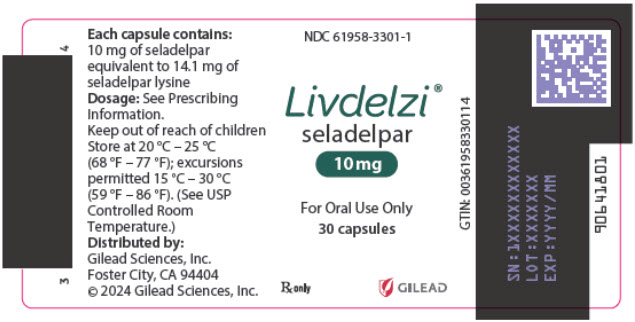
Livdelzi SELADELPAR LYSINE 10 mg Capsule, 30-count — NDC 61958-3301-1 (Billing 61958-3301-01)
This is a package of 30 capsules of Livdelzi SELADELPAR LYSINE 10 mg Capsule from Gilead Sciences, Inc, marketed since Aug 2024 and currently FDA-listed. It is the main listing for this product, which comes in 2 package sizes.
NDC database record
One package, one record: these facts belong to NDC 61958-3301-1 alone.
- Record
- FDA NDC Directory package listing · Human prescription drug
- Code segments
- 61958 labeler · 3301 product · 1 package
- Package marketed since
- Aug 14, 2024
- Sample package
- No — commercial package
- Listing certified through
- Dec 31, 2027
- Billing quantity
- 30 EA per package
- Barcode (UPC-A, from the NDC)
- 3 6195833011 4
- Medicaid fills, this package
- 1,515 prescriptions in the last four reported quarters
- FDA record last changed
- Jul 24, 2026
Identity & classification
Regulatory identifiers FDA, NLM and CMS codes for this package
Drug-database identifiers Medi-Span GPI and First Databank GCN / HICL / AHFS classification
- GSN (GCN sequence number): 086431
- GCN: 56144
- GPI-14 (Medi-Span): 52780070500120
- HICL (First Databank): 049816
- AHFS class code: 56:14.00.00
- RxCUI (RxNorm): 2690875
Where does this data come from?
- FDA openFDA NDC Directory · synced Oct 1, 2026
- FDA label on DailyMed · label index refreshed Oct 3, 2026
- RxNorm (NLM RxNav) · catalog refreshed Oct 1, 2026
- Medi-Span GPI (licensed)
- First Databank (licensed) · refreshed Oct 1, 2026
RxNorm drug class
This medicine belongs to the Other drugs for bile therapy class.
Where does this data come from?
- RxClass (NLM) · catalog refreshed Oct 1, 2026
Clinical
Seladelpar is used in combination with ursodiol to treat primary biliary cholangitis (PBC; a type of liver disease that destroys bile ducts, which allows bile to stay in the liver and cause damage) in people who cannot take ursodiol or in people who were not treated successfully with ursodiol alone. Seladelpar is in a class of medications called peroxisome proliferator-activated receptor (PPAR)-delta agonists. It works by works by decreasing the production of bile in the liver.
Read the full MedlinePlus article ↗Patient education
Supplement & herbal interactions
Where does this data come from?
- MedlinePlus (NLM) · refreshed Oct 1, 2026
- FDA label on DailyMed · label index refreshed Oct 3, 2026
Ask a licensed pharmacist directly — free, answered by our team.
Pricing
A drug doesn't have one price. Each row is a different public payment system, and none is what you'd pay at the counter — that depends on your insurance. The ⓘ on each row explains what it measures.
| Price system | Per each | Per package |
|---|---|---|
| Retail pharmacies payNADAC · weekly | Not in the retail survey — common for institutional, discontinued, or low-volume packs. | |
| Medicaid paysCMS SDUD · 12 mo | $421.93 | $12,657.83 / 30 capsules |
| Medicare drug plans payPart D · Q2 2026 | $403.63 | $12,108.97 / 30 capsules |
Where does this data come from?
- CMS NADAC weekly file
- CMS ASP pricing files · refreshed Sep 20, 2026
- CMS Medicaid State Drug Utilization Data · through Q1 2026
- CMS Part D plan pricing files · refreshed Sep 24, 2026
- VA National Acquisition Center price file
Packaging — all sizes for this product
| Package NDC | Description | Marketing start | Marketing end | Status |
|---|---|---|---|---|
| 61958-3301-01 You're viewing this Main listing | 30 CAPSULE in 1 BOTTLE | 2024-08-14 | — | Active |
| 61958-3301-02 61958-3301-2 | 30 CAPSULE in 1 BOTTLE | 2025-10-31 | — | Active |
In Medicaid, this is the most-dispensed pack of this product — about 70% of fills over the last four reported quarters. See all packs ↓
Pack size FAQ
What quantity is in this package?
How does this package differ from NDC 61958-3301-02?
What NDC number is used to bill for this package of Livdelzi SELADELPAR LYSINE 10 mg Capsule?
Therapeutic equivalents
| Product | Labeler | Pack | NADAC/unit | TE | Status | Price vs. this |
|---|---|---|---|---|---|---|
| Livdelzi 10 mgthis 61958-3301-01 | Gilead | 30 capsules | — | — | FDA listed | — |
Where does this data come from?
- FDA openFDA NDC Directory · synced Oct 1, 2026
- FDA Orange Book · refreshed Oct 3, 2026
- CMS NADAC weekly file
Availability & generic status
We did not find an FDA-approved generic match for this exact strength, form and route. Patent/protection dates below may affect future generic timing.
Why the date isn’t exact: Generic timing can change because patents may be challenged, settled, licensed, added, removed, or worked around with a narrower label — and FDA approval does not always mean a pharmacy can get the generic today.
🛈 What do these terms mean?
- Patent
- Legal protection listed in the Orange Book that may delay generic approval or launch. Issued by the U.S. Patent & Trademark Office.
- Substance patent
- Covers the active drug molecule itself — the hardest to design around. A generic generally can’t launch until it expires.
- Formulation (product) patent
- Covers a specific formulation or dosage form. A generic can sometimes work around it with a different formulation.
- Method-of-use patent
- A patent covering one specific approved use of the drug — not necessarily the whole molecule. A generic can sometimes launch with a “skinny label” that carves out the protected use and keeps the others.
- Skinny label
- A generic label that omits a still-patented use when the FDA allows it — letting a generic reach the market for the unprotected uses.
- Exclusivity
- FDA-granted marketing protection, separate from patents — e.g. 5-yr new chemical entity, 7-yr orphan drug, or a +6-month pediatric extension.
- Paragraph IV
- A generic applicant’s formal challenge to a listed patent. It can potentially lead to earlier generic entry, but often involves litigation or a settlement.
- RLD / RS
- Reference Listed Drug — the brand product the FDA uses as the reference for generic applications. Reference Standard — the product the FDA expects generics to compare against in bioequivalence testing.
- TE / AB rating
- FDA therapeutic-equivalence rating. An AB rating generally means the FDA considers a generic therapeutically equivalent to — and substitutable for — the brand.
- LOE (loss of exclusivity)
- The latest patent or exclusivity currently listed — the loss-of-exclusivity / latest-listed-protection date shown on this page. Paragraph-IV challenges and settlements can move the real date earlier; FDA approval and a manufacturer’s decision to market can move it later.
Built from the FDA Orange Book. The bars above are scaled to each protection’s expiry; the red LOE marker is the last one to lapse.
| Patent | Type | Use code | Expires |
|---|---|---|---|
| US 11596614 ↗ | Method of use | U-1854 | Mar 19, 2035 |
| US 11406611 ↗ | Method of use | U-1854 | Mar 19, 2035 |
| US 10272058 ↗ | Method of use | U-1854 | Mar 19, 2035 |
| US 9486428 ↗ | Method of use | U-1854 | Mar 19, 2035 |
| US 7709682 ↗ | Drug substance | — | Sep 13, 2027 |
| US 7301050 ↗ | Drug substance | — | Aug 2, 2027 |
| Code | What it grants | Expires |
|---|---|---|
| NCE | New Chemical Entity (5-year) | Aug 14, 2029 |
| ODE-486 | Orphan Drug Exclusivity (7-year) | Aug 14, 2031 |
Is there a generic version of LIVDELZI 10 MG CAPSULE?
The FDA approved a generic — why can’t I get it at my pharmacy yet?
Why do different websites show different generic release dates?
What does “FDA listed” mean?
What does a patent or protection date mean here?
What does “current Orange Book estimate” mean?
Can a generic come out before the last patent expires?
Can a generic come out after the listed dates?
What is the difference between patents and exclusivity?
Why are there multiple patent dates?
Where does this data come from?
- FDA Orange Book · refreshed Oct 3, 2026
What it looks like
Where does this data come from?
- FDA label on DailyMed · label index refreshed Oct 3, 2026
Inactive Ingredients / Excipients
Inactive ingredients, also called excipients, are components of the drug product other than the active ingredient. They may include fillers, dyes, coatings, preservatives, flavors, or other formulation ingredients.
💡 Tap an ingredient (hover on desktop) to see what it is and why it’s used.
-
UNII 1P9D0Z171K
BHT is a synthetic antioxidant that prevents fats and oils in medicines from breaking down and becoming rancid. It helps keep the product stable and effective during storage.
-
UNII M28OL1HH48
Croscarmellose sodium is a plant-based substance derived from cellulose. It acts as a disintegrant, helping tablets and capsules break down quickly in the digestive system so the medicine can be absorbed.
-
UNII 70097M6I30
Magnesium stearate is a salt made from magnesium and stearic acid, a fatty substance. It's used in tablets and capsules as a lubricant and glidant to help ingredients flow smoothly during manufacturing and prevent sticking.
-
UNII 3OWL53L36A
A natural sugar alcohol derived from seaweed or synthesized in the lab. It's used as a filler to add bulk, a sweetener in sugar-free formulas, and a disintegrant to help tablets break apart in the stomach.
-
UNII 7T9FYH5QMK
A plant-derived powder that serves as a binder and filler in tablets and capsules. It helps hold ingredients together, adds bulk, and aids in smooth tablet disintegration when swallowed.
-
UNII 91B875MM4H
A plant-derived cellulose processed into tiny crystals. It acts as a filler to give tablets bulk and shape, and helps the medicine break apart properly when swallowed.
-
UNII ETJ7Z6XBU4
Silicon dioxide is a naturally occurring mineral used as a glidant and anti-caking agent. It helps powder ingredients flow smoothly and prevents clumping during manufacturing and storage.
7 inactive ingredients listed in the exact product block matched to this NDC.
Where does this data come from?
ingredient classCode="IACT" elements from the exact product block matched by this NDC. Label-section narrative from DailyMed / the openFDA label index is shown separately when available.- FDA label on DailyMed · label index refreshed Oct 3, 2026
- FDA openFDA NDC Directory · synced Oct 1, 2026
Inactive ingredient FAQ
Are inactive ingredients the same for every manufacturer?
Why might an inactive ingredient be missing?
Can inactive ingredients matter?
Manufacturer & labeler
More NDCs from Gilead Sciences, Inc labeler code 61958
- Biktarvy bictegravir sodium, emtricitabine, and tenofovir alafenamide fumarate 30 mg; 120 mg; 15 mg Tablet NDC 61958-2506-1
- Veklury remdesivir 100 mg Injection, Powder, Lyophilized, For Solution NDC 61958-2901-1
- Sunlenca LENACAPAVIR SODIUM 300 mg Tablet, Film Coated NDC 61958-3001-1
- Sunlenca LENACAPAVIR SODIUM Kit NDC 61958-3002-1
- Sunlenca LENACAPAVIR SODIUM Kit NDC 61958-3005-1
- Hepcludex Bulevirtide 8.5 mg Injection, Powder, Lyophilized, For Solution NDC 61958-3104-1
- Yeztugo LENACAPAVIR SODIUM 300 mg Tablet, Film Coated NDC 61958-3401-1
- Yeztugo LENACAPAVIR SODIUM Kit NDC 61958-3402-1
- Bixlenvo bictegravir/lenacapavir 75 mg; 50 mg Tablet, Film Coated NDC 61958-3601-1
Where does this data come from?
- FDA openFDA NDC Directory · synced Oct 1, 2026
- Drugs@FDA
Full prescribing information FDA SPL
🎯 Indications and Usage ▾
1 INDICATIONS AND USAGE LIVDELZI is indicated for the treatment of primary biliary cholangitis (PBC) in combination with ursodeoxycholic acid (UDCA) in adults who have had an inadequate response to UDCA, or as monotherapy in patients unable to tolerate UDCA. This indication is approved under accelerated approval based on a reduction of alkaline phosphatase (ALP) [see Clinical Studies (14) ] . Improvement in survival or prevention of liver decompensation events have not been demonstrated.
Continued approval for this indication may be contingent upon verification and description of clinical benefit in confirmatory trial(s). LIVDELZI is a peroxisome proliferator-activated receptor (PPAR)-delta agonist indicated for the treatment of primary biliary cholangitis (PBC) in combination with ursodeoxycholic acid (UDCA) in adults who have an inadequate response to UDCA, or as monotherapy in patients unable to tolerate UDCA. This indication is approved under accelerated approval based on a reduction of alkaline phosphatase (ALP).
Improvement in survival or prevention of liver decompensation events have not been demonstrated. Continued approval for this indication may be contingent upon verification and description of clinical benefit in confirmatory trial(s). ( 1 ) Limitations of Use Use of LIVDELZI is not recommended in patients who have or develop decompensated cirrhosis (e.g., ascites, variceal bleeding, hepatic encephalopathy).
( 8.7 ) Limitations of Use Use of LIVDELZI is not recommended in patients who have or develop decompensated cirrhosis (e.g., ascites, variceal bleeding, hepatic encephalopathy) [see Use in Specific Populations (8.7) ] .
⏱️ Dosage and Administration ▾
2 DOSAGE AND ADMINISTRATION The recommended dosage of LIVDELZI is 10 mg orally once daily. Administer LIVDELZI with or without food. ( 2.1 )
2.1Recommended Dosage and Administration The recommended dosage of LIVDELZI is 10 mg orally once daily. Administer LIVDELZI with or without food [see Clinical Pharmacology (12.3) ] .
2.2Administration Modification for Bile Acid Sequestrants Administer LIVDELZI at least 4 hours before or 4 hours after taking bile acid sequestrants, or at as great an interval as possible [see Drug Interactions (7.1) ] .
💊 Dosage Forms and Strengths ▾
3 DOSAGE FORMS AND STRENGTHS Capsules: 10 mg, opaque, hard gelatin capsules, size 1, with light gray opaque body and a dark blue opaque cap, printed with "CBAY" on the cap and "10" on the body. Capsules: 10 mg ( 3 )
⛔ Contraindications ▾
4 CONTRAINDICATIONS None. None.
⚠️ Warnings and Cautions ▾
5 WARNINGS AND PRECAUTIONS Fractures : Consider the risk of fracture in patients treated with LIVDELZI. Monitor bone health according to current standards of care. ( 5.1 ) Liver Test Abnormalities : Obtain baseline clinical and laboratory liver assessments prior to starting LIVDELZI and monitor during treatment.
Interrupt or discontinue LIVDELZI if the liver tests worsen. ( 5.2 ) Biliary Obstruction : Avoid use in patients with complete biliary obstruction. If biliary obstruction is suspected, interrupt LIVDELZI and treat as clinically indicated.
( 5.3 )
5.1Fractures Fractures occurred in 4% of LIVDELZI-treated patients compared to no placebo-treated patients [see Adverse Reactions (6.1) ] . Consider the risk of fracture in the care of patients treated with LIVDELZI and monitor bone health according to current standards of care.
5.2Liver Test Abnormalities LIVDELZI has been associated with dose-related increases in serum transaminase (aspartate aminotransferase [AST] and alanine aminotransferase [ALT]) levels greater than 3-times upper limit of normal (ULN) in PBC patients receiving 50 mg once daily (5-times higher than the recommended dosage) and 200 mg (20-times higher than the recommended dosage) once daily. Transaminase levels returned to pretreatment levels upon LIVDELZI discontinuation. LIVDELZI 10 mg once daily did not show a similar pattern for increases in transaminase levels [see Overdosage (10) ] .
Obtain baseline clinical and laboratory assessments at treatment initiation with LIVDELZI and monitor thereafter according to routine patient management. Interrupt LIVDELZI treatment if the liver tests (ALT, AST, total bilirubin [TB], and/or alkaline phosphatase [ALP]) worsen, or the patient develops signs and symptoms consistent with clinical hepatitis (e.g., jaundice, right upper quadrant pain, eosinophilia). Consider permanent discontinuation if liver tests worsen after restarting LIVDELZI.
5.3Biliary Obstruction Avoid use of LIVDELZI in patients with complete biliary obstruction. If biliary obstruction is suspected, interrupt LIVDELZI and treat as clinically indicated.
🤒 Adverse Reactions ▾
6 ADVERSE REACTIONS The following clinically significant adverse reactions are described elsewhere in labeling: Fractures [see Warnings and Precautions (5.1) ] Liver Test Abnormalities [see Warnings and Precautions (5.2) ] Most common adverse reactions (reported in ≥5% and higher compared to placebo) are headache, abdominal pain, nausea, abdominal distension, and dizziness. ( 6.1 ) To report SUSPECTED ADVERSE REACTIONS, contact Gilead Sciences, Inc. at 1-800-GILEAD-5 or FDA at 1-800-FDA-1088 or www.fda.gov/medwatch .
6.1Clinical Trial Experience Because clinical trials are conducted under widely varying conditions, adverse reaction rates observed in the clinical trials of a drug cannot be directly compared to rates in the clinical trials of another drug and may not reflect the rates observed in practice. In Trial 1, 193 patients were randomized to receive either LIVDELZI 10 mg (N=128) or placebo (N=65) once daily for 12 months [see Clinical Studies (14) ] . LIVDELZI or placebo was administered in combination with UDCA in 94% of patients and as monotherapy in 6% of patients who were unable to tolerate UDCA.
Common Adverse Reactions Table 1 presents common adverse reactions that occurred in Trial 1. Table 1: Common Adverse Reactions Occurring Through Week 52 in Adult Patients with PBC (Trial 1) Included 12 patients (6%) who were intolerant to UDCA and initiated treatment as monotherapy: 8 patients (6%) in the LIVDELZI 10 mg arm and 4 patients (6%) in the placebo arm. Adverse Reaction Occurring in greater than or equal to 5% of patients in the LIVDELZI treatment arm and at an incidence greater than or equal to 1% higher than in the placebo arm.
LIVDELZI 10 mg Once Daily (N=128) % (n) PLACEBO (N=65) % (n) Headache 8% (10) 3% (2) Abdominal pain The gastrointestinal adverse reactions were mild to moderate without the need for discontinuation of LIVDELZI. 7% (9) 2% (1) Nausea 6% (8) 5% (3) Abdominal distension 6% (8) 3% (2) Dizziness 5% (6) 2% (1) Fractures In Trial 1, fractures occurred in 4% (n=5) of LIVDELZI-treated patients compared to no placebo-treated patients. Baseline bone mineral density was not obtained.
The median time to fracture after receiving LIVDELZI was 295 days (range: 89–349). Less Common Adverse Reactions Additional adverse reactions that occurred more frequently in the LIVDELZI-treated patients compared to placebo, but in less than 5% of patients, included dyspepsia, rash, alopecia, anemia, and cough. Laboratory Abnormalities Estimated Glomerular Filtration Rate In Trial 1, LIVDELZI-treated patients developed decreased estimated glomerular filtration rate (eGFR) (serum creatinine elevations) more frequently compared to placebo-treated patients.
Ten percent (n=12) of LIVDELZI-treated patients had a decline in eGFR of at least 25%, compared to 2% (n=1) of placebo-treated patients. None of the patients experienced an eGFR decline of 50% or more. The decline in eGFR stabilized or returned towards baseline with ongoing LIVDELZI treatment.
None of the patients required discontinuation of LIVDELZI and there were no clinical findings associated with the observed changes in eGFR.
🔄 Drug Interactions ▾
7 DRUG INTERACTIONS Probenecid : Avoid concomitant use. ( 7.1 ) Strong CYP2C9 Inhibitors : Monitor for adverse effects. ( 7.1 ) Dual Moderate CYP2C9 and Moderate to Strong CYP3A4 Inhibitors : Monitor for adverse effects.
( 7.1 ) CYP2C9 Poor Metabolizers using Moderate to Strong CYP3A4 Inhibitors : Monitor for adverse effects. ( 7.1 ) Dual or Multiple Clinical Inhibitors of Drug Transporters OATP1B1, OATP1B3, and BCRP : Monitor for adverse effects. ( 7.1 ) Rifampin : Monitor biochemical response (e.g., ALP and bilirubin) when patients initiate rifampin.
( 7.1 ) Bile Acid Sequestrants : Administer at least 4 hours before or 4 hours after taking a bile acid sequestrant, or at as great an interval as possible. ( 7.1 )
7.1Effect of Other Drugs on LIVDELZI Table 2 includes clinically significant drug interactions affecting LIVDELZI. Table 2: Clinically Significant Interactions Affecting LIVDELZI Concomitant Drug or Class Potential Effect on Seladelpar Exposure ↑ = Increase, ↓ = Decrease. Clinical Intervention Probenecid ↑ seladelpar Avoid concomitant administration of LIVDELZI with probenecid.
Strong CYP2C9 Inhibitors ↑ seladelpar Monitor patients for adverse effects during concomitant use of LIVDELZI with strong CYP2C9 inhibitors. Dual Moderate CYP2C9 and Moderate or Strong CYP3A4 Inhibitors (e.g., fluconazole) ↑ seladelpar Monitor patients for adverse effects during concomitant use of LIVDELZI with drugs that are dual moderate CYP2C9 and moderate or strong CYP3A4 inhibitors. CYP2C9 Poor Metabolizers Using Moderate or Strong CYP3A4 Inhibitors ↑ seladelpar Monitor patients who are CYP2C9 poor metabolizers for adverse effects during concomitant use of LIVDELZI with moderate or strong CYP3A4 inhibitor.
Dual or Multiple Clinical Inhibitors of Drug Transporters OATP1B1, OATP1B3, and BCRP (e.g, cyclosporine) ↑ seladelpar Monitor patients for adverse effects during concomitant use of LIVDELZI with dual or multiple clinical inhibitors of drug transporters OATP1B1, OATP1B3, and BCRP. Rifampin ↓ seladelpar Concomitant use of LIVDELZI with rifampin, an inducer of metabolizing enzymes, may result in delayed or suboptimal LIVDELZI biochemical response. Monitor the biochemical response (e.g., ALP and bilirubin) when patients initiate rifampin during LIVDELZI treatment.
Bile Acid Sequestrants ↓ seladelpar Bile acid sequestrants may interfere with the action of LIVDELZI by reducing its absorption and systemic exposure, which may reduce LIVDELZI efficacy. Administer LIVDELZI at least 4 hours before or 4 hours after taking a bile acid sequestrant, or at as great an interval as possible [see Dosage and Administration (2.2) ] .
👥 Use in Specific Populations ▾
8 USE IN SPECIFIC POPULATIONS Hepatic Impairment: Monitor patients with cirrhosis for evidence of decompensation. Consider discontinuation if patient progresses to moderate or severe hepatic impairment (Child-Pugh B or C). ( 8.7 )
8.1Pregnancy Risk Summary There are insufficient data from human pregnancies exposed to LIVDELZI to allow an assessment of a drug-associated risk of major birth defects, miscarriage, or other adverse maternal or fetal outcomes. In animal reproduction studies, no malformations or effects on embryo-fetal survival occurred in pregnant rats or rabbits after seladelpar treatment at exposures of up to 176-times and 49-times the recommended dose based on AUC (area under the plasma concentration-time curve), respectively. Reduction of fetal growth associated with maternal toxicity occurred in pregnant rabbits at 49-times the recommended dose based on AUC, but not at 3-times the recommended dose.
In a pre- and postnatal development study in rats with maternal dosing of seladelpar during organogenesis through lactation, postnatal growth and pre-weaning survival of offspring was reduced at 115-times the recommended dose based on AUC, but not at the lower exposure of 16-times the recommended dose (see Data ) . The background risks of major birth defects and miscarriage for the indicated population are unknown. All pregnancies have a background risk of birth defect, loss, or other adverse outcomes.
In the U.S. general population, the estimated background risk of major birth defects and miscarriage in clinically recognized pregnancies is 2% to 4% and 15% to 20%, respectively. Report pregnancies to Gilead Sciences, Inc. at 1-800-445-3235. Data Animal Data No effects on embryo-fetal development were observed in pregnant rats treated orally with up to 100 mg/kg/day seladelpar (176-times the recommended dose based on AUC) during the period of organogenesis.
Oral administration of 40 mg/kg/day seladelpar in pregnant rabbits (49-times the recommended dose based on AUC) during organogenesis resulted in reduced fetal body weight, which was likely due to maternal toxicity (i.e., decreases in food consumption, body weight, and gravid uterine weight) and distended stomach. No treatment-related fetal malformations or effects on embryo-fetal survival occurred in rabbits at 49-times the recommended dose. No adverse effects on embryo-fetal development were observed at 10 mg/kg/day (3-times the recommended dose based on AUC).
A pre- and postnatal development study was performed using oral administration of seladelpar at doses of 0 (vehicle), 5, 20, or 100 mg/kg/day in pregnant rats during organogenesis through lactation. Treatment with 5 mg/kg/day or higher (4-times the recommended dose based on AUC) resulted in a dose-dependent reduction in pup body weight during the pre-weaning period. The weight reduction in offspring was associated with delays in developmental milestones (i.e., eye opening and pinna unfolding at 5 mg/kg/day and higher; hair growth and sexual maturity at 100 mg/kg/day).
Reduction in pup body weight at 100 mg/kg/day (115-times the recommended dose based on AUC), which continued into the post-weaning maturation period, was associated with a slight decrease in pre-weaning survival and was considered adverse. No adverse effects were found in clinical observations, neurobehavioral assessment, or reproductive performance testing in the offspring of females treated with seladelpar. At 20 mg/kg/day (16-times the recommended dose based on AUC), none of the observed effects in offspring were considered to be adverse.
8.2Lactation Risk Summary There are no data on the presence of seladelpar or its metabolite in either human or animal milk, the effects on the breastfed infant, or the effects on milk production. The developmental and health benefits of breastfeeding should be considered along with the mother's clinical need for LIVDELZI and any potential adverse effects on the breastfed infant from LIVDELZI or from the u… [Excerpted — this section continues on DailyMed.]
🤰 Pregnancy ▾
8.1Pregnancy Risk Summary There are insufficient data from human pregnancies exposed to LIVDELZI to allow an assessment of a drug-associated risk of major birth defects, miscarriage, or other adverse maternal or fetal outcomes. In animal reproduction studies, no malformations or effects on embryo-fetal survival occurred in pregnant rats or rabbits after seladelpar treatment at exposures of up to 176-times and 49-times the recommended dose based on AUC (area under the plasma concentration-time curve), respectively. Reduction of fetal growth associated with maternal toxicity occurred in pregnant rabbits at 49-times the recommended dose based on AUC, but not at 3-times the recommended dose.
In a pre- and postnatal development study in rats with maternal dosing of seladelpar during organogenesis through lactation, postnatal growth and pre-weaning survival of offspring was reduced at 115-times the recommended dose based on AUC, but not at the lower exposure of 16-times the recommended dose (see Data ) . The background risks of major birth defects and miscarriage for the indicated population are unknown. All pregnancies have a background risk of birth defect, loss, or other adverse outcomes.
In the U.S. general population, the estimated background risk of major birth defects and miscarriage in clinically recognized pregnancies is 2% to 4% and 15% to 20%, respectively. Report pregnancies to Gilead Sciences, Inc. at 1-800-445-3235. Data Animal Data No effects on embryo-fetal development were observed in pregnant rats treated orally with up to 100 mg/kg/day seladelpar (176-times the recommended dose based on AUC) during the period of organogenesis.
Oral administration of 40 mg/kg/day seladelpar in pregnant rabbits (49-times the recommended dose based on AUC) during organogenesis resulted in reduced fetal body weight, which was likely due to maternal toxicity (i.e., decreases in food consumption, body weight, and gravid uterine weight) and distended stomach. No treatment-related fetal malformations or effects on embryo-fetal survival occurred in rabbits at 49-times the recommended dose. No adverse effects on embryo-fetal development were observed at 10 mg/kg/day (3-times the recommended dose based on AUC).
A pre- and postnatal development study was performed using oral administration of seladelpar at doses of 0 (vehicle), 5, 20, or 100 mg/kg/day in pregnant rats during organogenesis through lactation. Treatment with 5 mg/kg/day or higher (4-times the recommended dose based on AUC) resulted in a dose-dependent reduction in pup body weight during the pre-weaning period. The weight reduction in offspring was associated with delays in developmental milestones (i.e., eye opening and pinna unfolding at 5 mg/kg/day and higher; hair growth and sexual maturity at 100 mg/kg/day).
Reduction in pup body weight at 100 mg/kg/day (115-times the recommended dose based on AUC), which continued into the post-weaning maturation period, was associated with a slight decrease in pre-weaning survival and was considered adverse. No adverse effects were found in clinical observations, neurobehavioral assessment, or reproductive performance testing in the offspring of females treated with seladelpar. At 20 mg/kg/day (16-times the recommended dose based on AUC), none of the observed effects in offspring were considered to be adverse.
🧒 Pediatric Use ▾
8.4Pediatric Use The safety and effectiveness of LIVDELZI in pediatric patients have not been established.
🧓 Geriatric Use ▾
8.5Geriatric Use Of the 128 LIVDELZI-treated patients in Trial 1, 29 (23%) patients were 65 years of age and older and 2 (2%) were 75 years of age and older. No overall differences in safety or effectiveness were observed between patients 65 to 75 years of age and younger adult patients. No dosage adjustment for patients 65 years of age and older is necessary.
Clinical studies of LIVDELZI did not include sufficient numbers of patients 75 years of age and older to determine whether they respond differently from younger adult patients. Because of limited clinical experience with LIVDELZI in patients older than 75 years old, closer monitoring of adverse events in patients older than 75 years is recommended [see Clinical Pharmacology (12.3) ] .
🆘 Overdosage ▾
10 OVERDOSAGE PBC patients who received 5-times the recommended dosage or 20-times the recommended dosage of LIVDELZI experienced an increase in liver transaminases, muscle pain, and/or elevations in creatine phosphokinase, which resolved upon LIVDELZI discontinuation [see Warnings and Precautions (5.2) ] . There is no specific treatment for overdose with LIVDELZI. General supportive care of the patient is indicated, as appropriate.
If indicated, elimination of unabsorbed drug should be achieved by emesis or gastric lavage; usual precautions should be observed to maintain the airway. Because seladelpar is highly bound to plasma proteins, hemodialysis should not be considered.
🧬 Clinical Pharmacology ▾
12 CLINICAL PHARMACOLOGY
12.1Mechanism of Action Seladelpar is a peroxisome proliferator-activated receptor (PPAR)-delta (δ) agonist. However, the mechanism by which seladelpar exerts its therapeutic effects in patients with PBC is not well understood. Pharmacological activity that is potentially relevant to therapeutic effects includes inhibition of bile acid synthesis through activation of PPARδ, which is a nuclear receptor expressed in most tissues, including the liver.
Published studies show that PPARδ activation by seladelpar reduces bile acid synthesis through Fibroblast Growth Factor 21 (FGF21)-dependent downregulation of CYP7A1, the key enzyme for the synthesis of bile acids from cholesterol.
12.2Pharmacodynamics Pharmacodynamic Markers In patients with PBC treated with 10 mg once daily of LIVDELZI (Trial 1), a greater reduction in mean ALP from baseline was observed as early as 1 month after treatment compared to the placebo group and lower ALP was generally maintained through month 12 [see Clinical Studies (14) ] . In another study in which patients with PBC were treated with 2, 5, or 10 mg once daily of seladelpar, a dose dependent reduction in mean ALP was observed. Cardiac Electrophysiology At 20-times the recommended dose of 10 mg, LIVDELZI did not cause clinically significant QTc interval prolongation.
12.3Pharmacokinetics Following a single dose administration, seladelpar systemic exposure increased dose-proportionally from 2 mg (0.2 times the recommended dosage) to 15 mg (1.5 times the recommended dosage) and greater than dose proportionally at higher doses. For a dose increase from 10 mg to 200 mg (20 times the recommended dosage), mean C max and mean AUC for seladelpar increased 70-fold and 27-fold, respectively. Following once daily dosing, seladelpar steady-state was achieved by day 4 and AUC increase was less than 30%.
In PBC patients, median (CV) C max and AUC for seladelpar was 90.5 (42.5%) ng/mL and 817 (44%) ng*h/mL, respectively at steady state following once daily dosing of 10 mg. Absorption The median time to peak concentration (T max ) was 1.5 hours for seladelpar. Effect of Food No clinically significant differences in seladelpar pharmacokinetics were observed following administration of a high-fat meal in healthy subjects.
Distribution Seladelpar steady state apparent volume of distribution was approximately 110.3 L. Seladelpar plasma protein binding is greater than 99%. Elimination The apparent oral clearance of seladelpar is
12.6L/h. Following administration of a single dose of 10 mg seladelpar in healthy subjects, mean elimination half-life was 6 hours for seladelpar. In PBC patients, the half-life range was 3.8 to 6.7 hours for seladelpar.
Metabolism Seladelpar is primarily metabolized in vitro by CYP2C9 and to a lesser extent by CYP2C8 and CYP3A4, resulting in the three major metabolites: seladelpar sulfoxide (M1), desethyl-seladelpar (M2), and desethyl-seladelpar sulfoxide (M3). The metabolite-to-parent AUC ratios were 0.36, 2.32 and 0.63 for M1, M2 and M3, respectively. Median T max for metabolites were 10 hours for M1 and 4 hours for M2 and M3.
None of the major metabolites have pharmacological activity. Excretion Seladelpar is primarily eliminated in urine as metabolites. Following a single oral dose of 10 mg radiolabeled seladelpar in humans, approximately 73.4% of the dose was recovered in urine (less than 0.01% unchanged) and 19.5% in feces (2.02% unchanged) within 216 hours.
Biliary excretion of seladelpar was suggested by an animal study. Specific Populations No clinically significant differences in the pharmacokinetics of seladelpar were observed based on age (19 to 79 years old), body mass index (BMI) (17.6 to 45.0 kg/m 2 ), weight (45.8 to 127.5 kg), sex, and race (White, Black, or other). Patients with Renal Impairment In subjects with mild (eGFR ≥60 to <90 mL/min/1.73 m 2 , MDRD), moderate (eGFR ≥30 to <60 mL/min/1.73 m 2 ), and severe (<30 mL/min/1.73 m 2 and not on dialy… [Excerpted — this section continues on DailyMed.]
🧬 Mechanism of Action ▾
12.1Mechanism of Action Seladelpar is a peroxisome proliferator-activated receptor (PPAR)-delta (δ) agonist. However, the mechanism by which seladelpar exerts its therapeutic effects in patients with PBC is not well understood. Pharmacological activity that is potentially relevant to therapeutic effects includes inhibition of bile acid synthesis through activation of PPARδ, which is a nuclear receptor expressed in most tissues, including the liver.
Published studies show that PPARδ activation by seladelpar reduces bile acid synthesis through Fibroblast Growth Factor 21 (FGF21)-dependent downregulation of CYP7A1, the key enzyme for the synthesis of bile acids from cholesterol.
📦 How Supplied / Storage and Handling ▾
16 HOW SUPPLIED/STORAGE AND HANDLING How Supplied LIVDELZI (seladelpar) capsules are available as 10 mg, light gray opaque body, and a dark blue opaque cap with "CBAY" imprinted on the cap and "10" on the body. LIVDELZI is packaged in a high density polyethylene bottle, closed with a polypropylene child resistant cap containing an induction seal. 10 mg capsules in a 75 cc bottle (30 count) (NDC 61958-3301-1).
10 mg capsules in a 60 cc bottle (30 count) (NDC 61958-3301-2). Storage and Handling Store at 20°C to 25°C (68°F to 77°F); excursions permitted to 15°C to 30°C (59°F to 86°F) [s ee USP Controlled Room Temperature] . Dispense only in original container to protect from light.
📦 Storage and Handling ▾
Storage and Handling Store at 20°C to 25°C (68°F to 77°F); excursions permitted to 15°C to 30°C (59°F to 86°F) [s ee USP Controlled Room Temperature] . Dispense only in original container to protect from light.
📋 Description ▾
11 DESCRIPTION LIVDELZI capsules contain seladelpar lysine, a peroxisome proliferator-activated receptor (PPAR)-delta (δ) agonist. Seladelpar is a single enantiomer of the R-configuration and is present as a lysine dihydrate salt. Seladelpar lysine dihydrate is a white to off-white powder with a molecular formula of C 21 H 23 F 3 O 5 S ∙C 6 H 14 N 2 O 2 ∙2H 2 O and a molecular weight of 626.7 g/mol.
Its solubility in water is pH dependent. It is slightly soluble at low pH and very soluble at high pH. The chemical name for seladelpar lysine dihydrate is 2-[4-[[(2R)-2-ethoxy-3-[4-(trifluoromethyl)phenoxy]propyl]thio]-2-methylphenoxy]acetic acid, lysine dihydrate, and the chemical structure is: LIVDELZI (seladelpar) capsules are supplied in a 10 mg strength for oral administration.
Each capsule contains 14.1 mg of seladelpar lysine and the following inactive ingredients: butylated hydroxytoluene, colloidal silicon dioxide, croscarmellose sodium, magnesium stearate, mannitol, microcrystalline cellulose, and hard gelatin shells. The light gray opaque (body)/dark blue opaque (cap) capsule shells contain gelatin, titanium dioxide, black iron oxide, yellow iron oxide, red iron oxide and the colorant FD&C Blue #2. Chemical Structure
💬 Information for Patients ▾
17 PATIENT COUNSELING INFORMATION Advise the patient to read the FDA-approved patient labeling (Patient Information). Fractures Inform patients that LIVDELZI may increase the risk of bone fractures. Advise patients to call their healthcare provider to report any fractures [see Warnings and Precautions (5.1) ] .
Liver Test Abnormalities Instruct patients to report any signs or symptoms of liver-related adverse reactions (e.g., loss of appetite, nausea, increased fatigue, lower extremity edema, abdominal swelling, or jaundice/icterus) to their healthcare provider [see Warnings and Precautions (5.2) ] . Biliary Obstruction Instruct patients to immediately report any signs or symptoms of biliary obstruction (e.g., right upper quadrant pain, jaundice) to their healthcare provider so that LIVDELZI treatment can be interrupted while the patient is being evaluated [see Warnings and Precautions (5.3) ] .
Pregnancy Advise patients that there is a pregnancy safety study that captures pregnancy outcomes in women exposed to LIVDELZI during pregnancy, and to report pregnancies and pregnancy outcomes by calling 1-800-445-3235 [see Use in Specific Populations (8.1) ] .
🧬 Pharmacokinetics ▾
12.3Pharmacokinetics Following a single dose administration, seladelpar systemic exposure increased dose-proportionally from 2 mg (0.2 times the recommended dosage) to 15 mg (1.5 times the recommended dosage) and greater than dose proportionally at higher doses. For a dose increase from 10 mg to 200 mg (20 times the recommended dosage), mean C max and mean AUC for seladelpar increased 70-fold and 27-fold, respectively. Following once daily dosing, seladelpar steady-state was achieved by day 4 and AUC increase was less than 30%.
In PBC patients, median (CV) C max and AUC for seladelpar was 90.5 (42.5%) ng/mL and 817 (44%) ng*h/mL, respectively at steady state following once daily dosing of 10 mg. Absorption The median time to peak concentration (T max ) was 1.5 hours for seladelpar. Effect of Food No clinically significant differences in seladelpar pharmacokinetics were observed following administration of a high-fat meal in healthy subjects.
Distribution Seladelpar steady state apparent volume of distribution was approximately 110.3 L. Seladelpar plasma protein binding is greater than 99%. Elimination The apparent oral clearance of seladelpar is
12.6L/h. Following administration of a single dose of 10 mg seladelpar in healthy subjects, mean elimination half-life was 6 hours for seladelpar. In PBC patients, the half-life range was 3.8 to 6.7 hours for seladelpar.
Metabolism Seladelpar is primarily metabolized in vitro by CYP2C9 and to a lesser extent by CYP2C8 and CYP3A4, resulting in the three major metabolites: seladelpar sulfoxide (M1), desethyl-seladelpar (M2), and desethyl-seladelpar sulfoxide (M3). The metabolite-to-parent AUC ratios were 0.36, 2.32 and 0.63 for M1, M2 and M3, respectively. Median T max for metabolites were 10 hours for M1 and 4 hours for M2 and M3.
None of the major metabolites have pharmacological activity. Excretion Seladelpar is primarily eliminated in urine as metabolites. Following a single oral dose of 10 mg radiolabeled seladelpar in humans, approximately 73.4% of the dose was recovered in urine (less than 0.01% unchanged) and 19.5% in feces (2.02% unchanged) within 216 hours.
Biliary excretion of seladelpar was suggested by an animal study. Specific Populations No clinically significant differences in the pharmacokinetics of seladelpar were observed based on age (19 to 79 years old), body mass index (BMI) (17.6 to 45.0 kg/m 2 ), weight (45.8 to 127.5 kg), sex, and race (White, Black, or other). Patients with Renal Impairment In subjects with mild (eGFR ≥60 to <90 mL/min/1.73 m 2 , MDRD), moderate (eGFR ≥30 to <60 mL/min/1.73 m 2 ), and severe (<30 mL/min/1.73 m 2 and not on dialysis) renal impairment, the AUC inf of seladelpar was 10% higher, 54% higher, and similar to that in subjects with normal renal function, respectively, after administration of a single 10 mg dose of seladelpar.
The difference in C max of seladelpar was less than 18% in subjects with renal impairment compared to subjects with normal renal function [see Use in Specific Populations (8.6) ] . The pharmacokinetics of seladelpar have not been studied in patients requiring hemodialysis. Patients with Hepatic Impairment Hepatic Impairment of various etiologies: Following a single oral dose of 10 mg seladelpar, seladelpar AUC increased 1.1-fold in subjects with mild (Child-Pugh A), 2.5-fold in moderate (Child-Pugh B), and 2.1-fold in severe (Child-Pugh C) hepatic impairment.
Seladelpar C max increased 1.3-fold in subjects with mild (Child-Pugh A), 5.2-fold in moderate (Child-Pugh B), and 5-fold in severe (Child-Pugh C) hepatic impairment. Hepatic Impairment in patients with PBC: Compared to PBC patients with mild hepatic impairment (Child-Pugh A) without portal hypertension, seladelpar exposures (C max , AUC) were 1.7 to 1.8-fold higher in PBC patients with mild hepatic impairment with portal hypertension, 1.6 to 1.9-fold higher in PBC patients with moderate hepatic impairment (Child-Pugh B), and 2.1 to 2.5-fold higher in PBC pat… [Excerpted — this section continues on DailyMed.]
🧬 Pharmacodynamics ▾
12.2Pharmacodynamics Pharmacodynamic Markers In patients with PBC treated with 10 mg once daily of LIVDELZI (Trial 1), a greater reduction in mean ALP from baseline was observed as early as 1 month after treatment compared to the placebo group and lower ALP was generally maintained through month 12 [see Clinical Studies (14) ] . In another study in which patients with PBC were treated with 2, 5, or 10 mg once daily of seladelpar, a dose dependent reduction in mean ALP was observed. Cardiac Electrophysiology At 20-times the recommended dose of 10 mg, LIVDELZI did not cause clinically significant QTc interval prolongation.
🔬 Clinical Studies ▾
14 CLINICAL STUDIES The efficacy of LIVDELZI was evaluated in Trial 1 (NCT04620733), a 12-month, randomized, double-blind, placebo-controlled trial. The trial included 193 adult patients with PBC with an inadequate response or intolerance to UDCA. Patients were included in the trial if their ALP was greater than or equal to 1.67-times the ULN and total bilirubin (TB) was less than or equal to 2-times the ULN.
Patients were excluded from the trial if they had other chronic liver diseases, clinically important hepatic decompensation including portal hypertension with complications, or cirrhosis with complications (e.g., Model for End Stage Liver Disease [MELD] score of 12 or greater, known esophageal varices or history of variceal bleeds, history of hepatorenal syndrome). Patients were randomized to receive LIVDELZI 10 mg (N=128) or placebo (N=65) once daily for 12 months. LIVDELZI or placebo was administered in combination with UDCA in 181 (94%) patients during the trial, or as a monotherapy in 12 (6%) patients who were unable to tolerate UDCA.
Baseline Demographics and Characteristics The mean age of patients was 57 (Range: 28 to 75) years; 95% were female; 88% were White, 6% Asian, 2% Black or African American, and 3% American Indian or Alaska Native. Twenty-nine percent of the patients, 23% in the LIVDELZI 10 mg arm and 42% in the placebo arm, identified as Hispanic/Latino. Thirty-two percent of the patients, 38% in the LIVDELZI 10 mg arm and 20% in the placebo arm, were enrolled in the US.
At baseline, 18 (14%) of the LIVDELZI-treated patients and 9 (14%) of the placebo-treated patients met at least one of the following criteria: Fibroscan >16.9kPa; historical biopsy or radiological evidence suggestive of cirrhosis; platelet count <140,000/µL with at least one additional laboratory finding including serum albumin <3.5 g/dL, INR >1.3, or TB > 1-time ULN; or clinical determination of cirrhosis by the investigator. The mean baseline ALP concentration was 314 (Range: 161 to 786) units per liter (U/L), corresponding to 2.7-times ULN.
The mean baseline TB concentration was 0.8 (Range: 0.3 to 1.9) mg/dL and was less than or equal to the ULN in 87% of the patients. Other mean baseline liver biochemistries were 48 (Range: 9 to 115) U/L for ALT and 40 (Range: 16 to 94) U/L for AST. Biochemical Results The primary endpoint was biochemical response at Month 12, where biochemical response was defined as achieving ALP less than 1.67-times ULN, an ALP decrease of greater than or equal to 15% from baseline, and TB less than or equal to ULN.
ALP normalization (i.e., ALP less than or equal to ULN) at Month 12 was a key secondary endpoint. The ULN for ALP was defined as 116 U/L. The ULN for TB was defined as 1.1 mg/dL.
Table 3 presents results at Month 12 for the percentage of patients who achieved biochemical response, achieved each component of biochemical response, and achieved ALP normalization. LIVDELZI demonstrated greater improvement on biochemical response and ALP normalization at Month 12 compared to placebo. Overall, 87% of patients had a baseline of TB concentration less than or equal to ULN.
Therefore, improvement in ALP was the main contributor to the biochemical response rate results at Month 12. Table 3: Percentage of Adult Patients with PBC Achieving Biochemical Response and ALP Normalization at Month 12 in Trial 1 Biochemical response is defined as ALP less than 1.67-times ULN, an ALP decrease of greater than or equal to 15%, and TB less than or equal to ULN. LIVDELZI 10 mg Once Daily (N=128) Placebo (N=65) Treatment Difference % (95% CI) 95% unstratified Miettinen and Nurminen confidence intervals (CIs) are provided.
Patients who discontinued treatment prior to Month 12 or who had missing data were considered as non-responders. Biochemical Response Rate, n (%) , p<0.0001 for LIVDELZI 10 mg versus placebo. P-values were obtained using the Cochran–Mantel–Haenszel test stratified by baseline ALP level (<350 U/L versus ≥350 U/L)… [Excerpted — this section continues on DailyMed.]
🧪 Nonclinical Toxicology ▾
13 NONCLINICAL TOXICOLOGY
13.1Carcinogenesis, Mutagenesis, Impairment of Fertility Carcinogenesis In a 2-year study in CD-1 mice, oral administration of seladelpar produced hepatocellular adenoma or carcinoma at a dose of 5 mg/kg/day in males (6-times the recommended dose based on AUC) and 20 mg/kg/day in females (140-times the recommended dose based on AUC). No tumorigenic effects were observed in female mice at doses of up to 10 mg/kg/day (49-times the recommended dose based on AUC). In a 2-year study in Sprague-Dawley rats, oral administration of seladelpar produced benign interstitial cell tumors in testes and squamous cell carcinoma of the nonglandular stomach in males at a dose of 30 mg/kg/day (79-times the recommended dose based on AUC).
No tumorigenic effects were observed in males at doses of up to 10 mg/kg/day (14-times the recommended dose based on AUC) or in females at doses of up to 30 mg/kg/day (26-times the recommended dose based on AUC). Mutagenesis Seladelpar was negative in the in vitro bacterial reverse mutation (Ames) assay, the in vitro mouse lymphoma assay, and the in vivo mouse micronucleus test. Impairment of Fertility Seladelpar had no effects on fertility or reproductive function in male and female rats at oral doses of up to 100 mg/kg/day (271-times and 115-times the maximum recommended dose in male and female rats, respectively, based on AUC).
13.2Animal Toxicology and/or Pharmacology In a 2-year study in CD-1 mice, seladelpar produced an increased incidence of lens cataracts at 5 mg/kg/day in both sexes (6-times and 19-times the recommended dose in male and female mice, respectively, based on AUC). In a 2-year study in Sprague-Dawley rats, seladelpar produced an increased incidence of cornea inflammation at 10 mg/kg/day (14-times the recommended dose based on AUC) and cornea mineralization at 30 mg/kg/day (79-times the recommended dose based on AUC), with both effects observed in males only.
The incidence of cornea inflammation was not increased in male rats at 3 mg/kg/day (5-times the recommended dose based on AUC).
📄 Carcinogenesis, Mutagenesis, Impairment of Fertility ▾
13.1Carcinogenesis, Mutagenesis, Impairment of Fertility Carcinogenesis In a 2-year study in CD-1 mice, oral administration of seladelpar produced hepatocellular adenoma or carcinoma at a dose of 5 mg/kg/day in males (6-times the recommended dose based on AUC) and 20 mg/kg/day in females (140-times the recommended dose based on AUC). No tumorigenic effects were observed in female mice at doses of up to 10 mg/kg/day (49-times the recommended dose based on AUC). In a 2-year study in Sprague-Dawley rats, oral administration of seladelpar produced benign interstitial cell tumors in testes and squamous cell carcinoma of the nonglandular stomach in males at a dose of 30 mg/kg/day (79-times the recommended dose based on AUC).
No tumorigenic effects were observed in males at doses of up to 10 mg/kg/day (14-times the recommended dose based on AUC) or in females at doses of up to 30 mg/kg/day (26-times the recommended dose based on AUC). Mutagenesis Seladelpar was negative in the in vitro bacterial reverse mutation (Ames) assay, the in vitro mouse lymphoma assay, and the in vivo mouse micronucleus test. Impairment of Fertility Seladelpar had no effects on fertility or reproductive function in male and female rats at oral doses of up to 100 mg/kg/day (271-times and 115-times the maximum recommended dose in male and female rats, respectively, based on AUC).
📄 Patient Package Insert ▾
PATIENT INFORMATION LIVDELZI (liv del' zee) (seladelpar) capsules, for oral use This Patient Information has been approved by the U.S. Food and Drug Administration. Revised: 01/2026 What is LIVDELZI?
LIVDELZI is a prescription medicine used to treat primary biliary cholangitis (PBC) in combination with ursodeoxycholic acid (UDCA) in adults who have not responded well to UDCA or used alone in patients unable to tolerate UDCA. LIVDELZI is not recommended for use in people who have advanced liver disease (decompensated cirrhosis). Symptoms of advanced liver disease may include confusion, having fluid in the stomach-area (abdomen), black, tarry, or bloody stools, coughing up or vomiting blood, or having vomit that looks like "coffee grounds".
It is not known if taking LIVDELZI will improve your chance of survival or prevent liver decompensation. It is not known if LIVDELZI is safe and effective in children. Before taking LIVDELZI, tell your healthcare provider about all your medical conditions, including if you: have advanced liver disease. think you may have a blockage of the bile ducts in your liver (biliary obstruction). are pregnant or plan to become pregnant.
It is not known if LIVDELZI will harm your unborn baby. Pregnancy safety study. If you become pregnant while taking LIVDELZI, tell your healthcare provider right away.
There is a pregnancy safety study for women who take LIVDELZI during pregnancy. Talk to your healthcare provider about providing information to the LIVDELZI pregnancy safety study. The purpose of this pregnancy safety study is to capture information about your health and your baby's health.
You or your healthcare provider can report your pregnancy by calling 1-800-445-3235. are breastfeeding or plan to breastfeed. It is not known if LIVDELZI passes into your breast milk. Talk with your healthcare provider about the best way to feed your baby if you take LIVDELZI.
Tell your healthcare provider about all the medicines you take, including prescription and over-the-counter medicines, vitamins, and herbal supplements. Certain other medicines may affect the way LIVDELZI works. How should I take LIVDELZI?
Take LIVDELZI exactly as your healthcare provider tells you to. Do not take more LIVDELZI than your healthcare provider tells you to. Take LIVDELZI by mouth 1 time each day.
Take LIVDELZI with or without food. If you also take medicines to help lower your cholesterol (bile acid binding resins), take LIVDELZI at least 4 hours before or 4 hours after you take the bile acid binding resin. If this is not possible, space the time between taking LIVDELZI and your bile acid binding resin as far apart as possible.
If you take too much LIVDELZI, call your healthcare provider or get emergency medical help right away. What are the possible side effects of LIVDELZI? LIVDELZI can cause serious side effects, including: bone fractures.
Taking LIVDELZI may increase your risk of bone fractures. Tell your healthcare provider about any bone fractures, or if you develop pain, or have changes in your ability to move around. changes in liver tests. Increased liver enzymes in the blood have happened when taking more LIVDELZI than prescribed.
Your healthcare provider will do tests to check your liver before you start and during treatment with LIVDELZI. Tell your healthcare provider right away if you have any of the following signs or symptoms of worsening liver problems during treatment with LIVDELZI: swelling of your stomach-area (abdomen) from a build-up of fluid yellowing of your skin or the whites of your eyes pain on the right side of your stomach (abdomen) black, tarry, or bloody stools coughing up or vomiting blood, or your vomit looks like "coffee grounds" mental changes such as confusion, being sleepier than usual or harder to wake up, slurred speech, mood swings, or changes in personality The most common side effects of LIVDELZI include: headache stomach (abdominal) pain nausea abdominal swelling (distension) dizziness Tell y… [Excerpted — this section continues on DailyMed.]
📄 Package Label / Principal Display Panel ▾
PRINCIPAL DISPLAY PANEL - 10 mg Capsule Bottle Label NDC 61958-3301-1 Livdelzi ® seladelpar 10 mg For Oral Use Only 30 capsules Rx only GILEAD PRINCIPAL DISPLAY PANEL - 10 mg Capsule Bottle Label
PRINCIPAL DISPLAY PANEL - 10 mg Capsule Bottle Label NDC 61958-3301-2 Livdelzi ® seladelpar 10 mg For Oral Use Only 30 capsules Rx only GILEAD PRINCIPAL DISPLAY PANEL - 10 mg Capsule Bottle Label
Medicaid utilization & spend
Medicaid utilization by pack size
Medicare Part D spend CMS · PART D · 2026 (Q1)
Reported adverse events (FAERS)
Top reported reactions
Reporter sex
Serious outcomes
Where does this data come from?
About this NDC listing & data coverage
What data is (and isn’t) available for this NDC — tap to expand
| NDC identity (package / product / labeler codes) | ✓ Available |
| Labeler | ✓ Available |
| Product & package description | ✓ Available |
| Marketing category & status | ✓ Available |
| Active ingredient / dosage form / route | ✓ Available |
| FDA label (SPL via DailyMed) | ✓ Available |
| Package photos | ✓ Available |
| Inactive ingredients (structured) | ✓ Available |
| NADAC pharmacy acquisition price (CMS) | — Not published for this NDC CMS publishes NADAC only for NDCs reported in its retail-pharmacy survey. |
| Orange Book / therapeutic-equivalence data | ✓ Available |
| HCPCS J-code billing crosswalk | — Not published for this NDC Most self-administered / retail products have no J-code — that is normal. |
| Medicaid utilization (CMS SDUD) | ✓ Available |