
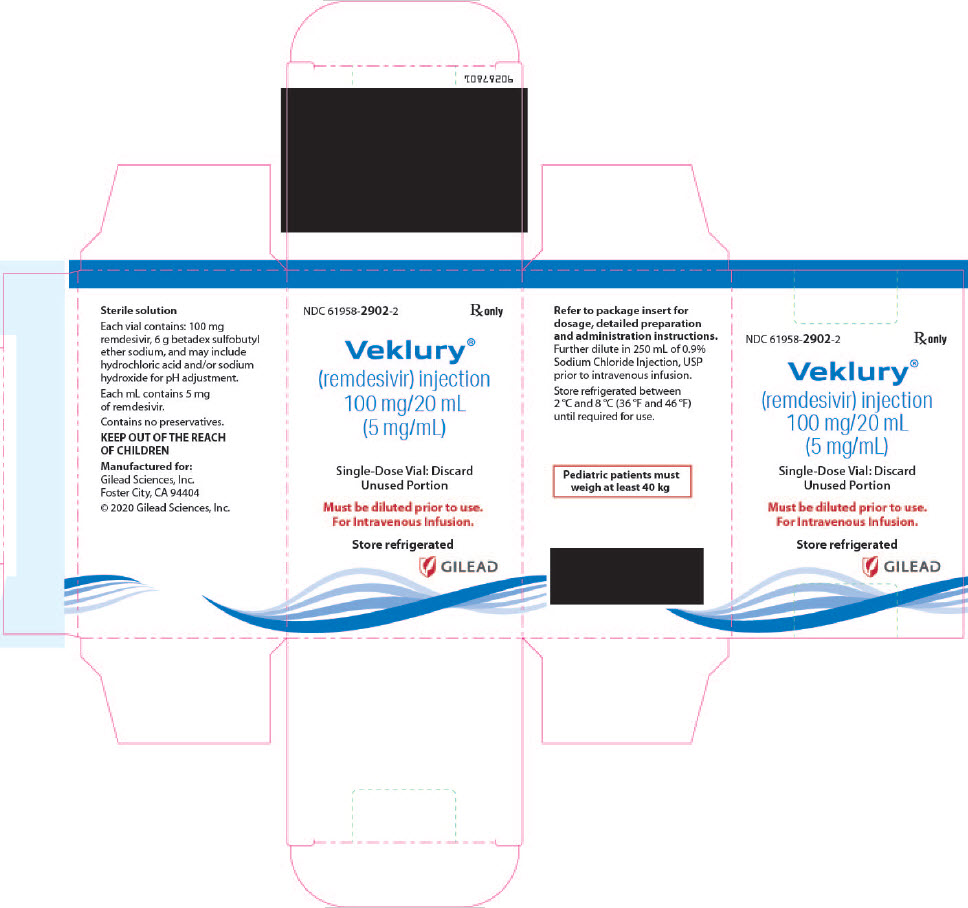
Veklury remdesivir 100 mg Injection, Powder, Lyophilized, For Solution, 1 vial — NDC 61958-2901-1 (Billing 61958-2901-01)
This is a package of 1 vial of Veklury remdesivir 100 mg Injection, Powder, Lyophilized, For Solution from Gilead Sciences, Inc., no longer marketed (first marketed Nov 2020), no longer in the FDA NDC Directory.
NDC database record
One package, one record: these facts belong to NDC 61958-2901-1 alone.
- Record
- FDA NDC Directory package listing · Human prescription drug
- Code segments
- 61958 labeler · 2901 product · 1 package
- Listing certified through
- Dec 31, 2027
- Billing quantity
- 1 EA per package
- Barcode (UPC-A, from the NDC)
- 3 6195829011 1
- FDA record last changed
- Aug 20, 2026
Past resolved recalls for this product (2)
Identity & classification
Regulatory identifiers FDA, NLM and CMS codes for this package
Drug-database identifiers Medi-Span GPI and First Databank GCN / HICL / AHFS classification
- GSN (GCN sequence number): 080847
- GCN: 47828
- HICL (First Databank): 046410
- AHFS class code: 08:18.32.00
- RxCUI (RxNorm): 2284960
Where does this data come from?
- FDA openFDA NDC Directory · synced Oct 8, 2026
- FDA label on DailyMed · label index refreshed Oct 8, 2026
- RxNorm (NLM RxNav) · catalog refreshed Oct 8, 2026
- Medi-Span GPI (licensed)
- First Databank (licensed) · refreshed Oct 8, 2026
RxNorm drug class
This medicine belongs to the SARS-CoV-2 Nucleotide Analog RNA Polymerase Inhibitor class.
Where does this data come from?
- RxClass (NLM) · catalog refreshed Oct 8, 2026
Clinical
- Veklury is the brand name for remdesivir, an antiviral medication that fights the SARS-CoV-2 virus — the one that causes COVID-19. Your doctor prescribed it either because you're h...
- What exactly is Veklury and why has my doctor prescribed it?
- No, Veklury isn't a pill. It's given as an IV infusion — a slow drip directly into a vein — by a nurse or other healthcare provider. Each infusion takes anywhere from 30 minutes to...
- How will I receive this medication — do I take a pill?
Patient education
Supplement & herbal interactions
Some supplements/herbs that may interact with Remdesivir — tap one for details:
Where does this data come from?
- MedlinePlus (NLM) · refreshed Oct 8, 2026
- FDA label on DailyMed · label index refreshed Oct 8, 2026
Ask a licensed pharmacist directly — free, answered by our team.
Pricing
A drug doesn't have one price. Each row is a different public payment system, and none is what you'd pay at the counter — that depends on your insurance. The ⓘ on each row explains what it measures.
| Price system | Per mL | Per package |
|---|---|---|
| Retail pharmacies payNADAC · weekly | Not in the retail survey — common for institutional, discontinued, or low-volume packs. | |
| Medicaid paysCMS SDUD · 12 mo | No recent Medicaid claims on file for this NDC — rare and low-volume NDCs are suppressed in the public data. | |
| Medicare drug plans payPart D · quarterly | No Part D plan price is available for this NDC in our data. | |
Where does this data come from?
- CMS NADAC weekly file
- CMS ASP pricing files · refreshed Sep 20, 2026
- CMS Medicaid State Drug Utilization Data · refreshed Oct 9, 2026
- CMS Part D plan pricing files · refreshed Sep 24, 2026
- VA National Acquisition Center price file
Packaging — all sizes for this product
| Package NDC | Description | Marketing start | Marketing end | Status |
|---|---|---|---|---|
| 61958-2901-01 You're viewing this | 1 VIAL, SINGLE-DOSE in 1 CARTON / 1 INJECTION, POWDER, LYOPHILIZED, FOR SOLUTION in 1 VIAL, SINGLE-DOSE | 2020-05-01 | — | Discontinued by firm |
| 61958-2901-02 61958-2901-2 Main listing | 1 VIAL, SINGLE-DOSE in 1 CARTON / 1 INJECTION, POWDER, LYOPHILIZED, FOR SOLUTION in 1 VIAL, SINGLE-DOSE | 2020-11-01 | — | Active |
This pack shows little to no recent Medicaid volume — a different pack size carries most fills. See all packs ↓
Pack size FAQ
What quantity is in this package?
How does this package differ from NDC 61958-2901-02?
What NDC number is used to bill for this package of Veklury remdesivir 100 mg Injection, Powder, Lyophilized, For Solution?
Therapeutic equivalents
| Product | Labeler | Pack | NADAC/unit | TE | Status | Price vs. this |
|---|---|---|---|---|---|---|
| Veklury 100 mgthis 61958-2901-01 | Gilead | 1 vial | — | — | Discontinued | — |
Where does this data come from?
- FDA openFDA NDC Directory · synced Oct 8, 2026
- FDA Orange Book · refreshed Oct 3, 2026
- CMS NADAC weekly file
Availability & generic status
We did not find an FDA-approved generic match for this exact strength, form and route. Patent/protection dates below may affect future generic timing.
Why the date isn’t exact: Generic timing can change because patents may be challenged, settled, licensed, added, removed, or worked around with a narrower label — and FDA approval does not always mean a pharmacy can get the generic today.
🛈 What do these terms mean?
- Patent
- Legal protection listed in the Orange Book that may delay generic approval or launch. Issued by the U.S. Patent & Trademark Office.
- Substance patent
- Covers the active drug molecule itself — the hardest to design around. A generic generally can’t launch until it expires.
- Formulation (product) patent
- Covers a specific formulation or dosage form. A generic can sometimes work around it with a different formulation.
- Method-of-use patent
- A patent covering one specific approved use of the drug — not necessarily the whole molecule. A generic can sometimes launch with a “skinny label” that carves out the protected use and keeps the others.
- Skinny label
- A generic label that omits a still-patented use when the FDA allows it — letting a generic reach the market for the unprotected uses.
- Exclusivity
- FDA-granted marketing protection, separate from patents — e.g. 5-yr new chemical entity, 7-yr orphan drug, or a +6-month pediatric extension.
- Paragraph IV
- A generic applicant’s formal challenge to a listed patent. It can potentially lead to earlier generic entry, but often involves litigation or a settlement.
- RLD / RS
- Reference Listed Drug — the brand product the FDA uses as the reference for generic applications. Reference Standard — the product the FDA expects generics to compare against in bioequivalence testing.
- TE / AB rating
- FDA therapeutic-equivalence rating. An AB rating generally means the FDA considers a generic therapeutically equivalent to — and substitutable for — the brand.
- LOE (loss of exclusivity)
- The latest patent or exclusivity currently listed — the loss-of-exclusivity / latest-listed-protection date shown on this page. Paragraph-IV challenges and settlements can move the real date earlier; FDA approval and a manufacturer’s decision to market can move it later.
Built from the FDA Orange Book. The bars above are scaled to each protection’s expiry; the red LOE marker is the last one to lapse.
| Patent | Type | Use code | Expires |
|---|---|---|---|
| US 11975012 ↗ | Method of use | U-3835 | May 28, 2041 |
| US 11975012 ↗ | Method of use | U-3836 | May 28, 2041 |
| US 11975012 ↗ | Method of use | U-3833 | May 28, 2041 |
| US 11975012 ↗ | Method of use | U-3834 | May 28, 2041 |
| US 11007208 ↗ | Method of use | U-3829 | Sep 16, 2036 |
| US 11007208 ↗ | Method of use | U-3830 | Sep 16, 2036 |
| US 11266681 ↗ | Method of use | U-3832 | Jul 10, 2038 |
| US 11266681 ↗ | Method of use | U-3831 | Jul 10, 2038 |
| US 11382926 ↗ | Method of use | U-3831 | Sep 16, 2036 |
| US 11382926 ↗ | Method of use | U-3832 | Sep 16, 2036 |
| US 11382926 ↗ | Method of use | U-3830 | Sep 16, 2036 |
| US 11382926 ↗ | Method of use | U-3829 | Sep 16, 2036 |
| US 10695361 ↗ | Method of use | U-3831 | Sep 16, 2036 |
| US 10695361 ↗ | Method of use | U-3832 | Sep 16, 2036 |
| US 10695361 ↗ | Method of use | U-3829 | Sep 16, 2036 |
| US 10695361 ↗ | Method of use | U-3830 | Sep 16, 2036 |
| US 11903953 ↗ | Method of use | U-3833 | May 28, 2041 |
| US 11903953 ↗ | Method of use | U-3834 | May 28, 2041 |
| US 11491169 ↗ | Method of use | U-3834 | May 28, 2041 |
| US 11491169 ↗ | Method of use | U-3833 | May 28, 2041 |
| US 11491169 ↗ | Method of use | U-3836 | May 28, 2041 |
| US 11491169 ↗ | Method of use | U-3835 | May 28, 2041 |
| US 11007208 ↗ | Method of use | U-3831 | Sep 16, 2036 |
| US 11007208 ↗ | Method of use | U-3832 | Sep 16, 2036 |
| US 11903953 ↗ | Method of use | U-3835 | May 28, 2041 |
| US 11903953 ↗ | Method of use | U-3836 | May 28, 2041 |
| US 9949994 ↗ | Drug substance | — | Oct 29, 2035 |
| US 11492353 ↗ | Drug substance | — | Dec 8, 2031 |
| US 8318682 ↗ | Drug substance | — | Apr 22, 2029 |
| US 8318682 ↗ | Drug substance | — | Apr 22, 2029 |
| US 8008264 ↗ | Drug substance | — | Sep 6, 2029 |
| US RE46762 ↗ | Drug substance | — | Apr 22, 2029 |
| US 9724360 ↗ | Drug substance | — | Oct 29, 2035 |
| US 10065958 ↗ | Drug substance | — | Nov 18, 2032 |
| US RE46762 ↗ | Drug substance | — | Apr 22, 2029 |
| US 10065958 ↗ | Drug substance | — | Nov 18, 2032 |
| US 11975017 ↗ | Drug product | — | Jul 10, 2038 |
| US 11492353 ↗ | Drug substance | — | Dec 8, 2031 |
| US 8008264 ↗ | Drug substance | — | Sep 6, 2029 |
| US 9724360 ↗ | Drug substance | — | Oct 29, 2035 |
| US 10675296 ↗ | Drug product | — | Jul 10, 2038 |
| US 9949994 ↗ | Drug substance | — | Oct 29, 2035 |
| US 11492353*PED ↗ | Drug product | — | Jun 8, 2032 |
| US 11492353*PED ↗ | Drug product | — | Jun 8, 2032 |
| US 11491169*PED ↗ | Drug product | — | Nov 28, 2041 |
| US 11491169*PED ↗ | Drug product | — | Nov 28, 2041 |
| US 11903953*PED ↗ | Drug product | — | Nov 28, 2041 |
| US 11903953*PED ↗ | Drug product | — | Nov 28, 2041 |
| US 11007208*PED ↗ | Drug product | — | Mar 16, 2037 |
| US 11007208*PED ↗ | Drug product | — | Mar 16, 2037 |
| US 11382926*PED ↗ | Drug product | — | Mar 16, 2037 |
| US 11382926*PED ↗ | Drug product | — | Mar 16, 2037 |
| US 9949994*PED ↗ | Drug product | — | Apr 29, 2036 |
| US 10675296*PED ↗ | Drug product | — | Jan 10, 2039 |
| US 8008264*PED ↗ | Drug product | — | Mar 6, 2030 |
| US 8318682*PED ↗ | Drug product | — | Oct 22, 2029 |
| US 10065958*PED ↗ | Drug product | — | May 18, 2033 |
| US 10695361*PED ↗ | Drug product | — | Mar 16, 2037 |
| US RE46762*PED ↗ | Drug product | — | Oct 22, 2029 |
| US 9724360*PED ↗ | Drug product | — | Apr 29, 2036 |
| US 8008264*PED ↗ | Drug product | — | Mar 6, 2030 |
| US 10065958*PED ↗ | Drug product | — | May 18, 2033 |
| US 9949994*PED ↗ | Drug product | — | Apr 29, 2036 |
| US 8318682*PED ↗ | Drug product | — | Oct 22, 2029 |
| US RE46762*PED ↗ | Drug product | — | Oct 22, 2029 |
| US 10695361*PED ↗ | Drug product | — | Mar 16, 2037 |
| US 9724360*PED ↗ | Drug product | — | Apr 29, 2036 |
| US 11266681*PED ↗ | Drug product | — | Jan 10, 2039 |
| US 11975017*PED ↗ | Drug product | — | Jan 10, 2039 |
| US 11975012*PED ↗ | Drug product | — | Nov 28, 2041 |
| US 11975012*PED ↗ | Drug product | — | Nov 28, 2041 |
| Code | What it grants | Expires |
|---|---|---|
| M-301 | New indication / labeling change (3-year) | Jul 13, 2026 |
| NCE | New Chemical Entity (5-year) | Oct 22, 2025 |
| NPP | New Patient Population | Feb 28, 2027 |
| M-301 | New indication / labeling change (3-year) | Jul 13, 2026 |
| NCE | New Chemical Entity (5-year) | Oct 22, 2025 |
| NPP | New Patient Population | Feb 28, 2027 |
| PED | Pediatric Exclusivity (+6 months) | Apr 22, 2026 |
| PED | Pediatric Exclusivity (+6 months) | Apr 22, 2026 |
| PED | Pediatric Exclusivity (+6 months) | Aug 28, 2027 |
| PED | Pediatric Exclusivity (+6 months) | Aug 28, 2027 |
| PED | Pediatric Exclusivity (+6 months) | Jan 13, 2027 |
| PED | Pediatric Exclusivity (+6 months) | Jan 13, 2027 |
Is there a generic version of REMDESIVIR 100 MG VIAL (EUA)?
The FDA approved a generic — why can’t I get it at my pharmacy yet?
Why do different websites show different generic release dates?
What does “FDA listed” mean?
What does a patent or protection date mean here?
What does “current Orange Book estimate” mean?
Can a generic come out before the last patent expires?
Can a generic come out after the listed dates?
What is the difference between patents and exclusivity?
Why are there multiple patent dates?
Where does this data come from?
- FDA Orange Book · refreshed Oct 3, 2026
Inactive Ingredients / Excipients
Inactive ingredients, also called excipients, are components of the drug product other than the active ingredient. They may include fillers, dyes, coatings, preservatives, flavors, or other formulation ingredients.
🧪 Avoiding an ingredient? See Remdesivir Injection inactive ingredients by manufacturer: every current product's list side by side, so you can ask your pharmacy for the version that does not list it.
💡 Tap an ingredient (hover on desktop) to see what it is and why it’s used.
-
UNII 2PP9364507
A modified form of beta-cyclodextrin, a natural sugar-like molecule. It helps dissolve and stabilize drugs in liquid medicines and improves how well the body absorbs certain medications.
-
UNII QTT17582CB
A strong acid used to adjust and maintain the proper pH level in liquid medicines, ensuring stability and preventing breakdown of active ingredients.
-
UNII 55X04QC32I
A strong alkaline chemical used to adjust and maintain the pH balance of liquid medicines. It helps keep the medicine stable and ensures it stays effective during storage.
-
UNII 059QF0KO0R
Water is a liquid solvent that dissolves and mixes ingredients together in liquid medicines, syrups, and injections. It helps distribute the active drug evenly throughout the product.
4 inactive ingredients listed in the exact product block matched to this NDC.
Where does this data come from?
ingredient classCode="IACT" elements from the exact product block matched by this NDC. Label-section narrative from DailyMed / the openFDA label index is shown separately when available.- FDA label on DailyMed · label index refreshed Oct 8, 2026
- FDA openFDA NDC Directory · synced Oct 8, 2026
Inactive ingredient FAQ
Are inactive ingredients the same for every manufacturer?
Why might an inactive ingredient be missing?
Can inactive ingredients matter?
Manufacturer & labeler
More NDCs from Gilead Sciences, Inc. labeler code 61958
- Epclusa Velpatasvir and Sofosbuvir 37.5 mg; 150 mg Pellet NDC 61958-2205-1
- Vemlidy tenofovir alafenamide 25 mg Tablet NDC 61958-2301-1
- Vosevi SOFOSBUVIR, VELPATASVIR, and VOXILAPREVIR 400 mg; 100 mg; 100 mg Tablet, Film Coated NDC 61958-2401-1
- Biktarvy bictegravir sodium, emtricitabine, and tenofovir alafenamide fumarate 50 mg; 200 mg; 25 mg Tablet NDC 61958-2501-1
- Biktarvy bictegravir sodium, emtricitabine, and tenofovir alafenamide fumarate 30 mg; 120 mg; 15 mg Tablet NDC 61958-2505-1
- Biktarvy bictegravir sodium, emtricitabine, and tenofovir alafenamide fumarate 30 mg; 120 mg; 15 mg Tablet NDC 61958-2506-1
- Sunlenca LENACAPAVIR SODIUM 300 mg Tablet, Film Coated NDC 61958-3001-1
- Sunlenca LENACAPAVIR SODIUM Kit NDC 61958-3002-1
- Sunlenca LENACAPAVIR SODIUM Kit NDC 61958-3005-1
- Hepcludex Bulevirtide 8.5 mg Injection, Powder, Lyophilized, For Solution NDC 61958-3104-1
- Livdelzi SELADELPAR LYSINE 10 mg Capsule NDC 61958-3301-1
- Yeztugo LENACAPAVIR SODIUM 300 mg Tablet, Film Coated NDC 61958-3401-1
Where does this data come from?
- FDA openFDA NDC Directory · synced Oct 8, 2026
- Drugs@FDA
Full prescribing information FDA SPL
🎯 Indications and Usage ▾
1 INDICATIONS AND USAGE VEKLURY is indicated for the treatment of coronavirus disease 2019 (COVID-19) in adults and pediatric patients (birth to less than 18 years of age weighing at least 1.5 kg) who are [see Clinical Studies (14) ] : Hospitalized, or Not hospitalized and have mild-to-moderate COVID-19, and are at high risk for progression to severe COVID-19, including hospitalization or death. VEKLURY is a severe acute respiratory syndrome coronavirus 2 (SARS-CoV-2) nucleotide analog RNA polymerase inhibitor indicated for the treatment of coronavirus disease 2019 (COVID-19) in adults and pediatric patients (birth to less than 18 years of age weighing at least 1.5 kg) who are: Hospitalized, or Not hospitalized and have mild-to-moderate COVID-19, and are at high risk for progression to severe COVID-19, including hospitalization or death.
( 1 )
⏱️ Dosage and Administration ▾
2 DOSAGE AND ADMINISTRATION Testing: In all patients, before starting VEKLURY and during treatment as clinically appropriate, perform hepatic laboratory testing. Assess prothrombin time before starting VEKLURY and monitor as clinically appropriate. ( 2.2 ) Recommended dosage: Adults and pediatric patients weighing at least 40 kg: a single loading dose of VEKLURY 200 mg on Day 1 followed by once-daily maintenance doses of VEKLURY 100 mg from Day 2 via intravenous infusion.
( 2.3 ) Pediatric patients (birth to less than 18 years of age) weighing 1.5 kg to less than 40 kg: Recommended dosage is based on weight. Refer to Table 1 of the full prescribing information for specific dosing guidelines based on body weight. ( 2.3 ) Hospitalized patients: The treatment course of VEKLURY should be initiated as soon as possible after diagnosis of symptomatic COVID-19 has been made.
( 2.3 ) For hospitalized patients requiring invasive mechanical ventilation and/or ECMO, the recommended total treatment duration is 10 days. ( 2.3 ) For hospitalized patients not requiring invasive mechanical ventilation and/or ECMO, the recommended treatment duration is 5 days. If a patient does not demonstrate clinical improvement, treatment may be extended for up to 5 additional days for a total treatment duration of up to 10 days.
( 2.3 ) Non-hospitalized patients: The treatment course of VEKLURY should be initiated as soon as possible after diagnosis of symptomatic COVID-19 has been made and within 7 days of symptom onset. ( 2.3 ) For non-hospitalized patients diagnosed with mild-to-moderate COVID-19 who are at high risk for progression to severe COVID-19, including hospitalization or death, the recommended total treatment duration is 3 days ( 2.3 ). Renal impairment: No dosage adjustment of VEKLURY is recommended in patients with any degree of renal impairment, including those on dialysis.
( 2.4 ) Administer VEKLURY via intravenous (IV) infusion over 30 to 120 minutes. ( 2.5 ) Dose preparation and administration: Refer to the full prescribing information for further details. ( 2.5 ) Storage of prepared dosages: VEKLURY contains no preservative.
( 2.6 )
2.1Dosage and Administration Overview VEKLURY may only be administered in settings in which healthcare providers have immediate access to medications to treat a severe infusion or hypersensitivity reaction, such as anaphylaxis, and the ability to activate the emergency medical system (EMS), as necessary [see Dosage and Administration (2.5) , Warnings and Precautions (5.1) ] . Administer VEKLURY for the treatment of COVID-19 in adults and pediatric patients (birth to less than 18 years of age weighing at least 1.5 kg) by intravenous infusion only.
Do not administer by any other route. VEKLURY for injection must be reconstituted with Sterile Water for Injection prior to diluting with 0.9% sodium chloride injection.
2.2Testing Before Starting and During Treatment with VEKLURY Perform hepatic laboratory testing in all patients before starting VEKLURY and while receiving VEKLURY as clinically appropriate [see Warnings and Precautions (5.2) and Use in Specific Populations (8.7) ]. Determine prothrombin time in all patients before starting VEKLURY and monitor while receiving VEKLURY as clinically appropriate [see Adverse Reactions (6.1) ].
2.3Recommended Dosage in Adults and Pediatric Patients (Birth to Less than 18 Years of Age Weighing at Least 1.5 kg) The recommended dosage for adults and pediatric patients weighing at least 40 kg is a single loading dose of VEKLURY 200 mg on Day 1 via intravenous infusion followed by once-daily maintenance doses of VEKLURY 100 mg from Day 2 via intravenous infusion. The recommended dosage for pediatric patients weighing 1.5 kg to less than 40 kg is presented in Table 1. Table 1 Recommended Dosage in Pediatric Patients Including Term Gestational age greater than 37 weeks.
Neonates and Infants Weighing 1.5 kg to Less than 40 kg Pediatric Patient Population Loading Dose Via Intr… [Excerpted — this section continues on DailyMed.]
💊 Dosage Forms and Strengths ▾
3 DOSAGE FORMS AND STRENGTHS VEKLURY for injection, 100 mg, available as a sterile, preservative-free white to off-white to yellow lyophilized powder in single-dose vial for reconstitution. For injection: 100 mg of remdesivir as a lyophilized powder, in a single-dose vial. ( 3 )
⛔ Contraindications ▾
4 CONTRAINDICATIONS VEKLURY is contraindicated in patients with a history of clinically significant hypersensitivity reactions to VEKLURY or any components of the product [see Warnings and Precautions (5.1) ]. VEKLURY is contraindicated in patients with a history of clinically significant hypersensitivity reactions to VEKLURY or any components of the product. ( 4 )
⚠️ Warnings and Cautions ▾
5 WARNINGS AND PRECAUTIONS Hypersensitivity including infusion-related and anaphylactic reactions: Hypersensitivity reactions have been observed during and following administration of VEKLURY. Slower infusion rates, with a maximum infusion time of up to 120 minutes, can be considered to potentially prevent signs and symptoms of hypersensitivity. Monitor patients during infusion and observe patients for at least one hour after infusion is complete for signs and symptoms of hypersensitivity as clinically appropriate.
If signs and symptoms of a clinically significant hypersensitivity reaction occur, immediately discontinue administration of VEKLURY and initiate appropriate treatment. ( 5.1 ) Increased risk of transaminase elevations: Transaminase elevations have been observed in healthy volunteers and have also been reported in patients with COVID-19 who received VEKLURY. Perform hepatic laboratory testing in all patients before starting VEKLURY and while receiving VEKLURY as clinically appropriate.
Consider discontinuing VEKLURY if ALT levels increase to greater than 10 times the upper limit of normal. Discontinue VEKLURY if ALT elevation is accompanied by signs or symptoms of liver inflammation. ( 5.2 ) Risk of reduced antiviral activity when coadministered with chloroquine phosphate or hydroxychloroquine sulfate: Coadministration of VEKLURY and chloroquine phosphate or hydroxychloroquine sulfate is not recommended based on data from cell culture experiments demonstrating a potential antagonistic effect of chloroquine on the intracellular metabolic activation and antiviral activity of VEKLURY.
( 5.3 )
5.1Hypersensitivity Including Infusion-related and Anaphylactic Reactions Hypersensitivity reactions, including infusion-related and anaphylactic reactions, have been observed during and following administration of VEKLURY; most occurred within one hour. Signs and symptoms may include hypotension, hypertension, tachycardia, bradycardia, hypoxia, fever, dyspnea, wheezing, angioedema, rash, nausea, diaphoresis, and shivering. Slower infusion rates, with a maximum infusion time of up to 120 minutes, can be considered to potentially prevent these signs and symptoms.
Monitor patients during infusion and observe patients for at least one hour after infusion is complete for signs and symptoms of hypersensitivity as clinically appropriate. If signs and symptoms of a clinically significant hypersensitivity reaction occur, immediately discontinue administration of VEKLURY and initiate appropriate treatment. The use of VEKLURY is contraindicated in patients with known hypersensitivity to VEKLURY or any components of the product [see Contraindications (4) ] .
5.2Increased Risk of Transaminase Elevations Transaminase elevations have been observed in healthy volunteers who received 200 mg of VEKLURY followed by 100 mg doses for up to 10 days; the transaminase elevations were mild (Grade 1) to moderate (Grade 2) in severity and resolved upon discontinuation of VEKLURY. Transaminase elevations have also been reported in patients with COVID-19 who received VEKLURY [see Adverse Reactions (6.1) ] . Because transaminase elevations have been reported as a clinical feature of COVID-19, and the incidence was similar in patients receiving placebo versus VEKLURY in clinical trials of VEKLURY, discerning the contribution of VEKLURY to transaminase elevations in patients with COVID-19 can be challenging.
Perform hepatic laboratory testing in all patients before starting VEKLURY and while receiving VEKLURY as clinically appropriate [see Dosage and Administration (2.1) and Use in Specific Populations (8.7) ] . Consider discontinuing VEKLURY if ALT levels increase to greater than 10 times the upper limit of normal. Discontinue VEKLURY if ALT elevation is accompanied by signs or symptoms of liver inflammation.
5.3Risk of Reduced Antiviral Activity When Coadministered with Chloroquine Phosphate or Hydroxychloroquine Sulfate Coadministration of VEKLURY and chl… [Excerpted — this section continues on DailyMed.]
🤒 Adverse Reactions ▾
6 ADVERSE REACTIONS The following adverse reactions are discussed in other sections of the labeling: Hypersensitivity Including Infusion-related and Anaphylactic Reactions [see Warnings and Precautions (5.1) ] Increased Risk of Transaminase Elevations [see Warnings and Precautions (5.2) ] The most common adverse reactions (incidence greater than or equal to 5%, all grades) observed with treatment with VEKLURY are nausea, ALT increased, and AST increased. ( 6.1 ) To report SUSPECTED ADVERSE REACTIONS, contact Gilead Sciences, Inc. at 1-800-GILEAD-5 or FDA at 1-800-FDA-1088 or www.fda.gov/medwatch.
6.1Clinical Trials Experience Because clinical trials are conducted under widely varying conditions, adverse reaction rates observed in the clinical trials of a drug cannot be directly compared to rates in the clinical trials of another drug and may not reflect the rates observed in practice. Clinical Trials in Adult Subjects The safety of VEKLURY is based on data from four Phase 3 studies in 1,476 hospitalized adult subjects with COVID-19, one Phase 3 study in 279 non-hospitalized adult and pediatric subjects (12 years of age and older weighing at least 40 kg) with mild-to-moderate COVID-19, four Phase 1 studies in 131 healthy adults, and from patients with COVID-19 who received VEKLURY under the Emergency Use Authorization or in a compassionate use program.
Clinical Trials Experience in Adults with COVID-19 NIAID ACTT-1 was a randomized, double-blind, placebo-controlled clinical trial in hospitalized subjects with mild, moderate, and severe COVID-19 treated with VEKLURY (n=532) or placebo (n=516) for up to 10 days. Subjects treated with VEKLURY received 200 mg on Day 1 and 100 mg once daily on subsequent days [see Clinical Studies (14.1) ] . The collection of adverse event data in this trial was limited to severe (Grade 3) or potentially life-threatening (Grade 4) adverse events, serious adverse events, adverse events leading to study drug discontinuation, and moderate (Grade 2) severity or higher hypersensitivity reactions.
Rates of adverse reactions (≥ Grade 3), serious adverse reactions, and adverse reactions leading to treatment discontinuation are presented in Table 4. Table 4 Summary of Adverse Reaction Rates in Hospitalized Subjects with Mild, Moderate, or Severe COVID-19 in NIAID ACTT-1 Types of Adverse Reactions VEKLURY N=532 n (%) Placebo N=516 n (%) Adverse reactions, Grades ≥3 41 (8%) 46 (9%) Serious adverse reactions 2 (0.4%) Seizure (n=1), infusion-related reaction (n=1). 3 (0.6%) Adverse reactions leading to treatment discontinuation 11 (2%) Seizure (n=1), infusion-related reaction (n=1), transaminases increased (n=3), ALT increased and AST increased (n=1), GFR decreased (n=2), acute kidney injury (n=3).
15 (3%) Study GS-US-540-5773 was a randomized, open-label clinical trial in hospitalized subjects with severe COVID-19 treated with VEKLURY 200 mg on Day 1 and 100 mg once daily for 5 (n=200) or 10 days (n=197). Adverse reactions were reported in 33 (17%) subjects in the 5-day group and 40 (20%) subjects in the 10-day group [see Clinical Studies (14.2) ] . The most common adverse reactions occurring in at least 5% of subjects in either the VEKLURY 5-day or 10-day group, respectively, were nausea (5% vs 3%), AST increased (3% vs 6%), and ALT increased (2% vs 7%).
Rates of any adverse reactions, serious adverse reactions, and adverse reactions leading to treatment discontinuation are presented in Table 5. Table 5 Summary of Adverse Reaction Rates in Hospitalized Subjects with Severe COVID-19 in Study 5773 Types of Adverse Reactions VEKLURY 5 Days N=200 n (%) VEKLURY 10 Days N=197 n (%) Any adverse reaction, all Grades 33 (17%) 40 (20%) Serious adverse reactions 3 (2%) Transaminases increased (n=5), hepatic enzyme increased (n=1), hypertransaminasaemia (n=1). 4 (2%) Adverse reactions leading to treatment discontinuation 5 (3%) Transaminases increased (n=4), hepatic enzyme increased (n=2), LFT increased (n=2), hypertrans… [Excerpted — this section continues on DailyMed.]
🔄 Drug Interactions ▾
7 DRUG INTERACTIONS
7.1Effects of Other Drugs on VEKLURY Due to potential antagonism based on data from cell culture experiments, concomitant use of VEKLURY with chloroquine phosphate or hydroxychloroquine sulfate is not recommended [see Warnings and Precautions (5.3) and Microbiology (12.4) ]. Based on drug interaction studies conducted with VEKLURY, no clinically significant drug interactions are expected with inducers of cytochrome P450 (CYP) 3A4 or inhibitors of Organic Anion Transporting Polypeptides (OATP) 1B1/1B3 and, P-glycoprotein (P-gp) [see Clinical Pharmacology (12.3) ].
7.2Effects of VEKLURY on Other Drugs Based on drug interaction studies conducted with VEKLURY, it is a weak inhibitor of CYP3A and does not inhibit OATP1B1/1B3 [see Clinical Pharmacology (12.3) ].
👥 Use in Specific Populations ▾
8 USE IN SPECIFIC POPULATIONS
8.1Pregnancy Risk Summary Available data from a clinical trial (IMPAACT 2032), published reports, the COVID-PR pregnancy exposure registry, and compassionate use of remdesivir in pregnant individuals have not identified a drug-associated risk of major birth defects, miscarriage, or adverse maternal or fetal outcomes following exposure in the second and third trimester. However, there are insufficient pregnancy data available to evaluate the risk of remdesivir exposure during the first trimester. A study evaluating the pharmacokinetics of remdesivir during pregnancy demonstrated no clinically relevant differences between pregnant and non-pregnant individuals.
No dose adjustments are recommended in patients who receive VEKLURY during pregnancy (see Data ) and [see Clinical Pharmacology (12.3) ] . In nonclinical reproductive toxicity studies, remdesivir demonstrated no adverse effect on embryo-fetal development when administered to pregnant animals at systemic exposures (AUC) of the predominant circulating metabolite of remdesivir (GS-441524) that were 4 times (rats and rabbits) the exposure in humans at the recommended human dose (RHD) (see Data ). There are maternal and fetal risks associated with untreated COVID-19 in pregnancy (see Clinical Considerations ).
The background risk of major birth defects and miscarriage for the indicated population is unknown. All pregnancies have a background risk of birth defect, loss, or other adverse outcomes. In the U.S. general population, the estimated background risk of major birth defects and miscarriage in clinically recognized pregnancies is 2 to 4% and 15 to 20%, respectively.
Clinical Considerations Disease-associated maternal and/or embryo-fetal risk COVID-19 in pregnancy is associated with adverse maternal and fetal outcomes, including preeclampsia, eclampsia, preterm birth, premature rupture of membranes, venous thromboembolic disease, and fetal death. Data Human Data A non-randomized, open-label clinical study (IMPAACT 2032) evaluated pharmacokinetics and safety of up to 10 days of treatment with VEKLURY in 25 hospitalized pregnant and 28 hospitalized non-pregnant individuals of childbearing potential.
Subjects received VEKLURY 200 mg once daily for 1 day followed by VEKLURY 100 mg once daily on subsequent days via intravenous infusion. Subjects were enrolled prior to their fourth VEKLURY infusion. Assessments occurred at the following intervals: Screening; Pre-infusion (defined as 48 hours prior to start of first infusion); each infusion day; 48 hours after the last infusion; 7 days after the last infusion; 4 weeks after the last infusion.
Assessments also occurred 24 hours post-delivery in subjects who delivered. Treatment with VEKLURY was stopped in subjects who were discharged from the hospital prior to the completion of 10 days of treatment. Of the 25 pregnant subjects, median age was 33 years (Q1, Q3: 27 years, 37 years); 40% were White, 24% were Black, and 48% were Hispanic or Latino.
A total of 9 subjects (36%) were on high-flow oxygen; 12 subjects (48%) were on low-flow oxygen; and 1 subject (4%) was on room air, at baseline. Three subjects (12%) did not have data available on baseline oxygen status. The overall median (Q1, Q3) duration of symptoms prior to hospitalization was 7 (6, 9) days.
The overall median (Q1, Q3) duration of symptoms prior to first dose of VEKLURY was 8 (6, 9) days. Of the 25 pregnant subjects, median gestational age was 28 weeks at baseline (range 22 to 33 weeks) and about half of subjects were in each of the second and third trimester of pregnancy. No clinically relevant differences in the pharmacokinetics of remdesivir or its metabolites (GS-704277 and GS-441524) were observed between pregnant (n=21) and non-pregnant (n=22) individuals [see Clinical Pharmacology (12.3) ] .
No difference in pharmacokinetics of remdesivir or its metabolites is expected between the first and second/third trimesters. The adverse reacti… [Excerpted — this section continues on DailyMed.]
🤰 Pregnancy ▾
8.1Pregnancy Risk Summary Available data from a clinical trial (IMPAACT 2032), published reports, the COVID-PR pregnancy exposure registry, and compassionate use of remdesivir in pregnant individuals have not identified a drug-associated risk of major birth defects, miscarriage, or adverse maternal or fetal outcomes following exposure in the second and third trimester. However, there are insufficient pregnancy data available to evaluate the risk of remdesivir exposure during the first trimester. A study evaluating the pharmacokinetics of remdesivir during pregnancy demonstrated no clinically relevant differences between pregnant and non-pregnant individuals.
No dose adjustments are recommended in patients who receive VEKLURY during pregnancy (see Data ) and [see Clinical Pharmacology (12.3) ] . In nonclinical reproductive toxicity studies, remdesivir demonstrated no adverse effect on embryo-fetal development when administered to pregnant animals at systemic exposures (AUC) of the predominant circulating metabolite of remdesivir (GS-441524) that were 4 times (rats and rabbits) the exposure in humans at the recommended human dose (RHD) (see Data ). There are maternal and fetal risks associated with untreated COVID-19 in pregnancy (see Clinical Considerations ).
The background risk of major birth defects and miscarriage for the indicated population is unknown. All pregnancies have a background risk of birth defect, loss, or other adverse outcomes. In the U.S. general population, the estimated background risk of major birth defects and miscarriage in clinically recognized pregnancies is 2 to 4% and 15 to 20%, respectively.
Clinical Considerations Disease-associated maternal and/or embryo-fetal risk COVID-19 in pregnancy is associated with adverse maternal and fetal outcomes, including preeclampsia, eclampsia, preterm birth, premature rupture of membranes, venous thromboembolic disease, and fetal death. Data Human Data A non-randomized, open-label clinical study (IMPAACT 2032) evaluated pharmacokinetics and safety of up to 10 days of treatment with VEKLURY in 25 hospitalized pregnant and 28 hospitalized non-pregnant individuals of childbearing potential.
Subjects received VEKLURY 200 mg once daily for 1 day followed by VEKLURY 100 mg once daily on subsequent days via intravenous infusion. Subjects were enrolled prior to their fourth VEKLURY infusion. Assessments occurred at the following intervals: Screening; Pre-infusion (defined as 48 hours prior to start of first infusion); each infusion day; 48 hours after the last infusion; 7 days after the last infusion; 4 weeks after the last infusion.
Assessments also occurred 24 hours post-delivery in subjects who delivered. Treatment with VEKLURY was stopped in subjects who were discharged from the hospital prior to the completion of 10 days of treatment. Of the 25 pregnant subjects, median age was 33 years (Q1, Q3: 27 years, 37 years); 40% were White, 24% were Black, and 48% were Hispanic or Latino.
A total of 9 subjects (36%) were on high-flow oxygen; 12 subjects (48%) were on low-flow oxygen; and 1 subject (4%) was on room air, at baseline. Three subjects (12%) did not have data available on baseline oxygen status. The overall median (Q1, Q3) duration of symptoms prior to hospitalization was 7 (6, 9) days.
The overall median (Q1, Q3) duration of symptoms prior to first dose of VEKLURY was 8 (6, 9) days. Of the 25 pregnant subjects, median gestational age was 28 weeks at baseline (range 22 to 33 weeks) and about half of subjects were in each of the second and third trimester of pregnancy. No clinically relevant differences in the pharmacokinetics of remdesivir or its metabolites (GS-704277 and GS-441524) were observed between pregnant (n=21) and non-pregnant (n=22) individuals [see Clinical Pharmacology (12.3) ] .
No difference in pharmacokinetics of remdesivir or its metabolites is expected between the first and second/third trimesters. The adverse reactions observed were consistent w… [Excerpted — this section continues on DailyMed.]
🧒 Pediatric Use ▾
8.4Pediatric Use The safety and effectiveness of VEKLURY for the treatment of COVID-19 have been established in pediatric patients from birth to less than 18 years of age and weighing at least 1.5 kg, who are: Hospitalized, or Not hospitalized and have mild-to-moderate COVID-19, and are at high risk for progression to severe COVID-19, including hospitalization or death. Use in this age group is supported by the following: Trials in adults [see Clinical Studies (14.1 , 14.2 , 14.3 , 14.4 , 14.5) ] An open-label trial (Study 5823) in 58 hospitalized pediatric subjects [see Adverse Reactions (6.1) , Clinical Pharmacology (12.3) , and Clinical Studies (14.6) ].
Use of VEKLURY in pediatric patients from birth to less than 18 years of age and weighing at least 1.5 kg is supported by Study 5823 where 58 hospitalized pediatric subjects were treated with weight-based VEKLURY for up to 10 days in the following cohorts: Cohorts 1–4, 8; infants, children, and adolescents: Subjects ≥12 years and weighing ≥40 kg (n=12); subjects <12 years and weighing ≥40 kg (n=5); subjects ≥28 days and weighing ≥20 to <40 kg (n=12); subjects ≥28 days and weighing ≥12 to <20 kg (n=12); and subjects ≥28 days and weighing ≥3 to <12 kg (n=12); Cohorts 5–7; neonates and infants: Subjects 14 to <28 days old, GA >37 weeks, and weighing ≥2.5 kg (n=3); subjects <14 days old, GA >37 weeks, and weighing ≥2.5 kg at birth (n=1); and subjects <56 days old, GA ≤37 weeks, and weighing ≥1.5 kg at birth (n=1).
The safety and pharmacokinetic results in pediatric subjects were similar to those in adults [see Adverse Reactions (6.1) , Clinical Pharmacology (12.3) , Clinical Studies (14.6) ]. Use of VEKLURY in pediatric patients weighing at least 40 kg is further supported by a clinical trial of VEKLURY in non-hospitalized subjects that included 3 pediatric subjects 12 years and older, and by clinical trials in hospitalized subjects that included 30 adult subjects weighing 40 to 50 kg. The safety in this weight group was comparable to adult subjects weighing greater than 50 kg.
Thirty-nine pediatric patients 12 years and older and weighing at least 40 kg received VEKLURY in a compassionate use program in hospitalized subjects; the available clinical data from these patients are limited [see Adverse Reactions (6.1) and Clinical Studies (14) ]. Use of VEKLURY in pediatric patients with renal impairment is supported by safety data in adults [see Adverse Reactions (6.1) , Use in Specific Populations (8.6) ]. Limited data are available regarding the safety of VEKLURY in pediatric patients with mild or moderate renal impairment.
No data are available regarding the safety of VEKLURY in pediatric patients with severe renal impairment . In adults with severe renal impairment, including those requiring dialysis, exposures of GS-441524 and GS-704277, the metabolites of remdesivir, and betadex sulfobutyl ether sodium (SBECD) are increased [see Clinical Pharmacology (12.3) ] . VEKLURY contains SBECD which, when administered intravenously, is eliminated through glomerular filtration and therefore when administered to pediatric patients with renal immaturity or renal impairment, may result in higher exposure to SBECD.
The safety and effectiveness of VEKLURY have not been established in pediatric patients weighing less than 1.5 kg.
🧓 Geriatric Use ▾
8.5Geriatric Use Of the 1,062 hospitalized subjects with SARS-CoV-2 infection randomized in ACTT-1, 36% were 65 years or older. Of the 397 hospitalized subjects with SARS-CoV-2 infection randomized in Study GS-US-540-5773, 42% were 65 years or older. Of the 584 hospitalized subjects with SARS-CoV-2 infection randomized in Study GS-US-540-5774, 27% were 65 years or older.
Of the 562 non-hospitalized subjects with SARS-CoV-2 infection randomized in Study GS-US-540-9012, 17% were 65 years or older. Reported clinical experience has not identified differences in responses between the elderly and younger patients [see Clinical Studies (14) ] . No dosage adjustment is required in patients over the age of 65 years.
In general, appropriate caution should be exercised in the administration of VEKLURY and monitoring of elderly patients, reflecting the greater frequency of decreased hepatic, renal, or cardiac function, and of concomitant disease or other drug therapy.
🆘 Overdosage ▾
10 OVERDOSAGE There is no human experience of acute overdosage with VEKLURY. Treatment of overdose with VEKLURY should consist of general supportive measures including monitoring of vital signs and observation of the clinical status of the patient. There is no specific antidote for overdose with VEKLURY.
🧬 Clinical Pharmacology ▾
12 CLINICAL PHARMACOLOGY
12.1Mechanism of Action Remdesivir is an antiviral drug with activity against severe acute respiratory syndrome coronavirus 2 (SARS-CoV-2) [see Microbiology (12.4) ].
12.2Pharmacodynamics Exposure-Response Remdesivir and metabolites exposure-response relationships and the time course of pharmacodynamics response are unknown. Cardiac Electrophysiology At 3 times the maximum recommended dose, clinically significant QTc interval prolongation was not observed.
12.3Pharmacokinetics The pharmacokinetic (PK) properties of remdesivir and metabolites are provided in Table 12. The multiple dose PK parameters of remdesivir and metabolites in adults with COVID-19 are provided in Table 13. Table 12 Pharmacokinetic Properties of Remdesivir and Metabolites (GS-441524 and GS-704277) Remdesivir GS-441524 GS-704277 ND=not detected Absorption T max (h) Remdesivir administered as a 30-minute IV infusion (Study GS-US-399-5505); range of median observed on Day 1 and Day 5 or 10.
0.67–0.68 1.51–2.00 0.75–0.75 Distribution % bound to human plasma proteins 88–93.6 Range of protein binding for remdesivir from 2 independent experiments show no evidence of concentration-dependent protein binding for remdesivir. 2 1 Blood-to-plasma ratio 0.68–1.0 1.19
0.56Elimination t 1/2 (h) Median (Study GS-US-399-4231). 1 27
1.3Metabolism Metabolic pathway(s) CES1 (80%) Cathepsin A (10%) CYP3A (10%) Not significantly metabolized HINT1 Excretion Major route of elimination Metabolism Glomerular filtration and active tubular secretion Metabolism % of dose excreted in urine Mean (Study GS-US-399-4231). 10 49 2.9 % of dose excreted in feces ND
0.5ND Table 13 Multiple Dose PK Parameters Population PK estimates for 30-minute IV infusion of remdesivir for 3 days (Study GS-US-540-9012, n=147). of Remdesivir and Metabolites (GS-441524 and GS-704277) Following IV Administration of VEKLURY 100 mg to Adults with COVID-19 Parameter Mean Geometric mean estimates. (95% CI) Remdesivir GS-441524 GS-704277 CI=Confidence Interval; ND=Not detectable (at 24 hours post-dose) C max (nanogram per mL) 2700 (2440, 2990) 143 (135, 152) 198 (180, 218) AUC tau (nanogram∙h per mL) 1710 (1480, 1980) 2410 (2250, 2580) 392 (348, 442) C trough (nanogram per mL) ND 61.5 (56.5, 66.8) ND Specific Populations Pharmacokinetic differences based on sex, race, age, and renal function on the exposures of remdesivir were evaluated using population pharmacokinetic analysis.
Sex and race did not affect the pharmacokinetics of remdesivir and its metabolites (GS-441524 and GS-704277). Pregnant Individuals The pharmacokinetics of remdesivir and its circulating metabolites (GS-441524 and GS-704277) were evaluated in pregnant individuals with COVID-19. Exposures (AUC tau , C max , and C tau ) of remdesivir and its circulating metabolites during pregnancy were similar to those in non-pregnant individuals (see Table 14 ).
Table 14 Multiple Dose PK Parameters Study CO-US-590-5961 (IMPAACT). of Remdesivir and Metabolites (GS-441524 and GS-704277) Following Intravenous Administration of VEKLURY to Pregnant and Non-Pregnant Individuals with COVID-19 Parameter Mean Geometric mean estimates. (90% CI) Pregnant Individuals (N=21) Non-Pregnant Individuals (N=22) CI=Confidence Interval Remdesivir C max (nanogram per mL) 1360 (978, 1890) 1240 (891, 1720) AUC tau (nanogram∙h per mL) 1250 (916, 1700) N=18 1300 (1070, 1590) N=17 GS-441524 C max (nanogram per mL) 113 (102, 126) 121 (108, 136) AUC tau (nanogram∙h per mL) 1840 (1630, 2070) N=20 2050 (1780, 2350) N=21 C tau (nanogram per mL) 51.6 (44.7, 59.6) 57.1 (48.7, 66.9) GS-704277 C max (nanogram per mL) 217 (187, 252) 213 (188, 240) AUC tau (nanogram∙h per mL) 454 (406, 508) 437 (384, 497) Patients with Renal Impairment The pharmacokinetics of remdesivir and its metabolites (GS-441524 and GS-704277) and excipient SBECD were evaluated in healthy subjects, those with mild (eGFR 60–89 mL/minute/1.73m 2 ), moderate (eGFR 30–59 mL/minute/1.73m 2 ), severe… [Excerpted — this section continues on DailyMed.]
🧬 Mechanism of Action ▾
12.1Mechanism of Action Remdesivir is an antiviral drug with activity against severe acute respiratory syndrome coronavirus 2 (SARS-CoV-2) [see Microbiology (12.4) ].
📦 How Supplied / Storage and Handling ▾
16 HOW SUPPLIED/STORAGE AND HANDLING How Supplied VEKLURY for injection, 100 mg (NDC 61958-2901-2) is supplied as a single-dose vial containing a sterile, preservative-free white to off-white to yellow lyophilized powder. It requires reconstitution and further dilution prior to administration by intravenous infusion [see Dosage and Administration (2.5) ] . Discard unused portion.
The container closure is not made with natural rubber latex. Storage and Handling These products contain no preservative; therefore, partially used vials should be discarded [see Dosage and Administration (2.6) ] . Store VEKLURY for injection, 100 mg vials below 30°C (below 86°F) until required for use.
After reconstitution, use vials immediately to prepare diluted solution. Dilute the reconstituted solution in 0.9% sodium chloride injection, USP within the same day as administration. The diluted VEKLURY solution in the infusion bags can be stored up to 24 hours at room temperature (20°C to 25°C [68°F to 77°F]) prior to administration or 48 hours at refrigerated temperature (2°C to 8°C [36°F to 46°F]).
📦 Storage and Handling ▾
Storage and Handling These products contain no preservative; therefore, partially used vials should be discarded [see Dosage and Administration (2.6) ] . Store VEKLURY for injection, 100 mg vials below 30°C (below 86°F) until required for use. After reconstitution, use vials immediately to prepare diluted solution.
Dilute the reconstituted solution in 0.9% sodium chloride injection, USP within the same day as administration. The diluted VEKLURY solution in the infusion bags can be stored up to 24 hours at room temperature (20°C to 25°C [68°F to 77°F]) prior to administration or 48 hours at refrigerated temperature (2°C to 8°C [36°F to 46°F]).
📋 Description ▾
11 DESCRIPTION VEKLURY contains remdesivir, a SARS-CoV-2 nucleotide analog RNA polymerase inhibitor. The chemical name for remdesivir is 2-ethylbutyl N -{( S )-[2- C -(4-aminopyrrolo[2,1-f][1,2,4]triazin-7-yl)-2,5-anhydro-d-altrononitril-6- O -yl]phenoxyphosphoryl}-L-alaninate. It has a molecular formula of C 27 H 35 N 6 O 8 P and a molecular weight of 602.6 g/mol.
Remdesivir has the following structural formula: VEKLURY for injection contains 100 mg of remdesivir as a sterile, preservative-free lyophilized white to off-white to yellow powder in a single-dose clear glass vial. It requires reconstitution and then further dilution prior to administration by intravenous infusion [see Dosage and Administration (2.5) ] . The inactive ingredients are 3 g betadex sulfobutyl ether sodium and may include hydrochloric acid and/or sodium hydroxide for pH adjustment.
Chemical Structure
💬 Information for Patients ▾
17 PATIENT COUNSELING INFORMATION Advise the patient to read the FDA-approved patient labeling (Patient Information). Hypersensitivity Reactions Inform patients that hypersensitivity reactions have been seen in patients receiving VEKLURY during and after infusion. Advise patients to inform their healthcare provider if they experience any of the following: changes in heart rate; fever; shortness of breath, wheezing; swelling of the lips, face, or throat; rash; nausea; sweating; or shivering [see Warnings and Precautions (5.1) ].
Increased Risk of Transaminase Elevations Inform patients that VEKLURY may increase the risk of hepatic laboratory abnormalities. Advise patients to alert their healthcare provider immediately if they experience any symptoms of liver inflammation [see Warnings and Precaution (5.2) ]. Drug Interactions Inform patients that VEKLURY may interact with other drugs.
Advise patients to report to their healthcare provider the use of any other prescription or nonprescription medication or herbal products, including chloroquine phosphate or hydroxychloroquine sulfate [see Warnings and Precautions (5.3) , Drug Interactions (7) , and Microbiology (12.4) ]. Pregnancy Inform patients to notify their healthcare provider in the event of a pregnancy [see Use in Specific Populations (8.1) ].
🧬 Pharmacokinetics ▾
12.3Pharmacokinetics The pharmacokinetic (PK) properties of remdesivir and metabolites are provided in Table 12. The multiple dose PK parameters of remdesivir and metabolites in adults with COVID-19 are provided in Table 13. Table 12 Pharmacokinetic Properties of Remdesivir and Metabolites (GS-441524 and GS-704277) Remdesivir GS-441524 GS-704277 ND=not detected Absorption T max (h) Remdesivir administered as a 30-minute IV infusion (Study GS-US-399-5505); range of median observed on Day 1 and Day 5 or 10.
0.67–0.68 1.51–2.00 0.75–0.75 Distribution % bound to human plasma proteins 88–93.6 Range of protein binding for remdesivir from 2 independent experiments show no evidence of concentration-dependent protein binding for remdesivir. 2 1 Blood-to-plasma ratio 0.68–1.0 1.19
0.56Elimination t 1/2 (h) Median (Study GS-US-399-4231). 1 27
1.3Metabolism Metabolic pathway(s) CES1 (80%) Cathepsin A (10%) CYP3A (10%) Not significantly metabolized HINT1 Excretion Major route of elimination Metabolism Glomerular filtration and active tubular secretion Metabolism % of dose excreted in urine Mean (Study GS-US-399-4231). 10 49 2.9 % of dose excreted in feces ND
0.5ND Table 13 Multiple Dose PK Parameters Population PK estimates for 30-minute IV infusion of remdesivir for 3 days (Study GS-US-540-9012, n=147). of Remdesivir and Metabolites (GS-441524 and GS-704277) Following IV Administration of VEKLURY 100 mg to Adults with COVID-19 Parameter Mean Geometric mean estimates. (95% CI) Remdesivir GS-441524 GS-704277 CI=Confidence Interval; ND=Not detectable (at 24 hours post-dose) C max (nanogram per mL) 2700 (2440, 2990) 143 (135, 152) 198 (180, 218) AUC tau (nanogram∙h per mL) 1710 (1480, 1980) 2410 (2250, 2580) 392 (348, 442) C trough (nanogram per mL) ND 61.5 (56.5, 66.8) ND Specific Populations Pharmacokinetic differences based on sex, race, age, and renal function on the exposures of remdesivir were evaluated using population pharmacokinetic analysis.
Sex and race did not affect the pharmacokinetics of remdesivir and its metabolites (GS-441524 and GS-704277). Pregnant Individuals The pharmacokinetics of remdesivir and its circulating metabolites (GS-441524 and GS-704277) were evaluated in pregnant individuals with COVID-19. Exposures (AUC tau , C max , and C tau ) of remdesivir and its circulating metabolites during pregnancy were similar to those in non-pregnant individuals (see Table 14 ).
Table 14 Multiple Dose PK Parameters Study CO-US-590-5961 (IMPAACT). of Remdesivir and Metabolites (GS-441524 and GS-704277) Following Intravenous Administration of VEKLURY to Pregnant and Non-Pregnant Individuals with COVID-19 Parameter Mean Geometric mean estimates. (90% CI) Pregnant Individuals (N=21) Non-Pregnant Individuals (N=22) CI=Confidence Interval Remdesivir C max (nanogram per mL) 1360 (978, 1890) 1240 (891, 1720) AUC tau (nanogram∙h per mL) 1250 (916, 1700) N=18 1300 (1070, 1590) N=17 GS-441524 C max (nanogram per mL) 113 (102, 126) 121 (108, 136) AUC tau (nanogram∙h per mL) 1840 (1630, 2070) N=20 2050 (1780, 2350) N=21 C tau (nanogram per mL) 51.6 (44.7, 59.6) 57.1 (48.7, 66.9) GS-704277 C max (nanogram per mL) 217 (187, 252) 213 (188, 240) AUC tau (nanogram∙h per mL) 454 (406, 508) 437 (384, 497) Patients with Renal Impairment The pharmacokinetics of remdesivir and its metabolites (GS-441524 and GS-704277) and excipient SBECD were evaluated in healthy subjects, those with mild (eGFR 60–89 mL/minute/1.73m 2 ), moderate (eGFR 30–59 mL/minute/1.73m 2 ), severe (eGFR 15–29 mL/minute/1.73m 2 ) renal impairment, or kidney failure (eGFR <15 mL/minute/1.73m 2 ) on dialysis or not on dialysis following a single dose of up to 100 mg of VEKLURY (see Table 15 ); and in COVID-19 patients with severely reduced kidney function (AKI [defined as a 50% increase in serum creatinine within a 48-hour period that was sustained for ≥6 hours despite supportive care]; CKD [eGFR <30 mL/minute/1.73m 2 ]; or ESRD [eGFR <15 mL/minute/1.73m 2 ] requiring hemodialysi… [Excerpted — this section continues on DailyMed.]
🧬 Pharmacodynamics ▾
12.2Pharmacodynamics Exposure-Response Remdesivir and metabolites exposure-response relationships and the time course of pharmacodynamics response are unknown. Cardiac Electrophysiology At 3 times the maximum recommended dose, clinically significant QTc interval prolongation was not observed.
🔬 Clinical Studies ▾
14 CLINICAL STUDIES
14.1Description of Clinical Trials The efficacy and safety of VEKLURY were evaluated in the trials summarized in Table 21. Table 21 Trials Conducted with VEKLURY in Subjects with COVID-19 Trial Population Trial Arms (N) Timepoint COVID-19: coronavirus disease 2019 NIAID ACTT-1 Randomized, double-blind, placebo-controlled trial. (NCT04280705) Hospitalized with mild/moderate and severe COVID-19 VEKLURY 10 Days (532) Placebo (516) 29 Days after Randomization GS-US-540-5773 Randomized, open-label trial.
(NCT04292899) Hospitalized with severe COVID-19 VEKLURY 5 Days (200) VEKLURY 10 Days (197) Day 14 GS-US-540-5774 (NCT04292730) Hospitalized with moderate COVID-19 VEKLURY 5 Days (191) VEKLURY 10 Days (193) Standard of care (200) Day 11 GS-US-540-9012 (NCT04501952) Non-hospitalized with mild-to-moderate COVID-19 and at high risk for progression to severe disease VEKLURY 3 Days (279) Placebo (283) Day 28 GS-US-540-5823 (Cohorts 1–8) Open-label trial, descriptive outcome analyses. (NCT04431453) Hospitalized pediatric subjects from birth to <18 years of age and weighing at least 1.5 kg with COVID-19 VEKLURY up to 10 Days (58) Day 10
14.2NIAID ACTT-1 Study in Hospitalized Subjects with Mild/Moderate and Severe COVID-19 A randomized, double-blind, placebo-controlled clinical trial (ACTT-1) of hospitalized adult subjects with confirmed SARS-CoV-2 infection and mild, moderate, or severe COVID-19 compared treatment with VEKLURY for 10 days (n=541) with placebo (n=521). Mild/moderate disease was defined as SpO 2 >94% and respiratory rate <24 breaths/minute without supplemental oxygen; severe disease was defined as an SpO 2 ≤94% on room air, a respiratory rate ≥24 breaths/minute, an oxygen requirement, or a requirement for mechanical ventilation.
Subjects had to have at least one of the following to be enrolled in the trial: radiographic infiltrates by imaging, SpO 2 ≤94% on room air, a requirement for supplemental oxygen, or a requirement for mechanical ventilation. Subjects treated with VEKLURY received 200 mg on Day 1 and 100 mg once daily on subsequent days, for 10 days of treatment via intravenous infusion. Treatment with VEKLURY was stopped in subjects who were discharged from the hospital prior to the completion of 10 days of treatment.
At baseline, mean age was 59 years (with 36% of subjects aged 65 or older); 64% of subjects were male, 53% were White, 21% were Black, and 13% were Asian; 24% were Hispanic or Latino; 105 subjects had mild/moderate disease (10% in both treatment groups); 957 subjects had severe disease (90% in both treatment groups). Subjects in this trial were unvaccinated. A total of 285 subjects (27%) (n=131 received VEKLURY) were on invasive mechanical ventilation or ECMO.
The most common comorbidities were hypertension (51%), obesity (45%), and type 2 diabetes mellitus (31%); the distribution of comorbidities was similar between the two treatment groups. The primary clinical endpoint was time to recovery within 29 days after randomization. Recovery was defined as discharged from the hospital without limitations on activities, discharged from the hospital with limitations on activities and/or requiring home oxygen, or hospitalized but not requiring supplemental oxygen and no longer requiring ongoing medical care.
The median time to recovery was 10 days in the VEKLURY group compared to 15 days in the placebo group (recovery rate ratio 1.29 [95% CI 1.12 to 1.49], p<0.001). Among subjects with mild/moderate disease at enrollment (n=105), the median time to recovery was 5 days in both the VEKLURY and placebo groups (recovery rate ratio 1.22 [95% CI 0.82 to 1.81]). Among subjects with severe disease at enrollment (n=957), the median time to recovery was 11 days in the VEKLURY group compared to 18 days in the placebo group (recovery rate ratio 1.31 [95% CI 1.12 to 1.52]).
A key secondary endpoint was clinical status on Day 15 assessed on an 8-point ordinal scale consisting of the following categories… [Excerpted — this section continues on DailyMed.]
🧪 Nonclinical Toxicology ▾
13 NONCLINICAL TOXICOLOGY
13.1Carcinogenesis, Mutagenesis, Impairment of Fertility Carcinogenesis and Mutagenesis Given the short-term administration of VEKLURY for the treatment of COVID-19, long-term animal studies to evaluate the carcinogenic potential of remdesivir were not conducted. Remdesivir was not genotoxic in a battery of assays, including bacterial mutagenicity, chromosome aberration using human peripheral blood lymphocytes, and in vivo rat micronucleus assays. Impairment of Fertility Nonclinical toxicity studies in rats demonstrated no adverse effect on male fertility at exposures of the predominant circulating metabolite (GS-441524) approximately 2 times the exposure in humans at the RHD.
Reproductive toxicity, including decreases in corpora lutea, numbers of implantation sites, and viable embryos, was seen when remdesivir was administered by daily intravenous administration at a systemically toxic dose (10 mg/kg) in female rats 14 days prior to mating and during conception; exposures of the predominant circulating metabolite (GS-441524) were 1.3 times the exposure in humans at the RHD.
13.2Animal Toxicology and/or Pharmacology Intravenous administration (slow bolus) of remdesivir to male rhesus monkeys at dosage levels of 5, 10, and 20 mg/kg/day for 7 days resulted, at all dose levels, in increased mean urea nitrogen and increased mean creatinine, renal tubular atrophy, and basophilia and casts. Intravenous administration (slow bolus) of remdesivir to rats at dosage levels of ≥3 mg/kg/day for up to 4 weeks resulted in findings indicative of kidney injury and/or dysfunction. Kidney-related effects in rats and monkeys were observed at exposures of the predominant circulating metabolite (GS-441524) that are lower than the exposure in humans at the RHD.
📄 Carcinogenesis, Mutagenesis, Impairment of Fertility ▾
13.1Carcinogenesis, Mutagenesis, Impairment of Fertility Carcinogenesis and Mutagenesis Given the short-term administration of VEKLURY for the treatment of COVID-19, long-term animal studies to evaluate the carcinogenic potential of remdesivir were not conducted. Remdesivir was not genotoxic in a battery of assays, including bacterial mutagenicity, chromosome aberration using human peripheral blood lymphocytes, and in vivo rat micronucleus assays. Impairment of Fertility Nonclinical toxicity studies in rats demonstrated no adverse effect on male fertility at exposures of the predominant circulating metabolite (GS-441524) approximately 2 times the exposure in humans at the RHD.
Reproductive toxicity, including decreases in corpora lutea, numbers of implantation sites, and viable embryos, was seen when remdesivir was administered by daily intravenous administration at a systemically toxic dose (10 mg/kg) in female rats 14 days prior to mating and during conception; exposures of the predominant circulating metabolite (GS-441524) were 1.3 times the exposure in humans at the RHD.
📄 Patient Package Insert ▾
This Patient Information has been approved by the U.S. Food and Drug Administration. Revised: 10/2025 PATIENT INFORMATION VEKLURY ® (VEK-lur-ee) (remdesivir) for injection What is VEKLURY?
VEKLURY is a prescription medicine used for the treatment of coronavirus disease 2019 (COVID-19) in adults and children weighing at least 3 pounds (1.5 kg) who are: Hospitalized, or Not hospitalized and have mild-to-moderate COVID-19, and are at high risk for progression to severe COVID-19, including hospitalization or death. It is not known if VEKLURY is safe and effective in children weighing less than 3 pounds (1.5 kg). Do not take VEKLURY if you are allergic to remdesivir or any of the ingredients in VEKLURY.
See the end of this leaflet for a complete list of ingredients in VEKLURY. Before receiving VEKLURY, tell your healthcare provider about all of your medical conditions, including if you: have liver problems are pregnant or plan to become pregnant. It is not known if VEKLURY may harm your unborn baby if taken during the first trimester of pregnancy.
Tell your healthcare provider right away if you are or if you become pregnant. are breastfeeding or plan to breastfeed. VEKLURY can pass into your breast milk. Talk to your healthcare provider about the best way to feed your baby.
Tell your healthcare provider about all the medicines you take , including prescription and over-the-counter medicines, vitamins, and herbal supplements. VEKLURY may interact with other medicines. Especially tell your healthcare provider if you are taking the medicines chloroquine phosphate or hydroxychloroquine sulfate.
How will I receive VEKLURY? Hospitalized : VEKLURY is given to you through a vein by intravenous (IV) infusion one time each day for up to 10 days. Your healthcare provider will decide how many doses you need.
Not hospitalized: VEKLURY is given to you through a vein by intravenous (IV) infusion one time each day for 3 days. Your healthcare provider will do certain blood tests before starting and during treatment with VEKLURY. What are the possible side effects of VEKLURY?
VEKLURY may cause serious side effects, including: Allergic reactions. Allergic reactions can happen during or after infusion with VEKLURY. Your healthcare provider will monitor you for signs and symptoms of allergic reactions during your infusion and for at least 1 hour after your infusion.
Tell your healthcare provider right away if you get any of the following signs and symptoms of an allergic reaction: changes in your heart rate fever shortness of breath, wheezing swelling of the lips, face, or throat rash nausea sweating shivering Increase in liver enzymes. Increases in liver enzymes are common in people who have received VEKLURY and may be a sign of liver injury. Your healthcare provider will do blood tests to check your liver enzymes before and during treatment with VEKLURY as needed.
Your healthcare provider may stop treatment with VEKLURY if you develop liver problems. The most common side effect of VEKLURY is nausea. These are not all of the possible side effects of VEKLURY.
Call your doctor for medical advice about side effects. You may report side effects to FDA at 1-800-FDA-1088. General information about the safe and effective use of VEKLURY.
Medicines are sometimes prescribed for purposes other than those listed in a Patient Information leaflet. You can ask your pharmacist or healthcare provider for information about VEKLURY that is written for healthcare professionals. What are the ingredients in VEKLURY?
Active ingredient: remdesivir Inactive ingredients: betadex sulfobutyl ether sodium and may include hydrochloric acid and/or sodium hydroxide for pH adjustment. Manufactured and distributed by: Gilead Sciences, Inc., Foster City, CA 94404 VEKLURY is a trademark of Gilead Sciences, Inc., or its related companies. All other trademarks referenced herein are the property of their respective owners. © 2026 Gilead Sciences, Inc.
All rights reserved. 214787-GS-023 For… [Excerpted — this section continues on DailyMed.]
📄 Recent Major Changes ▾
Dosage and Administration Dosage and Administration Overview ( 2.1 ) 10/2025 Dosage Preparation and Administration ( 2.5 ) 10/2025 Storage of Prepared Dosages ( 2.6 ) 10/2025
📄 Package Label / Principal Display Panel ▾
PRINCIPAL DISPLAY PANEL - 100 mg Vial Label Veklury ® (remdesivir) for injection 100 mg/vial Single-Dose Vial: Discard Unused Portion Must be reconstituted and further diluted prior to use. For Intravenous Infusion. 90288101 Rx only PRINCIPAL DISPLAY PANEL - 100 mg Vial Label
PRINCIPAL DISPLAY PANEL - 100 mg Vial Carton NDC 61958-2901-2 Rx only Veklury ® (remdesivir) for injection 100 mg/vial Single-Dose Vial: Discard Unused Portion Must be reconstituted and further diluted prior to use. For Intravenous Infusion. GILEAD PRINCIPAL DISPLAY PANEL - 100 mg Vial Carton
Medicaid utilization by pack size
Medicare Part D spend CMS · PART D · 2026 (Q1)
Reported adverse events (FAERS)
Top reported reactions
Age at onset
Reporter sex
Serious outcomes
Where does this data come from?
About this NDC listing & data coverage
What data is (and isn’t) available for this NDC — tap to expand
| NDC identity (package / product / labeler codes) | ✓ Available |
| Labeler | ✓ Available |
| Product & package description | ✓ Available |
| Marketing category & status | ✓ Available |
| Active ingredient / dosage form / route | ✓ Available |
| FDA label (SPL via DailyMed) | ✓ Available |
| Package photos | ✓ Available |
| Inactive ingredients (structured) | ✓ Available |
| NADAC pharmacy acquisition price (CMS) | — Not published for this NDC CMS publishes NADAC only for NDCs reported in its retail-pharmacy survey. |
| Orange Book / therapeutic-equivalence data | ✓ Available |
| HCPCS J-code billing crosswalk | — Not published for this NDC Most self-administered / retail products have no J-code — that is normal. |
| Medicaid utilization (CMS SDUD) | — Not published for this NDC CMS reports utilization only for NDCs with Medicaid claims above its privacy threshold. |