
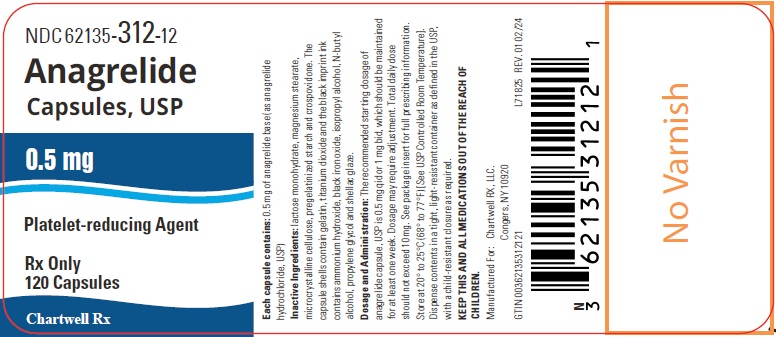
Anagrelide .5 mg Capsule, 120-count
🆔 Identity & classification
Where does this data come from?
🏷️ RxNorm drug class
This medicine belongs to the Platelet-reducing Agent class.
Where does this data come from?
🏭 Manufacturer & labeler
Where does this data come from?
🩺 Clinical
Anagrelide is used to decrease the number of platelets (a type of blood cell that is needed to control bleeding) in the blood of patients who have a bone marrow disorder, in which the body makes too many of one or more types of blood cells, such as essential thrombocythemia (condition in which the body makes too many platelets) or polycythemia vera (condition in which the body makes too many red blood cells and sometimes too many platelets). Anagrelide is in a class of medications called platelet-reducing agents. It works by slowing the production of platelets in the body.
Read the full MedlinePlus article ↗- Anagrelide is bringing down a platelet count that's dangerously high because of a bone marrow disorder. When you have too many platelets, your blood can form clots too easily — whi...
- What exactly is this medication doing for me?
- You can take anagrelide capsules with or without food — there's no strict requirement. Food does slow down how quickly the medication is absorbed, but it doesn't meaningfully chang...
- Can I take this with food, or does it need to be on an empty stomach?
Patient education
Supplement & herbal interactions
Some supplements/herbs that may interact with Anagrelide — tap one for details:
Where does this data come from?
Ask a licensed pharmacist directly — free, answered by our team.
💊 What it looks like
Where does this data come from?
🧪 Inactive Ingredients / Excipients
Inactive ingredients, also called excipients, are components of the drug product other than the active ingredient. They may include fillers, dyes, coatings, preservatives, flavors, or other formulation ingredients.
💡 Tap an ingredient (hover on desktop) to see what it is and why it’s used.
-
UNII 5138Q19F1X
Ammonia is a colorless gas made from nitrogen and hydrogen. It's used in medicines as a pH buffer to maintain the correct acidity level and help keep the product stable.
-
UNII 8PJ61P6TS3
Butyl alcohol is a clear liquid organic solvent derived from petroleum or natural sources. In medicines, it helps dissolve active ingredients and serves as a solvent in liquid formulations and some topical products.
-
UNII 2S7830E561
Crospovidone is a synthetic polymer derived from povidone. It acts as a disintegrant, helping the tablet or capsule break apart quickly in the stomach so the active ingredient can be absorbed.
-
UNII XM0M87F357
A dark iron oxide compound that gives medicines their black or dark color. It's used as a colorant in tablets and capsules to help identify the product and make it visually distinctive.
-
UNII 2G86QN327L
Gelatin is a protein derived from animal collagen, commonly used in medicines as a gelling agent and capsule material. It helps create soft or hard capsule shells that hold and release medication, and can also thicken liquid formulations.
-
UNII ND2M416302
Isopropyl alcohol is a clear liquid solvent derived from petroleum. In medicines, it dissolves active ingredients and other components, helps the product flow smoothly, and aids in sterilization during manufacturing.
-
UNII EWQ57Q8I5X
Lactose monohydrate is a natural sugar derived from milk. It serves as a filler and binder in tablets and capsules, helping create the proper size, texture, and consistency of the medicine.
-
UNII 70097M6I30
Magnesium stearate is a salt made from magnesium and stearic acid, a fatty substance. It's used in tablets and capsules as a lubricant and glidant to help ingredients flow smoothly during manufacturing and prevent sticking.
-
UNII OP1R32D61U
Microcrystalline cellulose is a purified form of cellulose, a natural fiber from plant sources. It acts as a binder and filler in tablets and capsules, helping hold ingredients together and give the medicine its shape and size.
-
UNII 6DC9Q167V3
Propylene glycol is a clear liquid derived from petroleum or vegetable sources. It acts as a solvent, humectant, and preservative in medicines, helping dissolve active ingredients and maintain product stability.
-
UNII 46N107B71O
Shellac is a natural resin secreted by the lac beetle. It's used as a coating on tablets and capsules to control how quickly the medicine dissolves and to improve appearance and stability.
-
UNII O8232NY3SJ
A plant-based carbohydrate derived from corn kernels. It acts as a filler to add bulk, a binder to hold ingredients together, and a disintegrant to help the tablet break apart in your stomach for absorption.
-
UNII 15FIX9V2JP
Titanium dioxide is a bright white mineral powder commonly used as a colorant and opacifying agent. It makes pills and tablets white or lighter in color and helps make coatings non-transparent.
13 inactive ingredients listed in the exact product block matched to this NDC.
Where does this data come from?
ingredient classCode="IACT" elements from the exact product block matched by this NDC. Label-section narrative from DailyMed / the openFDA label index is shown separately when available.Inactive ingredient FAQ
Are inactive ingredients the same for every manufacturer?
Why might an inactive ingredient be missing?
Can inactive ingredients matter?
💲 Pricing
A drug doesn't have one price. Each row is a different public payment system, and none is what you'd pay at the counter — that depends on your insurance. The ⓘ on each row explains what it measures.
| Price system | Per ea | Per package |
|---|---|---|
| Retail pharmacies payNADAC · weekly | $0.735 | $88.14 / 120 capsules |
| Medicaid paysCMS SDUD · 12 mo | No recent Medicaid claims on file for this NDC — rare and low-volume NDCs are suppressed in the public data. | |
| Medicare drug plans payPart D · Q2 2026 | $1.09 | $130.37 / 120 capsules |
Where does this data come from?
🔁 Therapeutic equivalents
| Product | Labeler | Pack | NADAC/unit | TE | Status | Price vs. this |
|---|---|---|---|---|---|---|
| anagrelide .5 mg 13668-0453-01 | Torrent | 100 capsules | $0.734 | AB | Availability likely | — |
| Anagrelide .5 mgthis 62135-0312-12 | Chartwell | 120 capsules | $0.734 | — | Availability likely | — |
| Anagrelide .5 mg 70954-0879-10 | ANI | 100 capsules | $0.734 | AB | Availability likely | — |
| Agrylin .5 mg 54092-0063-01 | Takeda | 100 capsules | — | — | FDA listed | — |
Where does this data come from?
⏳ Availability & generic status
This product is an FDA-approved generic. Other versions of the same drug are listed under Therapeutic equivalents, least expensive first.
Where does this data come from?
🔬 Reported adverse events (FAERS)
Top reported reactions
Age at onset
Reporter sex
Where does this data come from?
📦 Packaging — all sizes for this product
| Package NDC | Description | Marketing start | Status |
|---|---|---|---|
| 62135-0312-12 You're viewing this | 120 CAPSULE in 1 BOTTLE (62135-312-12) | 2024-02-05 | Active |
📄 Full prescribing information FDA SPL
🎯 Indications and Usage ▾
1 INDICATIONS AND USAGE Anagrelide capsules are indicated for the treatment of patients with thrombocythemia, secondary to myeloproliferative neoplasms, to reduce the elevated platelet count and the risk of thrombosis and to ameliorate associated symptoms including thrombo-hemorrhagic events. Anagrelide is a platelet reducing agent indicated for the treatment of thrombocythemia, secondary to myeloproliferative neoplasms, to reduce the elevated platelet count and the risk of thrombosis and to ameliorate associated symptoms including thrombo-hemorrhagic events.
( 1 )
⏱️ Dosage and Administration ▾
2 DOSAGE AND ADMINISTRATION • The starting dose for adults is 0.5 mg four times a day or 1 mg twice a day. ( 2.1 ) • The starting dose for pediatric patients is 0.5 mg per day. ( 2.1 ) • Maintain the starting dose for at least one week and then titrate to maintain target platelet counts.
( 2.2 ) • Do not exceed a dose increment of 0.5 mg/day in any one week. Do not exceed 10 mg/day or 2.5 mg in a single dose. ( 2.2 ) • Moderate hepatic impairment: Start with 0.5 mg per day.
( 2.3 )
2.1Recommended Starting Dosage Adults: The recommended starting dosage of anagrelide capsules is 0.5 mg four times daily or 1 mg twice daily. Pediatric Patients: The recommended starting dosage of anagrelide capsule is 0.5 mg daily.
2.2Dose Titration Based Upon Platelet Response Continue the starting dose for at least one week and then titrate to reduce and maintain the platelet count below 600,000/μL, and ideally between 150,000/μL and 400,000/μL. The dose increment should not exceed 0.5 mg/day in any one week. Dosage should not exceed 10 mg/day or 2.5 mg in a single dose.
Most patients will experience an adequate response at a dose of 1.5 to 3.0 mg/day. Monitor platelet counts weekly during titration then monthly or as necessary.
2.3Dose Modifications for Hepatic Impairment In patients with moderate hepatic impairment (Child Pugh score 7 to 9) start anagrelide capsules therapy at a dose of 0.5 mg/day and monitor frequently for cardiovascular events [see Warnings and Precautions (5.1) , Use in Specific Populations (8.6) and Clinical Pharmacology (12.3) ] . Patients with moderate hepatic impairment who have tolerated anagrelide capsules therapy for one week may have their dose increased. The dose increase increment should not exceed 0.5 mg/day in any one week.
Avoid use of anagrelide capsules in patients with severe hepatic impairment.
2.4Clinical Monitoring Anagrelide capsules therapy requires clinical monitoring, including complete blood counts, assessment of hepatic and renal function, and electrolytes. To prevent the occurrence of thrombocytopenia, monitor platelet counts every two days during the first week of treatment and at least weekly thereafter until the maintenance dosage is reached. Typically, platelet counts begin to respond within 7 to 14 days at the proper dosage.
In the clinical trials, the time to complete response, defined as platelet count ≤600,000/μL, ranged from 4 to 12 weeks. In the event of dosage interruption or treatment withdrawal, the rebound in platelet count is variable, but platelet counts typically will start to rise within 4 days and return to baseline levels in one to two weeks, possibly rebounding above baseline values. Monitor platelet counts frequently.
💊 Dosage Forms and Strengths ▾
3 DOSAGE FORMS AND STRENGTHS 0.5 mg : Size #3, hard gelatin capsules, white opaque cap with white opaque body, imprinted "CE" in black ink on cap and imprinted "55" in black ink on body, filled with white to off white powder. 1 mg : Size #3, hard gelatin capsules, grey opaque cap with grey opaque body, imprinted "CE" in black ink on cap and imprinted "56" in black ink on body, filled with white to off white powder. Capsules: 0.5 mg and 1 mg ( 3 )
⛔ Contraindications ▾
4 CONTRAINDICATIONS None. None ( 4 )
⚠️ Warnings and Cautions ▾
5 WARNINGS AND PRECAUTIONS Cardiovascular Toxicity: QT prolongation and ventricular tachycardia have been reported with anagrelide. Obtain a pre-treatment cardiovascular examination including an ECG in all patients. Monitor patients for cardiovascular effects.
( 5.1 ) Pulmonary Hypertension: Assess underlying cardiopulmonary disease prior to initiating therapy. ( 5.2 ) Bleeding Risk: Monitor patients for bleeding, including those receiving concomitant therapy with other drugs known to cause bleeding. ( 5.3 )
5.1Cardiovascular Toxicity Torsades de pointes and ventricular tachycardia have been reported with anagrelide. Obtain a pre‑treatment cardiovascular examination including an ECG in all patients. During treatment with anagrelide monitor patients for cardiovascular effects and evaluate as necessary.
Anagrelide increases the QTc interval of the electrocardiogram and increases the heart rate in healthy volunteers [see Clinical Pharmacology (12.2) ] . Do not use anagrelide in patients with known risk factors for QT interval prolongation, such as congenital long QT syndrome, a known history of acquired QTc prolongation, medicinal products that can prolong QTc interval and hypokalemia [see Drug Interactions (7.1) ] . Hepatic impairment increases anagrelide exposure and could increase the risk of QTc prolongation.
Monitor patients with hepatic impairment for QTc prolongation and other cardiovascular adverse reactions. The potential risks and benefits of anagrelide therapy in a patient with mild and moderate hepatic impairment should be assessed before treatment is commenced. Reduce anagrelide dose in patients with moderate hepatic impairment.
Avoid use of anagrelide in patients with severe hepatic impairment. In patients with heart failure, bradyarrhythmias, or electrolyte abnormalities, consider periodic monitoring with electrocardiograms [see Clinical Pharmacology (12.2) ] . Anagrelide is a phosphodiesterase 3 (PDE3) inhibitor and may cause vasodilation, tachycardia, palpitations, and congestive heart failure.
Other drugs that inhibit PDE3 have caused decreased survival when compared with placebo in patients with Class III–IV congestive heart failure [see Drug Interactions (7.2) ] . In patients with cardiac disease, use anagrelide only when the benefits outweigh the risks.
5.2Pulmonary Hypertension Cases of pulmonary hypertension have been reported in patients treated with anagrelide. Evaluate patients for signs and symptoms of underlying cardiopulmonary disease prior to initiating and during anagrelide therapy [see Adverse Reactions (6.1) ].
5.3Bleeding Risk Use of concomitant anagrelide and aspirin increased major hemorrhagic events in a post-marketing study. Assess the potential risks and benefits for concomitant use of anagrelide with aspirin, since bleeding risks may be increased. Monitor patients for bleeding, including those receiving concomitant therapy with other drugs known to cause bleeding (e.g., anticoagulants, PDE3 inhibitors, NSAIDs, antiplatelet agents, selective serotonin reuptake inhibitors) [see Drug Interactions (7.3) , Clinical Pharmacology (12.3) ] .
5.4Pulmonary Toxicity Interstitial lung diseases (including allergic alveolitis, eosinophilic pneumonia and interstitial pneumonitis) have been reported to be associated with the use of anagrelide in post-marketing reports. Most cases presented with progressive dyspnea with lung infiltrations. The time of onset ranged from 1 week to several years after initiating anagrelide.
If suspected, discontinue anagrelide and evaluate. Symptoms may improve after discontinuation [see Adverse Reactions (6) ] .
🤒 Adverse Reactions ▾
6 ADVERSE REACTIONS The following clinically significant adverse reactions are discussed in greater detail in other sections of the labeling: Cardiovascular Toxicity [see Warnings and Precautions (5.1) ] Pulmonary Hypertension [see Warnings and Precautions (5.2) ] Bleeding Risk [see Warnings and Precautions (5.3) ] Pulmonary Toxicity [see Warnings and Precautions (5.4) ] The most common adverse reactions (incidence ≥ 5%) are headache, palpitations, diarrhea, asthenia, edema, nausea, abdominal pain, dizziness, pain, dyspnea, cough, flatulence, vomiting, fever, peripheral edema, rash, chest pain, anorexia, tachycardia, malaise, paresthesia, back pain, pruritus, and dyspepsia.
( 6.1 ) To report SUSPECTED ADVERSE REACTIONS, contact Chartwell RX, LLC. at 1-845-232-1683 or FDA at 1-800-FDA-1088 or www.fda.gov/medwatch
6.1Clinical Trials Experience Because clinical trials are conducted under widely varying conditions, adverse reaction rates observed in the clinical trials of a drug cannot be directly compared to rates in the clinical trials of another drug and may not reflect the rates observed in practice. Clinical Studies in Adult Patients In three single-arm clinical studies, 942 patients [see Clinical Trials (14) ] diagnosed with myeloproliferative neoplasms of varying etiology (ET: 551; PV: 117; OMPN: 274) were exposed to anagrelide with a mean duration of approximately 65 weeks.
Serious adverse reactions reported in these patients included the following: congestive heart failure, myocardial infarction, cardiomyopathy, cardiomegaly, complete heart block, atrial fibrillation, cerebrovascular accident, pericardial effusion [see Warnings and Precautions (5.1) ] , pleural effusion, pulmonary infiltrates, pulmonary fibrosis, pulmonary hypertension, and pancreatitis. Of the 942 patients treated with anagrelide, 161 (17%) were discontinued from the study because of adverse reactions or abnormal laboratory test results.
The most common adverse reactions resulting in treatment discontinuation were headache, diarrhea, edema, palpitations, and abdominal pain. The most frequently reported adverse reactions to anagrelide (in 5% or greater of 942 patients with myeloproliferative neoplasms) in clinical trials were listed in Table 1. Table 1 Adverse Reactions Reported in Clinical Studies of Anagrelide in at least 5% of Patients Adverse Reactions Anagrelide (N=942) (%) Cardiac disorders Palpitations 26% Tachycardia 8% Chest pain 8% General disorders and administration site conditions Asthenia 23% Edema 21% Pain 15% Fever 9% Peripheral edema 9% Malaise 6% Gastrointestinal disorders Diarrhea 26% Nausea 17% Abdominal pain 16% Vomiting 10% Flatulence 10% Anorexia 8% Dyspepsia 5% Respiratory, thoracic and mediastinal disorders Dyspnea 12% Cough 6% Skin and subcutaneous tissue disorders Rash 8% Pruritus 6% Musculoskeletal and connective tissue disorders Back pain 6% Nervous system disorders Headache 44% Dizziness 15% Paresthesia 6% Adverse Reactions (frequency 1% to ˂ 5%) included: General disorders and administration site conditions : Flu symptoms, chills.
Cardiac disorders : Arrhythmia, angina pectoris, heart failure, syncope. Vascular disorders : Hemorrhage, hypertension, postural hypotension, vasodilatation. Gastrointestinal disorders : Constipation, gastrointestinal hemorrhage, gastritis.
Blood and lymphatic system disorders : Anemia, thrombocytopenia, ecchymosis. Hepatobiliary disorders : Elevated liver enzymes. Musculoskeletal and connective tissue disorders : Arthralgia, myalgia.
Psychiatric disorders : Depression, confusion, nervousness. Nervous system disorders : Somnolence, insomnia, amnesia, migraine headache. Respiratory, thoracic and mediastinal disorders : Epistaxis, pneumonia.
Skin and subcutaneous tissue disorders : Alopecia. Eye disorders : Abnormal vision, diplopia. Ear and labyrinth disorders : Tinnitus.
Renal and urinary disorders : Hematuria, renal failure. Other less frequent adverse reactions (<1%) were: Cardiac disorders : Ve…
🔄 Drug Interactions ▾
7 DRUG INTERACTIONS Other PDE3 inhibitors: Exacerbation of inotropic effects. ( 7.2 ) Aspirin and Drugs that Increase Bleeding Risk : Increased risk of bleeding with concomitant use. ( 7.3 )
7.1Drugs that Prolong QT Avoid use of anagrelide in patients taking medications that may prolong QT interval (including, but not limited to, chloroquine, clarithromycin, haloperidol, methadone, moxifloxacin, amiodarone, disopyramide, procainamide, and pimozide) [see Warnings and Precautions (5.1) and Clinical Pharmacology (12.2) ] .
7.2PDE3 Inhibitors Anagrelide is a phosphodiesterase 3 (PDE3) inhibitor. Avoid use of drug products with similar properties such as inotropes and other PDE3 inhibitors (e.g., cilostazol, milrinone) [see Warnings and Precautions (5.1) and Clinical Pharmacology (12.2) ] .
7.3Aspirin and Drugs that Increase Bleeding Risk Co-administration of single-dose or repeat-dose anagrelide and aspirin showed greater ex vivo anti-platelet aggregation effects than administration of aspirin alone [see Clinical Pharmacology (12.3) ] . Results from an observational study in patients with essential thrombocythemia suggest the rate of major hemorrhagic events (MHEs) in patients treated with anagrelide is higher than in those subjects treated with another cytoreductive treatment. The majority of the major hemorrhagic events occurred in patients who were also receiving concomitant anti-aggregatory treatment (primarily, aspirin).
Therefore, the potential risks of the concomitant use of anagrelide with aspirin should be assessed, particularly in patients with a high-risk profile for hemorrhage, before treatment is initiated [see Warnings and Precautions (5.3) ] . Monitor patients for bleeding, particularly those receiving concomitant therapy with other drugs known to cause bleeding (e.g., anticoagulants, PDE3 inhibitors, NSAIDs, antiplatelet agents, selective serotonin reuptake inhibitors).
7.4CYP450 Interactions CYP1A2 inhibitors: Anagrelide and its active metabolite are primarily metabolized by CYP1A2. Drugs that inhibit CYP1A2 (e.g., fluvoxamine, ciprofloxacin) could increase the exposure of anagrelide. Monitor patients for cardiovascular events and titrate doses accordingly when CYP1A2 inhibitors are coadministered.
CYP1A2 inducers: CYP1A2 inducers could decrease the exposure of anagrelide. Patients taking concomitant CYP1A2 inducers (e.g., omeprazole) may need to have their dose titrated to compensate for the decrease in anagrelide exposure. CYP1A2 substrates: Anagrelide demonstrates limited inhibitory activity towards CYP1A2 in vitro and may alter the exposure of concomitant CYP1A2 substrates (e.g., theophylline, fluvoxamine, ondansetron).
👥 Use in Specific Populations ▾
8 USE IN SPECIFIC POPULATIONS Lactation: Advise not to breastfeed. ( 8.2 )
8.1Pregnancy Risk Summary Available data from case reports with anagrelide use in pregnant women have not identified a drug-associated risk of major birth defects, miscarriage, or adverse maternal or fetal outcomes. In animal embryo-fetal studies, delayed fetal development (delayed skeletal ossification and reduced body weight) was observed in rats administered anagrelide hydrochloride during organogenesis at doses approximately 97 times the maximum clinical dose (10 mg/day) based on body surface area [see Data] . There are adverse effects on maternal and fetal outcomes associated with thrombocythemia in pregnancy [see Clinical Considerations ].
The estimated background risk of major birth defects and miscarriage for the indicated population is unknown. All pregnancies have a background risk of birth defect, loss, or other adverse outcomes. In the U.S. general population, the estimated background risk of major birth defect and miscarriage in clinically recognized pregnancies is 2% to 4% and 15% to 20%, respectively.
Clinical Considerations Disease-associated maternal and/or embryo/fetal risk Thrombotic events, such as stroke, deep vein thrombosis, or myocardial infarction, can be complications of thrombocythemia. Thrombocythemia in pregnancy is associated with an increased risk for miscarriage, stillbirth, and other maternal outcomes, such as preeclampsia. Data Animal Data Anagrelide hydrochloride was administered orally to pregnant rats and rabbits during the period of organogenesis at doses up to 900 mg/kg/day in rats and up to 20 mg/kg/day in rabbits (875 and 39 times, respectively, the maximum clinical dose of 10 mg/day based on body surface area).
In rats, developmental delays were observed including reductions in fetal weight at 300 and 900 mg/kg/day and delays in skeletal ossification at doses of 100 mg/kg/day and higher. The dose of 100 mg/kg/day (600 mg/m 2 /day) in rats is approximately 97 times the maximum clinical dose based on body surface area. No adverse embryo-fetal effects were detected in rabbits at the highest dose of 20 mg/kg/day (39 times the maximal clinical dose based on body surface area).
In a pre- and post-natal study conducted in female rats, anagrelide hydrochloride administered at oral doses of 60 mg/kg/day (58 times the maximum clinical dose based on body surface area) or higher during organogenesis through lactation produced delay or blockage of parturition, deaths of non-delivering pregnant dams and their fully developed fetuses, and increased mortality in the pups born. In a placental transfer study, a single oral dose of [ 14 C]-anagrelide hydrochloride (3 mg/kg) was administered to pregnant rats on gestation Day 17.
Drug-related radioactivity was detected in maternal and fetal tissue.
8.2Lactation Risk Summary There is no information regarding the presence of anagrelide in human milk, the effect on the breastfed child, or the effects on milk production. Anagrelide or its metabolites have been detected in the milk of lactating rats [see Data] . Because of the potential for serious adverse reactions, including thrombocytopenia, in a breastfed child, advise patients that breastfeeding is not recommended during treatment with anagrelide and for one week following the last dose.
Data In a rat milk secretion study, a single oral dose of [ 14 C]‑anagrelide hydrochloride (3 mg/kg) was administered to lactating female rats on postnatal Day 10. Drug-related radioactivity was detected in the maternal milk and blood.
8.3Females and Males of Reproductive Potential Infertility Females Based on findings from animal studies, anagrelide may impair female fertility [see Nonclinical Toxicology (13.1) ].
8.4Pediatric Use The safety and effectiveness of anagrelide have been established in pediatric patients 7 years of age and older. There are no data for pediatric patients less than 7 years of age. Use of anagrelide in these pediatric…
🆘 Overdosage ▾
10 OVERDOSAGE At higher than recommended doses, anagrelide hydrochloride has been shown to cause hypotension. There have been postmarketing case reports of intentional overdose with anagrelide hydrochloride. Reported symptoms include sinus tachycardia and vomiting.
Symptoms resolved with supportive management. Platelet reduction from anagrelide therapy is dose-related; therefore, thrombocytopenia, which can potentially cause bleeding, is expected from overdosage. In case of overdosage, stop anagrelide dosing and monitor platelet counts for thrombocytopenia and observe for possible complications such as bleeding.
Consider resumption of anagrelide dosing once the platelet count returns to the normal range.
🧬 Clinical Pharmacology ▾
12 CLINICAL PHARMACOLOGY
12.1Mechanism of Action The precise mechanism by which anagrelide reduces blood platelet count is unknown. In cell culture studies, anagrelide suppressed expression of transcription factors including GATA‑1 and FOG‑1 required for megakaryocytopoiesis, ultimately leading to reduced platelet production.
12.2Pharmacodynamics In blood withdrawn from normal volunteers treated with anagrelide, a disruption was found in the postmitotic phase of megakaryocyte development and a reduction in megakaryocyte size and ploidy. At therapeutic doses, anagrelide does not produce significant changes in white cell counts or coagulation parameters, and may have a small, but clinically insignificant effect on red cell parameters. The active metabolite, 3‑hydroxy anagrelide, has similar potency and efficacy to that of anagrelide in the platelet lowering effect; however, exposure (measured by plasma AUC) to 3‑hydroxy anagrelide is approximately 2‑fold higher compared to anagrelide.
Anagrelide and 3‑hydroxy anagrelide inhibit cyclic AMP phosphodiesterase 3 (PDE3) and 3‑hydroxy anagrelide is approximately forty times more potent than anagrelide (IC 50s = 0.9 and 36 nM, respectively). PDE3 inhibition does not alter platelet production. PDE3 inhibitors, as a class can inhibit platelet aggregation.
However, significant inhibition of platelet aggregation is observed only at doses of anagrelide higher than those typically required to reduce platelet count. PDE3 inhibitors have cardiovascular (CV) effects including vasodilation, positive inotropy and chronotropy. Cardiac Electrophysiology The effect of anagrelide dose (0.5 mg and 2.5 mg single doses) on the heart rate and QTc interval prolongation potential was evaluated in a double-blind, randomized, placebo- and active-controlled, cross‑over study in 60 healthy adult men and women.
A dose-related increase in heart rate was observed, with the maximum increase occurring around the time of maximal drug concentration (0.5 to 4 hours). The maximum change in mean heart rate occurred at 2 hours after administration and was +7.8 beats per minute (bpm) for 0.5 mg and +29.1 bpm for 2.5 mg. Dose-related increase in mean QTc was observed.
The maximum mean (95% upper confidence bound) change in QTcI (individual subject correction) from placebo after baseline-correction was 7.0 (9.8) ms and 13.0 (15.7) ms following anagrelide doses of 0.5 mg and 2.5 mg, respectively.
12.3Pharmacokinetics Dose proportionality has been found in the dose range 0.5 mg to 2.5 mg. Absorption Following oral administration of anagrelide, at least 70% is absorbed from the gastrointestinal tract. In fasted subjects, anagrelide peak plasma concentrations occur within about 1 hour after administration.
Pharmacokinetic data obtained from healthy volunteers comparing the pharmacokinetics of anagrelide in the fed and fasted states showed that administration of a 1 mg dose of anagrelide with food decreased the C max by 14%, but increased the AUC by 20%. Food decreased the C max of the active metabolite 3‑hydroxy anagrelide by 29%, although it had no effect on the AUC. Elimination Anagrelide and 3 ‑ hydroxy anagrelide are eliminated with plasma half-lives of approximately 1.5 and 2.5 hours, respectively.
Anagrelide and 3‑hydroxy anagrelide do not accumulate in plasma when the clinical dose regimens are administered. Metabolism: Anagrelide is primarily metabolized by CYP1A2 to the active metabolite, 3‑hydroxy anagrelide, which is subsequently metabolized by CYP1A2 to the inactive metabolite, RL603. Less than 1% of the administered dose is recovered in the urine as anagrelide, and approximately 3% and 16% to 20% of the administered dose is recovered as 3 ‑ hydroxy anagrelide and RL603, respectively.
Drug Interactions Aspirin : In two pharmacodynamic interaction studies in healthy subjects, co-administration of single-dose anagrelide 1 mg and aspirin 900 mg or repeat-dose anagrelide 1 mg once daily and aspirin 75 mg once daily s…
📦 How Supplied / Storage and Handling ▾
16 HOW SUPPLIED/STORAGE AND HANDLING Anagrelide Capsules, USP, are available as: 0.5 mg : Size #3, hard gelatin capsules, white opaque cap with white opaque body, imprinted "CE" in black ink on cap and imprinted "55" in black ink on body, filled with white to off white powder. They are supplied as follows: Bottles of 120 capsules NDC 62135-312-12 1 mg : Size #3, hard gelatin capsules, grey opaque cap with grey opaque body, imprinted "CE" in black ink on cap and imprinted "56" in black ink on body, filled with white to off white powder.
They are supplied as follows: Bottles of 60 capsules NDC 62135-313-60 Store at 20° to 25°C (68° to 77°F) [See USP Controlled Room Temperature]. Dispense contents in a tight, light-resistant container as defined in the USP, with a child-resistant closure as required.
📋 Description ▾
11 DESCRIPTION Anagrelide Hydrochloride, USP is a platelet-reducing agent. Its chemical name is 6,7-dichloro-1,5-dihydroimidazo[2,1-b]quinazolin-2(3H)-one monohydrochloride monohydrate. The molecular formula is C 10 H 7 Cl 2 N 3 O•HCl•H 2 O which corresponds to a molecular weight of 310.55.
The structural formula is: Anagrelide Hydrochloride, USP is an off-white powder. It is very slightly soluble in water and sparingly soluble in dimethyl sulfoxide and dimethylformamide. Anagrelide Capsules, USP is supplied as capsules for oral administration, containing 0.5 mg and 1 mg of anagrelide base (as anagrelide hydrochloride, USP).
The capsules also contain lactose monohydrate, magnesium stearate, microcrystalline cellulose, pregelatinized starch, and crospovidone. Capsule shell contains gelatin, titanium dioxide and black iron oxide (1mg). Additionally, capsule shells are imprinted with black imprint ink, it contains ammonium hydroxide, black iron oxide, isopropyl alcohol, N-butyl alcohol, propylene glycol and shellac glaze. image description
💬 Information for Patients ▾
17 PATIENT COUNSELING INFORMATION Dose: Tell the patient that their dose will be adjusted on a weekly basis until they are on a dose that lowers their platelets to an appropriate level. This will also help the patient to adjust to common side effects. Tell the patient to contact their doctor if they experience tolerability issues, so the dose or dosing frequency can be adjusted [see Dosage and Administration (2) ] .
Cardiovascular effects: Tell the patient to contact a doctor immediately if they experience chest pain, palpitations, or feel their heartbeat is irregular [see Warnings and Precautions (5.1) ] . Risk of Pulmonary Hypertension: Tell the patient to contact a doctor immediately if they experience shortness of breath, swelling in legs or ankles, or lips and skin turn a bluish color [see Warnings and Precautions (5.2) ]. Risk of bleeding: Warn the patient that concomitant aspirin (or other medicines that affect blood clotting) may increase the risk of bleeding.
Tell the patient to contact a doctor immediately if they experience signs or symptoms of bleeding (e.g., vomit blood, pass bloody or black stools) or experience unexplained bruising/bruise more easily than usual [see Warnings and Precautions (5.3) , Drug Interactions (7.1) ] . Lactation: Advise patients not to breastfeed during treatment with anagrelide and for one week following the last dose [see Use in Specific Populations (8.2) ] . Infertility: Advise females of reproductive potential treatment with anagrelide may impair fertility [see Use in Specific Populations (8.3) , Nonclinical Toxicology (13.1) ] .
Manufactured for: Chartwell RX, LLC. Congers, NY 10920 L71827 Rev. 02/2024