
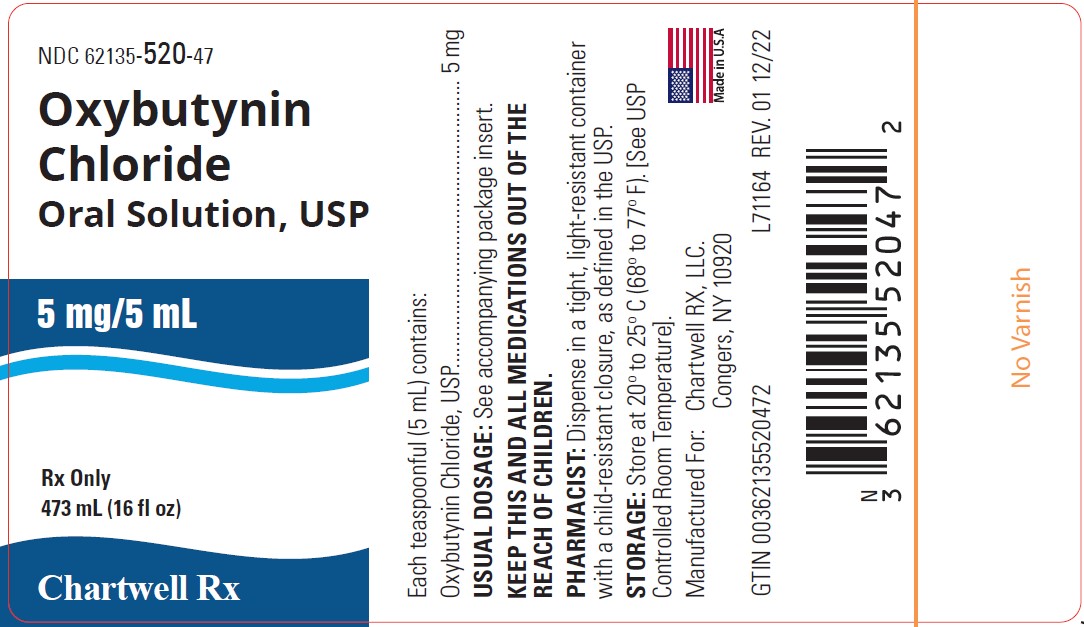
Oxybutynin Chloride 5 mg/5mL Solution, 473 mL
🆔 Identity & classification
Where does this data come from?
🏷️ RxNorm drug class
This medicine belongs to the Cholinergic Muscarinic Antagonist class.
Where does this data come from?
🏭 Manufacturer & labeler
Where does this data come from?
🩺 Clinical
- Oxybutynin calms down an overactive bladder by relaxing the bladder muscle and reducing those sudden, hard-to-ignore urges to go. Over time, most people find they have fewer urgent...
- What exactly is oxybutynin supposed to do for me?
- Yes, dry mouth is the most common side effect of oxybutynin — and it's more noticeable with the immediate-release tablets than the extended-release form. Sipping water throughout t...
- My mouth is incredibly dry since starting this — is that normal?
Patient education
Supplement & herbal interactions
Where does this data come from?
Ask a licensed pharmacist directly — free, answered by our team.
💊 What it looks like
Where does this data come from?
🧪 Inactive Ingredients / Excipients
Inactive ingredients, also called excipients, are components of the drug product other than the active ingredient. They may include fillers, dyes, coatings, preservatives, flavors, or other formulation ingredients.
Where does this data come from?
IACT rows and label-wide narrative are kept separate; availability and product-level specificity depend on the submitted label.Inactive ingredient FAQ
Are inactive ingredients the same for every manufacturer?
Why might an inactive ingredient be missing?
Can inactive ingredients matter?
💲 Pricing
A drug doesn't have one price. Each row is a different public payment system, and none is what you'd pay at the counter — that depends on your insurance. The ⓘ on each row explains what it measures.
| Price system | Per mL | Per package |
|---|---|---|
| Retail pharmacies payNADAC · weekly | $0.032 | $15.28 / 473 ml |
| Medicaid paysCMS SDUD · 12 mo | $0.1186 | $56.10 / 473 ml |
| Medicare drug plans payPart D · Q2 2026 | $0.0546 | $25.83 / 473 ml |
Where does this data come from?
🔁 Therapeutic equivalents
| Product | Labeler | Pack | NADAC/unit | TE | Status | Price vs. this |
|---|---|---|---|---|---|---|
| Oxybutynin Chloride 5 mg/5mL 54838-0510-80 | Lannett | 473 ml | $0.032 | AA | Availability likely | — |
| Oxybutynin Chloride 5 mg/5mLthis 62135-0520-47 | Chartwell | 473 ml | $0.032 | AA | Availability likely | — |
| Oxybutynin Chloride 5 mg/5mL 17856-0149-01 | ATLANTIC | 72 cups | — | AA | FDA listed | — |
| Oxybutynin Chloride 5 mg/5mL 68999-0520-24 | Chartwell | 10 cups | — | AA | FDA listed | — |
Where does this data come from?
⏳ Availability & generic status
This product is an FDA-approved generic. Other versions of the same drug are listed under Therapeutic equivalents, least expensive first.
Where does this data come from?
🗺️ Medicaid utilization & spend
💊 Medicaid utilization by pack size
📊 Medicare Part D spend CMS · PART D · 2026 (Q1)
🔬 Reported adverse events (FAERS)
Top reported reactions
Reporter sex
Serious outcomes
Where does this data come from?
📦 Packaging — all sizes for this product
| Package NDC | Description | Per unit | Per pack | Marketing start | Status |
|---|---|---|---|---|---|
| 62135-0520-47 You're viewing this | 473 mL in 1 BOTTLE (62135-520-47) | $0.0323 / mL | $15.29 | 2022-12-19 | Active |
| 62135-0520-24 | 2 TRAY in 1 BOX (62135-520-24) / 10 CUP in 1 TRAY / 5 mL in 1 CUP (62135-520-05) | — | — | 2025-02-26 | Active |
Pack size FAQ
What quantity is in NDC 62135-0520-47?
What NDC number is used to bill for this package of Oxybutynin Chloride 5 mg/5mL Solution?
Prices are the latest CMS NADAC pharmacy acquisition cost per NDC; per-pack figures are per-unit × pack quantity, shown only when the pack is denominated in the same measure NADAC prices.
📄 Full prescribing information FDA SPL
🎯 Indications and Usage ▾
INDICATIONS AND USAGE Oxybutynin chloride is indicated for the relief of symptoms of bladder instability associated with voiding in patients with uninhibited neurogenic or reflex neurogenic bladder (i.e., urgency, frequency, urinary leakage, urge incontinence, dysuria).
⏱️ Dosage and Administration ▾
DOSAGE AND ADMINISTRATION Oral Solution Adults: The usual dose is one teaspoon (5 mg/5 mL) of oral solution two to three times a day. The maximum recommended dose is one teaspoon (5 mg/5 mL) of oral solution four times a day. A lower starting dose of 2.5 mg two or three times a day is recommended for the frail elderly.
Pediatric patients over 5 years of age: The usual dose is one teaspoon (5 mg/5 mL) of oral solution two times a day. The maximum recommended dose is one teaspoon (5 mg/5mL) of oral solution three times a day.
⛔ Contraindications ▾
CONTRAINDICATIONS Oxybutynin chloride is contraindicated in patients with urinary retention, gastric retention and other severe decreased gastrointestinal motility conditions, uncontrolled narrow-angle glaucoma and in patients who are at risk for these conditions. Oxybutynin chloride is also contraindicated in patients who have demonstrated hypersensitivity to the drug substance or other components of the product.
🤒 Adverse Reactions ▾
ADVERSE REACTIONS The safety and efficacy of oxybutynin chloride was evaluated in a total of 199 patients in three clinical trials comparing oxybutynin chloride with oxybutynin chloride (see Table 3). These participants were treated with oxybutynin chloride 5 to 20 mg/day for up to 6 weeks. Table 3 shows the incidence of adverse events judged by investigators to be at least possibly related to treatment and reported by at least 5% of patients.
Table 3 Incidence (%) of Adverse Events Reported by ≥ 5% of Patients Using Oxybutynin Chloride (5 to 20 mg/day) Body System Adverse Event Oxybutynin Chloride (5 to 20 mg/day) (n=199) Infections and Infestations Urinary tract infection 6.5% Psychiatric Disorders Insomnia 5.5% Nervousness 6.5% Nervous System Disorders Dizziness 16.6% Somnolence 14.0% Headache 7.5% Eye Disorders Blurred vision 9.6% Gastrointestinal Disorders Dry mouth 71.4% Constipation 15.1% Nausea 11.6% Dyspepsia 6.0% Renal and Urinary Disorders Urinary Hesitation 8.5% Urinary Retention 6.0% The most common adverse events reported by patients receiving oxybutynin chloride 5 to 20 mg/day were the expected side effects of anticholinergic agents.
The incidence of dry mouth was dose-related. In addition, the following adverse events were reported by 1 to <5% of patients using oxybutynin chloride (5 to 20 mg/day) in all studies. Infections and Infestations : nasopharyngitis, upper respiratory tract infection, bronchitis, cystitis, fungal infection; Metabolism and Nutrition Disorders : fluid retention; Psychiatric Disorders : confusional state; Nervous System Disorders : dysgeusia, sinus headache; Eye Disorders : keratoconjunctivitis sicca, eye irritation; Cardiac Disorders : palpitations, sinus arrhythmia; Vascular Disorders : flushing; Respiratory, Thoracic and Mediastinal Disorders : nasal dryness, cough, pharyngolaryngeal pain, dry throat, sinus congestion, hoarseness, asthma, nasal congestion; Gastrointestinal Disorders : diarrhea, abdominal pain, loose stools, flatulence, vomiting, abdominal pain upper, dysphagia, aptyalism, eructation, tongue coated; Skin and Subcutaneous Tissue Disorders : dry skin, pruritis; Musculoskeletal and Connective Tissue Disorders : back pain, arthralgia, pain in extremity, flank pain; Renal and Urinary Disorders : dysuria, pollakiuria; General Disorders and Administration Site Conditions : fatigue, edema peripheral, asthenia, pain, thirst, edema; Investigations : blood pressure increased, blood glucose increased, blood pressure decreased; Injury, Poisoning, and Procedural Complications : fall.
Postmarketing Surveillance Because postmarketing adverse events are reported voluntarily from a population of uncertain size, it is not always possible to reliably estimate their frequency or establish a causal relationship to drug exposure. The following additional adverse events have been reported from worldwide postmarketing experience with oxybutynin chloride: Psychiatric Disorders : psychotic disorder, agitation, hallucinations; Nervous System Disorders : convulsions; Eye disorders : cycloplegia, mydriasis; Cardiac Disorders : tachycardia; Gastrointestinal Disorders : decreased gastrointestinal motility; Skin and Subcutaneous Tissue Disorders : rash, decreased sweating; Renal and Urinary Disorders : impotence; Reproductive system and breast disorders : Suppression of lactation.
🆘 Overdosage ▾
OVERDOSAGE Treatment should be symptomatic and supportive. Activated charcoal as well as a cathartic may be administered. Overdosage with oxybutynin chloride has been associated with anticholinergic effects including central nervous system excitation (e.g., restlessness, tremor, irritability, convulsions, delirium, hallucinations), flushing, fever, dehydration, cardiac arrhythmia, vomiting, and urinary retention.
Other symptoms may include hypotension or hypertension, respiratory failure, paralysis, and coma. Ingestion of 100 mg oxybutynin chloride in association with alcohol has been reported in a 13-year-old boy who experienced memory loss, and a 34 year old woman who developed stupor, followed by disorientation and agitation on awakening, dilated pupils, dry skin, cardiac arrhythmia, and retention of urine. Both patients fully recovered with symptomatic treatment.
🧬 Clinical Pharmacology ▾
CLINICAL PHARMACOLOGY Oxybutynin chloride exerts a direct antispasmodic effect on smooth muscle and inhibits the muscarinic action of acetylcholine on smooth muscle. Oxybutynin chloride exhibits only one fifth of the anticholinergic activity of atropine on the rabbit detrusor muscle, but four to ten times the antispasmodic activity. No blocking effects occur at skeletal neuromuscular junctions or autonomic ganglia (antinicotinic effects).
Oxybutynin chloride relaxes bladder smooth muscle. In patients with conditions characterized by involuntary bladder contractions, cystometric studies have demonstrated that oxybutynin chloride increases bladder (vesical) capacity, diminishes the frequency of uninhibited contractions of the detrusor muscle, and delays the initial desire to void. Oxybutynin chloride thus decreases urgency and the frequency of both incontinent episodes and voluntary urination.
Antimuscarinic activity resides predominately in the R-isomer. A metabolite, desethyloxybutynin, has pharmacological activity similar to that of oxybutynin in in vitro studies. Pharmacokinetics Absorption Following oral administration of oxybutynin chloride oral solution, oxybutynin is rapidly absorbed achieving C max within an hour, following which plasma concentration decreases with an effective half-life of approximately 2 to 3 hours.
The absolute bioavailability of oxybutynin is reported to be about 6% (range 1.6 to 10.9%). Wide interindividual variation in pharmacokinetic parameters is evident following oral administration of oxybutynin. The mean pharmacokinetic parameters for R- and S-oxybutynin are summarized in Table 1.
The plasma concentration-time profiles for R- and S-oxybutynin are similar in shape; Figure 1 shows the profile for R-oxybutynin. Table 1 Mean (SD) R- and S-Oxybutynin Pharmacokinetic Parameters Following Three Doses of Oxybutynin Chloride 5 mg Administered every 8 Hours (n=23) Parameters (units) R-Oxybutynin S-Oxybutynin C max (ng/mL) 3.6 (2.2) 7.8 (4.1) T max (h) 0.89 (0.34) 0.65 (0.32) AUC t (ng.h/mL) 22.6 (11.3) 35.0 (17.3) AUC inf (ng.h/mL) 24.3 (12.3) 37.3 (18.7) Figure 1 . Mean R-oxybutynin plasma concentrations following three doses of Oxybutynin Chloride 5 mg administered every 8 hours for 1 day in 23 healthy adult volunteers Oxybutynin chloride steady-state pharmacokinetics were also studied in 23 pediatric patients with detrusor overactivity associated with a neurological condition (e.g., spina bifida).
These pediatric patients were on oxybutynin chloride oral solution (n=12) with total daily dose ranging from 5 mg to 22.5 mg (0.26 to 0.75 mg/kg). Overall, most patients (86.9%) were taking a total daily oxybutynin chloride dose between 10 mg and 15 mg. Sparse sampling technique was used to obtain serum samples.
When all available data are normalized to an equivalent of 5 mg twice daily oxybutynin chloride, the mean pharmacokinetic parameters derived for R- and S-oxybutynin and R- and S-desethyloxybutynin are summarized in Table 2b (for oral solution). The plasma-time concentration profiles for R- and S-oxybutynin are similar in shape; Figure 2 shows the profile for R-oxybutynin when all available data are normalized to an equivalent of 5 mg twice daily. Table 2b Mean ± SD R- and S-Oxybutynin and R- and S-Desethyloxybutynin Pharmacokinetic Parameters In Children Aged 5 to 15 Following Administration of 5 mg to 22.5 mg Total Daily Dose of Oxybutynin Chloride Oral Solution (N=12) All Available Data Normalized to an Equivalent of Oxybutynin Chloride Oral Solution 5 mg BID or TID at Steady State R-Oxybutynin S-Oxybutynin R- Desethyloxybutynin S- Desethyloxybutynin C max * (ng/mL) 5.7 ± 6.2 7.3 ± 7.3 54.2 ± 34.0 27.8 ±
20.7T max (hr) 1.0 1.0 1.0
1.0AUC** 16.3 ± 17.1 20.2 ± 20.8 209.1 ± 174.2 99.1 ± 87.5 (ng.hr/mL) *Reflects C max for pooled data **AUC 0- end of dosing interval Figure 2 . Mean steady-state (±SD) R-oxybutynin plasma concentrations following administration of total daily oxybutynin chloride dose…
📦 How Supplied / Storage and Handling ▾
HOW SUPPLIED Oxybutynin Chloride Oral Solution, USP 5 mg/5 mL (Light Red color liquid with cherry flavor) is supplied as follows: Bottles of 16 fluid ounces (473 mL) NDC 62135-520-47 Unit-Dose Cup 5 mL NDC 62135-520-05 20 Unit-Dose Cups of 5 mL each NDC 62135-520-24 Pharmacist: Dispense in tight, light-resistant container as defined in the USP. Store at controlled room temperature 20° to 25°C (68° to 77°F) [see USP].
📋 Description ▾
DESCRIPTION Each 5 mL of Oxybutynin Chloride Oral Solution, USP contains 5 mg of Oxybutynin Chloride, USP. Chemically, oxybutynin chloride is d,l (racemic) 4-diethylamino-2-butynyl phenylcyclohexylglycolate hydrochloride. The empirical formula of oxybutynin chloride is C 22 H 31 NO 3 .HCl.
The structural formula appears below: Oxybutynin chloride is a white crystalline solid with a molecular weight of 393.9. It is readily soluble in water and acids, but relatively insoluble in alkalis. Oxybutynin Chloride Oral Solution, USP also contains sucrose, citric acid, sodium citrate dihydrate, glycerin, sorbitol solution, propylene glycol, methylparaben, propylparaben, wild cherry flavor, FD&C red #40, and water.
Oxybutynin Chloride Oral Solution, USP is for oral administration. Therapeutic Category: Antispasmodic, anticholinergic. image description