
Valacyclovir 1 g Tablet, 30-count
🆔 Identity & classification
Where does this data come from?
🏷️ RxNorm drug class
This medicine belongs to the Herpesvirus Nucleoside Analog DNA Polymerase Inhibitor class.
Where does this data come from?
🏭 Manufacturer & labeler
Where does this data come from?
🩺 Clinical
Valacyclovir is used to treat certain viral infections including: herpes labialis (cold sores) varicella infections including herpes zoster (shingles) and chicken pox genital herpes (a sexually transmitted infection) It is in a class of medications called antivirals. It works by stopping the spread of the herpes virus in the body. Valacyclovir helps treat and control outbreaks of genital herpes but should be used with safe sexual practices. Valacyclovir will not cure genital herpes.
Read the full MedlinePlus article ↗- Unfortunately, no — valacyclovir controls the virus but doesn't eliminate it from your body. The herpes virus stays dormant in your nerve cells after the infection. What valacyclov...
- Can valacyclovir cure my herpes infection for good?
- The sooner the better — really. For cold sores, you should start at the very first tingle, itch, or burning sensation, before a blister even forms. For genital herpes outbreaks, st...
- When should I start taking it during an outbreak?
Patient education
Supplement & herbal interactions
Some supplements/herbs that may interact with Valacyclovir — tap one for details:
Where does this data come from?
Ask a licensed pharmacist directly — free, answered by our team.
💊 What it looks like
Where does this data come from?
🧪 Inactive Ingredients / Excipients
Inactive ingredients, also called excipients, are components of the drug product other than the active ingredient. They may include fillers, dyes, coatings, preservatives, flavors, or other formulation ingredients.
💡 Tap an ingredient (hover on desktop) to see what it is and why it’s used.
-
UNII L11K75P92J
A mineral salt made from calcium and phosphate. It acts as a filler and binder in tablets to add bulk and help hold the medicine together in solid form.
-
UNII M28OL1HH48
Croscarmellose sodium is a plant-based substance derived from cellulose. It acts as a disintegrant, helping tablets and capsules break down quickly in the digestive system so the medicine can be absorbed.
-
UNII L06K8R7DQK
A synthetic blue dye approved by the FDA for use in medications and foods. It serves as a colorant to make pills and liquids visually distinct and easier to identify.
-
UNII 3NXW29V3WO
Hypromellose is a plant-based thickener made from cellulose. It's used in medicines as a binder to hold ingredients together, a coating for tablets, and a thickener for liquids.
-
UNII 70097M6I30
Magnesium stearate is a salt made from magnesium and stearic acid, a fatty substance. It's used in tablets and capsules as a lubricant and glidant to help ingredients flow smoothly during manufacturing and prevent sticking.
-
UNII B697894SGQ
Polyethylene glycol 400 is a clear, thick liquid made from petroleum-derived polymers. It acts as a solvent and humectant in medicines, helping dissolve active ingredients and retain moisture in the formulation.
-
UNII 6OZP39ZG8H
Polysorbate 80 is a synthetic emulsifier derived from sorbitol and oleic acid. It helps mix oil and water-based ingredients together in medications and improves how the product disperses in the body.
-
UNII RDH86HJV5Z
Povidone K90 is a synthetic polymer made from a chemical called vinyl pyrrolidone. It acts as a binder to hold pill ingredients together and as a dispersant to help the medicine break down and dissolve properly in your body.
-
UNII ETJ7Z6XBU4
Silicon dioxide is a naturally occurring mineral used as a glidant and anti-caking agent. It helps powder ingredients flow smoothly and prevents clumping during manufacturing and storage.
-
UNII 15FIX9V2JP
Titanium dioxide is a bright white mineral powder commonly used as a colorant and opacifying agent. It makes pills and tablets white or lighter in color and helps make coatings non-transparent.
10 inactive ingredients listed in the exact product block matched to this NDC.
Where does this data come from?
ingredient classCode="IACT" elements from the exact product block matched by this NDC. Label-section narrative from DailyMed / the openFDA label index is shown separately when available.Inactive ingredient FAQ
Are inactive ingredients the same for every manufacturer?
Why might an inactive ingredient be missing?
Can inactive ingredients matter?
💲 Pricing
A drug doesn't have one price. Each row is a different public payment system, and none is what you'd pay at the counter — that depends on your insurance. The ⓘ on each row explains what it measures.
| Price system | Per ea | Per package |
|---|---|---|
| Retail pharmacies payNADAC · weekly | $0.405 | $12.14 / 30 tablets |
| Medicaid paysCMS SDUD · 12 mo | No recent Medicaid claims on file for this NDC — rare and low-volume NDCs are suppressed in the public data. | |
| Medicare drug plans payPart D · Q2 2026 | $0.4291 | $12.87 / 30 tablets |
Where does this data come from?
🔁 Therapeutic equivalents
| Product | Labeler | Pack | NADAC/unit | TE | Status | Price vs. this |
|---|---|---|---|---|---|---|
| Valacyclovir Hydrochloride 1 g 00378-4276-77 | Mylan | 90 tablets | $0.405 | AB | Availability likely | — |
| Valacyclovir Hydrochloride 1 g 50268-0789-15 | AvPAK | 1 tablet | $0.405 | AB | Availability likely | — |
| Valacyclovir 1 gthis 62135-0614-30 | Chartwell | 30 tablets | $0.405 | AB | Availability likely | — |
| Valacyclovir Hydrochloride 1 g 68084-0309-21 | American | 1 tablet | $0.405 | AB | Availability likely | — |
| Valacyclovir 1000 mg 69367-0263-09 | Westminster | 90 tablets | $0.405 | AB | Availability likely | — |
| Valacyclovir 1 g 82009-0041-90 | Quallent | 90 tablets | $0.405 | AB | Availability likely | — |
| Valacyclovir Hydrochloride 1 g 16714-0697-01 | NorthStar | 30 tablets | $0.506 | AB | Discontinued | +25% |
| Valtrex 1 g 00173-0565-04 | GlaxoSmithKline | 30 tablets | $20.244 | AB | Availability likely | +4903% |
| Valacyclovir 1 g 31722-0705-01 | Camber | 100 tablets | — | AB | FDA listed | — |
| Valacyclovir 1 g 43063-0771-06 | PD-Rx | 6 tablets | — | AB | FDA listed | — |
| Valacyclovir Hydrochloride 1 g 49483-0691-01 | TIME | 100 tablets | — | AB | FDA listed | — |
| Valacyclovir Hydrochloride 1 g 50090-1173-00 | A-S | 15 tablets | — | AB | FDA listed | — |
| Valacyclovir 1 g 50090-2575-00 | A-S | 15 tablets | — | AB | FDA listed | — |
| Valacyclovir 1000 mg 50090-7270-00 | A-S | 15 tablets | — | AB | FDA listed | — |
| Valacyclovir 1000 mg 50090-7484-00 | A-S | 21 tablets | — | AB | FDA listed | — |
| Valacyclovir 1 g 51407-0108-30 | Golden | 30 tablets | — | AB | FDA listed | — |
| Valacyclovir Hydrochloride 1 g 51655-0703-21 | Northwind | 21 tablets | — | AB | FDA listed | — |
| Valacyclovir Hydrochloride 1 g 57237-0043-05 | Rising | 500 tablets | — | AB | FDA listed | — |
| valacyclovir hydrochloride 1 g 59746-0325-01 | Jubilant | 100 tablets | — | AB | FDA listed | — |
| Valacyclovir 1 g 60760-0469-42 | St | 42 tablets | — | AB | FDA listed | — |
| Valacyclovir Hydrochloride 1 g 60760-0757-42 | St. | 42 tablets | — | AB | FDA listed | — |
| valacyclovir hydrochloride 1 g 63187-0538-04 | Proficient | 4 tablets | — | AB | FDA listed | — |
| Valacyclovir Hydrochloride 1 g 63187-0776-04 | Proficient | 4 tablets | — | AB | FDA listed | — |
| Valacyclovir 1 g 63187-0950-04 | Proficient | 4 tablets | — | AB | FDA listed | — |
| Valacyclovir 1 g 63304-0905-03 | SUN | 10 tablets | — | AB | FDA listed | — |
| Valacyclovir Hydrochloride 1 g 65862-0449-01 | Aurobindo | 100 tablets | — | AB | FDA listed | — |
| Valacyclovir 1 g 67046-1347-03 | Coupler | 30 tablets | — | AB | FDA listed | — |
| Valacyclovir 1 g 67296-1297-01 | RedPharm | 21 tablets | — | AB | Discontinued | — |
| Valacyclovir 1000 mg 67296-2146-01 | Redpharm | 21 tablets | — | AB | FDA listed | — |
| Valacyclovir Hydrochloride 1 g 68071-1548-03 | NuCare | 30 tablets | — | AB | FDA listed | — |
| Valacyclovir 1000 mg 68071-3624-03 | NuCare | 30 tablets | — | AB | FDA listed | — |
| Valacyclovir Hydrochloride 1 g 68071-4727-02 | NuCare | 2 tablets | — | AB | FDA listed | — |
| Valacyclovir Hydrochloride 1 g 68071-4728-01 | NuCare | 21 tablets | — | AB | FDA listed | — |
| Valacyclovir 1 g 68071-4805-01 | NuCare | 90 tablets | — | AB | FDA listed | — |
| Valacyclovir 1 g 68788-7587-00 | Preferred | 6 tablets | — | AB | FDA listed | — |
| Valacyclovir 1000 mg 68788-8705-00 | Preferred | 6 tablets | — | AB | FDA listed | — |
| Valacyclovir Hydrochloride 1 g 68788-8820-00 | Preferred | 6 tablets | — | AB | FDA listed | — |
| Valacyclovir 1 g 69117-0011-01 | Yiling | 30 tablets | — | AB | FDA listed | — |
| Valacyclovir Hydrochloride 1 g 70518-0541-01 | REMEDYREPACK | 14 tablets | — | AB | FDA listed | — |
| Valtrex 1 g 70518-2039-01 | REMEDYREPACK | 14 tablets | — | AB | FDA listed | — |
| Valacyclovir 1 g 70518-2402-01 | REMEDYREPACK | 4 tablets | — | AB | Discontinued | — |
| Valacyclovir Hydrochloride 1 g 70518-3359-00 | REMEDYREPACK | 4 tablets | — | AB | Discontinued | — |
| Valacyclovir 1000 mg 70518-4100-00 | REMEDYREPACK | 30 tablets | — | AB | FDA listed | — |
| Valacyclovir 1 g 71335-0630-00 | Bryant | 60 tablets | — | AB | FDA listed | — |
| Valacyclovir Hydrochloride 1 g 71335-1862-00 | Bryant | 60 tablets | — | AB | FDA listed | — |
| Valacyclovir 1000 mg 71335-2534-00 | Bryant | 60 tablets | — | AB | FDA listed | — |
| Valacyclovir 1000 mg 72189-0594-04 | Direct | 4 tablets | — | AB | FDA listed | — |
| Valacyclovir 1 g 72789-0452-21 | PD-Rx | 21 tablets | — | AB | FDA listed | — |
| Valacyclovir Hydrochloride 1 g 76420-0600-02 | Asclemed | 2 tablets | — | AB | FDA listed | — |
| Valacyclovir 1000 mg 82804-0006-06 | Proficient | 6 tablets | — | AB | FDA listed | — |
| Valacyclovir Hydrochloride 1 g 82804-0093-10 | Proficient | 10 tablets | — | AB | FDA listed | — |
| Valacyclovir Hydrochloride 1 g 82868-0106-21 | Northwind | 21 tablets | — | AB | FDA listed | — |
| Valacyclovir Hydrochloride 1 g 85766-0026-01 | Sportpharm | 100 tablets | — | AB | FDA listed | — |
Where does this data come from?
⏳ Availability & generic status
This product is an FDA-approved generic. Other versions of the same drug are listed under Therapeutic equivalents, least expensive first.
Where does this data come from?
📊 Medicare Part D spend CMS · PART D · 2026 (Q1)
🔬 Reported adverse events (FAERS)
Top reported reactions
Age at onset
Reporter sex
Serious outcomes
Where does this data come from?
📦 Packaging — all sizes for this product
| Package NDC | Description | Per unit | Per pack | Marketing start | Status |
|---|---|---|---|---|---|
| 62135-0614-30 You're viewing this | 30 TABLET in 1 BOTTLE (62135-614-30) | $0.4046 / ea | $12.14 | 2023-06-21 | Active |
| 62135-0614-90 | 90 TABLET in 1 BOTTLE (62135-614-90) | $0.4046 / ea | $36.41 | 2023-06-21 | Active |
You're viewing the smallest of 2 pack sizes for this product.
This pack has the lowest per-ea cost of the 2 priced pack sizes ($0.4046 NADAC).
Pack size FAQ
What quantity is in NDC 62135-0614-30?
What is the difference between NDC 62135-0614-30 and NDC 62135-0614-90?
What NDC number is used to bill for this package of Valacyclovir 1 g Tablet?
Prices are the latest CMS NADAC pharmacy acquisition cost per NDC; per-pack figures are per-unit × pack quantity, shown only when the pack is denominated in the same measure NADAC prices.
📄 Full prescribing information FDA SPL
🎯 Indications and Usage ▾
1 INDICATIONS AND USAGE Valacyclovir tablets are a deoxynucleoside analogue DNA polymerase inhibitor indicated for: Adult Patients ( 1.1 ) Cold Sores (Herpes Labialis) Genital Herpes Treatment in immunocompetent patients (initial or recurrent episode) Suppression in immunocompetent or HIV-1-infected patients Reduction of transmission Herpes Zoster Pediatric Patients ( 1.2 ) Cold Sores (Herpes Labialis) Chickenpox Limitations of Use ( 1.3 ) The efficacy and safety of valacyclovir tablets have not been established in immunocompromised patients other than for the suppression of genital herpes in HIV-1-infected patients.
1.1Adult Patients Cold Sores (Herpes Labialis) Valacyclovir tablets are indicated for treatment of cold sores (herpes labialis). The efficacy of valacyclovir tablets initiated after the development of clinical signs of a cold sore (e.g., papule, vesicle, or ulcer) has not been established. Genital Herpes Initial Episode: Valacyclovir tablets are indicated for treatment of the initial episode of genital herpes in immunocompetent adults.
The efficacy of treatment with valacyclovir tablets when initiated more than 72 hours after the onset of signs and symptoms has not been established. Recurrent Episodes: Valacyclovir tablets are indicated for treatment of recurrent episodes of genital herpes in immunocompetent adults. The efficacy of treatment with valacyclovir tablets when initiated more than 24 hours after the onset of signs and symptoms has not been established.
Suppressive Therapy: Valacyclovir tablets are indicated for chronic suppressive therapy of recurrent episodes of genital herpes in immunocompetent and in HIV-1-infected adults. The efficacy and safety of valacyclovir tablets for the suppression of genital herpes beyond 1 year in immunocompetent patients and beyond 6 months in HIV-1-infected patients have not been established. Reduction of Transmission: Valacyclovir tablets are indicated for the reduction of transmission of genital herpes in immunocompetent adults.
The efficacy of valacyclovir tablets for the reduction of transmission of genital herpes beyond 8 months in discordant couples has not been established. The efficacy of valacyclovir tablets for the reduction of transmission of genital herpes in individuals with multiple partners and non-heterosexual couples has not been established. Safer sex practices should be used with suppressive therapy (see current Centers for Disease Control and Prevention [CDC] Sexually Transmitted Diseases Treatment Guidelines ).
Herpes Zoster Valacyclovir tablets are indicated for the treatment of herpes zoster (shingles) in immunocompetent adults. The efficacy of valacyclovir tablets when initiated more than 72 hours after the onset of rash and the efficacy and safety of valacyclovir tablets for treatment of disseminated herpes zoster have not been established.
1.2Pediatric Patients Cold Sores (Herpes Labialis) Valacyclovir tablets are indicated for the treatment of cold sores (herpes labialis) in pediatric patients aged greater than or equal to 12 years. The efficacy of valacyclovir tablets initiated after the development of clinical signs of a cold sore (e.g., papule, vesicle, or ulcer) has not been established. Chickenpox Valacyclovir tablets are indicated for the treatment of chickenpox in immunocompetent pediatric patients aged 2 to less than 18 years.
Based on efficacy data from clinical trials with oral acyclovir, treatment with valacyclovir tablets should be initiated within 24 hours after the onset of rash [see Clinical Studies (14.4) ] .
1.3Limitations of Use The efficacy and safety of valacyclovir tablets have not been established in: Immunocompromised patients other than for the suppression of genital herpes in HIV-1-infected patients with a CD4+ cell count greater than or equal to 100 cells/mm 3 . Patients aged less than 12 years with cold sores (herpes labialis). Patients aged less than 2 years or greater than or equal to 18 years with chickenpox. Pat…
⏱️ Dosage and Administration ▾
2 DOSAGE AND ADMINISTRATION Valacyclovir tablets may be given without regard to meals. Valacyclovir oral suspension (25 mg/mL or 50 mg/mL) may be prepared extemporaneously from the 500-mg valacyclovir tablets for use in pediatric patients for whom a solid dosage form is not appropriate [see Dosage and Administration (2.3) ] . Adult Dosage ( 2.1 ) Cold Sores 2 grams every 12 hours for 1 day Genital Herpes Initial episode 1 gram twice daily for 10 days Recurrent episodes 500 mg twice daily for 3 days Suppressive therapy Immunocompetent patients Alternate dose in patients with less than or equal to 9 recurrences/year HIV-1-infected patients 1 gram once daily 500 mg once daily 500 mg twice daily Reduction of transmission 500 mg once daily Herpes Zoster 1 gram 3 times daily for 7 days Pediatric Dosage ( 2.2 ) Cold Sores (aged greater than or equal to 12 years) 2 grams every 12 hours for 1 day Chickenpox (aged 2 to less than 18 years) 20 mg/kg 3 times daily for 5 days; not to exceed 1 gram 3 times daily Valacyclovir oral suspension (25 mg/mL or 50 mg/mL) can be prepared from the Valacyclovir Tablets 500 mg.
( 2.3 )
2.1Adult Dosing Recommendations Cold Sores (Herpes Labialis) The recommended dosage of valacyclovir tablets for treatment of cold sores is 2 grams twice daily for 1 day taken 12 hours apart. Therapy should be initiated at the earliest symptom of a cold sore (e.g., tingling, itching, or burning). Genital Herpes Initial Episode: The recommended dosage of valacyclovir tablets for treatment of initial genital herpes is 1 gram twice daily for 10 days.
Therapy was most effective when administered within 48 hours of the onset of signs and symptoms. Recurrent Episodes: The recommended dosage of valacyclovir tablets for treatment of recurrent genital herpes is 500 mg twice daily for 3 days. Initiate treatment at the first sign or symptom of an episode.
Suppressive Therapy: The recommended dosage of valacyclovir tablets for chronic suppressive therapy of recurrent genital herpes is 1 gram once daily in patients with normal immune function. In patients with a history of 9 or fewer recurrences per year, an alternative dose is 500 mg once daily. In HIV-1-infected patients with a CD4+ cell count greater than or equal to 100 cells/mm 3 , the recommended dosage of valacyclovir tablets for chronic suppressive therapy of recurrent genital herpes is 500 mg twice daily.
Reduction of Transmission: The recommended dosage of valacyclovir tablets for reduction of transmission of genital herpes in patients with a history of 9 or fewer recurrences per year is 500 mg once daily for the source partner. Herpes Zoster The recommended dosage of valacyclovir tablets for treatment of herpes zoster is 1 gram 3 times daily for 7 days. Therapy should be initiated at the earliest sign or symptom of herpes zoster and is most effective when started within 48 hours of the onset of rash.
2.2Pediatric Dosing Recommendations Cold Sores (Herpes Labialis) The recommended dosage of valacyclovir tablets for the treatment of cold sores in pediatric patients aged greater than or equal to 12 years is 2 grams twice daily for 1 day taken 12 hours apart. Therapy should be initiated at the earliest symptom of a cold sore (e.g., tingling, itching, or burning). Chickenpox The recommended dosage of valacyclovir tablets for treatment of chickenpox in immunocompetent pediatric patients aged 2 to less than 18 years is 20 mg/kg administered 3 times daily for 5 days.
The total dose should not exceed 1 gram 3 times daily. Therapy should be initiated at the earliest sign or symptom [see Use in Specific Populations (8.4) , Clinical Pharmacology (12.3) , Clinical Studies (14.4) ].
2.3Extemporaneous Preparation of Oral Suspension Ingredients and Preparation per USP-NF Valacyclovir tablets 500 mg, cherry flavor, and Suspension Structured Vehicle USP-NF (SSV). Valacyclovir oral suspension (25 mg/mL or 50 mg/mL) should be prepared in lots of 100 mL. Instructions for Preparing Suspension…
💊 Dosage Forms and Strengths ▾
3 DOSAGE FORMS AND STRENGTHS Tablets: Valacyclovir Tablets, USP 500-mg: Blue, film-coated, capsule-shaped tablets, debossed with “Y131” on one side contains 556.2 mg of valacyclovir hydrochloride equivalent to 500 mg of the free base. Valacyclovir Tablets, USP 1-gram: Blue, film-coated, capsule-shaped tablets, with a partial score bar on both sides, debossed with "Y132" on one side contains 1.112 grams of valacyclovir hydrochloride equivalent to 1 gram of the free base. Tablets: 500 mg (unscored), 1 gram (partially scored) ( 3 )
⛔ Contraindications ▾
4 CONTRAINDICATIONS Valacyclovir tablets are contraindicated in patients who have had a demonstrated clinically significant hypersensitivity reaction (e.g., anaphylaxis) to valacyclovir, acyclovir, or any component of the formulation [see Adverse Reactions (6.3) ]. Hypersensitivity to valacyclovir (e.g., anaphylaxis), acyclovir, or any component of the formulation. ( 4 )
⚠️ Warnings and Cautions ▾
5 WARNINGS AND PRECAUTIONS Thrombotic thrombocytopenic purpura/hemolytic uremic syndrome (TTP/HUS): Has occurred in patients with advanced HIV-1 disease and in allogenic bone marrow transplant and renal transplant patients receiving 8 grams per day of valacyclovir tablets in clinical trials. Discontinue treatment if clinical symptoms and laboratory findings consistent with TTP/HUS occur. ( 5.1 ) Acute renal failure: May occur in elderly patients (with or without reduced renal function), patients with underlying renal disease who receive higher-than-recommended doses of valacyclovir tablets for their level of renal function, patients who receive concomitant nephrotoxic drugs, or inadequately hydrated patients.
Use with caution in elderly patients and reduce dosage in patients with renal impairment. ( 2.4 , 5.2 ) Central nervous system adverse reactions (e.g., agitation, hallucinations, confusion, and encephalopathy): May occur in both adult and pediatric patients (with or without reduced renal function) and in patients with underlying renal disease who receive higher-than-recommended doses of valacyclovir tablets for their level of renal function. Elderly patients are more likely to have central nervous system adverse reactions.
Use with caution in elderly patients and reduce dosage in patients with renal impairment. (2.4 , 5.3 )
5.1Thrombotic Thrombocytopenic Purpura/Hemolytic Uremic Syndrome (TTP/HUS) TTP/HUS, in some cases resulting in death, has occurred in patients with advanced HIV-1 disease and also in allogeneic bone marrow transplant and renal transplant recipients participating in clinical trials of valacyclovir tablets at doses of 8 grams per day. Treatment with valacyclovir tablets should be stopped immediately if clinical signs, symptoms, and laboratory abnormalities consistent with TTP/HUS occur.
5.2Acute Renal Failure Cases of acute renal failure have been reported in: Elderly patients with or without reduced renal function. Caution should be exercised when administering valacyclovir tablets to geriatric patients, and dosage reduction is recommended for those with impaired renal function [see Dosage and Administration (2.4) , Use in Specific Populations (8.5) ]. Patients with underlying renal disease who received higher-than-recommended doses of valacyclovir tablets for their level of renal function.
Dosage reduction is recommended when administering valacyclovir tablets to patients with renal impairment [see Dosage and Administration (2.4) , Use in Specific Populations (8.6) ]. Patients receiving other nephrotoxic drugs. Caution should be exercised when administering valacyclovir tablets to patients receiving potentially nephrotoxic drugs.
Patients without adequate hydration. Precipitation of acyclovir in renal tubules may occur when the solubility (2.5 mg/mL) is exceeded in the intratubular fluid. Adequate hydration should be maintained for all patients.
In the event of acute renal failure and anuria, the patient may benefit from hemodialysis until renal function is restored [see Dosage and Administration (2.4) , Adverse Reactions (6.3) ] .
5.3Central Nervous System Effects Central nervous system adverse reactions, including agitation, hallucinations, confusion, delirium, seizures, and encephalopathy, have been reported in both adult and pediatric patients with or without reduced renal function and in patients with underlying renal disease who received higher-than-recommended doses of valacyclovir tablets for their level of renal function. Elderly patients are more likely to have central nervous system adverse reactions. Valacyclovir tablets should be discontinued if central nervous system adverse reactions occur [see Adverse Reactions (6.3) , Use in Specific Populations (8.5 , 8.6) ].
🤒 Adverse Reactions ▾
6 ADVERSE REACTIONS The following serious adverse reactions are discussed in greater detail in other sections of the labeling: Thrombotic Thrombocytopenic Purpura/Hemolytic Uremic Syndrome [see Warnings and Precautions (5.1) ]. Acute Renal Failure [see Warnings and Precautions (5.2) ] . Central Nervous System Effects [see Warnings and Precautions (5.3) ] .
The most common adverse reactions reported in at least 1 indication by greater than 10% of adult subjects treated with valacyclovir tablets and observed more frequently with valacyclovir tablets compared with placebo are headache, nausea, and abdominal pain. The only adverse reaction reported in greater than 10% of pediatric subjects aged less than 18 years was headache. The most common adverse reactions reported in at least one indication by greater than 10% of adult subjects treated with valacyclovir tablets and more commonly than in subjects treated with placebo are headache, nausea, and abdominal pain.
( 6.1 ) The only adverse reaction occurring in greater than 10% of pediatric subjects less than 18 years of age was headache. ( 6.2 ) To report SUSPECTED ADVERSE REACTIONS, contact Chartwell RX, LLC. at 1-845-232-1683 or FDA at 1-800-FDA-1088 or www.fda.gov/medwatch.
6.1Clinical Trials Experience in Adult Subjects Because clinical trials are conducted under widely varying conditions, adverse reaction rates observed in the clinical trials of a drug cannot be directly compared with rates in the clinical trials of another drug and may not reflect the rates observed in practice. Cold Sores (Herpes Labialis) In clinical trials for the treatment of cold sores, the adverse reactions reported by subjects receiving valacyclovir tablets 2 grams twice daily (n = 609) or placebo (n = 609) for 1 day, respectively, included headache (14%, 10%) and dizziness (2%, 1%).
The frequencies of abnormal ALT (greater than 2 x ULN) were 1.8% for subjects receiving valacyclovir tablets compared with 0.8% for placebo. Other laboratory abnormalities (hemoglobin, white blood cells, alkaline phosphatase, and serum creatinine) occurred with similar frequencies in the 2 groups. Genital Herpes Initial Episode: In a clinical trial for the treatment of initial episodes of genital herpes, the adverse reactions reported by greater than or equal to 5% of subjects receiving valacyclovir tablets 1 gram twice daily for 10 days (n = 318) or oral acyclovir 200 mg 5 times daily for 10 days (n = 318), respectively, included headache (13%, 10%) and nausea (6%, 6%).
For the incidence of laboratory abnormalities see Table 2. Recurrent Episodes: In 3 clinical trials for the episodic treatment of recurrent genital herpes, the adverse reactions reported by greater than or equal to 5% of subjects receiving valacyclovir tablets 500 mg twice daily for 3 days (n = 402), valacyclovir tablets 500 mg twice daily for 5 days (n = 1,136) or placebo (n = 259), respectively, included headache (16%, 11%, 14%) and nausea (5%, 4%, 5%). For the incidence of laboratory abnormalities see Table 2.
Suppressive Therapy: Suppression of Recurrent Genital Herpes in Immunocompetent Adults: In a clinical trial for the suppression of recurrent genital herpes infections, the adverse reactions reported by subjects receiving valacyclovir tablets 1 gram once daily (n = 269), valacyclovir tablets 500 mg once daily (n = 266), or placebo (n = 134), respectively, included headache (35%, 38%, 34%), nausea (11%, 11%, 8%), abdominal pain (11%, 9%, 6%), dysmenorrhea (8%, 5%, 4%), depression (7%, 5%, 5%), arthralgia (6%, 5%, 4%), vomiting (3%, 3%, 2%), and dizziness (4%, 2%, 1%).
For the incidence of laboratory abnormalities see Table 2. Suppression of Recurrent Genital Herpes in HIV-1-Infected Subjects: In HIV-1-infected subjects, frequently reported adverse reactions for valacyclovir tablets (500 mg twice daily; n = 194, median days on therapy = 172) and placebo (n = 99, median days on therapy = 59), respectively, included headache (13%, 8%), fatigue (8%, 5%)…
🔄 Drug Interactions ▾
7 DRUG INTERACTIONS No clinically significant drug-drug or drug-food interactions with valacyclovir tablets are known [see Clinical Pharmacology (12.3) ].
👥 Use in Specific Populations ▾
8 USE IN SPECIFIC POPULATIONS
8.1Pregnancy Risk Summary Clinical data over several decades with valacyclovir and its metabolite, acyclovir, in pregnant women, have not identified a drug associated risk of major birth defects. There are insufficient data on the use of valacyclovir regarding miscarriage or adverse maternal or fetal outcomes (see Data) . There are risks to the fetus associated with untreated herpes simplex during pregnancy (see Clinical Considerations).
In animal reproduction studies, no evidence of adverse developmental outcomes was observed with valacyclovir when administered to pregnant rats and rabbits at system exposures (AUC) 4 (rats) and 7 (rabbits) times the human exposure at the maximum recommended human dose (MRHD) (see Data) . The estimated background risk of major birth defects and miscarriage for the indicated populations is unknown. All pregnancies have a background risk of birth defect, loss, or other adverse outcomes.
In the U.S. general population, the estimated background risk of major birth defects and miscarriage in clinically recognized pregnancies is 2% to 4% and 15% to 20%, respectively. Clinical Considerations Disease-Associated Maternal and/or Embryo/Fetal Risk: The risk of neonatal HSV infection varies from 30% to 50% for genital HSV acquired in late pregnancy (third trimester), whereas with HSV acquisition in early pregnancy, the risk of neonatal infection is about 1%. A primary herpes occurrence during the first trimester of pregnancy has been associated with neonatal chorioretinitis, microcephaly, and, in rare cases, skin lesions.
In very rare cases, transplacental transmission can occur resulting in congenital infection, including microcephaly, hepatosplenomegaly, intrauterine growth restriction, and stillbirth. Co-infection with HSV increases the risk of perinatal HIV transmission in women who had a clinical diagnosis of genital herpes during pregnancy. Data Human Data: Clinical data over several decades with valacyclovir and its metabolite, acyclovir, in pregnant women, based on published literature, have not identified a drug-associated risk of major birth defects.
There are insufficient data on the use of valacyclovir regarding miscarriage or adverse maternal or fetal outcomes. The Acyclovir and the Valacyclovir Pregnancy Registries, both population-based international prospective studies, collected pregnancy data through April 1999. The Acyclovir Registry documented outcomes of 1,246 infants and fetuses exposed to acyclovir during pregnancy (756 with earliest exposure during the first trimester, 197 during the second trimester, 291 during the third trimester, and 2 unknown).
The occurrence of major birth defects during first-trimester exposure to acyclovir was 3.2% (95% CI: 2.0% to 5.0%) and during any trimester of exposure was 2.6% (95% CI: 1.8% to 3.8%). The Valacyclovir Pregnancy Registry documented outcomes of 111 infants and fetuses exposed to valacyclovir during pregnancy (28 with earliest exposure in the first trimester, 31 during the second trimester, and 52 during the third trimester). The occurrence of major birth defects during first-trimester exposure to valacyclovir was 4.5% (95% CI: 0.24% to 24.9%) and during any trimester of exposure was 3.9% (95% CI: 1.3% to 10.7%).
Available studies have methodological limitations including insufficient sample size to support conclusions about overall malformation risk or for making comparisons of the frequencies of specific birth defects. Animal Data: Valacyclovir was administered orally to pregnant rats and rabbits (up to 400 mg/kg/day) during organogenesis (Gestation Days 6 through 15, and 6 through 18, respectively). No adverse embryo-fetal effects were observed in rats and rabbits at acyclovir exposures (AUC) of up to approximately 4 (rats) and 7 (rabbits) times the exposure in humans at the MRHD.
Early embryo death, fetal growth retardation (weight and length), and variations in fetal skeletal development (primarily extra…
🆘 Overdosage ▾
10 OVERDOSAGE Caution should be exercised to prevent inadvertent overdose [see Use in Specific Populations (8.5 , 8.6) ] . Precipitation of acyclovir in renal tubules may occur when the solubility (2.5 mg/mL) is exceeded in the intratubular fluid. In the event of acute renal failure and anuria, the patient may benefit from hemodialysis until renal function is restored [see Dosage and Administration (2.4) ] .
🧬 Clinical Pharmacology ▾
12 CLINICAL PHARMACOLOGY
12.1Mechanism of Action Valacyclovir is an antiviral drug active against α-herpes viruses [see Microbiology (12.4) ].
12.3Pharmacokinetics The pharmacokinetics of valacyclovir and acyclovir after oral administration of valacyclovir tablets have been investigated in 14 volunteer trials involving 283 adults and in 3 trials involving 112 pediatric subjects aged 1 month to less than 12 years. Pharmacokinetics in Adults Absorption and Bioavailability: After oral administration, valacyclovir hydrochloride is rapidly absorbed from the gastrointestinal tract and nearly completely converted to acyclovir and L- valine by first-pass intestinal and/or hepatic metabolism.
The absolute bioavailability of acyclovir after administration of valacyclovir tablets is 54.5% ± 9.1% as determined following a 1-gram oral dose of valacyclovir tablets and a 350-mg intravenous acyclovir dose to 12 healthy volunteers. Acyclovir bioavailability from the administration of valacyclovir tablets is not altered by administration with food (30 minutes after an 873 Kcal breakfast, which included 51 grams of fat). Acyclovir pharmacokinetic parameter estimates following administration of valacyclovir tablets to healthy adult volunteers are presented in Table 3.
There was a less than dose-proportional increase in acyclovir maximum concentration (C max ) and area under the acyclovir concentration-time curve (AUC) after single-dose and multiple-dose administration (4 times daily) of valacyclovir tablets from doses between 250 mg to 1 gram. There is no accumulation of acyclovir after the administration of valacyclovir at the recommended dosage regimens in adults with normal renal function. Table 3.
Mean (±SD) Plasma Acyclovir Pharmacokinetic Parameters Following Administration of Valacyclovir Tablets to Healthy Adult Volunteers Dose Single-Dose Administration (N = 8) Multiple-Dose Administration a (N = 24, 8 per treatment arm) C max (±SD) (mcg/mL) AUC (±SD) (h•mcg/mL) C max (±SD) (mcg/mL) AUC (±SD) (h•mcg/mL) 100 mg 0.83 (±0.14) 2.28 (±0.40) ND ND 250 mg 2.15 (±0.50) 5.76 (±0.60) 2.11 (±0.33) 5.66 (±1.09) 500 mg 3.28 (±0.83) 11.59 (±1.79) 3.69 (±0.87) 9.88 (±2.01) 750 mg 4.17 (±1.14) 14.11 (±3.54) ND ND 1,000 mg 5.65 (±2.37) 19.52 (±6.04) 4.96 (±0.64) 15.70 (±2.27) a Administered 4 times daily for 11 days.
ND = not done. Distribution: The binding of valacyclovir to human plasma proteins ranges from 13.5% to 17.9%. The binding of acyclovir to human plasma proteins ranges from 9% to 33%.
Metabolism: Valacyclovir is converted to acyclovir and L-valine by first-pass intestinal and/or hepatic metabolism. Acyclovir is converted to a small extent to inactive metabolites by aldehyde oxidase and by alcohol and aldehyde dehydrogenase. Neither valacyclovir nor acyclovir is metabolized by cytochrome P450 enzymes.
Plasma concentrations of unconverted valacyclovir are low and transient, generally becoming non-quantifiable by 3 hours after administration. Peak plasma valacyclovir concentrations are generally less than 0.5 mcg/mL at all doses. After single-dose administration of 1 gram of valacyclovir tablets, average plasma valacyclovir concentrations observed were 0.5, 0.4, and 0.8 mcg/mL in subjects with hepatic dysfunction, renal insufficiency, and in healthy subjects who received concomitant cimetidine and probenecid, respectively.
Elimination: The pharmacokinetic disposition of acyclovir delivered by valacyclovir is consistent with previous experience from intravenous and oral acyclovir. Following the oral administration of a single 1-gram dose of radiolabeled valacyclovir to 4 healthy subjects, 46% and 47% of administered radioactivity was recovered in urine and feces, respectively, over 96 hours. Acyclovir accounted for 89% of the radioactivity excreted in the urine.
Renal clearance of acyclovir following the administration of a single 1-gram dose of valacyclovir tablets to 12 healthy subjects was approximately 255 ± 86 mL/min which represents 42% o…
📦 How Supplied / Storage and Handling ▾
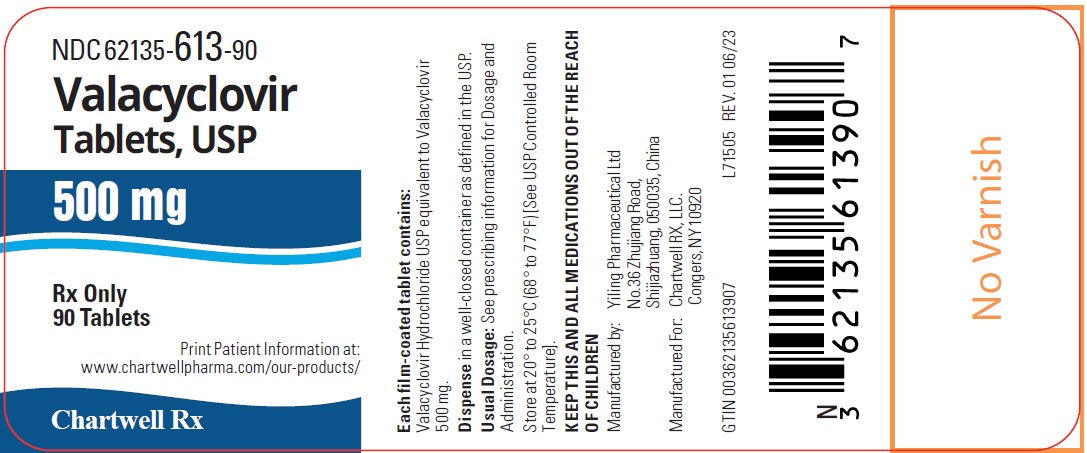
16 HOW SUPPLIED/STORAGE AND HANDLING Valacyclovir Tablets, USP 500 mg (blue, film-coated, capsule-shaped tablets debossed with "Y131" on one side) containing 556.2 mg of valacyclovir hydrochloride equivalent to 500 mg valacyclovir. Bottle of 30 (NDC 62135-613-30). Bottle of 90 (NDC 62135-613-90).
Valacyclovir Tablets, USP 1 gram (blue, film-coated, capsule-shaped tablets, with a partial scorebar on both sides, debossed with "Y132" on one side) containing 1.112 grams of valacyclovir hydrochloride equivalent to 1 gram valacyclovir. Bottle of 30 (NDC 62135-614-30). Bottle of 90 (NDC 62135-614-90).
Storage: Store at 20º to 25ºC (68º to 77ºF) [See USP Controlled Room Temperature].
📋 Description ▾
11 DESCRIPTION Valacyclovir Tablets, USP is the hydrochloride salt of the L -valyl ester of the antiviral drug acyclovir. Valacyclovir Tablets, USP are for oral administration. Each tablet contains 556.2 mg or 1.112 grams of valacyclovir hydrochloride equivalent to 500 mg or 1 gram of valacyclovir, respectively, and the inactive ingredients anhydrous dibasic calcium phosphate, colloidal silicon dioxide, croscarmellose sodium, FD&C blue #2, hypromellose, magnesium stearate, polyethylene glycol 400, polysorbate 80, povidone K90, and titanium dioxide.
The chemical name of valacyclovir hydrochloride is L -valine, 2-[(2-amino-1,6-dihydro-6-oxo-9 H- purin- 9-yl)methoxy]ethyl ester, monohydrochloride. It has the following structural formula: Valacyclovir hydrochloride is a white to off-white powder with the molecular formula C 13 H 20 N 6 O 4 •HCl and a molecular weight of 360.80. The maximum solubility in water at 25°C is 174 mg/mL.
The pkas for valacyclovir hydrochloride are 1.90, 7.47, and 9.43. "Image Description"
💬 Information for Patients ▾
17 PATIENT COUNSELING INFORMATION Advise the patient to read the FDA-Approved Patient Labeling (Patient Information). Importance of Adequate Hydration Patients should be advised to maintain adequate hydration. Missed Dose Instruct patients that if they miss a dose of valacyclovir tablets, to take it as soon as they remember.
Advise patients not to double their next dose or take more than the prescribed dose. Cold Sores (Herpes Labialis) Patients should be advised to initiate treatment at the earliest symptom of a cold sore (e.g., tingling, itching, or burning). There are no data on the effectiveness of treatment initiated after the development of clinical signs of a cold sore (e.g., papule, vesicle, or ulcer).
Patients should be instructed that treatment for cold sores should not exceed 1 day (2 doses) and that their doses should be taken about 12 hours apart. Patients should be informed that valacyclovir tablets is not a cure for cold sores. Genital Herpes Patients should be informed that valacyclovir tablets is not a cure for genital herpes.
Because genital herpes is a sexually transmitted disease, patients should avoid contact with lesions or intercourse when lesions and/or symptoms are present to avoid infecting partners. Genital herpes is frequently transmitted in the absence of symptoms through asymptomatic viral shedding. Therefore, patients should be counseled to use safer sex practices in combination with suppressive therapy with valacyclovir tablets.
Sex partners of infected persons should be advised that they might be infected even if they have no symptoms. Type-specific serologic testing of asymptomatic partners of persons with genital herpes can determine whether risk for HSV-2 acquisition exists. Valacyclovir tablets has not been shown to reduce transmission of sexually transmitted infections other than HSV-2.
If medical management of a genital herpes recurrence is indicated, patients should be advised to initiate therapy at the first sign or symptom of an episode. There are no data on the effectiveness of treatment initiated more than 72 hours after the onset of signs and symptoms of a first episode of genital herpes or more than 24 hours after the onset of signs and symptoms of a recurrent episode. There are no data on the safety or effectiveness of chronic suppressive therapy of more than 1 year’s duration in otherwise healthy patients.
There are no data on the safety or effectiveness of chronic suppressive therapy of more than 6 months’ duration in HIV-1-infected patients. Herpes Zoster There are no data on treatment initiated more than 72 hours after onset of the zoster rash. Patients should be advised to initiate treatment as soon as possible after a diagnosis of herpes zoster.
Chickenpox Patients should be advised to initiate treatment at the earliest sign or symptom of chickenpox. Manufactured by: Yiling Pharmaceutical Ltd No.36 Zhujiang Road, Shijiazhuang, 050035, China Manufactured for: Chartwell RX, LLC. Congers, NY 10920 L71508 Revised:06/2023 Pharmacist: Print Patient Information at: www.chartwellpharma.com/our-products/