
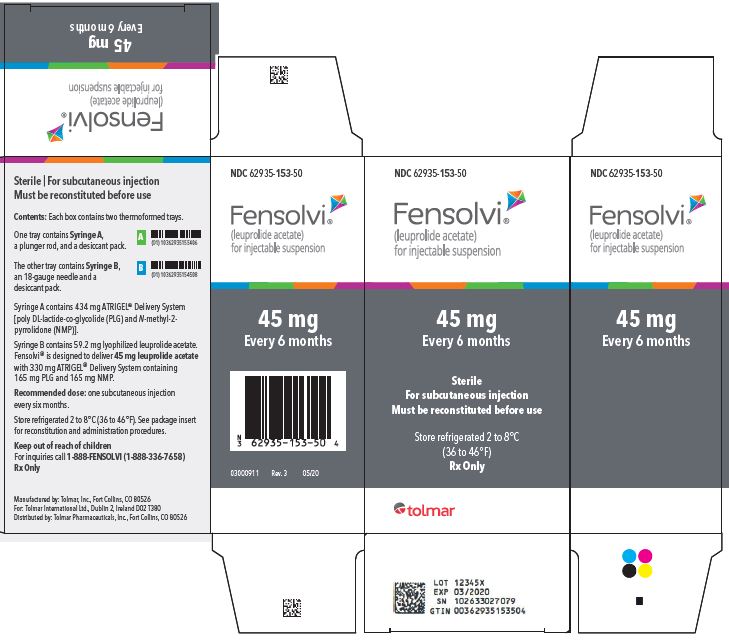
Fensolvi Leuprolide Acetate Kit — NDC 62935-153-50 (Billing 62935-0153-50)
This is a package of Fensolvi Leuprolide Acetate Kit from TOLMAR Inc., marketed since Jun 2020 and currently FDA-listed. It is this product's only package size.
NDC database record
One package, one record: these facts belong to NDC 62935-153-50 alone.
- Record
- FDA NDC Directory package listing · Human prescription drug
- Code segments
- 62935 labeler · 153 product · 50 package
- Package marketed since
- Jun 3, 2020
- Sample package
- No — commercial package
- Listing certified through
- Dec 31, 2026
- Barcode (UPC-A, from the NDC)
- 3 6293515350 4
- Medicaid fills, this package
- 47 prescriptions in the last four reported quarters
- FDA record last changed
- Jul 24, 2026
Identity & classification
Regulatory identifiers FDA, NLM and CMS codes for this package
Drug-database identifiers Medi-Span GPI and First Databank GCN / HICL / AHFS classification
- GSN (GCN sequence number): 081002
- GCN: 47996
- GPI-14 (Medi-Span): 30080050256450
- HICL (First Databank): 021102
- AHFS class code: 10:00.00.00
- RxCUI (RxNorm): 752884
Where does this data come from?
- FDA openFDA NDC Directory · synced Oct 8, 2026
- FDA label on DailyMed · label index refreshed Oct 8, 2026
- RxNorm (NLM RxNav) · catalog refreshed Oct 1, 2026
- Medi-Span GPI (licensed)
- First Databank (licensed) · refreshed Oct 8, 2026
RxNorm drug class
This medicine belongs to the Gonadotropin Releasing Hormone Receptor Agonist class.
Where does this data come from?
- RxClass (NLM) · catalog refreshed Oct 1, 2026
Clinical
Leuprolide injection is used to treat certain types of prostate cancer central precocious puberty (CPP; a condition causing children to enter puberty too soon, resulting in faster than normal bone growth and development of sexual characteristics) endometriosis (a condition in which the type of tissue that lines the uterus [womb] grows in other areas of the body and causes infertility, pain before and during menstrual periods, pain during and after sexual activity, and heavy, irregular bleeding) anemia (a lower-than-normal number of red blood cells) caused by uterine fibroids (growths i...
Read the full MedlinePlus article ↗- It lowers sex hormones. Different brands treat advanced prostate cancer, children with central precocious puberty, or, for Lupron Depot 11.25 mg, endometriosis and fibroid-related...
- It is an injection, not a pill. Many types are given by a healthcare provider every one to six months. One Leuprolide Acetate injection product is a daily injection under the skin,...
- Leuprolide briefly raises testosterone before lowering it. In prostate cancer this can cause bone pain or urinary trouble in the first few weeks. Tell your doctor right away if you...
- Why might my symptoms get worse at first?
Patient education
Supplement & herbal interactions
Where does this data come from?
- MedlinePlus (NLM) · refreshed Oct 8, 2026
- FDA label on DailyMed · label index refreshed Oct 8, 2026
Ask a licensed pharmacist directly — free, answered by our team.
Pricing
A drug doesn't have one price. Each row is a different public payment system, and none is what you'd pay at the counter — that depends on your insurance. The ⓘ on each row explains what it measures.
| Price system | Per each | Per package |
|---|---|---|
| Retail pharmacies payNADAC · weekly | Not in the retail survey — common for institutional, discontinued, or low-volume packs. | |
| Medicaid paysCMS SDUD · 12 mo | $26,434.84 | — |
| Medicare drug plans payPart D · quarterly | No Part D plan price is available for this NDC in our data. | |
| Medicare Part B allowsASP · J1951 | $145.311 / J1951 unit | — |
Where does this data come from?
- CMS NADAC weekly file
- CMS ASP pricing files · refreshed Sep 20, 2026
- CMS Medicaid State Drug Utilization Data · through Q1 2026
- CMS Part D plan pricing files · refreshed Sep 24, 2026
- VA National Acquisition Center price file
Billing & reimbursement
Where does this data come from?
- CMS ASP NDC-HCPCS crosswalk · refreshed Sep 22, 2026
- DMEPDAC NDC-HCPCS crosswalk
- openFDA NSDE billing units · refreshed Oct 7, 2026
Packaging — all sizes for this product
| Package NDC | Description | Marketing start | Marketing end | Status |
|---|---|---|---|---|
| 62935-0153-50 You're viewing this Main listing | 1 KIT in 1 CARTON * .375 mL in 1 SYRINGE * .375 mL in 1 SYRINGE | 2020-06-03 | — | Active |
Therapeutic equivalents
| Product | Labeler | Pack | NADAC/unit | TE | Status | Price vs. this |
|---|---|---|---|---|---|---|
| Leuprolide Acetate 00781-4003-32 | Sandoz | 1 kit | $197.606 | AP | Availability likely | — |
| Leuprolide Acetate 55150-0478-01 | Eugia | 1 kit | $197.606 | AP | Availability likely | — |
| leuprolide acetate 47335-0936-40 | Sun | 1 kit | $197.606 | AP | Availability likely | — |
| Leuprolide Acetate 70710-1769-03 | Zydus | 1 kit | $197.606 | AP | Availability likely | — |
| Leuprolide Acetate 72664-0611-28 | VGYAAN | 1 kit | $261.318 | AP | FDA listed | — |
| Lupron Depot 00074-3641-03 | AbbVie | 1 kit | $1,822.080 | — | Availability likely | — |
| Lupron Depot 00074-3642-03 | AbbVie | 1 kit | $2,174.170 | — | Availability likely | — |
| Lupron Depot 00074-3663-03 | AbbVie | 1 kit | $5,437.400 | — | Availability likely | — |
| Lupron Depot 00074-3346-03 | AbbVie | 1 kit | $6,516.300 | — | Availability likely | — |
| Fensolvithis 62935-0153-50 | TOLMAR | 1 kit | — | — | FDA listed | — |
| Fensolvi 45 mg/.375mL 62935-0163-60 | TOLMAR | 1 syringe | — | — | FDA listed | — |
| Eligard 62935-0453-45 | TOLMAR | 1 kit | — | — | FDA listed | — |
| Eligard 45 mg/.375mL 62935-0461-50 | TOLMAR | 1 syringe | — | — | FDA listed | — |
| Vabrinty 45 mg/.375mL 85043-0045-04 | URONOVA | 1 syringe | — | — | FDA listed | — |
| Lupron Depot 00074-3473-03 | AbbVie | 1 kit | — | — | FDA listed | — |
| Lupron Depot-PED 00074-9694-03 | AbbVie | 1 kit | — | — | FDA listed | — |
| Lupron Depot-PED 00074-2108-03 | AbbVie | 1 kit | — | — | FDA listed | — |
| Lupron Depot-PED 00074-2440-03 | AbbVie | 1 kit | — | — | FDA listed | — |
| Lupron Depot 00074-3683-03 | AbbVie | 1 kit | — | — | FDA listed | — |
| Leuprolide Acetate Depot 69097-0909-50 | CIPLA | 1 kit | — | — | FDA listed | — |
| Lutrate Depot 83831-0134-01 | Avyxa | 1 kit | — | — | FDA listed | — |
| Lupron Depot-PED 00074-3575-01 | AbbVie | 1 kit | — | — | FDA listed | — |
| Leuprolide Acetate 70771-1687-03 | Zydus | 1 kit | — | AP | FDA listed | — |
| Lupron Depot-PED 00074-2282-03 | AbbVie | 1 kit | — | — | FDA listed | — |
| Lupron Depot-PED 00074-3779-03 | AbbVie | 1 kit | — | — | FDA listed | — |
Where does this data come from?
- FDA openFDA NDC Directory · synced Oct 8, 2026
- FDA Orange Book · refreshed Oct 3, 2026
- CMS NADAC weekly file
Availability & generic status
FDA-approved generic versions are listed, and recent pricing/market data suggests they may be available — see Therapeutic equivalents.
Why the date isn’t exact: Generic timing can change because patents may be challenged, settled, licensed, added, removed, or worked around with a narrower label — and FDA approval does not always mean a pharmacy can get the generic today.
🛈 What do these terms mean?
- Patent
- Legal protection listed in the Orange Book that may delay generic approval or launch. Issued by the U.S. Patent & Trademark Office.
- Substance patent
- Covers the active drug molecule itself — the hardest to design around. A generic generally can’t launch until it expires.
- Formulation (product) patent
- Covers a specific formulation or dosage form. A generic can sometimes work around it with a different formulation.
- Method-of-use patent
- A patent covering one specific approved use of the drug — not necessarily the whole molecule. A generic can sometimes launch with a “skinny label” that carves out the protected use and keeps the others.
- Skinny label
- A generic label that omits a still-patented use when the FDA allows it — letting a generic reach the market for the unprotected uses.
- Exclusivity
- FDA-granted marketing protection, separate from patents — e.g. 5-yr new chemical entity, 7-yr orphan drug, or a +6-month pediatric extension.
- Paragraph IV
- A generic applicant’s formal challenge to a listed patent. It can potentially lead to earlier generic entry, but often involves litigation or a settlement.
- RLD / RS
- Reference Listed Drug — the brand product the FDA uses as the reference for generic applications. Reference Standard — the product the FDA expects generics to compare against in bioequivalence testing.
- TE / AB rating
- FDA therapeutic-equivalence rating. An AB rating generally means the FDA considers a generic therapeutically equivalent to — and substitutable for — the brand.
- LOE (loss of exclusivity)
- The latest patent or exclusivity currently listed — the loss-of-exclusivity / latest-listed-protection date shown on this page. Paragraph-IV challenges and settlements can move the real date earlier; FDA approval and a manufacturer’s decision to market can move it later.
Built from the FDA Orange Book. The bars above are scaled to each protection’s expiry; the red LOE marker is the last one to lapse.
| Patent | Type | Use code | Expires |
|---|---|---|---|
| US 12397120 ↗ | Method of use | U-3611 | Dec 22, 2041 |
| US 11931559 ↗ | Drug substance | — | Dec 22, 2041 |
| US 11771841 ↗ | Drug substance | — | Dec 22, 2041 |
Is there a generic version of FENSOLVI 45 MG SYRINGE KIT?
The FDA approved a generic — why can’t I get it at my pharmacy yet?
Why do different websites show different generic release dates?
What does “FDA listed” mean?
What does a patent or protection date mean here?
What does “current Orange Book estimate” mean?
Can a generic come out before the last patent expires?
Can a generic come out after the listed dates?
What is the difference between patents and exclusivity?
Why are there multiple patent dates?
Where does this data come from?
- FDA Orange Book · refreshed Oct 3, 2026
Inactive Ingredients / Excipients
Inactive ingredients, also called excipients, are components of the drug product other than the active ingredient. They may include fillers, dyes, coatings, preservatives, flavors, or other formulation ingredients.
🧪 Avoiding an ingredient? See Leuprolide inactive ingredients by manufacturer: every current product's list side by side, so you can ask your pharmacy for the version that does not list it.
Where does this data come from?
IACT rows and label-wide narrative are kept separate; availability and product-level specificity depend on the submitted label.- FDA label on DailyMed · label index refreshed Oct 8, 2026
- FDA openFDA NDC Directory · synced Oct 8, 2026
Inactive ingredient FAQ
Are inactive ingredients the same for every manufacturer?
Why might an inactive ingredient be missing?
Can inactive ingredients matter?
Manufacturer & labeler
More NDCs from TOLMAR Inc. labeler code 62935
- Fensolvi Leuprolide Acetate 45 mg/.375mL Injection, Suspension, Extended Release NDC 62935-163-60
- ELIGARD Leuprolide Acetate Kit NDC 62935-223-05
- Eligard Leuprolide acetate 22.5 mg/.375mL Injection, Suspension, Extended Release NDC 62935-227-10
- ELIGARD Leuprolide Acetate Kit NDC 62935-303-30
- Eligard Leuprolide acetate 30 mg/.5mL Injection, Suspension, Extended Release NDC 62935-306-40
- ELIGARD Leuprolide Acetate Kit NDC 62935-453-45
Where does this data come from?
- FDA openFDA NDC Directory · synced Oct 8, 2026
- Drugs@FDA
Full prescribing information FDA SPL
🎯 Indications and Usage ▾
1 INDICATIONS AND USAGE FENSOLVI is indicated for the treatment of pediatric patients 2 years of age and older with central precocious puberty (CPP). FENSOLVI is a gonadotropin releasing hormone (GnRH) agonist indicated for the treatment of pediatric patients 2 years of age and older with central precocious puberty.
⏱️ Dosage and Administration ▾
2 DOSAGE AND ADMINISTRATION Must be administered by a healthcare professional. ( 2.1 ) The dose of FENSOLVI is 45 mg administered by subcutaneous injection once every six months. ( 2.1 ) Monitor response to FENSOLVI with a GnRH agonist stimulation test, basal serum luteinizing hormone (LH) levels or serum concentration of sex steroid levels at 1 to 2 months following initiation of therapy and as needed to confirm adequate suppression of pituitary gonadotropins, sex steroids, and progression of secondary sexual characteristics.
( 2.2 ) Measure height every 3 to 6 months and monitor bone age periodically. ( 2.2 ) See Full Prescribing Information for reconstitution and administration instructions. ( 2.3 , 2.4 )
2.1Dosing Information FENSOLVI must be administered by a healthcare professional. The dose of FENSOLVI is 45 mg administered by subcutaneous injection once every six months. Discontinue FENSOLVI treatment at the appropriate age of onset of puberty.
2.2Monitoring Monitor response to FENSOLVI with a GnRH agonist stimulation test, basal serum luteinizing hormone (LH) levels or serum concentration of sex steroid levels at 1 to 2 months following initiation of therapy and as needed to confirm adequate suppression of pituitary gonadotropins, sex steroids, and progression of secondary sexual characteristics. Measure height (for calculation of growth velocity) every 3 to 6 months and monitor bone age periodically. Noncompliance with drug regimen or inadequate dosing may lead to gonadotropins and/or sex steroids increasing above prepubertal levels resulting in inadequate control of the pubertal process.
If the dose of FENSOLVI is not adequate, switching to an alternative GnRH agonist for the treatment of CPP with the ability for dose adjustment may be necessary.
2.3Reconstitution Instructions Use aseptic technique including gloves for reconstitution and administration. Allow the product to reach room temperature before reconstitution to allow for easier administration. Once reconstituted, the concentration is 45 mg/0.375 mL.
Administer the product within 30 minutes or discard. FENSOLVI is packaged in a carton containing two trays and this package insert: Table 1: Contents of the Two Trays in the FENSOLVI Carton Syringe A Tray Syringe B Tray Syringe A is prefilled with diluent for reconstitution (ATRIGEL Delivery System) Syringe B is prefilled with 45 mg lyophilized leuprolide acetate powder White plunger rod (To be used with Syringe B) Safety needle (18G x 5/8") Desiccant pack Desiccant pack Follow the instructions below to prepare FENSOLVI: 1.
On a clean field, open both trays by tearing off the foil from the corners and removing the contents. Discard the desiccant pack(s). Open the safety needle package by peeling back the paper tab.
2. Pull out (do not unscrew) the short blue plunger rod with attached gray stopper from Syringe B and discard. 3.
Gently screw the white plunger rod into the remaining gray stopper in Syringe B. 4. Unscrew and discard the clear cap from Syringe A.
5. Remove and discard the gray rubber cap from Syringe B. 6.
Join the two syringes together by pushing and gently screwing until secure. 7. Inject the liquid contents of Syringe A into the leuprolide acetate powder contained in Syringe B.
Thoroughly mix the product for approximately 45 seconds by pushing the contents back and forth between both syringes to obtain a uniform suspension. When thoroughly mixed, the suspension will appear pale yellow. Note: Product must be mixed as described; shaking will not provide adequate mixing.
8. After mixing, hold the syringes vertically (upright) with Syringe B (wide syringe) on the bottom. The syringes should remain securely coupled.
Draw all of the mixed product into Syringe B by depressing the Syringe A plunger and slightly withdrawing the Syringe B plunger. 9. Unscrew Syringe A to decouple the syringes while continuing to withdraw the Syringe B plunger.
Note: Small air bubbles will remain in the formulation – thi… [Excerpted — this section continues on DailyMed.]
💊 Dosage Forms and Strengths ▾
3 DOSAGE FORMS AND STRENGTHS For injectable suspension, 45 mg of leuprolide acetate is supplied in a kit containing: Syringe A contains diluent for reconstitution (ATRIGEL Delivery System) in a prefilled syringe. Syringe B contains 45 mg lyophilized leuprolide acetate powder in a single-dose prefilled syringe. For injectable suspension: 45 mg of leuprolide acetate supplied in a kit. ( 3 )
⛔ Contraindications ▾
4 CONTRAINDICATIONS Hypersensitivity to GnRH, GnRH agonists or any of the components of FENSOLVI. Anaphylactic reactions to synthetic GnRH or GnRH agonists have been reported [see Adverse Reactions ( 6.2 )] . Pregnancy: FENSOLVI may cause fetal harm [see Use in Specific Populations ( 8.1 )] . Hypersensitivity reactions ( 4 ) Pregnancy ( 4 , 8.1 )
⚠️ Warnings and Cautions ▾
5 WARNINGS AND PRECAUTIONS Initial Rise of Gonadotropins and Sex Steroid Levels: During the early phase of therapy, gonadotropins and sex steroids rise above baseline because of the initial stimulatory effect of the drug. Therefore, an increase in clinical signs and symptoms of puberty including vaginal bleeding may be observed during the first weeks of therapy or after subsequent doses. Instruct patients and caregivers to notify the physician if these symptoms continue beyond the second month after FENSOLVI administration.
( 5.1 ) Psychiatric events: Have been reported in patients taking GnRH agonists. Events include emotional lability, such as crying, irritability, impatience, anger, and aggression. Monitor for development or worsening of psychiatric symptoms.
( 5.2 ) Convulsions: Have been observed in patients with or without a history of seizures, epilepsy, cerebrovascular disorders, central nervous system anomalies or tumors, and in patients on concomitant medications that have been associated with convulsions. ( 5.3 ) Pseudotumor Cerebri (Idiopathic Intracranial Hypertension): Have been reported in pediatric patients receiving GnRH agonists, including leuprolide acetate. Monitor patients for headache, papilledema, and blurred vision.
( 5.4 )
5.1Initial Rise of Gonadotropins and Sex Steroid Levels During the early phase of therapy, gonadotropins and sex steroids rise above baseline because of the initial stimulatory effect of the drug [see Clinical Pharmacology ( 12.2 )] . Therefore, an increase in clinical signs and symptoms of puberty including vaginal bleeding may be observed during the first weeks of therapy or after subsequent doses [see Adverse Reactions (6) ] . Instruct patients and caregivers to notify the physician if these symptoms continue beyond the second month after FENSOLVI administration.
5.2Psychiatric Events Psychiatric events have been reported in patients taking GnRH agonists, including leuprolide acetate. Postmarketing reports with this class of drugs include symptoms of emotional lability, such as crying, irritability, impatience, anger, and aggression. Monitor for development or worsening of psychiatric symptoms during treatment with FENSOLVI [see Adverse Reactions (6.1 , 6.2) ] .
5.3Convulsions Postmarketing reports of convulsions have been observed in patients receiving GnRH agonists, including leuprolide acetate. These included patients with a history of seizures, epilepsy, cerebrovascular disorders, central nervous system anomalies or tumors, and patients on concomitant medications that have been associated with convulsions such as bupropion and SSRIs. Convulsions have also been reported in patients in the absence of any of the conditions mentioned above [see Adverse Reactions (6.2) ] .
5.4Pseudotumor Cerebri (Idiopathic Intracranial Hypertension) Pseudotumor cerebri (idiopathic intracranial hypertension) have been reported in pediatric patients receiving GnRH agonists, including leuprolide acetate. Monitor patients for signs and symptoms of pseudotumor cerebri, including headache, papilledema, blurred vision, diplopia, loss of vision, pain behind the eye or pain with eye movement, tinnitus, dizziness, and nausea.
🤒 Adverse Reactions ▾
6 ADVERSE REACTIONS The following serious adverse reactions are described here and elsewhere in the label: Initial rise in gonadotropin and sex steroid levels [see Warnings and Precautions ( 5.1 )] . Psychiatric Events [see Warnings and Precautions ( 5.2 )] . Convulsions [see Warnings and Precautions ( 5.3 )] .
Pseudotumor Cerebri (Idiopathic Intracranial Hypertension) [ see Warnings and Precautions ( 5.4 )] The most common adverse reactions (≥5%) were: injection site pain, nasopharyngitis, pyrexia, headache, cough, abdominal pain, injection site erythema, nausea, constipation, vomiting, upper respiratory tract infection, bronchospasm, productive cough, and hot flush. ( 6.1 ) To report SUSPECTED ADVERSE REACTIONS, contact Tolmar Pharmaceuticals, Inc. at 1-844-4TOLMAR (1-844-486-5627) or FDA at 1-800-FDA-1088 or www.fda.gov/medwatch .
6.1Clinical Trials Experience Because clinical studies are conducted under widely varying conditions, adverse reaction rates observed in the clinical trials of a drug cannot be directly compared to rates in the clinical trials of another drug and may not reflect the rates observed in practice. FENSOLVI was evaluated in an uncontrolled, open-label, single-arm clinical trial in which 64 pediatric patients with CPP received at least one dose of FENSOLVI. The age ranged from 4 to 9 years at start of treatment; 62 patients were female and 2 were male; 53% White; 23% Black; 8% American Indian or Alaska Native; 5% Asian; 2% Native Hawaiian or Other Pacific Islander.
56% of the subjects self-identified as Hispanic or Latino ethnicity. Adverse reactions that occurred in ≥ 5% of patients are shown in Table 2. Table 2: Adverse Reactions Occurring in ≥ 5% of Patients Treated with FENSOLVI in an Open-Label, Single-Arm Trial Adverse Reactions % of Patients (N=64) Injection site pain 31 Nasopharyngitis 22 Pyrexia 17 Headache 16 Cough 13 Abdominal pain 9 Injection site erythema 9 Nausea 8 Constipation 6 Vomiting 6 Upper respiratory tract infection 6 Bronchospasm 6 Productive cough 6 Hot flush 5 Other Adverse Reactions: Psychiatric Emotional disorder (2%) and irritability (2%)
6.2Postmarketing Experience The following adverse reactions have been identifed during postapproval use of leuprolide acetate or FENSOLVI. Because these reactions are reported voluntarily from a population of uncertain size, it is not always possible to reliably estimate their frequency or establish a causal relationship to drug exposure. Allergic Reactions: anaphylactic, rash, urticaria, and photosensitivity reactions.
General : chest pain, weight increase, weight decrease, decreased appetite, fatigue. Laboratory Abnormalities: decreased WBC. Metabolic : diabetes mellitus.
Musculoskeletal and Connective Tissue : arthralgia, epiphysiolysis, muscle spasms, myalgia. Neurologic: neuropathy peripheral, convulsion, paralysis, insomnia, pseudotumor cerebri (idiopathic intracranial hypertension). Psychiatric: emotional lability, such as crying, irritability, impatience, anger and aggression.
Depression, including rare reports of suicidal ideation and attempt. Many, but not all, of these patients had a history of psychiatric illness or other comorbidities with an increased risk of depression. Skin and Subcutaneous Tissue : injection site reactions including induration and abscess, flushing, hyperhidrosis.
Reproductive System: vaginal bleeding, breast enlargement. Vascular : hypertension, hypotension. Respiratory: dyspnea.
🔄 Drug Interactions ▾
7 DRUG INTERACTIONS No pharmacokinetic drug-drug interaction studies have been conducted with FENSOLVI.
👥 Use in Specific Populations ▾
8 USE IN SPECIFIC POPULATIONS
8.1Pregnancy Risk Summary FENSOLVI is contraindicated in pregnancy [see Contraindications ( 4 )] . FENSOLVI may cause fetal harm based on findings from animal studies and the drug’s mechanism of action [see Clinical Pharmacology ( 12.1 )]. The available data from published clinical studies and case reports and from the pharmacovigilance database on exposure to leuprolide acetate during pregnancy are insufficient to assess the risk of major birth defects, miscarriage, or adverse maternal or fetal outcomes.
Based on animal reproduction studies, leuprolide acetate may be associated with an increased risk of pregnancy complications, including early pregnancy loss and fetal harm. In animal reproduction studies, subcutaneous administration of leuprolide acetate to rabbits during the period of organogenesis caused embryo-fetal toxicity, decreased fetal weights and a dose-dependent increase in major fetal abnormalities in animals at doses less than the recommended human dose based on body surface area using an estimated daily dose.
A similar rat study also showed increased fetal mortality and decreased fetal weights but no major fetal abnormalities at doses less than the recommended human dose based on body surface area using an estimated daily dose (see Data) . The estimated background risk of major birth defects and miscarriage for the indicated population is unknown. In the US general population, the estimated background risk of major birth defects and miscarriage in clinically recognized pregnancies is 2% to 4% and 15% to 20%, respectively.
Data Animal Data When administered on day 6 of pregnancy at test dosages of 0.00024 mg/kg, 0.0024 mg/kg, and 0.024 mg/kg (1/3255 to 1/33 of the human dose) to rabbits, leuprolide acetate produced a dose-related increase in major fetal abnormalities. Similar studies in rats failed to demonstrate an increase in fetal malformations. There was increased fetal mortality and decreased fetal weights with the two higher doses of leuprolide acetate in rabbits and with the highest dose (0.024 mg/kg) in rats.
8.2Lactation Risk Summary There are no data on the presence of leuprolide acetate in either animal or human milk, the effects on the breastfed infants, or the effects on milk production. The developmental and health benefits of breastfeeding should be considered along with the mother’s clinical need for FENSOLVI and any potential adverse effects on the breastfed infant from FENSOLVI or from the underlying maternal condition.
8.3Females and Males of Reproductive Potential Pregnancy Testing Exclude pregnancy in women of reproductive potential prior to initiating FENSOLVI if clinically indicated [see Use in Specific Populations ( 8.1 ) ] . Contraception Females FENSOLVI may cause embryo-fetal harm when administered during pregnancy. FENSOLVI is not a contraceptive.
If contraception is indicated, advise females of reproductive potential to use a non-hormonal method of contraception during treatment with FENSOLVI [see Use in Specific Populations ( 8.1 )] . Infertility Based on its pharmacodynamic effects of decreasing secretion of gonadal steroids, fertility is expected to be decreased while on treatment with FENSOLVI. Clinical and pharmacologic studies in adults (>18 years) with leuprolide acetate and similar analogs have shown reversibility of fertility suppression when the drug is discontinued after continuous administration for periods of up to 24 weeks [see Clinical Pharmacology ( 12.1 )] .
There is no evidence that pregnancy rates are affected following discontinuation of FENSOLVI. Animal studies (prepubertal and adult rats and monkeys) with leuprolide acetate and other GnRH analogs have shown functional recovery of fertility suppression.
8.4Pediatric Use The safety and effectiveness of FENSOLVI for the treatment of CPP has been established in pediatric patients 2 years of age and older. Use of FENSOLVI for this indication is supported by evidence from an adequate a… [Excerpted — this section continues on DailyMed.]
🤰 Pregnancy ▾
8.1Pregnancy Risk Summary FENSOLVI is contraindicated in pregnancy [see Contraindications ( 4 )] . FENSOLVI may cause fetal harm based on findings from animal studies and the drug’s mechanism of action [see Clinical Pharmacology ( 12.1 )]. The available data from published clinical studies and case reports and from the pharmacovigilance database on exposure to leuprolide acetate during pregnancy are insufficient to assess the risk of major birth defects, miscarriage, or adverse maternal or fetal outcomes.
Based on animal reproduction studies, leuprolide acetate may be associated with an increased risk of pregnancy complications, including early pregnancy loss and fetal harm. In animal reproduction studies, subcutaneous administration of leuprolide acetate to rabbits during the period of organogenesis caused embryo-fetal toxicity, decreased fetal weights and a dose-dependent increase in major fetal abnormalities in animals at doses less than the recommended human dose based on body surface area using an estimated daily dose.
A similar rat study also showed increased fetal mortality and decreased fetal weights but no major fetal abnormalities at doses less than the recommended human dose based on body surface area using an estimated daily dose (see Data) . The estimated background risk of major birth defects and miscarriage for the indicated population is unknown. In the US general population, the estimated background risk of major birth defects and miscarriage in clinically recognized pregnancies is 2% to 4% and 15% to 20%, respectively.
Data Animal Data When administered on day 6 of pregnancy at test dosages of 0.00024 mg/kg, 0.0024 mg/kg, and 0.024 mg/kg (1/3255 to 1/33 of the human dose) to rabbits, leuprolide acetate produced a dose-related increase in major fetal abnormalities. Similar studies in rats failed to demonstrate an increase in fetal malformations. There was increased fetal mortality and decreased fetal weights with the two higher doses of leuprolide acetate in rabbits and with the highest dose (0.024 mg/kg) in rats.
🧒 Pediatric Use ▾
8.4Pediatric Use The safety and effectiveness of FENSOLVI for the treatment of CPP has been established in pediatric patients 2 years of age and older. Use of FENSOLVI for this indication is supported by evidence from an adequate and uncontrolled open-label, single-arm study of 64 pediatric patients with CPP with an age range of 4 to 9 years [see Clinical Studies ( 14 )] . The safety and effectiveness of FENSOLVI have not been established in pediatric patients less than 2 years old.
🆘 Overdosage ▾
10 OVERDOSAGE No specific antidotes for FENSOLVI are known. Contact Poison Control (1-800-222-1222) for latest recommendations.
🧬 Clinical Pharmacology ▾
12 CLINICAL PHARMACOLOGY
12.1Mechanism of Action Leuprolide acetate, a GnRH agonist, acts as a potent inhibitor of gonadotropin secretion (LH and follicle stimulating hormone (FSH)) when given continuously in therapeutic doses. Following an initial stimulation of GnRH receptors, chronic administration of leuprolide acetate results in downregulation of GnRH receptors, reduction in release of LH, FSH and consequent suppression of ovarian and testicular production of estradiol and testosterone respectively. This inhibitory effect is reversible upon discontinuation of drug therapy.
12.2Pharmacodynamics In the clinical trial evaluating FENSOLVI in pediatric patients with CPP, there was a transient surge in circulating levels of LH, FSH, estradiol and testosterone following the first administration. A decrease in basal and GnRH agonist-stimulated LH and FSH levels along with reductions in basal estradiol and testosterone were observed after repeat administration.
12.3Pharmacokinetics Absorption After an initial subcutaneous injection of FENSOLVI 45 mg in pediatric patients 4 to 9 years of age with CPP, leuprolide levels peaked 4 hours postdose with a mean C max of 212.3 ng/mL. Absorption occurred in two phases, a burst phase followed by a plateau phase. The mean plateau serum leuprolide level from 4 to 48 weeks was approximately 0.37 ng/mL with a range of 0.18 to 0.63 ng/mL.
There was no accumulation of leuprolide after the second dose. Distribution The distribution of leuprolide following FENSOLVI administration was not evaluated in pediatric patients. The mean steady-state volume of distribution of leuprolide following intravenous bolus administration to healthy male volunteers was 27 L.
In vitro binding of leuprolide to human plasma proteins ranged from 43% to 49%. Elimination Metabolism In rats and dogs, administration of 14 C-labeled leuprolide was shown to be metabolized to smaller inactive peptides: a pentapeptide (Metabolite I), tripeptides (Metabolites II and III), and a dipeptide (Metabolite IV). These fragments may be further catabolized.
In healthy male volunteers, a 1 mg bolus of leuprolide administered intravenously revealed that the mean systemic clearance was
8.34L/h, with a terminal elimination half-life of approximately 3 hours based on a two-compartment model. Drug metabolism studies were not conducted with FENSOLVI. Upon administration with different leuprolide acetate formulations, the major metabolite of leuprolide acetate is a pentapeptide (M-1) metabolite.
Excretion Drug excretion studies were not conducted with FENSOLVI. Specific Populations The pharmacokinetics of FENSOLVI in hepatically and renally impaired pediatric patients have not been determined.
🧬 Mechanism of Action ▾
12.1Mechanism of Action Leuprolide acetate, a GnRH agonist, acts as a potent inhibitor of gonadotropin secretion (LH and follicle stimulating hormone (FSH)) when given continuously in therapeutic doses. Following an initial stimulation of GnRH receptors, chronic administration of leuprolide acetate results in downregulation of GnRH receptors, reduction in release of LH, FSH and consequent suppression of ovarian and testicular production of estradiol and testosterone respectively. This inhibitory effect is reversible upon discontinuation of drug therapy.
📦 How Supplied / Storage and Handling ▾
16 HOW SUPPLIED/STORAGE AND HANDLING For injectable suspension, 45 mg of leuprolide acetate supplied in a kit (NDC 62935-153-50) containing: Syringe A Tray Syringe B Tray Syringe A is prefilled with diluent for reconstitution (ATRIGEL Delivery System) Syringe B is prefilled with 45 mg lyophilized leuprolide acetate powder White plunger rod (To be used with Syringe B) Safety needle (18G x 5/8") Desiccant pack Desiccant pack Store refrigerated at 2 - 8 °C (35.6 – 46.4 °F). Once outside the refrigerator, this product may be stored in its original packaging at room temperature 15 – 30 °C (59 – 86 °F) for up to eight weeks prior to reconstitution and administration.
📋 Description ▾
11 DESCRIPTION FENSOLVI for injectable suspension is a sterile polymeric matrix formulation of leuprolide acetate, a GnRH agonist, for subcutaneous use. It is designed to deliver leuprolide acetate at a controlled rate over a six-month therapeutic period. Leuprolide acetate is a synthetic nonapeptide analog of naturally occurring gonadotropin releasing hormone.
The analog possesses greater potency than the natural hormone. The chemical name is 5-oxo-L-prolyl-L-histidyl-L-tryptophyl-L-seryl-L-tyrosyl-D-leucyl-L-leucyl-L-arginyl-N-ethyl-L-prolinamide acetate (salt) with the following structural formula: FENSOLVI is prefilled and supplied in two separate, sterile syringes whose contents are mixed immediately prior to administration. The two syringes are joined and the single dose product is mixed until it is homogenous.
FENSOLVI is administered subcutaneously, where it forms a solid drug delivery depot. One syringe contains the ATRIGEL Delivery System and the other contains the leuprolide acetate. ATRIGEL is a polymeric (non-gelatin containing) delivery system consisting of a biodegradable poly(DL-lactide-co-glycolide) (PLG) polymer formulation dissolved in the biocompatible solvent, N-methyl-2-pyrrolidone (NMP).
Refer to Table 3 for the delivery system composition and reconstituted product formulation for FENSOLVI product. Table 3: FENSOLVI Delivery System Composition and Reconstituted Product Formulation ATRIGEL Delivery System Syringe Polymer PLG Polymer description Copolymer with hexanediol Polymer DL-lactide to glycolide molar ratio 85:15 Reconstituted Product Polymer delivered 165 mg NMP delivered 165 mg Leuprolide acetate delivered 45 mg Approximate leuprolide free base equivalent 42 mg Approximate administered formulation weight 375 mg Approximate injection volume 0.375 mL formula
💬 Information for Patients ▾
17 PATIENT COUNSELING INFORMATION Advise the patient to read the FDA-approved patient labeling (Medication Guide). Symptoms After Initial FENSOLVI Administration Inform patients and caregivers that during the early phase of therapy with FENSOLVI, gonadotropins and sex steroids rise above baseline because of the initial stimulatory effect of the drug. Therefore, an increase in clinical signs and symptoms of puberty may be observed .
Instruct patients and caregivers to notify the physician if these symptoms continue beyond the second month after FENSOLVI administration [see Warnings and Precautions ( 5.1 )]. Psychiatric Events Inform patients and caregivers that psychiatric events have been reported in patients taking GnRH agonists, including leuprolide acetate. Events include emotional lability, such as crying, irritability, impatience, anger, and aggression.
Instruct patients and caregivers to monitor for development or worsening of psychiatric symptoms including depression during treatment with FENSOLVI [see Warnings and Precautions ( 5.2 )] . Convulsions Inform patients and caregivers that reports of convulsions have been observed in patients receiving GnRH agonists, including leuprolide acetate. Patients with a history of seizures, epilepsy, cerebrovascular disorders, central nervous system anomalies or tumors, and patients on concomitant medications that have been associated with convulsions may be at increased risk [see Warnings and Precautions ( 5.3 )] .
Pseudotumor Cerebri (Idiopathic Intracranial Hypertension) Inform patients and caregivers that reports of pseudotumor cerebri (idiopathic intracranial hypertension) have been observed in pediatric patients receiving GnRH agonists, including leuprolide acetate. Advise patients and caregivers to monitor for headache, and vision issues such as blurred vision, double vision, loss of vision, pain behind the eye or pain with eye movement, ringing in the ears, dizziness, and nausea. Advise patients and caregivers to contact their healthcare provider if the patient develops any these symptoms. [see Warnings and Precautions ( 5.4 )] .
Injection Site Reactions Inform patients and caregivers that injection site related adverse reactions may occur such as transient burning/stinging, pain, bruising, and redness. Advise patients to contact their healthcare provider if they experience rash or severe injection site reactions [see Adverse Reactions ( 6.1 )]. Pregnancy FENSOLVI is contraindicated in pregnancy.
If the patient becomes pregnant while taking the drug, the patient should be informed of the potential risk to the fetus [see Use in Specific Populations ( 8.1 )]. Compliance with the Dosing Schedule Inform caregivers about the importance of adherence to the FENSOLVI dosing schedule of one injection every 24 weeks [see Dosage and Administration ( 2.1 , 2.2 )]. Rx only Revised 04/2022 Manufactured by: Tolmar, Inc.
Fort Collins, CO 80526 for Tolmar International Ltd. Dublin 2, Ireland D02 T380 Distributed by: Tolmar Pharmaceuticals, Inc. Fort Collins, CO 80526 ©2020 Tolmar Pharmaceuticals, Inc.
All rights reserved. FENSOLVI, ATRIGEL, Tolmar, and associated logos, are trademarks of the Tolmar group. 04006141 Rev.
2 04/22
💬 Medication Guide ▾
Medication Guide Medication Guide FENSOLVI ® (fen-SOL-vee) (leuprolide acetate) injectable suspension, for subcutaneous use What is the most important information I should know about FENSOLVI? FENSOLVI may cause serious side effects, including: In the first few weeks after your child receives their first FENSOLVI injection, FENSOLVI can cause an increase in some hormones. During this time, you may notice more signs of puberty in your child including vaginal bleeding.
Call your child’s healthcare provider if signs of puberty continue after 2 months of receiving FENSOLVI. Some people taking gonadotropin releasing hormone (GnRH) agonists like FENSOLVI have had new or worsened mental (psychiatric) problems. Mental (psychiatric) problems may include emotional symptoms such as: crying irritability restlessness (impatience) anger acting aggressively Call your child’s healthcare provider right away if your child has any new or worsening emotional symptoms while taking FENSOLVI.
Some people taking GnRH agonists like FENSOLVI have had seizures. The risk of seizures may be higher in people who: have a history of seizures have a history of epilepsy have a history of brain tumors or brain vessel (cerebrovascular) problems are taking a medicine that has been associated with seizures such as bupropion or selective serotonin reuptake inhibitors (SSRIs) Seizures have also happened in people who have not had any of these problems. Call your child’s healthcare provider right away if your child has a seizure while taking FENSOLVI.
Increased pressure in the fluid around the brain can happen in children taking GnRH agonists medicines including FENSOLVI. Call your child’s doctor right away if your child has any of the following symptoms during treatment with FENSOLVI: • headache • ringing in the ears • eye problems, including blurred vision, double vision and decreased eyesight • dizziness • eye pain • nausea What is FENSOLVI? FENSOLVI is a prescription gonadotropin releasing hormone (GnRH) medicine used for the treatment of children with central precocious puberty (CPP).
It is not known if FENSOLVI is safe and effective in children younger than 2 years of age. FENSOLVI should not be received if your child is: allergic to GnRH, GnRH agonist medicines, or any ingredients in FENSOLV I. See the end of this Medication Guide for a complete list of ingredients in FENSOLVI.
Call your child’s healthcare provider or get emergency medical help right away if your child gets any of the following symptoms of a serious allergic reaction: • skin rashes, redness, or swelling • swelling of face, mouth, and tongue • trouble breathing or swallowing • hives • throat tightness, hoarseness • sweating • severe itching • dizziness or fainting • fast heartbeat pregnant or becomes pregnant . FENSOLVI can cause birth defects or loss of the baby. If your child becomes pregnant, call your healthcare provider.
Before your child receives FENSOLVI, tell your child’s healthcare provider about all of your child’s medical conditions, including if they: have a history of mental (psychiatric) problems. have a history of seizures. have a history of epilepsy. have a history of brain vessel (cerebrovascular) problems. have a history of brain or spinal cord (central nervous system) problems or tumors. are breastfeeding or plan to breastfeed. It is not known if FENSOLVI passes into breastmilk. Tell your healthcare provider about all the medicines your child takes, including prescription and over-the-counter medicines, vitamins, and herbal supplements.
How will your child receive FENSOLVI? FENSOLVI will be given to your child by a healthcare provider. FENSOLVI is injected under the skin (subcutaneous) every 6 months.
Keep all scheduled visits to the healthcare provider. If you miss a scheduled dose, your child may start having signs of puberty again. The healthcare provider will do regular exams and blood tests to check for signs of puberty.
What are the possible side effects of FENSOLVI? FE… [Excerpted — this section continues on DailyMed.]
🧬 Pharmacokinetics ▾
12.3Pharmacokinetics Absorption After an initial subcutaneous injection of FENSOLVI 45 mg in pediatric patients 4 to 9 years of age with CPP, leuprolide levels peaked 4 hours postdose with a mean C max of 212.3 ng/mL. Absorption occurred in two phases, a burst phase followed by a plateau phase. The mean plateau serum leuprolide level from 4 to 48 weeks was approximately 0.37 ng/mL with a range of 0.18 to 0.63 ng/mL.
There was no accumulation of leuprolide after the second dose. Distribution The distribution of leuprolide following FENSOLVI administration was not evaluated in pediatric patients. The mean steady-state volume of distribution of leuprolide following intravenous bolus administration to healthy male volunteers was 27 L.
In vitro binding of leuprolide to human plasma proteins ranged from 43% to 49%. Elimination Metabolism In rats and dogs, administration of 14 C-labeled leuprolide was shown to be metabolized to smaller inactive peptides: a pentapeptide (Metabolite I), tripeptides (Metabolites II and III), and a dipeptide (Metabolite IV). These fragments may be further catabolized.
In healthy male volunteers, a 1 mg bolus of leuprolide administered intravenously revealed that the mean systemic clearance was
8.34L/h, with a terminal elimination half-life of approximately 3 hours based on a two-compartment model. Drug metabolism studies were not conducted with FENSOLVI. Upon administration with different leuprolide acetate formulations, the major metabolite of leuprolide acetate is a pentapeptide (M-1) metabolite.
Excretion Drug excretion studies were not conducted with FENSOLVI. Specific Populations The pharmacokinetics of FENSOLVI in hepatically and renally impaired pediatric patients have not been determined.
🧬 Pharmacodynamics ▾
12.2Pharmacodynamics In the clinical trial evaluating FENSOLVI in pediatric patients with CPP, there was a transient surge in circulating levels of LH, FSH, estradiol and testosterone following the first administration. A decrease in basal and GnRH agonist-stimulated LH and FSH levels along with reductions in basal estradiol and testosterone were observed after repeat administration.
🔬 Clinical Studies ▾
14 CLINICAL STUDIES The efficacy of FENSOLVI was evaluated in an uncontrolled, open-label, single arm clinical trial in which 64 pediatric patients (62 females and 2 males, naïve to previous GnRH agonist treatment) with CPP received at least one dose of FENSOLVI at a dosing interval of 24 weeks and were observed for 12 months. The mean age was 7.5 years (range 4 to 9 years) at the start of treatment. In pediatric patients with CPP, FENSOLVI reduced stimulated and basal gonadotropins to prepubertal levels.
Suppression of peak stimulated LH concentrations to <4 IU/L was achieved in 87% of pediatric patients by month 6 and in 86% of patients by month 12. Suppression of estradiol or testosterone concentration to prepubertal levels at the 6-month assessment was achieved in 97% and 100% of patients, respectively. Suppression of estradiol or testosterone was maintained at the 12-month assessment with 98% (55/56 females) and 50% (1/2 males) maintaining suppression.
FENSOLVI arrested or reversed progression of clinical signs of puberty with reductions in growth velocity and bone age. Mean growth velocity decreased from 8.9 ± 13.1 cm/yr at 1 month to 6.9 ± 3.1 cm/yr at 6 months and to 6.4 ± 1.9 cm/yr at 12 months. Table 4: Reproductive Hormone Levels in Pediatric Patients with CPP Treated with FENSOLVI 45 mg Every 6 Months a % (n/N) of Patients Achieving Endpoints Endpoint b Month 3 Month 6 Month 9 Month 12 LH levels < 4 IU/L 85 (51/60) 87 (54/62) c 85 (50/59) 86 (50/58) Estradiol levels < 73.4 pmol/L (< 20 pg/mL) 98 (56/57) 97 (58/60) 98 (56/57) 98 (55/56) Testosterone levels < 1 nmol/L (< 28.4 ng/dL) 100 (2/2) 100 (2/2) 100 (2/2) 50 (1/2) FSH levels <
2.5IU/L 62 (37/60) 66 (41/62) 44 (26/59) 55(32/58) a Intent-to-treat Population (N=62) b Post GnRH agonist stimulation c Primary Efficacy Endpoint Eight female patients out of 62 did not meet the primary efficacy criteria for LH <4 IU/L at 6 months. In four of the eight patients, the LH level at 6 months was between 4.2 and
4.8IU/L. The remaining four patients had LH levels >5 IU/L. However, post stimulation estradiol was suppressed to prepubertal levels (<20 pg/mL) in seven of the eight patients at month 6 and was maintained through month 12.
🧪 Nonclinical Toxicology ▾
13 NONCLINICAL TOXICOLOGY
13.1Carcinogenesis, Mutagenesis, Impairment of Fertility Two-year carcinogenicity studies were conducted with leuprolide acetate in rats and mice. In rats, a dose-related increase of benign pituitary hyperplasia and benign pituitary adenomas was noted at 24 months when the drug was administered subcutaneously at high daily doses (0.6 to 4 mg/kg). There was a significant but not dose-related increase of pancreatic islet-cell adenomas in females and of testicular interstitial cell adenomas in males (highest incidence in the low dose group).
In mice, no leuprolide acetate-induced tumors or pituitary abnormalities were observed at a dose as high as 60 mg/kg for two years. Patients have been treated with leuprolide acetate for up to three years with doses as high as 10 mg/day and for two years with doses as high as 20 mg/day without demonstrable pituitary abnormalities. No carcinogenicity studies have been conducted with FENSOLVI.
Mutagenicity studies have been performed with leuprolide acetate using bacterial and mammalian systems. These studies provided no evidence of a mutagenic potential.
📄 Carcinogenesis, Mutagenesis, Impairment of Fertility ▾
13.1Carcinogenesis, Mutagenesis, Impairment of Fertility Two-year carcinogenicity studies were conducted with leuprolide acetate in rats and mice. In rats, a dose-related increase of benign pituitary hyperplasia and benign pituitary adenomas was noted at 24 months when the drug was administered subcutaneously at high daily doses (0.6 to 4 mg/kg). There was a significant but not dose-related increase of pancreatic islet-cell adenomas in females and of testicular interstitial cell adenomas in males (highest incidence in the low dose group).
In mice, no leuprolide acetate-induced tumors or pituitary abnormalities were observed at a dose as high as 60 mg/kg for two years. Patients have been treated with leuprolide acetate for up to three years with doses as high as 10 mg/day and for two years with doses as high as 20 mg/day without demonstrable pituitary abnormalities. No carcinogenicity studies have been conducted with FENSOLVI.
Mutagenicity studies have been performed with leuprolide acetate using bacterial and mammalian systems. These studies provided no evidence of a mutagenic potential.
📄 Recent Major Changes ▾
RECENT MAJOR CHANGES Warnings and Precautions ( 5.4 ) 04/2022
📄 Package Label / Principal Display Panel ▾
PRINCIPAL DISPLAY PANEL carton
Medicaid utilization & spend
Medicare Part D spend CMS · PART D · 2026 (Q1)
Reported adverse events (FAERS)
Top reported reactions
Age at onset
Reporter sex
Serious outcomes
Where does this data come from?
About this NDC listing & data coverage
Kit / multi-component package
This NDC identifies a kit — a package containing more than one component. Structured data (pricing, ingredients, equivalents) is often reported per component rather than for the kit NDC itself, which can make this page look thinner than the components' own pages.
What data is (and isn’t) available for this NDC — tap to expand
| NDC identity (package / product / labeler codes) | ✓ Available |
| Labeler | ✓ Available |
| Product & package description | ✓ Available |
| Marketing category & status | ✓ Available |
| Active ingredient / dosage form / route | ✓ Available |
| FDA label (SPL via DailyMed) | ✓ Available |
| Package photos | ✓ Available |
| Inactive ingredients (structured) | — Not published for this NDC The labeler did not submit a structured excipient list, or no SPL is available. |
| NADAC pharmacy acquisition price (CMS) | — Not published for this NDC CMS publishes NADAC only for NDCs reported in its retail-pharmacy survey. |
| Orange Book / therapeutic-equivalence data | ✓ Available |
| HCPCS J-code billing crosswalk | ✓ Available |
| Medicaid utilization (CMS SDUD) | ✓ Available |