
Cephalexin 500 mg Capsule, 15-count — NDC 63187-046-15 (Billing 63187-0046-15)
NDC 63187-046-15 (billing 63187-0046-15) is a package of 15 capsules of Cephalexin 500 mg Capsule from Proficient Rx LP, marketed since Jan 2006 and currently FDA-listed.
Other active recalls for Cephalexin (different manufacturers) — 6 · tap to view
Identity & classification
Regulatory identifiers FDA, NLM and CMS codes for this package
Drug-database identifiers Medi-Span GPI and First Databank GCN / HICL / AHFS classification
- GSN (GCN sequence number): 009043
- GCN: 39802
- GPI-14 (Medi-Span): 02100020000110
- HICL (First Databank): 013908
- AHFS class code: 08:12.06.04
- RxCUI (RxNorm): 309114
- 11-digit billing NDC: 63187004615
Where does this data come from?
- FDA openFDA NDC Directory · synced Oct 1, 2026
- FDA label on DailyMed · label index refreshed Oct 1, 2026
- RxNorm (NLM RxNav) · catalog refreshed Sep 24, 2026
- Medi-Span GPI (licensed)
- First Databank (licensed) · refreshed Oct 1, 2026
RxNorm drug class
This medicine belongs to the Cephalosporin Antibacterial class.
Where does this data come from?
- RxClass (NLM) · catalog refreshed Sep 24, 2026
Clinical
Cephalexin is used to treat certain infections caused by bacteria. Cephalexin is in a class of medications called cephalosporin antibiotics. It works by killing bacteria. Antibiotics such as cephalexin will not work for colds, flu, or other viral infections. Using antibiotics when they are not needed increases your risk of getting an infection later that resists antibiotic treatment.
Read the full MedlinePlus article ↗- Cephalexin is an antibiotic used to treat bacterial infections — things like strep throat and other respiratory infections, ear infections, skin infections, bone infections, and ur...
- Yes, you can take cephalexin with or without food — it's stable in stomach acid either way. If it upsets your stomach, taking it with a small meal or snack can help. Just try to ta...
- The most common side effects are stomach-related — diarrhea, nausea, vomiting, or indigestion. These are usually mild and manageable. The ones to call your doctor about are: a seve...
- What side effects should I watch out for?
Patient education
Supplement & herbal interactions
Some supplements/herbs that may interact with Cephalexin — tap one for details:
Cephalexin may be associated with lower levels of 7 nutrients — worth a chat with your pharmacist, not a cause for alarm.
Where does this data come from?
- MedlinePlus (NLM) · refreshed Oct 1, 2026
- FDA label on DailyMed · label index refreshed Oct 1, 2026
Ask a licensed pharmacist directly — free, answered by our team.
Pricing
A drug doesn't have one price. Each row is a different public payment system, and none is what you'd pay at the counter — that depends on your insurance. The ⓘ on each row explains what it measures.
| Price system | Per each | Per package |
|---|---|---|
| Retail pharmacies payNADAC · weekly | Not in the retail survey — common for institutional, discontinued, or low-volume packs. | |
| Medicaid paysCMS SDUD · 12 mo | No recent Medicaid claims on file for this NDC — rare and low-volume NDCs are suppressed in the public data. | |
| Medicare drug plans payPart D · Q2 2026 | $0.1952 | $2.93 / 15 capsules |
Where does this data come from?
- CMS NADAC weekly file
- CMS ASP pricing files · refreshed Sep 20, 2026
- CMS Medicaid State Drug Utilization Data · refreshed Oct 1, 2026
- CMS Part D plan pricing files · refreshed Sep 24, 2026
- VA National Acquisition Center price file
Packaging — all sizes for this product
| Package NDC | Description | Marketing start | Marketing end | Status |
|---|---|---|---|---|
| 63187-0046-06 63187-046-06 Main listing | 6 CAPSULE in 1 BOTTLE (63187-046-06) | 2018-04-02 | — | Active |
| 63187-0046-14 63187-046-14 | 14 CAPSULE in 1 BOTTLE (63187-046-14) | 2018-10-01 | — | Active |
| 63187-0046-15 63187-046-15 You're viewing this | 15 CAPSULE in 1 BOTTLE (63187-046-15) | 2019-03-01 | — | Active |
| 63187-0046-20 63187-046-20 | 20 CAPSULE in 1 BOTTLE (63187-046-20) | 2014-04-01 | — | Active |
| 63187-0046-21 63187-046-21 | 21 CAPSULE in 1 BOTTLE (63187-046-21) | 2014-04-01 | — | Active |
| 63187-0046-28 63187-046-28 | 28 CAPSULE in 1 BOTTLE (63187-046-28) | 2018-01-01 | — | Active |
| 63187-0046-30 63187-046-30 | 30 CAPSULE in 1 BOTTLE (63187-046-30) | 2014-04-01 | — | Active |
| 63187-0046-40 63187-046-40 | 40 CAPSULE in 1 BOTTLE (63187-046-40) | 2014-04-01 | — | Active |
You're viewing one of 8 pack sizes for this product.
Pack size FAQ
What quantity is in NDC 63187-0046-15?
What is the difference between NDC 63187-0046-15 and NDC 63187-0046-06?
What NDC number is used to bill for this package of Cephalexin 500 mg Capsule?
Therapeutic equivalents
| Product | Labeler | Pack | NADAC/unit | TE | Status | Price vs. this |
|---|---|---|---|---|---|---|
| Cephalexin 500 mg 00093-3147-01 | Teva | 100 capsules | $0.120 | AB | Discontinued | — |
| Cephalexin 500 mg 00904-7337-06 | Major | 50 capsules | $0.120 | AB | Availability likely | — |
| Cephalexin 500 mg 50268-0152-15 | AvPAK | 50 capsules | $0.120 | AB | Availability likely | — |
| Cephalexin 500 mg 60687-0163-01 | American | 100 capsules | $0.120 | AB | Availability likely | — |
| Cephalexin 500 mg 62135-0711-74 | Chartwell | 40 capsules | $0.120 | AB | Availability likely | — |
| Cephalexin 500 mg 65862-0019-01 | Aurobindo | 100 capsules | $0.120 | AB | Availability likely | — |
| Cephalexin 500 mg 67877-0219-01 | Ascend | 100 capsules | $0.120 | AB | Availability likely | — |
| Cephalexin 500 mg 68180-0122-01 | Lupin | 100 capsules | $0.120 | AB | Availability likely | — |
| Cephalexin 500 mg 42291-0007-50 | AVKARE | 500 capsules | — | AB | FDA listed | — |
| Cephalexin 500 mg 42708-0017-28 | QPharma | 28 capsules | — | AB | FDA listed | — |
| Cephalexin 500 mg 42708-0070-28 | QPharma | 28 capsules | — | AB | FDA listed | — |
| Cephalexin 500 mg 43063-0536-04 | PD-Rx | 4 capsules | — | AB | FDA listed | — |
| Cephalexin 500 mg 43063-0634-40 | PD-Rx | 40 capsules | — | AB | FDA listed | — |
| Cephalexin 500 mg 50090-0079-00 | A-S | 20 capsules | — | AB | FDA listed | — |
| Cephalexin 500 mg 50090-0080-01 | A-S | 12 capsules | — | AB | FDA listed | — |
| Cephalexin 500 mg 50090-0081-00 | A-S | 40 capsules | — | AB | FDA listed | — |
| Cephalexin 500 mg 50090-3199-00 | A-S | 20 capsules | — | AB | FDA listed | — |
| Cephalexin 500 mg 50090-3252-00 | A-S | 40 capsules | — | AB | FDA listed | — |
| Cephalexin 500 mg 50090-3427-01 | A-S | 12 capsules | — | AB | FDA listed | — |
| Cephalexin 500 mg 50090-4422-00 | A-S | 20 capsules | — | AB | FDA listed | — |
| Cephalexin 500 mg 50090-5948-00 | A-S | 20 capsules | — | AB | FDA listed | — |
| Cephalexin 500 mg 50090-7026-01 | A-S | 12 capsules | — | AB | FDA listed | — |
| Cephalexin 500 mg 50090-7027-00 | A-S | 100 capsules | — | AB | FDA listed | — |
| Cephalexin 500 mg 50090-7162-01 | A-S | 28 capsules | — | AB | FDA listed | — |
| Cephalexin 500 mg 50090-7223-00 | A-S | 100 capsules | — | AB | FDA listed | — |
| Cephalexin 500 mg 50090-7224-00 | A-S | 100 capsules | — | AB | FDA listed | — |
| Cephalexin 500 mg 51655-0028-20 | Northwind | 20 capsules | — | AB | Discontinued | — |
| Cephalexin 500 mg 55289-0058-04 | PD-Rx | 4 capsules | — | AB | FDA listed | — |
| Cephalexin 500 mg 61919-0606-20 | Direct_Rx | 20 capsules | — | AB | FDA listed | — |
| Cephalexin 500 mgthis 63187-0046-15 | Proficient | 15 capsules | — | AB | FDA listed | — |
| Cephalexin 500 mg 63629-4219-01 | Bryant | 40 capsules | — | AB | FDA listed | — |
| Cephalexin 500 mg 63629-5740-01 | Bryant | 20 capsules | — | AB | FDA listed | — |
| Cephalexin 500 mg 63629-5741-01 | Bryant | 28 capsules | — | AB | FDA listed | — |
| Cephalexin 500 mg 63629-5742-01 | Bryant | 30 capsules | — | AB | FDA listed | — |
| Cephalexin 500 mg 63629-7740-01 | Bryant | 28 capsules | — | AB | FDA listed | — |
| Cephalexin 500 mg 63629-7742-01 | Bryant | 20 capsules | — | AB | FDA listed | — |
| Cephalexin 500 mg 63629-7743-01 | Bryant | 14 capsules | — | AB | FDA listed | — |
| Cephalexin 500 mg 63629-8184-01 | Bryant | 12 capsules | — | AB | FDA listed | — |
| Cephalexin 500 mg 63629-8856-01 | Bryant | 500 capsules | — | AB | FDA listed | — |
| Cephalexin 500 mg 63629-9200-01 | Bryant | 100 capsules | — | AB | FDA listed | — |
| Cephalexin 500 mg 63629-9201-01 | Bryant | 500 capsules | — | AB | FDA listed | — |
| Cephalexin 500 mg 67046-1245-03 | Coupler | 30 capsules | — | AB | FDA listed | — |
| Cephalexin 500 mg 68071-2249-03 | NuCare | 30 capsules | — | AB | FDA listed | — |
| Cephalexin 500 mg 68071-3532-01 | NuCare | 21 capsules | — | AB | FDA listed | — |
| Cephalexin 500 mg 68071-3538-06 | NuCare | 6 capsules | — | AB | FDA listed | — |
| Cephalexin 500 mg 68071-4355-01 | NuCare | 21 capsules | — | AB | FDA listed | — |
| Cephalexin 500 mg 68071-4406-04 | NuCare | 14 capsules | — | AB | FDA listed | — |
| Cephalexin 500 mg 68071-4429-03 | NuCare | 3 capsules | — | AB | FDA listed | — |
| Cephalexin 500 mg 68788-8538-01 | Preferred | 12 capsules | — | AB | FDA listed | — |
| Cephalexin 500 mg 68788-8740-01 | Preferred | 12 capsules | — | AB | FDA listed | — |
| Cephalexin 500 mg 69043-0009-01 | Cronus | 100 capsules | — | AB | FDA listed | — |
| Cephalexin 500 mg 69778-0931-04 | Pharma-C, | 500 capsules | — | AB | FDA listed | — |
| Cephalexin 500 mg 70518-3059-00 | REMEDYREPACK | 14 capsules | — | AB | FDA listed | — |
| Cephalexin 500 mg 70518-3066-00 | REMEDYREPACK | 30 capsules | — | AB | Discontinued | — |
| Cephalexin 500 mg 70518-3362-00 | REMEDYREPACK | 30 capsules | — | AB | FDA listed | — |
| Cephalexin 500 mg 70518-3378-00 | REMEDYREPACK | 40 capsules | — | AB | FDA listed | — |
| Cephalexin 500 mg 70518-3448-00 | REMEDYREPACK | 100 capsules | — | AB | Discontinued | — |
| Cephalexin 500 mg 70518-3857-00 | REMEDYREPACK | 42 capsules | — | AB | Discontinued | — |
| Cephalexin 500 mg 71205-0591-06 | Proficient | 6 capsules | — | AB | FDA listed | — |
| Cephalexin 500 mg 71205-0672-06 | Proficient | 6 capsules | — | AB | FDA listed | — |
| Cephalexin 500 mg 71335-2685-01 | Bryant | 14 capsules | — | AB | FDA listed | — |
| Cephalexin 500 mg 71335-2704-01 | Bryant | 21 capsules | — | AB | FDA listed | — |
| Cephalexin 500 mg 71335-2976-01 | Bryant | 12 capsules | — | AB | FDA listed | — |
| Cephalexin 500 mg 72162-1830-01 | Bryant | 100 capsules | — | AB | FDA listed | — |
| Cephalexin 500 mg 72162-2145-05 | Bryant | 500 capsules | — | AB | FDA listed | — |
| Cephalexin 500 mg 72287-0310-01 | AMELLA | 100 capsules | — | AB | FDA listed | — |
| Cephalexin 500 mg 72789-0251-82 | PD-Rx | 500 capsules | — | AB | FDA listed | — |
| Cephalexin 500 mg 73614-0202-03 | Brisk | 30 capsules | — | AB | Discontinued | — |
| Cephalexin 500 mg 76420-0052-28 | Asclemed | 28 capsules | — | AB | FDA listed | — |
| Cephalexin 500 mg 76420-0288-01 | Asclemed | 100 capsules | — | AB | FDA listed | — |
| Cephalexin 500 mg 76420-0592-10 | Asclemed | 100 capsules | — | AB | FDA listed | — |
| Cephalexin 500 mg 76420-0736-00 | Asclemed | 100 capsules | — | AB | FDA listed | — |
| Cephalexin 500 mg 76420-0831-10 | Asclemed | 10 capsules | — | AB | FDA listed | — |
| Cephalexin 500 mg 80425-0004-01 | ADVANCED | 28 capsules | — | AB | FDA listed | — |
| Cephalexin 500 mg 80425-0005-01 | ADVANCED | 28 capsules | — | AB | FDA listed | — |
| Cephalexin 500 mg 80425-0006-01 | ADVANCED | 28 capsules | — | AB | FDA listed | — |
| Cephalexin 500 mg 80425-0121-01 | Advanced | 28 capsules | — | AB | FDA listed | — |
| Cephalexin 500 mg 82804-0106-14 | Proficient | 14 capsules | — | AB | FDA listed | — |
| Cephalexin 500 mg 82868-0057-10 | Northwind | 10 capsules | — | AB | FDA listed | — |
| Cephalexin 500 mg 82868-0095-10 | Northwind | 10 capsules | — | AB | FDA listed | — |
| Cephalexin 500 mg 82982-0024-20 | Pharmasource | 20 capsules | — | AB | Discontinued | — |
| Cephalexin 500 mg 85766-0004-14 | Sportpharm | 14 capsules | — | AB | FDA listed | — |
| Cephalexin 500 mg 85766-0191-14 | Sportpharm | 14 capsules | — | AB | FDA listed | — |
| Cephalexin 500 mg 87441-0004-01 | Unit | 30 capsules | — | AB | FDA listed | — |
| Cephalexin 500 mg 85534-0078-00 | HAWAII | 1 capsule | — | AB | FDA listed | — |
| Cephalexin 500 mg 42291-0209-50 | AvKARE | 500 capsules | — | AB | FDA listed | — |
| Cephalexin 500 mg 68788-4143-01 | Preferred | 12 capsules | — | AB | FDA listed | — |
Where does this data come from?
- FDA openFDA NDC Directory · synced Oct 1, 2026
- FDA Orange Book · refreshed Sep 3, 2026
- CMS NADAC weekly file
Availability & generic status
This product is an FDA-approved generic. Other versions of the same drug are listed under Therapeutic equivalents, least expensive first.
Where does this data come from?
- FDA Orange Book · refreshed Sep 3, 2026
What it looks like
Where does this data come from?
- FDA label on DailyMed · label index refreshed Oct 1, 2026
Inactive Ingredients / Excipients
Inactive ingredients, also called excipients, are components of the drug product other than the active ingredient. They may include fillers, dyes, coatings, preservatives, flavors, or other formulation ingredients.
💡 Tap an ingredient (hover on desktop) to see what it is and why it’s used.
-
UNII 35SW5USQ3G
A synthetic yellow dye used to color medicines. It helps make tablets, capsules, and liquids visually distinct so patients can easily identify their medication.
-
UNII H3R47K3TBD
FD&C Blue No. 1 is a synthetic blue dye approved for use in foods and medicines. It serves as a colorant to give the medication its distinctive appearance and help with product identification.
-
UNII 3P3ONR6O1S
A synthetic green dye approved by the FDA for use in medicines and foods. It serves as a colorant to make the pill or liquid visually distinctive and help with product identification.
-
UNII H77VEI93A8
A synthetic yellow dye used to color medications. It helps identify the drug and make it visually distinctive, with no effect on how the medicine works.
-
UNII XM0M87F357
A dark iron oxide compound that gives medicines their black or dark color. It's used as a colorant in tablets and capsules to help identify the product and make it visually distinctive.
-
UNII 2G86QN327L
Gelatin is a protein derived from animal collagen, commonly used in medicines as a gelling agent and capsule material. It helps create soft or hard capsule shells that hold and release medication, and can also thicken liquid formulations.
-
UNII 70097M6I30
Magnesium stearate is a salt made from magnesium and stearic acid, a fatty substance. It's used in tablets and capsules as a lubricant and glidant to help ingredients flow smoothly during manufacturing and prevent sticking.
-
UNII OP1R32D61U
Microcrystalline cellulose is a purified form of cellulose, a natural fiber from plant sources. It acts as a binder and filler in tablets and capsules, helping hold ingredients together and give the medicine its shape and size.
-
UNII WZH3C48M4T
Potassium hydroxide is a strong alkaline chemical used in medicines to adjust and maintain the pH level of liquid formulations, helping keep the product stable and the active ingredients effective.
-
UNII 6DC9Q167V3
Propylene glycol is a clear liquid derived from petroleum or vegetable sources. It acts as a solvent, humectant, and preservative in medicines, helping dissolve active ingredients and maintain product stability.
-
UNII 46N107B71O
Shellac is a natural resin secreted by the lac beetle. It's used as a coating on tablets and capsules to control how quickly the medicine dissolves and to improve appearance and stability.
-
UNII 15FIX9V2JP
Titanium dioxide is a bright white mineral powder commonly used as a colorant and opacifying agent. It makes pills and tablets white or lighter in color and helps make coatings non-transparent.
12 inactive ingredients listed in the exact product block matched to this NDC.
Where does this data come from?
ingredient classCode="IACT" elements from the exact product block matched by this NDC. Label-section narrative from DailyMed / the openFDA label index is shown separately when available.- FDA label on DailyMed · label index refreshed Oct 1, 2026
- FDA openFDA NDC Directory · synced Oct 1, 2026
Inactive ingredient FAQ
Are inactive ingredients the same for every manufacturer?
Why might an inactive ingredient be missing?
Can inactive ingredients matter?
Manufacturer & labeler
Where does this data come from?
- FDA openFDA NDC Directory · synced Oct 1, 2026
- Drugs@FDA
Full prescribing information FDA SPL
🎯 Indications and Usage ▾
INDICATIONS AND USAGE Cephalexin Capsules USP are indicated for the treatment of the following infections when caused by susceptible strains of the designated microorganisms: Respiratory tract infections caused by Streptococcus pneumoniae and Streptococcus pyogenes . (Penicillin is the usual drug of choice in the treatment and prevention of streptococcal infections, including the prophylaxis of rheumatic fever. Cephalexin is generally effective in the eradication of streptococci from the nasopharynx; however, substantial data establishing the efficacy of cephalexin in the subsequent prevention of rheumatic fever are not available at present.) Otitis media due to Streptococcus pneumoniae , Haemophilus influenzae , Staphylococcus aureus , Streptococcus pyogenes , and Moraxella catarrhalis .
Skin and skin structure infections caused by Staphylococcus aureus and/or Streptococcus pyogenes . Bone infections caused by Staphylococcus aureus and/or Proteus mirabilis . Genitourinary tract infections, including acute prostatitis, caused by Escherichia coli , Proteus mirabilis , and Klebsiella pneumoniae.
Note – Culture and susceptibility tests should be initiated prior to and during therapy. Renal function studies should be performed when indicated. To reduce the development of drug-resistant bacteria and maintain the effectiveness of Cephalexin capsules and other antibacterial drugs, cephalexin capsules should be used only to treat or prevent infections that are proven or strongly suspected to be caused by susceptible bacteria.
When culture and susceptibility information are available, they should be considered in selecting or modifying antibacterial therapy. In the absence of such data, local epidemiology and susceptibility patterns may contribute to the empiric selection of therapy.
⏱️ Dosage and Administration ▾
DOSAGE AND ADMINISTRATION Cephalexin is administered orally. Adults: The adult dosage ranges from 1 to 4 g daily in divided doses. The usual adult dose is 250 mg every 6 hours.
For the following infections, a dosage of 500 mg may be administered every 12 hours: streptococcal pharyngitis, skin and skin structure infections, and uncomplicated cystitis in patients over 15 years of age. Cystitis therapy should be continued for 7 to 14 days. For more severe infections or those caused by less susceptible organisms, larger doses may be needed.
If daily doses of Cephalexin greater than 4 g are required, parenteral cephalosporins, in appropriate doses, should be considered. Pediatric Patients: The usual recommended daily dosage for pediatric patients is 25 to 50 mg/kg in divided doses. For streptococcal pharyngitis in patients over 1 year of age and for skin and skin structure infections, the total daily dose may be divided and administered every 12 hours.
In severe infections, the dosage may be doubled. In the therapy of otitis media, clinical studies have shown that a dosage of 75 to 100 mg/kg/day in 4 divided doses is required. In the treatment of ß-hemolytic streptococcal infections, a therapeutic dosage of cephalexin should be administered for at least 10 days.
⛔ Contraindications ▾
CONTRAINDICATIONS Cephalexin is contraindicated in patients with known allergy to the cephalosporin group of antibiotics.
⚠️ Warnings ▾
WARNINGS BEFORE THERAPY WITH CEPHALEXIN IS INSTITUTED, CAREFUL INQUIRY SHOULD BE MADE TO DETERMINE WHETHER THE PATIENT HAS HAD PREVIOUS HYPERSENSITIVITY REACTIONS TO CEPHALEXIN, CEPHALOSPORINS, PENICILLINS, OR OTHER DRUGS. IF THIS PRODUCT IS TO BE GIVEN TO PENICILLIN-SENSITIVE PATIENTS, CAUTION SHOULD BE EXERCISED BECAUSE CROSS-HYPERSENSITIVITY AMONG BETA-LACTAM ANTIBIOTICS HAS BEEN CLEARLY DOCUMENTED AND MAY OCCUR IN UP TO 10% OF PATIENTS WITH A HISTORY OF PENICILLIN ALLERGY. IF AN ALLERGIC REACTION TO CEPHALEXIN OCCURS, DISCONTINUE THE DRUG.
SERIOUS ACUTE HYPERSENSITIVITY REACTIONS MAY REQUIRE TREATMENT WITH EPINEPHRINE AND OTHER EMERGENCY MEASURES, INCLUDING OXYGEN, INTRAVENOUS FLUIDS, INTRAVENOUS ANTIHISTAMINES, CORTICOSTEROIDS, PRESSOR AMINES AND AIRWAY MANAGEMENT, AS CLINICALLY INDICATED. There is some clinical and laboratory evidence of partial cross-allergenicity of the penicillins and the cephalosporins. Patients have been reported to have had severe reactions (including anaphylaxis) to both drugs.
Any patient who has demonstrated some form of allergy, particularly to drugs, should receive antibiotics cautiously. No exception should be made with regard to cephalexin. Clostridium difficile associated diarrhea (CDAD) has been reported with use of nearly all antibacterial agents, including cephalexin, and may range in severity from mild diarrhea to fatal colitis.
Treatment with antibacterial agents alters the normal flora of the colon leading to overgrowth of C. difficile . C. difficile produces toxins A and B which contribute to the development of CDAD. Hypertoxin producing strains of C. difficile cause increased morbidity and mortality, as these infections can be refractory to antimicrobial therapy and may require colectomy.
CDAD must be considered in all patients who present with diarrhea following antibiotic use. Careful medical history is necessary since CDAD has been reported to occur over two months after the administration of antibacterial agents. If CDAD is suspected or confirmed, ongoing antibiotic use not directed against C. difficile may need to be discontinued.
Appropriate fluid and electrolyte management, protein supplementation, antibiotic treatment of C. difficile , and surgical evaluation should be instituted as clinically indicated.
🤒 Adverse Reactions ▾
ADVERSE REACTIONS Gastrointestinal: Onset of pseudomembranous colitis may occur during or after antibacterial treatment. (See WARNINGS ) Nausea and vomiting have been reported rarely. The most frequent side effect has been diarrhea.
It was very rarely severe enough to warrant cessation of therapy. Dyspepsia, gastritis, and abdominal pain have also occurred. As with some penicillins and some other cephalosporins, transient hepatitis and cholestatic jaundice have been reported rarely.
Hypersensitivity: Allergic reactions in the form of rash, urticaria, angioedema, and, rarely, erythema multiforme, Stevens-Johnson syndrome, or toxic epidermal necrolysis have been observed. These reactions usually subsided upon discontinuation of the drug. In some of these reactions, supportive therapy may be necessary.
Anaphylaxis has also been reported. Other reactions have included genital and anal pruritus, genital moniliasis, vaginitis and vaginal discharge, dizziness, fatigue, headache, agitation, confusion, hallucinations, arthralgia, arthritis, and joint disorder. Reversible interstitial nephritis has been reported rarely.
Eosinophilia, neutropenia, thrombocytopenia, hemolytic anemia and slight elevations in AST and ALT have been reported. In addition to the adverse reactions listed above that have been observed in patients treated with cephalexin, the following adverse reactions and altered laboratory tests have been reported for cephalosporin class antibiotics: Adverse Reactions: Fever, colitis, aplastic anemia, hemorrhage, renal dysfunction, and toxic nephropathy. Several cephalosporins have been implicated in triggering seizures, particularly in patients with renal impairment when the dosage was not reduced (see INDICATIONS AND USAGE and PRECAUTIONS, General ).
If seizures associated with drug therapy should occur, the drug should be discontinued. Anticonvulsant therapy can be given if clinically indicated. Altered Laboratory Tests: Prolonged prothrombin time, increased BUN, increased creatinine, elevated alkaline phosphatase, elevated bilirubin, elevated LDH, pancytopenia, leukopenia, and agranulocytosis.
🔄 Drug Interactions ▾
Drug Interactions: Metformin: In healthy subjects given single 500 mg doses of cephalexin and metformin, plasma metformin mean C max and AUC increased by an average of 34 % and 24 %, respectively, and metformin mean renal clearance decreased by 14 %. No information is available about the interaction of cephalexin and metformin following multiple doses of either drug. Although not observed in this study, adverse effects could potentially arise from co-administration of cephalexin and metformin by inhibition of tubular secretion via organic cationic transporter systems.
Accordingly, careful patient monitoring and dose adjustment of metformin is recommended in patients concomitantly taking cephalexin and metformin. Probenicid: As with other ß-lactams, the renal excretion of cephalexin is inhibited by probenecid.
🔄 Drug / Laboratory Test Interactions ▾
Drug / Laboratory Test Interactions: As a result of administration of cephalexin, a false-positive reaction for glucose in the urine may occur. This has been observed with Benedict's and Fehling's solutions and also with Clinitest ® tablets.
🤰 Pregnancy ▾
Pregnancy: Teratogenic Effects- Pregnancy Category B: Reproduction studies have been performed on mice and rats using oral doses of cephalexin monohydrate 0.6 and 1.5 times the maximum daily human dose (66 mg/kg/day) based upon mg/m 2 , and have revealed no harm to the fetus. There are, however, no adequate and well-controlled studies in pregnant women. Because animal reproduction studies are not always predictive of human response, this drug should be used during pregnancy only if clearly needed.
🧒 Pediatric Use ▾
Pediatric Use: The safety and effectiveness of cephalexin in pediatric patients was established in clinical trials for the dosages described in the DOSAGE AND ADMINISTRATION section. In these trials, pediatric patients may have received cephalexin capsules or cephalexin for oral suspension. Cephalexin capsules should only be used in children and adolescents capable of ingesting the capsule.
🧓 Geriatric Use ▾
Geriatric Use: Of the 701 subjects in 3 published clinical studies of cephalexin, 433 (62 %) were 65 and over. No overall differences in safety or effectiveness were observed between these subjects and younger subjects, and other reported clinical experience has not identified differences in responses between the elderly and younger patients, but greater sensitivity of some older individuals cannot be ruled out. This drug is known to be substantially excreted by the kidney, and the risk of toxic reactions to this drug may be greater in patients with impaired renal function.
Because elderly patients are more likely to have decreased renal function, care should be taken in dose selection, and it may be useful to monitor renal function (see PRECAUTIONS , General )
🆘 Overdosage ▾
OVERDOSAGE Signs and Symptoms: Symptoms of oral overdose may include nausea, vomiting, epigastric distress, diarrhea, and hematuria. If other symptoms are present, it is probably secondary to an underlying disease state, an allergic reaction, or toxicity due to ingestion of a second medication. Treatment: To obtain up-to-date information about the treatment of overdose, a good resource is your certified Regional Poison Control Center.
Telephone numbers of certified poison control centers are listed in the Physicians’ Desk Reference ( PDR ). In managing overdosage, consider the possibility of multiple drug overdoses, interaction among drugs, and unusual drug kinetics in your patient. Unless 5 to 10 times the normal dose of cephalexin has been ingested, gastrointestinal decontamination should not be necessary.
Protect the patient’s airway and support ventilation and perfusion. Meticulously monitor and maintain, within acceptable limits, the patient’s vital signs, blood gases, serum electrolytes, etc. Absorption of drugs from the gastrointestinal tract may be decreased by giving activated charcoal, which, in many cases, is more effective than emesis or lavage; consider charcoal instead of or in addition to gastric emptying.
Repeated doses of charcoal over time may hasten elimination of some drugs that have been absorbed. Safeguard the patient’s airway when employing gastric emptying or charcoal. Forced diuresis, peritoneal dialysis, hemodialysis, or charcoal hemoperfusion have not been stablished as beneficial for an overdose of cephalexin; however, it would be extremely unlikely that one of these procedures would be indicated.
The oral median lethal dose of cephalexin in rats is >5,000 mg/kg.
🧬 Clinical Pharmacology ▾
CLINICAL PHARMACOLOGY Human Pharmacology: Cephalexin is acid stable and may be given without regard to meals. It is rapidly absorbed after oral administration. Following doses of 250 mg, 500 mg, and 1 g, average peak serum levels of approximately 9, 18, and 32 mcg/mL respectively were obtained at 1 hour.
Measurable levels were present 6 hours after administration. Cephalexin is excreted in the urine by glomerular filtration and tubular secretion. Studies showed that over 90% of the drug was excreted unchanged in the urine within 8 hours.
During this period, peak urine concentrations following the 250-mg, 500-mg, and 1-g doses were approximately 1000, 2200, and 5000 mcg/mL respectively. Microbiology: In vitro tests demonstrate that the cephalosporins are bactericidal because of their inhibition of cell-wall synthesis. Cephalexin has been shown to be active against most strains of the following microorganisms both in vitro and in clinical infections as described in the INDICATIONS AND USAGE section.
Aerobes, Gram-Positive: Staphylococcus aureus (including penicillinase-producing strains) Streptococcus pneumoniae (penicillin-susceptible strains) Streptococcus pyogenes Aerobes, Gram-Negative: Escherichia coli Haemophilus influenzae Klebsiella pneumoniae Moraxella (Branhamella) catarrhalis Proteus mirabilis Note - Methicillin-resistant staphylococci and most strains of enterococci ( Enterococcus faecalis [formerly Streptococcus faecalis ]) are resistant to cephalosporins, including cephalexin. It is not active against most strains of Enterobacter spp., Morganella morganii , and Proteus vulgaris .
It has no activity against Pseudomonas spp. or Acinetobacter calcoaceticus . Penicillin-resistant Streptococcus pneumoniae is usually cross-resistant to beta-lactam antibiotics. Susceptibility Tests: Dilution Techniques: Quantitative methods are used to determine antimicrobial minimal inhibitory concentrations (MIC's).
These MIC's provide estimates of the susceptibility of bacteria to antimicrobial compounds. The MIC's should be determined using a standardized procedure. Standardized procedures are based on a dilution method 1-3 (broth or agar) or equivalent with standardized inoculum concentrations and standardized concentrations of cephalothin powder.
The MIC values should be interpreted according to the following criteria: MIC (mcg /mL) Interpretation ≤8 Susceptible (S) 16 Intermediate (I) ≥32 Resistant (R) A report of "Susceptible" indicates that the pathogen is likely to be inhibited if the antimicrobial compound in the blood reaches the concentrations usually achievable. A report of "Intermediate" indicates that the result should be considered equivocal, and, if the microorganism is not fully susceptible to alternative, clinically feasible drugs, the test should be repeated.
This category implies possible clinical applicability in body sites where the drug is physiologically concentrated or in situations where high dosage of drug can be used. This category also provides a buffer zone which prevents small uncontrolled technical factors from causing major discrepancies in interpretation. A report of "Resistant" indicates that the pathogen is not likely to be inhibited if the antimicrobial compound in the blood reaches the concentrations usually achievable; other therapy should be selected.
Standardized susceptibility test procedures require the use of laboratory control microorganisms to control the technical aspects of the laboratory procedures. Standard cephalothin powder should provide the following MIC values: Microorganism MIC (mcg /mL) E. coli ATCC 25922 4-16 S. aureus ATCC 29213 0.12-0.5 Diffusion Techniques: Quantitative methods that require measurement of zone diameters also provide reproducible estimates of the susceptibility of bacteria to antimicrobial compounds. One such standardized procedure 2,3 requires the use of standardized inoculum concentrations.
This procedure uses paper disks impregnated with 30- mcg cephalothin… [Excerpted — this section continues on DailyMed.]
📦 How Supplied / Storage and Handling ▾
HOW SUPPLIED Cephalexin capsules USP 250 mg, 500 mg (or cephalexin, USP), are available in: 500 mg The 500 mg capsules are a white to yellowish-white granular powder filled into size "0" capsules (light green and dark green) that are imprinted with "500" on the dark green cap, and "LUPIN" on the light green body in edible black ink. They are available as follows: Bottles of 6 NDC 63187-046-06 Bottles of 14 NDC 63187-046-14 Bottles of 15 NDC 63187-046-15 Bottles of 20 NDC 63187-046-20 Bottles of 21 NDC 63187-046-21 Bottles of 28 NDC 63187-046-28 Bottles of 30 NDC 63187-046-30 Bottles of 40 NDC 63187-046-40 Store at 20° to 25°C (68° to 77°F) [See USP Controlled Room Temperature].
📋 Description ▾
DESCRIPTION Cephalexin, USP is a semisynthetic cephalosporin antibiotic intended for oral administration. It is 7- (D-α-Amino-α-phenylacetamido)-3-methyl-3-cephem-4-carboxylic acid monohydrate. Cephalexin has the molecular formula C 16 H 17 N 3 O 4 S • H 2 O and the molecular weight is 365.41.
Cephalexin has the following structural formula: The nucleus of cephalexin is related to that of other cephalosporin antibiotics. The compound is a zwitterion; i.e., the molecule contains both a basic and an acidic group. The isoelectric point of cephalexin in water is approximately 4.5 to 5.
The crystalline form of cephalexin which is available is a monohydrate. It is a white crystalline solid having a bitter taste. Solubility in water is low at room temperature; 1 or 2 mg/mL may be dissolved readily, but higher concentrations are obtained with increasing difficulty.
The cephalosporins differ from penicillins in the structure of the bicyclic ring system. Cephalexin has a D -phenylglycyl group as substituent at the 7-amino position and an unsubstituted methyl group at the 3-position. Each capsule contains cephalexin USP equivalent to 250 mg or 500 mg of anhydrous cephalexin.
The capsules also contain the following inactive ingredients D&C Yellow 10, FD&C Blue 1, FD&C Green 3, FD&C Yellow 6, ferric oxide black, gelatin, magnesium stearate, microcrystalline cellulose, potassium hydroxide, propylene glycol, shellac and titanium dioxide. Molecular Structure
💬 Information for Patients ▾
Information for Patients: Patients should be counseled that antibacterial drugs including cephalexin capsules should only be used to treat bacterial infections. They do not treat viral infections (e.g., the common cold). When cephalexin capsules are prescribed to treat a bacterial infection, patients should be told that although it is common to feel better early in the course of therapy, the medication should be taken exactly as directed.
Skipping doses or not completing the full course of therapy may (1) decrease the effectiveness of the immediate treatment and (2) increase the likelihood that bacteria will develop resistance and will not be treatable by cephalexin capsules or other antibacterial drugs in the future. Diarrhea is a common problem caused by antibiotics which usually ends when the antibiotic is discontinued. Sometimes after starting treatment with antibiotics, patients can develop watery and bloody stools (with or without stomach cramps and fever) even as late as two or more months after having taken the last dose of the antibiotic.
If this occurs, patients should contact their physician as soon as possible.
⚠️ Precautions ▾
PRECAUTIONS General: Prescribing cephalexin capsules in the absence of a proven or strongly suspected bacterial infection or a prophylactic indication is unlikely to provide benefit to the patient and increases the risk of the development of drug-resistant bacteria. Patients should be followed carefully so that any side effects or unusual manifestations of drug idiosyncrasy may be detected. If an allergic reaction to cephalexin occurs, the drug should be discontinued and the patient treated with the usual agents (e.g., epinephrine or other pressor amines, antihistamines, or corticosteroids).
Prolonged use of cephalexin may result in the overgrowth of non-susceptible organisms. Careful observation of the patient is essential. If superinfection occurs during therapy, appropriate measures should be taken.
Positive direct Coombs’ tests have been reported during treatment with the cephalosporin antibiotics. In hematologic studies or in transfusion cross-matching procedures when antiglobulin tests are performed on the minor side or in Coombs’ testing of newborns whose mothers have received cephalosporin antibiotics before parturition, it should be recognized that a positive Coombs’ test may be due to the drug. Cephalexin should be administered with caution in the presence of markedly impaired renal function.
Under such conditions, careful clinical observation and laboratory studies should be made because safe dosage may be lower than that usually recommended. Indicated surgical procedures should be performed in conjuction with antibiotic therapy. Broad-spectrum antibiotics should be prescribed with caution in individuals with a history of gastrointestinal disease, particularly colitis.
Cephalosporins may be associated with a fall in prothrombin activity. Those at risk include patients with renal or hepatic impairment, or poor nutritional state, as well as patients receiving a protracted course of antimicrobial therapy, and patients previously stabilized on anticoagulant therapy. Prothrombin time should be monitored in patients at risk and exogenous vitamin K administered as indicated.
Information for Patients: Patients should be counseled that antibacterial drugs including cephalexin capsules should only be used to treat bacterial infections. They do not treat viral infections (e.g., the common cold). When cephalexin capsules are prescribed to treat a bacterial infection, patients should be told that although it is common to feel better early in the course of therapy, the medication should be taken exactly as directed.
Skipping doses or not completing the full course of therapy may (1) decrease the effectiveness of the immediate treatment and (2) increase the likelihood that bacteria will develop resistance and will not be treatable by cephalexin capsules or other antibacterial drugs in the future. Diarrhea is a common problem caused by antibiotics which usually ends when the antibiotic is discontinued. Sometimes after starting treatment with antibiotics, patients can develop watery and bloody stools (with or without stomach cramps and fever) even as late as two or more months after having taken the last dose of the antibiotic.
If this occurs, patients should contact their physician as soon as possible. Drug Interactions: Metformin: In healthy subjects given single 500 mg doses of cephalexin and metformin, plasma metformin mean C max and AUC increased by an average of 34 % and 24 %, respectively, and metformin mean renal clearance decreased by 14 %. No information is available about the interaction of cephalexin and metformin following multiple doses of either drug.
Although not observed in this study, adverse effects could potentially arise from co-administration of cephalexin and metformin by inhibition of tubular secretion via organic cationic transporter systems. Accordingly, careful patient monitoring and dose adjustment of metformin is recommended in patients concomitantly taking cephalexin and metformin. Probenicid: As with o… [Excerpted — this section continues on DailyMed.]
🍼 Nursing Mothers ▾
Nursing Mothers: The excretion of cephalexin in human milk increased up to 4 hours after a 500-mg dose; the drug reached a maximum level of 4 mcg/mL, then decreased gradually, and had disappeared 8 hours after administration. Caution should be exercised when cephalexin is administered to a nursing woman.
📄 Carcinogenesis, Mutagenesis, Impairment of Fertility ▾
Carcinogenesis, Mutagenesis, Impairment of Fertility: Lifetime studies in animals have not been performed to evaluate the carcinogenic potential of cephalexin. Tests to determine the mutagenic potential of cephalexin have not been performed. In male and female rats, fertility and reproductive performance were not affected by cephalexin oral doses up to 1.5 times the highest recommended human dose based upon mg/m 2 .
📚 References ▾
REFERENCES 1. National Committee for Clinical Laboratory Standards. Methods for Dilution Antimicrobial Susceptibility Tests for Bacteria that Grow Aerobically — Fourth Edition.
Approved Standard NCCLS Document M7-A4, Vol. 17, No. 2, NCCLS, Wayne, PA, January, 1997.
National Committee for Clinical Laboratory Standards. Performance Standards for Antimicrobial Disk Susceptibility Tests — Sixth Edition. Approved Standard NCCLS Document M2-A6, Vol.
17, No. 1, NCCLS, Wayne, PA, January, 1997. National Committee for Clinical Laboratory Standards.
Performance Standards for Antimicrobial Susceptibility Testing — Eighth Informational Supplement. Approved Standard NCCLS Document M100-S8, Vol. 18, No.
1, NCCLS, Wayne, PA, January, 1998.
📄 Package Label / Principal Display Panel ▾
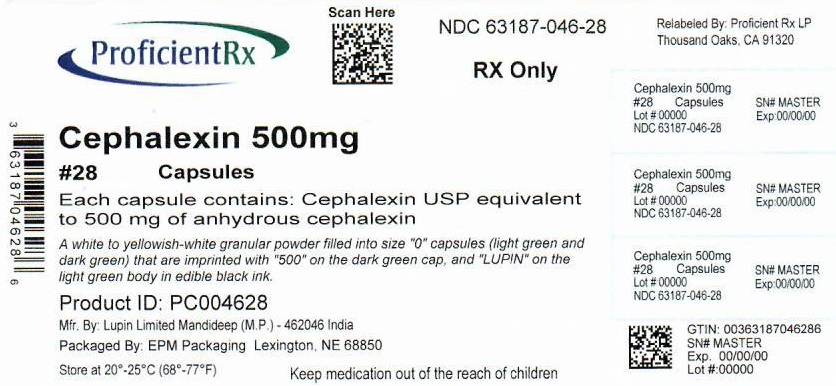
PACKAGE LABEL.PRINCIPAL DISPLAY PANEL 63187-046-28
Medicare Part D spend CMS · PART D · 2026 (Q1)
About this NDC listing & data coverage
What data is (and isn’t) available for this NDC — tap to expand
| NDC identity (package / product / labeler codes) | ✓ Available |
| Labeler | ✓ Available |
| Product & package description | ✓ Available |
| Marketing category & status | ✓ Available |
| Active ingredient / dosage form / route | ✓ Available |
| FDA label (SPL via DailyMed) | ✓ Available |
| Package photos | ✓ Available |
| Inactive ingredients (structured) | ✓ Available |
| NADAC pharmacy acquisition price (CMS) | — Not published for this NDC CMS publishes NADAC only for NDCs reported in its retail-pharmacy survey. |
| Orange Book / therapeutic-equivalence data | ✓ Available |
| HCPCS J-code billing crosswalk | — Not published for this NDC Most self-administered / retail products have no J-code — that is normal. |
| Medicaid utilization (CMS SDUD) | — Not published for this NDC CMS reports utilization only for NDCs with Medicaid claims above its privacy threshold. |