
Tramadol Hydrochloride 50 mg Tablet, Coated, 240-count — NDC 63187-063-64 (Billing 63187-0063-64)
This is a package of 240 tablets of Tramadol Hydrochloride 50 mg Tablet, Coated from Proficient Rx LP, marketed since Nov 2010 and currently FDA-listed.
Other active recalls for Tramadol Hydrochloride (different manufacturers) — 1 · tap to view
Identity & classification
Regulatory identifiers FDA, NLM and CMS codes for this package
Drug-database identifiers Medi-Span GPI and First Databank GCN / HICL / AHFS classification
- GSN (GCN sequence number): 023139
- GCN: 07221
- GPI-14 (Medi-Span): 65100095100320
- HICL (First Databank): 008317
- AHFS class code: 28:08.08.00
- RxCUI (RxNorm): 835603
Where does this data come from?
- FDA openFDA NDC Directory · synced Oct 1, 2026
- FDA label on DailyMed · label index refreshed Oct 1, 2026
- RxNorm (NLM RxNav) · catalog refreshed Oct 1, 2026
- Medi-Span GPI (licensed)
- First Databank (licensed) · refreshed Oct 1, 2026
RxNorm drug class
This medicine belongs to the Opioid Agonist class.
Where does this data come from?
- RxClass (NLM) · catalog refreshed Oct 1, 2026
Clinical
Tramadol is used to relieve certain types of pain. Tramadol is in a class of medications called opiate (narcotic) analgesics. It works by changing the way the brain and nervous system respond to pain.
Read the full MedlinePlus article ↗- It treats pain that is severe enough to need an opioid when other options haven’t worked or can’t be tolerated. Extended-release forms are for ongoing, around-the-clock pain, not a...
- Take it by mouth exactly as prescribed. If you have extended-release tablets, swallow them whole, never crush, chew or cut them. Don’t take it with other tramadol products.
- Dizziness, nausea, constipation, headache, sleepiness, itching and dry mouth are common. Call your doctor for seizures, severe dizziness, or agitation, fever and shaking. Slow brea...
- Avoid alcohol. Mixing tramadol with alcohol, sleep aids, benzodiazepines or other opioids can cause dangerous sedation and slowed breathing. Tell me about any antidepressants, MAOI...
Patient education
Supplement & herbal interactions
Where does this data come from?
- MedlinePlus (NLM) · refreshed Oct 1, 2026
- FDA label on DailyMed · label index refreshed Oct 1, 2026
Ask a licensed pharmacist directly — free, answered by our team.
Pricing
A drug doesn't have one price. Each row is a different public payment system, and none is what you'd pay at the counter — that depends on your insurance. The ⓘ on each row explains what it measures.
| Price system | Per each | Per package |
|---|---|---|
| Retail pharmacies payNADAC · weekly | Not in the retail survey — common for institutional, discontinued, or low-volume packs. | |
| Medicaid paysCMS SDUD · 12 mo | No recent Medicaid claims on file for this NDC — rare and low-volume NDCs are suppressed in the public data. | |
| Medicare drug plans payPart D · Q2 2026 | $0.1012 | $24.29 / 240 tablets |
Where does this data come from?
- CMS NADAC weekly file
- CMS ASP pricing files · refreshed Sep 20, 2026
- CMS Medicaid State Drug Utilization Data · refreshed Oct 3, 2026
- CMS Part D plan pricing files · refreshed Sep 24, 2026
- VA National Acquisition Center price file
Packaging — all sizes for this product
| Package NDC | Description | Marketing start | Marketing end | Status |
|---|---|---|---|---|
| 63187-0063-15 63187-063-15 Main listing | 15 TABLET, COATED in 1 BOTTLE | 2017-08-01 | — | Active |
| 63187-0063-20 63187-063-20 | 20 TABLET, COATED in 1 BOTTLE | 2016-11-01 | — | Active |
| 63187-0063-30 63187-063-30 | 30 TABLET, COATED in 1 BOTTLE | 2014-05-01 | — | Active |
| 63187-0063-40 63187-063-40 | 40 TABLET, COATED in 1 BOTTLE | 2014-05-01 | — | Active |
| 63187-0063-60 63187-063-60 | 60 TABLET, COATED in 1 BOTTLE | 2014-05-01 | — | Active |
| 63187-0063-64 You're viewing this | 240 TABLET, COATED in 1 BOTTLE | 2014-05-01 | — | Active |
| 63187-0063-72 63187-063-72 | 120 TABLET, COATED in 1 BOTTLE | 2014-05-01 | — | Active |
| 63187-0063-78 63187-063-78 | 180 TABLET, COATED in 1 BOTTLE | 2014-05-01 | — | Active |
| 63187-0063-90 63187-063-90 | 90 TABLET, COATED in 1 BOTTLE | 2014-05-01 | — | Active |
You're viewing the largest of 9 pack sizes for this product.
Pack size FAQ
What quantity is in this package?
How does this package differ from NDC 63187-0063-15?
What NDC number is used to bill for this package of Tramadol Hydrochloride 50 mg Tablet, Coated?
Therapeutic equivalents
| Product | Labeler | Pack | NADAC/unit | TE | Status | Price vs. this |
|---|---|---|---|---|---|---|
| Tramadol Hydrochloride 50 mg 00093-3301-01 | Teva | 100 tablets | $0.025 | AB | Availability likely | — |
| Tramadol Hydrochloride 50 mg 00904-7496-61 | Major | 1 tablet | $0.025 | AB | Availability likely | — |
| Tramadol Hydrochloride 50 mg 16571-0716-01 | Rising | 100 tablets | $0.025 | AB | Availability likely | — |
| Tramadol Hydrochloride 50 mg 29300-0355-01 | Unichem | 100 tablets | $0.025 | AB | Availability likely | — |
| Tramadol Hydrochloride 50 mg 60219-2348-01 | Amneal | 100 tablets | $0.025 | AB | Availability likely | — |
| Tramadol Hydrochloride 50 mg 60687-0795-01 | American | 1 tablet | $0.025 | AB | Availability likely | — |
| tramadol hydrochloride 50 mg 64380-0791-01 | Strides | 100 tablets | $0.025 | AB | Availability likely | — |
| Tramadol Hydrochloride 50 mg 64980-0614-01 | Rising | 100 tablets | $0.025 | AB | Availability likely | — |
| Tramadol Hydrochloride 50 mg 72888-0080-00 | Advagen | 1000 tablets | $0.025 | AB | Availability likely | — |
| Tramadol Hydrochloride 50 mg 52817-0195-00 | TRUPHARMA | 1000 tablets | $0.033 | AB | FDA listed | — |
| Tramadol Hydrochloride 50 mg 27808-0301-01 | Cranbury | 100 tablets | — | AB | FDA listed | — |
| Tramadol Hydrochloride 50 mg 50090-5789-00 | A-S | 30 tablets | — | AB | FDA listed | — |
| Tramadol Hydrochloride 50 mg 50090-5790-01 | A-S | 90 tablets | — | AB | FDA listed | — |
| Tramadol Hydrochloride 50 mg 51407-0007-01 | Golden | 100 tablets | — | AB | FDA listed | — |
| Tramadol Hydrochloride 50 mg 55700-0997-01 | Quality | 120 tablets | — | AB | FDA listed | — |
| Tramadol Hydrochloride 50 mg 58118-2348-08 | Clinical | 30 tablets | — | AB | FDA listed | — |
| Tramadol Hydrochloride 50 mg 59651-0441-01 | Aurobindo | 100 tablets | — | AB | FDA listed | — |
| tramadol hydrochloride 50 mg 60760-0588-30 | ST. | 30 tablets | — | AB | Discontinued | — |
| Tramadol Hydrochloride 50 mg 60760-0727-09 | St. | 9 tablets | — | AB | FDA listed | — |
| Tramadol Hydrochloride 50 mg 60760-0772-09 | ST. | 9 tablets | — | AB | FDA listed | — |
| Tramadol Hydrochloride 50 mgthis 63187-0063-64 | Proficient | 240 tablets | — | AB | FDA listed | — |
| Tramadol Hydrochloride 50 mg 65162-0627-01 | Amneal | 10 tablets | — | AB | FDA listed | — |
| Tramadol Hydrochloride 50 mg 67046-1209-03 | Coupler | 30 tablets | — | AB | FDA listed | — |
| Tramadol Hydrochloride 50 mg 67296-1834-01 | RedPharm | 10 tablets | — | AB | FDA listed | — |
| tramadol hydrochloride 50 mg 68071-3644-03 | NuCare | 30 tablets | — | AB | FDA listed | — |
| tramadol hydrochloride 50 mg 68071-3655-02 | NuCare | 12 tablets | — | AB | FDA listed | — |
| Tramadol Hydrochloride 50 mg 68071-4119-01 | NuCare | 120 tablets | — | AB | FDA listed | — |
| Tramadol Hydrochloride 50 mg 68788-4035-01 | Preferred | 100 tablets | — | AB | FDA listed | — |
| Tramadol Hydrochloride 50 mg 68788-4040-01 | Preferred | 100 tablets | — | AB | FDA listed | — |
| Tramadol Hydrochloride 50 mg 68788-4114-01 | Preferred | 90 tablets | — | AB | FDA listed | — |
| Tramadol Hydrochloride 50 mg 68788-8121-01 | Preferred | 100 tablets | — | AB | FDA listed | — |
| tramadol hydrochloride 50 mg 68788-8717-01 | Preferred | 100 tablets | — | AB | FDA listed | — |
| Tramadol Hydrochloride 50 mg 69238-2348-01 | Amneal | 100 tablets | — | AB | FDA listed | — |
| Tramadol Hydrochloride 50 mg 70518-3824-00 | REMEDYREPACK | 30 tablets | — | AB | FDA listed | — |
| tramadol hydrochloride 50 mg 70518-4248-00 | REMEDYREPACK | 30 tablets | — | AB | FDA listed | — |
| Tramadol Hydrochloride 50 mg 71205-0740-15 | Proficient | 15 tablets | — | AB | FDA listed | — |
| tramadol hydrochloride 50 mg 71335-2518-00 | Bryant | 50 tablets | — | AB | FDA listed | — |
| tramadol hydrochloride 50 mg 71335-2612-01 | Bryant | 8 tablets | — | AB | FDA listed | — |
| Tramadol Hydrochloride 50 mg 71335-2721-01 | Bryant | 8 tablets | — | AB | FDA listed | — |
| Tramadol Hydrochloride 50 mg 71335-3147-00 | Bryant | 50 tablets | — | AB | FDA listed | — |
| Tramadol Hydrochloride 50 mg 71335-9658-00 | Bryant | 50 tablets | — | AB | FDA listed | — |
| Tramadol Hydrochloride 50 mg 71610-0006-15 | Aphena | 15 tablets | — | AB | FDA listed | — |
| Tramadol Hydrochloride 50 mg 71610-0865-15 | Aphena | 15 tablets | — | AB | FDA listed | — |
| Tramadol Hydrochloride 50 mg 72189-0311-12 | DirectRx | 12 tablets | — | AB | FDA listed | — |
| Tramadol Hydrochloride 50 mg 76420-0733-00 | Asclemed | 1000 tablets | — | AB | FDA listed | — |
| Tramadol HCL 50 mg 80425-0057-01 | Advanced | 30 tablets | — | AB | FDA listed | — |
| Tramadol Hydrochloride 50 mg 80425-0274-01 | Advanced | 15 tablets | — | AB | FDA listed | — |
| Tramadol Hydrochloride 50 mg 80425-0276-01 | Advanced | 15 tablets | — | AB | FDA listed | — |
| Tramadol Hydrochloride 50 mg 80425-0501-01 | Advanced | 15 tablets | — | AB | FDA listed | — |
| Tramadol Hydrochloride 50 mg 80425-0548-01 | Advanced | 15 tablets | — | AB | FDA listed | — |
| tramadol hydrochloride 50 mg 82804-0114-15 | Proficient | 15 tablets | — | AB | FDA listed | — |
| Tramadol Hydrochloride 50 mg 82804-0142-15 | Proficient | 15 tablets | — | AB | FDA listed | — |
| tramadol hydrochloride 50 mg 82868-0052-30 | Northwind | 30 tablets | — | AB | FDA listed | — |
| Tramadol Hydrochloride 50 mg 87063-0117-01 | Asclemed | 100 tablets | — | AB | FDA listed | — |
| Tramadol Hydrochloride 50 mg 80425-0588-01 | Advanced | 15 tablets | — | AB | FDA listed | — |
| Tramadol Hydrochloride 50 mg 82868-0110-30 | Northwind | 30 tablets | — | AB | FDA listed | — |
| Tramadol Hydrochloride 50 mg 70518-4713-00 | REMEDYREPACK | 30 tablets | — | AB | FDA listed | — |
| Tramadol Hydrochloride 50 mg 87441-0089-01 | Unit | 30 tablets | — | AB | FDA listed | — |
Where does this data come from?
- FDA openFDA NDC Directory · synced Oct 1, 2026
- FDA Orange Book · refreshed Sep 3, 2026
- CMS NADAC weekly file
Availability & generic status
This product is an FDA-approved generic. Other versions of the same drug are listed under Therapeutic equivalents, least expensive first.
Where does this data come from?
- FDA Orange Book · refreshed Sep 3, 2026
What it looks like
Where does this data come from?
- FDA label on DailyMed · label index refreshed Oct 1, 2026
Inactive Ingredients / Excipients
Inactive ingredients, also called excipients, are components of the drug product other than the active ingredient. They may include fillers, dyes, coatings, preservatives, flavors, or other formulation ingredients.
💡 Tap an ingredient (hover on desktop) to see what it is and why it’s used.
-
UNII 3NXW29V3WO
Hypromellose is a plant-based thickener made from cellulose. It's used in medicines as a binder to hold ingredients together, a coating for tablets, and a thickener for liquids.
-
UNII EWQ57Q8I5X
Lactose monohydrate is a natural sugar derived from milk. It serves as a filler and binder in tablets and capsules, helping create the proper size, texture, and consistency of the medicine.
-
UNII 70097M6I30
Magnesium stearate is a salt made from magnesium and stearic acid, a fatty substance. It's used in tablets and capsules as a lubricant and glidant to help ingredients flow smoothly during manufacturing and prevent sticking.
-
UNII OP1R32D61U
Microcrystalline cellulose is a purified form of cellulose, a natural fiber from plant sources. It acts as a binder and filler in tablets and capsules, helping hold ingredients together and give the medicine its shape and size.
-
UNII 3WJQ0SDW1A
Polyethylene glycol is a synthetic liquid or solid polymer used in medicines as a solvent, lubricant, and humectant. It helps dissolve active ingredients, reduces friction during manufacturing, and retains moisture in the final product.
-
UNII 6OZP39ZG8H
Polysorbate 80 is a synthetic emulsifier derived from sorbitol and oleic acid. It helps mix oil and water-based ingredients together in medications and improves how the product disperses in the body.
-
UNII 5856J3G2A2
A starch-based powder made from potatoes and processed with sodium. It acts as a disintegrant, helping the tablet or capsule break apart quickly in the stomach so the medicine can be absorbed.
-
UNII O8232NY3SJ
A plant-based carbohydrate derived from corn kernels. It acts as a filler to add bulk, a binder to hold ingredients together, and a disintegrant to help the tablet break apart in your stomach for absorption.
-
UNII 15FIX9V2JP
Titanium dioxide is a bright white mineral powder commonly used as a colorant and opacifying agent. It makes pills and tablets white or lighter in color and helps make coatings non-transparent.
9 inactive ingredients listed in the exact product block matched to this NDC.
Where does this data come from?
ingredient classCode="IACT" elements from the exact product block matched by this NDC. Label-section narrative from DailyMed / the openFDA label index is shown separately when available.- FDA label on DailyMed · label index refreshed Oct 1, 2026
- FDA openFDA NDC Directory · synced Oct 1, 2026
Inactive ingredient FAQ
Are inactive ingredients the same for every manufacturer?
Why might an inactive ingredient be missing?
Can inactive ingredients matter?
Manufacturer & labeler
Where does this data come from?
- FDA openFDA NDC Directory · synced Oct 1, 2026
- Drugs@FDA
Full prescribing information FDA SPL
🎯 Indications and Usage ▾
INDICATIONS AND USAGE Tramadol hydrochloride tablets, USP are indicated for the management of moderate to moderately severe pain in adults.
⏱️ Dosage and Administration ▾
DOSAGE AND ADMINISTRATION Adults (17 years of age and over) For patients with moderate to moderately severe chronic pain not requiring rapid onset of analgesic effect, the tolerability of tramadol hydrochloride tablets, USP can be improved by initiating therapy with a titration regimen: The total daily dose may be increased by 50 mg as tolerated every 3 days to reach 200 mg/day (50 mg q.i.d.). After titration, tramadol hydrochloride tablets, USP 50 to 100 mg can be administered as needed for pain relief every 4 to 6 hours not to exceed 400 mg/day.
For the subset of patients for whom rapid onset of analgesic effect is required and for whom the benefits outweigh the risk of discontinuation due to adverse events associated with higher initial doses, tramadol hydrochloride tablets, USP 50 mg to 100 mg can be administered as needed for pain relief every four to six hours, not to exceed 400 mg per day. Individualization of Dose Good pain management practice dictates that the dose be individualized according to patient need using the lowest beneficial dose. Studies with tramadol in adults have shown that starting at the lowest possible dose and titrating upward will result in fewer discontinuations and increased tolerability. • In all patients with creatinine clearance less than 30 mL/min , it is recommended that the dosing interval of tramadol hydrochloride tablets be increased to 12 hours, with a maximum daily dose of 200 mg.
Since only 7% of an administered dose is removed by hemodialysis, dialysis patients can receive their regular dose on the day of dialysis. • The recommended dose for adult patients with cirrhosis is 50 mg every 12 hours. • In general, dose selection for an elderly patient over 65 years old should be cautious, usually starting at the low end of the dosing range, reflecting the greater frequency of decreased hepatic, renal or cardiac function and of concomitant disease or other drug therapy. For elderly patients over 75 years old , total dose should not exceed 300 mg/day.
⛔ Contraindications ▾
CONTRAINDICATIONS Tramadol hydrochloride tablets, USP should not be administered to patients who have previously demonstrated hypersensitivity to tramadol, any other component of this product or opioids. Tramadol hydrochloride tablets, USP are contraindicated in any situation where opioids are contraindicated, including acute intoxication with any of the following: alcohol, hypnotics, narcotics, centrally acting analgesics, opioids or psychotropic drugs. Tramadol hydrochloride tablets, USP may worsen central nervous system and respiratory depression in these patients.
⚠️ Warnings ▾
WARNINGS Seizure Risk Seizures have been reported in patients receiving Tramadol hydrochloride within the recommended dosage range. Spontaneous post-marketing reports indicate that seizure risk is increased with doses of tramadol hydrochloride above the recommended range. Concomitant use of tramadol hydrochloride increases the seizure risk in patients taking: • Selective serotonin re-uptake inhibitors (SSRI antidepressants or anorectics), • Tricyclic antidepressants (TCAs), and other tricyclic compounds (e.g., cyclobenzaprine , promethazine, etc.), or • Other opioids.
Administration of tramadol hydrochloride may enhance the seizure risk in patients taking: • MAO inhibitors (see also WARNINGS, Use with MAO Inhibitors and Serotonin Re-Uptake Inhibitors ), • Neuroleptics, or • Other drugs that reduce the seizure threshold. Risk of convulsions may also increase in patients with epilepsy, those with a history of seizures, or in patients with a recognized risk for seizure (such as head trauma, metabolic disorders, alcohol and drug withdrawal, CNS infections). In tramadol hydrochloride overdose, naloxone administration may increase the risk of seizure.
Suicide Risk • Do not prescribe tramadol hydrochloride for patients who are suicidal or addiction-prone. • Prescribe tramadol hydrochloride tablets with caution for patients who are taking tranquilizers or antidepressant drug and patients who use alcohol in excess and who suffer from emotional disturbance or depression. The judicious prescribing of tramadol is essential to the safe use of this drug. With patients who are depressed or suicidal, consideration should be given to the use of nonnarcotic analgesics.
Tramadol-related deaths have occurred in patients with previous histories of emotional disturbances or suicidal ideation or attempts as well as histories of misuse of tranquilizers, alcohol, and other CNS-active drugs (see WARNINGS, Risk of Overdosage). Serotonin Syndrome Risk The development of a potentially life-threatening serotonin syndrome may occur with the use of tramadol products, including tramadol hydrochloride, particularly with concomitant use of serotonergic drugs such as SSRIs, SNRIs, TCAs, MAOIs, and triptans, with drugs which impair metabolism of serotonin (including MAOIs), and with drugs which impair metabolism of tramadol (CYP2D6 and CYP3A4 inhibitors).
This may occur within the recommended dose (see CLINICAL PHARMACOLOGY, Pharmacokinetics ). Serotonin syndrome may include mental-status changes (e.g., agitation, hallucinations, coma), autonomic instability (e.g., tachycardia, labile blood pressure, hyperthermia), neuromuscular aberrations (e.g., hyperreflexia, incoordination) and/or gastrointestinal symptoms (e.g., nausea, vomiting, diarrhea). Anaphylactoid Reactions Serious and rarely fatal anaphylactoid reactions have been reported in patients receiving therapy with tramadol hydrochloride.
When these events do occur it is often following the first dose. Other reported allergic reactions include pruritus, hives, bronchospasm, angioedema, toxic epidermal necrolysis and Stevens-Johnson syndrome. Patients with a history of anaphylactoid reactions to codeine and other opioids may be at increased risk and therefore should not receive tramadol hydrochloride (see CONTRAINDICATIONS ).
Respiratory Depression Administer tramadol hydrochoride cautiously in patients at risk for respiratory depression. In these patients alternative non-opioid analgesics should be considered. When large doses of tramadol hydrochloride are administered with anesthetic medications or alcohol, respiratory depression may result.
Respiratory depression should be treated as an overdose. If naloxone is to be administered, use cautiously because it may precipitate seizures (see WARNINGS, Seizure Risk and OVERDOSAGE ). Interaction With Central Nervous System (CNS) Depressants Tramadol hydrochloride should be used with caution and in reduced dosages when administered to patients receiving CNS depress… [Excerpted — this section continues on DailyMed.]
🤒 Adverse Reactions ▾
ADVERSE REACTIONS Tramadol hydrochloride was administered to 550 patients during the double-blind or open-label extension periods in U.S. studies of chronic nonmalignant pain. Of these patients, 375 were 65 years old or older. Table 2 reports the cumulative incidence rate of adverse reactions by 7, 30 and 90 days for the most frequent reactions (5% or more by 7 days).
The most frequently reported events were in the central nervous system and gastrointestinal system. Although the reactions listed in the table are felt to be probably related to tramadol hydrochloride administration, the reported rates also include some events that may have been due to underlying disease or concomitant medication. The overall incidence rates of adverse experiences in these trials were similar for tramadol hydrochloride and the active control groups, TYLENOL® with Codeine #3 (acetaminophen 300 mg with codeine phosphate 30 mg), and aspirin 325 mg with codeine phosphate 30 mg, however, the rates of withdrawals due to adverse events appeared to be higher in the tramadol hydrochloride groups.
Table 2: Cumulative Incidence of Adverse Reactions for Tramadol Hydrochloride in Chronic Trials of Nonmalignant Pain (N=427) Up to 7 Days Up to 30 Days Up to 90 Days Dizziness/Vertigo 26% 31% 33% Nausea 24% 34% 40% Constipation 24% 38% 46% Headache 18% 26% 32% Somnolence 16% 23% 25% Vomiting 9% 13% 17% Pruritus 8% 10% 11% ‘CNS Stimulation’ 1 7% 11% 14% Asthenia 6% 11% 12% Sweating 6% 7% 9% Dyspepsia 5% 9% 13% Dry Mouth 5% 9% 10% Diarrhea 5% 9% 10% 1 “CNS Stimulation” is a composite of nervousness, anxiety, agitation, tremor, spasticity, euphoria, emotional lability and hallucinations Incidence 1% to less than 5% possibly causally related: the following lists adverse reactions that occurred with an incidence of 1% to less than 5% in clinical trials, and for which the possibility of a causal relationship with tramadol hydrochloride exists.
Body as a Whole: Malaise. Cardiovascular: Vasodilation. Central Nervous System: Anxiety, Confusion, Coordination disturbance, Euphoria, Miosis, Nervousness, Sleep disorder.
Gastrointestinal: Abdominal pain, Anorexia, Flatulence. Musculoskeletal: Hypertonia. Skin: Rash.
Special Senses: Visual disturbance. Urogenital: Menopausal symptoms, Urinary frequency, Urinary retention. Incidence less than 1%, possibly causally related: the following lists adverse reactions that occurred with an incidence of less than 1% in clinical trials and/or reported in post-marketing experience.
Body as a Whole: Accidental injury, Allergic reaction, Anaphylaxis, Death, Suicidal tendency, Weight loss, Serotonin syndrome (mental status change, hyperreflexia, fever, shivering, tremor, agitation, diaphoresis, seizures and coma). Cardiovascular: Orthostatic hypotension, Syncope, Tachycardia. Central Nervous System: Abnormal gait, Amnesia, Cognitive dysfunction, Depression, Difficulty in concentration, Hallucinations, Paresthesia, Seizure (see WARNINGS ).
Tremor. Respiratory: Dyspnea. Skin: Stevens-Johnson syndrome/Toxic epidermal necrolysis, Urticaria, Vesicles.
Special Senses: Dysgeusia. Urogenital: Dysuria, Menstrual disorder. Other adverse experiences, causal relationship unknown: A variety of other adverse events were reported infrequently in patients taking tramadol hydrochloride during clinical trials and/or reported in post-marketing experience.
A causal relationship between tramadol hydrochloride and these events has not been determined. However, the most significant events are listed below as alerting information to the physician. Cardiovascular: Abnormal ECG, Hypertension, Hypotension, Myocardial ischemia, Palpitations, Pulmonary edema, Pulmonary embolism.
Central Nervous System: Migraine, Speech disorders. Gastrointestinal: Gastrointestinal bleeding, Hepatitis, Stomatitis, Liver failure. Laboratory Abnormalities: Creatinine increase, Elevated liver enzymes, Hemoglobin decrease, Proteinuria.
Sensory: Cataracts, Deafness, Tinnitus.
🆘 Overdosage ▾
OVERDOSAGE Acute overdosage with tramadol can be manifested by respiratory depression, somnolence progressing to stupor or coma, skeletal muscle flaccidity, cold and clammy skin, constricted pupils, seizures, bradycardia, hypotension, cardiac arrest, and death. Deaths due to overdose have been reported with abuse and misuse of tramadol (see WARNINGS, Misuse, Abuse, and Diversion ). Review of case reports has indicated that the risk of fatal overdose is further increased when tramadol is abused concurrently with alcohol or other CNS depressants, including other opioids.
In the treatment of tramadol overdosage, primary attention should be given to the reestablishment of a patent airway and institution of assisted or controlled ventilation. Supportive measures (including oxygen and vasopressors) should be employed in the management of circulatory shock and pulmonary edema accompanying overdose as indicated. Cardiac arrest or arrhythmias may require cardiac massage or defibrillation.
While naloxone will reverse some, but not all, symptoms caused by overdosage with tramadol, the risk of seizures is also increased with naloxone administration. In animals convulsions following the administration of toxic doses of tramadol hydrochloride tablets could be suppressed with barbiturates or benzodiazepines but were increased with naloxone. Naloxone administration did not change the lethality of an overdose in mice.
Hemodialysis is not expected to be helpful in an overdose because it removes less than 7% of the administered dose in a 4-hour dialysis period.
🧬 Clinical Pharmacology ▾
CLINICAL PHARMACOLOGY PHARMACODYNAMICS Tramadol Hydrochloride contains tramadol, a centrally acting synthetic opioid analgesic. Although its mode of action is not completely understood, from animal tests, at least two complementary mechanisms appear applicable: binding of parent and M1 metabolite to μ-opioid receptors and weak inhibition of re-uptake of norepinephrine and serotonin. Opioid activity is due to both low affinity binding of the parent compound and higher affinity binding of the O-demethylated metabolite M1 to μ-opioid receptors.
In animal models, M1 is up to 6 times more potent than tramadol in producing analgesia and 200 times more potent in μ-opioid binding. Tramadol-induced analgesia is only partially antagonized by the opiate antagonist naloxone in several animal tests. The relative contribution of both tramadol and M1 to human analgesia is dependent upon the plasma concentrations of each compound (see CLINICAL PHARMACOLOGY, Pharmacokinetics ).
Tramadol has been shown to inhibit reuptake of norepinephrine and serotonin in vitro , as have some other opioid analgesics. These mechanisms may contribute independently to the overall analgesic profile of tramadol hydrochloride. Analgesia in humans begins approximately within one hour after administration and reaches a peak in approximately two to three hours.
Apart from analgesia, tramadol hydrochloride administration may produce a constellation of symptoms (including dizziness, somnolence, nausea, constipation, sweating and pruritus) similar to that of other opioids. In contrast to morphine, tramadol has not been shown to cause histamine release. At therapeutic doses, tramadol hydrochloride has no effect on heart rate, left-ventricular function or cardiac index.
Orthostatic hypotension has been observed. PHARMACOKINETICS The analgesic activity of tramadol hydrochloride is due to both parent drug and the M1 metabolite (see CLINICAL PHARMACOLOGY, Pharmacodynamics ). Tramadol is administered as a racemate and both the [-] and [+] forms of both tramadol and M1 are detected in the circulation.
Linear pharmacokinetics have been observed following multiple doses of 50 and 100 mg to steady-state. Absorption The mean absolute bioavailability of a 100 mg oral dose is approximately 75%. The mean peak plasma concentration of racemic tramadol and M1 occurs at two and three hours, respectively, after administration in healthy adults.
In general, both enantiomers of tramadol and M1 follow a parallel time course in the body following single and multiple doses although small differences (∼ 10%) exist in the absolute amount of each enantiomer present. Steady-state plasma concentrations of both tramadol and M1 are achieved within two days with four times per day dosing. There is no evidence of self-induction (see Figure 1 and Table 1 below).
Figure 1: Mean Tramadol and M1 Plasma Concentration Profiles after a Single 100 mg Oral Dose and after Twenty-Nine 100 mg Oral Doses of Tramadol HCl given four times per day Table 1 Mean (%CV) Pharmacokinetic Parameters for Racemic Tramadol and M1 Metabolite Population/ Dosage Regimen a Parent Drug/ Metabolite PeakConc. (ng/mL) Time to Peak (hrs) Clearence/F b (mL/min/Kg) t 1/2 (hrs) Healthy Adults, 100 mg qid, MD p.o. Tramadol M1 592 (30) 110 (29) 2.3 (61) 2.4 (46) 5.90 (25) c 6.7 (15) 7.0 (14) Healthy Adults, 100 mg SD p.o.
Tramadol M1 308 (25) 55.0 (36) 1.6 (63) 3.0 (51) 8.50 (31) c 5.6 (20) 6.7 (16) Geriatric, (>75 yrs) 50 mg SD p.o. Tramadol M1 208 (31) d 2.1 (19) d 6.89 (25) c 7.0 (23) d Hepatic Impaired, 50 mg SD p.o. Tramadol M1 217 (11) 19.4 (12) 1.9 (16) 9.8 (20) 4.23 (56) c 13.3 (11) 18.5 (15) Renal Impaired, CL cr 10-30 mL/min 100 mg SD i.v Tramadol M1 c c c c 4.23 (54) c 10.6 (31) 11.5 (40) Renal Impaired, CL cr <5mL/min 100 mg SD i.v Tramadol M1 c c c c 3.73 (17) c 11.0 (29) 16.9 (18) a SD = Single dose, MD = Multiple dose, p.o.= Oral administration, i.v.= Intravenous administration, q.i.d. = Four times daily b F represents the oral… [Excerpted — this section continues on DailyMed.]
📦 How Supplied / Storage and Handling ▾
HOW SUPPLIED Tramadol hydrochloride C-IV tablets, USP 50 mg are supplied as unscored, white, round film coated tablets debossed “AN” over “627”. They are supplied as follows: Bottles of 15 tablets: NDC 63187-063-15 Bottles of 20 tablets: NDC 63187-063-20 Bottles of 30 tablets: NDC 63187-063-30 Bottles of 40 tablets: NDC 63187-063-40 Bottles of 60 tablets: NDC 63187-063-60 Bottles of 90 tablets: NDC 63187-063-90 Bottles of 120 tablets: NDC 63187-063-72 Bottles of 180 tablets: NDC 63187-063-78 Bottles of 240 tablets: NDC 63187-063-64 Dispense in a tight container as defined in the USP.
Store at 25°C (77°F); excursions permitted to 15° to 30°C (59° to 86°F).
📋 Description ▾
DESCRIPTION Tramadol hydrochloride C-IV tablets, USP are a centrally acting analgesic. The chemical name for tramadol hydrochloride is (±)cis-2-[(dimethylamino)methyl]-1-(3methoxyphenyl) cyclohexanol hydrochloride. Its structural formula is: The molecular formula of tramadol hydrochloride is C 16 H 25 NO 2 •HCl and its molecular weight is 299.8.
Tramadol hydrochloride is a white, bitter, crystalline and odorless powder. It is readily soluble in water and ethanol and has a pKa of 9.41. The n-octanol/water log partition coefficient (logP) is 1.35 at pH 7.
Each tramadol hydrochloride tablet, USP intended for oral administration contains 50 mg of tramadol hydrochloride. In addition, it also contains the following inactive ingredients: hypromellose, lactose monohydrate, magnesium stearate, microcrystalline cellulose, polyethylene glycol, polysorbate 80, pregelatinized starch, sodium starch glycolate, and titanium dioxide. 7bb9a2e6-figure-01
⚠️ Precautions ▾
PRECAUTIONS Acute Abdominal Conditions The administration of tramadol hydrochloride may complicate the clinical assessment of patients with acute abdominal conditions. Use in Renal and Hepatic Disease Impaired renal function results in a decreased rate and extent of excretion of tramadol and its active metabolite, M1. In patients with creatinine clearances of less than 30 mL/min, dosing reduction is recommended (see DOSAGE AND ADMINISTRATION ).
Metabolism of tramadol and M1 is reduced in patients with advanced cirrhosis of the liver. In cirrhotic patients, dosing reduction is recommended (see DOSAGE AND ADMINISTRATION ). With the prolonged half-life in these conditions, achievement of steady-state is delayed, so that it may take several days for elevated plasma concentrations to develop.
Information for Patients • Patients should be informed that tramadol hydrochloride may cause seizures and/or serotonin syndrome with concomitant use of serotonergic agents (including SSRIs, SNRIs, and triptans) or drugs that significantly reduce the metabolic clearance of tramadol. • Tramadol hydrochloride may impair mental or physical abilities required for the performance of potentially hazardous tasks such as driving a car or operating machinery. • Tramadol hydrochloride should not be taken with alcohol containing beverages. • Tramadol hydrochloride should be used with caution when taking medications such as tranquilizers, hypnotics or other opiate containing analgesics. • The patient should be instructed to inform the physician if they are pregnant, think they might become pregnant, or are trying to become pregnant (see PRECAUTIONS, Labor and Delivery ). • The patient should understand the single-dose and 24-hour dose limit and the time interval between doses, since exceeding these recommendations can result in respiratory depression, seizures and death.
Drug Interactions CYP2D6 and CYP3A4 Inhibitors Concomitant administration of CYP2D6 and/or CYP3A4 inhibitors (see CLINICAL PHARMACOLOGY, Pharmacokinetics ), such as quinidine, fluoxetine, paroxetine and amitriptyline (CYP2D6 inhibitors), and ketoconazole and erythromycin (CYP3A4 inhibitors), may reduce metabolic clearance of tramadol increasing the risk for serious adverse events including seizures and serotonin syndrome. Serotonergic Drugs There have been postmarketing reports of serotonin syndrome with use of tramadol and SSRIs/SNRIs or MAOIs and α2-adrenergic blockers.
Caution is advised when tramadol hydrochloride is coadministered with other drugs that may affect the serotonergic neurotransmitter systems, such as SSRIs, MAOIs, triptans, linezolid (an antibiotic which is a reversible non-selective MAOI), lithium, or St. John’s Wort. If concomitant treatment of tramadol hydrochloride with a drug affecting the serotonergic neurotransmitter system is clinically warranted, careful observation of the patient is advised, particularly during treatment initiation and dose increases (see WARNINGS, Serotonin Syndrome ).
Triptans Based on the mechanism of action of tramadol and the potential for serotonin syndrome, caution is advised when tramadol hydrochloride is coadministered with a triptan. If concomitant treatment of tramadol hydrochloride with a triptan is clinically warranted, careful observation of the patient is advised, particularly during treatment initiation and dose increases (see WARNINGS, Serotonin Syndrome ). Use With Carbamazepine Patients taking carbamazepine may have a significantly reduced analgesic effect of tramadol hydrochloride.
Because carbamazepine increases tramadol metabolism and because of the seizure risk associated with tramadol, concomitant administration of tramadol hydrochloride and carbamazepine is not recommended. Use With Quinidine Tramadol is metabolized to M1 by CYP2D6. Quinidine is a selective inhibitor of that isoenzyme, so that concomitant administration of quinidine and tramadol hydrochloride results in increased concentrations of tramadol and reduced co… [Excerpted — this section continues on DailyMed.]
🔬 Clinical Studies ▾
CLINICAL STUDIES Tramadol hydrochloride has been given in single oral doses of 50, 75 and 100 mg to patients with pain following surgical procedures and pain following oral surgery (extraction of impacted molars). In single-dose models of pain following oral surgery, pain relief was demonstrated in some patients at doses of 50 mg and 75 mg. A dose of 100 mg tramadol hydrochloride tended to provide analgesia superior to codeine sulfate 60 mg, but it was not as effective as the combination of aspirin 650 mg with codeine phosphate 60 mg.
Tramadol hydrochloride has been studied in three long-term controlled trials involving a total of 820 patients, with 530 patients receiving tramadol hydrochloride. Patients with a variety of chronic painful conditions were studied in double-blind trials of one to three months duration. Average daily doses of approximately 250 mg of tramadol hydrochloride in divided doses were generally comparable to five doses of acetaminophen 300 mg with codeine phosphate 30 mg (TYLENOL® with Codeine #3) daily, five doses of aspirin 325 mg with codeine phosphate 30 mg daily, or two to three doses of acetaminophen 500 mg with oxycodone hydrochloride 5 mg (TYLOX® ) daily.
Titration Trials In a randomized, blinded clinical study with 129 to 132 patients per group, a 10-day titration to a daily tramadol hydrochloride dose of 200 mg (50 mg four times per day), attained in 50 mg increments every 3 days, was found to result in fewer discontinuations due to dizziness or vertigo than titration over only 4 days or no titration. 7bb9a2e6-figure-03
🔒 Drug Abuse and Dependence ▾
DRUG ABUSE AND DEPENDENCE Abuse Tramadol has mu-opioid agonist activity. Tramadol hydrochloride tablets can be abused and may be subject to criminal diversion. Addiction is a primary, chronic, neurobiologic disease, with genetic, psychosocial, and environmental factors influencing its development and manifestations.
Drug addiction is characterized by behaviors that include one or more of the following: impaired control over drug use, compulsive use, use for non-medical purposes, and continued use despite harm or risk of harm, and craving. Drug addiction is a treatable disease, utilizing a multidisciplinary approach, but relapse is common. “Drug-seeking” behavior is very common in addicts and drug abusers. Drug-seeking tactics include emergency calls or visits near the end of office hours, refusal to undergo appropriate examination, testing or referral, repeated “loss” of prescriptions, tampering with prescriptions and reluctance to provide prior medical records or contact information for other treating physician(s). “Doctor shopping” to obtain additional prescriptions is common among drug abusers and people suffering from untreated addiction.
Abuse and addiction are separate and distinct from physical dependence and tolerance. Physicians should be aware that addiction may not be accompanied by concurrent tolerance and symptoms of physical dependence in all addicts. In addition, abuse of tramadol hydrochloride can occur in the absence of true addiction and is characterized by misuse for non-medical purposes, often in combination with other psychoactive substances.
Concerns about abuse and addiction should not prevent the proper management of pain. However all patients treated with opioids require careful monitoring for signs of abuse and addiction, because use of opioid analgesic products carries the risk of addiction even under appropriate medical use. Proper assessment of the patient and periodic re-evaluation of therapy are appropriate measures that help to limit the potential abuse of this product.
Tramadol hydrochloride tablets is intended for oral use only. Dependence Tolerance is the need for increasing doses of drugs to maintain a defined effect such as analgesia (in the absence of disease progression or other external factors). Physical dependence is manifested by withdrawal symptoms after abrupt discontinuation of a drug or upon administration of an antagonist (see also WARNINGS, Withdrawal ).
The opioid abstinence or withdrawal syndrome is characterized by some or all of the following: restlessness, lacrimation, rhinorrhea, yawning, perspiration, chills, myalgia, and mydriasis. Other symptoms also may develop, including irritability, anxiety, backache, joint pain, weakness, abdominal cramps, insomnia, nausea, anorexia, vomiting, diarrhea, or increased blood pressure, respiratory rate, or heart rate. Generally, tolerance and/or withdrawal are more likely to occur the longer a patient is on continuous therapy with tramadol hydrochloride tablets.
📄 Package Label / Principal Display Panel ▾
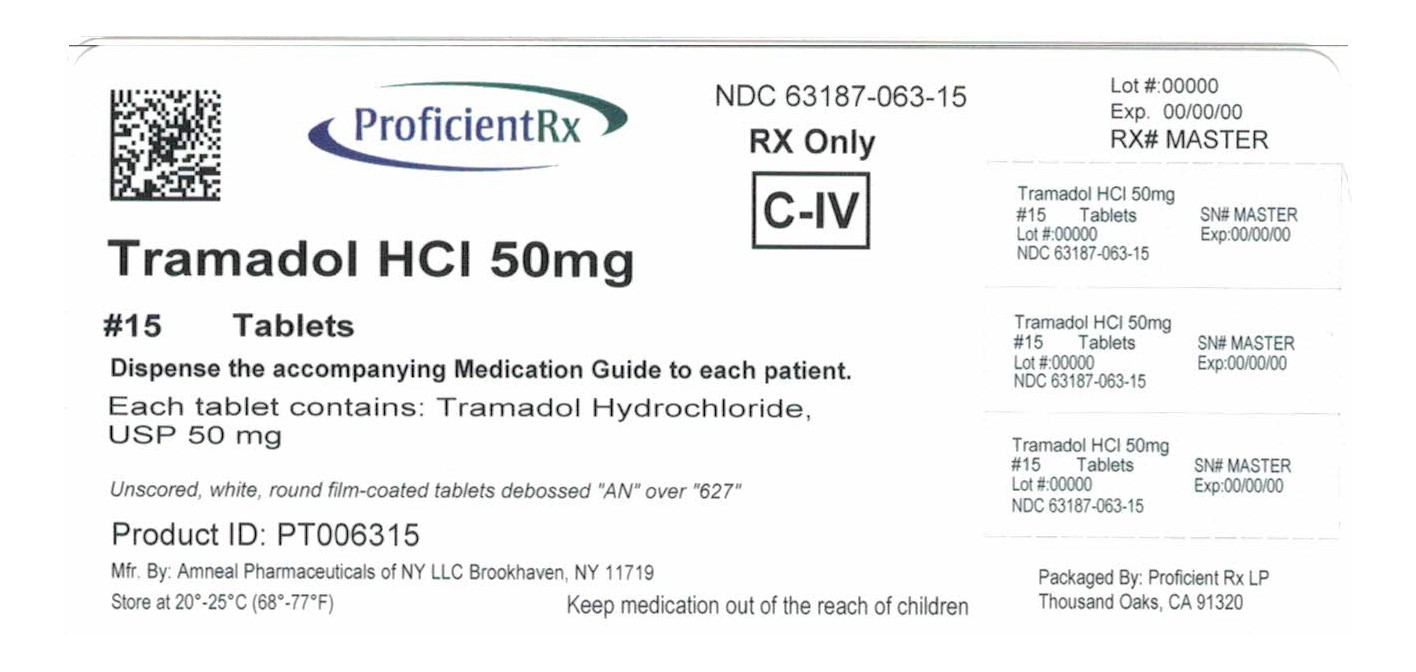
PACKAGE LABEL.PRINCIPAL DISPLAY PANEL 63187-063-15
About this NDC listing & data coverage
What data is (and isn’t) available for this NDC — tap to expand
| NDC identity (package / product / labeler codes) | ✓ Available |
| Labeler | ✓ Available |
| Product & package description | ✓ Available |
| Marketing category & status | ✓ Available |
| Active ingredient / dosage form / route | ✓ Available |
| FDA label (SPL via DailyMed) | ✓ Available |
| Package photos | ✓ Available |
| Inactive ingredients (structured) | ✓ Available |
| NADAC pharmacy acquisition price (CMS) | — Not published for this NDC CMS publishes NADAC only for NDCs reported in its retail-pharmacy survey. |
| Orange Book / therapeutic-equivalence data | ✓ Available |
| HCPCS J-code billing crosswalk | — Not published for this NDC Most self-administered / retail products have no J-code — that is normal. |
| Medicaid utilization (CMS SDUD) | — Not published for this NDC CMS reports utilization only for NDCs with Medicaid claims above its privacy threshold. |