
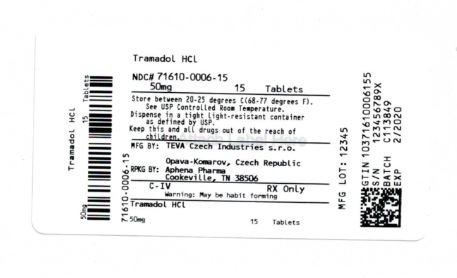
NDC 71610-0006-15: Tramadol Hydrochloride 50 mg Tablet, Film Coated, Bottle of 15
This is a package of 15 tablets of Tramadol Hydrochloride 50 mg Tablet, Film Coated from Aphena Pharma Solutions - Tennessee, LLC, no longer marketed (first marketed Aug 2017), no longer in the FDA NDC Directory. It is the main listing for this product, which comes in 27 package sizes.
NDC Database Record
One package, one record: these facts belong to NDC 71610-006-15 alone.
- Record
- FDA NDC Directory package listing · Human prescription drug
- Code segments
- 71610 labeler · 006 product · 15 package
- Package marketed since
- Oct 6, 2017
- Sample package
- No — commercial package
- Listing certified through
- Dec 31, 2026
- Billing quantity
- 15 EA per package
- Barcode (UPC-A, from the NDC)
- 3 7161000615 8
- FDA record last changed
- Jul 24, 2026
Other active recalls for Tramadol Hydrochloride (different manufacturers) — 2 · tap to view
Identity & Classification
Regulatory identifiers FDA, NLM and CMS codes for this package
Drug-database identifiers Medi-Span GPI and First Databank GCN / HICL / AHFS classification
- GSN (GCN sequence number): 023139
- GCN: 07221
- GPI-14 (Medi-Span): 65100095100320
- HICL (First Databank): 008317
- AHFS class code: 28:08.08.00
- RxCUI (RxNorm): 835603
Where does this data come from?
- FDA openFDA NDC Directory · synced Nov 26, 2026
- FDA label on DailyMed · label index refreshed Nov 26, 2026
- RxNorm (NLM RxNav) · catalog refreshed Nov 26, 2026
- Medi-Span GPI (licensed)
- First Databank (licensed) · refreshed Nov 26, 2026
RxNorm Drug Class
This medicine belongs to the Opioid Agonist class.
Where does this data come from?
- RxClass (NLM) · catalog refreshed Nov 26, 2026
Clinical
Tramadol is used to relieve certain types of pain. Tramadol is in a class of medications called opiate (narcotic) analgesics. It works by changing the way the brain and nervous system respond to pain.
Read the full MedlinePlus article ↗- No. Alcohol adds to tramadol's sedating effects and can cause profound sleepiness, slowed breathing, coma and even death. The same goes for sleeping pills, anxiety medicines and ot...
- Can I drink alcohol while taking Tramadol?
- No. Extended-release tablets and capsules must be swallowed whole. Crushing or chewing releases the whole dose at once, which can cause a fatal overdose.
- Can I crush or chew my extended-release Tramadol?
Patient education
Drug interactions
Supplement & herbal interactions
Where does this data come from?
- MedlinePlus (NLM) · refreshed Nov 26, 2026
- FDA label on DailyMed · label index refreshed Nov 26, 2026
Ask a licensed pharmacist directly — free, answered by our team.
Pricing
A drug doesn't have one price. Each row is a different public payment system, and none is what you'd pay at the counter — that depends on your insurance. The ⓘ on each row explains what it measures.
| Price system | Per each | Per package |
|---|---|---|
| Retail pharmacies payNADAC · weekly | Not in the retail survey — common for institutional, discontinued, or low-volume packs. | |
| Medicaid paysCMS SDUD · 12 mo | No recent Medicaid claims on file for this NDC — rare and low-volume NDCs are suppressed in the public data. | |
| Medicare drug plans payPart D · Q2 2026 | $0.1012 | $1.52 / 15 tablets |
Where does this data come from?
- CMS NADAC weekly file
- CMS ASP pricing files · refreshed Nov 20, 2026
- CMS Medicaid State Drug Utilization Data · refreshed Nov 27, 2026
- CMS Part D plan pricing files · refreshed Nov 24, 2026
- VA National Acquisition Center price file
Packaging — All Sizes for This Product
| Package NDC | Description | Marketing start | Marketing end | Status |
|---|---|---|---|---|
| 71610-0006-15 You're viewing this Main listing | 15 TABLET, FILM COATED in 1 BOTTLE | 2017-10-06 | — | Discontinued by firm |
| 71610-0006-20 71610-006-20 | 20 TABLET, FILM COATED in 1 BOTTLE | 2017-10-06 | — | Discontinued by firm |
| 71610-0006-24 71610-006-24 | 224 TABLET, FILM COATED in 1 BOTTLE | 2017-10-06 | — | Discontinued by firm |
| 71610-0006-28 71610-006-28 | 28 TABLET, FILM COATED in 1 BOTTLE | 2017-10-06 | — | Discontinued by firm |
| 71610-0006-30 71610-006-30 | 30 TABLET, FILM COATED in 1 BOTTLE | 2017-10-06 | — | Discontinued by firm |
| 71610-0006-40 71610-006-40 | 40 TABLET, FILM COATED in 1 BOTTLE | 2017-10-06 | — | Discontinued by firm |
| 71610-0006-45 71610-006-45 | 45 TABLET, FILM COATED in 1 BOTTLE | 2017-10-06 | — | Discontinued by firm |
| 71610-0006-46 71610-006-46 | 56 TABLET, FILM COATED in 1 BOTTLE | 2017-10-06 | — | Discontinued by firm |
| 71610-0006-48 71610-006-48 | 480 TABLET, FILM COATED in 1 BOTTLE | 2017-10-06 | — | Discontinued by firm |
| 71610-0006-50 71610-006-50 | 50 TABLET, FILM COATED in 1 BOTTLE | 2017-10-06 | — | Discontinued by firm |
| 71610-0006-53 71610-006-53 | 60 TABLET, FILM COATED in 1 BOTTLE | 2017-10-06 | — | Discontinued by firm |
| 71610-0006-54 71610-006-54 | 84 TABLET, FILM COATED in 1 BOTTLE | 2017-10-06 | — | Discontinued by firm |
| 71610-0006-57 71610-006-57 | 80 TABLET, FILM COATED in 1 BOTTLE | 2017-08-24 | — | Discontinued by firm |
| 71610-0006-60 71610-006-60 | 90 TABLET, FILM COATED in 1 BOTTLE | 2017-10-06 | — | Discontinued by firm |
| 71610-0006-65 71610-006-65 | 100 TABLET, FILM COATED in 1 BOTTLE | 2017-10-06 | — | Discontinued by firm |
| 71610-0006-67 71610-006-67 | 168 TABLET, FILM COATED in 1 BOTTLE | 2017-10-06 | — | Discontinued by firm |
| 71610-0006-70 71610-006-70 | 120 TABLET, FILM COATED in 1 BOTTLE | 2017-10-06 | — | Discontinued by firm |
| 71610-0006-72 71610-006-72 | 112 TABLET, FILM COATED in 1 BOTTLE | 2017-10-06 | — | Discontinued by firm |
| 71610-0006-73 71610-006-73 | 135 TABLET, FILM COATED in 1 BOTTLE | 2017-10-06 | — | Discontinued by firm |
| 71610-0006-75 71610-006-75 | 150 TABLET, FILM COATED in 1 BOTTLE | 2017-10-06 | — | Discontinued by firm |
| 71610-0006-80 71610-006-80 | 180 TABLET, FILM COATED in 1 BOTTLE | 2017-10-06 | — | Discontinued by firm |
| 71610-0006-85 71610-006-85 | 200 TABLET, FILM COATED in 1 BOTTLE | 2017-10-06 | — | Discontinued by firm |
| 71610-0006-89 71610-006-89 | 720 TABLET, FILM COATED in 1 BOTTLE | 2017-10-06 | — | Discontinued by firm |
| 71610-0006-90 71610-006-90 | 240 TABLET, FILM COATED in 1 BOTTLE | 2017-10-06 | — | Discontinued by firm |
| 71610-0006-92 71610-006-92 | 270 TABLET, FILM COATED in 1 BOTTLE | 2017-10-06 | — | Discontinued by firm |
| 71610-0006-94 71610-006-94 | 360 TABLET, FILM COATED in 1 BOTTLE | 2017-10-06 | — | Discontinued by firm |
| 71610-0006-98 71610-006-98 | 540 TABLET, FILM COATED in 1 BOTTLE | 2017-10-06 | — | Discontinued by firm |
You're viewing the smallest of 27 pack sizes for this product.
Pack size FAQ
What quantity is in this package?
How does this package differ from NDC 71610-0006-20?
What NDC number is used to bill for this package of Tramadol Hydrochloride 50 mg Tablet, Film Coated?
Therapeutic Equivalents
| Product | Labeler | Pack | NADAC/unit | TE | Status | Price vs. this |
|---|---|---|---|---|---|---|
| Tramadol Hydrochloride 50 mg 00093-3301-01 | Teva | 100 tablets | $0.026 | AB | Availability likely | — |
| Tramadol Hydrochloride 50 mg 00904-7496-61 | Major | 1 tablet | $0.026 | AB | Availability likely | — |
| Tramadol Hydrochloride 50 mg 16571-0716-01 | Rising | 100 tablets | $0.026 | AB | Availability likely | — |
| Tramadol Hydrochloride 50 mg 29300-0355-01 | Unichem | 100 tablets | $0.026 | AB | Availability likely | — |
| Tramadol Hydrochloride 50 mg 60219-2348-01 | Amneal | 100 tablets | $0.026 | AB | Availability likely | — |
| Tramadol Hydrochloride 50 mg 60687-0795-01 | American | 1 tablet | $0.026 | AB | Availability likely | — |
| tramadol hydrochloride 50 mg 64380-0791-01 | Strides | 100 tablets | $0.026 | AB | Availability likely | — |
| Tramadol Hydrochloride 50 mg 64980-0614-01 | Rising | 100 tablets | $0.026 | AB | Availability likely | — |
| Tramadol Hydrochloride 50 mg 72888-0080-00 | Advagen | 1000 tablets | $0.026 | AB | Availability likely | — |
| Tramadol Hydrochloride 50 mg 52817-0195-00 | TRUPHARMA | 1000 tablets | $0.032 | AB | FDA listed | — |
| Tramadol Hydrochloride 50 mg 27808-0301-01 | Cranbury | 100 tablets | — | AB | FDA listed | — |
| Tramadol Hydrochloride 50 mg 50090-5789-00 | A-S | 30 tablets | — | AB | FDA listed | — |
| Tramadol Hydrochloride 50 mg 50090-5790-01 | A-S | 90 tablets | — | AB | FDA listed | — |
| Tramadol Hydrochloride 50 mg 51407-0007-01 | Golden | 100 tablets | — | AB | FDA listed | — |
| Tramadol Hydrochloride 50 mg 55700-0997-01 | Quality | 120 tablets | — | AB | FDA listed | — |
| Tramadol Hydrochloride 50 mg 58118-2348-08 | Clinical | 30 tablets | — | AB | FDA listed | — |
| Tramadol Hydrochloride 50 mg 59651-0441-01 | Aurobindo | 100 tablets | — | AB | FDA listed | — |
| tramadol hydrochloride 50 mg 60760-0588-30 | ST. | 30 tablets | — | AB | Discontinued | — |
| Tramadol Hydrochloride 50 mg 60760-0727-09 | St. | 9 tablets | — | AB | FDA listed | — |
| Tramadol Hydrochloride 50 mg 60760-0772-09 | ST. | 9 tablets | — | AB | FDA listed | — |
| Tramadol Hydrochloride 50 mg 63187-0063-15 | Proficient | 15 tablets | — | AB | FDA listed | — |
| Tramadol Hydrochloride 50 mg 65162-0627-01 | Amneal | 10 tablets | — | AB | FDA listed | — |
| Tramadol Hydrochloride 50 mg 67046-1209-03 | Coupler | 30 tablets | — | AB | FDA listed | — |
| Tramadol Hydrochloride 50 mg 67296-1834-01 | RedPharm | 10 tablets | — | AB | FDA listed | — |
| tramadol hydrochloride 50 mg 68071-3644-03 | NuCare | 30 tablets | — | AB | FDA listed | — |
| tramadol hydrochloride 50 mg 68071-3655-02 | NuCare | 12 tablets | — | AB | FDA listed | — |
| Tramadol Hydrochloride 50 mg 68071-4119-01 | NuCare | 120 tablets | — | AB | FDA listed | — |
| Tramadol Hydrochloride 50 mg 68788-4035-01 | Preferred | 100 tablets | — | AB | FDA listed | — |
| Tramadol Hydrochloride 50 mg 68788-4040-01 | Preferred | 100 tablets | — | AB | FDA listed | — |
| Tramadol Hydrochloride 50 mg 68788-4114-01 | Preferred | 90 tablets | — | AB | FDA listed | — |
| Tramadol Hydrochloride 50 mg 68788-8121-01 | Preferred | 100 tablets | — | AB | FDA listed | — |
| tramadol hydrochloride 50 mg 68788-8717-01 | Preferred | 100 tablets | — | AB | Discontinued | — |
| Tramadol Hydrochloride 50 mg 69238-2348-01 | Amneal | 100 tablets | — | AB | FDA listed | — |
| Tramadol Hydrochloride 50 mg 70518-3824-00 | REMEDYREPACK | 30 tablets | — | AB | FDA listed | — |
| tramadol hydrochloride 50 mg 70518-4248-00 | REMEDYREPACK | 30 tablets | — | AB | Discontinued | — |
| Tramadol Hydrochloride 50 mg 71205-0740-15 | Proficient | 15 tablets | — | AB | FDA listed | — |
| tramadol hydrochloride 50 mg 71335-2518-00 | Bryant | 50 tablets | — | AB | FDA listed | — |
| tramadol hydrochloride 50 mg 71335-2612-01 | Bryant | 8 tablets | — | AB | FDA listed | — |
| Tramadol Hydrochloride 50 mg 71335-2721-01 | Bryant | 8 tablets | — | AB | FDA listed | — |
| Tramadol Hydrochloride 50 mg 71335-3147-00 | Bryant | 50 tablets | — | AB | FDA listed | — |
| Tramadol Hydrochloride 50 mg 71335-9658-00 | Bryant | 50 tablets | — | AB | FDA listed | — |
| Tramadol Hydrochloride 50 mgthis 71610-0006-15 | Aphena | 15 tablets | — | AB | Discontinued | — |
| Tramadol Hydrochloride 50 mg 71610-0865-15 | Aphena | 15 tablets | — | AB | FDA listed | — |
| Tramadol Hydrochloride 50 mg 72189-0311-12 | DirectRx | 12 tablets | — | AB | FDA listed | — |
| Tramadol Hydrochloride 50 mg 76420-0733-00 | Asclemed | 1000 tablets | — | AB | FDA listed | — |
| Tramadol HCL 50 mg 80425-0057-01 | Advanced | 30 tablets | — | AB | FDA listed | — |
| Tramadol Hydrochloride 50 mg 80425-0274-01 | Advanced | 15 tablets | — | AB | FDA listed | — |
| Tramadol Hydrochloride 50 mg 80425-0276-01 | Advanced | 15 tablets | — | AB | FDA listed | — |
| Tramadol Hydrochloride 50 mg 80425-0501-01 | Advanced | 15 tablets | — | AB | FDA listed | — |
| Tramadol Hydrochloride 50 mg 80425-0548-01 | Advanced | 15 tablets | — | AB | FDA listed | — |
| tramadol hydrochloride 50 mg 82804-0114-15 | Proficient | 15 tablets | — | AB | FDA listed | — |
| Tramadol Hydrochloride 50 mg 82804-0142-15 | Proficient | 15 tablets | — | AB | FDA listed | — |
| tramadol hydrochloride 50 mg 82868-0052-30 | Northwind | 30 tablets | — | AB | Discontinued | — |
| Tramadol Hydrochloride 50 mg 87063-0117-01 | Asclemed | 100 tablets | — | AB | FDA listed | — |
| Tramadol Hydrochloride 50 mg 80425-0588-01 | Advanced | 15 tablets | — | AB | FDA listed | — |
| Tramadol Hydrochloride 50 mg 82868-0110-30 | Northwind | 30 tablets | — | AB | FDA listed | — |
| Tramadol Hydrochloride 50 mg 70518-4713-00 | REMEDYREPACK | 30 tablets | — | AB | FDA listed | — |
| Tramadol Hydrochloride 50 mg 87441-0089-01 | Unit | 30 tablets | — | AB | FDA listed | — |
| Tramadol Hydrochloride 50 mg 70518-4790-00 | REMEDYREPACK | 90 tablets | — | AB | FDA listed | — |
Where does this data come from?
- FDA openFDA NDC Directory · synced Nov 26, 2026
- FDA Orange Book · refreshed Nov 6, 2026
- CMS NADAC weekly file
Availability & Generic Status
This product is an FDA-approved generic. Other versions of the same drug are listed under Therapeutic equivalents, least expensive first.
Where does this data come from?
- FDA Orange Book · refreshed Nov 6, 2026
What It Looks Like
Where does this data come from?
- FDA label on DailyMed · label index refreshed Nov 26, 2026
Inactive Ingredients / Excipients
Inactive ingredients, also called excipients, are components of the drug product other than the active ingredient. They may include fillers, dyes, coatings, preservatives, flavors, or other formulation ingredients.
Avoiding an ingredient? See Tramadol inactive ingredients by manufacturer: every current product's list side by side, so you can ask your pharmacy for the version that does not list it.
Where does this data come from?
IACT rows and label-wide narrative are kept separate; availability and product-level specificity depend on the submitted label.- FDA label on DailyMed · label index refreshed Nov 26, 2026
- FDA openFDA NDC Directory · synced Nov 26, 2026
Inactive ingredient FAQ
Are inactive ingredients the same for every manufacturer?
Why might an inactive ingredient be missing?
Can inactive ingredients matter?
Manufacturer & Labeler
More NDCs from Aphena Pharma Solutions - Tennessee, LLC labeler code 71610
- Temazepam 7.5 mg Capsule NDC 71610-004-30
- Lorazepam .5 mg Tablet NDC 71610-008-10
- memantine hydrochloride 10 mg Tablet NDC 71610-011-18
- Nifedipine 60 mg Tablet, Extended Release NDC 71610-012-04
- Cyclobenzaprine Hydrochloride 10 mg Tablet, Film Coated NDC 71610-016-30
- Sucralfate 1 g Tablet NDC 71610-017-60
- Lanoxin digoxin .125 mg Tablet NDC 71610-019-60
Where does this data come from?
- FDA openFDA NDC Directory · synced Nov 26, 2026
- Drugs@FDA
Full Prescribing Information FDA SPL
Boxed Warning
WARNING: ADDICTION, ABUSE, AND MISUSE; LIFE-THREATENING RESPIRATORY DEPRESSION; ACCIDENTAL INGESTION; NEONATAL OPIOID WITHDRAWAL SYNDROME; INTERACTIONS WITH DRUGS AFFECTING CYTOCHROME P450 ISOENZYMES; and RISKS FROM CONCOMITANT USE WITH BENZODIAZEPINES OR OTHER CNS DEPRESSANTS ADDICTION, ABUSE AND MISUSE Tramadol exposes patients and other users to the risks of opioid addiction, abuse and misuse, which can lead to overdose and death. Assess each patient’s risk prior to prescribing tramadol, and monitor all patients regularly for the development of these behaviors and conditions (see WARNINGS ).
LIFE-THREATENING RESPIRATORY DEPRESSION Serious, life-threatening, or fatal respiratory depression may occur with use of tramadol. Monitor for respiratory depression, especially during initiation of tramadol or following a dose increase (see WARNINGS ). ACCIDENTAL INGESTION Accidental ingestion of tramadol, especially by children, can be fatal (see WARNINGS ).
NEONATAL OPIOID WITHDRAWAL SYNDROME Prolonged use of tramadol during pregnancy can result in neonatal opioid withdrawal syndrome, which may be life-threatening if not recognized and treated, and requires management according to protocols developed by neonatology experts. If opioid use is required for a prolonged period in a pregnant woman, advise the patient of the risk of neonatal opioid withdrawal syndrome and ensure that appropriate treatment will be available (see WARNINGS ). INTERACTIONS WITH DRUGS AFFECTING CYTOCHROME P450 ISOENZYMES The effects of concomitant use or discontinuation of cytochrome P450 3A4 inducers, 3A4 inhibitors, or 2D6 inhibitors with tramadol are complex.
Use of cytochrome P450 3A4 inducers, 3A4 inhibitors, or 2D6 inhibitors with tramadol requires careful consideration of the effects on the parent drug, tramadol, and the active metabolite, M1 (see WARNINGS , PRECAUTIONS; Drug Interactions ). RISKS FROM CONCOMITANT USE WITH BENZODIAZEPINES OR OTHER CNS DEPRESSANTS Concomitant use of opioids with benzodiazepines or other central nervous system (CNS) depressants, including alcohol, may result in profound sedation, respiratory depression, coma, and death (see WARNINGS , PRECAUTIONS; Drug Interactions ). • Reserve concomitant prescribing of tramadol and benzodiazepines or other CNS depressants for use in patients for whom alternative treatment options are inadequate. • Limit treatment to the minimum effective dosages and durations. • Follow patients for signs and symptoms of respiratory depression and sedation.
Indications and Usage
INDICATIONS AND USAGE Tramadol hydrochloride tablets are indicated for the management of pain in adults that is severe enough to require an opioid analgesic and for which alternative treatments are inadequate. Limitations of Use Because of the risks of addiction, abuse, and misuse with opioids, even at recommended doses (see WARNINGS ), reserve tramadol hydrochloride tablets for use in patients for whom alternative treatment options [e.g., non-opioid analgesics]: • Have not been tolerated, or are not expected to be tolerated. • Have not provided adequate analgesia, or are not expected to provide adequate analgesia.
Dosage and Administration
DOSAGE AND ADMINISTRATION Adults (17 years of age and over) Important Dosage and Administration Instructions Use the lowest effective dosage for the shortest duration consistent with individual patient treatment goals (see WARNINGS ). Initiate the dosing regimen for each patient individually, taking into account the patient's severity of pain, patient response, prior analgesic treatment experience, and risk factors for addiction, abuse, and misuse (see WARNINGS ). Monitor patients closely for respiratory depression, especially within the first 24 to 72 hours of initiating therapy and following dosage increases with tramadol and adjust the dosage accordingly (see WARNINGS ).
Initial Dosage Initiating Treatment with Tramadol For patients with moderate to moderately severe chronic pain not requiring rapid onset of analgesic effect, the tolerability of tramadol hydrochloride tablets USP can be improved by initiating therapy with a titration regimen: The total daily dose may be increased by 50 mg as tolerated every 3 days to reach 200 mg/day (50 mg four times a day). After titration, tramadol hydrochloride tablets USP 50 to 100 mg can be administered as needed for pain relief every 4 to 6 hours not to exceed 400 mg/day .
For the subset of patients for whom rapid onset of analgesic effect is required and for whom the benefits outweigh the risk of discontinuation due to adverse events associated with higher initial doses, tramadol hydrochloride tablets USP 50 mg to 100 mg can be administered as needed for pain relief every four to six hours, not to exceed 400 mg per day . Conversion from Tramadol to Extended-Release tramadol The relative bioavailability of tramadol compared to extended-release tramadol is unknown, so conversion to extended-release formulations must be accompanied by close observation for signs of excessive sedation and respiratory depression.
Dosage Modification in Patients with Hepatic Impairment The recommended dose for adult patients with cirrhosis is 50 mg every 12 hours. Dosage Modification in Patients with Renal Impairment In all patients with creatinine clearance less than 30 mL/min, it is recommended that the dosing interval of tramadol be increased to 12 hours, with a maximum daily dose of 200 mg. Since only 7% of an administered dose is removed by hemodialysis, dialysis patients can receive their regular dose on the day of dialysis.
Dosage Modification in Geriatric Patients In general, dose selection for an elderly patient over 65 years old should be cautious, usually starting at the low end of the dosing range, reflecting the greater frequency of decreased hepatic, renal or cardiac function and of concomitant disease or other drug therapy. For elderly patients over 75 years old, total dose should not exceed 300 mg/day. Titration and Maintenance of Therapy Individually titrate tramadol to a dose that provides adequate analgesia and minimizes adverse reactions.
Continually reevaluate patients receiving tramadol to assess the maintenance of pain control and the relative incidence of adverse reactions, as well as monitoring for the development of addiction, abuse, or misuse (see WARNINGS ). Frequent communication is important among the prescriber, other members of the healthcare team, the patient, and the caregiver/family during periods of changing analgesic requirements, including initial titration. If the level of pain increases after dosage stabilization, attempt to identify the source of increased pain before increasing the tramadol dosage.
If unacceptable opioid-related adverse reactions are observed, consider reducing the dosage. Adjust the dosage to obtain an appropriate balance between management of pain and opioid-related adverse reactions. Discontinuation of Tramadol When a patient who has been taking tramadol hydrochloride tablets regularly and may be physically dependent no longer requires therapy with tramadol, taper the dose gradually, by 25% to 50% every 2 to 4 days, while monitoring carefully f… [Excerpted — this section continues on DailyMed.]
Contraindications
CONTRAINDICATIONS Tramadol contraindicated in patients with: • Significant respiratory depression (see WARNINGS ). • Acute or severe bronchial asthma in an unmonitored setting or in the absence of resuscitative equipment (see WARNINGS ). • Known or suspected gastrointestinal obstruction, including paralytic ileus (see WARNINGS ). • Hypersensitivity to tramadol, any other component of this product or opioids (see WARNINGS ). • Concurrent use of monoamine oxidase inhibitors (MAOIs) or use of MAOIs within the last 14 days (see PRECAUTIONS; Drug Interactions ).
Warnings
WARNINGS Addiction, Abuse, and Misuse Tramadol hydrochloride tablets contain tramadol, a Schedule IV controlled substance. As an opioid, tramadol exposes users to the risks of addiction, abuse, and misuse (see DRUG ABUSE AND DEPENDENCE ). Although the risk of addiction in any individual is unknown, it can occur in patients appropriately prescribed tramadol.
Addiction can occur at recommended dosages and if the drug is misused or abused. Assess each patient’s risk for opioid addiction, abuse, or misuse prior to prescribing tramadol, and monitor all patients receiving tramadol for the development of these behaviors and conditions. Risks are increased in patients with a personal or family history of substance abuse (including drug or alcohol abuse or addiction) or mental illness (e.g., major depression).
The potential for these risks should not, however, prevent the proper management of pain in any given patient. Patients at increased risk may be prescribed opioids such as tramadol, but use in such patients necessitates intensive counseling about the risks and proper use of tramadol along with intensive monitoring for signs of addiction, abuse, and misuse. Opioids are sought by drug abusers and people with addiction disorders and are subject to criminal diversion.
Consider these risks when prescribing or dispensing tramadol. Strategies to reduce these risks include prescribing the drug in the smallest appropriate quantity and advising the patient on the proper disposal of unused drug (see PRECAUTIONS; Information for Patients ). Contact local state professional licensing board or state controlled substances authority for information on how to prevent and detect abuse or diversion of this product.
Life-Threatening Respiratory Depression Serious, life-threatening, or fatal respiratory depression has been reported with the use of opioids, even when used as recommended. Respiratory depression, if not immediately recognized and treated, may lead to respiratory arrest and death. Management of respiratory depression may include close observation, supportive measures, and use of opioid antagonists, depending on the patient’s clinical status (see OVERDOSAGE ).
Carbon dioxide (CO 2 ) retention from opioid-induced respiratory depression can exacerbate the sedating effects of opioids. While serious, life-threatening, or fatal respiratory depression can occur at any time during the use of tramadol, the risk is greatest during the initiation of therapy or following a dosage increase. Monitor patients closely for respiratory depression, especially within the first 24 to 72 hours of initiating therapy with and following dosage increases of tramadol.
To reduce the risk of respiratory depression, proper dosing and titration of tramadol are essential (see DOSAGE AND ADMINISTRATION ). Overestimating the tramadol dosage when converting patients from another opioid product can result in a fatal overdose with the first dose. Accidental ingestion of even one dose of tramadol, especially by children, can result in respiratory depression and death due to an overdose of tramadol.
Neonatal Opioid Withdrawal Syndrome Prolonged use of tramadol during pregnancy can result in withdrawal in the neonate. Neonatal opioid withdrawal syndrome, unlike opioid withdrawal syndrome in adults, may be life-threatening if not recognized and treated, and requires management according to protocols developed by neonatology experts. Observe newborns for signs of neonatal opioid withdrawal syndrome and manage accordingly.
Advise pregnant women using opioids for a prolonged period of the risk of neonatal opioid withdrawal syndrome and ensure that appropriate treatment will be available (see PRECAUTIONS; Information for Patients, Pregnancy ). Risks of Interactions with Drugs Affecting Cytochrome P450 Isoenzymes The effects of concomitant use or discontinuation of cytochrome P450 3A4 inducers, 3A4 inhibitors, or 2D6 inhibitors on levels of tramadol and M1 from tramadol are complex.… [Excerpted — this section continues on DailyMed.]
Adverse Reactions
ADVERSE REACTIONS The following serious adverse reactions are described, or described in greater detail, in other sections: • Addiction, Abuse, and Misuse (see WARNINGS ) • Life-Threatening Respiratory Depression (see WARNINGS ) • Neonatal Opioid Withdrawal Syndrome (see WARNINGS ) • Interactions with Benzodiazepines or Other CNS Depressants (see WARNINGS ) • Serotonin Syndrome (see WARNINGS ) • Seizures (see WARNINGS ) • Suicide (see WARNINGS ) • Adrenal Insufficiency (see WARNINGS ) • Severe Hypotension (see WARNINGS ) • Gastrointestinal Adverse Reactions (see WARNINGS ) • Hypersensitivity Reactions (see WARNINGS ) • Withdrawal (see WARNINGS ) Clinical Trials Experience Because clinical trials are conducted under widely varying conditions, adverse reaction rates observed in the clinical trials of a drug cannot be directly compared to rates in the clinical trials of another drug and may not reflect the rates observed in practice.
Tramadol was administered to 550 patients during the double-blind or open-label extension periods in U.S. studies of chronic nonmalignant pain. Of these patients, 375 were 65 years old or older. Table 2 reports the cumulative incidence rate of adverse reactions by 7, 30 and 90 days for the most frequent reactions (5% or more by 7 days).
The most frequently reported events were in the central nervous system and gastrointestinal system. Although the reactions listed in the table are felt to be probably related to tramadol administration, the reported rates also include some events that may have been due to underlying disease or concomitant medication. The overall incidence rates of adverse experiences in these trials were similar for tramadol and the active control groups, Tylenol with Codeine #3 (acetaminophen 300 mg with codeine phosphate 30 mg), and aspirin 325 mg with codeine phosphate 30 mg, however, the rates of withdrawals due to adverse events appeared to be higher in the tramadol groups.
Table 2: Cumulative Incidence of Adverse Reactions for Tramadol in Chronic Trials of Nonmalignant Pain (N=427) Up to 7 Days Up to 30 Days Up to 90 Days Dizziness/Vertigo 26% 31% 33% Nausea 24% 34% 40% Constipation 24% 38% 46% Headache 18% 26% 32% Somnolence 16% 23% 25% Vomiting 9% 13% 17% Pruritus 8% 10% 11% “CNS Stimulation” “CNS Stimulation” is a composite of nervousness, anxiety, agitation, tremor, spasticity, euphoria, emotional lability and hallucinations 7% 11% 14% Asthenia 6% 11% 12% Sweating 6% 7% 9% Dyspepsia 5% 9% 13% Dry Mouth 5% 9% 10% Diarrhea 5% 6% 10% Incidence 1% to less than 5% possibly causally related: The following lists adverse reactions that occurred with an incidence of 1% to less than 5% in clinical trials, and for which the possibility of a causal relationship with tramadol exists.
Body as a Whole: Malaise. Cardiovascular: Vasodilation. Central Nervous System: Anxiety, Confusion, Coordination disturbance, Euphoria, Miosis, Nervousness, Sleep disorder.
Gastrointestinal: Abdominal pain, Anorexia, Flatulence. Musculoskeletal: Hypertonia. Skin: Rash.
Special Senses: Visual disturbance. Urogenital: Menopausal symptoms, Urinary frequency, Urinary retention. Incidence less than 1%, possibly causally related: The following lists adverse reactions that occurred with an incidence of less than 1% in clinical trials of tramadol and/or reported in post-marketing experience with tramadol-containing products.
Body as a Whole: Accidental injury, Allergic reaction, Anaphylaxis, Death, Suicidal tendency, Weight loss, Serotonin syndrome (mental status change, hyperreflexia, fever, shivering, tremor, agitation, diaphoresis, seizures and coma). Cardiovascular: Orthostatic hypotension, Syncope, Tachycardia. Central Nervous System: Abnormal gait, Amnesia, Cognitive dysfunction, Delirium, Depression, Difficulty in concentration, Hallucinations, Movement disorder, Paresthesia, Seizure, Speech disorder, Tremor.
Metabolism and Nutrition Disorders: Cases of hypoglycemia have been reported very rarely in patients… [Excerpted — this section continues on DailyMed.]
Overdosage
OVERDOSAGE Clinical Presentation Acute overdosage with tramadol can be manifested by respiratory depression, somnolence progressing to stupor or coma, skeletal muscle flaccidity, cold and clammy skin, constricted pupils, and, in some cases, pulmonary edema, bradycardia, hypotension, partial or complete airway obstruction, atypical snoring, seizures, and death. Marked mydriasis rather than miosis may be seen with hypoxia in overdose situations. Deaths due to overdose have been reported with abuse and misuse of tramadol (see WARNINGS; Addiction, Abuse, and Misuse ).
Review of case reports has indicated that the risk of fatal overdose is further increased when tramadol is abused concurrently with alcohol or other CNS depressants, including other opioids. Treatment of Overdose In case of overdose, priorities are the re-establishment of a patent and protected airway and institution of assisted or controlled ventilation, if needed. Employ other supportive measures (including oxygen and vasopressors) in the management of circulatory shock and pulmonary edema as indicated.
Cardiac arrest or serious arrhythmias will require advanced life-supporting measures. The opioid antagonists, naloxone or nalmefene, are specific antidotes to respiratory depression resulting from opioid overdose. For clinically significant respiratory or circulatory depression secondary to tramadol overdose, administer an opioid antagonist.
Opioid antagonists should not be administered in the absence of clinically significant respiratory or circulatory depression secondary to tramadol overdose. While naloxone will reverse some, but not all, symptoms caused by overdosage with tramadol, the risk of seizures is also increased with naloxone administration. In animals, convulsions following the administration of toxic doses of tramadol could be suppressed with barbiturates or benzodiazepines but were increased with naloxone.
Naloxone administration did not change the lethality of an overdose in mice. Hemodialysis is not expected to be helpful in an overdose because it removes less than 7% of the administered dose in a 4-hour dialysis period. Because the duration of opioid reversal is expected to be less than the duration of action of tramadol in tramadol hydrochloride tablets, carefully monitor the patient until spontaneous respiration is reliably re-established.
If the response to an opioid antagonist is suboptimal or only brief in nature, administer additional antagonist as directed by the product’s prescribing information. In an individual physically dependent on opioids, administration of the recommended usual dosage of the antagonist will precipitate an acute withdrawal syndrome. The severity of the withdrawal symptoms experienced will depend on the degree of physical dependence and the dose of the antagonist administered.
If a decision is made to treat serious respiratory depression in the physically dependent patient, administration of the antagonist should be begun with care and by titration with smaller than usual doses of the antagonist.
Clinical Pharmacology
CLINICAL PHARMACOLOGY Mechanism of Action Tramadol hydrochloride tablets contain tramadol, an opioid agonist and inhibitor of norepinephrine and serotonin re-uptake. Although the mode of action is not completely understood, the analgesic effect of tramadol is believed to be due to both binding to µ-opioid receptors and weak inhibition of re-uptake of norepinephrine and serotonin. Opioid activity is due to both low affinity binding of the parent compound and higher affinity binding of the O-demethylated metabolite M1 to µ-opioid receptors.
In animal models, M1 is up to 6 times more potent than tramadol in producing analgesia and 200 times more potent in µ-opioid binding. Tramadol-induced analgesia is only partially antagonized by the opiate antagonist naloxone in several animal tests. The relative contribution of both tramadol and M1 to human analgesia is dependent upon the plasma concentrations of each compound (see CLINICAL PHARMACOLOGY; Pharmacokinetics ).
Tramadol has been shown to inhibit reuptake of norepinephrine and serotonin in vitro, as have some other opioid analgesics. These mechanisms may contribute independently to the overall analgesic profile of tramadol. Analgesia in humans begins approximately within one hour after administration and reaches a peak in approximately two to three hours.
Pharmacodynamics Effects on the Central Nervous System Tramadol produces respiratory depression by direct action on brain stem respiratory centers. The respiratory depression involves a reduction in the responsiveness of the brain stem respiratory centers to both increases in carbon dioxide tension and electrical stimulation. Tramadol causes miosis, even in total darkness.
Pinpoint pupils are a sign of opioid overdose but are not pathognomonic (e.g., pontine lesions of hemorrhagic or ischemic origins may produce similar findings). Marked mydriasis rather than miosis may be seen due to hypoxia in overdose situations. Effects on the Gastrointestinal Tract and Other Smooth Muscle Tramadol causes a reduction in motility associated with an increase in smooth muscle tone in the antrum of the stomach and duodenum.
Digestion of food in the small intestine is delayed and propulsive contractions are decreased. Propulsive peristaltic waves in the colon are decreased, while tone may be increased to the point of spasm resulting in constipation. Other opioid-induced effects may include a reduction in biliary and pancreatic secretions, spasm of sphincter of Oddi, and transient elevations in serum amylase.
Effects on the Cardiovascular System Tramadol produces peripheral vasodilation, which may result in orthostatic hypotension or syncope. Manifestations of peripheral vasodilation may include pruritus, flushing, red eyes, sweating and/or orthostatic hypotension. Effects on the Endocrine System Opioids inhibit the secretion of adrenocorticotropic hormone (ACTH), cortisol, and luteinizing hormone (LH) in humans.
They also stimulate prolactin, growth hormone (GH) secretion, and pancreatic secretion of insulin and glucagon (see WARNINGS , ADVERSE REACTIONS ). Chronic use of opioids may influence the hypothalamic-pituitary-gonadal axis, leading to androgen deficiency that may manifest as low libido, impotence, erectile dysfunction, amenorrhea, or infertility. The causal role of opioids in the clinical syndrome of hypogonadism is unknown because the various medical, physical, lifestyle, and psychological stressors that may influence gonadal hormone levels have not been adequately controlled for in studies conducted to date (see ADVERSE REACTIONS ).
Effects on the Immune System Opioids have been shown to have a variety of effects on components of the immune system in in vitro and animal models. The clinical significance of these findings is unknown. Overall, the effects of opioids appear to be modestly immunosuppressive.
Concentration–Efficacy Relationships The minimum effective analgesic concentration will vary widely among patients, especially among… [Excerpted — this section continues on DailyMed.]
How Supplied / Storage and Handling
HOW SUPPLIED Tramadol Hydrochloride Tablets USP, 50 mg, are available as white, film-coated, unscored, oval-shaped tablets, debossed “TV” on one side and debossed “58” on the other side. They are available in bottles of 100 (NDC 60429-588-01) and 500 (NDC 60429-588-05). Store at 20° to 25°C (68° to 77°F) [See USP Controlled Room Temperature].
Dispense in a tight, light-resistant container as defined in the USP, with a child-resistant closure (as required). KEEP THIS AND ALL MEDICATIONS OUT OF THE REACH OF CHILDREN. All brand names listed are the registered trademarks of their respective owners and are not trademarks of Teva Pharmaceuticals USA.
Manufactured In Czech Republic By: Teva Czech Industries, s.r.o. Opava-Komarov, Czech Republic Manufactured For: Teva Pharmaceuticals USA, Inc. North Wales, PA 19454 Marketed/ Packaged by: GSMS, Inc.
Camarillo, CA 93012 USA Rev. AC 12/2016
Description
DESCRIPTION Tramadol Hydrochloride Tablets USP are an opioid agonist. The chemical name for tramadol hydrochloride, USP is (±) cis -2-[(dimethylamino)methyl]-1-(3-methoxyphenyl)cyclohexanol hydrochloride. Its structural formula is: C 16 H 25 NO 2 •HCl M.W.
299.8 Tramadol hydrochloride, USP is a white, bitter, crystalline and odorless powder. It is readily soluble in water and ethanol and has a pKa of 9.41. The n-octanol/water log partition coefficient (logP) is 1.35 at pH 7.
Tramadol Hydrochloride Tablets USP contain 50 mg of tramadol hydrochloride, USP and are white in color. In addition, each tablet contains the following inactive ingredients: colloidal silicon dioxide, hypromellose, lactose monohydrate, magnesium stearate, microcrystalline cellulose, polyethylene glycol, pregelatinized corn starch, sodium starch glycolate and titanium dioxide. Chemical Structure-Tramadol Hydrochloride
Medication Guide
Medication Guide Medication Guide Tramadol Hydrochloride (TRAM a dol Hye” droe klor’ ide) Tablets, CIV Tramadol hydrochloride tablets are: • A strong prescription pain medicine that contains an opioid (narcotic) that is used for the management pain in adults, when other pain treatments such as non-opioid pain medicines do not treat your pain well enough or you cannot tolerate them. • An opioid pain medicine that can put you at risk for overdose and death. Even if you take your dose correctly as prescribed you are at risk for opioid addiction, abuse, and misuse that can lead to death.
Important information about tramadol hydrochloride tablets: • Get emergency help right away if you take too many tramadol hydrochloride tablets (overdose). When you first start taking tramadol hydrochloride tablets, when your dose is changed, or if you take too many (overdose), serious or life-threatening breathing problems that can lead to death may occur. • Taking tramadol hydrochloride tablets with other opioid medicines, benzodiazepines, alcohol, or other central nervous system depressants (including street drugs) can cause severe drowsiness, decreased awareness, breathing problems, coma, and death. • Never give anyone else your tramadol hydrochloride tablets.
They could die from taking them. Store tramadol hydrochloride tablets away from children and in a safe place to prevent stealing or abuse. Selling or giving away tramadol hydrochloride tablets is against the law.
Do not take tramadol hydrochloride tablets if you have: • Severe asthma, trouble breathing, or other lung problems. • A bowel blockage or have narrowing of the stomach or intestines. • An allergy to tramadol. • Taken a Monoamine Oxidase Inhibitor, MAOI, (medicine used for depression) within the last 14 days. Before taking tramadol hydrochloride tablets, tell your healthcare provider if you have a history of: • head injury, seizures • liver, kidney, thyroid problems • problems urinating • pancreas or gallbladder problems • abuse of street or prescription drugs, alcohol addiction, or mental health problems.
Tell your healthcare provider if you are: • pregnant or planning to become pregnant. Prolonged use of tramadol hydrochloride tablets during pregnancy can cause withdrawal symptoms in your newborn baby that could be life-threatening if not recognized and treated. • breastfeeding. Tramadol passes into breast milk and may harm your baby. • taking prescription or over-the-counter medicines, vitamins, or herbal supplements.
Taking tramadol hydrochloride tablets with certain other medicines can cause serious side effects that could lead to death. When taking tramadol hydrochloride tablets: • Do not change your dose. Take tramadol hydrochloride tablets exactly as prescribed by your healthcare provider.
Use the lowest dose possible for the shortest time needed. • Take your prescribed dose as indicated by your health care provider. The maximum dosage is 1 or 2 tablets every 4 to 6 hours, as needed for pain relief. Do not take more than your prescribed dose and do not take more than 8 tablets per day.
If you miss a dose, take your next dose at your usual time. • Call your healthcare provider if the dose you are taking does not control your pain. • If you have been taking tramadol hydrochloride tablets regularly, do not stop taking tramadol hydrochloride tablets without talking to your healthcare provider. • After you stop taking tramadol hydrochloride tablets, ask your pharmacist how to dispose of any unused tablets. While taking tramadol hydrochloride tablets DO NOT: • Drive or operate heavy machinery, until you know how tramadol hydrochloride tablets affect you.
Tramadol hydrochloride tablets can make you sleepy, dizzy, or lightheaded. • Drink alcohol or use prescription or over-the-counter medicines that contain alcohol. Using products containing alcohol during treatment with tramadol hydrochloride tablets may cause you to overdose and die. The possible side effects of tramadol hydroc… [Excerpted — this section continues on DailyMed.]
Precautions
PRECAUTIONS Renal and Hepatic Disease Impaired renal function results in a decreased rate and extent of excretion of tramadol and its active metabolite, M1. In patients with creatinine clearances of less than 30 mL/min, dosing reduction is recommended (see DOSAGE AND ADMINISTRATION ). Metabolism of tramadol and M1 is reduced in patients with advanced cirrhosis of the liver.
In cirrhotic patients, dosing reduction is recommended (see DOSAGE AND ADMINISTRATION ). With the prolonged half-life in these conditions, achievement of steady-state is delayed, so that it may take several days for elevated plasma concentrations to develop. Information for Patients Advise the patient to read the FDA-approved patient labeling (Medication Guide).
Addiction, Abuse, and Misuse Inform patients that the use of tramadol, even when taken as recommended, can result in addiction, abuse, and misuse, which can lead to overdose and death (see WARNINGS ). Instruct patients not to share tramadol hydrochloride tablets with others and to take steps to protect tramadol hydrochloride tablets from theft or misuse. Life-Threatening Respiratory Depression Inform patients of the risk of life-threatening respiratory depression, including information that the risk is greatest when starting tramadol or when the dosage is increased, and that it can occur even at recommended dosages (see WARNINGS ).
Advise patients how to recognize respiratory depression and to seek medical attention if breathing difficulties develop. Accidental Ingestion Inform patients that accidental ingestion, especially by children, may result in respiratory depression or death (see WARNINGS ). Instruct patients to take steps to store tramadol hydrochloride tablets securely and to dispose of unused tramadol hydrochloride tablets in accordance with the local state guidelines and/or regulations.
Interactions with Benzodiazepines and Other CNS Depressants Inform patients and caregivers that potentially fatal additive effects may occur if tramadol is used with benzodiazepines, CNS depressants, including alcohol, or some illicit drugs and not to use these concomitantly unless supervised by a health care provider (see WARNINGS , PRECAUTIONS; Drug Interactions ). Serotonin Syndrome Inform patients that opioids could cause a rare but potentially life-threatening condition resulting from concomitant administration of serotonergic drugs.
Warn patients of the symptoms of serotonin syndrome, and to seek medical attention right away if symptoms develop. Instruct patients to inform their healthcare provider if they are taking, or plan to take serotonergic medications (see WARNINGS ). MAOI Interaction Inform patients not to take tramadol hydrochloride tablets while using any drugs that inhibit monoamine oxidase.
Patients should not start MAOIs while taking tramadol hydrochloride tablets (see PRECAUTIONS: Drug Interactions ). Seizures Inform patients that tramadol may cause seizures with concomitant use of serotonergic agents (including SSRIs, SNRIs, and triptans) or drugs that significantly reduce the metabolic clearance of tramadol (see WARNINGS ). Adrenal Insufficiency Inform patients that opioids could cause adrenal insufficiency, a potentially life-threatening condition.
Adrenal insufficiency may present with non-specific symptoms and signs such as nausea, vomiting, anorexia, fatigue, weakness, dizziness, and low blood pressure. Advise patients to seek medical attention if they experience a constellation of these symptoms (see WARNINGS ). Important Administration Instructions Instruct patients how to properly take tramadol hydrochloride tablets (see DOSAGE AND ADMINISTRATION , WARNINGS ). • Advise patients not to adjust the dose of tramadol without consulting with a physician or other healthcare professional. • If patients have been receiving treatment with tramadol for more than a few weeks and cessation of therapy is indicated, counsel them on the importance of safely tapering the dose as abrupt disconti… [Excerpted — this section continues on DailyMed.]
Clinical Studies
CLINICAL STUDIES Tramadol has been given in single oral doses of 50, 75 and 100 mg to patients with pain following surgical procedures and pain following oral surgery (extraction of impacted molars). In single-dose models of pain following oral surgery, pain relief was demonstrated in some patients at doses of 50 mg and 75 mg. A dose of 100 mg tramadol tended to provide analgesia superior to codeine sulfate 60 mg, but it was not as effective as the combination of aspirin 650 mg with codeine phosphate 60 mg.
Tramadol has been studied in three long-term controlled trials involving a total of 820 patients, with 530 patients receiving tramadol. Patients with a variety of chronic painful conditions were studied in double-blind trials of one to three months duration. Average daily doses of approximately 250 mg of tramadol in divided doses were generally comparable to five doses of acetaminophen 300 mg with codeine phosphate 30 mg (TYLENOL with Codeine #3) daily, five doses of aspirin 325 mg with codeine phosphate 30 mg daily, or two to three doses of acetaminophen 500 mg with oxycodone hydrochloride 5 mg (TYLOX) daily.
Titration Trials In a randomized, blinded clinical study with 129 to 132 patients per group, a 10-day titration to a daily tramadol dose of 200 mg (50 mg four times per day), attained in 50 mg increments every 3 days, was found to result in fewer discontinuations due to dizziness or vertigo than titration over only 4 days or no titration. In a second study with 54 to 59 patients per group, patients who had nausea or vomiting when titrated over 4 days were randomized to re-initiate tramadol therapy using slower titration rates.
Figure 2: Protocol CAPSS-047 Figure 2
Drug Abuse and Dependence
DRUG ABUSE AND DEPENDENCE Controlled Substance Tramadol hydrochloride tablets contain tramadol, a Schedule IV controlled substance. Abuse Tramadol hydrochloride tablets contain tramadol, a substance with a high potential for abuse similar to other opioids. Tramadol hydrochloride tablets can be abused and are subject to misuse, addiction, and criminal diversion (see WARNINGS ).
All patients treated with opioids require careful monitoring for signs of abuse and addiction, because use of opioid analgesic products carries the risk of addiction even under appropriate medical use. Prescription drug abuse is the intentional non-therapeutic use of a prescription drug, even once, for its rewarding psychological or physiological effects. Drug addiction is a cluster of behavioral, cognitive, and physiological phenomena that develop after repeated substance use and includes: a strong desire to take the drug, difficulties in controlling its use, persisting in its use despite harmful, or potentially harmful, consequences, a higher priority given to drug use than to other activities and obligations, increased tolerance, and sometimes a physical withdrawal. “Drug-seeking” behavior is very common in persons with substance use disorders.
Drug-seeking tactics include emergency calls or visits near the end of office hours, refusal to undergo appropriate examination, testing or referral, repeated “loss” of prescriptions, tampering with prescriptions and reluctance to provide prior medical records or contact information for other treating physician(s). “Doctor shopping” (visiting multiple prescribers to obtain additional prescriptions) is common among drug abusers and people suffering from untreated addiction. Preoccupation with achieving adequate pain relief can be appropriate behavior in a patient with poor pain control.
Abuse and addiction are separate and distinct from physical dependence and tolerance. Healthcare providers should be aware that addiction may not be accompanied by concurrent tolerance and symptoms of physical dependence in all addicts. In addition, abuse of opioids can occur in the absence of true addiction.
Tramadol, like other opioids, can be diverted for non-medical use into illicit channels of distribution. Careful record-keeping of prescribing information, including quantity, frequency, and renewal requests, as required by state and federal law, is strongly advised. Proper assessment of the patient, proper prescribing practices, periodic re-evaluation of therapy, and proper dispensing and storage are appropriate measures that help to limit abuse of opioid drugs.
Risks Specific to Abuse of Tramadol Tramadol hydrochloride tablets are intended for oral use only. Abuse of tramadol poses a risk of overdose and death. The risk is increased with concurrent abuse of tramadol with alcohol and other central nervous system depressants.
Parenteral drug abuse is commonly associated with transmission of infectious diseases such as hepatitis and HIV. Dependence Both tolerance and physical dependence can develop during chronic opioid therapy. Tolerance is the need for increasing doses of drugs to maintain a defined effect such as analgesia (in the absence of disease progression or other external factors).
Tolerance may occur to both the desired and undesired effects of drugs, and may develop at different rates for different effects. Physical dependence results in withdrawal symptoms after abrupt discontinuation or a significant dosage reduction of a drug. Withdrawal also may be precipitated through the administration of drugs with opioid antagonist activity (e.g., naloxone, nalmefene), mixed agonist/antagonist analgesics (pentazocine, butorphanol, nalbuphine), or partial agonists (buprenorphine).
Physical dependence may not occur to a clinically significant degree until after several days to weeks of continued opioid usage. Tramadol should not be abruptly discontinued in a physically dependent patient (see DOSAGE AND ADMINISTRATION ). If t… [Excerpted — this section continues on DailyMed.]
Package Label / Principal Display Panel
PRINCIPAL DISPLAY PANEL - 50mg NDC 71610-006 Tramadol 50mg - Rx Only Bottle Label 50mg
Reported Adverse Events (FAERS)
Top reported reactions
Age at onset
Reporter sex
Serious outcomes
Where does this data come from?
About This NDC Listing & Data Coverage
What data is (and isn’t) available for this NDC — tap to expand
| NDC identity (package / product / labeler codes) | Available |
| Labeler | Available |
| Product & package description | Available |
| Marketing category & status | Available |
| Active ingredient / dosage form / route | Available |
| FDA label (SPL via DailyMed) | Available |
| Package photos | Available |
| Inactive ingredients (structured) | — Not published for this NDC The labeler did not submit a structured excipient list, or no SPL is available. |
| NADAC pharmacy acquisition price (CMS) | — Not published for this NDC CMS publishes NADAC only for NDCs reported in its retail-pharmacy survey. |
| Orange Book / therapeutic-equivalence data | Available |
| HCPCS J-code billing crosswalk | — Not published for this NDC Most self-administered / retail products have no J-code — that is normal. |
| Medicaid utilization (CMS SDUD) | — Not published for this NDC CMS reports utilization only for NDCs with Medicaid claims above its privacy threshold. |