
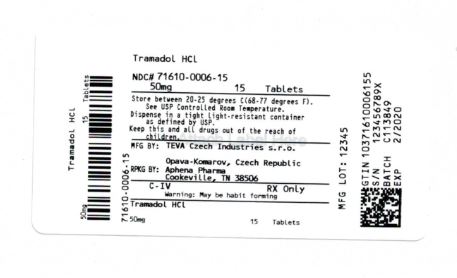
Tramadol Hydrochloride 50 mg Tablet, Film Coated, 150-count
Other active recalls for Tramadol Hydrochloride (different manufacturers) — 2 · tap to view
🆔 Identity & classification
Where does this data come from?
🏷️ RxNorm drug class
This medicine belongs to the Opioid Agonist class.
Where does this data come from?
🏭 Manufacturer & labeler
Where does this data come from?
🩺 Clinical
Tramadol immediate-release tablets and oral solution are used as a short-term treatment to relieve severe pain (pain that begins suddenly, has a specific cause, and is expected to go away when the cause of the pain is healed) in people who are expected to need an opioid pain medication and who cannot be controlled by the use of alternative pain medications. Tramadol extended-release tablets and capsules are used to relieve severe and persistent pain in people who are expected to need an opioid pain medication to relieve pain around-the-clock for a long time and who cannot be treated with other...
Read the full MedlinePlus article ↗- Yes — tramadol is a real opioid, though it works a little differently from something like morphine or oxycodone. It's prescribed for adults with pain that's severe enough that regu...
- What is tramadol actually used for? Is it a real opioid?
- Swallow it whole, once a day, at roughly the same time every day. This part is really important: never chew, crush, split, or dissolve the tablet — the extended-release design slow...
- How do I take the extended-release tablet correctly?
Patient education
Supplement & herbal interactions
Where does this data come from?
Ask a licensed pharmacist directly — free, answered by our team.
💊 What it looks like
Where does this data come from?
🧪 Inactive Ingredients / Excipients
Inactive ingredients, also called excipients, are components of the drug product other than the active ingredient. They may include fillers, dyes, coatings, preservatives, flavors, or other formulation ingredients.
💡 Tap an ingredient (hover on desktop) to see what it is and why it’s used.
-
UNII 36SFW2JZ0W
Hypromellose 2910 is a plant-based thickening agent derived from cellulose. In medicines, it forms a protective coating on tablets or capsules and controls how quickly the drug dissolves and releases into your body.
-
UNII EWQ57Q8I5X
Lactose monohydrate is a natural sugar derived from milk. It serves as a filler and binder in tablets and capsules, helping create the proper size, texture, and consistency of the medicine.
-
UNII 70097M6I30
Magnesium stearate is a salt made from magnesium and stearic acid, a fatty substance. It's used in tablets and capsules as a lubricant and glidant to help ingredients flow smoothly during manufacturing and prevent sticking.
-
UNII OP1R32D61U
Microcrystalline cellulose is a purified form of cellulose, a natural fiber from plant sources. It acts as a binder and filler in tablets and capsules, helping hold ingredients together and give the medicine its shape and size.
-
UNII 4R4HFI6D95
Polyethylene glycol 4000 is a synthetic polymer derived from petroleum. It serves as a binder, filler, and lubricant in solid dosage forms, and helps control how quickly the medicine dissolves.
-
UNII ETJ7Z6XBU4
Silicon dioxide is a naturally occurring mineral used as a glidant and anti-caking agent. It helps powder ingredients flow smoothly and prevents clumping during manufacturing and storage.
-
UNII 5856J3G2A2
A starch-based powder made from potatoes and processed with sodium. It acts as a disintegrant, helping the tablet or capsule break apart quickly in the stomach so the medicine can be absorbed.
-
UNII O8232NY3SJ
A plant-based carbohydrate derived from corn kernels. It acts as a filler to add bulk, a binder to hold ingredients together, and a disintegrant to help the tablet break apart in your stomach for absorption.
-
UNII 15FIX9V2JP
Titanium dioxide is a bright white mineral powder commonly used as a colorant and opacifying agent. It makes pills and tablets white or lighter in color and helps make coatings non-transparent.
9 inactive ingredients listed in the exact product block matched to this NDC.
Where does this data come from?
ingredient classCode="IACT" elements from the exact product block matched by this NDC. Label-section narrative from DailyMed / the openFDA label index is shown separately when available.Inactive ingredient FAQ
Are inactive ingredients the same for every manufacturer?
Why might an inactive ingredient be missing?
Can inactive ingredients matter?
💲 Pricing
A drug doesn't have one price. Each row is a different public payment system, and none is what you'd pay at the counter — that depends on your insurance. The ⓘ on each row explains what it measures.
| Price system | Per each | Per package |
|---|---|---|
| Retail pharmacies payNADAC · weekly | Not in the retail survey — common for institutional, discontinued, or low-volume packs. | |
| Medicaid paysCMS SDUD · 12 mo | No recent Medicaid claims on file for this NDC — rare and low-volume NDCs are suppressed in the public data. | |
| Medicare drug plans payPart D · Q2 2026 | $0.1012 | $15.18 / 150 tablets |
Where does this data come from?
🔁 Therapeutic equivalents
| Product | Labeler | Pack | NADAC/unit | TE | Status | Price vs. this |
|---|---|---|---|---|---|---|
| Tramadol Hydrochloride 50 mg 00093-3301-01 | Teva | 100 tablets | $0.025 | AB | Availability likely | — |
| Tramadol Hydrochloride 50 mg 00904-7496-61 | Major | 1 tablet | $0.025 | AB | Availability likely | — |
| Tramadol Hydrochloride 50 mg 16571-0716-01 | Rising | 100 tablets | $0.025 | AB | Availability likely | — |
| Tramadol Hydrochloride 50 mg 29300-0355-01 | Unichem | 100 tablets | $0.025 | AB | Availability likely | — |
| Tramadol Hydrochloride 50 mg 60219-2348-01 | Amneal | 100 tablets | $0.025 | AB | Availability likely | — |
| Tramadol Hydrochloride 50 mg 60687-0795-01 | American | 1 tablet | $0.025 | AB | Availability likely | — |
| tramadol hydrochloride 50 mg 64380-0791-01 | Strides | 100 tablets | $0.025 | AB | Availability likely | — |
| Tramadol Hydrochloride 50 mg 64980-0614-01 | Rising | 100 tablets | $0.025 | AB | Availability likely | — |
| Tramadol Hydrochloride 50 mg 72888-0080-00 | Advagen | 1000 tablets | $0.025 | AB | Availability likely | — |
| Tramadol Hydrochloride 50 mg 52817-0195-00 | TRUPHARMA | 1000 tablets | $0.033 | AB | FDA listed | — |
| Tramadol Hydrochloride 50 mg 27808-0301-01 | Cranbury | 100 tablets | — | AB | FDA listed | — |
| Tramadol Hydrochloride 50 mg 50090-5789-00 | A-S | 30 tablets | — | AB | FDA listed | — |
| Tramadol Hydrochloride 50 mg 50090-5790-01 | A-S | 90 tablets | — | AB | FDA listed | — |
| Tramadol Hydrochloride 50 mg 51407-0007-01 | Golden | 100 tablets | — | AB | FDA listed | — |
| Tramadol Hydrochloride 50 mg 55700-0997-01 | Quality | 120 tablets | — | AB | FDA listed | — |
| Tramadol Hydrochloride 50 mg 58118-2348-08 | Clinical | 30 tablets | — | AB | FDA listed | — |
| Tramadol Hydrochloride 50 mg 59651-0441-01 | Aurobindo | 100 tablets | — | AB | FDA listed | — |
| tramadol hydrochloride 50 mg 60760-0588-30 | ST. | 30 tablets | — | AB | Discontinued | — |
| Tramadol Hydrochloride 50 mg 60760-0727-09 | St. | 9 tablets | — | AB | FDA listed | — |
| Tramadol Hydrochloride 50 mg 60760-0772-09 | ST. | 9 tablets | — | AB | FDA listed | — |
| Tramadol Hydrochloride 50 mg 63187-0063-15 | Proficient | 15 tablets | — | AB | FDA listed | — |
| Tramadol Hydrochloride 50 mg 65162-0627-01 | Amneal | 10 tablets | — | AB | FDA listed | — |
| Tramadol Hydrochloride 50 mg 67046-1209-03 | Coupler | 30 tablets | — | AB | FDA listed | — |
| Tramadol Hydrochloride 50 mg 67296-1834-01 | RedPharm | 10 tablets | — | AB | FDA listed | — |
| tramadol hydrochloride 50 mg 68071-3644-03 | NuCare | 30 tablets | — | AB | FDA listed | — |
| tramadol hydrochloride 50 mg 68071-3655-02 | NuCare | 12 tablets | — | AB | FDA listed | — |
| Tramadol Hydrochloride 50 mg 68071-4119-01 | NuCare | 120 tablets | — | AB | FDA listed | — |
| Tramadol Hydrochloride 50 mg 68788-4035-01 | Preferred | 100 tablets | — | AB | FDA listed | — |
| Tramadol Hydrochloride 50 mg 68788-4040-01 | Preferred | 100 tablets | — | AB | FDA listed | — |
| Tramadol Hydrochloride 50 mg 68788-4114-01 | Preferred | 90 tablets | — | AB | FDA listed | — |
| Tramadol Hydrochloride 50 mg 68788-8121-01 | Preferred | 100 tablets | — | AB | FDA listed | — |
| tramadol hydrochloride 50 mg 68788-8717-01 | Preferred | 100 tablets | — | AB | FDA listed | — |
| Tramadol Hydrochloride 50 mg 69238-2348-01 | Amneal | 100 tablets | — | AB | FDA listed | — |
| Tramadol Hydrochloride 50 mg 70518-3824-00 | REMEDYREPACK | 30 tablets | — | AB | FDA listed | — |
| tramadol hydrochloride 50 mg 70518-4248-00 | REMEDYREPACK | 30 tablets | — | AB | FDA listed | — |
| Tramadol Hydrochloride 50 mg 71205-0740-15 | Proficient | 15 tablets | — | AB | FDA listed | — |
| tramadol hydrochloride 50 mg 71335-2518-00 | Bryant | 50 tablets | — | AB | FDA listed | — |
| tramadol hydrochloride 50 mg 71335-2612-01 | Bryant | 8 tablets | — | AB | FDA listed | — |
| Tramadol Hydrochloride 50 mg 71335-2721-01 | Bryant | 8 tablets | — | AB | FDA listed | — |
| Tramadol Hydrochloride 50 mg 71335-3147-00 | Bryant | 50 tablets | — | AB | FDA listed | — |
| Tramadol Hydrochloride 50 mg 71335-9658-00 | Bryant | 50 tablets | — | AB | FDA listed | — |
| Tramadol Hydrochloride 50 mgthis 71610-0006-75 | Aphena | 150 tablets | — | AB | FDA listed | — |
| Tramadol Hydrochloride 50 mg 71610-0865-15 | Aphena | 15 tablets | — | AB | FDA listed | — |
| Tramadol Hydrochloride 50 mg 72189-0311-12 | DirectRx | 12 tablets | — | AB | FDA listed | — |
| Tramadol Hydrochloride 50 mg 76420-0733-00 | Asclemed | 1000 tablets | — | AB | FDA listed | — |
| Tramadol HCL 50 mg 80425-0057-01 | Advanced | 30 tablets | — | AB | FDA listed | — |
| Tramadol Hydrochloride 50 mg 80425-0274-01 | Advanced | 15 tablets | — | AB | FDA listed | — |
| Tramadol Hydrochloride 50 mg 80425-0276-01 | Advanced | 15 tablets | — | AB | FDA listed | — |
| Tramadol Hydrochloride 50 mg 80425-0501-01 | Advanced | 15 tablets | — | AB | FDA listed | — |
| Tramadol Hydrochloride 50 mg 80425-0548-01 | Advanced | 15 tablets | — | AB | FDA listed | — |
| tramadol hydrochloride 50 mg 82804-0114-15 | Proficient | 15 tablets | — | AB | FDA listed | — |
| Tramadol Hydrochloride 50 mg 82804-0142-15 | Proficient | 15 tablets | — | AB | FDA listed | — |
| tramadol hydrochloride 50 mg 82868-0052-30 | Northwind | 30 tablets | — | AB | FDA listed | — |
| Tramadol Hydrochloride 50 mg 87063-0117-01 | Asclemed | 100 tablets | — | AB | FDA listed | — |
| Tramadol Hydrochloride 50 mg 80425-0588-01 | Advanced | 15 tablets | — | AB | FDA listed | — |
| Tramadol Hydrochloride 50 mg 82868-0110-30 | Northwind | 30 tablets | — | AB | FDA listed | — |
| Tramadol Hydrochloride 50 mg 70518-4713-00 | REMEDYREPACK | 30 tablets | — | AB | FDA listed | — |
Where does this data come from?
⏳ Availability & generic status
This product is an FDA-approved generic. Other versions of the same drug are listed under Therapeutic equivalents, least expensive first.
Where does this data come from?
📦 Packaging — all sizes for this product
| Package NDC | Description | Marketing start | Status |
|---|---|---|---|
| 71610-0006-15 | 15 TABLET, FILM COATED in 1 BOTTLE (71610-006-15) | 2017-10-06 | Active |
| 71610-0006-20 | 20 TABLET, FILM COATED in 1 BOTTLE (71610-006-20) | 2017-10-06 | Active |
| 71610-0006-24 | 224 TABLET, FILM COATED in 1 BOTTLE (71610-006-24) | 2017-10-06 | Active |
| 71610-0006-28 | 28 TABLET, FILM COATED in 1 BOTTLE (71610-006-28) | 2017-10-06 | Active |
| 71610-0006-30 | 30 TABLET, FILM COATED in 1 BOTTLE (71610-006-30) | 2017-10-06 | Active |
| 71610-0006-40 | 40 TABLET, FILM COATED in 1 BOTTLE (71610-006-40) | 2017-10-06 | Active |
| 71610-0006-45 | 45 TABLET, FILM COATED in 1 BOTTLE (71610-006-45) | 2017-10-06 | Active |
| 71610-0006-46 | 56 TABLET, FILM COATED in 1 BOTTLE (71610-006-46) | 2017-10-06 | Active |
| 71610-0006-48 | 480 TABLET, FILM COATED in 1 BOTTLE (71610-006-48) | 2017-10-06 | Active |
| 71610-0006-50 | 50 TABLET, FILM COATED in 1 BOTTLE (71610-006-50) | 2017-10-06 | Active |
| 71610-0006-53 | 60 TABLET, FILM COATED in 1 BOTTLE (71610-006-53) | 2017-10-06 | Active |
| 71610-0006-54 | 84 TABLET, FILM COATED in 1 BOTTLE (71610-006-54) | 2017-10-06 | Active |
| 71610-0006-57 | 80 TABLET, FILM COATED in 1 BOTTLE (71610-006-57) | 2017-08-24 | Active |
| 71610-0006-60 | 90 TABLET, FILM COATED in 1 BOTTLE (71610-006-60) | 2017-10-06 | Active |
| 71610-0006-65 | 100 TABLET, FILM COATED in 1 BOTTLE (71610-006-65) | 2017-10-06 | Active |
| 71610-0006-67 | 168 TABLET, FILM COATED in 1 BOTTLE (71610-006-67) | 2017-10-06 | Active |
| 71610-0006-70 | 120 TABLET, FILM COATED in 1 BOTTLE (71610-006-70) | 2017-10-06 | Active |
| 71610-0006-72 | 112 TABLET, FILM COATED in 1 BOTTLE (71610-006-72) | 2017-10-06 | Active |
| 71610-0006-73 | 135 TABLET, FILM COATED in 1 BOTTLE (71610-006-73) | 2017-10-06 | Active |
| 71610-0006-75 You're viewing this | 150 TABLET, FILM COATED in 1 BOTTLE (71610-006-75) | 2017-10-06 | Active |
| 71610-0006-80 | 180 TABLET, FILM COATED in 1 BOTTLE (71610-006-80) | 2017-10-06 | Active |
| 71610-0006-85 | 200 TABLET, FILM COATED in 1 BOTTLE (71610-006-85) | 2017-10-06 | Active |
| 71610-0006-89 | 720 TABLET, FILM COATED in 1 BOTTLE (71610-006-89) | 2017-10-06 | Active |
| 71610-0006-90 | 240 TABLET, FILM COATED in 1 BOTTLE (71610-006-90) | 2017-10-06 | Active |
| 71610-0006-92 | 270 TABLET, FILM COATED in 1 BOTTLE (71610-006-92) | 2017-10-06 | Active |
| 71610-0006-94 | 360 TABLET, FILM COATED in 1 BOTTLE (71610-006-94) | 2017-10-06 | Active |
| 71610-0006-98 | 540 TABLET, FILM COATED in 1 BOTTLE (71610-006-98) | 2017-10-06 | Active |
You're viewing one of 27 pack sizes for this product.
Pack size FAQ
What quantity is in NDC 71610-0006-75?
What is the difference between NDC 71610-0006-75 and NDC 71610-0006-15?
What NDC number is used to bill for this package of Tramadol Hydrochloride 50 mg Tablet, Film Coated?
🧭 About this NDC listing & data coverage
What data is (and isn’t) available for this NDC — tap to expand
| NDC identity (package / product / labeler codes) | ✓ Available |
| Labeler | ✓ Available |
| Product & package description | ✓ Available |
| Marketing category & status | ✓ Available |
| Active ingredient / dosage form / route | ✓ Available |
| FDA label (SPL via DailyMed) | ✓ Available |
| Package photos | ✓ Available |
| Inactive ingredients (structured) | ✓ Available |
| NADAC pharmacy acquisition price (CMS) | — Not published for this NDC CMS publishes NADAC only for NDCs reported in its retail-pharmacy survey. |
| Orange Book / therapeutic-equivalence data | ✓ Available |
| HCPCS J-code billing crosswalk | — Not published for this NDC Most self-administered / retail products have no J-code — that is normal. |
| Medicaid utilization (CMS SDUD) | — Not published for this NDC CMS reports utilization only for NDCs with Medicaid claims above its privacy threshold. |
Questions about this listing
Why is there no price listed?
Is the NDC printed on the package the same as the 11-digit billing NDC?
What do the three segments of this NDC mean?
Is this package still being marketed?
Does this product come in other package sizes?
Who lists this product with the FDA?
Do I need a prescription for this product?
Where does this data come from?
📄 Full prescribing information FDA SPL
🚨 Boxed Warning ▾
WARNING: ADDICTION, ABUSE, AND MISUSE; LIFE-THREATENING RESPIRATORY DEPRESSION; ACCIDENTAL INGESTION; NEONATAL OPIOID WITHDRAWAL SYNDROME; INTERACTIONS WITH DRUGS AFFECTING CYTOCHROME P450 ISOENZYMES; and RISKS FROM CONCOMITANT USE WITH BENZODIAZEPINES OR OTHER CNS DEPRESSANTS ADDICTION, ABUSE AND MISUSE Tramadol exposes patients and other users to the risks of opioid addiction, abuse and misuse, which can lead to overdose and death. Assess each patient’s risk prior to prescribing tramadol, and monitor all patients regularly for the development of these behaviors and conditions (see WARNINGS ).
LIFE-THREATENING RESPIRATORY DEPRESSION Serious, life-threatening, or fatal respiratory depression may occur with use of tramadol. Monitor for respiratory depression, especially during initiation of tramadol or following a dose increase (see WARNINGS ). ACCIDENTAL INGESTION Accidental ingestion of tramadol, especially by children, can be fatal (see WARNINGS ).
NEONATAL OPIOID WITHDRAWAL SYNDROME Prolonged use of tramadol during pregnancy can result in neonatal opioid withdrawal syndrome, which may be life-threatening if not recognized and treated, and requires management according to protocols developed by neonatology experts. If opioid use is required for a prolonged period in a pregnant woman, advise the patient of the risk of neonatal opioid withdrawal syndrome and ensure that appropriate treatment will be available (see WARNINGS ). INTERACTIONS WITH DRUGS AFFECTING CYTOCHROME P450 ISOENZYMES The effects of concomitant use or discontinuation of cytochrome P450 3A4 inducers, 3A4 inhibitors, or 2D6 inhibitors with tramadol are complex.
Use of cytochrome P450 3A4 inducers, 3A4 inhibitors, or 2D6 inhibitors with tramadol requires careful consideration of the effects on the parent drug, tramadol, and the active metabolite, M1 (see WARNINGS , PRECAUTIONS; Drug Interactions ). RISKS FROM CONCOMITANT USE WITH BENZODIAZEPINES OR OTHER CNS DEPRESSANTS Concomitant use of opioids with benzodiazepines or other central nervous system (CNS) depressants, including alcohol, may result in profound sedation, respiratory depression, coma, and death (see WARNINGS , PRECAUTIONS; Drug Interactions ). • Reserve concomitant prescribing of tramadol and benzodiazepines or other CNS depressants for use in patients for whom alternative treatment options are inadequate. • Limit treatment to the minimum effective dosages and durations. • Follow patients for signs and symptoms of respiratory depression and sedation.
🎯 Indications and Usage ▾
INDICATIONS AND USAGE Tramadol hydrochloride tablets are indicated for the management of pain in adults that is severe enough to require an opioid analgesic and for which alternative treatments are inadequate. Limitations of Use Because of the risks of addiction, abuse, and misuse with opioids, even at recommended doses (see WARNINGS ), reserve tramadol hydrochloride tablets for use in patients for whom alternative treatment options [e.g., non-opioid analgesics]: • Have not been tolerated, or are not expected to be tolerated. • Have not provided adequate analgesia, or are not expected to provide adequate analgesia.
⏱️ Dosage and Administration ▾
DOSAGE AND ADMINISTRATION Adults (17 years of age and over) Important Dosage and Administration Instructions Use the lowest effective dosage for the shortest duration consistent with individual patient treatment goals (see WARNINGS ). Initiate the dosing regimen for each patient individually, taking into account the patient's severity of pain, patient response, prior analgesic treatment experience, and risk factors for addiction, abuse, and misuse (see WARNINGS ). Monitor patients closely for respiratory depression, especially within the first 24 to 72 hours of initiating therapy and following dosage increases with tramadol and adjust the dosage accordingly (see WARNINGS ).
Initial Dosage Initiating Treatment with Tramadol For patients with moderate to moderately severe chronic pain not requiring rapid onset of analgesic effect, the tolerability of tramadol hydrochloride tablets USP can be improved by initiating therapy with a titration regimen: The total daily dose may be increased by 50 mg as tolerated every 3 days to reach 200 mg/day (50 mg four times a day). After titration, tramadol hydrochloride tablets USP 50 to 100 mg can be administered as needed for pain relief every 4 to 6 hours not to exceed 400 mg/day .
For the subset of patients for whom rapid onset of analgesic effect is required and for whom the benefits outweigh the risk of discontinuation due to adverse events associated with higher initial doses, tramadol hydrochloride tablets USP 50 mg to 100 mg can be administered as needed for pain relief every four to six hours, not to exceed 400 mg per day . Conversion from Tramadol to Extended-Release tramadol The relative bioavailability of tramadol compared to extended-release tramadol is unknown, so conversion to extended-release formulations must be accompanied by close observation for signs of excessive sedation and respiratory depression.
Dosage Modification in Patients with Hepatic Impairment The recommended dose for adult patients with cirrhosis is 50 mg every 12 hours. Dosage Modification in Patients with Renal Impairment In all patients with creatinine clearance less than 30 mL/min, it is recommended that the dosing interval of tramadol be increased to 12 hours, with a maximum daily dose of 200 mg. Since only 7% of an administered dose is removed by hemodialysis, dialysis patients can receive their regular dose on the day of dialysis.
Dosage Modification in Geriatric Patients In general, dose selection for an elderly patient over 65 years old should be cautious, usually starting at the low end of the dosing range, reflecting the greater frequency of decreased hepatic, renal or cardiac function and of concomitant disease or other drug therapy. For elderly patients over 75 years old, total dose should not exceed 300 mg/day. Titration and Maintenance of Therapy Individually titrate tramadol to a dose that provides adequate analgesia and minimizes adverse reactions.
Continually reevaluate patients receiving tramadol to assess the maintenance of pain control and the relative incidence of adverse reactions, as well as monitoring for the development of addiction, abuse, or misuse (see WARNINGS ). Frequent communication is important among the prescriber, other members of the healthcare team, the patient, and the caregiver/family during periods of changing analgesic requirements, including initial titration. If the level of pain increases after dosage stabilization, attempt to identify the source of increased pain before increasing the tramadol dosage.
If unacceptable opioid-related adverse reactions are observed, consider reducing the dosage. Adjust the dosage to obtain an appropriate balance between management of pain and opioid-related adverse reactions. Discontinuation of Tramadol When a patient who has been taking tramadol hydrochloride tablets regularly and may be physically dependent no longer requires therapy with tramadol, taper the dose gradually, by 25% to 50% every 2 to 4 days, while monitoring carefully f…
⛔ Contraindications ▾
CONTRAINDICATIONS Tramadol contraindicated in patients with: • Significant respiratory depression (see WARNINGS ). • Acute or severe bronchial asthma in an unmonitored setting or in the absence of resuscitative equipment (see WARNINGS ). • Known or suspected gastrointestinal obstruction, including paralytic ileus (see WARNINGS ). • Hypersensitivity to tramadol, any other component of this product or opioids (see WARNINGS ). • Concurrent use of monoamine oxidase inhibitors (MAOIs) or use of MAOIs within the last 14 days (see PRECAUTIONS; Drug Interactions ).
⚠️ Warnings ▾
WARNINGS Addiction, Abuse, and Misuse Tramadol hydrochloride tablets contain tramadol, a Schedule IV controlled substance. As an opioid, tramadol exposes users to the risks of addiction, abuse, and misuse (see DRUG ABUSE AND DEPENDENCE ). Although the risk of addiction in any individual is unknown, it can occur in patients appropriately prescribed tramadol.
Addiction can occur at recommended dosages and if the drug is misused or abused. Assess each patient’s risk for opioid addiction, abuse, or misuse prior to prescribing tramadol, and monitor all patients receiving tramadol for the development of these behaviors and conditions. Risks are increased in patients with a personal or family history of substance abuse (including drug or alcohol abuse or addiction) or mental illness (e.g., major depression).
The potential for these risks should not, however, prevent the proper management of pain in any given patient. Patients at increased risk may be prescribed opioids such as tramadol, but use in such patients necessitates intensive counseling about the risks and proper use of tramadol along with intensive monitoring for signs of addiction, abuse, and misuse. Opioids are sought by drug abusers and people with addiction disorders and are subject to criminal diversion.
Consider these risks when prescribing or dispensing tramadol. Strategies to reduce these risks include prescribing the drug in the smallest appropriate quantity and advising the patient on the proper disposal of unused drug (see PRECAUTIONS; Information for Patients ). Contact local state professional licensing board or state controlled substances authority for information on how to prevent and detect abuse or diversion of this product.
Life-Threatening Respiratory Depression Serious, life-threatening, or fatal respiratory depression has been reported with the use of opioids, even when used as recommended. Respiratory depression, if not immediately recognized and treated, may lead to respiratory arrest and death. Management of respiratory depression may include close observation, supportive measures, and use of opioid antagonists, depending on the patient’s clinical status (see OVERDOSAGE ).
Carbon dioxide (CO 2 ) retention from opioid-induced respiratory depression can exacerbate the sedating effects of opioids. While serious, life-threatening, or fatal respiratory depression can occur at any time during the use of tramadol, the risk is greatest during the initiation of therapy or following a dosage increase. Monitor patients closely for respiratory depression, especially within the first 24 to 72 hours of initiating therapy with and following dosage increases of tramadol.
To reduce the risk of respiratory depression, proper dosing and titration of tramadol are essential (see DOSAGE AND ADMINISTRATION ). Overestimating the tramadol dosage when converting patients from another opioid product can result in a fatal overdose with the first dose. Accidental ingestion of even one dose of tramadol, especially by children, can result in respiratory depression and death due to an overdose of tramadol.
Neonatal Opioid Withdrawal Syndrome Prolonged use of tramadol during pregnancy can result in withdrawal in the neonate. Neonatal opioid withdrawal syndrome, unlike opioid withdrawal syndrome in adults, may be life-threatening if not recognized and treated, and requires management according to protocols developed by neonatology experts. Observe newborns for signs of neonatal opioid withdrawal syndrome and manage accordingly.
Advise pregnant women using opioids for a prolonged period of the risk of neonatal opioid withdrawal syndrome and ensure that appropriate treatment will be available (see PRECAUTIONS; Information for Patients, Pregnancy ). Risks of Interactions with Drugs Affecting Cytochrome P450 Isoenzymes The effects of concomitant use or discontinuation of cytochrome P450 3A4 inducers, 3A4 inhibitors, or 2D6 inhibitors on levels of tramadol and M1 from tramadol are complex.…
🤒 Adverse Reactions ▾
ADVERSE REACTIONS The following serious adverse reactions are described, or described in greater detail, in other sections: • Addiction, Abuse, and Misuse (see WARNINGS ) • Life-Threatening Respiratory Depression (see WARNINGS ) • Neonatal Opioid Withdrawal Syndrome (see WARNINGS ) • Interactions with Benzodiazepines or Other CNS Depressants (see WARNINGS ) • Serotonin Syndrome (see WARNINGS ) • Seizures (see WARNINGS ) • Suicide (see WARNINGS ) • Adrenal Insufficiency (see WARNINGS ) • Severe Hypotension (see WARNINGS ) • Gastrointestinal Adverse Reactions (see WARNINGS ) • Hypersensitivity Reactions (see WARNINGS ) • Withdrawal (see WARNINGS ) Clinical Trials Experience Because clinical trials are conducted under widely varying conditions, adverse reaction rates observed in the clinical trials of a drug cannot be directly compared to rates in the clinical trials of another drug and may not reflect the rates observed in practice.
Tramadol was administered to 550 patients during the double-blind or open-label extension periods in U.S. studies of chronic nonmalignant pain. Of these patients, 375 were 65 years old or older. Table 2 reports the cumulative incidence rate of adverse reactions by 7, 30 and 90 days for the most frequent reactions (5% or more by 7 days).
The most frequently reported events were in the central nervous system and gastrointestinal system. Although the reactions listed in the table are felt to be probably related to tramadol administration, the reported rates also include some events that may have been due to underlying disease or concomitant medication. The overall incidence rates of adverse experiences in these trials were similar for tramadol and the active control groups, Tylenol with Codeine #3 (acetaminophen 300 mg with codeine phosphate 30 mg), and aspirin 325 mg with codeine phosphate 30 mg, however, the rates of withdrawals due to adverse events appeared to be higher in the tramadol groups.
Table 2: Cumulative Incidence of Adverse Reactions for Tramadol in Chronic Trials of Nonmalignant Pain (N=427) Up to 7 Days Up to 30 Days Up to 90 Days Dizziness/Vertigo 26% 31% 33% Nausea 24% 34% 40% Constipation 24% 38% 46% Headache 18% 26% 32% Somnolence 16% 23% 25% Vomiting 9% 13% 17% Pruritus 8% 10% 11% “CNS Stimulation” “CNS Stimulation” is a composite of nervousness, anxiety, agitation, tremor, spasticity, euphoria, emotional lability and hallucinations 7% 11% 14% Asthenia 6% 11% 12% Sweating 6% 7% 9% Dyspepsia 5% 9% 13% Dry Mouth 5% 9% 10% Diarrhea 5% 6% 10% Incidence 1% to less than 5% possibly causally related: The following lists adverse reactions that occurred with an incidence of 1% to less than 5% in clinical trials, and for which the possibility of a causal relationship with tramadol exists.
Body as a Whole: Malaise. Cardiovascular: Vasodilation. Central Nervous System: Anxiety, Confusion, Coordination disturbance, Euphoria, Miosis, Nervousness, Sleep disorder.
Gastrointestinal: Abdominal pain, Anorexia, Flatulence. Musculoskeletal: Hypertonia. Skin: Rash.
Special Senses: Visual disturbance. Urogenital: Menopausal symptoms, Urinary frequency, Urinary retention. Incidence less than 1%, possibly causally related: The following lists adverse reactions that occurred with an incidence of less than 1% in clinical trials of tramadol and/or reported in post-marketing experience with tramadol-containing products.
Body as a Whole: Accidental injury, Allergic reaction, Anaphylaxis, Death, Suicidal tendency, Weight loss, Serotonin syndrome (mental status change, hyperreflexia, fever, shivering, tremor, agitation, diaphoresis, seizures and coma). Cardiovascular: Orthostatic hypotension, Syncope, Tachycardia. Central Nervous System: Abnormal gait, Amnesia, Cognitive dysfunction, Delirium, Depression, Difficulty in concentration, Hallucinations, Movement disorder, Paresthesia, Seizure, Speech disorder, Tremor.
Metabolism and Nutrition Disorders: Cases of hypoglycemia have been reported very rarely in patients…
🆘 Overdosage ▾
OVERDOSAGE Clinical Presentation Acute overdosage with tramadol can be manifested by respiratory depression, somnolence progressing to stupor or coma, skeletal muscle flaccidity, cold and clammy skin, constricted pupils, and, in some cases, pulmonary edema, bradycardia, hypotension, partial or complete airway obstruction, atypical snoring, seizures, and death. Marked mydriasis rather than miosis may be seen with hypoxia in overdose situations. Deaths due to overdose have been reported with abuse and misuse of tramadol (see WARNINGS; Addiction, Abuse, and Misuse ).
Review of case reports has indicated that the risk of fatal overdose is further increased when tramadol is abused concurrently with alcohol or other CNS depressants, including other opioids. Treatment of Overdose In case of overdose, priorities are the re-establishment of a patent and protected airway and institution of assisted or controlled ventilation, if needed. Employ other supportive measures (including oxygen and vasopressors) in the management of circulatory shock and pulmonary edema as indicated.
Cardiac arrest or serious arrhythmias will require advanced life-supporting measures. The opioid antagonists, naloxone or nalmefene, are specific antidotes to respiratory depression resulting from opioid overdose. For clinically significant respiratory or circulatory depression secondary to tramadol overdose, administer an opioid antagonist.
Opioid antagonists should not be administered in the absence of clinically significant respiratory or circulatory depression secondary to tramadol overdose. While naloxone will reverse some, but not all, symptoms caused by overdosage with tramadol, the risk of seizures is also increased with naloxone administration. In animals, convulsions following the administration of toxic doses of tramadol could be suppressed with barbiturates or benzodiazepines but were increased with naloxone.
Naloxone administration did not change the lethality of an overdose in mice. Hemodialysis is not expected to be helpful in an overdose because it removes less than 7% of the administered dose in a 4-hour dialysis period. Because the duration of opioid reversal is expected to be less than the duration of action of tramadol in tramadol hydrochloride tablets, carefully monitor the patient until spontaneous respiration is reliably re-established.
If the response to an opioid antagonist is suboptimal or only brief in nature, administer additional antagonist as directed by the product’s prescribing information. In an individual physically dependent on opioids, administration of the recommended usual dosage of the antagonist will precipitate an acute withdrawal syndrome. The severity of the withdrawal symptoms experienced will depend on the degree of physical dependence and the dose of the antagonist administered.
If a decision is made to treat serious respiratory depression in the physically dependent patient, administration of the antagonist should be begun with care and by titration with smaller than usual doses of the antagonist.
🧬 Clinical Pharmacology ▾
CLINICAL PHARMACOLOGY Mechanism of Action Tramadol hydrochloride tablets contain tramadol, an opioid agonist and inhibitor of norepinephrine and serotonin re-uptake. Although the mode of action is not completely understood, the analgesic effect of tramadol is believed to be due to both binding to µ-opioid receptors and weak inhibition of re-uptake of norepinephrine and serotonin. Opioid activity is due to both low affinity binding of the parent compound and higher affinity binding of the O-demethylated metabolite M1 to µ-opioid receptors.
In animal models, M1 is up to 6 times more potent than tramadol in producing analgesia and 200 times more potent in µ-opioid binding. Tramadol-induced analgesia is only partially antagonized by the opiate antagonist naloxone in several animal tests. The relative contribution of both tramadol and M1 to human analgesia is dependent upon the plasma concentrations of each compound (see CLINICAL PHARMACOLOGY; Pharmacokinetics ).
Tramadol has been shown to inhibit reuptake of norepinephrine and serotonin in vitro, as have some other opioid analgesics. These mechanisms may contribute independently to the overall analgesic profile of tramadol. Analgesia in humans begins approximately within one hour after administration and reaches a peak in approximately two to three hours.
Pharmacodynamics Effects on the Central Nervous System Tramadol produces respiratory depression by direct action on brain stem respiratory centers. The respiratory depression involves a reduction in the responsiveness of the brain stem respiratory centers to both increases in carbon dioxide tension and electrical stimulation. Tramadol causes miosis, even in total darkness.
Pinpoint pupils are a sign of opioid overdose but are not pathognomonic (e.g., pontine lesions of hemorrhagic or ischemic origins may produce similar findings). Marked mydriasis rather than miosis may be seen due to hypoxia in overdose situations. Effects on the Gastrointestinal Tract and Other Smooth Muscle Tramadol causes a reduction in motility associated with an increase in smooth muscle tone in the antrum of the stomach and duodenum.
Digestion of food in the small intestine is delayed and propulsive contractions are decreased. Propulsive peristaltic waves in the colon are decreased, while tone may be increased to the point of spasm resulting in constipation. Other opioid-induced effects may include a reduction in biliary and pancreatic secretions, spasm of sphincter of Oddi, and transient elevations in serum amylase.
Effects on the Cardiovascular System Tramadol produces peripheral vasodilation, which may result in orthostatic hypotension or syncope. Manifestations of peripheral vasodilation may include pruritus, flushing, red eyes, sweating and/or orthostatic hypotension. Effects on the Endocrine System Opioids inhibit the secretion of adrenocorticotropic hormone (ACTH), cortisol, and luteinizing hormone (LH) in humans.
They also stimulate prolactin, growth hormone (GH) secretion, and pancreatic secretion of insulin and glucagon (see WARNINGS , ADVERSE REACTIONS ). Chronic use of opioids may influence the hypothalamic-pituitary-gonadal axis, leading to androgen deficiency that may manifest as low libido, impotence, erectile dysfunction, amenorrhea, or infertility. The causal role of opioids in the clinical syndrome of hypogonadism is unknown because the various medical, physical, lifestyle, and psychological stressors that may influence gonadal hormone levels have not been adequately controlled for in studies conducted to date (see ADVERSE REACTIONS ).
Effects on the Immune System Opioids have been shown to have a variety of effects on components of the immune system in in vitro and animal models. The clinical significance of these findings is unknown. Overall, the effects of opioids appear to be modestly immunosuppressive.
Concentration–Efficacy Relationships The minimum effective analgesic concentration will vary widely among patients, especially among…
📦 How Supplied / Storage and Handling ▾
HOW SUPPLIED Tramadol Hydrochloride Tablets USP, 50 mg, are available as white, film-coated, unscored, oval-shaped tablets, debossed “TV” on one side and debossed “58” on the other side. They are available in bottles of 100 (NDC 60429-588-01) and 500 (NDC 60429-588-05). Store at 20° to 25°C (68° to 77°F) [See USP Controlled Room Temperature].
Dispense in a tight, light-resistant container as defined in the USP, with a child-resistant closure (as required). KEEP THIS AND ALL MEDICATIONS OUT OF THE REACH OF CHILDREN. All brand names listed are the registered trademarks of their respective owners and are not trademarks of Teva Pharmaceuticals USA.
Manufactured In Czech Republic By: Teva Czech Industries, s.r.o. Opava-Komarov, Czech Republic Manufactured For: Teva Pharmaceuticals USA, Inc. North Wales, PA 19454 Marketed/ Packaged by: GSMS, Inc.
Camarillo, CA 93012 USA Rev. AC 12/2016
📋 Description ▾
DESCRIPTION Tramadol Hydrochloride Tablets USP are an opioid agonist. The chemical name for tramadol hydrochloride, USP is (±) cis -2-[(dimethylamino)methyl]-1-(3-methoxyphenyl)cyclohexanol hydrochloride. Its structural formula is: C 16 H 25 NO 2 •HCl M.W.
299.8 Tramadol hydrochloride, USP is a white, bitter, crystalline and odorless powder. It is readily soluble in water and ethanol and has a pKa of 9.41. The n-octanol/water log partition coefficient (logP) is 1.35 at pH 7.
Tramadol Hydrochloride Tablets USP contain 50 mg of tramadol hydrochloride, USP and are white in color. In addition, each tablet contains the following inactive ingredients: colloidal silicon dioxide, hypromellose, lactose monohydrate, magnesium stearate, microcrystalline cellulose, polyethylene glycol, pregelatinized corn starch, sodium starch glycolate and titanium dioxide. Chemical Structure-Tramadol Hydrochloride
💬 Medication Guide ▾
Medication Guide Medication Guide Tramadol Hydrochloride (TRAM a dol Hye” droe klor’ ide) Tablets, CIV Tramadol hydrochloride tablets are: • A strong prescription pain medicine that contains an opioid (narcotic) that is used for the management pain in adults, when other pain treatments such as non-opioid pain medicines do not treat your pain well enough or you cannot tolerate them. • An opioid pain medicine that can put you at risk for overdose and death. Even if you take your dose correctly as prescribed you are at risk for opioid addiction, abuse, and misuse that can lead to death.
Important information about tramadol hydrochloride tablets: • Get emergency help right away if you take too many tramadol hydrochloride tablets (overdose). When you first start taking tramadol hydrochloride tablets, when your dose is changed, or if you take too many (overdose), serious or life-threatening breathing problems that can lead to death may occur. • Taking tramadol hydrochloride tablets with other opioid medicines, benzodiazepines, alcohol, or other central nervous system depressants (including street drugs) can cause severe drowsiness, decreased awareness, breathing problems, coma, and death. • Never give anyone else your tramadol hydrochloride tablets.
They could die from taking them. Store tramadol hydrochloride tablets away from children and in a safe place to prevent stealing or abuse. Selling or giving away tramadol hydrochloride tablets is against the law.
Do not take tramadol hydrochloride tablets if you have: • Severe asthma, trouble breathing, or other lung problems. • A bowel blockage or have narrowing of the stomach or intestines. • An allergy to tramadol. • Taken a Monoamine Oxidase Inhibitor, MAOI, (medicine used for depression) within the last 14 days. Before taking tramadol hydrochloride tablets, tell your healthcare provider if you have a history of: • head injury, seizures • liver, kidney, thyroid problems • problems urinating • pancreas or gallbladder problems • abuse of street or prescription drugs, alcohol addiction, or mental health problems.
Tell your healthcare provider if you are: • pregnant or planning to become pregnant. Prolonged use of tramadol hydrochloride tablets during pregnancy can cause withdrawal symptoms in your newborn baby that could be life-threatening if not recognized and treated. • breastfeeding. Tramadol passes into breast milk and may harm your baby. • taking prescription or over-the-counter medicines, vitamins, or herbal supplements.
Taking tramadol hydrochloride tablets with certain other medicines can cause serious side effects that could lead to death. When taking tramadol hydrochloride tablets: • Do not change your dose. Take tramadol hydrochloride tablets exactly as prescribed by your healthcare provider.
Use the lowest dose possible for the shortest time needed. • Take your prescribed dose as indicated by your health care provider. The maximum dosage is 1 or 2 tablets every 4 to 6 hours, as needed for pain relief. Do not take more than your prescribed dose and do not take more than 8 tablets per day.
If you miss a dose, take your next dose at your usual time. • Call your healthcare provider if the dose you are taking does not control your pain. • If you have been taking tramadol hydrochloride tablets regularly, do not stop taking tramadol hydrochloride tablets without talking to your healthcare provider. • After you stop taking tramadol hydrochloride tablets, ask your pharmacist how to dispose of any unused tablets. While taking tramadol hydrochloride tablets DO NOT: • Drive or operate heavy machinery, until you know how tramadol hydrochloride tablets affect you.
Tramadol hydrochloride tablets can make you sleepy, dizzy, or lightheaded. • Drink alcohol or use prescription or over-the-counter medicines that contain alcohol. Using products containing alcohol during treatment with tramadol hydrochloride tablets may cause you to overdose and die. The possible side effects of tramadol hydroc…