
Topiramate 100 mg Tablet, Film Coated, 30-count — NDC 63187-801-30 (Billing 63187-0801-30)
This is a package of 30 tablets of Topiramate 100 mg Tablet, Film Coated from Proficient Rx LP, marketed since Dec 2014 and currently FDA-listed. It is the main listing for this product, which comes in 3 package sizes.
NDC database record
One package, one record: these facts belong to NDC 63187-801-30 alone.
- Record
- FDA NDC Directory package listing · Human prescription drug
- Code segments
- 63187 labeler · 801 product · 30 package
- Package marketed since
- Jan 2, 2017
- Sample package
- No — commercial package
- Listing certified through
- Dec 31, 2027
- Barcode (UPC-A, from the NDC)
- 3 6318780130 4
- FDA record last changed
- Oct 8, 2026
Identity & classification
Regulatory identifiers FDA, NLM and CMS codes for this package
Drug-database identifiers Medi-Span GPI and First Databank GCN / HICL / AHFS classification
- GSN (GCN sequence number): 026170
- GCN: 36551
- GPI-14 (Medi-Span): 72600075000330
- HICL (First Databank): 011060
- AHFS class code: 28:12.92.00
- RxCUI (RxNorm): 199889
Where does this data come from?
- FDA openFDA NDC Directory · synced Oct 8, 2026
- FDA label on DailyMed · label index refreshed Oct 8, 2026
- RxNorm (NLM RxNav) · catalog refreshed Oct 1, 2026
- Medi-Span GPI (licensed)
- First Databank (licensed) · refreshed Oct 8, 2026
RxNorm drug class
This medicine belongs to the Centrally acting antiobesity products class.
Where does this data come from?
- RxClass (NLM) · catalog refreshed Oct 1, 2026
Clinical
Topiramate is used to treat certain types of seizures. Topiramate is also used to prevent migraine headaches but not to relieve the pain of migraine headaches when they occur. Topiramate is in a class of medications called anticonvulsants. It works by decreasing abnormal excitement in the brain.
Read the full MedlinePlus article ↗- It treats certain seizures in epilepsy, either alone or added to other medicines. Most products also prevent migraine in people 12 and older. Generic topiramate tablets are labeled...
- Take it by mouth exactly as prescribed. Your doctor will raise the dose slowly. Trokendi XR must be swallowed whole, while Qudexy XR can be sprinkled on soft food. Don't stop sudde...
- Tingling, dizziness, sleepiness, tiredness, appetite and weight loss, and trouble with memory, concentration or speech are common. Tell me if they bother you.
- Call right away for eye pain or vision changes, decreased sweating with a fever, mood changes or suicidal thoughts, a severe rash, or confusion. These can be serious.
Patient education
Supplement & herbal interactions
Some supplements/herbs that may interact with Topiramate — tap one for details:
Topiramate may be associated with lower levels of 1 nutrient — worth a chat with your pharmacist, not a cause for alarm.
Where does this data come from?
- MedlinePlus (NLM) · refreshed Oct 8, 2026
- FDA label on DailyMed · label index refreshed Oct 8, 2026
Ask a licensed pharmacist directly — free, answered by our team.
Pricing
A drug doesn't have one price. Each row is a different public payment system, and none is what you'd pay at the counter — that depends on your insurance. The ⓘ on each row explains what it measures.
| Price system | Per each | Per package |
|---|---|---|
| Retail pharmacies payNADAC · weekly | Not in the retail survey — common for institutional, discontinued, or low-volume packs. | |
| Medicaid paysCMS SDUD · 12 mo | No recent Medicaid claims on file for this NDC — rare and low-volume NDCs are suppressed in the public data. | |
| Medicare drug plans payPart D · Q2 2026 | $0.0808 | $2.42 / 30 tablets |
Where does this data come from?
- CMS NADAC weekly file
- CMS ASP pricing files · refreshed Sep 20, 2026
- CMS Medicaid State Drug Utilization Data · refreshed Oct 8, 2026
- CMS Part D plan pricing files · refreshed Sep 24, 2026
- VA National Acquisition Center price file
Packaging — all sizes for this product
| Package NDC | Description | Marketing start | Marketing end | Status |
|---|---|---|---|---|
| 63187-0801-30 You're viewing this Main listing | 30 TABLET, FILM COATED in 1 BOTTLE | 2017-01-02 | — | Active |
| 63187-0801-60 63187-801-60 | 60 TABLET, FILM COATED in 1 BOTTLE | 2017-01-02 | — | Active |
| 63187-0801-90 63187-801-90 | 90 TABLET, FILM COATED in 1 BOTTLE | 2017-01-02 | — | Active |
You're viewing the smallest of 3 pack sizes for this product.
Pack size FAQ
What quantity is in this package?
How does this package differ from NDC 63187-0801-60?
What NDC number is used to bill for this package of Topiramate 100 mg Tablet, Film Coated?
Therapeutic equivalents
| Product | Labeler | Pack | NADAC/unit | TE | Status | Price vs. this |
|---|---|---|---|---|---|---|
| topiramate 100 mg 00904-6929-61 | Major | 1 tablet | $0.057 | AB | Availability likely | — |
| Topiramate 100 mg 68084-0344-01 | American | 1 tablet | $0.057 | AB | Availability likely | — |
| Topiramate 100 mg 68462-0109-05 | Glenmark | 500 tablets | $0.057 | AB | Availability likely | — |
| Topiramate 100 mg 69097-0124-03 | Cipla | 60 tablets | $0.057 | AB | Availability likely | — |
| Topiramate 100 mg 76282-0280-10 | EXELAN | 1000 tablets | $0.057 | AB | Availability likely | — |
| topiramate 100 mg 82009-0137-05 | Quallent | 500 tablets | $0.057 | AB | Availability likely | — |
| Topiramate 100 mg 69097-0818-03 | Cipla | 60 tablets | $0.065 | AB | FDA listed | — |
| Topamax 100 mg 50458-0641-65 | Janssen | 60 tablets | $17.911 | AB | Availability likely | — |
| Topiramate 100 mg 00615-8140-39 | NCS | 30 tablets | — | AB | Discontinued | — |
| Topiramate 100 mg 00615-8595-39 | NCS | 30 tablets | — | AB | FDA listed | — |
| topiramate 100 mg 29300-0117-01 | Unichem | 100 tablets | — | AB | FDA listed | — |
| Topiramate 100 mg 31722-0183-05 | Camber | 500 tablets | — | AB | FDA listed | — |
| Topiramate 100 mg 43063-0729-07 | PD-Rx | 7 tablets | — | AB | FDA listed | — |
| Topiramate 100 mg 47335-0711-08 | Sun | 100 tablets | — | AB | FDA listed | — |
| Topiramate 100 mg 50090-3389-00 | A-S | 60 tablets | — | AB | FDA listed | — |
| topiramate 100 mg 50090-5309-00 | A-S | 60 tablets | — | AB | FDA listed | — |
| Topiramate 100 mg 50090-6895-00 | A-S | 90 tablets | — | AB | FDA listed | — |
| topiramate 100 mg 50268-0808-15 | AvPAK | 1 tablet | — | AB | FDA listed | — |
| Topiramate 100 mg 51655-0608-26 | Northwind | 90 tablets | — | AB | FDA listed | — |
| topiramate 100 mg 51655-0848-26 | Northwind | 90 tablets | — | AB | FDA listed | — |
| topiramate 100 mg 55154-7142-00 | Cardinal | 1 tablet | — | AB | FDA listed | — |
| Topiramate 100 mg 61919-0213-30 | C | 30 tablets | — | AB | FDA listed | — |
| Topiramate 100 mg 62756-0711-08 | Sun | 100 tablets | — | AB | FDA listed | — |
| Topiramate 100 mg 63187-0060-30 | Proficient | 30 tablets | — | AB | FDA listed | — |
| Topiramate 100 mg 63187-0283-30 | Proficient | 30 tablets | — | AB | FDA listed | — |
| Topiramate 100 mg 63187-0696-30 | Proficient | 30 tablets | — | AB | FDA listed | — |
| Topiramate 100 mgthis 63187-0801-30 | Proficient | 30 tablets | — | AB | FDA listed | — |
| topiramate 100 mg 65841-0649-01 | Zydus | 100 tablets | — | AB | FDA listed | — |
| Topiramate 100 mg 65862-0173-05 | Aurobindo | 500 tablets | — | — | FDA listed | — |
| Topiramate 100 mg 68071-3088-03 | NuCare | 30 tablets | — | AB | FDA listed | — |
| topiramate 100 mg 68071-4877-03 | NuCare | 30 tablets | — | AB | FDA listed | — |
| topiramate 100 mg 68382-0140-01 | Zydus | 100 tablets | — | AB | FDA listed | — |
| topiramate 100 mg 68788-7468-03 | Preferred | 30 tablets | — | AB | FDA listed | — |
| topiramate 100 mg 68788-8835-03 | Preferred | 30 tablets | — | AB | FDA listed | — |
| Topiramate 100 mg 70518-1196-01 | REMEDYREPACK | 30 tablets | — | AB | FDA listed | — |
| topiramate 100 mg 70518-1953-00 | REMEDYREPACK | 30 tablets | — | AB | FDA listed | — |
| topiramate 100 mg 70518-2104-01 | REMEDYREPACK | 1 tablet | — | AB | Discontinued | — |
| Topiramate 100 mg 70518-2955-00 | REMEDYREPACK | 1 tablet | — | AB | Discontinued | — |
| topiramate 100 mg 71205-0195-30 | Proficient | 30 tablets | — | AB | FDA listed | — |
| Topiramate 100 mg 71335-0325-01 | Bryant | 60 tablets | — | AB | FDA listed | — |
| Topiramate 100 mg 71335-0337-01 | Bryant | 60 tablets | — | AB | Discontinued | — |
| topiramate 100 mg 71335-1143-01 | Bryant | 60 tablets | — | AB | Discontinued | — |
| topiramate 100 mg 71335-2318-01 | Bryant | 60 tablets | — | AB | FDA listed | — |
| Topiramate 100 mg 71610-0492-30 | Aphena | 30 tablets | — | AB | FDA listed | — |
| topiramate 100 mg 72162-2482-00 | Bryant | 1000 tablets | — | AB | FDA listed | — |
| Topiramate 100 mg 72789-0004-21 | PD-Rx | 21 tablets | — | AB | FDA listed | — |
| Topiramate 100 mg 72865-0315-10 | XLCare | 1000 tablets | — | AB | FDA listed | — |
| Topiramate 100 mg 76420-0279-30 | Asclemed | 30 tablets | — | AB | FDA listed | — |
| Topiramate 100 mg 80425-0373-01 | Advanced | 30 tablets | — | AB | FDA listed | — |
| topiramate 100 mg 80425-0398-01 | Advanced | 30 tablets | — | AB | FDA listed | — |
| topiramate 100 mg 80425-0488-01 | Advanced | 30 tablets | — | AB | FDA listed | — |
| Topiramate 100 mg 67046-1688-03 | Coupler | 30 tablets | — | AB | FDA listed | — |
| topiramate 100 mg 67046-1691-03 | Coupler | 30 tablets | — | AB | FDA listed | — |
| topiramate 100 mg 67046-0357-03 | Coupler | 30 tablets | — | AB | FDA listed | — |
Where does this data come from?
- FDA openFDA NDC Directory · synced Oct 8, 2026
- FDA Orange Book · refreshed Oct 3, 2026
- CMS NADAC weekly file
Availability & generic status
This product is an FDA-approved generic. Other versions of the same drug are listed under Therapeutic equivalents, least expensive first.
Where does this data come from?
- FDA Orange Book · refreshed Oct 3, 2026
What it looks like
Where does this data come from?
- FDA label on DailyMed · label index refreshed Oct 8, 2026
Inactive Ingredients / Excipients
Inactive ingredients, also called excipients, are components of the drug product other than the active ingredient. They may include fillers, dyes, coatings, preservatives, flavors, or other formulation ingredients.
🧪 Avoiding an ingredient? See Topiramate inactive ingredients by manufacturer: every current product's list side by side, so you can ask your pharmacy for the version that does not list it.
💡 Tap an ingredient (hover on desktop) to see what it is and why it’s used.
-
UNII 3SY5LH9PMK
Anhydrous lactose is a milk sugar with no water content. It acts as a filler and binder in tablets and capsules, adding bulk and helping ingredients stick together.
-
UNII 35SW5USQ3G
A synthetic yellow dye used to color medicines. It helps make tablets, capsules, and liquids visually distinct so patients can easily identify their medication.
-
UNII EX438O2MRT
Ferric oxide yellow is a naturally occurring iron compound used as a colorant in medications. It gives tablets, capsules, and other forms a yellow or golden hue for identification and appearance.
-
UNII 70097M6I30
Magnesium stearate is a salt made from magnesium and stearic acid, a fatty substance. It's used in tablets and capsules as a lubricant and glidant to help ingredients flow smoothly during manufacturing and prevent sticking.
-
UNII OP1R32D61U
Microcrystalline cellulose is a purified form of cellulose, a natural fiber from plant sources. It acts as a binder and filler in tablets and capsules, helping hold ingredients together and give the medicine its shape and size.
-
UNII 3WJQ0SDW1A
Polyethylene glycol is a synthetic liquid or solid polymer used in medicines as a solvent, lubricant, and humectant. It helps dissolve active ingredients, reduces friction during manufacturing, and retains moisture in the final product.
-
UNII 532B59J990
Polyvinyl alcohol is a synthetic polymer made from plant-derived materials. It's used as a binder to hold ingredients together, a film-former in coatings, and a thickener in liquid formulations.
-
UNII 5856J3G2A2
A starch-based powder made from potatoes and processed with sodium. It acts as a disintegrant, helping the tablet or capsule break apart quickly in the stomach so the medicine can be absorbed.
-
UNII O8232NY3SJ
A plant-based carbohydrate derived from corn kernels. It acts as a filler to add bulk, a binder to hold ingredients together, and a disintegrant to help the tablet break apart in your stomach for absorption.
-
UNII 7SEV7J4R1U
A powder made from a naturally occurring mineral. In medicines, talc works as a glidant and anti-caking agent, helping tablets and capsules flow smoothly during manufacturing and preventing clumping.
-
UNII 15FIX9V2JP
Titanium dioxide is a bright white mineral powder commonly used as a colorant and opacifying agent. It makes pills and tablets white or lighter in color and helps make coatings non-transparent.
11 inactive ingredients listed in the exact product block matched to this NDC.
Where does this data come from?
ingredient classCode="IACT" elements from the exact product block matched by this NDC. Label-section narrative from DailyMed / the openFDA label index is shown separately when available.- FDA label on DailyMed · label index refreshed Oct 8, 2026
- FDA openFDA NDC Directory · synced Oct 8, 2026
Inactive ingredient FAQ
Are inactive ingredients the same for every manufacturer?
Why might an inactive ingredient be missing?
Can inactive ingredients matter?
Manufacturer & labeler
More NDCs from Proficient Rx LP labeler code 63187
- Good Sense Naproxen Sodium 220 mg Tablet, Film Coated NDC 63187-794-20
- Sertraline Hydrochloride 100 mg Tablet NDC 63187-795-30
- Sumatriptan 50 mg Tablet NDC 63187-797-09
- Nortriptyline Hydrochloride 50 mg Capsule NDC 63187-798-30
- Benzonatate 100 mg Capsule NDC 63187-799-14
- Phentermine Hydrochloride 37.5 mg Tablet NDC 63187-800-07
- Amoxicillin and Clavulanate Potassium 500 mg; 125 mg Tablet, Film Coated NDC 63187-803-20
- Sotalol Hydrochloride 80 mg Tablet NDC 63187-804-30
- Omeprazole 10 mg Capsule, Delayed Release NDC 63187-805-30
- Fluticasone Propionate 50 ug Spray, Metered NDC 63187-806-16
- Prednisone 20 mg Tablet NDC 63187-807-05
- Losartan Potassium 100 mg Tablet, Film Coated NDC 63187-808-30
Where does this data come from?
- FDA openFDA NDC Directory · synced Oct 8, 2026
- Drugs@FDA
Full prescribing information FDA SPL
🎯 Indications and Usage ▾
1 INDICATIONS AND USAGE Topiramate is indicated for: • Monotherapy epilepsy: Initial monotherapy in patients ≥ 2 years of age with partial onset or primary generalized tonic-clonic seizures ( 1.1 ) • Adjunctive therapy epilepsy: Adjunctive therapy for adults and pediatric patients (2 to 16 years of age) with partial onset seizures or primary generalized tonic-clonic seizures, and in patients ≥2 years of age with seizures associated with Lennox-Gastaut syndrome (LGS) ( 1.2 )
1.1Monotherapy Epilepsy Topiramate tablets, USP are indicated as initial monotherapy in patients 2 years of age and older with partial onset or primary generalized tonic-clonic seizures. Safety and effectiveness in patients who were converted to monotherapy from a previous regimen of other anticonvulsant drugs have not been established in controlled trials [see Clinical Studies ( 14.1 )] .
1.2Adjunctive Therapy Epilepsy Topiramate tablets, USP are indicated as adjunctive therapy for adults and pediatric patients ages 2 to 16 years with partial onset seizures or primary generalized tonic-clonic seizures, and in patients 2 years of age and older with seizures associated with Lennox-Gastaut syndrome [see Clinical Studies ( 14.2 )] . Additional pediatric use information for patients ages 12 to 17 years is approved for Janssen Pharmaceuticals, Inc.’s TOPAMAX (topiramate) Tablets and Sprinkle Capsules. However, due to Janssen Pharmaceuticals, Inc.’s marketing exclusivity rights, this drug product is not labeled with that pediatric information.
⏱️ Dosage and Administration ▾
2 DOSAGE AND ADMINISTRATION See DOSAGE AND ADMINISTRATION, Epilepsy: Monotherapy and Adjunctive Therapy Use for additional details ( 2.1 ) Initial Dose Titration Recommended Dose Epilepsy monotherapy: children 2 to <10 years ( 2.1 ) 25 mg/day administered nightly for the first week The dosage should be titrated over 5 to 7 weeks Daily doses in two divided doses based on weight (Table 2) Epilepsy monotherapy: adults and pediatric patients ≥10 years ( 2.1 ) 50 mg/day in two divided doses The dosage should be increased weekly by increments of 50 mg for the first 4 weeks then 100 mg for weeks 5 to 6.
400 mg/day in two divided doses Epilepsy adjunctive therapy: adults with partial onset seizures or LGS ( 2.1 ) 25 to 50 mg/day The dosage should be increased weekly to an effective dose by increments of 25 to 50 mg. 200 to 400 mg/day in two divided doses Epilepsy adjunctive therapy: adults with primary generalized tonic clonic seizures ( 2.1 ) 25 to 50 mg/day The dosage should be increased weekly to an effective dose by increments of 25 to 50 mg. 400 mg/day in two divided doses Epilepsy adjunctive therapy: pediatric patients with partial onset seizures, primary generalized tonic-clonic seizures or LGS ( 2.1 ) 25 mg/day (or less, based on a range of 1 to 3 mg/kg/day) nightly for the first week The dosage should be increased at 1- or 2-week intervals by increments of 1 to 3 mg/kg/day (administered in two divided doses).
Dose titration should be guided by clinical outcome. 5 to 9 mg/kg/day in two divided doses
2.1Epilepsy It is not necessary to monitor topiramate plasma concentrations to optimize topiramate therapy. On occasion, the addition of topiramate tablets to phenytoin may require an adjustment of the dose of phenytoin to achieve optimal clinical outcome. Addition or withdrawal of phenytoin and/or carbamazepine during adjunctive therapy with topiramate tablets may require adjustment of the dose of topiramate tablets.
Because of the bitter taste, tablets should not be broken. Topiramate tablets can be taken without regard to meals. Monotherapy Use Adults and Pediatric Patients 10 Years and Older The recommended dose for topiramate tablets monotherapy in adults and pediatric patients 10 years of age and older is 400 mg/day in two divided doses.
Approximately 58% of patients randomized to 400 mg/day achieved this maximal dose in the monotherapy controlled trial; the mean dose achieved in the trial was 275 mg/day. The dose should be achieved by titration according to the following schedule (Table 1): Table 1: Monotherapy Titration Schedule for Adults and Pediatric Patients 10 years and older Morning Dose Evening Dose Week 1 25 mg 25 mg Week 2 50 mg 50 mg Week 3 75 mg 75 mg Week 4 100 mg 100 mg Week 5 150 mg 150 mg Week 6 200 mg 200 mg Children Ages 2 to <10 Years Dosing of topiramate as initial monotherapy in children 2 to < 10 years of age with partial onset or primary generalized tonic-clonic seizures was based on a pharmacometric bridging approach [see Clinical Studies ( 14.1 )] .
Dosing in patients 2 to <10 years is based on weight. During the titration period, the initial dose of topiramate tablets should be 25 mg/day administered nightly for the first week. Based upon tolerability, the dosage can be increased to 50 mg/day (25 mg twice daily) in the second week.
Dosage can be increased by 25 to 50 mg/day each subsequent week as tolerated. Titration to the minimum maintenance dose should be attempted over 5 to 7 weeks of the total titration period. Based upon tolerability and clinical response, additional titration to a higher dose (up to the maximum maintenance dose) can be attempted at 25 to 50 mg/day weekly increments.
The total daily dose should not exceed the maximum maintenance dose for each range of body weight (Table 2). Table 2: Monotherapy Target Total Daily Maintenance Dosing for Patients 2 to <10 Years Weight (kg) Total Daily Dose (mg/day) Administered in two equally divided doses Minimum Maintenance Dose Total Daily… [Excerpted — this section continues on DailyMed.]
💊 Dosage Forms and Strengths ▾
3 DOSAGE FORMS AND STRENGTHS Topiramate tablets, USP are available as debossed, film-coated, circular tablets in the following strengths and colors: 25 mg white (coded "S" on one side; "707" on the other) 50 mg yellow (coded "S" on one side; "710" on the other) 100 mg yellow (coded "S" on one side; "711" on the other) 200 mg brown (coded "S" on one side; "712" on the other) • Tablets: 25 mg, 50 mg, 100 mg, and 200 mg ( 3 )
⛔ Contraindications ▾
4 CONTRAINDICATIONS None. None (4)
⚠️ Warnings and Cautions ▾
5 WARNINGS AND PRECAUTIONS • Acute myopia and secondary angle closure glaucoma: Untreated elevated intraocular pressure can lead to permanent visual loss. The primary treatment to reverse symptoms is discontinuation of topiramate as rapidly as possible ( 5.1 ) • Visual field defects: These have been reported independent of elevated intraocular pressure. Consider discontinuation of topiramate ( 5.2 ) • Oligohidrosis and hyperthermia: Monitor decreased sweating and increased body temperature, especially in pediatric patients ( 5.3 ) • Metabolic acidosis: Baseline and periodic measurement of serum bicarbonate is recommended.
Consider dose reduction or discontinuation of topiramate if clinically appropriate ( 5.4 ) • Suicidal behavior and ideation: Antiepileptic drugs increase the risk of suicidal behavior or ideation ( 5.5 ) • Cognitive/neuropsychiatric: Topiramate may cause cognitive dysfunction. Patients should use caution when operating machinery including automobiles. Depression and mood problems may occur in epilepsy populations ( 5.6 ) • Fetal Toxicity: Topiramate use during pregnancy can cause cleft lip and/or palate ( 5.7 ) • Withdrawal of AEDs: Withdrawal of topiramate should be done gradually ( 5.8 ) • Hyperammonemia and encephalopathy associated with or without concomitant valproic acid use: Patients with inborn errors of metabolism or reduced mitochondrial activity may have an increased risk of hyperammonemia.
Measure ammonia if encephalopathic symptoms occur ( 5.10 ) • Kidney stones: Use with other carbonic anhydrase inhibitors, other drugs causing metabolic acidosis, or in patients on a ketogenic diet should be avoided ( 5.11 ) • Hypothermia has been reported with and without hyperammonemia during topiramate treatment with concomitant valproic acid use ( 5.12 )
5.1Acute Myopia and Secondary Angle Closure Glaucoma A syndrome consisting of acute myopia associated with secondary angle closure glaucoma has been reported in patients receiving topiramate. Symptoms include acute onset of decreased visual acuity and/or ocular pain. Ophthalmologic findings can include myopia, anterior chamber shallowing, ocular hyperemia (redness), and increased intraocular pressure.
Mydriasis may or may not be present. This syndrome may be associated with supraciliary effusion resulting in anterior displacement of the lens and iris, with secondary angle closure glaucoma. Symptoms typically occur within 1 month of initiating topiramate therapy.
In contrast to primary narrow angle glaucoma, which is rare under 40 years of age, secondary angle closure glaucoma associated with topiramate has been reported in pediatric patients as well as adults. The primary treatment to reverse symptoms is discontinuation of topiramate as rapidly as possible, according to the judgment of the treating physician. Other measures, in conjunction with discontinuation of topiramate, may be helpful.
Elevated intraocular pressure of any etiology, if left untreated, can lead to serious sequelae including permanent vision loss.
5.2Visual Field Defects Visual field defects (independent of elevated intraocular pressure) have been reported in clinical trials and in postmarketing experience in patients receiving topiramate. In clinical trials, most of these events were reversible after topiramate discontinuation. If visual problems occur at any time during topiramate treatment, consideration should be given to discontinuing the drug.
5.3Oligohidrosis and Hyperthermia Oligohidrosis (decreased sweating), infrequently resulting in hospitalization, has been reported in association with topiramate use. Decreased sweating and an elevation in body temperature above normal characterized these cases. Some of the cases were reported after exposure to elevated environmental temperatures.
The majority of the reports have been in pediatric patients. Patients, especially pediatric patients, treated with topiramate should be monitored closely for evidence of decreased sweating and incre… [Excerpted — this section continues on DailyMed.]
🤒 Adverse Reactions ▾
6 ADVERSE REACTIONS The following adverse reactions are discussed in more detail in other sections of the labeling: • Acute Myopia and Secondary Angle Closure [see Warnings and Precautions ( 5.1 )] • Visual Field Defects [see Warnings and Precautions ( 5.2 )] • Oligohidrosis and Hyperthermia [see Warnings and Precautions ( 5.3 )] • Metabolic Acidosis [see Warnings and Precautions ( 5.4 )] • Suicidal Behavior and Ideation [see Warnings and Precautions ( 5.5 )] • Cognitive/Neuropsychiatric Adverse Reactions [see Warnings and Precautions ( 5.6 )] • Fetal Toxicity [see Warnings and Precautions ( 5.7 ) and Use in Specific Populations ( 8.1 )] • Sudden Unexplained Death in Epilepsy (SUDEP) [see Warnings and Precautions ( 5.9 )] • Hyperammonemia and Encephalopathy (Without and With Concomitant Valproic Acid [VPA] Use) [see Warnings and Precautions ( 5.10 )] • Kidney Stones [see Warnings and Precautions ( 5.11 )] • Hypothermia with Concomitant Valproic Acid (VPA) Use [see Warnings and Precautions ( 5.12 )] • Paresthesia [see Warnings and Precautions ( 5.13 )] The data described in the following sections were obtained using topiramate tablets.
The most common (≥ 10% more frequent than placebo or low-dose topiramate in monotherapy) adverse reactions at recommended dosing in adult and pediatric controlled, epilepsy clinical trials were paresthesia, anorexia, weight decrease, speech disorder related speech problem, fatigue, dizziness, somnolence, nervousness, psychomotor slowing, abnormal vision, and fever. (6)To report SUSPECTED ADVERSE REACTIONS, contact Sun Pharmaceutical Industries, Inc. at 1-800-818-4555 or FDA at 1-800-FDA-1088 or www.fda.gov/medwatch.
6.1Clinical Trials Experience Because clinical trials are conducted under widely varying conditions, the incidence of adverse reactions observed in the clinical trials of a drug cannot be directly compared to the incidence of adverse reactions in the clinical trials of another drug, and may not reflect the incidence of adverse reactions observed in practice. Increased Risk for Bleeding Topiramate treatment is associated with an increased risk for bleeding. In a pooled analysis of placebo-controlled studies of approved and unapproved indications, bleeding was more frequently reported as an adverse event for topiramate than for placebo (4.5% versus 3% in adult patients, and 4.4% versus 2.3% in pediatric patients).
In this analysis, the incidence of serious bleeding events for topiramate and placebo was 0.3% versus 0.2% for adult patients, and 0.4% versus 0% for pediatric patients. Adverse bleeding reactions reported with topiramate ranged from mild epistaxis, ecchymosis, and increased menstrual bleeding to life-threatening hemorrhages. In patients with serious bleeding events, conditions that increased the risk for bleeding were often present, or patients were often taking drugs that cause thrombocytopenia (other antiepileptic drugs) or affect platelet function or coagulation (e.g., aspirin, nonsteroidal anti-inflammatory drugs, selective serotonin reuptake inhibitors, or warfarin or other anticoagulants).
Monotherapy Epilepsy Adults ≥16 Years The adverse reactions in the controlled trial that occurred most commonly in adults in the 400 mg/day topiramate group and at an incidence higher (≥5 %) than in the 50 mg/day group were: paresthesia, weight decrease, anorexia, somnolence, and difficulty with memory (see Table 5). Approximately 21% of the 159 adult patients in the 400 mg/day group who received topiramate as monotherapy in the controlled clinical trial discontinued therapy due to adverse reactions. The most common (≥2% more frequent than low-dose 50 mg/day topiramate) adverse reactions causing discontinuation in this trial were difficulty with memory, fatigue, asthenia, insomnia, somnolence, and paresthesia.
Pediatric Patients 6 to <16 Years of Age The adverse reactions in the controlled trial that occurred most commonly in pediatric patients in the 400 mg/day topiramate group and… [Excerpted — this section continues on DailyMed.]
🔄 Drug Interactions ▾
7 DRUG INTERACTIONS In vitro studies indicate that topiramate does not inhibit enzyme activity for CYP1A2, CYP2A6, CYP2B6, CYP2C9, CYP2D6, CYP2E1, and CYP3A4/5 isozymes. In vitro studies indicate that topiramate is a mild inhibitor of CYP2C19 and a mild inducer of CYP3A4. Drug interactions with some antiepileptic drugs, CNS depressants and oral contraceptives are described here.
For other drug interactions, please refer to Clinical Pharmacology ( 12.3 ) . Summary of AED interactions with topiramate ( 7.1 ) AED Coadministered AED Concentration Topiramate Concentration Phenytoin NC or 25% increase Plasma concentration increased 25% in some patients, generally those on a twice a day dosing regimen of phenytoin. 48% decrease Carbamazepine (CBZ) NC 40% decrease CBZ epoxide Is not administered but is an active metabolite of carbamazepine.
NC NE Valproic acid 11% decrease 14% decrease Phenobarbital NC NE Primidone NC NE Lamotrigine NC at TPM doses up to 400 mg/day 13% decrease NC = Less than 10% change in plasma concentration. NE = Not Evaluated • Oral contraceptives: Decreased contraceptive efficacy and increased breakthrough bleeding should be considered, especially at doses greater than 200 mg/day ( 7.3 ) • Metformin is contraindicated with metabolic acidosis, an effect of topiramate ( 7.4 ) • Lithium levels should be monitored when coadministered with high-dose topiramate ( 7.5 ) • Other carbonic anhydrase inhibitors: Monitor the patient for the appearance or worsening of metabolic acidosis ( 7.6 )
7.1Antiepileptic Drugs Potential interactions between topiramate and standard AEDs were assessed in controlled clinical pharmacokinetic studies in patients with epilepsy. Concomitant administration of phenytoin or carbamazepine with topiramate decreased plasma concentrations of topiramate by 48% and 40%, respectively when compared to topiramate given alone [see Clinical Pharmacology ( 12.3 )] . Concomitant administration of valproic acid and topiramate has been associated with hyperammonemia with and without encephalopathy.
Concomitant administration of topiramate with valproic acid has also been associated with hypothermia (with and without hyperammonemia) in patients who have tolerated either drug alone. It may be prudent to examine blood ammonia levels in patients in whom the onset of hypothermia has been reported [see Warnings and Precautions ( 5.10 ), ( 5.12 ) and Clinical Pharmacology ( 12.3 )] .
7.2CNS Depressants Concomitant administration of topiramate and alcohol or other CNS depressant drugs has not been evaluated in clinical studies. Because of the potential of topiramate to cause CNS depression, as well as other cognitive and/or neuropsychiatric adverse reactions, topiramate should be used with extreme caution if used in combination with alcohol and other CNS depressants.
7.3Oral Contraceptives Exposure to ethinyl estradiol was statistically significantly decreased at doses of 200, 400, and 800 mg/day (18%, 21%, and 30%, respectively) when topiramate was given as adjunctive therapy in patients taking valproic acid. However, norethindrone exposure was not significantly affected. In another pharmacokinetic interaction study in healthy volunteers with a concomitantly administered combination oral contraceptive product containing 1 mg norethindrone (NET) plus 35 mcg ethinyl estradiol (EE), topiramate, given in the absence of other medications at doses of 50 to 200 mg/day, was not associated with statistically significant changes in mean exposure (AUC) to either component of the oral contraceptive.
The possibility of decreased contraceptive efficacy and increased breakthrough bleeding should be considered in patients taking combination oral contraceptive products with topiramate. Patients taking estrogen-containing contraceptives should be asked to report any change in their bleeding patterns. Contraceptive efficacy can be decreased even in the absence of breakthrough bleeding [ see Clinical Pharmacology ( 12.3 )].
7.4Metfo… [Excerpted — this section continues on DailyMed.]
👥 Use in Specific Populations ▾
8 USE IN SPECIFIC POPULATIONS • Renal impairment: In renally impaired patients (creatinine clearance less than 70 mL/min/1.73 m 2 ), one-half of the adult dose is recommended ( 2.4 ) • Patients undergoing hemodialysis: Topiramate is cleared by hemodialysis. Dosage adjustment is necessary to avoid rapid drops in topiramate plasma concentration during hemodialysis ( 2.6 ) • Pregnancy: Increased risk of cleft lip and/or palate. ( 8.1 ) • Nursing mothers: Caution should be exercised when administered to a nursing mother ( 8.3 ) • Geriatric use: Dosage adjustment may be necessary for elderly with impaired renal function ( 8.5 ) Additional pediatric use information for patients ages 12 to 17 years is approved for Janssen Pharmaceuticals, Inc.’s TOPAMAX (topiramate) Tablets and Sprinkle Capsules.
However, due to Janssen Pharmaceuticals, Inc.’s marketing exclusivity rights, this drug product is not labeled with that pediatric information.
8.1Pregnancy Pregnancy Category D. [see Warnings and Precautions ( 5.7 )] Topiramate can cause fetal harm when administered to a pregnant woman. Data from pregnancy registries indicate that infants exposed to topiramate in utero have an increased risk for cleft lip and/or cleft palate (oral clefts). When multiple species of pregnant animals received topiramate at clinically relevant doses, structural malformations, including craniofacial defects, and reduced fetal weights occurred in offspring.
Topiramate should be used during pregnancy only if the potential benefit outweighs the potential risk. If this drug is used during pregnancy, or if the patient becomes pregnant while taking this drug, the patient should be apprised of the potential hazard to a fetus [see Use in Specific Populations ( 8.9 )] . Pregnancy Registry Patients should be encouraged to enroll in the North American Antiepileptic Drug (NAAED) Pregnancy Registry if they become pregnant.
This registry is collecting information about the safety of antiepileptic drugs during pregnancy. To enroll, patients can call the toll-free number 1‑-888-233-2334. Information about the North American Drug Pregnancy Registry can be found at http://www.massgeneral.org/aed/ .
Human Data Data from the NAAED Pregnancy Registry (425 prospective topiramate monotherapy-exposed pregnancies) indicate an increased risk of oral clefts in infants exposed during the first trimester of pregnancy. The prevalence of oral clefts among topiramate-exposed infants was 1.2% compared to a prevalence of 0.39% for infants exposed to a reference AED. In infants of mothers without epilepsy or treatment with other AEDs, the prevalence was 0.12%.
For comparison, the Centers for Disease Control and Prevention (CDC) reviewed available data on oral clefts in the United States and found a similar background rate of 0.17%. The relative risk of oral clefts in topiramate-exposed pregnancies in the NAAED Pregnancy Registry was 9.6 (95% Confidence Interval [CI] 4 to 23) as compared to the risk in a background population of untreated women. The UK Epilepsy and Pregnancy Register reported a similarly increased prevalence of oral clefts of 3.2% among infants exposed to topiramate monotherapy.
The observed rate of oral clefts was 16 times higher than the background rate in the UK, which is approximately 0.2%. Topiramate treatment can cause metabolic acidosis [see Warnings and Precautions ( 5.4 )] . The effect of topiramate-induced metabolic acidosis has not been studied in pregnancy; however, metabolic acidosis in pregnancy (due to other causes) can cause decreased fetal growth, decreased fetal oxygenation, and fetal death, and may affect the fetus’ ability to tolerate labor.
Pregnant patients should be monitored for metabolic acidosis and treated as in the nonpregnant state [see Warnings and Precautions ( 5.4 )] . Newborns of mothers treated with topiramate should be monitored for metabolic acidosis because of transfer of topiramate to the fetus and possible occurrence of transient metabolic a… [Excerpted — this section continues on DailyMed.]
🤰 Pregnancy ▾
8.1Pregnancy Pregnancy Category D. [see Warnings and Precautions ( 5.7 )] Topiramate can cause fetal harm when administered to a pregnant woman. Data from pregnancy registries indicate that infants exposed to topiramate in utero have an increased risk for cleft lip and/or cleft palate (oral clefts). When multiple species of pregnant animals received topiramate at clinically relevant doses, structural malformations, including craniofacial defects, and reduced fetal weights occurred in offspring.
Topiramate should be used during pregnancy only if the potential benefit outweighs the potential risk. If this drug is used during pregnancy, or if the patient becomes pregnant while taking this drug, the patient should be apprised of the potential hazard to a fetus [see Use in Specific Populations ( 8.9 )] . Pregnancy Registry Patients should be encouraged to enroll in the North American Antiepileptic Drug (NAAED) Pregnancy Registry if they become pregnant.
This registry is collecting information about the safety of antiepileptic drugs during pregnancy. To enroll, patients can call the toll-free number 1‑-888-233-2334. Information about the North American Drug Pregnancy Registry can be found at http://www.massgeneral.org/aed/ .
Human Data Data from the NAAED Pregnancy Registry (425 prospective topiramate monotherapy-exposed pregnancies) indicate an increased risk of oral clefts in infants exposed during the first trimester of pregnancy. The prevalence of oral clefts among topiramate-exposed infants was 1.2% compared to a prevalence of 0.39% for infants exposed to a reference AED. In infants of mothers without epilepsy or treatment with other AEDs, the prevalence was 0.12%.
For comparison, the Centers for Disease Control and Prevention (CDC) reviewed available data on oral clefts in the United States and found a similar background rate of 0.17%. The relative risk of oral clefts in topiramate-exposed pregnancies in the NAAED Pregnancy Registry was 9.6 (95% Confidence Interval [CI] 4 to 23) as compared to the risk in a background population of untreated women. The UK Epilepsy and Pregnancy Register reported a similarly increased prevalence of oral clefts of 3.2% among infants exposed to topiramate monotherapy.
The observed rate of oral clefts was 16 times higher than the background rate in the UK, which is approximately 0.2%. Topiramate treatment can cause metabolic acidosis [see Warnings and Precautions ( 5.4 )] . The effect of topiramate-induced metabolic acidosis has not been studied in pregnancy; however, metabolic acidosis in pregnancy (due to other causes) can cause decreased fetal growth, decreased fetal oxygenation, and fetal death, and may affect the fetus’ ability to tolerate labor.
Pregnant patients should be monitored for metabolic acidosis and treated as in the nonpregnant state [see Warnings and Precautions ( 5.4 )] . Newborns of mothers treated with topiramate should be monitored for metabolic acidosis because of transfer of topiramate to the fetus and possible occurrence of transient metabolic acidosis following birth. Animal Data Topiramate has demonstrated selective developmental toxicity, including teratogenicity, in multiple animal species at clinically relevant doses.
When oral doses of 20, 100, or 500 mg/kg were administered to pregnant mice during the period of organogenesis, the incidence of fetal malformations (primarily craniofacial defects) was increased at all doses. The low dose is approximately 0.2 times the recommended human dose (RHD) 400 mg/day on a mg/m 2 basis. Fetal body weights and skeletal ossification were reduced at 500 mg/kg in conjunction with decreased maternal body weight gain.
In rat studies (oral doses of 20, 100, and 500 mg/kg or 0.2, 2.5, 30, and 400 mg/kg), the frequency of limb malformations (ectrodactyly, micromelia, and amelia) was increased among the offspring of dams treated with 400 mg/kg (10 times the RHD on a mg/m 2 basis) or greater during the organogenesis period of pregnancy. Em… [Excerpted — this section continues on DailyMed.]
🧒 Pediatric Use ▾
8.4Pediatric Use Adjunctive Treatment for Partial Onset Epilepsy in Infants and Toddlers (1 to 24 months) Safety and effectiveness in patients below the age of 2 years have not been established for the adjunctive therapy treatment of partial onset seizures, primary generalized tonic-clonic seizures, or seizures associated with Lennox-Gastaut syndrome. In a single randomized, double-blind, placebo-controlled investigational trial, the efficacy, safety, and tolerability of topiramate oral liquid and sprinkle formulations as an adjunct to concurrent antiepileptic drug therapy in infants 1 to 24 months of age with refractory partial onset seizures were assessed.
After 20 days of double-blind treatment, topiramate (at fixed doses of 5, 15, and 25 mg/kg/day) did not demonstrate efficacy compared with placebo in controlling seizures. In general, the adverse reaction profile in this population was similar to that of older pediatric patients, although results from the above controlled study and an open-label, long-term extension study in these infants/toddlers (1 to 24 months old) suggested some adverse reactions/toxicities (not previously observed in older pediatric patients and adults; i.e., growth/length retardation, certain clinical laboratory abnormalities, and other adverse reactions/toxicities that occurred with a greater frequency and/or greater severity than had been recognized previously from studies in older pediatric patients or adults for various indications.
These very young pediatric patients appeared to experience an increased risk for infections (any topiramate dose 12%, placebo 0%) and of respiratory disorders (any topiramate dose 40%, placebo 16%). The following adverse reactions were observed in at least 3% of patients on topiramate and were 3% to 7% more frequent than in patients on placebo: viral infection, bronchitis, pharyngitis, rhinitis, otitis media, upper respiratory infection, cough, and bronchospasm. A generally similar profile was observed in older children [see Adverse Reactions ( 6 )] .
Topiramate resulted in an increased incidence of patients with increased creatinine (any topiramate dose 5%, placebo 0%), BUN (any topiramate dose 3%, placebo 0%), and protein (any topiramate dose 34%, placebo 6%), and an increased incidence of decreased potassium (any topiramate dose 7%, placebo 0%). This increased frequency of abnormal values was not dose-related. Creatinine was the only analyte showing a noteworthy increased incidence (topiramate 25 mg/kg/day 5%, placebo 0%) of a markedly abnormal increase [see Warnings and Precautions ( 5.16 )] .
The significance of these findings is uncertain. Topiramate treatment also produced a dose-related increase in the percentage of patients who had a shift from normal at baseline to high/increased (above the normal reference range) in total eosinophil count at the end of treatment. The incidence of these abnormal shifts was 6 % for placebo, 10% for 5 mg/kg/day, 9% for 15 mg/kg/day, 14% for 25 mg/kg/day, and 11% for any topiramate dose [see Warnings and Precautions ( 5.16 )] .
There was a mean dose-related increase in alkaline phosphatase. The significance of these findings is uncertain. Topiramate produced a dose-related increased incidence of treatment-emergent hyperammonemia [see Warnings and Precautions ( 5.10 )] .
Treatment with topiramate for up to 1 year was associated with reductions in Z SCORES for length, weight, and head circumference [see Warnings and Precautions ( 5.4 ) and Adverse Reactions ( 6 )] . In open-label, uncontrolled experience, increasing impairment of adaptive behavior was documented in behavioral testing over time in this population. There was a suggestion that this effect was dose-related.
However, because of the absence of an appropriate control group, it is not known if this decrement in function was treatment-related or reflects the patient’s underlying disease (e.g., patients who received higher doses may have more severe underlying disease) [s… [Excerpted — this section continues on DailyMed.]
🧓 Geriatric Use ▾
8.5Geriatric Use In clinical trials, 3% of patients were over 60. No age-related differences in effectiveness or adverse effects were evident. However, clinical studies of topiramate did not include sufficient numbers of subjects age 65 and over to determine whether they respond differently than younger subjects.
Dosage adjustment may be necessary for elderly with impaired renal function (creatinine clearance rate <70 mL/min/1.73 m 2 ) due to reduced clearance of topiramate [see Clinical Pharmacology ( 12.3 ) and Dosage and Administration ( 2.5 )] .
🆘 Overdosage ▾
10 OVERDOSAGE Overdoses of topiramate have been reported. Signs and symptoms included convulsions, drowsiness, speech disturbance, blurred vision, diplopia, mentation impaired, lethargy, abnormal coordination, stupor, hypotension, abdominal pain, agitation, dizziness and depression. The clinical consequences were not severe in most cases, but deaths have been reported after poly-drug overdoses involving topiramate.
Topiramate overdose has resulted in severe metabolic acidosis [see Warnings and Precautions ( 5.4 )] . A patient who ingested a dose between 96 g and 110 g topiramate was admitted to a hospital with a coma lasting 20 to 24 hours followed by full recovery after 3 to 4 days. In acute topiramate overdose, if the ingestion is recent, the stomach should be emptied immediately by lavage or by induction of emesis.
Activated charcoal has been shown to adsorb topiramate in vitro . Treatment should be appropriately supportive. Hemodialysis is an effective means of removing topiramate from the body.
🧬 Clinical Pharmacology ▾
12 CLINICAL PHARMACOLOGY
12.1Mechanism of Action The precise mechanisms by which topiramate exerts its anticonvulsant effect is unknown; however, preclinical studies have revealed four properties that may contribute to topiramate's efficacy for epilepsy. Electrophysiological and biochemical evidence suggests that topiramate, at pharmacologically relevant concentrations, blocks voltage-dependent sodium channels, augments the activity of the neurotransmitter gamma-aminobutyrate at some subtypes of the GABA-A receptor, antagonizes the AMPA/kainate subtype of the glutamate receptor, and inhibits the carbonic anhydrase enzyme, particularly isozymes II and IV.
12.2Pharmacodynamics Topiramate has anticonvulsant activity in rat and mouse maximal electroshock seizure (MES) tests. Topiramate is only weakly effective in blocking clonic seizures induced by the GABA A receptor antagonist, pentylenetetrazole. Topiramate is also effective in rodent models of epilepsy, which include tonic and absence-like seizures in the spontaneous epileptic rat (SER) and tonic and clonic seizures induced in rats by kindling of the amygdala or by global ischemia.
Changes (increases and decreases) from baseline in vital signs (systolic blood pressure-SBP, diastolic blood pressure-DBP, pulse) occurred more frequently in pediatric patients (6 to 17 years) treated with various daily doses of topiramate (50 mg, 100 mg, 200 mg, 2 to 3 mg/kg) than in patients treated with placebo in controlled trials for another indication . The most notable changes were SBP < 90 mm Hg, DBP < 50 mm Hg, SBP or DBP increases or decreases ≥ 20 mm Hg, and pulse increases or decreases ≥ 30 beats per minute.
These changes were often dose-related, and were most frequently associated with the greatest treatment difference at the 200 mg dose level. When a position was specified for measurement of vital signs in a trial, measurements were made in a sitting position. Systematic collection of orthostatic vital signs has not been conducted.
The clinical significance of these various changes in vital signs has not been clearly established.
12.3Pharmacokinetics Absorption of topiramate is rapid, with peak plasma concentrations occurring at approximately 2 hours following a 400 mg oral dose. The relative bioavailability of topiramate from the tablet formulation is about 80% compared to a solution. The bioavailability of topiramate is not affected by food.
The pharmacokinetics of topiramate are linear with dose proportional increases in plasma concentration over the dose range studied (200 to 800 mg/day). The mean plasma elimination half-life is 21 hours after single or multiple doses. Steady-state is thus reached in about 4 days in patients with normal renal function.
Topiramate is 15% to 41% bound to human plasma proteins over the blood concentration range of 0.5 to 250 mcg/mL. The fraction bound decreased as blood concentration increased. Carbamazepine and phenytoin do not alter the binding of topiramate.
Sodium valproate, at 500 mcg/mL (a concentration 5 to 10 times higher than considered therapeutic for valproate) decreased the protein binding of topiramate from 23% to 13%. Topiramate does not influence the binding of sodium valproate. Metabolism and Excretion Topiramate is not extensively metabolized and is primarily eliminated unchanged in the urine (approximately 70% of an administered dose).
Six metabolites have been identified in humans, none of which constitutes more than 5% of an administered dose. The metabolites are formed via hydroxylation, hydrolysis, and glucuronidation. There is evidence of renal tubular reabsorption of topiramate.
In rats, given probenecid to inhibit tubular reabsorption, along with topiramate, a significant increase in renal clearance of topiramate was observed. This interaction has not been evaluated in humans. Overall, oral plasma clearance (CL/F) is approximately 20 to 30 mL/min in adults following oral administration.
Specific Populations Renal Impairment… [Excerpted — this section continues on DailyMed.]
🧬 Mechanism of Action ▾
12.1Mechanism of Action The precise mechanisms by which topiramate exerts its anticonvulsant effect is unknown; however, preclinical studies have revealed four properties that may contribute to topiramate's efficacy for epilepsy. Electrophysiological and biochemical evidence suggests that topiramate, at pharmacologically relevant concentrations, blocks voltage-dependent sodium channels, augments the activity of the neurotransmitter gamma-aminobutyrate at some subtypes of the GABA-A receptor, antagonizes the AMPA/kainate subtype of the glutamate receptor, and inhibits the carbonic anhydrase enzyme, particularly isozymes II and IV.
📦 How Supplied / Storage and Handling ▾
16 HOW SUPPLIED/STORAGE AND HANDLING
16.1How Supplied Topiramate tablets, USP are available as debossed, film-coated, circular tablets in the following strengths and colors: 25 mg white (coded “S” on one side; “707” on the other) 50 mg yellow (coded “S” on one side; “710” on the other) 100 mg yellow (coded “S” on one side; “711” on the other) 200 mg brown (coded “S” on one side; “712” on the other) They are supplied as follows: 100 mg tablets Bottles of 30’s with Child Resistant Cap….............. NDC 63187-801-30 Bottles of 60’s with Child Resistant Cap…………...NDC 63187-801-60 Bottles of 90’s with Child Resistant Cap ….......... ..NDC 63187-801-90
16.2Storage and Handling Store topiramate tablets at 20° to 25°C (68° to 77°F); excursions permitted to 15° to 30°C (59° to 86°F) [See USP Controlled Room Temperature]. Protect from moisture. Dispense in a tight container.
📋 Description ▾
11 DESCRIPTION Topiramate is a sulfamate-substituted monosaccharide. Topiramate tablets are available as 25 mg, 50 mg, 100 mg, and 200 mg round tablets for oral administration. Topiramate is a white crystalline powder with a bitter taste.
Topiramate USP is most soluble in alkaline solutions containing sodium hydroxide or sodium phosphate and having a pH of 9 to 10. It is freely soluble in acetone, chloroform, dimethylsulfoxide, and ethanol. The solubility in water is 9.8 mg/mL.
Its saturated solution has a pH of 6.3. Topiramate has the molecular formula C 12 H 21 NO 8 S and a molecular weight of 339.37. Topiramate is designated chemically as 2,3:4,5-‑Di- O -isopropylidene-β-D-fructopyranose sulfamate and has the following structural formula: Topiramate tablets, USP contain the following inactive ingredients: anhydrous lactose, microcrystalline cellulose, pregelatinized maize starch, sodium starch glycolate type A potato, magnesium stearate, polyvinyl alcohol, titanium dioxide, polyethylene glycol and talc.
In addition, individual tablets contain: 50 mg tablets: iron oxide yellow 100 mg tablets: iron oxide yellow, and D&C Yellow # 10 Aluminum Lake 200 mg tablets: iron oxide red, lecithin (soya), and iron oxide black chemical-structure
💬 Information for Patients ▾
17 PATIENT COUNSELING INFORMATION Advise the patient to read the FDA-approved patient labeling ( Medication Guide ). Eye Disorders Instruct patients taking topiramate tablets to seek immediate medical attention if they experience blurred vision, visual disturbances, or periorbital pain [see Warnings and Precautions ( 5.1 ), ( 5.2 )] . Oligohidrosis and Hyperthermia Closely monitor topiramate-treated patients, especially pediatric patients, for evidence of decreased sweating and increased body temperature, especially in hot weather.
Counsel patients to contact their healthcare professionals immediately if they develop a high or persistent fever, or decreased sweating [see Warnings and Precautions ( 5.3 )] . Metabolic Acidosis Warn patients about the potential significant risk for metabolic acidosis that may be asymptomatic and may be associated with adverse effects on kidneys (e.g., kidney stones, nephrocalcinosis), bones (e.g., osteoporosis, osteomalacia, and/or rickets in children), and growth (e.g., growth delay/retardation) in pediatric patients, and on the fetus [see Warnings and Precautions ( 5.4 ) and Use in Specific Populations ( 8.1 )] .
Suicidal Behavior and Ideation Counsel patients, their caregivers, and families that AEDs, including topiramate tablets, may increase the risk of suicidal thoughts and behavior, and advise of the need to be alert for the emergence or worsening of the signs and symptoms of depression, any unusual changes in mood or behavior or the emergence of suicidal thoughts, or behavior or thoughts about self-harm. Instruct patients to immediately report behaviors of concern to their healthcare providers [see Warnings and Precautions ( 5.5 )] .
Interference with Cognitive and Motor Performance Warn patients about the potential for somnolence, dizziness, confusion, difficulty concentrating, or visual effects, and advise patients not to drive or operate machinery until they have gained sufficient experience on topiramate tablets to gauge whether it adversely affects their mental performance, motor performance, and/or vision [see Warnings and Precautions ( 5.6 )] . Even when taking topiramate tablets or other anticonvulsants, some patients with epilepsy will continue to have unpredictable seizures.
Therefore, advise all patients taking topiramate tablets for epilepsy to exercise appropriate caution when engaging in any activities where loss of consciousness could result in serious danger to themselves or those around them (including swimming, driving a car, climbing in high places, etc.). Some patients with refractory epilepsy will need to avoid such activities altogether. Discuss the appropriate level of caution with patients, before patients with epilepsy engage in such activities.
Fetal Toxicity Inform pregnant women and women of childbearing potential that use of topiramate tablets during pregnancy can cause fetal harm, including an increased risk for cleft lip and/or cleft palate (oral clefts), which occur early in pregnancy before many women know they are pregnant. There may also be risks to the fetus from chronic metabolic acidosis with use of topiramate tablets during pregnancy [see Warnings and Precautions ( 5.7 ) and Use in Specific Populations ( 8.1 ), ( 8.9 )]. When appropriate, counsel pregnant women and women of childbearing potential about alternative therapeutic options.
This is particularly important when topiramate tablets use is considered for a condition not usually associated with permanent injury or death. Advise women of childbearing potential who are not planning a pregnancy to use effective contraception while using topiramate tablets, keeping in mind that there is a potential for decreased contraceptive efficacy when using estrogen-containing birth control with topiramate [see Drug Interactions ( 7.3 )] . Encourage pregnant women using topiramate tablets, to enroll in the North American Antiepileptic Drug (NAAED) Pregnancy Registry.
The registry is collecting information about… [Excerpted — this section continues on DailyMed.]
💬 Medication Guide ▾
MEDICATION GUIDE Topiramate Tablets, USP (toe-PEER-uh-mate) Read this Medication Guide before you start taking topiramate tablets and each time you get a refill. There may be new information. This information does not take the place of talking to your healthcare provider about your medical condition or treatment.
If you have any questions about topiramate tablets, talk to your healthcare provider or pharmacist. What is the most important information I should know about topiramate tablets? Topiramate tablets may cause eye problems.
Serious eye problems include: • any sudden decrease in vision with or without eye pain and redness, • a blockage of fluid in the eye causing increased pressure in the eye (secondary angle closure glaucoma). • These eye problems can lead to permanent loss of vision if not treated. • You should call your healthcare provider right away if you have any new eye symptoms, including any new problems with your vision. Topiramate tablets may cause decreased sweating and increased body temperature (fever). People, especially children, should be watched for signs of decreased sweating and fever, especially in hot temperatures.
Some people may need to be hospitalized for this condition. Call your healthcare provider right away if you have a high fever, a fever that does not go away, or decreased sweating. Topiramate tablets can increase the level of acid in your blood (metabolic acidosis).
If left untreated, metabolic acidosis can cause brittle or soft bones (osteoporosis, osteomalacia, osteopenia), kidney stones, can slow the rate of growth in children, and may possibly harm your baby if you are pregnant. Metabolic acidosis can happen with or without symptoms. Sometimes people with metabolic acidosis will: • feel tired • not feel hungry (loss of appetite) • feel changes in heartbeat • have trouble thinking clearly Your healthcare provider should do a blood test to measure the level of acid in your blood before and during your treatment with topiramate tablets.
If you are pregnant, you should talk to your healthcare provider about whether you have metabolic acidosis. Like other antiepileptic drugs, topiramate tablets may cause suicidal thoughts or actions in a very small number of people, about 1 in 500. Call a healthcare provider right away if you have any of these symptoms, especially if they are new, worse, or worry you: • thoughts about suicide or dying • attempts to commit suicide • new or worse depression • new or worse anxiety • feeling agitated or restless • panic attacks • trouble sleeping (insomnia) • new or worse irritability • acting aggressive, being angry, or violent • acting on dangerous impulses • an extreme increase in activity and talking (mania) • other unusual changes in behavior or mood Do not stop topiramate tablets without first talking to a healthcare provider. • Stopping topiramate tablets suddenly can cause serious problems. • Suicidal thoughts or actions can be caused by things other than medicines.
If you have suicidal thoughts or actions, your healthcare provider may check for other causes. How can I watch for early symptoms of suicidal thoughts and actions? • Pay attention to any changes, especially sudden changes, in mood, behaviors, thoughts, or feelings. • Keep all follow-up visits with your healthcare provider as scheduled. • Call your healthcare provider between visits as needed, especially if you are worried about symptoms. Topiramate tablets can harm your unborn baby. • If you take topiramate tablets during pregnancy, your baby has a higher risk for birth defects called cleft lip and cleft palate.
These defects can begin early in pregnancy, even before you know you are pregnant. • Cleft lip and cleft palate may happen even in children born to women who are not taking any medicines and do not have other risk factors. • There may be other medicines to treat your condition that have a lower chance of birth defects. • All women of childbearing age should talk to their healthcare… [Excerpted — this section continues on DailyMed.]
🍼 Nursing Mothers ▾
8.3Nursing Mothers Limited data on 5 breastfeeding infants exposed to topiramate showed infant plasma topiramate levels equal to 10 to 20% of the maternal plasma level. The effects of this exposure on infants are unknown. Caution should be exercised when administered to a nursing woman.
🧬 Pharmacokinetics ▾
12.3Pharmacokinetics Absorption of topiramate is rapid, with peak plasma concentrations occurring at approximately 2 hours following a 400 mg oral dose. The relative bioavailability of topiramate from the tablet formulation is about 80% compared to a solution. The bioavailability of topiramate is not affected by food.
The pharmacokinetics of topiramate are linear with dose proportional increases in plasma concentration over the dose range studied (200 to 800 mg/day). The mean plasma elimination half-life is 21 hours after single or multiple doses. Steady-state is thus reached in about 4 days in patients with normal renal function.
Topiramate is 15% to 41% bound to human plasma proteins over the blood concentration range of 0.5 to 250 mcg/mL. The fraction bound decreased as blood concentration increased. Carbamazepine and phenytoin do not alter the binding of topiramate.
Sodium valproate, at 500 mcg/mL (a concentration 5 to 10 times higher than considered therapeutic for valproate) decreased the protein binding of topiramate from 23% to 13%. Topiramate does not influence the binding of sodium valproate. Metabolism and Excretion Topiramate is not extensively metabolized and is primarily eliminated unchanged in the urine (approximately 70% of an administered dose).
Six metabolites have been identified in humans, none of which constitutes more than 5% of an administered dose. The metabolites are formed via hydroxylation, hydrolysis, and glucuronidation. There is evidence of renal tubular reabsorption of topiramate.
In rats, given probenecid to inhibit tubular reabsorption, along with topiramate, a significant increase in renal clearance of topiramate was observed. This interaction has not been evaluated in humans. Overall, oral plasma clearance (CL/F) is approximately 20 to 30 mL/min in adults following oral administration.
Specific Populations Renal Impairment The clearance of topiramate was reduced by 42% in moderately renally impaired (creatinine clearance 30 to 69 mL/min/1.73 m 2 ) and by 54% in severely renally impaired subjects (creatinine clearance <30 mL/min/1.73 m 2 ) compared to normal renal function subjects (creatinine clearance >70 mL/min/1.73 m 2 ). Since topiramate is presumed to undergo significant tubular reabsorption, it is uncertain whether this experience can be generalized to all situations of renal impairment. It is conceivable that some forms of renal disease could differentially affect glomerular filtration rate and tubular reabsorption resulting in a clearance of topiramate not predicted by creatinine clearance.
In general, however, use of one-half the usual starting and maintenance dose is recommended in patients with moderate or severe renal impairment [see Dosage and Administration ( 2.4 ) and ( 2.5 ) and Warnings and Precautions ( 5.14 )] . Hemodialysis Topiramate is cleared by hemodialysis. Using a high-efficiency, counterflow, single pass-dialysate hemodialysis procedure, topiramate dialysis clearance was 120 mL/min with blood flow through the dialyzer at 400 mL/min.
This high clearance (compared to 20 to 30 mL/min total oral clearance in healthy adults) will remove a clinically significant amount of topiramate from the patient over the hemodialysis treatment period. Therefore, a supplemental dose may be required [see Dosage and Administration ( 2.6 )] . Hepatic Impairment In hepatically impaired subjects, the clearance of topiramate may be decreased; the mechanism underlying the decrease is not well understood [see Dosage and Administration ( 2.7 )] .
Age, Gender, and Race The pharmacokinetics of topiramate in elderly subjects (65 to 85 years of age, N=16) were evaluated in a controlled clinical study. The elderly subject population had reduced renal function (creatinine clearance [-20%]) compared to young adults. Following a single oral 100 mg dose, maximum plasma concentration for elderly and young adults was achieved at approximately 1 to 2 hours.
Reflecting the primary renal elimination of topi… [Excerpted — this section continues on DailyMed.]
🧬 Pharmacodynamics ▾
12.2Pharmacodynamics Topiramate has anticonvulsant activity in rat and mouse maximal electroshock seizure (MES) tests. Topiramate is only weakly effective in blocking clonic seizures induced by the GABA A receptor antagonist, pentylenetetrazole. Topiramate is also effective in rodent models of epilepsy, which include tonic and absence-like seizures in the spontaneous epileptic rat (SER) and tonic and clonic seizures induced in rats by kindling of the amygdala or by global ischemia.
Changes (increases and decreases) from baseline in vital signs (systolic blood pressure-SBP, diastolic blood pressure-DBP, pulse) occurred more frequently in pediatric patients (6 to 17 years) treated with various daily doses of topiramate (50 mg, 100 mg, 200 mg, 2 to 3 mg/kg) than in patients treated with placebo in controlled trials for another indication . The most notable changes were SBP < 90 mm Hg, DBP < 50 mm Hg, SBP or DBP increases or decreases ≥ 20 mm Hg, and pulse increases or decreases ≥ 30 beats per minute.
These changes were often dose-related, and were most frequently associated with the greatest treatment difference at the 200 mg dose level. When a position was specified for measurement of vital signs in a trial, measurements were made in a sitting position. Systematic collection of orthostatic vital signs has not been conducted.
The clinical significance of these various changes in vital signs has not been clearly established.
🔬 Clinical Studies ▾
14 CLINICAL STUDIES The studies described in the following sections were conducted using topiramate tablets.
14.1Monotherapy Epilepsy Controlled Trial Patients with Partial Onset or Primary Generalized Tonic-Clonic Seizures Adults and Pediatric Patients 10 Years of Age and Older The effectiveness of topiramate as initial monotherapy in adults and children 10 years of age and older with partial onset or primary generalized tonic-clonic seizures was established in a multicenter, randomized, double-blind, parallel-group trial. The trial was conducted in 487 patients diagnosed with epilepsy (6 to 83 years of age) who had 1 or 2 well-documented seizures during the 3-month retrospective baseline phase who then entered the study and received topiramate 25 mg/day for 7 days in an open-label fashion.
Forty-nine percent of patients had no prior AED treatment and 17% had a diagnosis of epilepsy for greater than 24 months. Any AED therapy used for temporary or emergency purposes was discontinued prior to randomization. In the double-blind phase, 470 patients were randomized to titrate up to 50 mg/day or 400 mg/day.
If the target dose could not be achieved, patients were maintained on the maximum tolerated dose. Fifty-eight percent of patients achieved the maximal dose of 400 mg/day for >2 weeks, and patients who did not tolerate 150 mg/day were discontinued. The primary efficacy assessment was a between-group comparison of time to first seizure during the double-blind phase.
Comparison of the Kaplan-Meier survival curves of time to first seizure favored the topiramate 400 mg/day group over the topiramate 50 mg/day group (p=0.0002, log rank test; Figure 1). The treatment effects with respect to time to first seizure were consistent across various patient subgroups defined by age, sex, geographic region, baseline body weight, baseline seizure type, time since diagnosis, and baseline AED use. Children 2 to <10 Years of Age The conclusion that topiramate is effective as initial monotherapy in children 2 to < 10 years of age with partial onset or primary generalized tonic-clonic seizures was based on a pharmacometric bridging approach using data from the controlled epilepsy trials described in labeling.
This approach consisted of first showing a similar exposure response relationship between pediatric patients down to 2 years of age and adults when topiramate was given as adjunctive therapy. Similarity of exposure-response was also demonstrated in pediatric patients ages 6 to <16 years and adults when topiramate was given as initial monotherapy. Specific dosing in children 2 to <10 years of age was derived from simulations utilizing plasma exposure ranges observed in pediatric and adult patients treated with topiramate initial monotherapy [see Dosage and Administration ( 2.1 )] . figure-1
14.2Adjunctive Therapy Epilepsy Controlled Trials Adult Patients With Partial Onset Seizures The effectiveness of topiramate as an adjunctive treatment for adults with partial onset seizures was established in six multicenter, randomized, double-blind, placebo-controlled trials, two comparing several dosages of topiramate and placebo and four comparing a single dosage with placebo, in patients with a history of partial onset seizures, with or without secondarily generalized seizures. Patients in these studies were permitted a maximum of two antiepileptic drugs (AEDs) in addition to topiramate tablets or placebo.
In each study, patients were stabilized on optimum dosages of their concomitant AEDs during baseline phase lasting between 4 and 12 weeks. Patients who experienced a prespecified minimum number of partial onset seizures, with or without secondary generalization, during the baseline phase (12 seizures for 12-week baseline, 8 for 8-week baseline or 3 for 4-week baseline) were randomly assigned to placebo or a specified dose of topiramate tablets in addition to their other AEDs. Following randomization, patients began the double-blind phase of treatmen… [Excerpted — this section continues on DailyMed.]
🧪 Nonclinical Toxicology ▾
13 NON-CLINICAL TOXICOLOGY
13.1Carcinogenesis, Mutagenesis, Impairment of Fertility Carcinogenesis An increase in urinary bladder tumors was observed in mice given topiramate (20, 75, and 300 mg/kg) in the diet for 21 months. The elevated bladder tumor incidence, which was statistically significant in males and females receiving 300 mg/kg, was primarily due to the increased occurrence of a smooth muscle tumor considered histomorphologically unique to mice. Plasma exposures in mice receiving 300 mg/kg were approximately 0.5 to 1 times steady-state exposures measured in patients receiving topiramate monotherapy at the recommended human dose (RHD) of 400 mg, and 1.5 to 2 times steady-state topiramate exposures in patients receiving 400 mg of topiramate plus phenytoin.
The relevance of this finding to human carcinogenic risk is uncertain. No evidence of carcinogenicity was seen in rats following oral administration of topiramate for 2 years at doses up to 120 mg/kg (approximately 3 times the RHD on a mg/m 2 basis). Mutagenesis Topiramate did not demonstrate genotoxic potential when tested in a battery of in vitro and in vivo assays.
Topiramate was not mutagenic in the Ames test or the in vitro mouse lymphoma assay; it did not increase unscheduled DNA synthesis in rat hepatocytes in vitro ; and it did not increase chromosomal aberrations in human lymphocytes in vitro or in rat bone marrow in vivo . Impairment of Fertility No adverse effects on male or female fertility were observed in rats at doses up to 100 mg/kg (2.5 times the RHD on a mg/m 2 basis).
📄 Carcinogenesis, Mutagenesis, Impairment of Fertility ▾
13.1Carcinogenesis, Mutagenesis, Impairment of Fertility Carcinogenesis An increase in urinary bladder tumors was observed in mice given topiramate (20, 75, and 300 mg/kg) in the diet for 21 months. The elevated bladder tumor incidence, which was statistically significant in males and females receiving 300 mg/kg, was primarily due to the increased occurrence of a smooth muscle tumor considered histomorphologically unique to mice. Plasma exposures in mice receiving 300 mg/kg were approximately 0.5 to 1 times steady-state exposures measured in patients receiving topiramate monotherapy at the recommended human dose (RHD) of 400 mg, and 1.5 to 2 times steady-state topiramate exposures in patients receiving 400 mg of topiramate plus phenytoin.
The relevance of this finding to human carcinogenic risk is uncertain. No evidence of carcinogenicity was seen in rats following oral administration of topiramate for 2 years at doses up to 120 mg/kg (approximately 3 times the RHD on a mg/m 2 basis). Mutagenesis Topiramate did not demonstrate genotoxic potential when tested in a battery of in vitro and in vivo assays.
Topiramate was not mutagenic in the Ames test or the in vitro mouse lymphoma assay; it did not increase unscheduled DNA synthesis in rat hepatocytes in vitro ; and it did not increase chromosomal aberrations in human lymphocytes in vitro or in rat bone marrow in vivo . Impairment of Fertility No adverse effects on male or female fertility were observed in rats at doses up to 100 mg/kg (2.5 times the RHD on a mg/m 2 basis).
📄 Recent Major Changes ▾
• Warnings and Precautions, Visual Field Defects ( 5.2 ) 01/2014
📄 Package Label / Principal Display Panel ▾
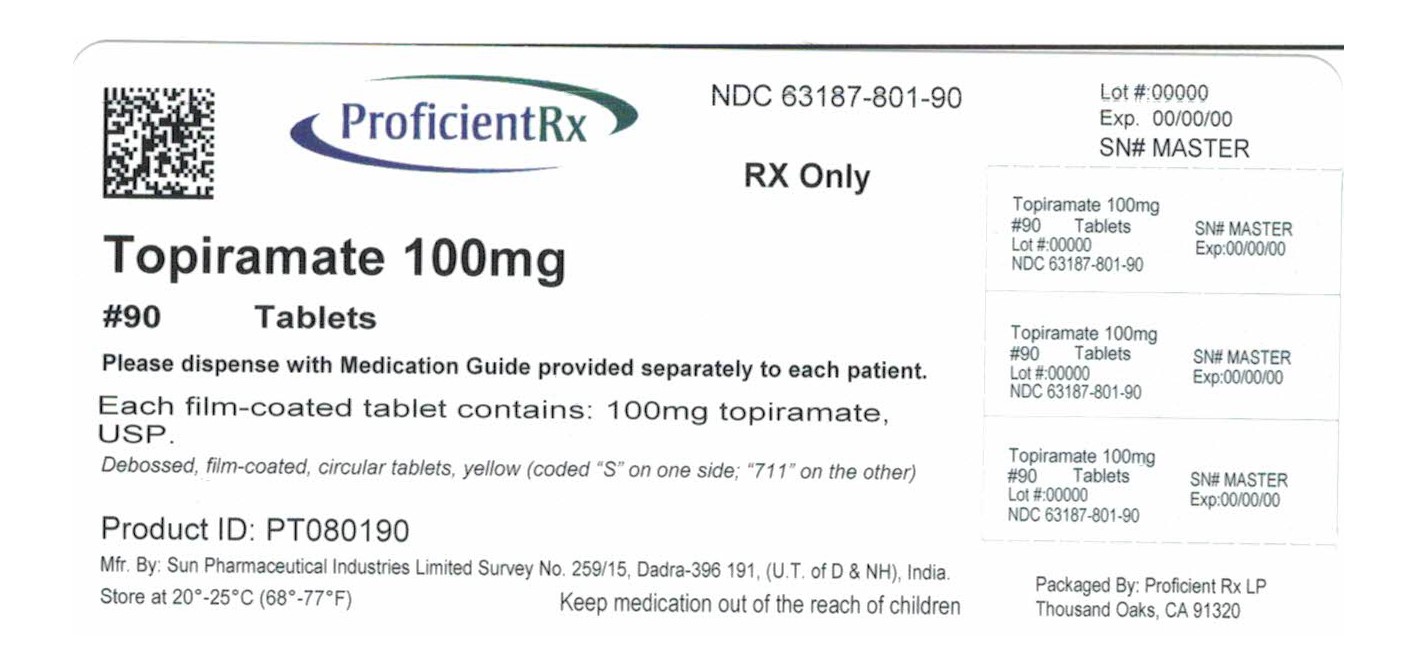
PRINCIPAL DISPLAY PANEL-100 mg NDC 63187-801-90 Topiramate Tablets, USP 100 mg Rx only 90 Tablets PHARMACIST: Please dispense with Medication Guide provided separately to each patient. 63187-801-90
Medicare Part D spend CMS · PART D · 2026 (Q1)
About this NDC listing & data coverage
What data is (and isn’t) available for this NDC — tap to expand
| NDC identity (package / product / labeler codes) | ✓ Available |
| Labeler | ✓ Available |
| Product & package description | ✓ Available |
| Marketing category & status | ✓ Available |
| Active ingredient / dosage form / route | ✓ Available |
| FDA label (SPL via DailyMed) | ✓ Available |
| Package photos | ✓ Available |
| Inactive ingredients (structured) | ✓ Available |
| NADAC pharmacy acquisition price (CMS) | — Not published for this NDC CMS publishes NADAC only for NDCs reported in its retail-pharmacy survey. |
| Orange Book / therapeutic-equivalence data | ✓ Available |
| HCPCS J-code billing crosswalk | — Not published for this NDC Most self-administered / retail products have no J-code — that is normal. |
| Medicaid utilization (CMS SDUD) | — Not published for this NDC CMS reports utilization only for NDCs with Medicaid claims above its privacy threshold. |