
Piperacillin and Tazobactam 3 g/15mL; .375 g/15mL Injection, Powder, Lyophilized, For Solution — NDC 63323-983-53 (Billing 63323-0983-53)
This is a package of Piperacillin and Tazobactam 3 g/15mL; .375 g/15mL Injection, Powder, Lyophilized, For Solution from Fresenius Kabi USA, LLC, marketed since May 2018 and currently FDA-listed; retail pharmacies pay about $3.49 per unit (NADAC). It is the main listing for this product, which comes in 2 package sizes.
NDC database record
One package, one record: these facts belong to NDC 63323-983-53 alone.
- Record
- FDA NDC Directory package listing · Human prescription drug
- Code segments
- 63323 labeler · 983 product · 53 package
- Package marketed since
- May 18, 2018
- Sample package
- No — commercial package
- Listing certified through
- Dec 31, 2026
- Barcode (UPC-A, from the NDC)
- 3 6332398353 6
- Medicaid fills, this package
- 76 prescriptions in the last four reported quarters
- FDA record last changed
- Oct 2, 2026
Identity & classification
Regulatory identifiers FDA, NLM and CMS codes for this package
Drug-database identifiers Medi-Span GPI and First Databank GCN / HICL / AHFS classification
- GSN (GCN sequence number): 021186
- GCN: 53281
- GPI-14 (Medi-Span): 01990002702130
- HICL (First Databank): 008738
- AHFS class code: 08:12.16.16
- RxCUI (RxNorm): 1659131
Where does this data come from?
- FDA openFDA NDC Directory · synced Oct 1, 2026
- FDA label on DailyMed · label index refreshed Oct 6, 2026
- RxNorm (NLM RxNav) · catalog refreshed Oct 1, 2026
- Medi-Span GPI (licensed)
- First Databank (licensed) · refreshed Oct 1, 2026
RxNorm drug class
This medicine belongs to the beta Lactamase Inhibitor class.
Where does this data come from?
- RxClass (NLM) · catalog refreshed Oct 1, 2026
Clinical
- It treats certain serious bacterial infections, such as abdominal infections, pneumonia, skin infections, and female pelvic infections. Which ones apply depends on your age. It doe...
- It is given through a vein, usually over about 30 minutes, every 6 to 8 hours. Your care team handles the dosing and timing. They set the length of treatment, often 7 to 14 days.
- Diarrhea, constipation, nausea, headache, trouble sleeping, and mild rash are the most common. Most are mild. Tell your nurse if anything bothers you.
- Tell your team immediately about trouble breathing, swelling, a spreading rash or peeling skin, seizures, muscle pain with dark urine, or unusual bleeding. Also report severe diarr...
Patient education
Supplement & herbal interactions
Where does this data come from?
- MedlinePlus (NLM) · refreshed Oct 1, 2026
- FDA label on DailyMed · label index refreshed Oct 6, 2026
Ask a licensed pharmacist directly — free, answered by our team.
Pricing
A drug doesn't have one price. Each row is a different public payment system, and none is what you'd pay at the counter — that depends on your insurance. The ⓘ on each row explains what it measures.
| Price system | Per ea | Per package |
|---|---|---|
| Retail pharmacies payNADAC · weekly | $3.493 | $34.93 / 10 vials |
| Medicaid paysCMS SDUD · 12 mo | $31.76 | $317.62 / 10 vials |
| Medicare drug plans payPart D · Q2 2026 | $7.37 | $73.70 / 10 vials |
| Medicare Part B allowsASP · J2543 | $1.218 / J2543 unit | — |
Where does this data come from?
- CMS NADAC weekly file · file of Sep 30, 2026
- CMS ASP pricing files · refreshed Sep 20, 2026
- CMS Medicaid State Drug Utilization Data · through Q1 2026
- CMS Part D plan pricing files · refreshed Sep 24, 2026
- VA National Acquisition Center price file
Billing & reimbursement
Where does this data come from?
- CMS ASP NDC-HCPCS crosswalk · refreshed Sep 22, 2026
- DMEPDAC NDC-HCPCS crosswalk
- openFDA NSDE billing units · refreshed Oct 7, 2026
Packaging — all sizes for this product
| Package NDC | Description | Per unit | Per pack | Marketing start | Marketing end | Status |
|---|---|---|---|---|---|---|
| 63323-0983-21 63323-983-21 | 10 VIAL, SINGLE-USE in 1 CARTON / 15 mL in 1 VIAL, SINGLE-USE | $3.49 / ea | $34.93 | 2018-05-18 | — | Active |
| 63323-0983-53 You're viewing this Main listing | 10 VIAL, SINGLE-USE in 1 CARTON / 15 mL in 1 VIAL, SINGLE-USE | $3.49 / ea | $34.93 | 2018-05-18 | — | Active |
This pack effectively ties for the lowest per-ea cost of the 2 priced pack sizes ($3.49 NADAC).
In Medicaid, this is the most-dispensed pack of this product — about 75% of fills over the last four reported quarters. See all packs ↓
Pack size FAQ
What quantity is in this package?
What NDC number is used to bill for this package of Piperacillin and Tazobactam 3 g/15mL; .375 g/15mL Injection, Powder, Lyophilized, For Solution?
Prices are the latest CMS NADAC pharmacy acquisition cost per NDC; per-pack figures are per-unit × pack quantity, shown only when the pack is denominated in the same measure NADAC prices.
Therapeutic equivalents
| Product | Labeler | Pack | NADAC/unit | TE | Status | Price vs. this |
|---|---|---|---|---|---|---|
| Piperacillin and Tazobactam 3 g/15mL; .375 g/15mL 00409-3385-13 | Hospira, | 10 vials | $3.493 | AP | Discontinued | — |
| Piperacillin and Tazobactam 3 g/15mL; .375 g/15mL 00781-3113-95 | Sandoz | 10 vials | $3.493 | AP | Availability likely | — |
| Piperacillin and Tazobactam 3 g/1; .375 g 44567-0802-10 | WG | 10 vials | $3.493 | AP | Availability likely | — |
| Piperacillin and Tazobactam 3 g/1; .375 g 55150-0120-30 | Eugia | 10 vials | $3.493 | AP | Availability likely | — |
| Piperacillin and Tazobactam 3 g/15mL; .375 g/15mL 60505-6157-04 | Apotex | 10 vials | $3.493 | AP | Availability likely | — |
| Piperacillin and Tazobactam 3 g/15mL; .375 g/15mLthis 63323-0983-53 | Fresenius | 10 vials | $3.493 | AP | Availability likely | — |
| Piperacillin and Tazobactam 3 g/15mL; .375 g/15mL 65219-0436-20 | Fresenius | 10 vials | $3.493 | AP | Availability likely | — |
| Piperacillin and Tazobactam 3 g/15mL; .375 g/15mL 68001-0507-82 | BluePoint | 10 vials | $3.493 | AP | Availability likely | — |
| piperacillin and tazobactam 3 g/15mL; .375 g/15mL 72485-0403-10 | Armas | 10 vials | $3.493 | AP | Availability likely | — |
| Piperacillin and Tazobactam 3 g/15mL; .375 g/15mL 72572-0573-10 | Civica, | 10 vials | $3.493 | AP | Availability likely | — |
| Piperacillin And Tazobactam 3 g/15mL; .375 g/15mL 81284-0152-10 | Provepharm | 10 vials | $3.493 | AP | Availability likely | — |
| Zosyn in Galaxy Containers 375 mg/50mL; 3 g/50mL 00206-8861-02 | Wyeth | 50 ml | — | — | Discontinued | — |
| Piperacillin and Tazobactam and Sodium Chloride 375 mg/50mL; 3 g/50mL 00264-3448-11 | B. | 50 ml | — | — | FDA listed | — |
| Zosyn 3 g/50mL; .375 g/50mL 00338-9636-24 | Baxter | 50 ml | — | — | FDA listed | — |
| Piperacillin and Tazobactam 3 g/15mL; .375 g/15mL 00781-9213-95 | Sandoz | 10 vials | — | AP | Discontinued | — |
| Piperacillin and Tazobactam 3 g/15mL; .375 g/15mL 35369-0503-02 | Shandong | 10 vials | — | AP | FDA listed | — |
| Piperacillin and Tazobactam 3 g/15mL; .375 g/15mL 63323-0300-30 | Fresenius | 10 vials | — | AP | FDA listed | — |
| piperacillin and tazobactam 3 g/15mL; .375 g/15mL 72572-0414-10 | Civica, | 10 vials | — | AP | FDA listed | — |
| piperacillin and tazobactam 3 g/15mL; .375 g/15mL 83270-0302-10 | ONESOURCE | 10 vials | — | AP | FDA listed | — |
| Piperacillin and Tazobactam 3 g/15mL; .375 g/15mL 83634-0105-30 | Avenacy, | 10 vials | — | AP | FDA listed | — |
Where does this data come from?
- FDA openFDA NDC Directory · synced Oct 1, 2026
- FDA Orange Book · refreshed Oct 3, 2026
- CMS NADAC weekly file · file of Sep 30, 2026
Availability & generic status
This product is an FDA-approved generic. Other versions of the same drug are listed under Therapeutic equivalents, least expensive first.
Where does this data come from?
- FDA Orange Book · refreshed Oct 3, 2026
Inactive Ingredients / Excipients
Inactive ingredients, also called excipients, are components of the drug product other than the active ingredient. They may include fillers, dyes, coatings, preservatives, flavors, or other formulation ingredients.
🧪 Avoiding an ingredient? See Piperacillin and Tazobactam Injection inactive ingredients by manufacturer: every current product's list side by side, so you can ask your pharmacy for the version that does not list it.
Where does this data come from?
IACT rows and label-wide narrative are kept separate; availability and product-level specificity depend on the submitted label.- FDA label on DailyMed · label index refreshed Oct 6, 2026
- FDA openFDA NDC Directory · synced Oct 1, 2026
Inactive ingredient FAQ
Are inactive ingredients the same for every manufacturer?
Why might an inactive ingredient be missing?
Can inactive ingredients matter?
Manufacturer & labeler
More NDCs from Fresenius Kabi USA, LLC labeler code 63323
- Zoledronic Acid 5 mg/100mL Injection, Solution NDC 63323-966-00
- Potassium Chloride 2 meq/mL Injection, Solution, Concentrate NDC 63323-967-30
- BENZTROPINE MESYLATE 1 mg/mL Injection, Solution NDC 63323-970-02
- Fosaprepitant 150 mg/5mL Injection, Powder, Lyophilized, For Solution NDC 63323-972-10
- Piperacillin and Tazobactam 2 g/10mL; .25 g/10mL Injection, Powder, Lyophilized, For Solution NDC 63323-981-21
- Piperacillin and Tazobactam 4 g/20mL; .5 g/20mL Injection, Powder, Lyophilized, For Solution NDC 63323-982-52
Where does this data come from?
- FDA openFDA NDC Directory · synced Oct 1, 2026
- Drugs@FDA
Full prescribing information FDA SPL
🎯 Indications and Usage ▾
1 INDICATIONS AND USAGE Piperacillin and tazobactam for injection is a combination of piperacillin, a penicillin-class antibacterial and tazobactam, a beta-lactamase inhibitor, indicated for the treatment of: Intra-abdominal infections in adult and pediatric patients 2 months of age and older ( 1.1 ) Nosocomial pneumonia in adult and pediatric patients 2 months of age and older ( 1.2 ) Skin and skin structure infections in adults ( 1.3 ) Female pelvic infections in adults ( 1.4 ) Community-acquired pneumonia in adults ( 1.5 ) To reduce the development of drug-resistant bacteria and maintain the effectiveness of piperacillin and tazobactam for injection and other antibacterial drugs, piperacillin and tazobactam for injection should be used only to treat or prevent infections that are proven or strongly suspected to be caused by bacteria.
( 1.6 )
1.1Intra-abdominal Infections Piperacillin and tazobactam for injection is indicated in adults and pediatric patients (2 months of age and older) for the treatment of appendicitis (complicated by rupture or abscess) and peritonitis caused by beta-lactamase producing isolates of Escherichia coli or the following members of the Bacteroides fragilis group: B. fragilis, B. ovatus, B. thetaiotaomicron, or B. vulgatus .
1.2Nosocomial Pneumonia Piperacillin and tazobactam for injection is indicated in adults and pediatric patients (2 months of age and older) for the treatment of nosocomial pneumonia (moderate to severe) caused by beta- lactamase producing isolates of Staphylococcus aureus and by piperacillin/tazobactam-susceptible Acinetobacter baumannii, Haemophilus influenzae, Klebsiella pneumoniae, and Pseudomonas aeruginosa (Nosocomial pneumonia caused by P. aeruginosa should be treated in combination with an aminoglycoside) [see Dosage and Administration ( 2 )] .
1.3Skin and Skin Structure Infections Piperacillin and tazobactam for injection is indicated in adults for the treatment of uncomplicated and complicated skin and skin structure infections, including cellulitis, cutaneous abscesses and ischemic/ diabetic foot infections caused by beta-lactamase producing isolates of Staphylococcus aureus .
1.4Female Pelvic Infections Piperacillin and tazobactam for injection is indicated in adults for the treatment of postpartum endometritis or pelvic inflammatory disease caused by beta-lactamase producing isolates of Escherichia coli .
1.5Community-acquired Pneumonia Piperacillin and tazobactam for injection is indicated in adults for the treatment of community-acquired pneumonia (moderate severity only) caused by beta-lactamase producing isolates of Haemophilus influenzae .
1.6Usage To reduce the development of drug-resistant bacteria and maintain the effectiveness of piperacillin and tazobactam for injection and other antibacterial drugs, piperacillin and tazobactam for injection should be used only to treat or prevent infections that are proven or strongly suspected to be caused by bacteria. When culture and susceptibility information are available, they should be considered in selecting or modifying antibacterial therapy. In the absence of such data, local epidemiology and susceptibility patterns may contribute to the empiric selection of therapy.
⏱️ Dosage and Administration ▾
2 DOSAGE AND ADMINISTRATION Adult Patients With Indications Other Than Nosocomial Pneumonia; The usual daily dosage of piperacillin and tazobactam for injection for adults is 3.375 g every six hours totaling 13.5 g (12 g piperacillin/1.5 g tazobactam). ( 2.1 ) Adult Patients with Nosocomial Pneumonia: Initial presumptive treatment of patients with nosocomial pneumonia should start with piperacillin and tazobactam for injection at a dosage of 4.5 g every six hours plus an aminoglycoside, totaling 18 g (16 g piperacillin/2 g tazobactam).
( 2.2 ) Adult Patients with Renal Impairment: Dosage in patients with renal impairment (creatinine clearance ≤ 40 mL/min) and dialysis patients should be reduced, based on the degree of renal impairment. ( 2.3 ) Pediatric Patients by Indication and Age: See Table below ( 2.4 ) Recommended Dosage of Piperacillin and Tazobactam for Pediatric Patients 2 months of Age and Older, Weighing up to 40 kg and With Normal Renal Function Age Appendicitis and /or Peritonitis Nosocomial Pneumonia 2 months to 9 months 90 mg/kg (80 mg piperacillin/10 mg tazobactam) every 8 (eight) hours 90 mg/kg (80 mg piperacillin/10 mg tazobactam) every 6 (six) hours Older than 9 months 112.5 mg/kg (100 mg piperacillin/12.5 mg tazobactam) every 8 (eight) hours 112.5 mg/kg (100 mg piperacillin/12.5 mg tazobactam) every 6 (six ) hours Administer piperacillin and tazobactam for injection by intravenous infusion over 30 minutes to both adult and pediatric patients ( 2.1 , 2.2 , 2.3 , 2.4 ).
Piperacillin and tazobactam for injection and aminoglycosides should be reconstituted, diluted, and administered separately. Co-administration via Y-site can be done under certain conditions. ( 2.7 ) See the full prescribing information for the preparation and administration instructions for piperacillin and tazobactam for injection single-dose vials.
2.1Dosage in Adult Patients With Indications Other Than Nosocomial Pneumonia The usual total daily dosage of piperacillin and tazobactam for injection for adult patients with indications other than nosocomial pneumonia is 3.375 g every six hours [totaling 13.5 g (12 g piperacillin/ 1.5 g tazobactam)], to be administered by intravenous infusion over 30 minutes. The usual duration of piperacillin and tazobactam for injection treatment is from 7 to 10 days.
2.2Dosage in Adult Patients With Nosocomial Pneumonia Initial presumptive treatment of adult patients with nosocomial pneumonia should start with piperacillin and tazobactam for injection at a dosage of 4.5 g every six hours plus an aminoglycoside, [totaling 18 g (16 g piperacillin/2 g tazobactam)], administered by intravenous infusion over 30 minutes. The recommended duration of piperacillin and tazobactam for injection treatment for nosocomial pneumonia is 7 to 14 days. Treatment with the aminoglycoside should be continued in patients from whom P. aeruginosa is isolated.
2.3Dosage in Adult Patients With Renal Impairment In adult patients with renal impairment (creatinine clearance ≤ 40 mL/min) and dialysis patients (hemodialysis and CAPD), the intravenous dose of piperacillin and tazobactam for injection should be reduced based on the degree of renal impairment. The recommended daily dosage of piperacillin and tazobactam for injection for patients with renal impairment administered by intravenous infusion over 30 minutes is described in Table 1 . Table 1: Recommended Dosage of Piperacillin and Tazobactam for Injection in Patients with Normal Renal Function and Renal Impairment # Administer piperacillin and tazobactam for injection by intravenous infusion over 30 minutes. * Creatinine clearance for patients not receiving hemodialysis ** 0.75 g (0.67 g piperacillin/0.08 g tazobactam) should be administered following each hemodialysis session on hemodialysis days (As total grams piperacillin/tazobactam) # Creatinine clearance, mL/min All Indications (except nosocomial pneumonia) Nosocomial Pneumonia Greater than 40 mL/min 3.375 every 6 hours 4.… [Excerpted — this section continues on DailyMed.]
💊 Dosage Forms and Strengths ▾
3 DOSAGE FORMS AND STRENGTHS Piperacillin and tazobactam for injection, USP is supplied as a white to off-white powder in single dose vials in the following sizes: Each piperacillin and tazobactam for injection, USP 2.25 g single dose vial provides piperacillin sodium equivalent to 2 grams of piperacillin and tazobactam sodium equivalent to 0.25 g of tazobactam. Each piperacillin and tazobactam for injection, USP 3.375 g single dose vial provides piperacillin sodium equivalent to 3 grams of piperacillin and tazobactam sodium equivalent to 0.375 g of tazobactam.
Each piperacillin and tazobactam for injection, USP 4.5 g single dose vial provides piperacillin sodium equivalent to 4 grams of piperacillin and tazobactam sodium equivalent to 0.5 g of tazobactam. Piperacillin and tazobactam for Injection: 2.25 g, 3.375 g, and 4.5 g lyophilized powder for reconstitution in single-dose vials. ( 3 )
⛔ Contraindications ▾
4 CONTRAINDICATIONS Piperacillin and tazobactam for injection is contraindicated in patients with a history of allergic reactions to any of the penicillins, cephalosporins, or beta-lactamase inhibitors. Patients with a history of allergic reactions to any of the penicillins, cephalosporins, or beta-lactamase inhibitors. ( 4 )
⚠️ Warnings and Cautions ▾
5 WARNINGS AND PRECAUTIONS Serious hypersensitivity reactions (anaphylactic/anaphylactoid) reactions have been reported in patients receiving piperacillin and tazobactam for injection. Discontinue piperacillin and tazobactam for injection if a reaction occurs. ( 5.1 ) Piperacillin and tazobactam for injection may cause severe cutaneous adverse reactions, such as Stevens-Johnson syndrome, toxic epidermal necrolysis, drug reaction with eosinophilia and systemic symptoms, and acute generalized exanthematous pustulosis.
Discontinue piperacillin and tazobactam for injection for progressive rashes. ( 5.2 ) Hematological effects (including bleeding, leukopenia and neutropenia) have occurred. Monitor hematologic tests during prolonged therapy.
( 5.3 ) As with other penicillins, piperacillin and tazobactam for injection may cause neuromuscular excitability or seizures. Patients receiving higher doses, especially in the presence of renal impairment may be at greater risk. Closely monitor patients with renal impairment or seizure disorders for signs and symptoms of neuromuscular excitability or seizures.
( 5.4 ) Nephrotoxicity in critically ill patients has been observed; the use of piperacillin and tazobactam for injection was found to be an independent risk factor for renal failure and was associated with delayed recovery of renal function as compared to other beta-lactam antibacterial drugs in a randomized, multicenter, controlled trial in critically ill patients. Based on this study, alternative treatment options should be considered in the critically ill population. If alternative treatment options are inadequate or unavailable, monitor renal function during treatment with piperacillin and tazobactam for injection.
( 5.5 ) Clostridioides difficile -associated diarrhea: evaluate patients if diarrhea occurs. ( 5.7 )
5.1Hypersensitivity Adverse Reactions Serious and occasionally fatal hypersensitivity (anaphylactic/anaphylactoid) reactions (including shock) have been reported in patients receiving therapy with piperacillin and tazobactam for injection. These reactions are more likely to occur in individuals with a history of penicillin, cephalosporin, or carbapenem hypersensitivity or a history of sensitivity to multiple allergens. Before initiating therapy with piperacillin and tazobactam for injection, careful inquiry should be made concerning previous hypersensitivity reactions.
If an allergic reaction occurs, piperacillin and tazobactam for injection should be discontinued and appropriate therapy instituted.
5.2Severe Cutaneous Adverse Reactions Piperacillin and tazobactam for injection may cause severe cutaneous adverse reactions, such as Stevens-Johnson syndrome, toxic epidermal necrolysis, drug reaction with eosinophilia and systemic symptoms, and acute generalized exanthematous pustulosis. If patients develop a skin rash they should be monitored closely and piperacillin and tazobactam for injection discontinued if lesions progress.
5.3Hematologic Adverse Reactions Bleeding manifestations have occurred in some patients receiving beta-lactam drugs, including piperacillin. These reactions have sometimes been associated with abnormalities of coagulation tests such as clotting time, platelet aggregation and prothrombin time, and are more likely to occur in patients with renal failure. If bleeding manifestations occur, piperacillin and tazobactam for injection should be discontinued and appropriate therapy instituted.
The leukopenia/neutropenia associated with piperacillin and tazobactam for injection administration appears to be reversible and most frequently associated with prolonged administration. Periodic assessment of hematopoietic function should be performed, especially with prolonged therapy, i.e., ≥ 21 days [see Adverse Reactions ( 6.1 )] .
5.4Central Nervous System Adverse Reactions As with other penicillins, piperacillin and tazobactam may cause neuromuscular excitability or seizures. Patients receiving higher doses,… [Excerpted — this section continues on DailyMed.]
🤒 Adverse Reactions ▾
6 ADVERSE REACTIONS The most common adverse reactions (incidence > 5%) are diarrhea, constipation, nausea, headache, and insomnia. ( 6.1 ) To report SUSPECTED ADVERSE REACTIONS, contact Fresenius Kabi USA, LLC at 1-800-551-7176 or FDA at 1-800-FDA-1088 or www.fda.gov/medwatch.
6.1Clinical Trials Experience Because clinical trials are conducted under widely varying conditions, adverse reaction rates observed in the clinical trials of a drug cannot be directly compared to rates in the clinical trials of another drug and may not reflect the rates observed in practice. Clinical Trials in Adult Patients During the initial clinical investigations, 2,621 patients worldwide were treated with piperacillin and tazobactam for injection in phase 3 trials. In the key North American monotherapy clinical trials (n=830 patients), 90% of the adverse events reported were mild to moderate in severity and transient in nature.
However, in 3.2% of the patients treated worldwide, piperacillin and tazobactam for injection was discontinued because of adverse events primarily involving the skin (1.3%), including rash and pruritus; the gastrointestinal system (0.9%), including diarrhea, nausea, and vomiting; and allergic reactions (0.5%). Table 4: Adverse Reactions from Piperacillin and Tazobactam for Injection Monotherapy Clinical Trials System Organ Class Adverse Reaction Gastrointestinal disorders Diarrhea (11.3%) Constipation (7.7%) Nausea (6.9%) Vomiting (3.3%) Dyspepsia (3.3%) Abdominal pain (1.3%) General disorders and administration site conditions Fever (2.4%) Injection site reaction (≤ 1%) Rigors (≤ 1%) Immune system disorders Anaphylaxis (≤ 1%) Infections and infestations Candidiasis (1.6%) Pseudomembranous colitis (≤ 1%) Metabolism and nutrition disorders Hypoglycemia (≤ 1%) Musculoskeletal and connective tissue disorders Myalgia (≤ 1%) Arthralgia (≤ 1%) Nervous system disorders Headache (7.7%) Psychiatric disorders Insomnia (6.6%) Skin and subcutaneous tissue disorders Rash (4.2%, including maculopapular, bullous, and urticarial) Pruritus (3.1%) Purpura (≤ 1%) Vascular disorders Phlebitis (1.3%) Thrombophlebitis (≤ 1%) Hypotension (≤ 1%) Flushing (≤ 1%) Respiratory, thoracic and mediastinal disorders Epistaxis (≤ 1%) Nosocomial Pneumonia Trials Two trials of nosocomial lower respiratory tract infections were conducted.
In one study, 222 patients were treated with piperacillin and tazobactam for injection in a dosing regimen of 4.5 g every 6 hours in combination with an aminoglycoside and 215 patients were treated with imipenem/cilastatin (500 mg/500 mg every 6 hours) in combination with an aminoglycoside. In this trial, treatment-emergent adverse events were reported by 402 patients, 204 (91.9%) in the piperacillin/tazobactam group and 198 (92.1%) in the imipenem/ cilastatin group. Twenty-five (11%) patients in the piperacillin/ tazobactam group and 14 (6.5%) in the imipenem/cilastatin group (p > 0.05) discontinued treatment due to an adverse event.
The second trial used a dosing regimen of 3.375 g given every 4 hours with an aminoglycoside. Table 5: Adverse Reactions from Piperacillin and Tazobactam for Injection Plus Aminoglycoside Clinical Trials a a For adverse drug reactions that appeared in both studies the higher frequency is presented. System Organ Class Adverse Reaction Blood and lymphatic system disorders Thrombocythemia (1.4%) Anemia (≤ 1%) Thrombocytopenia (≤ 1%) Eosinophilia (≤ 1%) Gastrointestinal disorders Diarrhea (20%) Constipation (8.4%) Nausea (5.8%) Vomiting (2.7%) Dyspepsia (1.9%) Abdominal pain (1.8%) Stomatitis (≤ 1%) General disorders and administration site conditions Fever (3.2%) Injection site reaction (≤ 1%) Infections and infestations Oral candidiasis (3.9%) Candidiasis (1.8%) Investigations BUN increased (1.8%) Blood creatinine increased (1.8%) Liver function test abnormal (1.4%) Alkaline phosphatase increased (≤ 1%) Aspartate aminotransferase increased (≤ 1%) Alanine aminotransferase increased (≤ 1%) Metaboli… [Excerpted — this section continues on DailyMed.]
🔄 Drug Interactions ▾
7 DRUG INTERACTIONS Piperacillin and tazobactam for injection administration can significantly reduce tobramycin concentrations in hemodialysis patients. Monitor tobramycin concentrations in these patients. ( 7.1 ) Probenecid prolongs the half-lives of piperacillin and tazobactam and should not be co-administered with piperacillin and tazobactam for injection unless the benefit outweighs the risk.
( 7.2 ) Co-administration of piperacillin and tazobactam for injection with vancomycin may increase the incidence of acute kidney injury. Monitor kidney function in patients receiving piperacillin and tazobactam for injection and vancomycin. ( 7.3 ) Monitor coagulation parameters in patients receiving piperacillin and tazobactam for injection and heparin or oral anticoagulants.
( 7.4 ) Piperacillin and tazobactam for injection may prolong the neuromuscular blockade of vecuronium and other non-depolarizing muscle relaxants. Monitor for adverse reactions related to neuromuscular blockade. ( 7.5 )
7.1Aminoglycosides Piperacillin may inactivate aminoglycosides by converting them to microbiologically inert amides. In vivo inactivation: When aminoglycosides are administered in conjunction with piperacillin to patients with end-stage renal disease requiring hemodialysis, the concentrations of the aminoglycosides (especially tobramycin) may be significantly reduced and should be monitored. Sequential administration of piperacillin and tazobactam for injection and tobramycin to patients with either normal renal function or mild to moderate renal impairment has been shown to modestly decrease serum concentrations of tobramycin but no dosage adjustment is considered necessary.
In vitro inactivation: Due to the in vitro inactivation of aminoglycosides by piperacillin, piperacillin and tazobactam for injection and aminoglycosides are recommended for separate administration. Piperacillin and tazobactam for injection and aminoglycosides should be reconstituted, diluted, and administered separately when concomitant therapy with aminoglycosides is indicated. Piperacillin and tazobactam for injection, is compatible with amikacin and gentamicin for simultaneous Y-site infusion in certain diluents and at specific concentrations.
Piperacillin and tazobactam for injection is not compatible with tobramycin for simultaneous Y-site infusion [see Dosage and Administration ( 2.7 )] .
7.2Probenecid Probenecid administered concomitantly with piperacillin and tazobactam for injection prolongs the half-life of piperacillin by 21% and that of tazobactam by 71% because probenecid inhibits tubular renal secretion of both piperacillin and tazobactam. Probenecid should not be co-administered with piperacillin and tazobactam for injection unless the benefit outweighs the risk.
7.3Vancomycin Studies have detected an increased incidence of acute kidney injury in patients concomitantly administered piperacillin/tazobactam and vancomycin as compared to vancomycin alone [see Warnings and Precautions ( 5.5 )] . Monitor kidney function in patients concomitantly administered with piperacillin/tazobactam and vancomycin. No pharmacokinetic interactions have been noted between piperacillin/ tazobactam and vancomycin.
7.4Anticoagulants Coagulation parameters should be tested more frequently and monitored regularly during simultaneous administration of high doses of heparin, oral anticoagulants, or other drugs that may affect the blood coagulation system or the thrombocyte function [see Warnings and Precautions ( 5.3 )] .
7.5Vecuronium Piperacillin when used concomitantly with vecuronium has been implicated in the prolongation of the neuromuscular blockade of vecuronium. Piperacillin and tazobactam for injection could produce the same phenomenon if given along with vecuronium. Due to their similar mechanism of action, it is expected that the neuromuscular blockade produced by any of the non-depolarizing muscle relaxants could be prolonged in the presence of piperacillin.
Monito… [Excerpted — this section continues on DailyMed.]
👥 Use in Specific Populations ▾
8 USE IN SPECIFIC POPULATIONS Dosage in patients with renal impairment (creatinine clearance ≤ 40 mL/min) should be reduced based on the degree of renal impairment. ( 2.3 , 8.6 )
8.1Pregnancy Risk Summary Piperacillin and tazobactam cross the placenta in humans. However, there are insufficient data with piperacillin and/or tazobactam in pregnant women to inform a drug-associated risk for major birth defects and miscarriage. No fetal structural abnormalities were observed in rats or mice when piperacillin/tazobactam was administered intravenously during organogenesis at doses 1 to 2 times and 2 to 3 times the human dose of piperacillin and tazobactam, respectively, based on body-surface area (mg/m 2 ).
However, fetotoxicity in the presence of maternal toxicity was observed in developmental toxicity and peri/postnatal studies conducted in rats (intraperitoneal administration prior to mating and throughout gestation or from gestation day 17 through lactation day 21) at doses less than the maximum recommended human daily dose based on body-surface area (mg/m 2 ) [see Data ] . The background risk of major birth defects and miscarriage for the indicated population is unknown. In the U.S. general population, the estimated background risk of major birth defects and miscarriage in clinically recognized pregnancies is 2-4% and 15-20%, respectively.
Data Animal Data In embryo-fetal development studies in mice and rats, pregnant animals received intravenous doses of piperacillin/tazobactam up to 3,000/750 mg/kg/day during the period of organogenesis. There was no evidence of teratogenicity up to the highest dose evaluated, which is 1 to 2 times and 2 to 3 times the human dose of piperacillin and tazobactam, in mice and rats respectively, based on body-surface area (mg/m 2 ). Fetal body weights were reduced in rats at maternally toxic doses at or above 500/62.5 mg/kg/day, minimally representing 0.4 times the human dose of both piperacillin and tazobactam based on body-surface area (mg/m 2 ).
A fertility and general reproduction study in rats using intraperitoneal administration of tazobactam or the combination piperacillin/tazobactam prior to mating and through the end of gestation, reported a decrease in litter size in the presence of maternal toxicity at 640 mg/ kg/day tazobactam (4 times the human dose of tazobactam based on body-surface area), and decreased litter size and an increase in fetuses with ossification delays and variations of ribs, concurrent with maternal toxicity at ≥ 640/160 mg/kg/day piperacillin/tazobactam (0.5 times and 1 times the human dose of piperacillin and tazobactam, respectively, based on body-surface area).
Peri/postnatal development in rats was impaired with reduced pup weights, increased stillbirths, and increased pup mortality concurrent with maternal toxicity after intraperitoneal administration of tazobactam alone at doses ≥ 320 mg/kg/day (2 times the human dose based on body surface area) or of the combination piperacillin/ tazobactam at doses ≥ 640/160 mg/kg/day (0.5 times and 1 times the human dose of piperacillin and tazobactam, respectively, based on body-surface area) from gestation day 17 through lactation day 21.
8.2Lactation Risk Summary Piperacillin is excreted in human milk; tazobactam concentrations in human milk have not been studied. No information is available on the effects of piperacillin and tazobactam on the breastfed child or on milk production. The developmental and health benefits of breastfeeding should be considered along with the mother's clinical need for piperacillin and tazobactam for injection and any potential adverse effects on the breastfed child from piperacillin and tazobactam for injection or from the underlying maternal condition.
8.4Pediatric Use The safety and effectiveness of piperacillin and tazobactam for injection for intra-abdominal infections, and nosocomial pneumonia have been established in pediatric patients 2 months of age and older. Use of piperacillin… [Excerpted — this section continues on DailyMed.]
🤰 Pregnancy ▾
8.1Pregnancy Risk Summary Piperacillin and tazobactam cross the placenta in humans. However, there are insufficient data with piperacillin and/or tazobactam in pregnant women to inform a drug-associated risk for major birth defects and miscarriage. No fetal structural abnormalities were observed in rats or mice when piperacillin/tazobactam was administered intravenously during organogenesis at doses 1 to 2 times and 2 to 3 times the human dose of piperacillin and tazobactam, respectively, based on body-surface area (mg/m 2 ).
However, fetotoxicity in the presence of maternal toxicity was observed in developmental toxicity and peri/postnatal studies conducted in rats (intraperitoneal administration prior to mating and throughout gestation or from gestation day 17 through lactation day 21) at doses less than the maximum recommended human daily dose based on body-surface area (mg/m 2 ) [see Data ] . The background risk of major birth defects and miscarriage for the indicated population is unknown. In the U.S. general population, the estimated background risk of major birth defects and miscarriage in clinically recognized pregnancies is 2-4% and 15-20%, respectively.
Data Animal Data In embryo-fetal development studies in mice and rats, pregnant animals received intravenous doses of piperacillin/tazobactam up to 3,000/750 mg/kg/day during the period of organogenesis. There was no evidence of teratogenicity up to the highest dose evaluated, which is 1 to 2 times and 2 to 3 times the human dose of piperacillin and tazobactam, in mice and rats respectively, based on body-surface area (mg/m 2 ). Fetal body weights were reduced in rats at maternally toxic doses at or above 500/62.5 mg/kg/day, minimally representing 0.4 times the human dose of both piperacillin and tazobactam based on body-surface area (mg/m 2 ).
A fertility and general reproduction study in rats using intraperitoneal administration of tazobactam or the combination piperacillin/tazobactam prior to mating and through the end of gestation, reported a decrease in litter size in the presence of maternal toxicity at 640 mg/ kg/day tazobactam (4 times the human dose of tazobactam based on body-surface area), and decreased litter size and an increase in fetuses with ossification delays and variations of ribs, concurrent with maternal toxicity at ≥ 640/160 mg/kg/day piperacillin/tazobactam (0.5 times and 1 times the human dose of piperacillin and tazobactam, respectively, based on body-surface area).
Peri/postnatal development in rats was impaired with reduced pup weights, increased stillbirths, and increased pup mortality concurrent with maternal toxicity after intraperitoneal administration of tazobactam alone at doses ≥ 320 mg/kg/day (2 times the human dose based on body surface area) or of the combination piperacillin/ tazobactam at doses ≥ 640/160 mg/kg/day (0.5 times and 1 times the human dose of piperacillin and tazobactam, respectively, based on body-surface area) from gestation day 17 through lactation day 21.
🧒 Pediatric Use ▾
8.4Pediatric Use The safety and effectiveness of piperacillin and tazobactam for injection for intra-abdominal infections, and nosocomial pneumonia have been established in pediatric patients 2 months of age and older. Use of piperacillin and tazobactam for injection in pediatric patients 2 months of age and older with intra-abdominal infections including appendicitis and/or peritonitis is supported by evidence from well-controlled studies and pharmacokinetic studies in adults and in pediatric patients. This includes a prospective, randomized, comparative, open-label clinical trial with 542 pediatric patients 2 to 12 years of age with intra-abdominal infections (including appendicitis and/ or peritonitis), in which 273 pediatric patients received piperacillin/ tazobactam [see Adverse Reactions ( 6.1 ) and Clinical Pharmacology ( 12.3 )] .
Use of piperacillin and tazobactam for injection in pediatric patients 2 months of age and older with nosocomial pneumonia is supported by evidence from well-controlled studies in adults with nosocomial pneumonia, a simulation study performed with a population pharmacokinetic model, and a retrospective, cohort study of pediatric patients with nosocomial pneumonia in which 140 pediatric patients were treated with piperacillin and tazobactam for injection and 267 patients treated with comparators (which included ticarcillin- clavulanate, carbapenems, ceftazidime, cefepime, or ciprofloxacin) [see Adverse Reactions ( 6.1 ) and Clinical Pharmacology ( 12.3 )] .
The safety and effectiveness of piperacillin and tazobactam for injection have not been established in pediatric patients less than 2 months of age [see Clinical Pharmacology ( 12 ) and Dosage and Administration ( 2 )] . Dosage of piperacillin and tazobactam for injection in pediatric patients with renal impairment has not been determined.
🧓 Geriatric Use ▾
8.5Geriatric Use Patients over 65 years are not at an increased risk of developing adverse effects solely because of age. However, dosage should be adjusted in the presence of renal impairment [see Dosage and Administration ( 2 )] . In general, dose selection for an elderly patient should be cautious, usually starting at the low end of the dosing range, reflecting the greater frequency of decreased hepatic, renal, or cardiac function, and of concomitant disease or other drug therapy.
Piperacillin and tazobactam for injection contains 54 mg (2.35 mEq) of sodium per gram of piperacillin in the combination product. At the usual recommended doses, patients would receive between 648 and 864 mg/day (28.2 and 37.6 mEq) of sodium. The geriatric population may respond with a blunted natriuresis to salt loading.
This may be clinically important with regard to such diseases as congestive heart failure. This drug is known to be substantially excreted by the kidney, and the risk of toxic reactions to this drug may be greater in patients with impaired renal function. Because elderly patients are more likely to have decreased renal function, care should be taken in dose selection, and it may be useful to monitor renal function.
🆘 Overdosage ▾
10 OVERDOSAGE There have been postmarketing reports of overdose with piperacillin/ tazobactam. The majority of those events experienced, including nausea, vomiting, and diarrhea, have also been reported with the usual recommended dosages. Patients may experience neuromuscular excitability or seizures if higher than recommended doses are given intravenously (particularly in the presence of renal failure) [see Warnings and Precautions ( 5.4 )] .
Treatment should be supportive and symptomatic according to the patient's clinical presentation. Excessive serum concentrations of either piperacillin or tazobactam may be reduced by hemodialysis. Following a single 3.375 g dose of piperacillin/tazobactam, the percentage of the piperacillin and tazobactam dose removed by hemodialysis was approximately 31% and 39%, respectively [see Clinical Pharmacology ( 12 )] .
🧬 Clinical Pharmacology ▾
12 CLINICAL PHARMACOLOGY
12.1Mechanism of Action Piperacillin and tazobactam for injection is an antibacterial drug [see Microbiology ( 12.4 )] .
12.2Pharmacodynamics The pharmacodynamic parameter for piperacillin/tazobactam that is most predictive of clinical and microbiological efficacy is time above MIC.
12.3Pharmacokinetics The mean and coefficients of variation (CV%) for the pharmacokinetic parameters of piperacillin and tazobactam after multiple intravenous doses are summarized in Table 7 . Table 7: Mean (CV%) Piperacillin and Tazobactam PK Parameters a Piperacillin and tazobactam were given in combination, infused over 30 minutes. b Numbers in [ ]parentheses are coefficients of variation [CV%]. C max : maximum observed concentration, AUC: Area under the curve, CL= clearance, CL R = Renal clearance V=volume of distribution, T 1/2 = elimination half-life Piperacillin Piperacillin/Tazobactam Dose a C max (mcg/mL) AUC b (mcg•h/mL) CL (mL/min) V (L) T 1/2 (h) CL R (mL/min) 2.25 g 134 131 [14] 257 17.4 0.79 -- 3.375 g 242 242 [10] 207 15.1 0.84 140 4.5 g 298 322 [16] 210 15.4 0.84 -- Tazobactam Piperacillin/Tazobactam Dose a C max (mcg/mL) AUC b (mcg•h/mL) CL (mL/min) V (L) T 1/2 (h) CL R (mL/min) 2.25 g 15 16.0 [21] 258 17.0 0.77 -- 3.375 g 24 25.0 [8] 251 14.8 0.68 166 4.5 g 34 39.8 [15] 206 14.7 0.82 -- Peak plasma concentrations of piperacillin and tazobactam are attained immediately after completion of an intravenous infusion of piperacillin and tazobactam for injection.
Piperacillin plasma concentrations, following a 30-minute infusion of piperacillin and tazobactam for injection, were similar to those attained when equivalent doses of piperacillin were administered alone. Steady-state plasma concentrations of piperacillin and tazobactam were similar to those attained after the first dose due to the short half-lives of piperacillin and tazobactam. Distribution Both piperacillin and tazobactam are approximately 30% bound to plasma proteins.
The protein binding of either piperacillin or tazobactam is unaffected by the presence of the other compound. Protein binding of the tazobactam metabolite is negligible. Piperacillin and tazobactam are widely distributed into tissues and body fluids including intestinal mucosa, gallbladder, lung, female reproductive tissues (uterus, ovary, and fallopian tube), interstitial fluid, and bile.
Mean tissue concentrations are generally 50% to 100% of those in plasma. Distribution of piperacillin and tazobactam into cerebrospinal fluid is low in subjects with non-inflamed meninges, as with other penicillins (see Table 8 ). Table 8: Piperacillin/Tazobactam Concentrations in Selected Tissues and Fluids after Single 4 g/0.5 g 30-min IV Infusion of Piperacillin and Tazobactam for Injection a Each subject provided a single sample. b Time from the start of the infusion.
Tissue or Fluid N a Sampling period b (h) Mean PIP Concentration Range (mg/L) Tissue: Plasma Range Tazo Concentration Range (mg/L) Tazo Tissue: Plasma Range Skin 35 0.5 - 4.5 34.8 - 94.2 0.60 - 1.1 4.0 - 7.7 0.49 -
0.93Fatty Tissue 37 0.5 - 4.5 4.0 - 10.1 0.097 - 0.115 0.7 - 1.5 0.10 -
0.13Muscle 36 0.5 - 4.5 9.4 - 23.3 0.29 - 0.18 1.4 - 2.7 0.18 -
0.30Proximal Intestinal Mucosa 7 1.5 - 2.5 31.4 0.55 10.3
1.15Distal Intestinal Mucosa 7 1.5 - 2.5 31.2 0.59 14.5
2.1Appendix 22 0.5 - 2.5 26.5 - 64.1 0.43 - 0.53 9.1 - 18.6 0.80 -
1.35Metabolism Piperacillin is metabolized to a minor microbiologically active desethyl metabolite. Tazobactam is metabolized to a single metabolite that lacks pharmacological and antibacterial activities. Excretion Following single or multiple piperacillin and tazobactam for injection doses to healthy subjects, the plasma half-life of piperacillin and of tazobactam ranged from 0.7 to 1.2 hours and was unaffected by dose or duration of infusion.
Both piperacillin and tazobactam are eliminated via the kidney by glomerular filtration and tubular secretion. Piperacillin is excreted rapidly as unchanged d… [Excerpted — this section continues on DailyMed.]
🧬 Mechanism of Action ▾
12.1Mechanism of Action Piperacillin and tazobactam for injection is an antibacterial drug [see Microbiology ( 12.4 )] .
📦 How Supplied / Storage and Handling ▾
16 HOW SUPPLIED/STORAGE AND HANDLING Piperacillin and tazobactam for injection, USP are supplied as single-dose vials in the following sizes: Product Code Unit of Sale Strength Each 892120 NDC 63323-981-21 Unit of 10 2.25 grams per vial NDC 63323-981-23 20 mL Single-Dose Vial 892320 NDC 63323-983-21 Unit of 10 3.375 grams per vial NDC 63323-983-23 20 mL Single-Dose Vial 892250 NDC 63323-982-52 Unit of 10 4.5 grams per vial NDC 63323-982-21 50 mL Single-Dose Vial Each piperacillin and tazobactam for injection 2.25 grams per vial provides piperacillin sodium equivalent to 2 grams of piperacillin and tazobactam sodium equivalent to 0.25 g of tazobactam.
Each vial contains 4.7 mEq (108 mg) of sodium. Supplied 10 per carton Each piperacillin and tazobactam for injection 3.375 grams per vial provides piperacillin sodium equivalent to 3 grams of piperacillin and tazobactam sodium equivalent to 0.375 g of tazobactam. Each vial contains 7.05 mEq (162 mg) of sodium.
Supplied 10 per carton Each piperacillin and tazobactam for injection 4.5 grams per vial provides piperacillin sodium equivalent to 4 grams of piperacillin and tazobactam sodium equivalent to 0.5 g of tazobactam. Each vial contains 9.4 mEq (216 mg) of sodium. Supplied 10 per carton Piperacillin and tazobactam for injection, USP single-dose vials should be stored at 20° to 25°C (68° to 77°F) [see USP Controlled Room Temperature] prior to reconstitution.
The container closure is not made with natural rubber latex.
📋 Description ▾
11 DESCRIPTION Piperacillin and tazobactam for injection, USP is an injectable antibacterial combination product consisting of the semisynthetic antibacterial piperacillin sodium and the beta-lactamase inhibitor tazobactam sodium for intravenous administration. Piperacillin sodium is derived from D(-)-α-aminobenzyl-penicillin. The chemical name of piperacillin sodium is sodium (2 S ,5 R ,6 R )-6-[( R )-2-(4-ethyl-2,3-dioxo-1-piperazine-carboxamido)-2-phenylacetamido]-3,3-dimethyl-7-oxo-4-thia-1-azabicyclo[3.2.0]heptane-2-carboxylate.
The structure of piperacillin sodium is: C 23 H 26 N 5 NaO 7 S M.W. 539.5 Tazobactam sodium, a derivative of the penicillin nucleus, is a penicillanic acid sulfone. Its chemical name is sodium (2 S ,3 S ,5 R )-3-methyl-7-oxo-3-(1 H -1,2,3-triazol-1-ylmethyl)-4-thia-1-azabicyclo[3.2.0] heptane-2-carboxylate-4,4-dioxide.
The structure of tazobactam sodium is: C 10 H 11 N 4 NaO 5 S M.W. 322.3 Piperacillin and tazobactam for injection, USP contains a total of 2.35 mEq (54 mg) of sodium (Na + ) per gram of piperacillin in the combination product. Piperacillin and tazobactam for injection, USP is a white to off-white sterile, cryodesiccated powder consisting of piperacillin and tazobactam as their sodium salts packaged in glass vials.
The product does not contain excipients or preservatives. Each Piperacillin and Tazobactam for Injection 2.25 g single dose vial contains an amount of drug sufficient for withdrawal of piperacillin sodium equivalent to 2 grams of piperacillin and tazobactam sodium equivalent to 0.25 g of tazobactam. Each Piperacillin and Tazobactam for Injection 3.375 g single dose vial contains an amount of drug sufficient for withdrawal of piperacillin sodium equivalent to 3 grams of piperacillin and tazobactam sodium equivalent to 0.375 g of tazobactam.
Each Piperacillin and Tazobactam for Injection 4.5 g single dose vial contains an amount of drug sufficient for withdrawal of piperacillin sodium equivalent to 4 grams of piperacillin and tazobactam sodium equivalent to 0.5 g of tazobactam. Meets USP Organic Impurities, Procedure 1. Structure of Piperacillin Sodium Structure of Tazobactam Sodium
💬 Information for Patients ▾
17 PATIENT COUNSELING INFORMATION Serious Hypersensitivity Reactions Advise patients, their families, or caregivers that serious hypersensitivity reactions, including serious allergic cutaneous reactions, could occur that require immediate treatment. Ask them about any previous hypersensitivity reactions to piperacillin and tazobactam for injection, other beta-lactams (including cephalosporins), or other allergens [see Warnings and Precautions ( 5.2 )] . Diarrhea Advise patients, their families, or caregivers that diarrhea is a common problem caused by antibacterial drugs which usually ends when the drug is discontinued.
Sometimes after starting treatment with antibacterial drugs, patients can develop watery and bloody stools (with or without stomach cramps and fever) even as late as two or more months after having taken the last dose of the drug. If this occurs, patients should contact their physician as soon as possible. Antibacterial Resistance Counsel patients that antibacterial drugs including piperacillin and tazobactam for injection should only be used to treat bacterial infections.
They do not treat viral infections (e.g., the common cold). When piperacillin and tazobactam for injection is prescribed to treat a bacterial infection, patients should be told that although it is common to feel better early in the course of therapy, the medication should be taken exactly as directed. Skipping doses or not completing the full course of therapy may (1) decrease the effectiveness of the immediate treatment and (2) increase the likelihood that bacteria will develop resistance and will not be treatable by piperacillin and tazobactam for injection or other antibacterial drugs in the future.
Counsel patients that piperacillin and tazobactam for injection can cross the placenta in humans and is excreted in human milk. The brand names mentioned in this document are the trademarks of their respective owners. Manufactured for: Lake Zurich, IL 60047 Made in Italy www.fresenius-kabi.com/us 451269E Fresenius Kabi Logo
🧬 Pharmacokinetics ▾
12.3Pharmacokinetics The mean and coefficients of variation (CV%) for the pharmacokinetic parameters of piperacillin and tazobactam after multiple intravenous doses are summarized in Table 7 . Table 7: Mean (CV%) Piperacillin and Tazobactam PK Parameters a Piperacillin and tazobactam were given in combination, infused over 30 minutes. b Numbers in [ ]parentheses are coefficients of variation [CV%]. C max : maximum observed concentration, AUC: Area under the curve, CL= clearance, CL R = Renal clearance V=volume of distribution, T 1/2 = elimination half-life Piperacillin Piperacillin/Tazobactam Dose a C max (mcg/mL) AUC b (mcg•h/mL) CL (mL/min) V (L) T 1/2 (h) CL R (mL/min) 2.25 g 134 131 [14] 257 17.4 0.79 -- 3.375 g 242 242 [10] 207 15.1 0.84 140 4.5 g 298 322 [16] 210 15.4 0.84 -- Tazobactam Piperacillin/Tazobactam Dose a C max (mcg/mL) AUC b (mcg•h/mL) CL (mL/min) V (L) T 1/2 (h) CL R (mL/min) 2.25 g 15 16.0 [21] 258 17.0 0.77 -- 3.375 g 24 25.0 [8] 251 14.8 0.68 166 4.5 g 34 39.8 [15] 206 14.7 0.82 -- Peak plasma concentrations of piperacillin and tazobactam are attained immediately after completion of an intravenous infusion of piperacillin and tazobactam for injection.
Piperacillin plasma concentrations, following a 30-minute infusion of piperacillin and tazobactam for injection, were similar to those attained when equivalent doses of piperacillin were administered alone. Steady-state plasma concentrations of piperacillin and tazobactam were similar to those attained after the first dose due to the short half-lives of piperacillin and tazobactam. Distribution Both piperacillin and tazobactam are approximately 30% bound to plasma proteins.
The protein binding of either piperacillin or tazobactam is unaffected by the presence of the other compound. Protein binding of the tazobactam metabolite is negligible. Piperacillin and tazobactam are widely distributed into tissues and body fluids including intestinal mucosa, gallbladder, lung, female reproductive tissues (uterus, ovary, and fallopian tube), interstitial fluid, and bile.
Mean tissue concentrations are generally 50% to 100% of those in plasma. Distribution of piperacillin and tazobactam into cerebrospinal fluid is low in subjects with non-inflamed meninges, as with other penicillins (see Table 8 ). Table 8: Piperacillin/Tazobactam Concentrations in Selected Tissues and Fluids after Single 4 g/0.5 g 30-min IV Infusion of Piperacillin and Tazobactam for Injection a Each subject provided a single sample. b Time from the start of the infusion.
Tissue or Fluid N a Sampling period b (h) Mean PIP Concentration Range (mg/L) Tissue: Plasma Range Tazo Concentration Range (mg/L) Tazo Tissue: Plasma Range Skin 35 0.5 - 4.5 34.8 - 94.2 0.60 - 1.1 4.0 - 7.7 0.49 -
0.93Fatty Tissue 37 0.5 - 4.5 4.0 - 10.1 0.097 - 0.115 0.7 - 1.5 0.10 -
0.13Muscle 36 0.5 - 4.5 9.4 - 23.3 0.29 - 0.18 1.4 - 2.7 0.18 -
0.30Proximal Intestinal Mucosa 7 1.5 - 2.5 31.4 0.55 10.3
1.15Distal Intestinal Mucosa 7 1.5 - 2.5 31.2 0.59 14.5
2.1Appendix 22 0.5 - 2.5 26.5 - 64.1 0.43 - 0.53 9.1 - 18.6 0.80 -
1.35Metabolism Piperacillin is metabolized to a minor microbiologically active desethyl metabolite. Tazobactam is metabolized to a single metabolite that lacks pharmacological and antibacterial activities. Excretion Following single or multiple piperacillin and tazobactam for injection doses to healthy subjects, the plasma half-life of piperacillin and of tazobactam ranged from 0.7 to 1.2 hours and was unaffected by dose or duration of infusion.
Both piperacillin and tazobactam are eliminated via the kidney by glomerular filtration and tubular secretion. Piperacillin is excreted rapidly as unchanged drug with 68% of the administered dose excreted in the urine. Tazobactam and its metabolite are eliminated primarily by renal excretion with 80% of the administered dose excreted as unchanged drug and the remainder as the single metabolite.
Piperacillin, tazobactam and desethyl piperacillin are also secreted in… [Excerpted — this section continues on DailyMed.]
🧬 Pharmacodynamics ▾
12.2Pharmacodynamics The pharmacodynamic parameter for piperacillin/tazobactam that is most predictive of clinical and microbiological efficacy is time above MIC.
🧪 Nonclinical Toxicology ▾
13 NONCLINICAL TOXICOLOGY
13.1Carcinogenesis, Mutagenesis, Impairment of Fertility Carcinogenesis Long-term carcinogenicity studies in animals have not been conducted with piperacillin/tazobactam, piperacillin, or tazobactam. Mutagenesis Piperacillin/tazobactam was negative in microbial mutagenicity assays, the unscheduled DNA synthesis (UDS) test, a mammalian point mutation (Chinese hamster ovary cell HPRT) assay, and a mammalian cell (BALB/c-3T3) transformation assay. In vivo , piperacillin/ tazobactam did not induce chromosomal aberrations in rats.
Fertility Reproduction studies have been performed in rats and have revealed no evidence of impaired fertility when piperacillin/tazobactam is administered intravenously up to a dose of 1,280/320 mg/kg piperacillin/ tazobactam, which is similar to the maximum recommended human daily dose based on body-surface area (mg/m 2 ).
📄 Carcinogenesis, Mutagenesis, Impairment of Fertility ▾
13.1Carcinogenesis, Mutagenesis, Impairment of Fertility Carcinogenesis Long-term carcinogenicity studies in animals have not been conducted with piperacillin/tazobactam, piperacillin, or tazobactam. Mutagenesis Piperacillin/tazobactam was negative in microbial mutagenicity assays, the unscheduled DNA synthesis (UDS) test, a mammalian point mutation (Chinese hamster ovary cell HPRT) assay, and a mammalian cell (BALB/c-3T3) transformation assay. In vivo , piperacillin/ tazobactam did not induce chromosomal aberrations in rats.
Fertility Reproduction studies have been performed in rats and have revealed no evidence of impaired fertility when piperacillin/tazobactam is administered intravenously up to a dose of 1,280/320 mg/kg piperacillin/ tazobactam, which is similar to the maximum recommended human daily dose based on body-surface area (mg/m 2 ).
📚 References ▾
15 REFERENCES Jensen J-US, Hein L, Lundgren B, et al. BMJ Open 2012; 2:e000635. doi:10.1136. CLINITEST ® is a registered trademark of Siemens Healthcare Diagnostics Inc.
📄 Recent Major Changes ▾
Indications and Usage ( 1 ) 5/2020 Dosage and Administration ( 2 ) 5/2020 Warnings and Precautions, Central Nervous System Adverse Reactions ( 5.4 ) 5/2020
📄 Package Label / Principal Display Panel ▾
PACKAGE LABEL - PRINCIPAL DISPLAY PANEL - Piperacillin and Tazobactam 2.25 grams Single-Dose Vial Label NDC 63323- 981 -23 Piperacillin and Tazobactam for Injection, USP 2.25 grams per vial For intravenous use only. Preservative free. Single-Dose Vial Rx only PACKAGE LABEL - PRINCIPAL DISPLAY PANEL - Piperacillin and Tazobactam 2.25 grams Single-Dose Vial Label
PACKAGE LABEL - PRINCIPAL DISPLAY PANEL - Piperacillin and Tazobactam 2.25 grams Single-Dose Vial Tray Label NDC 63323- 981 -21 Piperacillin and Tazobactam for Injection, USP 2.25 grams per vial For intravenous use only. Preservative free. Rx only 10 x 2.25 grams Single-Dose Vials PACKAGE LABEL - PRINCIPAL DISPLAY PANEL - Piperacillin and Tazobactam 2.25 grams Single-Dose Vial Tray Label
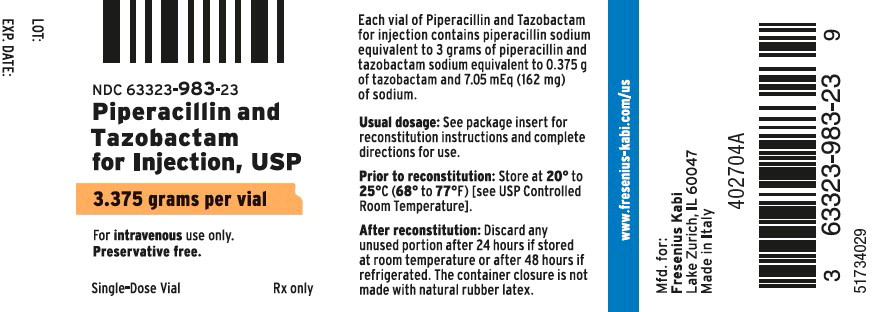
PACKAGE LABEL - PRINCIPAL DISPLAY PANEL - Piperacillin and Tazobactam 3.375 grams Single-Dose Vial Label NDC 63323- 983 -23 Piperacillin and Tazobactam for Injection, USP 3.375 grams per vial For intravenou s use only. Preservative free. Single-Dose Vial Rx only PACKAGE LABEL - PRINCIPAL DISPLAY PANEL - Piperacillin and Tazobactam 3.375 grams Single-Dose Vial Label
PACKAGE LABEL - PRINCIPAL DISPLAY PANEL - Piperacillin and Tazobactam 3.375 grams Single-Dose Vial Tray Label NDC 63323- 983 -21 Piperacillin and Tazobactam for Injection, USP 3.375 grams per vial For intravenous use only. Preservative free. Rx only 10 x 3.375 grams Single-Dose Vials PACKAGE LABEL - PRINCIPAL DISPLAY PANEL - Piperacillin and Tazobactam 3.375 grams Single-Dose Vial Tray Label
PACKAGE LABEL - PRINCIPAL DISPLAY PANEL - Piperacillin and Tazobactam 4.5 grams Single-Dose Vial Label NDC 63323- 982 -21 Piperacillin and Tazobactam for Injection, USP 4.5 grams per vial For intravenous use only. Preservative free. Single-Dose Vial Rx only PACKAGE LABEL - PRINCIPAL DISPLAY PANEL - Piperacillin and Tazobactam 4.5 grams Single-Dose Vial Label
PACKAGE LABEL - PRINCIPAL DISPLAY PANEL - Piperacillin and Tazobactam 4.5 grams Single-Dose Vial Tray Label NDC 63323- 982 -52 Piperacillin and Tazobactam for Injection, USP 4.5 grams per vial For intravenous use only. Preservative free. Rx only 10 x 4.5 grams Single-Dose Vials PACKAGE LABEL - PRINCIPAL DISPLAY PANEL - Piperacillin and Tazobactam 4.5 grams Single-Dose Vial Tray Label