
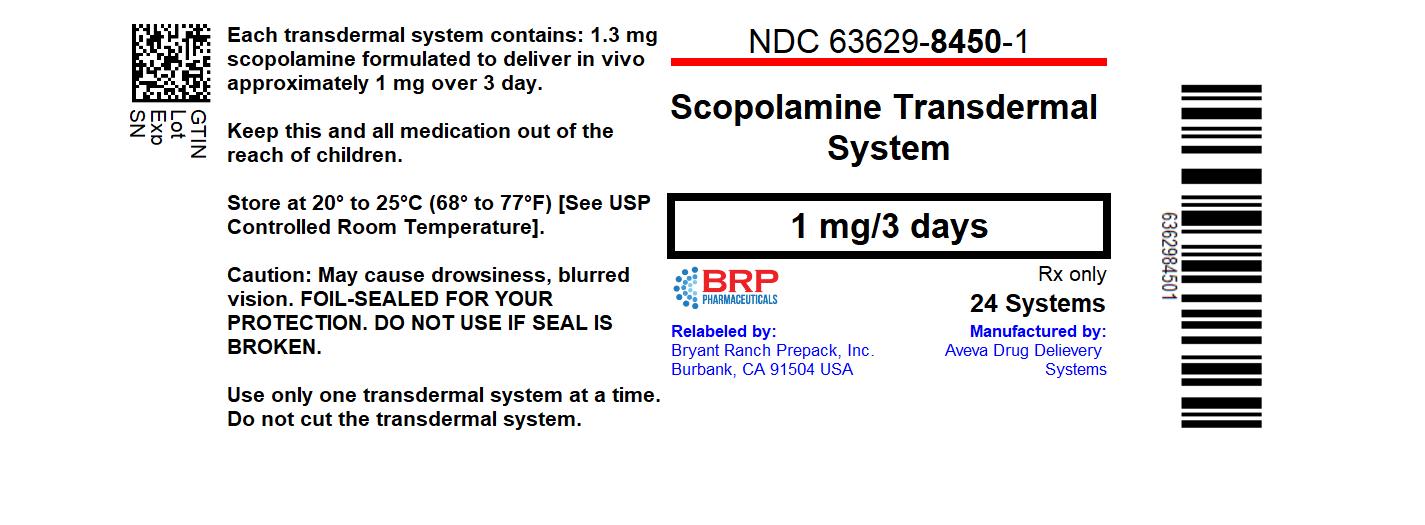
Scopolamine Trandermal System scolopamine transdermal 1 mg Patch, Extended Release — NDC 63629-8450-1 (Billing 63629-8450-01)
This is a package of Scopolamine Trandermal System scolopamine transdermal 1 mg Patch, Extended Release from Bryant Ranch Prepack, marketed since Jun 2017 and currently FDA-listed. It is this product's only package size.
NDC database record
One package, one record: these facts belong to NDC 63629-8450-1 alone.
- Record
- FDA NDC Directory package listing · Human prescription drug
- Code segments
- 63629 labeler · 8450 product · 1 package
- Package marketed since
- Apr 4, 2024
- Sample package
- No — commercial package
- Listing certified through
- Dec 31, 2026
- Barcode (UPC-A, from the NDC)
- 3 6362984501 9
- FDA record last changed
- Jul 24, 2026
Identity & classification
Regulatory identifiers FDA, NLM and CMS codes for this package
Drug-database identifiers Medi-Span GPI and First Databank GCN / HICL / AHFS classification
- GSN (GCN sequence number): 004704
- GCN: 18160
- GPI-14 (Medi-Span): 50200060008610
- HICL (First Databank): 012306
- AHFS class code: 12:08.08.00
- RxCUI (RxNorm): 226552
Where does this data come from?
- FDA openFDA NDC Directory · synced Oct 1, 2026
- FDA label on DailyMed · label index refreshed Oct 3, 2026
- RxNorm (NLM RxNav) · catalog refreshed Oct 1, 2026
- Medi-Span GPI (licensed)
- First Databank (licensed) · refreshed Oct 1, 2026
RxNorm drug class
This medicine belongs to the Anticholinergic class.
Where does this data come from?
- RxClass (NLM) · catalog refreshed Oct 1, 2026
Clinical
Scopolamine is used to prevent nausea and vomiting caused by motion sickness or medications used during surgery. Scopolamine is in a class of medications called antimuscarinics. It works by blocking the effects of a certain natural substance (acetylcholine) on the central nervous system.
Read the full MedlinePlus article ↗- Apply it to the hairless skin directly behind one ear — that flat area just behind the earlobe. Either side works fine. The key is that the skin is clean, dry, and hair-free so the...
- Where exactly do I put the patch, and does it matter which side?
- Put it on at least 4 hours before you need it to be working — so if you're boarding a cruise ship in the morning, apply it the night before. The patch takes several hours to build...
- How soon before a trip should I put the patch on?
Patient education
Supplement & herbal interactions
Where does this data come from?
- MedlinePlus (NLM) · refreshed Oct 1, 2026
- FDA label on DailyMed · label index refreshed Oct 3, 2026
Ask a licensed pharmacist directly — free, answered by our team.
Pricing
A drug doesn't have one price. Each row is a different public payment system, and none is what you'd pay at the counter — that depends on your insurance. The ⓘ on each row explains what it measures.
| Price system | Per each | Per package |
|---|---|---|
| Retail pharmacies payNADAC · weekly | Not in the retail survey — common for institutional, discontinued, or low-volume packs. | |
| Medicaid paysCMS SDUD · 12 mo | No recent Medicaid claims on file for this NDC — rare and low-volume NDCs are suppressed in the public data. | |
| Medicare drug plans payPart D · quarterly | No Part D plan price is available for this NDC in our data. | |
Where does this data come from?
- CMS NADAC weekly file
- CMS ASP pricing files · refreshed Sep 20, 2026
- CMS Medicaid State Drug Utilization Data · refreshed Oct 4, 2026
- CMS Part D plan pricing files · refreshed Sep 24, 2026
- VA National Acquisition Center price file
Packaging — all sizes for this product
| Package NDC | Description | Marketing start | Marketing end | Status |
|---|---|---|---|---|
| 63629-8450-01 You're viewing this Main listing | 24 POUCH in 1 CARTON / 1 PATCH, EXTENDED RELEASE in 1 POUCH | 2021-04-29 | — | Active |
Therapeutic equivalents
| Product | Labeler | Pack | NADAC/unit | TE | Status | Price vs. this |
|---|---|---|---|---|---|---|
| Scopolamine 1 mg/3d 00378-6470-44 | Mylan | 24 patches | $4.336 | AB | Availability likely | — |
| scopolamine 1 mg/3d 00591-2258-04 | Actavis | 4 patches | $4.336 | AB | Availability likely | — |
| Scopolamine 1 mg/3d 42858-0150-14 | Rhodes | 10 patches | $4.336 | AB | Availability likely | — |
| Scopolamine Transdermal System 1 mg 45802-0580-01 | Padagis | 1 patch | $4.336 | AB | Discontinued | — |
| Scopolamine 1.5 mg 50742-0505-04 | Ingenus | 1 patch | $4.336 | AB | Availability likely | — |
| Scopolamine 1 mg/3d 69238-1662-02 | Amneal | 10 patches | $4.336 | AB | Availability likely | — |
| Scopolamine 1 mg/3d 70710-1846-02 | Zydus | 10 patches | $4.336 | AB | Availability likely | — |
| Transderm Scop 1 mg/3d 10019-0008-01 | Baxter | 1 patch | — | AB | FDA listed | — |
| Scopolamine 1 mg/3d 50090-5349-00 | A-S | 4 pouches | — | AB | FDA listed | — |
| scopolamine 1 mg/3d 50090-7188-00 | A-S | 1 d | — | AB | FDA listed | — |
| Scopolamine Trandermal System 1 mgthis 63629-8450-01 | Bryant | 1 patch | — | AB | FDA listed | — |
| Scopolamine Trandermal System 1 mg 63629-8451-01 | Bryant | 1 patch | — | AB | FDA listed | — |
| Scopolamine Trandermal System 1 mg 63629-8452-01 | Bryant | 1 patch | — | AB | FDA listed | — |
| Scopolamine 1.5 mg 68071-3994-04 | NuCare | 1 patch | — | AB | FDA listed | — |
| Scopolamine 1 mg/3d 70771-1787-02 | Zydus | 10 patches | — | AB | FDA listed | — |
| Scopolamine Transdermal System 1 mg 71335-2718-01 | Bryant | 1 patch | — | AB | FDA listed | — |
| Scopolamine 1 mg/3d 71335-3013-01 | Bryant | 4 patches | — | AB | FDA listed | — |
| Scopolamine 1 mg/3d 71335-3014-01 | Bryant | 10 patches | — | AB | FDA listed | — |
| Scopolamine 1 mg/3d 71335-3015-01 | Bryant | 24 patches | — | AB | FDA listed | — |
| Scopolamine Trandermal System 1 mg 72162-1419-02 | Bryant | 1 patch | — | AB | FDA listed | — |
| Scopolamine 1 mg/3d 72162-2453-02 | Bryant | 4 patches | — | AB | FDA listed | — |
Where does this data come from?
- FDA openFDA NDC Directory · synced Oct 1, 2026
- FDA Orange Book · refreshed Oct 3, 2026
- CMS NADAC weekly file
Availability & generic status
This product is an FDA-approved generic. Other versions of the same drug are listed under Therapeutic equivalents, least expensive first.
Where does this data come from?
- FDA Orange Book · refreshed Oct 3, 2026
What it looks like
Where does this data come from?
- FDA label on DailyMed · label index refreshed Oct 3, 2026
Inactive Ingredients / Excipients
Inactive ingredients, also called excipients, are components of the drug product other than the active ingredient. They may include fillers, dyes, coatings, preservatives, flavors, or other formulation ingredients.
💡 Tap an ingredient (hover on desktop) to see what it is and why it’s used.
-
UNII 68401960MK
Crospovidone is a synthetic polymer made from polyvinylpyrrolidone. It acts as a disintegrant, helping tablets break apart quickly in the stomach so the medicine dissolves and absorbs into the body.
-
UNII 8CRQ2TH63M
Isopropyl palmitate is an oily liquid derived from palm oil. It acts as an emollient and lubricant in medicines, helping soften the skin or improve how the product spreads and flows.
-
UNII N6K5787QVP
Light mineral oil is a clear, odorless liquid derived from petroleum. In medicines, it acts as a lubricant and emollient to help the product spread smoothly and improve texture.
-
UNII FLT10CH37X
Polyisobutylene is a synthetic rubber-like polymer used as a glidant and lubricant. It helps the medicine flow smoothly during manufacturing and prevents ingredients from sticking together or to equipment.
-
UNII TQ77WR8A02
A synthetic rubber polymer used as a binder and film-former in medicines. It helps hold tablet ingredients together and can create a protective coating or matrix that controls how quickly the drug releases in the body.
5 inactive ingredients listed in the exact product block matched to this NDC.
Where does this data come from?
ingredient classCode="IACT" elements from the exact product block matched by this NDC. Label-section narrative from DailyMed / the openFDA label index is shown separately when available.- FDA label on DailyMed · label index refreshed Oct 3, 2026
- FDA openFDA NDC Directory · synced Oct 1, 2026
Inactive ingredient FAQ
Are inactive ingredients the same for every manufacturer?
Why might an inactive ingredient be missing?
Can inactive ingredients matter?
Manufacturer & labeler
More NDCs from Bryant Ranch Prepack labeler code 63629
- Butalbital, Acetaminophen, and Caffeine 50 mg; 325 mg; 40 mg Tablet NDC 63629-8392-0
- Tadalafil 2.5 mg Tablet, Film Coated NDC 63629-8409-1
- olopatadine hydrochloride 665 ug Spray NDC 63629-8434-1
- Belladonna and Opium 16.2 mg; 30 mg Suppository NDC 63629-8436-1
- pilocarpine hydrchloride 5 mg Tablet, Film Coated NDC 63629-8439-1
- Potassium chloride extended release 750 mg Tablet, Extended Release NDC 63629-8442-1
- Scopolamine Trandermal System scolopamine transdermal 1 mg Patch, Extended Release NDC 63629-8451-1
- Scopolamine Trandermal System scolopamine transdermal 1 mg Patch, Extended Release NDC 63629-8452-1
- testosterone 16.2 mg/g Gel NDC 63629-8455-1
- Trospium Chloride 20 mg Tablet, Film Coated NDC 63629-8457-1
- Trospium Chloride ER 60 mg Capsule, Extended Release NDC 63629-8458-1
- Morphine Sulfate 15 mg Tablet NDC 63629-8459-1
Where does this data come from?
- FDA openFDA NDC Directory · synced Oct 1, 2026
- Drugs@FDA
Full prescribing information FDA SPL
🎯 Indications and Usage ▾
1 INDICATIONS AND USAGE Scopolamine transdermal system is indicated in adults for prevention of: • nausea and vomiting associated with motion sickness • post-operative nausea and vomiting (PONV) associated with recovery from anesthesia and/or opiate analgesia and surgery . Scopolamine transdermal system is an anticholinergic indicated in adults for the prevention of: • nausea and vomiting associated with motion sickness. ( 1 ) • post-operative nausea and vomiting (PONV) associated with recovery from anesthesia and/or opiate analgesia and surgery.
( 1 )
⏱️ Dosage and Administration ▾
2 DOSAGE AND ADMINISTRATION Application and Removal ( 2.1 ) • Each scopolamine transdermal system delivers 1 mg of scopolamine over 3 days. • Only wear one transdermal system at a time. • Do not cut the transdermal system. • Wash hands thoroughly after application. • Upon removal, fold used transdermal system in half with sticky side together, and discard to prevent accidental contact or ingestion. Recommended Dosage : • Motion Sickness : Apply one transdermal system to the hairless area behind one ear at least 4 hours before antiemetic effect is required for use up to 3 days.
If therapy for more than 3 days is required, remove the first transdermal system and apply a new transdermal system behind the other ear. ( 2.2 ) • PONV : For surgeries other than cesarean section, apply one transdermal system behind the ear the evening before surgery and remove 24 hours following surgery. ( 2.2 )
2.1Important Application and Removal Instructions • Each scopolamine transdermal system is formulated to deliver in vivo approximately 1 mg of scopolamine over 3 days. • Only wear one transdermal system at any time. • Do not cut the transdermal system. • Apply the transdermal system to the skin in the postauricular area (hairless area behind one ear). • After the transdermal system is applied on the dry skin behind the ear, wash hands thoroughly with soap and water and dry hands [see Warnings and Precautions ( 5.6 )] . • If the transdermal system becomes displaced, discard the transdermal system, and apply a new transdermal system on the hairless area behind the other ear. • Upon removal, fold the used transdermal system in half with the sticky side together, and discard in household trash in a manner that prevents accidental contact or ingestion by children, pets or others.
2.2Recommended Adult Dosage Motion Sickness Apply one scopolamine transdermal system to the hairless area behind one ear at least 4 hours before the antiemetic effect is required – for use up to 3 days. If therapy is required for longer than 3 days, remove the first transdermal system and apply a new scopolamine transdermal system behind the other ear. PONV For surgeries other than cesarean section : Apply one scopolamine transdermal system the evening before scheduled surgery.
Remove the transdermal system 24 hours following surgery.
💊 Dosage Forms and Strengths ▾
3 DOSAGE FORMS AND STRENGTHS Transdermal system: a circular, flat, tan-colored transdermal system imprinted with “SCOP 1 mg/3 days” in a repeating pattern Transdermal system: 1 mg/3 days ( 3 )
⛔ Contraindications ▾
4 CONTRAINDICATIONS Scopolamine transdermal system is contraindicated in patients with: • angle closure glaucoma. [see Warnings and Precautions ( 5.1 )] • hypersensitivity to scopolamine or other belladonna alkaloids or to any ingredient or component in the formulation or delivery system. Reactions have included rash generalized and erythema [see Adverse Reactions ( 6.2 ), Description ( 11 )] . • Angle closure glaucoma ( 4 , 6.2 ) • Hypersensitivity to scopolamine or to other belladonna alkaloids or to any ingredient or component of the formulation or delivery system.
( 4 , 7 )
⚠️ Warnings and Cautions ▾
5 WARNINGS AND PRECAUTIONS • Acute Angle Closure Glaucoma : Monitor for increased intraocular pressure in patients with open-angle glaucoma and adjust glaucoma therapy as needed. Discontinue if signs or symptoms of acute angle closure glaucoma develop. ( 5.1 ) • Neuropsychiatric Adverse Reactions : May cause psychiatric and cognitive effects, seizures and impair mental and/or physical abilities.
Monitor patients for new or worsening psychiatric symptoms during treatment and during concomitant treatment with other drugs that are associated with similar psychiatric effects. ( 5.2 , 7.1 ) • Eclamptic Seizures in Pregnant Women : Avoid use in patients with severe preeclampsia. ( 5.3 ) • Gastrointestinal and Urinary Disorders : Consider more frequent monitoring during treatment in patients suspected of having intestinal obstruction; patients with pyloric obstruction, urinary bladder neck obstruction or receiving other anticholinergic drugs.
Discontinue if patient develops difficulty in urination. ( 5.4 , 7.2 ) • Drug Withdrawal/Post-Removal Symptoms : Anticholinergic symptoms may occur 24 hours or more after removal of the transdermal system. ( 5.5 ) • Blurred Vision : Avoid contact with the eyes.
( 2.1 , 5.6 ) • Magnetic Resonance Imaging (MRI) Skin Burns : Remove scopolamine transdermal system prior to MRI scan. ( 5.7 )
5.1Acute Angle Closure Glaucoma The mydriatic effect of scopolamine may cause an increase in intraocular pressure resulting in acute angle closure glaucoma. Monitor intraocular pressure in patients with open angle glaucoma and adjust glaucoma therapy during scopolamine transdermal system use, as needed. Advise patients to immediately remove the transdermal system and contact their healthcare provider if they experience symptoms of acute angle closure glaucoma (e.g., eye pain or discomfort, blurred vision, visual halos or colored images in association with red eyes from conjunctival congestion and corneal edema).
5.2Neuropsychiatric Adverse Reactions Psychiatric Adverse Reactions Scopolamine has been reported to exacerbate psychosis. Other psychiatric reactions have also been reported, including acute toxic psychosis, agitation, speech disorder, hallucinations, paranoia, and delusions [see Adverse Reactions ( 6.2 )] . Monitor patients for new or worsening psychiatric symptoms during treatment with scopolamine transdermal system.
Also, monitor patients for new or worsening psychiatric symptoms during concomitant treatment with other drugs that are associated with similar psychiatric effects [see Drug Interactions ( 7.1 )] . Seizures Seizures and seizure-like activity have been reported in patients receiving scopolamine. Weigh this potential risk against the benefits before prescribing scopolamine transdermal system to patients with a history of seizures, including those receiving anti-epileptic medication or who have risk factors that can lower the seizure threshold.
Cognitive Adverse Reactions Scopolamine can cause drowsiness, disorientation, and confusion. Discontinue scopolamine transdermal system if signs or symptoms of cognitive impairment develop. Elderly and pediatric patients may be more sensitive to the neurological and psychiatric effects of scopolamine transdermal system.
Consider more frequent monitoring during treatment with scopolamine transdermal system in elderly patients [see Use in Specific Populations ( 8.5 )] . Scopolamine transdermal system is not approved for use in pediatric patients [see Use in Specific Populations ( 8.4 )] . Hazardous Activities Scopolamine transdermal system may impair the mental and/or physical abilities required for the performance of hazardous tasks such as driving a motor vehicle, operating machinery or participating in underwater sports.
Concomitant use of other drugs that cause central nervous system (CNS) adverse reactions (e.g., alcohol, sedatives, hypnotics, opiates, and anxiolytics) or have anticholinergic properties (e.g., other belladonna alkaloids, sedating a… [Excerpted — this section continues on DailyMed.]
🤒 Adverse Reactions ▾
6 ADVERSE REACTIONS The following serious adverse reactions are described elsewhere in labeling: • Acute Angle Closure Glaucoma [see Warnings and Precautions ( 5.1 )] • Neuropsychiatric Adverse Reactions [see Warnings and Precautions ( 5.2 )] • Eclamptic Seizures in Pregnant Women [see Warnings and Precautions ( 5.3 )] • Gastrointestinal and Urinary Disorders [see Warnings and Precautions ( 5.4 )] • Drug Withdrawal/Post-Removal Symptoms [see Warnings and Precautions ( 5.5 )] • Blurred Vision [see Warnings and Precautions ( 5.6 )] • MRI Skin Burns [see Warnings and Precautions ( 5.7 )] Most common adverse reactions are: • Motion Sickness (>15%): dry mouth, drowsiness, blurred vision and dilation of the pupils.
( 6.1 ) • PONV (≥ 3%): dry mouth, dizziness, somnolence, agitation, visual impairment, confusion, mydriasis and pharyngitis. ( 6.1 ) To report SUSPECTED ADVERSE REACTIONS, contact Perrigo at 1-866-634-9120 or FDA at 1-800-FDA-1088 or www.fda.gov/medwatch.
6.1Clinical Trials Experience Because clinical trials are conducted under widely varying conditions, adverse reaction rates observed in the clinical trials of a drug cannot be directly compared to rates in the clinical trials of another drug and may not reflect the rates observed in practice. Motion Sickness The most common adverse reaction (approximately two thirds) was dry mouth. Less common adverse reactions, included drowsiness (less than one sixth), blurred vision and dilation of the pupils.
PONV Common adverse reactions, occurring in at least 3% of patients in PONV clinical trials are shown in Table 1. Scopolamine Transdermal System % (N = 461) Placebo % (N = 457) Dry mouth 29 16 Dizziness 12 7 Somnolence 8 4 Agitation 6 4 Visual Impairment 5 3 Confusion 4 3 Mydriasis 4 0 Pharyngitis 3 2 *occurring in at least 3% of patients and at a rate higher than placebo
6.2Postmarketing Experience The following adverse reactions have been identified during post-approval use of scopolamine transdermal system. Because these reactions are reported voluntarily from a population of uncertain size, it is not always possible to reliably estimate their frequency or establish a causal relationship to drug exposure. Psychiatric disorders : acute psychosis including: hallucinations, disorientation, and paranoia Nervous system disorders : headache, amnesia, coordination abnormalities, speech disorder, disturbance in attention, restlessness General disorders and administration site conditions : application site burning Eye disorders : dry eyes, eye pruritus, angle closure glaucoma, amblyopia, eyelid irritation Skin and subcutaneous tissue disorders : rash generalized, skin irritation, erythema Renal and urinary disorders : dysuria Ear and labyrinth disorders : vertigo
🔄 Drug Interactions ▾
7 DRUG INTERACTIONS • Drugs Causing Central Nervous System (CNS) Adverse Reactions : Monitor patients for CNS adverse reactions (drowsiness, dizziness or disorientations). ( 7.1 ) • Anticholinergic Drugs : Consider more frequent monitoring during treatment in patients receiving other anticholinergic drugs. ( 7.2 ) • Oral Drugs Absorbed in the Stomach : Monitor for increased or decreased therapeutic effect of the oral drug.
( 7.3 ) • Interaction with Gastric Secretion Test : Discontinue use of scopolamine transdermal system 10 days prior to testing. ( 7.4 )
7.1Drugs Causing Central Nervous System (CNS) Adverse Reactions The concurrent use of scopolamine transdermal system with other drugs that cause CNS adverse reactions of drowsiness, dizziness or disorientation (e.g., sedatives, hypnotics, opiates, anxiolytics and alcohol) or have anticholinergic properties (e.g., other belladonna alkaloids, sedating antihistamines, meclizine, tricyclic antidepressants, and muscle relaxants) may potentiate the effects of scopolamine transdermal system [see Warnings and Precautions ( 5.2 )] .
Either scopolamine transdermal system or the interacting drug should be chosen, depending on the importance of the drug to the patient. If the interacting drug cannot be avoided, monitor patients for CNS adverse reactions.
7.2Anticholinergic Drugs Concomitant use of scopolamine with other drugs having anticholinergic properties may increase the risk of CNS adverse reactions [see Drug Interactions ( 7.1 )], intestinal obstruction and/or urinary retention. Consider more frequent monitoring during treatment with scopolamine transdermal system in patients receiving anticholinergic drugs [see Warnings and Precautions ( 5.2 , 5.4 )] .
7.3Oral Drugs Absorbed in the Stomach Scopolamine transdermal system, as an anticholinergic, may delay gastric and upper gastrointestinal motility and, therefore, the rate of absorption of other orally administered drugs. Monitor patients for modified therapeutic effect of concomitant orally administered drugs with a narrow therapeutic index.
7.4Interaction with Gastric Secretion Test Scopolamine will interfere with the gastric secretion test. Discontinue scopolamine transdermal system 10 days prior to testing.
👥 Use in Specific Populations ▾
8 USE IN SPECIFIC POPULATIONS • Geriatric Patients : Consider more frequent monitoring during treatment due to increased risk of CNS adverse reactions. ( 5.2 , 8.5 ) • Renal or Hepatic Impairment : Consider more frequent monitoring during treatment due to increased risk of CNS adverse reactions. ( 5.2 , 8.6 )
8.1Pregnancy Risk Summary Available data from observational studies and postmarketing reports with scopolamine use in pregnant women have not identified a drug associated risk of major birth defects, miscarriage, or adverse fetal outcomes. Avoid use of scopolamine transdermal system in pregnant women with severe preeclampsia because eclamptic seizures have been reported after exposure to scopolamine (see Data). In animal studies, there was no evidence of adverse developmental effects with intravenous administration of scopolamine hydrobromide revealed in rats.
Embryotoxicity was observed in rabbits at intravenous doses producing plasma levels approximately 100 times the levels achieved in humans using a transdermal system. The estimated background risk of major birth defects and miscarriage for the indicated population is unknown. All pregnancies have a background risk of birth defect, loss, or other adverse outcomes.
In the U.S. general population, the background risk of major birth defects and miscarriage in clinically recognized pregnancies is 2% to 4% and 15% to 20%, respectively. Data Human Data Eclamptic Seizures In published case reports, two pregnant patients with severe preeclampsia were administered intravenous and intramuscular scopolamine, respectively, and developed eclamptic seizures soon after scopolamine administration [see Warnings and Precautions ( 5.3 )] . Animal Data In animal reproduction studies, when pregnant rats and rabbits received scopolamine hydrobromide by daily intravenous injection, no adverse effects were observed in rats.
An embryotoxic effect was observed in rabbits at doses producing plasma levels approximately 100 times the levels achieved in humans using a transdermal system. Scopolamine administered parenterally to rats and rabbits at doses higher than the dose delivered by scopolamine transdermal system did not affect uterine contractions or increase the duration of labor.
8.2Lactation Risk Summary Scopolamine is present in human milk. There are no available data on the effects of scopolamine on the breastfed infant or the effects on milk production. Because there have been no consistent reports of adverse events in breastfed infants over decades of use, the developmental and health benefits of breastfeeding should be considered along with the mother’s clinical need for scopolamine transdermal system and any potential adverse effects on the breastfed child from scopolamine transdermal system or from the underlying maternal condition.
8.4Pediatric Use Safety and effectiveness in pediatric patients have not been established. Pediatric patients are particularly susceptible to the adverse reactions of scopolamine; including mydriasis, hallucinations, amblyopia and drug withdrawal syndrome. Neurologic and psychiatric adverse reactions, such as hallucinations, amblyopia and mydriasis have also been reported.
8.5Geriatric Use Clinical trials of scopolamine transdermal system did not include sufficient number of subjects aged 65 years and older to determine if they respond differently from younger subjects. In other clinical experience, elderly patients had an increased risk of neurologic and psychiatric adverse reactions, such as hallucinations, confusion, dizziness and drug withdrawal syndrome [see Warnings and Precautions ( 5.2 , 5.5 )]. Consider more frequent monitoring for CNS adverse reactions during treatment with scopolamine transdermal system in elderly patients [see Warnings and Precautions ( 5.2 )] .
8.6Renal or Hepatic Impairment Scopolamine transdermal system has not been studied in patients with renal or hepatic impairment. Consider more frequent monitoring during treatmen… [Excerpted — this section continues on DailyMed.]
🤰 Pregnancy ▾
8.1Pregnancy Risk Summary Available data from observational studies and postmarketing reports with scopolamine use in pregnant women have not identified a drug associated risk of major birth defects, miscarriage, or adverse fetal outcomes. Avoid use of scopolamine transdermal system in pregnant women with severe preeclampsia because eclamptic seizures have been reported after exposure to scopolamine (see Data). In animal studies, there was no evidence of adverse developmental effects with intravenous administration of scopolamine hydrobromide revealed in rats.
Embryotoxicity was observed in rabbits at intravenous doses producing plasma levels approximately 100 times the levels achieved in humans using a transdermal system. The estimated background risk of major birth defects and miscarriage for the indicated population is unknown. All pregnancies have a background risk of birth defect, loss, or other adverse outcomes.
In the U.S. general population, the background risk of major birth defects and miscarriage in clinically recognized pregnancies is 2% to 4% and 15% to 20%, respectively. Data Human Data Eclamptic Seizures In published case reports, two pregnant patients with severe preeclampsia were administered intravenous and intramuscular scopolamine, respectively, and developed eclamptic seizures soon after scopolamine administration [see Warnings and Precautions ( 5.3 )] . Animal Data In animal reproduction studies, when pregnant rats and rabbits received scopolamine hydrobromide by daily intravenous injection, no adverse effects were observed in rats.
An embryotoxic effect was observed in rabbits at doses producing plasma levels approximately 100 times the levels achieved in humans using a transdermal system. Scopolamine administered parenterally to rats and rabbits at doses higher than the dose delivered by scopolamine transdermal system did not affect uterine contractions or increase the duration of labor.
🧒 Pediatric Use ▾
8.4Pediatric Use Safety and effectiveness in pediatric patients have not been established. Pediatric patients are particularly susceptible to the adverse reactions of scopolamine; including mydriasis, hallucinations, amblyopia and drug withdrawal syndrome. Neurologic and psychiatric adverse reactions, such as hallucinations, amblyopia and mydriasis have also been reported.
🧓 Geriatric Use ▾
8.5Geriatric Use Clinical trials of scopolamine transdermal system did not include sufficient number of subjects aged 65 years and older to determine if they respond differently from younger subjects. In other clinical experience, elderly patients had an increased risk of neurologic and psychiatric adverse reactions, such as hallucinations, confusion, dizziness and drug withdrawal syndrome [see Warnings and Precautions ( 5.2 , 5.5 )]. Consider more frequent monitoring for CNS adverse reactions during treatment with scopolamine transdermal system in elderly patients [see Warnings and Precautions ( 5.2 )] .
🆘 Overdosage ▾
10 OVERDOSAGE The signs and symptoms of anticholinergic toxicity include: lethargy, somnolence, coma, confusion, agitation, hallucinations, convulsion, visual disturbance, dry flushed skin, dry mouth, decreased bowel sounds, urinary retention, tachycardia, hypertension, and supraventricular arrhythmias. These symptoms can be severe and may require medical intervention. In cases of toxicity remove the scopolamine transdermal system.
Serious symptomatic cases of overdosage involving multiple transdermal system applications and/or ingestion may be managed by initially ensuring the patient has an adequate airway and supporting respiration and circulation. This should be rapidly followed by removal of all transdermal systems from the skin and the mouth. If there is evidence of transdermal system ingestion, endoscopic removal of swallowed transdermal systems, or administration of activated charcoal should be considered, as indicated by the clinical situation.
In any case where there is serious overdosage or signs of evolving acute toxicity, continuous monitoring of vital signs and ECG, establishment of intravenous access, and administration of oxygen are all recommended. The signs and symptoms of overdose/toxicity due to scopolamine should be carefully distinguished from the occasionally observed syndrome of withdrawal [see Warnings and Precautions ( 5.5 )]. Although mental confusion and dizziness may be observed with both acute toxicity and withdrawal, other characteristic findings differ: tachyarrhythmias, dry skin, and decreased bowel sounds suggest anticholinergic toxicity, while bradycardia, headache, nausea and abdominal cramps, and sweating suggest post-removal withdrawal.
If over-exposure occurs, call your Poison Control Center at 1-800-222-1222 for current information on the management of poisoning or overdosage.
🧬 Clinical Pharmacology ▾
12 CLINICAL PHARMACOLOGY
12.1Mechanism of Action Scopolamine, a belladonna alkaloid, is an anticholinergic. Scopolamine acts: i) as a competitive inhibitor at postganglionic muscarinic receptor sites of the parasympathetic nervous system, and ii) on smooth muscles that respond to acetylcholine but lack cholinergic innervation. It has been suggested that scopolamine acts in the central nervous system (CNS) by blocking cholinergic transmission from the vestibular nuclei to higher centers in the CNS and from the reticular formation to the vomiting center.
Scopolamine can inhibit the secretion of saliva and sweat, decrease gastrointestinal secretions and motility, cause drowsiness, dilate the pupils, increase heart rate, and depress motor function.
12.3Pharmacokinetics The system is formulated to deliver approximately 1 mg of scopolamine to the systemic circulation over 3 days. Absorption Following application to the skin behind the ear, circulating plasma concentrations are detected within 4 hours with peak concentrations being obtained, on average, within 24 hours. The average plasma concentration produced is 87 pg/mL (0.28 nM) for free scopolamine and 354 pg/mL for total scopolamine (free + conjugates).
Following removal of the used transdermal system, there is some degree of continued systemic absorption of scopolamine bound in the skin layers. Distribution The distribution of scopolamine is not well characterized. It crosses the placenta and the blood brain barrier and may be reversibly bound to plasma proteins.
Elimination Metabolism and Excretion Scopolamine is metabolized and conjugated with less than 5% of the total dose appearing unchanged in the urine. The enzymes responsible for metabolizing scopolamine are unknown. The exact elimination pattern of scopolamine has not been determined.
Following transdermal system removal, plasma concentrations of scopolamine decline in a log linear fashion with an observed half-life of 9.5 hours. Less than 10% of the total dose is excreted in the urine as the parent drug and metabolites over 108 hours. Drug Interaction Studies An in vitro study using human hepatocytes examined the induction of CYP1A2 and CYP3A4 by scopolamine.
Scopolamine did not induce CYP1A2 and CYP3A4 isoenzymes at the concentrations up to 10 nM. In an in vitro study using human liver microsomes which evaluated the inhibition of CYP1A2, 2C8, 2C9, 2C19, 2D6 and 3A4, scopolamine did not inhibit these cytochrome P450 isoenzymes at the concentrations up to 1 micromolar. No in vivo drug-drug interaction studies have been conducted.
🧬 Mechanism of Action ▾
12.1Mechanism of Action Scopolamine, a belladonna alkaloid, is an anticholinergic. Scopolamine acts: i) as a competitive inhibitor at postganglionic muscarinic receptor sites of the parasympathetic nervous system, and ii) on smooth muscles that respond to acetylcholine but lack cholinergic innervation. It has been suggested that scopolamine acts in the central nervous system (CNS) by blocking cholinergic transmission from the vestibular nuclei to higher centers in the CNS and from the reticular formation to the vomiting center.
Scopolamine can inhibit the secretion of saliva and sweat, decrease gastrointestinal secretions and motility, cause drowsiness, dilate the pupils, increase heart rate, and depress motor function.
📦 How Supplied / Storage and Handling ▾
16 HOW SUPPLIED/STORAGE AND HANDLING Scopolamine Transdermal System 1 mg/3 days is available as the following: Carton of 24 transdermal systems, packaged into individual foil pouches. NDC: 63629-8450-1 Single Patch NDC: 63629-8450-2 Store at 20°C to 25°C (68°F to 77°F) [see USP Controlled Room Temperature]. Store pouch(es) in an upright position.
Do not bend or roll pouch(es). Wash hands thoroughly with soap and water immediately after handling the transdermal system. Upon removal, fold the used transdermal system in half with the sticky side together, and discard in household trash in a manner that prevents accidental contact or ingestion by children, pets or others [see Dosage and Administration (2.1), Warnings and Precautions (5.6)].
Repackaged/Relabeled by: Bryant Ranch Prepack, Inc. Burbank, CA 91504
📋 Description ▾
11 DESCRIPTION Scopolamine transdermal system is designed for continuous release of scopolamine following application to an area of intact skin on the head, behind the ear. Each system contains 1.3 mg of scopolamine base. Scopolamine is (9-methyl-3-oxa-9-azatricyclo[3.3.1.0 2,4 ]nonan-7-yl) 3-hydroxy-2-phenylpropanoate.
The empirical formula is C 17 H 21 NO 4 and its structural formula is: Scopolamine has a molecular weight of 303.35 and a pKa of 7.55-7.81. The scopolamine transdermal system is a circular, 0.2 mm thick, 2.5 cm 2 film with four layers. Proceeding from the visible surface towards the surface attached to the skin, these layers are: (1) a backing membrane of tan-colored, aluminized, polyester film; (2) a drug layer of scopolamine, crospovidone, isopropyl palmitate, light mineral oil, and polyisobutylene; (3) an ethylene vinyl acetate copolymer membrane that controls the rate of delivery of scopolamine from the system to the skin surface; and (4) an contact layer formulation of crospovidone, isopropyl palmitate, light mineral oil, polyisobutylene, and scopolamine.
A release liner of siliconized polyester, which covers the adhesive layer, is removed before the system is used. Cross section of the system:
💬 Information for Patients ▾
17 PATIENT COUNSELING INFORMATION Advise the patient to read the FDA-approved patient labeling (Patient Information and Instructions for Use). Administration Instructions Counsel patients on how to apply and remove the transdermal system [see Dosage and Administration ( 2.1)] : •Only wear one transdermal system at any time.•Do not cut the transdermal system.•Apply the transdermal system to the skin in the postauricular (hairless area behind one ear) area.•After the transdermal system is applied on the dry skin behind the ear, wash hands thoroughly with soap and water and dry hands.•If the transdermal system becomes displaced, discard the transdermal system, and apply a new transdermal system on the hairless area behind the other ear.•Upon removal, fold the used transdermal system in half with the sticky side together, and discard in household trash in a manner that prevents accidental contact or ingestion by children, pets or others.
Patients with Open-Angle Glaucoma Advise patients with open-angle glaucoma to remove the scopolamine transdermal system immediately and contact their healthcare provider if they experience symptoms of acute angle closure glaucoma, including pain and reddening of the eyes, accompanied by dilated pupils, blurred vision and/or seeing halos around lights [see Warnings and Precautions ( 5.1)] . Neuropsychiatric Adverse Reactions •Advise patients that psychiatric adverse reactions may occur, especially in patients with a past psychiatric history or in those receiving other drugs also associated with psychiatric effects, and to report to their healthcare provider any new or worsening psychiatric symptoms.•Advise patients to discontinue scopolamine transdermal system and contact a healthcare provider immediately if they experience a seizure.•Advise patients, especially elderly patients, that cognitive impairment may occur during treatment with scopolamine transdermal system, especially in those receiving other drugs also associated with CNS effects, and to report to their healthcare provider if they develop signs or symptoms of cognitive impairment such as hallucinations, confusion or dizziness.•Inform patients not to operate motor vehicles or other dangerous machinery or participate in underwater sports until they are reasonably certain that scopolamine transdermal system does not affect them adversely [see Warnings and Precautions ( 5.2)] .
Decreased Gastrointestinal Motility and Urinary Retention Instruct patients to remove the transdermal system if they develop symptoms of intestinal obstruction (abdominal pain, nausea or vomiting) or any difficulties in urinating [see Warnings and Precautions ( 5.4)] . Drug Withdrawal/Post-Removal Symptoms Inform patients that if they remove the scopolamine transdermal system before treatment is complete, withdrawal symptoms may occur and to seek immediate medical care if they develop severe symptoms after removing scopolamine transdermal system [see Warnings and Precautions ( 5.5)] .
Blurred Vision Inform patients that temporary dilation of the pupils and blurred vision may occur if scopolamine transdermal system comes in contact with the eyes. Instruct patients to wash their hands thoroughly with soap and water immediately after handling the transdermal system [see Dosage and Administration ( 2.1), Warnings and Precautions ( 5.6)] . MRI Skin Burns Instruct patients to remove the scopolamine transdermal system before undergoing an MRI [see Warnings and Precautions ( 5.7)].
Manufactured by: AVEVA DRUG DELIVERY SYSTEMS An APOTEX Company Miramar, FL 33025 Distributed By Perrigo® Allegan, MI 49010 · www.perrigo.com 5A800 RC BR7
💬 Medication Guide ▾
Medication Guide MEDICATION GUIDE Scopolamine (skoe pol’ a meen) Transdermal System Read this Patient Information before you start using scopolamine transdermal system and each time you get a refill. There may be new information. This information does not take the place of talking to your doctor about your medical condition or your treatment.
What is scopolamine transdermal system? Scopolamine transdermal system is a prescription medicine used for adults to help prevent: •nausea and vomiting from motion sickness•nausea and vomiting from anesthesia or taking opioid pain medicines after surgery nausea and vomiting from anesthesia or taking opioid pain medicines after surgery It is not known if scopolamine transdermal system is safe or effective in children. Who should not use scopolamine transdermal system?
Do not use Transderm Scōp if you: •have an eye problem called angle closure glaucoma.•are allergic to scopolamine, belladonna alkaloids or any of the ingredients in scopolamine transdermal system. See the end of this leaflet for a list of the ingredients in scopolamine transdermal system. Ask your doctor if you are not sure. are allergic to scopolamine, belladonna alkaloids or any of the ingredients in scopolamine transdermal system.
See the end of this leaflet for a list of the ingredients in scopolamine transdermal system. Ask your doctor if you are not sure. What should I tell my doctor before using scopolamine transdermal system?
Before you use scopolamine transdermal system, tell your doctor about all of your medical conditions, including if you: •have glaucoma (increased pressure in the eye).•have a history of seizures or psychosis.•have problems with your stomach or intestines.•have trouble urinating.•are scheduled to have a gastric secretion test.•have liver or kidney problems.•are pregnant or plan to become pregnant. It is not known if scopolamine transdermal system can harm your unborn baby.•are breastfeeding or plan to breastfeed. Scopolamine can pass into your breast milk and may harm your baby.
Talk to your doctor about the best way to feed your baby if you use scopolamine transdermal system. have a history of seizures or psychosis. have problems with your stomach or intestines. have trouble urinating. are scheduled to have a gastric secretion test. have liver or kidney problems. are pregnant or plan to become pregnant. It is not known if scopolamine transdermal system can harm your unborn baby. are breastfeeding or plan to breastfeed. Scopolamine can pass into your breast milk and may harm your baby.
Talk to your doctor about the best way to feed your baby if you use scopolamine transdermal system. Tell your doctor about all the medicines you take, including prescription and over-the-counter medicines, vitamins and herbal supplements. Scopolamine transdermal system may affect the way other medicines work, and other medicines may affect how scopolamine transdermal system works.
Medicines that you take by mouth may not be absorbed well while you use scopolamine transdermal system. Especially tell your doctor if you take: •a sedative, hypnotic, opioid or anxiolytic (medicines that make you sleepy)•an antidepressant medicine•an anticholinergic medicine, such as an allergy or cold medicine, a medicine to treat bladder or bowel spasms, certain asthma medicines, or other medicines for motion sickness an antidepressant medicine an anticholinergic medicine, such as an allergy or cold medicine, a medicine to treat bladder or bowel spasms, certain asthma medicines, or other medicines for motion sickness Ask your doctor if you are not sure if your medicine is one that is listed above.
Know the medicines you take. Keep a list of them and show it to your doctor or pharmacist when you get a new medicine. How should I use scopolamine transdermal system? •See the detailed Instructions for Use for information about how to use scopolamine transdermal system at the end of this Patient Information leaflet.•It is important that you a… [Excerpted — this section continues on DailyMed.]
🧬 Pharmacokinetics ▾
12.3Pharmacokinetics The system is formulated to deliver approximately 1 mg of scopolamine to the systemic circulation over 3 days. Absorption Following application to the skin behind the ear, circulating plasma concentrations are detected within 4 hours with peak concentrations being obtained, on average, within 24 hours. The average plasma concentration produced is 87 pg/mL (0.28 nM) for free scopolamine and 354 pg/mL for total scopolamine (free + conjugates).
Following removal of the used transdermal system, there is some degree of continued systemic absorption of scopolamine bound in the skin layers. Distribution The distribution of scopolamine is not well characterized. It crosses the placenta and the blood brain barrier and may be reversibly bound to plasma proteins.
Elimination Metabolism and Excretion Scopolamine is metabolized and conjugated with less than 5% of the total dose appearing unchanged in the urine. The enzymes responsible for metabolizing scopolamine are unknown. The exact elimination pattern of scopolamine has not been determined.
Following transdermal system removal, plasma concentrations of scopolamine decline in a log linear fashion with an observed half-life of 9.5 hours. Less than 10% of the total dose is excreted in the urine as the parent drug and metabolites over 108 hours. Drug Interaction Studies An in vitro study using human hepatocytes examined the induction of CYP1A2 and CYP3A4 by scopolamine.
Scopolamine did not induce CYP1A2 and CYP3A4 isoenzymes at the concentrations up to 10 nM. In an in vitro study using human liver microsomes which evaluated the inhibition of CYP1A2, 2C8, 2C9, 2C19, 2D6 and 3A4, scopolamine did not inhibit these cytochrome P450 isoenzymes at the concentrations up to 1 micromolar. No in vivo drug-drug interaction studies have been conducted.
🔬 Clinical Studies ▾
14 CLINICAL STUDIES
14.1Prevention of Motion Sickness In 195 adult subjects of different racial origins who participated in clinical efficacy studies at sea or in a controlled motion environment, there was a 75% reduction in the incidence of motion-induced nausea and vomiting. Scopolamine transdermal system was applied from 4 to 16 hours prior to the onset of motion in these studies.
14.2Prevention of Post-Operative Nausea and Vomiting A clinical efficacy study evaluated 168 adult female patients undergoing gynecological surgery with anesthesia and opiate analgesia. Patients received scopolamine transdermal system or placebo applied approximately 11 hours before anesthesia/opiate analgesia. No retching/vomiting during the 24-hour post-operative period was reported in 79% of those treated with scopolamine transdermal system compared to 72% of those receiving placebo.
When the need for additional antiemetic medication was assessed during the same period, there was no need for medication in 89% of patients treated with scopolamine transdermal system as compared to 72% of placebo-treated patients.
🔒 Drug Abuse and Dependence ▾
9 DRUG ABUSE AND DEPENDENCE
9.1Controlled Substance Scopolamine transdermal system contains scopolamine, which is not a controlled substance.
9.3Dependence Termination of scopolamine transdermal system, usually after several days of use, may result in withdrawal symptoms such as disturbances of equilibrium, dizziness, nausea, vomiting, abdominal cramps, sweating, headache, mental confusion, muscle weakness, bradycardia and hypotension . These withdrawal symptoms indicate that scopolamine, like other anticholinergic drugs, may produce physical dependence. The onset of these symptoms, generally 24 hours or more after the transdermal system has been removed, can be severe and may require medical intervention [see Warnings and Precautions ( 5.5 )] .
🔒 Controlled Substance ▾
9.1Controlled Substance Scopolamine transdermal system contains scopolamine, which is not a controlled substance.
🧪 Nonclinical Toxicology ▾
13 NONCLINICAL TOXICOLOGY
13.1Carcinogenesis, Mutagenesis, Impairment of Fertility No long-term studies in animals have been conducted to evaluate the carcinogenic potential of scopolamine. The mutagenic potential of scopolamine has not been evaluated. Fertility studies were performed in female rats and revealed no evidence of impaired fertility or harm to the fetus due to scopolamine hydrobromide administered by daily subcutaneous injection.
Maternal body weights were reduced in the highest-dose group (plasma level approximately 500 times the level achieved in humans using a transdermal system). However, fertility studies in male animals were not performed.
📄 Carcinogenesis, Mutagenesis, Impairment of Fertility ▾
13.1Carcinogenesis, Mutagenesis, Impairment of Fertility No long-term studies in animals have been conducted to evaluate the carcinogenic potential of scopolamine. The mutagenic potential of scopolamine has not been evaluated. Fertility studies were performed in female rats and revealed no evidence of impaired fertility or harm to the fetus due to scopolamine hydrobromide administered by daily subcutaneous injection.
Maternal body weights were reduced in the highest-dose group (plasma level approximately 500 times the level achieved in humans using a transdermal system). However, fertility studies in male animals were not performed.
📖 Instructions for Use ▾
Instructions for Use INSTRUCTIONS FOR USE Scopolamine (skoe pol’ a meen) Transdermal System Read this Instructions for Use before you start using scopolamine transdermal system and each time you get a refill. There may be new information. This information does not take the place of talking to your doctor about your medical condition or your treatment.
Information about scopolamine transdermal system: •Scopolamine transdermal system is a tan-colored, circle shaped transdermal system (patch) with “SCOP 1 mg/3 days” printed on it.•Wear only one scopolamine transdermal system at any time.• Do not cut scopolamine transdermal system. To help prevent nausea and vomiting from motion sickness: •Apply one scopolamine transdermal system to your skin on a hairless area behind one ear at least 4 hours before the activity to prevent nausea and vomiting.•If the treatment is needed for longer than 3 days, remove scopolamine transdermal system from the hairless area behind your ear.
Get a new scopolamine transdermal system and place it on the hairless area behind your other ear. To help prevent nausea and vomiting after surgery: •Follow your doctor’s instructions about when to apply scopolamine transdermal system before your scheduled surgery.•Scopolamine transdermal system should be left in place for 24 hours after surgery. After 24 hours, scopolamine transdermal system should be removed and thrown away.
How to use scopolamine transdermal system: Inside the scopolamine transdermal system package, you will find one scopolamine transdermal system. An imprinted, tan backing membrane with a metallic (silver) sticky surface is adhered to a clear, disposable release liner (See Figure 1). 1.Select a hairless area of skin behind one of your ears.
Avoid areas on your skin that may have cuts, pain or tenderness. Wipe the area of your skin with a clean, dry tissue.2.Cut along the dashed line on the scopolamine transdermal system package to open (See Figure 2). 1.Remove the clear plastic backing from the tan-colored round scopolamine transdermal system (See Figure 3).
1. Do not touch the metallic adhesive (sticky) surface on scopolamine transdermal system with your hands (See Figure 4). 1.Apply the metallic adhesive surface of scopolamine transdermal system firmly to the dry area of skin behind your ear.
The imprinted, tan colored side of the transdermal system should be facing up and showing (See Figure 5). Wash your hands with soap and water right away after applying scopolamine transdermal system, so that any medicine from scopolamine transdermal system that gets on your hands will not get into your eyes. How to remove scopolamine transdermal system: After removing scopolamine transdermal system, be sure to wash your hands and the area behind your ear thoroughly with soap and water.
Please note that the used scopolamine transdermal system will still contain some of the active ingredient after use. To avoid accidental contact or ingestion by children, pets or others, fold the used scopolamine transdermal system in half with the sticky side together. Throw away (dispose of) scopolamine transdermal system in the household trash out of the reach of children, pets or others.
How should I store scopolamine transdermal system? •Store scopolamine transdermal system at room temperature between 68°F and 77°F (20°C and 25°C) until you are ready to use it.•Store scopolamine transdermal system in an upright position.•Do not bend or roll scopolamine transdermal system. Keep scopolamine transdermal system and all medicines out of reach of children. The Medication Guide and Instructions for Use have been approved by the U.S.
Food and Drug Administration Revised: April 2019
📄 Recent Major Changes ▾
Warnings and Precautions ( 5.3 ) 03/2019
📄 Package Label / Principal Display Panel ▾
Scopolamine 1 mg Transdermal System Extended label Label Extended label
About this NDC listing & data coverage
What data is (and isn’t) available for this NDC — tap to expand
| NDC identity (package / product / labeler codes) | ✓ Available |
| Labeler | ✓ Available |
| Product & package description | ✓ Available |
| Marketing category & status | ✓ Available |
| Active ingredient / dosage form / route | ✓ Available |
| FDA label (SPL via DailyMed) | ✓ Available |
| Package photos | ✓ Available |
| Inactive ingredients (structured) | ✓ Available |
| NADAC pharmacy acquisition price (CMS) | — Not published for this NDC CMS publishes NADAC only for NDCs reported in its retail-pharmacy survey. |
| Orange Book / therapeutic-equivalence data | ✓ Available |
| HCPCS J-code billing crosswalk | — Not published for this NDC Most self-administered / retail products have no J-code — that is normal. |
| Medicaid utilization (CMS SDUD) | — Not published for this NDC CMS reports utilization only for NDCs with Medicaid claims above its privacy threshold. |