
Ribavirin 200 mg Capsule, 3,000-count — NDC 65862-290-39 (Billing 65862-0290-39)
This is a package of 3,000 capsules of Ribavirin 200 mg Capsule from Aurobindo Pharma Limited, marketed since Sep 2009 and currently FDA-listed.
NDC database record
One package, one record: these facts belong to NDC 65862-290-39 alone.
- Record
- FDA NDC Directory package listing · Drug for further processing
- Code segments
- 65862 labeler · 290 product · 39 package
- Package marketed since
- Sep 17, 2009
- Listing certified through
- Dec 31, 2026
- Barcode (UPC-A, from the NDC)
- 3 6586229039 7
- FDA record last changed
- Oct 2, 2026
Identity & classification
Regulatory identifiers FDA, NLM and CMS codes for this package
Drug-database identifiers Medi-Span GPI and First Databank GCN / HICL / AHFS classification
- GSN (GCN sequence number): 048664
- GCN: 14179
- GPI-14 (Medi-Span): 12353070000120
- HICL (First Databank): 004184
- AHFS class code: 08:18.32.00
Where does this data come from?
- FDA openFDA NDC Directory · synced Oct 1, 2026
- FDA label on DailyMed · label index refreshed Oct 6, 2026
- RxNorm (NLM RxNav) · catalog refreshed Oct 1, 2026
- Medi-Span GPI (licensed)
- First Databank (licensed) · refreshed Oct 1, 2026
Clinical
- It depends on the form. Tablets and capsules are used with an interferon medicine to treat chronic hepatitis C. The inhaled form is used in hospitals for severe RSV lung infections...
- Take them by mouth with food, usually split into two doses a day, as your prescriber directs. Don't open, crush or break the capsules. Keep taking your interferon medicine as presc...
- How should I take my ribavirin tablets or capsules?
- Tiredness, headache, fever and chills, nausea, muscle aches, trouble sleeping and mood changes are common. Many of these come partly from the interferon it's paired with. Call us i...
Patient education
Supplement & herbal interactions
Some supplements/herbs that may interact with Ribavirin — tap one for details:
Where does this data come from?
- MedlinePlus (NLM) · refreshed Oct 1, 2026
- FDA label on DailyMed · label index refreshed Oct 6, 2026
Ask a licensed pharmacist directly — free, answered by our team.
Pricing
A drug doesn't have one price. Each row is a different public payment system, and none is what you'd pay at the counter — that depends on your insurance. The ⓘ on each row explains what it measures.
| Price system | Per each | Per package |
|---|---|---|
| Retail pharmacies payNADAC · weekly | Not in the retail survey — common for institutional, discontinued, or low-volume packs. | |
| Medicaid paysCMS SDUD · 12 mo | No recent Medicaid claims on file for this NDC — rare and low-volume NDCs are suppressed in the public data. | |
| Medicare drug plans payPart D · quarterly | No Part D plan price is available for this NDC in our data. | |
Where does this data come from?
- CMS NADAC weekly file
- CMS ASP pricing files · refreshed Sep 20, 2026
- CMS Medicaid State Drug Utilization Data · refreshed Oct 6, 2026
- CMS Part D plan pricing files · refreshed Sep 24, 2026
- VA National Acquisition Center price file
Packaging — all sizes for this product
| Package NDC | Description | Marketing start | Marketing end | Status |
|---|---|---|---|---|
| 65862-0290-05 65862-290-05 | 500 CAPSULE in 1 BOTTLE | 2009-09-17 | — | Active |
| 65862-0290-18 65862-290-18 | 180 CAPSULE in 1 BOTTLE | 2009-09-17 | — | Active |
| 65862-0290-42 65862-290-42 | 42 CAPSULE in 1 BOTTLE | 2009-09-17 | — | Active |
| 65862-0290-56 65862-290-56 | 56 CAPSULE in 1 BOTTLE | 2009-09-17 | — | Active |
| 65862-0290-70 65862-290-70 | 70 CAPSULE in 1 BOTTLE | 2009-09-17 | — | Active |
| 65862-0290-84 65862-290-84 Main listing | 84 CAPSULE in 1 BOTTLE | 2009-09-17 | — | Active |
| 65862-0290-39 You're viewing this | 3000 CAPSULE in 1 BAG | — | — | Active |
You're viewing the largest of 7 pack sizes for this product.
Pack size FAQ
What quantity is in this package?
How does this package differ from NDC 65862-0290-42?
What NDC number is used to bill for this package of Ribavirin 200 mg Capsule?
Therapeutic equivalents
| Product | Labeler | Pack | NADAC/unit | TE | Status | Price vs. this |
|---|---|---|---|---|---|---|
| Ribavirin 200 mgthis 65862-0290-39 | Aurobindo | 3000 capsules | — | — | FDA listed | — |
Where does this data come from?
- FDA openFDA NDC Directory · synced Oct 1, 2026
- FDA Orange Book · refreshed Oct 3, 2026
- CMS NADAC weekly file
Availability & generic status
We did not find an FDA-approved generic match for this exact strength, form and route.
Where does this data come from?
- FDA Orange Book · refreshed Oct 3, 2026
What it looks like
Where does this data come from?
- FDA label on DailyMed · label index refreshed Oct 6, 2026
Inactive Ingredients / Excipients
Inactive ingredients, also called excipients, are components of the drug product other than the active ingredient. They may include fillers, dyes, coatings, preservatives, flavors, or other formulation ingredients.
🧪 Avoiding an ingredient? See Ribavirin inactive ingredients by manufacturer: every current product's list side by side, so you can ask your pharmacy for the version that does not list it.
💡 Tap an ingredient (hover on desktop) to see what it is and why it’s used.
-
UNII XM0M87F357
A dark iron oxide compound that gives medicines their black or dark color. It's used as a colorant in tablets and capsules to help identify the product and make it visually distinctive.
-
UNII 2G86QN327L
Gelatin is a protein derived from animal collagen, commonly used in medicines as a gelling agent and capsule material. It helps create soft or hard capsule shells that hold and release medication, and can also thicken liquid formulations.
-
UNII EWQ57Q8I5X
Lactose monohydrate is a natural sugar derived from milk. It serves as a filler and binder in tablets and capsules, helping create the proper size, texture, and consistency of the medicine.
-
UNII 70097M6I30
Magnesium stearate is a salt made from magnesium and stearic acid, a fatty substance. It's used in tablets and capsules as a lubricant and glidant to help ingredients flow smoothly during manufacturing and prevent sticking.
-
UNII OP1R32D61U
Microcrystalline cellulose is a purified form of cellulose, a natural fiber from plant sources. It acts as a binder and filler in tablets and capsules, helping hold ingredients together and give the medicine its shape and size.
-
UNII U725QWY32X
Povidone K30 is a synthetic polymer made from petroleum. It acts as a binder to hold tablet ingredients together and as a disintegrant to help the tablet break apart in the stomach so the medicine can be absorbed.
-
UNII 368GB5141J
A detergent and foaming agent derived from coconut or palm oil. In medications, it helps break down and mix oil and water-based ingredients, aids in tablet disintegration, and improves how the drug dissolves and spreads in the mouth or digestive system.
-
UNII 15FIX9V2JP
Titanium dioxide is a bright white mineral powder commonly used as a colorant and opacifying agent. It makes pills and tablets white or lighter in color and helps make coatings non-transparent.
8 inactive ingredients listed in the exact product block matched to this NDC.
Where does this data come from?
ingredient classCode="IACT" elements from the exact product block matched by this NDC. Label-section narrative from DailyMed / the openFDA label index is shown separately when available.- FDA label on DailyMed · label index refreshed Oct 6, 2026
- FDA openFDA NDC Directory · synced Oct 1, 2026
Inactive ingredient FAQ
Are inactive ingredients the same for every manufacturer?
Why might an inactive ingredient be missing?
Can inactive ingredients matter?
Manufacturer & labeler
More NDCs from Aurobindo Pharma Limited labeler code 65862
- Ampicillin Sodium (Sterile) 50 kg/50kg Powder NDC 65862-282-37
- Ampicillin and Sulbactam for Injection 33.25 kg/50kg; 16.75 kg/50kg Powder NDC 65862-283-37
- Sulbactam Sodium 50 kg/50kg Powder NDC 65862-285-37
- Perindopril Erbumine 2 mg Tablet NDC 65862-286-01
- Perindopril Erbumine 4 mg Tablet NDC 65862-287-01
- Perindopril Erbumine 8 mg Tablet NDC 65862-288-01
- Rosuvastatin Calcium 5 mg Tablet, Film Coated NDC 65862-293-05
- Rosuvastatin Calcium 10 mg Tablet, Film Coated NDC 65862-294-05
- Rosuvastatin Calcium 20 mg Tablet, Film Coated NDC 65862-295-05
- Rosuvastatin Calcium 40 mg Tablet, Film Coated NDC 65862-296-05
- Fluconazole 50 kg/50kg Powder NDC 65862-297-37
- Tamsulosin Hydrochloride 50 kg/50kg Powder NDC 65862-298-37
Where does this data come from?
- FDA openFDA NDC Directory · synced Oct 1, 2026
- Drugs@FDA
Full FDA label FDA SPL
🚨 Boxed Warning ▾
WARNING: EMBRYO-FETAL TOXICITY, HEMOLYTIC ANEMIA, and MONOTHERAPY NOT RECOMMENDED Significant teratogenic and embryocidal effects have been demonstrated in all animal species exposed to ribavirin. In addition, ribavirin has a multiple-dose half-life of 12 days and may persist in non-plasma compartments for as long as 6 months. Therefore, ribavirin therapy is contraindicated in women who are pregnant and in the male partners of women who are pregnant.
Avoid pregnancy and use effective contraception during therapy and for 9 months after completion of treatment in female patients and for 6 months in female partners of male patients who are taking ribavirin therapy. [see Contraindications (4) , Warnings and Precautions (5.1) , Use in Specific Populations (8.1, 8.3 ), and Nonclinical Toxicology (13.1) ]. Hemolytic anemia has been reported with ribavirin therapy. The anemia associated with ribavirin therapy may result in worsening of cardiac disease that has led to fatal and nonfatal myocardial infarctions.
Patients with a history of significant or unstable cardiac disease should not be treated with ribavirin [see Dosage and Administration (2.5) , Warnings and Precautions (5.2) , and Adverse Reactions (6.1) ]. Ribavirin monotherapy is not effective for the treatment of chronic hepatitis C virus infection and should not be used alone for this indication [see Warnings and Precautions (5.10) ]. WARNING: EMBRYO-FETAL TOXICITY, HEMOLYTIC ANEMIA, and MONOTHERAPY NOT RECOMMENDED See full prescribing information for complete boxed warning.
Significant teratogenic and embryocidal effects have been demonstrated in all animal species exposed to ribavirin. Therefore, ribavirin therapy is contraindicated in women who are pregnant and in the male partners of women who are pregnant. Avoid pregnancy during therapy and for 9 months after completion of treatment in female patients and for 6 months in female partners of male patients who are taking ribavirin therapy.
( 4 , 5.1 , 8.1 , 8.3 , 13.1 ) The hemolytic anemia associated with ribavirin therapy may result in worsening of cardiac disease that has led to fatal and nonfatal myocardial infarctions. Patients with a history of significant or unstable cardiac disease should not be treated with ribavirin. ( 2.5 , 5.2 , 6.1 ) Ribavirin monotherapy is not effective for the treatment of chronic hepatitis C.
( 5.10 )
🎯 Indications and Usage ▾
1 INDICATIONS AND USAGE Ribavirin capsules are a nucleoside analogue indicated in combination with interferon alfa-2b (pegylated and nonpegylated) for the treatment of Chronic Hepatitis C (CHC) in patients 3 years of age or older with compensated liver disease. ( 1.1 ) Patients with the following characteristics are less likely to benefit from re-treatment after failing a course of therapy: previous nonresponse, previous pegylated interferon treatment, significant bridging fibrosis or cirrhosis, and genotype 1 infection.
1.1Chronic Hepatitis C (CHC) Ribavirin capsules in combination with interferon alfa-2b (pegylated and nonpegylated) are indicated for the treatment of Chronic Hepatitis C (CHC) in patients 3 years of age and older with compensated liver disease [see Warnings and Precautions (5.9 , 5.10) , and Use in Specific Populations (8.4) ]. The following points should be considered when initiating ribavirin capsules combination therapy with PegIntron ® or INTRON A ® : Combination therapy with ribavirin capsules/PegIntron is preferred over ribavirin capsules/INTRON A as this combination provides substantially better response rates [see Clinical Studies (14) ].
Patients with the following characteristics are less likely to benefit from re-treatment after failing a course of therapy: previous nonresponse, previous pegylated interferon treatment, significant bridging fibrosis or cirrhosis, and genotype 1 infection [see Clinical Studies (14) ]. No safety and efficacy data are available for treatment duration lasting longer than one year.
⏱️ Dosage and Administration ▾
2 DOSAGE AND ADMINISTRATION Ribavirin capsules are administered according to body weight. ( 2.1 , 2.2 , 2.3 ) Dose reduction or discontinuation is recommended in patients experiencing certain adverse reactions or renal dysfunction. ( 2.5 , 2.6 , 12.3 )
2.1General Dosing Information Do not open, crush or break ribavirin capsules. Ribavirin capsules should be taken with food [see Clinical Pharmacology (12.3) ].
2.2Ribavirin capsules/PegIntron Combination Therapy Adult Patients The recommended dose of ribavirin capsules when used in combination with PegIntron is 800 mg to 1,400 mg based on patient body weight in two divided doses (see Table 1). Refer to PegIntron labeling for PegIntron dosing information. Duration of Treatment – Interferon Alpha-naïve Patients The treatment duration for patients with genotype 1 is 48 weeks.
Discontinuation of therapy should be considered in patients who do not achieve at least a 2 log 10 drop or loss of hepatitis C virus (HCV)-RNA at 12 weeks, or if HCV-RNA remains detectable after 24 weeks of therapy. Patients with genotype 2 and 3 should be treated for 24 weeks. Duration of Treatment – Re-treatment with PegIntron/Ribavirin capsules of Prior Treatment Failures The treatment duration for patients who previously failed therapy is 48 weeks, regardless of HCV genotype.
Re-treated patients who fail to achieve undetectable HCV-RNA at Week 12 of therapy, or whose HCV-RNA remains detectable after 24 weeks of therapy, are highly unlikely to achieve SVR and discontinuation of therapy should be considered [see Clinical Studies (14.1) ]. Table 1: Recommended Adult Dosing for Ribavirin capsules in Combination with PegIntron Body Weight (kg) Ribavirin capsules Daily Dose Ribavirin Number of Capsules Less than 66 800 mg/day 2 x 200 mg capsules AM 2 x 200 mg capsules PM 66 to 80 1,000 mg/day 2 x 200 mg capsules AM 3 x 200 mg capsules PM 81 to 105 1,200 mg/day 3 x 200 mg capsules AM 3 x 200 mg capsules PM Greater than 105 1,400 mg/day 3 x 200 mg capsules AM 4 x 200 mg capsules PM Pediatric Patients Dosing of ribavirin in pediatric patients is determined by body weight.
The recommended dose of ribavirin when used in combination with PegIntron in pediatric patients ages 3 to 17 years is 15 mg/kg/day in two divided doses (see Table 2). Refer to PegIntron labeling for PegIntron dosing information. The treatment duration for patients with genotype 1 is 48 weeks.
Patients with genotype 2 and 3 should be treated for 24 weeks. Table 2: Recommended Pediatric Ribavirin Dosing in Combination with PegIntron * Ribavirin Oral Solution may be used in any patient regardless of body weight. Body Weight (kg) Ribavirin Daily Dose Ribavirin Number of Capsules Less than 47 15 mg/kg/day Use Ribavirin Oral Solution* 47 to 59 800 mg/day 2 x 200 mg capsules AM 2 x 200 mg capsules PM 60 to 73 1,000 mg/day 2 x 200 mg capsules AM 3 x 200 mg capsules PM Greater than 73 1,200 mg/day 3 x 200 mg capsules AM 3 x 200 mg capsules PM
2.3Ribavirin capsules/INTRON A Combination Therapy Adults Duration of Treatment – Interferon Alpha-naïve Patients The recommended dose of ribavirin capsules when used in combination with INTRON A depends on the patient’s body weight (see Table 3). Refer to Intron A labeling for interferon dosing information. The recommended duration of treatment for patients previously untreated with interferon is 24 to 48 weeks.
The duration of treatment should be individualized to the patient depending on baseline disease characteristics, response to therapy, and tolerability of the regimen [see Indications and Usage (1.1), Adverse Reactions (6.1) , and Clinical Studies (14) ]. After 24 weeks of treatment, virologic response should be assessed. Treatment discontinuation should be considered in any patient who has not achieved an HCV-RNA below the limit of detection of the assay by 24 weeks.
There are no safety and efficacy data for treatment duration lasting longer than 48 weeks in the previously untreated patient population. Dur… [Excerpted — this section continues on DailyMed.]
💊 Dosage Forms and Strengths ▾
3 DOSAGE FORMS AND STRENGTHS Ribavirin Capsules USP, 200 mg are white/white, size ‘1’ hard gelatin capsule filled with white to off-white granular powder and imprinted with ‘E’ on white cap and ‘81’ on white body with black ink. Ribavirin Capsules USP 200 mg ( 3 )
⛔ Contraindications ▾
4 CONTRAINDICATIONS Ribavirin capsules combination therapy is contraindicated in: pregnancy. Ribavirin capsules may cause fetal harm when administered to a pregnant woman. Ribavirin capsules are contraindicated in women who are pregnant or planning to become pregnant.
If a patient becomes pregnant while taking ribavirin capsules, the patient should be apprised of the potential hazard to the fetus [see Warnings and Precautions (5.1) , and Use in Specific Populations (8.1, 8.3) ]. men whose female partners are pregnant [see Use in Specific Populations (8.3) ] patients with known hypersensitivity reactions such as Stevens-Johnson syndrome, toxic, epidermal necrolysis, and erythema multiforme to ribavirin or any component of the product patients with autoimmune hepatitis patients with hemoglobinopathies (e.g., thalassemia major, sickle-cell anemia) patients with creatinine clearance less than 50 mL/min [see Clinical Pharmacology (12.3) ] when coadministered with didanosine because exposure to the active metabolite of didanosine (dideoxyadenosine 5’-triphosphate) is increased.
Fatal hepatic failure, as well as peripheral neuropathy, pancreatitis, and symptomatic hyperlactatemia/lactic acidosis, has been reported in patients receiving didanosine in combination with ribavirin [see Drug Interactions (7.1) ]. Pregnancy and men whose female partners are pregnant ( 4 , 5.1 , 8.1 , 8.3 ) Known hypersensitivity reactions such as Stevens-Johnson syndrome, toxic, epidermal necrolysis, and erythema multiforme to ribavirin or any component of the product ( 4 ) Autoimmune hepatitis ( 4 ) Hemoglobinopathies ( 4 ) Creatinine clearance less than 50 mL/min ( 4 , 12.3 ) Coadministration with didanosine ( 4 , 7.1 )
⚠️ Warnings and Cautions ▾
5 WARNINGS AND PRECAUTIONS Embryo-Fetal Toxicity: May cause fetal harm. Patients should have a negative pregnancy test prior to therapy and use effective contraception and undergo periodic pregnancy tests. ( 5.1 , 8.1 , 8.3 ) Patients exhibiting the following conditions should be closely monitored and may require dose reduction or discontinuation of therapy: Hemolytic anemia may occur with a significant initial drop in hemoglobin.
( 5.2 ) Pancreatitis. ( 5.3 ) Pulmonary infiltrates or pulmonary function impairment. ( 5.4 ) New or worsening ophthalmologic disorders.
( 5.5 ) Severe decreases in neutrophil and platelet counts, and hematologic, endocrine (e.g., TSH), and hepatic abnormalities. ( 5.6 ) Dental/periodontal disorders reported with combination therapy. ( 5.7 ) Concomitant administration of azathioprine.
( 5.8 ) Weight loss and growth inhibition reported during combination therapy in pediatric patients. Long-term growth inhibition (height) reported in some patients. ( 5.9 ) Monotherapy with ribavirin is not permitted.
( 5.10 )
5.1Embryo-Fetal Toxicity Ribavirin capsules may cause birth defects, miscarriage or stillbirth. Ribavirin therapy should not be started until a report of a negative pregnancy test has been obtained immediately prior to planned initiation of therapy. Female patients should use effective contraception and have periodic monitoring with pregnancy tests during treatment and during the 9-month period after treatment has been stopped.
Male patients and their female partners should use effective contraception during treatment and during the 6-month period after treatment has been stopped. Extreme care must be taken to avoid pregnancy in female patients and in female partners of male patients. Ribavirin has demonstrated significant teratogenic and embryocidal effects in all animal species tested.
These effects occurred at doses as low as one twentieth of the recommended human dose of ribavirin. [see Boxed Warning , Contraindications (4) , and Use in Specific Populations (8.1 , 8.3) ].
5.2Anemia Hemolytic anemia was observed in approximately 10% of ribavirin/INTRON A-treated subjects in clinical trials. The anemia associated with ribavirin occurs within 1 to 2 weeks of initiation of therapy. Because the initial drop in hemoglobin may be significant, obtain hemoglobin or hematocrit levels before the start of treatment and at Week 2 and Week 4 of therapy, or more frequently if clinically indicated.
Patients should then be followed as clinically appropriate [see Dosage and Administration (2.5 , 2.6) ]. Fatal and nonfatal myocardial infarctions have been reported in patients with anemia caused by ribavirin. Patients should be assessed for underlying cardiac disease before initiation of ribavirin therapy.
Patients with pre-existing cardiac disease should have electrocardiograms administered before treatment and should be appropriately monitored during therapy. If there is any deterioration of cardiovascular status, therapy should be suspended or discontinued [see Dosage and Administration (2.5 , 2.6) ]. Because cardiac disease may be worsened by drug-induced anemia, patients with a history of significant or unstable cardiac disease should not use ribavirin.
5.3Pancreatitis Suspend ribavirin and INTRON A or PegIntron combination therapy in patients with signs and symptoms of pancreatitis and discontinue in patients with confirmed pancreatitis.
5.4Pulmonary Disorders Pulmonary symptoms, including dyspnea, pulmonary infiltrates, pneumonitis, pulmonary hypertension, and pneumonia, have been reported during ribavirin with alpha interferon combination therapy; occasional cases of fatal pneumonia have occurred. In addition, sarcoidosis or the exacerbation of sarcoidosis has been reported. If there is evidence of pulmonary infiltrates or pulmonary function impairment, closely monitor the patient, and if appropriate, discontinue combination therapy.
5.5Ophthalmologic Disorders Ribavirin is used in combination therap… [Excerpted — this section continues on DailyMed.]
🤒 Adverse Reactions ▾
6 ADVERSE REACTIONS The following serious adverse drug reactions are discussed in other sections of the labeling: Embryo-Fetal Toxicity [see Warnings and Precautions (5.1) ] Anemia [see Warnings and Precautions (5.2) ] Pancreatitis [see Warnings and Precautions (5.3) ] Pulmonary Disorders [see Warnings and Precautions (5.4) ] Ophthalmic Disorders [see Warnings and Precautions (5.5) ] Dental and Periodontal Disorders [see Warnings and Precautions (5.7) ] Impact on Growth in Pediatric Patients [see Warnings and Precautions (5.9) ] Hemolytic anemia occurred in more than 10% of adult patients receiving ribavirin/PegIntron or INTRON A combination therapy.
( 6.1 ) Most common adverse reactions (40% or greater) in adult patients receiving ribavirin/PegIntron or INTRON A combination therapy are injection site reaction, fatigue/asthenia, headache, rigors, fevers, nausea, myalgia and anxiety/emotional lability/irritability. ( 6.1 ) Most common adverse reactions (greater than 25%) in pediatric patients receiving ribavirin/PegIntron therapy are: pyrexia, headache, neutropenia, fatigue, anorexia, injection site erythema, and vomiting. ( 6.1 ) To report SUSPECTED ADVERSE REACTIONS, contact Aurobindo Pharma USA, Inc. at 1-866-850-2876 or FDA at 1-800-FDA-1088 or www.fda.gov/medwatch.
6.1Clinical Trials Experience Because clinical trials are conducted under widely varying conditions, adverse reaction rates observed in the clinical trials of a drug cannot be directly compared to rates in the clinical trials of another drug and may not reflect the rates observed in clinical practice. Clinical trials with ribavirin in combination with PegIntron or INTRON A have been conducted in over 7,800 subjects from 3 to 76 years of age. The primary toxicity of ribavirin is hemolytic anemia.
Reductions in hemoglobin levels occurred within the first 1 to 2 weeks of oral therapy. Cardiac and pulmonary reactions associated with anemia occurred in approximately 10% of patients [see Warnings and Precautions (5.2) ]. Greater than 96% of all subjects in clinical trials experienced one or more adverse reactions.
The most commonly reported adverse reactions in adult subjects receiving PegIntron or INTRON A in combination with ribavirin were injection site inflammation/reaction, fatigue/asthenia, headache, rigors, fevers, nausea, myalgia and anxiety/emotional lability/irritability. The most common adverse reactions in pediatric subjects, ages 3 and older, receiving ribavirin in combination with PegIntron or INTRON A were pyrexia, headache, neutropenia, fatigue, anorexia, injection site erythema, and vomiting. The Adverse Reactions section references the following clinical trials: Ribavirin/PegIntron Combination therapy trials: Clinical Study 1 – evaluated PegIntron monotherapy (not further described in this label; see labeling for PegIntron for information about this trial).
Study 2 – evaluated ribavirin 800 mg/day flat dose in combination with 1.5 mcg/kg/week PegIntron or with INTRON A. Study 3 – evaluated PegIntron/weight-based ribavirin in combination with PegIntron/flat dose ribavirin regimen. Study 4 – compared two PegIntron (1.5 mcg/kg/week and 1 mcg/kg/week) doses in combination with ribavirin and a third treatment group receiving Pegasys ® (180 mcg/week)/Copegus ® (1000 to 1200 mg/day).
Study 5 – evaluated PegIntron (1.5 mcg/kg/week) in combination with weight-based ribavirin in prior treatment failure subjects. PegIntron/Ribavirin Combination Therapy in Pediatric Patients Ribavirin/INTRON A Combination Therapy trials for adults and pediatrics Serious adverse reactions have occurred in approximately 12% of subjects in clinical trials with PegIntron with or without ribavirin [see Boxed Warning , Warnings and Precautions (5) ]. The most common serious events occurring in subjects treated with PegIntron and ribavirin were depression and suicidal ideation [see Warnings and Precautions (5.10) ], each occurring at a frequency of less than 1%.
Suicidal ideation or a… [Excerpted — this section continues on DailyMed.]
🔄 Drug Interactions ▾
7 DRUG INTERACTIONS Nucleoside analogues: Closely monitor for toxicities. Discontinue nucleoside reverse transcriptase inhibitors or reduce dose or discontinue interferon, ribavirin or both with worsening toxicities. ( 7.2 )
7.1Didanosine Exposure to didanosine or its active metabolite (dideoxyadenosine 5’-triphosphate) is increased when didanosine is coadministered with ribavirin, which could cause or worsen clinical toxicities; therefore, coadministration of ribavirin capsules and didanosine is contraindicated [see Contraindications (4) ] . Reports of fatal hepatic failure, as well as peripheral neuropathy, pancreatitis, and symptomatic hyperlactatemia/lactic acidosis have been reported in clinical trials.
7.2Nucleoside Analogues Hepatic decompensation (some fatal) has occurred in cirrhotic HIV/HCV co-infected patients receiving combination antiretroviral therapy for HIV and interferon alpha and ribavirin. Patients receiving interferon with ribavirin and nucleoside reverse transcriptase inhibitors (NRTIs) should be closely monitored for treatment-associated toxicities, especially hepatic decompensation and anemia. Discontinuation of NRTIs should be considered as medically appropriate (see labeling for individual NRTI product).
Dose reduction or discontinuation of interferon, ribavirin, or both should also be considered if worsening clinical toxicities are observed, including hepatic decompensation (e.g., Child-Pugh greater than 6). Ribavirin may antagonize the cell culture antiviral activity of stavudine and zidovudine against HIV. Ribavirin has been shown in cell culture to inhibit phosphorylation of lamivudine, stavudine, and zidovudine, which could lead to decreased antiretroviral activity.
However, in a study with another pegylated interferon in combination with ribavirin, no pharmacokinetic (e.g., plasma concentrations or intracellular triphosphorylated active metabolite concentrations) or pharmacodynamic (e.g., loss of HIV/HCV virologic suppress) interaction was observed when ribavirin and lamivudine (n=18), stavudine (n=10), or zidovudine (n=6) were coadministered as part of a multidrug regimen in HIV/HCV co-infected subjects. Concomitant use of ribavirin with any of these drugs should be done with caution.
7.3Drugs Metabolized by Cytochrome P-450 Results of in vitro studies using both human and rat liver microsome preparations indicated little or no cytochrome P-450 enzyme-mediated metabolism of ribavirin, with minimal potential for P-450 enzyme-based drug interactions. No pharmacokinetic interactions were noted between INTRON A and ribavirin capsules in a multiple-dose pharmacokinetic study.
7.4Azathioprine The use of ribavirin for the treatment of chronic hepatitis C in patients receiving azathioprine has been reported to induce severe pancytopenia and may increase the risk of azathioprine-related myelotoxicity. Inosine monophosphate dehydrogenase (IMDH) is required for one of the metabolic pathways of azathioprine. Ribavirin is known to inhibit IMDH, thereby leading to accumulation of an azathioprine metabolite, 6-methylthioinosine monophosphate (6-MTITP), which is associated with myelotoxicity (neutropenia, thrombocytopenia, and anemia).
Patients receiving azathioprine with ribavirin should have complete blood counts, including platelet counts, monitored weekly for the first month, twice monthly for the second and third months of treatment, then monthly or more frequently if dosage or other therapy changes are necessary [see Warnings and Precautions (5.8) ].
👥 Use in Specific Populations ▾
8 USE IN SPECIFIC POPULATIONS Pediatrics: Safety and efficacy in patients less than 3 years old have not been established. ( 8.4 ) Organ transplant recipients: Safety and efficacy not studied. ( 8.6 ) Co-infected patients: Safety and efficacy with HIV or HBV co-infection have not been established. ( 8.7 )
8.1Pregnancy Risk Summary Ribavirin is contraindicated for use in pregnant women and in men whose female partners are pregnant [see Contraindications (4) ] . Based on animal data, ribavirin use in pregnancy may be associated with birth defects. Data from the Ribavirin Pregnancy Registry are insufficient to identify a drug-associated risk of birth defects, miscarriage, or adverse maternal or fetal outcomes (see Data) .
Ribavirin is known to accumulate in intracellular components from where it is cleared very slowly. In animal studies, ribavirin exposure was shown to have teratogenic and/or embryocidal effects (see Data) . All pregnancies have a background risk of birth defect, loss, or other adverse outcomes.
The estimated background risk of major birth defects and miscarriage for the indicated population is unknown. In the U.S. general population, the estimated background risk of major birth defects and miscarriage is 2 to 4% and 15 to 20%, respectively. Data Human Data Available data from the Ribavirin Pregnancy Registry on 88 live births from pregnancies in women directly exposed and 98 live births from pregnancies in women indirectly exposed (by a male partner) to ribavirin during pregnancy or during the 6 months prior to pregnancy show a higher rate of birth defects (9.09% and 6.12%, respectively) compared to a background birth defect rate of 2.72% in the Metropolitan Atlanta Congenital Defects Program (MACDP) birth defects surveillance system.
No pattern of birth defects can be identified from these reports. The miscarriage rate was approximately 21%. The current sample size is insufficient for reaching definitive conclusions based on statistical analysis.
Trends suggesting a common etiology or relationship with ribavirin exposure were not observed. Methodologic limitations of the Ribavirin Pregnancy Registry include the use of MACDP as the external comparator group. Limitations of using an external comparator include differences in methodology and populations, as well as confounding due to the underlying disease and comorbidities.
Animal Data Embryotoxicity/teratogenicity studies with ribavirin were conducted in rats (oral doses of 0.3, 1 and 10 mg/kg on Gestation Days 6 to 15) and rabbits (oral dose of 0.1, 0.3 and 1 mg/kg on Gestation Days 6 to 18). Ribavirin demonstrated significant embryocidal and teratogenic effects at doses well below the recommended human dose in all animal species in which adequate studies have been conducted. Malformations of the skull, palate, eye, jaw, limbs, skeleton, and gastrointestinal tract were noted.
The incidence and severity of teratogenic effects increased with escalation of the drug dose. Survival of fetuses and offspring was reduced [see Contraindications (4) and Warnings and Precautions (5.1) ].
8.2Lactation Risk Summary There are no data on the presence of ribavirin in human milk or the effects on the breastfed infant or milk production. The developmental and health benefits of breastfeeding should be considered along with the mother’s clinical need for ribavirin and any potential adverse effects on the breastfed infant from ribavirin or from the underlying maternal condition.
8.3Females and Males of Reproductive Potential Ribavirin may cause fetal harm when administered to a pregnant woman [see Use in Specific Populations (8.1) ]. Pregnancy Testing Ribavirin therapy should not be started until a report of a negative pregnancy test has been obtained immediately prior to planned initiation of treatment. Patients should have periodic pregnancy tests during treatment and during the 9-month period after treatment has been stopped [see Warnings and Precautions (5.1) ].
Contracepti… [Excerpted — this section continues on DailyMed.]
🤰 Pregnancy ▾
8.1Pregnancy Risk Summary Ribavirin is contraindicated for use in pregnant women and in men whose female partners are pregnant [see Contraindications (4) ] . Based on animal data, ribavirin use in pregnancy may be associated with birth defects. Data from the Ribavirin Pregnancy Registry are insufficient to identify a drug-associated risk of birth defects, miscarriage, or adverse maternal or fetal outcomes (see Data) .
Ribavirin is known to accumulate in intracellular components from where it is cleared very slowly. In animal studies, ribavirin exposure was shown to have teratogenic and/or embryocidal effects (see Data) . All pregnancies have a background risk of birth defect, loss, or other adverse outcomes.
The estimated background risk of major birth defects and miscarriage for the indicated population is unknown. In the U.S. general population, the estimated background risk of major birth defects and miscarriage is 2 to 4% and 15 to 20%, respectively. Data Human Data Available data from the Ribavirin Pregnancy Registry on 88 live births from pregnancies in women directly exposed and 98 live births from pregnancies in women indirectly exposed (by a male partner) to ribavirin during pregnancy or during the 6 months prior to pregnancy show a higher rate of birth defects (9.09% and 6.12%, respectively) compared to a background birth defect rate of 2.72% in the Metropolitan Atlanta Congenital Defects Program (MACDP) birth defects surveillance system.
No pattern of birth defects can be identified from these reports. The miscarriage rate was approximately 21%. The current sample size is insufficient for reaching definitive conclusions based on statistical analysis.
Trends suggesting a common etiology or relationship with ribavirin exposure were not observed. Methodologic limitations of the Ribavirin Pregnancy Registry include the use of MACDP as the external comparator group. Limitations of using an external comparator include differences in methodology and populations, as well as confounding due to the underlying disease and comorbidities.
Animal Data Embryotoxicity/teratogenicity studies with ribavirin were conducted in rats (oral doses of 0.3, 1 and 10 mg/kg on Gestation Days 6 to 15) and rabbits (oral dose of 0.1, 0.3 and 1 mg/kg on Gestation Days 6 to 18). Ribavirin demonstrated significant embryocidal and teratogenic effects at doses well below the recommended human dose in all animal species in which adequate studies have been conducted. Malformations of the skull, palate, eye, jaw, limbs, skeleton, and gastrointestinal tract were noted.
The incidence and severity of teratogenic effects increased with escalation of the drug dose. Survival of fetuses and offspring was reduced [see Contraindications (4) and Warnings and Precautions (5.1) ].
🧒 Pediatric Use ▾
8.4Pediatric Use Safety and effectiveness of ribavirin in combination with PegIntron has not been established in pediatric patients below the age of 3 years. For treatment with ribavirin/INTRON A, evidence of disease progression, such as hepatic inflammation and fibrosis, as well as prognostic factors for response, HCV genotype and viral load should be considered when deciding to treat a pediatric patient. The benefits of treatment should be weighed against the observed safety findings.
Long-term follow-up data in pediatric subjects indicates that ribavirin in combination with PegIntron or with INTRON A may induce a growth inhibition that results in reduced height in some patients [see Warnings and Precautions (5.9) and Adverse Reactions (6.1) ] . Suicidal ideation or attempts occurred more frequently among pediatric patients, primarily adolescents, compared to adult patients (2.4% vs. 1%) during treatment and off-therapy follow-up [see Warnings and Precautions (5.10) ].
As in adult patients, pediatric patients experienced other psychiatric adverse reactions (e.g., depression, emotional lability, somnolence), anemia, and neutropenia [see Warnings and Precautions (5.2) ]. Juvenile Animal Toxicity Data In a study in which rat pups were dosed postnatally with ribavirin at doses of 10, 25, and 50 mg/kg/day, drug-related deaths occurred at 50 mg/kg (at rat pup plasma concentrations below human plasma concentrations at the human therapeutic dose) between study Days 13 and 48. Rat pups dosed from postnatal Days 7 through 63 demonstrated a minor, dose-related decrease in overall growth at all doses, which was subsequently manifested as slight decreases in body weight, crown-rump length, and bone length.
These effects showed evidence of reversibility, and no histopathological effects on bone were observed. No ribavirin effects were observed regarding neurobehavioral or reproductive development.
🧓 Geriatric Use ▾
8.5Geriatric Use Clinical trials of ribavirin combination therapy did not include sufficient numbers of subjects aged 65 and over to determine if they respond differently from younger subjects. Ribavirin is known to be substantially excreted by the kidney, and the risk of toxic reactions to this drug may be greater in patients with impaired renal function. Because elderly patients often have decreased renal function, care should be taken in dose selection.
Renal function should be monitored and dosage adjustments made accordingly. Ribavirin should not be used in patients with creatinine clearance less than 50 mL/min [see Contraindications (4) ] . In general, ribavirin capsules should be administered to elderly patients cautiously, starting at the lower end of the dosing range, reflecting the greater frequency of decreased hepatic and cardiac function, and of concomitant disease or other drug therapy.
In clinical trials, elderly subjects had a higher frequency of anemia (67%) than younger patients (28%) [see Warnings and Precautions (5.2) ].
🆘 Overdosage ▾
10 OVERDOSAGE There is limited experience with overdosage. Acute ingestion of up to 20 g of ribavirin capsules, INTRON A ingestion of up to 120 million units, and subcutaneous doses of INTRON A up to 10 times the recommended doses have been reported. Primary effects that have been observed are increased incidence and severity of the adverse reactions related to the therapeutic use of INTRON A and ribavirin.
However, hepatic enzyme abnormalities, renal failure, hemorrhage, and myocardial infarction have been reported with administration of single subcutaneous doses of INTRON A that exceed dosing recommendations. There is no specific antidote for INTRON A or ribavirin overdose, and hemodialysis and peritoneal dialysis are not effective for treatment of overdose of these agents.
🧬 Clinical Pharmacology ▾
12 CLINICAL PHARMACOLOGY
12.1Mechanism of Action Ribavirin is an anti-HCV agent [see Microbiology (12.4) ].
12.3Pharmacokinetics Single- and multiple-dose pharmacokinetic properties in adults are summarized in Table 11. Ribavirin was rapidly and extensively absorbed following oral administration. However, due to first-pass metabolism, the absolute bioavailability averaged 64% (44%).
There was a linear relationship between dose and AUC tf (AUC from time zero to last measurable concentration) following single doses of 200 to 1200 mg ribavirin. The relationship between dose and C max was curvilinear, tending to asymptote above single doses of 400 to 600 mg. Upon multiple oral dosing, based on AUC 12hr , a 6-fold accumulation of ribavirin was observed in plasma.
Following oral dosing with 600 mg twice daily, steady-state was reached by approximately 4 weeks, with mean steady-state plasma concentrations of 2200 ng/mL (37%). Upon discontinuation of dosing, the mean half-life was 298 (30%) hours, which probably reflects slow elimination from nonplasma compartments. Effect of Antacid on Absorption of Ribavirin : Coadministration of ribavirin capsules with an antacid containing magnesium, aluminum, and simethicone resulted in a 14% decrease in mean ribavirin AUC tf .
The clinical relevance of results from this single-dose study is unknown. Table 11: Mean (% CV) Pharmacokinetic Parameters for Ribavirin When Administered Individually to Adults * N=11. † Data obtained from a single-dose pharmacokinetic study using 14 C labeled ribavirin; N=5. ‡ N=6. Parameter Ribavirin Single-Dose 600 mg Oral Solution (N=14) Single-Dose 600 mg Capsules (N=12) Multiple-Dose 600 mg Capsules twice daily (N=12) T max (hr) 1.00 (34) 1.7 (46)* 3 (60) C max (ng/mL) 872 (42) 782 (37) 3680 (85) AUC tf (ng·hr/mL) 14,098 (38) 13,400 (48) 228,000 (25) T 1/2 (hr) 43.6 (47) 298 (30) Apparent Volume of Distribution (L) 2825 (9) † Apparent Clearance (L/hr) 38.2 (40) Absolute Bioavailability 64% (44) ‡ Tissue Distribution: Ribavirin transport into nonplasma compartments has been most extensively studied in red blood cells and has been identified to be primarily via an e s -type equilibrative nucleoside transporter.
This type of transporter is present on virtually all cell types and may account for the extensive volume of distribution. Ribavirin does not bind to plasma proteins. Metabolism and Excretion: Ribavirin has two pathways of metabolism: (i) a reversible phosphorylation pathway in nucleated cells; and (ii) a degradative pathway involving deribosylation and amide hydrolysis to yield a triazole carboxylic acid metabolite.
Ribavirin and its triazole carboxamide and triazole carboxylic acid metabolites are excreted renally. After oral administration of 600 mg of 14 C-ribavirin, approximately 61% and 12% of the radioactivity was eliminated in the urine and feces, respectively, in 336 hours. Unchanged ribavirin accounted for 17% of the administered dose.
Special Populations: Renal Dysfunction The pharmacokinetics of ribavirin were assessed after administration of a single oral dose (400 mg) of ribavirin to non-HCV-infected subjects with varying degrees of renal dysfunction. The mean AUC tf value was threefold greater in subjects with creatinine clearance values between 10 to 30 mL/min when compared to control subjects (creatinine clearance greater than 90 mL/min). In subjects with creatinine clearance values between 30 to 60 mL/min, AUC tf was twofold greater when compared to control subjects.
The increased AUC tf appears to be due to reduction of renal and nonrenal clearance in these subjects. Phase 3 efficacy trials included subjects with creatinine clearance values greater than 50 mL/min. The multiple-dose pharmacokinetics of ribavirin cannot be accurately predicted in patients with renal dysfunction.
Ribavirin is not effectively removed by hemodialysis. Patients with creatinine clearance less than 50 mL/min should not be treated with ribavirin [see Contraindication… [Excerpted — this section continues on DailyMed.]
🧬 Mechanism of Action ▾
12.1Mechanism of Action Ribavirin is an anti-HCV agent [see Microbiology (12.4) ].
📦 How Supplied / Storage and Handling ▾
16 HOW SUPPLIED/STORAGE AND HANDLING Ribavirin Capsules USP, 200 mg are white/white, size ‘1’ hard gelatin capsule filled with white to off-white granular powder and imprinted with ‘E’ on white cap and ‘81’ on white body with black ink. Bottles of 42 NDC 65862-290-42 Bottles of 56 NDC 65862-290-56 Bottles of 70 NDC 65862-290-70 Bottles of 84 NDC 65862-290-84 Bottles of 180 NDC 65862-290-18 Bottles of 500 NDC 65862-290-05 Store at 20° to 25°C (68° to 77°F); excursions permitted to 15° to 30°C (59° to 86°F) [see USP Controlled Room Temperature].
📋 Description ▾
11 DESCRIPTION Ribavirin, is a synthetic nucleoside analogue (purine analogue). The chemical name of ribavirin is 1-β-D-ribofuranosyl-1H-1,2,4-triazole-3-carboxamide and has the following structural formula (see Figure 1). Figure 1: Structural Formula Ribavirin USP is a white, crystalline powder.
It is freely soluble in water and slightly soluble in anhydrous alcohol. The molecular formula is C 8 H 12 N 4 O 5 and the molecular weight is 244.21. Ribavirin capsules USP consist of a white to off-white granular powder in a white, opaque, gelatin capsule.
Each capsule contains 200 mg ribavirin and the inactive ingredients microcrystalline cellulose, lactose monohydrate, povidone-K 30, and magnesium stearate. The capsule shell consists of titanium dioxide, sodium lauryl sulfate, and gelatin. The capsule is printed with edible ink containing black iron oxide.
Meets USP dissolution test 2. Chemical Structure
💬 Information for Patients ▾
17 PATIENT COUNSELING INFORMATION Advise the patient to read the FDA-approved patient labeling ( Medication Guide ). Anemia The most common adverse experience occurring with ribavirin capsules is anemia, which may be severe [see Warnings and Precautions (5.2) and Adverse Reactions (6) ]. Advise patients that laboratory evaluations are required prior to starting therapy and periodically thereafter [see Dosage and Administration (2.4) ].
Advise patients to be well hydrated, especially during the initial stages of treatment. Embryo-Fetal Toxicity Inform females of reproductive potential and pregnant women that ribavirin capsules may cause birth defects, miscarriage, and stillbirth. Advise females of reproductive potential that they must have a pregnancy test prior to initiating treatment and periodically during therapy.
Advise female patients of reproductive potential to use effective contraception during treatment with ribavirin and for 9 months post therapy and male patients with female partners of reproductive potential to use effective contraception during treatment with ribavirin and for 6 months post therapy. Advise patients to notify the physician immediately in the event of a pregnancy [see Contraindications (4) , Warnings and Precautions (5.1) , and Use in Specific Populations (8.1 , 8.3) ]. Missed Dose Inform patients that in the event a dose is missed, the missed dose should be taken as soon as possible during the same day.
Patients should not double the next dose. Advise patients to contact their healthcare provider if they have questions. Dental and Periodontal Disorders Advise patients to brush their teeth thoroughly twice daily and have regular dental examinations.
If vomiting occurs, advise patients to rinse out their mouth thoroughly afterwards [see Warnings and Precautions (5.7) ] . The brands listed are trademarks of their respective owners and are not trademarks of Aurobindo Pharma Limited. Dispense with Medication Guide available at: www.aurobindousa.com/medication-guides Distributed by: Aurobindo Pharma USA, Inc.
279 Princeton-Hightstown Road East Windsor, NJ 08520 Manufactured by: Aurobindo Pharma Limited Hyderabad-500 032, India Revised: 07/2023 Dispense with Medication Guide available at: www.aurobindousa.com/medication-guides
💬 Medication Guide ▾
MEDICATION GUIDE Ribavirin (rye” ba vye’ rin) Capsules What is the most important information I should know about ribavirin capsules ? 1. Ribavirin capsules may cause birth defects, miscarriage or death of your unborn baby.
Do not take ribavirin capsules if you or your sexual partner is pregnant or plan to become pregnant. In females: Do not become pregnant during treatment or within 9 months after you stop treatment with ribavirin capsules . Females must have a pregnancy test before starting ribavirin capsules, during treatment with ribavirin capsules, and for 9 months after you stop treatment with ribavirin capsules.
You must use effective birth control during treatment and for 9 months after you stop treatment with ribavirin capsules . In males: Your sexual partner should not become pregnant during your treatment or within 6 months after you stop treatment with ribavirin capsules . You and your female sexual partner must use effective birth control during treatment and for 6 months after you stop treatment with ribavirin capsules.
Tell your healthcare provider right away if: You become pregnant during treatment or within 9 months after you stop taking ribavirin capsules. Your female sexual partner becomes pregnant during your treatment or within 6 months after you stop treatment with ribavirin capsules. 2.
Ribavirin capsules may cause a significant drop in your red blood cell count and cause anemia in some cases. Anemia has been associated with worsening of heart problems, and in rare cases can cause a heart attack and death. Tell your healthcare provider if you have ever had any heart problems.
Ribavirin capsules may not be right for you. Get medical help right away if you experience chest pain. 3.
Do not take ribavirin capsules alone to treat chronic hepatitis C infection. Ribavirin capsules should be used in combination with either interferon alfa-2b or peginterferon alfa-2b to treat chronic hepatitis C infection. What are ribavirin capsules?
Ribavirin capsules are a medicine used with either interferon alfa-2b or peginterferon alfa-2b to treat chronic (lasting a long time) hepatitis C infection in people 3 years and older with liver disease. It is not known if ribavirin capsules use for longer than 1 year is safe and will work. It is not known if ribavirin capsules use in children younger than 3 years old is safe and will work.
Who should not take ribavirin capsules ? See “What is the most important information I should know about ribavirin capsules ?” Do not take ribavirin capsules if you have : ever had serious allergic reactions to the ingredients in ribavirin capsules. See the end of this Medication Guide for a complete list of ingredients. certain types of hepatitis (autoimmune hepatitis). certain blood disorders (hemoglobinopathies). severe kidney disease. taken or currently take didanosine.
Talk to your healthcare provider before taking ribavirin capsules if you have any of these conditions. What should I tell my healthcare provider before taking ribavirin capsules? Before you take ribavirin capsules, tell your healthcare provider if you have or ever had: treatment for hepatitis C that did not work for you breathing problems.
Ribavirin capsules may cause or worsen breathing problems you already have. vision problems. Ribavirin capsules may cause eye problems or worsen eye problems you already have. You should have an eye exam before you start treatment with ribavirin capsules. certain blood disorders such as anemia (low red blood cell count) high blood pressure, heart problems, or have had a heart attack.
Your healthcare provider should check your blood and heart before you start treatment with ribavirin capsules. thyroid problems liver problems other than hepatitis C infection human immunodeficiency virus (HIV) or any immunity problems mental health problems, including depression and thoughts of hurting yourself or others kidney problems an organ transplant diabetes. Ribavirin capsules may make your diabetes wor… [Excerpted — this section continues on DailyMed.]
🍼 Nursing Mothers ▾
8.3Females and Males of Reproductive Potential Ribavirin may cause fetal harm when administered to a pregnant woman [see Use in Specific Populations (8.1) ]. Pregnancy Testing Ribavirin therapy should not be started until a report of a negative pregnancy test has been obtained immediately prior to planned initiation of treatment. Patients should have periodic pregnancy tests during treatment and during the 9-month period after treatment has been stopped [see Warnings and Precautions (5.1) ].
Contraception Female patients of reproductive potential should use effective contraception during treatment and for 9 months post-therapy. Male patients and their female partners should use effective contraception during treatment with ribavirin and for the 6-month post-therapy period [see Warnings and Precautions (5.1) ] . Infertility Based on animal data, ribavirin may impair male fertility.
In animal studies, these effects were mostly reversible within a few months after drug cessation [see Nonclinical Toxicology (13.1) ] .
🧬 Pharmacokinetics ▾
12.3Pharmacokinetics Single- and multiple-dose pharmacokinetic properties in adults are summarized in Table 11. Ribavirin was rapidly and extensively absorbed following oral administration. However, due to first-pass metabolism, the absolute bioavailability averaged 64% (44%).
There was a linear relationship between dose and AUC tf (AUC from time zero to last measurable concentration) following single doses of 200 to 1200 mg ribavirin. The relationship between dose and C max was curvilinear, tending to asymptote above single doses of 400 to 600 mg. Upon multiple oral dosing, based on AUC 12hr , a 6-fold accumulation of ribavirin was observed in plasma.
Following oral dosing with 600 mg twice daily, steady-state was reached by approximately 4 weeks, with mean steady-state plasma concentrations of 2200 ng/mL (37%). Upon discontinuation of dosing, the mean half-life was 298 (30%) hours, which probably reflects slow elimination from nonplasma compartments. Effect of Antacid on Absorption of Ribavirin : Coadministration of ribavirin capsules with an antacid containing magnesium, aluminum, and simethicone resulted in a 14% decrease in mean ribavirin AUC tf .
The clinical relevance of results from this single-dose study is unknown. Table 11: Mean (% CV) Pharmacokinetic Parameters for Ribavirin When Administered Individually to Adults * N=11. † Data obtained from a single-dose pharmacokinetic study using 14 C labeled ribavirin; N=5. ‡ N=6. Parameter Ribavirin Single-Dose 600 mg Oral Solution (N=14) Single-Dose 600 mg Capsules (N=12) Multiple-Dose 600 mg Capsules twice daily (N=12) T max (hr) 1.00 (34) 1.7 (46)* 3 (60) C max (ng/mL) 872 (42) 782 (37) 3680 (85) AUC tf (ng·hr/mL) 14,098 (38) 13,400 (48) 228,000 (25) T 1/2 (hr) 43.6 (47) 298 (30) Apparent Volume of Distribution (L) 2825 (9) † Apparent Clearance (L/hr) 38.2 (40) Absolute Bioavailability 64% (44) ‡ Tissue Distribution: Ribavirin transport into nonplasma compartments has been most extensively studied in red blood cells and has been identified to be primarily via an e s -type equilibrative nucleoside transporter.
This type of transporter is present on virtually all cell types and may account for the extensive volume of distribution. Ribavirin does not bind to plasma proteins. Metabolism and Excretion: Ribavirin has two pathways of metabolism: (i) a reversible phosphorylation pathway in nucleated cells; and (ii) a degradative pathway involving deribosylation and amide hydrolysis to yield a triazole carboxylic acid metabolite.
Ribavirin and its triazole carboxamide and triazole carboxylic acid metabolites are excreted renally. After oral administration of 600 mg of 14 C-ribavirin, approximately 61% and 12% of the radioactivity was eliminated in the urine and feces, respectively, in 336 hours. Unchanged ribavirin accounted for 17% of the administered dose.
Special Populations: Renal Dysfunction The pharmacokinetics of ribavirin were assessed after administration of a single oral dose (400 mg) of ribavirin to non-HCV-infected subjects with varying degrees of renal dysfunction. The mean AUC tf value was threefold greater in subjects with creatinine clearance values between 10 to 30 mL/min when compared to control subjects (creatinine clearance greater than 90 mL/min). In subjects with creatinine clearance values between 30 to 60 mL/min, AUC tf was twofold greater when compared to control subjects.
The increased AUC tf appears to be due to reduction of renal and nonrenal clearance in these subjects. Phase 3 efficacy trials included subjects with creatinine clearance values greater than 50 mL/min. The multiple-dose pharmacokinetics of ribavirin cannot be accurately predicted in patients with renal dysfunction.
Ribavirin is not effectively removed by hemodialysis. Patients with creatinine clearance less than 50 mL/min should not be treated with ribavirin [see Contraindications (4) ] . Hepatic Dysfunction The effect of hepatic dysfunction was assessed after a single oral dose of riba… [Excerpted — this section continues on DailyMed.]
🔬 Clinical Studies ▾
14 CLINICAL STUDIES Clinical Study 1 evaluated PegIntron monotherapy. See PegIntron labeling for information about this trial.
14.1Ribavirin/PegIntron Combination Therapy Adult Subjects Study 2 A randomized trial compared treatment with two PegIntron/ribavirin regimens [PegIntron 1.5 mcg/kg subcutaneously once weekly/ribavirin 800 mg orally daily (in divided doses); PegIntron 1.5 mcg/kg subcutaneously once weekly for 4 weeks then 0.5 mcg/kg subcutaneously once weekly for 44 weeks/ribavirin 1000 or 1200 mg orally daily (in divided doses)] with INTRON A [3 MIU subcutaneously three times weekly/ribavirin 1000 or 1200 mg orally daily (in divided doses)] in 1,530 adults with chronic hepatitis C.
Interferon-naïve subjects were treated for 48 weeks and followed for 24 weeks post-treatment. Eligible subjects had compensated liver disease, detectable HCV-RNA, elevated ALT, and liver histopathology consistent with chronic hepatitis. Response to treatment was defined as undetectable HCV-RNA at 24 weeks post-treatment (see Table 13).
The response rate to the PegIntron 1.5 mcg/kg and ribavirin 800 mg dose was higher than the response rate to INTRON A/ribavirin (see Table 13). The response rate to PegIntron 1.5→0.5 mcg/kg/ribavirin was essentially the same as the response to INTRON A/ ribavirin (data not shown). Table 13: Rates of Response to Combination Treatment – Study 2 * Serum HCV-RNA was measured with a research-based quantitative polymerase chain reaction assay by a central laboratory. † Difference in overall treatment response (PegIntron/ribavirin vs.
INTRON A/ribavirin) is 6% with 95% confidence interval of (0.18, 11.63) adjusted for viral genotype and presence of cirrhosis at baseline. Response to treatment was defined as undetectable HCV-RNA at 24 weeks post-treatment. PegIntron 1.5 mcg/kg once weekly Ribavirin 800 mg once daily INTRON A 3 MIU three times weekly Ribavirin 1000/1200 mg once daily Overall response*, † 52% (264/511) 46% (231/505) Genotype 1 41% (141/348) 33% (112/343) Genotype 2 to 6 75% (123/163) 73% (119/162) Subjects with viral genotype 1, regardless of viral load, had a lower response rate to PegIntron (1.5 mcg/kg)/ribavirin (800 mg) compared to subjects with other viral genotypes.
Subjects with both poor prognostic factors (genotype 1 and high viral load) had a response rate of 30% (78/256) compared to a response rate of 29% (71/247) with INTRON A/ ribavirin combination therapy. Subjects with lower body weight tended to have higher adverse-reaction rates [see Adverse Reactions (6.1) ] and higher response rates than subjects with higher body weights. Differences in response rates between treatment arms did not substantially vary with body weight.
Treatment response rates with PegIntron/ribavirin combination therapy were 49% in men and 56% in women. Response rates were lower in African American and Hispanic subjects and higher in Asians compared to Caucasians. Although African Americans had a higher proportion of poor prognostic factors compared to Caucasians, the number of non-Caucasians studied (11% of the total) was insufficient to allow meaningful conclusions about differences in response rates after adjusting for prognostic factors in this trial.
Liver biopsies were obtained before and after treatment in 68% of subjects. Compared to baseline, approximately two-thirds of subjects in all treatment groups were observed to have a modest reduction in inflammation. Study 3 In a large United States community-based trial, 4,913 subjects with chronic hepatitis C were randomized to receive PegIntron 1.5 mcg/kg subcutaneously once weekly in combination with a ribavirin dose of 800 to 1400 mg (weight-based dosing [WBD]) or 800 mg (flat) orally daily (in divided doses) for 24 or 48 weeks based on genotype.
Response to treatment was defined as undetectable HCV-RNA (based on an assay with a lower limit of detection of 125 IU/mL) at 24 weeks post-treatment. Treatment with PegIntron 1.5 mcg/kg and ribavirin 800 to 1400 mg r… [Excerpted — this section continues on DailyMed.]
🧪 Nonclinical Toxicology ▾
13 NONCLINICAL TOXICOLOGY
13.1Carcinogenesis, Mutagenesis, Impairment of Fertility Carcinogenesis Ribavirin did not cause an increase in any tumor type when administered for 6 months in the transgenic p53 deficient mouse model at doses up to 300 mg/kg (estimated human equivalent of 25 mg/kg based on body surface area adjustment for a 60 kg adult; approximately 1.9 times the maximum recommended human daily dose). Ribavirin was noncarcinogenic when administered for 2 years to rats at doses up to 40 mg/kg (estimated human equivalent of 5.71 mg/kg based on body surface area adjustment for a 60 kg adult).
Mutagenesis Ribavirin demonstrated increased incidences of mutation and cell transformation in multiple genotoxicity assays. Ribavirin was active in the Balb/3T3 In Vitro Cell Transformation Assay. Mutagenic activity was observed in the mouse lymphoma assay, and at doses of 20 to 200 mg/kg (estimated human equivalent of 1.67 to 16.7 mg/kg, based on body surface area adjustment for a 60 kg adult; 0.1 to 1 times the maximum recommended human 24-hour dose of ribavirin) in a mouse micronucleus assay.
A dominant lethal assay in rats was negative, indicating that if mutations occurred in rats they were not transmitted through male gametes. Impairment of Fertility In studies in mice to evaluate the time course and reversibility of ribavirin-induced testicular degeneration at doses of 15 to 150 mg/kg/day (estimated human equivalent of 1.25 to 12.5 mg/kg/day, based on body surface area adjustment for a 60-kg adult; 0.1 to 0.8 times the maximum human 24-hour dose of ribavirin) administered for 3 or 6 months, abnormalities in sperm occurred.
Upon cessation of treatment, recovery from ribavirin-induced testicular toxicity was mostly apparent within 1 or 2 spermatogenesis cycles.
13.2Animal Toxicology and Pharmacology Long-term studies in the mouse and rat [18 to 24 months; doses of 20 to 75 and 10 to 40 mg/kg/day, respectively (estimated human equivalent doses of 1.67 to 6.25 and 1.43 to 5.71 mg/kg/day, respectively, based on body surface area adjustment for a 60 kg adult; approximately 0.1 to 0.4 times the maximum human 24-hour dose of ribavirin)] have demonstrated a relationship between chronic ribavirin exposure and increased incidences of vascular lesions (microscopic hemorrhages) in mice.
In rats, retinal degeneration occurred in controls, but the incidence was increased in ribavirin-treated rats.
📄 Carcinogenesis, Mutagenesis, Impairment of Fertility ▾
13.1Carcinogenesis, Mutagenesis, Impairment of Fertility Carcinogenesis Ribavirin did not cause an increase in any tumor type when administered for 6 months in the transgenic p53 deficient mouse model at doses up to 300 mg/kg (estimated human equivalent of 25 mg/kg based on body surface area adjustment for a 60 kg adult; approximately 1.9 times the maximum recommended human daily dose). Ribavirin was noncarcinogenic when administered for 2 years to rats at doses up to 40 mg/kg (estimated human equivalent of 5.71 mg/kg based on body surface area adjustment for a 60 kg adult).
Mutagenesis Ribavirin demonstrated increased incidences of mutation and cell transformation in multiple genotoxicity assays. Ribavirin was active in the Balb/3T3 In Vitro Cell Transformation Assay. Mutagenic activity was observed in the mouse lymphoma assay, and at doses of 20 to 200 mg/kg (estimated human equivalent of 1.67 to 16.7 mg/kg, based on body surface area adjustment for a 60 kg adult; 0.1 to 1 times the maximum recommended human 24-hour dose of ribavirin) in a mouse micronucleus assay.
A dominant lethal assay in rats was negative, indicating that if mutations occurred in rats they were not transmitted through male gametes. Impairment of Fertility In studies in mice to evaluate the time course and reversibility of ribavirin-induced testicular degeneration at doses of 15 to 150 mg/kg/day (estimated human equivalent of 1.25 to 12.5 mg/kg/day, based on body surface area adjustment for a 60-kg adult; 0.1 to 0.8 times the maximum human 24-hour dose of ribavirin) administered for 3 or 6 months, abnormalities in sperm occurred.
Upon cessation of treatment, recovery from ribavirin-induced testicular toxicity was mostly apparent within 1 or 2 spermatogenesis cycles.
📄 Package Label / Principal Display Panel ▾
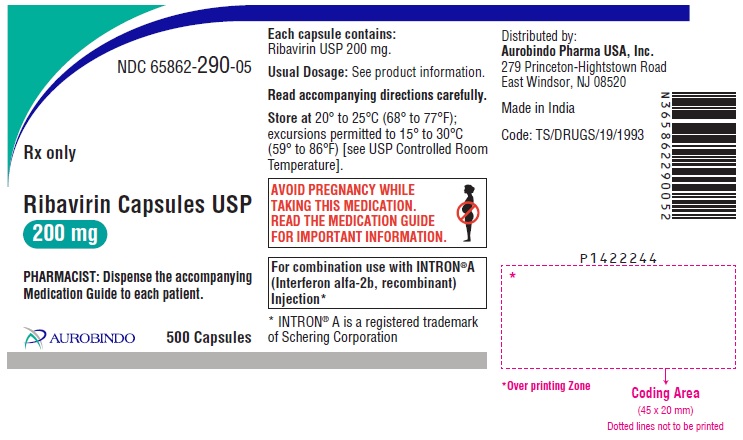
PACKAGE LABEL-PRINCIPAL DISPLAY PANEL - 200 mg (500 Capsules Bottle) NDC 65862-290-05 Rx only Ribavirin Capsules USP 200 mg PHARMACIST: Dispense the accompanying Medication Guide to each patient. AUROBINDO 500 Capsules PACKAGE LABEL-PRINCIPAL DISPLAY PANEL - 200 mg (500 Capsules Bottle)
Medicaid utilization by pack size
Medicare Part D spend CMS · PART D · 2026 (Q1)
About this NDC listing & data coverage
What "drug for further processing" means
FDA lists this package under the "drug for further processing" marketing category: Aurobindo Pharma Limited supplies it to other companies for further processing or repackaging (blister cards that are later repackaged or co-packaged are a common example). The units themselves are a finished dosage form — which is why pricing or Medicaid data can still appear — but this exact package code may not be the presentation a retail pharmacy dispenses.
What data is (and isn’t) available for this NDC — tap to expand
| NDC identity (package / product / labeler codes) | ✓ Available |
| Labeler | ✓ Available |
| Product & package description | ✓ Available |
| Marketing category & status | ✓ Available |
| Active ingredient / dosage form / route | ✓ Available |
| FDA label (SPL via DailyMed) | ✓ Available |
| Package photos | ✓ Available |
| Inactive ingredients (structured) | ✓ Available |
| NADAC pharmacy acquisition price (CMS) | — Not published for this NDC CMS publishes NADAC only for NDCs reported in its retail-pharmacy survey. |
| Orange Book / therapeutic-equivalence data | — Not published for this NDC Applies only to products approved under an NDA/ANDA; many listings are out of scope. |
| HCPCS J-code billing crosswalk | — Not published for this NDC Most self-administered / retail products have no J-code — that is normal. |
| Medicaid utilization (CMS SDUD) | — Not published for this NDC CMS reports utilization only for NDCs with Medicaid claims above its privacy threshold. |