
Quinapril 10 mg Tablet, Film Coated — NDC 65862-618-78 (Billing 65862-0618-78)
This is a package of Quinapril 10 mg Tablet, Film Coated from Aurobindo Pharma Limited, marketed since Apr 2013 and currently FDA-listed.
NDC database record
One package, one record: these facts belong to NDC 65862-618-78 alone.
- Record
- FDA NDC Directory package listing · Human prescription drug
- Code segments
- 65862 labeler · 618 product · 78 package
- Listing certified through
- Dec 31, 2026
- Barcode (UPC)
- 0365862618900, 0365862617903, 0365862619907
- FDA record last changed
- Jul 24, 2026
Identity & classification
Regulatory identifiers FDA, NLM and CMS codes for this package
Drug-database identifiers Medi-Span GPI and First Databank GCN / HICL / AHFS classification
- GSN (GCN sequence number): 018772
- GCN: 27570
- GPI-14 (Medi-Span): 36100040100310
- HICL (First Databank): 007631
- AHFS class code: 24:32.04.00
- RxCUI (RxNorm): 312748
Where does this data come from?
- FDA openFDA NDC Directory · synced Oct 1, 2026
- FDA label on DailyMed · label index refreshed Oct 6, 2026
- RxNorm (NLM RxNav) · catalog refreshed Oct 1, 2026
- Medi-Span GPI (licensed)
- First Databank (licensed) · refreshed Oct 1, 2026
RxNorm drug class
This medicine belongs to the Angiotensin Converting Enzyme Inhibitor class.
Where does this data come from?
- RxClass (NLM) · catalog refreshed Oct 1, 2026
Clinical
- Quinapril lowers high blood pressure, which helps reduce the risk of strokes and heart attacks. It's also used along with other medicines, like diuretics, to manage heart failure.
- Take it by mouth as your prescriber directs, usually once or twice a day. A high-fat meal can reduce how much is absorbed, so ask me about timing with food. It can take 1 to 2 week...
- Headache, dizziness, tiredness, a dry cough and an upset stomach are the most common, and they're usually mild. Call your doctor if they bother you or don't go away.
- Swelling of your face, lips, tongue or throat, or trouble breathing needs emergency care right away. Also call your doctor for yellow skin or eyes, fainting, or severe belly pain.
Patient education
Supplement & herbal interactions
Quinapril may be associated with lower levels of 1 nutrient — worth a chat with your pharmacist, not a cause for alarm.
Where does this data come from?
- MedlinePlus (NLM) · refreshed Oct 1, 2026
- FDA label on DailyMed · label index refreshed Oct 6, 2026
Ask a licensed pharmacist directly — free, answered by our team.
Pricing
A drug doesn't have one price. Each row is a different public payment system, and none is what you'd pay at the counter — that depends on your insurance. The ⓘ on each row explains what it measures.
| Price system | Per each | Per package |
|---|---|---|
| Retail pharmacies payNADAC · weekly | Not in the retail survey — common for institutional, discontinued, or low-volume packs. | |
| Medicaid paysCMS SDUD · 12 mo | No recent Medicaid claims on file for this NDC — rare and low-volume NDCs are suppressed in the public data. | |
| Medicare drug plans payPart D · Q2 2026 | $0.2100 | $21.00 / 100 tablets |
Where does this data come from?
- CMS NADAC weekly file
- CMS ASP pricing files · refreshed Sep 20, 2026
- CMS Medicaid State Drug Utilization Data · refreshed Oct 6, 2026
- CMS Part D plan pricing files · refreshed Sep 24, 2026
- VA National Acquisition Center price file
Packaging — all sizes for this product
| Package NDC | Description | Per unit | Per pack | Marketing start | Marketing end | Status |
|---|---|---|---|---|---|---|
| 65862-0618-30 65862-618-30 | 30 TABLET, FILM COATED in 1 BOTTLE | — | — | 2013-04-29 | — | Active |
| 65862-0618-55 65862-618-55 | 15000 TABLET, FILM COATED in 1 BOTTLE | — | — | 2013-04-29 | — | Active |
| 65862-0618-78 You're viewing this | 10 BLISTER PACK in 1 CARTON / 10 TABLET, FILM COATED in 1 BLISTER PACK | — | — | 2013-04-29 | — | Active |
| 65862-0618-90 65862-618-90 Main listing | 90 TABLET, FILM COATED in 1 BOTTLE | $0.0968 / ea | $8.71 | 2013-04-29 | — | Active |
| 65862-0618-99 65862-618-99 | 1000 TABLET, FILM COATED in 1 BOTTLE | — | — | 2013-04-29 | — | Active |
| 65862-0618-81 65862-618-81 | 8000 TABLET, FILM COATED in 1 BAG | — | — | — | — | Active |
Pack size FAQ
What quantity is in this package?
What NDC number is used to bill for this package of Quinapril 10 mg Tablet, Film Coated?
Prices are the latest CMS NADAC pharmacy acquisition cost per NDC; per-pack figures are per-unit × pack quantity, shown only when the pack is denominated in the same measure NADAC prices.
Therapeutic equivalents
| Product | Labeler | Pack | NADAC/unit | TE | Status | Price vs. this |
|---|---|---|---|---|---|---|
| Quinapril 10 mg 43547-0411-09 | Solco | 90 tablets | $0.097 | AB | FDA listed | — |
| Quinapril 10 mg 68001-0188-05 | BluePoint | 90 tablets | $0.097 | AB | FDA listed | — |
| Quinapril 10 mg 62135-0485-90 | Chartwell | 90 tablets | — | AB | FDA listed | — |
| Quinapril 10 mg 63187-0425-30 | Proficient | 30 tablets | — | — | FDA listed | — |
| Quinapril 10 mg 63187-0874-30 | Proficient | 30 tablets | — | AB | FDA listed | — |
| Quinapril 10 mg 63629-7934-01 | Bryant | 30 tablets | — | AB | FDA listed | — |
| Quinapril 10 mgthis 65862-0618-78 | Aurobindo | 10 tablets | — | AB | FDA listed | — |
| Quinapril 10 mg 69097-0841-05 | Cipla | 90 tablets | — | — | FDA listed | — |
| Quinapril 10 mg 71205-0484-30 | Proficient | 30 tablets | — | AB | FDA listed | — |
| Quinapril 10 mg 71205-0635-30 | Proficient | 30 tablets | — | AB | FDA listed | — |
| Quinapril 10 mg 71335-1134-01 | Bryant | 30 tablets | — | AB | FDA listed | — |
| Quinapril 10 mg 71335-1707-01 | Bryant | 30 tablets | — | AB | FDA listed | — |
Where does this data come from?
- FDA openFDA NDC Directory · synced Oct 1, 2026
- FDA Orange Book · refreshed Oct 3, 2026
- CMS NADAC weekly file
Availability & generic status
This product is an FDA-approved generic. Other versions of the same drug are listed under Therapeutic equivalents, least expensive first.
Where does this data come from?
- FDA Orange Book · refreshed Oct 3, 2026
What it looks like
Where does this data come from?
- FDA label on DailyMed · label index refreshed Oct 6, 2026
Inactive Ingredients / Excipients
Inactive ingredients, also called excipients, are components of the drug product other than the active ingredient. They may include fillers, dyes, coatings, preservatives, flavors, or other formulation ingredients.
🧪 Avoiding an ingredient? See Quinapril inactive ingredients by manufacturer: every current product's list side by side, so you can ask your pharmacy for the version that does not list it.
Where does this data come from?
IACT rows and label-wide narrative are kept separate; availability and product-level specificity depend on the submitted label.- FDA label on DailyMed · label index refreshed Oct 6, 2026
- FDA openFDA NDC Directory · synced Oct 1, 2026
Inactive ingredient FAQ
Are inactive ingredients the same for every manufacturer?
Why might an inactive ingredient be missing?
Can inactive ingredients matter?
Manufacturer & labeler
More NDCs from Aurobindo Pharma Limited labeler code 65862
- Pramipexole Dihydrochloride 1 mg Tablet NDC 65862-608-35
- Pramipexole Dihydrochloride 1.5 mg Tablet NDC 65862-609-26
- Entacapone 50 kg/50kg Powder NDC 65862-611-37
- Rivastigmine Tartrate 50 kg/50kg Powder NDC 65862-612-37
- Tramadol Hydrochloride 50 kg/50kg Powder NDC 65862-613-37
- Quinapril Hydrochloride 5 mg Tablet, Film Coated NDC 65862-617-17
- Quinapril Hydrochloride 20 mg Tablet, Film Coated NDC 65862-619-19
- Quinapril 40 mg Tablet, Film Coated NDC 65862-620-30
- Flecainide Acetate 50 mg Tablet NDC 65862-621-01
- Flecainide Acetate 100 mg Tablet NDC 65862-622-01
- Flecainide Acetate 150 mg Tablet NDC 65862-623-01
- Gemfibrozil 600 mg Tablet, Film Coated NDC 65862-624-05
Where does this data come from?
- FDA openFDA NDC Directory · synced Oct 1, 2026
- Drugs@FDA
Full prescribing information FDA SPL
🚨 Boxed Warning ▾
WARNING: FETAL TOXICITY When pregnancy is detected, discontinue quinapril hydrochloride as soon as possible. Drugs that act directly on the renin-angiotensin system can cause injury and death to the developing fetus. See WARNINGS: Fetal Toxicity
🎯 Indications and Usage ▾
INDICATIONS AND USAGE Hypertension Quinapril tablets, USP are indicated for the treatment of hypertension, to lower blood pressure. Lowering blood pressure reduces the risk of fatal and nonfatal cardiovascular events, primarily strokes and myocardial infarctions. These benefits have been seen in controlled trials of antihypertensive drugs from a wide variety of pharmacologic classes including the class to which this drug principally belongs.
There are no controlled trials demonstrating risk reduction with quinapril tablets, USP. Control of high blood pressure should be part of comprehensive cardiovascular risk management, including, as appropriate, lipid control, diabetes management, antithrombotic therapy, smoking cessation, exercise, and limited sodium intake. Many patients will require more than one drug to achieve blood pressure goals.
For specific advice on goals and management, see published guidelines, such as those of the National High Blood Pressure Education Program's Joint National Committee on Prevention, Detection, Evaluation, and Treatment of High Blood Pressure (JNC). Numerous antihypertensive drugs, from a variety of pharmacologic classes and with different mechanisms of action, have been shown in randomized controlled trials to reduce cardiovascular morbidity and mortality, and it can be concluded that it is blood pressure reduction, and not some other pharmacologic property of the drugs, that is largely responsible for those benefits.
The largest and most consistent cardiovascular outcome benefit has been a reduction in the risk of stroke, but reductions in myocardial infarction and cardiovascular mortality also have been seen regularly. Elevated systolic or diastolic pressure causes increased cardiovascular risk, and the absolute risk increase per mmHg is greater at higher blood pressures, so that even modest reductions of severe hypertension can provide substantial benefit. Relative risk reduction from blood pressure reduction is similar across populations with varying absolute risk, so the absolute benefit is greater in patients who are at higher risk independent of their hypertension (for example, patients with diabetes or hyperlipidemia), and such patients would be expected to benefit from more aggressive treatment to a lower blood pressure goal.
Some antihypertensive drugs have smaller blood pressure effects (as monotherapy) in black patients, and many antihypertensive drugs have additional approved indications and effects (e.g., on angina, heart failure, or diabetic kidney disease). These considerations may guide selection of therapy. Quinapril tablets, USP may be used alone or in combination with thiazide diuretics .
Heart Failure Quinapril tablets, USP are indicated in the management of heart failure as adjunctive therapy when added to conventional therapy including diuretics and/or digitalis. In using quinapril tablets, USP consideration should be given to the fact that another ACE inhibitor, captopril, has caused agranulocytosis, particularly in patients with renal impairment or collagen vascular disease. Available data are insufficient to show that quinapril tablets, USP do not have a similar risk (see WARNINGS ).
Angioedema in black patients: Black patients receiving ACE inhibitor monotherapy have been reported to have a higher incidence of angioedema compared to non-blacks. It should also be noted that in controlled clinical trials ACE inhibitors have an effect on blood pressure that is less in black patients than in non-blacks.
⏱️ Dosage and Administration ▾
DOSAGE AND ADMINISTRATION Hypertension Monotherapy The recommended initial dosage of quinapril tablets in patients not on diuretics is 10 or 20 mg once daily. Dosage should be adjusted according to blood pressure response measured at peak (2 to 6 hours after dosing) and trough (predosing). Generally, dosage adjustments should be made at intervals of at least 2 weeks.
Most patients have required dosages of 20, 40, or 80 mg/day, given as a single dose or in two equally divided doses. In some patients treated once daily, the antihypertensive effect may diminish toward the end of the dosing interval. In such patients an increase in dosage or twice daily administration may be warranted.
In general, doses of 40 to 80 mg and divided doses give a somewhat greater effect at the end of the dosing interval. Concomitant Diuretics If blood pressure is not adequately controlled with quinapril tablets monotherapy, a diuretic may be added. In patients who are currently being treated with a diuretic, symptomatic hypotension occasionally can occur following the initial dose of quinapril tablets.
To reduce the likelihood of hypotension, the diuretic should, if possible, be discontinued 2 to 3 days prior to beginning therapy with quinapril tablets (see WARNINGS ). Then, if blood pressure is not controlled with quinapril tablets alone, diuretic therapy should be resumed. If the diuretic cannot be discontinued, an initial dose of 5 mg quinapril tablets should be used with careful medical supervision for several hours and until blood pressure has stabilized.
The dosage should subsequently be titrated (as described above) to the optimal response (see WARNINGS, PRECAUTIONS, and Drug Interactions ). Renal Impairment Kinetic data indicate that the apparent elimination half-life of quinaprilat increases as creatinine clearance decreases. Recommended starting doses, based on clinical and pharmacokinetic data from patients with renal impairment, are as follows: Creatinine Clearance Maximum Recommended Initial Dose >60 mL/min 10 mg 30 to 60 mL/min 5 mg 10 to 30 mL/min 2.5 mg <10 mL/min Insufficient data for dosage recommendation Patients should subsequently have their dosage titrated (as described above) to the optimal response.
Elderly (≥65 years) The recommended initial dosage of quinapril tablets in elderly patients is 10 mg given once daily followed by titration (as described above) to the optimal response. Heart Failure Quinapril tablets are indicated as adjunctive therapy when added to conventional therapy including diuretics and/or digitalis. The recommended starting dose is 5 mg twice daily.
This dose may improve symptoms of heart failure, but increases in exercise duration have generally required higher doses. Therefore, if the initial dosage of quinapril tablets is well tolerated, patients should then be titrated at weekly intervals until an effective dose, usually 20 to 40 mg daily given in two equally divided doses, is reached or undesirable hypotension, orthostatis, or azotemia (see WARNINGS ) prohibit reaching this dose. Following the initial dose of quinapril tablets, the patient should be observed under medical supervision for at least two hours for the presence of hypotension or orthostatis and, if present, until blood pressure stabilizes.
The appearance of hypotension, orthostatis, or azotemia early in dose titration should not preclude further careful dose titration. Consideration should be given to reducing the dose of concomitant diuretics. DOSE ADJUSTMENTS IN PATIENTS WITH HEART FAILURE AND RENAL IMPAIRMENT OR HYPONATREMIA Pharmacokinetic data indicate that quinapril elimination is dependent on level of renal function.
In patients with heart failure and renal impairment, the recommended initial dose of quinapril tablets is 5 mg in patients with a creatinine clearance above 30 mL/min and 2.5 mg in patients with a creatinine clearance of 10 to 30 mL/min. There is insufficient data for dosage recommendation in patients with a creatinine c… [Excerpted — this section continues on DailyMed.]
⛔ Contraindications ▾
CONTRAINDICATIONS Quinapril tablets are contraindicated in patients who are hypersensitive to this product and in patients with a history of angioedema related to previous treatment with an ACE inhibitor. Quinapril tablets are contraindicated in combination with a neprilysin inhibitor (e.g., sacubitril). Do not administer quinapril tablets are within 36 hours of switching to or from sacubitril/valsartan, a neprilysin inhibitor (see WARNINGS and PRECAUTIONS ).
Do not co-administer quinapril tablets with aliskiren in patients with diabetes.
⚠️ Warnings ▾
WARNINGS Anaphylactoid and Possibly Related Reactions Presumably because ACE inhibitors affect the metabolism of eicosanoids and polypeptides, including endogenous bradykinin, patients receiving ACE inhibitors (including quinapril hydrochloride ) may be subject to a variety of adverse reactions, some of them serious. Head and Neck Angioedema Angioedema of the face, extremities, lips, tongue, glottis, and larynx has been reported in patients treated with ACE inhibitors and has been seen in 0.1% of patients receiving quinapril hydrochloride.
In two similarly sized U.S. postmarketing trials that, combined, enrolled over 3,000 black patients and over 19,000 non-blacks, angioedema was reported in 0.3% and 0.55% of blacks (in study 1 and 2 respectively) and 0.39% and 0.17% of non-blacks. Angioedema associated with laryngeal edema can be fatal. If laryngeal stridor or angioedema of the face, tongue, or glottis occurs, treatment with quinapril hydrochloride should be discontinued immediately, the patient treated in accordance with accepted medical care, and carefully observed until the swelling disappears.
In instances where swelling is confined to the face and lips, the condition generally resolves without treatment; antihistamines may be useful in relieving symptoms. Where there is involvement of the tongue, glottis, or larynx likely to cause airway obstruction, emergency therapy including, but not limited to, subcutaneous epinephrine solution 1:1000 (0.3 to 0.5 mL) should be promptly administered (see ADVERSE REACTIONS ). Patients taking concomitant mammalian target of rapamycin (mTOR) inhibitor (e.g., temsirolimus) therapy or a neprilysin inhibitor may be at increased risk for angioedema.
Intestinal Angioedema Intestinal angioedema has been reported in patients treated with ACE inhibitors. These patients presented with abdominal pain (with or without nausea or vomiting); in some cases there was no prior history of facial angioedema and C-1 esterase levels were normal. The angioedema was diagnosed by procedures including abdominal CT scan or ultrasound, or at surgery, and symptoms resolved after stopping the ACE inhibitor.
Intestinal angioedema should be included in the differential diagnosis of patients on ACE inhibitors presenting with abdominal pain. Patients with a history of angioedema Patients with a history of angioedema unrelated to ACE inhibitor therapy may be at increased risk of angioedema while receiving an ACE inhibitor (see also CONTRAINDICATIONS ). Anaphylactoid reactions during desensitization Two patients undergoing desensitizing treatment with hymenoptera venom while receiving ACE inhibitors sustained life-threatening anaphylactoid reactions.
In the same patients, these reactions were avoided when ACE inhibitors were temporarily withheld, but they reappeared upon inadvertent rechallenge. Anaphylactoid reactions during membrane exposure Anaphylactoid reactions have been reported in patients dialyzed with high-flux membranes and treated concomitantly with an ACE inhibitor. Anaphylactoid reactions have also been reported in patients undergoing low-density lipoprotein apheresis with dextran sulfate absorption.
Hepatic Failure Rarely, ACE inhibitors have been associated with a syndrome that starts with cholestatic jaundice and progresses to fulminant hepatic necrosis and (sometimes) death. The mechanism of this syndrome is not understood. Patients receiving ACE inhibitors who develop jaundice or marked elevations of hepatic enzymes should discontinue the ACE inhibitor and receive appropriate medical follow-up.
Hypotension Excessive hypotension is rare in patients with uncomplicated hypertension treated with quinapril hydrochloride alone. Patients with heart failure given quinapril hydrochloride commonly have some reduction in blood pressure, but discontinuation of therapy because of continuing symptomatic hypotension usually is not necessary when dosing instructions are followed. Caution should be observed when initiat… [Excerpted — this section continues on DailyMed.]
🤒 Adverse Reactions ▾
ADVERSE REACTIONS Hypertension Quinapril hydrochloride has been evaluated for safety in 4960 subjects and patients. Of these, 3203 patients, including 655 elderly patients, participated in controlled clinical trials. Quinapril hydrochloride has been evaluated for long-term safety in over 1400 patients treated for 1 year or more.
Adverse experiences were usually mild and transient. In placebo-controlled trials, discontinuation of therapy because of adverse events was required in 4.7% of patients with hypertension. Adverse experiences probably or possibly related to therapy or of unknown relationship to therapy occurring in 1% or more of the 1563 patients in placebo-controlled hypertension trials who were treated with quinapril hydrochloride are shown below.
Adverse Events in Placebo-Controlled Trials Quinapril Hydrochloride (N=1563) Incidence (Discontinuance) Placebo (N=579) Incidence (Discontinuance) Headache 5.6 (0.7) 10.9 (0.7) Dizziness 3.9 (0.8) 2.6 (0.2) Fatigue 2.6 (0.3) 1 Coughing 2 (0.5) 0 Nausea and/or Vomiting 1.4 (0.3) 1.9 (0.2) Abdominal Pain 1 (0.2)
0.7Heart Failure Quinapril hydrochloride has been evaluated for safety in 1222 quinapril hydrochloride treated patients. Of these, 632 patients participated in controlled clinical trials. In placebo-controlled trials, discontinuation of therapy because of adverse events was required in 6.8% of patients with congestive heart failure.
Adverse experiences probably or possibly related or of unknown relationship to therapy occurring in 1% or more of the 585 patients in placebo-controlled congestive heart failure trials who were treated with quinapril hydrochloride are shown below. Quinapril Hydrochloride (N=585) Incidence (Discontinuance) Placebo (N=295) Incidence (Discontinuance) Dizziness 7.7 (0.7) 5.1 (1) Coughing 4.3 (0.3)
1.4Fatigue 2.6 (0.2)
1.4Nausea and/or Vomiting 2.4 (0.2)
0.7Chest Pain 2.4 1 Hypotension 2.9 (0.5) 1 Dyspnea 1.9 (0.2) 2 Diarrhea 1.7 1 Headache 1.7 1 (0.3) Myalgia 1.5 2 Rash 1.4 (0.2) 1 Back Pain 1.2
0.3See PRECAUTIONS, Cough . Hypertension and/or Heart Failure Clinical adverse experiences probably, possibly, or definitely related, or of uncertain relationship to therapy occurring in 0.5% to 1% (except as noted) of the patients with CHF or hypertension treated with quinapril hydrochloride (with or without concomitant diuretic) in controlled or uncontrolled trials (N=4847) and less frequent, clinically significant events seen in clinical trials or post-marketing experience (the rarer events are in italics) include (listed by body system): General: back pain, malaise, viral infections, anaphylactoid reaction Cardiovascular: palpitation, vasodilation, tachycardia, heart failure, hyperkalemia, myocardial infarction, cerebrovascular accident, hypertensive crisis, angina pectoris, orthostatic hypotension, cardiac rhythm disturbances, cardiogenic shock Hematology: hemolytic anemia Gastrointestinal: flatulence, dry mouth or throat, constipation, gastrointestinal hemorrhage, pancreatitis, abnormal liver function tests, dyspepsia Metabolism and Nutrition Disorders: hyponatremia Nervous/Psychiatric: somnolence, vertigo, syncope, nervousness, depression, insomnia, paresthesia Integumentary: alopecia, increased sweating, pemphigus, pruritus, exfoliative dermatitis, photosensitivity reaction, dermatopolymyositis Urogenital: urinary tract infection, impotence, acute renal failure, worsening renal failure Respiratory: eosinophilic pneumonitis Other: amblyopia, edema, arthralgia, pharyngitis, agranulocytosis, hepatitis, thrombocytopenia Angioedema Angioedema has been reported in patients receiving quinapril hydrochloride (0.1%).
Angioedema associated with laryngeal edema may be fatal. If angioedema of the face, extremities, lips, tongue, glottis, and/or larynx occurs, treatment with quinapril hydrochloride should be discontinued and appropriate therapy instituted immediately. (See WARNINGS .) Clinical Laboratory Test Findings Hematology (See WARNINGS ) Hyperkal… [Excerpted — this section continues on DailyMed.]
🔄 Drug Interactions ▾
Drug Interactions Concomitant diuretic therapy As with other ACE inhibitors, patients on diuretics, especially those on recently instituted diuretic therapy, may occasionally experience an excessive reduction of blood pressure after initiation of therapy with quinapril hydrochloride. The possibility of hypotensive effects with quinapril hydrochloride may be minimized by either discontinuing the diuretic or cautiously increasing salt intake prior to initiation of treatment with quinapril hydrochloride. If it is not possible to discontinue the diuretic, the starting dose of quinapril should be reduced (see DOSAGE AND ADMINISTRATION ).
Agents increasing serum potassium Coadministration of quinapril hydrochloride with other drugs that raise serum potassium levels may result in hyperkalemia. Monitor serum potassium in such patients. Tetracycline and other drugs that interact with magnesium Simultaneous administration of tetracycline with quinapril hydrochloride reduced the absorption of tetracycline by approximately 28% to 37%, possibly due to the high magnesium content in quinapril tablets.
This interaction should be considered if coprescribing quinapril hydrochloride and tetracycline or other drugs that interact with magnesium. Lithium Increased serum lithium levels and symptoms of lithium toxicity have been reported in patients receiving concomitant lithium and ACE inhibitor therapy. These drugs should be coadministered with caution and frequent monitoring of serum lithium levels is recommended.
If a diuretic is also used, it may increase the risk of lithium toxicity. Gold Nitritoid reactions (symptoms include facial flushing, nausea, vomiting, and hypotension) have been reported rarely in patients on therapy with injectable gold (sodium aurothiomalate) and concomitant ACE inhibitor therapy. Non-steroidal anti-inflammatory agents including selective cyclooxygenase-2 inhibitors (COX-2 inhibitors) In patients who are elderly, volume-depleted (including those on diuretic therapy), or with compromised renal function, co-administration of NSAIDs, including selective COX-2 inhibitors, with ACE inhibitors, including quinapril, may result in deterioration of renal function, including possible acute renal failure.
These effects are usually reversible. Monitor renal function periodically in patients receiving quinapril and NSAID therapy. The antihypertensive effect of ACE inhibitors, including quinapril may be attenuated by NSAIDs.
Agents that inhibit mTOR or other drugs known to cause angioedema Patients taking concomitant mTOR inhibitor (e.g., temsirolimus) therapy or a neprilysin inhibitor may be at increased risk for angioedema. Other agents Drug interaction studies of quinapril hydrochloride with other agents showed: Multiple dose therapy with propranolol or cimetidine has no effect on the pharmacokinetics of single doses of quinapril hydrochloride. The anticoagulant effect of a single dose of warfarin (measured by prothrombin time) was not significantly changed by quinapril coadministration twice-daily.
Quinapril hydrochloride treatment did not affect the pharmacokinetics of digoxin. No pharmacokinetic interaction was observed when single doses of quinapril hydrochloride and hydrochlorothiazide were administered concomitantly. Co-administration of multiple 10 mg doses of atorvastatin with 80 mg of quinapril hydrochloride resulted in no significant change in the steady-state pharmacokinetic parameters of atorvastatin.
Dual Blockade of the Renin-Angiotensin System (RAS) Dual blockade of the RAS with angiotensin receptor blockers, ACE inhibitors, or aliskiren is associated with increased risks of hypotension, hyperkalemia, and changes in renal function (including acute renal failure) compared to monotherapy. Most patients receiving the combination of two RAS inhibitors do not obtain any additional benefit compared to monotherapy. In general, avoid combined use of RAS inhibitors.
Closely monitor blood pressure, renal function and electr… [Excerpted — this section continues on DailyMed.]
🧒 Pediatric Use ▾
Pediatric Use Neonates with a history of in utero exposure to quinapril hydrochloride If oliguria or hypotension occurs, direct attention toward support of blood pressure and renal perfusion. Exchange transfusions or dialysis may be required as a means of reversing hypotension and/or substituting for disordered renal function. Removal of quinapril hydrochloride, which crosses the placenta, from the neonatal circulation is not significantly accelerated by these means.
The safety and effectiveness of quinapril hydrochloride in pediatric patients have not been established.
🧓 Geriatric Use ▾
Geriatric Use Clinical studies of quinapril hydrochloride did not include sufficient numbers of subjects aged 65 and over to determine whether they respond differently from younger subjects. Other reported clinical experience has not identified differences in responses between the elderly and younger patients. In general, dose selection for an elderly patient should be cautious, usually starting at the low end of the dosing range, reflecting the greater frequency of decreased hepatic, renal or cardiac function, and of concomitant disease or other drug therapy.
This drug is known to be substantially excreted by the kidney, and the risk of toxic reactions to this drug may be greater in patients with impaired renal function. Because elderly patients are more likely to have decreased renal function, care should be taken in dose selection, and it may be useful to monitor renal function. Elderly patients exhibited increased area under the plasma concentration time curve and peak levels for quinaprilat compared to values observed in younger patients; this appeared to relate to decreased renal function rather than to age itself.
🆘 Overdosage ▾
OVERDOSAGE Doses of 1440 to 4280 mg/kg of quinapril cause significant lethality in mice and rats. No specific information is available on the treatment of overdosage with quinapril. The most likely clinical manifestation would be symptoms attributable to severe hypotension.
Laboratory determinations of serum levels of quinapril and its metabolites are not widely available, and such determinations have, in any event, no established role in the management of quinapril overdose. No data are available to suggest physiological maneuvers (e.g., maneuvers to change pH of the urine) that might accelerate elimination of quinapril and its metabolites. Hemodialysis and peritoneal dialysis have little effect on the elimination of quinapril and quinaprilat.
Angiotensin II could presumably serve as a specific antagonist-antidote in the setting of quinapril overdose, but angiotensin II is essentially unavailable outside of scattered research facilities. Because the hypotensive effect of quinapril is achieved through vasodilation and effective hypovolemia, it is reasonable to treat quinapril overdose by infusion of normal saline solution.
🧬 Clinical Pharmacology ▾
CLINICAL PHARMACOLOGY Mechanism of Action Quinapril is deesterified to the principal metabolite, quinaprilat, which is an inhibitor of ACE activity in human subjects and animals. ACE is a peptidyl dipeptidase that catalyzes the conversion of angiotensin I to the vasoconstrictor, angiotensin II. The effect of quinapril in hypertension and in congestive heart failure (CHF) appears to result primarily from the inhibition of circulating and tissue ACE activity, thereby reducing angiotensin II formation.
Quinapril inhibits the elevation in blood pressure caused by intravenously administered angiotensin I, but has no effect on the pressor response to angiotensin II, norepinephrine or epinephrine. Angiotensin II also stimulates the secretion of aldosterone from the adrenal cortex, thereby facilitating renal sodium and fluid reabsorption. Reduced aldosterone secretion by quinapril may result in a small increase in serum potassium.
In controlled hypertension trials, treatment with quinapril hydrochloride alone resulted in mean increases in potassium of 0.07 mmol/L (see PRECAUTIONS ). Removal of angiotensin II negative feedback on renin secretion leads to increased plasma renin activity (PRA). While the principal mechanism of antihypertensive effect is thought to be through the renin-angiotensin-aldosterone system, quinapril exerts antihypertensive actions even in patients with low renin hypertension.
Quinapril hydrochloride was an effective antihypertensive in all races studied, although it was somewhat less effective in blacks (usually a predominantly low renin group) than in nonblacks. ACE is identical to kininase II, an enzyme that degrades bradykinin, a potent peptide vasodilator; whether increased levels of bradykinin play a role in the therapeutic effect of quinapril remains to be elucidated. Pharmacokinetics and Metabolism Following oral administration, peak plasma quinapril concentrations are observed within one hour.
Based on recovery of quinapril and its metabolites in urine, the extent of absorption is at least 60%. The rate and extent of quinapril absorption are diminished moderately (approximately 25 to 30%) when quinapril tablets are administered during a high-fat meal. Following absorption, quinapril is deesterified to its major active metabolite, quinaprilat (about 38% of oral dose), and to other minor inactive metabolites.
Following multiple oral dosing of quinapril hydrochloride, there is an effective accumulation half-life of quinaprilat of approximately 3 hours, and peak plasma quinaprilat concentrations are observed approximately 2 hours post-dose. Quinaprilat is eliminated primarily by renal excretion, up to 96% of an IV dose, and has an elimination half-life in plasma of approximately 2 hours and a prolonged terminal phase with a half-life of 25 hours. The pharmacokinetics of quinapril and quinaprilat are linear over a single-dose range of 5 to 80 mg doses and 40 to 160 mg in multiple daily doses.
Approximately 97% of either quinapril or quinaprilat circulating in plasma is bound to proteins. In patients with renal insufficiency, the elimination half-life of quinaprilat increases as creatinine clearance decreases. There is a linear correlation between plasma quinaprilat clearance and creatinine clearance.
In patients with end-stage renal disease, chronic hemodialysis or continuous ambulatory peritoneal dialysis has little effect on the elimination of quinapril and quinaprilat. Elimination of quinaprilat may be reduced in elderly patients (≥65 years) and in those with heart failure; this reduction is attributable to decrease in renal function (see DOSAGE AND ADMINISTRATION ). Quinaprilat concentrations are reduced in patients with alcoholic cirrhosis due to impaired deesterification of quinapril.
Studies in rats indicate that quinapril and its metabolites do not cross the blood-brain barrier. Pharmacodynamics and Clinical Effects Hypertension Single doses of 20 mg of quinapril hydrochloride provide over 80% inhibi… [Excerpted — this section continues on DailyMed.]
📦 How Supplied / Storage and Handling ▾
HOW SUPPLIED Quinapril tablets, USP are supplied as follows: Quinapril Tablets USP, 5 mg are brown colored, oval shaped film-coated tablets, debossed with “5” and “2” on either side of the scoreline on one side and “H” on the other side. Bottles of 30 NDC 65862-617-30 Bottles of 90 NDC 65862-617-90 Bottles of 1,000 NDC 65862-617-99 Bottles of 15,000 NDC 65862-617-55 Cartons of 100 (10 x 10) Unit-dose Tablets NDC 65862-617-78 Quinapril Tablets USP, 10 mg are brown colored, triangular shaped film-coated tablets, debossed with “53” on one side and “H” on the other side.
Bottles of 30 NDC 65862-618-30 Bottles of 90 NDC 65862-618-90 Bottles of 1,000 NDC 65862-618-99 Bottles of 15,000 NDC 65862-618-55 Cartons of 100 (10 x 10) Unit-dose Tablets NDC 65862-618-78 Quinapril Tablets USP, 20 mg are brown colored, circular shaped film-coated tablets, debossed with “D” on one side and “16” on the other side. Bottles of 30 NDC 65862-619-30 Bottles of 90 NDC 65862-619-90 Bottles of 1,000 NDC 65862-619-99 Bottles of 10,000 NDC 65862-619-19 Cartons of 100 (10 x 10) Unit-dose Tablets NDC 65862-619-78 Quinapril Tablets USP, 40 mg are brown colored, oval shaped film-coated tablets, debossed with “D” on one side and “17” on the other side.
Bottles of 30 NDC 65862-620-30 Bottles of 90 NDC 65862-620-90 Bottles of 1,000 NDC 65862-620-99 Bottles of 3,000 NDC 65862-620-39 Cartons of 100 (10 x 10) Unit-dose Tablets NDC 65862-620-78 Dispense in well-closed containers as defined in the USP. Store at 20° to 25°C (68° to 77°F) [see USP Controlled Room Temperature]. Protect from light.
Distributed by: Aurobindo Pharma USA, Inc. 279 Princeton-Hightstown Road East Windsor, NJ 08520 Manufactured by: Aurobindo Pharma Limited Hyderabad-500 038, India Revised: 07/2020
📋 Description ▾
DESCRIPTION Quinapril hydrochloride is the hydrochloride salt of quinapril, the ethyl ester of a non-sulfhydryl, angiotensin-converting enzyme (ACE) inhibitor, quinaprilat. Quinapril hydrochloride is chemically described as [3S-[2[R*(R*)], 3R*]]-2-[2-[[1-(ethoxycarbonyl)-3-phenylpropyl]amino]-1-oxopropyl]-1,2,3,4-tetrahydro-3-isoquinolinecarboxylic acid, monohydrochloride. Its molecular formula is C 25 H 30 N 2 O 5 •HCl and its structural formula is: Quinapril hydrochloride USP is a white to off-white powder, with a pink cast at times that is freely soluble in aqueous solvents.
Quinapril tablets, USP contain 5 mg (equivalent to 5.416 mg quinapril hydrochloride), 10 mg (equivalent to 10.832 mg quinapril hydrochloride), 20 mg (equivalent to 21.664 mg quinapril hydrochloride), or 40 mg (equivalent to 43.328 mg quinapril hydrochloride) of quinapril for oral administration. Each tablet also contains colloidal silicon dioxide, crospovidone, hydroxypropyl cellulose, hypromellose, iron oxide red, lactose monohydrate, magnesium carbonate, magnesium stearate, polyethylene glycol, povidone, and titanium dioxide.
Chemical Structure
💬 Information for Patients ▾
Information for Patients Pregnancy Tell female patients of childbearing age about the consequences of exposure to quinapril hydrochloride during pregnancy. Discuss treatment options with women planning to become pregnant. Ask patients to report pregnancies to their physicians as soon as possible.
Angioedema Angioedema, including laryngeal edema can occur with treatment with ACE inhibitors, especially following the first dose. Advise patients and tell them to immediately report any signs or symptoms suggesting angioedema (swelling of face, extremities, eyes, lips, tongue, difficulty in swallowing or breathing) and to stop taking the drug until they have consulted with their physician (see WARNINGS ). Symptomatic hypotension Caution patients that lightheadedness can occur, especially during the first few days of quinapril hydrochloride therapy, and that it should be reported to a physician.
If actual syncope occurs, tell patients to temporarily discontinue the drug until they have consulted with their physician (see WARNINGS ). Caution all patients that inadequate fluid intake or excessive perspiration, diarrhea, or vomiting can lead to an excessive fall in blood pressure because of reduction in fluid volume, with the same consequences of lightheadedness and possible syncope. Tell patients planning to undergo any surgery and/or anesthesia to inform their physician that they are taking an ACE inhibitor.
Hyperkalemia Tell patients not to use potassium supplements or salt substitutes containing potassium without consulting their physician (see PRECAUTIONS ). Neutropenia Tell patients to promptly report any indication of infection (e.g., sore throat, fever) which could be a sign of neutropenia. NOTE: As with many other drugs, certain advice to patients being treated with quinapril hydrochloride is warranted.
This information is intended to aid in the safe and effective use of this medication. It is not a disclosure of all possible adverse or intended effects.
⚠️ Precautions ▾
PRECAUTIONS General Impaired renal function As a consequence of inhibiting the renin-angiotensin-aldosterone system, changes in renal function may be anticipated in susceptible individuals. In patients with severe heart failure whose renal function may depend on the activity of the renin-angiotensin-aldosterone system, treatment with ACE inhibitors, including quinapril hydrochloride, may be associated with oliguria and/or progressive azotemia and rarely acute renal failure and/or death. In clinical studies in hypertensive patients with unilateral or bilateral renal artery stenosis, increases in blood urea nitrogen and serum creatinine have been observed in some patients following ACE inhibitor therapy.
These increases were almost always reversible upon discontinuation of the ACE inhibitor and/or diuretic therapy. In such patients, renal function should be monitored during the first few weeks of therapy. Some patients with hypertension or heart failure with no apparent preexisting renal vascular disease have developed increases in blood urea and serum creatinine, usually minor and transient, especially when quinapril hydrochloride has been given concomitantly with a diuretic.
This is more likely to occur in patients with preexisting renal impairment. Dosage reduction and/or discontinuation of any diuretic and/or quinapril hydrochloride may be required. Evaluation of patients with hypertension or heart failure should always include assessment of renal function (see DOSAGE AND ADMINISTRATION ).
Hyperkalemia In clinical trials, hyperkalemia (serum potassium ≥5.8 mmol/L) occurred in approximately 2% of patients receiving quinapril hydrochloride. In most cases, elevated serum potassium levels were isolated values which resolved despite continued therapy. Less than 0.1% of patients discontinued therapy due to hyperkalemia.
Risk factors for the development of hyperkalemia include renal insufficiency, diabetes mellitus, and the concomitant use of other drugs that raise serum potassium levels. Monitor serum potassium in such patients (see PRECAUTIONS, Drug Interactions ). Cough Presumably due to the inhibition of the degradation of endogenous bradykinin, persistent non-productive cough has been reported with all ACE inhibitors, always resolving after discontinuation of therapy.
ACE inhibitor-induced cough should be considered in the differential diagnosis of cough. Surgery/anesthesia In patients undergoing major surgery or during anesthesia with agents that produce hypotension, quinapril hydrochloride will block angiotensin II formation secondary to compensatory renin release. If hypotension occurs and is considered to be due to this mechanism, it can be corrected by volume expansion.
Information for Patients Pregnancy Tell female patients of childbearing age about the consequences of exposure to quinapril hydrochloride during pregnancy. Discuss treatment options with women planning to become pregnant. Ask patients to report pregnancies to their physicians as soon as possible.
Angioedema Angioedema, including laryngeal edema can occur with treatment with ACE inhibitors, especially following the first dose. Advise patients and tell them to immediately report any signs or symptoms suggesting angioedema (swelling of face, extremities, eyes, lips, tongue, difficulty in swallowing or breathing) and to stop taking the drug until they have consulted with their physician (see WARNINGS ). Symptomatic hypotension Caution patients that lightheadedness can occur, especially during the first few days of quinapril hydrochloride therapy, and that it should be reported to a physician.
If actual syncope occurs, tell patients to temporarily discontinue the drug until they have consulted with their physician (see WARNINGS ). Caution all patients that inadequate fluid intake or excessive perspiration, diarrhea, or vomiting can lead to an excessive fall in blood pressure because of reduction in fluid volume, with the same consequences of lightheadedness an… [Excerpted — this section continues on DailyMed.]
🍼 Nursing Mothers ▾
Nursing Mothers Because quinapril hydrochloride is secreted in human milk, caution should be exercised when this drug is administered to a nursing woman.
📄 Carcinogenesis, Mutagenesis, Impairment of Fertility ▾
Carcinogenesis, Mutagenesis, Impairment of Fertility Quinapril hydrochloride was not carcinogenic in mice or rats when given in doses up to 75 or 100 mg/kg/day (50 to 60 times the maximum human daily dose, respectively, on an mg/kg basis and 3.8 to 10 times the maximum human daily dose when based on an mg/m 2 basis) for 104 weeks. Female rats given the highest dose level had an increased incidence of mesenteric lymph node hemangiomas and skin/subcutaneous lipomas. Neither quinapril nor quinaprilat were mutagenic in the Ames bacterial assay with or without metabolic activation.
Quinapril was also negative in the following genetic toxicology studies: in vitro mammalian cell point mutation, sister chromatid exchange in cultured mammalian cells, micronucleus test with mice, in vitro chromosome aberration with V79 cultured lung cells, and in an in vivo cytogenetic study with rat bone marrow. There were no adverse effects on fertility or reproduction in rats at doses up to 100 mg/kg/day (60 and 10 times the maximum daily human dose when based on mg/kg and mg/m 2 , respectively).
📄 Package Label / Principal Display Panel ▾
PACKAGE LABEL-PRINCIPAL DISPLAY PANEL - 5 mg (90 Tablet Bottle) NDC 65862-617-90 Rx only Quinapril Tablets, USP 5 mg AUROBINDO 90 Tablets PACKAGE LABEL-PRINCIPAL DISPLAY PANEL - 5 mg (90 Tablet Bottle)
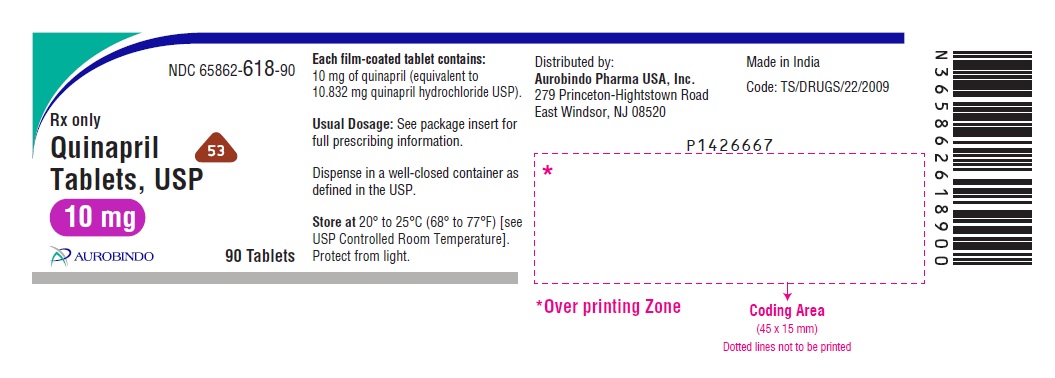
PACKAGE LABEL-PRINCIPAL DISPLAY PANEL - 10 mg (90 Tablet Bottle) NDC 65862-618-90 Rx only Quinapril Tablets, USP 10 mg AUROBINDO 90 Tablets PACKAGE LABEL-PRINCIPAL DISPLAY PANEL - 10 mg (90 Tablet Bottle)
PACKAGE LABEL-PRINCIPAL DISPLAY PANEL - 20 mg (90 Tablet Bottle) NDC 65862-619-90 Rx only Quinapril Tablets, USP 20 mg AUROBINDO 90 Tablets PACKAGE LABEL-PRINCIPAL DISPLAY PANEL - 20 mg (90 Tablet Bottle)
PACKAGE LABEL-PRINCIPAL DISPLAY PANEL - 40 mg (90 Tablet Bottle) NDC 65862-620-90 Rx only Quinapril Tablets, USP 40 mg AUROBINDO 90 Tablets PACKAGE LABEL-PRINCIPAL DISPLAY PANEL - 40 mg (90 Tablet Bottle)
Reported adverse events (FAERS)
Top reported reactions
Age at onset
Reporter sex
Serious outcomes
Where does this data come from?
About this NDC listing & data coverage
What data is (and isn’t) available for this NDC — tap to expand
| NDC identity (package / product / labeler codes) | ✓ Available |
| Labeler | ✓ Available |
| Product & package description | ✓ Available |
| Marketing category & status | ✓ Available |
| Active ingredient / dosage form / route | ✓ Available |
| FDA label (SPL via DailyMed) | ✓ Available |
| Package photos | ✓ Available |
| Inactive ingredients (structured) | — Not published for this NDC The labeler did not submit a structured excipient list, or no SPL is available. |
| NADAC pharmacy acquisition price (CMS) | — Not published for this NDC CMS publishes NADAC only for NDCs reported in its retail-pharmacy survey. |
| Orange Book / therapeutic-equivalence data | ✓ Available |
| HCPCS J-code billing crosswalk | — Not published for this NDC Most self-administered / retail products have no J-code — that is normal. |
| Medicaid utilization (CMS SDUD) | — Not published for this NDC CMS reports utilization only for NDCs with Medicaid claims above its privacy threshold. |