
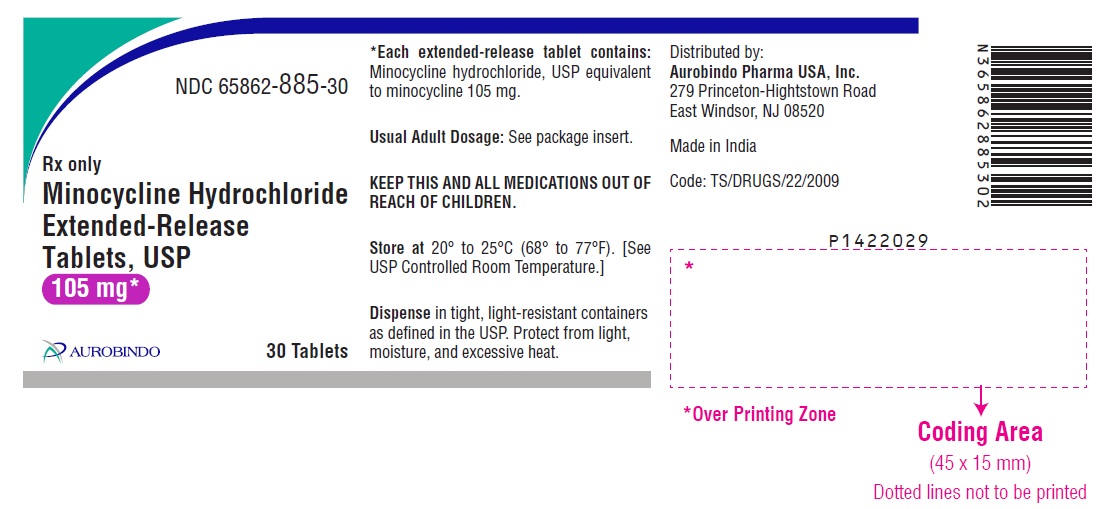
Minocycline Hydrochloride 105 mg Tablet, Film Coated, Extended Release, 1,000-count
Other active recalls for Minocycline Hydrochloride (different manufacturers) — 1 · tap to view
🆔 Identity & classification
Where does this data come from?
🏷️ RxNorm drug class
This medicine belongs to the Tetracycline-class Drug class.
Where does this data come from?
🏭 Manufacturer & labeler
Where does this data come from?
🩺 Clinical
Minocycline is used to treat infections caused by bacteria and certain other infections spread by ticks, lice, mites, and infected animals. It is also used to treat acne and rosacea (a skin disease that causes redness, flushing, and pimples on the face). Minocycline is in a class of medications called tetracycline antibiotics. It works to treat infections by preventing the growth and spread of bacteria. It works to treat acne and rosacea by killing the bacteria that infects pores and by lowering the amount of oil on your skin that can cause acne. Antibiotics such as minocycline will not work f...
Read the full MedlinePlus article ↗- Good news — standard minocycline oral capsules and tablets can be taken with or without food, so you have flexibility there. The most important thing is to take it with a full glas...
- Can I take my minocycline capsule or tablet with food, or does it have to be on an empty stomach?
- The extended-release tablets for acne are typically taken once daily for 12 weeks. As with most acne treatments, you likely won't see dramatic results overnight — it takes time for...
- I've been prescribed the extended-release minocycline tablets for acne. How long does it take to work, and how long do I take it?
Patient education
Supplement & herbal interactions
Some supplements/herbs that may interact with Minocycline Hydrochloride — tap one for details:
Minocycline Hydrochloride may be associated with lower levels of 11 nutrients — worth a chat with your pharmacist, not a cause for alarm.
Where does this data come from?
Ask a licensed pharmacist directly — free, answered by our team.
💊 What it looks like
Where does this data come from?
🧪 Inactive Ingredients / Excipients
Inactive ingredients, also called excipients, are components of the drug product other than the active ingredient. They may include fillers, dyes, coatings, preservatives, flavors, or other formulation ingredients.
💡 Tap an ingredient (hover on desktop) to see what it is and why it’s used.
-
UNII 2LRS185U6K
D&C Red No. 27 is a synthetic red colorant used in medicines and cosmetics. It gives tablets, capsules, or liquids their red or reddish color so products are visually identifiable.
-
UNII H3R47K3TBD
FD&C Blue No. 1 is a synthetic blue dye approved for use in foods and medicines. It serves as a colorant to give the medication its distinctive appearance and help with product identification.
-
UNII 39J80LT57T
Hypromellose 2208 is a plant-derived thickening agent used as a binder and film-coating material. It helps hold tablet ingredients together and creates a protective coating on pills to control how quickly medicine dissolves.
-
UNII 36SFW2JZ0W
Hypromellose 2910 is a plant-based thickening agent derived from cellulose. In medicines, it forms a protective coating on tablets or capsules and controls how quickly the drug dissolves and releases into your body.
-
UNII 0WZ8WG20P6
Hypromellose 2910 is a plant-based cellulose derivative that acts as a thickener, binder, and film-coating agent. It helps control how quickly the medicine dissolves and protects the tablet or capsule from moisture and light.
-
UNII EWQ57Q8I5X
Lactose monohydrate is a natural sugar derived from milk. It serves as a filler and binder in tablets and capsules, helping create the proper size, texture, and consistency of the medicine.
-
UNII 70097M6I30
Magnesium stearate is a salt made from magnesium and stearic acid, a fatty substance. It's used in tablets and capsules as a lubricant and glidant to help ingredients flow smoothly during manufacturing and prevent sticking.
-
UNII G2M7P15E5P
Polyethylene glycol 3350 is a synthetic polymer used as a solvent, humectant, and thickening agent in medicines. It helps dissolve other ingredients, retain moisture in the product, and achieve the desired consistency.
-
UNII ETJ7Z6XBU4
Silicon dioxide is a naturally occurring mineral used as a glidant and anti-caking agent. It helps powder ingredients flow smoothly and prevents clumping during manufacturing and storage.
-
UNII 15FIX9V2JP
Titanium dioxide is a bright white mineral powder commonly used as a colorant and opacifying agent. It makes pills and tablets white or lighter in color and helps make coatings non-transparent.
-
UNII XHX3C3X673
Triacetin is a clear, oily liquid made from glycerin and acetic acid. It works as a plasticizer and solvent in medicines, helping soften coatings and improve how liquids mix together in formulations.
11 inactive ingredients listed in the exact product block matched to this NDC.
Where does this data come from?
ingredient classCode="IACT" elements from the exact product block matched by this NDC. Label-section narrative from DailyMed / the openFDA label index is shown separately when available.Inactive ingredient FAQ
Are inactive ingredients the same for every manufacturer?
Why might an inactive ingredient be missing?
Can inactive ingredients matter?
💲 Pricing
A drug doesn't have one price. Each row is a different public payment system, and none is what you'd pay at the counter — that depends on your insurance. The ⓘ on each row explains what it measures.
| Price system | Per each | Per package |
|---|---|---|
| Retail pharmacies payNADAC · weekly | Not in the retail survey — common for institutional, discontinued, or low-volume packs. | |
| Medicaid paysCMS SDUD · 12 mo | No recent Medicaid claims on file for this NDC — rare and low-volume NDCs are suppressed in the public data. | |
| Medicare drug plans payPart D · Q2 2026 | $22.27 | $22,270.00 / 1000 tablets |
Where does this data come from?
🔁 Therapeutic equivalents
| Product | Labeler | Pack | NADAC/unit | TE | Status | Price vs. this |
|---|---|---|---|---|---|---|
| Minocycline Hydrochloride 105 mg 63629-9208-01 | Bryant | 30 tablets | — | AB | FDA listed | — |
| Minocycline Hydrochloride 105 mgthis 65862-0885-99 | Aurobindo | 1000 tablets | — | AB | FDA listed | — |
| Minocycline Hydrochloride 105 mg 67877-0438-01 | Ascend | 100 tablets | — | AB | FDA listed | — |
| minocycline hydrochloride 105 mg 68382-0552-01 | Zydus | 100 tablets | — | — | FDA listed | — |
| minocycline hydrochloride 105 mg 70771-1157-00 | Zydus | 1000 tablets | — | — | FDA listed | — |
| Minocycline Hydrochloride 105 mg 71335-2904-01 | Bryant | 30 tablets | — | AB | FDA listed | — |
| Minocycline Hydrochloride 105 mg 72162-1840-03 | Bryant | 30 tablets | — | AB | FDA listed | — |
| Minocycline Hydrochloride 105 mg 72789-0528-30 | PD-Rx | 30 tablets | — | AB | FDA listed | — |
Where does this data come from?
⏳ Availability & generic status
This product is an FDA-approved generic. Other versions of the same drug are listed under Therapeutic equivalents, least expensive first.
Where does this data come from?
🔬 Reported adverse events (FAERS)
Top reported reactions
Age at onset
Reporter sex
Serious outcomes
Where does this data come from?
📦 Packaging — all sizes for this product
| Package NDC | Description | Marketing start | Status |
|---|---|---|---|
| 65862-0885-01 | 100 TABLET, FILM COATED, EXTENDED RELEASE in 1 BOTTLE (65862-885-01) | 2016-06-13 | Active |
| 65862-0885-05 | 500 TABLET, FILM COATED, EXTENDED RELEASE in 1 BOTTLE (65862-885-05) | 2016-06-13 | Active |
| 65862-0885-30 | 30 TABLET, FILM COATED, EXTENDED RELEASE in 1 BOTTLE (65862-885-30) | 2016-06-13 | Active |
| 65862-0885-99 You're viewing this | 1000 TABLET, FILM COATED, EXTENDED RELEASE in 1 BOTTLE (65862-885-99) | 2016-06-13 | Active |
You're viewing the largest of 4 pack sizes for this product.
Pack size FAQ
What quantity is in NDC 65862-0885-99?
What is the difference between NDC 65862-0885-99 and NDC 65862-0885-30?
What NDC number is used to bill for this package of Minocycline Hydrochloride 105 mg Tablet, Film Coated, Extended Release?
🧭 About this NDC listing & data coverage
What data is (and isn’t) available for this NDC — tap to expand
| NDC identity (package / product / labeler codes) | ✓ Available |
| Labeler | ✓ Available |
| Product & package description | ✓ Available |
| Marketing category & status | ✓ Available |
| Active ingredient / dosage form / route | ✓ Available |
| FDA label (SPL via DailyMed) | ✓ Available |
| Package photos | ✓ Available |
| Inactive ingredients (structured) | ✓ Available |
| NADAC pharmacy acquisition price (CMS) | — Not published for this NDC CMS publishes NADAC only for NDCs reported in its retail-pharmacy survey. |
| Orange Book / therapeutic-equivalence data | ✓ Available |
| HCPCS J-code billing crosswalk | — Not published for this NDC Most self-administered / retail products have no J-code — that is normal. |
| Medicaid utilization (CMS SDUD) | — Not published for this NDC CMS reports utilization only for NDCs with Medicaid claims above its privacy threshold. |
Questions about this listing
Why is there no price listed?
Is the NDC printed on the package the same as the 11-digit billing NDC?
What do the three segments of this NDC mean?
Is this package still being marketed?
Does this product come in other package sizes?
Who lists this product with the FDA?
Do I need a prescription for this product?
Where does this data come from?
📄 Full prescribing information FDA SPL
🎯 Indications and Usage ▾
1 INDICATIONS AND USAGE Minocycline hydrochloride extended-release tablets are indicated to treat inflammatory lesions of non-nodular moderate to severe acne vulgaris in patients 12 years of age and older. Limitations of Use Minocycline hydrochloride extended-release tablets did not demonstrate any effect on non-inflammatory acne lesions. This formulation of minocycline has not been evaluated in the treatment of infections [see Clinical Studies (14) ].
To reduce the development of drug-resistant bacteria as well as to maintain the effectiveness of other antibacterial drugs, use minocycline hydrochloride extended-release tablets only as indicated [see Warnings and Precautions (5.12) ] . Minocycline hydrochloride is a tetracycline-class drug indicated to treat inflammatory lesions of non-nodular moderate to severe acne vulgaris in patients 12 years of age and older. ( 1 ) Limitations of Use This formulation of minocycline has not been evaluated in the treatment of infections.
To reduce the development of drug-resistant bacteria and to maintain the effectiveness of other antibacterial drugs, use minocycline hydrochloride extended-release tablets only as indicated. ( 1 )
⏱️ Dosage and Administration ▾
2 DOSAGE AND ADMINISTRATION The recommended dosage of minocycline hydrochloride extended-release tablets is approximately 1 mg/kg once daily for 12 weeks. Table 1 provides the recommended minocycline hydrochloride extended-release tablets dosage based upon weight ranges. Table 1: Dosing Table for Minocycline Hydrochloride Extended-Release Tablets Patient’s Weight (kg) Recommended Dosage (mg/day) 45 to 49 45 50 to 59 55 60 to 71 65 72 to 84 80 85 to 96 90 97 to 110 105 111 to 125 115 126 to 136 135 Higher dosages have not shown to be of additional benefit in the treatment of inflammatory lesions of acne and may be associated with more acute vestibular adverse reactions.
Swallow tablets whole. Do not chew, crush, or split the extended-release tablets. Administer minocycline hydrochloride extended-release tablets with or without food [see Clinical Pharmacology (12.3) ] .
Ingestion of food along with minocycline hydrochloride extended-release tablets may help reduce the risk of esophageal irritation and ulceration. In patients with renal impairment, decrease the daily dosage by either reducing the recommended individual doses and/or by extending the time intervals between doses [see Warnings and Precautions (5.9) ]. The recommended dosage of minocycline hydrochloride extended-release tablets is approximately 1 mg/kg once daily for 12 weeks.
(2)
💊 Dosage Forms and Strengths ▾
3 DOSAGE FORMS AND STRENGTHS 45 mg extended-release tablets: Gray colored, round shaped, biconvex, film-coated tablets debossed with ‘I’ on one side and ‘95’ on the other side. 55 mg extended-release tablets: Pink colored, round shaped, biconvex, film-coated tablets debossed with ‘K’ on one side and ‘6’ on the other side. 65 mg extended-release tablets: Blue colored, modified capsule shaped, biconvex, film-coated tablets debossed with ‘I’ on one side and ‘26’ on the other side.
80 mg extended-release tablets: Grey colored, modified capsule shaped, biconvex, film-coated tablets debossed with ‘K’ on one side and ‘7’ on the other side. 90 mg extended-release tablets: Yellow colored, modified capsule shaped, biconvex, film-coated tablets debossed with ‘I’ on one side and ‘27’ on the other side. 105 mg extended-release tablets: Purple colored, modified capsule shaped, biconvex, film-coated tablets debossed with ‘K’ on one side and ‘8’ on the other side.
115 mg extended-release tablets: Green colored, capsule shaped, biconvex, film-coated tablets debossed with ‘F81’ on one side and plain on the other side. 135 mg extended-release tablets: Red colored, modified capsule shaped, biconvex, film-coated tablets debossed with ‘I’ on one side and ‘93’ on the other side. Extended-release tablets: 45 mg, 55 mg, 65 mg, 80 mg, 90 mg, 105 mg, 115 mg, and 135 mg (3)
⛔ Contraindications ▾
4 CONTRAINDICATIONS Minocycline hydrochloride extended-release tablets are contraindicated in patients with history of a hypersensitivity reaction to any of the tetracyclines [see Warnings and Precautions (5.1) ] . Known hypersensitivity to any of the tetracyclines. (4)
⚠️ Warnings and Cautions ▾
5 WARNINGS AND PRECAUTIONS Serious Skin/Hypersensitivity Reactions : Minocycline has been associated with anaphylaxis, serious skin reactions, erythema multiforme, and drug rash with eosinophilia and systemic symptoms (DRESS) syndrome. Discontinue immediately if symptoms occur. ( 5.1 ) Tooth Discoloration and Enamel Hypoplasia: Use during the second and third trimesters of pregnancy, infancy, and childhood up to the age of 8 years may cause permanent discoloration of the teeth (yellow-gray-brown).
( 5.2 , 8.1 , 8.4 ) Inhibition of Bone Growth: Use during the second and third trimesters of pregnancy, infancy, and childhood up to the age of 8 years may cause reversible inhibition of bone growth. ( 5.3 , 8.1 , 8.4 ) Clostridioides difficile-Associated Diarrhea (Antibiotic-Associated Colitis): Discontinue if Clostridioides difficile -associated diarrhea (antibiotic-associated colitis) occurs. ( 5.4 ) Hepatotoxicity : Discontinue if liver injury is suspected.
( 5.5 ) Central Nervous System Effects: May cause central nervous system side effects including light-headedness, dizziness, or vertigo. ( 5.6 ) Idiopathic Intracranial Hypertension: May cause idiopathic intracranial hypertension in adults and adolescents. Discontinue if symptoms occur.
( 5.7 ) Autoimmune Syndromes : Minocycline has been associated with autoimmune syndromes; discontinue immediately if symptoms occur. ( 5.8 ) Metabolic Effects : If renal impairment exists, reduce minocycline hydrochloride extended-release tablets dosage. ( 5.9 )
5.1Serious Skin/Hypersensitivity Reactions Cases of anaphylaxis, serious skin reactions (e.g., Stevens-Johnson syndrome), erythema multiforme, and drug rash with eosinophilia and systemic symptoms (DRESS) syndrome have been reported postmarketing with minocycline use in patients with acne. DRESS syndrome consists of cutaneous reaction (such as rash or exfoliative dermatitis), eosinophilia, and one or more of the following visceral complications such as: hepatitis, pneumonitis, nephritis, myocarditis, and pericarditis.
Fever and lymphadenopathy may be present. In some cases, death has been reported. If this syndrome is recognized, minocycline hydrochloride extended-release tablets should be discontinued immediately.
Fixed drug eruptions have occurred with minocycline and other tetracyclines. Worsening severity upon subsequent administrations, including generalized bullous fixed drug eruption, has been observed with other tetracyclines [see ADVERSE REACTIONS (6.2) ] . If severe skin/hypersensitivity reactions occur, discontinue minocycline hydrochloride extended-release tablets and institute appropriate therapy.
5.2Tooth Discoloration and Enamel Hypoplasia The use of tetracycline-class drugs, including minocycline hydrochloride extended-release tablets, during tooth development (second and third trimesters of pregnancy, infancy, and childhood up to the age of 8 years) may cause permanent discoloration of the teeth (yellow-graybrown). Permanent discoloration of the teeth is more common during long-term use of tetracycline-class drugs but has been observed following repeated short-term courses. Enamel hypoplasia has also been reported.
Use of minocycline hydrochloride extended-release tablets are not recommended during tooth development. Advise the patient of the potential risk to the fetus if minocycline hydrochloride extended-release tablets are used during the second or third trimester of pregnancy [see Use in Specific Populations (8.1 , 8.4) ].
5.3Inhibition of Bone Growth The use of tetracycline-class drugs, including minocycline hydrochloride extended-release tablets, during the second and third trimesters of pregnancy, infancy, and childhood up to the age of 8 years may cause reversible inhibition of bone growth. All tetracyclines, including minocycline hydrochloride extended-release tablets, form a stable calcium complex in any bone-forming tissue. A decrease in fibula growth rate has been observed in premature human infants giv…
🤒 Adverse Reactions ▾
6 ADVERSE REACTIONS The following clinically significant adverse reactions are described elsewhere in the labeling: Serious Skin/Hypersensitivity Reactions [see Warnings and Precautions (5.1) ] Clostridioides difficile -Associated Diarrhea (Antibiotic-Associated Colitis) [see Warnings and Precautions (5.4) ] Hepatotoxicity [see Warnings and Precautions (5.5) ] Central Nervous System Effects [see Warnings and Precautions (5.6) ] Idiopathic Intracranial Hypertension [see Warnings and Precautions (5.7) ] The most commonly observed adverse reactions (incidence ≥5%) are headache, fatigue, dizziness, and pruritus.
(6.1) To report SUSPECTED ADVERSE REACTIONS, contact Aurobindo Pharma USA, Inc. at 1-866-850-2876 or FDA at 1-800-FDA-1088 or www.fda.gov/medwatch.
6.1Clinical Trials Experience Because clinical trials are conducted under widely varying conditions, adverse reaction rates observed in the clinical trials of a drug cannot be directly compared to rates in the clinical trials of another drug and may not reflect the rates observed in practice. The following table summarizes selected adverse reactions reported in clinical trials at a rate of ≥1% for minocycline hydrochloride extended-release tablets and higher than placebo. Table 2: Selected Treatment-Emergent Adverse Reactions in at Least 1% of Clinical Trial Subjects and Higher than Placebo Adverse Reactions Minocycline Hydrochloride Extended-Release Tablets (1 mg/kg) N = 674 (%) Placebo N = 364 (%) At least one treatment-emergent event 379 (56) 197 (54) Fatigue 62 (9) 24 (7) Dizziness 59 (9) 17 (5) Pruritus 31 (5) 16 (4) Malaise 26 (4) 9 (3) Somnolence 13 (2) 3 (1) Urticaria 10 (2) 1 (0) Tinnitus 10 (2) 5 (1) Arthralgia 9 (1) 2 (0) Vertigo 8 (1) 3 (1)
6.2Postmarketing Experience The following adverse reactions have been reported with minocycline hydrochloride use in a variety of indications. Because these reactions are reported voluntarily from a population of uncertain size, it is not always possible to reliably estimate their frequency or establish a causal relationship to drug exposure. Skin and hypersensitivity reactions: anaphylaxis, angioedema, DRESS syndrome, erythema multiforme, Stevens-Johnson syndrome, acute febrile neutrophilic dermatosis (Sweet’s syndrome), fixed drug eruptions, balanitis, anaphylactoid purpura, photosensitivity, pigmentation of skin and mucous membranes.
Autoimmune conditions: polyarthralgia, pericarditis, exacerbation of systemic lupus, pulmonary infiltrates with eosinophilia, lupus-like syndrome. Central nervous system: idiopathic intracranial hypertension, bulging fontanels in infants, decreased hearing. Endocrine: brown-black microscopic thyroid discoloration, abnormal thyroid function.
Oncology: thyroid cancer. Oral: glossitis, dysphagia, tooth discoloration. Gastrointestinal: enterocolitis, pancreatitis, hepatitis, liver failure.
Renal: acute renal failure. Hematology: hemolytic anemia, thrombocytopenia, eosinophilia.
🔄 Drug Interactions ▾
7 DRUG INTERACTIONS Patients who are on anticoagulant therapy may require downward adjustment of their anticoagulant dosage. ( 7.1 )
7.1Anticoagulants Because tetracyclines have been shown to depress plasma prothrombin activity, patients who are on anticoagulant therapy may require downward adjustment of their anticoagulant dosage.
7.2Penicillin Because bacteriostatic drugs may interfere with the bactericidal action of penicillin, avoid giving minocycline hydrochloride extended-release tablets in conjunction with penicillin.
7.3Antacids and Iron Preparations Absorption of tetracyclines is impaired by antacids containing aluminum, calcium, or magnesium and iron-containing preparations.
7.4Drug/Laboratory Test Interactions False elevations of urinary catecholamine levels may occur due to interference with the fluorescence test.
👥 Use in Specific Populations ▾
8 USE IN SPECIFIC POPULATIONS Lactation: Breastfeeding is not recommended. ( 8.2 )
8.1Pregnancy Risk Summary Tetracycline class drugs, including minocycline hydrochloride extended-release tablets may cause permanent discoloration of deciduous teeth and reversible inhibition of bone growth when administered during the second and third trimesters of pregnancy [see Warnings and Precautions (5.2 , 5.3) and Use in Specific Populations (8.4)]. A few postmarketing cases of limb reductions have been reported over decades of use; however, the association is unclear. The limited data from postmarketing reports are not sufficient to inform a drug-associated risk for birth defects or miscarriage.
In animal reproduction studies conducted in pregnant rats and rabbits, fetuses with bent limb bones were observed following oral administration of minocycline during organogenesis at systemic exposures 3 and 2 times, respectively, the exposure associated with the maximum recommended human dose (MRHD) (see Data) . If a patient becomes pregnant while taking this drug, advise the patient of the risk to the fetus and to discontinue treatment. The background risk of major birth defects and miscarriage for the indicated population is unknown.
All pregnancies have a background risk of birth defect, loss, or other adverse outcomes. In the U.S. general population, the estimated background risk of major birth defects and miscarriage in clinically recognized pregnancies is 2 to 4% and 15 to 20%, respectively. Data Human Data The use of tetracycline class drugs, including minocycline hydrochloride extended-release tablets, during tooth development (second and third trimesters of pregnancy, infancy, and childhood up to the age of 8 years) may cause permanent discoloration of deciduous teeth (yellow-gray-brown).
Permanent discoloration of the teeth is more common during long-term use of the drug but has been observed following repeated short-term courses [see Warnings and Precautions (5.2) ] . Animal Data Results of animal studies indicate that tetracyclines cross the placenta, are found in fetal tissues, and can cause delayed skeletal development in the developing fetus. Evidence of embryotoxicity has been noted in animals treated early in pregnancy [see Warnings and Precautions (5.3) ].
Minocycline induced skeletal malformations (bent limb bones) in fetuses when administered to pregnant rats and rabbits during the period of organogenesis at doses of 30 mg/kg/day and 100 mg/kg/day, respectively (3 times the MRHD and 2 times the MRHD on an AUC comparison basis, respectively). Reduced mean fetal body weight was observed in studies in which minocycline was administered to pregnant rats at an oral dose of 10 mg/kg/day (approximately equal to the MRHD on an AUC comparison basis). Minocycline was assessed for effects on peri- and post-natal development of rats in a study that involved oral administration to pregnant rats during the period of organogenesis through lactation at dosages of 5, 10, or 50 mg/kg/day.
In this study, body weight gain was significantly reduced in pregnant females that received 50 mg/kg/day (2.5 times the MRHD on an AUC comparison basis). No effects of treatment on the duration of the gestation period or the number of live pups born per litter were observed. Gross external anomalies observed in offspring of animals that received minocycline included reduced body size, improperly rotated forelimbs, and reduced size of extremities.
No effects were observed on the physical development, behavior, learning ability, or reproduction of the offspring of animals that received minocycline.
8.2Lactation Risk Summary Tetracycline-class antibiotics, including minocycline, are present in breast milk following oral administration. There are no data on the effects of minocycline on milk production. Because of the potential for serious adverse reactions, including tooth discoloration and inhibition of bone growth, advise patients that breastfeeding is not r…
🤰 Pregnancy ▾
8.1Pregnancy Risk Summary Tetracycline class drugs, including minocycline hydrochloride extended-release tablets may cause permanent discoloration of deciduous teeth and reversible inhibition of bone growth when administered during the second and third trimesters of pregnancy [see Warnings and Precautions (5.2 , 5.3) and Use in Specific Populations (8.4)]. A few postmarketing cases of limb reductions have been reported over decades of use; however, the association is unclear. The limited data from postmarketing reports are not sufficient to inform a drug-associated risk for birth defects or miscarriage.
In animal reproduction studies conducted in pregnant rats and rabbits, fetuses with bent limb bones were observed following oral administration of minocycline during organogenesis at systemic exposures 3 and 2 times, respectively, the exposure associated with the maximum recommended human dose (MRHD) (see Data) . If a patient becomes pregnant while taking this drug, advise the patient of the risk to the fetus and to discontinue treatment. The background risk of major birth defects and miscarriage for the indicated population is unknown.
All pregnancies have a background risk of birth defect, loss, or other adverse outcomes. In the U.S. general population, the estimated background risk of major birth defects and miscarriage in clinically recognized pregnancies is 2 to 4% and 15 to 20%, respectively. Data Human Data The use of tetracycline class drugs, including minocycline hydrochloride extended-release tablets, during tooth development (second and third trimesters of pregnancy, infancy, and childhood up to the age of 8 years) may cause permanent discoloration of deciduous teeth (yellow-gray-brown).
Permanent discoloration of the teeth is more common during long-term use of the drug but has been observed following repeated short-term courses [see Warnings and Precautions (5.2) ] . Animal Data Results of animal studies indicate that tetracyclines cross the placenta, are found in fetal tissues, and can cause delayed skeletal development in the developing fetus. Evidence of embryotoxicity has been noted in animals treated early in pregnancy [see Warnings and Precautions (5.3) ].
Minocycline induced skeletal malformations (bent limb bones) in fetuses when administered to pregnant rats and rabbits during the period of organogenesis at doses of 30 mg/kg/day and 100 mg/kg/day, respectively (3 times the MRHD and 2 times the MRHD on an AUC comparison basis, respectively). Reduced mean fetal body weight was observed in studies in which minocycline was administered to pregnant rats at an oral dose of 10 mg/kg/day (approximately equal to the MRHD on an AUC comparison basis). Minocycline was assessed for effects on peri- and post-natal development of rats in a study that involved oral administration to pregnant rats during the period of organogenesis through lactation at dosages of 5, 10, or 50 mg/kg/day.
In this study, body weight gain was significantly reduced in pregnant females that received 50 mg/kg/day (2.5 times the MRHD on an AUC comparison basis). No effects of treatment on the duration of the gestation period or the number of live pups born per litter were observed. Gross external anomalies observed in offspring of animals that received minocycline included reduced body size, improperly rotated forelimbs, and reduced size of extremities.
No effects were observed on the physical development, behavior, learning ability, or reproduction of the offspring of animals that received minocycline.
🧒 Pediatric Use ▾
8.4Pediatric Use The safety and effectiveness of minocycline hydrochloride extended-release tablets have been established in pediatric patients 12 years of age and older for the treatment of inflammatory lesions of non-nodular moderate to severe acne vulgaris [see Clinical Studies (14) ] . Tooth discoloration and inhibition of bone growth have been observed in pediatric patients [see Warnings and Precaution (5.2 , 5.3) ] . Use of tetracycline-class antibiotics below the age of 8 is not recommended due to the potential for tooth discoloration [see Warnings and Precautions (5.2) ] .
Safety and effectiveness of minocycline hydrochloride extended-release tablets have not been established in pediatric patients younger than 12 years of age.
🧓 Geriatric Use ▾
8.5Geriatric Use Clinical studies of minocycline hydrochloride extended-release tablets did not include sufficient numbers of subjects aged 65 and over to determine whether they respond differently from younger subjects. Other reported clinical experience has not identified differences in responses between the elderly and younger patients. In general, dose selection for an elderly patient should be cautious, usually starting at the low end of the dosing range, reflecting the greater frequency of decreased hepatic, renal, or cardiac function, and concomitant disease or other drug therapy.
🆘 Overdosage ▾
10 OVERDOSAGE Minocycline is not removed in significant quantities by hemodialysis or peritoneal dialysis. In case of overdosage, discontinue minocycline hydrochloride extended-release tablets, treat symptomatically, and institute supportive measures. Call Poison Control Center at 1-800-222-1222 for the latest recommendations.
🧬 Clinical Pharmacology ▾
12 CLINICAL PHARMACOLOGY
12.1Mechanism of Action The mechanism of action of minocycline hydrochloride extended-release tablets for the treatment of acne is unknown.
12.2Pharmacodynamics The pharmacodynamics of minocycline hydrochloride extended-release tablets for the treatment of acne are unknown.
12.3Pharmacokinetics Minocycline hydrochloride extended-release tablets are not bioequivalent to non-modified release minocycline products. Based on pharmacokinetic studies in healthy adults, minocycline hydrochloride extended-release tablets produce a delayed T max at 3.5 to 4 hours as compared to a non-modified release reference minocycline product (T max at 2.25 to 3 hours). At steady-state (Day 6), the mean AUC (0–24) and C max were 33.32 mcg×hr/mL and 2.63 mcg/mL for minocycline hydrochloride extended-release tablets and 46.35 mcg×hr/mL and 2.92 mcg/mL for minocycline hydrochloride capsules, respectively.
These parameters are based on dose adjusted to 135 mg/day for both products. A single-dose, four-way crossover study demonstrated that minocycline hydrochloride extended-release tablets used in the study (45 mg, 90 mg, 135 mg) exhibited dose-proportional pharmacokinetics. In another single-dose, five-way crossover pharmacokinetic study, minocycline hydrochloride extended-release tablets 55 mg, 80 mg, and 105 mg were shown to be dose-proportional to minocycline hydrochloride extended-release tablets 90 mg and 135 mg.
When minocycline hydrochloride extended-release tablets were administered concomitantly with a meal that included dairy products, the extent and timing of absorption of minocycline did not differ from that of administration under fasting conditions. Minocycline is lipid soluble and distributes into the skin and sebum. Susceptibility Testing For specific information regarding susceptibility test interpretive criteria and associated test methods and quality control standards recognized by FDA for this drug, please see: https://www.fda.gov/STIC.
🧬 Mechanism of Action ▾
12.1Mechanism of Action The mechanism of action of minocycline hydrochloride extended-release tablets for the treatment of acne is unknown.
📦 How Supplied / Storage and Handling ▾
16 HOW SUPPLIED/STORAGE AND HANDLING How Supplied Minocycline Hydrochloride Extended-Release Tablets USP, 45 mg are gray colored, round shaped, biconvex, film-coated tablets debossed with ‘I’ on one side and ‘95’ on the other side. Bottles of 30 NDC 65862-554-30 Bottles of 100 NDC 65862-554-01 Bottles of 1,000 NDC 65862-554-99 Minocycline Hydrochloride Extended-Release Tablets USP, 55 mg are pink colored, round shaped, biconvex, film-coated tablets debossed with ‘K’ on one side and ‘6’ on the other side. Bottles of 30 NDC 65862-883-30 Bottles of 100 NDC 65862-883-01 Bottles of 500 NDC 65862-883-05 Bottles of 1,000 NDC 65862-883-99 Minocycline Hydrochloride Extended-Release Tablets USP, 65 mg are blue colored, modified capsule shaped, biconvex, film-coated tablets debossed with ‘I’ on one side and ‘26’ on the other side.
Bottles of 30 NDC 65862-555-30 Bottles of 1,000 NDC 65862-555-99 Minocycline Hydrochloride Extended-Release Tablets USP, 80 mg are grey colored, modified capsule shaped, biconvex, film-coated tablets debossed with ‘K’ on one side and ‘7’ on the other side. Bottles of 30 NDC 65862-884-30 Bottles of 100 NDC 65862-884-01 Bottles of 500 NDC 65862-884-05 Bottles of 1,000 NDC 65862-884-99 Minocycline Hydrochloride Extended-Release Tablets USP, 90 mg are yellow colored, modified capsule shaped, biconvex, film-coated tablets debossed with ‘I’ on one side and ‘27’ on the other side.
Bottles of 30 NDC 65862-556-30 Bottles of 100 NDC 65862-556-01 Bottles of 1,000 NDC 65862-556-99 Minocycline Hydrochloride Extended-Release Tablets USP, 105 mg are purple colored, modified capsule shaped, biconvex, film-coated tablets debossed with ‘K’ on one side and ‘8’ on the other side. Bottles of 30 NDC 65862-885-30 Bottles of 100 NDC 65862-885-01 Bottles of 500 NDC 65862-885-05 Bottles of 1,000 NDC 65862-885-99 Minocycline Hydrochloride Extended-Release Tablets USP, 115 mg are green colored, capsule shaped, biconvex, film-coated tablets debossed with ‘F81’ on one side and plain on the other side.
Bottles of 30 NDC 65862-557-30 Bottles of 1,000 NDC 65862-557-99 Minocycline Hydrochloride Extended-Release Tablets USP, 135 mg are red colored, modified capsule shaped, biconvex, film-coated tablets debossed with ‘I’ on one side and ‘93’ on the other side. Bottles of 30 NDC 65862-558-30 Bottles of 100 NDC 65862-558-01 Bottles of 1,000 NDC 65862-558-99 Storage Store at 20° to 25°C (68° to 77°F). [See USP Controlled Room Temperature.] Handling Protect from light, moisture, and excessive heat. Dispense in tight, light-resistant container with child-resistant closure.
📋 Description ▾
11 DESCRIPTION Minocycline hydrochloride, a semi synthetic derivative of tetracycline, is [4S-(4α,4aα,5aα,12aα)]-4,7-Bis(dimethylamino)-1,4,4a,5,5a,6,11,12a-octahydro-3,10,12,12a-tetrahydroxy-1,11-dioxo-2-naphthacenecarboxamide monohydrochloride. The structural formula is represented below: Minocycline hydrochloride extended-release tablets USP for oral administration contain minocycline hydrochloride, USP equivalent to 45 mg, 55 mg, 65 mg, 80 mg, 90 mg, 105 mg, 115 mg, and 135 mg of minocycline. In addition, 45 mg, 55 mg, 65 mg, 80 mg, 90 mg, 105 mg, 115 mg, and 135 mg tablets contain the following inactive ingredients: colloidal silicon dioxide, hypromellose, lactose monohydrate, magnesium stearate, titanium dioxide, and triacetin.
The 45 mg extended-release tablets also contain iron oxide black. The 55 mg extended-release tablets also contain FD&C Red # 40/Allura Red AC aluminum lake and polyethylene glycol. The 65 mg extended-release tablets also contain D&C Yellow #10 aluminum lake, FD&C Blue #1/Brilliant blue FCF aluminum lake, FD&C Blue #2/Indigo caramine aluminum lake, and polyethylene glycol.
The 80 mg extended-release tablets also contain FD&C Blue #2 indigo caramine aluminum lake, FD&C Red # 40/Allura Red AC aluminum lake, FD&C Yellow #6/Sunset yellow FCF aluminum lake and polyethylene glycol. The 90 mg extended-release tablets also contain iron oxide yellow and polyethylene glycol. The 105 mg extended-release tablets also contain D&C Red #27/Phloxine aluminum lake, FD&C Blue #1/Brilliant blue FCF aluminum lake and polyethylene glycol.
The 115 mg extended-release tablets also contain D&C Yellow #10 aluminum lake, FD&C Blue #1/Brilliant blue FCF aluminum lake and FD&C Blue #2/Indigo caramine aluminum lake. The 135 mg extended-release tablets also contain iron oxide red and polyethylene glycol. Meets USP dissolution test 2 for 45 mg, 90 mg and 135 mg.
FDA approved dissolution test specifications differ from USP for 55 mg, 65 mg, 80 mg, 105 mg and 115 mg. Chemical Structure
💬 Information for Patients ▾
17 PATIENT COUNSELING INFORMATION Advise the patient to read the FDA-approved patient labeling ( Patient Information ). Patients taking minocycline hydrochloride extended-release tablets should receive the following information and instructions: Administration Instructions Minocycline hydrochloride extended-release tablets should be taken exactly as directed. Advise patients to swallow minocycline hydrochloride extended-release tablets whole and not to chew, crush, or split the tablets [see Dosage and Administration (2) ] .
Serious Skin/Hypersensitivity Reactions Inform patients that serious skin reactions have occurred with the minocycline use in patients with acne. Advise patients to discontinue use of minocycline hydrochloride extended-release tablets and contact their healthcare provider immediately at the first evidence of skin erythema [see Warnings and Precautions (5.1) ] . Tooth Discoloration and Enamel Hypoplasia Advise patients that minocycline hydrochloride extended-release tablets use in pregnancy may cause permanent tooth discoloration of deciduous teeth.
Advise patients to discontinue minocycline hydrochloride extended-release tablets during pregnancy and to inform their healthcare provider right away if they become pregnant during treatment [see Warnings and Precautions (5.2) , Use in Specific Populations (8.1) ] . Advise caregivers of pediatric patients that minocycline hydrochloride extended-release tablets use may cause permanent discoloration of deciduous and permanent teeth [see Warnings and Precautions (5.2) , Use in Specific Populations (8.4) ] . Inhibition of Bone Growth Advise patients that minocycline hydrochloride extended-release tablets use in pregnancy may cause inhibition of fetal bone growth.
Advise patients to discontinue minocycline hydrochloride extended-release tablets during pregnancy and to inform their healthcare provider right away if they become pregnant during treatment [see Warnings and Precautions (5.3) , Use in Specific Populations (8.1) ]. Clostridioides difficile- Associated Diarrhea (Antibiotic-Associated Colitis) Advise patients that Clostridioides difficile- associated diarrhea (antibiotic-associated colitis) can occur with minocycline therapy, including minocycline hydrochloride extended-release tablets.
If patients develop watery or bloody stools, advise patients to seek medical attention [see Warnings and Precautions (5.4) ] . Hepatotoxicity Inform patients about the possibility of hepatotoxicity. Advise patients to seek medical advice if they experience signs or symptoms of hepatotoxicity, including loss of appetite, tiredness, diarrhea, jaundice, bleeding easily, confusion, and sleepiness [see Warnings and Precautions (5.5) ] .
Central Nervous System Effects Inform patients that central nervous system adverse reactions including dizziness or vertigo have been reported with oral minocycline therapy. Caution patients about driving vehicles or using hazardous machinery if they experience such symptoms while on minocycline hydrochloride extended-release tablets [see Warnings and Precautions (5.6) ] . Idiopathic Intracranial Hypertension Inform patients that idiopathic intracranial hypertension can occur with minocycline therapy.
Advise patients to seek medical attention if they develop unusual headache, visual symptoms, such as blurred vision, diplopia, and vision loss [see Warnings and Precautions (5.7) ] . Autoimmune Syndromes Inform patients that autoimmune syndromes, including drug-induced lupus-like syndrome, autoimmune hepatitis, vasculitis, and serum sickness have been observed with tetracycline-class drugs, including minocycline. Symptoms may be manifested by arthralgia, fever, rash, and malaise.
Advise patients who experience such symptoms to immediately discontinue minocycline hydrochloride extended-release tablets and seek medical help [see Warnings and Precautions (5.8) ] . Photosensitivity Inform patients that photosensitivity manifested by an exaggerated sunburn r…