
Sancuso granisetron 3.1 mg/24h Patch, 168-count — NDC 66220-637-72 (Billing 66220-0637-72)
This is a package of 168 hs of Sancuso granisetron 3.1 mg/24h Patch from Cumberland Pharmaceuticals Inc., marketed since Jul 2024 and currently FDA-listed.
NDC database record
One package, one record: these facts belong to NDC 66220-637-72 alone.
- Record
- FDA NDC Directory package listing · Human prescription drug
- Code segments
- 66220 labeler · 637 product · 72 package
- Package marketed since
- Jul 16, 2024
- Sample package
- Yes — professional sample, not for sale
- Listing certified through
- Dec 31, 2026
- Barcode (UPC)
- 0066220637310
- FDA record last changed
- Jul 24, 2026
Identity & classification
Regulatory identifiers FDA, NLM and CMS codes for this package
Drug-database identifiers Medi-Span GPI and First Databank GCN / HICL / AHFS classification
- GSN (GCN sequence number): 064442
- GCN: 14348
- GPI-14 (Medi-Span): 50250035005920
- HICL (First Databank): 035877
- AHFS class code: 56:22.20.00
- RxCUI (RxNorm): 825003
Where does this data come from?
- FDA openFDA NDC Directory · synced Oct 1, 2026
- FDA label on DailyMed · label index refreshed Oct 5, 2026
- RxNorm (NLM RxNav) · catalog refreshed Oct 1, 2026
- Medi-Span GPI (licensed)
- First Databank (licensed) · refreshed Oct 1, 2026
RxNorm drug class
This medicine belongs to the Serotonin-3 Receptor Antagonist class.
Where does this data come from?
- RxClass (NLM) · catalog refreshed Oct 1, 2026
Clinical
Granisetron transdermal patches are used to prevent nausea and vomiting caused by chemotherapy. Granisetron is in a class of medications called 5HT3 inhibitors. It works by blocking serotonin, a natural substance that may cause nausea and vomiting.
Read the full MedlinePlus article ↗- It helps prevent nausea and vomiting in adults receiving chemotherapy that is likely to cause them. It is for regimens lasting up to 5 days in a row.
- Put one patch on clean, dry, nearly hairless skin on your upper outer arm, 1 to 2 days before chemotherapy. Wear it at least 24 hours after chemo ends. It can stay on up to 7 days....
- Avoid heating pads and heat lamps near the patch because they can raise how much medicine you absorb. Cover the patch with clothing if sun or sunlamps could reach it, and keep cove...
- Can I use a heating pad or go in the sun?
Patient education
Supplement & herbal interactions
Some supplements/herbs that may interact with Granisetron — tap one for details:
Where does this data come from?
- MedlinePlus (NLM) · refreshed Oct 1, 2026
- FDA label on DailyMed · label index refreshed Oct 5, 2026
Ask a licensed pharmacist directly — free, answered by our team.
Pricing
A drug doesn't have one price. Each row is a different public payment system, and none is what you'd pay at the counter — that depends on your insurance. The ⓘ on each row explains what it measures.
| Price system | Per each | Per package |
|---|---|---|
| Retail pharmacies payNADAC · weekly | Not in the retail survey — common for institutional, discontinued, or low-volume packs. | |
| Medicaid paysCMS SDUD · 12 mo | No recent Medicaid claims on file for this NDC — rare and low-volume NDCs are suppressed in the public data. | |
| Medicare drug plans payPart D · Q2 2026 | $750.43 | $126,071.53 / 168 hs |
Where does this data come from?
- CMS NADAC weekly file
- CMS ASP pricing files · refreshed Sep 20, 2026
- CMS Medicaid State Drug Utilization Data · refreshed Oct 5, 2026
- CMS Part D plan pricing files · refreshed Sep 24, 2026
- VA National Acquisition Center price file
Packaging — all sizes for this product
| Package NDC | Description | Per unit | Per pack | Marketing start | Marketing end | Status |
|---|---|---|---|---|---|---|
| 66220-0637-31 66220-637-31 Main listing | 168 h in 1 POUCH | $685.85 / ea | $115,223.14 | 2024-07-16 | — | Active |
| 66220-0637-72 You're viewing this | 168 h in 1 POUCH Sample | — | — | 2024-07-16 | — | Active |
This pack shows little to no recent Medicaid volume — the 168 hs pack carries most fills. See all packs ↓
Pack size FAQ
What quantity is in this package?
How does this package differ from NDC 66220-0637-31?
What NDC number is used to bill for this package of Sancuso granisetron 3.1 mg/24h Patch?
Prices are the latest CMS NADAC pharmacy acquisition cost per NDC; per-pack figures are per-unit × pack quantity, shown only when the pack is denominated in the same measure NADAC prices.
Therapeutic equivalents
| Product | Labeler | Pack | NADAC/unit | TE | Status | Price vs. this |
|---|---|---|---|---|---|---|
| Sancuso 3.1 mg/24hthis 66220-0637-72 | Cumberland | 168 hs | — | — | FDA listed | — |
Where does this data come from?
- FDA openFDA NDC Directory · synced Oct 1, 2026
- FDA Orange Book · refreshed Oct 3, 2026
- CMS NADAC weekly file
Availability & generic status
We did not find an FDA-approved generic match for this exact strength, form and route.
Where does this data come from?
- FDA Orange Book · refreshed Oct 3, 2026
Inactive Ingredients / Excipients
Inactive ingredients, also called excipients, are components of the drug product other than the active ingredient. They may include fillers, dyes, coatings, preservatives, flavors, or other formulation ingredients.
🧪 Avoiding an ingredient? See Granisetron Transdermal Patch inactive ingredients by manufacturer: every current product's list side by side, so you can ask your pharmacy for the version that does not list it.
Where does this data come from?
IACT rows and label-wide narrative are kept separate; availability and product-level specificity depend on the submitted label.- FDA label on DailyMed · label index refreshed Oct 5, 2026
- FDA openFDA NDC Directory · synced Oct 1, 2026
Inactive ingredient FAQ
Are inactive ingredients the same for every manufacturer?
Why might an inactive ingredient be missing?
Can inactive ingredients matter?
Manufacturer & labeler
More NDCs from Cumberland Pharmaceuticals Inc. labeler code 66220
- ACETADOTE Acetylcysteine 200 mg/mL Injection, Solution NDC 66220-207-30
- Caldolor ibuprofen 800 mg/200mL Injection NDC 66220-284-22
- Caldolor ibuprofen 800 mg/8mL Injection NDC 66220-287-08
- VIBATIV telavancin hydrochloride 15 mg/mL Injection, Powder, Lyophilized, For Solution NDC 66220-315-11
- Kristalose lactulose 10 g/10g Powder, For Solution NDC 66220-719-30
- Kristalose lactulose 20 g/20g Powder, For Solution NDC 66220-729-30
Where does this data come from?
- FDA openFDA NDC Directory · synced Oct 1, 2026
- Drugs@FDA
Full prescribing information FDA SPL
🎯 Indications and Usage ▾
1 INDICATIONS AND USAGE SANCUSO ® is indicated for the prevention of nausea and vomiting in adults receiving moderately and/or highly emetogenic chemotherapy regimens of up to 5 consecutive days duration. SANCUSO is a serotonin-3 (5-HT 3 ) receptor antagonist indicated for the prevention of nausea and vomiting in adults receiving moderately and/or highly emetogenic chemotherapy for up to 5 consecutive days. ( 1 )
⏱️ Dosage and Administration ▾
2 DOSAGE AND ADMINISTRATION The recommended dosage is a single transdermal system applied to the upper outer arm a minimum of 24 hours, up to a maximum of 48 hours, before chemotherapy. The transdermal system should be worn at minimum, 24 hours after chemotherapy is finished. The transdermal system can be worn for up to 7 days.
Application and Removal Instructions Each transdermal system releases 3.1 mg of granisetron per 24 hours for up to 7 days. Each transdermal system is packed in a pouch and should be applied directly after the pouch has been opened. Only wear one transdermal system at any time.
Do not cut the transdermal system. Open the pouch and apply the transdermal system to clean, dry, nearly hairless, intact healthy skin on the upper outer arm. Do not place SANCUSO transdermal system on skin that is red, irritated, or damaged.
Do not apply a heat pad or heat lamp over or in vicinity of the transdermal system and avoid extended exposure to heat [see Warnings and Precautions ( 5.4 )] . Cover the application site of the transdermal system with clothing, if there is a risk of exposure to direct natural or artificial sunlight throughout the period of wear and for 10 days following its removal [see Warnings and Precautions ( 5.5 )] . After the transdermal system is applied, wash hands thoroughly.
Remove the transdermal system by peeling off gently from the skin. Upon removal, fold the transdermal system in half with the sticky side together, and discard in the household trash in a manner that prevents accidental contact or ingestion by children, pets or others. SANCUSO contains granisetron.
Do not use other granisetron-containing products with SANCUSO. The recommended dosage is a single transdermal system applied to the upper outer arm a minimum of 24 hours, up to a maximum of 48 hours, before chemotherapy. The transdermal system should be worn at minimum, 24 hours after chemotherapy is finished.
The transdermal system can be worn for up to 7 days. ( 2 )
💊 Dosage Forms and Strengths ▾
3 DOSAGE FORMS AND STRENGTHS Transdermal System: a 52 cm 2 thin, translucent, rectangular-shaped transdermal system with rounded corners imprinted on one side with "Granisetron 3.1 mg/24 hours". The transdermal system releases 3.1 mg of granisetron per 24 hours for up to 7 days. Transdermal System: 3.1 mg per 24 hours. ( 3 )
⛔ Contraindications ▾
4 CONTRAINDICATIONS SANCUSO is contraindicated in patients with known hypersensitivity to granisetron or to any of the components of the transdermal system [see Description ( 11 )] . Known hypersensitivity to granisetron or to any of the components of the transdermal system ( 4 )
⚠️ Warnings and Cautions ▾
5 WARNINGS AND PRECAUTIONS Progressive Ileus and Gastric Distention : Granisetron may mask a progressive ileus and/or gastric distention; consider before use in patients with abdominal surgery. Monitor for decreased bowel activity, particularly in patients with risk factors for gastrointestinal obstruction. ( 5.1 ) Serotonin Syndrome : Serotonin syndrome has been reported with 5-HT 3 receptor antagonists alone but particularly with concomitant use of serotonergic drugs.
If such symptoms occur, discontinue SANCUSO and initiate supportive treatment. If concomitant use of SANCUSO with other serotonergic drugs is clinically warranted, patients should be aware of a potential increased risk of serotonin syndrome. ( 5.2 , 7.1 ) Skin Reactions : Mild application site reactions have occurred; remove SANCUSO transdermal system if severe reactions or a generalized skin reaction occur.
( 5.3 ) Increased Drug Exposure with Use of External Heat Sources: Avoid exposing SANCUSO transdermal system and surrounding area to direct external heat sources, such as heating pads ( 5.4 ). Phototoxicity with Ultraviolet Light Exposure : Avoid direct exposure of application site to natural or artificial sunlight, including sunlamps, by covering with clothing throughout the period of wear and for 10 days after removal. ( 5.5 )
5.1Progressive Ileus and Gastric Distention SANCUSO may mask a progressive ileus and/or gastric distention. This should be particularly considered before use of SANCUSO in patients who have had recent abdominal surgery. Monitor for decreased bowel activity, particularly in patients with risk factors for gastrointestinal obstruction.
5.2Serotonin Syndrome The development of serotonin syndrome has been reported with 5-HT 3 receptor antagonists. Most reports have been associated with concomitant use of serotonergic drugs (e.g., selective serotonin reuptake inhibitors (SSRIs), serotonin and norepinephrine reuptake inhibitors (SNRIs), monoamine oxidase inhibitors, mirtazapine, fentanyl, lithium, tramadol, and intravenous methylene blue). Some of the reported cases were fatal.
Serotonin syndrome occurring with overdose of another 5-HT 3 receptor antagonist alone has also been reported. The majority of reports of serotonin syndrome related to 5-HT 3 receptor antagonist use occurred in a post-anesthesia care unit or an infusion center. Symptoms associated with serotonin syndrome may include the following combination of signs and symptoms: mental status changes (e.g., agitation, hallucinations, delirium, and coma), autonomic instability (e.g., tachycardia, labile blood pressure, dizziness, diaphoresis, flushing, hyperthermia), neuromuscular symptoms (e.g., tremor, rigidity, myoclonus, hyperreflexia, incoordination), seizures, with or without gastrointestinal symptoms (e.g., nausea, vomiting, diarrhea).
Patients should be monitored for the emergence of serotonin syndrome, especially with concomitant use of SANCUSO and other serotonergic drugs. If symptoms of serotonin syndrome occur, discontinue SANCUSO and initiate supportive treatment. Patients should be informed of the increased risk of serotonin syndrome, especially if SANCUSO is used concomitantly with other serotonergic drugs. [see Drug Interactions ( 7 )].
5.3Skin Reactions In clinical trials with SANCUSO, application site reactions were reported that were generally mild in intensity and did not lead to discontinuation of use. The incidence of reactions was comparable with placebo. If severe reactions, or a generalized skin reaction occur (e.g., allergic rash, including erythematous, macular, papular rash or pruritus), remove the SANCUSO transdermal system.
5.4Increased Drug Exposure with Use of External Heat Sources Prolonged exposure to heat results in increasing plasma concentrations of granisetron during the period of heat exposure [see Clinical Pharmacology ( 12.3 )] . Do not apply a heat pad or heat lamp over or in the vicinity of the SANCUSO transdermal system and avoid exte… [Excerpted — this section continues on DailyMed.]
🤒 Adverse Reactions ▾
6 ADVERSE REACTIONS The following are serious or otherwise clinically significant adverse reactions reported in other sections of labeling: Progressive ileus and gastric distention [see Warnings and Precautions ( 5.1 )] Serotonin syndrome [see Warnings and Precautions ( 5.2 )] Skin reactions [see Warnings and Precautions ( 5.3 )] Increased drug exposure with use of external heat sources [see Warnings and Precautions ( 5.4 )] Phototoxicity with ultraviolet light exposure [se Warnings and Precautions ( 5.5 )] The most common adverse reaction (≥ 3%) is constipation.
( 6.1 ) To report SUSPECTED ADVERSE REACTIONS, contact Cumberland Pharmaceuticals Inc. at 1-877-484-2700 (X 225) or FDA at 1-800-FDA-1088 or www.fda.gov/medwatch.
6.1Clinical Trials Experience Because clinical trials are conducted under widely varying conditions, adverse reaction rates observed in the clinical trials of a drug cannot be directly compared to rates in the clinical trials of another drug and may not reflect the rates observed in clinical practice. The safety of SANCUSO was evaluated in a total of 404 patients undergoing chemotherapy who participated in two double-blind, comparator studies with transdermal system treatment durations of up to 7 days. The control groups included a total of 406 patients who received a daily dose of 2 mg oral granisetron, for 1 to 5 days.
Adverse reactions occurred in 9% (35/404) of patients receiving SANCUSO and 7% (29/406) of patients receiving oral granisetron. The most common adverse reaction was constipation that occurred in 5% of patients in the SANCUSO group and 3% of patients in the oral granisetron group. Table 1 lists the adverse reactions that occurred in at least 3% of patients treated with SANCUSO or oral granisetron.
Table 1: Incidence of Adverse Reactions in Double-Blind, Active Comparator Controlled Studies in Cancer Patients Receiving Chemotherapy (³ 3% in either group) SANCUSO Transdermal System Oral granisetron Body System N=404 N=406 Preferred Term (%) (%) Gastrointestinal disorders Constipation 5 3 Nervous system disorders Headache 1 3 5-HT 3 receptor antagonists, such as granisetron, may be associated with arrhythmias or ECG abnormalities. Three ECGs were performed on 588 patients in a randomized, parallel group, double-blind, double-dummy study: at baseline before treatment, the first day of chemotherapy, and 5 to 7 days after starting chemotherapy.
QTcF prolongation greater than 450 milliseconds was seen in a total of 11 (1.9%) patients after receiving granisetron, 8 (2.7%) on oral granisetron, and 3 (1.1%) on the transdermal system. No new QTcF prolongation greater than 480 milliseconds was observed in any patient in this study. No arrhythmias were detected in this study.
Adverse reactions reported in clinical trials with other formulations of granisetron include the following: Gastrointestinal: abdominal pain, diarrhea, constipation, elevation of ALT and AST levels, nausea and vomiting Cardiovascular: hypertension, hypotension, angina pectoris, atrial fibrillation and syncope have been observed rarely Central Nervous System: dizziness, insomnia, headache, anxiety, somnolence and asthenia Hypersensitivity: rare cases of hypersensitivity reactions, sometimes severe (e.g. anaphylaxis, shortness of breath, hypotension, urticaria) have been reported Other: fever; events often associated with chemotherapy have also been reported: leucopenia, decreased appetite, anemia, alopecia, thrombocytopenia.
6.2Postmarketing Experience The following adverse reactions have been identified during post approval use of SANCUSO. Because these reactions are reported voluntarily from a population of uncertain size, it is not always possible to reliably estimate their frequency or establish a causal relationship to drug exposure. General Disorders and Administration Site Conditions: Application site reactions (pain, pruritus, erythema, rash, irritation, vesicles, burn, discoloration, urticaria) [see Warnings and Precautions… [Excerpted — this section continues on DailyMed.]
🔄 Drug Interactions ▾
7 DRUG INTERACTIONS
7.1Serotonergic Drugs Serotonin syndrome (including altered mental status, autonomic instability, and neuromuscular symptoms) has been described following the concomitant use of 5-HT 3 receptor antagonists and other serotonergic drugs, including selective serotonin reuptake inhibitors (SSRIs) and serotonin and noradrenaline reuptake inhibitors (SNRIs). Monitor for the emergence of serotonin syndrome. If symptoms occur, discontinue SANCUSO and initiate supportive treatment [see Warnings and Precautions ( 5.4 )] .
7.2Concomitant Use Medications There have been no definitive drug-drug interaction studies to examine pharmacokinetic or pharmacodynamic interaction with other drugs. However, in humans, granisetron hydrochloride injection has been safely administered with drugs representing benzodiazepines, neuroleptics and anti-ulcer medications commonly prescribed with antiemetic treatments. Granisetron hydrochloride injection also does not appear to interact with emetogenic cancer therapies.
In agreement with these data, no clinically relevant drug interactions have been reported in clinical studies with SANCUSO.
👥 Use in Specific Populations ▾
8 USE IN SPECIFIC POPULATIONS
8.1Pregnancy Risk Summary Available published data and postmarketing reports with granisetron use in pregnant women have not identified a drug-associated risk of major birth defects, miscarriage, or adverse maternal or fetal outcomes. In a published ex vivo human placental perfusion model, no transplacental passage of granisetron was detected at a concentration (5 ng/mL) that mimics the plasma concentration achieved following transdermal application of SANCUSO. In animal reproduction studies, no adverse developmental effects were observed in pregnant rats and rabbits administered granisetron hydrochloride during organogenesis at intravenous doses up to 24 times and 16 times, respectively, the maximum recommended human dose delivered by the SANCUSO transdermal system, based on body surface area (see Data ) .
The estimated background risk of major birth defects and miscarriage for the indicated population is unknown. All pregnancies have a background risk of birth defect, loss, or other adverse outcomes. In the U.S. general population, the estimated background risks of major birth defects and miscarriage in clinically recognized pregnancies are 2-4% and 15-20%, respectively.
In animal reproduction studies, no adverse developmental effects were observed in pregnant rats and rabbits administered granisetron hydrochloride at intravenous doses up to 24 times and 16 times, respectively, the maximum recommended human dose delivered by the SANCUSO transdermal system, based on body surface area ( see Data ). Data Animal Data Reproduction studies with granisetron hydrochloride have been performed in pregnant rats at intravenous doses up to 9 mg/kg/day (54 mg/m 2 /day, about 24 times the recommended human dose delivered by the SANCUSO transdermal system, based on body surface area) and oral doses up to 125 mg/kg/day (750 mg/m 2 /day, about 326 times the recommended human dose with SANCUSO based on body surface area).
Reproduction studies have been performed in pregnant rabbits at intravenous doses up to 3 mg/kg/day (36 mg/m 2 /day, about 16 times the human dose with SANCUSO based on body surface area) and at oral doses up to 32 mg/kg/day (384 mg/m 2 /day, about 167 times the human dose with SANCUSO based on body surface area). These studies did not reveal any harm to the fetus due to granisetron.
8.2Lactation Risk Summary There are no data on the presence of granisetron in human milk, the effects on the breastfed child, or the effects on milk production. The developmental and health benefits of breastfeeding should be considered along with the mother's clinical need for SANCUSO and any potential adverse effects on the breastfed child from SANCUSO or from the underlying maternal condition.
8.4Pediatric Use Safety and effectiveness of SANCUSO have not been established in pediatric patients.
8.5Geriatric Use Clinical studies of SANCUSO did not include sufficient numbers of subjects aged 65 and over to determine whether they respond differently from younger subjects. Other reported clinical experience has not identified differences in responses between the elderly and younger patients. In general, cautious treatment selection for an elderly patient is prudent because of the greater frequency of decreased hepatic, renal, or cardiac function, and of concomitant disease or other drug therapy.
8.6Renal Impairment or Hepatic Impairment Although no studies have been performed to investigate the pharmacokinetics of SANCUSO in patients with renal or hepatic impairment, pharmacokinetic information is available for intravenous granisetron [see Clinical Pharmacology ( 12.3 )] . No dosage adjustment is recommended for renal or hepatic impairment.
🤰 Pregnancy ▾
8.1Pregnancy Risk Summary Available published data and postmarketing reports with granisetron use in pregnant women have not identified a drug-associated risk of major birth defects, miscarriage, or adverse maternal or fetal outcomes. In a published ex vivo human placental perfusion model, no transplacental passage of granisetron was detected at a concentration (5 ng/mL) that mimics the plasma concentration achieved following transdermal application of SANCUSO. In animal reproduction studies, no adverse developmental effects were observed in pregnant rats and rabbits administered granisetron hydrochloride during organogenesis at intravenous doses up to 24 times and 16 times, respectively, the maximum recommended human dose delivered by the SANCUSO transdermal system, based on body surface area (see Data ) .
The estimated background risk of major birth defects and miscarriage for the indicated population is unknown. All pregnancies have a background risk of birth defect, loss, or other adverse outcomes. In the U.S. general population, the estimated background risks of major birth defects and miscarriage in clinically recognized pregnancies are 2-4% and 15-20%, respectively.
In animal reproduction studies, no adverse developmental effects were observed in pregnant rats and rabbits administered granisetron hydrochloride at intravenous doses up to 24 times and 16 times, respectively, the maximum recommended human dose delivered by the SANCUSO transdermal system, based on body surface area ( see Data ). Data Animal Data Reproduction studies with granisetron hydrochloride have been performed in pregnant rats at intravenous doses up to 9 mg/kg/day (54 mg/m 2 /day, about 24 times the recommended human dose delivered by the SANCUSO transdermal system, based on body surface area) and oral doses up to 125 mg/kg/day (750 mg/m 2 /day, about 326 times the recommended human dose with SANCUSO based on body surface area).
Reproduction studies have been performed in pregnant rabbits at intravenous doses up to 3 mg/kg/day (36 mg/m 2 /day, about 16 times the human dose with SANCUSO based on body surface area) and at oral doses up to 32 mg/kg/day (384 mg/m 2 /day, about 167 times the human dose with SANCUSO based on body surface area). These studies did not reveal any harm to the fetus due to granisetron.
🧒 Pediatric Use ▾
8.4Pediatric Use Safety and effectiveness of SANCUSO have not been established in pediatric patients.
🧓 Geriatric Use ▾
8.5Geriatric Use Clinical studies of SANCUSO did not include sufficient numbers of subjects aged 65 and over to determine whether they respond differently from younger subjects. Other reported clinical experience has not identified differences in responses between the elderly and younger patients. In general, cautious treatment selection for an elderly patient is prudent because of the greater frequency of decreased hepatic, renal, or cardiac function, and of concomitant disease or other drug therapy.
🆘 Overdosage ▾
10 OVERDOSAGE There is no specific antidote for granisetron overdosage. In the case of overdosage, symptomatic treatment should be given.
🧬 Clinical Pharmacology ▾
12 CLINICAL PHARMACOLOGY
12.1Mechanism of Action Granisetron is a selective 5-hydroxytryptamine 3 (5-HT 3 ) receptor antagonist with little or no affinity for other serotonin receptors, including 5-HT 1, 5-HT 1A , 5-HT 1B/C , 5-HT 2 ; for alpha 1 -, alpha 2 -, or beta-adrenoreceptors; for dopamine-D 2 ; or for histamine-H 1 ; benzodiazepine; picrotoxin or opioid receptors. Serotonin receptors of the 5-HT 3 type are located peripherally on vagal nerve terminals and centrally in the chemoreceptor trigger zone of the area postrema. During chemotherapy that induces vomiting, mucosal enterochromaffin cells release serotonin, which stimulates 5-HT 3 receptors.
This evokes vagal afferent discharge, inducing vomiting. Animal studies demonstrate that, in binding to 5-HT 3 receptors, granisetron blocks serotonin stimulation and subsequent vomiting after emetogenic stimuli such as cisplatin. In the ferret animal model, a single granisetron injection prevented vomiting due to high-dose cisplatin or arrested vomiting within 5 to 30 seconds.
12.2Pharmacodynamics The effect of granisetron on QTc prolongation was evaluated in a randomized, single-blind, positive (moxifloxacin 400 mg) - and placebo controlled parallel study in healthy subjects. A total of 120 subjects were administered SANCUSO transdermal system (n=60) or intravenous granisetron (10 mcg/kg over 30 seconds; n=60). In a study with demonstrated ability to detect small effects, the upper bound of the 90% confidence interval for the largest placebo adjusted, baseline corrected QTc based on Fridericia correction method (QTcF) for SANCUSO was below 10 ms.
This study suggests that SANCUSO does not have significant effects on QT prolongation. No evidence of an effect on plasma prolactin or aldosterone concentrations has been found in studies using granisetron. The effect on oro-cecal transit time following application of SANCUSO has not been studied.
Granisetron hydrochloride injection exhibited no effect on oro-cecal transit time in healthy subjects given a single intravenous infusion of 50 mcg/kg or 200 mcg/kg. Single and multiple oral doses of granisetron hydrochloride slowed colonic transit in healthy subjects.
12.3Pharmacokinetics Absorption Granisetron crosses intact skin into the systemic circulation by a passive diffusion process. Following a 7-day application of SANCUSO transdermal system in 24 healthy subjects, high inter- subject variability in systemic exposure was observed. Maximal concentration was reached at approximately 48 hours (range: 24-168 hours) following application.
Mean C max was 5 ng/mL (CV: 170%) and mean AUC 0-168hr was 527 ng-hr/mL (CV: 173%). Mean Plasma Concentration of Granisetron (mean ± SD) Based on the measure of residual content of the transdermal system after removal, approximately 66% (SD: ± 10.9) of granisetron is delivered following transdermal system application for 7 days. Following consecutive application of two SANCUSO transdermal systems, each for seven days, granisetron plasma concentrations were maintained over the study period with evidence of minimal accumulation.
The mean plasma concentration at 24 hours after the second transdermal system application was 1.5-fold higher due to residual granisetron from the first transdermal system. As the plasma concentration increased after the second transdermal system application, the difference decreased and the mean plasma concentration at 48 hours was 1.3-fold higher after application of the second transdermal system compared to that after application of the first transdermal system. In a study designed to assess the effect of heat on the transdermal delivery of granisetron from SANCUSO in healthy subjects, a heat pad generating an average temperature of 42°C (107.6°F) was applied over the transdermal system for 4 hours each day over the 5 day period of wear.
The application of the heat pad was associated with an increase in plasma granisetron concentrations during the period of heat pad appli… [Excerpted — this section continues on DailyMed.]
🧬 Mechanism of Action ▾
12.1Mechanism of Action Granisetron is a selective 5-hydroxytryptamine 3 (5-HT 3 ) receptor antagonist with little or no affinity for other serotonin receptors, including 5-HT 1, 5-HT 1A , 5-HT 1B/C , 5-HT 2 ; for alpha 1 -, alpha 2 -, or beta-adrenoreceptors; for dopamine-D 2 ; or for histamine-H 1 ; benzodiazepine; picrotoxin or opioid receptors. Serotonin receptors of the 5-HT 3 type are located peripherally on vagal nerve terminals and centrally in the chemoreceptor trigger zone of the area postrema. During chemotherapy that induces vomiting, mucosal enterochromaffin cells release serotonin, which stimulates 5-HT 3 receptors.
This evokes vagal afferent discharge, inducing vomiting. Animal studies demonstrate that, in binding to 5-HT 3 receptors, granisetron blocks serotonin stimulation and subsequent vomiting after emetogenic stimuli such as cisplatin. In the ferret animal model, a single granisetron injection prevented vomiting due to high-dose cisplatin or arrested vomiting within 5 to 30 seconds.
📦 How Supplied / Storage and Handling ▾
16 HOW SUPPLIED/STORAGE AND HANDLING SANCUSO (granisetron transdermal system) is a 52 cm 2 thin, translucent, rectangular-shaped transdermal system with rounded corners imprinted on one side with "Granisetron 3.1 mg/24 hours". The transdermal system releases 3.1 mg of granisetron per 24 hours for up to 7 days. Each SANCUSO transdermal system is packaged in a separate sealed foil-lined plastic pouch supplied in packages of 1 (NDC 66220-637-31) transdermal system.
Store at 20°-25°C (68°-77°F); excursions permitted between 15°-30°C (59°-86°F). [see USP Controlled Room Temperature]. SANCUSO should be stored in the original packaging.
📋 Description ▾
11 DESCRIPTION SANCUSO contains granisetron, which is a serotonin-3 (5-HT 3 ) receptor antagonist. Chemically it is 1-methyl-N-[(1R,3r,5S)-9-methyl-9-azabicyclo[3.3.1]non-3-yl]-1H-indazole-3-carboxamide with a molecular weight of 312.4. Its empirical formula is C 18 H 24 N 4 O, while its chemical structure is: Granisetron is a white to off-white solid that is insoluble in water.
The inactive ingredients are acrylate-vinylacetate copolymer, polyester, titanium dioxide, polyamide resin and polyethylene wax. SANCUSO is a 52 cm 2 thin, translucent, matrix-type transdermal system that is rectangular- shaped with rounded corners, consisting of a backing (polyester), the drug matrix (acrylate- vinylacetate copolymer) and a release liner (siliconized polyester). Chemical Structure
💬 Information for Patients ▾
17 PATIENT COUNSELING INFORMATION Advise the patient to read the FDA-approved patient labeling ( Patient Information ). Progressive Ileus and Gastric Distention Advise the patient to report new or worsening constipation to their healthcare provider and seek immediate medical care if symptoms of an ileus (pain or swelling in their abdomen) occur [see Warnings and Precautions ( 5.1 )] . Serotonin Syndrome Advise the patient of the possibility of serotonin syndrome with concomitant use of SANCUSO and another serotonergic agent such as medications to treat depression and migraines.
Advise the patient to seek immediate medical attention if the following symptoms occur: changes in mental status, autonomic instability, neuromuscular symptoms, with or without gastrointestinal symptoms [see Warnings and Precautions ( 5.2 )] . Skin Reactions Instruct the patient remove the transdermal system if they have a severe skin reaction, or a generalized skin reaction (e.g. allergic rash, including erythematous, macular, papular rash or pruritus) [see Warnings and Precautions ( 5.3 )] . Increased Drug Exposure with Use of External Heat Sources Advise the patient to avoid prolonged exposure to heat and not to apply a heat pad or heat lamp over or near the SANCUSO transdermal system and avoid extended exposure to heat [see Warnings and Precautions ( 5.4 )] .
Phototoxicity with Ultraviolet Light Exposure Advise the patient to avoid direct sunlight or exposure to sunlamps and to cover the application site of the transdermal system with clothing, if there is a risk of exposure to sunlight or sunlamps throughout the period of wear and for 10 days following its removal [see Warnings and Precautions ( 5.5 )] . Application and Removal Instructions Instruct the patient on how to apply and remove the transdermal system: Only wear one transdermal system at any time. Do not cut the transdermal system.
Apply the transdermal system to clean, dry, nearly hairless, intact healthy skin on the upper outer arm. After the transdermal system is applied, wash hands thoroughly. Remove the transdermal system by peeling off gently from the skin.
Upon removal, fold the used transdermal system in half with the sticky side together, and discard in household trash in a manner that prevents accidental contact or ingestion by children, pets or others. SANCUSO contains granisetron. Do not use other granisetron-containing products with SANCUSO [see Dosage and Administration ( 2 )] .
Manufactured by: Kindeva Drug Delivery L.P. Northridge, CA 91324 Manufactured for: Cumberland Pharmaceuticals Inc. Nashville, TN 37203 US Patent Number 7608282 SANCUSO ® is a registered trademark of Cumberland Pharmaceuticals Inc.
🧬 Pharmacokinetics ▾
12.3Pharmacokinetics Absorption Granisetron crosses intact skin into the systemic circulation by a passive diffusion process. Following a 7-day application of SANCUSO transdermal system in 24 healthy subjects, high inter- subject variability in systemic exposure was observed. Maximal concentration was reached at approximately 48 hours (range: 24-168 hours) following application.
Mean C max was 5 ng/mL (CV: 170%) and mean AUC 0-168hr was 527 ng-hr/mL (CV: 173%). Mean Plasma Concentration of Granisetron (mean ± SD) Based on the measure of residual content of the transdermal system after removal, approximately 66% (SD: ± 10.9) of granisetron is delivered following transdermal system application for 7 days. Following consecutive application of two SANCUSO transdermal systems, each for seven days, granisetron plasma concentrations were maintained over the study period with evidence of minimal accumulation.
The mean plasma concentration at 24 hours after the second transdermal system application was 1.5-fold higher due to residual granisetron from the first transdermal system. As the plasma concentration increased after the second transdermal system application, the difference decreased and the mean plasma concentration at 48 hours was 1.3-fold higher after application of the second transdermal system compared to that after application of the first transdermal system. In a study designed to assess the effect of heat on the transdermal delivery of granisetron from SANCUSO in healthy subjects, a heat pad generating an average temperature of 42°C (107.6°F) was applied over the transdermal system for 4 hours each day over the 5 day period of wear.
The application of the heat pad was associated with an increase in plasma granisetron concentrations during the period of heat pad application. The elevated plasma concentration declined after removal of the heat pad. Mean C max with intermittent heat exposure was 6% higher than without heat.
Mean partial AUCs over 6 hours with 4 hour of heat application (AUC 0-6 , AUC 24-30 , and AUC 48-54 ) were 4.9, 1.4, and 1.1 fold higher, respectively, with heat pad than without heat pad [see Dosage and Administration ( 2 ), Warnings and Precautions ( 5.4 )] . Figure Distribution Plasma protein binding is approximately 65%. Granisetron distributes freely between plasma and red blood cells.
Elimination Metabolism Granisetron metabolism involves N-demethylation and aromatic ring oxidation followed by conjugation. In vitro liver microsomal studies show that granisetron's major route of metabolism is inhibited by ketoconazole, suggestive of metabolism mediated by the cytochrome P-450 3A subfamily. Animal studies suggest that some of the metabolites may also have 5-HT 3 receptor antagonist activity.
Excretion Clearance is predominantly by hepatic metabolism. Based on a study with intravenous injection, approximately 12% of the dose is excreted unchanged in the urine of healthy subjects in 48 hours. The remainder of the dose is excreted as metabolites, 49% in the urine, and 34% in the feces.
Use in Specific Populations Geriatric Patients Following application of SANCUSO transdermal system in healthy subjects, mean AUC 0-z , C max , and C avg were 17%, 15%, and 16% higher, respectively in male and female elderly subjects (≥ 65 years) compared to younger subjects (aged 18-45 years inclusive). These pharmacokinetic parameters were largely overlapped between the two age groups with high variability (CV: >50%). Following a single 40 mcg/kg intravenous dose of granisetron hydrochloride in elderly subjects (mean age 71 years), lower clearance and longer half-life were observed compared to younger healthy subjects.
Male and Female Patients There is evidence to suggest that female subjects had higher granisetron concentrations than males following transdermal system application. However, no statistically significant difference in clinical efficacy outcome was observed between males and females. Racial or Ethnic Groups… [Excerpted — this section continues on DailyMed.]
🧬 Pharmacodynamics ▾
12.2Pharmacodynamics The effect of granisetron on QTc prolongation was evaluated in a randomized, single-blind, positive (moxifloxacin 400 mg) - and placebo controlled parallel study in healthy subjects. A total of 120 subjects were administered SANCUSO transdermal system (n=60) or intravenous granisetron (10 mcg/kg over 30 seconds; n=60). In a study with demonstrated ability to detect small effects, the upper bound of the 90% confidence interval for the largest placebo adjusted, baseline corrected QTc based on Fridericia correction method (QTcF) for SANCUSO was below 10 ms.
This study suggests that SANCUSO does not have significant effects on QT prolongation. No evidence of an effect on plasma prolactin or aldosterone concentrations has been found in studies using granisetron. The effect on oro-cecal transit time following application of SANCUSO has not been studied.
Granisetron hydrochloride injection exhibited no effect on oro-cecal transit time in healthy subjects given a single intravenous infusion of 50 mcg/kg or 200 mcg/kg. Single and multiple oral doses of granisetron hydrochloride slowed colonic transit in healthy subjects.
🔬 Clinical Studies ▾
14 CLINICAL STUDIES The effectiveness of SANCUSO in the prevention of chemotherapy-induced nausea and vomiting (CINV) was evaluated in a randomized, parallel group, double-blind, double-dummy study conducted in the U.S. and abroad. The study compared the efficacy, tolerability and safety of SANCUSO transdermal system with that of 2 mg oral granisetron once daily in the prevention of nausea and vomiting in a total of 641 patients receiving multi-day chemotherapy. The population randomized into the trial included 48% males and 52% females aged 16 to 86 years receiving moderately emetogenic (ME) or highly emetogenic (HE) multi-day chemotherapy.
Seventy-eight (78%) of patients were White, 12% Asian, 10% Hispanic/Latino and 0% Black. SANCUSO was applied 24 to 48 hours before the first dose of chemotherapy and kept in place for 7 days. Oral granisetron was administered daily for the duration of the chemotherapy regimen, 1hour before each dose of chemotherapy.
Efficacy was assessed from the first administration until 24 hours after the start of the last day's administration of the chemotherapy regimen. The primary endpoint of the trial was the proportion of patients achieving no vomiting and/or retching, no more than mild nausea and no rescue medication from the first administration until 24 hours after the start of the last day's administration of multi-day chemotherapy. Using this definition, the effect of SANCUSO was established in 60.2% of patients in the SANCUSO arm and 64.8% of patients receiving oral granisetron (difference -4.89%; 95% confidence interval – 12.91% to +3.13%).
An assessment of transdermal system adhesion in 621 patients receiving either active or placebo transdermal system showed that less than 1% of transdermal systems became detached over the course of the 7 day period of transdermal system application.
🧪 Nonclinical Toxicology ▾
13 NONCLINICAL TOXICOLOGY
13.1Carcinogenesis, Mutagenesis, Impairment of Fertility In a 24-month carcinogenicity study, rats were treated orally with granisetron 1, 5 or 50 mg/kg/day (6, 30 or 300 mg/m 2 /day). The 50 mg/kg/day dose was reduced to 25 mg/kg/day (150 mg/m 2 /day) during week 59 due to toxicity. For a 50 kg person of average height (1.46 m 2 body surface area), these doses represent about 2.6, 13, and 65 times the recommended clinical dose (3.1 mg/day, 2.3 mg/m 2 /day, delivered by the SANCUSO transdermal system, on a body surface area basis).
There was a statistically significant increase in the incidence of hepatocellular carcinomas and adenomas in males treated with 5 mg/kg/day (30 mg/m 2 /day, about 13 times the recommended human dose with SANCUSO, on a body surface area basis) and above, and in females treated with 25 mg/kg/day (150 mg/m 2 /day, about 65 times the recommended human dose with SANCUSO, on a body surface area basis). No increase in liver tumors was observed at a dose of 1 mg/kg/day (6 mg/m 2 /day, about 2.6 times the recommended human dose with SANCUSO, on a body surface area basis) in males and 5 mg/kg/day (30 mg/m 2 /day, about 13 times the recommended human dose with SANCUSO, on a body surface area basis) in females.
In a 12-month oral toxicity study, treatment with granisetron 100 mg/kg/day (600 mg/m 2 /day, about 261 times the recommended human dose with SANCUSO, on a body surface area basis) produced hepatocellular adenomas in male and female rats while no such tumors were found in the control rats. A 24-month mouse carcinogenicity study of granisetron did not show a statistically significant increase in tumor incidence, but the study was not conclusive. Because of the tumor findings in rat studies, SANCUSO should be prescribed only at the dose and for the indication recommended [see Indications and Usage ( 1 ), Dosage and Administration ( 2 )] .
Granisetron was not mutagenic in an in vitro Ames test and mouse lymphoma cell forward mutation assay, and in vivo mouse micronucleus test and in vitro and ex vivo rat hepatocyte UDS assays. It, however, produced a significant increase in UDS in HeLa cells in vitro and a significant increased incidence of cells with polyploidy in an in vitro human lymphocyte chromosomal aberration test. Granisetron at subcutaneous doses up to 6 mg/kg/day (36 mg/m 2 /day, about 16 times the recommended human dose of SANCUSO, on a body surface area basis), and oral doses up to 100 mg/kg/day (600 mg/m 2 /day, about 261 times the recommended human dose of SANCUSO, on a body surface area basis) was found to have no effect on fertility and reproductive performance of male and female rats.
13.3Phototoxicity When tested for potential photogenotoxicity in vitro in a Chinese hamster ovary (CHO) cell line, at 200 and 300 mcg/mL, granisetron increased the percentage of cells with chromosomal aberration following photoirradiation [see Warnings and Precautions ( 5.5 )] . Granisetron was not phototoxic when tested in vitro in a mouse fibroblast cell line. When tested in vivo in guinea-pigs, SANCUSO transdermal system did not show any potential for photoirritation or photosensitivity.
No phototoxicity studies have been performed in humans.
📄 Carcinogenesis, Mutagenesis, Impairment of Fertility ▾
13.1Carcinogenesis, Mutagenesis, Impairment of Fertility In a 24-month carcinogenicity study, rats were treated orally with granisetron 1, 5 or 50 mg/kg/day (6, 30 or 300 mg/m 2 /day). The 50 mg/kg/day dose was reduced to 25 mg/kg/day (150 mg/m 2 /day) during week 59 due to toxicity. For a 50 kg person of average height (1.46 m 2 body surface area), these doses represent about 2.6, 13, and 65 times the recommended clinical dose (3.1 mg/day, 2.3 mg/m 2 /day, delivered by the SANCUSO transdermal system, on a body surface area basis).
There was a statistically significant increase in the incidence of hepatocellular carcinomas and adenomas in males treated with 5 mg/kg/day (30 mg/m 2 /day, about 13 times the recommended human dose with SANCUSO, on a body surface area basis) and above, and in females treated with 25 mg/kg/day (150 mg/m 2 /day, about 65 times the recommended human dose with SANCUSO, on a body surface area basis). No increase in liver tumors was observed at a dose of 1 mg/kg/day (6 mg/m 2 /day, about 2.6 times the recommended human dose with SANCUSO, on a body surface area basis) in males and 5 mg/kg/day (30 mg/m 2 /day, about 13 times the recommended human dose with SANCUSO, on a body surface area basis) in females.
In a 12-month oral toxicity study, treatment with granisetron 100 mg/kg/day (600 mg/m 2 /day, about 261 times the recommended human dose with SANCUSO, on a body surface area basis) produced hepatocellular adenomas in male and female rats while no such tumors were found in the control rats. A 24-month mouse carcinogenicity study of granisetron did not show a statistically significant increase in tumor incidence, but the study was not conclusive. Because of the tumor findings in rat studies, SANCUSO should be prescribed only at the dose and for the indication recommended [see Indications and Usage ( 1 ), Dosage and Administration ( 2 )] .
Granisetron was not mutagenic in an in vitro Ames test and mouse lymphoma cell forward mutation assay, and in vivo mouse micronucleus test and in vitro and ex vivo rat hepatocyte UDS assays. It, however, produced a significant increase in UDS in HeLa cells in vitro and a significant increased incidence of cells with polyploidy in an in vitro human lymphocyte chromosomal aberration test. Granisetron at subcutaneous doses up to 6 mg/kg/day (36 mg/m 2 /day, about 16 times the recommended human dose of SANCUSO, on a body surface area basis), and oral doses up to 100 mg/kg/day (600 mg/m 2 /day, about 261 times the recommended human dose of SANCUSO, on a body surface area basis) was found to have no effect on fertility and reproductive performance of male and female rats.
📄 Patient Package Insert ▾
This Patient Information has been approved by the U.S. Food and Drug Administration Revised: 07/2024 Patient Information SANCUSO ® [san-KOO-so] (granisetron transdermal system) for transdermal use Important: For skin use only. Read the Patient Information that comes with SANCUSO before you start using it and each time you get a refill.
There may be new information. This information does not take the place of talking to your healthcare provider about your medical condition or your treatment. If you have any questions about SANCUSO, ask your healthcare provider.
What is SANCUSO? SANCUSO is a prescription medicine used to prevent nausea and vomiting in adults receiving anti-cancer (chemotherapy) treatment that causes moderate or severe vomiting. SANCUSO is a skin patch (transdermal system) that slowly releases the medicine into your bloodstream while you wear the transdermal system.
It is not known if SANCUSO is safe and effective in children. Who should not use SANCUSO? Do not use SANCUSO if you are allergic to granisetron or any of the ingredients in SANCUSO.
See the end of this leaflet for a list of ingredients in SANCUSO. What should I tell my healthcare provider before using SANCUSO? Before using SANCUSO, tell your healthcare provider about all of your medical conditions, including if you: have pain or swelling in your stomach area (abdomen). are pregnant.
It is not known if SANCUSO will harm your unborn baby. Talk to your healthcare provider if you are pregnant or plan to become pregnant. are breastfeeding or plan to breastfeed. It is not known if SANCUSO passes into your breast milk.
Tell your healthcare provider about all the medicines you take , including prescription and over-the-counter medicines, vitamins and herbal supplements. Other medicines may affect how SANCUSO works. SANCUSO may also affect how other medicines work.
SANCUSO contains granisetron. Do not take other granisetron containing products with SANCUSO. Know the medicines you take.
Keep a list of them to show your healthcare provider and pharmacist when you get a new medicine. How should I use SANCUSO? Read the Instructions for Use that comes with SANCUSO transdermal system.
Use SANCUSO exactly as your healthcare provider tells you to. What should I avoid while using SANCUSO? Do not apply any heat source over or near the SANCUSO transdermal system.
A heating pad or heat lamp should not be used where the transdermal system is applied. You should avoid long periods of exposure to heat because heat can increase the amount of SANCUSO in your blood. Avoid sunlight and artificial sunlight.
The medicine in SANCUSO may not work as well and may affect your skin if exposed to direct sunlight or artificial sunlight from sunlamps or tanning beds. Keep the transdermal system covered with clothing if you will be in direct sunlight or artificial sunlight. Keep the skin where SANCUSO was applied covered for another 10 days after the transdermal system is taken off to protect from exposure to direct sunlight or artificial sunlight.
What are the possible side effects of SANCUSO? SANCUSO may cause serious side effects, including: Using SANCUSO may make it harder to identify certain stomach (abdomen) and bowel problems that are from other causes. Tell your healthcare provider if you have any abdominal pain or swelling while using SANCUSO.
Serotonin Syndrome. A potentially life-threatening problem called serotonin syndrome can happen if you use SANCUSO with certain medicines. Call your healthcare provider or go to the nearest hospital emergency room right away if you have any of the following signs and symptoms of serotonin syndrome: agitation seeing or hearing things that are not real (hallucinations) confusion coma fast heart beat changes in blood pressure dizziness sweating flushing high body temperature (hyperthermia) shaking (tremors), stiff muscles, or muscle twitching loss of coordination seizures nausea, vomiting, diarrhea Skin reactions.
Skin reactions can happen at t… [Excerpted — this section continues on DailyMed.]
📖 Instructions for Use ▾
Instructions for Use SANCUSO ® [san-KOO-so] (granisetron transdermal system) for transdermal use Read this Instructions for Use before you start using SANCUSO transdermal system and each time you get a refill. There may be new information. This information does not take the place of talking to your healthcare provider about your medical condition or treatment.
Important Information: SANCUSO is for skin use only (transdermal system). Avoid exposing the SANCUSO transdermal system application site to direct heat sources such as a heating pad or heat lamp. Avoid exposing the SANCUSO transdermal system to direct sunlight or artificial light such as a sunlamp or tanning bed.
Keep the SANCUSO transdermal system covered with clothing if you will be in sunlight or artificial sunlight. Keep the skin where the SANCUSO transdermal system was applied covered for another 10 days after the SANCUSO transdermal system is taken off, to protect from exposure to direct sunlight or artificial sunlight. Skin reactions can happen at the SANCUSO transdermal system application site or outside the SANCUSO transdermal system application site.
Tell your healthcare provider if you get any redness, rashes, bumps, blisters or itching at the SANCUSO transdermal system application site, and especially if they spread outside the place where the SANCUSO transdermal system was applied or if they appear outside the SANCUSO transdermal system application site. You may need to stop using the SANCUSO transdermal system. How should I store the SANCUSO transdermal system?
Store the SANCUSO transdermal system at room temperature between 68°F to 77°F (20°C to 25°C). Keep the SANCUSO transdermal system in the original package it comes in. Do not open the package until you are ready to apply the SANCUSO transdermal system.
Supplies: SANCUSO transdermal system surgical or medical adhesive tape (not included) When do I apply the SANCUSO transdermal system? Use the SANCUSO transdermal system exactly as your healthcare provider tells you to. Apply the SANCUSO transdermal system at least 1 day (24 hours) or up to 2 days (48 hours) before your scheduled anti-cancer (chemotherapy) treatment.
Wear the SANCUSO transdermal system all the time during your chemotherapy treatment. Wait at least 1 day (24 hours) after your chemotherapy treatment is finished to remove the SANCUSO transdermal system. The SANCUSO transdermal system may be worn for up to 7 days.
Where do I apply the SANCUSO transdermal system? SANCUSO transdermal system should only be applied to the outside of the upper arm. Apply the SANCUSO transdermal system to a clean, dry, nearly hairless, healthy area of skin on the outside part of your upper arm.
If there is hair, do not shave. Instead, clip hair as close to the skin as possible. The area you choose should not be oily or recently shaved.
The SANCUSO transdermal system should not be placed on skin that is red, irritated, or damaged (cut or scraped). Do not apply the SANCUSO transdermal system to areas that have been treated with creams, oils, lotions, powders or other skin products that could keep the SANCUSO transdermal system from sticking well to your skin. How do I apply the SANCUSO transdermal system?
The SANCUSO transdermal system comes inside a pouch which is inside the carton. Do not remove the SANCUSO transdermal system from the pouch until you are ready to use it. Do not cut the SANCUSO transdermal system into pieces.
Remove the pouch from the carton. Tear the pouch open at the notch provided, and remove the SANCUSO transdermal system. Each pouch contains one SANCUSO transdermal system stuck onto a stiff (rigid) plastic film.
The unprinted, sticky side of the SANCUSO transdermal system is covered by a 2-piece stiff (rigid) plastic film. Bend the transdermal system in the middle. Slowly peel 1-half of the stiff (rigid) plastic film.
Be careful not to stick the SANCUSO transdermal system to itself. Do not touch the sticky side of the SANCUSO transdermal syste… [Excerpted — this section continues on DailyMed.]
📄 Package Label / Principal Display Panel ▾
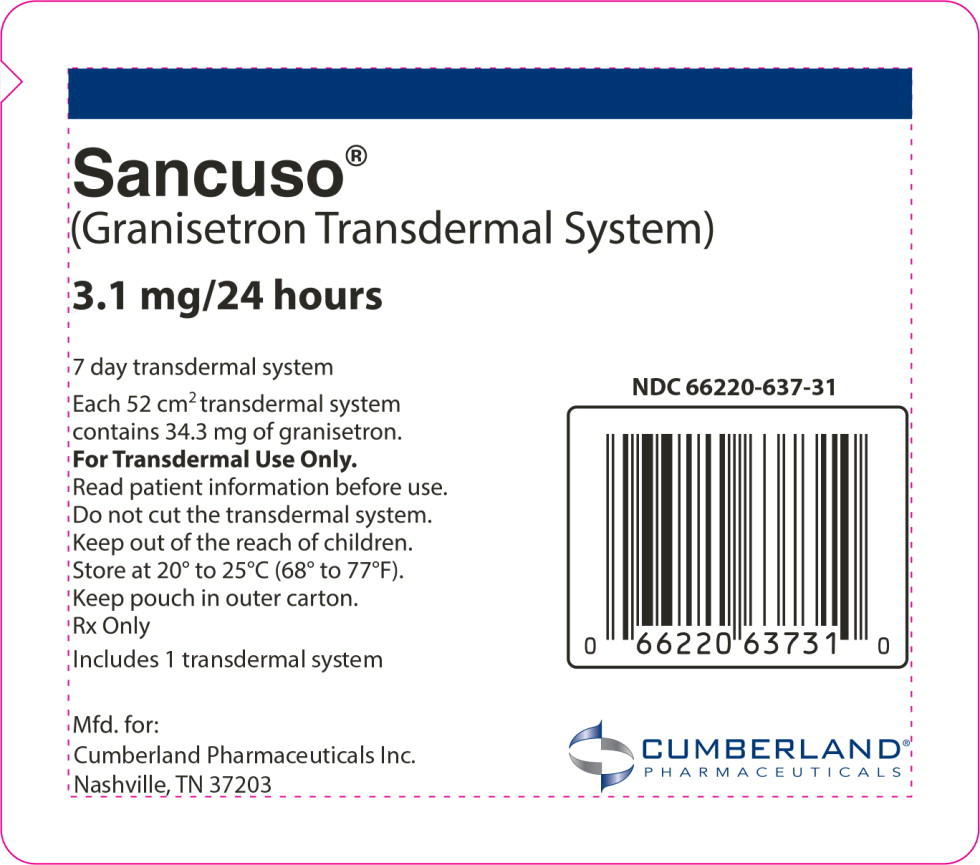
Principal Display Panel – 168 h Pouch Label Sancuso ® (Granisetron Transdermal System) 3.1 mg/24 hours NDC 66220-637-31 7 day transdermal system Each 52 cm 2 transdermal system contains 34.3 mg of granisetron. For Transdermal Use Only. Read patient information before use.
Do not cut the transdermal system. Keep out of the reach of children. Store at 20° to 25°C (68° to 77°F).
Keep pouch in outer carton. Rx Only Includes 1 transdermal system Mfd. for: Cumberland Pharmaceuticals Inc. Nashville, TN 37203 CUMBERLAND ® PHARMACEUTICALS Principal Display Panel – 168 h Pouch Label
Medicaid utilization by pack size
Medicare Part D spend CMS · PART D · 2026 (Q1)
About this NDC listing & data coverage
What data is (and isn’t) available for this NDC — tap to expand
| NDC identity (package / product / labeler codes) | ✓ Available |
| Labeler | ✓ Available |
| Product & package description | ✓ Available |
| Marketing category & status | ✓ Available |
| Active ingredient / dosage form / route | ✓ Available |
| FDA label (SPL via DailyMed) | ✓ Available |
| Package photos | ✓ Available |
| Inactive ingredients (structured) | — Not published for this NDC The labeler did not submit a structured excipient list, or no SPL is available. |
| NADAC pharmacy acquisition price (CMS) | — Not published for this NDC CMS publishes NADAC only for NDCs reported in its retail-pharmacy survey. |
| Orange Book / therapeutic-equivalence data | — Not published for this NDC Applies only to products approved under an NDA/ANDA; many listings are out of scope. |
| HCPCS J-code billing crosswalk | — Not published for this NDC Most self-administered / retail products have no J-code — that is normal. |
| Medicaid utilization (CMS SDUD) | — Not published for this NDC CMS reports utilization only for NDCs with Medicaid claims above its privacy threshold. |