
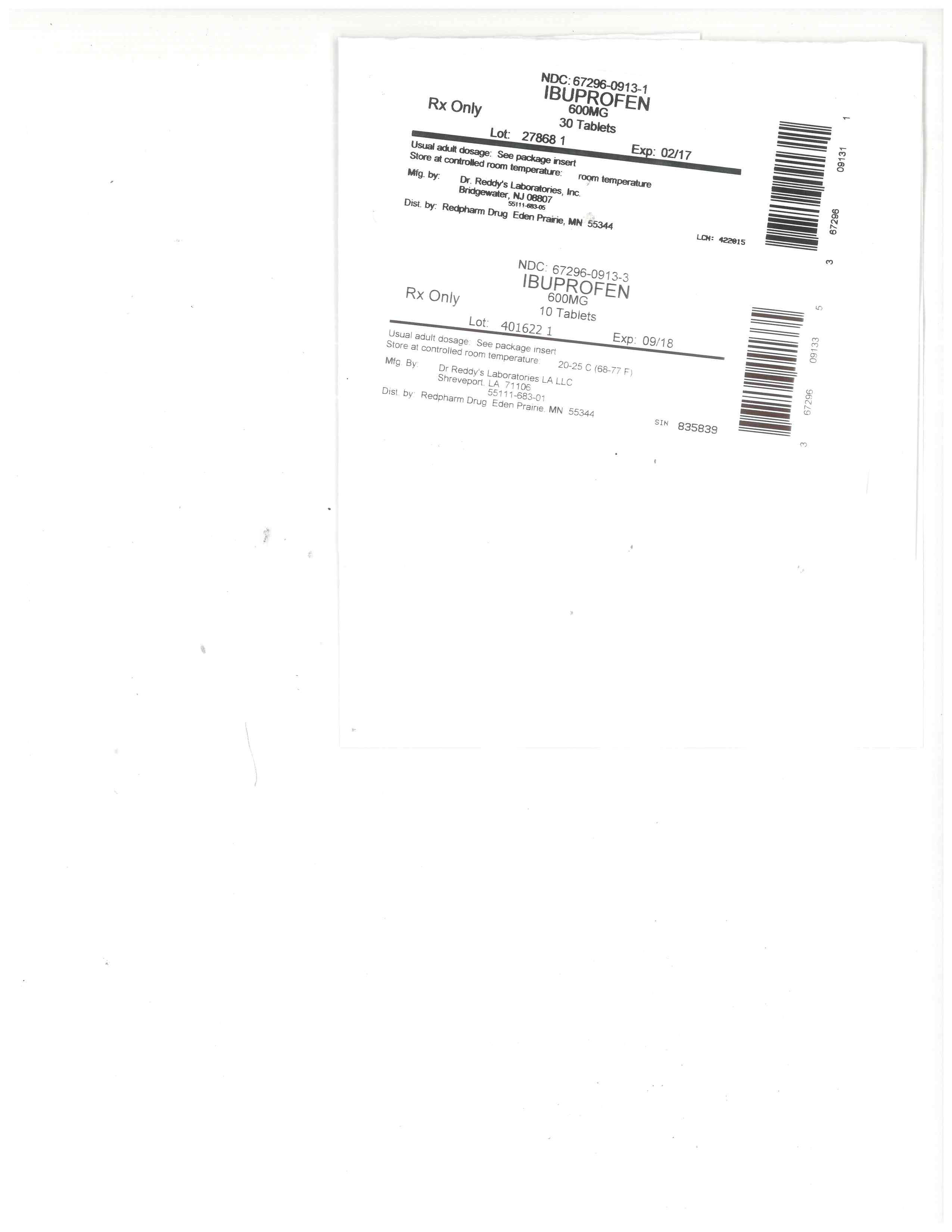
IBU 600 mg Tablet, 30-count
🆔 Identity & classification
Where does this data come from?
🏷️ RxNorm drug class
This medicine belongs to the Nonsteroidal Anti-inflammatory Drug class.
Where does this data come from?
🏭 Manufacturer & labeler
Where does this data come from?
🩺 Clinical
- It does a lot more than just kill pain. Ibuprofen is an anti-inflammatory drug, so it relieves pain, reduces swelling and inflammation, and brings down fever. Over-the-counter prod...
- What's ibuprofen actually used for — is it just a painkiller?
- Yes, it really does help. Ibuprofen can irritate the stomach lining, so taking it with food or a glass of milk significantly reduces the chance of nausea or stomach upset. You don'...
- Should I take ibuprofen with food? Does it really matter?
Patient education
Supplement & herbal interactions
Some supplements/herbs that may interact with Ibuprofen — tap one for details:
Ibuprofen may be associated with lower levels of 1 nutrient — worth a chat with your pharmacist, not a cause for alarm.
Where does this data come from?
Ask a licensed pharmacist directly — free, answered by our team.
💊 What it looks like
Where does this data come from?
🧪 Inactive Ingredients / Excipients
Inactive ingredients, also called excipients, are components of the drug product other than the active ingredient. They may include fillers, dyes, coatings, preservatives, flavors, or other formulation ingredients.
💡 Tap an ingredient (hover on desktop) to see what it is and why it’s used.
-
UNII R12CBM0EIZ
A natural wax derived from a Brazilian palm tree, used as a coating and polish on tablets and capsules. It creates a smooth, shiny finish that protects the medicine and improves appearance.
-
UNII OP1R32D61U
Microcrystalline cellulose is a purified form of cellulose, a natural fiber from plant sources. It acts as a binder and filler in tablets and capsules, helping hold ingredients together and give the medicine its shape and size.
-
UNII M28OL1HH48
Croscarmellose sodium is a plant-based substance derived from cellulose. It acts as a disintegrant, helping tablets and capsules break down quickly in the digestive system so the medicine can be absorbed.
-
UNII 3NXW29V3WO
Hypromellose is a plant-based thickener made from cellulose. It's used in medicines as a binder to hold ingredients together, a coating for tablets, and a thickener for liquids.
-
UNII 70097M6I30
Magnesium stearate is a salt made from magnesium and stearic acid, a fatty substance. It's used in tablets and capsules as a lubricant and glidant to help ingredients flow smoothly during manufacturing and prevent sticking.
-
UNII VH2XOU12IE
Polydextrose is a synthetic polymer made from dextrose (sugar) that acts as a bulking agent and filler in medicines. It helps give tablets and capsules proper volume and texture while often adding slight sweetness.
-
UNII 3WJQ0SDW1A
Polyethylene glycol is a synthetic liquid or solid polymer used in medicines as a solvent, lubricant, and humectant. It helps dissolve active ingredients, reduces friction during manufacturing, and retains moisture in the final product.
-
UNII 6OZP39ZG8H
Polysorbate 80 is a synthetic emulsifier derived from sorbitol and oleic acid. It helps mix oil and water-based ingredients together in medications and improves how the product disperses in the body.
-
UNII ETJ7Z6XBU4
Silicon dioxide is a naturally occurring mineral used as a glidant and anti-caking agent. It helps powder ingredients flow smoothly and prevents clumping during manufacturing and storage.
-
UNII 15FIX9V2JP
Titanium dioxide is a bright white mineral powder commonly used as a colorant and opacifying agent. It makes pills and tablets white or lighter in color and helps make coatings non-transparent.
10 inactive ingredients listed in the exact product block matched to this NDC.
Where does this data come from?
ingredient classCode="IACT" elements from the exact product block matched by this NDC. Label-section narrative from DailyMed / the openFDA label index is shown separately when available.Inactive ingredient FAQ
Are inactive ingredients the same for every manufacturer?
Why might an inactive ingredient be missing?
Can inactive ingredients matter?
💲 Pricing
A drug doesn't have one price. Each row is a different public payment system, and none is what you'd pay at the counter — that depends on your insurance. The ⓘ on each row explains what it measures.
| Price system | Per each | Per package |
|---|---|---|
| Retail pharmacies payNADAC · weekly | Not in the retail survey — common for institutional, discontinued, or low-volume packs. | |
| Medicaid paysCMS SDUD · 12 mo | No recent Medicaid claims on file for this NDC — rare and low-volume NDCs are suppressed in the public data. | |
| Medicare drug plans payPart D · Q2 2026 | $0.1334 | $4.00 / 30 tablets |
Where does this data come from?
🔁 Therapeutic equivalents
| Product | Labeler | Pack | NADAC/unit | TE | Status | Price vs. this |
|---|---|---|---|---|---|---|
| Ibuprofen 600 mg 42543-0965-07 | Strides | 500 tablets | $0.044 | AB | Discontinued | — |
| Ibuprofen 600 mg 00904-5854-40 | Major | 500 tablets | $0.047 | AB | Availability likely | — |
| Ibuprofen 600 mg 00904-7588-40 | Major | 500 tablets | $0.047 | AB | Availability likely | — |
| Ibuprofen 600 mg 49483-0603-01 | TIME | 100 tablets | $0.047 | AB | Availability likely | — |
| Ibu 600 mg 55111-0683-01 | Dr. | 100 tablets | $0.047 | AB | Availability likely | — |
| Ibuprofen 600 mg 59651-0361-01 | Aurobindo | 100 tablets | $0.047 | — | Availability likely | — |
| Ibuprofen 600 mg 60687-0457-01 | American | 100 tablets | $0.047 | AB | Availability likely | — |
| Ibuprofen 600 mg 62135-0401-12 | Chartwell | 120 tablets | $0.047 | — | Availability likely | — |
| Ibuprofen 600 mg 64380-0808-06 | Strides | 100 tablets | $0.047 | AB | Availability likely | — |
| Ibuprofen 600 mg 67877-0320-01 | Ascend | 100 tablets | $0.047 | AB | Availability likely | — |
| Ibuprofen 600 mg 68645-0562-59 | Legacy | 60 tablets | $0.047 | AB | Availability likely | — |
| Ibuprofen 600 mg 69367-0395-01 | Westminster | 100 tablets | $0.047 | — | Availability likely | — |
| Ibuprofen 600 mg 76282-0713-10 | EXELAN | 100 tablets | $0.047 | AB | Availability likely | — |
| Ibuprofen 600 mg 71921-0181-01 | Florida | 100 tablets | $0.052 | AB | FDA listed | — |
| Ibuprofen 600 mg 69238-1102-05 | Amneal | 500 tablets | $0.059 | AB | FDA listed | — |
| Ibuprofen 600 mg 00615-8310-39 | NCS | 30 tablets | — | AB | Discontinued | — |
| Ibuprofen 600 mg 11788-0009-00 | AiPing | 22600 tablets | — | — | Discontinued | — |
| Ibuprofen 600 mg 25000-0122-03 | MARKSANS | 30 tablets | — | AB | FDA listed | — |
| Ibuprofen 600 mg 42708-0097-30 | QPharma, | 30 tablets | — | AB | FDA listed | — |
| Ibuprofen 600 mg 42708-0175-30 | QPharma | 30 tablets | — | AB | FDA listed | — |
| Ibuprofen 600 mg 43063-0867-01 | PD-Rx | 100 tablets | — | AB | FDA listed | — |
| Ibuprofen 600 mg 50090-2625-00 | A-S | 10 tablets | — | AB | FDA listed | — |
| Ibuprofen 600 mg 50090-2626-00 | A-S | 15 tablets | — | AB | FDA listed | — |
| Ibuprofen 600 mg 50090-2629-00 | A-S | 30 tablets | — | AB | FDA listed | — |
| Ibuprofen 600 mg 50090-5433-01 | A-S | 21 tablets | — | AB | FDA listed | — |
| Ibuprofen 600 mg 50090-5435-00 | A-S | 10 tablets | — | AB | FDA listed | — |
| Ibuprofen 600 mg 50090-7286-00 | A-S | 15 tablets | — | — | FDA listed | — |
| Ibuprofen 600 mg 50090-7288-00 | A-S | 10 tablets | — | — | FDA listed | — |
| Ibuprofen 600 mg 50090-7321-00 | A-S | 30 tablets | — | — | FDA listed | — |
| Ibuprofen 600 mg 51407-0840-01 | Golden | 100 tablets | — | AB | FDA listed | — |
| Ibuprofen 600 mg 51655-0042-20 | Northwind | 20 tablets | — | AB | FDA listed | — |
| Ibuprofen 600 mg 51655-0474-20 | Northwind | 20 tablets | — | AB | FDA listed | — |
| Ibuprofen 600 mg 53746-0132-01 | Amneal | 100 tablets | — | AB | FDA listed | — |
| Ibuprofen 600 mg 53746-0465-01 | Amneal | 100 tablets | — | AB | FDA listed | — |
| Ibuprofen 600 mg 54348-0830-00 | PharmPak, | 1 tablet | — | AB | FDA listed | — |
| Ibuprofen 600 mg 55154-0741-00 | Cardinal | 1 tablet | — | AB | FDA listed | — |
| Ibupak 59088-0756-00 | PureTek | 100 tablets | — | — | FDA listed | — |
| Ibuprofen 600 mg 60760-0597-20 | ST. | 20 tablets | — | AB | FDA listed | — |
| Ibuprofen 600 mg 60760-0603-20 | St. | 20 tablets | — | AB | Discontinued | — |
| Ibuprofen 600 mg 62207-0355-42 | Granules | 50 tablets | — | AB | FDA listed | — |
| ibuprofen 600 mg 63187-0451-30 | Proficient | 30 tablets | — | AB | FDA listed | — |
| Ibuprofen 600 mg 63187-0527-20 | Proficient | 20 tablets | — | AB | FDA listed | — |
| Ibu 600 mg 63187-0614-15 | Proficient | 15 tablets | — | AB | FDA listed | — |
| Ibuprofen 600 mg 63187-0980-15 | Proficient | 15 tablets | — | AB | FDA listed | — |
| Ibuprofen 600 mg 65162-0465-03 | Amneal | 30 tablets | — | AB | FDA listed | — |
| Ibu 600 mg 66267-0964-00 | NuCare | 100 tablets | — | AB | FDA listed | — |
| Ibuprofen 600 mg 67046-1646-03 | Coupler | 30 tablets | — | — | FDA listed | — |
| Ibu 600 mgthis 67296-0913-01 | RedPharm | 30 tablets | — | AB | FDA listed | — |
| Ibuprofen 600 mg 67296-2181-01 | Redpharm | 10 tablets | — | — | FDA listed | — |
| Ibuprofen 600 mg 68071-2947-01 | NuCare | 21 tablets | — | AB | FDA listed | — |
| Ibuprofen 600 mg 68071-2998-06 | NuCare | 6 tablets | — | AB | FDA listed | — |
| Ibuprofen 600 mg 68071-3679-01 | NuCare | 100 tablets | — | — | FDA listed | — |
| Ibuprofen 600 mg 68071-3778-02 | NuCare | 20 tablets | — | — | FDA listed | — |
| Ibuprofen 600 mg 68071-3849-04 | NuCare | 4 tablets | — | — | FDA listed | — |
| Ibuprofen 600 mg 68071-4009-01 | NuCare | 21 tablets | — | AB | FDA listed | — |
| Ibuprofen 600 mg 68071-4243-01 | NuCare | 100 tablets | — | AB | FDA listed | — |
| Ibuprofen 600 mg 68071-4459-06 | NuCare | 6 tablets | — | AB | FDA listed | — |
| Ibuprofen 600 mg 68071-4887-03 | NuCare | 30 tablets | — | AB | FDA listed | — |
| Ibuprofen 600 mg 68071-4968-03 | NuCare | 30 tablets | — | AB | FDA listed | — |
| Ibuprofen 600 mg 68071-5066-04 | NuCare | 4 tablets | — | AB | FDA listed | — |
| Ibuprofen 600 mg 68788-8354-01 | Preferred | 100 tablets | — | AB | FDA listed | — |
| Ibuprofen 600 mg 68788-8531-01 | Preferred | 100 tablets | — | AB | FDA listed | — |
| Ibuprofen 600 mg 68788-8754-01 | Preferred | 100 tablets | — | — | FDA listed | — |
| Ibuprofen 600 mg 68788-9111-01 | Preferred | 100 tablets | — | AB | FDA listed | — |
| Ibuprofen 600 mg 69367-0448-01 | Westminster | 100 tablets | — | AB | FDA listed | — |
| Ibuprofen 600 mg 70010-0067-88 | Granules | 15000 tablets | — | AB | FDA listed | — |
| Ibuprofen 600 mg 70518-0761-00 | REMEDYREPACK | 20 tablets | — | AB | FDA listed | — |
| Ibuprofen 600 mg 70518-1364-01 | REMEDYREPACK | 30 tablets | — | AB | Discontinued | — |
| Ibuprofen 600 mg 70518-2902-00 | REMEDYREPACK | 30 tablets | — | — | Discontinued | — |
| Ibuprofen 600 mg 70518-3313-00 | REMEDYREPACK | 30 tablets | — | AB | FDA listed | — |
| Ibuprofen 600 mg 70518-4341-00 | REMEDYREPACK | 30 tablets | — | AB | FDA listed | — |
| Ibuprofen 600 mg 71205-0522-06 | Proficient | 6 tablets | — | AB | FDA listed | — |
| Ibuprofen 600 mg 71335-1207-00 | Bryant | 21 tablets | — | AB | Discontinued | — |
| Ibuprofen 600 mg 71335-1218-00 | Bryant | 21 tablets | — | AB | FDA listed | — |
| Ibuprofen 600 mg 71335-1503-00 | Bryant | 21 tablets | — | AB | FDA listed | — |
| Ibuprofen 600 mg 71335-2683-00 | Bryant | 21 tablets | — | AB | FDA listed | — |
| Ibuprofen 600 mg 71335-3121-00 | Bryant | 21 tablets | — | — | FDA listed | — |
| Ibuprofen 600 mg 71610-0222-60 | Aphena | 90 tablets | — | AB | FDA listed | — |
| Ibu 600 mg 71610-0501-60 | Aphena | 90 tablets | — | AB | FDA listed | — |
| Ibuprofen 600 mg 71610-0532-60 | Aphena | 90 tablets | — | AB | FDA listed | — |
| Ibu 600 mg 71610-0547-60 | Aphena | 90 tablets | — | AB | FDA listed | — |
| Ibuprofen 600 mg 71610-0629-60 | Aphena | 90 tablets | — | AB | FDA listed | — |
| Ibuprofen 600 mg 71610-0891-53 | Aphena | 60 tablets | — | AB | FDA listed | — |
| Ibuprofen 600 mg 71610-0895-60 | Aphena | 90 tablets | — | AB | FDA listed | — |
| Ibuprofen 600 mg 71610-0902-53 | Aphena | 60 tablets | — | — | FDA listed | — |
| Ibuprofen 600 mg 71610-0968-53 | Aphena | 60 tablets | — | AB | FDA listed | — |
| Ibuprofen 600 mg 72189-0231-21 | DIRECT | 21 tablets | — | AB | FDA listed | — |
| Ibuprofen 600 mg 72189-0643-21 | Direct_Rx | 21 tablets | — | AB | FDA listed | — |
| Ibuprofen 600 mg 72603-0909-01 | NorthStar | 500 tablets | — | AB | FDA listed | — |
| Ibuprofen 600 mg 72789-0187-30 | PD-Rx | 30 tablets | — | AB | FDA listed | — |
| Ibuprofen 600 mg 72789-0212-06 | PD-Rx | 6 tablets | — | AB | FDA listed | — |
| Ibuprofen 600 mg 72789-0363-01 | PD-Rx | 100 tablets | — | AB | FDA listed | — |
| ibuprofen 600 mg 73086-0211-01 | SKYA | 100 tablets | — | AB | FDA listed | — |
| Ibuprofen 600 mg 75907-0330-91 | Dr. | 2000 tablets | — | — | FDA listed | — |
| Ibuprofen 600 mg 76420-0576-01 | Asclemed | 100 tablets | — | AB | FDA listed | — |
| Ibuprofen 600 mg 76420-0847-01 | Asclemed | 100 tablets | — | — | FDA listed | — |
| Ibuprofen 600 mg 80425-0132-01 | Advanced | 30 tablets | — | AB | FDA listed | — |
| Ibuprofen 600 mg 80425-0154-01 | Advanced | 30 tablets | — | AB | FDA listed | — |
| Ibuprofen 600 mg 80425-0424-01 | Advanced | 30 tablets | — | AB | FDA listed | — |
| Ibuprofen 600 mg 80425-0426-01 | Advanced | 30 tablets | — | AB | FDA listed | — |
| Ibuprofen 600 mg 80425-0553-01 | Advanced | 30 tablets | — | — | FDA listed | — |
| Ibuprofen 600 mg 83008-0066-30 | Quality | 30 tablets | — | AB | FDA listed | — |
| Ibuprofen 600 mg 83615-0001-03 | Bryant | 30 tablets | — | AB | FDA listed | — |
| Ibuprofen 600 mg 87441-0044-01 | Unit | 30 tablets | — | AB | FDA listed | — |
Where does this data come from?
⏳ Availability & generic status
This product is an FDA-approved generic. Other versions of the same drug are listed under Therapeutic equivalents, least expensive first.
Where does this data come from?
📊 Medicare Part D spend CMS · PART D · 2026 (Q1)
📦 Packaging — all sizes for this product
| Package NDC | Description | Marketing start | Status |
|---|---|---|---|
| 67296-0913-01 You're viewing this | 30 TABLET in 1 BOTTLE (67296-0913-1) | 2008-11-20 | Active |
| 67296-0913-03 | 10 TABLET in 1 BOTTLE (67296-0913-3) | 2008-11-20 | Active |
| 67296-0913-09 | 90 TABLET in 1 BOTTLE (67296-0913-9) | 2008-11-20 | Active |
You're viewing one of 3 pack sizes for this product.
Pack size FAQ
What quantity is in NDC 67296-0913-01?
What is the difference between NDC 67296-0913-01 and NDC 67296-0913-03?
What NDC number is used to bill for this package of IBU 600 mg Tablet?
🧭 About this NDC listing & data coverage
What data is (and isn’t) available for this NDC — tap to expand
| NDC identity (package / product / labeler codes) | ✓ Available |
| Labeler | ✓ Available |
| Product & package description | ✓ Available |
| Marketing category & status | ✓ Available |
| Active ingredient / dosage form / route | ✓ Available |
| FDA label (SPL via DailyMed) | ✓ Available |
| Package photos | ✓ Available |
| Inactive ingredients (structured) | ✓ Available |
| NADAC pharmacy acquisition price (CMS) | — Not published for this NDC CMS publishes NADAC only for NDCs reported in its retail-pharmacy survey. |
| Orange Book / therapeutic-equivalence data | ✓ Available |
| HCPCS J-code billing crosswalk | — Not published for this NDC Most self-administered / retail products have no J-code — that is normal. |
| Medicaid utilization (CMS SDUD) | — Not published for this NDC CMS reports utilization only for NDCs with Medicaid claims above its privacy threshold. |
Questions about this listing
Why is there no price listed?
Is the NDC printed on the package the same as the 11-digit billing NDC?
What do the three segments of this NDC mean?
Is this package still being marketed?
Does this product come in other package sizes?
Who lists this product with the FDA?
Do I need a prescription for this product?
Where does this data come from?
📄 Full prescribing information FDA SPL
🚨 Boxed Warning ▾
BOXED WARNING BOXED WARNING Cardiovascular Thrombotic Events Nonsteroidal anti-inflammatory drugs (NSAIDs) cause an increased risk of serious cardiovascular thrombotic events, including myocardial infarction and stroke, which can be fatal. This risk may occur early in treatment and may increase with duration of use. (See WARNINGS and PRECAUTIONS).
IBU tablets are contraindicated in the setting of coronary artery bypass graft (CABG) surgery (See CONTRAINDICATIONS and WARNINGS). Gastrointestinal Risk NSAIDS cause an increased risk of serious gastrointestinaladverse events including bleeding, ulceration, and perforationof the stomach or intestines, which can be fatal. These eventscan occur at any time during use and without warning symptoms.Elderly patients are at greater risk for serious gastrointestinalevents.
(See WARNINGS).
🎯 Indications and Usage ▾
INDICATIONS AND USAGE Carefully consider the potential benefits and risks of Ibuprofentablets and other treatment options before deciding to use Ibuprofen.Use the lowest effective dose for the shortest duration consistent withindividual patient treatment goals (see WARNINGS). IBU tablets are indicated for relief of the signs and symptoms of rheumatoid arthritis and osteoarthritis. IBU tablets are indicated for relief of mild to moderate pain.
IBU tablets are also indicated for the treatment of primary dysmenorrhea. Controlled clinical trials to establish the safety and effectiveness of IBU tablets in children have not been conducted.
⏱️ Dosage and Administration ▾
DOSAGE AND ADMINISTRATION Carefully consider the potential benefits and risks of IBU tabletsand other treatment options before deciding to use IBU tablets. Usethe lowest effective dose for the shortest duration consistent withindividual patient treatment goals (see WARNINGS). After observing the response to initial therapy with IBU tablets, thedose and frequency should be adjusted to suit an individual patient’sneeds.Do not exceed 3200 mg total daily dose.
If gastrointestinal complaintsoccur, administer IBU tablets with meals or milk. Rheumatoid arthritis and osteoarthritis, including flare-ups ofchronic disease: Suggested Dosage: 1200 mg-3200 mg daily (400 mg, 600 mg or800 mg tid or qid). Individual patients may show a better responseto 3200 mg daily, as compared with 2400 mg, although in well-controlledclinical trials patients on 3200 mg did not show a better meanresponse in terms of efficacy.
Therefore, when treating patients with3200 mg/day, the physician should observe sufficient increased clinicalbenefits to offset potential increased risk.The dose should be tailored to each patient, and may be loweredor raised depending on the severity of symptoms either at time of initiatingdrug therapy or as the patient responds or fails to respond.In general, patients with rheumatoid arthritis seem to require higherdoses of IBU tablets than do patients with osteoarthritis. The smallest dose of IBU tablets that yields acceptable controlshould be employed.
A linear blood level dose-response relationshipexists with single doses up to 800 mg (See CLINICAL PHARMACOLOGYfor effects of food on rate of absorption). The availability of three tablet strengths facilitates dosage adjustment.In chronic conditions, a therapeutic response to therapy with IBU tablets is sometimes seen in a few days to a week but most often isobserved by two weeks. After a satisfactory response has beenachieved, the patient’s dose should be reviewed and adjusted asrequired.
Mild to moderate pain: 400 mg every 4 to 6 hours as necessaryfor relief of pain.In controlled analgesic clinical trials, doses of Ibuprofen tabletsgreater than 400 mg were no more effective than the 400 mg dose. Dysmenorrhea: For the treatment of dysmenorrhea, beginningwith the earliest onset of such pain, IBU tablets should be given in adose of 400 mg every 4 hours as necessary for the relief of pain.
⛔ Contraindications ▾
CONTRAINDICATIONS IBU tablets are contraindicated in patients with known hypersensitivityto ibuprofen. IBU tablets should not be given to patients who have experienced asthma, urticaria, or allergic-type reactions after taking aspirin orother NSAIDs. Severe, rarely fatal, anaphylactic-like reactions to NSAIDs have been reported in such patients (see WARNINGS, ANAPHYLACTOID REACTIONS, and PRECAUTIONS, PREEXISTING ASTHMA).
IBU tablets are contraindicated in the setting of coronary artery bypass graft (CABG) surgery(see WARNINGS).
⚠️ Warnings ▾
WARNINGS CARDIOVASCULAR EFFECTS Cardiovascular Thrombotic Events Clinical trials of several COX-2 selective and nonselective NSAIDs of up to three years duration have shown an increased risk of serious cardiovascular (CV) thrombotic events, including myocardial infarction (MI), and stroke, which can be fatal. Based on available data, it is unclear that the risk for CV thrombotic events is similar for all NSAIDs.The relative increase in serious CV thrombotic events over baseline conferred by NSAID use appears to be similar in those with and without known CV disease or risk factors for CV disease.
However, patients with known CV disease or risk factors had a higher absolute incidence of excess serious CV thrombotic events, due to their increased baseline rate. Some observational studies found that this increased risk of serious CV thrombotic events began as early as the first weeks of treatment. The increase in CV thrombotic risk has been observed most consistently at higher doses.
To minimize the potential risk for an adverse CV event in NSAID-treated patients, use the lowest effective dose for the shortest duration possible. Physicians and patients should remain alert for the development of such events, throughout the entire treatment course, even in the absence of previous CV symptoms. Patients should be informed about the symptoms of serious CV events and the steps to take if they occur.
There is no consistent evidence that concurrent use of aspirin mitigates the increased risk of serious CV thrombotic events associated with NSAID use. The concurrent use of aspirin and an NSAID, such as ibuprofen, increases the risk of serious gastrointestinal (GI) events (see WARNINGS). Status Post Coronary Bypass Graft (CABG) Surgery Two large, controlled clinical trials of a COX-2 selective NSAID for the treatment of pain in the first 10-14 days following CABG surgery found an increased incidence of myocardial infarction and stroke.
NSAIDs are contraindicated in the setting of CABG (see CONTRAINDICATIONS). Post-MI Patients Observational studies conducted in the Danish National Registry have demonstrated that patients treated with NSAIDs in the post-MI period were at increased risk of reinfarction, CV-related death, and all-cause mortality beginning in the first week of treatment. In this same cohort, the incidence of death in the first year post MI was 20 per 100 person years in NSAID-treated patients compared to 12 per 100 person years in non-NSAID exposed patients.
Although the absolute rate of death declined somewhat after the first year post-MI, the increased relative risk of death in NSAID users persisted over at least the next four years to follow-up. Avoid the use of Ibuprofen in patients with a recent MI unless the benefits are expected to outweigh the risk of recurrent CV thrombotic events. If Ibuprofen is used in patients with a recent MI, monitor patients for signs of cardiac ischemia.
Hypertension NSAIDs including IBU tablets, can lead to onset of new hypertensionor worsening of preexisting hypertension, either of which maycontribute to the increased incidence of CV events. Patients takingthiazides or loop diuretics may have impaired response to these therapieswhen taking NSAIDs. NSAIDs, including IBU tablets, should beused with caution in patients with hypertension.
Blood pressure (BP)should be monitored closely during the initiation of NSAID treatmentand throughout the course of therapy. Heart Failure and Edema The Coxib and traditional NSAID Trialists’ Collaboration meta-analysis of randomized controlled trails demonstrated an approximately two-fold increase in hospitalizations for heart failure in COX-2 selective-treated patients and nonselective NSAID-treated patients compared to placebo-treated patients. In a Danish National Registry study of patients with heart failure, NSAID use increased the risk of MI, hospitalization for heart failure, and death.
Additionally, fluid retention and edema have been observed in some pat…
🤒 Adverse Reactions ▾
ADVERSE REACTIONS The most frequent type of adverse reaction occurring withIbuprofen tablets is gastrointestinal. In controlled clinical trials thepercentage of patients reporting one or more gastrointestinal complaintsranged from 4% to 16%. In controlled studies when Ibuprofen tablets were compared toaspirin and indomethacin in equally effective doses, the overall incidenceof gastrointestinal complaints was about half that seen in eitherthe aspirin- or indomethacin-treated patients.
Adverse reactions observed during controlled clinical trials at anincidence greater than 1% are listed in the table. Those reactions listedin Column one encompass observations in approximately 3,000patients. More than 500 of these patients were treated for periods ofat least 54 weeks.
Still other reactions occurring less frequently than 1 in 100 werereported in controlled clinical trials and from marketing experience.These reactions have been divided into two categories: Column twoof the table lists reactions with therapy with Ibuprofen tablets wherethe probability of a causal relationship exists: for the reactions inColumn three, a causal relationship with Ibuprofen tablets has notbeen established. Reported side effects were higher at doses of 3200 mg/day thanat doses of 2400 mg or less per day in clinical trials of patients withrheumatoid arthritis.
The increases in incidence were slight and stillwithin the ranges reported in the table
🆘 Overdosage ▾
OVERDOSAGE Approximately 11⁄2 hours after the reported ingestion of from 7 to10 Ibuprofen tablets (400 mg), a 19-month old child weighing 12 kgwas seen in the hospital emergency room, apneic and cyanotic,responding only to painful stimuli. This type of stimulus, however,was sufficient to induce respiration. Oxygen and parenteral fluidswere given; a greenish-yellow fluid was aspirated from the stomachwith no evidence to indicate the presence of ibuprofen.
Two hoursafter ingestion the child’s condition seemed stable; she still respondedonly to painful stimuli and continued to have periods of apnea lastingfrom 5 to 10 seconds. She was admitted to intensive care andsodium bicarbonate was administered as well as infusions of dextroseand normal saline. By four hours post-ingestion she could bearoused easily, sit by herself and respond to spoken commands.Blood level of ibuprofen was 102.9 μg/mL approximately 81⁄2 hoursafter accidental ingestion.
At 12 hours she appeared to be completelyrecovered. In two other reported cases where children (each weighingapproximately 10 kg) accidentally, acutely ingested approximately120 mg/kg, there were no signs of acute intoxication or late sequelae.Blood level in one child 90 minutes after ingestion was 700 μg/mL —about 10 times the peak levels seen in absorption-excretion studies.A 19-year old male who had taken 8,000 mg of ibuprofen over aperiod of a few hours complained of dizziness, and nystagmus wasnoted. After hospitalization, parenteral hydration and three days bedrest, he recovered with no reported sequelae.
In cases of acute overdosage, the stomach should be emptied byvomiting or lavage, though little drug will likely be recovered if morethan an hour has elapsed since ingestion. Because the drug is acidicand is excreted in the urine, it is theoretically beneficial to administeralkali and induce diuresis. In addition to supportive measures, the useof oral activated charcoal may help to reduce the absorption andreabsorption of Ibuprofen tablets.
🧬 Clinical Pharmacology ▾
CLINICAL PHARMACOLOGY IBU tablets contain ibuprofen which possesses analgesic andantipyretic activities. Its mode of action, like that of other NSAIDs, isnot completely understood, but may be related to prostaglandin synthetaseinhibition. In clinical studies in patients with rheumatoid arthritis andosteoarthritis, Ibuprofen tablets have been shown to be comparableto aspirin in controlling pain and inflammation and to be associatedwith a statistically significant reduction in the milder gastrointestinalside effects (see ADVERSE REACTIONS).
Ibuprofen may be well toleratedin some patients who have had gastrointestinal side effectswith aspirin, but these patients when treated with IBU tablets shouldbe carefully followed for signs and symptoms of gastrointestinalulceration and bleeding. Although it is not definitely known whetheribuprofen causes less peptic ulceration than aspirin, in one studyinvolving 885 patients with rheumatoid arthritis treated for up to oneyear, there were no reports of gastric ulceration with ibuprofenwhereas frank ulceration was reported in 13 patients in the aspiringroup (statistically significant p<.001).
Gastroscopic studies at varying doses show an increased tendencytoward gastric irritation at higher doses. However, at comparabledoses, gastric irritation is approximately half that seen with aspirin.Studies using 51Cr-tagged red cells indicate that fecal blood lossassociated with Ibuprofen tablets in doses up to 2400 mg daily didnot exceed the normal range, and was significantly less than thatseen in aspirin-treated patients. In clinical studies in patients with rheumatoid arthritis, Ibuprofenhas been shown to be comparable to indomethacin in controlling thesigns and symptoms of disease activity and to be associated with astatistically significant reduction of the milder gastrointestinal (see ADVERSE REACTIONS) and CNS side effects.
Ibuprofen may be used in combination with gold salts and/or corticosteroids. Controlled studies have demonstrated that Ibuprofen is a more effective analgesic than propoxyphene for the relief of episiotomy pain, pain following dental extraction procedures, and for the relief ofthe symptoms of primary dysmenorrhea. In patients with primary dysmenorrhea, Ibuprofen has been shown to reduce elevated levels of prostaglandin activity in the menstrualfluid and to reduce resting and active intrauterine pressure, as well asthe frequency of uterine contractions.
The probable mechanism ofaction is to inhibit prostaglandin synthesis rather than simply to provide analgesia. The ibuprofen in IBU tablets is rapidly absorbed. Peak serum ibuprofen levels are generally attained one to two hours after administration.With single doses up to 800 mg, a linear relationship exists between amount of drug administered and the integrated area underthe serum drug concentration vs time curve.
Above 800 mg, however,the area under the curve increases less than proportional to increases in dose. There is no evidence of drug accumulation or enzyme induction. The administration of Ibuprofen tablets either under fasting conditions or immediately before meals yields quite similar serum ibuprofen concentration-time profiles.
When Ibuprofen is administered immediately after a meal, there is a reduction in the rate of absorption but no appreciable decrease in the extent of absorption.The bioavailability of the drug is minimally altered by the presence of food. A bioavailability study has shown that there was no interference with the absorption of ibuprofen when given in conjunction with anantacid containing both aluminum hydroxide and magnesium hydroxide. Ibuprofen is rapidly metabolized and eliminated in the urine.
The excretion of ibuprofen is virtually complete 24 hours after the last dose. The serum half-life is 1.8 to 2.0 hours. Studies have shown that following ingestion of the drug, 45% to79% of the dose was recovered in the urine within 24 hours as metabolite A (25%), (+)-2-[p-(2hydroxymethyl-propyl) phen…
📦 How Supplied / Storage and Handling ▾
HOW SUPPLIED IBU tablets are available in the following strengths, colors and sizes: 400 mg (white, oval, debossed 4I) Bottles of 90 NDC 55111-682-09 Bottles of 100 NDC 55111-682-01 Bottles of 500 NDC 55111-682-05 (PACKAGE NOT CHILD-RESISTANT) 600 mg (white, caplet, debossed 6I) Bottles of 30 NDC 55111-683-30 Bottles of 50 NDC 55111-683-50 Bottles of 90 NDC 55111-683-09 Bottles of 100 NDC 55111-683-01 Bottles of 500 NDC 55111-683-05 (PACKAGE NOT CHILD-RESISTANT) 800 mg (white, caplet, debossed 8I) Bottles of 30 NDC 55111-684-30 Bottles of 50 NDC 55111-684-50 Bottles of 60 NDC 55111-684-60 Bottles of 90 NDC 55111-684-09 Bottles of 100 NDC 55111-684-01 Bottles of 500 NDC 55111-684-05 (PACKAGE NOT CHILD-RESISTANT) Store at room temperature.
Avoid excessive heat 40°C (104°F). Manufactured by: Dr. Reddy’s Laboratories Louisiana, LLC Shreveport, LA 71106 USA Revised, July 2016
📋 Description ▾
DESCRIPTION IBU tablets contain the active ingredient ibuprofen, which is (±) -2 - (p - isobutylphenyl) propionic acid. Ibuprofen is a white powde rwith a melting point of 74-77° C and is very slightly soluble in water(<1 mg/mL) and readily soluble in organic solvents such as ethanol and acetone. The structural formula is represented below: [strucuture] IBU, a nonsteroidal anti-inflammatory drug (NSAID), is availablein 400 mg, 600 mg, and 800 mg tablets for oral administration.Inactive ingredients: carnauba wax, colloidal silicon dioxide,croscarmellose sodium, hypromellose, magnesium stearate, microcrystallinecellulose, polydextrose, polyethylene glycol, polysorbate,titanium dioxide.