
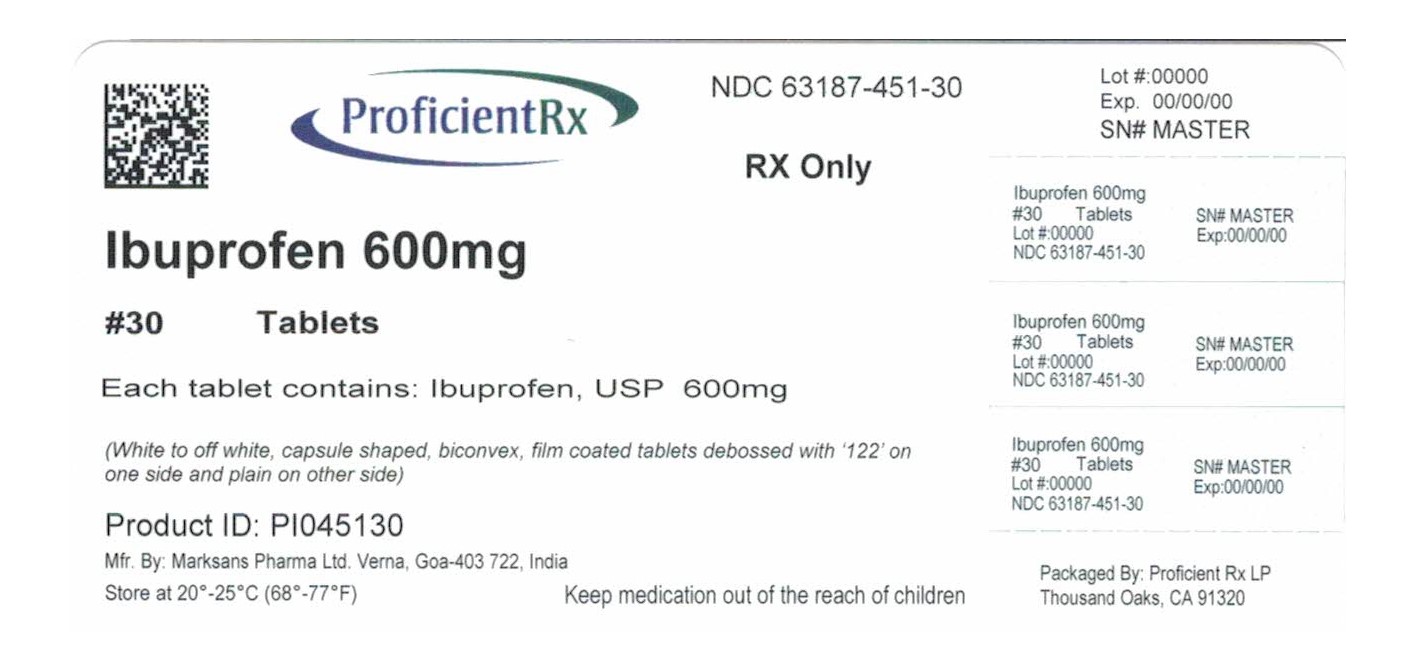
NDC 63187-0451-30: ibuprofen 600 mg Tablet, Bottle of 30
This is a package of 30 tablets of ibuprofen 600 mg Tablet from Proficient Rx LP, first listed with the FDA Feb 2012 and currently FDA-listed. It is the main listing for this product, which comes in 4 package sizes.
NDC database record
One package, one record: these facts belong to NDC 63187-451-30 alone.
- Record
- FDA NDC Directory package listing · Human prescription drug
- Code segments
- 63187 labeler · 451 product · 30 package
- Package marketed since
- Jan 1, 2019
- Sample package
- No — commercial package
- Listing certified through
- Dec 31, 2027
- Billing quantity
- 30 EA per package
- Barcode (UPC-A, from the NDC)
- 3 6318745130 1
- FDA record last changed
- Oct 8, 2026
Other active recalls for Ibuprofen (different manufacturers) — 5 · tap to view
Identity & classification
Regulatory identifiers FDA, NLM and CMS codes for this package
Drug-database identifiers Medi-Span GPI and First Databank GCN / HICL / AHFS classification
- GSN (GCN sequence number): 008349
- GCN: 35742
- GPI-14 (Medi-Span): 66100020000330
- HICL (First Databank): 003723
- AHFS class code: 28:08.04.04
- RxCUI (RxNorm): 197806
Where does this data come from?
- FDA openFDA NDC Directory · synced Nov 19, 2026
- FDA label on DailyMed · label index refreshed Nov 21, 2026
- RxNorm (NLM RxNav) · catalog refreshed Nov 19, 2026
- Medi-Span GPI (licensed)
- First Databank (licensed) · refreshed Nov 19, 2026
RxNorm drug class
This medicine belongs to the Nonsteroidal Anti-inflammatory Drug class.
Where does this data come from?
- RxClass (NLM) · catalog refreshed Nov 19, 2026
Clinical
Prescription ibuprofen is used to relieve pain, tenderness, swelling, and stiffness caused by osteoarthritis (arthritis caused by a breakdown of the lining of the joints) and rheumatoid arthritis (arthritis caused by swelling of the lining of the joints). It is also used to relieve mild to moderate pain, including menstrual pain (pain that happens before or during a menstrual period). Nonprescription ibuprofen is used to reduce fever and to relieve minor aches and pain from headaches, muscle aches, arthritis, menstrual periods, the common cold, toothaches, and backaches. Ibuprofen is in a clas...
Read the full MedlinePlus article ↗- Over the counter, it relieves minor aches and pains like headache, toothache, backache, muscle aches, and menstrual cramps, and it lowers fever. Prescription versions also treat ar...
- Take it with food or milk if your stomach gets upset. Use the lowest dose that works for the shortest time. Avoid alcohol and don’t combine it with other NSAIDs or aspirin unless y...
- How should I take ibuprofen to protect my stomach?
- Stop and get help if you have black or bloody stools, vomit blood, chest pain, trouble breathing, slurred speech, one-sided weakness, or a skin rash. Also check in if pain lasts mo...
Patient education
Drug interactions
Supplement & herbal interactions
Some supplements/herbs that may interact with Ibuprofen — tap one for details:
Ibuprofen may be associated with lower levels of 1 nutrient — worth a chat with your pharmacist, not a cause for alarm.
Where does this data come from?
- MedlinePlus (NLM) · refreshed Nov 19, 2026
- FDA label on DailyMed · label index refreshed Nov 21, 2026
Ask a licensed pharmacist directly — free, answered by our team.
Pricing
A drug doesn't have one price. Each row is a different public payment system, and none is what you'd pay at the counter — that depends on your insurance. The ⓘ on each row explains what it measures.
| Price system | Per each | Per package |
|---|---|---|
| Retail pharmacies payNADAC · weekly | Not in the retail survey — common for institutional, discontinued, or low-volume packs. | |
| Medicaid paysCMS SDUD · 12 mo | No recent Medicaid claims on file for this NDC — rare and low-volume NDCs are suppressed in the public data. | |
| Medicare drug plans payPart D · Q2 2026 | $0.1334 | $4.00 / 30 tablets |
Where does this data come from?
- CMS NADAC weekly file
- CMS ASP pricing files · refreshed Nov 20, 2026
- CMS Medicaid State Drug Utilization Data · refreshed Nov 19, 2026
- CMS Part D plan pricing files · refreshed Nov 24, 2026
- VA National Acquisition Center price file
Packaging — all sizes for this product
| Package NDC | Description | Marketing start | Marketing end | Status |
|---|---|---|---|---|
| 63187-0451-30 You're viewing this Main listing | 30 TABLET in 1 BOTTLE | 2019-01-01 | — | Active |
| 63187-0451-40 63187-451-40 | 40 TABLET in 1 BOTTLE | 2019-01-01 | — | Active |
| 63187-0451-60 63187-451-60 | 60 TABLET in 1 BOTTLE | 2019-01-01 | — | Active |
| 63187-0451-90 63187-451-90 | 90 TABLET in 1 BOTTLE | 2019-01-01 | — | Active |
You're viewing the smallest of 4 pack sizes for this product.
Pack size FAQ
What quantity is in this package?
How does this package differ from NDC 63187-0451-40?
What NDC number is used to bill for this package of ibuprofen 600 mg Tablet?
Therapeutic equivalents
| Product | Labeler | Pack | NADAC/unit | TE | Status | Price vs. this |
|---|---|---|---|---|---|---|
| Ibuprofen 600 mg 42543-0965-07 | Strides | 500 tablets | $0.044 | AB | Discontinued | — |
| Ibuprofen 600 mg 00904-5854-40 | Major | 500 tablets | $0.046 | AB | Availability likely | — |
| Ibuprofen 600 mg 00904-7588-40 | Major | 500 tablets | $0.046 | AB | Availability likely | — |
| Ibuprofen 600 mg 49483-0603-01 | TIME | 100 tablets | $0.046 | AB | Availability likely | — |
| Ibu 600 mg 55111-0683-01 | Dr. | 100 tablets | $0.046 | AB | Availability likely | — |
| Ibuprofen 600 mg 59651-0361-01 | Aurobindo | 100 tablets | $0.046 | — | Availability likely | — |
| Ibuprofen 600 mg 60687-0457-01 | American | 100 tablets | $0.046 | AB | Availability likely | — |
| Ibuprofen 600 mg 62135-0401-12 | Chartwell | 120 tablets | $0.046 | AB | Availability likely | — |
| Ibuprofen 600 mg 64380-0808-06 | Strides | 100 tablets | $0.046 | AB | Availability likely | — |
| Ibuprofen 600 mg 67877-0320-01 | Ascend | 100 tablets | $0.046 | AB | Availability likely | — |
| Ibuprofen 600 mg 68645-0562-59 | Legacy | 60 tablets | $0.046 | AB | Availability likely | — |
| Ibuprofen 600 mg 69367-0395-01 | Westminster | 100 tablets | $0.046 | AB | Availability likely | — |
| Ibuprofen 600 mg 69367-0448-01 | Westminster | 100 tablets | $0.046 | AB | Availability likely | — |
| Ibuprofen 600 mg 72603-0909-01 | NorthStar | 500 tablets | $0.046 | AB | Availability likely | — |
| Ibuprofen 600 mg 76282-0713-10 | EXELAN | 100 tablets | $0.046 | AB | Availability likely | — |
| Ibuprofen 600 mg 71921-0181-01 | Florida | 100 tablets | $0.050 | AB | FDA listed | — |
| Ibuprofen 600 mg 69238-1102-05 | Amneal | 500 tablets | $0.059 | AB | FDA listed | — |
| Ibuprofen 600 mg 00615-8310-39 | NCS | 30 tablets | — | AB | Discontinued | — |
| Ibuprofen 600 mg 11788-0009-00 | AiPing | 22600 tablets | — | AB | Discontinued | — |
| Ibuprofen 600 mg 25000-0122-03 | MARKSANS | 30 tablets | — | AB | FDA listed | — |
| Ibuprofen 600 mg 42708-0097-30 | QPharma, | 30 tablets | — | AB | FDA listed | — |
| Ibuprofen 600 mg 42708-0175-30 | QPharma | 30 tablets | — | AB | FDA listed | — |
| Ibuprofen 600 mg 43063-0867-01 | PD-Rx | 100 tablets | — | AB | FDA listed | — |
| Ibuprofen 600 mg 50090-2625-00 | A-S | 10 tablets | — | AB | FDA listed | — |
| Ibuprofen 600 mg 50090-2626-00 | A-S | 15 tablets | — | AB | FDA listed | — |
| Ibuprofen 600 mg 50090-2629-00 | A-S | 30 tablets | — | AB | FDA listed | — |
| Ibuprofen 600 mg 50090-5433-01 | A-S | 21 tablets | — | AB | FDA listed | — |
| Ibuprofen 600 mg 50090-5435-00 | A-S | 10 tablets | — | AB | FDA listed | — |
| Ibuprofen 600 mg 50090-7286-00 | A-S | 15 tablets | — | AB | FDA listed | — |
| Ibuprofen 600 mg 50090-7288-00 | A-S | 10 tablets | — | AB | FDA listed | — |
| Ibuprofen 600 mg 50090-7321-00 | A-S | 30 tablets | — | AB | FDA listed | — |
| Ibuprofen 600 mg 51407-0840-01 | Golden | 100 tablets | — | AB | FDA listed | — |
| Ibuprofen 600 mg 51655-0042-20 | Northwind | 20 tablets | — | AB | FDA listed | — |
| Ibuprofen 600 mg 51655-0474-20 | Northwind | 20 tablets | — | AB | FDA listed | — |
| Ibuprofen 600 mg 53746-0132-01 | Amneal | 100 tablets | — | AB | FDA listed | — |
| Ibuprofen 600 mg 53746-0465-01 | Amneal | 100 tablets | — | AB | FDA listed | — |
| Ibuprofen 600 mg 54348-0830-00 | PharmPak, | 1 tablet | — | AB | FDA listed | — |
| Ibuprofen 600 mg 55154-0741-00 | Cardinal | 1 tablet | — | AB | FDA listed | — |
| Ibupak 59088-0756-00 | PureTek | 100 tablets | — | — | FDA listed | — |
| Ibuprofen 600 mg 60760-0597-20 | ST. | 20 tablets | — | AB | FDA listed | — |
| Ibuprofen 600 mg 60760-0603-20 | St. | 20 tablets | — | AB | Discontinued | — |
| Ibuprofen 600 mg 62207-0355-42 | Granules | 50 tablets | — | AB | FDA listed | — |
| ibuprofen 600 mgthis 63187-0451-30 | Proficient | 30 tablets | — | AB | FDA listed | — |
| Ibuprofen 600 mg 63187-0527-20 | Proficient | 20 tablets | — | AB | FDA listed | — |
| Ibu 600 mg 63187-0614-15 | Proficient | 15 tablets | — | AB | FDA listed | — |
| Ibuprofen 600 mg 63187-0980-15 | Proficient | 15 tablets | — | AB | FDA listed | — |
| Ibuprofen 600 mg 65162-0465-03 | Amneal | 30 tablets | — | AB | FDA listed | — |
| Ibu 600 mg 66267-0964-00 | NuCare | 100 tablets | — | AB | FDA listed | — |
| Ibuprofen 600 mg 67046-1646-03 | Coupler | 30 tablets | — | AB | FDA listed | — |
| Ibu 600 mg 67296-0913-01 | RedPharm | 30 tablets | — | AB | FDA listed | — |
| Ibuprofen 600 mg 67296-2181-01 | Redpharm | 10 tablets | — | AB | FDA listed | — |
| Ibuprofen 600 mg 68071-2947-01 | NuCare | 21 tablets | — | AB | FDA listed | — |
| Ibuprofen 600 mg 68071-2998-06 | NuCare | 6 tablets | — | AB | FDA listed | — |
| Ibuprofen 600 mg 68071-3679-01 | NuCare | 100 tablets | — | AB | FDA listed | — |
| Ibuprofen 600 mg 68071-3778-02 | NuCare | 20 tablets | — | AB | FDA listed | — |
| Ibuprofen 600 mg 68071-3849-04 | NuCare | 4 tablets | — | AB | FDA listed | — |
| Ibuprofen 600 mg 68071-4009-01 | NuCare | 21 tablets | — | AB | FDA listed | — |
| Ibuprofen 600 mg 68071-4243-01 | NuCare | 100 tablets | — | AB | FDA listed | — |
| Ibuprofen 600 mg 68071-4459-06 | NuCare | 6 tablets | — | AB | FDA listed | — |
| Ibuprofen 600 mg 68071-4887-03 | NuCare | 30 tablets | — | AB | FDA listed | — |
| Ibuprofen 600 mg 68071-4968-03 | NuCare | 30 tablets | — | AB | FDA listed | — |
| Ibuprofen 600 mg 68071-5066-04 | NuCare | 4 tablets | — | AB | FDA listed | — |
| Ibuprofen 600 mg 68788-8354-01 | Preferred | 100 tablets | — | AB | FDA listed | — |
| Ibuprofen 600 mg 68788-8531-01 | Preferred | 100 tablets | — | AB | FDA listed | — |
| Ibuprofen 600 mg 68788-8754-01 | Preferred | 100 tablets | — | AB | FDA listed | — |
| Ibuprofen 600 mg 68788-9111-01 | Preferred | 100 tablets | — | AB | FDA listed | — |
| Ibuprofen 600 mg 70010-0067-88 | Granules | 15000 tablets | — | AB | FDA listed | — |
| Ibuprofen 600 mg 70518-0761-00 | REMEDYREPACK | 20 tablets | — | AB | FDA listed | — |
| Ibuprofen 600 mg 70518-1364-01 | REMEDYREPACK | 30 tablets | — | AB | Discontinued | — |
| Ibuprofen 600 mg 70518-2902-00 | REMEDYREPACK | 30 tablets | — | AB | Discontinued | — |
| Ibuprofen 600 mg 70518-3313-00 | REMEDYREPACK | 30 tablets | — | AB | FDA listed | — |
| Ibuprofen 600 mg 70518-4341-00 | REMEDYREPACK | 30 tablets | — | AB | FDA listed | — |
| Ibuprofen 600 mg 71205-0522-06 | Proficient | 6 tablets | — | AB | FDA listed | — |
| Ibuprofen 600 mg 71335-1207-00 | Bryant | 21 tablets | — | AB | Discontinued | — |
| Ibuprofen 600 mg 71335-1218-00 | Bryant | 21 tablets | — | AB | FDA listed | — |
| Ibuprofen 600 mg 71335-1503-00 | Bryant | 21 tablets | — | AB | FDA listed | — |
| Ibuprofen 600 mg 71335-2683-00 | Bryant | 21 tablets | — | AB | FDA listed | — |
| Ibuprofen 600 mg 71335-3121-00 | Bryant | 21 tablets | — | AB | FDA listed | — |
| Ibuprofen 600 mg 71610-0222-60 | Aphena | 90 tablets | — | AB | FDA listed | — |
| Ibu 600 mg 71610-0501-60 | Aphena | 90 tablets | — | AB | FDA listed | — |
| Ibuprofen 600 mg 71610-0532-60 | Aphena | 90 tablets | — | AB | FDA listed | — |
| Ibu 600 mg 71610-0547-60 | Aphena | 90 tablets | — | AB | FDA listed | — |
| Ibuprofen 600 mg 71610-0629-60 | Aphena | 90 tablets | — | AB | FDA listed | — |
| Ibuprofen 600 mg 71610-0891-53 | Aphena | 60 tablets | — | AB | FDA listed | — |
| Ibuprofen 600 mg 71610-0895-60 | Aphena | 90 tablets | — | AB | FDA listed | — |
| Ibuprofen 600 mg 71610-0902-53 | Aphena | 60 tablets | — | AB | FDA listed | — |
| Ibuprofen 600 mg 71610-0968-53 | Aphena | 60 tablets | — | AB | FDA listed | — |
| Ibuprofen 600 mg 72189-0231-21 | DIRECT | 21 tablets | — | AB | FDA listed | — |
| Ibuprofen 600 mg 72189-0643-21 | Direct_Rx | 21 tablets | — | AB | FDA listed | — |
| Ibuprofen 600 mg 72789-0187-30 | PD-Rx | 30 tablets | — | AB | Discontinued | — |
| Ibuprofen 600 mg 72789-0212-06 | PD-Rx | 6 tablets | — | AB | Discontinued | — |
| Ibuprofen 600 mg 72789-0363-01 | PD-Rx | 100 tablets | — | AB | FDA listed | — |
| ibuprofen 600 mg 73086-0211-01 | SKYA | 100 tablets | — | AB | FDA listed | — |
| Ibuprofen 600 mg 75907-0330-91 | Dr. | 2000 tablets | — | — | FDA listed | — |
| Ibuprofen 600 mg 76420-0576-01 | Asclemed | 100 tablets | — | AB | FDA listed | — |
| Ibuprofen 600 mg 76420-0847-01 | Asclemed | 100 tablets | — | AB | FDA listed | — |
| Ibuprofen 600 mg 80425-0132-01 | Advanced | 30 tablets | — | AB | FDA listed | — |
| Ibuprofen 600 mg 80425-0154-01 | Advanced | 30 tablets | — | AB | FDA listed | — |
| Ibuprofen 600 mg 80425-0424-01 | Advanced | 30 tablets | — | AB | FDA listed | — |
| Ibuprofen 600 mg 80425-0426-01 | Advanced | 30 tablets | — | AB | FDA listed | — |
| Ibuprofen 600 mg 80425-0553-01 | Advanced | 30 tablets | — | AB | FDA listed | — |
| Ibuprofen 600 mg 83008-0066-30 | Quality | 30 tablets | — | AB | FDA listed | — |
| Ibuprofen 600 mg 83615-0001-03 | Bryant | 30 tablets | — | AB | FDA listed | — |
| Ibuprofen 600 mg 87441-0044-01 | Unit | 30 tablets | — | AB | FDA listed | — |
| Ibuprofen 600 mg 85766-0219-01 | Sportpharm | 100 tablets | — | AB | FDA listed | — |
| Ibuprofen 600 mg 85534-0012-00 | HAWAII | 30 tablets | — | AB | FDA listed | — |
| Ibuprofen 600 mg 68788-4140-01 | Preferred | 100 tablets | — | AB | FDA listed | — |
| Ibuprofen 600 mg 70518-4741-00 | REMEDYREPACK | 1 tablet | — | AB | FDA listed | — |
| Ibuprofen 600 mg 67877-0738-01 | Ascend | 100 tablets | — | AB | FDA listed | — |
| Ibuprofen 600 mg 50090-8124-00 | A-S | 10 tablets | — | AB | FDA listed | — |
| Ibuprofen 600 mg 50090-8122-00 | A-S | 15 tablets | — | AB | FDA listed | — |
| Ibuprofen 600 mg 82804-0320-30 | Proficient | 30 tablets | — | AB | FDA listed | — |
| Ibuprofen 600 mg 82461-0724-90 | Medcore | 90 tablets | — | AB | FDA listed | — |
| Ibuprofen 600 mg 72789-0598-01 | PD-Rx | 100 tablets | — | AB | FDA listed | — |
| Ibuprofen 600 mg 70518-4784-00 | REMEDYREPACK | 30 tablets | — | AB | FDA listed | — |
Where does this data come from?
- FDA openFDA NDC Directory · synced Nov 19, 2026
- FDA Orange Book · refreshed Nov 6, 2026
- CMS NADAC weekly file
Availability & generic status
This product is an FDA-approved generic. Other versions of the same drug are listed under Therapeutic equivalents, least expensive first.
Where does this data come from?
- FDA Orange Book · refreshed Nov 6, 2026
Inactive Ingredients / Excipients
Inactive ingredients, also called excipients, are components of the drug product other than the active ingredient. They may include fillers, dyes, coatings, preservatives, flavors, or other formulation ingredients.
🧪 Avoiding an ingredient? See Ibuprofen inactive ingredients by manufacturer: every current product's list side by side, so you can ask your pharmacy for the version that does not list it.
💡 Tap an ingredient (hover on desktop) to see what it is and why it’s used.
-
UNII M28OL1HH48
Croscarmellose sodium is a plant-based substance derived from cellulose. It acts as a disintegrant, helping tablets and capsules break down quickly in the digestive system so the medicine can be absorbed.
-
UNII 70097M6I30
Magnesium stearate is a salt made from magnesium and stearic acid, a fatty substance. It's used in tablets and capsules as a lubricant and glidant to help ingredients flow smoothly during manufacturing and prevent sticking.
-
UNII OP1R32D61U
Microcrystalline cellulose is a purified form of cellulose, a natural fiber from plant sources. It acts as a binder and filler in tablets and capsules, helping hold ingredients together and give the medicine its shape and size.
-
UNII 3WJQ0SDW1A
Polyethylene glycol is a synthetic liquid or solid polymer used in medicines as a solvent, lubricant, and humectant. It helps dissolve active ingredients, reduces friction during manufacturing, and retains moisture in the final product.
-
UNII 532B59J990
Polyvinyl alcohol is a synthetic polymer made from plant-derived materials. It's used as a binder to hold ingredients together, a film-former in coatings, and a thickener in liquid formulations.
-
UNII ETJ7Z6XBU4
Silicon dioxide is a naturally occurring mineral used as a glidant and anti-caking agent. It helps powder ingredients flow smoothly and prevents clumping during manufacturing and storage.
-
UNII O8232NY3SJ
A plant-based carbohydrate derived from corn kernels. It acts as a filler to add bulk, a binder to hold ingredients together, and a disintegrant to help the tablet break apart in your stomach for absorption.
-
UNII 7SEV7J4R1U
A powder made from a naturally occurring mineral. In medicines, talc works as a glidant and anti-caking agent, helping tablets and capsules flow smoothly during manufacturing and preventing clumping.
-
UNII 15FIX9V2JP
Titanium dioxide is a bright white mineral powder commonly used as a colorant and opacifying agent. It makes pills and tablets white or lighter in color and helps make coatings non-transparent.
9 inactive ingredients listed in the exact product block matched to this NDC.
Where does this data come from?
ingredient classCode="IACT" elements from the exact product block matched by this NDC. Label-section narrative from DailyMed / the openFDA label index is shown separately when available.- FDA label on DailyMed · label index refreshed Nov 21, 2026
- FDA openFDA NDC Directory · synced Nov 19, 2026
Inactive ingredient FAQ
Are inactive ingredients the same for every manufacturer?
Why might an inactive ingredient be missing?
Can inactive ingredients matter?
Manufacturer & labeler
More NDCs from Proficient Rx LP labeler code 63187
- Alprazolam 2 mg Tablet NDC 63187-444-30
- Alprazolam 1 mg Tablet, Extended Release NDC 63187-445-30
- Carvedilol 12.5 mg Tablet, Film Coated NDC 63187-447-30
- ziprasidone hydrochloride Ziprasidone HCl 20 mg Capsule NDC 63187-448-30
- simvastatin 40 mg Tablet, Film Coated NDC 63187-449-30
- Minocycline hydrochloride 50 mg Capsule NDC 63187-450-20
- Quetiapine fumarate 25 mg Tablet, Film Coated NDC 63187-452-03
- Olanzapine 2.5 mg Tablet, Film Coated NDC 63187-453-30
- Naproxen 500 mg Tablet NDC 63187-455-20
- Terazosin 5 mg Capsule NDC 63187-456-90
- Tri-Sprintec norgestimate and ethinyl estradiol Kit NDC 63187-458-28
- Naproxen 250 mg Tablet NDC 63187-461-15
Where does this data come from?
- FDA openFDA NDC Directory · synced Nov 19, 2026
- Drugs@FDA
Full prescribing information FDA SPL
🚨 Boxed Warning ▾
Cardiovascular Risk • NSAIDs may cause an increased risk of serious cardiovascular thrombotic events, myocardial infarction, and stroke, which can be fatal. This risk may increase with duration of use. Patients with cardiovascular disease or risk factors for cardiovascular disease may be at greater risk (See WARNINGS ). • Ibuprofen tablets are contraindicated for treatment of peri-operative pain in the setting of coronary artery bypass graft (CABG) surgery (see WARNINGS ).
Gastrointestinal Risk • NSAIDS cause an increased risk of serious gastrointestinal adverse events including bleeding, ulceration, and perforation of the stomach or intestines, which can be fatal. These events can occur at any time during use and without warning symptoms. Elderly patients are at greater risk for serious gastrointestinal events (see WARNINGS ).
🎯 Indications and Usage ▾
INDICATIONS AND USAGE Carefully consider the potential benefits and risks of ibuprofen tablets and other treatment options before deciding to use ibuprofen tablets. Use the lowest effective dose for the shortest duration consistent with individual patient treatment goals (see WARNINGS ). Ibuprofen tablets are indicated for relief of the signs and symptoms of rheumatoid arthritis and osteoarthritis.
Ibuprofen tablets are indicated for relief of mild to moderate pain. Ibuprofen tablets are also indicated for the treatment of primary dysmenorrhea. Controlled clinical trials to establish the safety and effectiveness of ibuprofen tablets in children have not been conducted.
⏱️ Dosage and Administration ▾
DOSAGE AND ADMINISTRATION Carefully consider the potential benefits and risks of ibuprofen tablets and other treatment options before deciding to use ibuprofen tablets. Use the lowest effective dose for the shortest duration consistent with individual patient treatment goals (see WARNINGS ). After observing the response to initial therapy with ibuprofen tablets, the dose and frequency should be adjusted to suit an individual patient’s needs.
Do not exceed 3200 mg total daily dose. If gastrointestinal complaints occur, administer ibuprofen tablets with meals or milk. Rheumatoid arthritis and osteoarthritis, including flare-ups of chronic disease Suggested Dosage: 1200 mg-3200 mg daily (300 mg qid; 400 mg, 600 mg or 800 mg tid or qid).
Individual patients may show a better response to 3200 mg daily, as compared with 2400 mg, although in well-controlled clinical trials patients on 3200 mg did not show a better mean response in terms of efficacy. Therefore, when treating patients with 3200 mg/day, the physician should observe sufficient increased clinical benefits to offset potential increased risk. The dose should be tailored to each patient, and may be lowered or raised depending on the severity of symptoms either at time of initiating drug therapy or as the patient responds or fails to respond.
In general, patients with rheumatoid arthritis seem to require higher doses of ibuprofen tablets than do patients with osteoarthritis. The smallest dose of ibuprofen tablets that yields acceptable control should be employed. A linear blood level dose-response relationship exists with single doses up to 800 mg (See CLINICAL PHARMACOLOGY for effects of food on rate of absorption).
The availability of four tablet strengths facilitates dosage adjustment. In chronic conditions , a therapeutic response to therapy with ibuprofen tablets is sometimes seen in a few days to a week but most often is observed by two weeks. After a satisfactory response has been achieved, the patient’s dose should be reviewed and adjusted as required.
Mild to moderate pain: 400 mg every 4 to 6 hours as necessary for relief of pain. In controlled analgesic clinical trials, doses of ibuprofen tablets greater than 400 mg were no more effective than the 400 mg dose. Dysmenorrhea For the treatment of dysmenorrhea, beginning with the earliest onset of such pain, ibuprofen tablets should be given in a dose of 400 mg every 4 hours as necessary for the relief of pain.
⛔ Contraindications ▾
CONTRAINDICATIONS Ibuprofen tablets are contraindicated in patients with known hypersensitivity to Ibuprofen. Ibuprofen tablets should not be given to patients who have experienced asthma, urticaria, or allergic-type reactions after taking aspirin or other NSAIDs. Severe, rarely fatal, anaphylactic-like reactions to NSAIDs have been reported in such patients (see WARNINGS, Anaphylactoid Reactions, and PRECAUTIONS, Preexisting Asthma ).
Ibuprofen tablets are contraindicated for the treatment of peri-operative pain in the setting of coronary artery bypass graft (CABG) surgery (see WARNINGS ).
⚠️ Warnings ▾
WARNINGS
Cardiovascular Effects Cardiovascular Thrombotic Events Clinical trials of several COX-2 selective and nonselective NSAIDs of up to three years duration have shown an increased risk of serious cardiovascular (CV) thrombotic events, myocardial infarction, and stroke, which can be fatal. All NSAIDs, both COX-2 selective and nonselective, may have a similar risk. Patients with known CV disease or risk factors for CV disease may be at greater risk.
To minimize the potential risk for an adverse CV event in patients treated with an NSAID, the lowest effective dose should be used for the shortest duration possible. Physicians and patients should remain alert for the development of such events, even in the absence of previous CV symptoms. Patients should be informed about the signs and/or symptoms of serious CV events and the steps to take if they occur.
There is no consistent evidence that concurrent use of aspirin mitigates the increased risk of serious CV thrombotic events associated with NSAID use. The concurrent use of aspirin and an NSAID does increase the risk of serious GI events (see WARNINGS, Gastrointestinal Effects-Risk of Ulceration, Bleeding, and Perforation ). Two large, controlled clinical trials of a COX-2 selective NSAID for the treatment of pain in the first 10-14 days following CABG surgery found an increased incidence of myocardial infarction and stroke (see CONTRAINDICATIONS ).
Hypertension NSAIDs including ibuprofen tablets, can lead to onset of new hypertension or worsening of pre-existing hypertension, either of which may contribute to the increased incidence of CV events. Patients taking thiazides or loop diuretics may have impaired response to these therapies when taking NSAIDs. NSAIDs, including ibuprofen tablets, should be used with caution in patients with hypertension.
Blood pressure (BP) should be monitored closely during the initiation of NSAID treatment and throughout the course of therapy. Congestive Heart Failure and Edema Fluid retention and edema have been observed in some patients taking NSAIDs. Ibuprofen tablets should be used with caution in patients with fluid retention or heart failure.
Gastrointestinal Effects - Risk of Ulceration, Bleeding, and Perforation NSAIDs, including ibuprofen tablets, can cause serious gastrointestinal (GI) adverse events including inflammation, bleeding, ulceration, and perforation of the stomach, small intestine, or large intestine, which can be fatal. These serious adverse events can occur at any time, with or without warning symptoms, in patients treated with NSAIDs. Only one in five patients, who develop a serious upper GI adverse event on NSAID therapy, is symptomatic.
Upper GI ulcers, gross bleeding, or perforation caused by NSAIDs occur in approximately 1% of patients treated for 3-6 months, and in about 2-4% of patients treated for one year. These trends continue with longer duration of use, increasing the likelihood of developing a serious GI event at some time during the course of therapy. However, even short-term therapy is not without risk.
NSAIDs should be prescribed with extreme caution in those with a prior history of ulcer disease or gastrointestinal bleeding. Patients with a prior history of peptic ulcer disease and/or gastrointestinal bleeding who use NSAIDs have a greater than 10-fold increased risk for developing a GI bleed compared to patients treated with neither of these risk factors. Other factors that increase the risk of GI bleeding in patients treated with NSAIDs include concomitant use of oral corticosteroids or anticoagulants, longer duration of NSAID therapy, smoking, use of alcohol, older age, and poor general health status.
Most spontaneous reports of fatal GI events are in elderly or debilitated patients and therefore, special care should be taken in treating this population. To minimize the potential risk for an adverse GI event in patients treated with an NSAID, the lowest effective dose should be used for the shortest… [Excerpted — this section continues on DailyMed.]
🤒 Adverse Reactions ▾
ADVERSE REACTIONS The most frequent type of adverse reaction occurring with ibuprofen tablets is gastrointestinal. In controlled clinical trials the percentage of patients reporting one or more gastrointestinal complaints ranged from 4% to 16%. In controlled studies when ibuprofen tablets were compared to aspirin and indomethacin in equally effective doses, the overall incidence of gastrointestinal complaints was about half that seen in either the aspirin- or indomethacin-treated patients.
Adverse reactions observed during controlled clinical trials at an incidence greater than 1% are listed in the table. Those reactions listed in Column one encompass observations in approximately 3,000 patients. More than 500 of these patients were treated for periods of at least 54 weeks.
Still other reactions occurring less frequently than 1 in 100 were reported in controlled clinical trials and from marketing experience. These reactions have been divided into two categories: Column two of the table lists reactions with therapy with ibuprofen tablets where the probability of a causal relationship exists: for the reactions in Column three, a causal relationship with ibuprofen tablets has not been established. Reported side effects were higher at doses of 3200 mg/day than at doses of 2400 mg or less per day in clinical trials of patients with rheumatoid arthritis.
The increases in incidence were slight and still within the ranges reported in the table. Incidence Greater than 1% (but less than 3%) Probable Causal Relationship Unknown* Precise Incidence Unknown (but less than 1%) Probable Causal Relationship* Precise Incidence Unknown (but less than 1%) Causal Relationship GASTROINTESTINAL Nausea†, epigastric pain†, heartburn†, diarrhea, abdominal distress, nausea and vomiting, indigestion, constipation, abdominal cramps or Pain, fullness of GI tract (bloating and flatulence) Gastric or duodenal ulcer with bleeding and/or perforation, gastrointestinal hemorrhage, melena, gastritis, hepatitis, jaundice, abnormal liver function tests; pancreatitis CENTRAL NERVOUS SYSTEM Dizziness†, headache, nervousness Depression, insomnia, confusion, emotional lability, somnolence, aseptic meningitis with fever and coma (see PRECAUTIONS ) Paresthesias, hallucinations, dream abnormalities, pseudo-tumor cerebri DERMATOLOGIC Rash† (including maculopapular type), pruritus Vesiculobullous eruptions, urticaria, erythema multiforme, Stevens-Johnson syndrome, alopecia Toxic epidermal necrolysis, photoallergic skin reactions SPECIAL SENSES Tinnitus Hearing loss, amblyopia (blurred and/or diminished vision, scotomata and/or changes in color vision) (see PRECAUTIONS ) Conjunctivitis, diplopia, optic neuritis, cataracts HEMATOLOGIC Neutropenia, agranulocytosis, aplastic anemia, hemolytic anemia (sometimes Coombs positive), thrombocytopenia with or without purpura, eosinophilia, decreases in hemoglobin and hematocrit (see PRECAUTIONS ) Bleeding episodes (eg epistaxis, menorrhagia) METABOLIC/ENDOCRINE Decreased appetite Gynecomastia, hypoglycemic reaction, acidosis CARDIOVASCULAR Edema, fluid retention (generally responds promptly to drug discontinuation) (see PRECAUTIONS ) Congestive heart failure in patients with marginal cardiac function, elevated blood pressure, palpitations Arrhythmias (sinus tachycardia, sinus bradycardia) ALLERGIC Syndrome of abdominal pain, fever, chills, nausea and vomiting; anaphylaxis; bronchospasm (see CONTRAINDICATIONS ) Serum sickness, lupuserythematosus syndrome.
Henoch-Schonlein vasculitis, angioedema RENAL Acute renal failure (see PRECAUTIONS ), decreased creatinine clearance, polyuria, azotemia, cystitis, Hematuria Renal papillary necrosis MISCELLANEOUS Dry eyes and mouth, gingival ulcer, rhinitis * Reactions are classified under “Probable Causal Relationship (PCR)” if there has been one positive rechallenge or if three or more cases occur which might be causally related. Reactions are classified under “Causal Relationship Unknown” if seven… [Excerpted — this section continues on DailyMed.]
🔄 Drug Interactions ▾
Drug Interactions ACE-inhibitors Reports suggest that NSAIDs may diminish the antihypertensive effect of ACE-inhibitors. This interaction should be given consideration in patients taking NSAIDs concomitantly with ACE-inhibitors. Aspirin When ibuprofen tablets are administered with aspirin, its protein binding is reduced, although the clearance of free ibuprofen tablets is not altered.
The clinical significance of this interaction is not known; however, as with other NSAIDs, concomitant administration of ibuprofen and aspirin is not generally recommended because of the potential for increased adverse effects. Diuretics Clinical studies, as well as post marketing observations, have shown that ibuprofen tablets can reduce the natriuretic effect-of furosemide and thiazides in some patients. This response has been attributed to inhibition of renal prostaglandin synthesis.
During concomitant therapy with NSAIDs, the patient should be observed closely for signs of renal failure (see WARNINGS, Renal Effects ), as well as to assure diuretic efficacy. Lithium Ibuprofen produced an elevation of plasma lithium levels and a reduction in renal lithium clearance in a study of eleven normal volunteers. The mean minimum lithium concentration increased 15% and the renal clearance of lithium was decreased by 19% during this period of concomitant drug administration.
This effect has been attributed to inhibition of renal prostaglandin synthesis by ibuprofen. Thus, when ibuprofen and lithium are administered concurrently, subjects should be observed carefully for signs of lithium toxicity. (Read circulars for lithium preparation before use of such concurrent therapy.) Methotrexate NSAIDs have been reported to competitively inhibit methotrexate accumulation in rabbit kidney slices.
This may indicate that they could enhance the toxicity of methotrexate. Caution should be used when NSAIDs are administered concomitantly with methotrexate. Warfarin-type anticoagulants Several short-term controlled studies failed to show that ibuprofen tablets significantly affected prothrombin times or a variety of other clotting factors when administered to individuals on coumarin-type anticoagulants.
However, because bleeding has been reported when ibuprofen tablets and other NSAIDs have been administered to patients on coumarin-type anticoagulants, the physician should be cautious when administering ibuprofen tablets to patients on anticoagulants. The effects of warfarin and NSAIDs on GI bleeding are synergistic, such that the users of both drugs together have a risk of serious GI bleeding higher than users of either drug alone. H-2 Antagonists In studies with human volunteers, co-administration of cimetidine or ranitidine with ibuprofen had no substantive effect on ibuprofen serum concentrations.
🤰 Pregnancy ▾
Pregnancy Teratogenic effects-Pregnancy Category C Reproductive studies conducted in rats and rabbits have not demonstrated evidence of developmental abnormalities. However, animal reproduction studies are not always predictive of human response. There are no adequate and well-controlled studies in pregnant women.
Ibuprofen tablets should be used in pregnancy only if the potential benefit justifies the potential risk to the fetus. Nonteratogenic effects Because of the known effects of NSAIDs on the fetal cardiovascular system (closure of ductus arteriosus), use during late pregnancy should be avoided. Labor and Delivery In rat studies with NSAIDs, as with other drugs known to inhibit prostaglandin synthesis, an increased incidence of dystocia, delayed parturition, and decreased pup survival occurred.
The effects of ibuprofen tablets on labor and delivery in pregnant women are unknown.
🧒 Pediatric Use ▾
Pediatric Use Safety and effectiveness of ibuprofen tablets in pediatric patients have not been established.
🧓 Geriatric Use ▾
Geriatric Use As with any NSAIDs, caution should be exercised in treating the elderly (65 years and older).
🆘 Overdosage ▾
OVERDOSAGE Approximately 1½ hours after the reported ingestion of from 7 to 10 ibuprofen tablets (400 mg), a 19-month old child weighing 12 kg was seen in the hospital emergency room, apneic and cyanotic, responding only to painful stimuli. This type of stimulus, however, was sufficient to induce respiration. Oxygen and parenteral fluids were given; a greenish-yellow fluid was aspirated from the stomach with no evidence to indicate the presence of ibuprofen.
Two hours after ingestion the child’s condition seemed stable; she still responded only to painful stimuli and continued to have periods of apnea lasting from 5 to 10 seconds. She was admitted to intensive care and sodium bicarbonate was administered as well as infusions of dextrose and normal saline. By four hours post-ingestion she could be aroused easily, sit by herself and respond to spoken commands.
Blood level of ibuprofen was 102.9 μg/mL approximately 8½ hours after accidental ingestion. At 12 hours she appeared to be completely recovered. In two other reported cases where children (each weighing approximately 10 kg) accidentally, acutely ingested approximately 120 mg/kg, there were no signs of acute intoxication or late sequelae.
Blood level in one child 90 minutes after ingestion was 700 μg/mL — about 10 times the peak levels seen in absorption-excretion studies. A 19-year old male who had taken 8,000 mg of ibuprofen over a period of a few hours complained of dizziness, and nystagmus was noted. After hospitalization, parenteral hydration and three days bed rest, he recovered with no reported sequelae.
In cases of acute overdosage, the stomach should be emptied by vomiting or lavage, though little drug will likely be recovered if more than an hour has elapsed since ingestion. Because the drug is acidic and is excreted in the urine, it is theoretically beneficial to administer alkali and induce diuresis. In addition to supportive measures, the use of oral activated charcoal may help to reduce the absorption and reabsorption of ibuprofen tablets.
🧬 Clinical Pharmacology ▾
CLINICAL PHARMACOLOGY Ibuprofen tablets contain ibuprofen which possesses analgesic and antipyretic activities. Its mode of action, like that of other NSAIDs, is not completely understood, but may be related to prostaglandin synthetase inhibition. In clinical studies in patients with rheumatoid arthritis and osteoarthritis, ibuprofen tablets have been shown to be comparable to aspirin in controlling pain and inflammation and to be associated with a statistically significant reduction in the milder gastrointestinal side effects (see ADVERSE REACTIONS ).
Ibuprofen tablets may be well tolerated in some patients who have had gastrointestinal side effects with aspirin, but these patients when treated with ibuprofen tablets should be carefully followed for signs and symptoms of gastrointestinal ulceration and bleeding. Although it is not definitely known whether ibuprofen tablets causes less peptic ulceration than aspirin, in one study involving 885 patients with rheumatoid arthritis treated for up to one year, there were no reports of gastric ulceration with ibuprofen tablets whereas frank ulceration was reported in 13 patients in the aspirin group (statistically significant p< .001).
Gastroscopic studies at varying doses show an increased tendency toward gastric irritation at higher doses. However, at comparable doses, gastric irritation is approximately half that seen with aspirin. Studies using 51Cr-tagged red cells indicate that fecal blood loss associated with ibuprofen tablets in doses up to 2400 mg daily did not exceed the normal range, and was significantly less than that seen in aspirin-treated patients.
In clinical studies in patients with rheumatoid arthritis, ibuprofen tablets have been shown to be comparable to indomethacin in controlling the signs and symptoms of disease activity and to be associated with a statistically significant reduction of the milder gastrointestinal (see ADVERSE REACTIONS ) and CNS side effects. Ibuprofen tablets may be used in combination with gold salts and/or corticosteroids. Controlled studies have demonstrated that ibuprofen tablets are a more effective analgesic than propoxyphene for the relief of episiotomy pain, pain following dental extraction procedures, and for the relief of the symptoms of primary dysmenorrhea.
In patients with primary dysmenorrhea, ibuprofen tablets have been shown to reduce elevated levels of prostaglandin activity in the menstrual fluid and to reduce resting and active intrauterine pressure, as well as the frequency of uterine contractions. The probable mechanism of action is to inhibit prostaglandin synthesis rather than simply to provide analgesia. The ibuprofen in ibuprofen tablets is rapidly absorbed.
Peak serum ibuprofen levels are generally attained one to two hours after administration. With single doses up to 800 mg, a linear relationship exists between amount of drug administered and the integrated area under the serum drug concentration vs time curve. Above 800 mg, however, the area under the curve increases less than proportional to increases in dose.
There is no evidence of drug accumulation or enzyme induction. The administration of ibuprofen tablets either under fasting conditions or immediately before meals yields quite similar serum ibuprofen concentration-time profiles. When ibuprofen tablets are administered immediately after a meal, there is a reduction in the rate of absorption but no appreciable decrease in the extent of absorption.
The bioavailability of the drug is minimally altered by the presence of food. A bioavailability study has shown that there was no interference with the absorption of ibuprofen when ibuprofen tablets were given in conjunction with an antacid containing both aluminum hydroxide and magnesium hydroxide. Ibuprofen is rapidly metabolized and eliminated in the urine.
The excretion of ibuprofen is virtually complete 24 hours after the last dose. The serum half-life is 1.8 to 2.0 hours. Studies have shown that following in… [Excerpted — this section continues on DailyMed.]
📦 How Supplied / Storage and Handling ▾
HOW SUPPLIED Ibuprofen tablets are available in the following strengths : 600 mg (White to off white, capsule shaped, biconvex, film coated tablets debossed with ‘122’ on one side and plain on other side) Bottles of 30 (NDC 63187-451-30) Bottles of 40 (NDC 63187-451-40) Bottles of 60 (NDC 63187-451-60) Bottles of 90 (NDC 63187-451-90) Store at 20° to 25°C(68° to 77°F)[see USP Controlled Room Temperature] Rx only Manufactured for: Ascend Laboratories, LLC Montvale, NJ 07645 Manufactured by: Marksans Pharma Ltd. Verna, Goa-403 722, India Repackaged by: Proficient Rx LP Thousand Oaks, CA 91320 Rev.
07/13
📋 Description ▾
DESCRIPTION Ibuprofen tablets contain the active ingredient ibuprofen, which is (±) - 2 - (p - isobutylphenyl) propionic acid. Ibuprofen is a white powder with a melting point of 74-77°C and is very slightly soluble in water (<1 mg/mL) and readily soluble in organic solvents such as ethanol and acetone. The structural formula is represented below: Ibuprofen tablets, a nonsteroidal anti-inflammatory drug (NSAID), are available in 400 mg, 600 mg, and 800 mg tablets for oral administration.
Inactive ingredients: colloidal silicon dioxide, croscarmellose sodium, magnesium stearate, microcrystalline cellulose, polyethylene glycol, polyvinyl alcohol, pregelatinized starch, talc and titanium dioxide. Structural Formula
💬 Information for Patients ▾
Information for Patients Patients should be informed of the following information before initiating therapy with an NSAID and periodically during the course of ongoing therapy. Patients should also be encouraged to read the NSAID Medication Guide that accompanies each prescription dispensed. • Ibuprofen tablets like other NSAIDs, may cause serious CV side effects, such as MI or stroke, which may result in hospitalization and even death. Although serious CV events can occur without warning symptoms, patients should be alert for the signs and symptoms of chest pain, shortness of breath, weakness, slurring of speech, and should ask for medical advice when observing any indicative sign or symptoms.
Patients should be apprised of the importance of this follow-up (see WARNINGS, Cardiovascular Effects ). • Ibuprofen tablets, like other NSAIDs, can cause GI discomfort and, rarely, serious GI side effects, such as ulcers and bleeding, which may result in hospitalization and even death. Although serious GI tract ulcerations and bleeding can occur without warning symptoms, patients should be alert for the signs and symptoms of ulcerations and bleeding, and should ask for medical advice when observing any indicative signs or symptoms including epigastric pain, dyspepsia, melena, and hematemesis.
Patients should be apprised of the importance of this follow-up (see WARNINGS, Gastrointestinal Effects- Risk of Ulceration, Bleeding and Perforation ). • Ibuprofen tablets, like other NSAIDs, can cause serious skin side effects such as exfoliative dermatitis, SJS and TEN, which may result in hospitalization and even death. Although serious skin reactions may occur without warning, patients should be alert for the signs and symptoms of skin rash and blisters, fever, or other signs hypersensitivity such as itching, and should ask for medical advice when observing any indicative sign or symptoms.
Patients should be advised to stop the drug immediately if they develop any type of rash and contact their physicians as soon as possible. • Patients should promptly report signs or symptoms of unexplained weight gain or edema to their physicians. • Patients should be informed of the warning signs and symptoms of hepatotoxicity (e.g., nausea, fatigue, lethargy, pruritus, jaundice, right upper quadrant tenderness and “flu-like” symptoms). If these occur, patients should be instructed to stop therapy and seek immediate medical therapy. • Patients should be informed of the signs of an anaphylactoid reaction (e.g. difficulty breathing, swelling of the face or throat).
If these occur, patients should be instructed to seek immediate emergency help (see WARNINGS ). • In late pregnancy, as with other NSAIDs, ibuprofen tablets should be avoided because it may cause premature closure of the ductus arteriosus.
💬 Medication Guide ▾
Medication Guide for Non-Steroidal Anti-Inflammatory Drugs (NSAIDs) (See the end of this Medication Guide for a list of prescription NSAID medicines.) What is the most important information I should know about medicines called Non-Steroidal Anti-Inflammatory Drugs (NSAIDs)? NSAID medicines may increase the chance of a heart attack or stroke that can lead to death. This chance increases: • with longer use of NSAID medicines • in people who have heart disease NSAID medicines should never be used right before or after a heart surgery called a “coronary artery bypass graft (CABG).” NSAID medicines can cause ulcers and bleeding in the stomach and intestines at any time during treatment.
Ulcers and bleeding: • can happen without warning symptoms • may cause death The chance of a person getting an ulcer or bleeding increases with: • taking medicines called “corticosteroids” and “anticoagulants” • longer use • smoking • drinking alcohol • older age • having poor health NSAID medicines should only be used: • exactly as prescribed • at the lowest dose possible for your treatment • for the shortest time needed What are Non-Steroidal Anti-Inflammatory Drugs (NSAIDs)? NSAID medicines are used to treat pain and redness, swelling, and heat (inflammation) from medical conditions such as: • different types of arthritis • menstrual cramps and other types of short-term pain Who should not take a Non-Steroidal Anti-Inflammatory Drug (NSAID)?
Do not take an NSAID medicine: • if you had an asthma attack, hives, or other allergic reaction with aspirin or any other NSAID medicine • for pain right before or after heart bypass surgery Tell your healthcare provider: • about all your medical conditions • about all of the medicines you take. NSAIDs and some other medicines can interact with each other and cause serious side effects. Keep a list of your medicines to show to your healthcare provider and pharmacist. • if you are pregnant.
NSAID medicines should not be used by pregnant women late in their pregnancy. • if you are breastfeeding. Talk to your doctor. What are the possible side effects of Non-Steroidal Anti-Inflammatory Drugs (NSAIDs)?
Serious side effects include: Other side effects include: • heart attack • stroke • high blood pressure • heart failure from body swelling (fluid retention) • kidney problems including kidney failure • bleeding and ulcers in the stomach and intestine • low red blood cells (anemia) • life-threatening skin reactions • life-threatening allergic reactions • liver problems including liver failure • asthma attacks in people who have asthma • stomach pain • constipation • diarrhea • gas • heartburn • nausea • vomiting • dizziness Get emergency help right away if you have any of the following symptoms: • shortness of breath or trouble breathing • chest pain • weakness in one part or side of your body • slurred speech • swelling of the face or throat Stop your NSAID medicine and call your healthcare provider right away if you have any of the following symptoms: • nausea • more tired or weaker than usual • itching • your skin or eyes look yellow • stomach pain • flu-like symptoms • vomit blood • there is blood in your bowel movement or it is black and sticky like tar • unusual weight gain • skin rash or blisters with fever • swelling of the arms and legs, hands and feet These are not all the side effects with NSAID medicines.
Talk to your healthcare provider or pharmacist for more information about NSAID medicines. Other information about Non-Steroidal Anti-Inflammatory Drugs (NSAIDs) • Aspirin is an NSAID medicine but it does not increase the chance of a heart attack. Aspirin can cause bleeding in the brain, stomach, and intestines.
Aspirin can also cause ulcers in the stomach and intestines. • Some of these NSAID medicines are sold in lower doses without a prescription (over-the-counter). Talk to your healthcare provider before using over-the-counter NSAIDs for more than 10 days. NSAID medicines that need a prescription Ge… [Excerpted — this section continues on DailyMed.]
⚠️ Precautions ▾
PRECAUTIONS General Ibuprofen tablets cannot be expected to substitute for corticosteroids or to treat corticosteroid insufficiency. Abrupt discontinuation of corticosteroids may lead to disease exacerbation. Patients on prolonged corticosteroid therapy should have their therapy tapered slowly if a decision is made to discontinue corticosteroids.
The pharmacological activity of ibuprofen tablets in reducing fever and inflammation may diminish the utility of these diagnostic signs in detecting complications of presumed noninfectious, painful conditions.
Hepatic effects Borderline elevations of one or more liver tests may occur in up to 15% of patients taking NSAIDs, including ibuprofen tablets. These laboratory abnormalities may progress, may remain unchanged, or may be transient with continuing therapy. Notable elevations of ALT or AST (approximately three or more times the upper limit of normal) have been reported in approximately 1% of patients in clinical trials with NSAIDs.
In addition, rare cases of severe hepatic reactions, including jaundice, fulminant hepatitis, liver necrosis, and hepatic failure, some of them with fatal outcomes have been reported. A patient with symptoms and/or signs suggesting liver dysfunction, or with abnormal liver test values, should be evaluated for evidence of the development of a more severe hepatic reaction while on therapy with ibuprofen tablets. If clinical signs and symptoms consistent with liver disease develop, or if systemic manifestations occur (e.g., eosinophilia, rash, etc.), ibuprofen tablets should be discontinued.
Hematological effects Anemia is sometimes seen in patients receiving NSAIDs, including ibuprofen tablets. This may be due to fluid retention, occult or gross GI blood loss, or an incompletely described effect upon erythropoiesis. Patients on long-term treatment with NSAIDs, including ibuprofen tablets, should have their hemoglobin or hematocrit checked if they exhibit any signs or symptoms of anemia.
In two postmarketing clinical studies the incidence of a decreased hemoglobin level was greater than previously reported. Decrease in hemoglobin of 1 gram or more was observed in 17.1% of 193 patients on 1600 mg ibuprofen daily (osteoarthritis), and in 22.8% of 189 patients taking 2400 mg of ibuprofen daily (rheumatoid arthritis). Positive stool occult blood tests and elevated serum creatinine levels were also observed in these studies.
NSAIDs inhibit platelet aggregation and have been shown to prolong bleeding time in some patients. Unlike aspirin, their effect on platelet function is quantitatively less, of shorter duration, and reversible. Patients receiving ibuprofen tablets who may be adversely affected by alterations in platelet function, such as those with coagulation disorders or patients receiving anticoagulants should be carefully monitored.
Preexisting asthma Patients with asthma may have aspirin-sensitive asthma. The use of aspirin in patients with aspirin-sensitive asthma has been associated with severe bronchospasm, which can be fatal. Since cross reactivity, including bronchospasm, between aspirin and NSAIDs has been reported in such aspirin-sensitive patients, ibuprofen tablets should not be administered to patients with this form of aspirin sensitivity and should be used with caution in patients with preexisting asthma.
Ophthalmological effects Blurred and/or diminished vision, scotomata, and/or changes in color vision have been reported. If a patient develops such complaints while receiving ibuprofen tablets, the drug should be discontinued, and the patient should have an ophthalmologic examination which includes central visual fields and color vision testing.
Aseptic Meningitis Aseptic meningitis with fever and coma has been observed on rare occasions in patients on ibuprofen therapy. Although it is probably more likely to occur in patients with systemic lupus erythematosus and related connective tissue diseases, it has been reported in patients who… [Excerpted — this section continues on DailyMed.]
🍼 Nursing Mothers ▾
Nursing Mothers It is not known whether this drug is excreted in human milk. Because many drugs are excreted in human-milk and because of the potential for serious adverse reactions in nursing infants from ibuprofen tablets, a decision should be made whether to discontinue nursing or discontinue the drug, taking into account the importance of the drug to the mother.
📄 Package Label / Principal Display Panel ▾
———PRINCIPAL DISPLAY PANEL [600 mg]——— NDC 63187-451-30 IBUPROFEN TABLETS, USP 600 mg Pharmacist: Dispense with a Medication Guide Rx only 30 Tablets 63187-451-30
Medicare Part D spend CMS · PART D · 2026 (Q1)
Reported adverse events (FAERS)
Top reported reactions
Age at onset
Reporter sex
Serious outcomes
Where does this data come from?
About this NDC listing & data coverage
What data is (and isn’t) available for this NDC — tap to expand
| NDC identity (package / product / labeler codes) | ✓ Available |
| Labeler | ✓ Available |
| Product & package description | ✓ Available |
| Marketing category & status | ✓ Available |
| Active ingredient / dosage form / route | ✓ Available |
| FDA label (SPL via DailyMed) | ✓ Available |
| Package photos | ✓ Available |
| Inactive ingredients (structured) | ✓ Available |
| NADAC pharmacy acquisition price (CMS) | — Not published for this NDC CMS publishes NADAC only for NDCs reported in its retail-pharmacy survey. |
| Orange Book / therapeutic-equivalence data | ✓ Available |
| HCPCS J-code billing crosswalk | — Not published for this NDC Most self-administered / retail products have no J-code — that is normal. |
| Medicaid utilization (CMS SDUD) | — Not published for this NDC CMS reports utilization only for NDCs with Medicaid claims above its privacy threshold. |