
NDC 63187-0455-20: Naproxen 500 mg Tablet, Bottle of 20
This is a package of 20 tablets of Naproxen 500 mg Tablet from Proficient Rx LP, first listed with the FDA Feb 2010 and currently FDA-listed. It is the main listing for this product, which comes in 4 package sizes.
NDC Database Record
One package, one record: these facts belong to NDC 63187-455-20 alone.
- Record
- FDA NDC Directory package listing · Human prescription drug
- Code segments
- 63187 labeler · 455 product · 20 package
- Package marketed since
- Jan 1, 2019
- Sample package
- No — commercial package
- Listing certified through
- Dec 31, 2027
- Billing quantity
- 20 EA per package
- Barcode (UPC-A, from the NDC)
- 3 6318745520 0
- FDA record last changed
- Oct 8, 2026
Other active recalls for Naproxen (different manufacturers) — 1 · tap to view
Identity & Classification
Regulatory identifiers FDA, NLM and CMS codes for this package
Drug-database identifiers Medi-Span GPI and First Databank GCN / HICL / AHFS classification
- GSN (GCN sequence number): 008362
- GCN: 35793
- GPI-14 (Medi-Span): 66100060000315
- HICL (First Databank): 003727
- AHFS class code: 28:08.04.04
- RxCUI (RxNorm): 198014
Where does this data come from?
- FDA openFDA NDC Directory · synced Nov 26, 2026
- FDA label on DailyMed · label index refreshed Nov 26, 2026
- RxNorm (NLM RxNav) · catalog refreshed Nov 26, 2026
- Medi-Span GPI (licensed)
- First Databank (licensed) · refreshed Nov 26, 2026
RxNorm Drug Class
This medicine belongs to the Nonsteroidal Anti-inflammatory Drug class.
Where does this data come from?
- RxClass (NLM) · catalog refreshed Nov 26, 2026
Clinical
Prescription naproxen is used to relieve pain, tenderness, swelling, and stiffness caused by osteoarthritis (arthritis caused by a breakdown of the lining of the joints), rheumatoid arthritis (arthritis caused by swelling of the lining of the joints), juvenile arthritis (a form of joint disease in children), and ankylosing spondylitis (arthritis that mainly affects the spine). Prescription naproxen tablets, extended-release tablets, and suspension are also used to relieve shoulder pain caused by bursitis (inflammation of a fluid-filled sac in the shoulder joint), tendinitis (inflammation of th...
Read the full MedlinePlus article ↗- Prescription naproxen treats arthritis types, tendonitis, bursitis, acute gout, pain and painful periods. Over-the-counter versions like Aleve relieve minor aches and pains and red...
- Drink a full glass of water with each dose. If your stomach gets upset, take it with food or milk. Use the smallest dose that works for the shortest time. Skip other NSAIDs like ib...
- How should I take naproxen to protect my stomach?
- Headache, heartburn, indigestion, nausea and swelling are among the more common ones. Stop and get help if you vomit blood, have black or bloody stools, have chest pain, trouble br...
Patient education
Drug interactions
Supplement & herbal interactions
Some supplements/herbs that may interact with Naproxen — tap one for details:
Naproxen may be associated with lower levels of 1 nutrient — worth a chat with your pharmacist, not a cause for alarm.
Where does this data come from?
- MedlinePlus (NLM) · refreshed Nov 26, 2026
- FDA label on DailyMed · label index refreshed Nov 26, 2026
Ask a licensed pharmacist directly — free, answered by our team.
Pricing
A drug doesn't have one price. Each row is a different public payment system, and none is what you'd pay at the counter — that depends on your insurance. The ⓘ on each row explains what it measures.
| Price system | Per each | Per package |
|---|---|---|
| Retail pharmacies payNADAC · weekly | Not in the retail survey — common for institutional, discontinued, or low-volume packs. | |
| Medicaid paysCMS SDUD · 12 mo | No recent Medicaid claims on file for this NDC — rare and low-volume NDCs are suppressed in the public data. | |
| Medicare drug plans payPart D · Q2 2026 | $0.1110 | $2.22 / 20 tablets |
Where does this data come from?
- CMS NADAC weekly file
- CMS ASP pricing files · refreshed Nov 20, 2026
- CMS Medicaid State Drug Utilization Data · refreshed Nov 27, 2026
- CMS Part D plan pricing files · refreshed Nov 24, 2026
- VA National Acquisition Center price file
Packaging — All Sizes for This Product
| Package NDC | Description | Marketing start | Marketing end | Status |
|---|---|---|---|---|
| 63187-0455-20 You're viewing this Main listing | 20 TABLET in 1 BOTTLE | 2019-01-01 | — | Active |
| 63187-0455-30 63187-455-30 | 30 TABLET in 1 BOTTLE | 2019-01-01 | — | Active |
| 63187-0455-60 63187-455-60 | 60 TABLET in 1 BOTTLE | 2019-01-01 | — | Active |
| 63187-0455-90 63187-455-90 | 90 TABLET in 1 BOTTLE | 2019-01-01 | — | Active |
You're viewing the smallest of 4 pack sizes for this product.
Pack size FAQ
What quantity is in this package?
How does this package differ from NDC 63187-0455-30?
What NDC number is used to bill for this package of Naproxen 500 mg Tablet?
Therapeutic Equivalents
| Product | Labeler | Pack | NADAC/unit | TE | Status | Price vs. this |
|---|---|---|---|---|---|---|
| Naproxen 500 mg 49483-0618-01 | TIME | 100 tablets | $0.058 | AB | Availability likely | — |
| Naproxen 500 mg 50228-0436-01 | ScieGen | 100 tablets | $0.058 | AB | Availability likely | — |
| Naproxen 500 mg 60687-0491-01 | American | 100 tablets | $0.058 | AB | Availability likely | — |
| Naproxen 500 mg 65162-0190-10 | Amneal | 100 tablets | $0.058 | AB | Availability likely | — |
| Naproxen 500 mg 65862-0522-01 | Aurobindo | 100 tablets | $0.058 | — | Availability likely | — |
| Naproxen 500 mg 68462-0190-01 | Glenmark | 100 tablets | $0.058 | AB | Availability likely | — |
| Naproxen 500 mg 70010-0139-01 | Granules | 100 tablets | $0.058 | AB | Availability likely | — |
| Naproxen 500 mg 76282-0342-01 | Exelan | 100 tablets | $0.058 | — | Availability likely | — |
| Naproxen 500 mg 42494-0454-10 | Cameron | 100 tablets | $1.947 | AB | Availability likely | — |
| Naproxen 500 mg 00615-8094-39 | NCS | 30 tablets | — | AB | FDA listed | — |
| Naproxen 500 mg 25000-0140-03 | MARKSANS | 30 tablets | — | AB | FDA listed | — |
| Naproxen 500 mg 42708-0043-20 | QPharma, | 20 tablets | — | AB | FDA listed | — |
| Naproxen 500 mg 42708-0140-20 | QPharma | 20 tablets | — | AB | FDA listed | — |
| Naproxen 500 mg 43063-0920-04 | PD-Rx | 4 tablets | — | AB | FDA listed | — |
| Naproxen 500 mg 43353-0211-53 | Aphena | 60 tablets | — | — | FDA listed | — |
| Naproxen 500 mg 50090-0481-00 | A-S | 15 tablets | — | AB | FDA listed | — |
| Naproxen 500 mg 50090-0482-01 | A-S | 90 tablets | — | AB | FDA listed | — |
| Naproxen 500 mg 50090-0483-00 | A-S | 20 tablets | — | AB | FDA listed | — |
| Naproxen 500 mg 50090-5645-00 | A-S | 15 tablets | — | AB | FDA listed | — |
| Naproxen 500 mg 50090-5646-01 | A-S | 90 tablets | — | AB | FDA listed | — |
| Naproxen 500 mg 50090-5649-00 | A-S | 20 tablets | — | AB | FDA listed | — |
| Naproxen 500 mg 50090-6666-00 | A-S | 15 tablets | — | AB | FDA listed | — |
| Naproxen 500 mg 50090-6667-01 | A-S | 90 tablets | — | AB | FDA listed | — |
| Naproxen 500 mg 50090-6762-00 | A-S | 20 tablets | — | AB | FDA listed | — |
| Naproxen 500 mg 50090-6980-00 | A-S | 90 tablets | — | AB | FDA listed | — |
| Naproxen 500 mg 50090-7198-00 | A-S | 90 tablets | — | AB | FDA listed | — |
| Naproxen 500 mg 50090-7676-00 | A-S | 90 tablets | — | AB | FDA listed | — |
| Naproxen 500 mg 51655-0363-26 | Northwind | 90 tablets | — | AB | FDA listed | — |
| Naproxen 500 mg 51655-0457-20 | Northwind | 20 tablets | — | AB | FDA listed | — |
| Naproxen 500 mg 51655-0621-20 | Northwind | 20 tablets | — | AB | FDA listed | — |
| Naproxen 500 mg 51655-0743-20 | Northwind | 20 tablets | — | AB | FDA listed | — |
| Naproxen 500 mg 53746-0190-01 | Amneal | 100 tablets | — | AB | FDA listed | — |
| Naproxen 500 mg 55700-0888-20 | Quality | 20 tablets | — | AB | Discontinued | — |
| Naproxen 500 mg 60760-0564-14 | St. | 14 tablets | — | AB | FDA listed | — |
| Naproxen 500 mg 62207-0747-43 | Granules | 100 tablets | — | AB | FDA listed | — |
| Naproxen 500 mg 63187-0028-10 | Proficient | 10 tablets | — | AB | FDA listed | — |
| Naproxen 500 mgthis 63187-0455-20 | Proficient | 20 tablets | — | AB | FDA listed | — |
| Naproxen 500 mg 63629-5863-01 | Bryant | 60 tablets | — | AB | FDA listed | — |
| Naproxen 500 mg 63629-8514-01 | Bryant | 500 tablets | — | AB | FDA listed | — |
| Naproxen 500 mg 63629-8515-01 | Bryant | 100 tablets | — | AB | FDA listed | — |
| Naproxen 500 mg 66267-0153-10 | NuCare | 10 tablets | — | AB | FDA listed | — |
| Naproxen 500 mg 66267-0807-04 | NuCare | 4 tablets | — | AB | FDA listed | — |
| Naproxen 500 mg 67046-0501-03 | Coupler | 30 tablets | — | AB | FDA listed | — |
| Naproxen 500 mg 67046-1553-03 | Coupler | 30 tablets | — | AB | FDA listed | — |
| Naproxen 500 mg 67296-2235-05 | Redpharm | 30 tablets | — | AB | FDA listed | — |
| Naproxen 500 mg 68071-2396-04 | NuCare | 4 tablets | — | AB | FDA listed | — |
| Naproxen 500 mg 68071-4006-01 | NuCare | 10 tablets | — | AB | FDA listed | — |
| Naproxen 500 mg 68071-4381-02 | NuCare | 20 tablets | — | AB | FDA listed | — |
| Naproxen 500 mg 68788-7090-01 | Preferred | 100 tablets | — | AB | FDA listed | — |
| Naproxen 500 mg 68788-8602-01 | Preferred | 100 tablets | — | AB | FDA listed | — |
| Naproxen 500 mg 68788-8797-01 | Preferred | 100 tablets | — | AB | FDA listed | — |
| naproxen 500 mg 69097-0855-07 | Cipla | 100 tablets | — | — | FDA listed | — |
| Naproxen 500 mg 70518-3822-00 | REMEDYREPACK | 30 tablets | — | AB | FDA listed | — |
| Naproxen 500 mg 70518-4439-00 | REMEDYREPACK | 12 tablets | — | AB | FDA listed | — |
| Naproxen 500 mg 71205-0597-10 | Proficient | 10 tablets | — | AB | FDA listed | — |
| Naproxen 500 mg 71335-0345-00 | Bryant | 28 tablets | — | AB | FDA listed | — |
| Naproxen 500 mg 71335-2485-00 | Bryant | 28 tablets | — | AB | FDA listed | — |
| Naproxen 500 mg 71335-2777-00 | Bryant | 28 tablets | — | AB | FDA listed | — |
| Naproxen 500 mg 71610-0436-53 | Aphena | 60 tablets | — | AB | FDA listed | — |
| Naproxen 500 mg 71610-0489-53 | Aphena | 60 tablets | — | AB | FDA listed | — |
| Naproxen 500 mg 71610-0597-53 | Aphena | 60 tablets | — | AB | FDA listed | — |
| Naproxen 500 mg 72189-0136-14 | DIRECT | 14 tablets | — | AB | FDA listed | — |
| Naproxen 500 mg 72789-0321-04 | PD-Rx | 4 tablets | — | AB | FDA listed | — |
| Naproxen 500 mg 72789-0541-14 | PD-Rx | 14 tablets | — | AB | FDA listed | — |
| Naproxen 500 mg 76420-0042-01 | Asclemed | 1 tablet | — | AB | FDA listed | — |
| Naproxen 500 mg 76420-0264-01 | Asclemed | 1 tablet | — | AB | FDA listed | — |
| Naproxen 500 mg 77771-0436-01 | Radha | 100 tablets | — | AB | FDA listed | — |
| Naproxen 500 mg 80425-0049-01 | Advanced | 60 tablets | — | AB | FDA listed | — |
| Naproxen 500 mg 80425-0050-01 | Advanced | 60 tablets | — | AB | FDA listed | — |
| Naproxen 500 mg 80425-0051-01 | Advanced | 60 tablets | — | AB | FDA listed | — |
| Naproxen 500 mg 80425-0378-01 | Advanced | 30 tablets | — | AB | FDA listed | — |
| Naproxen 500 mg 82461-0711-60 | Medcore | 60 tablets | — | AB | FDA listed | — |
| Naproxen 500 mg 83209-0190-14 | Boswell | 14 tablets | — | AB | FDA listed | — |
| Naproxen 500 mg 85509-1436-03 | PHOENIX | 30 tablets | — | AB | FDA listed | — |
| Naproxen 500 mg 85766-0107-00 | Sportpharm | 1000 tablets | — | AB | FDA listed | — |
| Naproxen 500 mg 72162-2276-01 | Bryant | 100 tablets | — | AB | FDA listed | — |
| Naproxen 500 mg 87441-0060-01 | Unit | 30 tablets | — | AB | Discontinued | — |
| Naproxen 500 mg 85534-0024-00 | HAWAII | 30 tablets | — | AB | FDA listed | — |
| Naproxen 500 mg 70518-1516-00 | REMEDYREPACK | 30 tablets | — | AB | Discontinued | — |
| Naproxen 500 mg 67046-0784-03 | Coupler | 30 tablets | — | AB | FDA listed | — |
| Naproxen 500 mg 70518-4750-00 | REMEDYREPACK | 30 tablets | — | AB | FDA listed | — |
| Naproxen 500 mg 60760-0190-14 | St. | 14 tablets | — | AB | FDA listed | — |
| Naproxen 500 mg 87441-0092-01 | Unit | 30 tablets | — | AB | FDA listed | — |
Where does this data come from?
- FDA openFDA NDC Directory · synced Nov 26, 2026
- FDA Orange Book · refreshed Nov 6, 2026
- CMS NADAC weekly file
Availability & Generic Status
This product is an FDA-approved generic. Other versions of the same drug are listed under Therapeutic equivalents, least expensive first.
Where does this data come from?
- FDA Orange Book · refreshed Nov 6, 2026
What It Looks Like
Where does this data come from?
- FDA label on DailyMed · label index refreshed Nov 26, 2026
Inactive Ingredients / Excipients
Inactive ingredients, also called excipients, are components of the drug product other than the active ingredient. They may include fillers, dyes, coatings, preservatives, flavors, or other formulation ingredients.
Avoiding an ingredient? See Naproxen inactive ingredients by manufacturer: every current product's list side by side, so you can ask your pharmacy for the version that does not list it.
Tap an ingredient (hover on desktop) to see what it is and why it’s used.
-
UNII M28OL1HH48
Croscarmellose sodium is a plant-based substance derived from cellulose. It acts as a disintegrant, helping tablets and capsules break down quickly in the digestive system so the medicine can be absorbed.
-
UNII 70097M6I30
Magnesium stearate is a salt made from magnesium and stearic acid, a fatty substance. It's used in tablets and capsules as a lubricant and glidant to help ingredients flow smoothly during manufacturing and prevent sticking.
-
UNII FZ989GH94E
Povidone is a synthetic polymer made from a plastic-like material. It acts as a binder to hold tablet ingredients together and as a disintegrant to help the tablet break apart in your stomach so the medicine can be absorbed.
3 inactive ingredients listed in the exact product block matched to this NDC.
Where does this data come from?
ingredient classCode="IACT" elements from the exact product block matched by this NDC. Label-section narrative from DailyMed / the openFDA label index is shown separately when available.- FDA label on DailyMed · label index refreshed Nov 26, 2026
- FDA openFDA NDC Directory · synced Nov 26, 2026
Inactive ingredient FAQ
Are inactive ingredients the same for every manufacturer?
Why might an inactive ingredient be missing?
Can inactive ingredients matter?
Manufacturer & Labeler
More NDCs from Proficient Rx LP labeler code 63187
- ziprasidone hydrochloride Ziprasidone HCl 20 mg Capsule NDC 63187-448-30
- simvastatin 40 mg Tablet, Film Coated NDC 63187-449-30
- Minocycline hydrochloride 50 mg Capsule NDC 63187-450-20
- ibuprofen 600 mg Tablet NDC 63187-451-30
- Quetiapine fumarate 25 mg Tablet, Film Coated NDC 63187-452-03
- Olanzapine 2.5 mg Tablet, Film Coated NDC 63187-453-30
- Terazosin 5 mg Capsule NDC 63187-456-90
- Tri-Sprintec norgestimate and ethinyl estradiol Kit NDC 63187-458-28
- Naproxen 250 mg Tablet NDC 63187-461-15
- Loperamide Hydrochloride 2 mg Tablet NDC 63187-462-12
- Allopurinol 100 mg Tablet NDC 63187-463-30
- Nystatin 100000 USP units/g Ointment NDC 63187-464-15
Where does this data come from?
- FDA openFDA NDC Directory · synced Nov 26, 2026
- Drugs@FDA
Full Prescribing Information FDA SPL
Boxed Warning
Cardiovascular Risk • NSAIDs may cause an increased risk of serious cardiovascular thrombotic events, myocardial infarction, and stroke, which can be fatal. This risk may increase with duration of use. Patients with cardiovascular disease or risk factors for cardiovascular disease may be at greater risk (see WARNINGS ). • Naproxen as Naproxen Tablets, USP is contraindicated for the treatment of peri-operative pain in the setting of coronary artery bypass graft (CABG) surgery (see WARNINGS ).
Gastrointestinal Risk • NSAIDs cause an increased risk of serious gastrointestinal adverse events including bleeding, ulceration, and perforation of the stomach or intestines, which can be fatal. These events can occur at any time during use and without warning symptoms. Elderly patients are at greater risk for serious gastrointestinal events (see WARNINGS ).
Indications and Usage
INDICATIONS AND USAGE Carefully consider the potential benefits and risks of naproxen tablets, USP and other treatment options before deciding to use naproxen tablets, USP. Use the lowest effective dose for the shortest duration consistent with individual patient treatment goals (see WARNINGS ). Naproxen, USP as naproxen tablets, USP is indicated: • For the relief of the signs and symptoms of rheumatoid arthritis • For the relief of the signs and symptoms of osteoarthritis • For the relief of the signs and symptoms of ankylosing spondylitis • For the relief of the signs and symptoms of juvenile arthritis • For relief of the signs and symptoms of tendonitis • For relief of the signs and symptoms of bursitis • For relief of the signs and symptoms of acute gout • For the management of pain • For the management of primary dysmenorrhea
Dosage and Administration
DOSAGE AND ADMINISTRATION Carefully consider the potential benefits and risks of naproxen tablets, USP and other treatment options before deciding to use naproxen tablets, USP. Use the lowest effective dose for the shortest duration consistent with individual patient treatment goals (see WARNINGS ). After observing the response to initial therapy with naproxen tablets, USP, the dose and frequency should be adjusted to suit an individual patient’s needs.
Different dose strengths and formulations (i.e., tablets, suspension) of the drug are not necessarily bioequivalent. This difference should be taken into consideration when changing formulation. Although naproxen tablets, USP, naproxen suspension, naproxen delayed-release tablets, and naproxen sodium tablets all circulate in the plasma as naproxen, they have pharmacokinetic differences that may affect onset of action.
Onset of pain relief can begin within 1 hour in patients taking naproxen. The recommended strategy for initiating therapy is to choose a formulation and a starting dose likely to be effective for the patient and then adjust the dosage based on observation of benefit and/or adverse events. A lower dose should be considered in patients with renal or hepatic impairment or in elderly patients (see WARNINGS and PRECAUTIONS ).
Geriatric Patients Studies indicate that although total plasma concentration of naproxen is unchanged, the unbound plasma fraction of naproxen is increased in the elderly. Caution is advised when high doses are required and some adjustment of dosage may be required in elderly patients. As with other drugs used in the elderly, it is prudent to use the lowest effective dose.
Patients With Moderate to Severe Renal Impairment Naproxen-containing products are not recommended for use in patients with moderate to severe and severe renal impairment (creatinine clearance <30 mL/min) (see WARNINGS: Renal Effects ). Rheumatoid Arthritis, Osteoarthritis and Ankylosing Spondylitis Naproxen Tablets, USP 250 mg or 375 mg or 500 mg twice daily twice daily twice daily During long-term administration, the dose of naproxen may be adjusted up or down depending on the clinical response of the patient. A lower daily dose may suffice for long-term administration.
The morning and evening doses do not have to be equal in size and the administration of the drug more frequently than twice daily is not necessary. In patients who tolerate lower doses well, the dose may be increased to naproxen 1500 mg/day for limited periods of up to 6 months when a higher level of anti-inflammatory/ analgesic activity is required. When treating such patients with naproxen 1500 mg/day, the physician should observe sufficient increased clinical benefits to offset the potential increased risk.
The morning and evening doses do not have to be equal in size and administration of the drug more frequently than twice daily does not generally make a difference in response (see CLINICAL PHARMACOLOGY ). Acute Gout The recommended starting dose is 750 mg of naproxen tablets, USP followed by 250 mg every 8 hours until the attack has subsided.
Contraindications
CONTRAINDICATIONS Naproxen tablets, USP are contraindicated in patients with known hypersensitivity to naproxen, USP. Naproxen tablets, USP should not be given to patients who have experienced asthma, urticaria, or allergic-type reactions after taking aspirin or other NSAIDs. Severe, rarely fatal, anaphylactic-like reactions to NSAIDs have been reported in such patients (see WARNINGS: Anaphylactoid Reactions and PRECAUTIONS: Preexisting Asthma ).
Naproxen tablets, USP are contraindicated for the treatment of peri-operative pain in the setting of coronary artery bypass graft (CABG) surgery (see WARNINGS ).
Warnings
WARNINGS Cardiovascular Effects Cardiovascular Thrombotic Events Clinical trials of several COX-2 selective and nonselective NSAIDs of up to three years duration have shown an increased risk of serious cardiovascular (CV) thrombotic events, myocardial infarction, and stroke, which can be fatal. All NSAIDs, both COX-2 selective and nonselective, may have a similar risk. Patients with known CV disease or risk factors for CV disease may be at greater risk.
To minimize the potential risk for an adverse CV event in patients treated with an NSAID, the lowest effective dose should be used for the shortest duration possible. Physicians and patients should remain alert for the development of such events, even in the absence of previous CV symptoms. Patients should be informed about the signs and/or symptoms of serious CV events and the steps to take if they occur.
There is no consistent evidence that concurrent use of aspirin mitigates the increased risk of serious CV thrombotic events associated with NSAID use. The concurrent use of aspirin and an NSAID does increase the risk of serious GI events (see WARNINGS: Gastrointestinal Effects - Risk of Ulceration, Bleeding, and Perforation ). Two large, controlled, clinical trials of a COX-2 selective NSAID for the treatment of pain in the first 10 to 14 days following CABG surgery found an increased incidence of myocardial infarction and stroke (see CONTRAINDICATIONS ).
Hypertension NSAIDs, including naproxen tablets, can lead to onset of new hypertension or worsening of preexisting hypertension, either of which may contribute to the increased incidence of CV events. Patients taking thiazides or loop diuretics may have impaired response to these therapies when taking NSAIDs. NSAIDs, including naproxen tablets, should be used with caution in patients with hypertension.
Blood pressure (BP) should be monitored closely during the initiation of NSAID treatment and throughout the course of therapy. Congestive Heart Failure and Edema Fluid retention, edema, and peripheral edema have been observed in some patients taking NSAIDs. Naproxen tablets should be used with caution in patients with fluid retention, hypertension, or heart failure.
Gastrointestinal Effects- Risk of Ulceration, Bleeding, and Perforation NSAIDs, including naproxen tablets, can cause serious gastrointestinal (GI) adverse events including inflammation, bleeding, ulceration, and perforation of the stomach, small intestine, or large intestine, which can be fatal. These serious adverse events can occur at any time, with or without warning symptoms, in patients treated with NSAIDs. Only one in five patients, who develop a serious upper GI adverse event on NSAID therapy, is symptomatic.
Upper GI ulcers, gross bleeding, or perforation caused by NSAIDs occur in approximately 1% of patients treated for 3 to 6 months, and in about 2% to 4% of patients treated for one year. These trends continue with longer duration of use, increasing the likelihood of developing a serious GI event at some time during the course of therapy. However, even short-term therapy is not without risk.
The utility of periodic laboratory monitoring has not been demonstrated, nor has it been adequately assessed. Only 1 in 5 patients who develop a serious GI adverse event on NSAID therapy is symptomatic. NSAIDs should be prescribed with extreme caution in those with a prior history of ulcer disease or gastrointestinal bleeding.
Patients with a prior history of peptic ulcer disease and/or gastrointestinal bleeding who use NSAIDs have a greater than 10-fold increased risk for developing a GI bleed compared to patients with neither of these risk factors. Other factors that increase the risk for GI bleeding in patients treated with NSAIDs include concomitant use of oral corticosteroids or anticoagulants, longer duration of NSAID therapy, smoking, use of alcohol, older age, and poor general health status. Most spontaneous reports of fatal GI events are in elderly or debili… [Excerpted — this section continues on DailyMed.]
Adverse Reactions
ADVERSE REACTIONS Adverse reactions reported in controlled clinical trials in 960 patients treated for rheumatoid arthritis or osteoarthritis are listed below. In general, reactions in patients treated chronically were reported 2 to 10 times more frequently than they were in short-term studies in the 962 patients treated for mild to moderate pain or for dysmenorrhea. The most frequent complaints reported related to the gastrointestinal tract.
A clinical study found gastrointestinal reactions to be more frequent and more severe in rheumatoid arthritis patients taking daily doses of 1500 mg naproxen compared to those taking 750 mg naproxen (see CLINICAL PHARMACOLOGY ). In controlled clinical trials with about 80 pediatric patients and in well-monitored, open-label studies with about 400 pediatric patients with juvenile arthritis treated with naproxen, the incidence of rash and prolonged bleeding times were increased, the incidence of gastrointestinal and central nervous system reactions were about the same, and the incidence of other reactions were lower in pediatric patients than in adults.
In patients taking naproxen in clinical trials, the most frequently reported adverse experiences in approximately 1% to 10% of patients are: Gastrointestinal (GI) Experiences, including: heartburn * , abdominal pain * , nausea * , constipation * , diarrhea, dyspepsia, stomatitis Central Nervous System: headache * , dizziness * , drowsiness * , lightheadedness, vertigo Dermatologic: pruritus (itching) * , skin eruptions * , ecchymoses * , sweating, purpura Special Senses: tinnitus * , visual disturbances, hearing disturbances Cardiovascular: edema * , palpitations.
General: dyspnea * , thirst * Incidence of reported reaction between 3% and 9%. Those reactions occurring in less than 3% of the patients are unmarked. In patients taking NSAIDs, the following adverse experiences have also been reported in approximately 1% to 10% of patients.
Gastrointestinal (GI) Experiences, including: flatulence, gross bleeding/perforation, GI ulcers (gastric/duodenal), vomiting General: abnormal renal function, anemia, elevated liver enzymes, increased bleeding time, rashes The following are additional adverse experiences reported in <1% of patients taking naproxen during clinical trials and through postmarketing reports. Those adverse reactions observed through postmarketing reports are italicized. Body as a Whole: anaphylactoid reactions, angioneurotic edema, menstrual disorders, pyrexia (chills and fever) Cardiovascular: congestive heart failure, vasculitis, hypertension, pulmonary edema Gastrointestinal: inflammation, bleeding(sometimes fatal, particularly in the elderly), ulceration, perforation and obstruction of the upper and lower gastrointestinal tract.
Esophagitis, stomatitis, hematemesis, pancreatitis, vomiting, colitis, exacerbation of inflammatory bowel disease (ulcerative colitis, Chrohn’s disease). Hepatobiliary: jaundice, abnormal liver function tests, hepatitis (some cases have been fatal) Hemic and Lymphatic: eosinophilia, leucopenia, melena, thrombocytopenia, agranulocytosis, granulocytopenia, hemolytic anemia, aplastic anemia Metabolic and Nutritional: hyperglycemia, hypoglycemia Nervous System: inability to concentrate, depression, dream abnormalities, insomnia, malaise, myalgia, muscle weakness, aseptic meningitis, cognitive dysfunction, convulsions Respiratory: eosinophilic pneumonitis, asthma Dermatologic: alopecia, urticaria, skin rashes, toxic epidermal necrolysis, erythemia multiforme, erythema nodosum, fixed drug eruption, lichen planus, pustular reaction, systemic lupus erythematosus, bullous reactions, including Stevens-Johnson syndrome, photosensitive dermatitis, photosensitivity reactions, including rare cases resembling porphyria cutanea tarda (pseudoporphyria) or epidermolysis bullosa.
If skin fragility, blistering or other symptoms suggestive of pseudoporphyria occur, treatment should be discontinued and the patient monitored.… [Excerpted — this section continues on DailyMed.]
Drug Interactions
Drug Interactions Angiotensin Converting Enzyme (ACE)-inhibitors/Angiotensin Receptor Blockers (ARBs) NSAIDs may diminish the antihypertensive effect of ACE-inhibitors, ARBs, or beta-blockers (including propanolol). Monitor patients taking NSAIDs concomitantly with ACE-inhibitors, ARBs, or beta-blockers for changes in blood pressure. In addition, in patients who are elderly, volume-depleted (including those on diuretic therapy), or have compromised renal function, co-administration of NSAIDs with ACE inhibitors or ARBs may result in deterioration of renal function, including possible acute renal failure.
Monitor these patients closely for signs of worsening renal function. Antacids and Sucralfate Concomitant administration of some antacids (magnesium oxide or aluminum hydroxide) and sucralfate can delay the absorption of naproxen. Aspirin When naproxen as naproxen tablets is administered with aspirin, its protein binding is reduced, although the clearance of free naproxen tablets is not altered.
The clinical significance of this interaction is not known; however, as with other NSAIDs, concomitant administration of naproxen and aspirin is not generally recommended because of the potential of increased adverse effects. Cholestyramine As with other NSAIDs, concomitant administration of cholestyramine can delay the absorption of naproxen. Diuretics Clinical studies, as well as postmarketing observations, have shown that naproxen tablets can reduce the natriuretic effect of furosemide and thiazides in some patients.
This response has been attributed to inhibition of renal prostaglandin synthesis. During concomitant therapy with NSAIDs, the patient should be observed closely for signs of renal failure (see WARNINGS: Renal Effects ), as well as to assure diuretic efficacy. Lithium NSAIDs have produced an elevation of plasma lithium levels and a reduction in renal lithium clearance.
The mean minimum lithium concentration increased 15% and the renal clearance was decreased by approximately 20%. These effects have been attributed to inhibition of renal prostaglandin synthesis by the NSAID. Thus, when NSAIDs and lithium are administered concurrently, subjects should be observed carefully for signs of lithium toxicity.
Methotrexate NSAIDs have been reported to competitively inhibit methotrexate accumulation in rabbit kidney slices. Naproxen and other nonsteroidal anti-inflammatory drugs have been reported to reduce the tubular secretion of methotrexate in an animal model. This may indicate that they could enhance the toxicity of methotrexate.
Caution should be used when NSAIDs are administered concomitantly with methotrexate. Warfarin The effects of warfarin and NSAIDs on GI bleeding are synergistic, such that users of both drugs together have a risk of serious GI bleeding higher than users of either drug alone. No significant interactions have been observed in clinical studies with naproxen and coumarin-type anticoagulants.
However, caution is advised since interactions have been seen with other nonsteroidal agents of this class. The free fraction of warfarin may increase substantially in some subjects and naproxen interferes with platelet function. Selective Serotonin Reuptake Inhibitors (SSRIs) There is an increased risk of gastrointestinal bleeding when selective serotonin reuptake inhibitors (SSRIs) are combined with NSAIDs.
Caution should be used when NSAIDs are administered concomitantly with SSRIs. Other Information Concerning Drug Interactions Naproxen is highly bound to plasma albumin; it thus has a theoretical potential for interaction with other albumin-bound drugs such as coumarin-type anticoagulants, sulphonylureas, hydantoins, other NSAIDs, and aspirin. Patients simultaneously receiving naproxen and a hydantoin, sulphonamide or sulphonylurea should be observed for adjustment of dose if required.
Probenecid given concurrently increases naproxen anion plasma levels and extends its plasma half-life significantly. Drug/Laborato… [Excerpted — this section continues on DailyMed.]
Pregnancy
Pregnancy Teratogenic Effects Pregnancy Category C Reproduction studies have been performed in rats at 20 mg/kg/day (125 mg/m 2 /day, 0.23 times the human systemic exposure), rabbits at 20 mg/kg/day (220 mg/m 2 /day, 0.27 times the human systemic exposure), and mice at 170 mg/kg/day (510 mg/m 2 /day, 0.28 times the human systemic exposure) with no evidence of impaired fertility or harm to the fetus due to the drug. However, animal reproduction studies are not always predictive of human response. There are no adequate and well-controlled studies in pregnant women.
Naproxen tablets should be used in pregnancy only if the potential benefit justifies the potential risk to the fetus. Nonteratogenic Effects There is some evidence to suggest that when inhibitors of prostaglandin synthesis are used to delay preterm labor there is an increased risk of neonatal complications such as necrotizing enterocolitis, patent ductus arteriosus and intracranial hemorrhage. Naproxen treatment given in late pregnancy to delay parturition has been associated with persistent pulmonary hypertension, renal dysfunction and abnormal prostaglandin E levels in preterm infants.
Because of the known effects of nonsteroidal anti-inflammatory drugs on the fetal cardiovascular system (closure of ductus arteriosus), use during pregnancy (particularly late pregnancy) should be avoided. Labor and Delivery In rat studies with NSAIDs, as with other drugs known to inhibit prostaglandin synthesis, an increased incidence of dystocia, delayed parturition, and decreased pup survival occurred. Naproxen-containing products are not recommended in labor and delivery because, through its prostaglandin synthesis inhibitory effect, naproxen may adversely affect fetal circulation and inhibit uterine contractions, thus increasing the risk of uterine hemorrhage.
The effects of naproxen tablets on labor and delivery in pregnant women are unknown.
Pediatric Use
Pediatric Use Safety and effectiveness in pediatric patients below the age of 2 years have not been established.
Overdosage
OVERDOSAGE Symptoms and Signs Significant naproxen overdosage may be characterized by lethargy, dizziness, drowsiness, epigastric pain, abdominal discomfort, heartburn, indigestion, nausea, transient alterations in liver function, hypoprothrombinemia, renal dysfunction, metabolic acidosis, apnea, disorientation or vomiting. Gastrointestinal bleeding can occur. Hypertension, acute renal failure, respiratory depression, and coma may occur, but are rare.
Anaphylactoid reactions have been reported with therapeutic ingestion of NSAIDs, and may occur following an overdose. Treatment Patients should be managed by symptomatic and supportive care following a NSAID overdose. There are no specific antidotes.
Hemodialysis does not decrease the plasma concentration of naproxen because of the high degree of its protein binding. Emesis and/or activated charcoal (60 to 100 g in adults, 1 to 2 g/kg in children) and/or osmotic cathartic may be indicated in patients seen within 4 hours of ingestion with symptoms or following a large overdose. Forced diuresis, alkalinization of urine or hemoperfusion may not be useful due to high protein binding.
Clinical Pharmacology
CLINICAL PHARMACOLOGY Pharmacodynamics Naproxen is a nonsteroidal anti-inflammatory drug (NSAID) with analgesic and antipyretic properties. The mechanism of action of the naproxen anion, like that of other NSAIDs, is not completely understood but may be related to prostaglandin synthetase inhibition. Pharmacokinetics Naproxen is rapidly and completely absorbed from the gastrointestinal tract with an in vivo bioavailability of 95%.
The different dosage forms of naproxen are bioequivalent in terms of extent of absorption (AUC) and peak concentration (C max ); however, the products do differ in their pattern of absorption. These differences between naproxen products are related to both the chemical form of naproxen used and its formulation. Even with the observed differences in pattern of absorption, the elimination half-life of naproxen is unchanged across products ranging from 12 to 17 hours.
Steady-state levels of naproxen are reached in 4 to 5 days, and the degree of naproxen accumulation is consistent with this half-life. This suggests that the differences in pattern of release play only a negligible role in the attainment of steady-state plasma levels. Absorption Immediate Release After administration of Naproxen Tablets, peak plasma levels are attained in 2 to 4 hours.
Distribution Naproxen has a volume of distribution of
0.16L/kg. At therapeutic levels naproxen is greater than 99% albumin-bound. At doses of naproxen greater than 500 mg/day there is less than proportional increase in plasma levels due to an increase in clearance caused by saturation of plasma protein binding at higher doses (average trough C ss 36.5, 49.2, and 56.4 mg/L with 500, 1000 and 1500 mg daily doses of naproxen, respectively).
The naproxen anion has been found in milk of lactating women at a concentration equivalent to approximately 1% of maximum naproxen concentration in plasma (see PRECAUTIONS: Nursing Mothers ). Metabolism Naproxen is extensively metabolized in the liver to 6-0-desmethyl naproxen, and both parent and metabolites do not induce metabolizing enzymes. Both naproxen and 6-0-desmethyl naproxen are further metabolized to their respective acylglucuronide conjugated metabolites.
Excretion The clearance of naproxen is 0.13 mL/min/kg. Approximately 95% of the naproxen from any dose is excreted in the urine, primarily as naproxen (<1%), 6-0-desmethyl naproxen (<1%) or their conjugates (66% to 92%). The plasma half-life of the naproxen anion in humans ranges from 12 to 17 hours.
The corresponding half-lives of both naproxen’s metabolites and conjugates are shorter than 12 hours, and their rates of excretion have been found to coincide closely with the rate of naproxen disappearance from the plasma. Small amounts, 3% or less of the administered dose, are excreted in the feces. In patients with renal failure metabolites may accumulate (see WARNINGS: Renal Effects ).
Special Populations Geriatric Patients Studies indicate that although total plasma concentration of naproxen is unchanged, the unbound plasma fraction of naproxen is increased in the elderly, although the unbound fraction is < 1% of the total naproxen concentration. Unbound trough naproxen concentrations in elderly subjects have been reported to range from 0.12% to 0.19% of total naproxen concentration, compared with 0.05% to 0.075% in younger subjects. The clinical significance of this finding is unclear, although it is possible that the increase in free naproxen concentration could be associated with an increase in the rate of adverse events per a given dosage in some elderly patients.
Race Pharmacokinetic differences due to race have not been studied. Hepatic Insufficiency Naproxen pharmacokinetics has not been determined in subjects with hepatic insufficiency. Renal Insufficiency Naproxen pharmacokinetics has not been determined in subjects with renal insufficiency.
Given that naproxen, its metabolites and conjugates are primarily excreted by the kidney, the potential exists… [Excerpted — this section continues on DailyMed.]
How Supplied / Storage and Handling
HOW SUPPLIED Naproxen Tablets, USP, 500 mg, are supplied as white, capsule-shaped, biconvex tablets, debossed with “IP 190” on obverse and “500” on the reverse. They are available as follows: Bottles of 20: NDC 63187-455-20 Bottles of 30: NDC 63187-455-30 Bottles of 60: NDC 63187-455-60 Bottles of 90: NDC 63187-455-90 Store at 20° to 25°C (68° to 77°F); excursions permitted to 15° to 30°C (59° to 86°F) in well-closed containers; dispense in light-resistant containers. Rx only Manufactured by: Amneal Pharmaceuticals of NY Hauppauge, NY 11788 Distributed by: Amneal Pharmaceuticals Glasgow, KY 42141 Rev.
04-2013 Repackaged by: Proficient Rx LP Thousand Oaks, CA 91320
Description
DESCRIPTION Naproxen, USP is a proprionic acid derivative related to the arylacetic acid group of nonsteroidal anti-inflammatory drugs. The chemical name for naproxen, USP is (S)-6-methoxy-α-methyl-2-naphthaleneacetic acid. Naproxen, USP has the following structure: Naproxen, USP has a molecular weight of 230.26 and a molecular formula of C 14 H 14 O 3 .
Naproxen, USP is an odorless, white to off-white crystalline substance. It is lipid-soluble, practically insoluble in water at low pH and freely soluble in water at high pH. The octanol/water partition coefficient of naproxen, USP at pH 7.4 is 1.6 to 1.8.
Naproxen, USP is available as white tablets containing 250 mg of naproxen, USP, white tablets containing 375 mg of naproxen, USP and white tablets containing 500 mg of naproxen, USP for oral administration. The inactive ingredients are croscarmellose sodium, povidone and magnesium stearate. Formula Structure
Medication Guide
Medication Guide Medication Guide for Nonsteroidal Anti-inflammatory Drugs (NSAIDs) What is the most important information I should know about medicines called Nonsteroidal Anti-inflammatory Drugs (NSAIDs)? NSAIDs can cause serious side effects, including: • Increased risk of a heart attack or stroke that can lead to death. This risk may happen early in treatment and may increase: • with increasing doses of NSAIDs • with longer use of NSAIDs Do not take NSAIDs right before or after a heart surgery called a “coronary artery bypass graft (CABG)." Avoid taking NSAIDs after a recent heart attack, unless your healthcare provider tells you to.
You may have an increased risk of another heart attack if you take NSAIDs after a recent heart attack. • Increased risk of bleeding, ulcers, and tears (perforation) of the esophagus (tube leading from the mouth to the stomach), stomach and intestines: • anytime during use • without warning symptoms • that may cause death The risk of getting an ulcer or bleeding increases with: • past history of stomach ulcers, or stomach or intestinal bleeding with use of NSAIDs • taking medicines called “corticosteroids”, “anticoagulants”, “SSRIs”, or “SNRIs” • increasing doses of NSAIDs • longer use of NSAIDs • smoking • drinking alcohol • older age • poor health • advanced liver disease • bleeding problems NSAIDs should only be used: • exactly as prescribed • at the lowest dose possible for your treatment • for the shortest time needed What are NSAIDs?
NSAIDs are used to treat pain and redness, swelling, and heat (inflammation) from medical conditions such as different types of arthritis, menstrual cramps, and other types of short-term pain. Who should not take NSAIDs? Do not take NSAIDs: • if you have had an asthma attack, hives, or other allergic reaction with aspirin or any other NSAIDs. • right before or after heart bypass surgery.
Before taking NSAIDS, tell your healthcare provider about all of your medical conditions, including if you: • have liver or kidney problems • have high blood pressure • have asthma • are pregnant or plan to become pregnant. Talk to your healthcare provider if you are considering taking NSAIDs during pregnancy. You should not take NSAIDs after 29 weeks of pregnancy. • are breastfeeding or plan to breast feed.
Tell your healthcare provider about all of the medicines you take, including prescription or over-the-counter medicines, vitamins or herbal supplements. NSAIDs and some other medicines can interact with each other and cause serious side effects. Do not start taking any new medicine without talking to your healthcare provider first.
What are the possible side effects of NSAIDs? NSAIDs can cause serious side effects, including: See “What is the most important information I should know about medicines called Nonsteroidal Anti-inflammatory Drugs (NSAIDs)?” • new or worse high blood pressure • heart failure • liver problems including liver failure • kidney problems including kidney failure • low red blood cells (anemia) • life-threatening skin reactions • life-threatening allergic reactions • Other side effects of NSAIDs include: stomach pain, constipation, diarrhea, gas, heartburn, nausea, vomiting, and dizziness.
Get emergency help right away if you get any of the following symptoms: • shortness of breath or trouble breathing • slurred speech • chest pain • swelling of the face or throat • weakness in one part or side of your body Stop taking your NSAID and call your healthcare provider right away if you get any of the following symptoms: • nausea • vomit blood • more tired or weaker than usual • there is blood in your bowel movement or it is black and sticky like tar • diarrhea • unusual weight gain • itching • skin rash or blisters with fever • your skin or eyes look yellow • swelling of the arms, legs, hands and feet • indigestion or stomach pain • flu-like symptoms If you take too much of your NSAID, call your healthcare provider or get medical help right away.
These are… [Excerpted — this section continues on DailyMed.]
Precautions
PRECAUTIONS General Naproxen-containing products such as naproxen tablets, and other naproxen products should not be used concomitantly since they all circulate in the plasma as the naproxen anion. Naproxen tablets cannot be expected to substitute for corticosteroids or to treat corticosteroid insufficiency. Abrupt discontinuation of corticosteroids may lead to disease exacerbation.
Patients on prolonged corticosteroid therapy should have their therapy tapered slowly if a decision is made to discontinue corticosteroids and the patient should be observed closely for any evidence of adverse effects, including adrenal insufficiency and exacerbation of symptoms of arthritis. Patients with initial hemoglobin values of 10 g or less who are to receive a long-term therapy should have hemoglobin values determined periodically. The pharmacological activity of naproxen tablets in reducing fever and inflammation may diminish the utility of these diagnostic signs in detecting complications of presumed noninfectious, noninflammatory painful conditions.
Because of adverse eye findings in animal studies with drugs of this class, it is recommended that ophthalmic studies be carried out if any change or disturbance in vision occurs. Hepatic Effects Borderline elevations of one or more liver tests may occur in up to 15% of patients taking NSAIDs including naproxen tablets. Hepatic abnormalities may be the result of hypersensitivity rather than direct toxicity.
These laboratory abnormalities may progress, may remain essentially unchanged, or may be transient with continuing therapy. The SGPT (ALT) test is probably the most sensitive indicator of liver dysfunction. Notable elevations of ALT or AST (approximately three or more times the upper limit of normal) have been reported in approximately 1% of patients in clinical trials with NSAIDs.
In addition, rare cases of severe hepatic reactions, including jaundice and fatal fulminant hepatitis, liver necrosis and hepatic failure, some of them with fatal outcomes have been reported. A patient with symptoms and/or signs suggesting liver dysfunction, or in whom an abnormal liver test has occurred, should be evaluated for evidence of the development of more severe hepatic reaction while on therapy with naproxen tablets. If clinical signs and symptoms consistent with liver disease develop, or if systemic manifestations occur (e.g., eosinophilia, rash, etc.), naproxen tablets should be discontinued.
Chronic alcoholic liver disease and probably other diseases with decreased or abnormal plasma proteins (albumin) reduce the total plasma concentration of naproxen, but the plasma concentration of unbound naproxen is increased. Caution is advised when high doses are required and some adjustment of dosage may be required in these patients. It is prudent to use the lowest effective dose.
Hematological Effects Anemia is sometimes seen in patients receiving NSAIDs, including naproxen tablets. This may be due to fluid retention, occult or gross GI blood loss, or an incompletely described effect upon erythropoiesis. Patients on long-term treatment with NSAIDs, including naproxen tablets, should have their hemoglobin or hematocrit checked if they exhibit any signs or symptoms of anemia.
NSAIDs inhibit platelet aggregation and have been shown to prolong bleeding time in some patients. Unlike aspirin, their effect on platelet function is quantitatively less, of shorter duration, and reversible. Patients receiving naproxen tablets who may be adversely affected by alterations in platelet function, such as those with coagulation disorders or patients receiving anticoagulants, should be carefully monitored.
Preexisting Asthma Patients with asthma may have aspirin-sensitive asthma. The use of aspirin in patients with aspirin-sensitive asthma has been associated with severe bronchospasm, which can be fatal. Since cross reactivity, including bronchospasm, between aspirin and other nonsteroidal anti-inflammatory drugs has been re… [Excerpted — this section continues on DailyMed.]
Nursing Mothers
Nursing Mothers The naproxen anion has been found in the milk of lactating women at a concentration equivalent to approximately 1% of maximum naproxen concentration in plasma. Because of the possible adverse effects of prostaglandin-inhibiting drugs on neonates, use in nursing mothers should be avoided.
Pharmacokinetics
Pharmacokinetics Naproxen is rapidly and completely absorbed from the gastrointestinal tract with an in vivo bioavailability of 95%. The different dosage forms of naproxen are bioequivalent in terms of extent of absorption (AUC) and peak concentration (C max ); however, the products do differ in their pattern of absorption. These differences between naproxen products are related to both the chemical form of naproxen used and its formulation.
Even with the observed differences in pattern of absorption, the elimination half-life of naproxen is unchanged across products ranging from 12 to 17 hours. Steady-state levels of naproxen are reached in 4 to 5 days, and the degree of naproxen accumulation is consistent with this half-life. This suggests that the differences in pattern of release play only a negligible role in the attainment of steady-state plasma levels.
Pharmacodynamics
Pharmacodynamics Naproxen is a nonsteroidal anti-inflammatory drug (NSAID) with analgesic and antipyretic properties. The mechanism of action of the naproxen anion, like that of other NSAIDs, is not completely understood but may be related to prostaglandin synthetase inhibition.
Clinical Studies
CLINICAL STUDIES General Information Naproxen has been studied in patients with rheumatoid arthritis, osteoarthritis, juvenile arthritis, ankylosing spondylitis, tendonitis and bursitis, and acute gout. Improvement in patients treated for rheumatoid arthritis was demonstrated by a reduction in joint swelling, a reduction in duration of morning stiffness, a reduction in disease activity as assessed by both the investigator and patient, and by increased mobility as demonstrated by a reduction in walking time. Generally, response to naproxen has not been found to be dependent on age, sex, severity or duration of rheumatoid arthritis.
In patients with osteoarthritis, the therapeutic action of naproxen has been shown by a reduction in joint pain or tenderness, an increase in range of motion in knee joints, increased mobility as demonstrated by a reduction in walking time, and improvement in capacity to perform activities of daily living impaired by the disease. In a clinical trial comparing standard formulations of naproxen 375 mg bid (750 mg/day) vs 750 mg bid (1500 mg/day), 9 patients in the 750 mg group terminated prematurely because of adverse events.
Nineteen patients in the 1500 mg group terminated prematurely because of adverse events. Most of these adverse events were gastrointestinal events. In clinical studies in patients with rheumatoid arthritis, osteoarthritis, and juvenile arthritis, naproxen has been shown to be comparable to aspirin and indomethacin in controlling the aforementioned measures of disease activity, but the frequency and severity of the milder gastrointestinal adverse effects (nausea, dyspepsia, heartburn) and nervous system adverse effects (tinnitus, dizziness, lightheadedness) were less in naproxen-treated patients than in those treated with aspirin or indomethacin.
In patients with ankylosing spondylitis, naproxen has been shown to decrease night pain, morning stiffness and pain at rest. In double-blind studies the drug was shown to be as effective as aspirin, but with fewer side effects. In patients with acute gout, a favorable response to naproxen was shown by significant clearing of inflammatory changes (e.g., decrease in swelling, heat) within 24 to 48 hours, as well as by relief of pain and tenderness.
Naproxen has been studied in patients with mild to moderate pain secondary to postoperative, orthopedic, postpartum episiotomy and uterine contraction pain and dysmenorrhea. Onset of pain relief can begin within 1 hour in patients taking naproxen. Analgesic effect was shown by such measures as reduction of pain intensity scores, increase in pain relief scores, decrease in numbers of patients requiring additional analgesic medication, and delay in time to remedication.
The analgesic effect has been found to last for up to 12 hours. Naproxen may be used safely in combination with gold salts and/or corticosteroids; however, in controlled clinical trials, when added to the regimen of patients receiving corticosteroids, it did not appear to cause greater improvement over that seen with corticosteroids alone. Whether naproxen has a “steroid-sparing” effect has not been adequately studied.
When added to the regimen of patients receiving gold salts, naproxen did result in greater improvement. Its use in combination with salicylates is not recommended because there is evidence that aspirin increases the rate of excretion of naproxen and data are inadequate to demonstrate that naproxen and aspirin produce greater improvement over that achieved with aspirin alone. In addition, as with other NSAIDS, the combination may result in higher frequency of adverse events than demonstrated for either product alone.
In 51 Cr blood loss and gastroscopy studies with normal volunteers, daily administration of 1000 mg of naproxen as 1000 mg of naproxen tablets has been demonstrated to cause statistically significantly less gastric bleeding and erosion than 3250 mg of aspirin. Geriatric Patients The hepatic and renal tolera… [Excerpted — this section continues on DailyMed.]
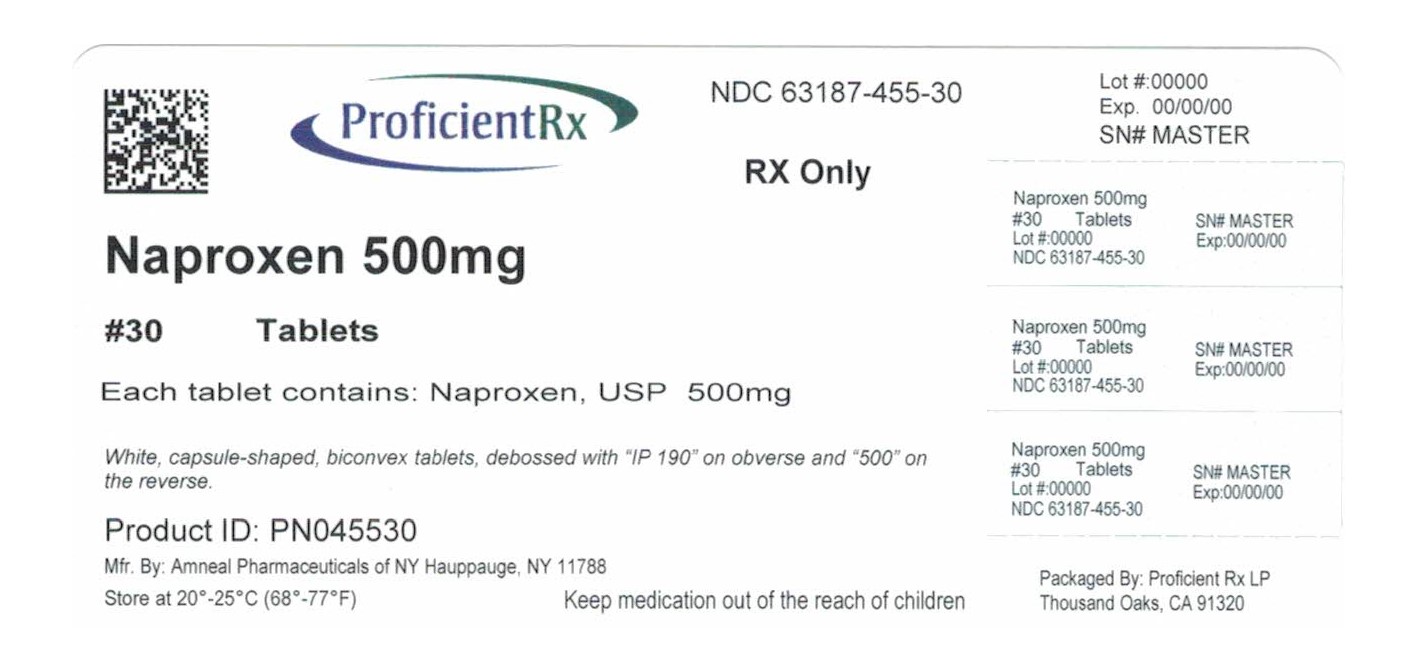
Package Label / Principal Display Panel
PRINCIPAL DISPLAY PANEL 63187-455-30
Medicare Part D Spend CMS · Part D · 2026 (Q1)
Reported Adverse Events (FAERS)
Top reported reactions
Age at onset
Reporter sex
Serious outcomes
Where does this data come from?
About This NDC Listing & Data Coverage
What data is (and isn’t) available for this NDC — tap to expand
| NDC identity (package / product / labeler codes) | Available |
| Labeler | Available |
| Product & package description | Available |
| Marketing category & status | Available |
| Active ingredient / dosage form / route | Available |
| FDA label (SPL via DailyMed) | Available |
| Package photos | Available |
| Inactive ingredients (structured) | Available |
| NADAC pharmacy acquisition price (CMS) | — Not published for this NDC CMS publishes NADAC only for NDCs reported in its retail-pharmacy survey. |
| Orange Book / therapeutic-equivalence data | Available |
| HCPCS J-code billing crosswalk | — Not published for this NDC Most self-administered / retail products have no J-code — that is normal. |
| Medicaid utilization (CMS SDUD) | — Not published for this NDC CMS reports utilization only for NDCs with Medicaid claims above its privacy threshold. |