
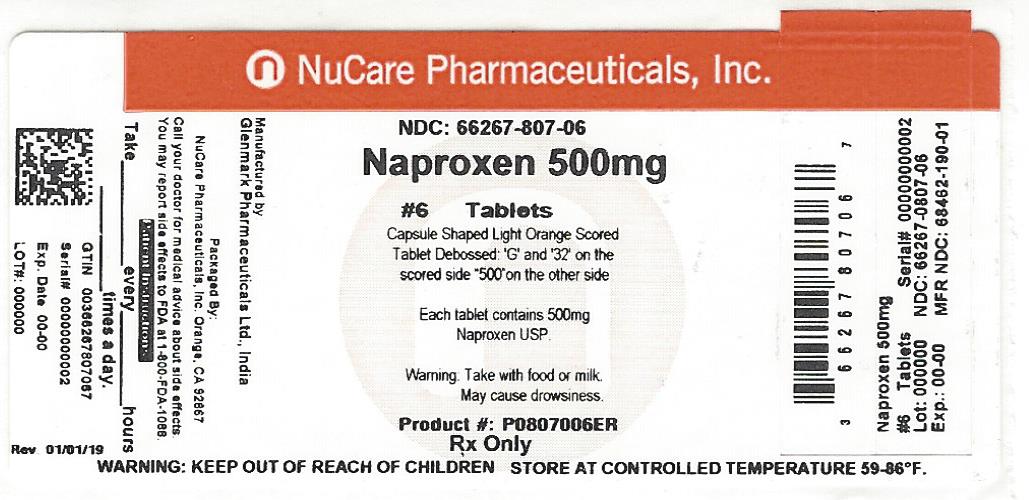
Naproxen 500 mg Tablet, 4-count — NDC 66267-807-04 (Billing 66267-0807-04)
This is a package of 4 tablets of Naproxen 500 mg Tablet from NuCare Pharmaceuticals, Inc., marketed since Jul 2007 and currently FDA-listed. It is the main listing for this product, which comes in 2 package sizes.
NDC database record
One package, one record: these facts belong to NDC 66267-807-04 alone.
- Record
- FDA NDC Directory package listing · Human prescription drug
- Code segments
- 66267 labeler · 807 product · 04 package
- Package marketed since
- Jan 24, 2017
- Sample package
- No — commercial package
- Listing certified through
- Dec 31, 2026
- Barcode (UPC)
- 0366267807067
- FDA record last changed
- Jul 24, 2026
Other active recalls for Naproxen (different manufacturers) — 1 · tap to view
Identity & classification
Regulatory identifiers FDA, NLM and CMS codes for this package
- RxCUI (RxNorm): 198014
Where does this data come from?
- FDA openFDA NDC Directory · synced Oct 8, 2026
- FDA label on DailyMed · label index refreshed Oct 8, 2026
- RxNorm (NLM RxNav) · catalog refreshed Oct 1, 2026
- Medi-Span GPI (licensed)
- First Databank (licensed) · refreshed Oct 8, 2026
RxNorm drug class
This medicine belongs to the Nonsteroidal Anti-inflammatory Drug class.
Where does this data come from?
- RxClass (NLM) · catalog refreshed Oct 1, 2026
Clinical
Prescription naproxen is used to relieve pain, tenderness, swelling, and stiffness caused by osteoarthritis (arthritis caused by a breakdown of the lining of the joints), rheumatoid arthritis (arthritis caused by swelling of the lining of the joints), juvenile arthritis (a form of joint disease in children), and ankylosing spondylitis (arthritis that mainly affects the spine). Prescription naproxen tablets, extended-release tablets, and suspension are also used to relieve shoulder pain caused by bursitis (inflammation of a fluid-filled sac in the shoulder joint), tendinitis (inflammation of th...
Read the full MedlinePlus article ↗- It relieves pain, inflammation and fever. Prescription versions treat arthritis, tendonitis, bursitis, acute gout and painful periods. Over-the-counter versions handle minor aches...
- Take it by mouth with a full glass of water. Over-the-counter products are taken every 8 to 12 hours while symptoms last, and you should use the smallest dose that works. For presc...
- Headache, indigestion, heartburn, nausea and swelling are common. Call your doctor if you have black stools, vomit blood, a rash, yellow skin or eyes, or chest pain.
- Usually not. Combining naproxen with other NSAIDs or aspirin raises bleeding risk with little added benefit. Naproxen can also interfere with low-dose aspirin taken for your heart,...
Patient education
Supplement & herbal interactions
Some supplements/herbs that may interact with Naproxen — tap one for details:
Naproxen may be associated with lower levels of 1 nutrient — worth a chat with your pharmacist, not a cause for alarm.
Where does this data come from?
- MedlinePlus (NLM) · refreshed Oct 8, 2026
- FDA label on DailyMed · label index refreshed Oct 8, 2026
Ask a licensed pharmacist directly — free, answered by our team.
Pricing
A drug doesn't have one price. Each row is a different public payment system, and none is what you'd pay at the counter — that depends on your insurance. The ⓘ on each row explains what it measures.
| Price system | Per each | Per package |
|---|---|---|
| Retail pharmacies payNADAC · weekly | Not in the retail survey — common for institutional, discontinued, or low-volume packs. | |
| Medicaid paysCMS SDUD · 12 mo | No recent Medicaid claims on file for this NDC — rare and low-volume NDCs are suppressed in the public data. | |
| Medicare drug plans payPart D · Q2 2026 | $0.1110 | $0.44 / 4 tablets |
Where does this data come from?
- CMS NADAC weekly file
- CMS ASP pricing files · refreshed Sep 20, 2026
- CMS Medicaid State Drug Utilization Data · refreshed Oct 8, 2026
- CMS Part D plan pricing files · refreshed Sep 24, 2026
- VA National Acquisition Center price file
Packaging — all sizes for this product
| Package NDC | Description | Marketing start | Marketing end | Status |
|---|---|---|---|---|
| 66267-0807-04 You're viewing this Main listing | 4 TABLET in 1 BOTTLE | 2017-01-24 | — | Active |
| 66267-0807-06 66267-807-06 | 6 TABLET in 1 BOTTLE | 2017-01-24 | — | Active |
You're viewing the smallest of 2 pack sizes for this product.
Pack size FAQ
What quantity is in this package?
How does this package differ from NDC 66267-0807-06?
What NDC number is used to bill for this package of Naproxen 500 mg Tablet?
Therapeutic equivalents
| Product | Labeler | Pack | NADAC/unit | TE | Status | Price vs. this |
|---|---|---|---|---|---|---|
| Naproxen 500 mg 49483-0618-01 | TIME | 100 tablets | $0.057 | AB | Availability likely | — |
| Naproxen 500 mg 50228-0436-01 | ScieGen | 100 tablets | $0.057 | AB | Availability likely | — |
| Naproxen 500 mg 60687-0491-01 | American | 100 tablets | $0.057 | AB | Availability likely | — |
| Naproxen 500 mg 65162-0190-10 | Amneal | 100 tablets | $0.057 | AB | Availability likely | — |
| Naproxen 500 mg 65862-0522-01 | Aurobindo | 100 tablets | $0.057 | — | Availability likely | — |
| Naproxen 500 mg 68462-0190-01 | Glenmark | 100 tablets | $0.057 | AB | Availability likely | — |
| Naproxen 500 mg 70010-0139-01 | Granules | 100 tablets | $0.057 | AB | Availability likely | — |
| Naproxen 500 mg 76282-0342-01 | Exelan | 100 tablets | $0.057 | — | Availability likely | — |
| Naproxen 500 mg 42494-0454-10 | Cameron | 100 tablets | $1.841 | AB | Availability likely | — |
| Naproxen 500 mg 00615-8094-39 | NCS | 30 tablets | — | AB | FDA listed | — |
| Naproxen 500 mg 25000-0140-03 | MARKSANS | 30 tablets | — | AB | FDA listed | — |
| Naproxen 500 mg 42708-0043-20 | QPharma, | 20 tablets | — | AB | FDA listed | — |
| Naproxen 500 mg 42708-0140-20 | QPharma | 20 tablets | — | AB | FDA listed | — |
| Naproxen 500 mg 43063-0920-04 | PD-Rx | 4 tablets | — | AB | FDA listed | — |
| Naproxen 500 mg 43353-0211-53 | Aphena | 60 tablets | — | — | FDA listed | — |
| Naproxen 500 mg 50090-0481-00 | A-S | 15 tablets | — | AB | FDA listed | — |
| Naproxen 500 mg 50090-0482-01 | A-S | 90 tablets | — | AB | FDA listed | — |
| Naproxen 500 mg 50090-0483-00 | A-S | 20 tablets | — | AB | FDA listed | — |
| Naproxen 500 mg 50090-5645-00 | A-S | 15 tablets | — | AB | FDA listed | — |
| Naproxen 500 mg 50090-5646-01 | A-S | 90 tablets | — | AB | FDA listed | — |
| Naproxen 500 mg 50090-5649-00 | A-S | 20 tablets | — | AB | FDA listed | — |
| Naproxen 500 mg 50090-6666-00 | A-S | 15 tablets | — | AB | FDA listed | — |
| Naproxen 500 mg 50090-6667-01 | A-S | 90 tablets | — | AB | FDA listed | — |
| Naproxen 500 mg 50090-6762-00 | A-S | 20 tablets | — | AB | FDA listed | — |
| Naproxen 500 mg 50090-6980-00 | A-S | 90 tablets | — | AB | FDA listed | — |
| Naproxen 500 mg 50090-7198-00 | A-S | 90 tablets | — | AB | FDA listed | — |
| Naproxen 500 mg 50090-7676-00 | A-S | 90 tablets | — | AB | FDA listed | — |
| Naproxen 500 mg 51655-0363-26 | Northwind | 90 tablets | — | AB | FDA listed | — |
| Naproxen 500 mg 51655-0457-20 | Northwind | 20 tablets | — | AB | FDA listed | — |
| Naproxen 500 mg 51655-0621-20 | Northwind | 20 tablets | — | AB | FDA listed | — |
| Naproxen 500 mg 51655-0743-20 | Northwind | 20 tablets | — | AB | FDA listed | — |
| Naproxen 500 mg 53746-0190-01 | Amneal | 100 tablets | — | AB | FDA listed | — |
| Naproxen 500 mg 55700-0888-20 | Quality | 20 tablets | — | AB | Discontinued | — |
| Naproxen 500 mg 60760-0564-14 | St. | 14 tablets | — | AB | FDA listed | — |
| Naproxen 500 mg 62207-0747-43 | Granules | 100 tablets | — | AB | FDA listed | — |
| Naproxen 500 mg 63187-0028-10 | Proficient | 10 tablets | — | AB | FDA listed | — |
| Naproxen 500 mg 63187-0455-20 | Proficient | 20 tablets | — | AB | FDA listed | — |
| Naproxen 500 mg 63629-5863-01 | Bryant | 60 tablets | — | AB | FDA listed | — |
| Naproxen 500 mg 63629-8514-01 | Bryant | 500 tablets | — | AB | FDA listed | — |
| Naproxen 500 mg 63629-8515-01 | Bryant | 100 tablets | — | AB | FDA listed | — |
| Naproxen 500 mg 66267-0153-10 | NuCare | 10 tablets | — | AB | FDA listed | — |
| Naproxen 500 mgthis 66267-0807-04 | NuCare | 4 tablets | — | AB | FDA listed | — |
| Naproxen 500 mg 67046-0501-03 | Coupler | 30 tablets | — | AB | FDA listed | — |
| Naproxen 500 mg 67046-1553-03 | Coupler | 30 tablets | — | AB | FDA listed | — |
| Naproxen 500 mg 67296-2235-05 | Redpharm | 30 tablets | — | AB | FDA listed | — |
| Naproxen 500 mg 68071-2396-04 | NuCare | 4 tablets | — | AB | FDA listed | — |
| Naproxen 500 mg 68071-4006-01 | NuCare | 10 tablets | — | AB | FDA listed | — |
| Naproxen 500 mg 68071-4381-02 | NuCare | 20 tablets | — | AB | FDA listed | — |
| Naproxen 500 mg 68788-7090-01 | Preferred | 100 tablets | — | AB | FDA listed | — |
| Naproxen 500 mg 68788-8602-01 | Preferred | 100 tablets | — | AB | FDA listed | — |
| Naproxen 500 mg 68788-8797-01 | Preferred | 100 tablets | — | AB | FDA listed | — |
| naproxen 500 mg 69097-0855-07 | Cipla | 100 tablets | — | — | FDA listed | — |
| Naproxen 500 mg 70518-3822-00 | REMEDYREPACK | 30 tablets | — | AB | FDA listed | — |
| Naproxen 500 mg 70518-4439-00 | REMEDYREPACK | 12 tablets | — | AB | FDA listed | — |
| Naproxen 500 mg 71205-0597-10 | Proficient | 10 tablets | — | AB | FDA listed | — |
| Naproxen 500 mg 71335-0345-00 | Bryant | 28 tablets | — | AB | FDA listed | — |
| Naproxen 500 mg 71335-2485-00 | Bryant | 28 tablets | — | AB | FDA listed | — |
| Naproxen 500 mg 71335-2777-00 | Bryant | 28 tablets | — | AB | FDA listed | — |
| Naproxen 500 mg 71610-0436-53 | Aphena | 60 tablets | — | AB | FDA listed | — |
| Naproxen 500 mg 71610-0489-53 | Aphena | 60 tablets | — | AB | FDA listed | — |
| Naproxen 500 mg 71610-0597-53 | Aphena | 60 tablets | — | AB | FDA listed | — |
| Naproxen 500 mg 72189-0136-14 | DIRECT | 14 tablets | — | AB | FDA listed | — |
| Naproxen 500 mg 72789-0321-04 | PD-Rx | 4 tablets | — | AB | FDA listed | — |
| Naproxen 500 mg 72789-0541-14 | PD-Rx | 14 tablets | — | AB | FDA listed | — |
| Naproxen 500 mg 76420-0042-01 | Asclemed | 1 tablet | — | AB | FDA listed | — |
| Naproxen 500 mg 76420-0264-01 | Asclemed | 1 tablet | — | AB | FDA listed | — |
| Naproxen 500 mg 77771-0436-01 | Radha | 100 tablets | — | AB | FDA listed | — |
| Naproxen 500 mg 80425-0049-01 | Advanced | 60 tablets | — | AB | FDA listed | — |
| Naproxen 500 mg 80425-0050-01 | Advanced | 60 tablets | — | AB | FDA listed | — |
| Naproxen 500 mg 80425-0051-01 | Advanced | 60 tablets | — | AB | FDA listed | — |
| Naproxen 500 mg 80425-0378-01 | Advanced | 30 tablets | — | AB | FDA listed | — |
| Naproxen 500 mg 82461-0711-60 | Medcore | 60 tablets | — | AB | FDA listed | — |
| Naproxen 500 mg 83209-0190-14 | Boswell | 14 tablets | — | AB | FDA listed | — |
| Naproxen 500 mg 85509-1436-03 | PHOENIX | 30 tablets | — | AB | FDA listed | — |
| Naproxen 500 mg 85766-0107-00 | Sportpharm | 1000 tablets | — | AB | FDA listed | — |
| Naproxen 500 mg 72162-2276-01 | Bryant | 100 tablets | — | AB | FDA listed | — |
| Naproxen 500 mg 87441-0060-01 | Unit | 30 tablets | — | AB | Discontinued | — |
| Naproxen 500 mg 85534-0024-00 | HAWAII | 30 tablets | — | AB | FDA listed | — |
| Naproxen 500 mg 70518-1516-00 | REMEDYREPACK | 30 tablets | — | AB | Discontinued | — |
| Naproxen 500 mg 67046-0784-03 | Coupler | 30 tablets | — | AB | FDA listed | — |
| Naproxen 500 mg 70518-4750-00 | REMEDYREPACK | 30 tablets | — | AB | FDA listed | — |
Where does this data come from?
- FDA openFDA NDC Directory · synced Oct 8, 2026
- FDA Orange Book · refreshed Oct 3, 2026
- CMS NADAC weekly file
Availability & generic status
This product is an FDA-approved generic. Other versions of the same drug are listed under Therapeutic equivalents, least expensive first.
Where does this data come from?
- FDA Orange Book · refreshed Oct 3, 2026
What it looks like
Where does this data come from?
- FDA label on DailyMed · label index refreshed Oct 8, 2026
Inactive Ingredients / Excipients
Inactive ingredients, also called excipients, are components of the drug product other than the active ingredient. They may include fillers, dyes, coatings, preservatives, flavors, or other formulation ingredients.
🧪 Avoiding an ingredient? See Naproxen inactive ingredients by manufacturer: every current product's list side by side, so you can ask your pharmacy for the version that does not list it.
💡 Tap an ingredient (hover on desktop) to see what it is and why it’s used.
-
UNII OP1R32D61U
Microcrystalline cellulose is a purified form of cellulose, a natural fiber from plant sources. It acts as a binder and filler in tablets and capsules, helping hold ingredients together and give the medicine its shape and size.
-
UNII M28OL1HH48
Croscarmellose sodium is a plant-based substance derived from cellulose. It acts as a disintegrant, helping tablets and capsules break down quickly in the digestive system so the medicine can be absorbed.
-
UNII 1K09F3G675
Ferric oxide red is an inorganic iron compound used as a colorant in medicines. It gives tablets, capsules, or other dosage forms a red or reddish tint for identification and appearance.
-
UNII EX438O2MRT
Ferric oxide yellow is a naturally occurring iron compound used as a colorant in medications. It gives tablets, capsules, and other forms a yellow or golden hue for identification and appearance.
-
UNII 70097M6I30
Magnesium stearate is a salt made from magnesium and stearic acid, a fatty substance. It's used in tablets and capsules as a lubricant and glidant to help ingredients flow smoothly during manufacturing and prevent sticking.
-
UNII FZ989GH94E
Povidone is a synthetic polymer made from a plastic-like material. It acts as a binder to hold tablet ingredients together and as a disintegrant to help the tablet break apart in your stomach so the medicine can be absorbed.
6 inactive ingredients listed in the exact product block matched to this NDC.
Where does this data come from?
ingredient classCode="IACT" elements from the exact product block matched by this NDC. Label-section narrative from DailyMed / the openFDA label index is shown separately when available.- FDA label on DailyMed · label index refreshed Oct 8, 2026
- FDA openFDA NDC Directory · synced Oct 8, 2026
Inactive ingredient FAQ
Are inactive ingredients the same for every manufacturer?
Why might an inactive ingredient be missing?
Can inactive ingredients matter?
Manufacturer & labeler
More NDCs from NuCare Pharmaceuticals, Inc. labeler code 66267
- Oxybutynin Chloride 5 mg Tablet NDC 66267-642-30
- Loratadine antihistamine 10 mg Tablet NDC 66267-653-07
- Allopurinol 100 mg Tablet NDC 66267-665-30
- ciprofloxacin 500 mg Tablet NDC 66267-716-02
- Diphenhydramine HCL 50 mg Capsule NDC 66267-779-06
- Methocarbamol 750 mg Tablet NDC 66267-803-06
- Prednisone 10 mg Tablet NDC 66267-812-10
- Sulfamethoxazole and Trimethoprim 800 mg; 160 mg Tablet NDC 66267-816-02
- Metoclopramide 10 mg Tablet NDC 66267-827-04
- Nifedipine 10 mg Capsule NDC 66267-831-04
- Ketorolac Tromethamine 10 mg Tablet, Film Coated NDC 66267-832-04
- Metoclopramide 5 mg Tablet NDC 66267-841-06
Where does this data come from?
- FDA openFDA NDC Directory · synced Oct 8, 2026
- Drugs@FDA
Full prescribing information FDA SPL
🚨 Boxed Warning ▾
WARNING: RISK OF SERIOUS CARDIOVASCULAR AND GASTROINTESTINAL EVENTS Cardiovascular Thrombotic Events Nonsteroidal anti-inflammatory drugs (NSAIDs) cause an increased risk of serious cardiovascular thrombotic events, including myocardial infarction and stroke, which can be fatal. This risk may occur early in treatment and may increase with duration of use. ( see WARNINGS ).
Naproxen tablets and naproxen sodium tablets are contraindicated in the setting of coronary artery bypass graft (CABG) surgery ( see CONTRAINDICATIONS , WARNINGS ). Gastrointestinal Bleeding, Ulceration, and Perforation NSAIDs cause an increased risk of serious gastrointestinal (GI) adverse events including bleeding, ulceration, and perforation of the stomach or intestines, which can be fatal. These events can occur at any time during use and without warning symptoms.
Elderly patients and patients with a prior history of peptic ulcer disease and/or GI bleeding are at greater risk for serious GI events ( see WARNINGS ).
🎯 Indications and Usage ▾
INDICATIONS AND USAGE Carefully consider the potential benefits and risks of naproxen, naproxen sodium and other treatment options before deciding to use naproxen tablets or naproxen sodium tablets. Use the lowest effective dosage for the shortest duration consistent with individual patient treatment goals (see WARNINGS: Gastrointestinal Bleeding, Ulceration, and Perforation ). Naproxen as naproxen tablets or naproxen sodium tablets are indicated: For the relief of the signs and symptoms of rheumatoid arthritis For the relief of the signs and symptoms of osteoarthritis For the relief of the signs and symptoms of ankylosing spondylitis For the relief of the signs and symptoms of juvenile arthritis Naproxen as naproxen tablets or naproxen sodium tablets are also indicated: For relief of the signs and symptoms of tendonitis For relief of the signs and symptoms of bursitis For relief of the signs and symptoms of acute gout For the management of pain For the management of primary dysmenorrhea
⏱️ Dosage and Administration ▾
DOSAGE AND ADMINISTRATION Carefully consider the potential benefits and risks of naproxen and naproxen sodium and other treatment options before deciding to use naproxen and naproxen sodium. Use the lowest effective dose for the shortest duration consistent with individual patient treatment goals (see WARNINGS; Gastrointestinal Bleeding, Ulceration, and Perforation ). After observing the response to initial therapy with naproxen or naproxen sodium, the dose and frequency should be adjusted to suit an individual patient’s needs.
Different dose strengths and formulations (i.e., tablets, suspension) of the drug are not necessarily bioequivalent. This difference should be taken into consideration when changing formulation. Although naproxen or naproxen sodium all circulate in the plasma as naproxen, they have pharmacokinetic differences that may affect onset of action.
Onset of pain relief can begin within 30 minutes in patients taking naproxen sodium and within 1 hour in patients taking naproxen. The recommended strategy for initiating therapy is to choose a formulation and a starting dose likely to be effective for the patient and then adjust the dosage based on observation of benefit and/or adverse events. A lower dose should be considered in patients with renal or hepatic impairment or in elderly patients (see WARNINGS; Hepatotoxicity, and Renal Toxicity and Hyperkalemia, and PRECAUTIONS; Geriatric Use ).
Geriatric Patients Studies indicate that although total plasma concentration of naproxen is unchanged, the unbound plasma fraction of naproxen is increased in the elderly. Caution is advised when high doses are required and some adjustment of dosage may be required in elderly patients. As with other drugs used in the elderly, it is prudent to use the lowest effective dose.
Patients With Moderate to Severe Renal Impairment Naproxen-containing products are not recommended for use in patients with moderate to severe and severe renal impairment (creatinine clearance <30 mL/min) (see WARNINGS: Renal Effects ). Rheumatoid Arthritis, Osteoarthritis and Ankylosing Spondylitis Naproxen tablets 250 mg or 375 mg or 500 mg twice daily twice daily twice daily Naproxen sodium tablets 275 mg (naproxen 250 mg with 25 mg sodium) 550 mg (naproxen 500 mg with 50 mg sodium) twice daily twice daily During long-term administration, the dose of naproxen may be adjusted up or down depending on the clinical response of the patient.
A lower daily dose may suffice for long-term administration. The morning and evening doses do not have to be equal in size and the administration of the drug more frequently than twice daily is not necessary. In patients who tolerate lower doses well, the dose may be increased to naproxen 1500 mg/day for limited periods of up to 6 months when a higher level of antiinflammatory/analgesic activity is required.
When treating such patients with naproxen 1500 mg/day, the physician should observe sufficient increased clinical benefits to offset the potential increased risk. The morning and evening doses do not have to be equal in size and administration of the drug more frequently than twice daily does not generally make a difference in response (see CLINICAL PHARMACOLOGY ). Juvenile Arthritis Naproxen Tablets may not allow for the flexible dose titration needed in pediatric patients with juvenile arthritis.
A liquid formulation may be more appropriate. In pediatric patients, doses of 5 mg/kg/day produced plasma levels of naproxen similar to those seen in adults taking 500 mg of naproxen (see Clinical Pharmacology ). The recommended total daily dose of naproxen is approximately 10 mg/kg given in 2 divided doses.
One-half of the 250 mg tablet will be needed for dosing lower-weight children. Dosing with naproxen tablets is not appropriate for children weighing less than 25 kilograms. Management of Pain, Primary Dysmenorrhea, and Acute Tendonitis and Bursitis The recommended starting dose is 550 mg of naproxen sodium as naproxen so… [Excerpted — this section continues on DailyMed.]
⛔ Contraindications ▾
CONTRAINDICATIONS Naproxen tablets and naproxen sodium tablets are contraindicated in the following patients: Known hypersensitivity (e.g., anaphylactic reactions and serious skin reactions) to naproxen, naproxen sodium, or any components of the drug product (see WARNINGS; Anaphylactic Reactions, Serious Skin Reactions ). History of asthma, urticaria, or other allergic-type reactions after taking aspirin or other NSAIDs. Severe, sometimes fatal, anaphylactic reactions to NSAIDs have been reported in such patients (see WARNINGS; Anaphylactic Reactions, Exacerbation of Asthma Related to Aspirin Sensitivity ).
In the setting of coronary artery bypass graft (CABG) surgery (see WARNINGS; Cardiovascular Thrombotic Events ).
⚠️ Warnings ▾
WARNINGS Click here to enter Warnings Cardiovascular Thrombotic Events Clinical trials of several COX-2 selective and nonselective NSAIDs of up to three years duration have shown an increased risk of serious cardiovascular (CV) thrombotic events, including myocardial infarction (MI) and stroke, which can be fatal. Based on available data, it is unclear that the risk for CV thrombotic events is similar for all NSAIDs. The relative increase in serious CV thrombotic events over baseline conferred by NSAID use appears to be similar in those with and without known CV disease or risk factors for CV disease.
However, patients with known CV disease or risk factors had a higher absolute incidence of excess serious CV thrombotic events, due to their increased baseline rate. Some observational studies found that this increased risk of serious CV thrombotic events began as early as the first weeks of treatment. The increase in CV thrombotic risk has been observed most consistently at higher doses.
To minimize the potential risk for an adverse CV event in NSAID-treated patients, use the lowest effective dose for the shortest duration possible. Physicians and patients should remain alert for the development of such events, throughout the entire treatment course, even in the absence of previous CV symptoms. Patients should be informed about the symptoms of serious CV events and the steps to take if they occur.
There is no consistent evidence that concurrent use of aspirin mitigates the increased risk of serious CV thrombotic events associated with NSAID use. The concurrent use of aspirin and an NSAID, such as naproxen, increases the risk of serious gastrointestinal (GI) events (see WARNINGS; Gastrointestinal Bleeding, Ulceration, and Perforation ). Status Post Coronary Artery Bypass Graft (CABG) Surgery Two large, controlled, clinical trials of a COX-2 selective NSAID for the treatment of pain in the first 10 to 14 days following CABG surgery found an increased incidence of myocardial infarction and stroke.
NSAIDs are contraindicated in the setting of CABG (see CONTRAINDICATIONS ). Post-MI Patients Observational studies conducted in the Danish National Registry have demonstrated that patients treated with NSAIDs in the post-MI period were at increased risk of reinfarction, CV-related death, and all-cause mortality beginning in the first week of treatment. In this same cohort, the incidence of death in the first year post-MI was 20 per 100 person years in NSAID-treated patients compared to 12 per 100 person years in non-NSAID exposed patients.
Although the absolute rate of death declined somewhat after the first year post-MI, the increased relative risk of death in NSAID users persisted over at least the next four years of follow-up. Avoid the use of naproxen and naproxen sodium in patients with a recent MI unless the benefits are expected to outweigh the risk of recurrent CV thrombotic events. If naproxen or naproxen sodium are used in patients with a recent MI, monitor patients for signs of cardiac ischemia.
Gastrointestinal Bleeding, Ulceration, and Perforation NSAIDs, including naproxen cause serious gastrointestinal (GI) adverse events including inflammation, bleeding, ulceration, and perforation of the esophagus, stomach, small intestine, or large intestine, which can be fatal. These serious adverse events can occur at any time, with or without warning symptoms, in patients treated with NSAIDs. Only one in five patients who develop a serious upper GI adverse event on NSAID therapy is symptomatic.
Upper GI ulcers, gross bleeding, or perforation caused by NSAIDs occurred in approximately 1% of patients treated for 3 to 6 months, and in about 2% to 4% of patients treated for one year. However, even short-term NSAID therapy is not without risk. Risk Factors for GI Bleeding, Ulceration, and Perforation Patients with a prior history of peptic ulcer disease and/or GI bleeding who used NSAIDs had a greater than 10-fold increased risk for develo… [Excerpted — this section continues on DailyMed.]
🤒 Adverse Reactions ▾
ADVERSE REACTIONS The following adverse reactions are discussed in greater detail in other sections of the labeling: Cardiovascular Thrombotic Events (see WARNINGS ) GI Bleeding, Ulceration and Perforation (see WARNINGS) Hepatotoxicity (see WARNINGS) Hypertension (see WARNINGS) Heart Failure and Edema (see WARNINGS) Renal Toxicity and Hyperkalemia (see WARNINGS) Anaphylactic Reactions (see WARNINGS) Serious Skin Reactions (see WARNINGS) Hematologic Toxicity (see WARNINGS) Adverse reactions reported in controlled clinical trials in 960 patients treated for rheumatoid arthritis or osteoarthritis are listed below.
In general, reactions in patients treated chronically were reported 2 to 10 times more frequently than they were in short-term studies in the 962 patients treated for mild to moderate pain or for dysmenorrhea. The most frequent complaints reported related to the gastrointestinal tract. A clinical study found gastrointestinal reactions to be more frequent and more severe in rheumatoid arthritis patients taking daily doses of 1500 mg naproxen compared to those taking 750 mg naproxen (see CLINICAL PHARMACOLOGY ).
In controlled clinical trials with about 80 pediatric patients and in well-monitored, open-label studies with about 400 pediatric patients with juvenile arthritis treated with naproxen, the incidence of rash and prolonged bleeding times were increased, the incidence of gastrointestinal and central nervous system reactions were about the same, and the incidence of other reactions were lower in pediatric patients than in adults. In patients taking naproxen in clinical trials, the most frequently reported adverse experiences in approximately 1% to 10% of patients are: Gastrointestinal (GI) Experiences, including: heartburn*, abdominal pain*, nausea*, constipation*, diarrhea, dyspepsia, stomatitis Central Nervous System: headache*, dizziness*, drowsiness*, lightheadedness, vertigo Dermatologic: pruritus (itching)*, skin eruptions*, ecchymoses*, sweating, purpura Special Senses: tinnitus*, visual disturbances, hearing disturbances Cardiovascular: edema*, palpitations General: dyspnea*, thirst *Incidence of reported reaction between 3% and 9%.
Those reactions occurring in less than 3% of the patients are unmarked. In patients taking NSAIDs, the following adverse experiences have also been reported in approximately 1% to 10% of patients. Gastrointestinal (GI) Experiences, including: flatulence, gross bleeding/perforation, GI ulcers (gastric/duodenal), vomiting General: abnormal renal function, anemia, elevated liver enzymes, increased bleeding time, rashes The following are additional adverse experiences reported in <1% of patients taking naproxen during clinical trials and through postmarketing reports.
Those adverse reactions observed through postmarketing reports are italicized. Body as a Whole: anaphylactoid reactions, angioneurotic edema, menstrual disorders, pyrexia (chills and fever) Cardiovascular: congestive heart failure, vasculitis, hypertension, pulmonary edema Gastrointestinal: inflammation, bleeding (sometimes fatal, particularly in the elderly), ulceration, perforation and obstruction of the upper or lower gastrointestinal tract. Esophagitis, stomatitis, hematemesis, pancreatitis, vomiting, colitis, exacerbation of inflammatory bowel disease (ulcerative colitis, Crohn’s disease) .
Hepatobiliary: jaundice, abnormal liver function tests, hepatitis (some cases have been fatal) Hemic and Lymphatic: eosinophilia, leucopenia, melena, thrombocytopenia, agranulocytosis, granulocytopenia, hemolytic anemia, aplastic anemia Metabolic and Nutritional: hyperglycemia, hypoglycemia Nervous System: inability to concentrate, depression, dream abnormalities, insomnia, malaise, myalgia, muscle weakness, aseptic meningitis, cognitive dysfunction, convulsions Respiratory: eosinophilic pneumonitis, asthma Dermatologic: alopecia, urticaria, skin rashes, toxic epidermal necrolysis, erythema multiforme, erythema nodosum, fixed dru… [Excerpted — this section continues on DailyMed.]
🔄 Drug Interactions ▾
Drug Interactions See Table 1 for clinically significant drug interactions with naproxen. Table 1: Clinically Significant Drug Interactions with naproxen Drugs That Interfere with Hemostasis Clinical Impact: • Naproxen and anticoagulants such as warfarin have a synergistic effect on bleeding. The concomitant use of naproxen and anticoagulants has an increased risk of serious bleeding compared to the use of either drug alone. • Serotonin release by platelets plays an important role in hemostasis.
Case-control and cohort epidemiological studies showed that concomitant use of drugs that interfere with serotonin reuptake and an NSAID may potentiate the risk of bleeding more than an NSAID alone. Intervention: Monitor patients with concomitant use of naproxen or naproxen sodium with anticoagulants (e.g., warfarin), antiplatelet agents (e.g., aspirin), selective serotonin reuptake inhibitors (SSRIs), and serotonin norepinephrine reuptake inhibitors (SNRIs) for signs of bleeding (see WARNINGS; Hematologic Toxicity ).
Aspirin Clinical Impact: Controlled clinical studies showed that the concomitant use of NSAIDs and analgesic doses of aspirin does not produce any greater therapeutic effect than the use of NSAIDs alone. In a clinical study, the concomitant use of an NSAID and aspirin was associated with a significantly increased incidence of GI adverse reactions as compared to use of the NSAID alone (see WARNINGS; Gastrointestinal Bleeding, Ulceration and Perforation ). Intervention: Concomitant use of naproxen or naproxen sodium and analgesic doses of aspirin is not generally recommended because of the increased risk of bleeding (see WARNINGS; Hematologic Toxicity ).
Naproxen or naproxen sodium is not a substitute for low dose aspirin for cardiovascular protection. ACE Inhibitors, Angiotensin Receptor Blockers, and Beta-Blockers Clinical Impact: • NSAIDs may diminish the antihypertensive effect of angiotensin converting enzyme (ACE) inhibitors, angiotensin receptor blockers (ARBs), or beta-blockers (including propranolol). • In patients who are elderly, volume-depleted (including those on diuretic therapy), or have renal impairment, co-administration of an NSAID with ACE-inhibitors or ARBs may result in deterioration of renal function, including possible acute renal failure.
These effects are usually reversible. Intervention: • During concomitant use of naproxen or naproxen sodium and ACE inhibitors, ARBs, or beta-blockers, monitor blood pressure to ensure that the desired blood pressure is obtained. • During concomitant use of naproxen or naproxen sodium and ACE-inhibitors or ARBs in patients who are elderly, volume-depleted, or have impaired renal function, monitor for signs of worsening renal function (see WARNINGS; Renal Toxicity and Hyperkalemia ). When these drugs are administered concomitantly, patients should be adequately hydrated.
Assess renal function at the beginning of the concomitant treatment and periodically thereafter. Diuretics Clinical Impact: Clinical studies, as well as post-marketing observations, showed that NSAIDs reduced the natriuretic effect of loop diuretics (e.g., furosemide) and thiazide diuretics in some patients. This effect has been attributed to the NSAID inhibition of renal prostaglandin synthesis.
Intervention: During concomitant use of naproxen or naproxen sodium with diuretics, observe patients for signs of worsening renal function, in addition to assuring diuretic efficacy including antihypertensive effects (see WARNINGS; Renal Toxicity and Hyperkalemia ). Digoxin Clinical Impact: The concomitant use of naproxen with digoxin has been reported to increase the serum concentration and prolong the half-life of digoxin. Intervention: During concomitant use of naproxen or naproxen sodium and digoxin, monitor serum digoxin levels.
Lithium Clinical Impact: NSAIDs have produced elevations in plasma lithium levels and reductions in renal lithium clearance. The mean minimum lithium concentration increased 15%… [Excerpted — this section continues on DailyMed.]
🤰 Pregnancy ▾
Pregnancy Risk Summary Use of NSAIDs, including naproxen and naproxen sodium tablets, during the third trimester of pregnancy increases the risk of premature closure of the fetal ductus arteriosus. Avoid use of NSAIDs, including naproxen, in pregnant women starting at 30 weeks of gestation (third trimester) (see WARNINGS; Premature Closure of Fetal Ductus Arteriosus ). There are no adequate and well-controlled studies of naproxen or naproxen sodium tablets in pregnant women.
Data from observational studies regarding potential embryofetal risks of NSAID use in women in the first or second trimesters of pregnancy are inconclusive. In the general U.S. population, all clinically recognized pregnancies, regardless of drug exposure, have a background rate of 2 to 4% for major malformations, and 15 to 20% for pregnancy loss. In animal reproduction studies in rats, rabbit, and mice no evidence of teratogenicity or fetal harm when naproxen was administered during the period of organogenesis at doses 0.13, 0.26, and 0.6 times the maximum recommended human daily dose of 1500 mg/day, respectively.
Based on animal data, prostaglandins have been shown to have an important role in endometrial vascular permeability, blastocyst implantation, and decidualization. In animal studies, administration of prostaglandin synthesis inhibitors such as naproxen, resulted in increased pre- and post-implantation loss. Data Human Data There is some evidence to suggest that when inhibitors of prostaglandin synthesis are used to delay preterm labor there is an increased risk of neonatal complications such as necrotizing enterocolitis, patent ductus arteriosus and intracranial hemorrhage.
Naproxen treatment given in late pregnancy to delay parturition has been associated with persistent pulmonary hypertension, renal dysfunction and abnormal prostaglandin E levels in preterm infants. Because of the known effects of nonsteroidal anti-inflammatory drugs on the fetal cardiovascular system (closure of ductus arteriosus), use during pregnancy (particularly starting at 30-weeks of gestation, or third trimester) should be avoided. Animal Data Reproduction studies have been performed in rats at 20 mg/kg/day (0.13 times the maximum recommended human daily dose of 1500 mg/day based on body surface area comparison), rabbits at 20 mg/kg/day (0.26 times the maximum recommended human daily dose, based on body surface area comparison), and mice at 170 mg/kg/day (0.6 times the maximum recommended human daily dose based on body surface area comparison) with no evidence of impaired fertility or harm to the fetus due to the drug.
Based on animal data, prostaglandins have been shown to have an important role in endometrial vascular permeability, blastocyst implantation, and decidualization. In animal studies, administration of prostaglandin synthesis inhibitors such as naproxen, resulted in increased pre- and postimplantation loss.
🧒 Pediatric Use ▾
Pediatric Use Safety and effectiveness in pediatric patients below the age of 2 years have not been established. Pediatric dosing recommendations for juvenile arthritis are based on well-controlled studies (see DOSAGE AND ADMINISTRATION ). There are no adequate effectiveness or dose-response data for other pediatric conditions, but the experience in juvenile arthritis and other use experience have established that single doses of 2.5 to 5 mg/kg (as naproxen suspension, see DOSAGE AND ADMINISTRATION ), with total daily dose not exceeding 15 mg/kg/day, are well tolerated in pediatric patients over 2 years of age.
Safety and effectiveness in pediatric patients below the age of 2 years have not been established.
🧓 Geriatric Use ▾
Geriatric Use Elderly patients, compared to younger patients, are at greater risk for NSAID-associated serious cardiovascular, gastrointestinal, and/or renal adverse reactions. If the anticipated benefit for the elderly patient outweighs these potential risks, start dosing at the low end of the dosing range, and monitor patients for adverse effects (see WARNINGS; Cardiovascular Thrombotic Events, Gastrointestinal Bleeding, Ulceration, and Perforation, Hepatotoxicity, Renal Toxicity and Hyperkalemia, PRECAUTIONS; Laboratory Monitoring ).
Studies indicate that although total plasma concentration of naproxen is unchanged, the unbound plasma fraction of naproxen is increased in the elderly. Caution is advised when high doses are required and some adjustment of dosage may be required in elderly patients. As with other drugs used in the elderly, it is prudent to use the lowest effective dose.
Experience indicates that geriatric patients may be particularly sensitive to certain adverse effects of nonsteroidal anti-inflammatory drugs. Elderly or debilitated patients seem to tolerate peptic ulceration or bleeding less well when these events do occur. Most spontaneous reports of fatal GI events are in the geriatric population (see WARNINGS; Gastrointestinal Bleeding, Ulceration, and Perforation ).
Naproxen is known to be substantially excreted by the kidney, and the risk of toxic reactions to this drug may be greater in patients with impaired renal function. Because elderly patients are more likely to have decreased renal function, care should be taken in dose selection, and it may be useful to monitor renal function. Geriatric patients may be at a greater risk for the development of a form of renal toxicity precipitated by reduced prostaglandin formation during administration of nonsteroidal anti-inflammatory drugs (see WARNINGS: Renal Toxicity and Hyperkalemia ).
🆘 Overdosage ▾
OVERDOSAGE Symptoms following acute NSAID overdosages have been typically limited to lethargy, drowsiness, nausea, vomiting, and epigastric pain, which have been generally reversible with supportive care. Gastrointestinal bleeding has occurred. Hypertension, acute renal failure, respiratory depression, and coma have occurred, but were rare.
Because naproxen sodium may be rapidly absorbed, high and early blood levels should be anticipated. A few patients have experienced convulsions, but it is not clear whether or not these were drug-related. It is not known what dose of the drug would be life threatening.
(see WARNINGS; Cardiovascular Thrombotic Events, Gastrointestinal Bleeding, Ulceration, and Perforation, Hypertension, Renal Toxicity and Hyperkalemia ). Manage patients with symptomatic and supportive care following an NSAID overdosage. There are no specific antidotes.
Hemodialysis does not decrease the plasma concentration of naproxen because of the high degree of its protein binding. Consider emesis and/or activated charcoal (60 to 100 g in adults, 1 to 2 g/kg of body weight in pediatric patients) and/or osmotic cathartic in symptomatic patients seen within four hours of ingestion or in patients with a large overdosage (5 to 10 times the recommended dosage). Forced diuresis, alkalinization of urine, hemodialysis, or hemoperfusion may not be useful due to high protein binding.
For additional information about overdosage treatment contact a poison control center (1-800-222-1222).
🧬 Clinical Pharmacology ▾
CLINICAL PHARMACOLOGY Mechanism of Action Naproxen has analgesic, anti-inflammatory, and antipyretic properties. The sodium salt of naproxen has been developed as a more rapidly absorbed formulation of naproxen for use as an analgesic. The mechanism of action of the naproxen, like that of other NSAIDs, is not completely understood but involves inhibition of cyclooxygenase (COX-1 and COX-2).
Naproxen is a potent inhibitor of prostaglandin synthesis in vitro. Naproxen concentrations reached during therapy have produced in vivo effects. Prostaglandins sensitize afferent nerves and potentiate the action of bradykinin in inducing pain in animal models.
Prostaglandins are mediators of inflammation. Because naproxen is an inhibitor of prostaglandin synthesis, its mode of action may be due to a decrease of prostaglandins in peripheral tissues. Pharmacokinetics Naproxen and naproxen sodium are rapidly and completely absorbed from the gastrointestinal tract with an in vivo bioavailability of 95%.
The different dosage forms of naproxen are bioequivalent in terms of extent of absorption (AUC) and peak concentration (C max ); however, the products do differ in their pattern of absorption. These differences between naproxen products are related to both the chemical form of naproxen used and its formulation. Even with the observed differences in pattern of absorption, the elimination half-life of naproxen is unchanged across products ranging from 12 to 17 hours.
Steady-state levels of naproxen are reached in 4 to 5 days, and the degree of naproxen accumulation is consistent with this half-life. This suggests that the differences in pattern of release play only a negligible role in the attainment of steady-state plasma levels. Absorption Naproxen Tablets After administration of naproxen tablets, peak plasma levels are attained in 2 to 4 hours.
After oral administration of naproxen sodium, peak plasma levels are attained in 1 to 2 hours. The difference in rates between the two products is due to the increased aqueous solubility of the sodium salt of naproxen used in naproxen sodium. Peak plasma levels of naproxen given as naproxen suspension are attained in 1 to 4 hours.
Distribution Naproxen has a volume of distribution of
0.16L/kg. At therapeutic levels naproxen is greater than 99% albumin-bound. At doses of naproxen greater than 500 mg/day there is less than proportional increase in plasma levels due to an increase in clearance caused by saturation of plasma protein binding at higher doses (average trough C ss 36.5, 49.2 and 56.4 mg/L with 500, 1000 and 1500 mg daily doses of naproxen, respectively).
The naproxen anion has been found in the milk of lactating women at a concentration equivalent to approximately 1% of maximum naproxen concentration in plasma (see PRECAUTIONS; Nursing Mothers ). Elimination Metabolism Naproxen is extensively metabolized in the liver to 6-0-desmethyl naproxen, and both parent and metabolites do not induce metabolizing enzymes. Both naproxen and 6-0-desmethyl naproxen are further metabolized to their respective acylglucuronide conjugated metabolites.
Excretion The clearance of naproxen is 0.13 mL/min/kg. Approximately 95% of the naproxen from any dose is excreted in the urine, primarily as naproxen (<1%), 6-0-desmethyl naproxen (<1%) or their conjugates (66% to 92%). The plasma half-life of the naproxen anion in humans ranges from 12 to 17 hours.
The corresponding half-lives of both naproxen’s metabolites and conjugates are shorter than 12 hours, and their rates of excretion have been found to coincide closely with the rate of naproxen disappearance from the plasma. Small amounts, 3% or less of the administered dose, are excreted in the feces. In patients with renal failure metabolites may accumulate (see WARNINGS; Renal Toxicity and Hyperkalemia ).
Special Populations Pediatric Patients In pediatric patients aged 5 to 16 years with arthritis, plasma naproxen levels following a 5 mg/kg single dose of naproxen s… [Excerpted — this section continues on DailyMed.]
📦 How Supplied / Storage and Handling ▾
HOW SUPPLIED Naproxen Tablets USP: 500 mg: capsule shaped, light orange colored, uncoated tablets, debossed with ‘G’ and ‘32’ on either side of break line on one side and ‘500’ on the other side. Packaged in light-resistant bottles of 4 and 6. 4’s (bottle) : NDC 66267-807-04 6’s (bottle) : NDC 66267-807-6 Store at 20° to 25°C (68° to 77°F); excursions permitted between 15° to 30°C (59° to 86°F) [See USP Controlled Room Temperature].
Dispense in well-closed containers. Manufactured by: Glenmark Pharmaceuticals Ltd., INDIA Manufactured for: Glenmark Pharmaceuticals Inc., USA Mahwah, NJ 07430 Questions? 1 (888)721-7115 www.glenmarkpharma.com/usa May 2016
📋 Description ▾
DESCRIPTION Naproxen USP is a propionic acid derivative related to the arylacetic acid group of nonsteroidal anti-inflammatory drugs. The chemical names for naproxen USP and naproxen sodium USP are (S)-6-methoxy-α-methyl-2-naphthaleneacetic acid and (S)-6-methoxy-α-methyl-2-naphthaleneacetic acid, sodium salt, respectively. Naproxen USP and naproxen sodium USP have the following structures, respectively: Naproxen USP has a molecular weight of 230.26 and a molecular formula of C 14 H 14 O 3 .
Naproxen sodium USP has a molecular weight of 252.23 and a molecular formula of C 14 H 13 NaO 3 . Naproxen USP is an odorless, white to off-white crystalline substance. It is lipid-soluble, practically insoluble in water at low pH and freely soluble in water at high pH.
The octanol/water partition coefficient of naproxen at pH 7.4 is 1.6 to 1.8. Naproxen sodium USP is a white to creamy white, crystalline solid, freely soluble in water at neutral pH. Naproxen tablets USP are available as light orange colored tablets containing 250 mg of naproxen USP, light orange colored tablets containing 375 mg of naproxen USP and light orange colored tablets containing 500 mg of naproxen USP for oral administration.
The inactive ingredients are microcrystalline cellulose, croscarmellose sodium, iron oxide red, iron oxide yellow, povidone and magnesium stearate. Naproxen sodium tablets USP are available as blue tablets containing 275 mg of naproxen sodium USP and as blue tablets containing 550 mg of naproxen sodium USP for oral administration. The inactive ingredients are croscarmellose sodium, colloidal silicon dioxide, povidone, magnesium stearate, microcrystalline cellulose and talc.
The coating suspension for the naproxen sodium 275 mg and 550 mg tablet contains hypromellose, titanium dioxide, polyethylene glycol, FD&C blue#2, and iron oxide red. chemical-structure
💬 Information for Patients ▾
Information for Patients Advise the patient to read the FDA-approved patient labeling (Medication Guide) that accompanies each prescription dispensed. Inform patients, families, or their caregivers of the following information before initiating therapy with naproxen or naproxen sodium and periodically during the course of ongoing therapy. Cardiovascular Thrombotic Events Advise patients to be alert for the symptoms of cardiovascular thrombotic events, including chest pain, shortness of breath, weakness, or slurring of speech, and to report any of these symptoms to their health care provider immediately (see WARNINGS; Cardiovascular Thrombotic Events ).
Gastrointestinal Bleeding, Ulceration, and Perforation Advise patients to report symptoms of ulcerations and bleeding, including epigastric pain, dyspepsia, melena, and hematemesis to their health care provider. In the setting of concomitant use of low-dose aspirin for cardiac prophylaxis, inform patients of the increased risk for the signs and symptoms of GI bleeding (see WARNINGS; Gastrointestinal Bleeding, Ulceration, and Perforation ). Hepatotoxicity Inform patients of the warning signs and symptoms of hepatotoxicity (e.g., nausea, fatigue, lethargy, pruritus, jaundice, right upper quadrant tenderness, and “flu-like” symptoms).
If these occur, instruct patients to stop naproxen or naproxen sodium and seek immediate medical therapy (see WARNINGS; Hepatotoxicity ). Heart Failure and Edema Advise patients to be alert for the symptoms of congestive heart failure including shortness of breath, unexplained weight gain, or edema and to contact their healthcare provider if such symptoms occur (see WARNINGS; Heart Failure and Edema ). Anaphylactic Reactions Inform patients of the signs of an anaphylactic reaction (e.g., difficulty breathing, swelling of the face or throat).
Instruct patients to seek immediate emergency help if these occur (see CONTRAINDICATION, WARNINGS; Anaphylactic Reactions ). Serious Skin Reactions Advise patients to stop naproxen or naproxen sodium immediately if they develop any type of rash and to contact their healthcare provider as soon as possible (see WARNINGS; Serious Skin Reactions ). Female Fertility Advise females of reproductive potential who desire pregnancy that NSAIDs, including VOLTAREN, may be associated with a reversible delay in ovulation (see PRECAUTIONS; Carcinogenesis, Mutagenesis, Impairment of Fertility ).
Fetal Toxicity Inform pregnant women to avoid use of naproxen or naproxen sodium and other NSAIDs starting at 30 weeks gestation because of the risk of the premature closing of the fetal ductus arteriosus (see WARNINGS; Premature Closure of Fetal Ductus Arteriosus ). Avoid Concomitant Use of NSAIDs Inform patients that the concomitant use of naproxen and naproxen sodium with other NSAIDs or salicylates (e.g., diflunisal, salsalate) is not recommended due to the increased risk of gastrointestinal toxicity, and little or no increase in efficacy (see WARNINGS;: Gastrointestinal Bleeding, Ulceration, and Perforation, PRECAUTIONS; Drug Interactions ).
Alert patients that NSAIDs may be present in “over the counter” medications for treatment of colds, fever, or insomnia. Use of NSAIDS and Low-Dose Aspirin Inform patients not to use low-dose aspirin concomitantly with naproxen and naproxen sodium until they talk to their healthcare provider (see PRECAUTIONS; Drug Interactions ). Activities Requiring Alertness Caution should be exercised by patients whose activities require alertness if they experience drowsiness, dizziness, vertigo or depression during therapy with naproxen.
💬 Medication Guide ▾
Medication Guide for Nonsteroidal Anti-Inflammatory Drugs (NSAIDs) What is the most important information I should know about medicines called Non-Steroidal Anti-Inflammatory Drugs (NSAIDs)? NSAIDs can cause serious side effects, including: Increased risk of a heart attack or stroke that can lead to death. This risk may happen early in treatment and may increase: with increasing doses of NSAIDs with longer use of NSAIDs Do not take NSAIDs right before or after a heart surgery called a “coronary artery bypass graft (CABG).” Avoid taking NSAIDs after a recent heart attack, unless your healthcare provider tells you to.
You may have an increased risk of another heart attack if you take NSAIDs after a recent heart attack. Increased risk of bleeding, ulcers, and tears (perforation) of the esophagus (tube leading from the mouth to the stomach), stomach and intestines: any time during use without warning symptoms that may cause death The risk of getting an ulcer or bleeding increases with: past history of stomach ulcers, or stomach or intestinal bleeding with use of NSAIDs taking medicines called “corticosteroids”, “anticoagulants”, “SSRIs”; or “SNRIs” increasing doses of NSAIDs longer use of NSAIDs smoking drinking alcohol older age poor health advanced liver disease bleeding problems NSAIDs should only be used: exactly as prescribed at the lowest dose possible for your treatment for the shortest time needed What are NSAIDs?
NSAIDs are used to treat pain and redness, swelling, and heat (inflammation) from medical conditions such as different types of arthritis, menstrual cramps, and other types of short-term pain. Who should not take NSAIDs? Do not take NSAIDs: if you had an asthma attack, hives, or other allergic reaction with aspirin or any other NSAIDs. right before or after heart bypass surgery.
Before taking NSAIDs, tell your healthcare provider about all of your medical conditions, including if you: have liver or kidney problems have high blood pressure have asthma are pregnant or plan to become pregnant. Talk to your healthcare provider if you are considering taking NSAIDs during pregnancy. You should not take NSAIDs after 29 weeks of pregnancy. are breastfeeding or plan to breastfeed.
Tell your healthcare provider about all of the medicines you take, including prescription or over-the-counter medicines, vitamins or herbal supplements. NSAIDs and some other medicines can interact with each other and cause serious side effects. Do not start taking any new medicine without talking to your healthcare provider first.
What are the possible side effects of NSAIDs? NSAIDs can cause serious side effects, including: See “What is the most important information I should know about medicines called Nonsteroidal Antiinflammatory Drugs (NSAIDs)? new or worse high blood pressure heart failure liver problems including liver failure kidney problems including kidney failure low red blood cells (anemia) life-threatening skin reactions life-threatening allergic reactions Other side effects of NSAIDs include: stomach pain, constipation, diarrhea, gas, heartburn, nausea, vomiting, and dizziness.
Get emergency help right away if you have any of the following symptoms: shortness of breath or trouble breathing chest pain weakness in one part or side of your body slurred speech swelling of the face or throat Stop taking your NSAID and call your healthcare provider right away if you get any of the following symptoms: nausea more tired or weaker than usual diarrhea itching your skin or eyes look yellow indigestion or stomach pain flu-like symptoms vomit blood there is blood in your bowel movement or it is black and sticky like tar unusual weight gain skin rash or blisters with fever swelling of the arms and legs, hands and feet If you take too much of your NSAID, call your healthcare provider or get medical help right away.
These are not all the possible side effects of NSAIDs. For more information, ask your healthcare provider or pharmacist about NSAIDs… [Excerpted — this section continues on DailyMed.]
⚠️ Precautions ▾
PRECAUTIONS Click here to enter Precautions General Naproxen-containing products such as naproxen and naproxen sodium, and other naproxen products should not be used concomitantly since they all circulate in the plasma as the naproxen anion. Naproxen and naproxen sodium cannot be expected to substitute for corticosteroids or to treat corticosteroid insufficiency. Abrupt discontinuation of corticosteroids may lead to disease exacerbation.
Patients on prolonged corticosteroid therapy should have their therapy tapered slowly if a decision is made to discontinue corticosteroids and the patient should be observed closely for any evidence of adverse effects, including adrenal insufficiency and exacerbation of symptoms of arthritis. Patients with initial hemoglobin values of 10g or less who are to receive long-term therapy should have hemoglobin values determined periodically. Because of adverse eye findings in animal studies with drugs of this class, it is recommended that ophthalmic studies be carried out if any change or disturbance in vision occurs.
Information for Patients Advise the patient to read the FDA-approved patient labeling (Medication Guide) that accompanies each prescription dispensed. Inform patients, families, or their caregivers of the following information before initiating therapy with naproxen or naproxen sodium and periodically during the course of ongoing therapy. Cardiovascular Thrombotic Events Advise patients to be alert for the symptoms of cardiovascular thrombotic events, including chest pain, shortness of breath, weakness, or slurring of speech, and to report any of these symptoms to their health care provider immediately (see WARNINGS; Cardiovascular Thrombotic Events ).
Gastrointestinal Bleeding, Ulceration, and Perforation Advise patients to report symptoms of ulcerations and bleeding, including epigastric pain, dyspepsia, melena, and hematemesis to their health care provider. In the setting of concomitant use of low-dose aspirin for cardiac prophylaxis, inform patients of the increased risk for the signs and symptoms of GI bleeding (see WARNINGS; Gastrointestinal Bleeding, Ulceration, and Perforation ). Hepatotoxicity Inform patients of the warning signs and symptoms of hepatotoxicity (e.g., nausea, fatigue, lethargy, pruritus, jaundice, right upper quadrant tenderness, and “flu-like” symptoms).
If these occur, instruct patients to stop naproxen or naproxen sodium and seek immediate medical therapy (see WARNINGS; Hepatotoxicity ). Heart Failure and Edema Advise patients to be alert for the symptoms of congestive heart failure including shortness of breath, unexplained weight gain, or edema and to contact their healthcare provider if such symptoms occur (see WARNINGS; Heart Failure and Edema ). Anaphylactic Reactions Inform patients of the signs of an anaphylactic reaction (e.g., difficulty breathing, swelling of the face or throat).
Instruct patients to seek immediate emergency help if these occur (see CONTRAINDICATION, WARNINGS; Anaphylactic Reactions ). Serious Skin Reactions Advise patients to stop naproxen or naproxen sodium immediately if they develop any type of rash and to contact their healthcare provider as soon as possible (see WARNINGS; Serious Skin Reactions ). Female Fertility Advise females of reproductive potential who desire pregnancy that NSAIDs, including VOLTAREN, may be associated with a reversible delay in ovulation (see PRECAUTIONS; Carcinogenesis, Mutagenesis, Impairment of Fertility ).
Fetal Toxicity Inform pregnant women to avoid use of naproxen or naproxen sodium and other NSAIDs starting at 30 weeks gestation because of the risk of the premature closing of the fetal ductus arteriosus (see WARNINGS; Premature Closure of Fetal Ductus Arteriosus ). Avoid Concomitant Use of NSAIDs Inform patients that the concomitant use of naproxen and naproxen sodium with other NSAIDs or salicylates (e.g., diflunisal, salsalate) is not recommended due to the increased risk of gastrointestinal… [Excerpted — this section continues on DailyMed.]
🍼 Nursing Mothers ▾
Nursing Mothers The naproxen anion has been found in the milk of lactating women at a concentration equivalent to approximately 1% of maximum naproxen concentration in plasma. The developmental and health benefits of breastfeeding should be considered along with the mother’s clinical need for naproxen or naproxen sodium tablets and any potential adverse effects on the breastfed infant from the naproxen or naproxen sodium tablets or from the underlying maternal condition.
📄 Carcinogenesis, Mutagenesis, Impairment of Fertility ▾
Carcinogenesis, Mutagenesis, Impairment of Fertility Carcinogenesis A 2-year study was performed in rats to evaluate the carcinogenic potential of naproxen at rat doses of 8, 16, and 24 mg/kg/day (0.05, 0.1, and 0.16 times the maximum recommended human daily dose [MRHD] of 1500 mg/day based on a body surface area comparison). No evidence of tumorigenicity was found. Mutagenesis Studies to evaluate the mutagenic potential of naproxen or naproxen sodium tablets have not been completed.
Impairment of fertility Male rats were treated with 2, 5, 10, and 20 mg/kg naproxen by oral gavage for 60 days prior to mating and female rats were treated with the same doses for 14 days prior to mating and for the first 7 days of pregnancy. There were no adverse effects on fertility noted (up to 0.13 times the MRDH based on body surface area).
📄 Package Label / Principal Display Panel ▾
Package/Label Display Panel pdp
Medicare Part D spend CMS · PART D · 2026 (Q1)
About this NDC listing & data coverage
What data is (and isn’t) available for this NDC — tap to expand
| NDC identity (package / product / labeler codes) | ✓ Available |
| Labeler | ✓ Available |
| Product & package description | ✓ Available |
| Marketing category & status | ✓ Available |
| Active ingredient / dosage form / route | ✓ Available |
| FDA label (SPL via DailyMed) | ✓ Available |
| Package photos | ✓ Available |
| Inactive ingredients (structured) | ✓ Available |
| NADAC pharmacy acquisition price (CMS) | — Not published for this NDC CMS publishes NADAC only for NDCs reported in its retail-pharmacy survey. |
| Orange Book / therapeutic-equivalence data | ✓ Available |
| HCPCS J-code billing crosswalk | — Not published for this NDC Most self-administered / retail products have no J-code — that is normal. |
| Medicaid utilization (CMS SDUD) | — Not published for this NDC CMS reports utilization only for NDCs with Medicaid claims above its privacy threshold. |