
ELUCIREM gadopiclenol 485.1 mg/mL Injection
🆔 Identity & classification
Where does this data come from?
🏭 Manufacturer & labeler
Where does this data come from?
🩺 Clinical
- Gadopiclenol — sold as Elucirem or Vueway — is an MRI contrast agent, sometimes called contrast dye. It's not a treatment for any condition; it's a tool that makes your MRI images...
- What exactly is gadopiclenol and why does my doctor want me to have it before my MRI?
- It's given as a quick injection directly into a vein — usually in your arm — by a trained healthcare professional right before or at the start of your MRI. You won't take it by mou...
- How is it given? Do I swallow it or get a shot?
Patient education
Supplement & herbal interactions
Where does this data come from?
Ask a licensed pharmacist directly — free, answered by our team.
🧪 Inactive Ingredients / Excipients
Inactive ingredients, also called excipients, are components of the drug product other than the active ingredient. They may include fillers, dyes, coatings, preservatives, flavors, or other formulation ingredients.
Where does this data come from?
IACT rows and label-wide narrative are kept separate; availability and product-level specificity depend on the submitted label.Inactive ingredient FAQ
Are inactive ingredients the same for every manufacturer?
Why might an inactive ingredient be missing?
Can inactive ingredients matter?
💲 Pricing
A drug doesn't have one price. Each row is a different public payment system, and none is what you'd pay at the counter — that depends on your insurance. The ⓘ on each row explains what it measures.
| Price system | Per each | Per package |
|---|---|---|
| Retail pharmacies payNADAC · weekly | Not in the retail survey — common for institutional, discontinued, or low-volume packs. | |
| Medicaid paysCMS SDUD · 12 mo | No recent Medicaid claims on file for this NDC — rare and low-volume NDCs are suppressed in the public data. | |
| Medicare drug plans payPart D · quarterly | No Part D plan price is available for this NDC in our data. | |
Where does this data come from?
🔁 Therapeutic equivalents
| Product | Labeler | Pack | NADAC/unit | TE | Status | Price vs. this |
|---|---|---|---|---|---|---|
| Vueway 485.1 mg/mL 00270-7030-42 | BRACCO | 10 vials | — | — | FDA listed | — |
| Vueway 485.1 mg/mL 00270-7035-44 | BRACCO | 10 vials | — | — | FDA listed | — |
| Elucirem 485.1 mg/mL 67684-4232-01 | Guerbet | 1 vial | — | — | FDA listed | — |
| Vueway 485.1 mg/mL 00270-7020-38 | BRACCO | 10 vials | — | — | FDA listed | — |
| Elucirem 485.1 mg/mL 67684-4231-01 | Guerbet | 1 vial | — | — | FDA listed | — |
| Elucirem 485.1 mg/mLthis 67684-4233-01 | Guerbet | 1 vial | — | — | FDA listed | — |
| Elucirem 485.1 mg/mL 67684-4241-01 | Guerbet | 1 syringe | — | — | FDA listed | — |
| Elucirem 485.1 mg/mL 67684-4251-01 | Guerbet | 1 vial | — | — | FDA listed | — |
| Vueway 485.1 mg/mL 00270-7025-40 | BRACCO | 10 vials | — | — | FDA listed | — |
| Vueway 485.1 mg/mL 00270-7015-46 | BRACCO | 25 vials | — | — | FDA listed | — |
| Elucirem 485.1 mg/mL 67684-4240-01 | Guerbet | 1 syringe | — | — | FDA listed | — |
| Elucirem 485.1 mg/mL 67684-4250-01 | Guerbet | 1 vial | — | — | FDA listed | — |
| Elucirem 485.1 mg/mL 67684-4242-01 | Guerbet | 1 syringe | — | — | FDA listed | — |
| Elucirem 485.1 mg/mL 67684-4230-01 | Guerbet | 1 vial | — | — | FDA listed | — |
Where does this data come from?
⏳ Availability & generic status
We did not find an FDA-approved generic match for this exact strength, form and route. Patent/protection dates below may affect future generic timing.
Why the date isn’t exact: Generic timing can change because patents may be challenged, settled, licensed, added, removed, or worked around with a narrower label — and FDA approval does not always mean a pharmacy can get the generic today.
🛈 What do these terms mean?
- Patent
- Legal protection listed in the Orange Book that may delay generic approval or launch. Issued by the U.S. Patent & Trademark Office.
- Substance patent
- Covers the active drug molecule itself — the hardest to design around. A generic generally can’t launch until it expires.
- Formulation (product) patent
- Covers a specific formulation or dosage form. A generic can sometimes work around it with a different formulation.
- Method-of-use patent
- A patent covering one specific approved use of the drug — not necessarily the whole molecule. A generic can sometimes launch with a “skinny label” that carves out the protected use and keeps the others.
- Skinny label
- A generic label that omits a still-patented use when the FDA allows it — letting a generic reach the market for the unprotected uses.
- Exclusivity
- FDA-granted marketing protection, separate from patents — e.g. 5-yr new chemical entity, 7-yr orphan drug, or a +6-month pediatric extension.
- Paragraph IV
- A generic applicant’s formal challenge to a listed patent. It can potentially lead to earlier generic entry, but often involves litigation or a settlement.
- RLD / RS
- Reference Listed Drug — the brand product the FDA uses as the reference for generic applications. Reference Standard — the product the FDA expects generics to compare against in bioequivalence testing.
- TE / AB rating
- FDA therapeutic-equivalence rating. An AB rating generally means the FDA considers a generic therapeutically equivalent to — and substitutable for — the brand.
- LOE (loss of exclusivity)
- The latest patent or exclusivity currently listed — the loss-of-exclusivity / latest-listed-protection date shown on this page. Paragraph-IV challenges and settlements can move the real date earlier; FDA approval and a manufacturer’s decision to market can move it later.
Built from the FDA Orange Book. The bars above are scaled to each protection’s expiry; the red LOE marker is the last one to lapse.
| Patent | Type | Use code | Expires |
|---|---|---|---|
| US 12064487 ↗ | Method of use | U-4424 | Jan 17, 2040 |
| US 12064487 ↗ | Method of use | U-4424 | Jan 17, 2040 |
| US 12064487 ↗ | Method of use | U-4424 | Jan 17, 2040 |
| US 12064487 ↗ | Method of use | U-4424 | Jan 17, 2040 |
| US 12064487 ↗ | Method of use | U-4424 | Jan 17, 2040 |
| US 12064487 ↗ | Method of use | U-4424 | Jan 17, 2040 |
| US 8114863 ↗ | Drug substance | — | May 25, 2032 |
| US 11590246 ↗ | Drug product | — | Jan 17, 2040 |
| US 10973934 ↗ | Drug substance | — | Aug 6, 2039 |
| US 11590246 ↗ | Drug product | — | Jan 17, 2040 |
| US 10973934 ↗ | Drug substance | — | Aug 6, 2039 |
| US 8114863 ↗ | Drug substance | — | May 25, 2032 |
| US 8114863 ↗ | Drug substance | — | May 25, 2032 |
| US 10973934 ↗ | Drug substance | — | Aug 6, 2039 |
| US 11590246 ↗ | Drug product | — | Jan 17, 2040 |
| US 8114863 ↗ | Drug substance | — | May 25, 2032 |
| US 11590246 ↗ | Drug product | — | Jan 17, 2040 |
| US 10973934 ↗ | Drug substance | — | Aug 6, 2039 |
| US 8114863 ↗ | Drug substance | — | May 25, 2032 |
| US 11590246 ↗ | Drug product | — | Jan 17, 2040 |
| US 8114863 ↗ | Drug substance | — | May 25, 2032 |
| US 10973934 ↗ | Drug substance | — | Aug 6, 2039 |
| US 11590246 ↗ | Drug product | — | Jan 17, 2040 |
| US 11590246 ↗ | Drug product | — | Jan 17, 2040 |
| US 8114863 ↗ | Drug substance | — | May 25, 2032 |
| US 10973934 ↗ | Drug substance | — | Aug 6, 2039 |
| US 10973934 ↗ | Drug substance | — | Aug 6, 2039 |
| Code | What it grants | Expires |
|---|---|---|
| NCE | New Chemical Entity (5-year) | Sep 21, 2027 |
| NPP | New Patient Population | Feb 20, 2029 |
| NCE | New Chemical Entity (5-year) | Sep 21, 2027 |
| NPP | New Patient Population | Feb 20, 2029 |
| NCE | New Chemical Entity (5-year) | Sep 21, 2027 |
| NPP | New Patient Population | Feb 20, 2029 |
| NCE | New Chemical Entity (5-year) | Sep 21, 2027 |
| NPP | New Patient Population | Feb 20, 2029 |
| NCE | New Chemical Entity (5-year) | Sep 21, 2027 |
| NPP | New Patient Population | Feb 20, 2029 |
| NCE | New Chemical Entity (5-year) | Sep 21, 2027 |
| NPP | New Patient Population | Feb 20, 2029 |
| NCE | New Chemical Entity (5-year) | Sep 21, 2027 |
| NPP | New Patient Population | Feb 20, 2029 |
Is there a generic version of ELUCIREM 7.5 MMOL/15 ML VIAL?
The FDA approved a generic — why can’t I get it at my pharmacy yet?
Why do different websites show different generic release dates?
What does “FDA listed” mean?
What does a patent or protection date mean here?
What does “current Orange Book estimate” mean?
Can a generic come out before the last patent expires?
Can a generic come out after the listed dates?
What is the difference between patents and exclusivity?
Why are there multiple patent dates?
Where does this data come from?
📦 Packaging — all sizes for this product
| Package NDC | Description | Marketing start | Status |
|---|---|---|---|
| 67684-4233-01 You're viewing this | 1 VIAL in 1 CARTON (67684-4233-1) / 15 mL in 1 VIAL | 2022-09-21 | Active |
| 67684-4233-02 | 10 VIAL in 1 CARTON (67684-4233-2) / 15 mL in 1 VIAL | 2022-09-21 | Active |
Pack size FAQ
What quantity is in NDC 67684-4233-01?
What NDC number is used to bill for this package of ELUCIREM gadopiclenol 485.1 mg/mL Injection?
🧭 About this NDC listing & data coverage
What data is (and isn’t) available for this NDC — tap to expand
| NDC identity (package / product / labeler codes) | ✓ Available |
| Labeler | ✓ Available |
| Product & package description | ✓ Available |
| Marketing category & status | ✓ Available |
| Active ingredient / dosage form / route | ✓ Available |
| FDA label (SPL via DailyMed) | ✓ Available |
| Package photos | ✓ Available |
| Inactive ingredients (structured) | — Not published for this NDC The labeler did not submit a structured excipient list, or no SPL is available. |
| NADAC pharmacy acquisition price (CMS) | — Not published for this NDC CMS publishes NADAC only for NDCs reported in its retail-pharmacy survey. |
| Orange Book / therapeutic-equivalence data | ✓ Available |
| HCPCS J-code billing crosswalk | — Not published for this NDC Most self-administered / retail products have no J-code — that is normal. |
| Medicaid utilization (CMS SDUD) | — Not published for this NDC CMS reports utilization only for NDCs with Medicaid claims above its privacy threshold. |
Questions about this listing
Why is there no price listed?
Is the NDC printed on the package the same as the 11-digit billing NDC?
What do the three segments of this NDC mean?
Is this package still being marketed?
Does this product come in other package sizes?
Who lists this product with the FDA?
Do I need a prescription for this product?
Where does this data come from?
📄 Full prescribing information FDA SPL
🚨 Boxed Warning ▾
WARNING: RISK ASSOCIATED WITH INTRATHECAL USE and NEPHROGENIC SYSTEMIC FIBROSIS Risk Associated with Intrathecal Use Intrathecal administration of gadolinium-based contrast agents (GBCAs) can cause serious adverse reactions including death, coma, encephalopathy, and seizures. ELUCIREM is not approved for intrathecal use [see Warnings and Precautions ( 5.1 )] . Nephrogenic Systemic Fibrosis GBCAs increase the risk for nephrogenic systemic fibrosis (NSF) among patients with impaired elimination of the drugs.
Avoid use of ELUCIREM in these patients unless the diagnostic information is essential and not available with non-contrasted MRI or other modalities. NSF may result in fatal or debilitating fibrosis affecting the skin, muscle and internal organs. The risk for NSF appears highest among patients with: Chronic, severe kidney disease (GFR < 30 mL/min/1.73 m 2 ), or Acute kidney injury.
Screen patients for acute kidney injury and other conditions that may reduce renal function. For patients at risk for chronically reduced renal function (e.g. age > 60 years, hypertension, diabetes), estimate the glomerular filtration rate (GFR) through laboratory testing. For patients at highest risk for NSF, do not exceed the recommended ELUCIREM dose and allow a sufficient period of time for elimination of the drug from the body prior to any re-administration [see Warnings and Precautions ( 5.2 )] .
WARNING: RISK ASSOCIATED WITH INTRATHECAL USE and NEPHROGENIC SYSTEMIC FIBROSIS See full prescribing information for complete boxed warning Intrathecal administration of gadolinium-based contrast agents (GBCAs) can cause serious adverse reactions including death, coma, encephalopathy, and seizures. ELUCIREM is not approved for intrathecal use. ( 5.1 ) GBCAs increase the risk for nephrogenic systemic fibrosis (NSF) among patients with impaired elimination of the drugs.
Avoid use of ELUCIREM in these patients unless the diagnostic information is essential and not available with non-contrasted MRI or other modalities. The risk for NSF appears highest among patients with: Chronic, severe kidney disease (GFR <30 mL/min/1.73 m 2 ), or Acute kidney injury. Screen patients for acute kidney injury and other conditions that may reduce renal function.
For patients at risk for chronically reduced renal function (for example, age >60 years, hypertension or diabetes), estimate the glomerular filtration rate (GFR) through laboratory testing. ( 5.2 )
🎯 Indications and Usage ▾
1 INDICATIONS AND USAGE ELUCIREM is indicated in adult and pediatric patients, including term neonates, for use with magnetic resonance imaging (MRI) to detect and visualize lesions with abnormal vascularity in: the central nervous system (brain, spine, and associated tissues), the body (head and neck, thorax, abdomen, pelvis, and musculoskeletal system). ELUCIREM is a gadolinium-based contrast agent indicated in adult and pediatric patients, including term neonates, for use with magnetic resonance imaging (MRI) to detect and visualize lesions with abnormal vascularity in: the central nervous system (brain, spine, and associated tissues), the body (head and neck, thorax, abdomen, pelvis, and musculoskeletal system).
( 1 )
⏱️ Dosage and Administration ▾
2 DOSAGE AND ADMINISTRATION The recommended dose for adult and pediatric patients, including term neonates, is 0.05 mmol/kg actual body weight (equivalent to 0.1 mL/kg) administered intravenously at approximately 2 mL/sec. ( 2.1 )
2.1Recommended Dosage The recommended dose of ELUCIREM for adult and pediatric patients, including term neonates, is 0.05 mmol/kg actual body weight (equivalent to 0.1 mL/kg) administered intravenously at approximately 2 mL/sec.
2.2Administration and Imaging Instructions Administer ELUCIREM as an intravenous bolus injection, manually or by compatible power injector, at approximately 2 mL/sec followed by a flush of 0.9% sodium chloride injection. For pediatric patients, adjust the flow rate and flush volume based on age. Use aseptic technique for all handling and administration of ELUCIREM.
Visually inspect ELUCIREM for particulate matter and discoloration prior to administration. Do not use the solution if any particulate matter is present or the solution is discolored. Do not mix with other medications because of the potential for chemical incompatibility.
Prime intravenous line before use. Contrast MRI can begin immediately following the injection of ELUCIREM.
2.3Directions for Use of Single-Dose Vial and Pre-filled Syringe Vial Pierce the rubber stopper only once. Aseptically draw up ELUCIREM into a disposable syringe and use immediately. If solidification occurs in the vial due to cold exposure, bring the vial of ELUCIREM to room temperature before use and inspect to ensure that the solution is clear and colorless to yellow without any particulate matter or discoloration.
Discard any unused portion. Pre-filled syringe Remove the tip cap of the syringe, screw the plunger rod and use immediately. All luer connections should be gently hand tightened without over tightening, to ensure secure connections and to prevent damage to the device.
Pre-filled syringes must not be frozen. Frozen pre-filled syringes of ELUCIREM should be discarded. Discard any unused portion.
2.4Directions for Use of Pharmacy Bulk Package ELUCIREM Pharmacy Bulk Package (PBP) is not for direct infusion. Perform the transfer of ELUCIREM from the PBP in an aseptic work area, such as laminar flow hood, using aseptic technique and suitable transfer device for filling empty sterile syringes. Penetrate the closure only one time.
Once the container closure is punctured, do not remove the PBP from the aseptic work area. Use each individual dose of ELUCIREM promptly following withdrawal from the PBP. Use the contents of the PBP within 24 hours at room temperature after puncture.
If solidification occurs in the PBP due to cold exposure, bring the PBP of ELUCIREM to room temperature before use and inspect to ensure that the solution is clear and colorless to yellow without any particulate matter or discoloration.
2.5Directions for Use of Imaging Bulk Package ELUCIREM Imaging Bulk Package (IBP) is not for direct infusion. The IBP is for use only with an automated contrast injection system, contrast management system, or contrast media transfer set approved or cleared for use with this contrast agent in this IBP. This allows for the administration of multiple single doses of ELUCIREM to multiple patients.
See drug and device labeling for information on devices indicated for use with this IBP and techniques to help assure safe use. The ELUCIREM IBP is to be used only in a room designated for performing radiological procedures that involve administration of a contrast agent. Utilize aseptic technique for penetrating the container closure of the IBP and transferring ELUCIREM.
Penetrate the container closure only one time with a suitable sterile component of the automated contrast injection system, contrast management system, or contrast media transfer set (e.g., transfer spike) approved or cleared for use with this IBP. During the entire period of use, ensure that the contents of the ELUCIREM IBP container remain in continuous contact with…
💊 Dosage Forms and Strengths ▾
3 DOSAGE FORMS AND STRENGTHS Injection: 0.5 mmol/mL of gadopiclenol as a clear, colorless to yellow aqueous solution available as: Strength Packaging 1.5 mmol/3 mL (0.5 mmol/mL) 3.75 mmol/7.5 mL (0.5 mmol/mL) 5 mmol/10 mL (0.5 mmol/mL) 7.5 mmol/15 mL (0.5 mmol/mL) Single-dose vials (glass) 3.75 mmol/7.5 mL (0.5 mmol/mL) 5 mmol/10 mL (0.5 mmol/mL) 7.5 mmol/15 mL (0.5 mmol/mL) Single-dose prefilled syringes (plastic) 15 mmol/30 mL (0.5 mmol/mL) 25 mmol/50 mL (0.5 mmol/mL) 50 mmol/100 mL (0.5 mmol/mL) Pharmacy bulk package (glass) 15 mmol/30 mL (0.5 mmol/mL) 25 mmol/50 mL (0.5 mmol/mL) 50 mmol/100 mL (0.5 mmol/mL) Imaging Bulk Package (glass) Injection: 0.5 mmol/mL of gadopiclenol in single-dose vials, single-dose prefilled syringes, pharmacy bulk packages, and imaging bulk packages ( 3 )
⛔ Contraindications ▾
4 CONTRAINDICATIONS ELUCIREM is contraindicated in patients with history of hypersensitivity reactions to ELUCIREM. History of hypersensitivity reactions to ELUCIREM ( 4 )
⚠️ Warnings and Cautions ▾
5 WARNINGS AND PRECAUTIONS Hypersensitivity Reactions: Serious hypersensitivity reactions have occurred with GBCAs. Monitor patients closely for need of emergency cardiorespiratory support. ( 5.3 ) Gadolinium Retention: Gadolinium is retained for months or years in brain, bone, and other organs. ( 5.4 )
5.1Risk Associated with Intrathecal Use Intrathecal administration of GBCAs can cause serious adverse reactions including death, coma, encephalopathy, and seizures. The safety and effectiveness of ELUCIREM have not been established with intrathecal use. ELUCIREM is not approved for intrathecal use [see Dosage and Administration ( 2.1 )] .
5.2Nephrogenic Systemic Fibrosis GBCAs increase the risk for nephrogenic systemic fibrosis (NSF) among patients with impaired elimination of the drugs. Avoid use of ELUCIREM among these patients unless the diagnostic information is essential and not available with non-contrast MRI or other modalities. The GBCA-associated NSF risk appears highest for patients with chronic, severe kidney disease (GFR <30 mL/min/1.73 m 2 ) as well as patients with acute kidney injury.
The risk appears lower for patients with chronic, moderate kidney disease (GFR 30-59 mL/min/1.73 m 2 ) and little, if any, for patients with chronic, mild kidney disease (GFR 60-89 mL/min/1.73 m 2 ). NSF may result in fatal or debilitating fibrosis affecting the skin, muscle, and internal organs. Report any diagnosis of NSF following ELUCIREM administration to Guerbet LLC (1-877-729-6679) or FDA (1-800-FDA-1088 or www.fda.gov/medwatch).
Screen patients for acute kidney injury and other conditions that may reduce renal function. Features of acute kidney injury consist of rapid (over hours to days) and usually reversible decrease in kidney function, commonly in the setting of surgery, severe infection, injury or drug-induced kidney toxicity. Serum creatinine levels and estimated GFR may not reliably assess renal function in the setting of acute kidney injury.
For patients at risk for chronically reduced renal function (e.g., age >60 years, diabetes mellitus or chronic hypertension), estimate the GFR through laboratory testing. Among the factors that may increase the risk for NSF are repeated or higher than recommended doses of a GBCA and the degree of renal impairment at the time of exposure. Record the specific GBCA and the dose administered to a patient.
For patients at highest risk for NSF, do not exceed the recommended ELUCIREM dose and allow a sufficient period of time for elimination of the drug prior to re-administration. For patients receiving hemodialysis, physicians may consider the prompt initiation of hemodialysis following the administration of a GBCA in order to enhance the contrast agent’s elimination [see Use in Specific Populations ( 8.6 ) and Clinical Pharmacology ( 12.3 )]. The usefulness of hemodialysis in the prevention of NSF is unknown.
5.3Hypersensitivity Reactions With GBCAs, serious hypersensitivity reactions have occurred. In most cases, initial symptoms occurred within minutes of GBCA administration and resolved with prompt emergency treatment. Before ELUCIREM administration, assess all patients for any history of a reaction to contrast media, bronchial asthma and/or allergic disorders.
These patients may have an increased risk for a hypersensitivity reaction to ELUCIREM. ELUCIREM is contraindicated in patients with history of hypersensitivity reactions to ELUCIREM [see Contraindications ( 4 )] . Administer ELUCIREM only in situations where trained personnel and therapies are promptly available for the treatment of hypersensitivity reactions, including personnel trained in resuscitation.
During and following ELUCIREM administration, observe patients for signs and symptoms of hypersensitivity reactions.
5.4Gadolinium Retention Gadolinium is retained for months or years in several organs. The highest concentrations (nanomoles per gram of tissue) have been identified in the bone, followed by other organs (…
🤒 Adverse Reactions ▾
6 ADVERSE REACTIONS The following clinically significant adverse reactions are discussed elsewhere in labeling: Nephrogenic Systemic Fibrosis [see Warnings and Precautions ( 5.2 )] Hypersensitivity Reactions [see Contraindications ( 4 ) and Warnings and Precautions ( 5.3 )] Most common adverse reactions (incidence >0.2%) are injection site pain, headache, nausea, injection site warmth and coldness, dizziness, localized swelling, and erythema. ( 6.1 ) To report SUSPECTED ADVERSE REACTIONS contact GUERBET LLC at 1-877-729-6679 or FDA at 1-800-FDA-1088 or www.fda.gov/medwatch.
6.1Clinical Trials Experience Because clinical trials are conducted under widely varying conditions, adverse reaction rates observed in the clinical trials of a drug cannot be directly compared to rates in the clinical trials of another drug and may not reflect the rates observed in clinical practice. The safety of ELUCIREM was evaluated in 1,083 patients who received ELUCIREM at doses ranging from 0.025 mmol/kg (one half the recommended dose) to 0.3 mmol/kg (six times the recommended dose). A total of 744 patients (including 116 pediatric patients) received the recommended dose of 0.05 mmol/kg.
Among patients who received the recommended dose, the average age was 49 years (range from less than one month to 88 years) and 55% were female. The race distribution was 80% White, 10% Asian, 6% American Indian or Alaska native, 2% Black, and 2% patients of other or unspecified race groups. Overall, approximately 4.6% of subjects receiving the labeled dose reported one or more adverse reactions.
Table 1 lists adverse reactions that occurred in > 0.2% of patients who received 0.05 mmol/kg ELUCIREM. Table 1. Adverse Reactions Reported in > 0.2% of Patients Receiving ELUCIREM in Clinical Trials Adverse Reaction ELUCIREM 0.05 mmol/kg (n=744) (%) Injection site pain
0.7 Headache
0.7 Nausea
0.4 Injection site warmth
0.4 Injection site coldness
0.3 Dizziness
0.3 Localized swelling
0.3 Erythema
0.3Adverse reactions that occurred with a frequency ≤ 0.2% in patients who received 0.05 mmol/kg ELUCIREM included: maculopapular rash, vomiting, worsened renal impairment, feeling hot, pyrexia, oral paresthesia, dysgeusia, diarrhea, pruritus, allergic dermatitis, injection site paresthesia, Cystatin C increase, and blood creatinine increase. Adverse Reactions in Pediatric Patients The overall safety profile observed in pediatric patients was similar to the safety profile of adult patients [see Use in Specific Populations ( 8.4 )] .
6.2Postmarketing Experience The following additional adverse reactions have been identified during postmarketing use of ELUCIREM or other GBCAs. Because these reactions are reported voluntarily from a population of uncertain size, it is not always possible to reliably estimate their frequency or establish a causal relationship to drug exposure. Gastrointestinal Disorders: Acute pancreatitis with onset within 48 hours after GBCA administration.
General Disorders and Administration Site Conditions: Fatigue, asthenia, pain syndromes, and heterogeneous clusters of symptoms in the neurological, cutaneous, and musculoskeletal systems with variable onset and duration after GBCA administration [see Warnings and Precautions ( 5.4 )] . Respiratory, Thoracic and Mediastinal Disorders: Acute respiratory distress syndrome, pulmonary edema. Skin Disorders: Gadolinium-associated plaques
6.2Postmarketing Experience The following additional adverse reactions have been identified during postmarketing use of ELUCIREM or other GBCAs. Because these reactions are reported voluntarily from a population of uncertain size, it is not always possible to reliably estimate their frequency or establish a causal relationship to drug exposure. Gastrointestinal Disorders: Acute pancreatitis with onset within 48 hours after GBCA administration.
General Disorders and Administration Site Conditions: Fatigue, asthenia, pain syndromes, and heterogeneous clusters of symptoms in the neuro…
👥 Use in Specific Populations ▾
8 USE IN SPECIFIC POPULATIONS Pregnancy: Use only if imaging is essential during pregnancy and cannot be delayed. ( 8.1 )
8.1Pregnancy Risk Summary There are no available data on ELUCIREM use in pregnant women to evaluate for a drug-associated risk of major birth defects, miscarriage, or other adverse maternal or fetal outcomes. GBCAs cross the placenta and result in fetal exposure. In human placental imaging studies, contrast was visualized in the placenta and fetal tissues after maternal GBCA administration.
Based on animal studies, use of GBCAs during pregnancy may result in fetal gadolinium retention. Published epidemiological studies on the association between GBCAs and adverse fetal outcomes have reported inconsistent findings and have important methodological limitations (see Data) . In animal reproduction studies, there were no adverse developmental effects observed in rats or rabbits with intravenous administration of ELUCIREM during organogenesis (see Data) .
Because of the potential risks of gadolinium to the fetus, use ELUCIREM only if imaging is essential during pregnancy and cannot be delayed. The background risk of major birth defects and miscarriage for the indicated population(s) are unknown. All pregnancies have a background risk of birth defect, loss, or other adverse outcomes.
In the U.S. general population, the estimated background risk of major birth defects and miscarriage in clinically recognized pregnancies is 2% to 4% and 15% to 20% respectively. Data Human Data Available data regarding exposure to GBCAs during pregnancy from published epidemiological studies are not sufficient to assess the potential risk of adverse fetal and neonatal effects that may be associated with GBCAs. A retrospective cohort study of over 1.4 million pregnancies in Ontario, Canada, comparing pregnant women who had a GBCA MRI to pregnant women who did not have an MRI, reported a higher occurrence of stillbirths and neonatal deaths in the group receiving GBCA MRI.
Limitations of this study include a lack of comparison with non-contrast MRI and lack of information about the maternal indication for MRI. Another retrospective cohort study of over 11 million pregnancies in the Medicaid database found no increased risk of fetal or neonatal death or Neonatal Intensive Care Unit admission when comparing pregnancies exposed to GBCA MRI versus non-contrast MRI. These two retrospective observational studies assessed a limited number of potential pregnancy outcomes and did not evaluate the full spectrum of potential fetal risk.
Animal Data Gadolinium Retention GBCAs administered to pregnant non-human primates (0.1 mmol/kg on gestational days 85 and 135) result in measurable gadolinium concentration in the offspring in bone, brain, skin, liver, kidney, and spleen for at least 7 months. GBCAs administered to pregnant mice (2 mmol/kg daily on gestational days 16 through 19) result in measurable gadolinium concentrations in the pups in bone, brain, kidney, liver, blood, muscle, and spleen at one-month postnatal age. Reproductive Toxicology Animal reproduction studies conducted with gadopiclenol showed some signs of maternal toxicity in rats at 10 mmol/kg and rabbits at 5 mmol/kg (corresponding to 52 times and 57 times the recommended human dose, respectively).
This maternal toxicity was characterized in both species by swelling, decreased activity, and lower gestation weight gain and food consumption. No effect on embryo-fetal development was observed in rats at 10 mmol/kg (corresponding to 52 times the recommended human dose). In rabbits, a lower mean fetal body weight was observed at 5 mmol/kg (corresponding to 57 times the recommended human dose) and this was attributed as a consequence of the lower gestation weight gain.
8.2Lactation Risk Summary There are no data on the presence of gadopiclenol in human milk, the effects on the breastfed infant, or the effects on milk production. However, published lactation data on other GBCAs indicat…
🤰 Pregnancy ▾
8.1Pregnancy Risk Summary There are no available data on ELUCIREM use in pregnant women to evaluate for a drug-associated risk of major birth defects, miscarriage, or other adverse maternal or fetal outcomes. GBCAs cross the placenta and result in fetal exposure. In human placental imaging studies, contrast was visualized in the placenta and fetal tissues after maternal GBCA administration.
Based on animal studies, use of GBCAs during pregnancy may result in fetal gadolinium retention. Published epidemiological studies on the association between GBCAs and adverse fetal outcomes have reported inconsistent findings and have important methodological limitations (see Data) . In animal reproduction studies, there were no adverse developmental effects observed in rats or rabbits with intravenous administration of ELUCIREM during organogenesis (see Data) .
Because of the potential risks of gadolinium to the fetus, use ELUCIREM only if imaging is essential during pregnancy and cannot be delayed. The background risk of major birth defects and miscarriage for the indicated population(s) are unknown. All pregnancies have a background risk of birth defect, loss, or other adverse outcomes.
In the U.S. general population, the estimated background risk of major birth defects and miscarriage in clinically recognized pregnancies is 2% to 4% and 15% to 20% respectively. Data Human Data Available data regarding exposure to GBCAs during pregnancy from published epidemiological studies are not sufficient to assess the potential risk of adverse fetal and neonatal effects that may be associated with GBCAs. A retrospective cohort study of over 1.4 million pregnancies in Ontario, Canada, comparing pregnant women who had a GBCA MRI to pregnant women who did not have an MRI, reported a higher occurrence of stillbirths and neonatal deaths in the group receiving GBCA MRI.
Limitations of this study include a lack of comparison with non-contrast MRI and lack of information about the maternal indication for MRI. Another retrospective cohort study of over 11 million pregnancies in the Medicaid database found no increased risk of fetal or neonatal death or Neonatal Intensive Care Unit admission when comparing pregnancies exposed to GBCA MRI versus non-contrast MRI. These two retrospective observational studies assessed a limited number of potential pregnancy outcomes and did not evaluate the full spectrum of potential fetal risk.
Animal Data Gadolinium Retention GBCAs administered to pregnant non-human primates (0.1 mmol/kg on gestational days 85 and 135) result in measurable gadolinium concentration in the offspring in bone, brain, skin, liver, kidney, and spleen for at least 7 months. GBCAs administered to pregnant mice (2 mmol/kg daily on gestational days 16 through 19) result in measurable gadolinium concentrations in the pups in bone, brain, kidney, liver, blood, muscle, and spleen at one-month postnatal age. Reproductive Toxicology Animal reproduction studies conducted with gadopiclenol showed some signs of maternal toxicity in rats at 10 mmol/kg and rabbits at 5 mmol/kg (corresponding to 52 times and 57 times the recommended human dose, respectively).
This maternal toxicity was characterized in both species by swelling, decreased activity, and lower gestation weight gain and food consumption. No effect on embryo-fetal development was observed in rats at 10 mmol/kg (corresponding to 52 times the recommended human dose). In rabbits, a lower mean fetal body weight was observed at 5 mmol/kg (corresponding to 57 times the recommended human dose) and this was attributed as a consequence of the lower gestation weight gain.
🧒 Pediatric Use ▾
8.4Pediatric Use The safety and effectiveness of ELUCIREM for use with MRI to detect and visualize lesions with abnormal vascularity in the CNS (brain, spine, and associated tissues), and the body (head and neck, thorax, abdomen, pelvis, and musculoskeletal system) have been established in pediatric patients including term neonates. Use of ELUCIREM in this age group is supported by evidence from adequate and well-controlled studies in adults, with additional pharmacokinetic and safety data from two open-label, single-arm, multicenter, single-dose studies (i.e., Trials 1 and 2) of ELUCIREM (0.05 mmol/kg) in 116 pediatric patients who underwent CNS and body MRI.
Trial 1 (NCT03749252) included 80 pediatric patients aged 2 to 17 years, and Trial 2 (NCT05590884) included 36 pediatric patients aged 25 days to less than 2 years [see Adverse Reactions ( 6.1 ), Clinical Pharmacology ( 12.3 ) and Clinical Studies ( 14.2 , 14.3 )] . The safety of ELUCIREM has not been established in preterm neonates.
🧓 Geriatric Use ▾
8.5Geriatric Use Of the total number of ELUCIREM-treated patients in clinical studies, 270 (26%) patients were 65 years of age and over, while 62 (6%) patients were 75 years of age and over. No overall differences in safety or efficacy were observed between these subjects and younger subjects. This drug is known to be substantially excreted by the kidney, and the risk of adverse reactions to this drug may be greater in patients with impaired renal function.
Because elderly patients are more likely to have decreased renal function, it may be useful to monitor renal function.
🆘 Overdosage ▾
10 OVERDOSAGE Among subjects who received a single 0.3 mmol/kg intravenous dose of gadopiclenol (6 times the recommended dose of ELUCIREM), headache and nausea were the most frequently reported adverse reactions. Gadopiclenol can be removed from the body by hemodialysis [see Clinical Pharmacology ( 12.3 )] .
🧬 Clinical Pharmacology ▾
12 CLINICAL PHARMACOLOGY
12.1Mechanism of Action Gadopiclenol is a paramagnetic molecule (macrocyclic non-ionic complex of gadolinium) that develops a magnetic moment when placed in a magnetic field. The magnetic moment alters the relaxation rates of water protons in its vicinity in the body, leading to an increase in signal intensity (brightness) of tissues.
12.2Pharmacodynamics In MRI, visualization of normal and pathological tissue depends in part on variations in the radiofrequency signal intensity that occur with: differences in proton density differences of the spin-lattice or longitudinal relaxation times (T 1 ) differences in the spin-spin or transverse relaxation time (T 2 ). When placed in a magnetic field (patient in MRI machine), gadopiclenol shortens the T 1 and T 2 relaxation times in targeted tissues. The extent to which a contrast agent can affect the relaxation rate of tissue water (1/T 1 or 1/T 2 ) is termed relaxivity (r 1 or r 2 ).
The relaxivity of GBCAs is presented in Table 3. Table 3. Relaxivity (r 1 ) of GBCAs in Human Plasma/Serum at
1.5T and 37°C Gadolinium-Chelate r 1 (L.mmol -1 .s -1 ) Gadobenic acid
6.3 Gadobutrol
5.2 Gadodiamide
4.3 Gadopiclenol
12.8 Gadoteric acid
3.6 Gadoteridol
4.1 Gadoxetic acid
6.9Cardiac Electrophysiology At 6 times the recommended dosage in adult patients, gadopiclenol does not prolong the QT interval to any clinically relevant extent.
12.3Pharmacokinetics The C max and AUC inf of gadopiclenol increased proportionally over a dosage range from 0.025 mmol/kg to 0.3 mmol/kg (0.5 times to 6 times the recommended dosage). At the recommended dose, the mean (CV%) C max and AUC inf were 525 (13%) µg/mL and 569 (18%) µg·h/mL, respectively. Distribution After intravenous administration of ELUCIREM, gadopiclenol is distributed in the extracellular fluids.
The mean (CV%) volume of distribution of gadopiclenol at steady state is 13 (13%) L. Protein binding of gadopiclenol is ≤ 1.8% at clinically relevant concentrations. Following GBCA administration, gadolinium is present for months or years in brain, bone, skin, and other organs [see Warnings and Precautions ( 5.4 )] .
It is unknown whether the recommended dose of ELUCIREM results in similar or different levels of gadolinium retention relative to those of other approved macrocyclic GBCAs at their recommended doses. Elimination The mean (CV%) elimination half-life (t 1/2 ) of gadopiclenol is 1.5 (14%) hour. The mean (CV%) total body clearance (CL) and renal clearance (CL r ) of gadopiclenol are 100 (9.5%) mL/min and 81 (35%) mL/min, respectively.
Metabolism Gadopiclenol is not metabolized. Excretion Gadopiclenol is mainly eliminated through the kidneys by glomerular filtration. Approximately 98% of the dose was recovered in urine within 48 hours after administration.
Specific Populations No clinically significant differences in the pharmacokinetics of gadopiclenol were observed based on sex. Pediatric Patients The pharmacokinetics of gadopiclenol in pediatric patients were within the range of those in adults (>18 years of age) [see Dosage and Administration ( 2.1 )] . The pharmacokinetic parameters (median (range)) of gadopiclenol by age group are presented in Table 4.
Table 4. Pharmacokinetic Parameters (Median (Range)) According to Age Group (Derived from Population PK Model) 0 to < 2 years N= 35 a 2 to 6 years N= 19 a 7 to 11 years N= 19 a 12 to <18 years N= 18 a Adults N= 9 a AUC 0-inf (µg∙h/mL) 395 [186 ;777] 465 [282; 764] 575 [370; 792] 638 [462; 1040] 572 [409; 695] t 1/2 (h) 1.51 [0.9 ;2.5] 1.75 [1.2; 2.5] 1.61 [1.3; 2.2] 1.78 [1.4; 5.0] 1.62 [1.2; 3.0] C 10 min (µg/mL) 223 [142 ;367] 280 [229; 374] 328 [281; 439] 407 [307; 499] 364 [241; 390] C 20 min (µg/mL) 162 [101 ;269] 195 [139; 250] 234 [180; 290] 256 [210; 302] 241 [191; 281] CL (L/h/kg) 0.12 [0.06 ;0.25] 0.10 [0.07; 0.17] 0.08 [0.06; 0.13] 0.08 [0.05; 0.11] 0.08 b [0.06; 0.13] a At the recommended dose b In 54 adults at a dose of 0.025 mmol/kg to 0.3 mmol/kg [0.5…
🧬 Mechanism of Action ▾
12.1Mechanism of Action Gadopiclenol is a paramagnetic molecule (macrocyclic non-ionic complex of gadolinium) that develops a magnetic moment when placed in a magnetic field. The magnetic moment alters the relaxation rates of water protons in its vicinity in the body, leading to an increase in signal intensity (brightness) of tissues.
📦 How Supplied / Storage and Handling ▾
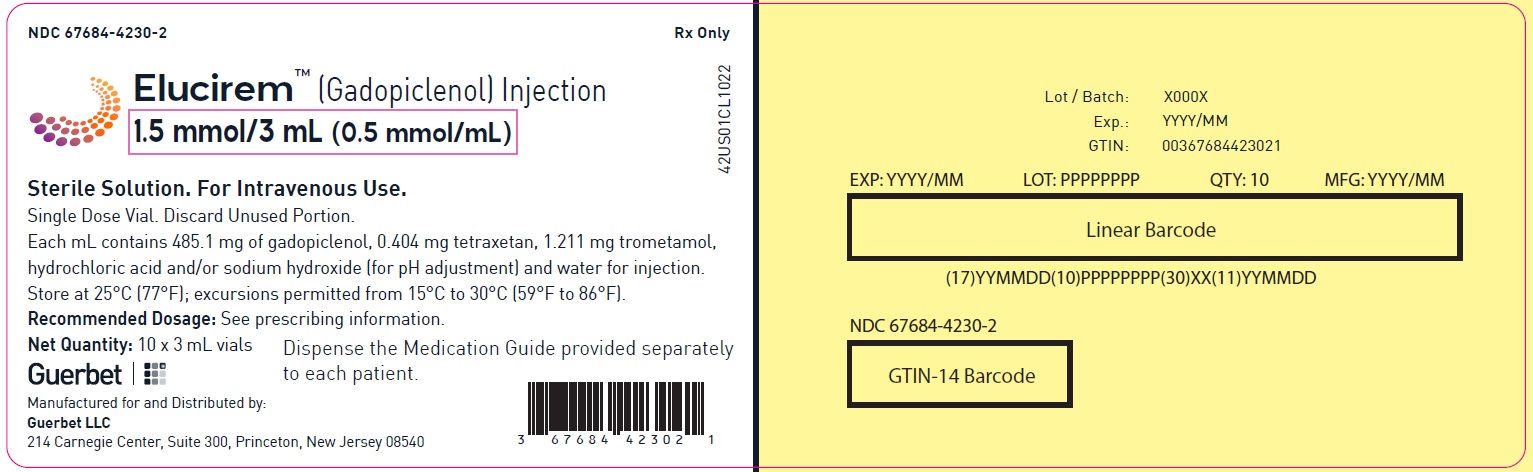
16 HOW SUPPLIED/STORAGE AND HANDLING HOW SUPPLIED ELUCIREM (gadopiclenol) injection is a clear, colorless to yellow aqueous solution supplied in the following presentations: Strength Sale Unit NDC Single-Dose Vial (glass) 1.5 mmol/3 mL (0.5 mmol/mL) Carton of 1 67684-4230-1 Carton of 10 67684-4230-2 3.75 mmol/7.5 mL (0.5 mmol/mL) Carton of 1 67684-4231-1 Carton of 10 67684-4231-2 5 mmol/10 mL (0.5 mmol/mL) Carton of 1 67684-4232-1 Carton of 10 67684-4232-2 7.5 mmol/15 mL (0.5 mmol/mL) Carton of 1 67684-4233-1 Carton of 10 67684-4233-2 Single-Dose Prefilled Syringe (plastic) 3.75 mmol/7.5 mL (0.5 mmol/mL) Carton of 1 67684-4240-1 Carton of 10 67684-4240-2 5 mmol/10 mL (0.5 mmol/mL) Carton of 1 67684-4241-1 Carton of 10 67684-4241-2 7.5 mmol/15 mL (0.5 mmol/mL) Carton of 1 67684-4242-1 Carton of 10 67684-4242-2 Pharmacy Bulk Package (glass) 15 mmol/30 mL (0.5 mmol/mL) Carton of 1 67684-4250-1 Carton of 25 67684-4250-2 25 mmol/50 mL (0.5 mmol/mL) Carton of 1 67684-4250-3 Carton of 25 67684-4250-4 50 mmol/100 mL (0.5 mmol/mL) Carton of 1 67684-4250-5 Carton of 6 67684-4250-6 Carton of 12 67684-4250-7 Imaging Bulk Package (glass) 15 mmol/30 mL (0.5 mmol/mL) Carton of 1 67684-4251-1 Carton of 25 67684-4251-2 25 mmol/50 mL (0.5 mmol/mL) Carton of 1 67684-4251-3 Carton of 25 67684-4251-4 50 mmol/100 mL (0.5 mmol/mL) Carton of 1 67684-4251-5 Carton of 6 67684-4251-6 Carton of 12 67684-4251-7 Storage and Handling Store at 25°C (77°F); excursions permitted from 15°C to 30°C (59°F to 86°F) [see USP, Controlled Room Temperature].
Do not freeze Pre-filled syringes.
📋 Description ▾
11 DESCRIPTION ELUCIREM (gadopiclenol) injection is a paramagnetic macrocyclic non-ionic gadolinium-based contrast agent for intravenous use. The chemical name for gadopiclenol is rac -[(2R,2'Ξ,2''Ξ)-2,2',2''-(3,6,9-triaza-κ 3 N 3 ,N 6 ,N 9 -1(2,6)-pyridina-κN 1 -cyclodecaphane-3,6,9-triyl)tris(5-{[(2Ξ)-2,3-dihydroxypropyl]amino}-5-oxopentanoato-κ 3 O 1 ,O 1 ',O 1 '')(3−)]gadolinium with a molecular weight of 970.11 g/mol and a molecular formula of 970.11 g/mol and a molecular formula of C 35 H 54 GdN 7 O 15 ELUCIREM is a sterile, nonpyrogenic, clear, colorless to yellow aqueous solution.
Each mL contains 485.1 mg (0.5 mmol) of gadopiclenol (containing 0.5 mmol of gadolinium) and the following inactive ingredients: 0.404 mg tetraxetan, 1.211 mg trometamol, hydrochloric acid and/or sodium hydroxide (for pH adjustment, if needed), and water for injection. The main physicochemical properties of ELUCIREM are provided in Table 2. Table 2.
Physicochemical properties of ELUCIREM Parameter Value Density at 20°C 1.211 g/cm 3 Mean viscosity at 20°C 12.6 mPa.s Mean viscosity at 37°C 7.6 mPa.s Osmolality at 37°C 850 mOsm/kg water pH 7.0 – 7.8 structure
💬 Information for Patients ▾
17 PATIENT COUNSELING INFORMATION Advise the patient to read the FDA-approved patient labeling (Medication Guide). Nephrogenic Systemic Fibrosis Inform the patient that ELUCIREM may increase the risk for NSF among patients with impaired elimination of the drugs and that NSF may result in fatal or debilitating fibrosis affecting the skin, muscle and internal organs. Instruct the patients to contact their physician if they develop signs or symptoms of NSF following ELUCIREM administration, such as burning, itching, swelling, scaling, hardening and tightening of the skin; red or dark patches on the skin; stiffness in joints with trouble moving, bending or straightening the arms, hands, legs or feet; pain in the hip bones or ribs; or muscle weakness [see Warnings and Precautions ( 5.2 )] .
Gadolinium Retention Advise patients that gadolinium is retained for months or years in brain, bone, skin, and other organs following ELUCIREM administration even in patients with normal renal function. The clinical consequences of retention are unknown. Retention depends on multiple factors and is greater following administration of linear GBCAs than following administration of macrocyclic GBCAs [see Warnings and Precautions ( 5.4 )] .
Injection Site Reactions Inform the patient that ELUCIREM may cause reactions along the venous injection site, such as mild and transient burning or pain or feeling of warmth or coldness at the injection site [see Warnings and Precautions ( 5.6 )] . Pregnancy Advise pregnant women of the potential risk of fetal exposure to ELUCIREM [see Use in Specific Populations ( 8.1 )] . Vials and pre-filled syringes manufactured by Liebel-Flarsheim Company LLC, 8800 Durant Road, Raleigh, North Carolina (NC) 27616-3104, USA Vials manufactured by BIPSO GmbH 78224 Singen, Germany Distributed by Guerbet LLC 214 Carnegie Center, Suite 300, Princeton, NJ 08540, USA logo
💬 Medication Guide ▾
MEDICATION GUIDE ELUCIREM TM (ah LOOS er em) (gadopiclenol) injection, for intravenous use What is the most important information I should know about ELUCIREM? GBCAs like ELUCIREM may cause serious side effects including death, coma, encephalopathy, and seizures when it is given intrathecally (injection given into the spinal canal). It is not known if ELUCIREM is safe and effective with intrathecal use.
ELUCIREM is not approved for this use. ELUCIREM contains a metal called gadolinium. Small amounts of gadolinium can stay in your body including the brain, bones, skin and other parts of your body for a long time (several months to years).
It is not known how gadolinium may affect you, but so far, studies have not found harmful effects in patients with normal kidneys. Rarely patients have reported pains, tiredness, and skin, muscle or bone ailments for a long time, but these symptoms have not been directly linked to gadolinium. There are different GBCAs that can be used for your MRI exam.
The amount of gadolinium that stays in the body is different for different gadolinium medicines. Gadolinium stays in the body more after gadodiamide than after gadoxetate disodium or gadobenate dimeglumine. Gadolinium stays in the body the least after, gadoterate meglumine, gadobutrol, gadoteridol, and gadopiclenol.
People who get many doses of gadolinium medicines, women who are pregnant and young children may be at increased risk from gadolinium staying in the body. Some people with kidney problems who get gadolinium medicines can develop a condition with severe thickening of the skin, muscles and other organs in the body (nephrogenic systemic fibrosis). Your healthcare provider should screen you to see how well your kidneys are working before you receive ELUCIREM.
What is ELUCIREM? ELUCIREM is a prescription medicine called a gadolinium-based contrast agent (GBCA). ELUCIREM, like other GBCAs, is injected into your vein and used with a magnetic resonance imaging (MRI) scanner.
An MRI exam with a GBCA, including ELUCIREM, helps your healthcare provider to see problems better than an MRI exam without a GBCA. Your healthcare provider has reviewed your medical records and has determined that you would benefit from using a GBCA with your MRI exam. Do not receive ELUCIREM if you have had a severe allergic reaction to ELUCIREM.
Before receiving ELUCIREM, tell your healthcare provider about all your medical conditions, including if you: have had any MRI procedures in the past where you received a GBCA. Your healthcare provider may ask you for more information including the dates of these MRI procedures. are pregnant or plan to become pregnant. It is not known if ELUCIREM can harm your unborn baby.
Talk to your healthcare provider about the possible risks to an unborn baby if a GBCA such as ELUCIREM is received during pregnancy. have kidney problems, diabetes, or high blood pressure. have had an allergic reaction to dyes (contrast agents) including GBCAs. What are possible side effects of ELUCIREM? See “What is the most important information I should know about ELUCIREM?” Allergic reactions.
ELUCIREM can cause allergic reactions that can sometimes be serious. Your healthcare provider will monitor you closely for symptoms of an allergic reaction. The most common side effects of ELUCIREM include: injection site pain, headache, nausea, injection site coldness, injection site warmth, dizziness, and localized swelling.
These are not all the possible side effects of ELUCIREM. Call your doctor for medical advice about side effects. You may report side effects to FDA at 1-800-FDA-1088.
General information about the safe and effective uses of ELUCIREM. Medicines are sometimes prescribed for purposes other than those listed in a Medication Guide. You can ask your healthcare provider for information about ELUCIREM that is written for health professionals.
What are the ingredients in ELUCIREM? Active ingredient: gadopiclenol Inactive ingredients: tetraxetan; trom…