
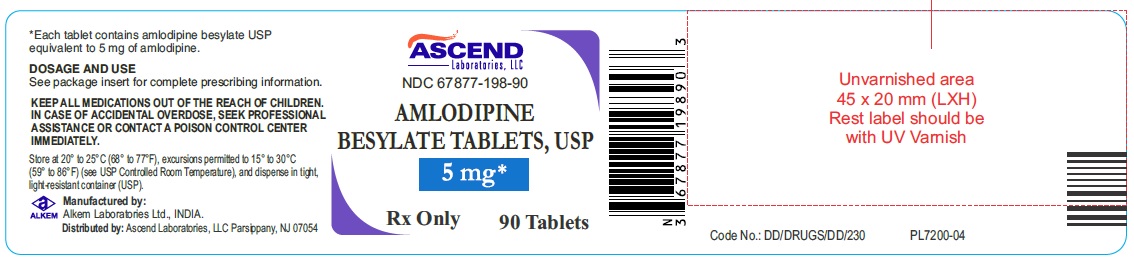
Amlodipine Besylate 5 mg Tablet, 90-count — NDC 67877-198-90 (Billing 67877-0198-90)
This is a package of 90 tablets of Amlodipine Besylate 5 mg Tablet from Ascend Laboratories, LLC, marketed since Oct 2010 and currently FDA-listed; retail pharmacies pay about $0.0102 per tablet (NADAC).
Identity & classification
Regulatory identifiers FDA, NLM and CMS codes for this package
Drug-database identifiers Medi-Span GPI and First Databank GCN / HICL / AHFS classification
- GSN (GCN sequence number): 016926
- GCN: 02683
- GPI-14 (Medi-Span): 34000003100330
- HICL (First Databank): 006494
- AHFS class code: 24:08.92.00
- RxCUI (RxNorm): 197361
Where does this data come from?
- FDA openFDA NDC Directory · synced Oct 1, 2026
- FDA label on DailyMed · label index refreshed Oct 1, 2026
- RxNorm (NLM RxNav) · catalog refreshed Oct 1, 2026
- Medi-Span GPI (licensed)
- First Databank (licensed) · refreshed Oct 1, 2026
RxNorm drug class
This medicine belongs to the Dihydropyridine Calcium Channel Blocker class.
Where does this data come from?
- RxClass (NLM) · catalog refreshed Oct 1, 2026
Clinical
- It lowers high blood pressure, which reduces your risk of strokes and heart attacks. It also treats certain kinds of angina (chest pain) and coronary artery disease. Your doctor wi...
- Take it by mouth, usually once a day, exactly as your prescriber directs. If you use Katerzia suspension, shake it first. It works gradually, so your dose may be adjusted over a we...
- Ankle or foot swelling is the most common, especially at higher doses. Some people feel tired, dizzy, flushed, or sleepy, or notice a pounding heartbeat. Call your doctor if these...
- Call if your chest pain worsens, you faint, you notice yellow skin or eyes, or you have swelling of the face or throat. Those need prompt attention.
Patient education
Supplement & herbal interactions
Some supplements/herbs that may interact with Amlodipine Besylate — tap one for details:
Amlodipine Besylate may be associated with lower levels of 2 nutrients — worth a chat with your pharmacist, not a cause for alarm.
Where does this data come from?
- MedlinePlus (NLM) · refreshed Oct 1, 2026
- FDA label on DailyMed · label index refreshed Oct 1, 2026
Ask a licensed pharmacist directly — free, answered by our team.
Pricing
A drug doesn't have one price. Each row is a different public payment system, and none is what you'd pay at the counter — that depends on your insurance. The ⓘ on each row explains what it measures.
| Price system | Per ea | Per package |
|---|---|---|
| Retail pharmacies payNADAC · weekly | $0.010 | $0.92 / 90 tablets |
| Medicaid paysCMS SDUD · 12 mo | $0.1815 | $16.34 / 90 tablets |
| Medicare drug plans payPart D · Q2 2026 | $0.0799 | $7.19 / 90 tablets |
Where does this data come from?
- CMS NADAC weekly file · file of Sep 30, 2026
- CMS ASP pricing files · refreshed Sep 20, 2026
- CMS Medicaid State Drug Utilization Data · through Q1 2026
- CMS Part D plan pricing files · refreshed Sep 24, 2026
- VA National Acquisition Center price file
Packaging — all sizes for this product
| Package NDC | Description | Per unit | Per pack | Marketing start | Marketing end | Status |
|---|---|---|---|---|---|---|
| 67877-0198-05 67877-198-05 | 500 TABLET in 1 BOTTLE | $0.0102 / ea | $5.09 | 2010-10-20 | — | Active |
| 67877-0198-10 67877-198-10 Main listing | 1000 TABLET in 1 BOTTLE | $0.0102 / ea | $10.18 | 2010-10-20 | — | Active |
| 67877-0198-38 67877-198-38 | 10 BLISTER PACK in 1 CARTON / 10 TABLET in 1 BLISTER PACK | — | — | 2010-10-20 | — | Active |
| 67877-0198-90 You're viewing this | 90 TABLET in 1 BOTTLE | $0.0102 / ea | $0.92 | 2010-10-20 | — | Active |
This pack effectively ties for the lowest per-ea cost of the 3 priced pack sizes ($0.0102 NADAC).
This pack accounts for about 4.0% of this product's recent Medicaid fills; most go to the 1000 tablets pack. See all packs ↓
Pack size FAQ
What quantity is in this package?
How does this package differ from NDC 67877-0198-38?
What NDC number is used to bill for this package of Amlodipine Besylate 5 mg Tablet?
Prices are the latest CMS NADAC pharmacy acquisition cost per NDC; per-pack figures are per-unit × pack quantity, shown only when the pack is denominated in the same measure NADAC prices.
Therapeutic equivalents
| Product | Labeler | Pack | NADAC/unit | TE | Status | Price vs. this |
|---|---|---|---|---|---|---|
| Amlodipine Besylate 5 mg 42806-0056-05 | Epic | 500 tablets | $0.010 | AB | Availability likely | save 1% |
| Amlodipine Besylate 5 mg 00480-7167-98 | Teva | 90 tablets | $0.010 | AB | Discontinued | — |
| Amlodipine Besylate 5 mg 00904-6370-61 | Major | 100 tablets | $0.010 | AB | Availability likely | — |
| Amlodipine Besylate 5 mg 29300-0397-05 | Unichem | 500 tablets | $0.010 | AB | Availability likely | — |
| amlodipine besylate 5 mg 59762-2010-01 | Mylan | 1000 tablets | $0.010 | AB | Availability likely | — |
| Amlodipine Besylate 5 mg 60687-0488-01 | American | 100 tablets | $0.010 | AB | Availability likely | — |
| Amlodipine Besylate 5 mgthis 67877-0198-90 | Ascend | 90 tablets | $0.010 | AB | Availability likely | — |
| Amlodipine Besylate 5 mg 67877-0901-05 | Ascend | 500 tablets | $0.010 | AB | Availability likely | — |
| Amlodipine Besylate 5 mg 68180-0455-01 | Lupin | 90 tablets | $0.010 | AB | Availability likely | — |
| Amlodipine Besylate 5 mg 68645-0515-54 | Legacy | 30 tablets | $0.010 | AB | Availability likely | — |
| Amlodipine Besylate 5 mg 69097-0127-05 | Cipla | 90 tablets | $0.010 | AB | Availability likely | — |
| AMLODIPINE BESYLATE 5 mg 69584-0022-09 | Oxford | 90 tablets | $0.010 | AB | Availability likely | — |
| Amlodipine Besylate 5 mg 82009-0027-10 | Quallent | 1000 tablets | $0.010 | AB | Availability likely | — |
| Amlodipine Besylate 5 mg 69097-0837-05 | Cipla | 90 tablets | $0.014 | AB | FDA listed | +40% |
| Norvasc 5 mg 00069-1530-41 | PFIZER | 100 tablets | $8.138 | AB | Discontinued | +79846% |
| Norvasc 5 mg 58151-0354-30 | Viatris | 300 tablets | $8.693 | AB | Availability likely | +85294% |
| Amlodipine Besylate 5 mg 00615-8430-05 | NCS | 15 tablets | — | AB | FDA listed | — |
| Amlodipine Besylate 5 mg 42291-0026-10 | AvKARE | 1000 tablets | — | AB | FDA listed | — |
| Amlodipine Besylate 5 mg 42708-0066-30 | QPharma | 30 tablets | — | AB | FDA listed | — |
| Amlodipine Besylate 5 mg 43063-0564-30 | PD-Rx | 30 tablets | — | AB | FDA listed | — |
| Amlodipine Besylate 5 mg 43489-0100-01 | China | 90 tablets | — | AB | FDA listed | — |
| Amlodipine Besylate 5 mg 48433-0156-20 | Safecor | 100 tablets | — | AB | FDA listed | — |
| Amlodipine Besylate 5 mg 50090-2524-00 | A-S | 30 tablets | — | AB | FDA listed | — |
| Amlodipine Besylate 5 mg 50090-5059-00 | A-S | 90 tablets | — | AB | FDA listed | — |
| Amlodipine Besylate 5 mg 50090-6876-00 | A-S | 30 tablets | — | AB | FDA listed | — |
| Amlodipine Besylate 5 mg 50090-6877-00 | A-S | 90 tablets | — | AB | FDA listed | — |
| Amlodipine Besylate 5 mg 51407-0950-10 | GSMS, | 1000 tablets | — | AB | FDA listed | — |
| Amlodipine Besylate 5 mg 51655-0044-52 | Northwind | 30 tablets | — | AB | FDA listed | — |
| Amlodipine Besylate 5 mg 51655-0291-26 | Northwind | 90 tablets | — | AB | FDA listed | — |
| amlodipine besylate 5 mg 52605-0042-10 | POLYGEN | 1000 tablets | — | AB | Discontinued | — |
| Amlodipine Besylate 5 mg 55154-6892-00 | Cardinal | 10 tablets | — | AB | FDA listed | — |
| Amlodipine Besylate 5 mg 55700-0543-30 | Quality | 30 tablets | — | AB | Discontinued | — |
| Amlodipine besylate 5 mg 63629-1024-02 | Bryant | 30 tablets | — | AB | FDA listed | — |
| Amlodipine Besylate 5 mg 65841-0621-01 | Zydus | 100 tablets | — | AB | FDA listed | — |
| Amlodipine Besylate 5 mg 65862-0102-05 | Aurobindo | 500 tablets | — | — | FDA listed | — |
| Amlodipine Besylate 5 mg 67296-1876-09 | Redpharm | 30 tablets | — | AB | FDA listed | — |
| Amlodipine Besylate 5 mg 68071-4251-01 | NuCare | 120 tablets | — | AB | FDA listed | — |
| Amlodipine Besylate 5 mg 68071-5151-09 | NuCare | 90 tablets | — | AB | FDA listed | — |
| Amlodipine Besylate 5 mg 68382-0122-01 | Zydus | 100 tablets | — | AB | FDA listed | — |
| Amlodipine Besylate 5 mg 68788-8627-01 | Preferred | 100 tablets | — | AB | FDA listed | — |
| Amlodipine Besylate 5 mg 68788-9345-01 | Preferred | 100 tablets | — | AB | FDA listed | — |
| Amlodipine Besylate 5 mg 70518-0835-00 | REMEDYREPACK | 30 tablets | — | AB | Discontinued | — |
| Amlodipine Besylate 5 mg 70518-2981-00 | REMEDYREPACK | 30 tablets | — | AB | Discontinued | — |
| Amlodipine Besylate 5 mg 70518-3592-00 | REMEDYREPACK | 30 tablets | — | AB | FDA listed | — |
| Amlodipine Besylate 5 mg 71205-0596-30 | Proficient | 30 tablets | — | AB | FDA listed | — |
| Amlodipine Besylate 5 mg 71205-0599-30 | Proficient | 30 tablets | — | AB | FDA listed | — |
| Amlodipine Besylate 5 mg 71335-0473-00 | Bryant | 5 tablets | — | AB | Discontinued | — |
| Amlodipine Besylate 5 mg 71335-1278-00 | Bryant | 5 tablets | — | AB | FDA listed | — |
| Amlodipine Besylate 5 mg 71335-2359-00 | Bryant | 5 tablets | — | AB | FDA listed | — |
| Amlodipine Besylate 5 mg 71610-0539-60 | Aphena | 90 tablets | — | AB | FDA listed | — |
| AMLODIPINE BESYLATE 5 mg 71610-0687-15 | Aphena | 15 tablets | — | AB | FDA listed | — |
| Amlodipine Besylate 5 mg 71610-0691-15 | Aphena | 15 tablets | — | AB | FDA listed | — |
| Amlodipine besylate 5 mg 71610-0722-15 | Aphena | 15 tablets | — | AB | FDA listed | — |
| Amlodipine Besylate 5 mg 71610-0888-15 | Aphena | 15 tablets | — | AB | FDA listed | — |
| Amlodipine Besylate 5 mg 71610-0956-30 | Aphena | 30 tablets | — | AB | FDA listed | — |
| AMLODIPINE BESYLATE 5 mg 71610-0985-60 | Aphena | 90 tablets | — | AB | FDA listed | — |
| Amlodipine Besylate 5 mg 72189-0520-30 | Direct_Rx | 30 tablets | — | AB | FDA listed | — |
| AMLODIPINE BESYLATE 5 mg 72789-0261-90 | PD-Rx | 90 tablets | — | AB | FDA listed | — |
| Amlodipine Besylate 5 mg 72789-0515-30 | PD-Rx | 30 tablets | — | AB | FDA listed | — |
| Amlodipine besylate 5 mg 76282-0238-05 | Exelan | 500 tablets | — | AB | FDA listed | — |
| Amlodipine besylate 5 mg 76282-0508-05 | Exelan | 500 tablets | — | AB | FDA listed | — |
| AMLODIPINE BESYLATE 5 mg 82804-0970-00 | Proficient | 100 tablets | — | AB | FDA listed | — |
| Amlodipine Besylate 5 mg 83008-0035-30 | Quality | 30 tablets | — | AB | FDA listed | — |
| Amlodipine Besylate 5 mg 87441-0017-01 | Unit | 30 tablets | — | AB | FDA listed | — |
| Amlodipine Besylate 5 mg 00615-8654-05 | NCS | 15 tablets | — | AB | FDA listed | — |
| Amlodipine Besylate 5 mg 60687-0972-01 | American | 100 tablets | — | AB | FDA listed | — |
| Amlodipine Besylate 5 mg 42708-0204-30 | QPharma, | 30 tablets | — | AB | FDA listed | — |
Where does this data come from?
- FDA openFDA NDC Directory · synced Oct 1, 2026
- FDA Orange Book · refreshed Sep 3, 2026
- CMS NADAC weekly file · file of Sep 30, 2026
Availability & generic status
This product is an FDA-approved generic. Other versions of the same drug are listed under Therapeutic equivalents, least expensive first.
Where does this data come from?
- FDA Orange Book · refreshed Sep 3, 2026
What it looks like
Where does this data come from?
- FDA label on DailyMed · label index refreshed Oct 1, 2026
Inactive Ingredients / Excipients
Inactive ingredients, also called excipients, are components of the drug product other than the active ingredient. They may include fillers, dyes, coatings, preservatives, flavors, or other formulation ingredients.
💡 Tap an ingredient (hover on desktop) to see what it is and why it’s used.
-
UNII L11K75P92J
A mineral salt made from calcium and phosphate. It acts as a filler and binder in tablets to add bulk and help hold the medicine together in solid form.
-
UNII OP1R32D61U
Microcrystalline cellulose is a purified form of cellulose, a natural fiber from plant sources. It acts as a binder and filler in tablets and capsules, helping hold ingredients together and give the medicine its shape and size.
-
UNII 70097M6I30
Magnesium stearate is a salt made from magnesium and stearic acid, a fatty substance. It's used in tablets and capsules as a lubricant and glidant to help ingredients flow smoothly during manufacturing and prevent sticking.
-
UNII ETJ7Z6XBU4
Silicon dioxide is a naturally occurring mineral used as a glidant and anti-caking agent. It helps powder ingredients flow smoothly and prevents clumping during manufacturing and storage.
-
UNII 5856J3G2A2
A starch-based powder made from potatoes and processed with sodium. It acts as a disintegrant, helping the tablet or capsule break apart quickly in the stomach so the medicine can be absorbed.
5 inactive ingredients listed in the exact product block matched to this NDC.
Where does this data come from?
ingredient classCode="IACT" elements from the exact product block matched by this NDC. Label-section narrative from DailyMed / the openFDA label index is shown separately when available.- FDA label on DailyMed · label index refreshed Oct 1, 2026
- FDA openFDA NDC Directory · synced Oct 1, 2026
Inactive ingredient FAQ
Are inactive ingredients the same for every manufacturer?
Why might an inactive ingredient be missing?
Can inactive ingredients matter?
Manufacturer & labeler
Where does this data come from?
- FDA openFDA NDC Directory · synced Oct 1, 2026
- Drugs@FDA
Full prescribing information FDA SPL
🎯 Indications and Usage ▾
1 INDICATIONS & USAGE Amlodipine besylate tablets is a calcium channel blocker and may be used alone or in combination with other antihypertensive and antianginal agents for the treatment of: • Hypertension ( 1.1 ) Amlodipine besylate tablets is indicated for the treatment of hypertension, to lower blood pressure. Lowering blood pressure reduces the risk of fatal and nonfatal cardiovascular events, primarily strokes and myocardial infarctions. • Coronary Artery Disease ( 1.2 ) Chronic Stable Angina Vasospastic Angina (Prinzmetal’s or Variant Angina) Angiographically Documented Coronary Artery Disease in patients without heart failure or an ejection fraction < 40%
1.1Hypertension Amlodipine besylate tablets is indicated for the treatment of hypertension, to lower blood pressure. Lowering blood pressure reduces the risk of fatal and nonfatal cardiovascular events, primarily strokes and myocardial infarctions. These benefits have been seen in controlled trials of antihypertensive drugs from a wide variety of pharmacologic classes including Amlodipine besylate tablets.
Control of high blood pressure should be part of comprehensive cardiovascular risk management, including, as appropriate, lipid control, diabetes management, antithrombotic therapy, smoking cessation, exercise, and limited sodium intake. Many patients will require more than one drug to achieve blood pressure goals. For specific advice on goals and management, see published guidelines, such as those of the National High Blood Pressure Education Program’s Joint National Committee on Prevention, Detection, Evaluation, and Treatment of High Blood Pressure (JNC).
Numerous antihypertensive drugs, from a variety of pharmacologic classes and with different mechanisms of action, have been shown in randomized controlled trials to reduce cardiovascular morbidity and mortality, and it can be concluded that it is blood pressure reduction, and not some other pharmacologic property of the drugs, that is largely responsible for those benefits. The largest and most consistent cardiovascular outcome benefit has been a reduction in the risk of stroke, but reductions in myocardial infarction and cardiovascular mortality also have been seen regularly.
Elevated systolic or diastolic pressure causes increased cardiovascular risk, and the absolute risk increase per mmHg is greater at higher blood pressures, so that even modest reductions of severe hypertension can provide substantial benefit. Relative risk reduction from blood pressure reduction is similar across populations with varying absolute risk, so the absolute benefit is greater in patients who are at higher risk independent of their hypertension (for example, patients with diabetes or hyperlipidemia), and such patients would be expected to benefit from more aggressive treatment to a lower blood pressure goal.
Some antihypertensive drugs have smaller blood pressure effects (as monotherapy) in black patients, and many antihypertensive drugs have additional approved indications and effects (e.g., on angina, heart failure, or diabetic kidney disease). These considerations may guide selection of therapy. Amlodipine besylate tablets may be used alone or in combination with other antihypertensive agents.
1.2Coronary Artery Disease (CAD) Chronic Stable Angina Amlodipine besylate tablets is indicated for the symptomatic treatment of chronic stable angina. Amlodipine besylate tablets may be used alone or in combination with other antianginal agents. Vasospastic Angina (Prinzmetal’s or Variant Angina) Amlodipine besylate tablets is indicated for the treatment of confirmed or suspected vasospastic angina.
Amlodipine besylate tablets may be used as monotherapy or in combination with other antianginal agents. Angiographically Documented CAD In patients with recently documented CAD by angiography and without heart failure or an ejection fraction <40%, Amlodipine besylate tablets is indicated to reduce the risk of hospitalization for angina and… [Excerpted — this section continues on DailyMed.]
⏱️ Dosage and Administration ▾
2 DOSAGE & ADMINISTRATION Adult recommended starting dose: 5 mg once daily with maximum dose 10 mg once daily. ( 2.1 ) Small, fragile, or elderly patients, or patients with hepatic insufficiency may be started on 2.5 mg once daily. ( 2.1 ) Pediatric starting dose: 2.5 mg to 5 mg once daily. ( 2.2 ) Important Limitation: Doses in excess of 5 mg daily have not been studied in pediatric patients. ( 2.2 )
2.1Adults The usual initial antihypertensive oral dose of Amlodipine besylate tablets is 5 mg once daily, and the maximum dose is 10 mg once daily. Small, fragile, or elderly patients, or patients with hepatic insufficiency may be started on 2.5 mg once daily and this dose may be used when adding Amlodipine besylate tablets to other antihypertensive therapy. Adjust dosage according to blood pressure goals.
In general, wait 7 to 14 days between titration steps. Titrate more rapidly, however, if clinically warranted, provided the patient is assessed frequently. Angina: The recommended dose for chronic stable or vasospastic angina is 5 to 10 mg, with the lower dose suggested in the elderly and in patients with hepatic insufficiency.
Most patients will require 10 mg for adequate effect. Coronary artery disease: The recommended dose range for patients with coronary artery disease is 5 to 10 mg once daily. In clinical studies, the majority of patients required 10 mg [see Clinical Studies (14.4) ] .
2.2Children The effective antihypertensive oral dose in pediatric patients ages 6 to 17 years is 2.5 mg to 5 mg once daily. Doses in excess of 5 mg daily have not been studied in pediatric patients [see Clinical Pharmacology (12.4) , Clinical Studies (14.1) ] .
💊 Dosage Forms and Strengths ▾
3 DOSAGE FORMS & STRENGTHS Tablets: 2.5 mg white to off white, round, flat-faced, beveled edge tablets '211' debossed on one side and plain on the other side. Tablets: 5 mg white to off white, round, flat-faced, beveled edge tablets '210' debossed on one side and plain on the other side. Tablets: 10 mg white to off white, round, flat-faced, beveled edge tablets '209' debossed on one side and plain on the other side. Tablets: 2.5 mg, 5 mg, and 10 mg ( 3 )
⛔ Contraindications ▾
4 CONTRAINDICATIONS Amlodipine besylate tablets are contraindicated in patients with known sensitivity to amlodipine. Known sensitivity to amlodipine ( 4 )
⚠️ Warnings and Cautions ▾
5 WARNINGS AND PRECAUTIONS • Symptomatic hypotension is possible, particularly in patients with severe aortic stenosis. However, acute hypotension is unlikely. ( 5.1 ) • Worsening angina and acute myocardial infarction can develop after starting or increasing the dose of amlodipine particularly in patients with severe obstructive coronary artery disease. ( 5.2 ) • Titrate slowly in patients with severe hepatic impairment. ( 5.3 )
5.1Hypotension Symptomatic hypotension is possible, particularly in patients with severe aortic stenosis. Because of the gradual onset of action, acute hypotension is unlikely.
5.2Increased Angina or Myocardial Infarction Worsening angina and acute myocardial infarction can develop after starting or increasing the dose of amlodipine besylate tablets, particularly in patients with severe obstructive coronary artery disease.
5.3Patients with Hepatic Failure Because amlodipine is extensively metabolized by the liver and the plasma elimination half-life (t 1/2 ) is 56 hours in patients with impaired hepatic function, titrate slowly when administering amlodipine to patients with severe hepatic impairment.
🤒 Adverse Reactions ▾
6 ADVERSE REACTIONS Most common adverse reaction to amlodipine is edema which occurred in a dose related manner. Other adverse experiences not dose related but reported with an incidence >1.0% are fatigue, nausea, abdominal pain, and somnolence. (6) To report SUSPECTED ADVERSE REACTIONS, contact Ascend Laboratories, LLC at 1-877-ASC-RX01 (877-272-7901) or FDA at 1-800-FDA-1088 or www.fda.gov/medwatch
6.1Clinical Trials Experience Because clinical trials are conducted under widely varying conditions, adverse reaction rates observed in the clinical trials of a drug cannot be directly compared to rates in the clinical trials of another drug and may not reflect the rates observed in practice. Amlodipine has been evaluated for safety in more than 11,000 patients in U.S. and foreign clinical trials. In general, treatment with amlodipine was well-tolerated at doses up to 10 mg daily.
Most adverse reactions reported during therapy with amlodipine were of mild or moderate severity. In controlled clinical trials directly comparing amlodipine (N=1730) at doses up to 10 mg to placebo (N=1250), discontinuation of amlodipine because of adverse reactions was required in only about 1.5% of patients and was not significantly different from placebo (about 1%). The most commonly reported side effects more frequent than placebo are reflected in the table below.
The incidence (%) of side effects that occurred in a dose related manner are as follows: 2.5mg N=275 Amlodipine 5mg N=296 10mg N=268 Placebo N=520 Edema 1.8 3.0 10.8
0.6Dizziness 1.1 3.4 3.4
1.5Flushing 0.7 1.4 2.6
0.0Palpitation 0.7 1.4 4.5
0.6Other adverse reactions that were not clearly dose related but were reported with an incidence greater than 1.0% in placebo-controlled clinical trials include the following: Amlodipine (%) (N=1730) Placebo (%) (N=1250) Fatigue 4.5
2.8Nausea 2.9
1.9Abdominal Pain 1.6
0.3Somnolence 1.4
0.6For several adverse experiences that appear to be drug and dose related, there was a greater incidence in women than men associated with amlodipine treatment as shown in the following table: Amlodipine Placebo Male=% (N=1218) Female=% (N=512) Male=% (N=914) Female=% (N=336) Edema 5.6 14.6 1.4
5.1Flushing 1.5 4.5 0.3
0.9Palpitations 1.4 3.3 0.9
0.9Somnolence 1.3 1.6 0.8
0.3The following events occurred in <1% but >0.1% of patients in controlled clinical trials or under conditions of open trials or marketing experience where a causal relationship is uncertain; they are listed to alert the physician to a possible relationship: Cardiovascular: arrhythmia (including ventricular tachycardia and atrial fibrillation), bradycardia, chest pain, peripheral ischemia, syncope, tachycardia, vasculitis. Central and Peripheral Nervous System: hypoesthesia, neuropathy peripheral, paresthesia, tremor, vertigo.
Gastrointestinal: anorexia, constipation, dysphagia, diarrhea, flatulence, pancreatitis, vomiting, gingival hyperplasia. General: allergic reaction, asthenia, 1 back pain, hot flushes, malaise, pain, rigors, weight gain, weight decrease. Musculoskeletal System: arthralgia, arthrosis, muscle cramps, 1 myalgia.
Psychiatric: sexual dysfunction (male 1 and female), insomnia, nervousness, depression, abnormal dreams, anxiety, depersonalization. Respiratory System: dyspnea, 1 epistaxis. Skin and Appendages: angioedema, erythema multiforme, pruritus, 1 rash, 1 rash erythematous, rash maculopapular.
Special Senses: abnormal vision, conjunctivitis, diplopia, eye pain, tinnitus. Urinary System: micturition frequency, micturition disorder, nocturia. Autonomic Nervous System: dry mouth, sweating increased.
Metabolic and Nutritional: hyperglycemia, thirst. Hemopoietic: leukopenia, purpura, thrombocytopenia. 1 These events occurred in less than 1% in placebo-controlled trials, but the incidence of these side effects was between 1% and 2% in all multiple dose studies.
Amlodipine therapy has not been associated with clinically significant changes in routine laboratory tests. No cli… [Excerpted — this section continues on DailyMed.]
🔄 Drug Interactions ▾
7 DRUG INTERACTIONS Do not exceed doses greater than 20 mg daily of simvastatin. (7.2)
7.1Impact of Other Drugs on Amlodipine CYP3A Inhibitors Co-administration with CYP3A inhibitors (moderate and strong) results in increased systemic exposure to amlodipine and may require dose reduction. Monitor for symptoms of hypotension and edema when amlodipine is co-administered with CYP3A inhibitors to determine the need for dose adjustment [see Clinical Pharmacology (12.3) ] . CYP3A Inducers No information is available on the quantitative effects of CYP3A inducers on amlodipine.
Blood pressure should be closely monitored when amlodipine is co-administered with CYP3A inducers. Sildenafil Monitor for hypotension when sildenafil is co-administered with amlodipine [see Clinical Pharmacology (12.2)
7.2Impact of Amlodipine on Other Drugs Simvastatin Co-administration of simvastatin with amlodipine increases the systemic exposure of simvastatin. Limit the dose of simvastatin in patients on amlodipine to 20 mg daily [see Clinical Pharmacology (12.3) ] . Immunosuppressants Amlodipine may increase the systemic exposure of cyclosporine or tacrolimus when co-administered.
Frequent monitoring of trough blood levels of cyclosporine and tacrolimus is recommended and adjust the dose when appropriate [see Clinical Pharmacology (12.3) ] .
👥 Use in Specific Populations ▾
8 USE IN SPECIFIC POPULATIONS Pediatric: Effect on patients less than 6 years old is not known. ( 8.4 ) Geriatric: Start dosing at the low end of the dose range. ( 8.5 )
8.1Pregnancy Risk Summary The limited available data based on post-marketing reports with amlodipine use in pregnant women are not sufficient to inform a drug-associated risk for major birth defects and miscarriage. There are risks to the mother and fetus associated with poorly controlled hypertension in pregnancy [see Clinical Considerations ]. In animal reproduction studies, there was no evidence of adverse developmental effects when pregnant rats and rabbits were treated orally with amlodipine maleate during organogenesis at doses approximately 10 and 20-times the maximum recommended human dose (MRHD), respectively.
However for rats, litter size was significantly decreased (by about 50%) and the number of intrauterine deaths was significantly increased (about 5-fold). Amlodipine has been shown to prolong both the gestation period and the duration of labor in rats at this dose [ see Data ]. The estimated background risk of major birth defects and miscarriage for the indicated population is unknown.
All pregnancies have a background risk of birth defect, loss or other adverse outcomes. In the U.S. general population, the estimated background risk of major birth defects and miscarriage in clinically recognized pregnancies is 2%-4% and 15%-20%, respectively. Clinical Considerations Disease-associated maternal and/or embryo/fetal risk Hypertension in pregnancy increases the maternal risk for pre-eclampsia, gestational diabetes, premature delivery, and delivery complications (e.g., need for cesarean section and post-partum hemorrhage).
Hypertension increases the fetal risk for intrauterine growth restriction and intrauterine death. Pregnant women with hypertension should be carefully monitored and managed accordingly. Data Animal Data No evidence of teratogenicity or other embryo/fetal toxicity was found when pregnant rats and rabbits were treated orally with amlodipine maleate at doses up to 10 mg amlodipine/kg/day (approximately 10 and 20 times the MRHD based on body surface area, respectively) during their respective periods of major organogenesis.
However for rats, litter size was significantly decreased (by about 50%) and the number of intrauterine deaths was significantly increased (about 5-fold)in rats receiving amlodipine maleate at a dose equivalent to 10 mg amlodipine/kg/day for 14 days before mating and throughout mating and gestation. Amlodipine maleate has been shown to prolong both the gestation period and the duration of labor in rats at this dose.
8.2Lactation Risk Summary Limited available data from a published clinical lactation study reports that amlodipine is present in human milk at an estimated median relative infant dose of 4.2%. No adverse effects of amlodipine on the breastfed infant have been observed. There is no available information on the effects of amlodipine on milk product
8.4Pediatric Use Amlodipine besylate tablets (2.5 to 5 mg daily) is effective in lowering blood pressure in patients 6 to 17 years [see Clinical Studies (14.1) ] . Effect of amlodipine on blood pressure in patients less than 6 years of age is not known.
8.5Geriatric Use Clinical studies of amlodipine did not include sufficient numbers of subjects aged 65 and over to determine whether they respond differently from younger subjects. Other reported clinical experience has not identified differences in responses between the elderly and younger patients. In general, dose selection for an elderly patient should be cautious, usually starting at the low end of the dosing range, reflecting the greater frequency of decreased hepatic, renal, or cardiac function, and of concomitant disease or other drug therapy.
Elderly patients have decreased clearance of amlodipine with a resulting increase of AUC of approximately 40 to 60%, and a lower initial dose may be required [s… [Excerpted — this section continues on DailyMed.]
🤰 Pregnancy ▾
8.1Pregnancy Risk Summary The limited available data based on post-marketing reports with amlodipine use in pregnant women are not sufficient to inform a drug-associated risk for major birth defects and miscarriage. There are risks to the mother and fetus associated with poorly controlled hypertension in pregnancy [see Clinical Considerations ]. In animal reproduction studies, there was no evidence of adverse developmental effects when pregnant rats and rabbits were treated orally with amlodipine maleate during organogenesis at doses approximately 10 and 20-times the maximum recommended human dose (MRHD), respectively.
However for rats, litter size was significantly decreased (by about 50%) and the number of intrauterine deaths was significantly increased (about 5-fold). Amlodipine has been shown to prolong both the gestation period and the duration of labor in rats at this dose [ see Data ]. The estimated background risk of major birth defects and miscarriage for the indicated population is unknown.
All pregnancies have a background risk of birth defect, loss or other adverse outcomes. In the U.S. general population, the estimated background risk of major birth defects and miscarriage in clinically recognized pregnancies is 2%-4% and 15%-20%, respectively. Clinical Considerations Disease-associated maternal and/or embryo/fetal risk Hypertension in pregnancy increases the maternal risk for pre-eclampsia, gestational diabetes, premature delivery, and delivery complications (e.g., need for cesarean section and post-partum hemorrhage).
Hypertension increases the fetal risk for intrauterine growth restriction and intrauterine death. Pregnant women with hypertension should be carefully monitored and managed accordingly. Data Animal Data No evidence of teratogenicity or other embryo/fetal toxicity was found when pregnant rats and rabbits were treated orally with amlodipine maleate at doses up to 10 mg amlodipine/kg/day (approximately 10 and 20 times the MRHD based on body surface area, respectively) during their respective periods of major organogenesis.
However for rats, litter size was significantly decreased (by about 50%) and the number of intrauterine deaths was significantly increased (about 5-fold)in rats receiving amlodipine maleate at a dose equivalent to 10 mg amlodipine/kg/day for 14 days before mating and throughout mating and gestation. Amlodipine maleate has been shown to prolong both the gestation period and the duration of labor in rats at this dose.
🧒 Pediatric Use ▾
8.4Pediatric Use Amlodipine besylate tablets (2.5 to 5 mg daily) is effective in lowering blood pressure in patients 6 to 17 years [see Clinical Studies (14.1) ] . Effect of amlodipine on blood pressure in patients less than 6 years of age is not known.
🧓 Geriatric Use ▾
8.5Geriatric Use Clinical studies of amlodipine did not include sufficient numbers of subjects aged 65 and over to determine whether they respond differently from younger subjects. Other reported clinical experience has not identified differences in responses between the elderly and younger patients. In general, dose selection for an elderly patient should be cautious, usually starting at the low end of the dosing range, reflecting the greater frequency of decreased hepatic, renal, or cardiac function, and of concomitant disease or other drug therapy.
Elderly patients have decreased clearance of amlodipine with a resulting increase of AUC of approximately 40 to 60%, and a lower initial dose may be required [see Dosage and Administration (2.1) ] .
🆘 Overdosage ▾
10 OVERDOSAGE Overdosage might be expected to cause excessive peripheral vasodilation with marked hypotension and possibly a reflex tachycardia. In humans, experience with intentional overdosage of amlodipine is limited. Single oral doses of amlodipine maleate equivalent to 40 mg amlodipine/kg and 100 mg amlodipine/kg in mice and rats, respectively, caused deaths.
Single oral amlodipine maleate doses equivalent to 4 or more mg amlodipine/kg or higher in dogs (11 or more times the maximum recommended human dose on a mg/m 2 basis) caused a marked peripheral vasodilation and hypotension. If massive overdose should occur, initiate active cardiac and respiratory monitoring. Frequent blood pressure measurements are essential.
Should hypotension occur, provide cardiovascular support including elevation of the extremities and the judicious administration of fluids. If hypotension remains unresponsive to these conservative measures, consider administration of vasopressors (such as phenylephrine) with attention to circulating volume and urine output. As amlodipine is highly protein bound, hemodialysis is not likely to be of benefit.
🧬 Clinical Pharmacology ▾
12 CLINICAL PHARMACOLOGY
12.1Mechanism of Action Amlodipine is a dihydropyridine calcium antagonist (calcium ion antagonist or slow-channel blocker) that inhibits the transmembrane influx of calcium ions into vascular smooth muscle and cardiac muscle. Experimental data suggest that amlodipine binds to both dihydropyridine and nondihydropyridine binding sites. The contractile processes of cardiac muscle and vascular smooth muscle are dependent upon the movement of extracellular calcium ions into these cells through specific ion channels.
Amlodipine inhibits calcium ion influx across cell membranes selectively, with a greater effect on vascular smooth muscle cells than on cardiac muscle cells. Negative inotropic effects can be detected in vitro but such effects have not been seen in intact animals at therapeutic doses. Serum calcium concentration is not affected by amlodipine.
Within the physiologic pH range, amlodipine is an ionized compound (pKa=8.6), and its kinetic interaction with the calcium channel receptor is characterized by a gradual rate of association and dissociation with the receptor binding site, resulting in a gradual onset of effect. Amlodipine is a peripheral arterial vasodilator that acts directly on vascular smooth muscle to cause a reduction in peripheral vascular resistance and reduction in blood pressure. The precise mechanisms by which amlodipine relieves angina have not been fully delineated, but are thought to include the following: Exertional Angina: In patients with exertional angina, amlodipine reduces the total peripheral resistance (afterload) against which the heart works and reduces the rate pressure product, and thus myocardial oxygen demand, at any given level of exercise.
Vasospastic Angina: Amlodipine has been demonstrated to block constriction and restore blood flow in coronary arteries and arterioles in response to calcium, potassium epinephrine, serotonin, and thromboxane A2 analog in experimental animal models and in human coronary vessels in vitro . This inhibition of coronary spasm is responsible for the effectiveness of amlodipine in vasospastic (Prinzmetal's or variant) angina.
12.2Pharmacodynamics Hemodynamics: Following administration of therapeutic doses to patients with hypertension, amlodipine produces vasodilation resulting in a reduction of supine and standing blood pressures. These decreases in blood pressure are not accompanied by a significant change in heart rate or plasma catecholamine levels with chronic dosing. Although the acute intravenous administration of amlodipine decreases arterial blood pressure and increases heart rate in hemodynamic studies of patients with chronic stable angina, chronic oral administration of amlodipine in clinical trials did not lead to clinically significant changes in heart rate or blood pressures in normotensive patients with angina.
With chronic once daily oral administration, antihypertensive effectiveness is maintained for at least 24 hours. Plasma concentrations correlate with effect in both young and elderly patients. The magnitude of reduction in blood pressure with amlodipine is also correlated with the height of pretreatment elevation; thus, individuals with moderate hypertension (diastolic pressure 105 to 114 mmHg) had about a 50% greater response than patients with mild hypertension (diastolic pressure 90 to 104 mmHg).
Normotensive subjects experienced no clinically significant change in blood pressures (+1/–2 mmHg). In hypertensive patients with normal renal function, therapeutic doses of amlodipine resulted in a decrease in renal vascular resistance and an increase in glomerular filtration rate and effective renal plasma flow without change in filtration fraction or proteinuria. As with other calcium channel blockers, hemodynamic measurements of cardiac function at rest and during exercise (or pacing) in patients with normal ventricular function treated with amlodipine have generally demonstrated a small increase in cardiac i… [Excerpted — this section continues on DailyMed.]
🧬 Mechanism of Action ▾
12.1Mechanism of Action Amlodipine is a dihydropyridine calcium antagonist (calcium ion antagonist or slow-channel blocker) that inhibits the transmembrane influx of calcium ions into vascular smooth muscle and cardiac muscle. Experimental data suggest that amlodipine binds to both dihydropyridine and nondihydropyridine binding sites. The contractile processes of cardiac muscle and vascular smooth muscle are dependent upon the movement of extracellular calcium ions into these cells through specific ion channels.
Amlodipine inhibits calcium ion influx across cell membranes selectively, with a greater effect on vascular smooth muscle cells than on cardiac muscle cells. Negative inotropic effects can be detected in vitro but such effects have not been seen in intact animals at therapeutic doses. Serum calcium concentration is not affected by amlodipine.
Within the physiologic pH range, amlodipine is an ionized compound (pKa=8.6), and its kinetic interaction with the calcium channel receptor is characterized by a gradual rate of association and dissociation with the receptor binding site, resulting in a gradual onset of effect. Amlodipine is a peripheral arterial vasodilator that acts directly on vascular smooth muscle to cause a reduction in peripheral vascular resistance and reduction in blood pressure. The precise mechanisms by which amlodipine relieves angina have not been fully delineated, but are thought to include the following: Exertional Angina: In patients with exertional angina, amlodipine reduces the total peripheral resistance (afterload) against which the heart works and reduces the rate pressure product, and thus myocardial oxygen demand, at any given level of exercise.
Vasospastic Angina: Amlodipine has been demonstrated to block constriction and restore blood flow in coronary arteries and arterioles in response to calcium, potassium epinephrine, serotonin, and thromboxane A2 analog in experimental animal models and in human coronary vessels in vitro . This inhibition of coronary spasm is responsible for the effectiveness of amlodipine in vasospastic (Prinzmetal's or variant) angina.
📦 How Supplied / Storage and Handling ▾
16 HOW SUPPLIED/STORAGE AND HANDLING 2.5 mg Tablets Amlodipine besylate tablets, USP 2.5 mg (amlodipine besylate equivalent to 2.5 mg of amlodipine per tablet) are supplied as white to off white, round, flat-faced, beveled edge tablets '211' debossed on one side and plain on the other side and supplied as follows: NDC 67877-197-90 Bottle of 90 NDC 67877-197-05 Bottle of 500 NDC 67877-197-10 Bottle of 1000 NDC 67877-197-38 Carton of 100 tablets (10x10 unit-dose) 5 mg Tablets Amlodipine besylate tablets, USP 5 mg (amlodipine besylate equivalent to 5 mg of amlodipine per tablet) are white to off white, round, flat-faced, beveled edge tablets '210' debossed on one side and plain on the other side and supplied as follows: NDC 67877-198-90 Bottle of 90 NDC 67877-198-05 Bottle of 500 NDC 67877-198-10 Bottle of 1000 NDC 67877-198-38 Carton of 100 tablets (10x10 unit-dose) 10 mg Tablets Amlodipine besylate tablets, USP 10 mg (amlodipine besylate equivalent to 10 mg of amlodipine per tablet) are white to off white, round, flat-faced, beveled edge tablets '209' debossed on one side and plain on the other side and supplied as follows: NDC 67877-199-90 Bottle of 90 NDC 67877-199-05 Bottle of 500 NDC 67877-199-10 Bottle of 1000 NDC 67877-199-38 Carton of 100 tablets (10x10 unit-dose) Storage Store at 20° to 25°C (68° to 77°F), excursions permitted to 15° to 30°C (59° to 86°F) (see USP Controlled Room Temperature), and dispense in tight, light resistant container (USP).
Distributed by: Ascend Laboratories, LLC Parsippany, NJ 07054 Revised Date: October, 2021
📋 Description ▾
11 DESCRIPTION Amlodipine besylate is the besylate salt of amlodipine, a long-acting calcium channel blocker. Amlodipine besylate is chemically described as 3-Ethyl-5-methyl(±)-2- [(2-aminoethoxy)methyl]-4-(2-chlorophenyl)-1,4-dihydro-6- methyl-3,5-pyridinedicarboxylate, monobenzenesulphonate. Its molecular formula is C 20 H 25 ClN 2 O 5 •C 6 H 6 O 3 S, and its structural formula is: Amlodipine besylate is a white crystalline powder with a molecular weight of 567.1.
It is slightly soluble in water and sparingly soluble in ethanol. Amlodipine besylate tablets, USP are formulated as white tablets equivalent to 2.5, 5, and 10 mg of amlodipine for oral administration. In addition to the active ingredient, amlodipine besylate, each tablet contains the following inactive ingredients: microcrystalline cellulose, dibasic calcium phosphate anhydrous, sodium starch glycolate, colloidal silicon dioxide and magnesium stearate. amlodipine-str-2
🍼 Nursing Mothers ▾
8.2Lactation Risk Summary Limited available data from a published clinical lactation study reports that amlodipine is present in human milk at an estimated median relative infant dose of 4.2%. No adverse effects of amlodipine on the breastfed infant have been observed. There is no available information on the effects of amlodipine on milk product
🧬 Pharmacokinetics ▾
12.3Pharmacokinetics After oral administration of therapeutic doses of amlodipine, absorption produces peak plasma concentrations between 6 and 12 hours. Absolute bioavailability has been estimated to be between 64 and 90%. The bioavailability of amlodipine is not altered by the presence of food.
Amlodipine is extensively (about 90%) converted to inactive metabolites via hepatic metabolism with 10% of the parent compound and 60% of the metabolites excreted in the urine. Ex vivo studies have shown that approximately 93% of the circulating drug is bound to plasma proteins in hypertensive patients. Elimination from the plasma is biphasic with a terminal elimination half-life of about 30 to 50 hours.
Steady-state plasma levels of amlodipine are reached after 7 to 8 days of consecutive daily dosing. The pharmacokinetics of amlodipine are not significantly influenced by renal impairment. Patients with renal failure may therefore receive the usual initial dose.
Elderly patients and patients with hepatic insufficiency have decreased clearance of amlodipine with a resulting increase in AUC of approximately 40 to 60%, and a lower initial dose may be required. A similar increase in AUC was observed in patients with moderate to severe heart failure. Drug interactions In vitro data indicate that amlodipine has no effect on the human plasma protein binding of digoxin, phenytoin, warfarin, and indomethacin.
Impact of other drugs on amlodipine Co-administered cimetidine, magnesium-and aluminum hydroxide antacids, sildenafil, and grapefruit juice have no impact on the exposure to amlodipine. CYP3A inhibitors : Co-administration of a 180 mg daily dose of diltiazem with 5 mg amlodipine in elderly hypertensive patients resulted in a 60% increase in amlodipine systemic exposure. Erythromycin co-administration in healthy volunteers did not significantly change amlodipine systemic exposure.
However, strong inhibitors of CYP3A (e.g., itraconazole, clarithromycin) may increase the plasma concentrations of amlodipine to a greater extent [see Drug Interactions (7.1) ] . Impact of amlodipine on other drugs Amlodipine is a weak inhibitor of CYP3Aand may increase exposure to CYP3Asubstrates. Co-administered amlodipine does not affect the exposure to atorvastatin, digoxin, ethanol and the warfarin prothrombin response time.
Simvastatin : Co-administration of multiple doses of 10 mg of amlodipine with 80 mg simvastatin resulted in a 77% increase in exposure to simvastatin compared to simvastatin alone [see Drug Interactions (7.2) ] . Cyclosporine : A prospective study in renal transplant patients (N=11) showed on an average of 40% increase in trough cyclosporine levels when concomitantly treated with amlodipine [see Drug Interactions (7.2) ] . Tacrolimus : A prospective study in healthy Chinese volunteers (N=9) with CYP3A5 expressers showed a 2.5-to 4-fold increase in tacrolimus exposure when concomitantly administered with amlodipine compared to tacrolimus alone.
This finding was not observed in CYP3A5 non-expressers (N= 6). However, a 3-fold increase in plasma exposure to tacrolimus in a renal transplant patient (CYP3A5 non-expresser) upon initiation of amlodipine for the treatment of post-transplant hypertension resulting in reduction of tacrolimus dose has been reported. Irrespective of the CYP3A5 genotype status, the possibility of an interaction cannot be excluded with these drugs [see Drug Interactions (7.2) ] .
🧬 Pharmacodynamics ▾
12.2Pharmacodynamics Hemodynamics: Following administration of therapeutic doses to patients with hypertension, amlodipine produces vasodilation resulting in a reduction of supine and standing blood pressures. These decreases in blood pressure are not accompanied by a significant change in heart rate or plasma catecholamine levels with chronic dosing. Although the acute intravenous administration of amlodipine decreases arterial blood pressure and increases heart rate in hemodynamic studies of patients with chronic stable angina, chronic oral administration of amlodipine in clinical trials did not lead to clinically significant changes in heart rate or blood pressures in normotensive patients with angina.
With chronic once daily oral administration, antihypertensive effectiveness is maintained for at least 24 hours. Plasma concentrations correlate with effect in both young and elderly patients. The magnitude of reduction in blood pressure with amlodipine is also correlated with the height of pretreatment elevation; thus, individuals with moderate hypertension (diastolic pressure 105 to 114 mmHg) had about a 50% greater response than patients with mild hypertension (diastolic pressure 90 to 104 mmHg).
Normotensive subjects experienced no clinically significant change in blood pressures (+1/–2 mmHg). In hypertensive patients with normal renal function, therapeutic doses of amlodipine resulted in a decrease in renal vascular resistance and an increase in glomerular filtration rate and effective renal plasma flow without change in filtration fraction or proteinuria. As with other calcium channel blockers, hemodynamic measurements of cardiac function at rest and during exercise (or pacing) in patients with normal ventricular function treated with amlodipine have generally demonstrated a small increase in cardiac index without significant influence on dP/dt or on left ventricular end diastolic pressure or volume.
In hemodynamic studies, amlodipine has not been associated with a negative inotropic effect when administered in the therapeutic dose range to intact animals and man, even when coadministered with beta-blockers to man. Similar findings, however, have been observed in normal or well-compensated patients with heart failure with agents possessing significant negative inotropic effects. Electrophysiologic Effects: Amlodipine does not change sinoatrial nodal function or atrioventricular conduction in intact animals or man.
In patients with chronic stable angina, intravenous administration of 10 mg did not significantly alter A-H and H-V conduction and sinus node recovery time after pacing. Similar results were obtained in patients receiving amlodipine and concomitant beta-blockers. In clinical studies in which amlodipine was administered in combination with beta-blockers to patients with either hypertension or angina, no adverse effects on electrocardiographic parameters were observed.
In clinical trials with angina patients alone, amlodipine therapy did not alter electrocardiographic intervals or produce higher degrees of AV blocks. Drug interactions Sildenafil : When amlodipine and sildenafil were used in combination, each agent independently exerted its own blood pressure lowering effect [see Drug Interactions ( 7.1 )] .
🔬 Clinical Studies ▾
14 CLINICAL STUDIES
14.1Effects in Hypertension Adult Patients The antihypertensive efficacy of amlodipine has been demonstrated in a total of 15 double-blind, placebo-controlled, randomized studies involving 800 patients on amlodipine and 538 on placebo. Once daily administration produced statistically significant placebo-corrected reductions in supine and standing blood pressures at 24 hours postdose, averaging about 12/6 mmHg in the standing position and 13/7 mmHg in the supine position in patients with mild to moderate hypertension.
Maintenance of the blood pressure effect over the 24-hour dosing interval was observed, with little difference in peak and trough effect. Tolerance was not demonstrated in patients studied for up to 1 year. The 3 parallel, fixed dose, dose response studies showed that the reduction in supine and standing blood pressures was dose-related within the recommended dosing range.
Effects on diastolic pressure were similar in young and older patients. The effect on systolic pressure was greater in older patients, perhaps because of greater baseline systolic pressure. Effects were similar in black patients and in white patients.
Pediatric Patients Two hundred sixty-eight hypertensive patients aged 6 to 17 years were randomized first to amlodipine 2.5 or 5 mg once daily for 4 weeks and then randomized again to the same dose or to placebo for another 4 weeks. Patients receiving 2.5 mg or 5 mg at the end of 8 weeks had significantly lower systolic blood pressure than those secondarily randomized to placebo. The magnitude of the treatment effect is difficult to interpret, but it is probably less than 5 mmHg systolic on the 5 mg dose and 3.3 mmHg systolic on the 2.5 mg dose.
Adverse events were similar to those seen in adults.
14.2Effects in Chronic Stable Angina The effectiveness of 5 to 10 mg/day of amlodipine in exercise-induced angina has been evaluated in 8 placebo-controlled, double-blind clinical trials of up to 6 weeks duration involving 1038 patients (684 amlodipine, 354 placebo) with chronic stable angina. In 5 of the 8 studies, significant increases in exercise time (bicycle or treadmill) were seen with the 10 mg dose. Increases in symptom-limited exercise time averaged 12.8% (63 sec) for Amlodipine 10 mg, and averaged 7.9% (38 sec) for Amlodipine 5 mg.
Amlodipine 10 mg also increased time to 1 mm ST segment deviation in several studies and decreased angina attack rate. The sustained efficacy of amlodipine in angina patients has been demonstrated over long-term dosing. In patients with angina, there were no clinically significant reductions in blood pressures (4/1 mmHg) or changes in heart rate (+0.3 bpm).
14.3Effects in Vasospastic Angina In a double-blind, placebo-controlled clinical trial of 4 weeks duration in 50 patients, amlodipine therapy decreased attacks by approximately 4/week compared with a placebo decrease of approximately 1/week (p<0.01). Two of 23 amlodipine and 7 of 27 placebo patients discontinued from the study due to lack of clinical improvement.
14.4Effects in Documented Coronary Artery Disease In PREVENT, 825 patients with angiographically documented coronary artery disease were randomized to amlodipine besylate tablets (5 to 10 mg once daily) or placebo and followed for 3 years. Although the study did not show significance on the primary objective of change in coronary luminal diameter as assessed by quantitative coronary angiography, the data suggested a favorable outcome with respect to fewer hospitalizations for angina and revascularization procedures in patients with CAD.
CAMELOT enrolled 1318 patients with CAD recently documented by angiography, without left main coronary disease and without heart failure or an ejection fraction <40%. Patients (76% males, 89% Caucasian, 93% enrolled at U.S. sites, 89% with a history of angina, 52% without PCI, 4% with PCI and no stent, and 44% with a stent) were randomized to double-blind treatment with either amlodipine besylate tab… [Excerpted — this section continues on DailyMed.]
🧪 Nonclinical Toxicology ▾
13 NONCLINICAL TOXICOLOGY
13.1Carcinogenesis, Mutagenesis, Impairment of Fertility Rats and mice treated with amlodipine maleate in the diet for up to two years, at concentrations calculated to provide daily dosage levels of 0.5, 1.25, and 2.5 amlodipine mg/kg/day, showed no evidence of a carcinogenic effect of the drug. For the mouse, the highest dose was, on a mg/m 2 basis, similar to the maximum recommended human dose of 10 mg amlodipine/day. 3 For the rat, the highest dose was, on a mg/m 2 basis, about twice the maximum recommended human dose.
3 Mutagenicity studies conducted with amlodipine maleate revealed no drug related effects at either the gene or chromosome level. There was no effect on the fertility of rats treated orally with amlodipine maleate (males for 64 days and females for 14 days prior to mating) at doses up to 10 mg amlodipine/kg/day (8 times the maximum recommended human dose 3 of 10 mg/day on a mg/m 2 basis). 3 Based on patient weight of 50 kg
📄 Carcinogenesis, Mutagenesis, Impairment of Fertility ▾
13.1Carcinogenesis, Mutagenesis, Impairment of Fertility Rats and mice treated with amlodipine maleate in the diet for up to two years, at concentrations calculated to provide daily dosage levels of 0.5, 1.25, and 2.5 amlodipine mg/kg/day, showed no evidence of a carcinogenic effect of the drug. For the mouse, the highest dose was, on a mg/m 2 basis, similar to the maximum recommended human dose of 10 mg amlodipine/day. 3 For the rat, the highest dose was, on a mg/m 2 basis, about twice the maximum recommended human dose.
3 Mutagenicity studies conducted with amlodipine maleate revealed no drug related effects at either the gene or chromosome level. There was no effect on the fertility of rats treated orally with amlodipine maleate (males for 64 days and females for 14 days prior to mating) at doses up to 10 mg amlodipine/kg/day (8 times the maximum recommended human dose 3 of 10 mg/day on a mg/m 2 basis). 3 Based on patient weight of 50 kg
📄 Patient Package Insert ▾
PATIENT PACKAGE INSERT AMLODIPINE BESYLATE TABLETS, USP 2.5 mg, 5 mg, and 10 mg Read this information carefully before you start taking amlodipine besylate tablets, USP and each time you refill your prescription. There may be new information. This information does not replace talking with your doctor.
If you have any questions about amlodipine besylate tablets, USP, ask your doctor. Your doctor will know if amlodipine besylate tablets, USP is right for you. What is amlodipine besylate?
Amlodipine besylate is a type of medicine known as a calcium channel blocker (CCB). It is used to treat high blood pressure (hypertension) and a type of chest pain called angina. It can be used by itself or with other medicines to treat these conditions.
High Blood Pressure (hypertension) High blood pressure comes from blood pushing too hard against your blood vessels. Amlodipine besylate relaxes your blood vessels, which lets your blood flow more easily and helps lower your blood pressure. Drugs that lower blood pressure lower your risk of having a stroke or heart attack.
Angina Angina is a pain or discomfort that keeps coming back when part of your heart does not get enough blood. Angina feels like a pressing or squeezing pain, usually in your chest under the breastbone. Sometimes you can feel it in your shoulders, arms, neck, jaws, or back.
Amlodipine besylate can relieve this pain. Who should not use amlodipine besylate? Do not use amlodipine besylate if you are allergic to amlodipine (the active ingredient in amlodipine besylate tablets), or to the inactive ingredients.
Your doctor or pharmacist can give you a list of these ingredients. What should I tell my doctor before taking amlodipine besylate? Tell your doctor about any prescription and non-prescription medicines you are taking, including natural or herbal remedies.
Tell your doctor if you: ever had heart disease ever had liver problems are pregnant, or plan to become pregnant. Your doctor will decide if amlodipine besylate is the best treatment for you. are breast-feeding. Amlodipine passes into your milk.
How should I take amlodipine besylate tablets, USP? Take amlodipine besylate tablets, USP once a day, with or without food. It may be easier to take your dose if you do it at the same time every day, such as with breakfast or dinner, or at bedtime.
Do not take more than one dose of amlodipine besylate at a time. If you miss a dose, take it as soon as you remember. Do not take amlodipine besylate if it has been more than 12 hours since you missed your last dose.
Wait and take the next dose at your regular time. Other medicines: You can use nitroglycerin and amlodipine besylate together. If you take nitroglycerin for angina, don't stop taking it while you are taking amlodipine besylate.
While you are taking amlodipine besylate, do not stop taking your other prescription medicines, including any other blood pressure medicines, without talking to your doctor. If you took too much amlodipine besylate, call your doctor or Poison Control Center, or go to the nearest hospital emergency room right away. What should I avoid while taking amlodipine besylate?
Do not start any new prescription or non-prescription medicines or supplements, unless you check with your doctor first. What are the possible side effects of amlodipine besylate? Amlodipine besylate may cause the following side effects.
Most side effects are mild or moderate: swelling of your legs or ankles tiredness, extreme sleepiness stomach pain, nausea dizziness flushing (hot or warm feeling in your face) arrhythmia (irregular heartbeat) heart palpitations (very fast heartbeat) muscle rigidity, tremor and/or abnormal muscle movement It is rare, but when you first start taking amlodipine besylate or increase your dose, you may have a heart attack or your angina may get worse. If that happens, call your doctor right away or go directly to a hospital emergency room.
Tell your doctor if you are concerned about any side effects you exper… [Excerpted — this section continues on DailyMed.]
📄 Package Label / Principal Display Panel ▾
PRINCIPAL DISPLAY PANEL - 2.5 mg Tablets NDC -67877-197-90 Bottle of 90 tablets Rx Only amlodipine-2-5mg-90tab
PRINCIPAL DISPLAY PANEL - 5 mg Tablets NDC -67877-198-90 Bottle of 90 tablets Rx Only amlodipine-5mg-90tab
PRINCIPAL DISPLAY PANEL - 10 mg Tablets NDC -67877-199-90 Bottle of 90 tablets Rx Only amlodipine-10mg-90tab