
Minocycline Hydrochloride 90 mg Tablet, Extended Release, 100-count — NDC 68180-380-01 (Billing 68180-0380-01)
This is a package of 100 tablets of Minocycline Hydrochloride 90 mg Tablet, Extended Release from Lupin Pharmaceuticals, Inc., marketed since Feb 2012 and currently FDA-listed. It is the main listing for this product, which comes in 2 package sizes.
Other active recalls for Minocycline Hydrochloride (different manufacturers) — 1 · tap to view
Identity & classification
Regulatory identifiers FDA, NLM and CMS codes for this package
- RxCUI (RxNorm): 629695
Where does this data come from?
- FDA openFDA NDC Directory · synced Oct 1, 2026
- FDA label on DailyMed · label index refreshed Oct 1, 2026
- RxNorm (NLM RxNav) · catalog refreshed Oct 1, 2026
- Medi-Span GPI (licensed)
- First Databank (licensed) · refreshed Oct 1, 2026
RxNorm drug class
This medicine belongs to the Tetracycline-class Drug class.
Where does this data come from?
- RxClass (NLM) · catalog refreshed Oct 1, 2026
Clinical
Minocycline is used to treat infections caused by bacteria and certain other infections spread by ticks, lice, mites, and infected animals. It is also used to treat acne and rosacea (a skin disease that causes redness, flushing, and pimples on the face). Minocycline is in a class of medications called tetracycline antibiotics. It works to treat infections by preventing the growth and spread of bacteria. It works to treat acne and rosacea by killing the bacteria that infects pores and by lowering the amount of oil on your skin that can cause acne. Antibiotics such as minocycline will not work f...
Read the full MedlinePlus article ↗- It depends on the product. Capsules, tablets and IV minocycline treat certain bacterial infections. Extended-release tablets and Amzeeq foam treat inflammatory acne. Zilxi foam and...
- Minocycline capsules and regular tablets can be taken with or without food. Swallow them whole with a full glass of water. Avoid taking them right before lying down, since that is...
- Nausea, vomiting, diarrhea, headache and dizziness are possible. You may also sunburn more easily, so limit sun and tanning beds. Call your doctor if you have severe diarrhea, visi...
- These products can reduce how much minocycline your body absorbs. Ask me or your prescriber how to space them out. Also tell us if you take blood thinners, penicillin or isotretino...
Patient education
Supplement & herbal interactions
Some supplements/herbs that may interact with Minocycline Hydrochloride — tap one for details:
Minocycline Hydrochloride may be associated with lower levels of 11 nutrients — worth a chat with your pharmacist, not a cause for alarm.
Where does this data come from?
- MedlinePlus (NLM) · refreshed Oct 1, 2026
- FDA label on DailyMed · label index refreshed Oct 1, 2026
Ask a licensed pharmacist directly — free, answered by our team.
Pricing
A drug doesn't have one price. Each row is a different public payment system, and none is what you'd pay at the counter — that depends on your insurance. The ⓘ on each row explains what it measures.
| Price system | Per each | Per package |
|---|---|---|
| Retail pharmacies payNADAC · weekly | Not in the retail survey — common for institutional, discontinued, or low-volume packs. | |
| Medicaid paysCMS SDUD · 12 mo | No recent Medicaid claims on file for this NDC — rare and low-volume NDCs are suppressed in the public data. | |
| Medicare drug plans payPart D · quarterly | No Part D plan price is available for this NDC in our data. | |
Where does this data come from?
- CMS NADAC weekly file
- CMS ASP pricing files · refreshed Sep 20, 2026
- CMS Medicaid State Drug Utilization Data · refreshed Oct 3, 2026
- CMS Part D plan pricing files · refreshed Sep 24, 2026
- VA National Acquisition Center price file
Packaging — all sizes for this product
| Package NDC | Description | Marketing start | Marketing end | Status |
|---|---|---|---|---|
| 68180-0380-01 You're viewing this Main listing | 100 TABLET, EXTENDED RELEASE in 1 BOTTLE | 2012-02-14 | — | Active |
| 68180-0380-06 68180-380-06 | 30 TABLET, EXTENDED RELEASE in 1 BOTTLE | 2012-02-14 | — | Discontinued by firm |
You're viewing the largest of 2 pack sizes for this product.
Pack size FAQ
What quantity is in this package?
How does this package differ from NDC 68180-0380-06?
What NDC number is used to bill for this package of Minocycline Hydrochloride 90 mg Tablet, Extended Release?
Therapeutic equivalents
| Product | Labeler | Pack | NADAC/unit | TE | Status | Price vs. this |
|---|---|---|---|---|---|---|
| Minocycline Hydrochloride 90 mg 63629-9215-01 | Bryant | 30 tablets | — | AB | FDA listed | — |
| Minocycline Hydrochloride 90 mg 65862-0556-01 | Aurobindo | 100 tablets | — | AB | FDA listed | — |
| Minocycline Hydrochloride 90 mg 67877-0576-01 | Ascend | 100 tablets | — | AB | FDA listed | — |
| minocycline hydrochloride 90 mg 68382-0533-01 | Zydus | 100 tablets | — | — | FDA listed | — |
| minocycline hydrochloride 90 mg 70771-1156-00 | Zydus | 1000 tablets | — | — | FDA listed | — |
| Minocycline Hydrochloride 90 mg 71335-2201-01 | Bryant | 30 tablets | — | AB | FDA listed | — |
| Minocycline Hydrochloride 90 mg 71335-2710-01 | Bryant | 30 tablets | — | AB | FDA listed | — |
| Minocycline Hydrochloride 90 mg 72162-1852-03 | Bryant | 30 tablets | — | AB | FDA listed | — |
| Minocycline Hydrochloride 90 mg 72789-0525-30 | PD-Rx | 30 tablets | — | AB | FDA listed | — |
| Minocycline Hydrochloride 90 mgthis 68180-0380-01 | Lupin | 100 tablets | — | AB | FDA listed | — |
Where does this data come from?
- FDA openFDA NDC Directory · synced Oct 1, 2026
- FDA Orange Book · refreshed Sep 3, 2026
- CMS NADAC weekly file
Availability & generic status
This product is an FDA-approved generic. Other versions of the same drug are listed under Therapeutic equivalents, least expensive first.
Where does this data come from?
- FDA Orange Book · refreshed Sep 3, 2026
What it looks like
Where does this data come from?
- FDA label on DailyMed · label index refreshed Oct 1, 2026
Inactive Ingredients / Excipients
Inactive ingredients, also called excipients, are components of the drug product other than the active ingredient. They may include fillers, dyes, coatings, preservatives, flavors, or other formulation ingredients.
💡 Tap an ingredient (hover on desktop) to see what it is and why it’s used.
-
UNII OP1R32D61U
Microcrystalline cellulose is a purified form of cellulose, a natural fiber from plant sources. It acts as a binder and filler in tablets and capsules, helping hold ingredients together and give the medicine its shape and size.
-
UNII EX438O2MRT
Ferric oxide yellow is a naturally occurring iron compound used as a colorant in medications. It gives tablets, capsules, and other forms a yellow or golden hue for identification and appearance.
-
UNII 3NXW29V3WO
Hypromellose is a plant-based thickener made from cellulose. It's used in medicines as a binder to hold ingredients together, a coating for tablets, and a thickener for liquids.
-
UNII 70097M6I30
Magnesium stearate is a salt made from magnesium and stearic acid, a fatty substance. It's used in tablets and capsules as a lubricant and glidant to help ingredients flow smoothly during manufacturing and prevent sticking.
-
UNII 3WJQ0SDW1A
Polyethylene glycol is a synthetic liquid or solid polymer used in medicines as a solvent, lubricant, and humectant. It helps dissolve active ingredients, reduces friction during manufacturing, and retains moisture in the final product.
-
UNII ETJ7Z6XBU4
Silicon dioxide is a naturally occurring mineral used as a glidant and anti-caking agent. It helps powder ingredients flow smoothly and prevents clumping during manufacturing and storage.
-
UNII 7SEV7J4R1U
A powder made from a naturally occurring mineral. In medicines, talc works as a glidant and anti-caking agent, helping tablets and capsules flow smoothly during manufacturing and preventing clumping.
-
UNII 15FIX9V2JP
Titanium dioxide is a bright white mineral powder commonly used as a colorant and opacifying agent. It makes pills and tablets white or lighter in color and helps make coatings non-transparent.
8 inactive ingredients listed in the exact product block matched to this NDC.
Where does this data come from?
ingredient classCode="IACT" elements from the exact product block matched by this NDC. Label-section narrative from DailyMed / the openFDA label index is shown separately when available.- FDA label on DailyMed · label index refreshed Oct 1, 2026
- FDA openFDA NDC Directory · synced Oct 1, 2026
Inactive ingredient FAQ
Are inactive ingredients the same for every manufacturer?
Why might an inactive ingredient be missing?
Can inactive ingredients matter?
Manufacturer & labeler
Where does this data come from?
- FDA openFDA NDC Directory · synced Oct 1, 2026
- Drugs@FDA
Full prescribing information FDA SPL
🎯 Indications and Usage ▾
1 INDICATIONS AND USAGE Minocycline hydrochloride extended-release tablets USP are tetracycline-class drug indicated to treat only inflammatory lesions of non-nodular moderate to severe acne vulgaris in patients 12 years of age and older. ( 1 )
1.1Indication Minocycline hydrochloride extended-release tablets USP are indicated to treat only inflammatory lesions of non-nodular moderate to severe acne vulgaris in patients 12 years of age and older.
1.2Limitations of Use Minocycline hydrochloride extended-release tablets USP did not demonstrate any effect on non-inflammatory acne lesions. Safety of minocycline hydrochloride extended-release tablets USP have not been established beyond 12 weeks of use. This formulation of minocycline has not been evaluated in the treatment of infections [see CLINICAL STUDIES ( 14 )] To reduce the development of drug-resistant bacteria as well as to maintain the effectiveness of other antibacterial drugs, minocycline hydrochloride extended-release tablets USP should be used only as indicated [see WARNINGS AND PRECAUTIONS ( 5.11 )]
⏱️ Dosage and Administration ▾
2 DOSAGE AND ADMINISTRATION The recommended dosage of minocycline hydrochloride extended-release tablets USP are approximately 1 mg/kg once daily for 12 weeks. ( 2 ) The recommended dosage of minocycline hydrochloride extended-release tablet USP are approximately 1 mg/kg once daily for 12 weeks. Higher doses have not shown to be of additional benefit in the treatment of inflammatory lesions of acne, and may be associated with more acute vestibular side effects.
The following table shows tablet strength and body weight to achieve approximately 1 mg/kg. Table 1: Dosing Table for Minocycline Hydrochloride Extended-release Tablets USP Patient's Weight ( lbs .) Patient's Weight ( kg ) Tablet Strength ( mg ) Actual mg / kg Dose 99 - 109 45 - 49 45 1 - 0.92 110 - 131 50 - 59 55 1.10 - 0.93 132 - 157 60 - 71 65 1.08 - 0.92 158 - 186 72 - 84 80 1.11 - 0.95 187 - 212 85 - 96 90 1.06 - 0.94 213 - 243 97 - 110 105 1.08 - 0.95 244 - 276 111 - 125 115 1.04 - 0.92 277 - 300 126 - 136 135 1.07 -
0.99Minocycline hydrochloride extended-release tablets USP may be taken with or without food [see CLINICAL PHARMACOLOGY (12.3) ]. Ingestion of food along with minocycline hydrochloride extended-release tablets USP may help reduce the risk of esophageal irritation and ulceration. In patients with renal impairment, the total dosage should be decreased by either reducing the recommended individual doses and/or by extending the time intervals between doses [see WARNINGS AND PRECAUTIONS (5.4) ] .
💊 Dosage Forms and Strengths ▾
3 DOSAGE FORMS AND STRENGTHS Extended release tablets: 45, 55 mg, 90, and 135 mg ( 3 ) 45 mg extended-release tablets: pink colored, round shaped, biconvex, film-coated tablets debossed with "F21" on one side and "LU" on the other side. 55 mg extended release tablets: green colored, round shaped, biconvex, film-coated tablets debossed with "F26" on one side and "LU" on the other side. 90 mg extended-release tablets: pale yellow colored, round shaped, biconvex, film-coated tablets debossed with "F22" on one side and "LU" on the other side.
135 mg extended-release tablets: brown colored, capsule shaped, biconvex, film-coated tablets debossed with "F23" on one side and "LU" on the other side.
⛔ Contraindications ▾
4 CONTRAINDICATIONS This drug is contraindicated in persons who have shown hypersensitivity to any of the tetracyclines. ( 4 ) This drug is contraindicated in persons who have shown hypersensitivity to any of the tetracyclines.
⚠️ Warnings and Cautions ▾
5 WARNINGS AND PRECAUTIONS The use of minocycline hydrochloride extended-release tablets during tooth development (last half of pregnancy, infancy, and childhood up to the age of 8 years) may cause permanent discoloration of the teeth (yellow-gray-brown). ( 5.1 ) If pseudomembranous colitis occurs, discontinue minocycline hydrochloride extended-release tablets. ( 5.2 ) If liver injury is suspected, discontinue minocycline hydrochloride extended-release tablets.
( 5.3 ) If renal impairment exists, minocycline hydrochloride extended-release tablets doses may need to be adjusted to avoid excessive systemic accumulations of the drug and possible liver toxicity. ( 5.4 ) Minocycline may cause central nervous system side effects including light-headedness, dizziness, or vertigo. Advise patients.
( 5.5 ) Minocycline may cause pseudotumor cerebri (benign intracranial hypertension) in adults and adolescents. Discontinue minocycline hydrochloride extended-release tablets if symptoms occur. ( 5.6 ) Minocycline has been associated with autoimmune syndromes; discontinue minocycline hydrochloride extended-release tablets immediately if symptoms occur.
( 5.7 ) Minocycline has been associated with anaphylaxis, serious skin reactions, erythema multiforme, and DRESS syndrome. Discontinue minocycline hydrochloride extended-release tablets immediately if symptoms occur. ( 5.9 ).
5.1Teratogenic Effects A. MINOCYCLINE, LIKE OTHER TETRACYCLINE-CLASS DRUGS, CAN CAUSE FETAL HARM WHEN ADMINISTERED TO A PREGNANT WOMAN. IF ANY TETRACYCLINE IS USED DURING PREGNANCY OR IF THE PATIENT BECOMES PREGNANT WHILE TAKING THESE DRUGS, THE PATIENT SHOULD BE APPRISED OF THE POTENTIAL HAZARD TO THE FETUS.
Minocycline hydrochloride extended-release tablets should not be used during pregnancy or by individuals of either gender who are attempting to conceive a child [see NONCLINICAL TOXICOLOGY (13.1) and USE IN SPECIFIC POPULATIONS (8.1) ]. B. THE USE OF DRUGS OF THE TETRACYCLINE CLASS DURING TOOTH DEVELOPMENT (LAST HALF OF PREGNANCY, INFANCY, AND CHILDHOOD UP TO THE AGE OF 8 YEARS) MAY CAUSE PERMANENT DISCOLORATION OF THE TEETH (YELLOW-GRAY-BROWN).
This adverse reaction is more common during long-term use of the drug but has been observed following repeated short-term courses. Enamel hypoplasia has also been reported. TETRACYCLINE DRUGS, THEREFORE, SHOULD NOT BE USED DURING TOOTH DEVELOPMENT.
C. All tetracyclines form a stable calcium complex in any bone-forming tissue. A decrease in fibula growth rate has been observed in premature human infants given oral tetracycline in doses of 25 mg/ kg every 6 hours.
This reaction was shown to be reversible when the drug was discontinued. Results of animal studies indicate that tetracyclines cross the placenta, are found in fetal tissues, and can cause retardation of skeletal development on the developing fetus. Evidence of embryotoxicity has been noted in animals treated early in pregnancy [see USE IN SPECIFIC POPULATIONS (8.1) ].
5.2Pseudomembranous Colitis Clostridium difficile associated diarrhea (CDAD) has been reported with nearly all antibacterial agents, including minocycline, and may range in severity from mild diarrhea to fatal colitis. Treatment with antibacterial agents alters the normal flora of the colon leading to overgrowth of C. difficile . C. difficile produces toxins A and B which contribute to the development of CDAD.
Hypertoxin producing strains of C. difficile cause increased morbidity and mortality, as these infections can be refractory to antimicrobial therapy and may require colectomy. CDAD must be considered in all patients who present with diarrhea following antibiotic use. Careful medical history is necessary since CDAD has been reported to occur over two months after the administration of antibacterial agents.
If CDAD is suspected or confirmed, ongoing antibiotic use not directed against C. difficile may need to be discontinued. Appropriate fluid and electrolyte management, protein supplementation, an…
🤒 Adverse Reactions ▾
6 ADVERSE REACTIONS The most commonly observed adverse reactions (incidence ≥ 5%) are headache, fatigue, dizziness, and pruritus. ( 6.1 ) To report SUSPECTED ADVERSE REACTIONS, contact Lupin Pharmaceuticals, Inc. at 1-800-399-2561 or FDA at 1-800-FDA-1088 or www.fda.gov/medwatch.
6.1Clinical Trials Experience Because clinical trials are conducted under widely varying conditions, adverse reaction rates observed in the clinical trials of a drug cannot be directly compared to rates in the clinical trials of another drug, and may not reflect the rates observed in practice. The following table summarizes selected adverse reactions reported in clinical trials at a rate of ≥1% for minocycline hydrochloride extended-release tablets. Table 2: Selected Treatment-Emergent Adverse Reactions in at least 1% of Clinical Trial Subjects Adverse Reactions Minocycline hydrochloride extended - release tablets ( 1 mg / kg ) N = 674 (%) Placebo N = 364 (%) At least one treatment-emergent event 379 (56) 197 (54) Headache 152 (23) 83 (23) Fatigue 62 (9) 24 (7) Dizziness 59 (9) 17 (5) Pruritus 31 (5) 16 (4) Malaise 26 (4) 9 (3) Mood alteration 17 (3) 9 (3) Somnolence 13 (2) 3 (1) Urticaria 10 (2) 1 (0) Tinnitus 10 (2) 5 (1) Arthralgia 9 (1) 2 (0) Vertigo 8 (1) 3 (1) Dry mouth 7 (1) 5 (1) Myalgia 7 (1) 4 (1)
6.2Postmarketing Experience Adverse reactions that have been reported with minocycline hydrochloride use in a variety of indications include: Skin and hypersensitivity reactions: fixed drug eruptions, balanitis, erythema multiforme, Stevens-Johnson syndrome, anaphylactoid purpura, photosensitivity, pigmentation of skin and mucous membranes, hypersensitivity reactions, angioneurotic edema, anaphylaxis, DRESS syndrome [see WARNINGS AND PRECAUTIONS ( 5.9 ) ]. Autoimmune conditions: polyarthralgia, pericarditis, exacerbation of systemic lupus, pulmonary infiltrates with eosinophilia, transient lupus-like syndrome.
Central nervous system: pseudotumor cerebri, bulging fontanels in infants, decreased hearing. Endocrine: brown-black microscopic thyroid discoloration, abnormal thyroid function. Oncology: thyroid cancer.
Oral: glossitis, dysphagia, tooth discoloration. Gastrointestinal: enterocolitis, pancreatitis, hepatitis, liver failure. Renal: reversible acute renal failure.
Hematology: hemolytic anemia, thrombocytopenia, eosinophilia. Preliminary studies suggest that use of minocycline may have deleterious effects on human spermatogenesis [see NONCLINICAL TOXICOLOGY ( 13.1 ) ].
🔄 Drug Interactions ▾
7 DRUG INTERACTIONS Patients who are on anticoagulant therapy may require downward adjustment of their anticoagulant dosage. ( 7.1 ) The concurrent use of tetracycline and methoxyflurane has been reported to result in fatal renal toxicity. ( 7.3 ) To avoid contraceptive failure, female patients are advised to use a second form of contraceptive during treatment with minocycline. ( 7.5 )
7.1Anticoagulants Because tetracyclines have been shown to depress plasma prothrombin activity, patients who are on anticoagulant therapy may require downward adjustment of their anticoagulant dosage.
7.2Penicillin Since bacteriostatic drugs may interfere with the bactericidal action of penicillin, it is advisable to avoid giving tetracycline-class drugs in conjunction with penicillin.
7.3Methoxyflurane The concurrent use of tetracycline and methoxyflurane has been reported to result in fatal renal toxicity.
7.4Antacids and Iron Preparations Absorption of tetracyclines is impaired by antacids containing aluminum, calcium or magnesium and iron-containing preparations.
7.5Low Dose Oral Contraceptives In a multi-center study to evaluate the effect of minocycline hydrochloride extended-release tablets on low dose oral contraceptives, hormone levels over one menstrual cycle with and without minocycline hydrochloride extended-release tablets 1 mg/kg once-daily were measured. Based on the results of this trial, minocycline-related changes in estradiol, progestinic hormone, FSH and LH plasma levels, of breakthrough bleeding, or of contraceptive failure, can not be ruled out. To avoid contraceptive failure, female patients are advised to use a second form of contraceptive during treatment with minocycline.
7.6Drug/Laboratory Test Interactions False elevations of urinary catecholamine levels may occur due to interference with the fluorescence test.
👥 Use in Specific Populations ▾
8 USE IN SPECIFIC POPULATIONS Minocycline like other tetracycline-class drugs can cause fetal harm when administered to a pregnant woman. ( 5.1 , 8.1 ) The use of drugs of the tetracycline class during tooth development may cause permanent discoloration of teeth. ( 5.1 , 8.4 )
8.1Pregnancy Teratogenic Effects: Pregnancy Category D [see WARNINGS AND PRECAUTIONS (5.1) ] Minocycline hydrochloride extended-release tablets should not be used during pregnancy. If the patient becomes pregnant while taking this drug, the patient should be apprised of the potential hazard to the fetus and stop treatment immediately. There are no adequate and well-controlled studies on the use of minocycline in pregnant women.
Minocycline, like other tetracycline-class drugs, crosses the placenta and may cause fetal harm when administered to a pregnant woman. Rare spontaneous reports of congenital anomalies including limb reduction have been reported with minocycline use in pregnancy in post-marketing experience. Only limited information is available regarding these reports; therefore, no conclusion on causal association can be established.
Minocycline induced skeletal malformations (bent limb bones) in fetuses when administered to pregnant rats and rabbits in doses of 30 mg/ kg/day and 100 mg/kg/day, respectively, (resulting in approximately 3 times and 2 times, respectively, the systemic exposure to minocycline observed in patients as a result of use of minocycline hydrochloride extended-release tablets). Reduced mean fetal body weight was observed in studies in which minocycline was administered to pregnant rats at a dose of 10 mg/kg/day (which resulted in approximately the same level of systemic exposure to minocycline as that observed in patients who use minocycline hydrochloride extended-release tablets).
Minocycline was assessed for effects on peri- and post-natal development of rats in a study that involved oral administration to pregnant rats from day 6 of gestation through the period of lactation (postpartum day 20), at dosages of 5, 10, or 50 mg/kg/day. In this study, body weight gain was significantly reduced in pregnant females that received 50 mg/kg/day (resulting in approximately 2.5 times the systemic exposure to minocycline observed in patients as a result of use of minocycline hydrochloride extended-release tablets).
No effects of treatment on the duration of the gestation period or the number of live pups born per litter were observed. Gross external anomalies observed in F1 pups (offspring of animals that received minocycline) included reduced body size, improperly rotated forelimbs, and reduced size of extremities. No effects were observed on the physical development, behavior, learning ability, or reproduction of F1 pups, and there was no effect on gross appearance of F2 pups (offspring of F1 animals).
8.3Nursing Mothers Tetracycline-class antibiotics are excreted in human milk. Because of the potential for serious adverse effects on bone and tooth development in nursing infants from the tetracycline-class antibiotics, a decision should be made whether to discontinue nursing or discontinue the drug, taking into account the importance of the drug to the mother [see WARNINGS AND PRECAUTIONS (5.1) ].
8.4Pediatric Use Minocycline hydrochloride extended-release tablets are indicated to treat only inflammatory lesions of non-nodular moderate to severe acne vulgaris in patients 12 years and older. Safety and effectiveness in pediatric patients below the age of 12 has not been established. Use of tetracycline-class antibiotics below the age of 8 is not recommended due to the potential for tooth discoloration [see WARNINGS AND PRECAUTIONS (5.1) ].
8.5Geriatric Use Clinical studies of minocycline hydrochloride extended-release tablets did not include sufficient numbers of subjects aged 65 and over to determine whether they respond differently from younger subjects. Other reported clinical experience has not identified differences in resp…
🤰 Pregnancy ▾
8.1Pregnancy Teratogenic Effects: Pregnancy Category D [see WARNINGS AND PRECAUTIONS (5.1) ] Minocycline hydrochloride extended-release tablets should not be used during pregnancy. If the patient becomes pregnant while taking this drug, the patient should be apprised of the potential hazard to the fetus and stop treatment immediately. There are no adequate and well-controlled studies on the use of minocycline in pregnant women.
Minocycline, like other tetracycline-class drugs, crosses the placenta and may cause fetal harm when administered to a pregnant woman. Rare spontaneous reports of congenital anomalies including limb reduction have been reported with minocycline use in pregnancy in post-marketing experience. Only limited information is available regarding these reports; therefore, no conclusion on causal association can be established.
Minocycline induced skeletal malformations (bent limb bones) in fetuses when administered to pregnant rats and rabbits in doses of 30 mg/ kg/day and 100 mg/kg/day, respectively, (resulting in approximately 3 times and 2 times, respectively, the systemic exposure to minocycline observed in patients as a result of use of minocycline hydrochloride extended-release tablets). Reduced mean fetal body weight was observed in studies in which minocycline was administered to pregnant rats at a dose of 10 mg/kg/day (which resulted in approximately the same level of systemic exposure to minocycline as that observed in patients who use minocycline hydrochloride extended-release tablets).
Minocycline was assessed for effects on peri- and post-natal development of rats in a study that involved oral administration to pregnant rats from day 6 of gestation through the period of lactation (postpartum day 20), at dosages of 5, 10, or 50 mg/kg/day. In this study, body weight gain was significantly reduced in pregnant females that received 50 mg/kg/day (resulting in approximately 2.5 times the systemic exposure to minocycline observed in patients as a result of use of minocycline hydrochloride extended-release tablets).
No effects of treatment on the duration of the gestation period or the number of live pups born per litter were observed. Gross external anomalies observed in F1 pups (offspring of animals that received minocycline) included reduced body size, improperly rotated forelimbs, and reduced size of extremities. No effects were observed on the physical development, behavior, learning ability, or reproduction of F1 pups, and there was no effect on gross appearance of F2 pups (offspring of F1 animals).
🧒 Pediatric Use ▾
8.4Pediatric Use Minocycline hydrochloride extended-release tablets are indicated to treat only inflammatory lesions of non-nodular moderate to severe acne vulgaris in patients 12 years and older. Safety and effectiveness in pediatric patients below the age of 12 has not been established. Use of tetracycline-class antibiotics below the age of 8 is not recommended due to the potential for tooth discoloration [see WARNINGS AND PRECAUTIONS (5.1) ].
🧓 Geriatric Use ▾
8.5Geriatric Use Clinical studies of minocycline hydrochloride extended-release tablets did not include sufficient numbers of subjects aged 65 and over to determine whether they respond differently from younger subjects. Other reported clinical experience has not identified differences in responses between the elderly and younger patients. In general, dose selection for an elderly patient should be cautious, usually starting at the low end of the dosing range, reflecting the greater frequency of decreased hepatic, renal, or cardiac function, and concomitant disease or other drug therapy.
🆘 Overdosage ▾
10 OVERDOSAGE In case of overdosage, discontinue medication, treat symptomatically and institute supportive measures. Minocycline is not removed in significant quantities by hemodialysis or peritoneal dialysis.
🧬 Clinical Pharmacology ▾
12 CLINICAL PHARMACOLOGY
12.1Mechanism of Action The mechanism of action of minocycline hydrochloride extended-release tablets for the treatment of acne is unknown.
12.2Pharmacodynamics The pharmacodynamics of minocycline hydrochloride extended-release tablets for the treatment of acne are unknown.
12.3Pharmacokinetics Minocycline hydrochloride extended-release tablets are not bioequivalent to non-modified release minocycline products. Based on pharmacokinetic studies in healthy adults, minocycline hydrochloride extended-release tablets produce a delayed T max at 3.5 to 4.0 hours as compared to a non-modified release reference minocycline product (T max at 2.25 to 3 hours). At steady-state (Day 6), the mean AUC (0-24) and C max were 33.32 µg × hr/mL and 2.63 mcg/mL for minocycline hydrochloride extended-release tablets and 46.35 mcg × hr/mL and 2.92 mcg/mL for Minocin ® capsules, respectively.
These parameters are based on dose adjusted to 135 mg per day for both products. A single-dose, four-way crossover study demonstrated that minocycline hydrochloride extended-release tablets used in the study (45 mg, 90 mg, 135 mg) exhibited dose-proportional pharmacokinetics. In another single-dose, five-way crossover pharmacokinetic study, minocycline hydrochloride extended-release tablets, 55 mg were shown to be dose-proportional to minocycline hydrochloride extended-release tablets, 90 mg and 135 mg.
When minocycline hydrochloride extended-release tablets were administered concomitantly with a meal that included dairy products, the extent and timing of absorption of minocycline did not differ from that of administration under fasting conditions. Minocycline is lipid soluble and distributes into the skin and sebum.
🧬 Mechanism of Action ▾
12.1Mechanism of Action The mechanism of action of minocycline hydrochloride extended-release tablets for the treatment of acne is unknown.
📦 How Supplied / Storage and Handling ▾
16 HOW SUPPLIED/STORAGE AND HANDLING
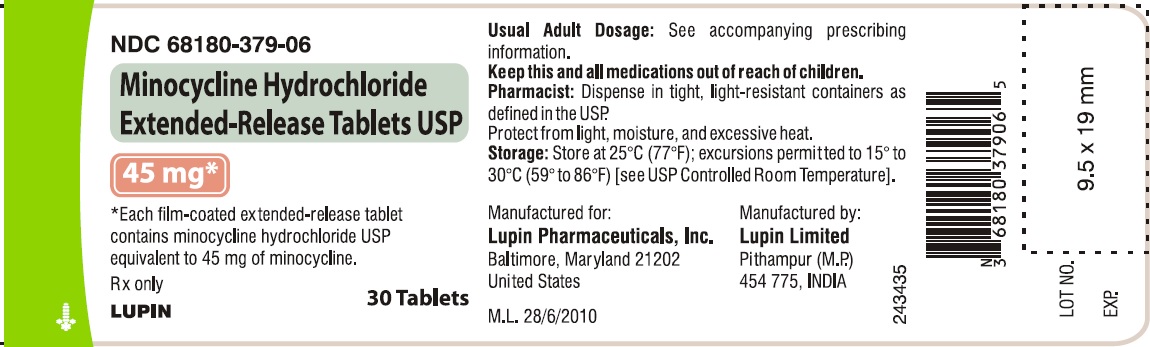
16.1How Supplied Minocycline hydrochloride extended-release tablets USP are supplied as aqueous film coated tablets containing minocycline hydrochloride USP equivalent to 45 mg, 55 mg, 90 mg, or 135 mg minocycline. The 45 mg extended-release tablets are pink colored, round shaped, biconvex, film-coated tablets debossed with "F21" on one side and "LU" on the other side. Each tablet contains minocycline hydrochloride USP equivalent to 45 mg minocycline, supplied as follows: NDC 68180-379-06 Bottle of 30 NDC 68180-379-01 Bottle of 100 The 55 mg extended-release tablets are green colored, round shaped, biconvex, film-coated tablets debossed with "F26" on one side and "LU" on the other side.
Each tablet contains minocycline hydrochloride equivalent to 55 mg minocycline, supplied as follows: NDC 68180-460-06 Bottle of 30 NDC 68180-460-01 Bottle of 100 The 90 mg extended-release tablets are pale yellow colored, round shaped, biconvex, film-coated tablets debossed with "F22" on one side and "LU" on the other side. Each tablet contains minocycline hydrochloride USP equivalent to 90 mg minocycline, supplied as follows: NDC 68180-380-06 Bottle of 30 NDC 68180-380-01 Bottle of 100 The 135 mg extended-release tablets are brown colored, capsule shaped, biconvex, film-coated tablets debossed with "F23" on one side and "LU" on the other side.
Each tablet contains minocycline hydrochloride USP equivalent to 135 mg minocycline, supplied as follows: NDC 68180-381-06 Bottle of 30 NDC 68180-381-01 Bottle of 100
16.2Storage Store at 25°C (77°F); excursions are permitted to 15° to 30°C (59° to 86°F) [see USP Controlled Room Temperature].
16.3Handling Keep out of reach of children. Protect from light, moisture, and excessive heat. Dispense in tight, light-resistant container with child-resistant closure.
📋 Description ▾
11 DESCRIPTION Minocycline hydrochloride, a semi synthetic derivative of tetracycline, is [ 4S -(4α,4aα,5aα,12aα)]-4,7-Bis(dimethylamino)-1,4,4a,5,5a,6,11,12a-octahydro-3,10,12,12a-tetrahydroxy-1,11-dioxo-2-naphthacenecarboxamide mono hydrochloride. The structural formula is represented below: Minocycline hydrochloride extended-release tablets USP for oral administration contain minocycline hydrochloride USP equivalent to 45 mg, 55 mg, 90 mg or 135 mg of minocycline. In addition, 45 mg, 55 mg, 90 mg, and 135 mg tablets contain the following inactive ingredients: colloidal silicon dioxide, hypromellose, magnesium stearate, microcrystalline cellulose, polyethylene glycol and titanium dioxide.
The 45 mg tablets also contain iron oxide red, 55 mg tablets also contain D&C yellow # 10, FD&C blue # 1, FD&C red #40 and polysorbate 80, the 90 mg tablets also contain iron oxide yellow and talc, and 135 mg tablets also contain iron oxide red and iron oxide yellow. Drug Product meets USP Dissolution Test 3. Minocycline Hydrochloride
💬 Information for Patients ▾
17 PATIENT COUNSELING INFORMATION [See FDA-Approved Patient Labeling (Patient Labeling) ] Patients taking Minocycline hydrochloride (minocycline HCl, USP) extended-release tablets should receive the following information and instructions: Minocycline hydrochloride extended-release tablets should not be used by pregnant women or women attempting to conceive a child [see USE IN SPECIFIC POPULATIONS (8.1) , NONCLINICAL TOXICOLOGY (13.1) ]. It is recommended that minocycline hydrochloride extended-release tablets not be used by men who are attempting to father a child [see NONCLINICAL TOXICOLOGY (13.1) ].
Patients should be advised that pseudomembranous colitis can occur with minocycline therapy. If patients develop watery or bloody stools, they should seek medical attention. Patients should be counseled about the possibility of hepatotoxicity.
Patients should seek medical advice if they experience symptoms which can include loss of appetite, tiredness, diarrhea, skin turning yellow, bleeding easily, confusion, and sleepiness. Patients who experience central nervous system symptoms [see WARNINGS AND PRECAUTIONS (5.5) ] should be cautioned about driving vehicles or using hazardous machinery while on minocycline therapy. Patients should seek medical help for persistent headaches or blurred vision.
Concurrent use of tetracycline may render oral contraceptives less effective [see DRUG INTERACTIONS (7.5) ]. Autoimmune syndromes, including drug-induced lupus-like syndrome, autoimmune hepatitis, vasculitis and serum sickness have been observed with tetracycline-class drugs, including minocycline. Symptoms may be manifested by arthralgia, fever, rash and malaise.
Patients who experience such symptoms should be cautioned to stop the drug immediately and seek medical help. Patients should be counseled about discoloration of skin, scars, teeth or gums that can arise from minocycline therapy. Photosensitivity manifested by an exaggerated sunburn reaction has been observed in some individuals taking tetracyclines, including minocycline.
Patients should minimize or avoid exposure to natural or artificial sunlight (tanning beds or UV A/B treatment) while using minocycline. If patients need to be outdoors while using minocycline, they should wear loose-fitting clothes that protect skin from sun exposure and discuss other sun protection measures with their physician. Treatment should be discontinued at the first evidence of skin erythema.
Minocycline hydrochloride extended-release tablets should be taken exactly as directed. Skipping doses or not completing the full course of therapy may decrease the effectiveness of the current treatment course and increase the likelihood that bacteria will develop resistance and will not be treatable by other antibacterial drugs in the future. Patients should be advised to swallow minocycline hydrochloride extended-release tablets whole and not to chew, crush, or split the tablets. ® Minocin is a registered trademark of Triax Pharmaceuticals, LLC.
Manufactured for: Lupin Pharmaceuticals, Inc. Baltimore, Maryland 21202 United States Manufactured by: Lupin Limited MADE IN INDIA Revised: December 2018 ID#: 257323
About this NDC listing & data coverage
What data is (and isn’t) available for this NDC — tap to expand
| NDC identity (package / product / labeler codes) | ✓ Available |
| Labeler | ✓ Available |
| Product & package description | ✓ Available |
| Marketing category & status | ✓ Available |
| Active ingredient / dosage form / route | ✓ Available |
| FDA label (SPL via DailyMed) | ✓ Available |
| Package photos | ✓ Available |
| Inactive ingredients (structured) | ✓ Available |
| NADAC pharmacy acquisition price (CMS) | — Not published for this NDC CMS publishes NADAC only for NDCs reported in its retail-pharmacy survey. |
| Orange Book / therapeutic-equivalence data | ✓ Available |
| HCPCS J-code billing crosswalk | — Not published for this NDC Most self-administered / retail products have no J-code — that is normal. |
| Medicaid utilization (CMS SDUD) | — Not published for this NDC CMS reports utilization only for NDCs with Medicaid claims above its privacy threshold. |