
Cholestyramine 4 g/9g Powder, For Suspension — NDC 68382-528-60 (Billing 68382-0528-60)
This is a package of Cholestyramine 4 g/9g Powder, For Suspension from Zydus Pharmaceuticals (USA) Inc., marketed since Aug 2018 and currently FDA-listed; retail pharmacies pay about $0.8343 per unit (NADAC).
NDC database record
One package, one record: these facts belong to NDC 68382-528-60 alone.
- Record
- FDA NDC Directory package listing · Human prescription drug
- Code segments
- 68382 labeler · 528 product · 60 package
- Package marketed since
- Aug 1, 2018
- Sample package
- No — commercial package
- Listing certified through
- Dec 31, 2027
- Barcode (UPC-A, from the NDC)
- 3 6838252860 5
- Medicaid fills, this package
- 837 prescriptions in the last four reported quarters
- FDA record last changed
- Jul 24, 2026
Identity & classification
Regulatory identifiers FDA, NLM and CMS codes for this package
Drug-database identifiers Medi-Span GPI and First Databank GCN / HICL / AHFS classification
- GSN (GCN sequence number): 013675
- GCN: 09920
- GPI-14 (Medi-Span): 39100010002905
- HICL (First Databank): 004851
- AHFS class code: 24:06.04.00
- RxCUI (RxNorm): 848943
Where does this data come from?
- FDA openFDA NDC Directory · synced Oct 1, 2026
- FDA label on DailyMed · label index refreshed Oct 5, 2026
- RxNorm (NLM RxNav) · catalog refreshed Oct 1, 2026
- Medi-Span GPI (licensed)
- First Databank (licensed) · refreshed Oct 1, 2026
RxNorm drug class
This medicine belongs to the Bile Acid Sequestrant class.
Where does this data come from?
- RxClass (NLM) · catalog refreshed Oct 1, 2026
Clinical
Cholestyramine is used to decrease the amount of cholesterol (a fat-like substance that can build up and clog blood vessels causing heart attacks or strokes or other health problems). Cholestyramine is in a class of medications called bile acid sequestrant. It works by binding bile acids in your intestines to form a product that is removed from the body.
Read the full MedlinePlus article ↗Patient education
Supplement & herbal interactions
Some supplements/herbs that may interact with Cholestyramine — tap one for details:
Cholestyramine may be associated with lower levels of 12 nutrients — worth a chat with your pharmacist, not a cause for alarm.
Where does this data come from?
- MedlinePlus (NLM) · refreshed Oct 1, 2026
- FDA label on DailyMed · label index refreshed Oct 5, 2026
Ask a licensed pharmacist directly — free, answered by our team.
Pricing
A drug doesn't have one price. Each row is a different public payment system, and none is what you'd pay at the counter — that depends on your insurance. The ⓘ on each row explains what it measures.
| Price system | Per ea | Per package |
|---|---|---|
| Retail pharmacies payNADAC · weekly | $0.834 | $50.06 / 60 pouches |
| Medicaid paysCMS SDUD · 12 mo | $0.3443 | $20.66 / 60 pouches |
| Medicare drug plans payPart D · Q2 2026 | $1.23 | $73.75 / 60 pouches |
Where does this data come from?
- CMS NADAC weekly file · file of Sep 30, 2026
- CMS ASP pricing files · refreshed Sep 20, 2026
- CMS Medicaid State Drug Utilization Data · through Q1 2026
- CMS Part D plan pricing files · refreshed Sep 24, 2026
- VA National Acquisition Center price file
Packaging — all sizes for this product
| Package NDC | Description | Per unit | Per pack | Marketing start | Marketing end | Status |
|---|---|---|---|---|---|---|
| 68382-0528-42 68382-528-42 Main listing | 378 g in 1 CAN | $0.0924 / g | $34.93 | 2018-08-01 | — | Active |
| 68382-0528-60 You're viewing this | 60 POUCH in 1 CARTON / 9 g in 1 POUCH | $0.8343 / ea | $50.06 | 2018-08-01 | — | Active |
This pack accounts for about 23% of this product's recent Medicaid fills; most go to the 378 g pack. See all packs ↓
Pack size FAQ
What quantity is in this package?
What NDC number is used to bill for this package of Cholestyramine 4 g/9g Powder, For Suspension?
Prices are the latest CMS NADAC pharmacy acquisition cost per NDC; per-pack figures are per-unit × pack quantity, shown only when the pack is denominated in the same measure NADAC prices.
Therapeutic equivalents
| Product | Labeler | Pack | NADAC/unit | TE | Status | Price vs. this |
|---|---|---|---|---|---|---|
| cholestyramine powder for suspension 4 g/8.78g 67877-0298-37 | Ascend | 368.76 g | $0.085 | AB | Availability likely | save 90% |
| Cholestyramine for Oral Suspension 4 g/9g 62135-0008-56 | Chartwell | 378 g | $0.092 | AB | Availability likely | save 89% |
| Cholestyramine 4 g/9g 42806-0267-97 | EPIC | 378 g | $0.095 | AB | Availability likely | save 89% |
| Cholestyramine 4 g/9g 24658-0266-95 | PURACAP | 60 pouches | $0.834 | AB | Availability likely | — |
| Cholestyramine 4 g/9g 27241-0134-36 | Ajanta | 60 packets | $0.834 | AB | Availability likely | — |
| Cholestyramine 4 g/9g 33342-0293-70 | Macleods | 60 pouches | $0.834 | AB | Availability likely | — |
| Cholestyramine 4 g/9g 42571-0508-29 | Micro | 60 pouches | $0.834 | AB | Availability likely | — |
| Cholestyramine 4 g/9g 42806-0266-95 | EPIC | 60 pouches | $0.834 | AB | Availability likely | — |
| Cholestyramine 4 g/9g 49884-0465-65 | Par | 60 packets | $0.834 | AB | Availability likely | — |
| Cholestyramine 4 g/9gthis 68382-0528-60 | Zydus | 60 pouches | $0.834 | AB | Availability likely | — |
| Cholestyramine 4 g/9g 42806-0265-98 | EPIC | 9 g | — | AB | FDA listed | — |
| Questran 4 g/9g 49884-0936-65 | Par | 60 packets | — | AB | Discontinued | — |
| Cholestyramine 4 g/8.3g 51224-0011-10 | TAGI | 348.6 g | — | AB | FDA listed | — |
| Cholestyramine 4 g/9g 63629-2164-01 | Bryant | 378 g | — | AB | FDA listed | — |
| cholestyramine powder for suspension 4 g/8.78g 63629-9196-01 | Bryant | 368.76 g | — | AB | FDA listed | — |
| Cholestyramine 4 g/9g 68094-0806-10 | Precision | 348.6 g | — | AB | FDA listed | — |
| Cholestyramine 4 g/9g 70771-1105-01 | Zydus | 378 g | — | AB | FDA listed | — |
| cholestyramine powder for suspension 4 g/8.78g 71335-2902-01 | Bryant | 368.76 g | — | AB | FDA listed | — |
| Cholestyramine 4 g/9g 72162-1504-02 | Bryant | 378 g | — | AB | FDA listed | — |
| cholestyramine powder for suspension 4 g/8.78g 72162-1834-02 | Bryant | 368.76 g | — | AB | FDA listed | — |
| Cholestyramine 4 g/9g 11788-0150-17 | AiPing | 378 g | — | AB | FDA listed | — |
Where does this data come from?
- FDA openFDA NDC Directory · synced Oct 1, 2026
- FDA Orange Book · refreshed Oct 3, 2026
- CMS NADAC weekly file · file of Sep 30, 2026
Availability & generic status
This product is an FDA-approved generic. Other versions of the same drug are listed under Therapeutic equivalents, least expensive first.
Where does this data come from?
- FDA Orange Book · refreshed Oct 3, 2026
What it looks like
Where does this data come from?
- FDA label on DailyMed · label index refreshed Oct 5, 2026
Inactive Ingredients / Excipients
Inactive ingredients, also called excipients, are components of the drug product other than the active ingredient. They may include fillers, dyes, coatings, preservatives, flavors, or other formulation ingredients.
💡 Tap an ingredient (hover on desktop) to see what it is and why it’s used.
-
UNII XF417D3PSL
Anhydrous citric acid is a sour, crystalline powder derived from citric acid with water removed. In medicines, it acts as a buffer to control pH, adds tartness to improve taste, and helps tablets disintegrate.
-
UNII 35SW5USQ3G
A synthetic yellow dye used to color medicines. It helps make tablets, capsules, and liquids visually distinct so patients can easily identify their medication.
-
UNII H77VEI93A8
A synthetic yellow dye used to color medications. It helps identify the drug and make it visually distinctive, with no effect on how the medicine works.
-
UNII 5EVU04N5QU
A natural or synthetic colorant that gives the medicine an orange hue. It helps identify the medication and may improve appearance.
-
UNII 26CD3J2R0C
Propylene glycol alginate is a thickening agent made from seaweed extract. It stabilizes and thickens liquid medicines, helping them achieve the right consistency and preventing ingredients from separating.
-
UNII C151H8M554
A natural sugar derived from sugar cane or sugar beets. It's used as a sweetener, filler, and binder to improve taste, add bulk, and help hold tablet or capsule ingredients together.
-
UNII Q74T35078H
Vanilla is a flavoring ingredient extracted from vanilla orchid beans. It's added to medicines to improve taste and make them more pleasant to take, especially for children or patients who need liquid formulations.
-
UNII TTV12P4NEE
Xanthan gum is a thickening and stabilizing ingredient made from fermented corn or other sugars. It's added to medicines to improve texture, prevent separation of liquids and solids, and help the product stay consistent.
8 inactive ingredients listed in the exact product block matched to this NDC.
Where does this data come from?
ingredient classCode="IACT" elements from the exact product block matched by this NDC. Label-section narrative from DailyMed / the openFDA label index is shown separately when available.- FDA label on DailyMed · label index refreshed Oct 5, 2026
- FDA openFDA NDC Directory · synced Oct 1, 2026
Inactive ingredient FAQ
Are inactive ingredients the same for every manufacturer?
Why might an inactive ingredient be missing?
Can inactive ingredients matter?
Manufacturer & labeler
More NDCs from Zydus Pharmaceuticals (USA) Inc. labeler code 68382
- Propafenone Hydrochloride 225 mg Capsule, Extended Release NDC 68382-522-05
- Propafenone Hydrochloride 325 mg Capsule, Extended Release NDC 68382-523-05
- Propafenone Hydrochloride 425 mg Capsule, Extended Release NDC 68382-524-05
- bumetanide .5 mg Tablet NDC 68382-525-01
- bumetanide 1 mg Tablet NDC 68382-526-01
- bumetanide 2 mg Tablet NDC 68382-527-01
- Cholestyramine 4 g/5.5g Powder, For Suspension NDC 68382-529-42
- Diflunisal 500 mg Tablet NDC 68382-530-01
- minocycline hydrochloride 45 mg Tablet, Extended Release NDC 68382-531-01
- minocycline hydrochloride 65 mg Tablet, Extended Release NDC 68382-532-01
- minocycline hydrochloride 90 mg Tablet, Extended Release NDC 68382-533-01
- minocycline hydrochloride 115 mg Tablet, Extended Release NDC 68382-534-01
Where does this data come from?
- FDA openFDA NDC Directory · synced Oct 1, 2026
- Drugs@FDA
Full prescribing information FDA SPL
🎯 Indications and Usage ▾
INDICATIONS AND USAGE 1) Cholestyramine for oral suspension is indicated as adjunctive therapy to diet for the reduction of elevated serum cholesterol in patients with primary hypercholesterolemia (elevated low density lipoprotein [LDL] cholesterol) who do not respond adequately to diet. Cholestyramine for oral suspension may be useful to lower LDL cholesterol in patients who also have hypertriglyceridemia, but it is not indicated where hypertriglyceridemia is the abnormality of most concern. Therapy with lipid-altering agents should be a component of multiple risk factor intervention in those individuals at significantly increased risk for atherosclerotic vascular disease due to hypercholesterolemia.
Treatment should begin and continue with dietary therapy specific for the type of hyperlipoproteinemia determined prior to initiation of drug therapy. Excess body weight may be an important factor and caloric restriction for weight normalization should be addressed prior to drug therapy in the overweight. Prior to initiating therapy with cholestyramine for oral suspension secondary causes of hypercholesterolemia (e.g., poorly controlled diabetes mellitus, hypothyroidism, nephrotic syndrome, dysproteinemias, obstructive liver disease, other drug therapy, alcoholism), should be excluded, and a lipid profile performed to assess Total cholesterol, HDL-C, and triglycerides (TG).
For individuals with TG less than 400 mg/dL (< 4.5 mmol/L), LDL-C can be estimated using the following equation:- LDL-C = Total cholesterol – [(TG/5) + HDL-C] For TG levels > 400 mg/dL, this equation is less accurate and LDL-C concentrations should be determined by ultracentrifugation. In hypertriglyceridemic patients, LDL-C may be low or normal despite elevated Total-C. In such cases cholestyramine for oral suspension may not be indicated.
Serum cholesterol and triglyceride levels should be determined periodically based on NCEP guidelines to confirm initial and adequate long-term response. A favorable trend in cholesterol reduction should occur during the first month of cholestyramine for oral suspension therapy. The therapy should be continued to sustain cholesterol reduction.
If adequate cholesterol reduction is not attained, increasing the dosage of cholestyramine for oral suspension or adding other lipid-lowering agents in combination with cholestyramine for oral suspension should be considered. Since the goal of treatment is to lower LDL-C, the NCEP 4 recommends that LDL-C levels be used to initiate and assess treatment response. If LDL-C levels are not available then Total-C alone may be used to monitor long-term therapy.
A lipoprotein analysis (including LDL-C determination) should be carried out once a year. The NCEP treatment guidelines are summarized below. * Coronary heart disease or peripheral vascular disease (including symptomatic carotid artery disease). ** Other risk factors for coronary heart disease (CHD) include: age (males ≥ 45 years; females ≥ 55 years or premature menopause without estrogen replacement therapy); family history of premature CHD; current cigarette smoking; hypertension; confirmed HDL-C < 35 mg/dL (< 0.91 mmol/L); and diabetes mellitus.
Subtract one risk factor if HDL-C is ≥ 60 mg/dL (≥ 1.6 mmol/L). LDL-Cholesterol mg/dL (mmol/ L) Definite Atherosclerotic Disease* Two or More Other Risk Factors** Initiation Level Goal NO NO ≥ 190 (≥ 4.9) < 160 (< 4.1) NO YES ≥ 160 (≥ 4.1) < 130 (< 3.4) YES YES OR NO ≥ 130 (≥ 3.4) ≤ 100 ( ≤ 2.6) Cholestyramine for oral suspension monotherapy has been demonstrated to retard the rate of progression 2,3 and increase the rate of regression 3 of coronary atherosclerosis. 2) Cholestyramine for oral suspension is indicated for the relief of pruritus associated with partial biliary obstruction.
Cholestyramine for oral suspension has been shown to have a variable effect on serum cholesterol in these patients. Patients with primary biliary cirrhosis may exhibit an elevated cholesterol as part of their… [Excerpted — this section continues on DailyMed.]
⏱️ Dosage and Administration ▾
DOSAGE AND ADMINISTRATION The recommended starting adult dose for cholestyramine for oral suspension is one pouch or one level scoopful once or twice a day. The recommended maintenance dose for cholestyramine for oral suspension is 2 to 4 pouches or scoopfuls daily (8 to 16 grams anhydrous cholestyramine resin) divided into two doses. Four grams of anhydrous cholestyramine resin is contained in each measured dose of cholestyramine for oral suspension as follows: Cholestyramine for oral suspension 9 grams It is recommended that increases in dose be gradual with periodic assessment of lipid/lipoprotein levels at intervals of not less than 4 weeks.
The maximum recommended daily dose is six pouches or scoopfuls of cholestyramine for oral suspension (24 grams of anhydrous cholestyramine resin). The suggested time of administration is at mealtime but may be modified to avoid interference with absorption of other medications. Although the recommended dosing schedule is twice daily, cholestyramine for oral suspension may be administered in 1 to 6 doses per day.
Cholestyramine for oral suspension should not be taken in its dry form. Always mix cholestyramine for oral suspension with water or other fluids before ingesting. See Preparation Instructions.
Concomitant Therapy Preliminary evidence suggests that the lipid-lowering effects of cholestyramine for oral suspension on total and LDL-cholesterol are enhanced when combined with a HMG-CoA reductase inhibitor, e.g., pravastatin, lovastatin, simvastatin, and fluvastatin. Additive effects on LDL-cholesterol are also seen with combined nicotinic acid /cholestyramine for oral suspension therapy. See the Drug Interactions subsection of the PRECAUTIONS section for recommendations on administering concomitant therapy.
PREPARATION The color of cholestyramine for oral suspension may vary somewhat from batch to batch but this variation does not affect the performance of the product. Place the contents of one single-dose pouch or one level scoopful of cholestyramine for oral suspension in a glass or cup. Add an amount of water or other noncarbonated beverage of your choice depending on the product being used: Product Formula Amount of Water or other Non-Carbonated Liquid Cholestyramine for oral suspension 2 to 6 ounces per dose Stir to a uniform consistency and drink.
Cholestyramine for oral suspension may also be mixed with highly fluid soups or pulpy fruits with a high moisture content such as applesauce or crushed pineapple.
⛔ Contraindications ▾
CONTRAINDICATIONS Cholestyramine for oral suspension is contraindicated in patients with complete biliary obstruction where bile is not secreted into the intestine and in those individuals who have shown hypersensitivity to any of its components.
🤒 Adverse Reactions ▾
ADVERSE REACTIONS The most common adverse reaction is constipation. When used as a cholesterol-lowering agent predisposing factors for most complaints of constipation are high dose and increased age (more than 60 years old). Most instances of constipation are mild, transient, and controlled with conventional therapy.
Some patients require a temporary decrease in dosage or discontinuation of therapy. Less Frequent Adverse Reactions Abdominal discomfort and/or pain, flatulence, nausea, vomiting, diarrhea, eructation, anorexia, and steatorrhea, bleeding tendencies due to hypoprothrombinemia (Vitamin K deficiency) as well as Vitamin A (one case of night blindness reported) and D deficiencies, hyperchloremic acidosis in children, osteoporosis, rash and irritation of the skin, tongue and perianal area. Rare reports of intestinal obstruction, including two deaths, have been reported in pediatric patients.
Occasional calcified material has been observed in the biliary tree, including calcification of the gallbladder, in patients to whom cholestyramine for oral suspension has been given. However, this may be a manifestation of the liver disease and not drug related. One patient experienced biliary colic on each of three occasions on which he took cholestyramine for oral suspension.
One patient diagnosed as acute abdominal symptom complex was found to have a "pasty mass" in the transverse colon on x-ray. Other events (not necessarily drug related) reported in patients taking cholestyramine for oral suspension include Gastrointestinal GI-rectal bleeding, black stools, hemorrhoidal bleeding, bleeding from known duodenal ulcer, dysphagia, hiccups, ulcer attack, sour taste, pancreatitis, rectal pain, diverticulitis. Laboratory test changes Liver function abnormalities.
Hematologic Prolonged prothrombin time, ecchymosis, anemia. Hypersensitivity Urticaria, asthma, wheezing, shortness of breath. Musculoskeletal Backache, muscle and joint pains, arthritis.
Neurologic Headache, anxiety, vertigo, dizziness, fatigue, tinnitus, syncope, drowsiness, femoral nerve pain, paresthesia. Eye Uveitis. Renal Hematuria, dysuria, burnt odor to urine, diuresis.
Miscellaneous Weight loss, weight gain, increased libido, swollen glands, edema, dental bleeding, dental caries, erosion of tooth enamel, tooth discoloration.
🆘 Overdosage ▾
OVERDOSAGE Overdosage with cholestyramine for oral suspension has been reported in a patient taking 150% of the maximum recommended daily dosage for a period of several weeks. No ill effects were reported. Should an overdosage occur, the chief potential harm would be obstruction of the gastrointestinal tract. The location of such potential obstruction, the degree of obstruction, and the presence or absence of normal gut motility would determine treatment.
🧬 Clinical Pharmacology ▾
ACTIONS/CLINICAL PHARMACOLOGY Cholesterol is probably the sole precursor of bile acids. During normal digestion, bile acids are secreted into the intestines. A major portion of the bile acids is absorbed from the intestinal tract and returned to the liver via the enterohepatic circulation.
Only very small amounts of bile acids are found in normal serum. Cholestyramine for oral suspension resin adsorbs and combines with the bile acids in the intestine to form an insoluble complex which is excreted in the feces. This results in a partial removal of bile acids from the enterohepatic circulation by preventing their absorption.
The increased fecal loss of bile acids due to cholestyramine for oral suspension administration leads to an increased oxidation of cholesterol to bile acids, a decrease in beta lipoprotein or low density lipoprotein plasma levels and a decrease in serum cholesterol levels. Although in man, cholestyramine for oral suspension produces an increase in hepatic synthesis of cholesterol, plasma cholesterol levels fall. In patients with partial biliary obstruction, the reduction of serum bile acid levels by cholestyramine for oral suspension reduces excess bile acids deposited in the dermal tissue with resultant decrease in pruritus.
Clinical Studies In a large, placebo-controlled, multi-clinic study, LRC-CPPT 1 , hypercholesterolemic subjects treated with cholestyramine for oral suspension had mean reductions in total and low-density lipoprotein cholesterol (LDL-C) which exceeded those for diet and placebo treatment by 7.2% and 10.4%, respectively. Over the seven-year study period the cholestyramine for oral suspension group experienced a 19% reduction (relative to the incidence in the placebo group) in the combined rate of coronary heart disease death plus non-fatal myocardial infarction (cumulative incidences of 7% cholestyramine for oral suspension and 8.6% placebo).
The subjects included in the study were men aged 35 to 59 with serum cholesterol levels above 265 mg/dL and no previous history of heart disease. It is not clear to what extent these findings can be extrapolated to females and other segments of the hypercholesterolemic population. (see also PRECAUTIONS: Carcinogenesis, Mutagenesis, Impairment of Fertility .) Two controlled clinical trials have examined the effects of cholestyramine for oral suspension monotherapy upon coronary atherosclerotic lesions using coronary arteriography.
In the NHLBI Type II Coronary Intervention Trial 2 , 116 patients (80% male) with coronary artery disease (CAD) documented by arteriography were randomized to cholestyramine for oral suspension or placebo for five years of treatment. Final study arteriography revealed progression of coronary artery disease in 49% of placebo patients compared to 32% of the cholestyramine for oral suspension group (p < 0.05). In the St.
Thomas Atherosclerosis Regression Study (STARS) 3 , 90 hypercholesterolemic men with CAD were randomized to three blinded treatments: usual care, lipid-lowering diet, and lipid-lowering diet plus cholestyramine for oral suspension. After 36 months, follow-up coronary arteriography revealed progression of disease in 46% of usual care patients, 15% of patients on lipid-lowering diet and 12% of those receiving diet plus cholestyramine for oral suspension (p < 0.02). The mean absolute width of coronary segments decreased in the usual care group, increased slightly (0.003mm) in the diet group and increased by 0.103mm in the diet plus cholestyramine for oral suspension group (p < 0.05).
Thus in these randomized controlled clinical trials using coronary arteriography, cholestyramine for oral suspension monotherapy has been demonstrated to slow progression 2,3 and promote regression 3 of atherosclerotic lesions in the coronary arteries of patients with coronary artery disease. The effect of intensive lipid-lowering therapy on coronary atherosclerosis has been assessed by arteriography in hyperlipidemic patients. In th… [Excerpted — this section continues on DailyMed.]
📦 How Supplied / Storage and Handling ▾
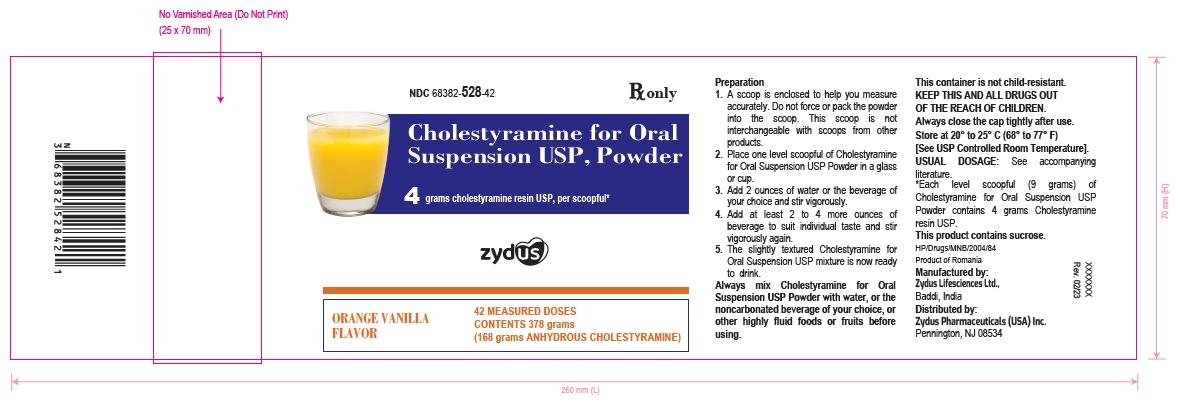
HOW SUPPLIED Cholestyramine for Oral Suspension, USP is available in cans containing 378 grams and in cartons of sixty 9 gram pouches. Four grams of anhydrous cholestyramine resin are contained in 9 grams of cholestyramine for oral suspension, USP. The 378 grams can includes a 14 cc scoop.
The scoop is not interchangeable with scoops from other products. NDC 68382-528-42 Can, 378 grams NDC 68382-528-60 Carton of 60, 9 grams pouches Storage Store between 20º to 25ºC (68º to 77ºF). [See USP Controlled Room Temperature]. Call your doctor for medical advice about side effects.
You may report side effects to FDA at 1-800-FDA-1088.
📦 Storage and Handling ▾
Storage Store between 20º to 25ºC (68º to 77ºF). [See USP Controlled Room Temperature]. Call your doctor for medical advice about side effects. You may report side effects to FDA at 1-800-FDA-1088.
📋 Description ▾
DESCRIPTION Cholestyramine for oral suspension USP, the chloride salt of a basic anion exchange resin, a cholesterol lowering agent, is intended for oral administration. Cholestyramine resin is quite hydrophilic, but insoluble in water. The cholestyramine resin in cholestyramine for oral suspension, USP is not absorbed from the digestive tract.
Four grams of anhydrous cholestyramine resin is contained in 9 grams of cholestyramine for oral suspension, USP. It is represented by the following structural formula: Cholestyramine for oral suspension, USP contains the following inactive ingredients: citric acid, d & c yellow # 10 aluminum lake, flavor (natural and artificial orange, natural and artificial vanilla), fd & c yellow # 6 aluminum lake, propylene glycol alginate, sucrose and xanthan gum. Formula
⚠️ Precautions ▾
PRECAUTIONS General Chronic use of cholestyramine for oral suspension may be associated with increased bleeding tendency due to hypoprothrombinemia associated with Vitamin K deficiency. This will usually respond promptly to parenteral Vitamin K 1 and recurrences can be prevented by oral administration of Vitamin K 1 . Reduction of serum or red cell folate has been reported over long term administration of cholestyramine for oral suspension.
Supplementation with folic acid should be considered in these cases. There is a possibility that prolonged use of cholestyramine for oral suspension, since it is a chloride form of anion exchange resin, may produce hyperchloremic acidosis. This would especially be true in younger and smaller patients where the relative dosage may be higher.
Caution should also be exercised in patients with renal insufficiency or volume depletion, and in patients receiving concomitant spironolactone. Cholestyramine for oral suspension may produce or worsen pre-existing constipation. The dosage should be increased gradually in patients to minimize the risk of developing fecal impaction.
In patients with pre-existing constipation, the starting dose should be 1 pouch or 1 scoop once daily for 5 to7 days, increasing to twice daily with monitoring of constipation and of serum lipoproteins, at least twice, 4 to 6 weeks apart. Increased fluid intake and fiber intake should be encouraged to alleviate constipation and a stool softener may occasionally be indicated. If the initial dose is well tolerated, the dose may be increased as needed by one dose/day (at monthly intervals) with periodic monitoring of serum lipoproteins.
If constipation worsens or the desired therapeutic response is not achieved at one to six doses/day, combination therapy or alternate therapy should be considered. Particular effort should be made to avoid constipation in patients with symptomatic coronary artery disease. Constipation associated with cholestyramine for oral suspension may aggravate hemorrhoids.
Information for Patients Inform your physician if you are pregnant or plan to become pregnant or are breastfeeding. Drink plenty of fluids and mix each 9 gram dose of cholestyramine for oral suspension in at least 2 to 6 ounces of fluid before taking. Sipping or holding the resin suspension in the mouth for prolonged periods may lead to changes in the surface of the teeth resulting in discoloration, erosion of enamel or decay; good oral hygiene should be maintained.
Laboratory Tests Serum cholesterol levels should be determined frequently during the first few months of therapy and periodically thereafter. Serum triglyceride levels should be measured periodically to detect whether significant changes have occurred. The LRC-CPPT showed a dose-related increase in serum triglycerides of 10.7% to 17.1% in the cholestyramine-treated group, compared with an increase of 7.9% to 11.7% in the placebo group.
Based on the mean values and adjusting for the placebo group, the cholestyramine-treated group showed an increase of 5% over pre-entry levels the first year of the study and an increase of 4.3% the seventh year. Drug Interactions Cholestyramine for oral suspension may delay or reduce the absorption of concomitant oral medication such as phenylbutazone, warfarin, thiazide diuretics (acidic), or propranolol (basic), as well as tetracycline, penicillin G, phenobarbital, thyroid and thyroxine preparations, estrogens and progestins, and digitalis.
Interference with the absorption of oral phosphate supplements has been observed with another positively-charged bile acid sequestrant. Cholestyramine for oral suspension may interfere with the pharmacokinetics of drugs that undergo enterohepatic circulation. The discontinuance of cholestyramine for oral suspension could pose a hazard to health if a potentially toxic drug such as digitalis has been titrated to a maintenance level while the patient was taking cholestyramine for oral suspension.
Because cholest… [Excerpted — this section continues on DailyMed.]
📚 References ▾
REFERENCES The Lipid Research Clinics Coronary Primary Prevention Trials Results: (I) Reduction in Incidence of Coronary Heart Disease; (II) The Relationship of Reduction in Incidence of Coronary Heart Disease to Cholesterol Lowering. JAMA 1984; 251:351-374. Brensike JF, Levy RI, Kelsey SF, et al.
Effects of therapy with cholestyramine on progression of coronary arteriosclerosis: results of the NHLBI type II coronary intervention study. Circulation 1984;69:313-24. Watts, GF, Lewis B, Brunt JNH Lewis ES, et al.
Effects on coronary artery disease of lipid-lowering diet, or diet plus cholestyramine. In the St. Thomas Atherosclerosis Regression Study (STARS).
Lancet 1992;339:563-69. National Cholesterol Education Program. Second Report of the Expert Panel Detection.
Evaluation, and Treatment of High Blood Cholesterol in Adults (Adult Treatment Panel II). Circulation 1994 Mar; 89(3):1333-445. The Lipid Research Clinics Investigators.
The Lipid Research Clinics Coronary Primary Prevention Trial: Results of 6 Years of Post-Trial Follow-up. Arch Intern Med 1992; 152:1399-1410. Behrman RE et al (eds): Nelson, Textbook of Pediatrics , ed 15.
Philadelphia, PA WB Saunders Company, 1996. Takemoto CK et al (eds): Pediatric Dosage Handbook , ed 3. Cleveland/Akron, OH, Lexi-Comp, Inc., 1996-1997.
Manufactured by: Zydus Lifesciences Ltd., Baddi, India Distributed by: Zydus Pharmaceuticals (USA) Inc. Pennington, NJ 08534 Rev: 10/25
📄 Package Label / Principal Display Panel ▾
PACKAGE LABEL.PRINCIPAL DISPLAY PANEL NDC 68382-528-42 Cholestyramine for Oral Suspension USP Powder, 4 gm R x only 378 gm ZYDUS NDC 68382-528-60 Cholestyramine for Oral Suspension USP Powder, 4 gm R x only 60 pouch ZYDUS Label Carton