
Colesevelam 625 mg Tablet, Film Coated, 1,000-count — NDC 68382-619-10 (Billing 68382-0619-10)
This is a package of 1,000 tablets of Colesevelam 625 mg Tablet, Film Coated from Zydus Pharmaceuticals USA Inc., marketed since Oct 2019 and currently FDA-listed.
NDC database record
One package, one record: these facts belong to NDC 68382-619-10 alone.
- Record
- FDA NDC Directory package listing · Human prescription drug
- Code segments
- 68382 labeler · 619 product · 10 package
- Package marketed since
- Oct 11, 2019
- Sample package
- No — commercial package
- Listing certified through
- Dec 31, 2026
- Barcode (UPC-A, from the NDC)
- 3 6838261910 5
- FDA record last changed
- Jul 24, 2026
Identity & classification
Regulatory identifiers FDA, NLM and CMS codes for this package
Drug-database identifiers Medi-Span GPI and First Databank GCN / HICL / AHFS classification
- GSN (GCN sequence number): 046172
- GCN: 16300
- GPI-14 (Medi-Span): 39100016100330
- HICL (First Databank): 021452
- AHFS class code: 24:06.04.00
- RxCUI (RxNorm): 866910
Where does this data come from?
- FDA openFDA NDC Directory · synced Oct 1, 2026
- FDA label on DailyMed · label index refreshed Oct 5, 2026
- RxNorm (NLM RxNav) · catalog refreshed Oct 1, 2026
- Medi-Span GPI (licensed)
- First Databank (licensed) · refreshed Oct 1, 2026
RxNorm drug class
This medicine belongs to the Bile Acid Sequestrant class.
Where does this data come from?
- RxClass (NLM) · catalog refreshed Oct 1, 2026
Clinical
Colesevelam is used to decrease the amount of cholesterol (a fat-like substance that can build up in blood vessels leading to heart attack or strokes or other medical conditions) control blood sugar levels in adults with type 2 diabetes (condition in which the body does not use insulin normally leading to high blood sugar) Colesevelam is in a class of medications called bile acid sequestrants. It works by binding bile acids in your intestines to form a product that is removed from the body.
Read the full MedlinePlus article ↗- It lowers LDL cholesterol in adults with high cholesterol and in teens ages 10 to 17 with an inherited form called HeFH. Some products, including Welchol, are also used to improve...
- Take it with a meal. Tablets go down with a liquid, and the powder is stirred into water, juice, or diet soda. Follow your prescriber’s directions and your label for how much.
- Constipation, indigestion, and nausea are the most common. Call your doctor or get help for severe belly pain, severe constipation, or trouble swallowing.
- Some medicines need spacing. Take things like thyroid medicine, phenytoin, birth control pills, olmesartan, sulfonylureas, cyclosporine, and vitamins at least 4 hours before colese...
Patient education
Supplement & herbal interactions
Some supplements/herbs that may interact with Colesevelam — tap one for details:
Where does this data come from?
- MedlinePlus (NLM) · refreshed Oct 1, 2026
- FDA label on DailyMed · label index refreshed Oct 5, 2026
Ask a licensed pharmacist directly — free, answered by our team.
Pricing
A drug doesn't have one price. Each row is a different public payment system, and none is what you'd pay at the counter — that depends on your insurance. The ⓘ on each row explains what it measures.
| Price system | Per each | Per package |
|---|---|---|
| Retail pharmacies payNADAC · weekly | Not in the retail survey — common for institutional, discontinued, or low-volume packs. | |
| Medicaid paysCMS SDUD · 12 mo | No recent Medicaid claims on file for this NDC — rare and low-volume NDCs are suppressed in the public data. | |
| Medicare drug plans payPart D · Q2 2026 | $0.6676 | $667.60 / 1000 tablets |
Where does this data come from?
- CMS NADAC weekly file
- CMS ASP pricing files · refreshed Sep 20, 2026
- CMS Medicaid State Drug Utilization Data · refreshed Oct 5, 2026
- CMS Part D plan pricing files · refreshed Sep 24, 2026
- VA National Acquisition Center price file
Packaging — all sizes for this product
| Package NDC | Description | Per unit | Per pack | Marketing start | Marketing end | Status |
|---|---|---|---|---|---|---|
| 68382-0619-10 You're viewing this | 1000 TABLET, FILM COATED in 1 BOTTLE | — | — | 2019-10-11 | — | Active |
| 68382-0619-28 68382-619-28 Main listing | 180 TABLET, FILM COATED in 1 BOTTLE | $0.2523 / ea | $45.41 | 2019-10-11 | — | Active |
| 68382-0619-77 68382-619-77 | 10 BLISTER PACK in 1 CARTON / 10 TABLET, FILM COATED in 1 BLISTER PACK | — | — | 2019-10-11 | — | Active |
Pack size FAQ
What quantity is in this package?
How does this package differ from NDC 68382-0619-28?
What NDC number is used to bill for this package of Colesevelam 625 mg Tablet, Film Coated?
Prices are the latest CMS NADAC pharmacy acquisition cost per NDC; per-pack figures are per-unit × pack quantity, shown only when the pack is denominated in the same measure NADAC prices.
Therapeutic equivalents
| Product | Labeler | Pack | NADAC/unit | TE | Status | Price vs. this |
|---|---|---|---|---|---|---|
| Colesevelam Hydrochloride 625 mg 00115-1320-19 | Amneal | 180 tablets | $0.262 | AB | Availability likely | — |
| Colesevelam Hydrochloride 625 mg 00713-0936-81 | Cosette | 180 tablets | $0.262 | AB | Discontinued | — |
| Colesevelam hydrochloride 625 mg 27808-0190-01 | Cranbury | 180 tablets | $0.262 | AB | Availability likely | — |
| Colesevelam Hydrochloride 625 mg 43598-0230-18 | Dr.Reddys | 180 tablets | $0.262 | AB | Availability likely | — |
| Colesevelam Hydrochloride 625 mg 60687-0385-25 | American | 1 tablet | $0.262 | AB | Availability likely | — |
| colesevelam hydrochloride 625 mg 68462-0433-18 | Glenmark | 180 tablets | $0.262 | AB | Availability likely | — |
| Colesevelam Hydrochloride 625 mg 69452-0158-25 | Bionpharma | 180 tablets | $0.262 | AB | Availability likely | — |
| Colesevelam Hydrochloride 625 mg 69452-0493-25 | Bionpharma | 180 tablets | $0.262 | AB | Availability likely | — |
| Welchol 625 mg 00713-0879-81 | Cosette | 180 tablets | $5.672 | AB | Discontinued | — |
| Colesevelam Hydrochloride 625 mg 33342-0197-57 | Macleods | 180 tablets | — | — | FDA listed | — |
| Colesevelam HCL 625 mg 50090-4371-00 | A-S | 90 tablets | — | AB | FDA listed | — |
| Colesevelam Hydrochloride 625 mg 50090-6994-00 | A-S | 90 tablets | — | AB | FDA listed | — |
| Colesevelam Hydrochloride 625 mg 50090-6995-00 | A-S | 90 tablets | — | AB | FDA listed | — |
| colesevelam hydrochloride 625 mg 50090-7459-00 | A-S | 90 tablets | — | AB | FDA listed | — |
| colesevelam hydrochloride 625 mg 50090-7460-00 | A-S | 90 tablets | — | AB | FDA listed | — |
| Colesevelam hydrochloride 625 mg 50090-7604-00 | A-S | 90 tablets | — | AB | FDA listed | — |
| Colesevelam hydrochloride 625 mg 50090-7605-00 | A-S | 90 tablets | — | AB | FDA listed | — |
| Colesevelam HCL 625 mg 50090-7811-00 | A-S | 90 tablets | — | AB | FDA listed | — |
| Colesevelam Hydrochloride 625 mg 51407-0336-18 | Golden | 180 tablets | — | AB | FDA listed | — |
| Colesevelam HCL 625 mg 63629-8767-01 | Bryant | 180 tablets | — | AB | FDA listed | — |
| Colesevelam HCL 625 mg 67877-0506-05 | Ascend | 500 tablets | — | AB | FDA listed | — |
| Colesevelam 625 mgthis 68382-0619-10 | Zydus | 1000 tablets | — | AB | FDA listed | — |
| Colesevelam 625 mg 70771-1368-00 | Zydus | 1000 tablets | — | AB | FDA listed | — |
| Colesevelam HCL 625 mg 71335-2905-01 | Bryant | 180 tablets | — | AB | FDA listed | — |
| Colesevelam HCL 625 mg 72162-1846-02 | Bryant | 180 tablets | — | AB | FDA listed | — |
| Colesevelam HCL 625 mg 72789-0476-93 | PD-Rx | 180 tablets | — | AB | FDA listed | — |
Where does this data come from?
- FDA openFDA NDC Directory · synced Oct 1, 2026
- FDA Orange Book · refreshed Oct 3, 2026
- CMS NADAC weekly file
Availability & generic status
This product is an FDA-approved generic. Other versions of the same drug are listed under Therapeutic equivalents, least expensive first.
Where does this data come from?
- FDA Orange Book · refreshed Oct 3, 2026
What it looks like
Where does this data come from?
- FDA label on DailyMed · label index refreshed Oct 5, 2026
Inactive Ingredients / Excipients
Inactive ingredients, also called excipients, are components of the drug product other than the active ingredient. They may include fillers, dyes, coatings, preservatives, flavors, or other formulation ingredients.
💡 Tap an ingredient (hover on desktop) to see what it is and why it’s used.
-
UNII 5138Q19F1X
Ammonia is a colorless gas made from nitrogen and hydrogen. It's used in medicines as a pH buffer to maintain the correct acidity level and help keep the product stable.
-
UNII OP1R32D61U
Microcrystalline cellulose is a purified form of cellulose, a natural fiber from plant sources. It acts as a binder and filler in tablets and capsules, helping hold ingredients together and give the medicine its shape and size.
-
UNII 2S7830E561
Crospovidone is a synthetic polymer derived from povidone. It acts as a disintegrant, helping the tablet or capsule break apart quickly in the stomach so the active ingredient can be absorbed.
-
UNII 1K09F3G675
Ferric oxide red is an inorganic iron compound used as a colorant in medicines. It gives tablets, capsules, or other dosage forms a red or reddish tint for identification and appearance.
-
UNII EX438O2MRT
Ferric oxide yellow is a naturally occurring iron compound used as a colorant in medications. It gives tablets, capsules, and other forms a yellow or golden hue for identification and appearance.
-
UNII XM0M87F357
A dark iron oxide compound that gives medicines their black or dark color. It's used as a colorant in tablets and capsules to help identify the product and make it visually distinctive.
-
UNII 3NXW29V3WO
Hypromellose is a plant-based thickener made from cellulose. It's used in medicines as a binder to hold ingredients together, a coating for tablets, and a thickener for liquids.
-
UNII 70097M6I30
Magnesium stearate is a salt made from magnesium and stearic acid, a fatty substance. It's used in tablets and capsules as a lubricant and glidant to help ingredients flow smoothly during manufacturing and prevent sticking.
-
UNII 1CS02G8656
Methacrylic acid is a synthetic polymer used as a coating material and binder in tablets and capsules. It helps control how and where the medication releases in the digestive system.
-
UNII 3WJQ0SDW1A
Polyethylene glycol is a synthetic liquid or solid polymer used in medicines as a solvent, lubricant, and humectant. It helps dissolve active ingredients, reduces friction during manufacturing, and retains moisture in the final product.
-
UNII 532B59J990
Polyvinyl alcohol is a synthetic polymer made from plant-derived materials. It's used as a binder to hold ingredients together, a film-former in coatings, and a thickener in liquid formulations.
-
UNII FZ989GH94E
Povidone is a synthetic polymer made from a plastic-like material. It acts as a binder to hold tablet ingredients together and as a disintegrant to help the tablet break apart in your stomach so the medicine can be absorbed.
-
UNII 6DC9Q167V3
Propylene glycol is a clear liquid derived from petroleum or vegetable sources. It acts as a solvent, humectant, and preservative in medicines, helping dissolve active ingredients and maintain product stability.
-
UNII 46N107B71O
Shellac is a natural resin secreted by the lac beetle. It's used as a coating on tablets and capsules to control how quickly the medicine dissolves and to improve appearance and stability.
-
UNII ETJ7Z6XBU4
Silicon dioxide is a naturally occurring mineral used as a glidant and anti-caking agent. It helps powder ingredients flow smoothly and prevents clumping during manufacturing and storage.
-
UNII 8MDF5V39QO
A white powder form of baking soda that acts as a buffer and pH regulator in medicines. It helps maintain the right acid-base balance and may aid tablet disintegration.
-
UNII 7SEV7J4R1U
A powder made from a naturally occurring mineral. In medicines, talc works as a glidant and anti-caking agent, helping tablets and capsules flow smoothly during manufacturing and preventing clumping.
-
UNII 15FIX9V2JP
Titanium dioxide is a bright white mineral powder commonly used as a colorant and opacifying agent. It makes pills and tablets white or lighter in color and helps make coatings non-transparent.
18 inactive ingredients listed in the exact product block matched to this NDC.
Where does this data come from?
ingredient classCode="IACT" elements from the exact product block matched by this NDC. Label-section narrative from DailyMed / the openFDA label index is shown separately when available.- FDA label on DailyMed · label index refreshed Oct 5, 2026
- FDA openFDA NDC Directory · synced Oct 1, 2026
Inactive ingredient FAQ
Are inactive ingredients the same for every manufacturer?
Why might an inactive ingredient be missing?
Can inactive ingredients matter?
Manufacturer & labeler
More NDCs from Zydus Pharmaceuticals USA Inc. labeler code 68382
- diltiazem hydrochloride 300 mg Capsule, Extended Release NDC 68382-598-01
- diltiazem hydrochloride 360 mg Capsule, Extended Release NDC 68382-599-01
- gabapentin 600 mg Tablet NDC 68382-607-05
- gabapentin 300 mg Tablet NDC 68382-608-05
- Trazodone Hydrochloride 50 mg Tablet NDC 68382-609-01
- Trazodone Hydrochloride 100 mg Tablet NDC 68382-610-01
- Buspirone hydrochloride 7.5 mg Tablet NDC 68382-623-01
- Roflumilast 250 ug Tablet NDC 68382-624-31
- Dutasteride and tamsulosin hydrochloride .5 mg; .4 mg Capsule NDC 68382-640-06
- glyburide and metformin hydrochloride 1.25 mg; 250 mg Tablet NDC 68382-653-01
- glyburide and metformin hydrochloride 2.5 mg; 500 mg Tablet NDC 68382-654-01
- glyburide and metformin hydrochloride 5 mg; 500 mg Tablet NDC 68382-655-01
Where does this data come from?
- FDA openFDA NDC Directory · synced Oct 1, 2026
- Drugs@FDA
Full prescribing information FDA SPL
🎯 Indications and Usage ▾
1 INDICATIONS AND USAGE Colesevelam hydrochloride is a bile acid sequestrant indicated as an adjunct to diet and exercise to: reduce elevated low-density lipoprotein cholesterol (LDL-C) in adults with primary hyperlipidemia ( 1.1 ). reduce LDL-C levels in boys and postmenarchal girls, 10 to 17 years of age, with heterozygous familial hypercholesterolemia (HeFH), unable to reach LDL-C target levels despite an adequate trial of diet and lifestyle modification ( 1.1 ). improve glycemic control in adults with type 2 diabetes mellitus ( 1.2 ).
Limitations of Use ( 1.3 ) Do not use for treatment of type 1 diabetes or for diabetic ketoacidosis. Not studied in Fredrickson Type I, III, IV, and V.
1.1Primary Hyperlipidemia Colesevelam hydrochloride tablets are indicated as an adjunct to diet and exercise to reduce elevated low-density lipoprotein cholesterol (LDL-C) in adults with primary hyperlipidemia. Colesevelam hydrochloride tablets are indicated to reduce LDL-C levels in boys and postmenarchal girls, 10 to 17 years of age, with heterozygous familial hypercholesterolemia (HeFH) who are unable to reach LDL-C target levels despite an adequate trial of dietary therapy and lifestyle modification.
1.2Type 2 Diabetes Mellitus Colesevelam hydrochloride is indicated as an adjunct to diet and exercise to improve glycemic control in adults with type 2 diabetes mellitus.
1.3Limitations of Use Colesevelam hydrochloride should not be used for the treatment of type 1 diabetes or for the treatment of diabetic ketoacidosis. Colesevelam hydrochloride has not been studied in Fredrickson Type I, III, IV, and V dyslipidemias.
⏱️ Dosage and Administration ▾
2 DOSAGE AND ADMINISTRATION Obtain lipid parameters, including serum triglyceride (TG) levels before starting colesevelam hydrochloride ( 2.1 ) The recommended dosage for adults and for boys and postmenarchal girls aged 10 to 17 years with primary hyperlipidemia is 3.75 grams daily. The recommended dosage for adults with type 2 diabetes mellitus is 3.75 grams daily. Colesevelam hydrochloride should be taken as follows ( 2.2 , 2.4 ): Tablets Take 6 tablets once daily or 3 tablets twice daily with a meal and liquid.
2.1Testing Prior to Initiation of Colesevelam Hydrochloride Tablets Obtain lipid parameters, including triglyceride (TG) levels before starting colesevelam hydrochloride. Colesevelam hydrochloride is contraindicated in patients with TG levels >500 mg/dL [see Contraindications ( 4 ) and Warnings and Precautions ( 5.1 )] .
2.2Recommended Dosage in Primary Hyperlipidemia and Type 2 Diabetes Mellitus The recommended dosage of colesevelam hydrochloride for adults and for boys and postmenarchal girls aged 10 to 17 years with primary hyperlipidemia is 3.75 grams daily. The recommended dosage of colesevelam hydrochloride for adults with type 2 diabetes mellitus is 3.75 grams daily. Colesevelam hydrochloride should be taken as follows: Take 6 tablets once daily or 3 tablets twice daily.
Due to tablet size, colesevelam hydrochloride for oral suspension is recommended for use in the pediatric population.
2.3Important Dosing Information for Primary Hyperlipidemia Colesevelam hydrochloride can be dosed at the same time as a statin, or colesevelam hydrochloride and the statin can be dosed apart. Monitor lipid levels within 4 to 6 weeks after initiation of colesevelam hydrochloride.
2.4Administration Instructions Take colesevelam hydrochloride tablets with a meal and liquid. For patients with difficulty swallowing tablets, use colesevelam hydrochloride for oral suspension [see Warnings and Precautions ( 5.2 )].
💊 Dosage Forms and Strengths ▾
3 DOSAGE FORMS AND STRENGTHS Colesevelam Hydrochloride Tablets, 625 mg are cream to light yellow colored with or without matte appearance, modified capsule shaped, biconvex, film-coated tablets, imprinted '619' on one side and plain on other side. Tablets: 625 mg ( 3 )
⛔ Contraindications ▾
4 CONTRAINDICATIONS Colesevelam hydrochloride is contraindicated in patients with: Serum TG concentrations > 500 mg/dL [see Warnings and Precautions ( 5.1 )] History of hypertriglyceridemia-induced pancreatitis [see Warnings and Precautions ( 5.1 )] A history of bowel obstruction [see Warnings and Precautions ( 5.2 )] Patients with serum triglyceride levels >500 mg/dL ( 4 ). Patients with a history of hypertriglyceridemia-induced pancreatitis ( 4 ). Patients with a history of bowel obstruction ( 4 ).
⚠️ Warnings and Cautions ▾
5 WARNINGS AND PRECAUTIONS Hypertriglyceridemia and Pancreatitis : Colesevelam hydrochloride can increase TG. Hypertriglyceridemia can cause acute pancreatitis. Monitor lipids, including TG.
Instruct patients to discontinue colesevelam hydrochloride and seek prompt medical attention if the symptoms of acute pancreatitis occur ( 5.1 ). Gastrointestinal Obstruction: Cases of bowel obstruction have occurred. Colesevelam hydrochloride is not recommended in patients with gastroparesis, other gastrointestinal motility disorders, and in those who have had major gastrointestinal tract surgery and who may be at risk for bowel obstruction ( 5.2 ).
Vitamin K or Fat-Soluble Vitamin Deficiencies: Colesevelam hydrochloride may decrease absorption of fat-soluble vitamins. Patients with a susceptibility to deficiencies of vitamin K (e.g., patients on warfarin, patients with malabsorption syndromes) or other fat-soluble vitamins may be at increased risk. Patients on oral vitamin supplementation should take their vitamins at least 4 hours prior to colesevelam hydrochloride ( 5.3 ).
Drug Interactions: Due to the potential for decreased absorption of other drugs that have not been tested for interaction, consider administering at least 4 hours prior to colesevelam hydrochloride ( 5.4 , 7 , 12.3 ).
5.1Hypertriglyceridemia and Pancreatitis Colesevelam hydrochloride, like other bile acid sequestrants, can increase serum TG concentrations. Hypertriglyceridemia can cause acute pancreatitis. Colesevelam hydrochloride had effects on serum TG (median increase 5% compared to placebo) in trials of patients with primary hyperlipidemia.
Obtain lipid parameters, including TG levels, before starting colesevelam hydrochloride and periodically thereafter. Colesevelam hydrochloride is contraindicated in patients with TG levels >500 mg/dL or patients with a history of hypertriglyceridemia-induced pancreatitis [see Contraindications ( 4 )] . Patients with TG levels greater than 300 mg/dL could have greater increases in serum TG levels with colesevelam hydrochloride and may require additional TG monitoring.
Instruct patients to discontinue colesevelam hydrochloride and seek prompt medical attention if the symptoms of acute pancreatitis occur (e.g., severe abdominal pain with or without nausea and vomiting). Discontinue colesevelam hydrochloride if TG levels exceed 500 mg/dL [see Adverse Reactions ( 6.1 )] .
5.2Gastrointestinal Obstruction Postmarketing cases of bowel obstruction have occurred with colesevelam hydrochloride [see Adverse Reactions ( 6.2 )] . Because of its constipating effects, colesevelam hydrochloride is not recommended in patients with gastroparesis, other gastrointestinal motility disorders, and in those who have had major gastrointestinal tract surgery and who may be at risk for bowel obstruction. Colesevelam hydrochloride is contraindicated in patients with a history of bowel obstruction [see Contraindications ( 4 )] .
Instruct patients to promptly discontinue colesevelam hydrochloride and seek medical attention if severe abdominal pain or severe constipation occurs. Because of the tablet size, colesevelam hydrochloride tablets can cause dysphagia or esophageal obstruction. For patients with difficulty swallowing tablets, use colesevelam hydrochloride for oral suspension.
5.3Vitamin K or Fat-Soluble Vitamin Deficiencies Colesevelam hydrochloride may decrease the absorption of fat-soluble vitamins A, D, E, and K. Patients with a susceptibility to deficiencies of vitamin K (e.g., patients on warfarin, patients with malabsorption syndromes) or other fat-soluble vitamins may be at increased risk when taking colesevelam hydrochloride. Patients on oral vitamin supplementation should take their vitamins at least 4 hours prior to colesevelam hydrochloride [see Drug Interactions ( 7.1 )] .
5.4Drug Interactions Colesevelam hydrochloride reduces gastrointestinal absorption of some drugs. Administer drugs with a known interaction at least 4 hours prior… [Excerpted — this section continues on DailyMed.]
🤒 Adverse Reactions ▾
6 ADVERSE REACTIONS The following important adverse reactions are described below and elsewhere in the labeling: Hypertriglyceridemia and Pancreatitis [see Warnings and Precautions ( 5.1 )] Gastrointestinal Obstruction [see Warnings and Precautions ( 5.2 )] Vitamin K or Fat-Soluble Vitamin Deficiencies [see Warnings and Precautions ( 5.3 )] In clinical trials, the most common (incidence ≥2% and greater than placebo) adverse reactions with colesevelam hydrochloride included constipation, dyspepsia, and nausea ( 6.1 ).
To report SUSPECTED ADVERSE REACTIONS, contact Zydus Pharmaceuticals (USA) Inc. at 1- 877-993-8779 or FDA at 1-800-FDA-1088 or www.fda.gov/medwatch.
6.1Clinical Studies Experience Because clinical studies are conducted under widely varying conditions, adverse reaction rates observed in the clinical studies of a drug cannot be directly compared to rates in clinical studies of another drug and may not reflect the rates observed in practice. Primary Hyperlipidemia In 7 double-blind, placebo-controlled clinical trials, 807 patients with primary hyperlipidemia (age range 18 to 86 years, 50% women, 90% Caucasians, 7% Blacks, 2% Hispanics, 1% Asians) and elevated LDL-C were treated with colesevelam hydrochloride 1.5 g/day to 4.5 g/day from 4 to 24 weeks (total exposure 199 patient-years).
Table 1 Clinical Studies of Colesevelam Hydrochloride for Primary Hyperlipidemia: Adverse Reactions Reported in ≥ 2% of Patients and More Commonly than in Placebo Colesevelam Hydrochloride N = 807 Placebo N = 258 Constipation 11 % 7 % Dyspepsia 8.3 % 3.5 % Nausea 4.2 % 3.9 % Accidental injury 3.7 % 2.7 % Asthenia 3.6 % 1.9 % Pharyngitis 3.2 % 1.9 % Flu syndrome 3.2 % 3.1 % Rhinitis 3.2 % 3.1 % Myalgia 2.1 % 0.4 % Pediatric Patients 10 to 17 Years of Age In an 8-week double-blind, placebo-controlled study, boys and post-menarchal girls, 10 to 17 years of age, with HeFH (n=194), were treated with colesevelam hydrochloride tablets (1.9-3.8 g, daily) or placebo tablets .
Table 2 Clinical Study of Colesevelam Hydrochloride for Primary Hyperlipidemia in HeFH Pediatric Patients: Adverse Reactions Reported in ≥2% of Patients and More Commonly than in Placebo Colesevelam Hydrochloride N = 129 Placebo N = 65 Nasopharyngitis 6.2% 4.6% Headache 3.9% 3.1% Fatigue 3.9% 1.5% Creatine Phosphokinase Increase 2.3% 0 % Rhinitis 2.3% 0 % Vomiting 2.3% 1.5% The reported adverse reactions during the additional 18-week open-label treatment period with colesevelam hydrochloride 3.8 g per day were similar to those during the double-blind period and included headache (7.6%), nasopharyngitis (5.4%), upper respiratory tract infection (4.9%), influenza (3.8%), and nausea (3.8%) .
Type 2 Diabetes Mellitus In 5 add-on combination and 1 monotherapy double-blind, 12-to 26-week, placebo-controlled clinical trials in patients with type 2 diabetes mellitus, 1022 patients were treated with colesevelam hydrochloride. The mean exposure duration was 20 weeks (total exposure 393 patient-years). Patients were to receive 3.8 grams of colesevelam hydrochloride per day.
The mean age of patients was 55.7 years, 52.8 percent of the population was male and 61.9% were Caucasian, 4.8% were Asian, and 15.9% were Black or African American. At baseline the population had a mean hemoglobin A1c (HbA1c) of 8.2%, and 26% had past medical history suggestive of microvascular complications of diabetes. Table 3 shows adverse reactions associated with the use of colesevelam hydrochloride in patients with type 2 diabetes.
These adverse reactions were not present at baseline, occurred more commonly on colesevelam hydrochloride than on placebo, and occurred in at least 2% of patients treated with colesevelam hydrochloride. Colesevelam Hydrochloride N = 1022 Placebo N = 1010 Constipation 6.5% 2.2% Hypoglycemia 3.4% 3.1% Dyspepsia 2.8% 1.0% Nausea 2.6% 1.6 % Hypertension 2.6% 1.9 % Back Pain 2.3% 1.3% A total of 5.3% of colesevelam hydrochloride -treated patients and 3.6% of placebo-treated patients w… [Excerpted — this section continues on DailyMed.]
🔄 Drug Interactions ▾
5.4Drug Interactions Colesevelam hydrochloride reduces gastrointestinal absorption of some drugs. Administer drugs with a known interaction at least 4 hours prior to colesevelam hydrochloride [see Drug Interactions ( 7 )] . Due to the potential for decreased absorption of other drugs that have not been tested for interaction, especially those with a narrow therapeutic index, consider administering at least 4 hours prior to colesevelam hydrochloride [see Clinical Pharmacology ( 12.3 )] .
7 DRUG INTERACTIONS Concomitant use with colesevelam hydrochloride may decrease the exposure of the following drugs: Drugs with a narrow therapeutic index (e.g., cyclosporine), phenytoin, thyroid hormone replacement therapy, warfarin, oral contraceptives containing ethinyl estradiol and norethindrone, olmesartan medoxomil, and sulfonylureas (glimepiride, glipizide, glyburide). Administer these drugs 4 hours prior to colesevelam hydrochloride. For patients on warfarin, monitor International Normalized Ratio (INR) frequently during initiation then periodically ( 7.1 ).
Concomitant use with colesevelam hydrochloride may increase the exposure of the following drugs: Metformin extended release. Monitor patients' glycemic control ( 7.2 ).
7.1Colesevelam Hydrochloride Drug Interactions that Decrease the Exposure of the Concomitant Medication Table 4 includes a list of drugs that decrease exposure of the concomitant medication when administered concomitantly with colesevelam hydrochloride and instructions for preventing or managing them. Table 4 Colesevelam Hydrochloride Drug Interactions that Decrease the Exposure of the Concomitant Medication Drugs with a Narrow Therapeutic Index Clinical Impact Concomitant use with colesevelam hydrochloride may decrease the exposure of the narrow therapeutic index drug.
In vivo drug interactions studies showed a decrease in exposure of cyclosporine when coadministered with colesevelam hydrochloride [see Clinical Pharmacology ( 12.3 )] . Intervention Administer the narrow therapeutic index drug at least 4 hours prior to colesevelam hydrochloride. Monitor drug levels when appropriate.
Examples Cyclosporine Phenytoin Clinical Impact There have been postmarketing reports of increased seizure activity or decreased phenytoin levels in patients receiving phenytoin [see Adverse Reactions ( 6.2 )] . Intervention Administer phenytoin 4 hours prior to colesevelam hydrochloride. Thyroid Hormone Replacement Therapy Clinical Impact In vivo drug interactions studies showed a decrease in exposure of levothyroxine when coadministered with colesevelam hydrochloride [see Clinical Pharmacology ( 12.3 )] .
There have been postmarketing reports of elevated thyroid-stimulating hormone (TSH) in patients receiving thyroid hormone replacement therapy [see Adverse Reactions ( 6.2 )] . Intervention Administer thyroid hormone replacement therapy 4 hours prior to colesevelam hydrochloride. Warfarin Clinical Impact There have been postmarketing reports of reduced INR in patients receiving warfarin therapy [see Adverse Reactions ( 6.2 )] .
Intervention Monitor INR frequently during colesevelam hydrochloride initiation then periodically thereafter. Oral Contraceptives Containing Ethinyl Estradiol and Norethindrone Clinical Impact In vivo drug interactions studies showed a decrease in exposure of ethinyl estradiol and norethindrone when coadministered with colesevelam hydrochloride [see Clinical Pharmacology ( 12.3 )] . Intervention Administer oral contraceptives containing ethinyl estradiol and norethindrone 4 hours prior to colesevelam hydrochloride.
Olmesartan Medoxomil Clinical Impact In vivo drug interactions studies showed a decrease in olmesartan medoxomil when coadministered with colesevelam hydrochloride [see Clinical Pharmacology ( 12.3 )] . Intervention Administer olmesartan medoxomil 4 hours prior to colesevelam hydrochloride. Sulfonylureas Clinical Impact In vivo drug interactions studies showed a decrease in sulfonylureas when coadm… [Excerpted — this section continues on DailyMed.]
👥 Use in Specific Populations ▾
8 USE IN SPECIFIC POPULATIONS
8.1Pregnancy Risk Summary Colesevelam hydrochloride is not absorbed systemically following oral administration, and maternal use is not expected to result in fetal exposure to the drug. Limited available data on the use of colesevelam hydrochloride are insufficient to determine a drug-associated risk of major congenital malformations or miscarriage. In animal reproduction studies, no evidence of either maternal or fetal toxicity was found in rats or rabbits exposed to colesevelam hydrochloride during the period of fetal organogenesis at 8 and 5 times, respectively, the maximum recommended human dose (MRHD) of 3.75 g/day, based on body surface area (mg/m 2 ).
No adverse effects on offspring survival and development were observed in rats administered 5 times the MRHD (see Data) . Colesevelam hydrochloride may decrease the absorption of fat-soluble vitamins [see Warnings and Precautions ( 5.3 )] . There are no data available on the effect of colesevelam hydrochloride on the absorption of fat-soluble vitamins in pregnant women.
If the patient becomes pregnant while taking colesevelam hydrochloride, the patient should be advised of the lack of known clinical benefit with continued use during pregnancy. The estimated background risk of major birth defects and miscarriage for the indicated population is unknown. In the US general population, the estimated background risk of major birth defects and miscarriage in clinically recognized pregnancies is 2% to 4% and 15% to 20% respectively.
Data Human Data There are no adequate and well-controlled studies of colesevelam hydrochloride use in pregnant women. In the postmarketing setting there have been infrequent reports of pregnancy with use of colesevelam hydrochloride and a causal association with congenital anomalies has not been established. Animal Data In pregnant rats given dietary doses of 0.3 g/kg/day, 1 g/kg/day, 3 g/kg/day colesevelam hydrochloride from gestation days 7 through 17, no teratogenic effects were observed.
Exposures at 3 g/kg/day were 8 times the human exposure at 3.75 g/day MRHD, based on body surface area (mg/m 2 ). In pregnant rabbits given oral gavage doses of 0.1 g/kg/day, 0.5 g/kg/day, 1 g/kg/day colesevelam hydrochloride from gestation days 6 through 18, no teratogenic effects were observed. Exposures at 1 g/kg/day were 5 times the human exposure at 3.75 g/day MRHD, based on body surface area (mg/m 2 ).
In pregnant rats given oral gavage doses of 0.1 g/kg/day, 0.3 g/kg/day, 1 g/kg/day colesevelam hydrochloride from gestation day 6 through lactation day 21 (weaning), no adverse effects on survival and development were observed. Exposures at 1 g/kg/day were 5 times the human exposure at 3.75 g/day MRHD, based on body surface area (mg/m 2 ).
8.2Lactation Risk Summary Colesevelam hydrochloride is not absorbed systemically by the mother following oral administration, and breastfeeding is not expected to result in exposure of the child to colesevelam hydrochloride.
8.3Females and Males of Reproductive Potential Contraception Use of colesevelam hydrochloride may reduce the efficacy of oral contraceptives. Advise patients to take oral contraceptives at least 4 hours prior to taking colesevelam hydrochloride [see Drug Interactions ( 7 )] .
8.4Pediatric Use Primary Hyperlipidemia The safety and effectiveness of Colesevelam hydrochloride to reduce LDL-C levels in boys and postmenarchal girls 10 to 17 years of age with HeFH who are unable to reach LDL-C target levels despite an adequate trial of dietary therapy and lifestyle modification have been established. Use of Colesevelam hydrochloride for this indication is supported by a study in 129 Colesevelam hydrochloride -treated pediatric patients aged 10 to 17 years with HeFH [see Clinical Studies ( 14.1 )] .
Adverse reactions commonly observed in pediatric patients compared to placebo, but not in adults, included headache (3.9%), creatine phosphokinase increase (2.3%), and vomiting (2.3%)… [Excerpted — this section continues on DailyMed.]
🤰 Pregnancy ▾
8.1Pregnancy Risk Summary Colesevelam hydrochloride is not absorbed systemically following oral administration, and maternal use is not expected to result in fetal exposure to the drug. Limited available data on the use of colesevelam hydrochloride are insufficient to determine a drug-associated risk of major congenital malformations or miscarriage. In animal reproduction studies, no evidence of either maternal or fetal toxicity was found in rats or rabbits exposed to colesevelam hydrochloride during the period of fetal organogenesis at 8 and 5 times, respectively, the maximum recommended human dose (MRHD) of 3.75 g/day, based on body surface area (mg/m 2 ).
No adverse effects on offspring survival and development were observed in rats administered 5 times the MRHD (see Data) . Colesevelam hydrochloride may decrease the absorption of fat-soluble vitamins [see Warnings and Precautions ( 5.3 )] . There are no data available on the effect of colesevelam hydrochloride on the absorption of fat-soluble vitamins in pregnant women.
If the patient becomes pregnant while taking colesevelam hydrochloride, the patient should be advised of the lack of known clinical benefit with continued use during pregnancy. The estimated background risk of major birth defects and miscarriage for the indicated population is unknown. In the US general population, the estimated background risk of major birth defects and miscarriage in clinically recognized pregnancies is 2% to 4% and 15% to 20% respectively.
Data Human Data There are no adequate and well-controlled studies of colesevelam hydrochloride use in pregnant women. In the postmarketing setting there have been infrequent reports of pregnancy with use of colesevelam hydrochloride and a causal association with congenital anomalies has not been established. Animal Data In pregnant rats given dietary doses of 0.3 g/kg/day, 1 g/kg/day, 3 g/kg/day colesevelam hydrochloride from gestation days 7 through 17, no teratogenic effects were observed.
Exposures at 3 g/kg/day were 8 times the human exposure at 3.75 g/day MRHD, based on body surface area (mg/m 2 ). In pregnant rabbits given oral gavage doses of 0.1 g/kg/day, 0.5 g/kg/day, 1 g/kg/day colesevelam hydrochloride from gestation days 6 through 18, no teratogenic effects were observed. Exposures at 1 g/kg/day were 5 times the human exposure at 3.75 g/day MRHD, based on body surface area (mg/m 2 ).
In pregnant rats given oral gavage doses of 0.1 g/kg/day, 0.3 g/kg/day, 1 g/kg/day colesevelam hydrochloride from gestation day 6 through lactation day 21 (weaning), no adverse effects on survival and development were observed. Exposures at 1 g/kg/day were 5 times the human exposure at 3.75 g/day MRHD, based on body surface area (mg/m 2 ).
🧒 Pediatric Use ▾
8.4Pediatric Use Primary Hyperlipidemia The safety and effectiveness of Colesevelam hydrochloride to reduce LDL-C levels in boys and postmenarchal girls 10 to 17 years of age with HeFH who are unable to reach LDL-C target levels despite an adequate trial of dietary therapy and lifestyle modification have been established. Use of Colesevelam hydrochloride for this indication is supported by a study in 129 Colesevelam hydrochloride -treated pediatric patients aged 10 to 17 years with HeFH [see Clinical Studies ( 14.1 )] .
Adverse reactions commonly observed in pediatric patients compared to placebo, but not in adults, included headache (3.9%), creatine phosphokinase increase (2.3%), and vomiting (2.3%) [see Adverse Reactions ( 6.1 )] . There were no significant effects on fat-soluble vitamin levels or clotting factors in the adolescent boys or girls relative to placebo. Due to Colesevelam hydrochloride tablet size, Colesevelam hydrochloride for oral suspension is recommended for use in the pediatric population [see Dosage and Administration ( 2.2 , 2.4 )] .
The safety and effectiveness of Colesevelam hydrochloride in pediatric patients with HeFH less than 10 years of age or in premenarchal females have not been established. Type 2 Diabetes Mellitus The safety and effectiveness of colesevelam hydrochloride to improve glycemic control in pediatric patients with type 2 diabetes mellitus have not been established. Effectiveness was not demonstrated in a 6-month, adequate and well-controlled study conducted in 141 colesevelam hydrochloride -treated pediatric patients aged 10 to 17 years with type 2 diabetes mellitus.
🧓 Geriatric Use ▾
8.5Geriatric Use Primary Hyperlipidemia Of the 1350 patients enrolled in the hyperlipidemia clinical studies, 349 (26%) were ≥65 years old, and 58 (4%) were ≥75 years old. No overall differences in safety or effectiveness were observed between these subjects and younger subjects, and other reported clinical experience has not identified differences in responses between the elderly and younger patients, but greater sensitivity of some older individuals cannot be ruled out. Type 2 Diabetes Mellitus Of the 2048 patients enrolled in the six diabetes studies, 397 (19%) were ≥65 years old, and 36 (2%) were ≥75 years old.
In these trials, colesevelam hydrochloride 3.8 g/day or placebo was added onto background anti-diabetic therapy. No overall differences in safety or effectiveness were observed between the elderly and younger patients, but greater sensitivity of some older individuals cannot be ruled out.
🆘 Overdosage ▾
10 OVERDOSAGE Colesevelam hydrochloride is not absorbed and the risk of systemic toxicity is low. Excessive doses of colesevelam hydrochloride may cause more severe local gastrointestinal effects (e.g., constipation).
🧬 Clinical Pharmacology ▾
12 CLINICAL PHARMACOLOGY
12.1Mechanism of Action Primary Hyperlipidemia Colesevelam hydrochloride, the active pharmaceutical ingredient in colesevelam hydrochloride, is a non-absorbed, lipid-lowering polymer that binds bile acids in the intestine, impeding their reabsorption. As the bile acid pool becomes depleted, the hepatic enzyme, cholesterol 7-α-hydroxylase, is upregulated, which increases the conversion of cholesterol to bile acids. This causes an increased demand for cholesterol in the liver cells, resulting in the dual effect of increasing transcription and activity of the cholesterol biosynthetic enzyme, HMG-CoA reductase, and increasing the number of hepatic LDL receptors.
These compensatory effects result in increased clearance of LDL-C from the blood, resulting in decreased serum LDL-C levels. Serum TG levels may increase or remain unchanged. Type 2 Diabetes Mellitus The mechanism by which Colesevelam hydrochloride improves glycemic control is unknown.
12.2Pharmacodynamics A maximum therapeutic response to the lipid-lowering effects of colesevelam hydrochloride was achieved within 2 weeks and was maintained during long-term therapy. In the diabetes clinical studies, a therapeutic response to Colesevelam hydrochloride, as reflected by a reduction in HbA1c, was initially noted following 4-6 weeks of treatment and reached maximal or near-maximal effect after 12-18 weeks of treatment.
12.3Pharmacokinetics Absorption Colesevelam hydrochloride is a hydrophilic, water-insoluble polymer that is not hydrolyzed by digestive enzymes and is not absorbed. Distribution Colesevelam hydrochloride is not absorbed, and therefore, its distribution is limited to the gastrointestinal tract. Elimination Metabolism Colesevelam hydrochloride is not metabolized systemically and does not interfere with systemic drug-metabolizing enzymes such as cytochrome P-450.
Excretion In 16 healthy volunteers, an average of 0.05% of administered radioactivity from a single 14 C-labeled colesevelam hydrochloride dose was excreted in the urine. Drug Interaction Studies Drug interactions between colesevelam and concomitantly administered drugs were screened through in vitro studies and confirmed in in vivo studies. In vitro studies demonstrated that cephalexin, metformin, and ciprofloxacin had negligible binding to colesevelam hydrochloride.
Therefore, an in vivo pharmacokinetic interaction of colesevelam hydrochloride with these drugs is unlikely. Colesevelam hydrochloride was found to have no significant effect on the bioavailability of aspirin, atenolol, digoxin, enalapril, fenofibrate, lovastatin, metoprolol, phenytoin, pioglitazone, quinidine, rosiglitazone, sitagliptin, valproic acid, and warfarin. The results of additional in vivo drug interactions of colesevelam hydrochloride are presented in Table 6.
Table 6 Mean Change in Drug Exposure (AUC 0-∞ and C max ) when Administered with Colesevelam Hydrochloride(3.75 g) * * With verapamil, the dose of colesevelam hydrochloride was 4.5 g † Oral contraceptive containing norethindrone and ethinyl estradiol N/A – Not Available Drug Dose Coadministered 1 hr prior to Colesevelam Hydrochloride 4 hr prior to Colesevelam Hydrochloride AUC 0-∞ C max AUC 0-∞ C max AUC 0-∞ C max Cyclosporine 200 mg -34% -44% N/A N/A N/A N/A Ethinyl Estradiol † 0.035 mg -24% -24% -18% -1% -12% 0% Glimepiride 4 mg -18% -8% N/A N/A -6% 3% Glipizide 20 mg -12% -13% N/A N/A -4% 0% Glyburide 3 mg -32% -47% -20% -15% -7% 4% Levothyroxine 600 μg -22% -33% 6% -2% 1% 8% Metformin ER 1500 mg 44% 8% N/A N/A N/A N/A Norethindrone † 1 mg -1% -20% 5% -3% 6% 7% Olmesartan Medoxomil 40 mg -39% -28% N/A N/A -15% -4% Repaglinide 2 mg -7% -19% -6% -1% N/A N/A Verapamil Sustained-Release 240 mg -31% -11% N/A N/A N/A N/A
🧬 Mechanism of Action ▾
12.1Mechanism of Action Primary Hyperlipidemia Colesevelam hydrochloride, the active pharmaceutical ingredient in colesevelam hydrochloride, is a non-absorbed, lipid-lowering polymer that binds bile acids in the intestine, impeding their reabsorption. As the bile acid pool becomes depleted, the hepatic enzyme, cholesterol 7-α-hydroxylase, is upregulated, which increases the conversion of cholesterol to bile acids. This causes an increased demand for cholesterol in the liver cells, resulting in the dual effect of increasing transcription and activity of the cholesterol biosynthetic enzyme, HMG-CoA reductase, and increasing the number of hepatic LDL receptors.
These compensatory effects result in increased clearance of LDL-C from the blood, resulting in decreased serum LDL-C levels. Serum TG levels may increase or remain unchanged. Type 2 Diabetes Mellitus The mechanism by which Colesevelam hydrochloride improves glycemic control is unknown.
📦 How Supplied / Storage and Handling ▾
16 HOW SUPPLIED/STORAGE AND HANDLING Colesevelam Hydrochloride Tablets, 625 mg are cream to light yellow colored with or without matte appearance, modified capsule shaped, biconvex, film-coated tablets, imprinted '619' on one side and plain on other side and are supplied as follows: NDC 68382-619-28 in bottle of 180 tablets NDC 68382-619-10 in bottle of 1000 tablets NDC 68382-619-77 in carton of 100 tablets (10 x 10 unit-dose) Storage Store at 20°C to 25°C (68°F to 77°F) [See USP Controlled Room Temperature]. Protect from moisture.
Brief exposure to 40°C (104°F) does not adversely affect colesevelam hydrochloride tablets.
📋 Description ▾
11 DESCRIPTION Colesevelam hydrochloride is a non-absorbed, polymeric, lipid-lowering and glucose-lowering agent for oral administration. Colesevelam hydrochloride is a high-capacity bile acid-binding molecule. Colesevelam hydrochloride is a polymer with off-white to light yellow color powder, which is insoluble in water and any organic solvent.
Colesevelam hydrochloride is poly (allylamine hydrochloride) cross-linked with epichlorohydrin and alkylated with 1-bromodecane and (6-bromohexyl)-trimethylammonium bromide. The chemical name (IUPAC) of colesevelam hydrochloride is allylamine polymer with 1-chloro-2,3-epoxypropane, [6-(allylamino)-hexyl]trimethylammonium chloride and N-allyldecylamine, hydrochloride. The chemical structure of colesevelam hydrochloride is represented by the following formula: wherein (a) represents allyl amine monomer units that have not been alkylated by either of the 1-bromodecane or (6-bromohexyl)-trimethylammonium bromide alkylating agents or cross-linked by epichlorohydrin; (b) represents allyl amine units that have undergone cross- linking with epichlorohydrin; (c) represents allyl amine units that have been alkylated with a decyl group; (d) represents allyl amine units that have been alkylated with a (6-trimethylammonium) hexyl group, and m represents a number ≥ 100 to indicate an extended polymer network.
A small amount of the amines are dialkylated and are not depicted in the formula above. No regular order of the groups is implied by the structure; cross-linking and alkylation are expected to occur randomly along the polymer chains. A large amount of the amines are protonated.
The polymer is depicted in the hydrochloride form; a small amount of the halides are bromide. Colesevelam hydrochloride is hydrophilic and insoluble in water. Colesevelam hydrochloride tablet contains 625 mg colesevelam hydrochloride.
In addition, each tablet contains the following inactive ingredients: colloidal silicon dioxide, crospovidone, hypromellose, iron oxide yellow, iron oxide red, magnesium stearate, methacrylic acid copolymer, microcrystalline cellulose, povidone, polyethylene glycol, polyvinyl alcohol, talc, titanium dioxide, sodium bicarbonate. The tablet is printed with black pharmaceutical ink which contains ammonium hydroxide, ferrosoferric oxide, propylene glycol and shellac (< 5 calories per 6 tablets). Image
💬 Information for Patients ▾
17 PATIENT COUNSELING INFORMATION Hypertriglyceridemia and Pancreatitis Inform patients that colesevelam hydrochloride may increase their serum triglycerides which can lead to hypertriglyceridemia and pancreatitis. Instruct patients to discontinue colesevelam hydrochloride and seek prompt medical attention if the symptoms of acute pancreatitis occur (e.g., severe abdominal pain with or without nausea and vomiting) [see Warnings and Precautions ( 5.1 )] . Gastrointestinal Inform patients that colesevelam hydrochloride may cause bowel obstruction.
Instruct patients to promptly discontinue colesevelam hydrochloride and seek medical attention if severe abdominal pain or severe constipation occurs [see Warnings and Precautions ( 5.2 )] . Drug and Vitamin Interactions Advise patients that colesevelam hydrochloride has drug interactions and colesevelam hydrochloride may decrease the absorption of fat-soluble vitamins A, D, E, and K. Instruct patients to take oral vitamins at least 4 hours prior to colesevelam hydrochloride.
Instruct patients to inform their physician about all the drugs and vitamins that they are prescribed or take over the counter [see Warnings and Precautions ( 5.3 ) and Drug Interactions ( 7 )] . Hypertriglyceridemia and Cardiovascular Disease Inform patients that colesevelam hydrochloride may increase serum triglycerides and that the long-term effect of hypertriglyceridemia on the risk of coronary artery disease is uncertain [see Warnings and Precautions ( 5.1 )] . Administration [see Dosage and Administration ( 2.2 , 2.4 )] Advise patients to take colesevelam hydrochloride tablets with a meal and liquid.
Inform patients that colesevelam hydrochloride tablets can be taken as 6 tablets once daily or 3 tablets twice daily. Females of Reproductive Potential Advise females of reproductive potential that colesevelam hydrochloride may reduce the effectiveness of oral contraceptives, and to take oral contraceptives at least 4 hours before taking colesevelam hydrochloride [see Drug Interactions ( 7.1 ) and Use in Specific Populations ( 8.3 )] . Call your doctor for medical advice about side effects.
You may report side effects to FDA at 1-800-FDA-1088.
🧬 Pharmacokinetics ▾
12.3Pharmacokinetics Absorption Colesevelam hydrochloride is a hydrophilic, water-insoluble polymer that is not hydrolyzed by digestive enzymes and is not absorbed. Distribution Colesevelam hydrochloride is not absorbed, and therefore, its distribution is limited to the gastrointestinal tract. Elimination Metabolism Colesevelam hydrochloride is not metabolized systemically and does not interfere with systemic drug-metabolizing enzymes such as cytochrome P-450.
Excretion In 16 healthy volunteers, an average of 0.05% of administered radioactivity from a single 14 C-labeled colesevelam hydrochloride dose was excreted in the urine. Drug Interaction Studies Drug interactions between colesevelam and concomitantly administered drugs were screened through in vitro studies and confirmed in in vivo studies. In vitro studies demonstrated that cephalexin, metformin, and ciprofloxacin had negligible binding to colesevelam hydrochloride.
Therefore, an in vivo pharmacokinetic interaction of colesevelam hydrochloride with these drugs is unlikely. Colesevelam hydrochloride was found to have no significant effect on the bioavailability of aspirin, atenolol, digoxin, enalapril, fenofibrate, lovastatin, metoprolol, phenytoin, pioglitazone, quinidine, rosiglitazone, sitagliptin, valproic acid, and warfarin. The results of additional in vivo drug interactions of colesevelam hydrochloride are presented in Table 6.
Table 6 Mean Change in Drug Exposure (AUC 0-∞ and C max ) when Administered with Colesevelam Hydrochloride(3.75 g) * * With verapamil, the dose of colesevelam hydrochloride was 4.5 g † Oral contraceptive containing norethindrone and ethinyl estradiol N/A – Not Available Drug Dose Coadministered 1 hr prior to Colesevelam Hydrochloride 4 hr prior to Colesevelam Hydrochloride AUC 0-∞ C max AUC 0-∞ C max AUC 0-∞ C max Cyclosporine 200 mg -34% -44% N/A N/A N/A N/A Ethinyl Estradiol † 0.035 mg -24% -24% -18% -1% -12% 0% Glimepiride 4 mg -18% -8% N/A N/A -6% 3% Glipizide 20 mg -12% -13% N/A N/A -4% 0% Glyburide 3 mg -32% -47% -20% -15% -7% 4% Levothyroxine 600 μg -22% -33% 6% -2% 1% 8% Metformin ER 1500 mg 44% 8% N/A N/A N/A N/A Norethindrone † 1 mg -1% -20% 5% -3% 6% 7% Olmesartan Medoxomil 40 mg -39% -28% N/A N/A -15% -4% Repaglinide 2 mg -7% -19% -6% -1% N/A N/A Verapamil Sustained-Release 240 mg -31% -11% N/A N/A N/A N/A
🧬 Pharmacodynamics ▾
12.2Pharmacodynamics A maximum therapeutic response to the lipid-lowering effects of colesevelam hydrochloride was achieved within 2 weeks and was maintained during long-term therapy. In the diabetes clinical studies, a therapeutic response to Colesevelam hydrochloride, as reflected by a reduction in HbA1c, was initially noted following 4-6 weeks of treatment and reached maximal or near-maximal effect after 12-18 weeks of treatment.
🔬 Clinical Studies ▾
14 CLINICAL STUDIES
14.1Primary Hyperlipidemia Colesevelam hydrochloride reduces total cholesterol (TC), LDL-C, apolipoprotein B (Apo B), and non-high-density lipoprotein cholesterol (non-HDL-C) when administered alone or in combination with a statin in patients with primary hyperlipidemia. Approximately 1600 patients were studied in 9 clinical trials with treatment durations ranging from 4 to 50 weeks. With the exception of one open-label, uncontrolled, long-term extension study, all studies were multicenter, randomized, double-blind, and placebo-controlled.
A maximum therapeutic response to colesevelam hydrochloride was achieved within 2 weeks and was maintained during long-term therapy. Monotherapy In a study in patients with LDL-C between 130 mg/dL and 220 mg/dL (mean 158 mg/dL), colesevelam hydrochloride was given for 24 weeks in divided doses with the morning and evening meals. As shown in Table 7, the mean LDL-C reductions were 15% and 18% at the 3.8 g and 4.5 g doses.
The respective mean TC reductions were 7% and 10%. The mean Apo B reductions were 12% in both treatment groups. Colesevelam hydrochloride at both doses increased HDL-C by 3%.
Increases in TG of 9 to 10% were observed at both colesevelam hydrochloride doses but the changes were not statistically different from placebo. Table 7 Response to Colesevelam Hydrochloride Monotherapy in a 24-Week Trial - Percent Change in Lipid Parameters from Baseline * Median % change from baseline. † p < 0.05 for lipid parameters compared to placebo, for Apo B compared to baseline. Grams/Day N TC LDL-C Apo B HDL-C * Non-HDL-C TG * Placebo 88 +1 0 0 –1 +1 +5 3.8 g (6 tablets) 95 –7 † –15 † –12 † +3 † –10 † +10 4.5 g (7 tablets) 94 –10 † –18 † –12 † +3 –13 † +9 In a study in 98 patients with LDL-C between 145 mg/dL and 250 mg/dL (mean 169 mg/dL), colesevelam hydrochloride 3.8 g was given for 6 weeks as a single dose with breakfast, as a single dose with dinner, or as divided doses with breakfast and dinner.
The mean LDL-C reductions were 18%, 15%, and 18% for the 3 dosing regimens, respectively. The reductions with these 3 regimens were not statistically different from one another. Combination Therapy Coadministration of colesevelam hydrochloride and a statin (atorvastatin, lovastatin, or simvastatin) in 3 clinical studies demonstrated an additive reduction of LDL-C.
The mean baseline LDL-C was 184 mg/dL in the atorvastatin study (range 156 to 236 mg/dL), 171 mg/dL in the lovastatin study (range 115 to 247 mg/dL), and 188 mg/dL in the simvastatin study (range 148 to 352 mg/dL). As demonstrated in Table 8, colesevelam hydrochloride doses of 2.3g to 3.8g resulted in an additional 8% to 16% reduction in LDL-C above that seen with the statin alone. Table 8 Response to Colesevelam Hydrochloride in Combination with Atorvastatin, Simvastatin, or Lovastatin - Percent Change in Lipid Parameters * Median % change from baseline. † p < 0.05 for lipid parameters compared to placebo, for Apo B compared to baseline.
Dose/Day N TC LDL-C Apo B HDL-C * Non-HDL-C TG * Atorvastatin Trial (4-week) Placebo 19 +4 +3 -3 +4 +4 +10 Atorvastatin 10 mg 18 -27 † -38 † -32 † +8 -35 † -24 † Colesevelam Hydrochloride 3.8 g/ Atorvastatin 10 mg 18 -31 † -48 † -38 † +11 -40 † -1 Atorvastatin 80 mg 20 -39 † -53 † -46 † +6 -50 † -33 † Simvastatin Trial (6-week) Placebo 33 -2 -4 -4 † -3 -2 +6 † Simvastatin 10 mg 35 -19 † -26 † -20 † +3 † -24 † -17 † Colesevelam Hydrochloride 3.8 g/ Simvastatin 10 mg 34 -28 † -42 † -33 † +10 † -37 † -12 † Simvastatin 20 mg 39 -23 † -34 † -26 † +7 † -30 † -12 † Colesevelam Hydrochloride 2.3 g/ Simvastatin 20 mg 37 -29 † -42 † -32 † +4 † -37 † -12 † Lovastatin Trial (4-week) Placebo 26 +1 0 0 +1 +1 +1 Lovastatin 10 mg 26 -14 † -22 † -16 † +5 -19 † 0 Colesevelam Hydrochloride 2.3 g/ Lovastatin 10 mg Together 27 -21 † -34 † -24 † +4 -27 † -1 Colesevelam Hydrochloride 2.3 g/ Lovastatin 10 mg Apart 23 -21 † -32 † -24 † +2 -28 † -2 In all 3 studies, the LDL-C reduction achieved with the com… [Excerpted — this section continues on DailyMed.]
🧪 Nonclinical Toxicology ▾
13 NONCLINICAL TOXICOLOGY
13.1Carcinogenesis, Mutagenesis, Impairment of Fertility Carcinogenesis A 104-week carcinogenicity study with colesevelam hydrochloride was conducted in CD-1 mice, at oral dietary doses up to 3 g/kg/day. This dose was approximately 50 times the maximum recommended human dose of 4.5 g/day, based on body weight, mg/kg. There were no significant drug-induced tumor findings in male or female mice.
In a 104-week carcinogenicity study with colesevelam hydrochloride in Harlan Sprague-Dawley rats, a statistically significant increase in the incidence of pancreatic acinar cell adenoma was seen in male rats at doses > 1.2 g/kg/day (approximately 20 times the maximum human dose, based on body weight, mg/kg) (trend test only). A statistically significant increase in thyroid C-cell adenoma was seen in female rats at 2.4 g/kg/day (approximately 40 times the maximum human dose, based on body weight, mg/kg). Mutagenesis Colesevelam hydrochloride and 4 degradants present in the drug substance have been evaluated for mutagenicity in the Ames test and a mammalian chromosomal aberration test.
The 4 degradants and an extract of the parent compound did not exhibit genetic toxicity in an in vitro bacterial mutagenesis assay in s. typhimurium and E. coli (Ames assay) with or without rat liver metabolic activation. An extract of the parent compound was positive in the Chinese Hamster Ovary (CHO) cell chromosomal aberration assay in the presence of metabolic activation and negative in the absence of metabolic activation. The results of the CHO cell chromosomal aberration assay with 2 of the 4 degradants, decylamine HCl and aminohexyltrimethyl ammonium chloride HCl, were equivocal in the absence of metabolic activation and negative in the presence of metabolic activation.
The other 2 degradants, didecylamine HCl and 6-decylamino-hexyltrimethyl ammonium chloride HCl, were negative in the presence and absence of metabolic activation. Impairment of Fertility Colesevelam hydrochloride did not impair fertility in rats at doses up to 3 g/kg/day (approximately 50 times the maximum human dose, based on body weight, mg/kg).
13.2Animal Toxicology and/or Pharmacology Reproductive Toxicology Studies Reproduction studies have been performed in rats and rabbits at doses up to 3 g/kg/day and 1 g/kg/day, respectively (approximately 50 and 17 times the maximum human dose, based on body weight, mg/kg) and have revealed no evidence of harm to the fetus due to colesevelam hydrochloride.
📄 Carcinogenesis, Mutagenesis, Impairment of Fertility ▾
13.1Carcinogenesis, Mutagenesis, Impairment of Fertility Carcinogenesis A 104-week carcinogenicity study with colesevelam hydrochloride was conducted in CD-1 mice, at oral dietary doses up to 3 g/kg/day. This dose was approximately 50 times the maximum recommended human dose of 4.5 g/day, based on body weight, mg/kg. There were no significant drug-induced tumor findings in male or female mice.
In a 104-week carcinogenicity study with colesevelam hydrochloride in Harlan Sprague-Dawley rats, a statistically significant increase in the incidence of pancreatic acinar cell adenoma was seen in male rats at doses > 1.2 g/kg/day (approximately 20 times the maximum human dose, based on body weight, mg/kg) (trend test only). A statistically significant increase in thyroid C-cell adenoma was seen in female rats at 2.4 g/kg/day (approximately 40 times the maximum human dose, based on body weight, mg/kg). Mutagenesis Colesevelam hydrochloride and 4 degradants present in the drug substance have been evaluated for mutagenicity in the Ames test and a mammalian chromosomal aberration test.
The 4 degradants and an extract of the parent compound did not exhibit genetic toxicity in an in vitro bacterial mutagenesis assay in s. typhimurium and E. coli (Ames assay) with or without rat liver metabolic activation. An extract of the parent compound was positive in the Chinese Hamster Ovary (CHO) cell chromosomal aberration assay in the presence of metabolic activation and negative in the absence of metabolic activation. The results of the CHO cell chromosomal aberration assay with 2 of the 4 degradants, decylamine HCl and aminohexyltrimethyl ammonium chloride HCl, were equivocal in the absence of metabolic activation and negative in the presence of metabolic activation.
The other 2 degradants, didecylamine HCl and 6-decylamino-hexyltrimethyl ammonium chloride HCl, were negative in the presence and absence of metabolic activation. Impairment of Fertility Colesevelam hydrochloride did not impair fertility in rats at doses up to 3 g/kg/day (approximately 50 times the maximum human dose, based on body weight, mg/kg).
📄 Package Label / Principal Display Panel ▾
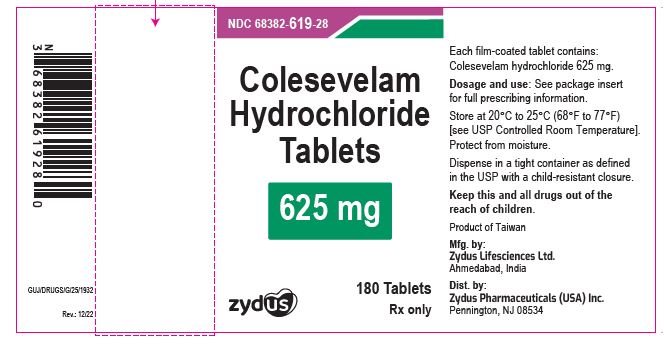
PACKAGE LABEL.PRINCIPAL DISPLAY PANEL Colesevelam Hydrochloride Tablets, 625 mg NDC 68382-619-28 180 Tablets Rx only image
About this NDC listing & data coverage
What data is (and isn’t) available for this NDC — tap to expand
| NDC identity (package / product / labeler codes) | ✓ Available |
| Labeler | ✓ Available |
| Product & package description | ✓ Available |
| Marketing category & status | ✓ Available |
| Active ingredient / dosage form / route | ✓ Available |
| FDA label (SPL via DailyMed) | ✓ Available |
| Package photos | ✓ Available |
| Inactive ingredients (structured) | ✓ Available |
| NADAC pharmacy acquisition price (CMS) | — Not published for this NDC CMS publishes NADAC only for NDCs reported in its retail-pharmacy survey. |
| Orange Book / therapeutic-equivalence data | ✓ Available |
| HCPCS J-code billing crosswalk | — Not published for this NDC Most self-administered / retail products have no J-code — that is normal. |
| Medicaid utilization (CMS SDUD) | — Not published for this NDC CMS reports utilization only for NDCs with Medicaid claims above its privacy threshold. |