
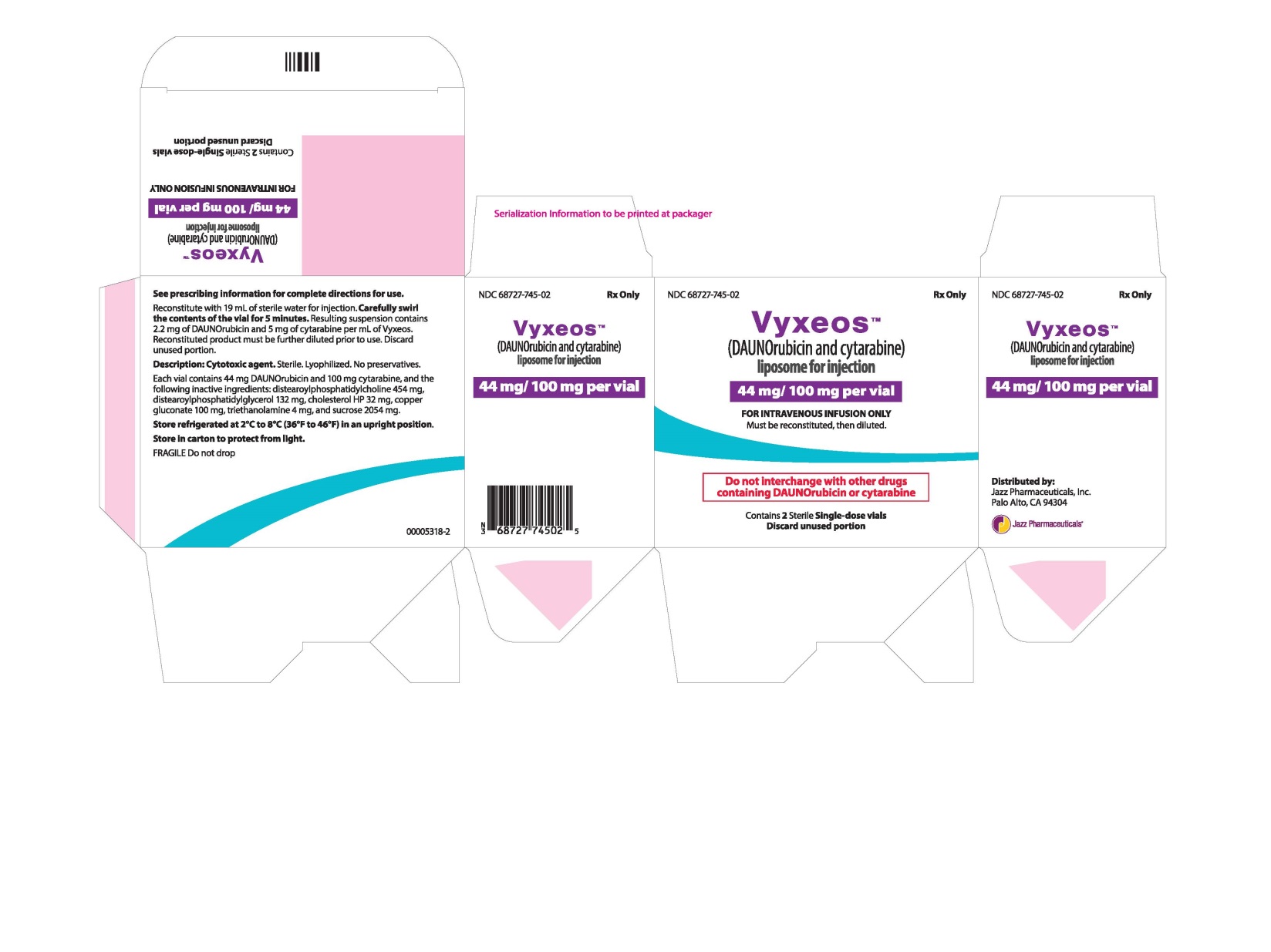
VYXEOS (daunorubicin and cytarabine) liposome 100 mg/20mL; 44 mg/20mL Injection, Powder, Lyophilized, For Suspension, 40 mL — NDC 68727-745-02 (Billing 68727-0745-02)
This is a package of 40 mL of VYXEOS (daunorubicin and cytarabine) liposome 100 mg/20mL; 44 mg/20mL Injection, Powder, Lyophilized, For Suspension from Jazz Pharmaceuticals, Inc., marketed since Aug 2017 and currently FDA-listed.
NDC database record
One package, one record: these facts belong to NDC 68727-745-02 alone.
- Record
- FDA NDC Directory package listing · Human prescription drug
- Code segments
- 68727 labeler · 745 product · 02 package
- Package marketed since
- Aug 3, 2017
- Sample package
- No — commercial package
- Listing certified through
- Dec 31, 2027
- Barcode (UPC-A, from the NDC)
- 3 6872774502 5
- FDA record last changed
- Jul 24, 2026
Identity & classification
Regulatory identifiers FDA, NLM and CMS codes for this package
Drug-database identifiers Medi-Span GPI and First Databank GCN / HICL / AHFS classification
- GSN (GCN sequence number): 077659
- GCN: 43747
- GPI-14 (Medi-Span): 21990002201930
- HICL (First Databank): 044461
- AHFS class code: 10:00.00.00
- RxCUI (RxNorm): 1942743
Where does this data come from?
- FDA openFDA NDC Directory · synced Oct 1, 2026
- FDA label on DailyMed · label index refreshed Oct 6, 2026
- RxNorm (NLM RxNav) · catalog refreshed Oct 1, 2026
- Medi-Span GPI (licensed)
- First Databank (licensed) · refreshed Oct 1, 2026
RxNorm drug class
This medicine belongs to the Nucleoside Metabolic Inhibitor class.
Where does this data come from?
- RxClass (NLM) · catalog refreshed Oct 1, 2026
Clinical
Daunorubicin and cytarabine lipid complex is used to treat certain types of acute myeloid leukemia (AML; a type of cancer of the white blood cells). Daunorubicin is in a class of medications called anthracyclines. Cytarabine is in a class of medications called antimetabolites. Daunorubicin and cytarabine lipid complex slows or stops the growth of cancer cells in your body.
Read the full MedlinePlus article ↗Patient education
Supplement & herbal interactions
Where does this data come from?
- MedlinePlus (NLM) · refreshed Oct 1, 2026
- FDA label on DailyMed · label index refreshed Oct 6, 2026
Ask a licensed pharmacist directly — free, answered by our team.
Pricing
A drug doesn't have one price. Each row is a different public payment system, and none is what you'd pay at the counter — that depends on your insurance. The ⓘ on each row explains what it measures.
| Price system | Per mL | Per package |
|---|---|---|
| Retail pharmacies payNADAC · weekly | Not in the retail survey — common for institutional, discontinued, or low-volume packs. | |
| Medicaid paysCMS SDUD · 12 mo | No recent Medicaid claims on file for this NDC — rare and low-volume NDCs are suppressed in the public data. | |
| Medicare drug plans payPart D · quarterly | No Part D plan price is available for this NDC in our data. | |
| Medicare Part B allowsASP · J9153 | $272.886 / J9153 unit | — |
Where does this data come from?
- CMS NADAC weekly file
- CMS ASP pricing files · refreshed Sep 20, 2026
- CMS Medicaid State Drug Utilization Data · refreshed Oct 6, 2026
- CMS Part D plan pricing files · refreshed Sep 24, 2026
- VA National Acquisition Center price file
Billing & reimbursement
Where does this data come from?
- CMS ASP NDC-HCPCS crosswalk · refreshed Sep 22, 2026
- DMEPDAC NDC-HCPCS crosswalk
- openFDA NSDE billing units · refreshed Sep 7, 2026
Packaging — all sizes for this product
| Package NDC | Description | Marketing start | Marketing end | Status |
|---|---|---|---|---|
| 68727-0745-01 68727-745-01 Main listing | 20 mL in 1 VIAL | 2017-08-03 | — | Active |
| 68727-0745-02 You're viewing this | 40 mL in 1 CARTON | 2017-08-03 | — | Active |
| 68727-0745-05 68727-745-05 | 100 mL in 1 CARTON | 2017-08-03 | — | Discontinued by firm |
You're viewing one of 3 pack sizes for this product.
Pack size FAQ
What quantity is in this package?
How does this package differ from NDC 68727-0745-01?
What NDC number is used to bill for this package of VYXEOS (daunorubicin and cytarabine) liposome 100 mg/20mL; 44 mg/20mL Injection, Powder, Lyophilized, For Suspension?
Therapeutic equivalents
| Product | Labeler | Pack | NADAC/unit | TE | Status | Price vs. this |
|---|---|---|---|---|---|---|
| Vyxeos 100 mg/20mL; 44 mg/20mLthis 68727-0745-02 | Jazz | 40 ml | — | — | FDA listed | — |
Where does this data come from?
- FDA openFDA NDC Directory · synced Oct 1, 2026
- FDA Orange Book · refreshed Oct 3, 2026
- CMS NADAC weekly file
Availability & generic status
We did not find an FDA-approved generic match for this exact strength, form and route. Patent/protection dates below may affect future generic timing.
Why the date isn’t exact: Generic timing can change because patents may be challenged, settled, licensed, added, removed, or worked around with a narrower label — and FDA approval does not always mean a pharmacy can get the generic today.
🛈 What do these terms mean?
- Patent
- Legal protection listed in the Orange Book that may delay generic approval or launch. Issued by the U.S. Patent & Trademark Office.
- Substance patent
- Covers the active drug molecule itself — the hardest to design around. A generic generally can’t launch until it expires.
- Formulation (product) patent
- Covers a specific formulation or dosage form. A generic can sometimes work around it with a different formulation.
- Method-of-use patent
- A patent covering one specific approved use of the drug — not necessarily the whole molecule. A generic can sometimes launch with a “skinny label” that carves out the protected use and keeps the others.
- Skinny label
- A generic label that omits a still-patented use when the FDA allows it — letting a generic reach the market for the unprotected uses.
- Exclusivity
- FDA-granted marketing protection, separate from patents — e.g. 5-yr new chemical entity, 7-yr orphan drug, or a +6-month pediatric extension.
- Paragraph IV
- A generic applicant’s formal challenge to a listed patent. It can potentially lead to earlier generic entry, but often involves litigation or a settlement.
- RLD / RS
- Reference Listed Drug — the brand product the FDA uses as the reference for generic applications. Reference Standard — the product the FDA expects generics to compare against in bioequivalence testing.
- TE / AB rating
- FDA therapeutic-equivalence rating. An AB rating generally means the FDA considers a generic therapeutically equivalent to — and substitutable for — the brand.
- LOE (loss of exclusivity)
- The latest patent or exclusivity currently listed — the loss-of-exclusivity / latest-listed-protection date shown on this page. Paragraph-IV challenges and settlements can move the real date earlier; FDA approval and a manufacturer’s decision to market can move it later.
Built from the FDA Orange Book. The bars above are scaled to each protection’s expiry; the red LOE marker is the last one to lapse.
| Patent | Type | Use code | Expires |
|---|---|---|---|
| US 8022279 ↗ | Method of use | U-3147 | Sep 14, 2027 |
| US 7850990 ↗ | Method of use | U-3147 | Jan 23, 2027 |
| US 10835492 ↗ | Method of use | U-3150 | Oct 15, 2032 |
| US 10028912 ↗ | Method of use | U-3150 | Oct 15, 2032 |
| US 10028912 ↗ | Method of use | U-3149 | Oct 15, 2032 |
| US 10166184 ↗ | Method of use | U-3149 | Oct 15, 2032 |
| US 8092828 ↗ | Method of use | U-3147 | Apr 1, 2029 |
| US 8518437 ↗ | Drug product | — | Jun 7, 2026 |
| US 9271931 ↗ | Drug product | — | Jan 23, 2027 |
| US 10028912*PED ↗ | Drug product | — | Apr 15, 2033 |
| US 7850990*PED ↗ | Drug product | — | Jul 23, 2027 |
| US 8022279*PED ↗ | Drug product | — | Mar 14, 2028 |
| US 8092828*PED ↗ | Drug product | — | Oct 1, 2029 |
| US 9271931*PED ↗ | Drug product | — | Jul 23, 2027 |
| US 10835492*PED ↗ | Drug product | — | Apr 15, 2033 |
| US 10166184*PED ↗ | Drug product | — | Apr 15, 2033 |
| Code | What it grants | Expires |
|---|---|---|
| ODE-350 | Orphan Drug Exclusivity (7-year) | Mar 30, 2028 |
| PED | Pediatric Exclusivity (+6 months) | Sep 30, 2028 |
Is there a generic version of VYXEOS 44 MG-100 MG VIAL?
The FDA approved a generic — why can’t I get it at my pharmacy yet?
Why do different websites show different generic release dates?
What does “FDA listed” mean?
What does a patent or protection date mean here?
What does “current Orange Book estimate” mean?
Can a generic come out before the last patent expires?
Can a generic come out after the listed dates?
What is the difference between patents and exclusivity?
Why are there multiple patent dates?
Where does this data come from?
- FDA Orange Book · refreshed Oct 3, 2026
What it looks like
Where does this data come from?
- FDA label on DailyMed · label index refreshed Oct 6, 2026
Inactive Ingredients / Excipients
Inactive ingredients, also called excipients, are components of the drug product other than the active ingredient. They may include fillers, dyes, coatings, preservatives, flavors, or other formulation ingredients.
💡 Tap an ingredient (hover on desktop) to see what it is and why it’s used.
-
32 mg / 20 mL
UNII 97C5T2UQ7J
Cholesterol is a fatty substance found naturally in animal tissues. In medications, it's used as an ingredient in liposomal formulations and lipid-based drug delivery systems to help encapsulate and stabilize active drugs for better absorption.
-
100 mg / 20 mL
UNII RV823G6G67
Copper gluconate is a salt combining copper and gluconic acid. It serves as a mineral supplement ingredient and color agent in some formulations, providing trace copper content to the medication.
-
454 mg / 20 mL
UNII EAG959U971
A phospholipid derived from soy or egg that acts as an emulsifier and surfactant. It helps mix oil and water-based ingredients together and improves how the body absorbs the active drug.
-
132 mg / 20 mL
UNII 4271ZA8WXO
A synthetic phospholipid (fat-like compound) derived from or similar to those found in cell membranes. It acts as an emulsifier and surfactant, helping to mix water and oil-based ingredients together in the medicine.
-
2054 mg / 20 mL
UNII C151H8M554
A natural sugar derived from sugar cane or sugar beets. It's used as a sweetener, filler, and binder to improve taste, add bulk, and help hold tablet or capsule ingredients together.
-
4 mg / 20 mL
UNII 9O3K93S3TK
Trolamine is an alkaline compound used as a pH buffer and emulsifier in medicines. It helps neutralize acids, stabilize formulations, and enable mixing of oil and water-based ingredients.
6 inactive ingredients listed in the exact product block matched to this NDC.
Where does this data come from?
ingredient classCode="IACT" elements from the exact product block matched by this NDC. Label-section narrative from DailyMed / the openFDA label index is shown separately when available.- FDA label on DailyMed · label index refreshed Oct 6, 2026
- FDA openFDA NDC Directory · synced Oct 1, 2026
Inactive ingredient FAQ
Are inactive ingredients the same for every manufacturer?
Why might an inactive ingredient be missing?
Can inactive ingredients matter?
Manufacturer & labeler
More NDCs from Jazz Pharmaceuticals, Inc. labeler code 68727
- Xyrem sodium oxybate .5 g/mL Solution NDC 68727-100-01
- XYWAV calcium, magnesium, potassium, and sodium oxybates .5 g/mL; .5 g/mL; .5 g/mL; .5 g/mL Solution NDC 68727-150-01
- Modeyso dordaviprone 125 mg Capsule NDC 68727-250-01
- ZEPZELCA Lurbinectedin .5 mg/mL Injection, Powder, Lyophilized, For Solution NDC 68727-712-01
- DEFITELIO defibrotide sodium 80 mg/mL Injection, Solution NDC 68727-800-01
- Rylaze asparaginase erwinia chrysanthemi (recombinant)-rywn 20 mg/mL Injection NDC 68727-900-03
- ZIIHERA zanidatamab-hrii 50 mg/mL Injection, Powder, Lyophilized, For Solution NDC 68727-950-02
Where does this data come from?
- FDA openFDA NDC Directory · synced Oct 1, 2026
- Drugs@FDA
Full prescribing information FDA SPL
🚨 Boxed Warning ▾
WARNING: DO NOT INTERCHANGE WITH OTHER DAUNORUBICIN AND/OR CYTARABINE-CONTAINING PRODUCTS • VYXEOS has different dosage recommendations than daunorubicin hydrochloride injection, cytarabine injection, daunorubicin citrate liposome injection, and cytarabine liposome injection. Verify drug name and dose prior to preparation and administration to avoid dosing errors [see Warnings and Precautions ( 5.1 )] . WARNING: DO NOT INTERCHANGE WITH OTHER DAUNORUBICIN AND/OR CYTARABINE-CONTAINING PRODUCTS See full prescribing information for complete boxed warning. • VYXEOS has different dosage recommendations than daunorubicin hydrochloride injection, cytarabine injection, daunorubicin citrate liposome injection, and cytarabine liposome injection.
Verify drug name and dose prior to preparation and administration to avoid dosing errors ( 5.1 ).
🎯 Indications and Usage ▾
1 INDICATIONS AND USAGE VYXEOS is indicated for the treatment of newly diagnosed therapy-related acute myeloid leukemia (t-AML) or AML with myelodysplasia-related changes (AML-MRC) in adults and pediatric patients 1 year and older. VYXEOS is a liposomal combination of daunorubicin, an anthracycline topoisomerase inhibitor, and cytarabine, a nucleoside metabolic inhibitor, that is indicated for the treatment of newly diagnosed therapy-related acute myeloid leukemia (t-AML) or AML with myelodysplasia-related changes (AML-MRC) in adults and pediatric patients 1 year and older.
( 1 )
⏱️ Dosage and Administration ▾
2 DOSAGE AND ADMINISTRATION • Induction: VYXEOS (daunorubicin 44 mg/m 2 and cytarabine 100 mg/m 2 ) liposome via intravenous infusion over 90 minutes on days 1, 3, and 5 and on days 1 and 3 for subsequent cycles of induction, if needed. ( 2.1 ) • Consolidation: VYXEOS (daunorubicin 29 mg/m 2 and cytarabine 65 mg/m 2 ) liposome via intravenous infusion over 90 minutes on days 1 and 3. ( 2.1 ) • See Full Prescribing Information for instructions on preparation and administration.
( 2.3 , 2.4 )
2.1Recommended Dosage A full VYXEOS course consists of 1-2 cycles of Induction and up to 2 cycles of Consolidation at the dose and schedule listed in Table 1. Prior to initiating each cycle of VYXEOS, calculate the prior cumulative anthracycline exposure for the patient [see Warnings and Precautions ( 5.3 )] . Administer prophylactic anti-emetics before treatment with VYXEOS.
Table 1: Dose and Schedule for VYXEOS Cycle VYXEOS Dose and Schedule First Induction (daunorubicin 44 mg/m 2 and cytarabine 100 mg/m 2 ) liposome days 1, 3, and 5 Second Induction a (daunorubicin 44 mg/m 2 and cytarabine 100 mg/m 2 ) liposome days 1 and 3 Consolidation (daunorubicin 29 mg/m 2 and cytarabine 65 mg/m 2 ) liposome days 1 and 3 a Only for patients failing to achieve a response with the first induction cycle. For the first cycle of induction, the recommended dose of VYXEOS is (daunorubicin 44 mg/m 2 and cytarabine 100 mg/m 2 ) liposome administered via intravenous infusion over 90 minutes on days 1, 3, and 5.
Prior to initiating induction, assess cardiac function and obtain liver and renal function studies. For patients who do not achieve remission with the first induction cycle, a second induction cycle may be administered 2 to 5 weeks after the first if there was no unacceptable toxicity with VYXEOS. The recommended dose for the second induction cycle of VYXEOS is (daunorubicin 44 mg/m 2 and cytarabine 100 mg/m 2 ) liposome administered via intravenous infusion over 90 minutes on days 1 and 3.
Administer the first consolidation cycle 5 to 8 weeks after the start of the last induction. The recommended dose for each cycle of consolidation therapy is VYXEOS (daunorubicin 29 mg/m 2 and cytarabine 65 mg/m 2 ) liposome administered via intravenous infusion over 90 minutes on days 1 and 3. Assess cardiac function, complete blood counts, liver and renal function before each consolidation cycle.
Do not start VYXEOS consolidation until the absolute neutrophil count recovers to greater than
0.5Gi/L and the platelet count recovers to greater than 50 Gi/L in the absence of unacceptable toxicity. Administer the second consolidation cycle 5 to 8 weeks after the start of the first consolidation cycle in patients who do not show disease progression or unacceptable toxicity to VYXEOS.
2.2Dosage Modification Missed Doses of VYXEOS If a planned dose of VYXEOS is missed, administer the dose as soon as possible and adjust the dosing schedule accordingly, maintaining the treatment interval. Hypersensitivity Reactions For hypersensitivity reactions of any grade/severity, interrupt VYXEOS infusion immediately and manage symptoms. Reduce the rate of infusion or discontinue treatment as outlined below [see Warnings and Precautions ( 5.4 )] . • Mild symptoms: Once symptoms resolve, reinitiate infusion at half the prior rate of infusion.
Consider premedication with antihistamines and/or corticosteroids for subsequent doses of VYXEOS. • Moderate symptoms: Do not reinitiate infusion. For subsequent doses of VYXEOS, premedicate with antihistamines and/or corticosteroids prior to initiating infusion at same rate. • Severe/life-threatening symptoms: Permanently discontinue VYXEOS treatment, treat according to the standard of care to manage symptoms, and monitor patient until symptoms resolve. Cardiotoxicity Discontinue VYXEOS in patients who exhibit impaired cardiac function unless the benefit of continuing treatment outweighs the risk [see Warnings and Precautions ( 5.3 )] .
2.3Prepa… [Excerpted — this section continues on DailyMed.]
💊 Dosage Forms and Strengths ▾
3 DOSAGE FORMS AND STRENGTHS VYXEOS is a sterile, preservative-free, purple, lyophilized cake for reconstitution supplied in a single-dose clear glass vial as follows: • For injection: 44 mg daunorubicin and 100 mg cytarabine encapsulated in liposomes. For injection: 44 mg daunorubicin and 100 mg cytarabine encapsulated in liposomes as a lyophilized cake in a single-dose vial for reconstitution. ( 3 )
⛔ Contraindications ▾
4 CONTRAINDICATIONS The use of VYXEOS is contraindicated in patients with the following: • History of serious hypersensitivity reaction to cytarabine, daunorubicin, or any component of the formulation [see Warnings and Precautions ( 5.4 )] . • History of serious hypersensitivity to daunorubicin, cytarabine or any component of the formulation. ( 4 )
⚠️ Warnings and Cautions ▾
5 WARNINGS AND PRECAUTIONS • Hemorrhage: Serious or fatal hemorrhagic events with associated prolonged thrombocytopenia have occurred with VYXEOS. Monitor blood counts regularly until recovery. ( 5.2 ) • Cardiotoxicity: VYXEOS treatment is not recommended in patients with cardiac function that is less than normal.
Discontinue VYXEOS in patients with impaired cardiac function unless the benefit of continuing treatment outweighs the risk. ( 2.2 , 5.3 ) • Hypersensitivity: If severe or life-threatening hypersensitivity reaction occurs, discontinue VYXEOS, treat according to standard of care, and monitor until signs and symptoms resolve. ( 2.2 , 5.4 ) • Tissue Necrosis: Daunorubicin has been associated with local tissue necrosis at the site of drug extravasation.
Confirm intravenous access before administration. ( 5.6 ) • Embryo-Fetal Toxicity: Can cause fetal harm. Advise females of reproductive potential of the potential risk to a fetus and to use effective contraception.
( 5.7 , 8.1 , 8.3 )
5.1Do Not Interchange With Other Daunorubicin And/Or Cytarabine-Containing Products Due to substantial differences in the pharmacokinetic parameters, the dose and schedule recommendations for VYXEOS are different from those for daunorubicin hydrochloride injection, cytarabine injection, daunorubicin citrate liposome injection, and cytarabine liposome injection. Verify drug name and dose prior to preparation and administration to avoid dosing errors. Do not substitute other preparations of daunorubicin or cytarabine for VYXEOS.
5.2Hemorrhage Serious or fatal hemorrhage events, including fatal central nervous system (CNS) hemorrhages, associated with prolonged severe thrombocytopenia, have occurred in patients treated with VYXEOS. In Study 1 (NCT01696084), the incidence of any grade hemorrhagic events during the entire treatment period was 74% of patients on the VYXEOS arm and 56% on the control arm. The most frequently reported hemorrhagic event was epistaxis (36% in VYXEOS arm and 18% in control arm).
Grade 3 or greater events occurred in 12% of VYXEOS treated patients and 8% of patients treated with 7+3. Fatal treatment-emergent CNS hemorrhage not in the setting of progressive disease occurred in 2% of patients on the VYXEOS arm and in 0.7% of patients on the control arm. Monitor blood counts regularly until recovery and administer platelet transfusion support as required [see Adverse Reactions ( 6.1 )].
5.3Cardiotoxicity VYXEOS contains the anthracycline daunorubicin, which has a known risk of cardiotoxicity. Prior therapy with anthracyclines, pre-existing cardiac disease, previous radiotherapy to the mediastinum, or concomitant use of cardiotoxic drugs may increase the risk of daunorubicin-induced cardiac toxicity. Prior to administering VYXEOS, obtain an electrocardiogram (ECG) and assess cardiac function by multi-gated radionuclide angiography (MUGA) scan or echocardiography (ECHO).
Repeat MUGA or ECHO determinations of left ventricular ejection fraction (LVEF) prior to consolidation with VYXEOS and as clinically required. Discontinue VYXEOS in patients with impaired cardiac function unless the benefit of initiating or continuing treatment outweighs the risk. VYXEOS treatment is not recommended in patients with LVEF that is less than normal.
Total cumulative doses of non-liposomal daunorubicin greater than 550 mg/m 2 have been associated with an increased incidence of drug-induced congestive heart failure. The tolerable limit appears lower (400 mg/m 2 ) in patients who received radiation therapy to the mediastinum. Calculate the lifetime cumulative anthracycline exposure prior to each cycle of VYXEOS.
VYXEOS treatment is not recommended in patients whose lifetime anthracycline exposure has reached the maximum cumulative limit. The exposure to daunorubicin following each cycle of VYXEOS is shown in Table 2. Table 2: Cumulative Exposure of Daunorubicin per Cycle of VYXEOS Therapy Daunorubicin per Dose Number of Doses per Cycle Daunorub… [Excerpted — this section continues on DailyMed.]
🤒 Adverse Reactions ▾
6 ADVERSE REACTIONS The following adverse reactions are discussed in greater detail in other sections of the labeling: • Hemorrhage [see Warnings and Precautions ( 5.2 )] • Cardiotoxicity [see Warnings and Precautions ( 5.3 )] • Hypersensitivity Reactions [see Warnings and Precautions ( 5.4 )] • Copper Overload [see Warnings and Precautions ( 5.5 )] • Tissue Necrosis [see Warnings and Precautions ( 5.6 )] The most common adverse reactions (incidence ≥ 25%) are hemorrhagic events, febrile neutropenia, rash, edema, nausea, mucositis, diarrhea, constipation, musculoskeletal pain, fatigue, abdominal pain, dyspnea, headache, cough, decreased appetite, arrhythmia, pneumonia, bacteremia, chills, sleep disorders, and vomiting.
( 6.1 ) To report SUSPECTED ADVERSE REACTIONS, contact Jazz Pharmaceuticals, Inc. at 1-800-520-5568 or FDA at 1-800-FDA-1088 or www.fda.gov/medwatch.
6.1Clinical Trials Experience Because clinical trials are conducted under widely varying conditions, adverse reaction rates observed in the clinical trials of a drug cannot be directly compared to rates in the clinical trials of another drug and may not reflect the rates observed in practice. The safety of VYXEOS was determined in a randomized trial for adults with newly diagnosed t‑AML or AML-MRC [see Clinical Studies ( 14 )] which included 153 patients treated with VYXEOS and 151 patients treated with a standard combination of cytarabine and daunorubicin (7+3).
At study entry, patients were required to have a LVEF of at least 50% and a prior lifetime cumulative anthracycline exposure less than 368 mg/m 2 daunorubicin (or equivalent). On study, the median number of cycles administered was 2 (range, 1–4 cycles) on the VYXEOS arm and 1 (range, 1–4 cycles) on the control arm. The median cumulative daunorubicin dose was 189 mg/m 2 (range, 44–337 mg/m 2 ) on the VYXEOS arm and 186 mg/m 2 (range, 44–532 mg/m 2 ) on the control arm.
Nine patients each on the VYXEOS arm (6%) and the control arm (6%) had a fatal adverse reaction on treatment or within 30 days of therapy that was not in the setting of progressive disease. Fatal adverse reactions on the VYXEOS arm included infection, CNS hemorrhage, and respiratory failure. Overall, all-cause day-30 mortality was 6% in the VYXEOS arm and 11% in the control arm.
During the first 60 days of the study, 14% (21/153) of patients died in the VYXEOS arm vs. 21% (32/151) of patients in the 7+3 treatment group. The most common serious adverse reactions (incidence ≥ 5%) on the VYXEOS arm were dyspnea, myocardial toxicity, sepsis, pneumonia, febrile neutropenia, bacteremia and hemorrhage.
Adverse reactions led to discontinuation of VYXEOS in 18% (28/153) of patients, and 13% (20/151) in the control arm. The adverse reactions leading to discontinuation on the VYXEOS arm included prolonged cytopenias, infection, cardiotoxicity, respiratory failure, hemorrhage (GI and CNS), renal insufficiency, colitis, and generalized medical deterioration. The most common adverse reactions (incidence ≥ 25%) in patients on the VYXEOS arm were hemorrhagic events, febrile neutropenia, rash, edema, nausea, mucositis, diarrhea, constipation, musculoskeletal pain, fatigue, abdominal pain, dyspnea, headache, cough, decreased appetite, arrhythmia, pneumonia, bacteremia, chills, sleep disorders, and vomiting.
The incidences of common adverse drug reactions during the induction phase in Study 1 are presented in Table 3. Table 3: Common Adverse Reactions (≥ 10% Incidence in the VYXEOS arm) During the Induction Phase Adverse Reaction a All Grades b Grades 3 to 5 b VYXEOS N=153 n (%) 7+3 N=151 n (%) VYXEOS N=153 n (%) 7+3 N=151 n (%) Hemorrhage a 107 (70) 74 (49) 15 (10) 9 (6) Febrile Neutropenia 104 (68) 103 (68) 101 (66) 102 (68) Rash a 82 (54) 55 (36) 8 (5) 2 (1) Edema a 78 (51) 90 (60) 2 (2) 5 (3) Nausea 72 (47) 79 (52) 1 (1) 1 (1) Diarrhea/Colitis a 69 (45) 100 (66) 4 (3) 10 (7) Mucositis a 67 (44) 69 (46) 2 (1) 7 (5) Constipation 61 (40) 57 (38) 0 0 Musculosk… [Excerpted — this section continues on DailyMed.]
🔄 Drug Interactions ▾
7 DRUG INTERACTIONS • Monitor cardiac function more frequently when coadministered with cardiotoxic agents. ( 7.1 ) • Monitor hepatic function more frequently when coadministered with hepatotoxic agents. ( 7.2 )
7.1Cardiotoxic Agents Concomitant use of cardiotoxic agents may increase the risk of cardiotoxicity. Assess cardiac function more frequently when VYXEOS is coadministered with cardiotoxic agents [see Warnings and Precautions ( 5.3 )].
7.2Hepatotoxic Agents Concomitant use with hepatotoxic agents may impair liver function and increase the toxicity of VYXEOS. Monitor hepatic function more frequently when VYXEOS is coadministered with hepatotoxic agents.
👥 Use in Specific Populations ▾
8 USE IN SPECIFIC POPULATIONS Lactation: Advise not to breastfeed. ( 8.2 )
8.1Pregnancy Risk Summary Based on anecdotal data of cytarabine in pregnant women and results of studies of daunorubicin and cytarabine in animals, VYXEOS can cause embryo-fetal harm when administered to a pregnant woman. There are no adequate and well-controlled studies of VYXEOS, daunorubicin, or cytarabine in pregnant women. Daunorubicin and cytarabine are reproductive and developmental toxicants in multiple species (mice, rats, and/or dogs), starting at a dose that was approximately 0.02 times the exposure in patients at the recommended human dose on a mg/m 2 basis [see Animal Data] .
Patients should be advised to avoid becoming pregnant while taking VYXEOS. If this drug is used during pregnancy, or if the patient becomes pregnant while taking this drug, apprise the patient of the potential harm to a fetus. The estimated background risk of major birth defects and miscarriage for the indicated population is unknown.
Adverse outcomes in pregnancy occur regardless of the health of the mother or the use of medications. In the U.S. general population, the estimated background risks of major birth defects and miscarriage in clinically recognized pregnancies are 2 to 4% and 15 to 20%, respectively. Data Human Data Cytarabine can cause fetal harm if a pregnant woman is exposed to the drug.
Four anecdotal cases of major limb malformations have been reported in infants after their mothers received intravenous cytarabine, alone or in combination with other agents, during the first trimester. Animal Data A liposomal formulation of daunorubicin was administered to rats on gestation days 6 through 15 at 0.3, 1.0, or 2.0 mg/kg/day (about 0.04, 0.14, or 0.27 the recommended human dose on a mg/m 2 basis) and produced severe maternal toxicity and embryolethality at 2.0 mg/kg/day and was embryotoxic and caused fetal malformations (anophthalmia, microphthalmia, incomplete ossification) at 0.3 mg/kg/day.
Embryotoxicity was characterized by increased embryo-fetal deaths, reduced numbers of litters, and reduced litter sizes. Cytarabine was teratogenic in mice (cleft palate, phocomelia, deformed appendages, skeletal abnormalities) when doses ≥ 2 mg/kg/day were administered intraperitoneal (IP) during the period of organogenesis (about 0.06 times the recommended human dose on a mg/m 2 basis), and in rats (deformed appendages) when 20 mg/kg was administered as a single IP dose on day 12 of gestation (about 1.2 times the recommended human dose on a mg/m 2 basis).
Single IP doses of 50 mg/kg in rats (about 3 times the recommended human dose on a mg/m 2 basis) on day 14 of gestation reduced prenatal and postnatal brain size and permanent impairment of learning ability. Cytarabine was embryotoxic in mice when administered during the period of organogenesis. Embryotoxicity was characterized by decreased fetal weight at 0.5 mg/kg/day (about 0.02 times the recommended human dose on a mg/m 2 basis), and increased early and late resorptions and decreased live litter sizes at 8 mg/kg/day (about 0.24 times the recommended human dose on a mg/m 2 basis).
8.2Lactation Risk Summary There are no data on the presence of daunorubicin, cytarabine, or their metabolites in human milk, their effects on the breastfed infant, or their effects on milk production. Because of the potential for serious adverse reactions in breastfed infants, advise lactating women not to breastfeed during treatment with VYXEOS and for 2 weeks after the last dose.
8.3Females and Males of Reproductive Potential VYXEOS can cause fetal harm when administered to a pregnant woman [see Use in Specific Populations ( 8.1 )] . Pregnancy Testing Verify the pregnancy status of females of reproductive potential prior to initiating VYXEOS. Contraception Females Advise females of reproductive potential to use effective contraception during treatment with VYXEOS and for 6 months after the last dose.
Males Advise males with female p… [Excerpted — this section continues on DailyMed.]
🤰 Pregnancy ▾
8.1Pregnancy Risk Summary Based on anecdotal data of cytarabine in pregnant women and results of studies of daunorubicin and cytarabine in animals, VYXEOS can cause embryo-fetal harm when administered to a pregnant woman. There are no adequate and well-controlled studies of VYXEOS, daunorubicin, or cytarabine in pregnant women. Daunorubicin and cytarabine are reproductive and developmental toxicants in multiple species (mice, rats, and/or dogs), starting at a dose that was approximately 0.02 times the exposure in patients at the recommended human dose on a mg/m 2 basis [see Animal Data] .
Patients should be advised to avoid becoming pregnant while taking VYXEOS. If this drug is used during pregnancy, or if the patient becomes pregnant while taking this drug, apprise the patient of the potential harm to a fetus. The estimated background risk of major birth defects and miscarriage for the indicated population is unknown.
Adverse outcomes in pregnancy occur regardless of the health of the mother or the use of medications. In the U.S. general population, the estimated background risks of major birth defects and miscarriage in clinically recognized pregnancies are 2 to 4% and 15 to 20%, respectively. Data Human Data Cytarabine can cause fetal harm if a pregnant woman is exposed to the drug.
Four anecdotal cases of major limb malformations have been reported in infants after their mothers received intravenous cytarabine, alone or in combination with other agents, during the first trimester. Animal Data A liposomal formulation of daunorubicin was administered to rats on gestation days 6 through 15 at 0.3, 1.0, or 2.0 mg/kg/day (about 0.04, 0.14, or 0.27 the recommended human dose on a mg/m 2 basis) and produced severe maternal toxicity and embryolethality at 2.0 mg/kg/day and was embryotoxic and caused fetal malformations (anophthalmia, microphthalmia, incomplete ossification) at 0.3 mg/kg/day.
Embryotoxicity was characterized by increased embryo-fetal deaths, reduced numbers of litters, and reduced litter sizes. Cytarabine was teratogenic in mice (cleft palate, phocomelia, deformed appendages, skeletal abnormalities) when doses ≥ 2 mg/kg/day were administered intraperitoneal (IP) during the period of organogenesis (about 0.06 times the recommended human dose on a mg/m 2 basis), and in rats (deformed appendages) when 20 mg/kg was administered as a single IP dose on day 12 of gestation (about 1.2 times the recommended human dose on a mg/m 2 basis).
Single IP doses of 50 mg/kg in rats (about 3 times the recommended human dose on a mg/m 2 basis) on day 14 of gestation reduced prenatal and postnatal brain size and permanent impairment of learning ability. Cytarabine was embryotoxic in mice when administered during the period of organogenesis. Embryotoxicity was characterized by decreased fetal weight at 0.5 mg/kg/day (about 0.02 times the recommended human dose on a mg/m 2 basis), and increased early and late resorptions and decreased live litter sizes at 8 mg/kg/day (about 0.24 times the recommended human dose on a mg/m 2 basis).
🧒 Pediatric Use ▾
8.4Pediatric Use Newly Diagnosed t-AML or AML-MRC The safety and effectiveness of VYXEOS have been established in pediatric patients 1 year and older with newly diagnosed t-AML or AML-MRC. The use of VYXEOS for this indication is supported by evidence of effectiveness from an adequate and well-controlled study in adults with data on safety from two single-arm trials, which included patients in the following age groups: 7 patients 1 year to less than 2 years old, 33 patients 2 years to less than 12 years old, 13 patients 12 years old to less than 17 years old.
The exposures of total daunorubicin and cytarabine observed in pediatric patients were within the values observed in adults given the same dose based on body surface area [ see Clinical Pharmacology ( 12.3 )] . No new safety signals were observed in pediatric patients in these two single-arm trials. No differences in safety were observed by age.
The safety and effectiveness of VYXEOS in pediatric patients less than 1 year of age with newly diagnosed t-AML or AML-MRC have not been established. Newly Diagnosed de novo AML The safety and effectiveness of VYXEOS in pediatric patients with de novo AML were assessed but not established in an open-label, randomized study (NCT04293562) comparing VYXEOS plus gemtuzumab ozogamicin to standard chemotherapy plus gemtuzumab ozogamicin. The VYXEOS arm included 324 pediatric patients less than 17 years old.
No new safety signals were identified in the pediatric patients treated with VYXEOS and gemtuzumab ozogamicin in this trial.
🧓 Geriatric Use ▾
8.5Geriatric Use Of the 375 patients who received VYXEOS (daunorubicin 44 mg/m 2 and cytarabine 100 mg/m 2 ) liposome in clinical studies, 57% were 65 years and over. No overall differences in safety were observed between these patients and younger patients, with the exception of bleeding events, which occurred more frequently in patients 65 years and older compared to younger patients (77% vs. 59%).
🧬 Clinical Pharmacology ▾
12 CLINICAL PHARMACOLOGY
12.1Mechanism of Action VYXEOS (daunorubicin and cytarabine) liposome for injection is a liposomal formulation of daunorubicin and cytarabine at a fixed 1:5 molar ratio. The 1:5 molar ratio of daunorubicin:cytarabine has been shown to have synergistic effects at killing leukemia cells in vitro and in murine models. Daunorubicin has antimitotic and cytotoxic activity, which is achieved by forming complexes with DNA, inhibiting topoisomerase II activity, inhibiting DNA polymerase activity, affecting regulation of gene expression, and producing DNA-damaging free radicals.
Cytarabine is a cell cycle phase-specific antineoplastic agent, affecting cells only during the S-phase of cell division. Cytarabine acts primarily through inhibition of DNA polymerase. Based on animal data, the liposomes enter and persist in the bone marrow, where they are taken up intact by bone marrow cells.
In leukemia-bearing mice, the liposomes are taken up by leukemia cells to a greater extent than by normal bone marrow cells. After cellular internalization, liposomes undergo degradation releasing cytarabine and daunorubicin within the intracellular environment.
12.2Pharmacodynamics Cardiac Electrophysiology At the therapeutic exposures with the recommended dosing regimen, no large mean changes in the QTc interval (i.e., > 20 msecs) were observed. An exposure-QTc analysis suggested no concentration-dependent QTc interval prolongation.
12.3Pharmacokinetics The pharmacokinetics of daunorubicin and cytarabine administered as VYXEOS were investigated in adult patients who received a dose of daunorubicin 44 mg/m 2 and cytarabine 100 mg/m 2 administered as a 90-minute intravenous infusion on days 1, 3, and 5. The pharmacokinetics of each drug was based on total plasma concentrations (i.e., encapsulated plus unencapsulated drug). Following the dose administered on day 5, the mean (% coefficient of variation [CV]) maximum plasma concentration (C max ) for daunorubicin was 26.0 (32.7%) mcg/mL and cytarabine was 62.2 (33.7%) mcg/mL.
The mean (%CV) area under the curve (AUC) during one dosing interval for daunorubicin was 637 (38.4%) mcg∙h/mL and cytarabine was 1900 (44.3%) mcg∙h/mL. The accumulation ratio was 1.3 for daunorubicin and 1.4 for cytarabine. There was no evidence of time-dependent kinetics or major departures from dose proportionality over the range of 1.3 mg/3 mg per m 2 to 59 mg/134 mg per m 2 (0.03 to 1.3 times the approved recommended dosage).
Distribution The volume of distribution (%CV) for daunorubicin is
6.6L (36.8%) and cytarabine is
7.1L (49.2%). Plasma protein binding was not evaluated. Elimination VYXEOS exhibits a prolonged half-life (%CV) of 31.5 h (28.5%) for daunorubicin and 40.4 h (24.2%) for cytarabine with greater than 99% of the daunorubicin and cytarabine in the plasma remaining encapsulated within the liposomes. The clearance (%CV) is
0.16L/h (53.3%) for daunorubicin and
0.13L/h (60.2%) for cytarabine. Metabolism Subsequent to release from VYXEOS liposomes, daunorubicin is catalyzed by aldoketo reductase and carbonyl reductase enzymes to the active metabolite daunorubicinol. Cytarabine is metabolized by cytidine deaminase to the inactive metabolite 1-β-D-arabinofuranosyluracil (AraU).
Excretion Urinary excretion of daunorubicin and daunorubicinol accounts for 9% of the administered dose of daunorubicin, and urinary excretion of cytarabine and AraU accounts for 71% of the administered dose of cytarabine. Specific Populations No clinically meaningful effects on the pharmacokinetics of daunorubicin and cytarabine were observed based on age (1 to 81 years), sex, race, body weight (9 to 156 kg), body mass index (14 to 48 kg/m 2 ), and white blood cell count (0.2 to 111 Gi/L) after adjusting dose by body surface area.
Pediatric Patients The exposures of total daunorubicin and cytarabine observed in pediatric patients were within the values observed in adults given the same dose based on body surface area.… [Excerpted — this section continues on DailyMed.]
🧬 Mechanism of Action ▾
12.1Mechanism of Action VYXEOS (daunorubicin and cytarabine) liposome for injection is a liposomal formulation of daunorubicin and cytarabine at a fixed 1:5 molar ratio. The 1:5 molar ratio of daunorubicin:cytarabine has been shown to have synergistic effects at killing leukemia cells in vitro and in murine models. Daunorubicin has antimitotic and cytotoxic activity, which is achieved by forming complexes with DNA, inhibiting topoisomerase II activity, inhibiting DNA polymerase activity, affecting regulation of gene expression, and producing DNA-damaging free radicals.
Cytarabine is a cell cycle phase-specific antineoplastic agent, affecting cells only during the S-phase of cell division. Cytarabine acts primarily through inhibition of DNA polymerase. Based on animal data, the liposomes enter and persist in the bone marrow, where they are taken up intact by bone marrow cells.
In leukemia-bearing mice, the liposomes are taken up by leukemia cells to a greater extent than by normal bone marrow cells. After cellular internalization, liposomes undergo degradation releasing cytarabine and daunorubicin within the intracellular environment.
📦 How Supplied / Storage and Handling ▾
16 HOW SUPPLIED/STORAGE AND HANDLING How Supplied VYXEOS (daunorubicin and cytarabine) liposome for injection is supplied as a sterile, preservative-free, purple, lyophilized cake, in a single-dose vial. Each VYXEOS vial (NDC 68727-745-01) contains 44 mg daunorubicin and 100 mg cytarabine. NDC 68727-745-02: Carton containing 2 vials of VYXEOS Storage Store unreconstituted VYXEOS vials in a refrigerator at 2°C to 8°C (36°F to 46°F) in an upright position.
The vial should be stored in its original carton to protect from light. Handling and Disposal VYXEOS is a hazardous drug. Follow applicable special handling and disposal procedures.
1
📋 Description ▾
11 DESCRIPTION VYXEOS (daunorubicin and cytarabine) liposome for injection is a combination of daunorubicin and cytarabine in a 1:5 molar ratio encapsulated in liposomes for intravenous administration. The liposome membrane is composed of distearoylphosphatidylcholine (DSPC), distearoylphosphatidylglycerol (DSPG), and cholesterol in a 7:2:1 molar ratio. Daunorubicin is an anthracycline topoisomerase inhibitor.
The chemical name for daunorubicin is (1S,3S)-3-acetyl-1,2,3,4,6,11-hexahydro-3,5,12-trihydroxy-10-methoxy-6,11-dioxo-1-naphthacenyl-3-amino-2,3,6-trideoxy-α-L-lyxo-hexopyranoside; its molecular weight is 527.52. Daunorubicin has the following structural formula: Cytarabine is a nucleoside metabolic inhibitor. The chemical name of cytarabine is 4-amino-1-β-D-arabinofuranosyl-2(1H)-pyrimidinone; its molecular weight is 243.22.
Cytarabine has the following structural formula: VYXEOS liposome for injection is supplied as a sterile, preservative-free, purple, lyophilized cake, in a single-dose vial. Each vial contains 44 mg daunorubicin and 100 mg cytarabine, and the following inactive ingredients: distearoylphosphatidylcholine 454 mg, distearoylphosphatidylglycerol 132 mg, cholesterol HP 32 mg, copper gluconate 100 mg, triethanolamine 4 mg, and sucrose 2054 mg. daunorubicin cytarabine
💬 Information for Patients ▾
17 PATIENT COUNSELING INFORMATION Hemorrhage Inform patients of the risk of fatal bleeding. Advise patients of the need for periodic monitoring of blood counts and of the importance of keeping scheduled appointments for blood work and necessary transfusions. Advise patients to contact a healthcare provider for new onset fever or symptoms of infection or if they notice signs of bruising or bleeding [see Warnings and Precautions ( 5.2 ) and Adverse Reactions ( 6.1 )] .
Cardiotoxicity Advise patients to contact their healthcare provider if they develop symptoms of heart failure [see Warnings and Precautions ( 5.3 )] . Hypersensitivity Reactions Inform patients of the risk of hypersensitivity reactions, including anaphylaxis. Describe the symptoms of hypersensitivity reactions, including anaphylaxis, and instruct the patient to seek medical attention immediately if they experience such symptoms [see Warnings and Precautions ( 5.4 )] .
Embryo-Fetal Toxicity VYXEOS can cause fetal harm when administered during pregnancy. Advise females of reproductive potential to use effective contraception during treatment and for 6 months following the last dose of VYXEOS and to inform their healthcare provider of a known or suspected pregnancy before and during treatment with VYXEOS [see Warnings and Precautions ( 5.7 ) and Use in Specific Populations ( 8.1 ) and ( 8.3 )] . Lactation Advise patients not to breastfeed during treatment with VYXEOS and for 2 weeks after the last dose [see Use in Specific Populations ( 8.2 )] .
Infertility Advise males of reproductive potential that VYXEOS may cause temporary or permanent infertility [see Use in Specific Populations ( 8.3 )] . Concomitant Medications Advise patients to speak with their physicians about any other medication they are currently taking [see Drug Interactions ( 7 )] . This product's label may have been updated.
For full prescribing information, please visit labels.fda.gov. Distributed by: Jazz Pharmaceuticals, Inc. Palo Alto, CA 94306 Protected by U.S.
Patent Nos. 7,238,367; 7,744,921; 7,850,990; 8,022,279; 8,092,828; 8,431,806; 8,518,437; 9,271,931; 10,028,912; 10,166,184; and 10,835,492 VYXEOS ® is a trademark of Jazz Pharmaceuticals plc or its subsidiaries. ©2025 Jazz Pharmaceuticals www.vyxeos.com
🧬 Pharmacokinetics ▾
12.3Pharmacokinetics The pharmacokinetics of daunorubicin and cytarabine administered as VYXEOS were investigated in adult patients who received a dose of daunorubicin 44 mg/m 2 and cytarabine 100 mg/m 2 administered as a 90-minute intravenous infusion on days 1, 3, and 5. The pharmacokinetics of each drug was based on total plasma concentrations (i.e., encapsulated plus unencapsulated drug). Following the dose administered on day 5, the mean (% coefficient of variation [CV]) maximum plasma concentration (C max ) for daunorubicin was 26.0 (32.7%) mcg/mL and cytarabine was 62.2 (33.7%) mcg/mL.
The mean (%CV) area under the curve (AUC) during one dosing interval for daunorubicin was 637 (38.4%) mcg∙h/mL and cytarabine was 1900 (44.3%) mcg∙h/mL. The accumulation ratio was 1.3 for daunorubicin and 1.4 for cytarabine. There was no evidence of time-dependent kinetics or major departures from dose proportionality over the range of 1.3 mg/3 mg per m 2 to 59 mg/134 mg per m 2 (0.03 to 1.3 times the approved recommended dosage).
Distribution The volume of distribution (%CV) for daunorubicin is
6.6L (36.8%) and cytarabine is
7.1L (49.2%). Plasma protein binding was not evaluated. Elimination VYXEOS exhibits a prolonged half-life (%CV) of 31.5 h (28.5%) for daunorubicin and 40.4 h (24.2%) for cytarabine with greater than 99% of the daunorubicin and cytarabine in the plasma remaining encapsulated within the liposomes. The clearance (%CV) is
0.16L/h (53.3%) for daunorubicin and
0.13L/h (60.2%) for cytarabine. Metabolism Subsequent to release from VYXEOS liposomes, daunorubicin is catalyzed by aldoketo reductase and carbonyl reductase enzymes to the active metabolite daunorubicinol. Cytarabine is metabolized by cytidine deaminase to the inactive metabolite 1-β-D-arabinofuranosyluracil (AraU).
Excretion Urinary excretion of daunorubicin and daunorubicinol accounts for 9% of the administered dose of daunorubicin, and urinary excretion of cytarabine and AraU accounts for 71% of the administered dose of cytarabine. Specific Populations No clinically meaningful effects on the pharmacokinetics of daunorubicin and cytarabine were observed based on age (1 to 81 years), sex, race, body weight (9 to 156 kg), body mass index (14 to 48 kg/m 2 ), and white blood cell count (0.2 to 111 Gi/L) after adjusting dose by body surface area.
Pediatric Patients The exposures of total daunorubicin and cytarabine observed in pediatric patients were within the values observed in adults given the same dose based on body surface area. Geriatric Patients The exposures of total daunorubicin and cytarabine observed in patients aged > 65 years were within the values observed in patients aged 18 to 64 years given the same dose based on body surface area. Patients with Renal Impairment Comparing to patients with normal renal function (n=7, CLcr ≥ 90 mL/min), patients with moderate renal impairment (n=8, CLcr 30 to 59 mL/min) showed 8% and 6% decrease, respectively, in the mean AUC tau of total cytarabine and daunorubicin; patients with severe renal impairment (n=6, CLcr 15 to 29 mL/min) showed 0.4% increase and 3% decrease, respectively, in the mean AUC tau of cytarabine and daunorubicin in a dedicated study.
There are no data in patients with end-stage renal disease managed with hemodialysis. Patients with Hepatic Impairment The pharmacokinetics of total cytarabine and daunorubicin were not altered in patients with bilirubin less than and equal to 3 mg/dL. The pharmacokinetics in patients with bilirubin greater than 3 mg/dL is unknown .
🧬 Pharmacodynamics ▾
12.2Pharmacodynamics Cardiac Electrophysiology At the therapeutic exposures with the recommended dosing regimen, no large mean changes in the QTc interval (i.e., > 20 msecs) were observed. An exposure-QTc analysis suggested no concentration-dependent QTc interval prolongation.
🔬 Clinical Studies ▾
14 CLINICAL STUDIES Study 1 Study 1 (NCT01696084) was a randomized, multicenter, open-label, active-controlled study which compared VYXEOS to a standard combination of cytarabine and daunorubicin (7+3) in patients 60 to 75 years of age with newly diagnosed t-AML or AML-MRC. The patients were randomized (1:1) and stratified by age and AML sub-type to receive VYXEOS or 7+3 for induction and consolidation. VYXEOS (daunorubicin 44 mg/m 2 and cytarabine 100 mg/m 2 ) liposome was given intravenously on days 1, 3, and 5 for the first induction and on days 1 and 3 for the second induction if needed.
For consolidation, the VYXEOS dose was (daunorubicin 29 mg/m 2 and cytarabine 65 mg/m 2 ) liposome on days 1 and 3. In the 7+3 arm, first induction consisted of cytarabine 100 mg/m 2 /day on days 1 through 7 by continuous infusion and daunorubicin 60 mg/m 2 /day on days 1, 2, and 3; for second induction and consolidation cycles, cytarabine 100 mg/m 2 /day was given on days 1 through 5 and daunorubicin 60 mg/m 2 /day on days 1 and 2. Patients could receive up to 2 cycles of induction and 2 cycles of consolidation in each arm.
A second induction was highly recommended for patients who did not achieve a response and was mandatory for patients achieving greater than 50% reduction in percent blasts. Post remission therapy with hematopoietic stem cell transplantation (HSCT) was permitted either in place of or after consolidation chemotherapy. There were 153 patients randomized to VYXEOS and 156 patients randomized to the 7+3 control arm.
The randomized patients had a median age of 68 (range, 60-75 years), 61% were male, and 88% had an ECOG performance status of 0–1. Twenty percent had t-AML, 54% had AML with an antecedent hematological disorder, and 25% had de novo AML with myelodysplasia-related cytogenetic abnormalities. Thirty-four percent had been treated previously with a hypomethylating agent for myelodysplastic syndrome (MDS).
Fifty-four percent of patients with cytogenetics data had an adverse karyotype. The demographic and baseline disease characteristics were generally balanced between the study arms. FLT3 mutation was identified in 15% (43/279) of patients tested, and NPM1 mutation was identified in 9% (25/283) patients tested.
All patients on the VYXEOS arm and 97% of those on the control arm received at least 1 cycle of induction, and 32% on the VYXEOS arm and 21% on the control arm received at least 1 cycle of consolidation. The rate of HSCT in first CR was 20% in the VYXEOS arm and 12% in the control arm; the overall rate of HSCT (induction failure, first CR, or as salvage after relapse) was 34% (52/153) in the VYXEOS arm and 25% (39/156) on the control arm. Efficacy was established on the basis of overall survival from the date of randomization to death from any cause.
VYXEOS demonstrated superiority in overall survival compared with the 7+3 control (Figure 1). The efficacy results are shown in Table 6. Figure 1: Kaplan-Meier Curve for Overall Survival, ITT Population Table 6: Efficacy Results for Study 1 VYXEOS N=153 7+3 N=156 Overall Survival Median survival, months (95% CI) 9.6 (6.6, 11.9) 5.9 (5.0, 7.8) Hazard ratio (95% CI) 0.69 (0.52, 0.90) p–value (2–sided) a 0.005 Complete Response Rate CR, n (%) 58 (38) 41 (26) p-value (2–sided) b 0.036 Abbreviations: CI = Confidence interval; CR = Complete Remission a p-value from stratified log rank test stratifying by age and AML sub-type b p-value from Mantel-Haenszel test stratifying by age and AML sub-type Kaplan-Meier Curve
🧪 Nonclinical Toxicology ▾
13 NONCLINICAL TOXICOLOGY
13.1Carcinogenesis, Mutagenesis, Impairment of Fertility Carcinogenicity, mutagenicity, and impairment of fertility studies with VYXEOS (daunorubicin and cytarabine) liposome for injection have not been conducted. Carcinogenicity and mutagenicity studies have been conducted with daunorubicin. Published literature reported data that suggest daunorubicin (5 mg/kg) could be tumorigenic in rats at 0.68 times the recommended human dose on a mg/m 2 basis.
A high incidence of mammary tumors was observed about 120 days after a single intravenous dose of 12.5 mg/kg daunorubicin in rats (about 1.7 times the recommended human dose on a mg/m 2 basis). A carcinogenic evaluation of daunorubicin by the International Agency for Research on Cancer (IARC) Working Group classified daunorubicin as a possible human carcinogen based on sufficient evidence in animals and inadequate data in humans. Daunorubicin was mutagenic in in vitro tests (Ames assay, V79 hamster cell assay), and clastogenic in in vitro (CCRF-CEM human lymphoblasts) and in in vivo (sister-chromatid exchange (SCE) assay in mouse bone marrow) tests.
Daunorubicin intravenous doses of 0.25 mg/kg/day (about 0.12 times the recommended human dose on a mg/m 2 basis) in male dogs caused testicular atrophy and total aplasia of spermatocytes in the seminiferous tubules. Cytarabine was mutagenic in in vitro tests and was clastogenic in vitro (chromosome aberrations and SCE in human leukocytes) and in vivo (chromosome aberrations and SCE assay in rodent bone marrow, mouse micronucleus assay). Cytarabine caused the transformation of hamster embryo cells and rat H43 cells in vitro.
No studies assessing the impact of cytarabine on fertility are available in the literature. Cytarabine was clastogenic to meiotic cells; a dose-dependent increase in sperm-head abnormalities and chromosomal aberrations occurred in mice given IP cytarabine.
📄 Carcinogenesis, Mutagenesis, Impairment of Fertility ▾
13.1Carcinogenesis, Mutagenesis, Impairment of Fertility Carcinogenicity, mutagenicity, and impairment of fertility studies with VYXEOS (daunorubicin and cytarabine) liposome for injection have not been conducted. Carcinogenicity and mutagenicity studies have been conducted with daunorubicin. Published literature reported data that suggest daunorubicin (5 mg/kg) could be tumorigenic in rats at 0.68 times the recommended human dose on a mg/m 2 basis.
A high incidence of mammary tumors was observed about 120 days after a single intravenous dose of 12.5 mg/kg daunorubicin in rats (about 1.7 times the recommended human dose on a mg/m 2 basis). A carcinogenic evaluation of daunorubicin by the International Agency for Research on Cancer (IARC) Working Group classified daunorubicin as a possible human carcinogen based on sufficient evidence in animals and inadequate data in humans. Daunorubicin was mutagenic in in vitro tests (Ames assay, V79 hamster cell assay), and clastogenic in in vitro (CCRF-CEM human lymphoblasts) and in in vivo (sister-chromatid exchange (SCE) assay in mouse bone marrow) tests.
Daunorubicin intravenous doses of 0.25 mg/kg/day (about 0.12 times the recommended human dose on a mg/m 2 basis) in male dogs caused testicular atrophy and total aplasia of spermatocytes in the seminiferous tubules. Cytarabine was mutagenic in in vitro tests and was clastogenic in vitro (chromosome aberrations and SCE in human leukocytes) and in vivo (chromosome aberrations and SCE assay in rodent bone marrow, mouse micronucleus assay). Cytarabine caused the transformation of hamster embryo cells and rat H43 cells in vitro.
No studies assessing the impact of cytarabine on fertility are available in the literature. Cytarabine was clastogenic to meiotic cells; a dose-dependent increase in sperm-head abnormalities and chromosomal aberrations occurred in mice given IP cytarabine.
📚 References ▾
15 REFERENCES 1. OSHA Hazardous Drugs. OSHA . [Accessed on 15 June 2017, from http://www.osha.gov/SLTC/hazardousdrugs/index.html.]
📄 Package Label / Principal Display Panel ▾
PACKAGE/LABEL DISPLAY PANEL carton
About this NDC listing & data coverage
What data is (and isn’t) available for this NDC — tap to expand
| NDC identity (package / product / labeler codes) | ✓ Available |
| Labeler | ✓ Available |
| Product & package description | ✓ Available |
| Marketing category & status | ✓ Available |
| Active ingredient / dosage form / route | ✓ Available |
| FDA label (SPL via DailyMed) | ✓ Available |
| Package photos | ✓ Available |
| Inactive ingredients (structured) | ✓ Available |
| NADAC pharmacy acquisition price (CMS) | — Not published for this NDC CMS publishes NADAC only for NDCs reported in its retail-pharmacy survey. |
| Orange Book / therapeutic-equivalence data | ✓ Available |
| HCPCS J-code billing crosswalk | ✓ Available |
| Medicaid utilization (CMS SDUD) | — Not published for this NDC CMS reports utilization only for NDCs with Medicaid claims above its privacy threshold. |