
Capecitabine 500 mg Tablet, Film Coated, 120-count — NDC 69097-948-08 (Billing 69097-0948-08)
This is a package of 120 tablets of Capecitabine 500 mg Tablet, Film Coated from Cipla USA Inc., marketed since Jul 2023 and currently FDA-listed; retail pharmacies pay about $0.4556 per tablet (NADAC). It is this product's only package size.
NDC database record
One package, one record: these facts belong to NDC 69097-948-08 alone.
- Record
- FDA NDC Directory package listing · Human prescription drug
- Code segments
- 69097 labeler · 948 product · 08 package
- Package marketed since
- Jul 1, 2023
- Sample package
- No — commercial package
- Listing certified through
- Dec 31, 2026
- Billing quantity
- 120 EA per package
- Barcode (UPC)
- 0369097949037
- FDA record last changed
- Jul 24, 2026
Identity & classification
Regulatory identifiers FDA, NLM and CMS codes for this package
Drug-database identifiers Medi-Span GPI and First Databank GCN / HICL / AHFS classification
- GSN (GCN sequence number): 039781
- GCN: 31612
- GPI-14 (Medi-Span): 21300005000350
- HICL (First Databank): 018385
- AHFS class code: 10:00.00.00
- RxCUI (RxNorm): 200327
Where does this data come from?
- FDA openFDA NDC Directory · synced Oct 1, 2026
- FDA label on DailyMed · label index refreshed Oct 5, 2026
- RxNorm (NLM RxNav) · catalog refreshed Oct 1, 2026
- Medi-Span GPI (licensed)
- First Databank (licensed) · refreshed Oct 1, 2026
RxNorm drug class
This medicine belongs to the Nucleoside Metabolic Inhibitor class.
Where does this data come from?
- RxClass (NLM) · catalog refreshed Oct 1, 2026
Clinical
Capecitabine is used to treat certain types of breast cancer, colon or rectal cancer (cancer that begins in the large intestine), pancreatic cancer, and stomach or esophageal (tube that connects the throat with the stomach) cancers. Capecitabine is in a class of medications called antimetabolites. It works by stopping or slowing the growth of cancer cells.
Read the full MedlinePlus article ↗- Capecitabine is used for several types of cancer — most commonly colorectal (colon and rectal) cancer, advanced or metastatic breast cancer, and, depending on the product, cancers...
- What kinds of cancer does capecitabine treat?
- Yes — this one really matters. You should take capecitabine within 30 minutes after eating a meal, and swallow the tablets whole with water. Taking it on an empty stomach significa...
- The most common side effects are hand-and-foot syndrome (redness, soreness, or peeling on your palms and soles), diarrhea, nausea, fatigue, and mouth sores. Many of these can be ma...
Patient education
Supplement & herbal interactions
Some supplements/herbs that may interact with Capecitabine — tap one for details:
Capecitabine may be associated with lower levels of 1 nutrient — worth a chat with your pharmacist, not a cause for alarm.
Where does this data come from?
- MedlinePlus (NLM) · refreshed Oct 1, 2026
- FDA label on DailyMed · label index refreshed Oct 5, 2026
Ask a licensed pharmacist directly — free, answered by our team.
Pricing
A drug doesn't have one price. Each row is a different public payment system, and none is what you'd pay at the counter — that depends on your insurance. The ⓘ on each row explains what it measures.
| Price system | Per ea | Per package |
|---|---|---|
| Retail pharmacies payNADAC · weekly | $0.456 | $54.67 / 120 tablets |
| Medicaid paysCMS SDUD · 12 mo | No recent Medicaid claims on file for this NDC — rare and low-volume NDCs are suppressed in the public data. | |
| Medicare drug plans payPart D · quarterly | No Part D plan price is available for this NDC in our data. | |
| Medicare Part B allowsASP · NONE | No ASP payment limit on file for NONE this quarter. | |
Where does this data come from?
- CMS NADAC weekly file · file of Sep 30, 2026
- CMS ASP pricing files · refreshed Sep 20, 2026
- CMS Medicaid State Drug Utilization Data · refreshed Oct 5, 2026
- CMS Part D plan pricing files · refreshed Sep 24, 2026
- VA National Acquisition Center price file
Billing & reimbursement
Where does this data come from?
- CMS ASP NDC-HCPCS crosswalk · refreshed Sep 22, 2026
- DMEPDAC NDC-HCPCS crosswalk
- openFDA NSDE billing units · refreshed Sep 7, 2026
Packaging — all sizes for this product
| Package NDC | Description | Marketing start | Marketing end | Status |
|---|---|---|---|---|
| 69097-0948-08 You're viewing this Main listing | 120 TABLET, FILM COATED in 1 BOTTLE | 2023-07-01 | — | Active |
Therapeutic equivalents
| Product | Labeler | Pack | NADAC/unit | TE | Status | Price vs. this |
|---|---|---|---|---|---|---|
| Capecitabine 500 mg 00093-7474-89 | Teva | 120 tablets | $0.456 | AB | Availability likely | — |
| Capecitabine 500 mg 16729-0073-29 | Accord | 120 tablets | $0.456 | AB | Availability likely | — |
| capecitabine 500 mg 31722-0775-12 | Camber | 120 tablets | $0.456 | AB | Availability likely | — |
| capecitabine 500 mg 55111-0497-04 | Dr. | 120 tablets | $0.456 | AB | Availability likely | — |
| Capecitabine 500 mg 59651-0205-08 | Aurobindo | 120 tablets | $0.456 | AB | Availability likely | — |
| Capecitabine 500 mg 60687-0149-94 | American | 1 tablet | $0.456 | AB | Availability likely | — |
| Capecitabine 500 mg 67877-0459-12 | Ascend | 120 tablets | $0.456 | AB | Availability likely | — |
| Capecitabine 500 mg 68001-0644-07 | BluePoint | 120 tablets | $0.456 | AB | Availability likely | — |
| Capecitabine 500 mgthis 69097-0948-08 | Cipla | 120 tablets | $0.456 | AB | Availability likely | — |
| Capecitabine 500 mg 70756-0816-22 | Lifestar | 120 tablets | $0.456 | AB | Availability likely | — |
| Capecitabine 500 mg 72205-0007-92 | Novadoz | 120 tablets | $0.456 | AB | Availability likely | — |
| capecitabine 500 mg 72603-0303-01 | NorthStar | 120 tablets | $0.456 | AB | Availability likely | — |
| Capecitabine 500 mg 82009-0112-12 | Quallent | 120 tablets | $0.456 | AB | Availability likely | — |
| Capecitabine 500 mg 82249-0210-12 | CivicaScript | 120 tablets | $0.456 | AB | Availability likely | — |
| Capecitabine 500 mg 68001-0488-07 | BluePoint | 120 tablets | $0.481 | AB | FDA listed | +6% |
| Capecitabine 500mg 500 mg 72485-0205-12 | Armas | 120 tablets | $0.481 | AB | FDA listed | +6% |
| Capecitabine 500 mg 51407-0640-12 | Golden | 120 tablets | — | AB | FDA listed | — |
| Xeloda 500 mg 61269-0475-12 | H2-Pharma, | 120 tablets | — | — | FDA listed | — |
| Capecitabine 500 mg 62756-0239-18 | Sun | 1000 tablets | — | — | FDA listed | — |
| Capecitabine 500 mg 82511-0002-50 | Teyro | 120 tablets | — | BX | FDA listed | — |
Where does this data come from?
- FDA openFDA NDC Directory · synced Oct 1, 2026
- FDA Orange Book · refreshed Oct 3, 2026
- CMS NADAC weekly file · file of Sep 30, 2026
Availability & generic status
This product is an FDA-approved generic. Other versions of the same drug are listed under Therapeutic equivalents, least expensive first.
Where does this data come from?
- FDA Orange Book · refreshed Oct 3, 2026
What it looks like
Where does this data come from?
- FDA label on DailyMed · label index refreshed Oct 5, 2026
Inactive Ingredients / Excipients
Inactive ingredients, also called excipients, are components of the drug product other than the active ingredient. They may include fillers, dyes, coatings, preservatives, flavors, or other formulation ingredients.
💡 Tap an ingredient (hover on desktop) to see what it is and why it’s used.
-
UNII 3SY5LH9PMK
Anhydrous lactose is a milk sugar with no water content. It acts as a filler and binder in tablets and capsules, adding bulk and helping ingredients stick together.
-
UNII OP1R32D61U
Microcrystalline cellulose is a purified form of cellulose, a natural fiber from plant sources. It acts as a binder and filler in tablets and capsules, helping hold ingredients together and give the medicine its shape and size.
-
UNII M28OL1HH48
Croscarmellose sodium is a plant-based substance derived from cellulose. It acts as a disintegrant, helping tablets and capsules break down quickly in the digestive system so the medicine can be absorbed.
-
UNII 1K09F3G675
Ferric oxide red is an inorganic iron compound used as a colorant in medicines. It gives tablets, capsules, or other dosage forms a red or reddish tint for identification and appearance.
-
UNII EX438O2MRT
Ferric oxide yellow is a naturally occurring iron compound used as a colorant in medications. It gives tablets, capsules, and other forms a yellow or golden hue for identification and appearance.
-
UNII XM0M87F357
A dark iron oxide compound that gives medicines their black or dark color. It's used as a colorant in tablets and capsules to help identify the product and make it visually distinctive.
-
UNII 3NXW29V3WO
Hypromellose is a plant-based thickener made from cellulose. It's used in medicines as a binder to hold ingredients together, a coating for tablets, and a thickener for liquids.
-
UNII 70097M6I30
Magnesium stearate is a salt made from magnesium and stearic acid, a fatty substance. It's used in tablets and capsules as a lubricant and glidant to help ingredients flow smoothly during manufacturing and prevent sticking.
-
UNII 7SEV7J4R1U
A powder made from a naturally occurring mineral. In medicines, talc works as a glidant and anti-caking agent, helping tablets and capsules flow smoothly during manufacturing and preventing clumping.
-
UNII 15FIX9V2JP
Titanium dioxide is a bright white mineral powder commonly used as a colorant and opacifying agent. It makes pills and tablets white or lighter in color and helps make coatings non-transparent.
10 inactive ingredients listed in the exact product block matched to this NDC.
Where does this data come from?
ingredient classCode="IACT" elements from the exact product block matched by this NDC. Label-section narrative from DailyMed / the openFDA label index is shown separately when available.- FDA label on DailyMed · label index refreshed Oct 5, 2026
- FDA openFDA NDC Directory · synced Oct 1, 2026
Inactive ingredient FAQ
Are inactive ingredients the same for every manufacturer?
Why might an inactive ingredient be missing?
Can inactive ingredients matter?
Manufacturer & labeler
More NDCs from Cipla USA Inc. labeler code 69097
- Lurasidone Hydrochloride 20 mg Tablet, Film Coated NDC 69097-942-02
- Gabapentin 300 mg Capsule NDC 69097-943-07
- Atorvastatin Calcium 10 mg Tablet, Film Coated NDC 69097-944-05
- Atorvastatin Calcium 20 mg Tablet, Film Coated NDC 69097-945-05
- Atorvastatin Calcium 40 mg Tablet, Film Coated NDC 69097-946-05
- Atorvastatin Calcium 80 mg Tablet, Film Coated NDC 69097-947-05
- Capecitabine 150 mg Tablet, Film Coated NDC 69097-949-03
- Sildenafil 25 mg Tablet NDC 69097-951-02
- Sildenafil 50 mg Tablet NDC 69097-952-02
- Sildenafil 100 mg Tablet NDC 69097-953-02
- Pregabalin 25 mg Capsule NDC 69097-954-05
- Pregabalin 50 mg Capsule NDC 69097-955-05
Where does this data come from?
- FDA openFDA NDC Directory · synced Oct 1, 2026
- Drugs@FDA
Full prescribing information FDA SPL
🚨 Boxed Warning ▾
WARNING: CAPECITABINE -WARFARIN INTERACTION Capecitabine Warfarin Interaction: Patients receiving concomitant capecitabine and oral coumarin-derivative anticoagulant therapy should have their anticoagulant response (INR or prothrombin time) monitored frequently in order to adjust the anticoagulant dose accordingly. A clinically important capecitabine -Warfarin drug interaction was demonstrated in a clinical pharmacology trial [see Warnings and Precautions ( 5.2 ) and Drug Interactions ( 7.1 )] . Altered coagulation parameters and/or bleeding, including death, have been reported in patients taking capecitabine concomitantly with coumarin-derivative anticoagulants such as warfarin and phenprocoumon.
Postmarketing reports have shown clinically significant increases in prothrombin time (PT) and INR in patients who were stabilized on anticoagulants at the time capecitabine was introduced. These events occurred within several days and up to several months after initiating capecitabine therapy and, in a few cases, within 1 month after stopping capecitabine. These events occurred in patients with and without liver metastases.
Age greater than 60 and a diagnosis of cancer independently predispose patients to an increased risk of coagulopathy. WARNING: CAPECITABINE -WARFARIN INTERACTION See full prescribing information for complete boxed warning . Patients receiving concomitant capecitabine and oral coumarin-derivative anticoagulants such as warfarin and phenprocoumon should have their anticoagulant response (INR or prothrombin time) monitored frequently in order to adjust the anticoagulant dose accordingly.
Altered coagulation parameters and/or bleeding, including death, have been reported during concomitant use. Occurrence: Within several days and up to several months after initiating capecitabine therapy; may also be seen within 1 month after stopping capecitabine Predisposing factors: age>60 and diagnosis of cancer
🎯 Indications and Usage ▾
1 INDICATIONS AND USAGE Capecitabine is a nucleoside metabolic inhibitor with antineoplastic activity indicated for: • Adjuvant Colon Cancer ( 1.1 ) – Patients with Dukes' C colon cancer • Metastatic Colorectal Cancer ( 1.1 ) – First-line as monotherapy when treatment with fluoropyrimidine therapy alone is preferred • Metastatic Breast Cancer ( 1.2 ) – In combination with docetaxel after failure of prior anthracycline-containing therapy – As monotherapy in patients resistant to both paclitaxel and an anthracycline-containing regimen
1.1Colorectal Cancer Capecitabine tablets USP is indicated as a single agent for adjuvant treatment in patients with Dukes' C colon cancer who have undergone complete resection of the primary tumor when treatment with fluoropyrimidine therapy alone is preferred. Capecitabine was non-inferior to 5- fluorouracil and leucovorin (5-FU/LV) for disease-free survival (DFS). Physicians should consider results of combination chemotherapy trials, which have shown improvement in DFS and OS, when prescribing single-agent capecitabine in the adjuvant treatment of Dukes' C colon cancer.
Capecitabine tablets USP are indicated as first-line treatment of patients with metastatic colorectal carcinoma when treatment with fluoropyrimidine therapy alone is preferred. Combination chemotherapy has shown a survival benefit compared to 5-FU/LV alone. A survival benefit over 5-FU/LV has not been demonstrated with capecitabine tablets monotherapy.
Use of capecitabine tablets USP instead of 5-FU/LV in combinations has not been adequately studied to assure safety or preservation of the survival advantage.
1.2Breast Cancer Capecitabine tablets USP in combination with docetaxel are indicated for the treatment of patients with metastatic breast cancer after failure of prior anthracycline-containing chemotherapy. Capecitabine tablets monotherapy is also indicated for the treatment of patients with metastatic breast cancer resistant to both paclitaxel and an anthracycline-containing chemotherapy regimen or resistant to paclitaxel and for whom further anthracycline therapy is not indicated (e.g., patients who have received cumulative doses of 400 mg/m2 of doxorubicin or doxorubicin equivalents).
Resistance is defined as progressive disease while on treatment, with or without an initial response, or relapse within 6 months of completing treatment with an anthracycline-containing adjuvant regimen.
⏱️ Dosage and Administration ▾
2 DOSAGE AND ADMINISTRATION Take capecitabine tablets with water within 30 min after a meal ( 2.1 ) Monotherapy: 1,250 mg/m 2 twice daily orally for 2 weeks followed by a one week rest period in 3-week cycles ( 2.2 ) Adjuvant treatment is recommended for a total of 6 months (8 cycles) ( 2.2 ) In combination with docetaxel, the recommended dose of capecitabine tablets is 1,250 mg/m 2 twice daily for 2 weeks followed by a 7-day rest period, combined with docetaxel at 75 mg/m2 as a 1-hour IV infusion every 3 weeks ( 2.2 ) Capecitabine tablets dosage may need to be individualized to optimize patient management ( 2.3 ) Reduce the dose of capecitabine tablets by 25% in patients with moderate renal impairment ( 2.4 )
2.1Important Administration Instructions Capecitabine tablets should be swallowed whole with water within 30 minutes after a meal. Capecitabine is a cytotoxic drug. Follow applicable special handling and disposal procedures.1 If capecitabine tablets must be cut or crushed, this should be done by a professional trained in safe handling of cytotoxic drugs using appropriate equipment and safety procedures.
Capecitabine dose is calculated according to body surface area.
2.2Standard Starting Dose Monotherapy (Metastatic Colorectal Cancer, Adjuvant Colorectal Cancer, Metastatic Breast Cancer The recommended dose of capecitabine tablets are 1,250 mg/m 2 administered orally twice daily (morning and evening; equivalent to 2,500 mg/m 2 total daily dose) for 2 weeks followed by a 1-week rest period given as 3-week cycles (see Table 1 ). Adjuvant treatment in patients with Dukes' C colon cancer is recommended for a total of 6 months [ie, capecitabine tablets 1,250 mg/m 2 orally twice daily for 2 weeks followed by a 1-week rest period, given as 3-week cycles for a total of 8 cycles (24 weeks)].
Table 1 Capecitabine tablets Dose Calculation According to Body Surface Area *Total Daily Dose divided by 2 to allow equal morning and evening doses Dose Level 1,250 mg/m 2 Twice a Day Number of Tablets to be Taken at Each Dose (Morning and Evening) Surface Area (m 2 ) T otal Daily Dose* ( m g) 150 mg 500 mg ≤ 1.25 3,000 0 3 1.26 to 1.37 3,300 1 3 1.38 to 1.51 3,600 2 3 1.52 to 1.65 4,000 0 4 1.66 to 1.77 4,300 1 4 1.78 to 1.91 4,600 2 4 1.92 to 2.05 5,000 0 5 2.06 to 2.17 5,300 1 5 ≥ 2.18 5,600 2 5 In Combination With Docetaxel (Metastatic Breast Cancer) In combination with docetaxel, the recommended dose of capecitabine tablets is 1,250 mg/m 2 twice daily for 2 weeks followed by a 1-week rest period, combined with docetaxel at 75 mg/m 2 as a 1-hour intravenous infusion every 3 weeks.
Pre-medication, according to the docetaxel labeling, should be started prior to docetaxel administration for patients receiving the capecitabine tablets plus docetaxel combination. Table 1 displays the total daily dose of capecitabine tablets by body surface area and the number of tablets to be taken at each dose.
2.3Dose Management Guidelines General Capecitabine tablets dosage may need to be individualized to optimize patient management. Patients should be carefully monitored for toxicity and doses of capecitabine tablets should be modified as necessary to accommodate individual patient tolerance to treatment [see Clinical Studies ( 14 )] . Toxicity due to capecitabine tablets administration may be managed by symptomatic treatment, dose interruptions and adjustment of capecitabine tablets dose.
Once the dose has been reduced, it should not be increased at a later time. Doses of capecitabine tablets omitted for toxicity are not replaced or restored; instead the patient should resume the planned treatment cycles. The dose of phenytoin and the dose of coumarin-derivative anticoagulants may need to be reduced when either drug is administered concomitantly with capecitabine tablets [see Drug Interactions ( 7.1 )] .
Monotherapy (Metastatic Colorectal Cancer, Adjuvant Colorectal Cancer, Metastatic Breast Cancer) Capecitabine tablets dose modification scheme as des… [Excerpted — this section continues on DailyMed.]
💊 Dosage Forms and Strengths ▾
3 DOSAGE FORMS AND STRENGTHS 150 mg Tablets Capecitabine tablets, USP are supplied as light peach to peach colored, oblong shaped, biconvex film coated tablets, debossed with "C" on one side and "150"on other side for oral administration. Each light peach to peach colored tablet contains 150 mg of capecitabine, USP. 500 mg Tablets Capecitabine tablets, USP are supplied as light peach to peach colored, oblong shaped, biconvex film coated tablets, debossed with "C" on one side and "500"on other side for oral administration.
Each light peach to peach colored tablet contains 500 mg of capecitabine, USP. Tablets: 150 mg and 500 mg ( 3 )
⛔ Contraindications ▾
4 CONTRAINDICATIONS Severe Renal Impairment ( 4.1 ) Hypersensitivity ( 4.2 )
4.1Severe Renal Impairment Capecitabine is contraindicated in patients with severe renal impairment (creatinine clearance below 30 mL/min [Cockroft and Gault]) [ see Use in Specific Populations ( 8.7 ) and Clinical Pharmacology ( 12.3 ) ].
4.2Hypersensitivity Capecitabine is contraindicated in patients with known hypersensitivity to capecitabine or to any of its components. Capecitabine is contraindicated in patients who have a known hypersensitivity to 5-fluorouracil.
⚠️ Warnings and Cautions ▾
5 WARNINGS AND PRECAUTIONS Coagulopathy: May result in bleeding, death. Monitor anticoagulant response (e.g., INR) and adjust anticoagulant dose accordingly. ( 5.1 ) Diarrhea : May be severe.
Interrupt capecitabine treatment immediately until diarrhea resolves or decreases to grade 1. Recommend standard antidiarrheal treatments. ( 5.2 ) Cardiotoxicity: Common in patients with a prior history of coronary artery disease.
( 5.3 ) Increased Risk of Severe or Fatal Adverse Reactions in Patients with Low or Absent Dihydropyrimidine Dehydrogenase (DPD) Activity: Withhold or permanently discontinue capecitabine in patients with evidence of acute early-onset or unusually severe toxicity, which may indicate near complete or total absence of DPD activity. No capecitabine dose has been proven safe in patients with absent DPD activity. ( 5.4 ) Dehydration and Renal Failure: Interrupt capecitabine treatment until dehydration is corrected.
Potential risk of acute renal failure secondary to dehydration. Monitor and correct dehydration. ( 5.5 ).
Embryo-Fetal Toxicity: Can cause fetal harm. Advise females of reproductive potential of the potential risk to a fetus and to use effective contraception. ( 5.6 , 8.1 , 8.3 ) Mucocutaneous and Dermatologic Toxicity: Severe mucocutaneous reactions, Steven-Johnson Syndrome (SJS) and Toxic Epidermal Necrolysis (TEN), have been reported.
Capecitabine should be permanently discontinued in patients who experience a severe mucocutaneous reaction during treatment. Capecitabine may induce hand-and-foot syndrome. Persistent or severe hand-and-foot syndrome can lead to loss of fingerprints which could impact patient identification.
Interrupt capecitabine treatment until the hand-and-foot syndrome event resolves or decreases in intensity. ( 5.7 ) Hyperbilirubinemia: Interrupt capecitabine treatment immediately until the hyperbilirubinemia resolves or decreases in intensity. ( 5.8 ) Hematologic: Do not treat patients with neutrophil counts <1.5 x 10 9 /L or thrombocyte counts <100 x 10 9 /L.
If grade 3-4 neutropenia or thrombocytopenia occurs, stop therapy until condition resolves. ( 5.9 )
5.1Coagulopathy Patients receiving concomitant capecitabine and oral coumarin-derivative anticoagulant therapy should have their anticoagulant response (INR or prothrombin time) monitored closely with great frequency and the anticoagulant dose should be adjusted accordingly [ see Boxed Warning and Drug Interactions ( 7.1 ) ].
5.2Diarrhea Capecitabine can induce diarrhea, sometimes severe. Patients with severe diarrhea should be carefully monitored and given fluid and electrolyte replacement if they become dehydrated. In 875 patients with either metastatic breast or colorectal cancer who received capecitabine monotherapy, the median time to first occurrence of grade 2 to 4 diarrhea was 34 days (range from 1 to 369 days).
The median duration of grade 3 to 4 diarrhea was 5 days. National Cancer Institute of Canada (NCIC) grade 2 diarrhea is defined as an increase of 4 to 6 stools/day or nocturnal stools, grade 3 diarrhea as an increase of 7 to 9 stools/day or incontinence and malabsorption, and grade 4 diarrhea as an increase of ≥10 stools/day or grossly bloody diarrhea or the need for parenteral support. If grade 2, 3 or 4 diarrhea occurs, administration of capecitabine should be immediately interrupted until the diarrhea resolves or decreases in intensity to grade 1 [see Dosage and Administration ( 2.3 )] .
Standard antidiarrheal treatments (e.g, loperamide) are recommended. Necrotizing enterocolitis (typhlitis) has been reported.
5.3Cardiotoxicity The cardiotoxicity observed with capecitabine includes myocardial infarction/ischemia, angina, dysrhythmias, cardiac arrest, cardiac failure, sudden death, electrocardiographic changes, and cardiomyopathy. These adverse reactions may be more common in patients with a prior history of coronary artery disease.
5.4Dihydropyrimidine Dehydrogenase Deficiency Based on postmarketing report… [Excerpted — this section continues on DailyMed.]
🤒 Adverse Reactions ▾
6 ADVERSE REACTIONS Because clinical trials are conducted under widely varying conditions, adverse reaction rates observed in the clinical trials of a drug cannot be directly compared to rates in the clinical trials of another drug and may not reflect the rates observed in practice. Most common adverse reactions (≥30%) were diarrhea, hand-and-foot syndrome, nausea, vomiting, abdominal pain, fatigue/weakness, and hyperbilirubinemia. Other adverse reactions, including serious adverse reactions, have been reported.
( 6) To report SUSPECTED ADVERSE REACTIONS, contact Cipla Limited, at 1-866-604-3268 or FDA at 1-800-FDA-1088 or www.fda.gov/medwatch.
6.1Adjuvant Colon Cancer Table 4 shows the adverse reactions occurring in ≥5% of patients from one phase 3 trial in patients with Dukes' C colon cancer who received at least one dose of study medication and had at least one safety assessment. A total of 995 patients were treated with 1,250 mg/m2 twice a day of capecitabine administered for 2 weeks followed by a 1-week rest period, and 974 patients were administered 5-FU and leucovorin (20 mg/m2 leucovorin IV followed by 425 mg/m2 IV bolus 5- FU on days 1-5 every 28 days).
The median duration of treatment was 164 days for capecitabine- treated patients and 145 days for 5-FU/LV-treated patients. A total of 112 (11%) and 73 (7%) capecitabine and 5-FU/LV-treated patients, respectively, discontinued treatment because of adverse reactions. A total of 18 deaths due to all causes occurred either on study or within 28 days of receiving study drug: 8 (0.8%) patients randomized to capecitabine and 10 (1%) randomized to 5-FU/LV.
Table 5 shows grade 3/4 laboratory abnormalities occurring in ≥1% of patients from one phase 3 trial in patients with Dukes' C colon cancer who received at least one dose of study medication and had at least one safety assessment. Table 4 Percent Incidence of Adverse Reactions Reported in ≥5% of Patients Treated With Capecitabine or 5-FU/LV for Colon Cancer in the Adjuvant Setting (Safety Population) Adjuvant Treatment for Colon Cancer (N=1,969) Capecitabine ( N=995) 5-FU/LV ( N=974) B o d y System/Adverse Event All Grades Grade 3/4 All Grades Grade 3/4 Gastrointestinal Disorders Diarrhea Nausea Stomatitis Vomiting Abdominal Pain Constipation Upper Abdominal Pain Dyspepsia 47 34 22 15 14 9 7 6 12 2 2 2 3 - <1 <1 65 47 60 21 16 11 7 5 14 2 14 2 2 <1 <1 - S kin and Subcutaneous T issue Disorders Hand-and-Foot Syndrome Alopecia Rash Erythema 60 6 7 6 17 - - 1 9 22 8 5 <1 <1 - <1 General Disorders and Administration Site Conditions Fatigue Pyrexia Asthenia Lethargy 16 7 10 10 <1 <1 <1 <1 16 9 10 9 1 <1 1 <1 Nervous System Disorders Dizziness Headache Dysgeusia 6 5 6 <1 <1 - 6 6 9 - <1 - M e tabolism and Nutrition Disorders Anorexia 9 <1 11 <1 E y e Disorders Conjunctivitis 5 <1 6 <1 Blood and Lymphatic System Disorders Neutropenia 2 <1 8 5 R e s piratory Thoracic and Mediastinal Disorders Epistaxis 2 - 5 - Table 5 Percent Incidence of Grade 3/4 Laboratory Abnormalities Reported in ≥1% of Patients Receiving Capecitabine Monotherapy for Adjuvant Treatment of Colon Cancer (Safety Population) *The incidence of grade 3/4 white blood cell abnormalities was 1.3% in the capecitabine arm and 4.9% in the IV 5-FU/LV arm. **It should be noted that grading was according to NCIC CTC Version 1 (May, 1994).
In the NCIC-CTC Version 1, hyperbilirubinemia grade 3 indicates a bilirubin value of 1.5 to 3.0 × upper limit of normal (ULN) range, and grade 4 a value of > 3.0 × ULN. The NCI CTC Version 2 and above define a grade 3 bilirubin value of >3.0 to 10.0 × ULN, and grade 4 values >10.0 × ULN. Adverse Event Capecitabine ( n = 995) Grade 3/4 % I V 5-FU/LV ( n = 974) Grade 3/4 % Increased ALAT (SGPT) 1.6
0.6Increased calcium 1.1
0.7Decreased calcium 2.3
2.2Decreased hemoglobin 1.0
1.2Decreased lymphocytes 13.0
13.0Decreased neutrophils* 2.2
26.2Decreased neutrophils/granulocytes 2.4
26.4Decreased platelets 1.0
0.7Increased bilirubin** 20 6… [Excerpted — this section continues on DailyMed.]
🔄 Drug Interactions ▾
7 DRUG INTERACTIONS Anticoagulants: Monitor anticoagulant response (INR or prothrombin time) frequently in order to adjust the anticoagulant dose as needed.( 5.2 , 7.1 ) Phenytoin: Monitor phenytoin levels in patients taking capecitabine concomitantly with phenytoin. The phenytoin dose may need to be reduced. ( 7.1 ) Leucovorin: The concentration of 5-fluorouracil is increased and its toxicity may be enhanced by leucovorin.
( 7.1 ) CYP2C9 substrates: Care should be exercised when capecitabine is coadministered with CYP2C9 substrates. ( 7.1 ) Allopurinol: Avoid the use of allopurinol during treatment with capecitabine. Food reduced both the rate and extent of absorption of capecitabine.
( 2 , 7.2 , 12.3 )
7.1Drug-Drug Interactions Anticoagulants Altered coagulation parameters and/or bleeding have been reported in patients taking capecitabine concomitantly with coumarin-derivative anticoagulants such as warfarin and phenprocoumon [see Boxed Warning ] . These events occurred within several days and up to several months after initiating capecitabine therapy and, in a few cases, within 1 month after stopping capecitabine. These events occurred in patients with and without liver metastases.
In a drug interaction study with single-dose warfarin administration, there was a significant increase in the mean AUC of S-warfarin [see Clinical Pharmacology ( 12.3 )] . The maximum observed INR value increased by 91%. This interaction is probably due to an inhibition of cytochrome P450 2C9 by capecitabine and/or its metabolites.
Phenytoin The level of phenytoin should be carefully monitored in patients taking capecitabine and phenytoin dose may need to be reduced [see Dosage and Administration ( 2.3 )] . Postmarketing reports indicate that some patients receiving capecitabine and phenytoin had toxicity associated with elevated phenytoin levels. Formal drug-drug interaction studies with phenytoin have not been conducted, but the mechanism of interaction is presumed to be inhibition of the CYP2C9 isoenzyme by capecitabine and/or its metabolites.
Leucovorin The concentration of 5-fluorouracil is increased and its toxicity may be enhanced by leucovorin. Deaths from severe enterocolitis, diarrhea, and dehydration have been reported in elderly patients receiving weekly leucovorin and fluorouracil. CYP2C9 substrates Other than warfarin, no formal drug-drug interaction studies between capecitabine and other CYP2C9 substrates have been conducted.
Care should be exercised when capecitabine is coadministered with CYP2C9 substrates. Allopurinol Concomitant use with allopurinol may decrease concentration of capecitabine's active metabolites [see Clinical Pharmacology ( 12.3 )] , which may decrease capecitabine efficacy. Avoid the use of allopurinol during treatment with capecitabine.
7.2Drug-Food Interaction Food was shown to reduce both the rate and extent of absorption of capecitabine [see Clinical Pharmacology ( 12.3 )] . In all clinical trials, patients were instructed to administer capecitabine within 30 minutes after a meal. It is recommended that capecitabine be administered with food [see Dosage and Administration ( 2 )].
👥 Use in Specific Populations ▾
8 USE IN SPECIFIC POPULATIONS Lactation : Advise women not to breastfeed. ( 8.2 ) Females and Males of Reproductive Potential: Verify pregnancy status of females prior to initiation of capecitabine. Advise males with female partners of reproductive potential to use effective contraception.
( 8.3 ) Geriatric : Greater incidence of adverse reactions. Monitoring required. ( 8.5 ) Hepatic Impairment : Monitoring is recommended in patients with mild to moderate hepatic impairment.
( 8.6 ) Renal Impairment : Reduce capecitabine starting dose in patients with moderate renal impairment ( 2.4 , 8.7 , 12.3 )
8.1Pregnancy Risk Summary Based on findings in animal reproduction studies and its mechanism of action, capecitabine can cause fetal harm when administered to a pregnant woman [see Clinical Pharmacology ( 12.1 )]. Limited available human data are not sufficient to inform the drug-associated risk during pregnancy. In animal reproduction studies, administration of capecitabine to pregnant animals during the period of organogenesis caused embryo lethality and teratogenicity in mice and embryo lethality in monkeys at 0.2 and 0.6 times the exposure (AUC) in patients receiving the recommended dose respectively [see Data ] .
Apprise pregnant women of the potential risk to a fetus. The estimated background risk of major birth defects and miscarriage for the indicated population is unknown. In the U.S. general population, the estimated background risk of major birth defects and miscarriage in clinically recognized pregnancies is 2 to 4% and 15 to 20%, respectively.
Data Animal Data Oral administration of capecitabine to pregnant mice during the period of organogenesis at a dose of 198 mg/kg/day caused malformations and embryo lethality. In separate pharmacokinetic studies, this dose in mice produced 5'-DFUR AUC values that were approximately 0.2 times the AUC values in patients administered the recommended daily dose. Malformations in mice included cleft palate, anophthalmia, microphthalmia, oligodactyly, polydactyly, syndactyly, kinky tail and dilation of cerebral ventricles.
Oral administration of capecitabine to pregnant monkeys during the period of organogenesis at a dose of 90 mg/kg/day, caused fetal lethality. This dose produced 5'-DFUR AUC values that were approximately 0.6 times the AUC values in patients administered the recommended daily dose.
8.2Lactation Risk Summary There is no information regarding the presence of capecitabine in human milk, or on its effects on milk production or the breast-fed infant. Capecitabine metabolites were present in the milk of lactating mice [ see Data ]. Because of the potential for serious adverse reactions from capecitabine exposure in breast-fed infants, advise women not to breastfeed during treatment with capecitabine and for 2 weeks after the final dose.
Data Lactating mice given a single oral dose of capecitabine excreted significant amounts of capecitabine metabolites into the milk.
8.3Females and Males of Reproductive Potential Pregnancy Testing Pregnancy testing is recommended for females of reproductive potential prior to initiating capecitabine. Contraception Females Capecitabine can cause fetal harm when administered to a pregnant woman [see Use in Specific Populations ( 8.1 )]. Advise females of reproductive potential to use effective contraception during treatment and for 6 months following the final dose of capecitabine.
Males Based on genetic toxicity findings, advise male patients with female partners of reproductive potential to use effective contraception during treatment and for 3 months following the last dose of Capecitabine [see Nonclinical Toxicology ( 13.1 )]. Infertility Based on animal studies, capacetabine may impair fertility in females and males of reproductive potential [see Nonclinical Toxicology ( 13.1 )] .
8.4Pediatric Use The safety and effectiveness of capecitabine in pediatric patients have not been established. No clinical benefit was demonstrated in two si… [Excerpted — this section continues on DailyMed.]
🆘 Overdosage ▾
10 OVERDOSAGE The manifestations of acute overdose would include nausea, vomiting, diarrhea, gastrointestinal irritation and bleeding, and bone marrow depression. Medical management of overdose should include customary supportive medical interventions aimed at correcting the presenting clinical manifestations. Although no clinical experience using dialysis as a treatment for capecitabine overdose has been reported, dialysis may be of benefit in reducing circulating concentrations of 5'-DFUR, a low–molecular-weight metabolite of the parent compound.
Single doses of capecitabine were not lethal to mice, rats, and monkeys at doses up to 2,000 mg/kg (2.4, 4.8, and 9.6 times the recommended human daily dose on a mg/m 2 basis).
🧬 Clinical Pharmacology ▾
12 CLINICAL PHARMACOLOGY
12.1Mechanism of Action Enzymes convert capecitabine to 5-fluorouracil (5-FU) in vivo . Both normal and tumor cells metabolize 5-FU to 5-fluoro-2'-deoxyuridine monophosphate (FdUMP) and 5-fluorouridine triphosphate (FUTP). These metabolites cause cell injury by two different mechanisms.
First, FdUMP and the folate cofactor, N5-10-methylenetetrahydrofolate, bind to thymidylate synthase (TS) to form a covalently bound ternary complex. This binding inhibits the formation of thymidylate from 2'-deoxyuridylate. Thymidylate is the necessary precursor of thymidine triphosphate, which is essential for the synthesis of DNA, so that a deficiency of this compound can inhibit cell division.
Second, nuclear transcriptional enzymes can mistakenly incorporate FUTP in place of uridine triphosphate (UTP) during the synthesis of RNA. This metabolic error can interfere with RNA processing and protein synthesis.
12.3Pharmacokinetics Absorption Following oral administration of 1,255 mg/m 2 BID to cancer patients, capecitabine reached peak blood levels in about 1.5 hours (T max ) with peak 5-FU levels occurring slightly later, at 2 hours. Food reduced both the rate and extent of absorption of capecitabine with mean C max and AUC 0-∞ decreased by 60% and 35%, respectively. The C max and AUC 0-∞ of 5-FU were also reduced by food by 43% and 21%, respectively.
Food delayed T max of both parent and 5-FU by 1.5 hours [see Warnings and Precautions ( 5 ), Dosage and Administration ( 2 ), and Drug-Food Interaction ( 7.2 )] . The pharmacokinetics of capecitabine and its metabolites have been evaluated in about 200 cancer patients over a dosage range of 500 to 3,500 mg/m 2 /day. Over this range, the pharmacokinetics of capecitabine and its metabolite, 5'-DFCR were dose proportional and did not change over time.
The increases in the AUCs of 5'-DFUR and 5-FU, however, were greater than proportional to the increase in dose and the AUC of 5-FU was 34% higher on day 14 than on day 1. The interpatient variability in the C max and AUC of 5-FU was greater than 85%. Distribution Plasma protein binding of capecitabine and its metabolites is less than 60% and is not concentration-dependent.
Capecitabine was primarily bound to human albumin (approximately 35%). Capecitabine has a low potential for pharmacokinetic interactions related to plasma protein binding. Bioactivation and Metabolism Capecitabine is extensively metabolized enzymatically to 5-FU.
In the liver, a 60 kDa carboxylesterase hydrolyzes much of the compound to 5'-deoxy-5-fluorocytidine (5'-DFCR). Cytidine deaminase, an enzyme found in most tissues, including tumors, subsequently converts 5'-DFCR to 5'-DFUR. The enzyme, thymidine phosphorylase (dThdPase), then hydrolyzes 5'- DFUR to the active drug 5-FU.
Many tissues throughout the body express thymidine phosphorylase. Some human carcinomas express this enzyme in higher concentrations than surrounding normal tissues. Following oral administration of capecitabine 7 days before surgery in patients with colorectal cancer, the median ratio of 5-FU concentration in colorectal tumors to adjacent tissues was 2.9 (range from 0.9 to 8).
These ratios have not been evaluated in breast cancer patients or compared to 5-FU infusion. Metabolic Pathway of Capecitabine to 5-FU The enzyme dihydropyrimidine dehydrogenase hydrogenates 5-FU, the product of capecitabine metabolism, to the much less toxic 5-fluoro-5, 6-dihydro-fluorouracil (FUH2). Dihydropyrimidinase cleaves the pyrimidine ring to yield 5-fluoro-ureido-propionic acid (FUPA).
Finally, β-ureido-propionase cleaves FUPA to α-fluoro-β-alanine (FBAL) which is cleared in the urine. In vitro enzymatic studies with human liver microsomes indicated that capecitabine and its metabolites (5'-DFUR, 5'-DFCR, 5-FU, and FBAL) did not inhibit the metabolism of test substrates by cytochrome P450 isoenzymes 1A2, 2A6, 3A4, 2C19, 2D6, and 2E1. Excretion Capecitabine and its metabolites are predominantly excr… [Excerpted — this section continues on DailyMed.]
🧬 Mechanism of Action ▾
12.1Mechanism of Action Enzymes convert capecitabine to 5-fluorouracil (5-FU) in vivo . Both normal and tumor cells metabolize 5-FU to 5-fluoro-2'-deoxyuridine monophosphate (FdUMP) and 5-fluorouridine triphosphate (FUTP). These metabolites cause cell injury by two different mechanisms.
First, FdUMP and the folate cofactor, N5-10-methylenetetrahydrofolate, bind to thymidylate synthase (TS) to form a covalently bound ternary complex. This binding inhibits the formation of thymidylate from 2'-deoxyuridylate. Thymidylate is the necessary precursor of thymidine triphosphate, which is essential for the synthesis of DNA, so that a deficiency of this compound can inhibit cell division.
Second, nuclear transcriptional enzymes can mistakenly incorporate FUTP in place of uridine triphosphate (UTP) during the synthesis of RNA. This metabolic error can interfere with RNA processing and protein synthesis.
📦 How Supplied / Storage and Handling ▾
16 HOW SUPPLIED/STORAGE AND HANDLING 150 mg ● Capecitabine tablets, USP, 150 mg are supplied as light peach to peach colored, oblong shaped, biconvex film coated tablets, debossed with "C" on one side and "150" on other side. Bottles of 60 tablets 69097-949-03 500 mg ● Capecitabine tablets, USP, 500 mg are supplied as light peach to peach colored, oblong shaped, biconvex film coated tablets, debossed with "C" on one side and "500" on other side. Bottles of 120 tablets 69097-948-08 Storage and Handling Store at 25°C (77°F); excursions permitted to 15° to 30°C (59° to 86°F). [See USP Controlled Room Temperature].
KEEP TIGHTLY CLOSED. Capecitabine tablets is a cytotoxic drug. Follow applicable special handling and disposal procedures.1 Any unused product should be disposed of in accordance with local requirements, or drug take back programs.
📋 Description ▾
11 DESCRIPTION Capecitabine, USP is a fluoropyrimidine carbamate with antineoplastic activity. It is an orally administered systemic prodrug of 5'-deoxy-5-fluorouridine (5'-DFUR) which is converted to 5-fluorouracil. The chemical name for capecitabine is 5'-deoxy-5-fluoro-N-[(pentyloxy) carbonyl]-cytidine and has a molecular weight of 359.35.
Capecitabine has the following structural formula: Capecitabine, USP is a white to off-white crystalline powder with an aqueous solubility of 26 mg/mL at 20 ºC. Capecitabine tablets, USP are supplied as oblong shaped, biconvex film coated tablets for oral administration. Each light peach to peach colored tablet contains 150 mg or 500 mg capecitabine, USP.
The inactive ingredients in capecitabine tablets, USP include: anhydrous lactose, croscarmellose sodium, hypromellose, magnesium stearate and microcrystalline cellulose. The light peach or peach film coating contains hypromellose, talc, titanium dioxide, iron oxide red, ferrosoferric oxide and iron oxide yellow. Image
💬 Information for Patients ▾
17 PATIENT COUNSELING INFORMATION Advise the patient to read the FDA-approved patient labeling (Patient Information). Diarrhea Inform patients experiencing grade 2 diarrhea (an increase of 4 to 6 stools/day or nocturnal stools) or greater or experiencing severe bloody diarrhea with severe abdominal pain and fever to stop taking capecitabine tablets. Advise patients on the use of antidiarrheal treatments (e.g., loperamide) to manage diarrhea [see Warnings and Precautions ( 5.2 )].
Cardiotoxicity Advise patients of the risk of cardiotoxicity and to immediately contact their healthcare provider or to go to an emergency room for new onset of chest pain, shortness of breath, dizziness, or lightheadedness [see Warnings and Precautions ( 5.3 )]. Dihydropyrimidine Dehydrogenase Deficiency Advise patients to notify their healthcare provider if they have a known DPD deficiency. Advise patients if they have complete or near complete absence of DPD activity they are at an increased risk of acute early-onset of toxicity and severe, life-threatening, or fatal adverse reactions caused by capecitabine (e.g., mucositis, diarrhea, neutropenia, and neurotoxicity) [see Warnings and Precautions ( 5.4 )] .
Dehydration and Renal Failure Instruct patients experiencing grade 2 or higher dehydration (IV fluids indicated < 24 hours) to stop taking capecitabine tablets immediately and to call their healthcare provider to correct the dehydration. Advise patients to not restart capecitabine until rehydrated and any precipitating causes have been corrected or controlled [see Warnings and Precautions ( 5.5 )]. Important Administration Instructions Advise patients to swallow capecitabine tablets whole with water within 30 minutes of a meal.
Advise patients and caregivers not to crush or cut capecitabine tablets. Advise patients if they cannot swallow capecitabine tablets whole, to inform their healthcare provider [see Dosage and Administration ( 2.1 )] . Nausea Instruct patients experiencing grade 2 nausea (food intake significantly decreased but able to eat intermittently) or greater to stop taking capecitabine tablets immediately and to contact their healthcare provider for management of nausea [see Adverse Reactions ( 6.1 )] .
Vomiting Instruct patients experiencing grade 2 vomiting (2 to 5 episodes in a 24-hour period) or greater to stop taking capecitabine tablets immediately and to contact their healthcare provider for management of vomiting [see Adverse Reactions ( 6.1 )] . Hand-and-Foot Syndrome Patients experiencing grade 2 hand-and-foot syndrome (painful erythema and swelling of the hands and/or feet and/or discomfort affecting the patients' activities of daily living) or greater to stop taking capecitabine tablets immediately and to contact their healthcare provider.
Inform patients that initiation of symptomatic treatment is recommended and hand-and-foot syndrome can lead to loss of fingerprints which could impact your identification [see Adverse Reactions ( 6.1 )] . Stomatitis Inform patients experiencing grade 2 stomatitis (painful erythema, edema or ulcers of the mouth or tongue, but able to eat) or greater to stop taking capecitabine tablets immediately and to contact healthcare provider [see Adverse Reactions ( 6.1 )] . Fever and Neutropenia Inform patients who develop a fever of 100.5°F or greater or other evidence of potential infection to contact their healthcare provider [see Adverse Reactions ( 6.1 )] .
Embryo-Fetal Toxicity Advise females of reproductive potential of the potential risk to a fetus and to use effective contraception during treatment with capecitabine and for 6 months after the last dose. Advise females to inform their healthcare provider of a known or suspected pregnancy [see Warnings and Precautions ( 5.6 ), Use in Specific Populations ( 8.1 and 8.3 )] . Advise male patients with female partners of reproductive potential to use effective contraception during treatment with capecitabine and for 3 months after the last dos… [Excerpted — this section continues on DailyMed.]
🔬 Clinical Studies ▾
14 CLINICAL STUDIES
14.1Adjuvant Colon Cancer A multicenter randomized, controlled phase 3 clinical trial in patients with Dukes' C colon cancer (X-ACT) provided data concerning the use of capecitabine for the adjuvant treatment of patients with colon cancer. The primary objective of the study was to compare disease-free survival (DFS) in patients receiving capecitabine to those receiving IV 5-FU/LV alone. In this trial, 1987 patients were randomized either to treatment with capecitabine 1,250 mg/m 2 orally twice daily for 2 weeks followed by a 1-week rest period, given as 3-week cycles for a total of 8 cycles (24 weeks) or IV bolus 5-FU 425 mg/m 2 and 20 mg/m 2 IV leucovorin on days 1 to 5, given as 4- week cycles for a total of 6 cycles (24 weeks).
Patients in the study were required to be between 18 and 75 years of age with histologically-confirmed Dukes' stage C colon cancer with at least one positive lymph node and to have undergone (within 8 weeks prior to randomization) complete resection of the primary tumor without macroscopic or microscopic evidence of remaining tumor. Patients were also required to have no prior cytotoxic chemotherapy or immunotherapy (except steroids), and have an ECOG performance status of 0 or 1 (KPS ≥ 70%), ANC ≥ 1.5x10 9 /L, platelets ≥ 100x10 9 /L, serum creatinine ≤
1.5 ULN, total bilirubin ≤
1.5 ULN, AST/ALT ≤
2.5ULN and CEA within normal limits at time of randomization. The baseline demographics for capecitabine and 5-FU/LV patients are shown in Table 10 . The baseline characteristics were well-balanced between arms.
14.2Metastatic Colorectal Cancer General The recommended dose of capecitabine was determined in an open-label, randomized clinical study, exploring the efficacy and safety of continuous therapy with capecitabine (1,331 mg/m 2 /day in two divided doses ,n=39), intermittent therapy with capecitabine (2,510 mg/m 2 /day in two divided doses, n=34), and intermittent therapy with capecitabine in combination with oral leucovorin (LV) (capecitabine 1,657 mg/m 2 /day in two divided doses, n=35; leucovorin 60 mg/day) in patients with advanced and/or metastatic colorectal carcinoma in the first-line metastatic setting.
There was no apparent advantage in response rate to adding leucovorin to capecitabine; however, toxicity was increased. Capecitabine 1,250 mg/m 2 twice daily for 14 days followed by a 1-week rest, was selected for further clinical development based on the overall safety and efficacy profile of the three schedules studied. Monotherapy Data from two open-label, multicenter, randomized, controlled clinical trials involving 1,207 patients support the use of capecitabine in the first-line treatment of patients with metastatic colorectal carcinoma.
The two clinical studies were identical in design and were conducted in 120 centers in different countries. Study 1 was conducted in the US, Canada, Mexico, and Brazil; Study 2 was conducted in Europe, Israel, Australia, New Zealand, and Taiwan. Altogether, in both trials, 603 patients were randomized to treatment with capecitabine at a dose of 1,250 mg/m 2 twice daily for 2 weeks followed by a 1-week rest period and given as 3-week cycles; 604 patients were randomized to treatment with 5-FU and leucovorin (20 mg/m 2 leucovorin IV followed by 425 mg/m 2 IV bolus 5-FU, on days 1 to 5, every 28 days).
In both trials, overall survival, time to progression and response rate (complete plus partial responses) were assessed. Responses were defined by the World Health Organization criteria and submitted to a blinded independent review committee (IRC). Differences in assessments between the investigator and IRC were reconciled by the sponsor, blinded to treatment arm, according to a specified algorithm.
Survival was assessed based on a non-inferiority analysis. The baseline demographics for capecitabine and 5-FU/LV patients are shown in Table 13 . Table 13 Baseline Demographics of Controlled Colorectal Trials S tudy 1 S tudy 2 Capecitabine (… [Excerpted — this section continues on DailyMed.]
🧪 Nonclinical Toxicology ▾
13 NONCLINICAL TOXICOLOGY
13.1Carcinogenesis, Mutagenesis, Impairment of Fertility Adequate studies investigating the carcinogenic potential of capecitabine have not been conducted. Capecitabine was not mutagenic in vitro to bacteria (Ames test) or mammalian cells (Chinese hamster V79/HPRT gene mutation assay). Capecitabine was clastogenic in vitro to human peripheral blood lymphocytes but not clastogenic in vivo to mouse bone marrow (micronucleus test).
Fluorouracil causes mutations in bacteria and yeast. Fluorouracil also causes chromosomal abnormalities in the mouse micronucleus test in vivo . In studies of fertility and general reproductive performance in female mice, oral capecitabine doses of 760 mg/kg/day (about 2,300 mg/m 2 /day) disturbed estrus and consequently caused a decrease in fertility.
In mice that became pregnant, no fetuses survived this dose. The disturbance in estrus was reversible. In males, this dose caused degenerative changes in the testes, including decreases in the number of spermatocytes and spermatids.
In separate pharmacokinetic studies, this dose in mice produced 5'-DFUR AUC values about 0.7 times the corresponding values in patients administered the recommended daily dose.
📄 Carcinogenesis, Mutagenesis, Impairment of Fertility ▾
13.1Carcinogenesis, Mutagenesis, Impairment of Fertility Adequate studies investigating the carcinogenic potential of capecitabine have not been conducted. Capecitabine was not mutagenic in vitro to bacteria (Ames test) or mammalian cells (Chinese hamster V79/HPRT gene mutation assay). Capecitabine was clastogenic in vitro to human peripheral blood lymphocytes but not clastogenic in vivo to mouse bone marrow (micronucleus test).
Fluorouracil causes mutations in bacteria and yeast. Fluorouracil also causes chromosomal abnormalities in the mouse micronucleus test in vivo . In studies of fertility and general reproductive performance in female mice, oral capecitabine doses of 760 mg/kg/day (about 2,300 mg/m 2 /day) disturbed estrus and consequently caused a decrease in fertility.
In mice that became pregnant, no fetuses survived this dose. The disturbance in estrus was reversible. In males, this dose caused degenerative changes in the testes, including decreases in the number of spermatocytes and spermatids.
In separate pharmacokinetic studies, this dose in mice produced 5'-DFUR AUC values about 0.7 times the corresponding values in patients administered the recommended daily dose.
📚 References ▾
15 REFERENCES 1. "OSHA Hazardous Drugs." OSHA. http://www.osha.gov/SLTC/hazardousdrugs/index.html.
📄 Patient Package Insert ▾
Patient Information Capecitabine (KAP e SYE ta been) Tablets USP What is the most important information I should know about capecitabine tablets? Capecitabine can cause serious side effects, including: • Capecitabine can interact with blood thinner medicines, such as warfarin (COUMADIN®). Taking capecitabine tablets with these medicines can cause changes in how fast your blood clots and can cause bleeding that can lead to death.
This can happen as soon as a few days after you start taking capecitabine tablets, or later during treatment, and possibly even within 1 month after you stop taking capecitabine tablets. Your risk may be higher because you have cancer, and if you are over 60 years of age. • Before taking capecitabine tablets, tell your healthcare provider if you are taking warfarin (COUMADIN) or another blood thinner-medicine. • If you take warfarin (COUMADIN) or another blood thinner that is like warfarin (COUMADIN) during treatment with capecitabine tablets, your healthcare provider should do blood tests often, to check how fast your blood clots during and after you stop treatment with capecitabine tablets.
Your healthcare provider may change your dose of the blood thinner medicine if needed. See "What are the possible side effects of capecitabine tablets?" for more information about side effects. What are capecitabine tablets?
Capecitabine tablets are prescription medicine used to treat people with: • cancer of the colon that has spread to lymph nodes in the area close to the colon (Dukes' C stage), after they have surgery. • cancer of the colon or rectum (colorectal) that has spread to other parts of the body (metastatic). • breast cancer that has spread to other parts of the body (metastatic) together with another medicine called docetaxel after treatment with certain other anticancer medicines have not worked. • breast cancer that has spread to other parts of the body and has not improved after treatment with paclitaxel and certain other anti-cancer medicines, or who cannot receive any more treatment with certain anti-cancer medicines.
It is not known if capecitabine tablets are safe and effective in children. Do not take capecitabine tablets if you: • have severe kidney problems. • are allergic to capecitabine, 5-fluorouracil, or any of the ingredients in capecitabine tablets. See the end of this leaflet for a complete list of ingredients in capecitabine tablets.
Talk to your healthcare provider before taking capecitabine tablets if you are not sure if you have any of the conditions listed above. Before you take capecitabine tablets, tell your healthcare provider about all your medical conditions, including if you: See " What is the most important information I should know about capecitabine tablets ?". • have had heart problems. • have kidney or liver problems. • have been told that you lack the enzyme DPD (dihydropyrimidine dehydrogenase) • are pregnant or plan to become pregnant.
Capecitabine tablets can harm your unborn baby. Your healthcare provider should do a pregnancy test before you start treatment with capecitabine tablets. Tell your healthcare provider right away if you become pregnant or think you might be pregnant during treatment with capecitabine tablets. o Females who are able to become pregnant should use effective birth control during treatment and for 6 months after the final dose.
Talk to your healthcare provider about birth control choices that may be right for you during treatment with capecitabine tablets. o Males who have female partners who are able to become pregnant should use effective birth control during treatment and for 3 months after the final dose. • are breastfeeding or plan to breastfeed. It is not known if capecitabine passes into your breast milk. Do not breastfeed during treatment with capacetabine and for 2 weeks after the final dose.
Tell your healthcare provider about all the medicines you take, including prescription and overthe- counter medicines, vitamins, and herbal… [Excerpted — this section continues on DailyMed.]
📄 Package Label / Principal Display Panel ▾
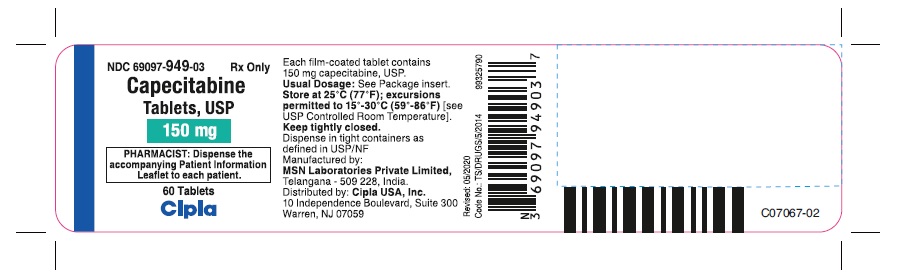
PACKAGE LABEL.PRINCIPAL DISPLAY PANEL Capecitabine Tablets, 150mg-60 tablets Capecitabine Tablets, 500mg-120 tablets