
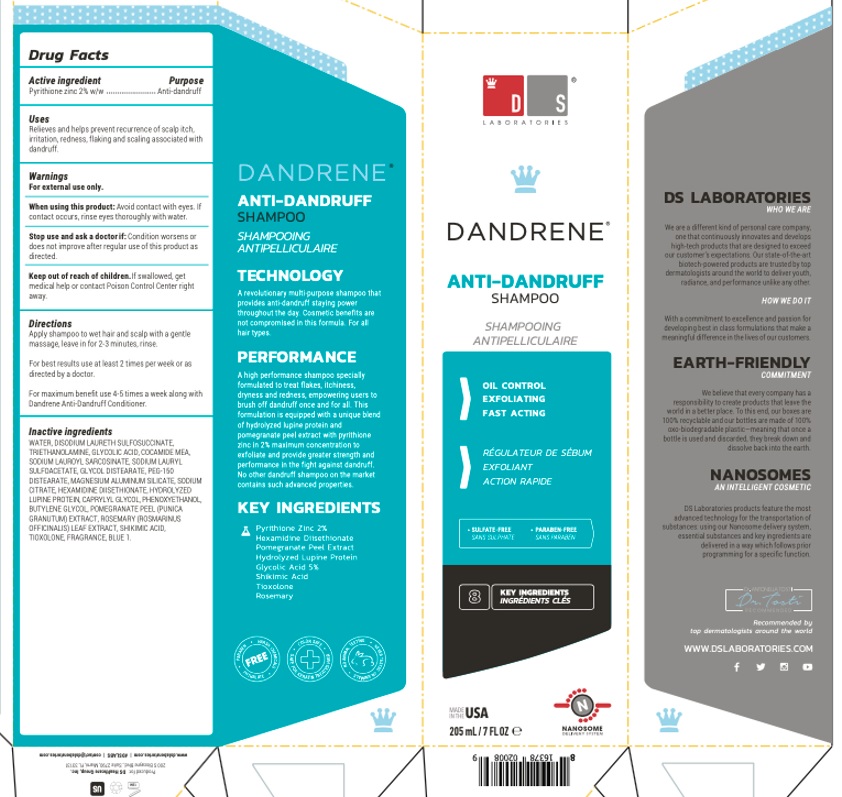
Divine Dandrene 2% Zinc Pyrithione 2 g/100mL Shampoo, 205 mL
🆔 Identity & classification
Where does this data come from?
🏷️ RxNorm drug class
This medicine belongs to the Other dermatologicals class.
Where does this data come from?
🏭 Manufacturer & labeler
Where does this data come from?
🩺 Clinical
Divine Dandrene is a topical shampoo containing 2% zinc pyrithione, an OTC monograph product. Zinc pyrithione is commonly used in shampoos to help reduce flaking and itching associated with dandruff and seborrheic dermatitis of the scalp. This ingredient functions by slowing the growth of yeast and bacteria on the skin. The product is applied to the scalp and hair during shampooing.
Patient education
Supplement & herbal interactions
Where does this data come from?
Ask a licensed pharmacist directly — free, answered by our team.
🧪 Inactive Ingredients / Excipients
Inactive ingredients, also called excipients, are components of the drug product other than the active ingredient. They may include fillers, dyes, coatings, preservatives, flavors, or other formulation ingredients.
💡 Tap an ingredient (hover on desktop) to see what it is and why it’s used.
-
UNII 3XUS85K0RA
Butylene glycol is a clear liquid derived from petroleum or plants that acts as a humectant, solvent, and preservative booster in medicines. It helps keep formulations stable, dissolve active ingredients, and maintain moisture in topical products.
-
UNII 00YIU5438U
Caprylyl glycol is a clear liquid derived from coconut oil. In medicines, it acts as a humectant to retain moisture, a preservative booster to prevent microbial growth, and a solvent to help dissolve or mix other ingredients.
-
UNII C80684146D
A foaming agent and thickener derived from coconut oil. It helps create a smooth texture and stable foam in liquid or semi-solid medicines, improving how the product feels and applies.
-
UNII D6DH1DTN7E
Disodium laureth sulfosuccinate is a synthetic surfactant and emulsifier derived from lauryl alcohol. It helps mix oil and water-based ingredients together and is commonly used in topical formulations to improve product texture and spreadability.
-
UNII H3R47K3TBD
FD&C Blue No. 1 is a synthetic blue dye approved for use in foods and medicines. It serves as a colorant to give the medication its distinctive appearance and help with product identification.
-
UNII 13W7MDN21W
A waxy compound made from glycol and stearic acid. It's used as an emulsifier to help blend oil and water-based ingredients, and as a thickener to give the medicine its desired texture and consistency.
-
UNII 0WT12SX38S
Glycolic acid is an alpha-hydroxy acid derived from sugar cane that helps dissolve and remove dead skin cells. In topical medicines, it works as an exfoliant and pH adjuster to improve skin penetration and product effectiveness.
-
UNII 023XA5Z50L
Hexamidine diisethionate is a synthetic antimicrobial compound used as a preservative in medicines. It prevents bacterial and fungal growth to maintain product safety and stability during storage.
-
UNII 6M3P64V0NC
A fine powder made from magnesium, aluminum, and silicon compounds. It absorbs moisture and helps keep medicine ingredients from clumping or separating, so the product stays stable and flows smoothly during manufacturing.
-
UNII 6F36Q0I0AC
PEG-150 distearate is a waxy substance made by combining polyethylene glycol with stearic acid. It acts as an emulsifier and surfactant to help blend water and oil-based ingredients, and may also function as a thickener or lubricant in the formulation.
-
UNII HIE492ZZ3T
Phenoxyethanol is a synthetic preservative and antimicrobial agent used to prevent bacterial and fungal growth in medicines and cosmetic products, extending shelf life and maintaining product safety.
-
UNII D9B634V4GP
A plant extract from pomegranate flowers used as a natural colorant, flavoring agent, or antioxidant in medicines. It helps preserve product stability and may contribute to the medicine's taste or appearance.
-
UNII IJ67X351P9
A natural plant extract from rosemary leaves used as a preservative to help prevent oils and fats in the medicine from spoiling or becoming rancid during storage.
-
UNII 29MS2WI2NU
Shikimic acid is a naturally occurring organic compound found in some plants. In medicines, it may serve as a buffer or pH adjuster to help maintain the stability and proper acidity level of the formulation.
-
UNII 1Q73Q2JULR
Sodium citrate is a salt derived from citric acid. It works as a buffer to maintain the medicine's pH level and may also help improve taste or act as a preservative in the formulation.
-
UNII 632GS99618
Sodium lauroyl sarcosinate is a mild, plant-derived cleaning agent used in medicines as a surfactant and emulsifier. It helps mix oil and water-based ingredients and may aid tablet disintegration.
-
UNII D0Y70F2B9J
A synthetic detergent and surfactant derived from fatty acids. It reduces surface tension in formulations to help with mixing, emulsifying, and creating foams or dispersions in topical products.
-
UNII AIQ58N56TM
Surinamine is a synthetic chemical compound used in medicines as a buffer and pH regulator. It helps maintain the proper acidity level in the formulation to ensure stability and consistent drug performance.
-
UNII S0FAJ1R9CD
A sulfur-containing compound used in pharmaceutical formulations as an antimicrobial preservative and antioxidant. It helps prevent bacterial and fungal contamination in medicines while protecting other ingredients from degradation.
-
UNII 9O3K93S3TK
Trolamine is an alkaline compound used as a pH buffer and emulsifier in medicines. It helps neutralize acids, stabilize formulations, and enable mixing of oil and water-based ingredients.
-
UNII 059QF0KO0R
Water is a liquid solvent that dissolves and mixes ingredients together in liquid medicines, syrups, and injections. It helps distribute the active drug evenly throughout the product.
21 inactive ingredients listed in the exact product block matched to this NDC.
Label-section wording can be broader than the structured product block and may mention additional formulation ingredients.
Where does this data come from?
ingredient classCode="IACT" elements from the exact product block matched by this NDC. Label-section narrative from DailyMed / the openFDA label index is shown separately when available.Inactive ingredient FAQ
Are inactive ingredients the same for every manufacturer?
Why might an inactive ingredient be missing?
Can inactive ingredients matter?
💲 Pricing
A drug doesn't have one price. Each row is a different public payment system, and none is what you'd pay at the counter — that depends on your insurance. The ⓘ on each row explains what it measures.
| Price system | Per g | Per package |
|---|---|---|
| Retail pharmacies payNADAC · weekly | Not in the retail survey — common for institutional, discontinued, or low-volume packs. | |
| Medicaid paysCMS SDUD · 12 mo | No recent Medicaid claims on file for this NDC — rare and low-volume NDCs are suppressed in the public data. | |
| Medicare drug plans payPart D · quarterly | No Part D plan price is available for this NDC in our data. | |
Where does this data come from?
🔁 Therapeutic equivalents
| Product | Labeler | Pack | NADAC/unit | TE | Status | Price vs. this |
|---|---|---|---|---|---|---|
| Dhs Zinc 20 mg/mL 00096-0735-08 | Person | 240 ml | — | — | Discontinued | — |
| Dhs Zinc 20 mg/mL 00096-0811-08 | Person | 240 ml | — | — | FDA listed | — |
| DermaZinc 2 g/100mL 35324-0003-08 | WynnPharm | 240 ml | — | — | FDA listed | — |
| DermaZinc 2 g/100g 35324-0004-04 | WynnPharm | 120 g | — | — | FDA listed | — |
| Vanicream 2 g/100mL 45334-0206-07 | Pharmaceutical | 7.4 ml | — | — | FDA listed | — |
| Zolidyne 20 mg/mL 51326-0203-67 | Topiderm, | 200 ml | — | — | FDA listed | — |
| Flakes Cedar Mint Anti Dandruff .02 kg/kg 52261-1400-01 | Cosco | 266 kg | — | — | FDA listed | — |
| Denorex Severe Flakes Medicated Anti Dandruff .02 g/mL 62673-0176-10 | Neoteric | 1 bottle | — | — | FDA listed | — |
| Divine Dandrene 2% 2 g/100mLthis 69188-0200-07 | DS | 205 ml | — | — | FDA listed | — |
| Dermaharmony Pyrithione Zinc with Shea Butter 2 g/100g 71819-0017-37 | D3 | 105 g | — | — | FDA listed | — |
| Dermaharmony Tea Tree Bar 2 g/100g 71819-0018-04 | D3 | 113 g | — | — | FDA listed | — |
| Dermaharmony Unscented Bar 2 g/100g 71819-0019-04 | D3 | 113 g | — | — | FDA listed | — |
| Dzul Anti-Dandruff Conditioner 2 g/100mL 83037-0002-08 | Caball | 236 ml | — | — | FDA listed | — |
| Dandrx Anti-Dandruff 2 g/100mL 85521-0002-08 | dandRX | 237 ml | — | — | FDA listed | — |
| Happy Head Anti-Dandruff 20 mg/mL 87117-0970-00 | Happy | 177 ml | — | — | FDA listed | — |
Where does this data come from?
⏳ Availability & generic status
We did not find an FDA-approved generic match for this exact strength, form and route.
Where does this data come from?
📦 Packaging — all sizes for this product
| Package NDC | Description | Marketing start | Status |
|---|---|---|---|
| 69188-0200-07 You're viewing this | 205 mL in 1 BOTTLE, PLASTIC (69188-200-07) | 2021-06-01 | Active |
🧭 About this NDC listing & data coverage
What data is (and isn’t) available for this NDC — tap to expand
| NDC identity (package / product / labeler codes) | ✓ Available |
| Labeler | ✓ Available |
| Product & package description | ✓ Available |
| Marketing category & status | ✓ Available |
| Active ingredient / dosage form / route | ✓ Available |
| FDA label (SPL via DailyMed) | ✓ Available |
| Package photos | ✓ Available |
| Inactive ingredients (structured) | ✓ Available |
| NADAC pharmacy acquisition price (CMS) | — Not published for this NDC CMS publishes NADAC only for NDCs reported in its retail-pharmacy survey. |
| Orange Book / therapeutic-equivalence data | — Not published for this NDC Applies only to products approved under an NDA/ANDA; many listings are out of scope. |
| HCPCS J-code billing crosswalk | — Not published for this NDC Most self-administered / retail products have no J-code — that is normal. |
| Medicaid utilization (CMS SDUD) | — Not published for this NDC CMS reports utilization only for NDCs with Medicaid claims above its privacy threshold. |
Questions about this listing
Is this NDC FDA-approved?
Why is there no price listed?
Is the NDC printed on the package the same as the 11-digit billing NDC?
What do the three segments of this NDC mean?
Is this package still being marketed?
Who lists this product with the FDA?
Do I need a prescription for this product?
Where does this data come from?
📄 FDA label — Drug Facts FDA SPL
🎯 Indications and Usage ▾
Uses Relieves and helps prevent recurrence of scalp itch, irritation, redness, flaking and scaling associated with dandruff
⏱️ Dosage and Administration ▾
Directions Apply shampoo to wet hair and scalp with gentle massage, leave in for 2-3 minutes, rinse For best results use atleast 2 times per week or as direacted by a doctor For maximum benefits use 4-5 times a week along with Dandrene anti-dandruff conditioner
⚠️ Warnings ▾
Warnings For external use only . When using this Product : Avoid contact with eyes, If contact occurs, rinse eyes thoroughly with water Stop use and ask a doctor if Condition worsens or does not improve after regular use of this product as directed Keep out of reach of children . If swallowed, get medical help or contact Poison Control Center right away
🧪 Active Ingredient ▾
Active ingredient Zinc Pyrithione 2%
🧪 Inactive Ingredients ▾
Inactive ingredients Water, Disodium Laureth Sulfosuccinate, Triethanolamine, Glycolic Acid, Cocamide MEA, Sodium Lauroyl Sarcosinate, Sodium Lauryl Suloacetate, Glycol Distearate, PEG-150 Distearate, Magnesium Aluminum Silicate, Sodium Citrate, Hexamidine Diisethionate, Hydrolyzed Lupine Protein, Caprylyl Glycol, Phenoxyethanol, Butylene Glycol, Punica Granatum Extract, Rosmarinus Officinalis Leaf Extract, Shikimic Acid, Tioxolone, Blue 1
🎯 Purpose ▾
Purpose Anti-dandruff