
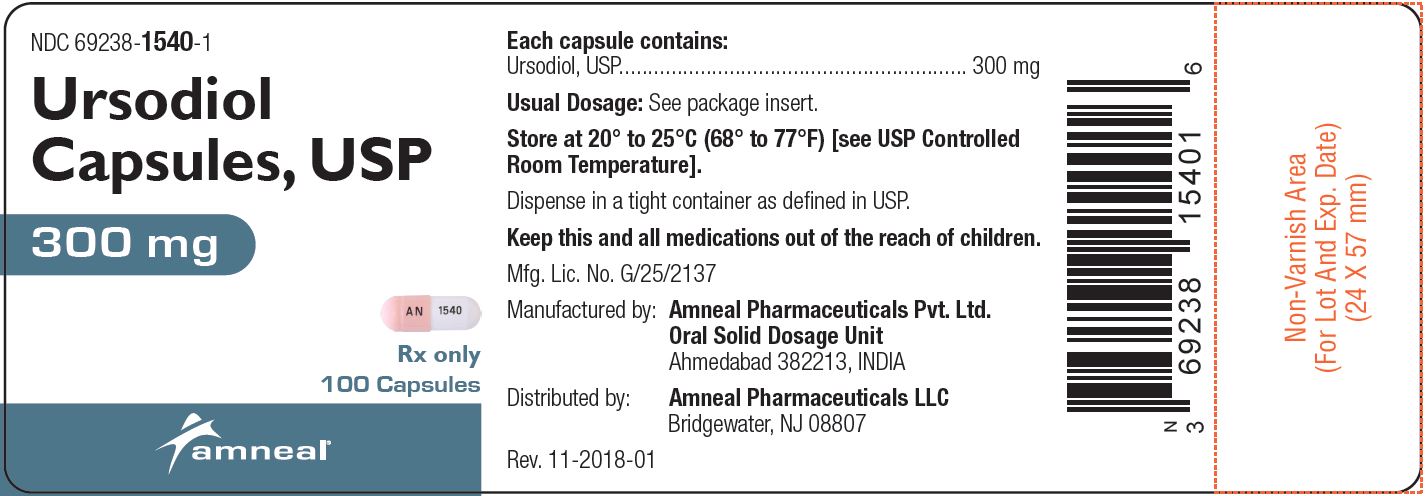
Ursodiol 300 mg Capsule, 100-count — NDC 69238-1540-1 (Billing 69238-1540-01)
This is a package of 100 capsules of Ursodiol 300 mg Capsule from Amneal Pharmaceuticals NY LLC, marketed since Oct 2018 and currently FDA-listed; retail pharmacies pay about $0.4292 per capsule (NADAC). It is this product's only package size.
NDC database record
One package, one record: these facts belong to NDC 69238-1540-1 alone.
- Record
- FDA NDC Directory package listing · Human prescription drug
- Code segments
- 69238 labeler · 1540 product · 1 package
- Package marketed since
- Oct 22, 2018
- Sample package
- No — commercial package
- Listing certified through
- Dec 31, 2027
- Billing quantity
- 100 EA per package
- Barcode (UPC)
- 0369238154016
- Medicaid fills, this package
- 5,191 prescriptions in the last four reported quarters
- FDA record last changed
- Oct 8, 2026
Identity & classification
Regulatory identifiers FDA, NLM and CMS codes for this package
Drug-database identifiers Medi-Span GPI and First Databank GCN / HICL / AHFS classification
- GSN (GCN sequence number): 003095
- GCN: 01070
- GPI-14 (Medi-Span): 52100040000120
- HICL (First Databank): 001370
- AHFS class code: 56:14.00.00
- RxCUI (RxNorm): 858747
Where does this data come from?
- FDA openFDA NDC Directory · synced Oct 8, 2026
- FDA label on DailyMed · label index refreshed Oct 8, 2026
- RxNorm (NLM RxNav) · catalog refreshed Oct 1, 2026
- Medi-Span GPI (licensed)
- First Databank (licensed) · refreshed Oct 8, 2026
RxNorm drug class
This medicine belongs to the Bile Acid class.
Where does this data come from?
- RxClass (NLM) · catalog refreshed Oct 1, 2026
Clinical
- It depends on the product. Ursodiol capsules are used to dissolve certain cholesterol gallstones and to prevent gallstones during rapid weight loss. Urso 250, Urso Forte, and ursod...
- It’s taken by mouth. For gallstones, capsules are usually divided into 2 or 3 doses a day. For PBC, tablets are taken in two to four divided doses with food. Follow your prescripti...
- Stomach-related effects are the most common, such as belly pain, diarrhea, constipation, and nausea. Headache and dizziness can also happen. Call your doctor about severe belly pai...
- Yes. Cholestyramine, colestipol, and aluminum-based antacids may reduce how much ursodiol works. Estrogens, birth control pills, and clofibrate can work against it for gallstones....
Patient education
Supplement & herbal interactions
Some supplements/herbs that may interact with Ursodiol — tap one for details:
Where does this data come from?
- MedlinePlus (NLM) · refreshed Oct 8, 2026
- FDA label on DailyMed · label index refreshed Oct 8, 2026
Ask a licensed pharmacist directly — free, answered by our team.
Pricing
A drug doesn't have one price. Each row is a different public payment system, and none is what you'd pay at the counter — that depends on your insurance. The ⓘ on each row explains what it measures.
| Price system | Per ea | Per package |
|---|---|---|
| Retail pharmacies payNADAC · weekly | $0.429 | $42.92 / 100 capsules |
| Medicaid paysCMS SDUD · 12 mo | $0.7321 | $73.21 / 100 capsules |
| Medicare drug plans payPart D · Q2 2026 | $0.8106 | $81.06 / 100 capsules |
Where does this data come from?
- CMS NADAC weekly file · file of Sep 30, 2026
- CMS ASP pricing files · refreshed Sep 20, 2026
- CMS Medicaid State Drug Utilization Data · through Q1 2026
- CMS Part D plan pricing files · refreshed Sep 24, 2026
- VA National Acquisition Center price file
Packaging — all sizes for this product
| Package NDC | Description | Marketing start | Marketing end | Status |
|---|---|---|---|---|
| 69238-1540-01 You're viewing this Main listing | 100 CAPSULE in 1 BOTTLE | 2018-10-22 | — | Active |
Therapeutic equivalents
| Product | Labeler | Pack | NADAC/unit | TE | Status | Price vs. this |
|---|---|---|---|---|---|---|
| Ursodiol 300 mg 50268-0797-15 | AvPAK | 50 capsules | $0.416 | — | Availability likely | save 3% |
| Ursodiol 300 mg 72664-0217-01 | VGYAAN | 100 capsules | $0.421 | AB | Availability likely | save 2% |
| Ursodiol 300 mg 00527-1326-01 | Lannett | 100 capsules | $0.429 | AB | Availability likely | — |
| Ursodiol 300 mg 00591-3159-01 | Actavis | 100 capsules | $0.429 | — | Availability likely | — |
| Ursodiol 300 mg 00904-6221-06 | Major | 50 capsules | $0.429 | AB | Availability likely | — |
| Ursodiol 300 mg 10702-0237-01 | KVK-Tech, | 100 capsules | $0.429 | AB | Availability likely | — |
| Ursodiol 300 mg 24658-0780-01 | PuraCap | 100 capsules | $0.429 | AB | Availability likely | — |
| Ursodiol 300 mg 42385-0946-01 | Laurus | 100 capsules | $0.429 | AB | Availability likely | — |
| Ursodiol 300 mg 42806-0503-01 | Epic | 100 capsules | $0.429 | AB | Availability likely | — |
| Ursodiol 300 mg 59651-0421-01 | Aurobindo | 100 capsules | $0.429 | AB | Availability likely | — |
| Ursodiol 300 mg 60687-0100-01 | American | 100 capsules | $0.429 | AB | Availability likely | — |
| Ursodiol 300 mg 62135-0430-60 | Chartwell | 60 capsules | $0.429 | AB | Availability likely | — |
| Ursodiol 300 mgthis 69238-1540-01 | Amneal | 100 capsules | $0.429 | — | Availability likely | — |
| Ursodiol 300 mg 70710-1483-01 | Zydus | 100 capsules | $0.429 | AB | Availability likely | — |
| Ursodiol 300 mg 72603-0613-01 | NorthStar | 100 capsules | $0.429 | AB | Availability likely | — |
| Ursodiol 300 mg 24658-0999-10 | PuraCap | 1000 capsules | — | AB | FDA listed | — |
| Ursodiol 300 mg 42291-0923-01 | AvKARE | 100 capsules | — | AB | FDA listed | — |
| Ursodiol 300 mg 43063-0871-01 | PD-Rx | 100 capsules | — | AB | FDA listed | — |
| Ursodiol 300 mg 51407-0754-01 | Golden | 100 capsules | — | AB | FDA listed | — |
| Ursodiol 300 mg 64380-0844-04 | Strides | 30 capsules | — | AB | FDA listed | — |
| Ursodiol 300 mg 70771-1524-01 | Zydus | 100 capsules | — | AB | FDA listed | — |
| Ursodiol 300 mg 72162-2168-01 | Bryant | 100 capsules | — | AB | FDA listed | — |
| Ursodiol 300 mg 72162-2619-01 | Bryant | 100 capsules | — | AB | FDA listed | — |
| Ursodiol 300 mg 50268-0864-13 | AvPAK | 30 capsules | — | AB | FDA listed | — |
Where does this data come from?
- FDA openFDA NDC Directory · synced Oct 8, 2026
- FDA Orange Book · refreshed Oct 3, 2026
- CMS NADAC weekly file · file of Sep 30, 2026
Availability & generic status
This product is an FDA-approved generic. Other versions of the same drug are listed under Therapeutic equivalents, least expensive first.
Where does this data come from?
- FDA Orange Book · refreshed Oct 3, 2026
Inactive Ingredients / Excipients
Inactive ingredients, also called excipients, are components of the drug product other than the active ingredient. They may include fillers, dyes, coatings, preservatives, flavors, or other formulation ingredients.
🧪 Avoiding an ingredient? See Ursodiol inactive ingredients by manufacturer: every current product's list side by side, so you can ask your pharmacy for the version that does not list it.
💡 Tap an ingredient (hover on desktop) to see what it is and why it’s used.
-
UNII 3K9958V90M
A liquid solvent derived from fermentation or chemical synthesis. In medicines, alcohol dissolves active ingredients, helps preserve the product, and improves how the body absorbs certain drugs.
-
UNII 5138Q19F1X
Ammonia is a colorless gas made from nitrogen and hydrogen. It's used in medicines as a pH buffer to maintain the correct acidity level and help keep the product stable.
-
UNII 8PJ61P6TS3
Butyl alcohol is a clear liquid organic solvent derived from petroleum or natural sources. In medicines, it helps dissolve active ingredients and serves as a solvent in liquid formulations and some topical products.
-
UNII 1K09F3G675
Ferric oxide red is an inorganic iron compound used as a colorant in medicines. It gives tablets, capsules, or other dosage forms a red or reddish tint for identification and appearance.
-
UNII XM0M87F357
A dark iron oxide compound that gives medicines their black or dark color. It's used as a colorant in tablets and capsules to help identify the product and make it visually distinctive.
-
UNII 2G86QN327L
Gelatin is a protein derived from animal collagen, commonly used in medicines as a gelling agent and capsule material. It helps create soft or hard capsule shells that hold and release medication, and can also thicken liquid formulations.
-
UNII ND2M416302
Isopropyl alcohol is a clear liquid solvent derived from petroleum. In medicines, it dissolves active ingredients and other components, helps the product flow smoothly, and aids in sterilization during manufacturing.
-
UNII 70097M6I30
Magnesium stearate is a salt made from magnesium and stearic acid, a fatty substance. It's used in tablets and capsules as a lubricant and glidant to help ingredients flow smoothly during manufacturing and prevent sticking.
-
UNII WZH3C48M4T
Potassium hydroxide is a strong alkaline chemical used in medicines to adjust and maintain the pH level of liquid formulations, helping keep the product stable and the active ingredients effective.
-
UNII 6DC9Q167V3
Propylene glycol is a clear liquid derived from petroleum or vegetable sources. It acts as a solvent, humectant, and preservative in medicines, helping dissolve active ingredients and maintain product stability.
-
UNII 46N107B71O
Shellac is a natural resin secreted by the lac beetle. It's used as a coating on tablets and capsules to control how quickly the medicine dissolves and to improve appearance and stability.
-
UNII ETJ7Z6XBU4
Silicon dioxide is a naturally occurring mineral used as a glidant and anti-caking agent. It helps powder ingredients flow smoothly and prevents clumping during manufacturing and storage.
-
UNII O8232NY3SJ
A plant-based carbohydrate derived from corn kernels. It acts as a filler to add bulk, a binder to hold ingredients together, and a disintegrant to help the tablet break apart in your stomach for absorption.
-
UNII 15FIX9V2JP
Titanium dioxide is a bright white mineral powder commonly used as a colorant and opacifying agent. It makes pills and tablets white or lighter in color and helps make coatings non-transparent.
-
UNII 059QF0KO0R
Water is a liquid solvent that dissolves and mixes ingredients together in liquid medicines, syrups, and injections. It helps distribute the active drug evenly throughout the product.
15 inactive ingredients listed in the exact product block matched to this NDC.
Where does this data come from?
ingredient classCode="IACT" elements from the exact product block matched by this NDC. Label-section narrative from DailyMed / the openFDA label index is shown separately when available.- FDA label on DailyMed · label index refreshed Oct 8, 2026
- FDA openFDA NDC Directory · synced Oct 8, 2026
Inactive ingredient FAQ
Are inactive ingredients the same for every manufacturer?
Why might an inactive ingredient be missing?
Can inactive ingredients matter?
Manufacturer & labeler
More NDCs from Amneal Pharmaceuticals NY LLC labeler code 69238
- Tetracycline Hydrochloride 250 mg Capsule NDC 69238-1522-1
- Tetracycline Hydrochloride 500 mg Capsule NDC 69238-1523-1
- Clobetasol Propionate .5 mg/g Cream NDC 69238-1532-3
- Fluocinonide Cream .5 mg/g Cream NDC 69238-1534-2
- Clobazam 2.5 mg/mL Suspension NDC 69238-1535-2
- Frovatriptan 2.5 mg Tablet, Film Coated NDC 69238-1539-9
- Hydroxychloroquine Sulfate 200 mg Tablet, Film Coated NDC 69238-1544-1
- Femynor norgestimate and ethinyl estradiol Kit NDC 69238-1551-6
- Memantine and Donepezil Hydrochlorides Extended-release 7 mg; 10 mg Capsule, Extended Release NDC 69238-1552-3
- Memantine and Donepezil Hydrochlorides Extended-release 21 mg; 10 mg Capsule, Extended Release NDC 69238-1553-3
- Amphetamine Sulfate 5 mg Tablet NDC 69238-1563-1
- Amphetamine Sulfate 10 mg Tablet NDC 69238-1564-1
Where does this data come from?
- FDA openFDA NDC Directory · synced Oct 8, 2026
- Drugs@FDA
Full prescribing information FDA SPL
🎯 Indications and Usage ▾
INDICATIONS AND USAGE Ursodiol capsules are indicated for patients with radiolucent, noncalcified gallbladder stones < 20 mm in greatest diameter in whom elective cholecystectomy would be undertaken except for the presence of increased surgical risk due to systemic disease, advanced age, idiosyncratic reaction to general anesthesia, or for those patients who refuse surgery. Safety of use of ursodiol capsules beyond 24 months is not established. Ursodiol capsules are indicated for the prevention of gallstone formation in obese patients experiencing rapid weight loss.
⏱️ Dosage and Administration ▾
DOSAGE AND ADMINISTRATION Gallstone Dissolution The recommended dose for ursodiol capsules treatment of radiolucent gallbladder stones is 8 to 10 mg/kg/day given in 2 or 3 divided doses. Ultrasound images of the gallbladder should be obtained at 6-month intervals for the first year of ursodiol capsules therapy to monitor gallstone response. If gallstones appear to have dissolved, ursodiol capsules therapy should be continued and dissolution confirmed on a repeat ultrasound examination within 1 to 3 months.
Most patients who eventually achieve complete stone dissolution will show partial or complete dissolution at the first on-treatment reevaluation. If partial stone dissolution is not seen by 12 months of ursodiol capsules therapy, the likelihood of success is greatly reduced. Gallstone Prevention The recommended dosage of ursodiol capsules for gallstone prevention in patients undergoing rapid weight loss is 600 mg/day (300 mg b.i.d.).
⛔ Contraindications ▾
CONTRAINDICATIONS Ursodiol will not dissolve calcified cholesterol stones, radiopaque stones, or radiolucent bile pigment stones. Hence, patients with such stones are not candidates for ursodiol therapy. Patients with compelling reasons for cholecystectomy including unremitting acute cholecystitis, cholangitis, biliary obstruction, gallstone pancreatitis, or biliary-gastrointestinal fistula are not candidates for ursodiol therapy. Allergy to bile acids.
🤒 Adverse Reactions ▾
ADVERSE REACTIONS The nature and frequency of adverse experiences were similar across all groups. The following tables provide comprehensive listings of the adverse experiences reported that occurred with a 5% incidence level: GALLSTONE DISSOLUTION Ursodiol 8 mg/kg/day to 10 mg/kg/day(N = 155) Placebo(N = 159) N (%) N (%) Body as a Whole Allergy Chest Pain Fatigue Infection Viral 8 5 7 30 (5.2) (3.2) (4.5) (19.4) 7 10 8 41 (4.4) (6.3) (5.0) (25.8) Digestive System Abdominal Pain Cholecystitis Constipation Diarrhea Dyspepsia Flatulence Gastrointestinal Disorder Nausea Vomiting 67 8 15 42 26 12 6 22 15 (43.2) (5.2) (9.7) (27.1) (16.8) (7.7) (3.9) (14.2) (9.7) 70 7 14 34 18 12 8 27 11 (44.0) (4.4) (8.8) (21.4) (11.3) (7.5) (5.0) (17.0) (6.9) Musculoskeletal System Arthralgia Arthritis Back Pain Myalgia 12 9 11 9 (7.7) (5.8) (7.1) (5.8) 24 4 18 9 (15.1) (2.5) (11.3) (5.7) Nervous System Headache Insomnia 28 3 (18.1) (1.9) 34 8 (21.4) (5.0) Respiratory System Bronchitis Coughing Pharyngitis Rhinitis Sinusitis Upper Respiratory Tract Infection 10 11 13 8 17 24 (6.5) (7.1) (8.4) (5.2) (11.0) (15.5) 6 7 5 11 18 21 (3.8) (4.4) (3.1) (6.9) (11.3) (13.2) Urogenital System Urinary Tract Infection 10 (6.5) 7 (4.4) GALLSTONE PREVENTION Ursodiol 600 mg (N = 322) Placebo (N = 325) N (%) N (%) Body as a Whole Fatigue Infection Viral Influenza-like Symptoms 25 29 21 (7.8) (9.0) (6.5) 33 29 19 (10.2) (8.9) (5.8) Digestive System Abdominal Pain Constipation Diarrhea Flatulence Nausea Vomiting 20 85 81 15 56 44 (6.2) (26.4) (25.2) (4.7) (17.4) (13.7) 39 72 68 24 43 44 (12.0) (22.2) (20.9) (7.4) (13.2) (13.5) Musculoskeletal System Back Pain Musculoskeletal Pain 38 19 (11.8) (5.9) 21 15 (6.5) (4.6) Nervous System Dizziness Headache 53 80 (16.5) (24.8) 42 78 (12.9) (24.0) Respiratory System Pharyngitis Sinusitis Upper Respiratory Tract Infection 10 17 40 (3.1) (5.3) (12.4) 19 18 35 (5.8) (5.5) (10.8) Skin and Appendages Alopecia 17 (5.3) 8 (2.5) Urogenital System Dysmenorrhea 18 (5.6) 19 (5.8) Post-marketing Experience The following adverse reactions, presented by system organ class in alphabetical order, have been identified during post-approval use of ursodiol.
Because these reactions are reported voluntarily from a population of uncertain size, it is not always possible to reliably estimate their frequency or establish a causal relationship to drug exposure. Gastrointestinal disorders : enteroliths (bezoars) To report SUSPECTED ADVERSE REACTIONS, contact Amneal Pharmaceuticals at 1-877-835-5472 or FDA at 1-800-FDA-1088 or www.fda.gov/medwatch.
🔄 Drug Interactions ▾
Drug Interactions Bile acid sequestering agents such as cholestyramine and colestipol may interfere with the action of ursodiol by reducing its absorption. Aluminum-based antacids have been shown to adsorb bile acids in vitro and may be expected to interfere with ursodiol in the same manner as the bile acid sequestering agents. Estrogens, oral contraceptives, and clofibrate (and perhaps other lipid-lowering drugs) increase hepatic cholesterol secretion, and encourage cholesterol gallstone formation and hence may counteract the effectiveness of ursodiol.
🤰 Pregnancy ▾
Pregnancy Reproduction studies have been performed in rats and rabbits with ursodiol doses up to 200-fold the therapeutic dose and have revealed no evidence of impaired fertility or harm to the fetus at doses of 20- to 100-fold the human dose in rats and at 5-fold the human dose (highest dose tested) in rabbits. Studies employing 100- to 200-fold the human dose in rats have shown some reduction in fertility rate and litter size. There have been no adequate and well-controlled studies of the use of ursodiol in pregnant women, but inadvertent exposure of 4 women to therapeutic doses of the drug in the first trimester of pregnancy during the ursodiol trials led to no evidence of effects on the fetus or newborn baby.
Although it seems unlikely, the possibility that ursodiol can cause fetal harm cannot be ruled out; hence, the drug is not recommended for use during pregnancy.
🧒 Pediatric Use ▾
Pediatric Use The safety and effectiveness of ursodiol in pediatric patients have not been established.
🆘 Overdosage ▾
OVERDOSAGE Neither accidental nor intentional overdosing with ursodiol has been reported. Doses of ursodiol in the range of 16 to 20 mg/kg/day have been tolerated for 6 to 37 months without symptoms by 7 patients. The LD 50 for ursodiol in rats is over 5,000 mg/kg given over 7 to 10 days and over 7,500 mg/kg for mice. The most likely manifestation of severe overdose with ursodiol would probably be diarrhea, which should be treated symptomatically.
🧬 Clinical Pharmacology ▾
CLINICAL PHARMACOLOGY About 90% of a therapeutic dose of ursodiol is absorbed in the small bowel after oral administration. After absorption, ursodiol enters the portal vein and undergoes efficient extraction from portal blood by the liver (i.e. there is a large “first-pass” effect) where it is conjugated with either glycine or taurine and is then secreted into the hepatic bile ducts. Ursodiol in bile is concentrated in the gallbladder and expelled into the duodenum in gallbladder bile via the cystic and common ducts by gallbladder contractions provoked by physiologic responses to eating.
Only small quantities of ursodiol appear in the systemic circulation and very small amounts are excreted into urine. The sites of the drug’s therapeutic actions are in the liver, bile, and gut lumen. Beyond conjugation, ursodiol is not altered or catabolized appreciably by the liver or intestinal mucosa.
A small proportion of orally administered drug undergoes bacterial degradation with each cycle of enterohepatic circulation. Ursodiol can be both oxidized and reduced at the 7-carbon, yielding either 7-keto-lithocholic acid or lithocholic acid, respectively. Further, there is some bacterially catalyzed deconjugation of glyco- and tauro- ursodeoxycholic acid in the small bowel.
Free ursodiol, 7-keto-lithocholic acid, and lithocholic acid are relatively insoluble in aqueous media and larger proportions of these compounds are lost from the distal gut into the feces. Reabsorbed free ursodiol is reconjugated by the liver. Eighty percent of lithocholic acid formed in the small bowel is excreted in the feces, but the 20% that is absorbed is sulfated at the 3-hydroxyl group in the liver to relatively insoluble lithocholyl conjugates which are excreted into bile and lost in feces.
Absorbed 7-keto-lithocholic acid is stereospecifically reduced in the liver to chenodiol. Lithocholic acid causes cholestatic liver injury and can cause death from liver failure in certain species unable to form sulfate conjugates. Lithocholic acid is formed by 7-dehydroxylation of the dihydroxy bile acids (ursodiol and chenodiol) in the gut lumen.
The 7-dehydroxylation reaction appears to be alpha-specific, i.e. chenodiol is more efficiently 7-dehydroxylated than ursodiol and, for equimolar doses of ursodiol and chenodiol, levels of lithocholic acid appearing in bile are lower with the former. Man has the capacity to sulfate lithocholic acid. Although liver injury has not been associated with ursodiol therapy, a reduced capacity to sulfate may exist in some individuals, but such a deficiency has not yet been clearly demonstrated.
Pharmacodynamics Ursodiol suppresses hepatic synthesis and secretion of cholesterol, and also inhibits intestinal absorption of cholesterol. It appears to have little inhibitory effect on synthesis and secretion into bile of endogenous bile acids, and does not appear to affect secretion of phospholipids into bile. With repeated dosing, bile ursodeoxycholic acid concentrations reach a steady-state in about 3 weeks.
Although insoluble in aqueous media, cholesterol can be solubilized in at least two different ways in the presence of dihydroxy bile acids. In addition to solubilizing cholesterol in micelles, ursodiol acts by an apparently unique mechanism to cause dispersion of cholesterol as liquid crystals in aqueous media. Thus, even though administration of high doses (e.g., 15 mg/kg/day to 18 mg/kg/day) does not result in a concentration of ursodiol higher than 60% of the total bile acid pool, ursodiol-rich bile effectively solubilizes cholesterol.
The overall effect of ursodiol is to increase the concentration level at which saturation of cholesterol occurs. The various actions of ursodiol combine to change the bile of patients with gallstones from cholesterol-precipitating to cholesterol-solubilizing, thus resulting in bile conducive to cholesterol stone dissolution. After ursodiol dosing is stopped, the concentration of the bile acid in bile fal… [Excerpted — this section continues on DailyMed.]
📦 How Supplied / Storage and Handling ▾
HOW SUPPLIED Ursodiol Capsules USP, 300 mg are supplied as opaque white body and pink cap, imprinted “AN” on one half and “1540” on the other half of the capsules in black. They are available as follows: Bottles of 100: NDC 69238-1540-1 Store at 20° to 25°C (68° to 77°F) [see USP Controlled Room Temperature]. Dispense in a tight container as defined in USP.
Keep this and all medications out of the reach of children. Manufactured by: Amneal Pharmaceuticals Pvt. Ltd.
Oral Solid Dosage Unit Ahmedabad 382213, INDIA Distributed by: Amneal Pharmaceuticals LLC Bridgewater, NJ 08807 Rev. 05-2024-03
📋 Description ▾
DESCRIPTION Ursodiol, USP is a bile acid available as 300 mg capsules suitable for oral administration. Ursodiol, USP (ursodeoxycholic acid), is a naturally occurring bile acid found in small quantities in normal human bile and in the biles of certain other mammals. Ursodiol, USP is a white or almost white crystalline powder, practically insoluble in water, freely soluble in ethanol (96%), slightly soluble in acetone and practically insoluble in methylene chloride.
The chemical name for ursodiol is 3α,7β-Dihydroxy-5β-cholan-24-oic acid (C 24 H 40 O 4 ). Ursodiol, USP has a molecular weight of 392.6 g/mol. Its structure is shown below: Inactive Ingredients : Colloidal silicon dioxide, gelatin, iron oxide red, magnesium stearate, starch (biological source: maize), titanium dioxide and water.
Each capsule is imprinted with black pharmaceutical ink which contains butyl alcohol, dehydrated alcohol, ferrosoferric oxide, isopropyl alcohol, purified water, potassium hydroxide, propylene glycol, shellac and strong ammonia solution. 10
⚠️ Precautions ▾
PRECAUTIONS Liver Tests Ursodiol therapy has not been associated with liver damage. Lithocholic acid, a naturally occurring bile acid, is known to be a liver-toxic metabolite. This bile acid is formed in the gut from ursodiol less efficiently and in smaller amounts than that seen from chenodiol.
Lithocholic acid is detoxified in the liver by sulfation and, although man appears to be an efficient sulfater, it is possible that some patients may have a congenital or acquired deficiency in sulfation, thereby predisposing them to lithocholate-induced liver damage. Abnormalities in liver enzymes have not been associated with ursodiol therapy and, in fact, ursodiol has been shown to decrease liver enzyme levels in liver disease. However, patients given ursodiol should have SGOT (AST) and SGPT (ALT) measured at the initiation of therapy and thereafter as indicated by the particular clinical circumstances.
Drug Interactions Bile acid sequestering agents such as cholestyramine and colestipol may interfere with the action of ursodiol by reducing its absorption. Aluminum-based antacids have been shown to adsorb bile acids in vitro and may be expected to interfere with ursodiol in the same manner as the bile acid sequestering agents. Estrogens, oral contraceptives, and clofibrate (and perhaps other lipid-lowering drugs) increase hepatic cholesterol secretion, and encourage cholesterol gallstone formation and hence may counteract the effectiveness of ursodiol.
Carcinogenesis, Mutagenesis, Impairment of Fertility Ursodeoxycholic acid was tested in 2-year oral carcinogenicity studies in CD-1 mice and Sprague-Dawley rats at daily doses of 50, 250, and 1,000 mg/kg/day. It was not tumorigenic in mice. In the rat study, it produced statistically significant dose-related increased incidences of pheochromocytomas of adrenal medulla in males (p = 0.014, Peto trend test) and females (p = 0.004, Peto trend test).
A 78-week rat study employing intrarectal instillation of lithocholic acid and tauro‑deoxycholic acid, metabolites of ursodiol and chenodiol, has been conducted. These bile acids alone did not produce any tumors. A tumor-promoting effect of both metabolites was observed when they were co-administered with a carcinogenic agent.
Results of epidemiologic studies suggest that bile acids might be involved in the pathogenesis of human colon cancer in patients who had undergone a cholecystectomy, but direct evidence is lacking. Ursodiol is not mutagenic in the Ames test. Dietary administration of lithocholic acid to chickens is reported to cause hepatic adenomatous hyperplasia.
Pregnancy Reproduction studies have been performed in rats and rabbits with ursodiol doses up to 200-fold the therapeutic dose and have revealed no evidence of impaired fertility or harm to the fetus at doses of 20- to 100-fold the human dose in rats and at 5-fold the human dose (highest dose tested) in rabbits. Studies employing 100- to 200-fold the human dose in rats have shown some reduction in fertility rate and litter size. There have been no adequate and well-controlled studies of the use of ursodiol in pregnant women, but inadvertent exposure of 4 women to therapeutic doses of the drug in the first trimester of pregnancy during the ursodiol trials led to no evidence of effects on the fetus or newborn baby.
Although it seems unlikely, the possibility that ursodiol can cause fetal harm cannot be ruled out; hence, the drug is not recommended for use during pregnancy. Nursing Mothers It is not known whether ursodiol is excreted in human milk. Because many drugs are excreted in human milk, caution should be exercised when ursodiol is administered to a nursing mother.
Pediatric Use The safety and effectiveness of ursodiol in pediatric patients have not been established. Geriatric Use In worldwide clinical studies of ursodiol, approximately 14% of subjects were over 65 years of age (approximately 3% were over 75 years old). In a subgroup analysis of existing clinical trials,… [Excerpted — this section continues on DailyMed.]
🍼 Nursing Mothers ▾
Nursing Mothers It is not known whether ursodiol is excreted in human milk. Because many drugs are excreted in human milk, caution should be exercised when ursodiol is administered to a nursing mother.
🧬 Pharmacodynamics ▾
Pharmacodynamics Ursodiol suppresses hepatic synthesis and secretion of cholesterol, and also inhibits intestinal absorption of cholesterol. It appears to have little inhibitory effect on synthesis and secretion into bile of endogenous bile acids, and does not appear to affect secretion of phospholipids into bile. With repeated dosing, bile ursodeoxycholic acid concentrations reach a steady-state in about 3 weeks.
Although insoluble in aqueous media, cholesterol can be solubilized in at least two different ways in the presence of dihydroxy bile acids. In addition to solubilizing cholesterol in micelles, ursodiol acts by an apparently unique mechanism to cause dispersion of cholesterol as liquid crystals in aqueous media. Thus, even though administration of high doses (e.g., 15 mg/kg/day to 18 mg/kg/day) does not result in a concentration of ursodiol higher than 60% of the total bile acid pool, ursodiol-rich bile effectively solubilizes cholesterol.
The overall effect of ursodiol is to increase the concentration level at which saturation of cholesterol occurs. The various actions of ursodiol combine to change the bile of patients with gallstones from cholesterol-precipitating to cholesterol-solubilizing, thus resulting in bile conducive to cholesterol stone dissolution. After ursodiol dosing is stopped, the concentration of the bile acid in bile falls exponentially, declining to about 5% to 10% of its steady-state level in about 1 week.
📄 Carcinogenesis, Mutagenesis, Impairment of Fertility ▾
Carcinogenesis, Mutagenesis, Impairment of Fertility Ursodeoxycholic acid was tested in 2-year oral carcinogenicity studies in CD-1 mice and Sprague-Dawley rats at daily doses of 50, 250, and 1,000 mg/kg/day. It was not tumorigenic in mice. In the rat study, it produced statistically significant dose-related increased incidences of pheochromocytomas of adrenal medulla in males (p = 0.014, Peto trend test) and females (p = 0.004, Peto trend test).
A 78-week rat study employing intrarectal instillation of lithocholic acid and tauro‑deoxycholic acid, metabolites of ursodiol and chenodiol, has been conducted. These bile acids alone did not produce any tumors. A tumor-promoting effect of both metabolites was observed when they were co-administered with a carcinogenic agent.
Results of epidemiologic studies suggest that bile acids might be involved in the pathogenesis of human colon cancer in patients who had undergone a cholecystectomy, but direct evidence is lacking. Ursodiol is not mutagenic in the Ames test. Dietary administration of lithocholic acid to chickens is reported to cause hepatic adenomatous hyperplasia.
📄 Package Label / Principal Display Panel ▾
PRINCIPAL DISPLAY PANEL NDC 69238-1540-1 Ursodiol Capsules USP, 300 mg Rx Only 100 Capsules Amneal Pharmaceuticals LLC 1